
Is the Barcelona Aquarium actually worth it if you don’t have kids in tow, or is the whole place built for under-tens? You’ll see versions of that question all over Reddit and travel forums, and I had it myself the first time I planned a Port Vell afternoon. The honest answer takes a paragraph or two to get to, so hold that thought.
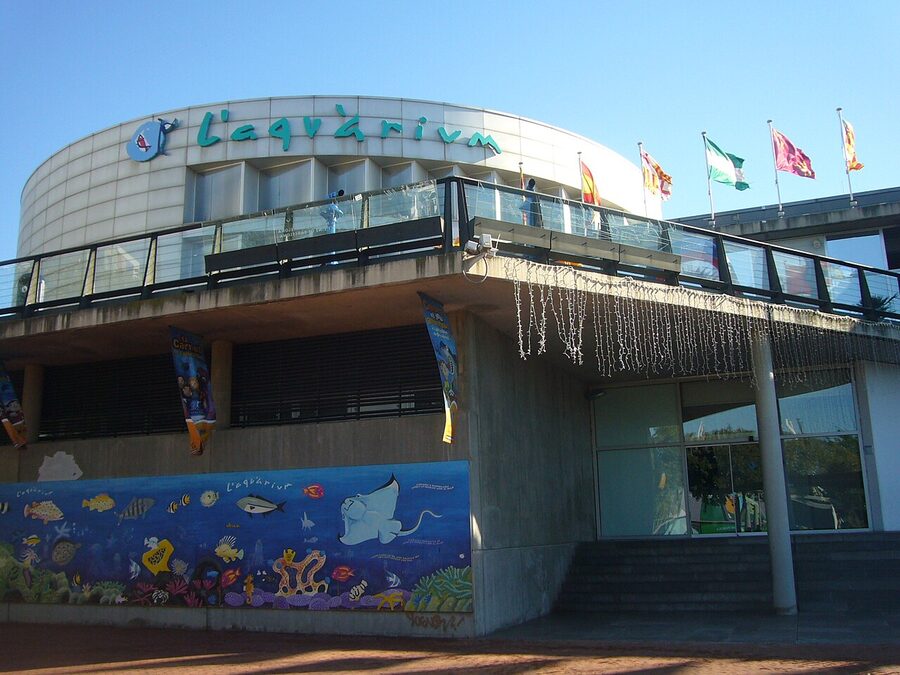
L’Aquàrium de Barcelona sits right on the marina at Port Vell, a five-minute walk from the bottom of La Rambla. Adult entry runs around €29 in 2026, kids 5 to 10 pay €22, and 3 to 4 year olds €14. Buy online with a fixed time slot if you can. The walk-up window exists, but on rainy weekends and school holidays you’ll queue past the harbour railing.
Combo pick: Hop-On Hop-Off Bus & Aquarium Tour, $73. Aquarium ticket plus 24 or 48 hours on the open-top bus, sensible if you’re city-hopping the same day.
Skip-the-line: Aquarium Skip the Line Ticket, $38. Booked through Viator if you prefer that platform, identical entry, slightly higher fee.


- So is it worth it for adults?
- What the tickets actually cover
- The three tickets worth knowing
- 1. Barcelona Aquarium Entry Ticket:
- 2. Hop-On Hop-Off Bus & Aquarium Tour:
- 3. Barcelona Aquarium Skip the Line Ticket:
- Best time to go
- Getting to Port Vell
- What you actually see inside
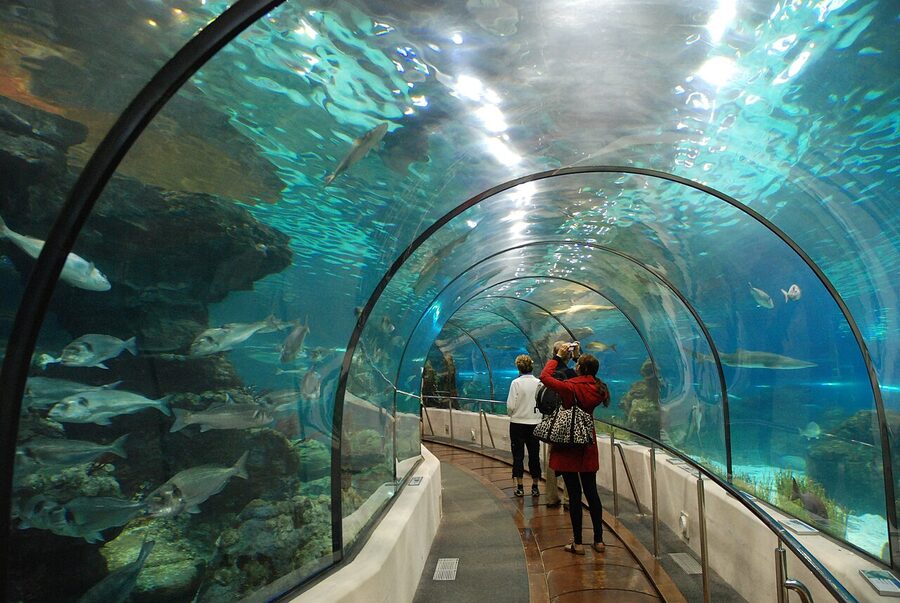
- The Oceanari tunnel: what to know
- Planeta Aqua and the penguins
- The jellyfish room
- A short history
- Eating around the aquarium
- Practical tips most people miss
- Worth combining with
- Discount cards
- One last thing about expectations
- Where to go from here
So is it worth it for adults?
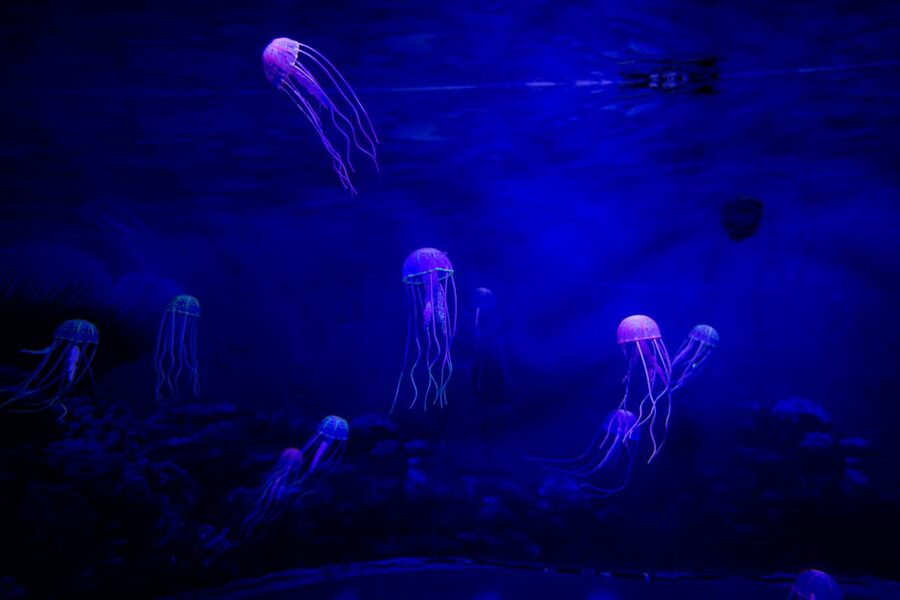
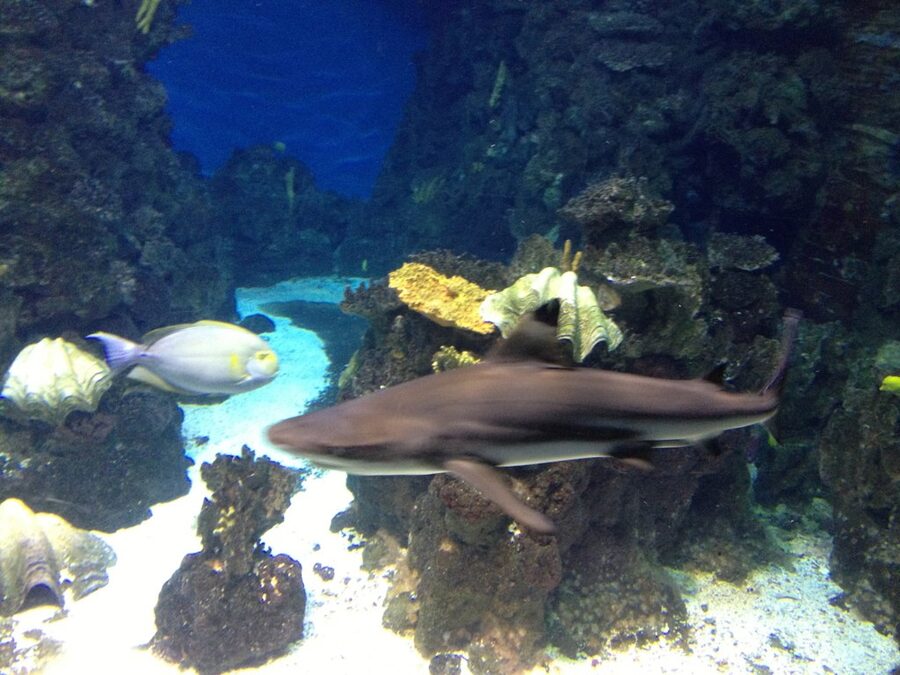
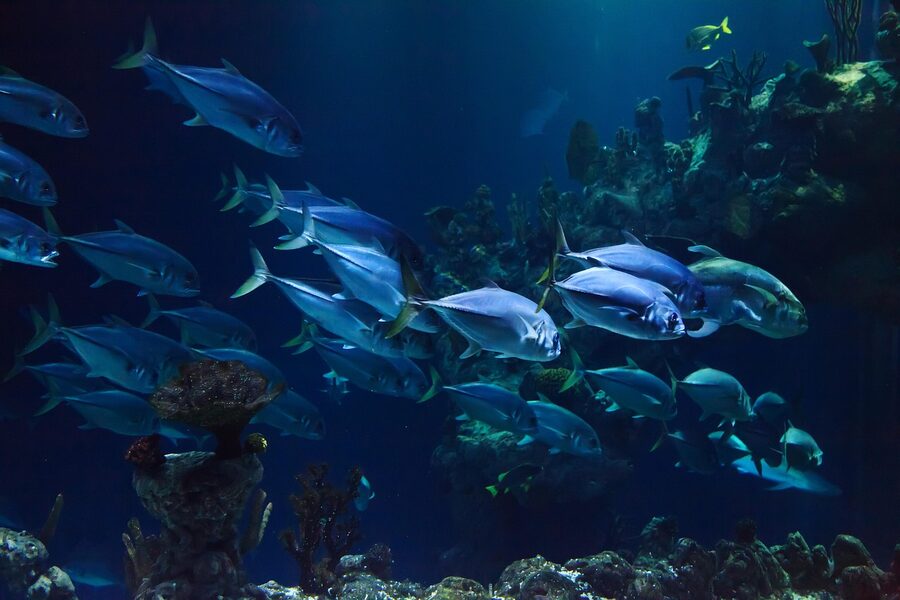
Yes, with one honest caveat. The Oceanari shark tunnel and the Mediterranean tanks earn the €29 on their own, especially if you grew up inland and don’t get to stare at sand tiger sharks every weekend. The jellyfish hall and the deep-water tanks at the back are genuinely beautiful, lit in that washing-machine blue that flat-out looks better on a phone camera than half the city’s nightlife.
The caveat: the layout is built for kids. Information panels are at child height, there’s a Planeta Aqua section with hands-on bits aimed at primary-school visitors, and on weekends the place is loud. Go on a weekday morning and the same building feels like a museum. Go on a Sunday at 14:00 and you’re elbowing toddlers to read the species labels.
.jpg)
What the tickets actually cover
One ticket, one visit, all 35 tanks. There’s no upgraded “fast-track” tier inside the building because nothing inside has separate timed entry. What you can pay extra for is genuinely different: a behind-the-scenes tour, a cage-dive in the shark tank (“Diving with sharks”, around €300), or a sleepover in front of the tunnel for kids’ birthday parties. None of those are sold through the standard online ticket and most adults can ignore them.
The basic adult ticket includes the tunnel, the Mediterranean exhibits, the tropical zone, the jellyfish hall, the Planeta Aqua interactive section, and access to the small terrace looking back at the harbour. Time-wise, plan on 90 minutes if you walk through normally, two hours if you actually read the panels.

The three tickets worth knowing
Most visitors only need the standard entry ticket. I’m including two combo options because they genuinely save money or hassle for specific cases: the GetYourGuide entry ticket is the cleanest standalone, the HoHo combo makes sense if you were going to pay for the bus anyway, and the Viator skip-the-line is for readers who already use Viator and want everything in one app.
1. Barcelona Aquarium Entry Ticket: $34
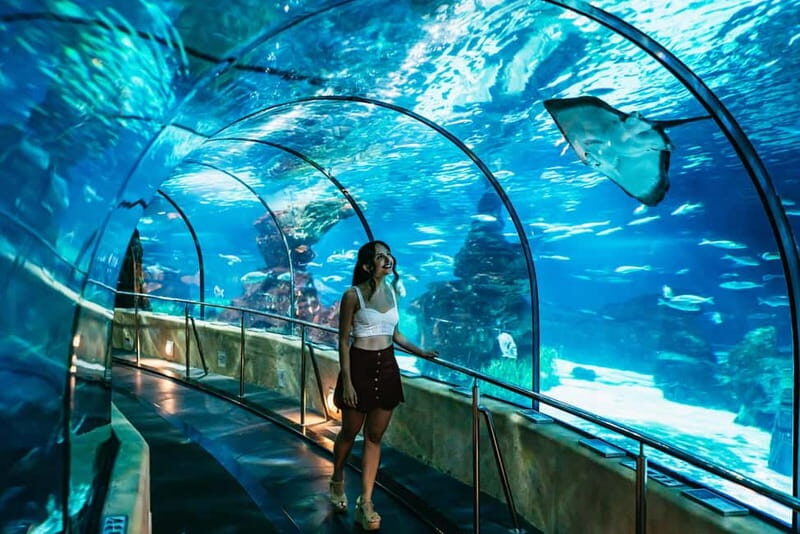
The straightforward standard adult ticket. Fixed time-slot entry, valid for the time you book, and you stay inside as long as you like once in. Our full review covers the time-slot system in more detail, but the short version is: pick a morning slot before 11:00 to dodge the school groups.
Check Availability
Read our full review
2. Hop-On Hop-Off Bus & Aquarium Tour: $73
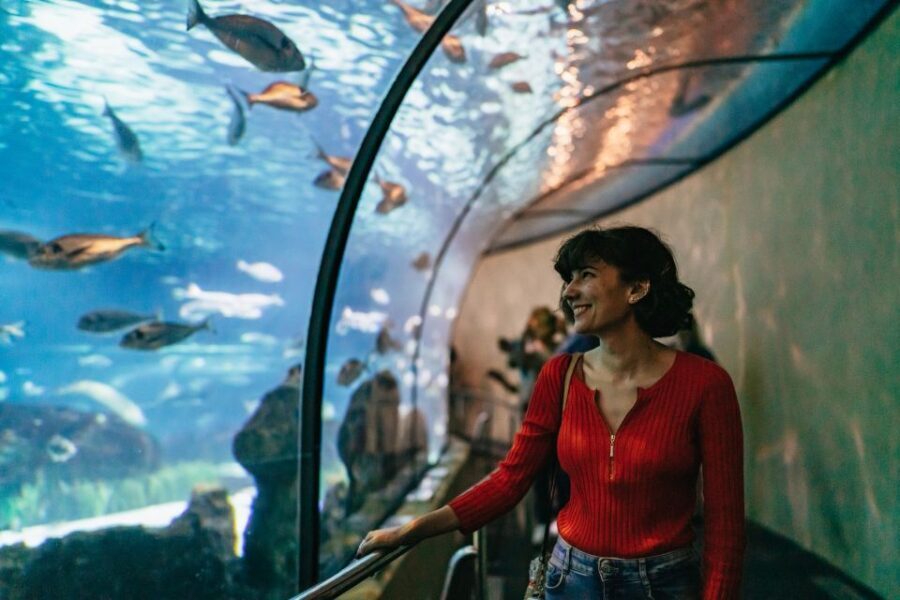
Worth it only if you were already going to pay for the bus. The HoHo on its own runs around $42 for 24 hours and the aquarium is around $34, so the combo saves you a few euros. Our review of the HoHo bus walks through which loop stops near Port Vell. Skip this combo if you’ve already bought a Barcelona Card or a Hola BCN transport pass.
Check Availability
Read our full review
3. Barcelona Aquarium Skip the Line Ticket: $38
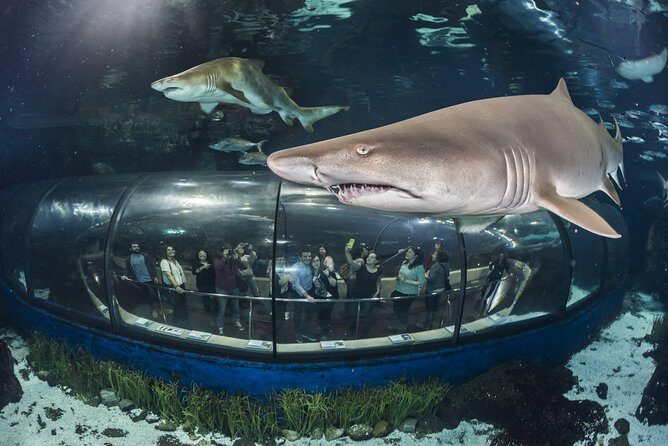
Identical entry to option 1, sold through Viator. Choose this only if you already use Viator and want the booking in your existing app. There’s no genuine “skip the line” advantage over a timed GYG ticket. One Viator reviewer flagged this clearly: skip-the-line really means skip the cashier, not skip the timed-entry queue.
Check Availability

Best time to go
Weekday mornings, ideally between 10:00 (opening) and 11:30. School groups arrive in waves around 10:30 but they move fast and most clear out by lunch. By 14:00 on a weekend, the place is rough.
Rainy days are the worst time. Half of Barcelona’s tourists hit indoor attractions when it pours, and the aquarium fills up faster than the Picasso Museum because it’s the obvious place to take cranky kids. The Viator reviewer Melanie called this exactly: a rainy Saturday with a tonne of kids was her one mistake. Sunny weekday morning, low season (November to March, skipping Christmas week), and you’ll have entire rooms to yourself.
Getting to Port Vell
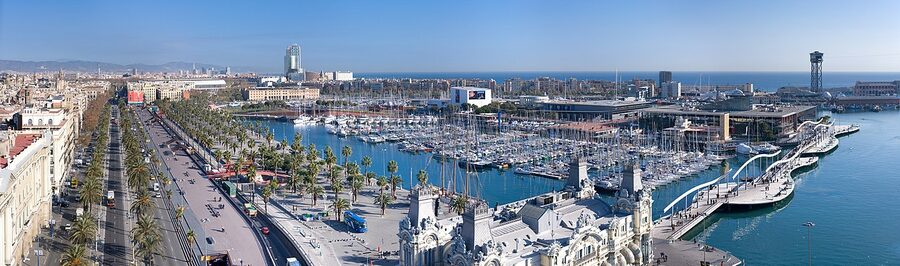
Metro: line L3 (green) to Drassanes, then a four-minute walk down La Rambla and across the wooden Rambla del Mar footbridge. That bridge is itself a small attraction; it pivots open for boats. Line L4 (yellow) to Barceloneta works too, slightly longer walk along the waterfront.
Walking from Plaça Catalunya straight down La Rambla takes about 15 minutes. Don’t take a taxi unless you’ve got luggage. The traffic around Drassanes is awful and the metro is faster. If you’re already on Barcelona’s Hola Barcelona transport card the metro is included.

What you actually see inside
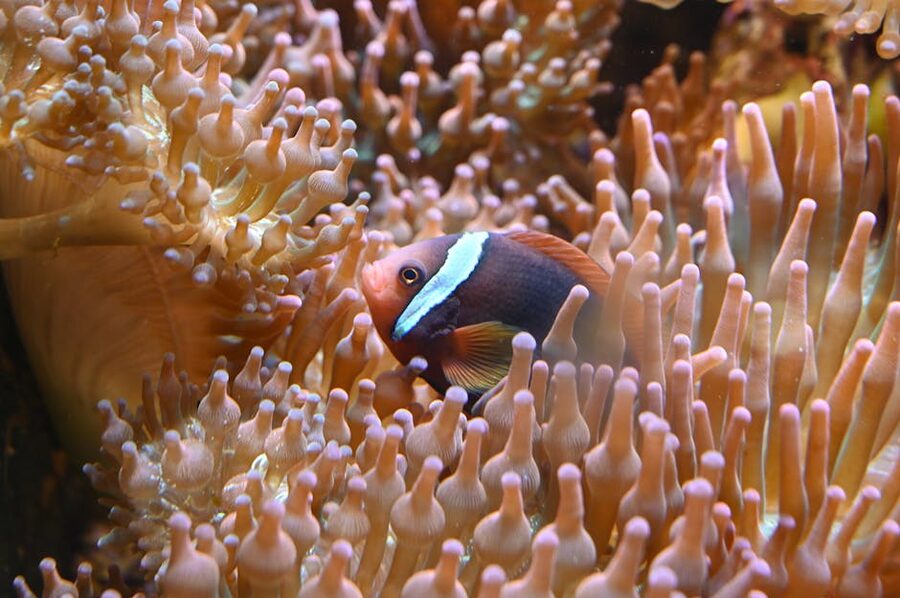
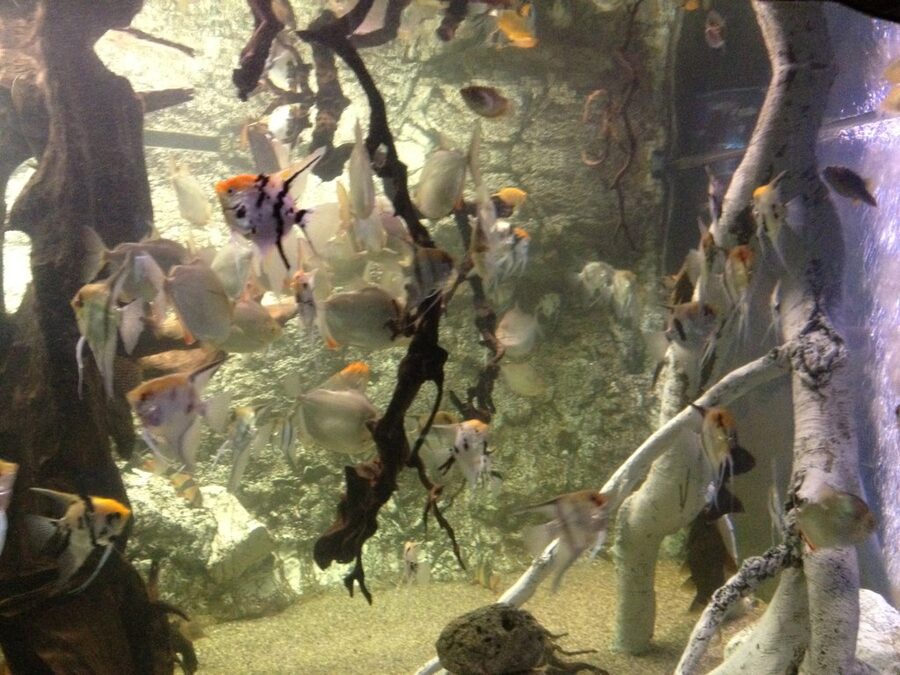
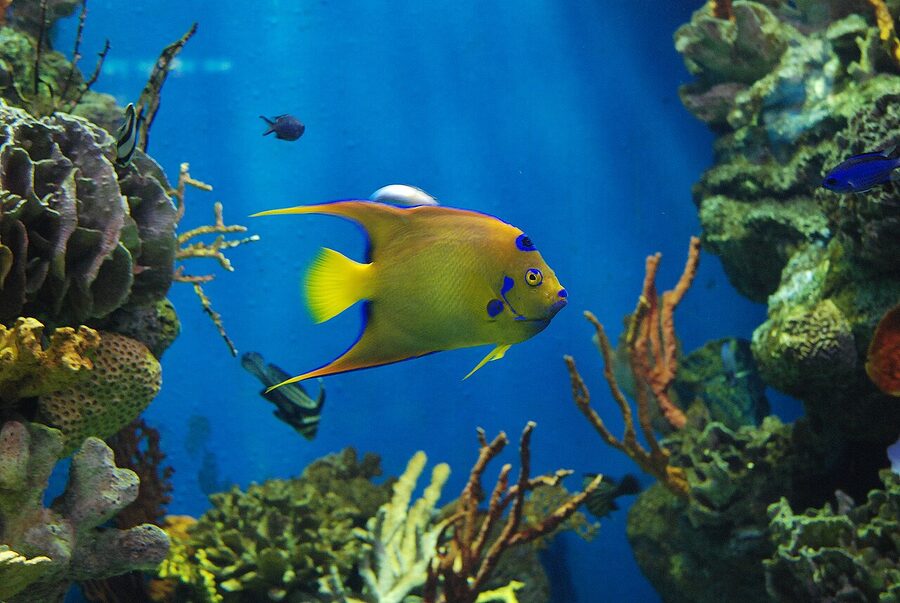
Roughly in the order you walk it: a tropical zone that opens with reef fish (clownfish, surgeonfish, the colourful stuff people photograph), then a longer Mediterranean section with eight or nine tanks of regional species. This is where the local moray eels live, plus the seabass and the octopus tank that is, for adults, the highlight before the tunnel.
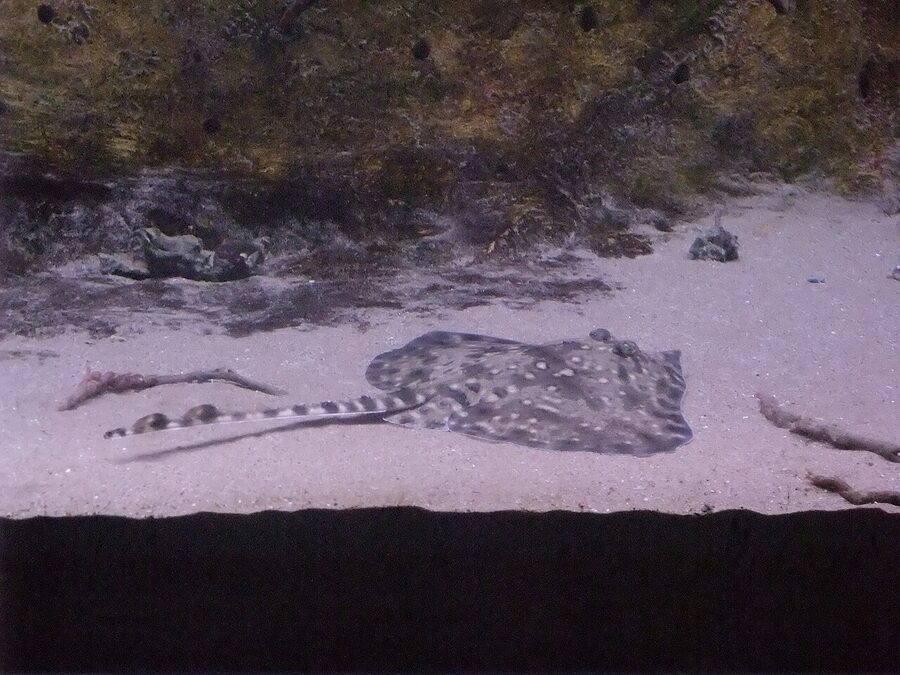
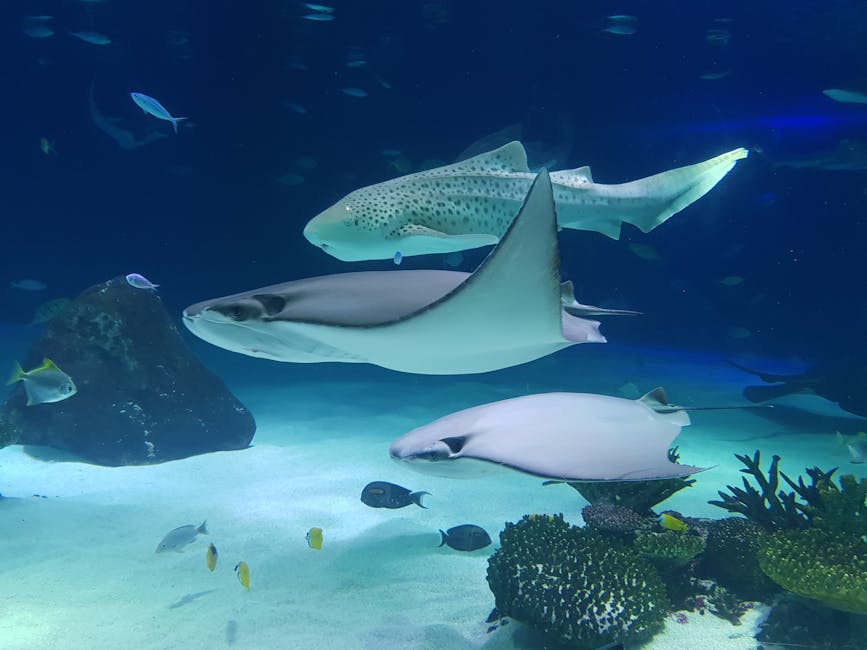
From there you drop down into the Oceanari, the giant central tank with the 80-metre tunnel. Five sand tiger sharks, plus sandbar sharks, large rays, and the resident sunfish. Past the tunnel comes Planeta Aqua: rays you can occasionally touch in a shallow pool, the penguins, and a handful of interactive screens. Then a final zone with jellyfish (worth slowing down for) and seahorses, before exit through the gift shop.
.jpg)

The Oceanari tunnel: what to know
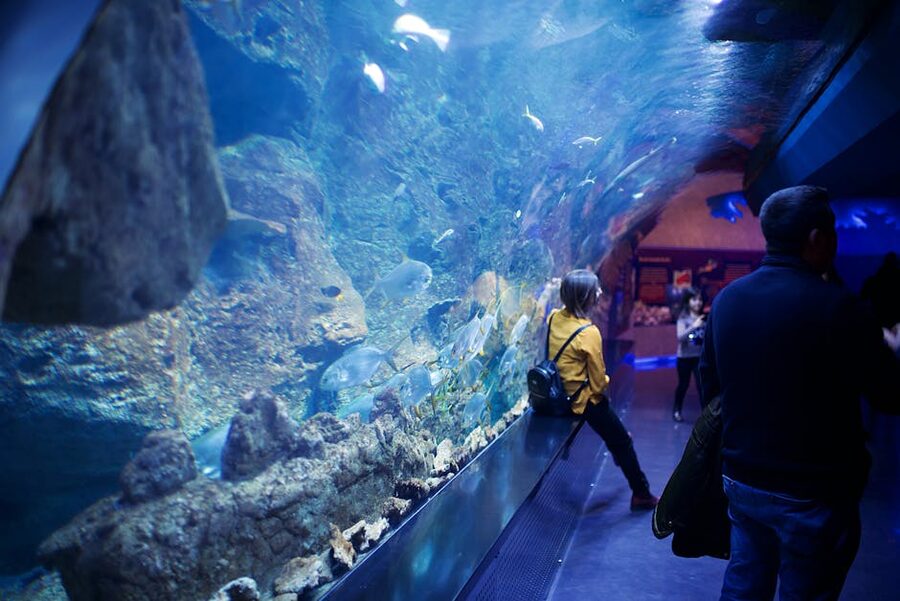
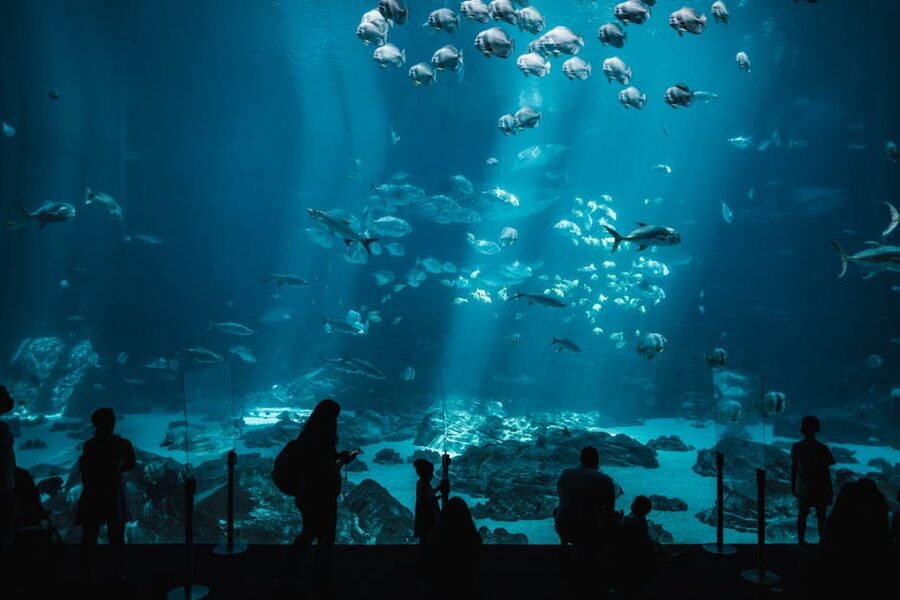
It opened in 1995 and is still the longest aquarium tunnel in Europe at 80 metres, which sounds shorter on paper than it feels in person. The moving walkway runs at one consistent slow pace; the whole pass takes about three minutes if you don’t fight it.
Two tips. First, ride the walkway once start to finish for the full sweep, then walk back through manually so you can stop. Second, look up. The whole tunnel is glass and the rays often glide directly across the ceiling, which is the angle you can’t get from any side viewing window in the main tank.
Planeta Aqua and the penguins
This is the kid-focused section after the tunnel. Honestly, if you’re a solo adult or a couple without children, you can move through this part fast. The interactive screens are aimed at school-age kids, the touch-pool requires you to wash your hands twice (which is fair), and the penguin enclosure is small.
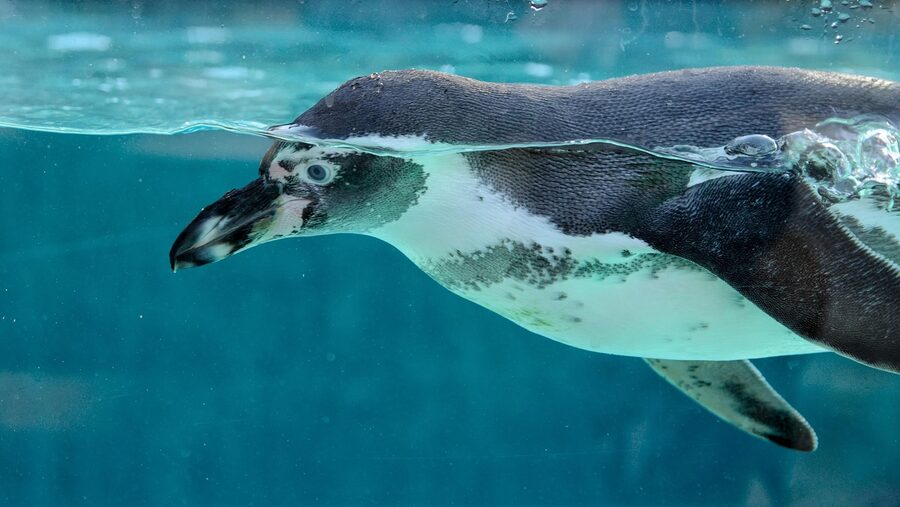
That said, the penguins are real Humboldt penguins, the rescue-friendly Chilean species, and they’re fed at fixed times posted near the enclosure. If you happen to be passing through at feeding time it’s a fun three minutes. Otherwise keep walking.
The jellyfish room
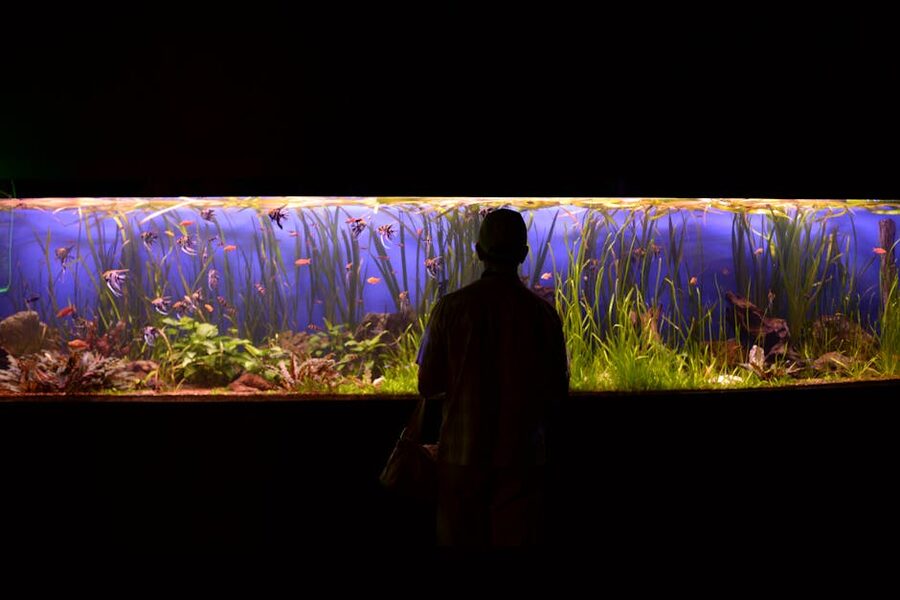
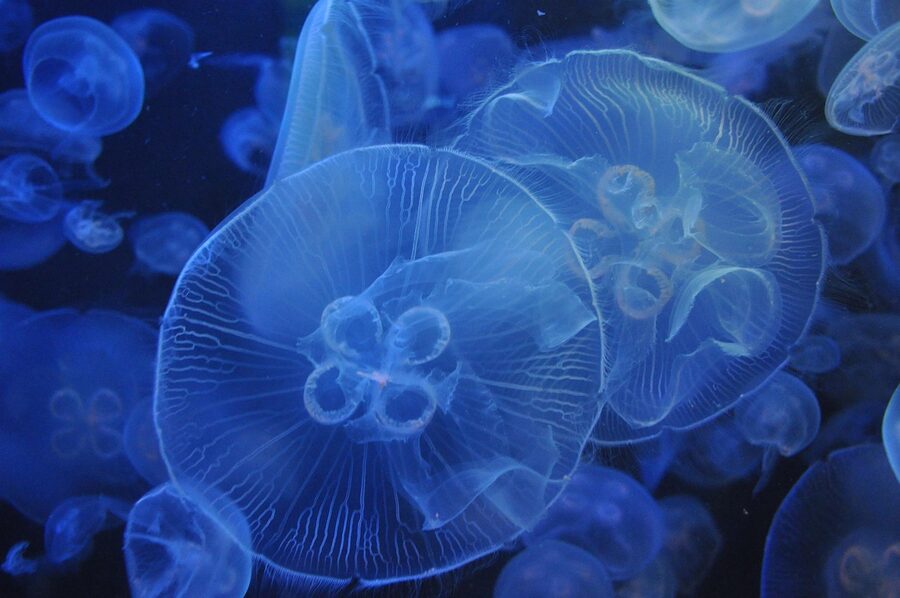
Easy to miss because it’s tucked toward the end of the route, but it’s the section adults usually love most. Six or seven tanks, low blue light, no walkway sound. People literally whisper in there.
If you’re carrying a phone, this is the Instagram payoff section. The lighting does the work. Spend ten minutes here even if you’ve been moving fast through the rest.


A short history
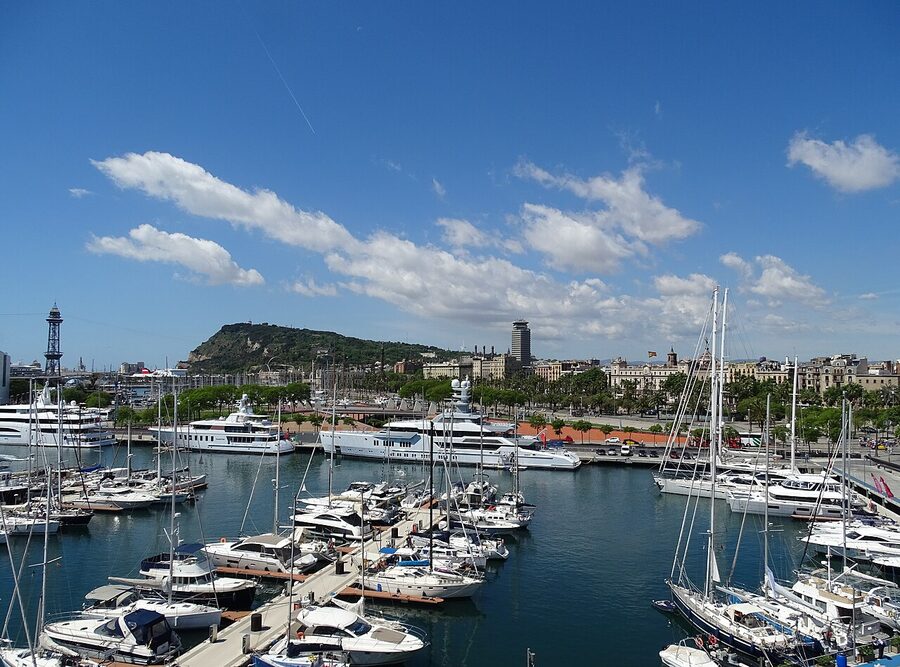
L’Aquàrium opened in September 1995, built into the renovated Port Vell waterfront that was redeveloped for the 1992 Olympics. Before the Olympics, this whole stretch of harbour was working docks and warehouses; the city flattened the industrial area and replaced it with the marina, the IMAX, the Maremàgnum mall, and the aquarium.
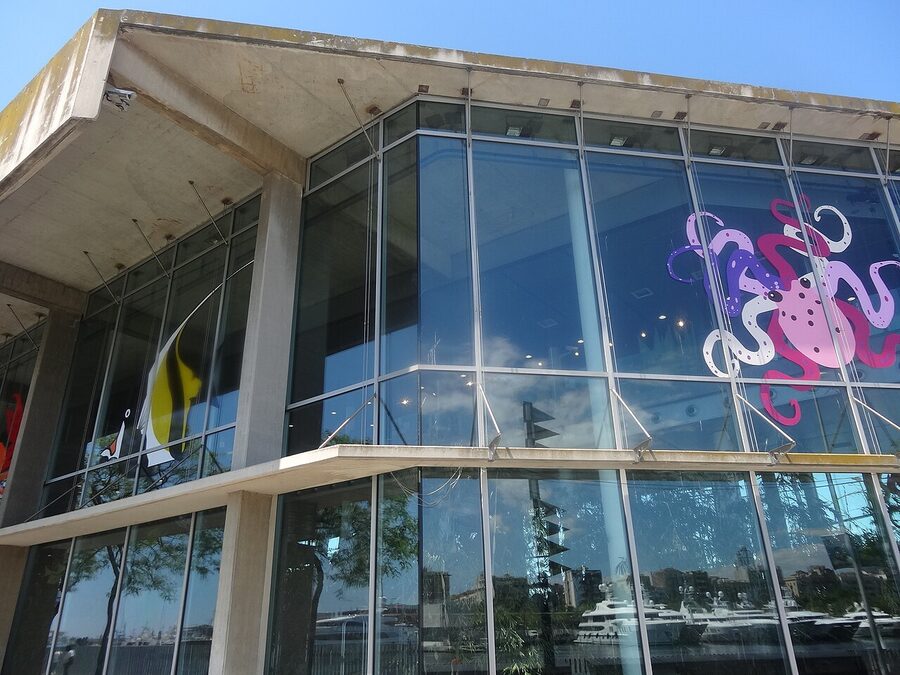
The Oceanari tunnel was the headline architectural feature when it opened. At 80 metres long, it held the European record then and still holds it now (as of 2026, no one has built a longer indoor aquarium tunnel in Europe). The building itself isn’t beautiful from the outside, but the engineering of the central tank (4.5 million litres of saltwater filtered continuously) is the thing to appreciate when you’re inside it.

Eating around the aquarium
The aquarium itself has a small café with cardboard sandwiches and overpriced coffee. Skip it. Five minutes’ walk and you’re in Barceloneta proper, where the seafood places along Passeig de Joan de Borbó range from tourist traps to genuinely good cheap-and-cheerful Catalan kitchens. La Cova Fumada is a Barceloneta institution for bombas and grilled sardines; expect to queue. La Mar Salada is the upgrade if you want a proper sit-down lunch. Both are within 15 minutes’ walk.
If you want to stay in the harbour, Maremàgnum has the standard mall food court (Pans & Co, Five Guys, the usual). Function over romance, but it works for kids who need feeding fast.
.jpg)
Practical tips most people miss
- Buy online with a fixed time slot. Walk-up tickets exist but rarely save anyone money or time.
- Go at 10:00 sharp. By noon the corridors near the tunnel are bumper-to-bumper.
- The cloakroom near the entrance fits a small backpack but not a full suitcase. If you’re coming straight from the cruise terminal, leave luggage at the cruise port.
- Strollers can fit through but not easily near the tunnel ramp. Babywearing is faster.
- Photography: no flash, no tripods, phones fine. The dim lighting is brutal on cheap phone cameras.
- Allow about two hours including the gift shop. Less than an hour and you’re rushing the jellyfish room, which is a mistake.
- Combine it with the Las Golondrinas harbour boat tour for a half-day at Port Vell, since both leave from within 200 metres of each other.
Worth combining with
Family attractions in Barcelona pair well together because they cluster. Camp Nou and the FC Barcelona experience is at the other end of the city, but if you’ve got a sports-mad kid, how to visit Camp Nou is the natural next stop. Closer to Port Vell, Las Golondrinas runs harbour cruises that leave from the same marina. And if you’re doing a one-day Barcelona run, our Barcelona in 1 Day combo guide covers the standard tourist trifecta of Sagrada Familia, Park Güell, and the Old Town.
The aquarium also pairs surprisingly well with a flamenco show. Hear me out. Take kids in late afternoon, find a sitter or call it bedtime, then head out for an evening show. If you’re researching that, our flamenco show ticket guide covers the three main tablaos. Or if you’re tackling the headline Gaudí miss in your itinerary first, our Sagrada Familia ticket guide walks through which tier is worth it.
Discount cards
The Barcelona Card and the Barcelona Pass both include the aquarium in some tiers, but neither is a slam-dunk if the aquarium is your only city attraction. The maths only works if you’re hitting four or five paid sights. Our Barcelona Card guide lays out exactly what’s included and the break-even number of attractions.
For families specifically, the Family Pack (two adults plus two kids 5-10) on the aquarium’s own ticket page is around €80, which is the best straight discount you’ll find. Buy that direct on aquariumbcn.com if you’re a family of four. Two-adult couples with no kids should buy two standard adults and stop overthinking it.
One last thing about expectations
This isn’t Monterey Bay, the Georgia Aquarium, or even Lisbon’s Oceanário. If you’re coming off a high-end aquarium in your home country, you’ll find Barcelona’s smaller and tighter. The strength is the Mediterranean species and the tunnel’s age (built before half the world’s aquariums caught up), which makes it specifically worthwhile in Barcelona, not “world’s best aquarium” worthwhile in general.
I still recommend going. Two hours, around €29, and you walk out understanding the local marine ecosystem better than 90% of people who eat seafood on the Barceloneta beachfront. That’s a fair trade.
Where to go from here
If your Barcelona itinerary still has gaps, the family-attraction next-step is Camp Nou for the FC Barcelona stadium tour or Las Golondrinas harbour boats right next door. For the headline architecture day, work through Sagrada Familia, Park Güell, and the Old Town walking tour in that order. Travelling with someone who wants culture-not-aquarium afternoons? A flamenco show at one of the tablaos pairs perfectly with a Port Vell day for an evening contrast. And the all-in-one Barcelona in 1 Day combo tour handles the big three attractions in a single bookable day if you’re tight on time.
Affiliate disclosure: this article contains affiliate links. If you book through them we may earn a small commission at no extra cost to you. We only recommend tours and tickets we’d book for ourselves.