
The lights dim, the chatter dies, and for one breath nobody on the stage moves. Then the cantaor starts, that gut-deep voice that sounds half-grief, half-prayer, with no microphone and no warm-up. A guitar slides in two beats later, the dancer’s heel cracks the silence, and you stop checking your phone for the next eighty minutes.
That moment is what you’re paying for in Barcelona. Not the dinner, not the walk to the venue, not the photo at the end. That first cante.
Most authentic: Tablao Flamenco Cordobes Show + Drink, $55. The historic tablao on La Rambla, going since 1970, no amplification.
Smallest room: Flamenco Show with Drink at El Duende, $31. The newest venue from the Cordobes family, intimate room, sangria included.
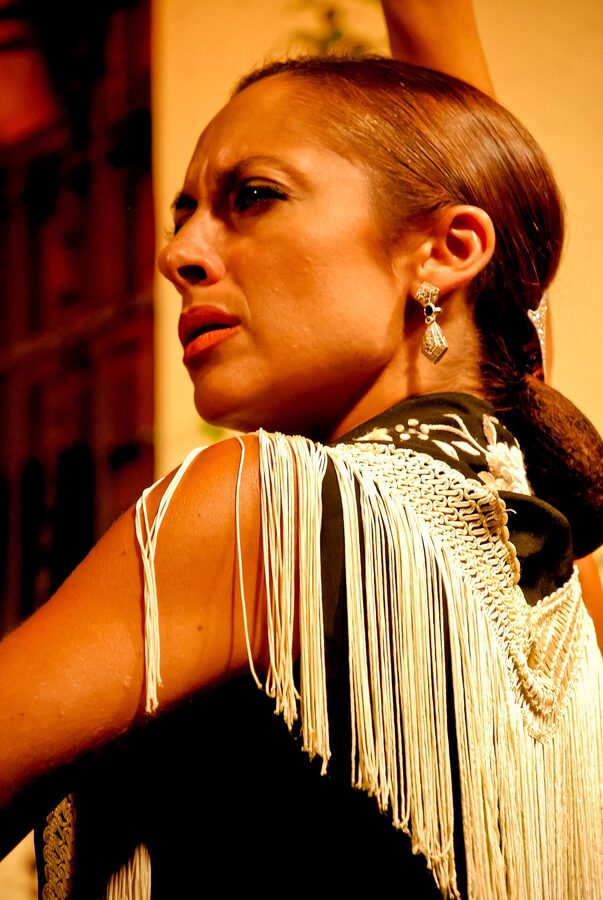

Flamenco was born in Andalusia, mainly in the gypsy quarters of Seville, Cadiz, and Jerez. So why see it in Barcelona? Because the Catalan capital has been a flamenco city in its own right since the 1960s, when migrants from the south brought the music with them. The dancer Carmen Amaya grew up in the Somorrostro shanty town here, and the 1963 musical Los Tarantos was filmed in the same Barcelona streets you’ll be walking through to get to the show.
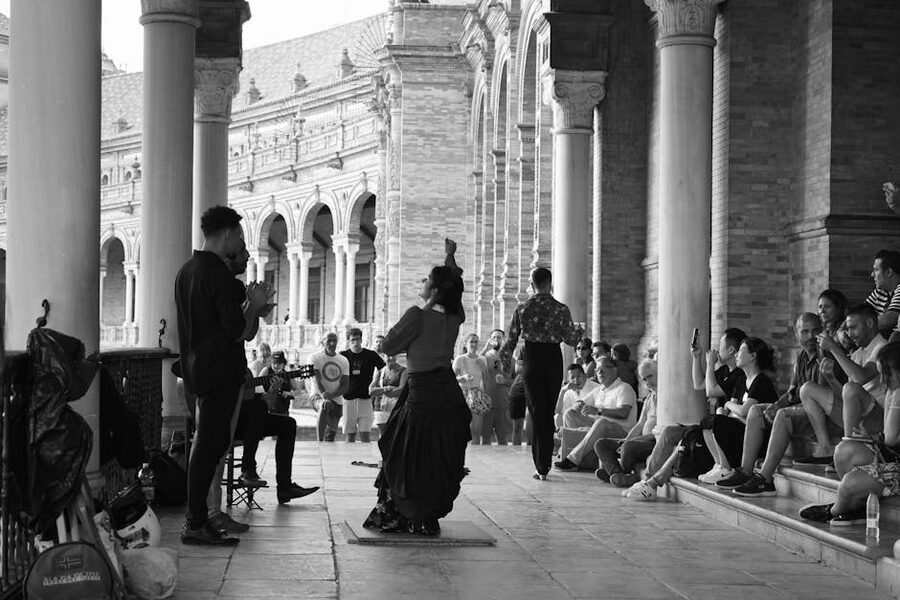
- Where to Watch Flamenco in Barcelona Tonight
- 1. Flamenco Show at City Hall Theatre:
- 2. Tablao Flamenco Cordobes Show + Drink (La Rambla):
- 3. Flamenco Show with Drink at El Duende:
- How Tickets Actually Work
- Which Venue for Which Traveller
- What a Flamenco Show Actually Looks Like
- What “Duende” Means and Why You Keep Hearing It
- Where the Venues Actually Are
- What to Wear and the Other Etiquette
- How Much You Should Actually Pay
- When to Go: Time of Year, Time of Night
- Combining a Flamenco Show With the Rest of Barcelona
- Day Trips With a Flamenco Component
- Other Barcelona Tickets You’ll Probably Want
Where to Watch Flamenco in Barcelona Tonight
Barcelona has roughly half a dozen tablaos worth your time, plus a couple of bigger theatre-style venues. The right answer to “which is best?” depends on what you’re after: cheap and central, food-and-show, or smallest possible room. Here are the three I’d actually book, in that order.
1. Flamenco Show at City Hall Theatre: $29
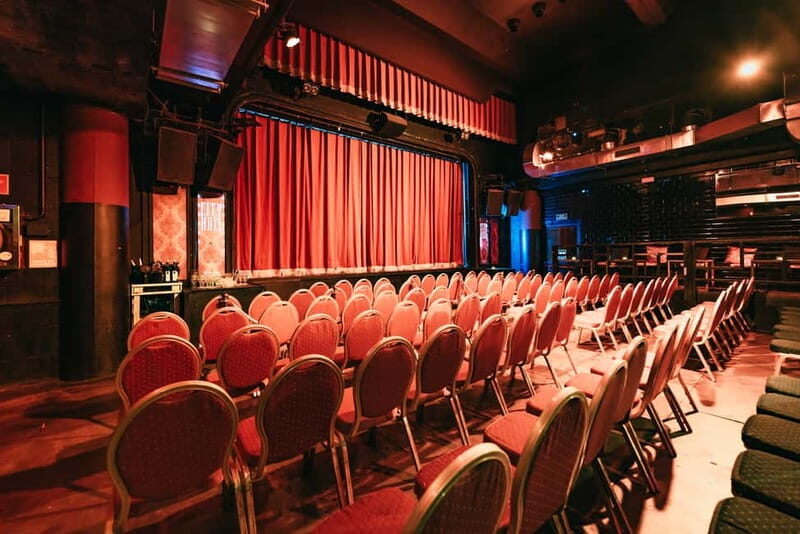
This is the one I send budget travellers to. The venue is a 1900s theatre just above Plaça Catalunya, the show runs an hour, and there are four time slots a night so you can fit it around dinner. Our full review of the City Hall flamenco show goes into the seating tiers (front row is worth the upgrade if you’re tall, the rear-of-stalls ticket sees fine but you lose the heel-stomp detail). The drink add-on is cheap enough that I’d just take it.
Check Availability
Read our full review
2. Tablao Flamenco Cordobes Show + Drink (La Rambla): $55
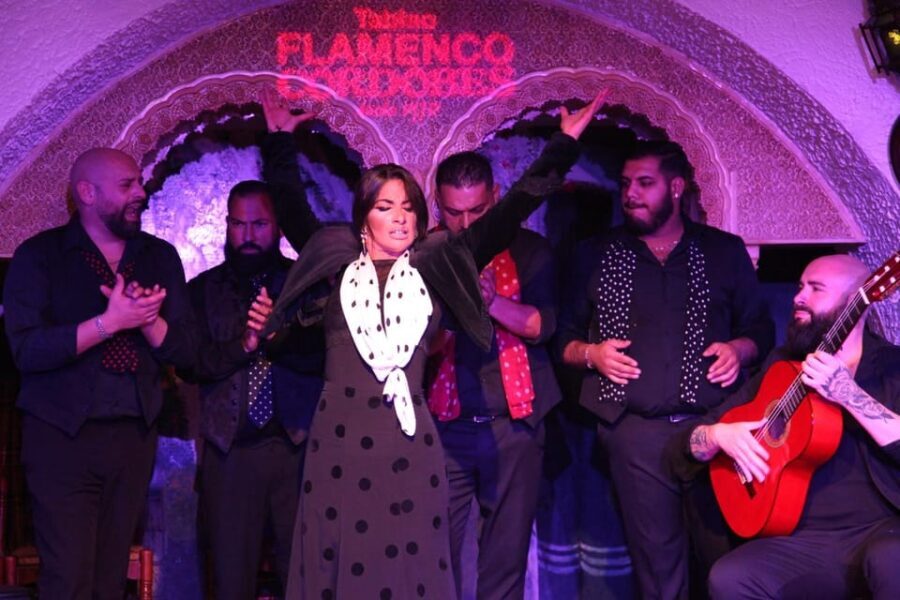
If you only see one flamenco show in Spain, see it here. Cordobes is the oldest tablao in Barcelona and the only one most flamenco purists will defend; our review walks through the show structure and what each of the three nightly time slots is like. Skip the dinner upgrade. Take the show + drink ticket, eat tapas around the corner first, walk in five minutes before the lights drop.
Check Availability
Read our full review
3. Flamenco Show with Drink at El Duende: $31
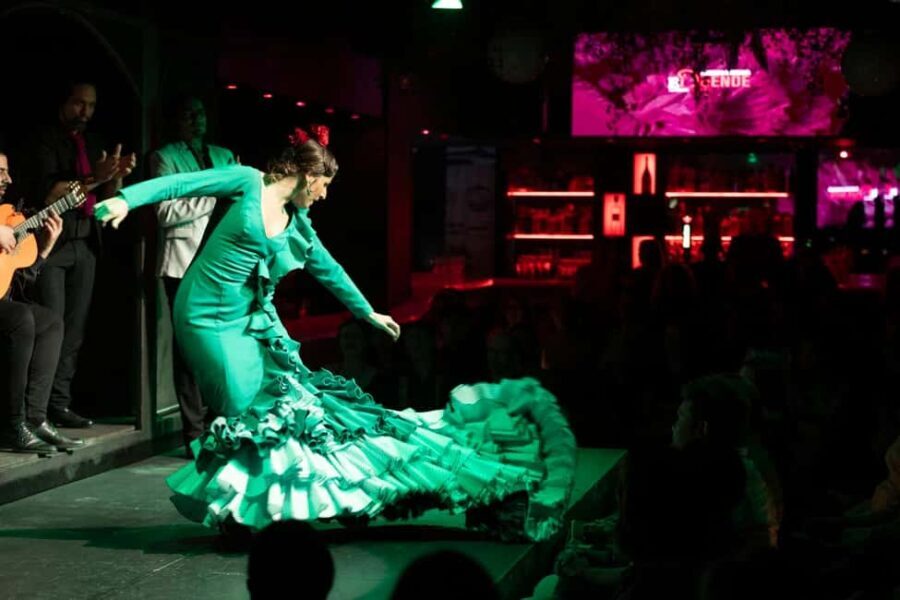
This is the answer if Cordobes is sold out, or if you want a smaller room for less money. Same lineage (the Cordobes family runs both), 55-minute show, sangria included, and you can read our full take on El Duende for the seating layout. It’s the closest thing in Barcelona to feeling like you wandered into a flamenco bar by accident.
Check Availability
Read our full review
How Tickets Actually Work
Three tiers, more or less, across every venue:
- Show only. Cheapest. You get a seat and the performance. Some venues throw in a complimentary drink at this tier, some don’t.
- Show + drink. The sweet spot. Five to ten euros more, but the drink is usually a glass of cava or sangria, and you’d buy one anyway.
- Show + dinner. Skip it. Most venues serve a buffet or set menu before the show in a separate room, and the food is reliably mediocre. You’re better off eating tapas in the Gothic Quarter before. The one venue where dinner does work is Tablao de Carmen in Poble Espanyol, because they serve the food during the show and the kitchen is genuinely Catalan, but that’s the exception.
Book at least two days ahead in low season, a week ahead in summer, two weeks ahead if you want a specific seat. The big tablaos sell out front-row first, then the rear, then the middle, in that order. If you’re flexible on time slot, the late show (10pm or 10:30pm at most venues) is easier to get into than the 7pm or 8:30pm.
Buying at the door works in winter and on weeknights but is risky in summer. The walk-up line at Cordobes routinely fills up by 6pm for the 7:15pm show in July and August.
Which Venue for Which Traveller

If you’re choosing one show and you want the most flamenco for your money, Cordobes. The artists they bring through are properly senior, the room has the low-ceiling acoustic you can’t replicate in a theatre, and the no-microphone rule is non-negotiable.
If you’re on a tight budget or you’re with kids who’ll fidget if the show runs over an hour, City Hall. The 1-hour run time is real: the show ends at 60 minutes on the dot. Tickets start around twenty-five euros.
If you want the smallest possible room, El Duende at Plaça Reial. Same family as Cordobes, half the size, and the ticket is around thirty-one dollars.
If you want food-and-show in one venue and don’t mind the trek up to Poble Espanyol, Tablao de Carmen. The dinner is served during the performance, not before, which fixes the usual buffet-flamenco problem. Pair it with our Poble Espanyol tickets guide because the show ticket gets you in for free after 4pm and most people don’t realise.
If you want the rough, locals-and-bohemians version, 23 Robadors in Raval. This isn’t a tour, it’s a tiny bar that books a flamenco jam most weeks for seven or eight euros at the door. Don’t go alone late, and don’t go at all if you want comfortable seats.
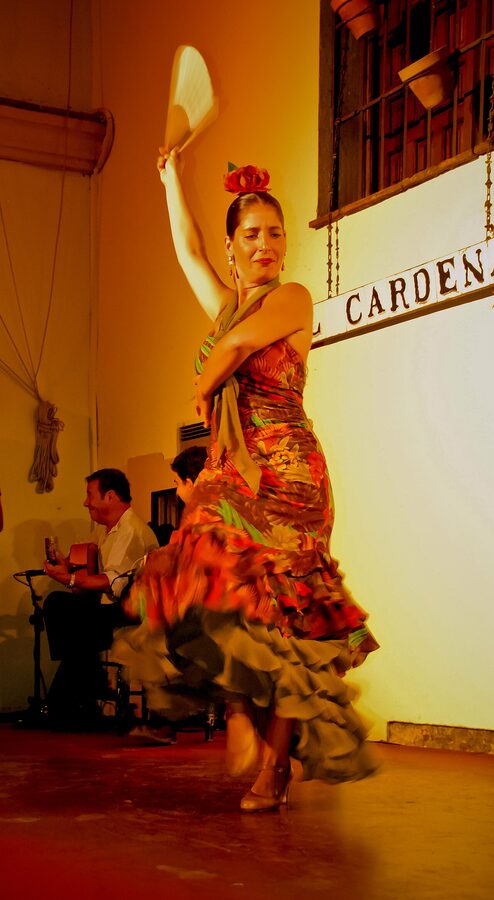

What a Flamenco Show Actually Looks Like
The classic tablao show runs four to six numbers, around 60 to 80 minutes total. The structure is loose but it usually goes: opening number with full company, a guitar solo, a slow cante, a faster dance set, and a closing big number where everyone is on stage.
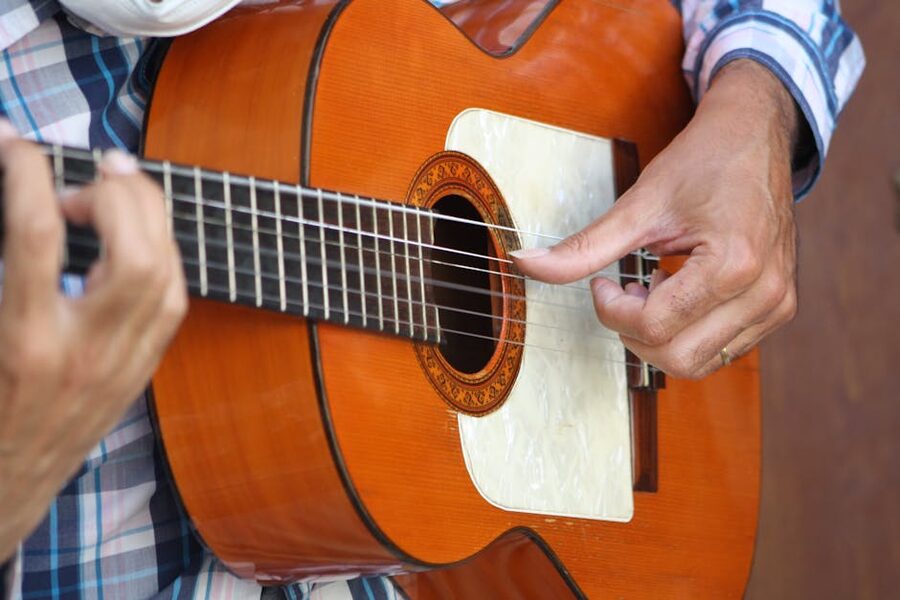
The four roles are cante (song), toque (guitar), baile (dance), and palmas (the rhythmic hand-clapping you’ll see the off-stage performers doing). The traditional view is that flamenco started as singing alone and the rest grew up around the voice. Watch the cantaor first if you want to understand what’s happening: when his eyes close and his free hand goes flat against his chest, that’s the heart of the song.
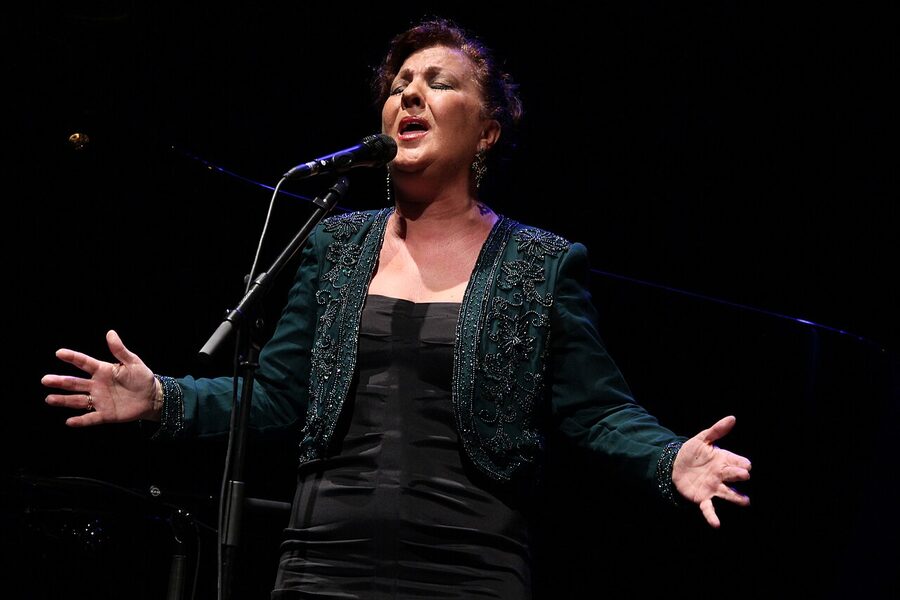

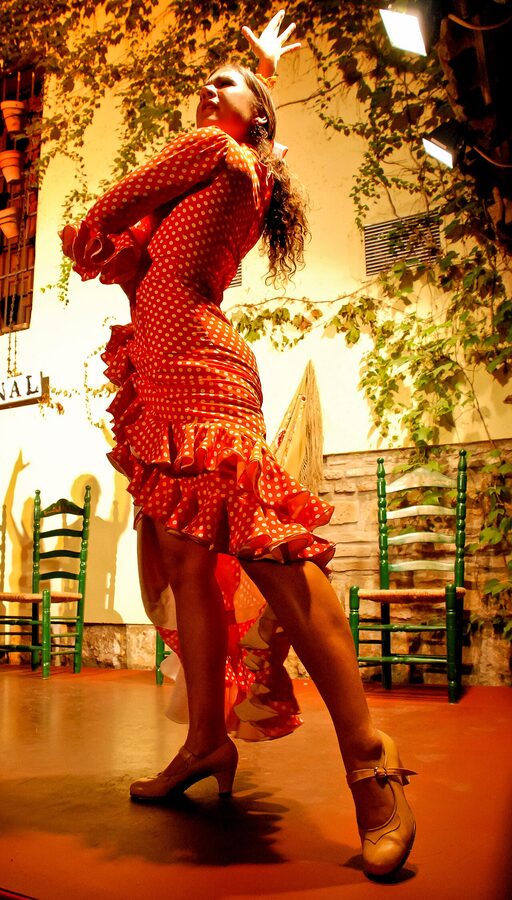
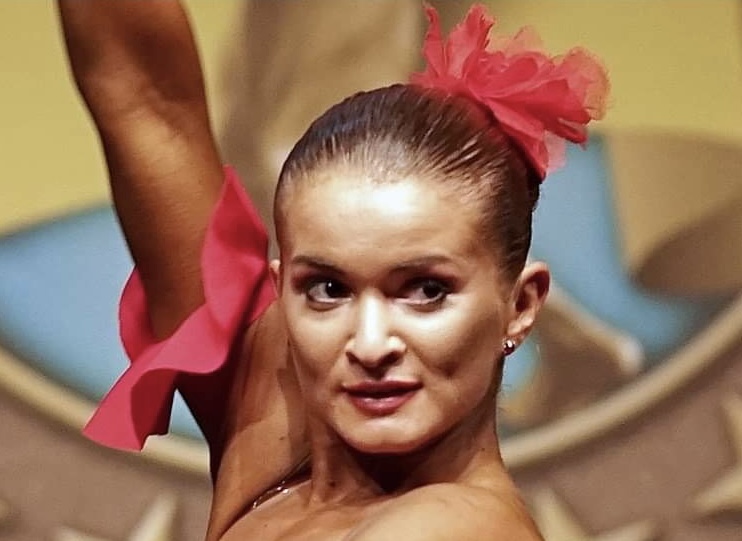
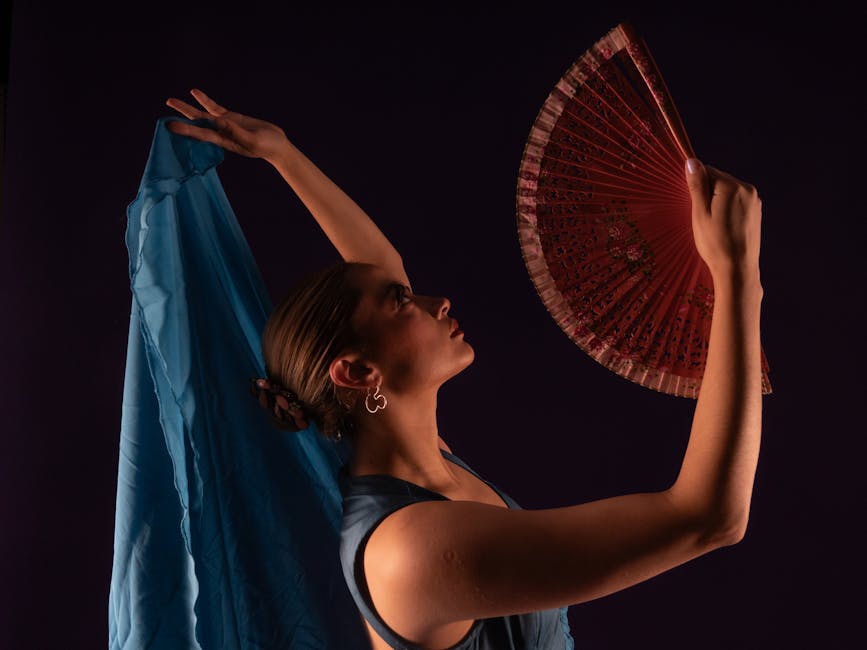
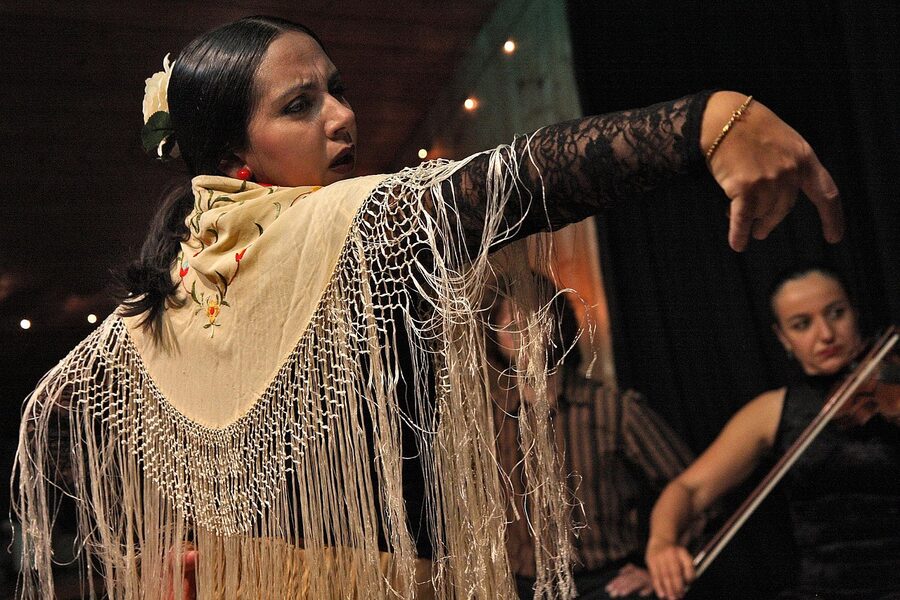
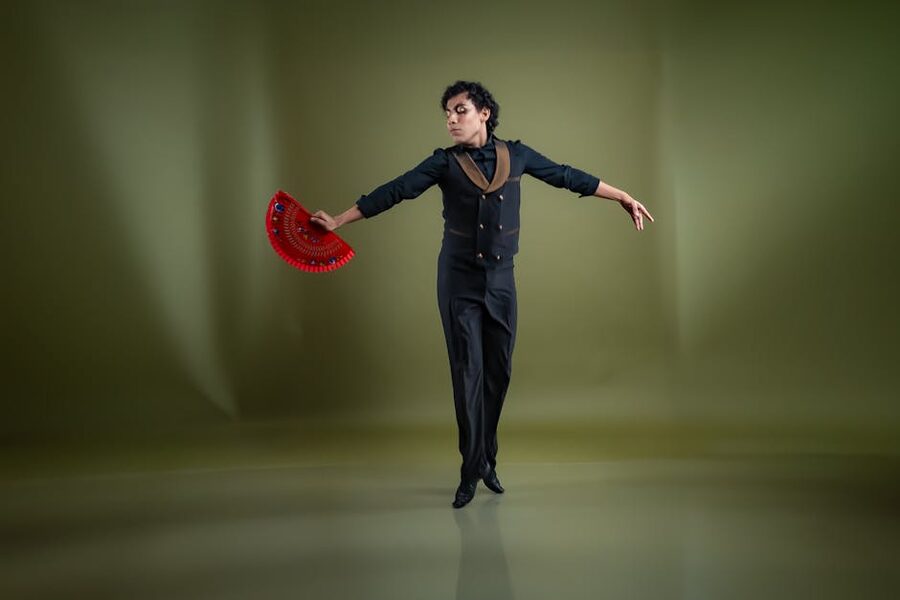
The dance is what most tourists are there for, and it’s what photographs well, but it’s the easiest part to follow without context. The footwork (zapateado) is what most people clock first; what you should also watch is the upper body, the slow swirl of the arms and the shawl work. Female dancers do something with the hands that takes years to learn, the way the wrists turn while the fingers stay relaxed.
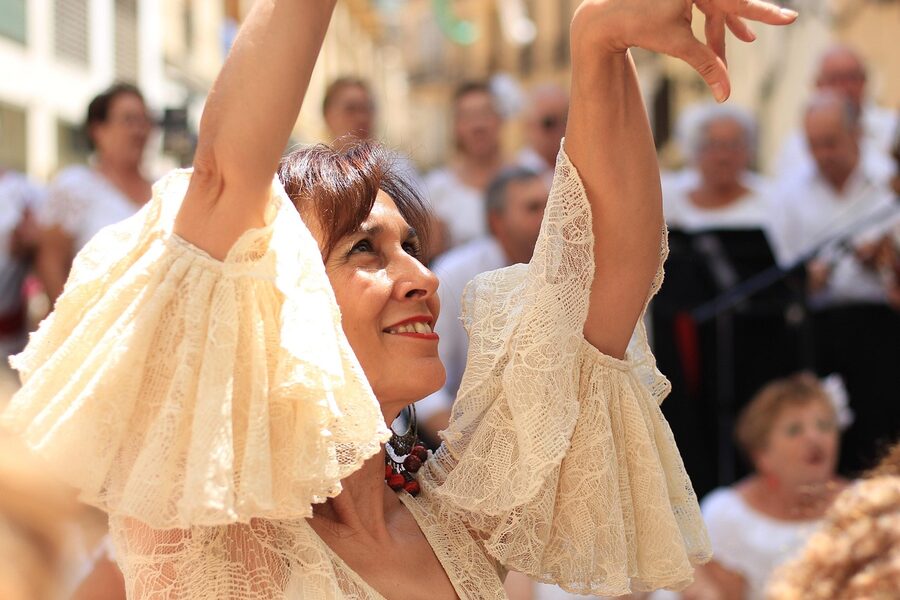
The audience joining in with palmas is a real thing in some venues, especially the smaller tablaos, but don’t lead. Wait for the room to start, then clap on the off-beats. If you can’t find the rhythm (and palmas is genuinely tricky, twelve-beat compás patterns), just sit still. Better silent than off-tempo.
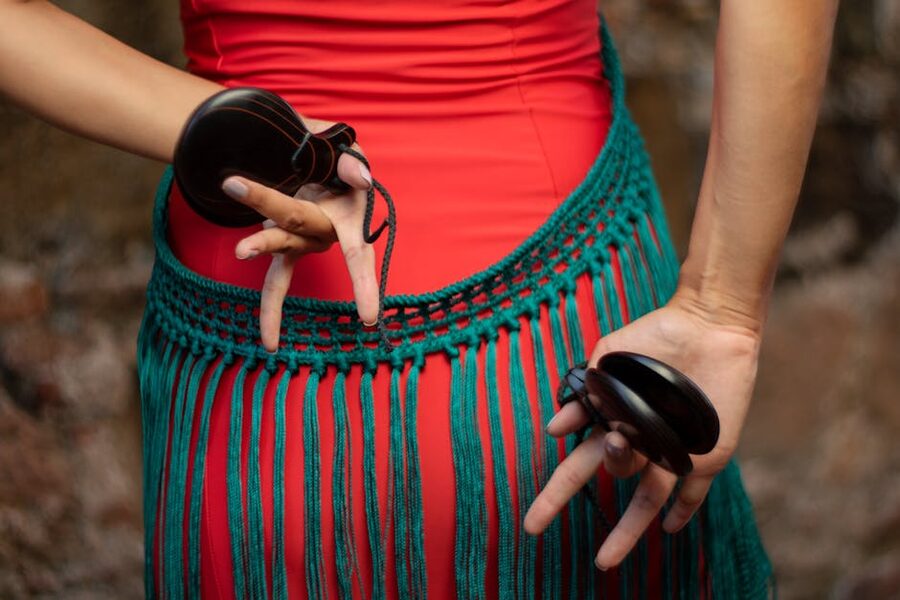
What “Duende” Means and Why You Keep Hearing It
You’ll hear the word duende used about flamenco constantly, in marketing material and from the artists themselves. It doesn’t mean duende as in goblin, even though that’s the literal Spanish. In flamenco, duende is the moment when the performer crosses from technique into something else, that uncanny pull that makes you sit up two minutes into a song you don’t understand the language of.
You can’t fake duende and you can’t book a show that promises it. What you can do is pick a venue small enough to feel it: when the cantaor is six feet from your seat instead of forty, the chance of duende landing on you goes way up. That’s the case for Cordobes and El Duende over the bigger theatre-style venues.

Where the Venues Actually Are
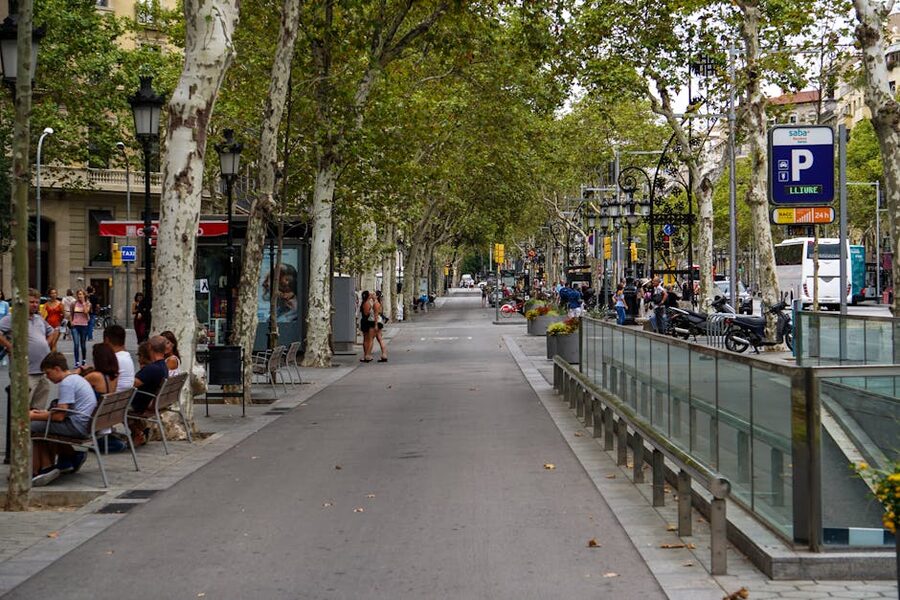
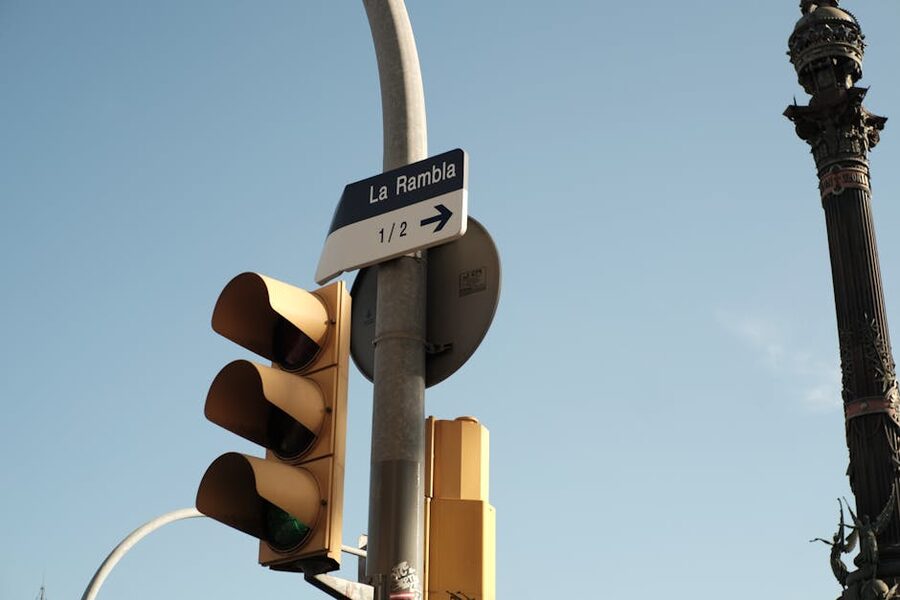
The geography is simple. Cordobes and El Duende are both on or just off La Rambla, in the chunk between Plaça Catalunya and the seafront. City Hall is on Carrer Rambla de Catalunya (different street, same area). Los Tarantos sits on Plaça Reial, three minutes off La Rambla. Palau Dalmases is across in El Born, opposite the Picasso Museum. Tablao de Carmen is the outlier, up at Poble Espanyol on the slope of Montjuïc.
For all the central-Barcelona venues, plan to be in the area an hour before show time. Eat first; line up about ten minutes before doors. The shows start within five minutes of advertised time, which is unusually punctual for Spain, so don’t push it.
If you’re staying further out, the metro is fine. L3 (green line) hits Liceu and Drassanes, which between them get you to every Rambla venue. Don’t drive. Parking on La Rambla on a weekend night is its own form of suffering.
What to Wear and the Other Etiquette
Smart casual is fine. Nobody dresses up for tablao flamenco the way they would for the opera at Liceu, but you’ll feel underdressed in athleisure and shorts. Jeans and a shirt clear the bar at every venue I’ve been to.
Phones go away. Most venues ban photography during the show; some only ban it during the cantes and let you snap during the closing big number. The rule is enforced, especially at Cordobes. You’ll get more from the show without the screen between you and the stage.
No talking once the music starts. Tablaos have a strict silence rule for the singing, because the cantaor is performing without a microphone and any chatter from the back rows kills the mood for everyone. The wait staff stop circulating as soon as the lights drop. Order your drink at the start.
Tipping isn’t expected, although a euro or two left on the table is appreciated. The artists take a bow, you clap hard, and you leave by the same door you came in. There’s rarely an encore.
.jpg)
How Much You Should Actually Pay
Twenty-five to thirty-five dollars is fair for show + drink at any of the central venues. That puts you at City Hall (around twenty-five at the back, thirty in the middle, forty front row) or El Duende (thirty-one with sangria included).
Fifty to sixty dollars is the right range for the bigger-deal experience at Cordobes. You’re paying for the room as much as the artists, and the room is genuinely worth it.
Sixty plus is dinner-included territory. Worth it only at Tablao de Carmen, where the food is served with the show and your ticket also gets you into Poble Espanyol after 4pm. Anywhere else, the dinner upcharge is a tax on people who don’t want to think about where to eat.
If a venue is asking ninety to a hundred and twenty euros for a “VIP” experience, what you’re paying for is a seat in the first two rows. At the smaller tablaos that’s worth it; at the bigger theatre venues like Palacio del Flamenco it’s less clear-cut, because front row at a 400-seat theatre is still further from the stage than the back row at Cordobes.
When to Go: Time of Year, Time of Night
Off-peak (November to March, excluding Christmas week) is the sweet spot. Fewer crowds, easier same-day bookings, and the artists are usually the regulars rather than the rotating guest performers tablaos bring in for summer. Cordobes in February at 10:30pm with twenty other people in the room is what you should aim for if you can swing the dates.
Summer (June to August) is when you absolutely must book ahead. Every show in every venue sells out, sometimes a week or more in advance. The crowd is heavily tourist, which doesn’t make the show worse but can make the room feel less intimate.
Within a single evening, the late show (around 10pm at most venues) tends to be the best one. The audience is smaller, the artists are warmer, and the bar staff have already settled into their rhythm. The 7pm or 7:15pm slot is the most rushed because of the dinner-then-show overlap.
Combining a Flamenco Show With the Rest of Barcelona
Flamenco is a 60-to-80-minute commitment, plus arrival and a drink. That makes it perfect as the closer to a full Barcelona day. The natural pairing is a Gothic Quarter walk in the late afternoon, tapas around 7pm, and the 9pm or 10pm flamenco slot.
Our Gothic Quarter walking guide covers the route most people take through the medieval streets, and you can finish at Plaça Reial (where Los Tarantos sits) for the show. Add a guided walking tour of Barcelona earlier in the day if you want context for the streets you’re crossing on the way to the venue.
If your evening plan is food-first, our paella cooking class guide works well for a 4pm start, leaving you in El Born or Barceloneta around 7pm with enough time to walk to the show.
For the bigger picture, plan the rest of your Barcelona day around a flamenco closer using our Sagrada Familia tickets guide for the morning slot and our Park Güell tickets guide for the early afternoon. That triple bill (Sagrada at 9am, Park Güell at 1pm, flamenco at 9pm) is genuinely doable if your hotel is anywhere near the centre.
Combo tours can save the planning headache. See our Barcelona in 1 Day combo tour guide for the day-trip versions; some of those wrap up by 6pm and leave you free for the late flamenco slot.
Day Trips With a Flamenco Component
Most of the day-trip operators don’t include a flamenco show by default, but you can stack one onto a half-day Sitges or Montserrat trip. Montserrat from Barcelona wraps up around 5pm and gets you back to the centre with plenty of time for the 9pm slot. Girona and the Dalí Museum as a day trip is a longer day; you’ll be home around 7pm and the 10pm late show is the realistic option.
Other Barcelona Tickets You’ll Probably Want
Most readers booking flamenco are doing it as part of a longer Barcelona stay, and the rest of this batch covers the other big tickets you’ll need. Sagrada Familia is the must-book; our Sagrada Familia guide walks through the three ticket tiers and which timed slot to pick for the stained-glass payoff. The Barcelona in 1 Day combo tour is worth a look if you’re short on time and want Sagrada plus Park Güell plus the Old Town in one bundle. For families, our Barcelona Aquarium guide covers the Port Vell aquarium with its 80-metre walk-through tunnel.
Beyond the batch, weave in our Casa Batlló and Casa Milà guides for the Gaudí thread, our Barcelona Card breakdown if you’re stacking attractions, and our hop-on hop-off bus guide for getting between everything without metro fatigue.
Affiliate disclosure: some links on this page are affiliate links to GetYourGuide and Viator. If you book through them we earn a small commission at no extra cost to you. Prices and availability change; check the booking page for the live numbers.