
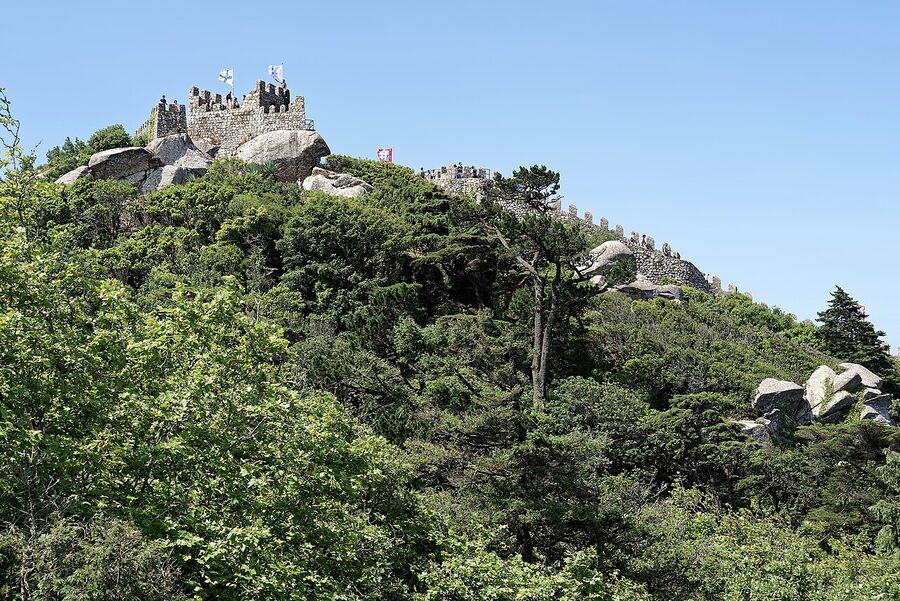
Here’s something most Sintra day-trippers don’t realise. The Castelo dos Mouros, that ancient ridge-line silhouette you can see from town, was abandoned ruin for nearly seven centuries before anyone thought to rebuild it. The reason it looks so picturesquely “old” today is because a 19th-century king deliberately staged it that way — he wanted a romantic ruin to look at from his palace next door.
So the castle you wander now is partly Moorish 9th-century stonework and partly King Ferdinand II’s reconstruction project from the 1840s. That’s a useful thing to keep in mind when you visit, because most of what you’ll feel up there — the lonely ridges, the wind, the framed views of Pena Palace — is by design. Tickets are €12 for adults and you don’t need to book a time slot, which is rarer in Sintra than you’d think.

In a hurry? Three quick picks
Just the entry ticket: the Castle of the Moors skip-the-line ticket from $14. Walk straight past the queue at the kiosk.
Castle plus Regaleira combo: the Moorish Castle and Quinta da Regaleira combo with audio guides from $40. Two of Sintra’s best sights, no rigid time slot.
Door-to-door from Lisbon: the private Sintra day tour with Pena, Moorish Castle and Regaleira from $132. Hotel pickup, all three sights, no logistics.


- In a hurry? Three quick picks
- What a ticket actually gets you
- Three ways to book it
- 1. Sintra: Castle of the Moors Skip-the-Line Ticket — from
- 2. Sintra: Castle of the Moors and Quinta Entry with Audio Guides — from
- 3. Lisbon: Pena Palace, Moorish Castle, Quinta da Regaleira and Sintra Private Tour — from 2
- Why it usually feels emptier than Pena
- Walking the battlements
- The Torre Real and getting to the top
- The chapel hidden inside the walls
- The views (and what you can actually see)
- When to go (and when to absolutely skip)
- Getting up there from Sintra
- A potted history (if you like that kind of thing)
- Practical things they don’t put on the website
- Where it fits in a Sintra day
- If you only do one thing
- Other Sintra and southern Portugal guides worth a look
What a ticket actually gets you
A standard ticket is €12 for adults (18–64), €10 for youths (6–17) and seniors (65+), and free for under-5s. There’s a family ticket at €33 that covers two adults plus two children. Buy at the kiosk by the entrance or, if you want to avoid the line on a busy day, get the skip-the-line e-ticket on your phone. Either gets you the same access — there’s just one ticket type for the whole site.
Unlike the Palácio da Pena next door, the Castelo dos Mouros has no timed entry slots. You turn up, you scan, you walk in. That single fact changes the whole rhythm of a Sintra day. If your Pena slot isn’t until 14:00 and you’ve already done the National Palace in town, the Moorish Castle is the obvious gap-filler — it absorbs whatever time you have.

One thing that catches people out: the ticket office and the actual castle entrance aren’t the same point. The ticket office sits across the road (where there’s also a public toilet block, which is worth knowing). The entrance proper is a few minutes’ walk uphill through forest path, and the climbing only really begins once you’re past the inner gate.
If you want context as you walk, the audio-guide combo with Quinta da Regaleira is a smart shortcut. Two audio downloads to your phone, two e-tickets, and you can do them on the same day with no rush. We cover the broader Sintra-from-Lisbon logistics in our how to visit Sintra guide — that’s the place to go for the train and bus practicalities.
Three ways to book it
Three options worth weighing — straight ticket, two-monument combo, or full Lisbon-to-Sintra private day. Pick by how much hand-holding you want, not by which is cheapest.
1. Sintra: Castle of the Moors Skip-the-Line Ticket — from $14
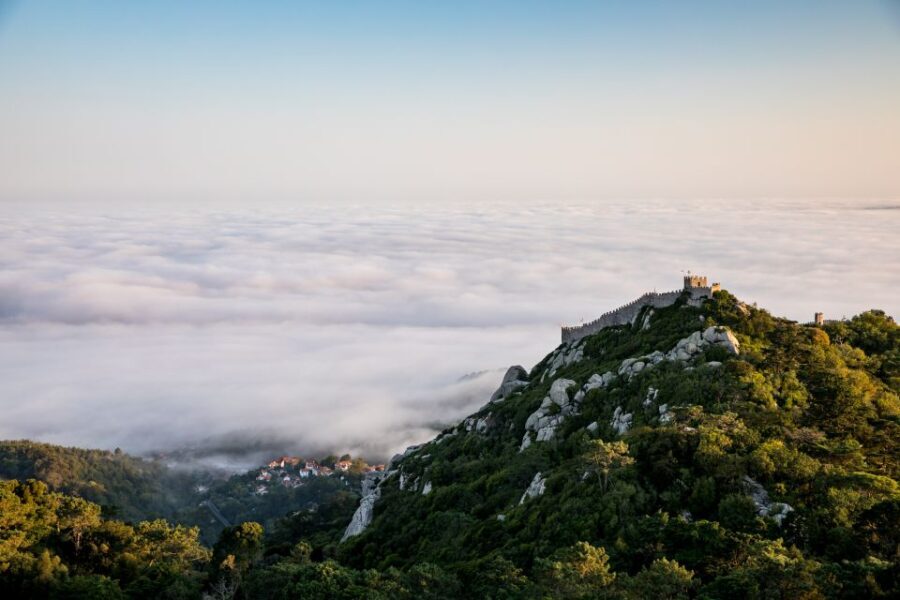
This is the no-frills entry. Show your phone at the gate, walk in, take your time. It’s the option I’d pick if I were visiting Sintra for a second or third time and already knew what I wanted to see. Our full review of the skip-the-line ticket goes into the queue situation in summer, which is the only time the “skip the line” part really matters.
2. Sintra: Castle of the Moors and Quinta Entry with Audio Guides — from $40
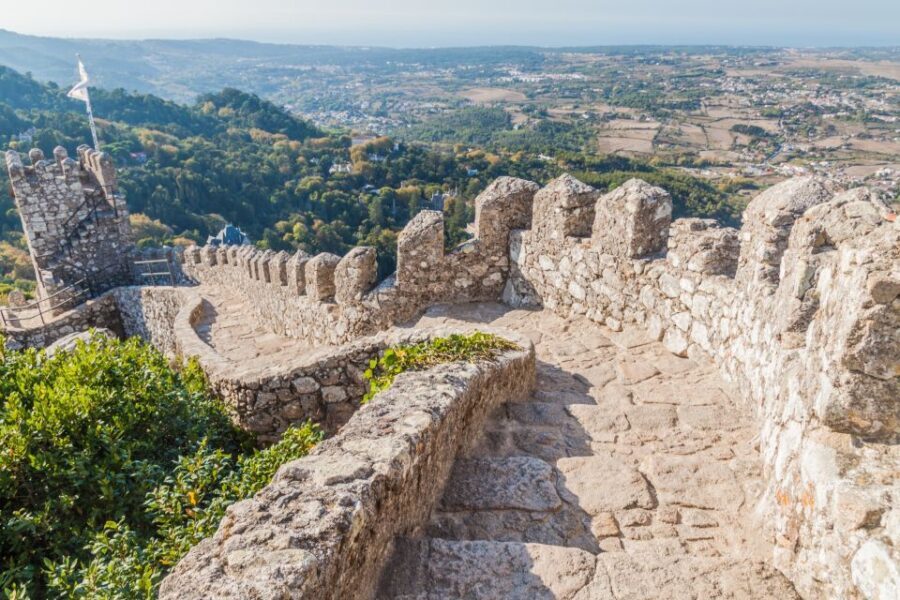
Two e-tickets plus three audio tracks delivered to your phone — one for the castle, one for the Quinta, and one for the walk between them. We dig into the Regaleira side of this combo in our Quinta da Regaleira ticket guide, and it pairs particularly well with the Castelo dos Mouros because the two sights have completely different energies — one all walls and views, the other all gardens and grottoes.
3. Lisbon: Pena Palace, Moorish Castle, Quinta da Regaleira and Sintra Private Tour — from $132
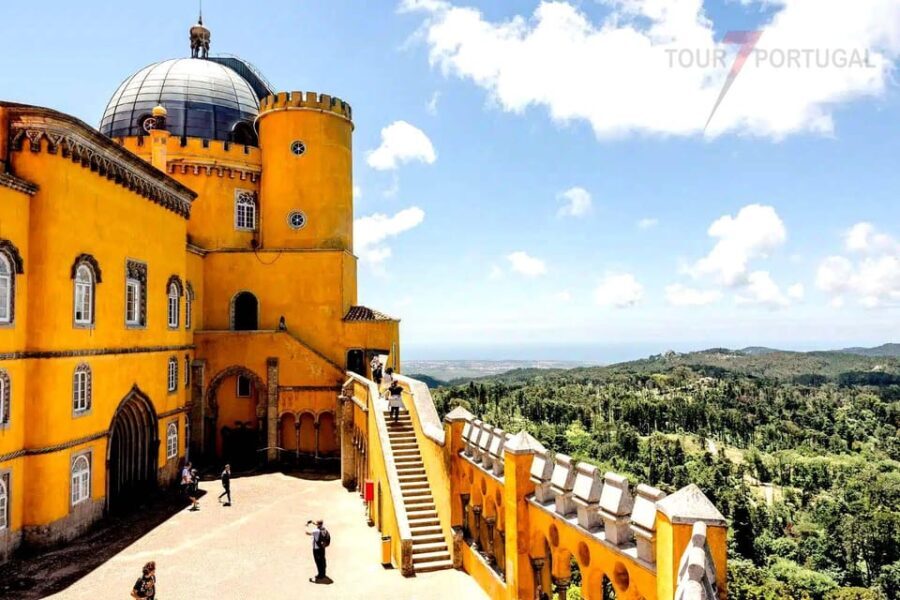
This is the lazy luxury option, and there are days when that’s exactly the right call. A guide picks you up in Lisbon, runs you between Pena, Moorish Castle and Regaleira, and handles every queue and parking question. If you only have one day for Sintra and want to see the headlines without sweating the logistics, this is it. Our review of this private day tour covers what’s actually included and the realistic schedule.
Why it usually feels emptier than Pena
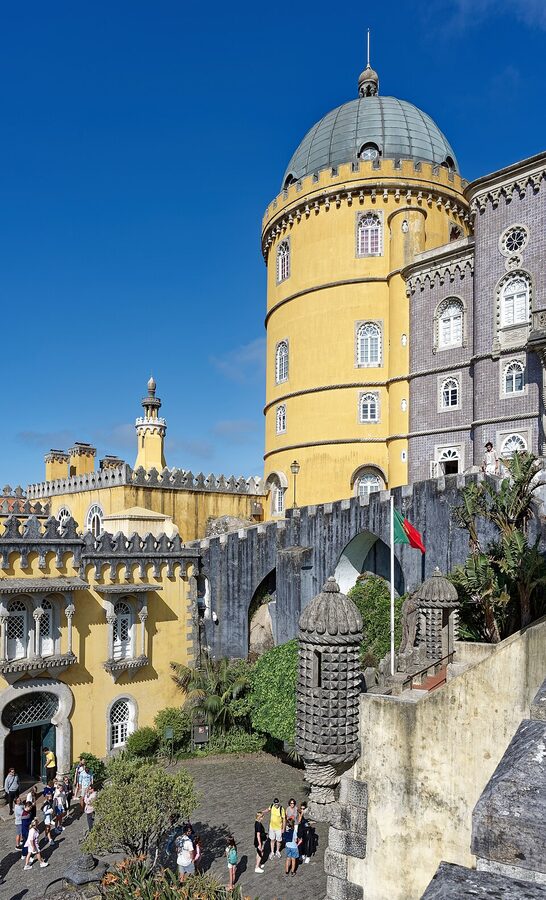
Most Sintra day-trippers come for one thing: Pena Palace. It’s the colourful one, it’s on every postcard, and it has the strict timed-entry system that makes everyone book months ahead. The Castelo dos Mouros sits literally next door — the entrance is only 200 metres from Pena’s ticket office — but it gets a fraction of the visitors. Why?
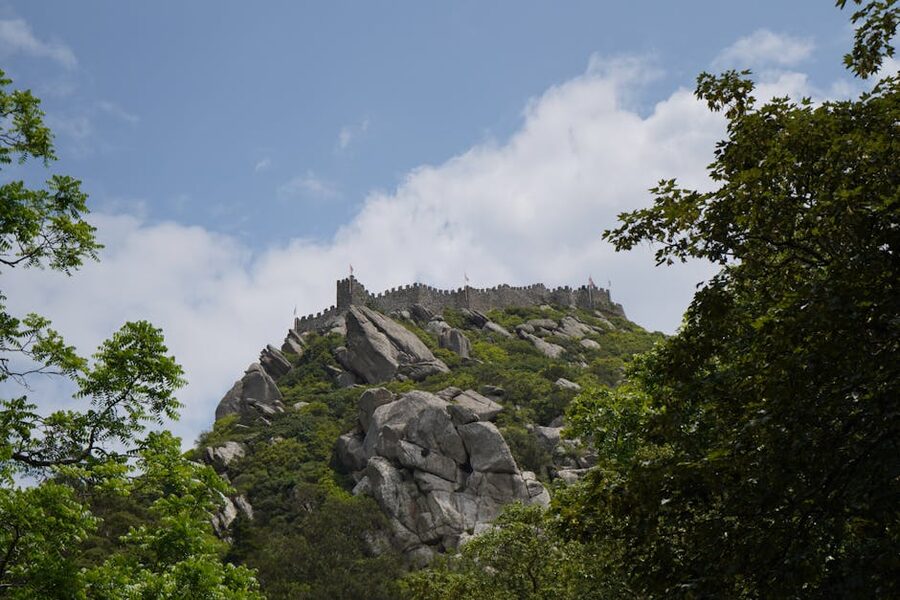
Because the Moors’ castle is a workout. The whole site is essentially a long, narrow path along the spine of a ridge, with constant up-and-down stone steps and zero shade. People who came to Sintra for a “fairytale castle” photograph and a coffee don’t always want that. People who came to walk somewhere old and quiet love it.
It also doesn’t photograph as immediately as Pena — there’s no single iconic shot. The reward here is the overall feeling of being somewhere that’s both ruin and reconstruction, with views in every direction. If your travelling group includes both the photographers and the ramblers, the Moorish Castle is the one that makes the ramblers happiest.
Walking the battlements
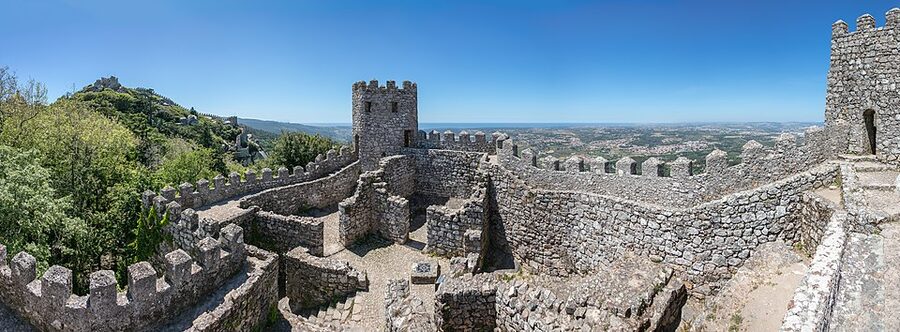
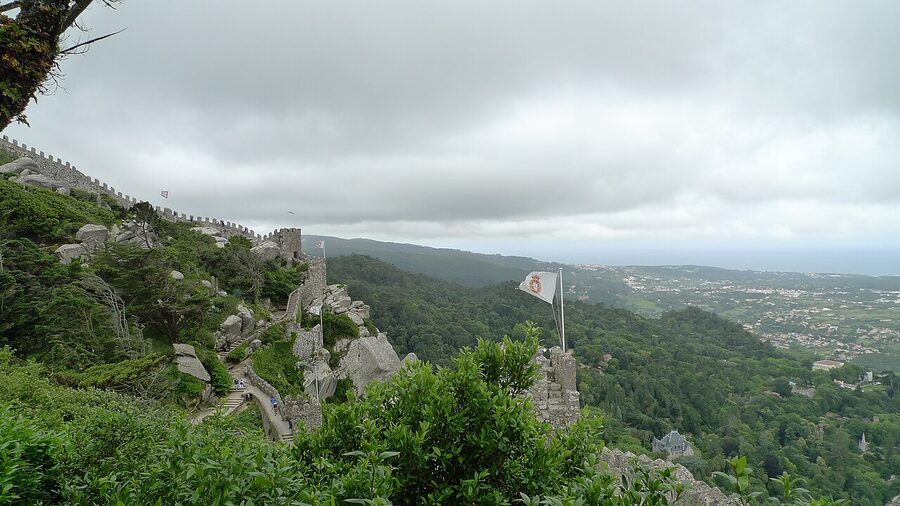
Once you’re inside the inner walls, the route is yours to choose. There’s a main loop that follows the battlements anti-clockwise, but the paths cross back on themselves at multiple points. You can do the whole circuit in about 60 minutes at a brisk pace, or stretch it to 90 if you stop at every viewpoint.
.jpg)
The single most important practical thing to know: there are no handrails on most of the upper battlements. The drops on either side are real and unforgiving. If you suffer from any kind of vertigo, or you’re with a young child, do not climb the upper walls. The lower courtyard, the chapel, the cisterns and the central paths are all flat-ish and perfectly fine — you’ll still get a great visit. It’s the upper ridge sections that demand confidence.
Wear actual walking shoes. I know that sounds obvious for a castle on a hill, but I’ve watched people try this in flip-flops and it ends badly. The stones are uneven, sometimes polished from centuries of footfall, and slippery after even a light rain.

The Torre Real and getting to the top
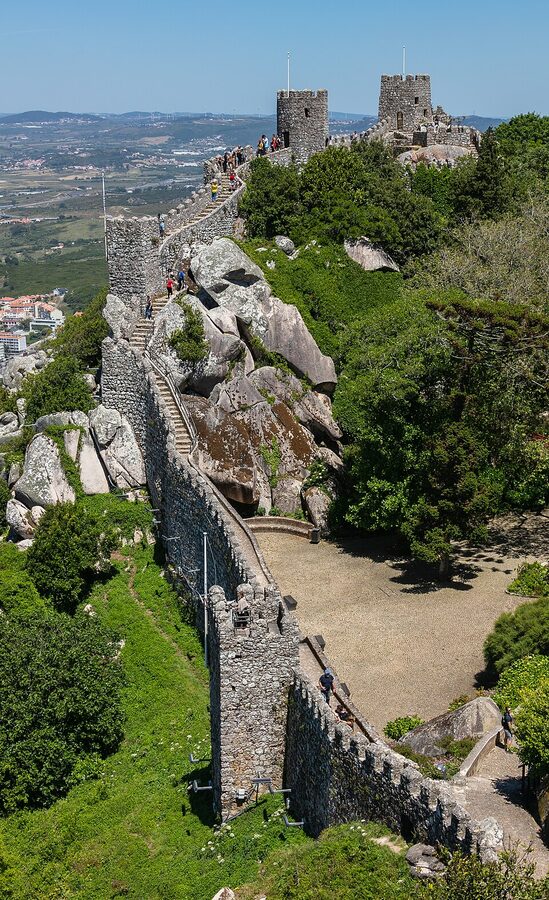
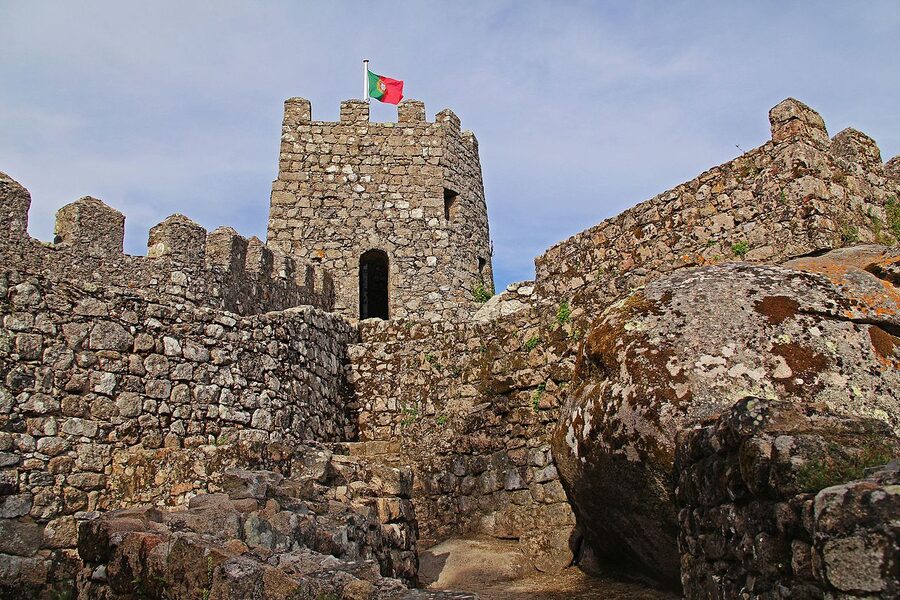
The Torre Real, or King’s Tower, is the highest point. It’s at the southern end of the ridge and there’s a chunky climb to reach it from the central courtyard — count on roughly 500 steps if you go from the very bottom, fewer if you’ve already done some of the lower walls. The reward is a 360-degree view that, on a clear day, takes in Pena Palace’s silhouette to the south, Mafra to the north, and the Atlantic to the west.
.jpg)
It’s named after Ferdinand II partly because he genuinely loved the spot, and partly because his entire reconstruction project was about creating a viewpoint that worked from his palace. Stand at the Torre Real, look across the wooded saddle, and you can see Pena’s coloured turrets sticking up — that’s not coincidence. The two were designed to face each other.
If the queue at the foot of the tower is long, save it for the way back. Most people climb it first and then trickle out, so the tower clears as the morning goes on. I’ve gone up a 30-person queue at 10:30 and walked straight up at 12:15.
The chapel hidden inside the walls
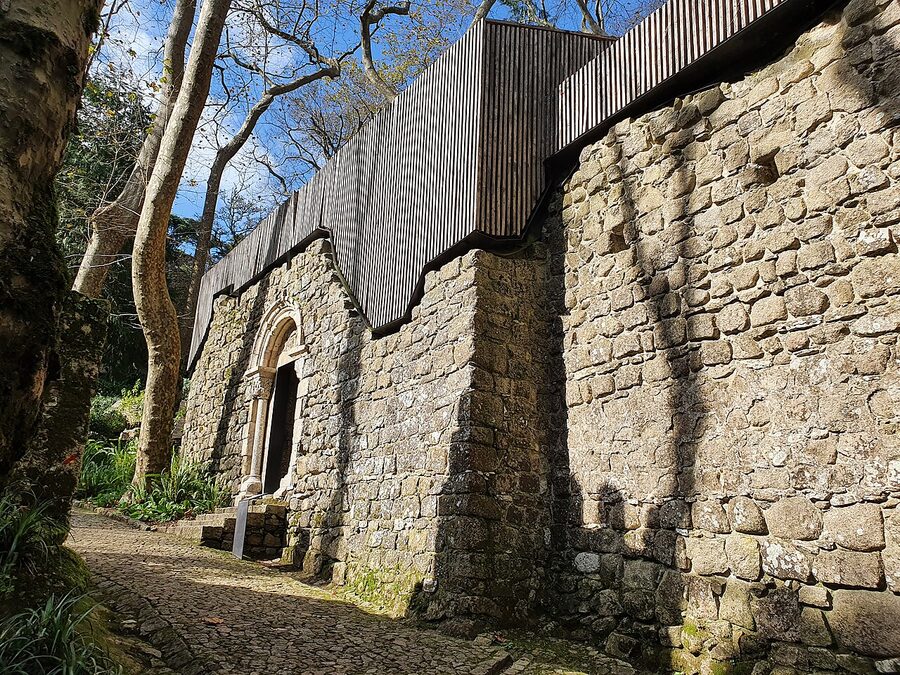

Just inside the lower walls is the Igreja de São Pedro de Canaferrim. It’s tiny, it’s easy to miss, and it’s one of the more genuinely ancient things in Sintra. Originally a Moorish mosque or prayer room, it was converted to a Christian chapel after the second crusade captured the castle in 1147 — making it the oldest Christian religious building in Sintra. It got a new roof only in 2013, before that it was open to the sky for centuries.
Today it doubles as the Moorish Interpretation Centre, with display cases showing finds from the archaeological digs. Pottery, bones, the small everyday things that survived. It’s the bit of the castle most people walk past in two minutes, and I’d argue it’s worth ten.
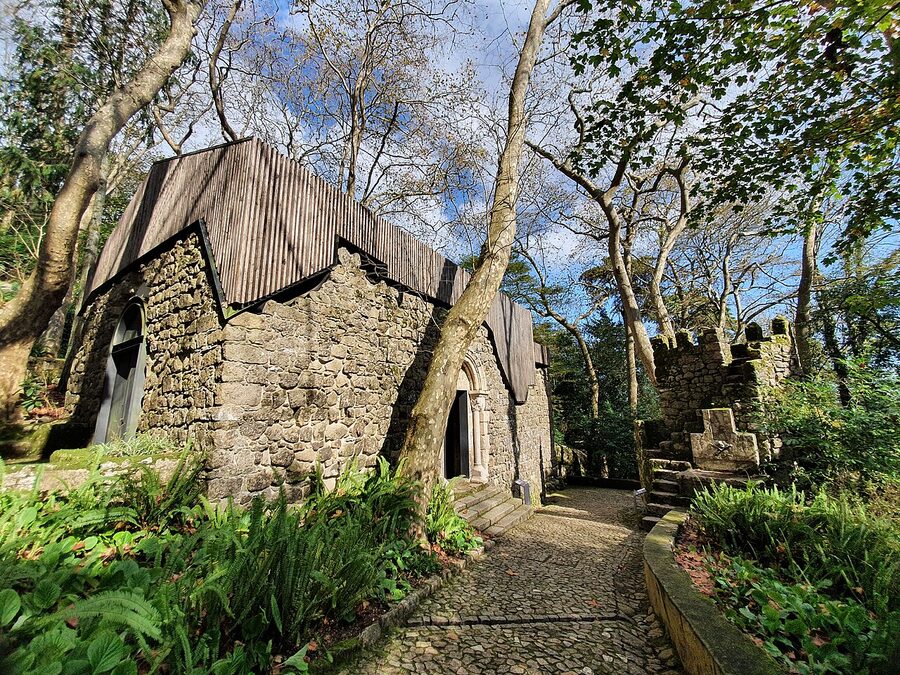

Behind the chapel is a small medieval cemetery that was in active use for over 300 years after the Christian conquest. It’s roped off but visible. The site is more layered than it first looks — Moorish, then medieval Christian, then 19th-century romantic ruin, then 21st-century conserved monument, all stacked.
The views (and what you can actually see)
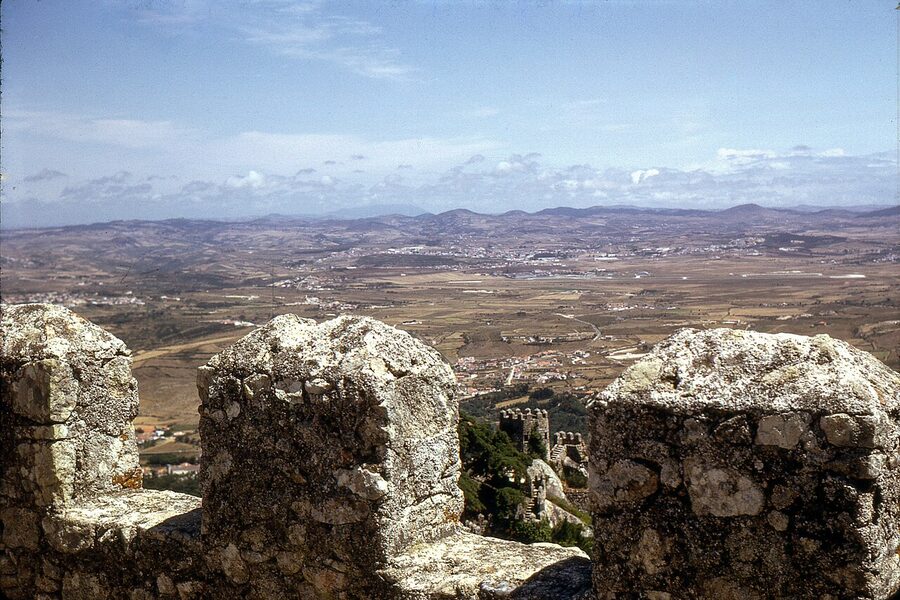

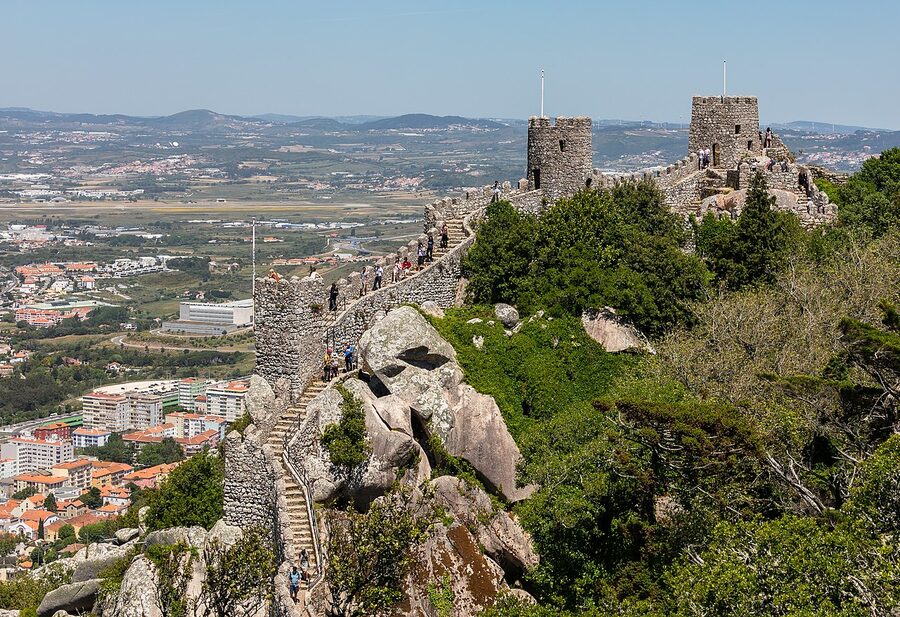
The Castelo dos Mouros was built where it is for one reason: visibility. The Moors put it on the highest defensible point in the area precisely so they could see threats coming, and the views are still the main attraction. From the upper towers on a properly clear day you get:
- South-east: Lisbon’s hills, with the Tagus glinting beyond if visibility is exceptional
- South: the Serra da Arrábida, the long ridge across the river
- West: the Atlantic, with the surf town of Ericeira sometimes visible
- North: Mafra and its enormous palace-monastery, big enough to spot at a distance
- South-east, much closer: Pena Palace itself, candy-coloured against the green
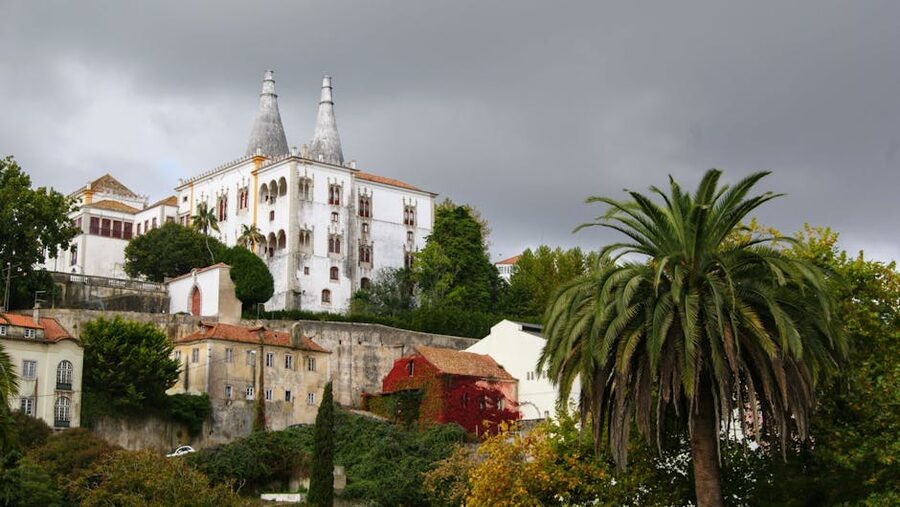
The catch is fog. Sintra’s hills sit in a particular microclimate where Atlantic moisture rolls in and just sits, sometimes for the whole day. Outside of high summer this is genuinely common. If the morning forecast says fog at the higher altitudes, push the castle to later in the day or swap it with an indoor sight. There’s no point standing on a battlement when you can’t see the next turret.
.jpg)
When to go (and when to absolutely skip)
The peak crush is from about 10:30 to 12:00 and again from 13:00 to 15:00. That’s when the day-trip coaches and the morning trains from Lisbon converge. The narrow battlements are the worst place to be in those windows — if you’ve ever had to step to the unguarded edge to let a tour group past, you’ll understand why.
Best windows, in order of preference:
- First entry — be at the gate at 9:30 sharp, ideally on a weekday outside summer
- Late afternoon — from about 16:00 the coach groups have left and the light is gorgeous
- Mid-day if you must — but stick to the lower walls and chapel, skip the upper towers
Skip it entirely if: it’s pouring with rain (the stones become genuinely dangerous), if visibility is under 200 metres because of fog (the views are the point), or if the wind is over 50 km/h (the upper battlements get exposed and there’s nowhere to shelter). Any of those, do the National Palace in town instead and come back another day.
If you’re combining with the Pena Palace, do the castle first and the palace second. Pena has timed slots and proper paths and a café — it’s much more forgiving if you arrive a bit late or tired. The castle, in reverse, is unforgiving if your legs are already cooked.
Getting up there from Sintra
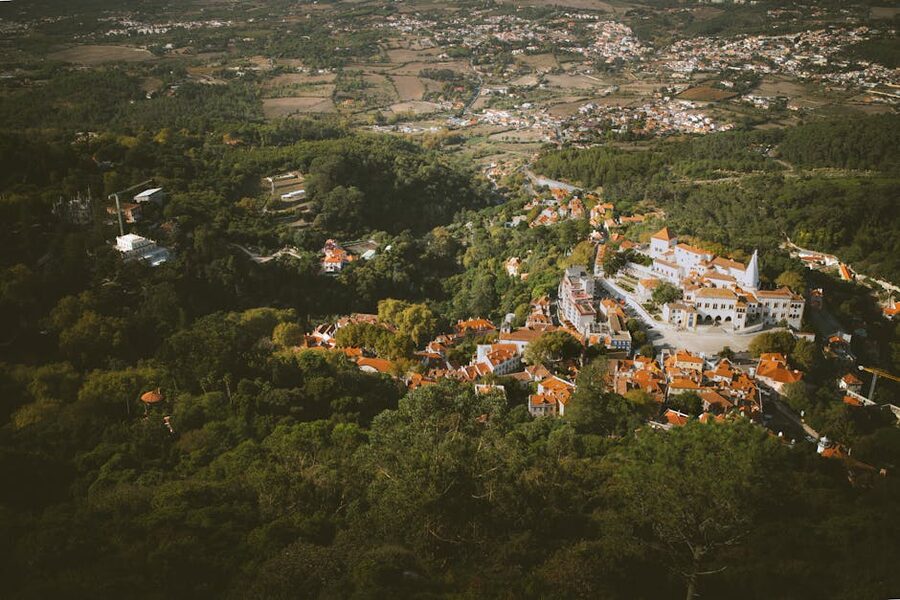
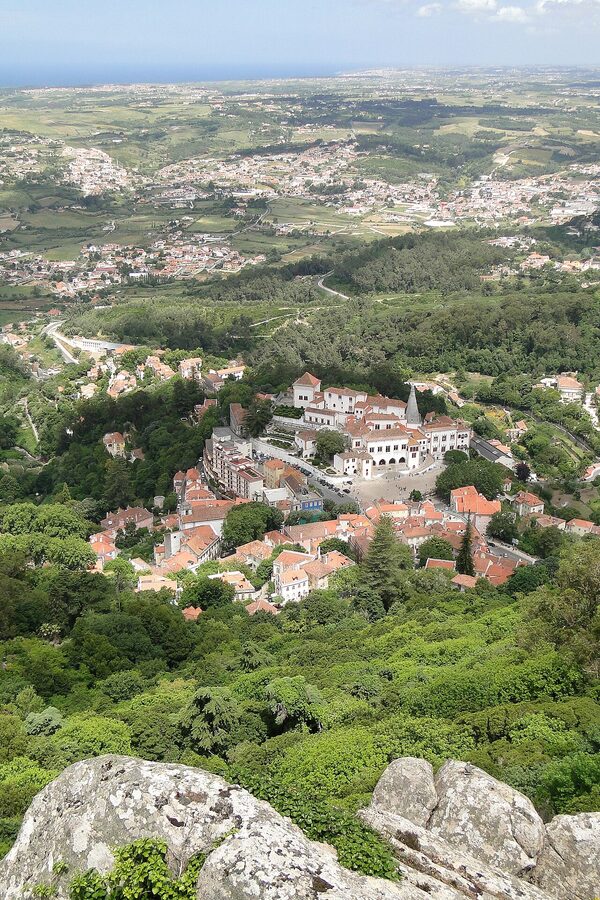
The Castelo dos Mouros sits 210 metres above the historic centre of Sintra, on a 450-metre summit. It’s only 500 metres in straight-line distance, but you’re going up. There are three realistic ways to make that climb.
The 434 tourist bus. One-way ticket €4.55, 24-hour unlimited €15.50. This is what most people use, and it’s how I usually do it too. The loop runs from Sintra train station up to the castle, on to Pena, and back down through Sintra town. Buses come every 15-20 minutes in summer. The catch: in peak season the queue at the station can be 40 minutes long, and the buses get genuinely uncomfortable when packed.
Walking up. The Caminho de Santa Maria starts in the historic centre and climbs through the forest to the castle. It’s about 2 km, takes 45-60 minutes, and is properly steep — but it’s beautiful, gloriously quiet, and free. I prefer walking down rather than up: do the bus going up, walk back via this path. You’ll come out near the National Palace and you can have lunch in town.
Tuk-tuk or Uber. Tuk-tuks line up outside Sintra station and quote €15-25 to the castle. Uber and Bolt are cheaper at around €8-12 each way, when you can get one. Drivers know the road and it’s faster than waiting for the 434 if you’ve just stepped off the train and the queue is long.
Do not drive yourself. The historic centre’s roads were not built for tourist traffic, parking is almost non-existent, and the road up to Pena and the castle is closed to non-residents during peak periods. Take the train from Lisbon — see our Sintra-from-Lisbon walkthrough for that side of the logistics.
A potted history (if you like that kind of thing)
The castle was built in the 8th or 9th century, during the period when North African Moors controlled most of what’s now Portugal. They picked the ridge above Sintra because it gave them clear sightlines to the Atlantic — they could see fleets approaching long before any defenders could react.
It changed hands violently. In 1093, an early Christian crusade under Alfonso VI of Castile captured it, then lost it again the following year. The proper conquest came in 1147, during the Second Crusade, when an army of (frankly) drunks and opportunists liberated Lisbon and pushed up to take Sintra. The Moorish defenders surrendered. The chapel inside the walls was converted from a prayer room to a Christian church on the spot.
For the next few centuries the castle slowly declined. The Portuguese royal court preferred Lisbon, and by the 1400s only a small Jewish settlement still lived inside the walls. When the Jews were expelled from Portugal in 1497, the castle was completely abandoned. A lightning strike in 1636 destroyed the central keep. The 1755 Lisbon earthquake levelled most of what remained. By the early 1800s it was a forgotten ruin in the woods.
Then King Ferdinand II turned up. A German-born consort with a serious romantic streak, Ferdinand had bought the neighbouring monastery and was already turning it into Pena Palace. He decided the half-collapsed Moorish ruin on the next ridge would make a perfect feature in his landscape. From the 1840s, masons rebuilt the walls — not as historical reconstruction but as romantic stage-set. They wanted it to look ancient, mysterious and slightly melancholy. Which is exactly what you see today.
Practical things they don’t put on the website
The on-site café exists but it’s bad. Limited menu, plastic packaging, queues at lunchtime. Bring water, bring a sandwich. There’s nowhere proper to eat at the top of the hill — for a real meal, head back down to Sintra town. Tascantiga, A Raposa and Romaria de Baco are all good and within five minutes of the National Palace.
Toilets: at the ticket office and one set down by the café. Both clean enough.
Accessibility: limited. There’s been recent investment in ramps and powered stairs, but the castle by its nature will never be wheelchair-friendly. The lower courtyard and chapel are mostly accessible. The battlements and Torre Real are not, and never will be.
Strollers: bring a baby carrier instead. The cobbled paths and stone steps will fight you the whole way.
Photography: golden hour from the Torre Real is genuinely lovely, but the castle closes at 18:00 (last admission 17:00) so in summer you only catch the early end of it. Winter sunsets are better timed but you’ve got the fog problem.
Pickpockets: the 434 bus and the Sintra train get targeted in summer — the same crowds that hit Lisbon’s tram 28 work here too. Front-pocket your phone, don’t put a wallet in a back pocket. The castle itself is fine, the transport to it is what to watch.
Where it fits in a Sintra day
If you’re doing Sintra in a day from Lisbon (and most people are), realistic combos look like:
- Castle + Pena: hit the castle first thing, walk over to Pena for an early afternoon slot, train back to Lisbon by 17:00. The cleanest combo.
- Castle + Regaleira: do the castle morning, lunch in town, Regaleira’s gardens in the afternoon. Less climbing than Pena+Castle, more variety.
- Castle + town: castle in morning, National Palace and Sintra streets in afternoon. The most laid-back option, good for slower travellers.
- Castle + the coast: castle morning, taxi or 403 bus to Cabo da Roca and Cascais in the afternoon. Adds an hour each way of transport but gets you the Atlantic.
For anyone doing more than the day-trip headline circuit, the Sintra, Pena and Cascais combined day trip is worth a look — it’s also the easier path if you don’t want to handle Sintra logistics yourself.
If you only do one thing
Walk the central battlement loop — the section that runs between the Torre Real and the chapel — slowly, in either direction, and stop at the marked viewpoints. Don’t rush to the top tower if there’s a queue. The most underrated part of the castle is actually the middle, where the path is wide enough for two people, the stones are warm in the sun, and you can see both Pena Palace one way and the Atlantic the other.
That’s the bit Ferdinand II wanted you to feel. It’s also the bit that survives a moderate fog day. If everything else falls apart — if the weather’s bad, if you’re tired, if Pena is sold out — that one stretch of wall is still worth the ticket.
Other Sintra and southern Portugal guides worth a look
If the Moorish Castle is on your list, it’s almost certainly because Sintra is. Our general Sintra-from-Lisbon guide handles the train, the bus and the day-shape questions. For the other big ticket sights, our Pena Palace ticket guide covers the timed-entry system that catches so many people out, and the Quinta da Regaleira walkthrough goes into the Initiation Well and the gardens. If you’d rather hand the whole day to a guide, the Sintra, Pena and Cascais day trip from Lisbon bundle is the obvious starting point. And anyone heading further south after Sintra will find the Ponta da Piedade walkthrough and the Benagil Cave guide useful — those two are the Algarve equivalents of “the thing everyone takes a photo of.” If you’re staying in Lisbon and trying to figure out the city pass question, our Lisbon Card guide is the place to start.
Disclosure: links to GetYourGuide and other partners may pay us a small commission at no extra cost to you. We only recommend tours we’d take ourselves.