
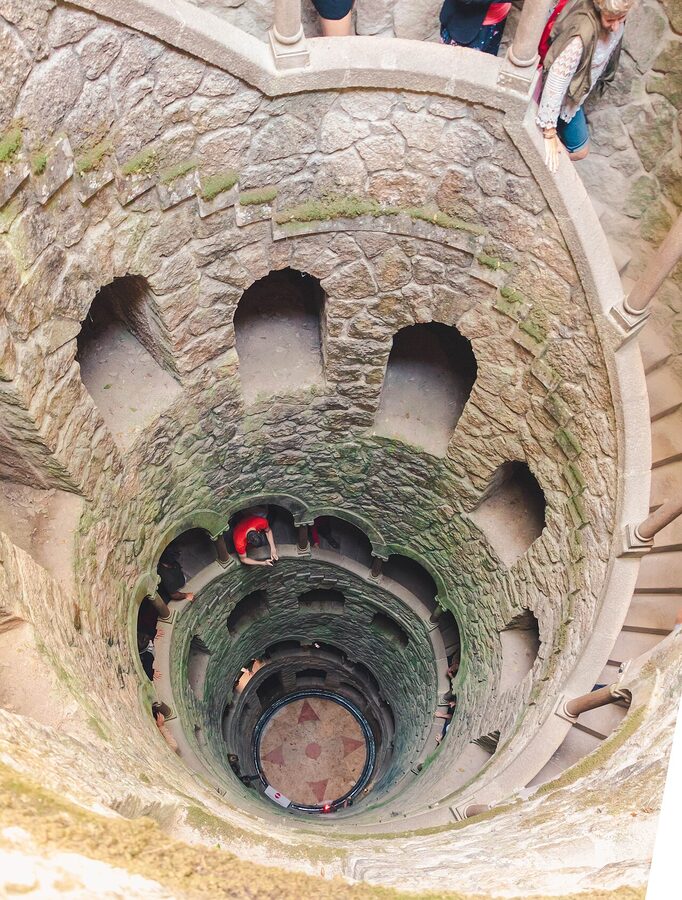
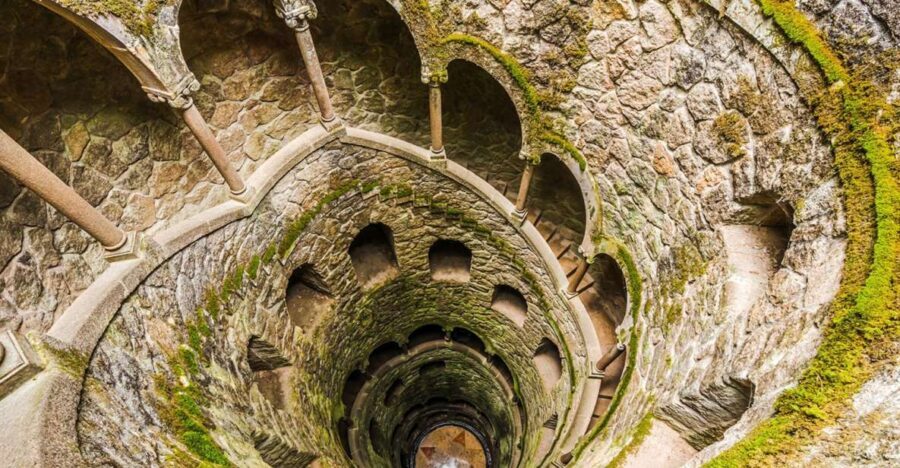
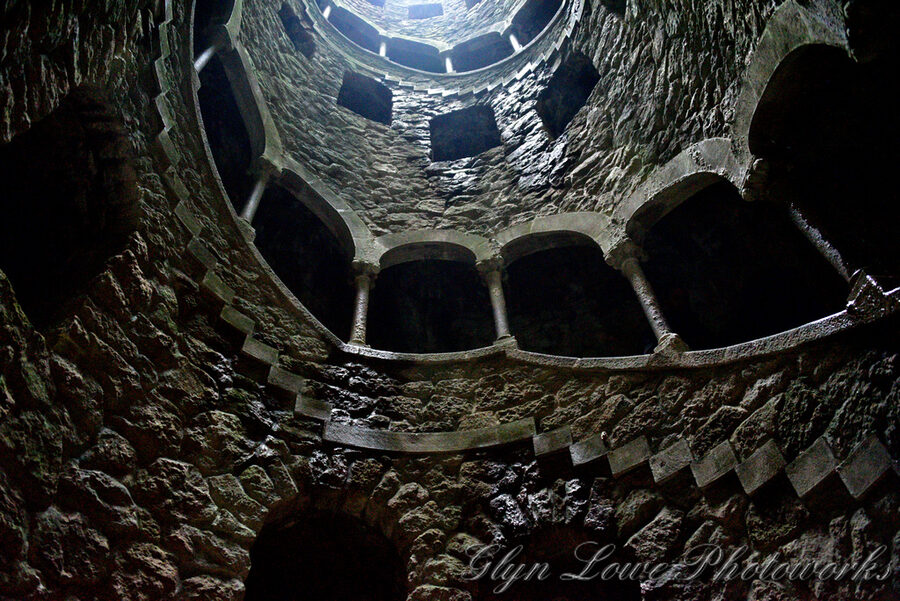
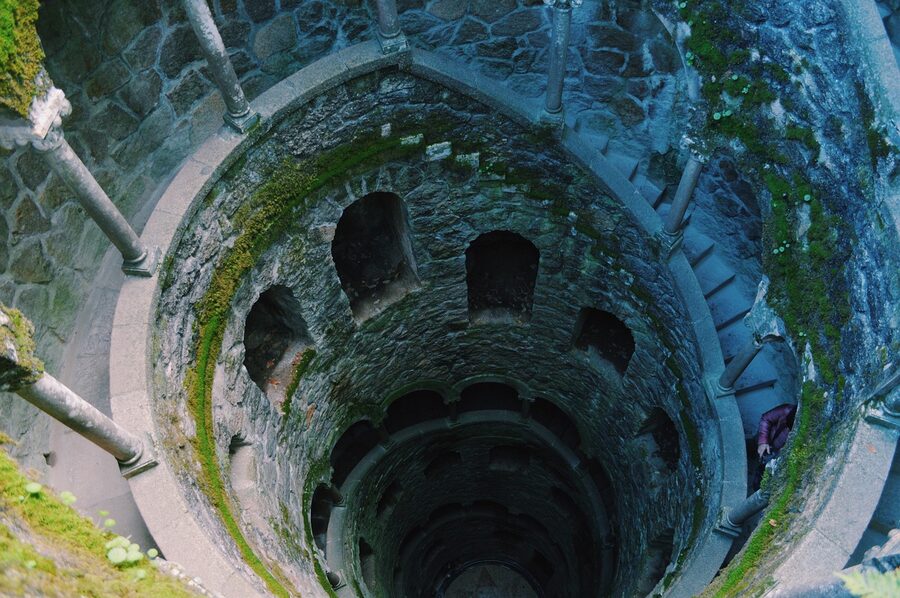
The Initiation Well at Quinta da Regaleira was never a well. Water has never been drawn from it, and it was never meant to. The 27-metre spiral staircase carved into the earth is an inverted tower, built in the early 1900s for Masonic and Templar initiation rituals that almost certainly never took place. The man who commissioned it, Carvalho Monteiro, was a mystic millionaire with obsessions ranging from alchemy to Dante’s Divine Comedy. Walk the gardens for a few hours and you start to notice the pattern. Nothing here is what it looks like.
.jpg)
Getting in requires one practical decision: book the timed-entry ticket online before you go. The estate caps how many people can enter per 30-minute slot, and the most popular morning times sell out days ahead in high season. Turn up without one and you’ll spend an hour queuing at the gate, watching the time-slot holders walk past you. I’ve seen it happen.


In a hurry? My three picks for Regaleira
Just the entry: E-ticket with audio guide — around $21, book your time slot and walk in. This is what most people actually need.
Extra context: Entry ticket with a host — around $28, you get a map and a 10-minute orientation before heading in on your own.
Full day from Lisbon: Sintra + Pena + Regaleira + Cabo da Roca + Cascais — around $23, pickup in Lisbon, everything handled.
- In a hurry? My three picks for Regaleira
- How the ticket system actually works
- My three tour picks
- 1. Quinta da Regaleira Skip-the-Line Ticket and Audioguide —
- 2. Sintra: Quinta da Regaleira Entry Tickets with Host —
- 3. Lisbon Full-Day: Sintra, Pena, Regaleira, Cabo da Roca & Cascais —
- What you’re actually walking into
- Getting there from Lisbon
- Timing: when to turn up
- What to wear and bring
- A bit of history (because it explains the weirdness)
- What to combine it with
- A few honest caveats
- Elsewhere in the Lisbon region
How the ticket system actually works
The estate runs on timed entry with 30-minute blocks. You pick a slot when you book, turn up within that window, and then you can stay as long as you want. Last entry is 60 minutes before the gates close, which is usually 6:30pm or 7pm depending on the season.
Two things confuse first-time visitors. First: the official tickets site is regaleira.byblueticket.pt, not regaleira.pt. The .pt domain links out to it but readers sometimes assume the link is broken (it’s not — the ticket platform just lives on a separate subdomain). Second: skip-the-line on third-party sellers means you skip the ticket-buying queue. It does not mean you skip the entry queue at the gate, because there isn’t really one — everyone with a time slot walks straight in.
Standard adult admission runs about €15 from the official site. Third-party platforms like GetYourGuide add a small markup but bundle audio guides, which I’d argue are worth it. The gardens are dense with symbolism and nothing is labelled.
My three tour picks
Three ways to visit, pretty different from each other. Picked by what they actually give you, not by how much I want to upsell.
1. Quinta da Regaleira Skip-the-Line Ticket and Audioguide — $31
This is the one I’d point most people toward. You book a time slot, you get the audio guide on your phone, you walk in. Our full review covers what the audio guide actually tells you — the symbolism and Carvalho Monteiro backstory that makes sense of half the garden. The suggested visit is 80 minutes. Budget two to three hours if you want to do the wells and tunnels properly.
2. Sintra: Quinta da Regaleira Entry Tickets with Host — $28
A middle option. Not a guided tour and not a bare ticket — a real human meets you at the gate, gives you a paper map with the best route marked, and points out what you shouldn’t miss. Our review breaks down what the host actually covers, because it varies. For first-time visitors who’d rather not read plaques or fiddle with audio, this is the one. One caveat from our feedback — queue management at the entrance has been inconsistent in peak season.
3. Lisbon Full-Day: Sintra, Pena, Regaleira, Cabo da Roca & Cascais — $23
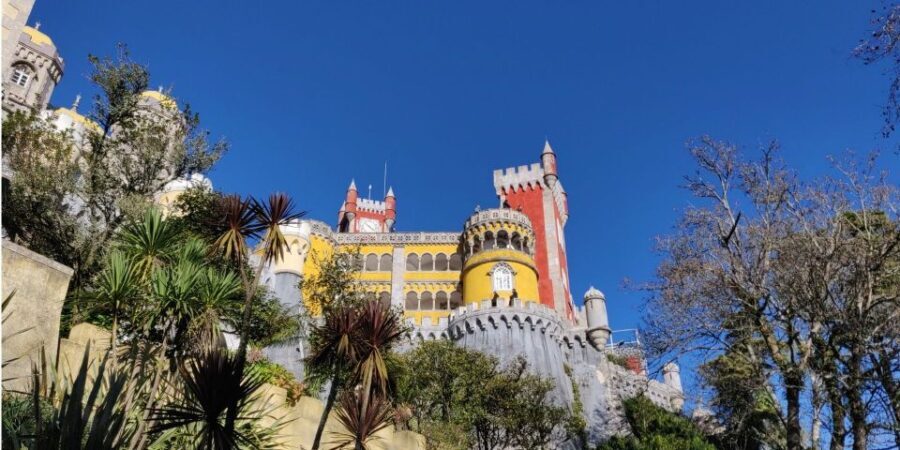
If you’re based in Lisbon and can only spare a day, this is the most efficient way to see the major sites — transport handled, tickets handled, just show up. Our full review has the route timings and what actually gets skipped if traffic runs late. Honest heads-up: Regaleira gets about 90 minutes on this itinerary, which is enough for the highlights but tight for the wells and tunnels. If Regaleira is your main reason to come, skip the combo and do it standalone.
What you’re actually walking into

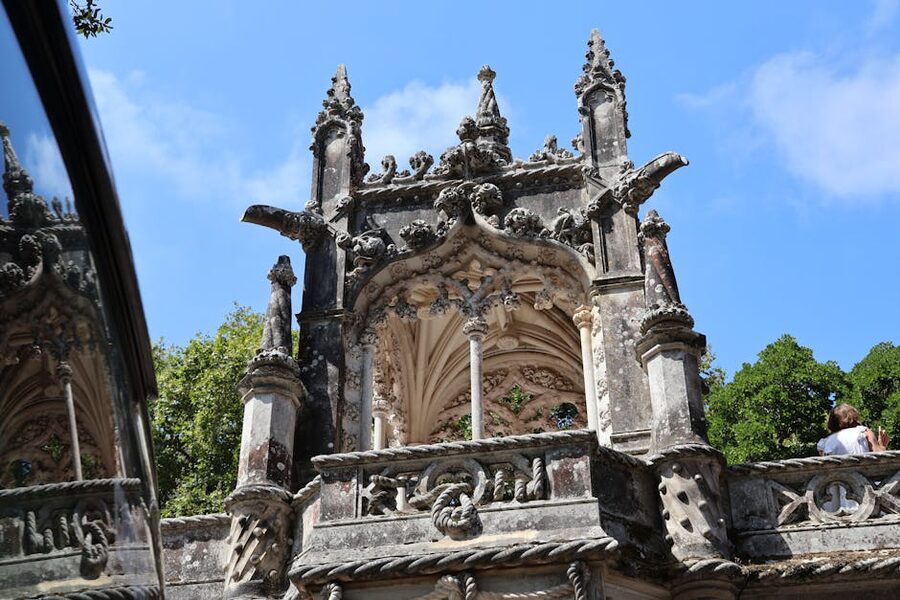
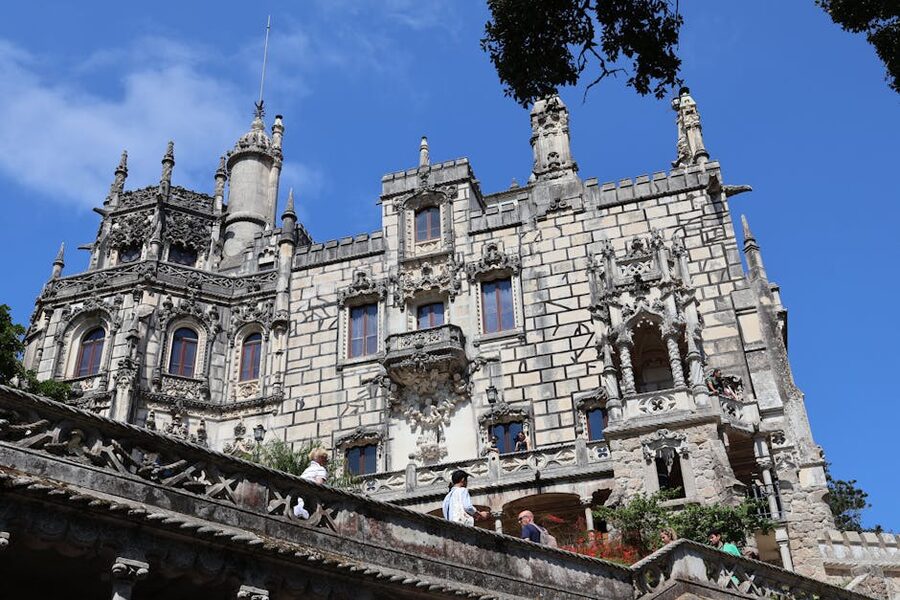
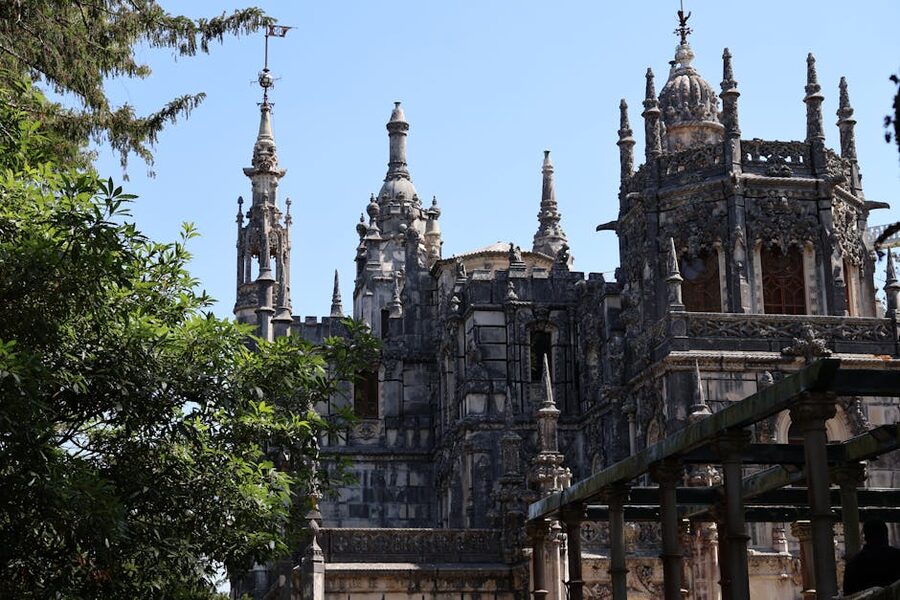
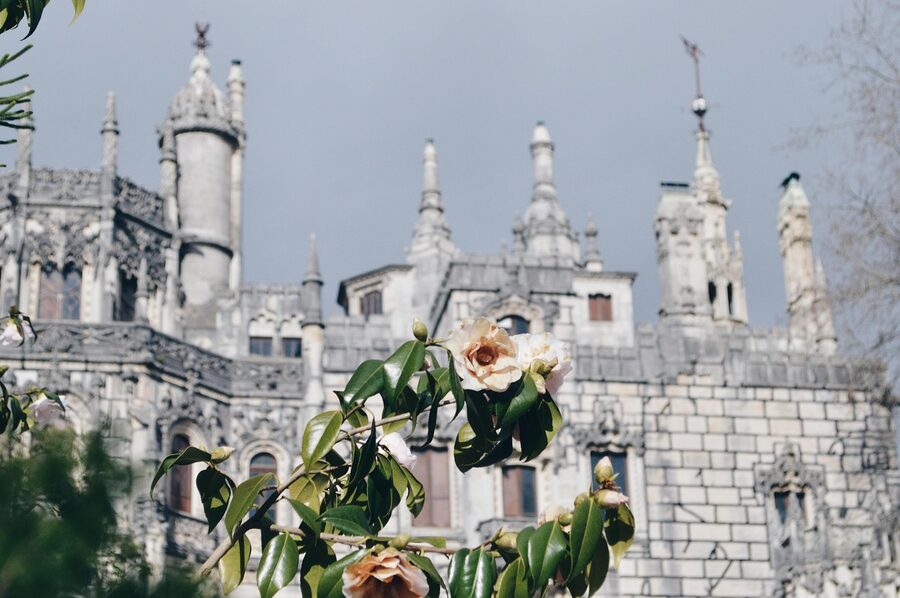
The estate sprawls across four hectares on the hillside above Sintra. The palace itself is small — 15 rooms over four floors — and honestly not the main event. Most of what makes Regaleira special is outside and underground.
.jpg)
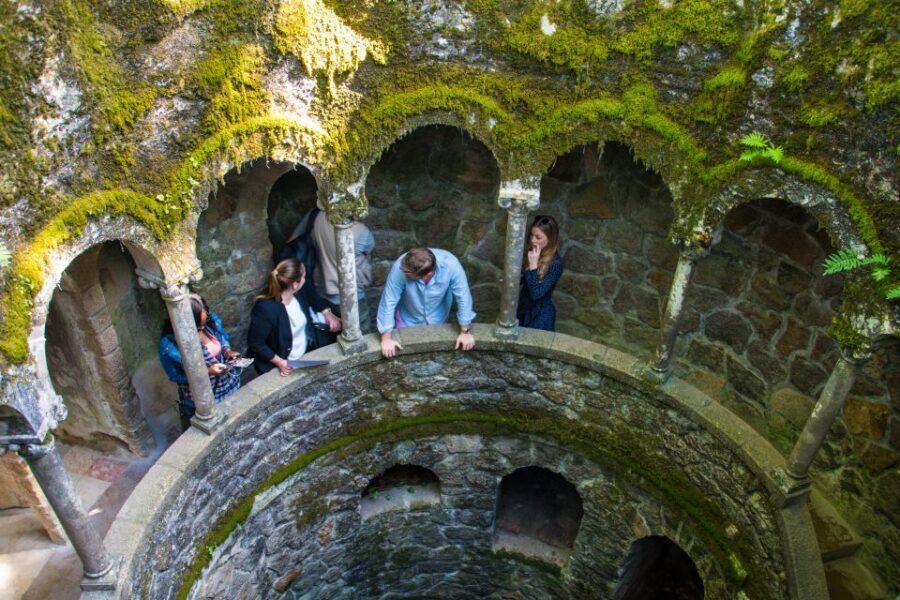
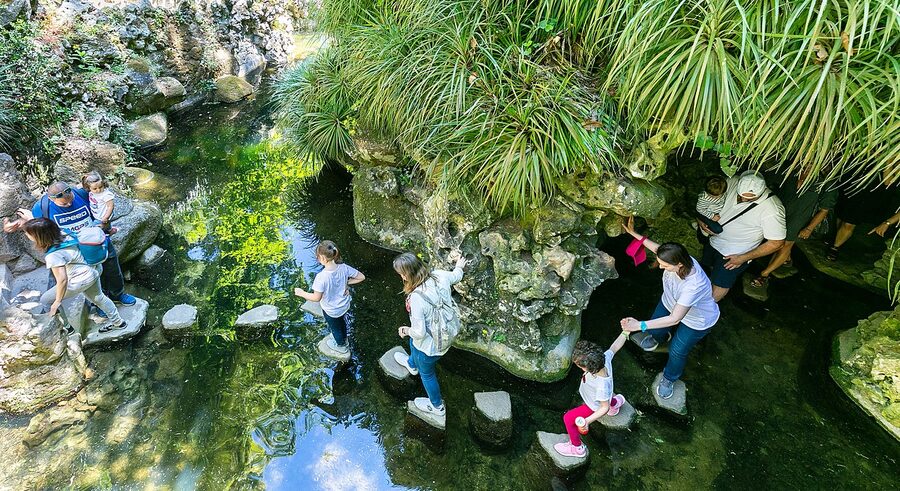
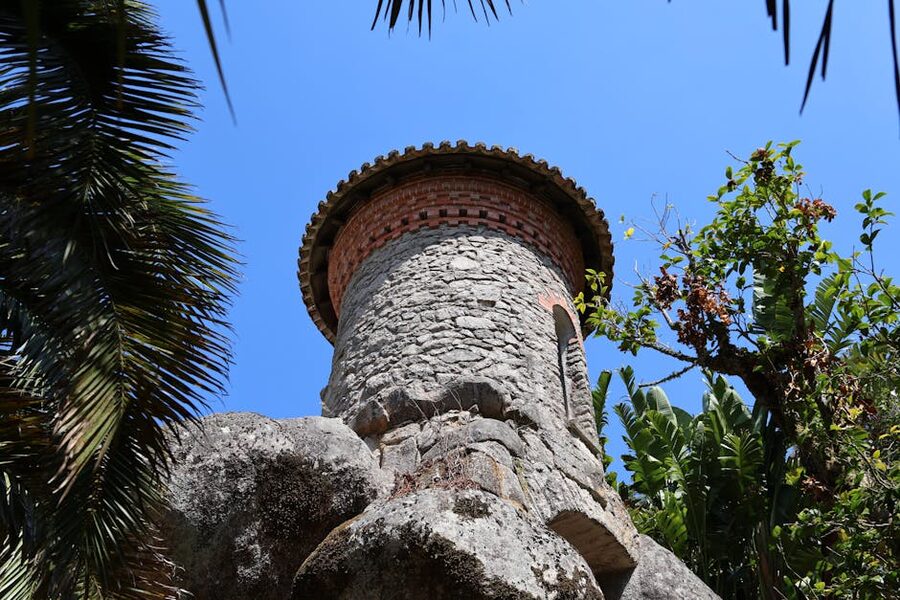
The Initiation Well is the signature. You enter through a hidden door in a rock, descend the spiral staircase, and exit via tunnels that open onto a lake with stepping stones. The stones are slippery. Shoes matter more than you think.
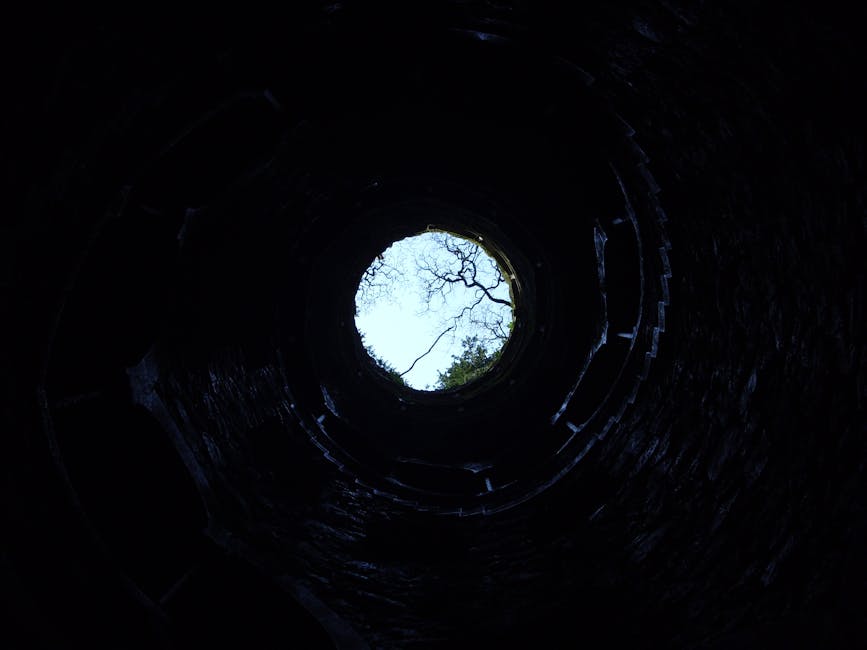
There’s a second well, smaller, called the Imperfect Well. Most visitors miss it entirely because it’s off the main loop. Worth the detour — no queue, ever, and the stonework is finer than the main one.
.jpg)
Getting there from Lisbon
The train from Rossio station in central Lisbon to Sintra takes about 40 minutes and costs €4.90 return. It’s genuinely cheap. The catch is Sintra station sits on the opposite side of town from the estate — you’ll walk 25 minutes through the historic centre to get there, uphill toward the end. It’s a nice walk, but if you’ve got mobility issues or tired kids, factor it in.
Uber and Bolt work from Lisbon directly to the estate gates. Expect €20–30 one way depending on where you’re staying and what time it is. Two or three people splitting the cost, and it starts to make sense. On the return leg, order your ride before leaving the gardens because demand around closing time gets wild.
Do not drive. The historic centre of Sintra is closed to traffic, there’s almost no parking at the estate, and rush hour on the road between Lisbon and Sintra can eat 90 minutes. Every guide says don’t drive and every guide is right.
The 435 bus runs from Sintra station past Regaleira, but it takes a convoluted one-way loop because the centre is pedestrianised. Walking is usually faster. If you’ve bought the 24-hour Sintra bus ticket for other stops — Pena Palace, Monserrate — you may as well ride the 435. If Regaleira is your only target, skip the bus.
For the combo option, our Sintra day trip guide has the full day-trip blueprint — train times, transport passes, whether to do Pena first or Regaleira first (Pena first, every time).
Timing: when to turn up
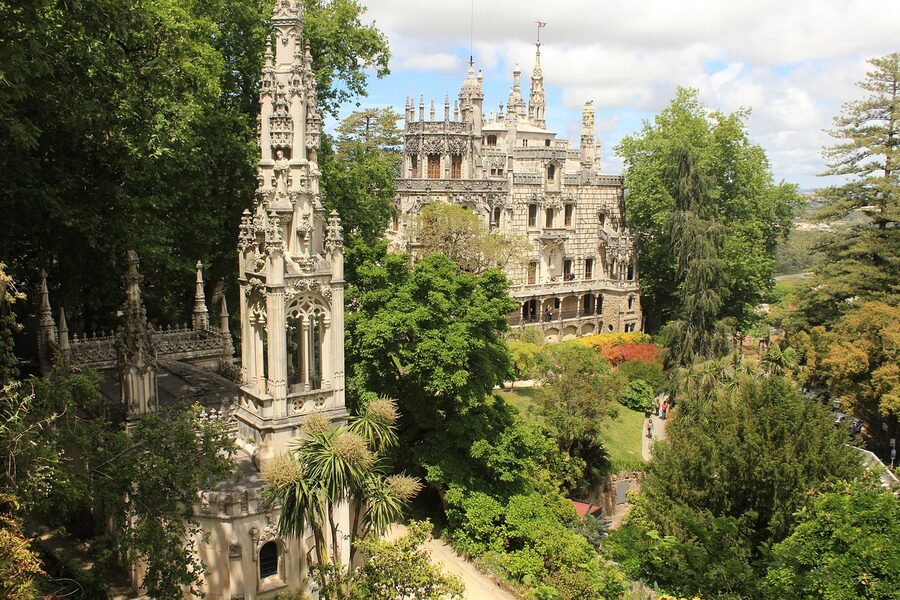
The gate opens at 9:30am and closes at 6:30pm most of the year (8pm in summer). The sweet spots for avoiding crowds: the first hour, or after 3pm.
First-hour visits get you the Initiation Well without a queue. You can descend, pause, take the photograph everybody else is queuing for, and move on. By 11am the well has a 20-minute wait to go down, and photos are mostly of strangers’ backs.
After 3pm is the other good window. Day-trip coach groups tend to do Regaleira in the morning and Pena Palace in the afternoon. If you reverse that, you get a quieter Regaleira experience. Late-day light in the gardens is also genuinely better — softer, warmer, less harsh.
Midday in July is the worst of both worlds: fullest queues, hottest walk from the station, most tired kids. Avoid if you can.
What to wear and bring
Shoes first. Proper grip, closed-toe. The stones in the tunnels and around the lake are slippery year-round — the grottoes stay damp because that’s the whole point. Trainers or walking shoes. Not sandals, not flip-flops, nothing with smooth soles.
A light jacket or cardigan even in summer. Sintra sits against the Atlantic edge of the Serra ridge, and the whole microclimate is cooler and mistier than Lisbon. You can leave Lisbon in t-shirt weather and arrive in Sintra in a fine drizzle. I’ve done it. Surprising every time.
Phone torch matters for the tunnels. Parts of the underground passages are deliberately dim. The torch on your phone handles it fine — no need for an actual headlamp.
Water. There’s a café near the entrance and another small kiosk near the palace, but prices are exactly what you’d expect for a captive audience. Bring a bottle from Sintra town.
A bit of history (because it explains the weirdness)
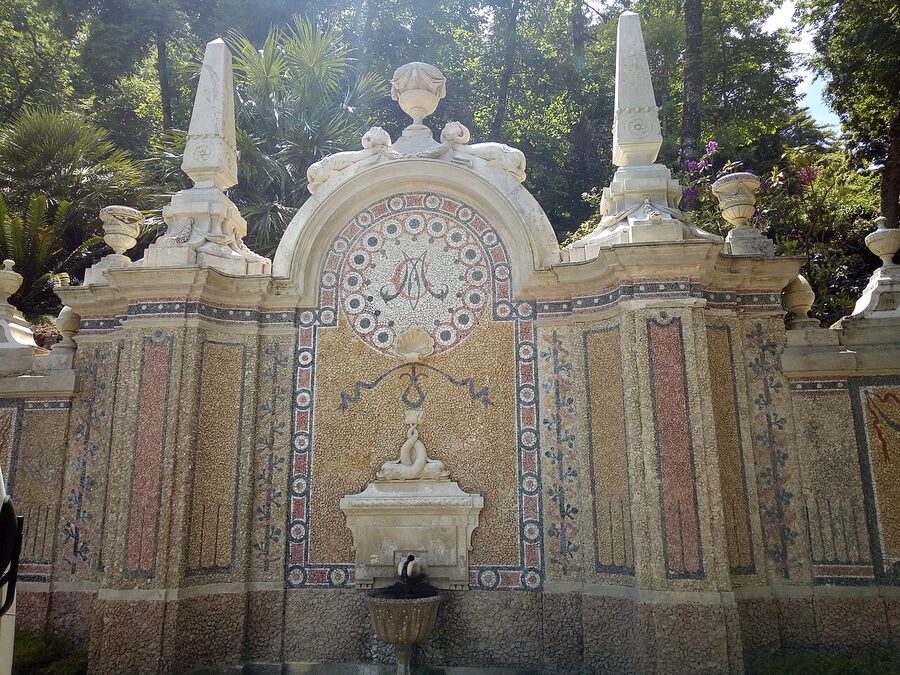

António Augusto Carvalho Monteiro bought the property in 1892 for what was at the time a large sum — 25,000 réis. He was fantastically wealthy from Brazilian coffee and precious stones, fluent in several languages, obsessed with Portuguese nationalism and the Knights Templar. He hired the Italian set designer Luigi Manini, who had worked on opera productions across Europe, to design the estate.
That partnership explains a lot. A set designer builds stages — atmospheres, reveals, payoffs. That’s exactly what Regaleira is. Every grotto opens onto a view. Every path has a surprise at the end. The Initiation Well is a piece of theatre as much as architecture.
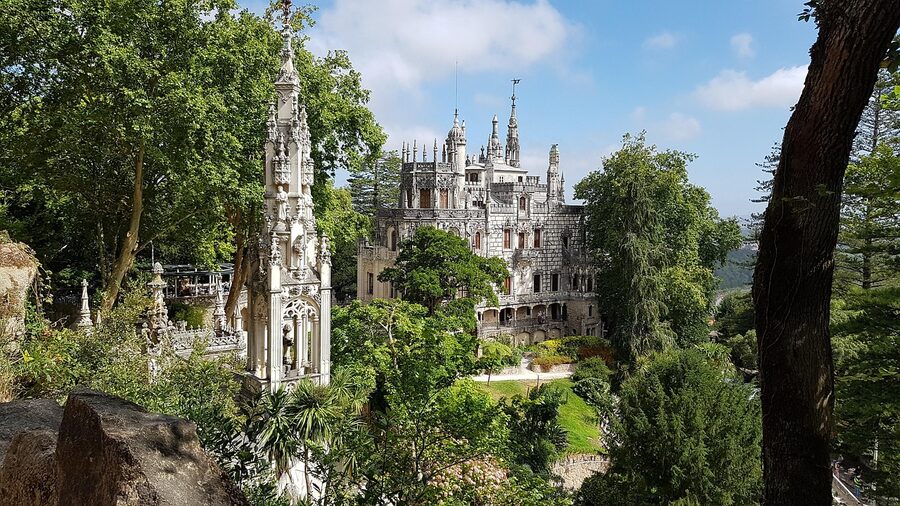
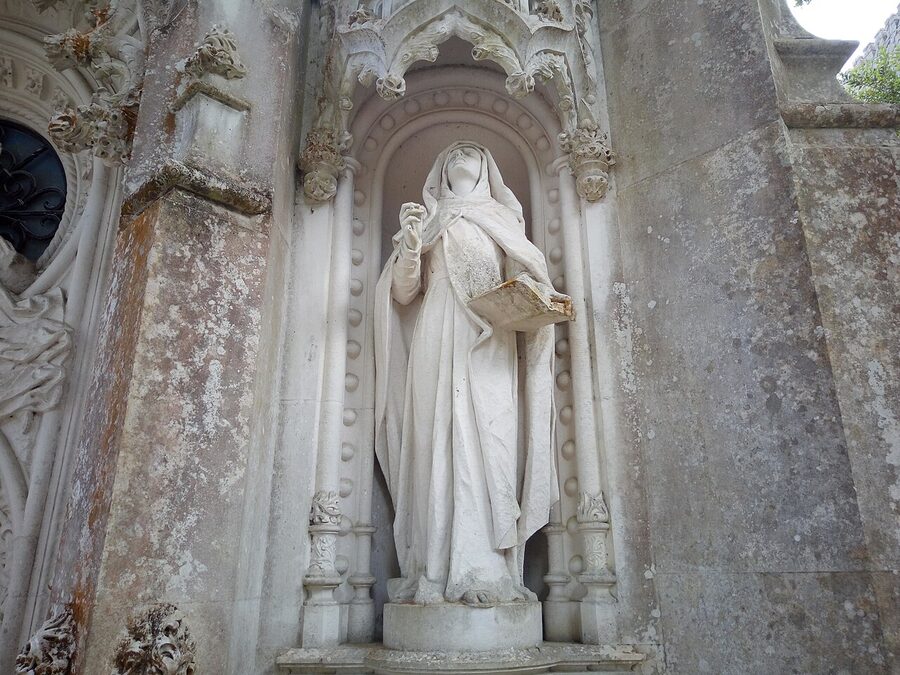
Construction ran from 1904 to 1910. The early 20th century was a strange moment in Portugal — the monarchy was collapsing (the king was assassinated in 1908), Portuguese nationalism was peaking, and secret societies like Freemasonry and the Rosicrucians were fashionable among the wealthy. Carvalho Monteiro’s estate catches all of that. Knights Templar symbols, alchemical references, Dante quotes, pentagrams, Rosicrucian crosses, Catholic iconography, all mixed together.
Was he actually an initiate of some secret order? Historians argue. The honest answer is probably no — but he read voraciously about them, and what he built is a kind of monument to initiatic symbolism as fantasy. Whether the rituals ever took place is almost beside the point.
The estate fell into disrepair after his death in 1920. Japanese businessman Aoki Hiroshi bought it in the 1980s as an investment. In 1997, Sintra’s town council acquired it and opened it to the public a few years later. UNESCO World Heritage listing followed for the entire cultural landscape of Sintra.
What to combine it with
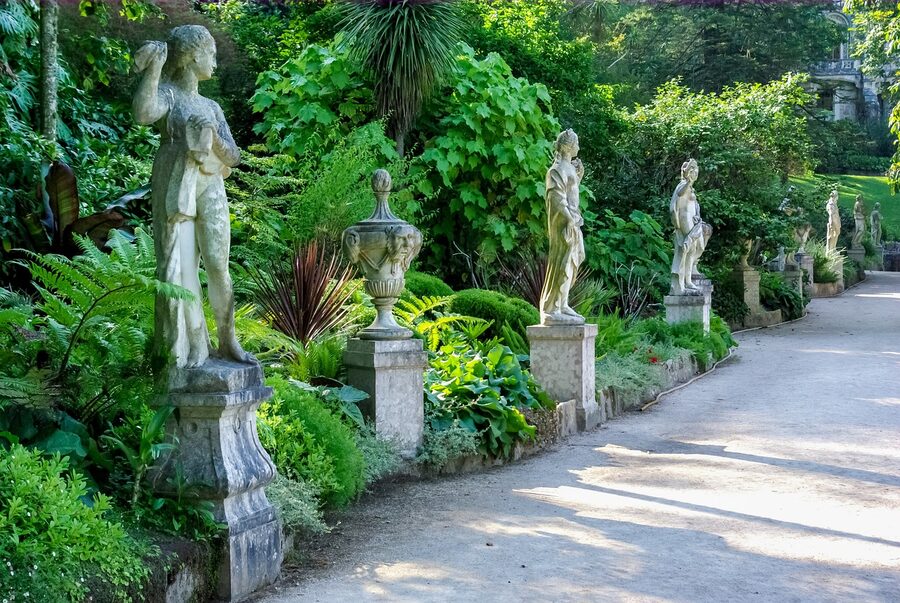
Sintra rewards slow. Don’t cram five sites into one day. Two major sites plus the town centre is the realistic limit. Here’s how to pair Regaleira:
Regaleira + Pena Palace. The classic combo. Pena is the hilltop candy-coloured palace you’ve seen in every Portugal photo — our Pena tickets guide handles the separate booking process, which is just as fussy as Regaleira’s. Do Pena first because it’s uphill and gets mobbed by 11am, then walk down to Regaleira for a late-afternoon visit.
Regaleira + Monserrate. A quieter pairing. Monserrate’s gardens are actually more botanically interesting than Regaleira’s (ferns, palms, the whole Victorian hothouse thing), with half the crowds. The downside is Monserrate is a 15-minute walk from Regaleira with no shortcut through — you loop back through town.
Regaleira + lunch in Sintra centre. The old town is five minutes’ walk from the estate entrance. Try the travesseiros at Piriquita — flaky pastry filled with almond and egg cream, Sintra’s specific contribution to the national pastry canon. Worth the queue, and there’s always a queue.
A few honest caveats
The Initiation Well gets about 80% of the attention and probably 50% of its rightful share. Don’t queue 40 minutes for it. If you hit a proper queue, leave it, do the Imperfect Well and the other grottoes first, come back later. The queue moves in 30-minute waves as time slots cycle.
The palace interiors are the least interesting part. Competent restoration, some nice woodwork, a few rooms of period furniture, and that’s about it. Budget 20 minutes inside and get back to the gardens.
Accessibility is limited. The estate is hillside, the paths are uneven, the wells are stairs-only. If anyone in your group has mobility challenges, skip the wells entirely and loop the upper gardens — the palace and chapel are reachable on paved paths, but the rest isn’t. The official site has an accessibility map worth downloading.
Summer queues can extend check-in times. Even with a time slot, you may wait 10–15 minutes at the gate because scanner lines back up. This isn’t a failure of your booking — it’s just peak volume on narrow paths.
Elsewhere in the Lisbon region

If Regaleira left you curious about Lisbon’s slower, more atmospheric side, the Lisbon fado show guide is the right next read — fado is the evening version of what Regaleira gives you during the day, melancholy Portuguese atmosphere done to perfection. For something breezier after a hillside day, a Tagus River cruise is the opposite energy — flat water, open sky, a drink. Pairs well with a Regaleira morning.
If you’re building out a full Sintra day, the Sintra from Lisbon guide is the wider frame — train logistics, which palaces pair with which, whether to stay overnight. Short answer: one day is tight, two is ideal. The Lisbon Card doesn’t cover Regaleira (a few Sintra sites are explicitly excluded), but it handles the train to Sintra and most of central Lisbon. Check the fine print before you buy.
For your Lisbon evenings, our Alfama walking tour guide and sunset cruise guide are the two I’d pick first.
Affiliate disclosure: some links in this guide earn us a small commission if you book. It doesn’t change the price for you, and it doesn’t change which tours I recommend. Regaleira is one I’d send you to even without any of that.