
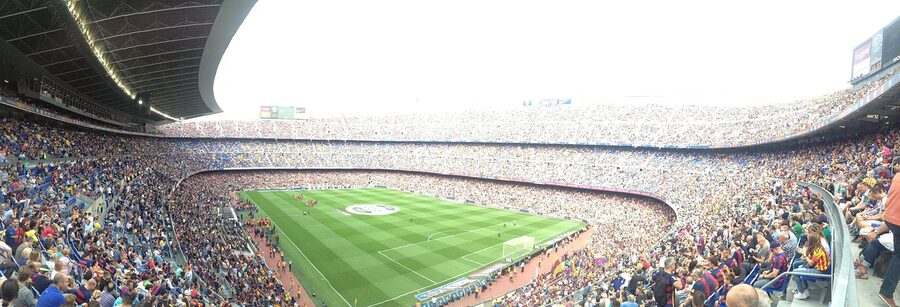
The first thing that hits you inside the Barca Immersive Tour isn’t the trophies. It’s the sound. A roar, recorded from 99,000 fans at Camp Nou during a Champions League night, fills the room at a volume that makes your chest vibrate. For about three seconds you forget you’re standing in a temporary exhibition space and not in the stadium itself.
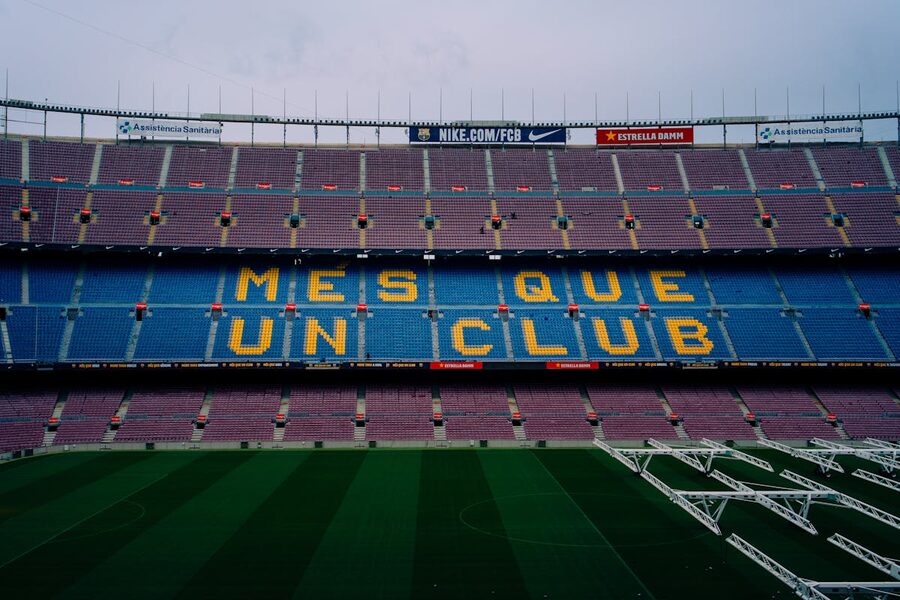
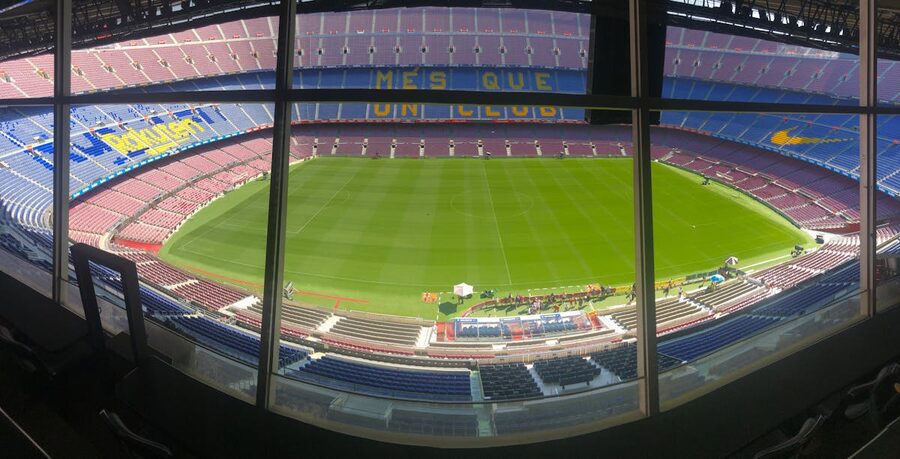
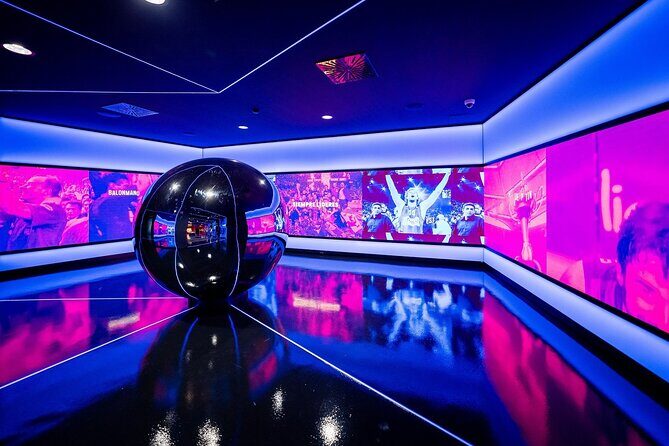
That’s the trick FC Barcelona has pulled off with this temporary museum. While Camp Nou undergoes its massive renovation (a project worth around 1.5 billion euros that’s turning Europe’s largest stadium into something even bigger), the club didn’t just shut things down and wait. They built an immersive experience that, in some ways, is better than the old stadium tour. 360-degree projections, holographic displays, and the kind of interactive tech that makes you feel like you’re walking through 125 years of football history rather than reading about it on a plaque.
I’ll walk you through everything: how to get tickets, what you’ll actually see inside, and which booking option gives you the best value.
Best overall: Barca Immersive Tour Ticket — $32. Standard entry with open-date flexibility. This is what most people should book.
Best for football fans: FC Barcelona Museum Immersive Guided Tour — Guided. A real guide who knows Barca history walks you through — worth it if you want the stories behind the trophies.
Best budget/combo: Camp Nou Immersive Tour Open Date Ticket — Open date. Flexible scheduling if your Barcelona plans are still up in the air.
- How the Ticket System Works
- Official Tickets vs Guided Tours
- The Best FC Barcelona Museum Tours to Book
- 1. Barca Immersive Tour Ticket —
- 2. FC Barcelona Museum Immersive Guided Tour — Guided Experience
- 3. Camp Nou Immersive Tour Open Date Ticket
- When to Visit
- How to Get There
- Tips That Will Save You Time
- What You’ll Actually See Inside
- About the Camp Nou Renovation
- Planning the Rest of Your Barcelona Trip
How the Ticket System Works
FC Barcelona sells tickets directly through their own website, and that’s one option. But here’s the thing — third-party platforms like GetYourGuide and Viator often include perks the official site doesn’t. Free cancellation up to 24 hours out, mobile tickets you just scan at the door, and sometimes bundle deals that pair the museum with other Barcelona attractions.
The museum is open daily. Standard adult tickets run around $32 (roughly 28-30 EUR), though prices shift a bit depending on the platform and whether you’re booking a basic entry or a guided experience.
What’s included in a standard ticket:
- Full access to the immersive exhibition (the 360-degree projection rooms, interactive displays, trophy hall)
- The holographic experience — this is the part people talk about most
- Access to the temporary exhibition galleries
- Self-guided audio in multiple languages
Discounted and free entry: Children under 4 get in free. Kids aged 4-10 get a reduced rate (usually around 50% off). If you have a Barca membership card, check for member pricing — it’s typically cheaper. Student discounts exist but vary by season.
One thing worth knowing: there’s no timed entry system right now. You pick your date and show up whenever you want during opening hours. That means mornings tend to be quieter (before 11am), and Saturday afternoons are the worst — wall-to-wall families and tour groups.
Official Tickets vs Guided Tours
This is where it gets interesting. The self-guided ticket is the cheapest option, and honestly, it’s fine for casual visitors. The exhibition is well-designed — the 360-degree rooms sort of guide you through the story on their own, and there are info panels everywhere.
But if you care about football, or if you want to understand why Barcelona is called “more than a club” and actually mean it, a guided tour changes the experience completely. The guides are typically Catalan locals who grew up watching Barca. They’ll tell you things the info panels won’t — like how the club became a symbol of Catalan resistance during Franco’s dictatorship, or why Joan Gamper (a Swiss businessman, not even Spanish) founded the club in 1899.
Self-guided pros: Cheaper, go at your own pace, no fixed time slot, spend as long as you want in the trophy room photographing Messi’s Golden Boots.
Self-guided cons: You’ll miss context. Some of the exhibits are spectacular but confusing without someone explaining the historical significance.
Guided tour pros: Deeper understanding, stories you won’t get from panels, guides usually passionate and entertaining, small group sizes.
Guided tour cons: More expensive, fixed schedule, you’re on someone else’s timeline if you want to linger in a specific room.
My take? If you’re a Barca fan or a football fan in general, the guided option is worth the extra cost. If you’re doing it because “it’s a thing to do in Barcelona” and you’re not particularly into football, the self-guided ticket is plenty.
The Best FC Barcelona Museum Tours to Book
I’ve gone through the options and picked three that cover different budgets and styles. All of them include skip-the-line entry and mobile tickets.
1. Barca Immersive Tour Ticket — $32

This is the one to book if you just want to see the museum without fuss. $32 per person, mobile ticket, and you can walk straight in. The Barca Immersive Tour is the most popular option on the market by a wide margin — and there’s a reason for that. It gives you full access to the 360-degree projection rooms, the holographic displays, the trophy collection, and the interactive exhibits.
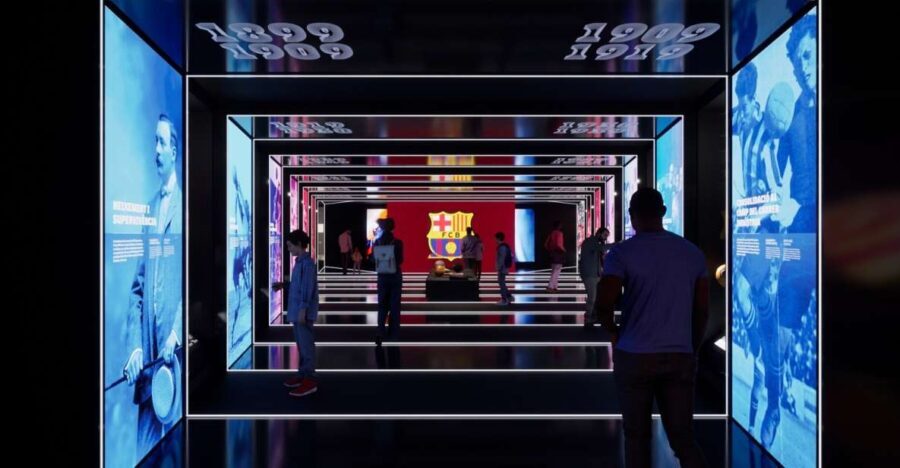
What sets this apart from the old museum experience is the technology. Instead of glass cases with jerseys behind them (though those exist too), you walk through rooms where the walls themselves become screens. Match highlights from 1957 to today wrap around you. It’s genuinely impressive, even if you’re not a football person.
The open-date flexibility is a nice touch — book now, visit whenever during your trip. If it rains on Tuesday and you’d rather go Thursday, no problem.
2. FC Barcelona Museum Immersive Guided Tour — Guided Experience
If you want someone to bring the trophies and projections to life with actual stories, this is the guided version worth looking at. The tour runs about 1 to 1.5 hours and you get a local guide — typically someone who genuinely lives and breathes Barca football.
One visitor mentioned their guide Sarah was so passionate about the team that “you could feel her love for the club radiating off of her.” That’s the kind of energy you’re paying for. The guided groups are small, and you get free time afterward to wander the exhibition at your own pace.
The main drawback is the fixed schedule. You’ll need to plan around the tour time rather than showing up whenever suits you. But if you want to understand *why* a club founded by a Swiss guy in 1899 became the most powerful symbol of Catalan identity, having a guide explain it is worth every cent.
3. Camp Nou Immersive Tour Open Date Ticket
This is the Viator option, and it’s essentially the same self-guided museum access as ticket #1 but booked through a different platform. Why include it? Because some travelers already have Viator credits or prefer their cancellation policy. The open date format means you buy the ticket and use it whenever you want within the validity window.
One honest note here: a couple of visitors mentioned that the booking requires a stop at the Julia Travel office to pick up your physical ticket before heading to the venue. That’s an extra 20-30 minutes of transport that feels unnecessary when you could just book directly. If that bothers you, go with option #1 instead. But if you don’t mind the detour and want the Viator booking experience, it works fine once you’re inside.
The actual museum experience is identical — same 360-degree projections, same holographic rooms, same Messi memorabilia. The difference is purely in how you book and collect your entry.
When to Visit

The museum opens daily, usually from 10am to 7pm (last entry an hour before closing), though hours shift seasonally and on match days. Always double-check the specific date you’re planning because Barca match days can mean early closures or complete shutdowns of the museum.
Best times to go:
- Weekday mornings before 11am — the quietest. You’ll have some rooms almost to yourself.
- Late afternoon after 4pm — the lunch crowds have cleared and tour groups are wrapping up.
- Shoulder season (October-March) — fewer travelers in Barcelona overall means shorter queues everywhere.
Worst times:
- Saturday and Sunday afternoons — packed. Local families, tourist groups, and football fans all converge at the same time.
- Match days — the museum often closes early or entirely. Check the Barca fixture calendar before booking.
- School holidays (especially August) — Barcelona in August is already overwhelming, and the museum reflects that.

Budget about 90 minutes to 2 hours for the full experience. You can rush through in an hour, but the 360-degree projection rooms alone deserve 15-20 minutes each, and the Messi section tends to create bottlenecks where everyone stops to photograph the Ballon d’Or trophies.
How to Get There

The Barca Immersive Tour operates at a temporary facility near the Camp Nou site in the Les Corts neighborhood. Getting there is easy on public transport.
By Metro: Take Line 3 (green) to Palau Reial or Les Corts. Either stop puts you about a 5-minute walk from the entrance. If you’re coming from the city centre (Placa Catalunya area), it’s roughly 15-20 minutes door to door. A Hola Barcelona Transport Card covers unlimited Metro rides and is worth it if you’re using public transport for more than 3-4 trips during your stay.
By Bus: Lines 7, 33, 54, 63, 67, 68, 75, and 78 all stop near Camp Nou. The bus is slower but lets you see the city along the way.
Walking from central Barcelona: It’s about 4km from Placa Catalunya — around 45 minutes on foot through the Eixample district. Not a bad walk if the weather’s good, but not something I’d recommend in the August heat.
By taxi or rideshare: From the Gothic Quarter, expect about 10-15 minutes and around 10-12 EUR. Drop-off is straightforward — just ask for “Camp Nou” and every driver in Barcelona knows it.
Tips That Will Save You Time
- Book online, don’t buy at the door. The on-site ticket queue can stretch 20-30 minutes on weekends. Online tickets let you scan and walk in.
- Check the match schedule before you go. Seriously. Barca plays at home roughly every two weeks during the season (August-May) and the museum closes or has reduced hours on match days. The FC Barcelona website has the full fixture list.
- Wear comfortable shoes. You’ll be on your feet for 90+ minutes. The exhibition covers a lot of ground.
- Bring a charged phone. There are interactive elements that work with your device, plus you’ll want photos. The holographic room in particular looks incredible on camera.
- The gift shop is at the exit and it’s enormous. Budget time (and willpower) if you’re shopping for Barca merchandise. Prices are standard retail — not inflated the way some attraction shops are.
- Food options nearby are limited. The Les Corts neighborhood isn’t a dining destination. Eat before you go, or grab something at one of the cafes near the Metro station. If you want proper food, head back toward central Barcelona after your visit.
What You’ll Actually See Inside

The Barca Immersive Tour is split into several zones, each covering a different era of the club’s history.
The Origins Room: This covers the founding story — Joan Gamper, a Swiss businessman who placed an ad in a local newspaper in 1899 looking for people who wanted to play football. Eleven people showed up. That’s it. That’s how one of the biggest clubs in world football started. The room uses projection mapping on the walls to bring the early 1900s Barcelona street scenes to life.
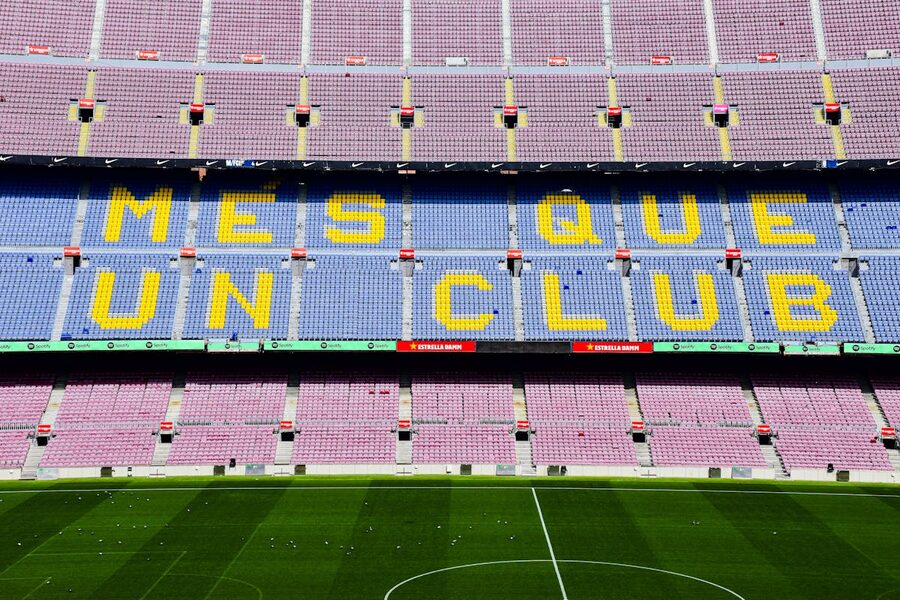
The Identity Hall: This is where things get heavy. The exhibition doesn’t shy away from the club’s political history — how Barca became intertwined with Catalan identity during Franco’s dictatorship, when speaking Catalan was banned and the Camp Nou became one of the few places where people could express their culture publicly. The “Mes que un club” motto makes a lot more sense after this room.

The 360-Degree Stadium Room: The showpiece. You stand in a circular room and the walls become Camp Nou. Match footage wraps around you — the Wembley 2011 Champions League final, the 6-1 comeback against PSG, Messi’s solo run against Getafe. The sound design is what sells it. When the crowd roars, it genuinely feels like you’re there. People audibly gasp when it starts.
The Trophy Hall: Every piece of silverware the club has won — and they’ve won a lot. Champions League trophies, La Liga titles going back decades, the Copa del Rey. The centrepiece is the section dedicated to Messi’s individual awards, including replicas of his Ballon d’Or trophies and the Golden Boots he won for being Europe’s top scorer. Messi scored 672 goals in 778 appearances for Barcelona (2004-2021), both all-time club records. The numbers are staggering even if you’re not a football person.
The Future Zone: The final section shows what the renovated Camp Nou will look like when the Espai Barca project is complete. Architectural renderings, 3D models, and flythrough videos of the new stadium. It’s part museum, part sales pitch — but an effective one. The new Camp Nou is going to be spectacular.
About the Camp Nou Renovation

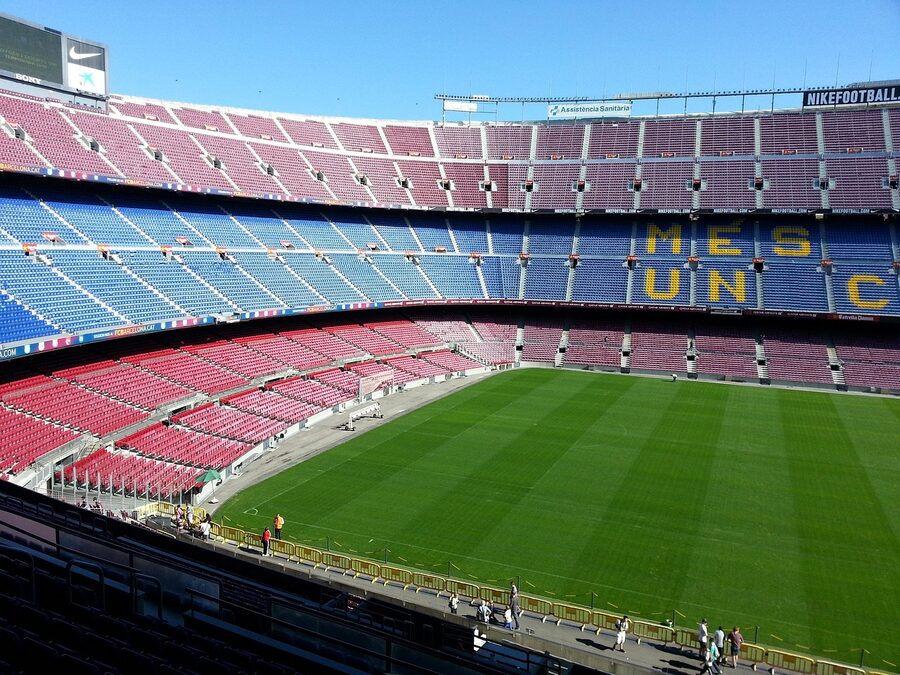
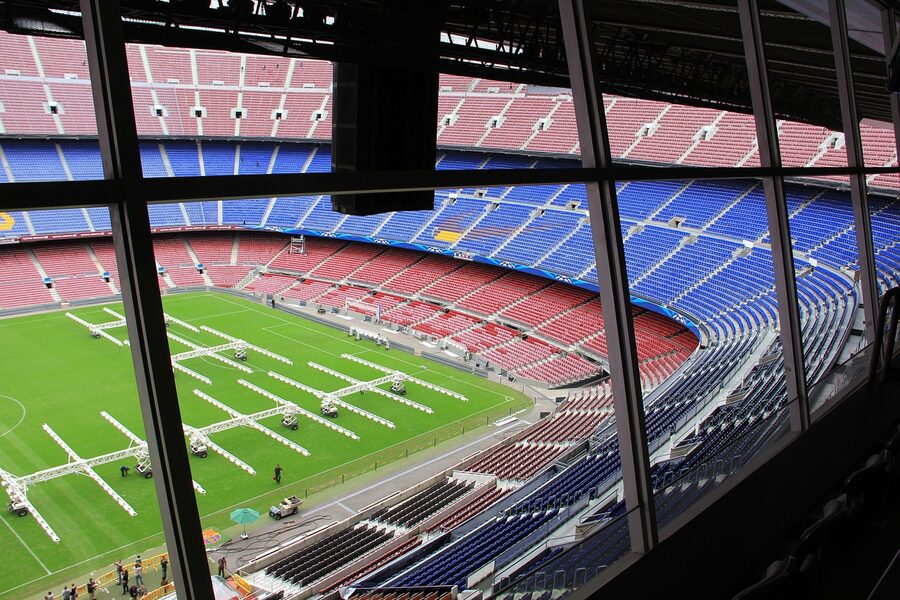
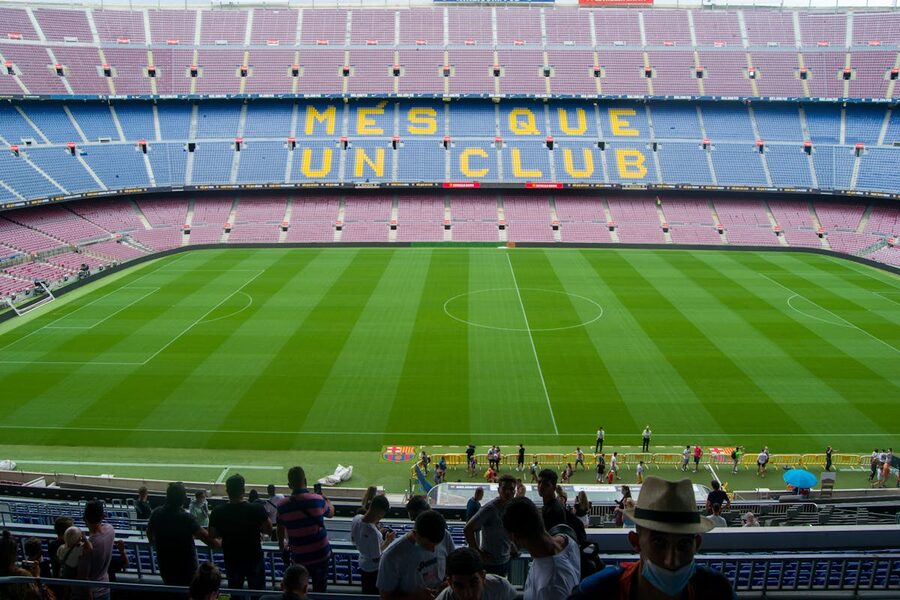
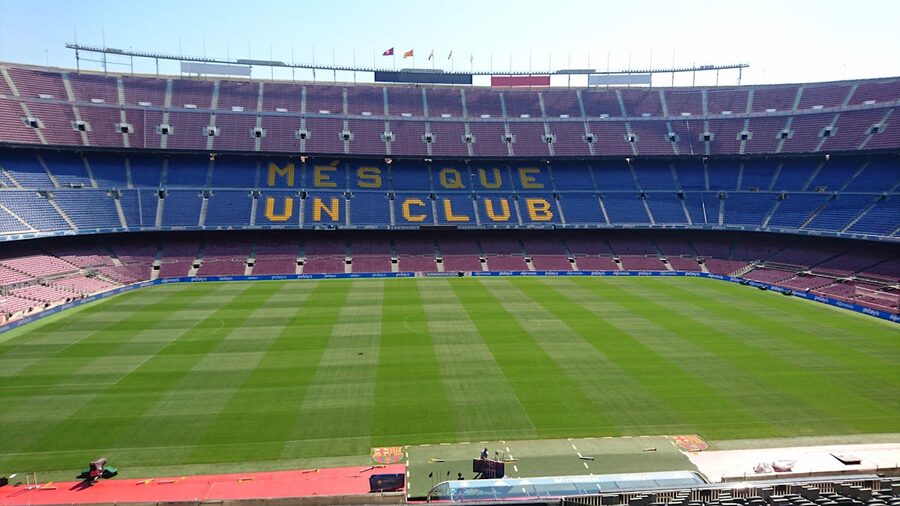
A quick note on the renovation because visitors ask about this constantly: Camp Nou opened in 1957 and held 99,354 people — the largest football stadium in Europe. The Espai Barca project is a full rebuild worth approximately 1.5 billion euros. The goal is a modernized, covered stadium with expanded capacity and updated facilities.
During the construction, Barca has been playing home matches at the Estadi Olimpic Lluis Companys on Montjuic hill. The immersive museum experience was created specifically so fans and travelers could still connect with the club’s history while the stadium is being rebuilt.
There’s no confirmed reopening date for the new Camp Nou yet. The club has suggested phased reopening, but Barcelona infrastructure projects famously run behind schedule (the Sagrada Familia has been under construction since 1882, so precedent isn’t encouraging).
Planning the Rest of Your Barcelona Trip

If you’re spending a few days in Barcelona, the FC Barcelona museum pairs well with a day exploring the Les Corts and Montjuic areas. Our guide to visiting Camp Nou covers the broader area around the stadium, while Montjuic is just a short Metro ride away and worth a half day.
For Barcelona’s other headline attractions, we’ve got booking guides for Sagrada Familia tickets (book early — those sell out fast) and Park Guell tickets. If you’re trying to cover a lot of ground quickly, a hop-on hop-off bus actually makes sense in Barcelona since the attractions are spread across the city. And for getting around cheaply, the Hola Barcelona Transport Card saves money from day one if you’re using public transport regularly.
A walking tour of central Barcelona is a solid way to start any trip — the Gothic Quarter and Las Ramblas are best explored with a guide who knows the side streets. And if Gaudi is your thing, Casa Batllo is one of the most unusual buildings you’ll ever walk through.
This article contains affiliate links. When you book through these links, we may earn a small commission at no extra cost to you. This helps us keep creating these guides.