
A single metro ride in Barcelona costs you €2.40. Two rides a day for four days? That’s €19.20 — and you haven’t even gotten from the airport yet.
I spent an embarrassing amount of time on my first Barcelona trip calculating whether the Hola Barcelona card was worth it. Turns out the maths isn’t even close. If you’re staying more than two days and plan to use the metro at all (you will — the city is enormous), the card pays for itself before lunch on day two.
But here’s what nobody tells you upfront: the Hola Barcelona card doesn’t cover the Aerobus, doesn’t work on the hop-on hop-off tourist buses, and the airport metro surcharge that used to exist is now included. So the card just got more useful than it was a couple of years ago.
Best for most visitors: Hola Barcelona Public Transport Travel Card — From €17.50. Unlimited metro, bus, tram, and FGC trains for 2-5 days including airport rides.
Best for sightseeing + transport: Barcelona Card — From €69. Everything the Hola card covers plus free entry to 25+ museums and discounts at attractions.
Best budget alternative: T-Casual card — €11.35. 10 single rides on any transport. Buy at any metro station. Great for short stays of 1-2 days.
- What the Hola Barcelona Card Actually Covers
- Hola Barcelona Pricing — And When It’s Worth It
- Hola Barcelona vs T-Casual — Which Should You Get?
- How to Buy and Activate Your Hola Barcelona Card
- The Best Transport Cards to Book
- 1. Hola Barcelona Public Transport Travel Card — From
- 2. Barcelona Card: Museums + Transport — From
- 3. Hola Barcelona Travel Card (Viator) — From
- Getting from the Airport with Your Hola Card
- Barcelona’s Transport System — A Quick History
- Where Can You Go with the Hola Card?
- Practical Tips That Will Save You Time
- Should You Get the Hola Card or the Barcelona Card?
- Getting Around Without a Card
- Exploring Beyond the Metro
- While You’re in Barcelona
What the Hola Barcelona Card Actually Covers
The Hola Barcelona Travel Card is an unlimited-ride pass for Barcelona’s entire public transport network. And by “entire,” I mean genuinely everything that matters:
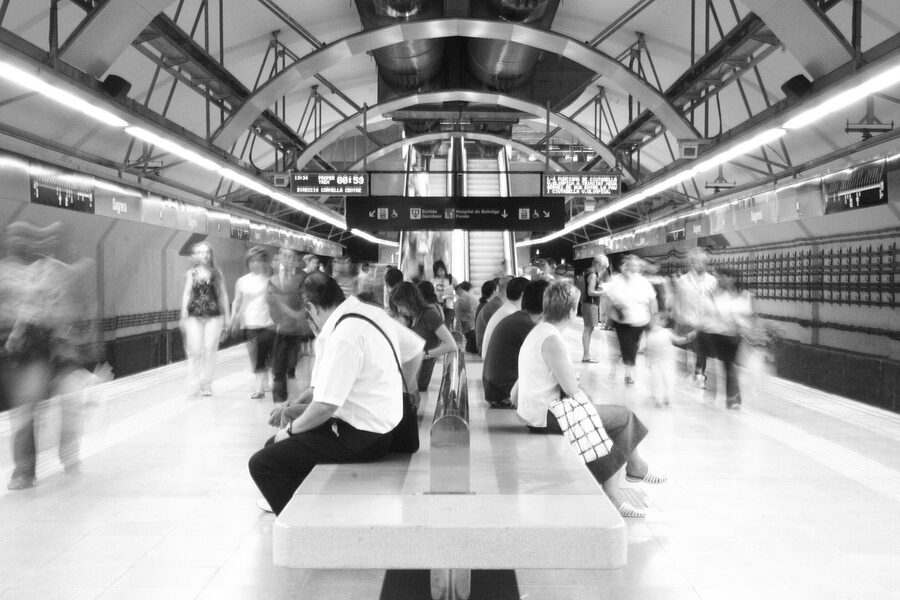
Metro (TMB): All 12 lines, 187 stations. This is the backbone of getting around Barcelona. Runs from 5am to midnight Sunday-Thursday, until 2am on Fridays, and 24 hours on Saturdays. During major festivals, it sometimes runs all night.
Buses (TMB): Over 100 routes including the night bus network (NitBus) that runs after the metro shuts down. Handy for those late-night tapas runs back to the hotel.
Tram: The Trambaix and Trambesòs lines. Useful if you’re heading to the outskirts or staying near Diagonal.
FGC commuter trains: This is the one people forget about. The FGC trains within Zone 1 are covered, which means you can reach Tibidabo, the Sarrià neighbourhood, and several places the metro doesn’t go.
Airport metro (L9 Sud): The metro line to Barcelona-El Prat Airport terminals T1 and T2. A single airport metro ticket normally costs €5.15 — so you’re already saving money on the ride in from the airport.
What the card does NOT cover:
- Aerobus — The express airport shuttle bus. Separate ticket, €7.75 one-way. Take the metro instead with your Hola card and save the money.
- Hop-on hop-off tourist buses — These are run by private companies, not TMB. Totally separate. If you want that, check our guide to booking the hop-on hop-off bus in Barcelona.
- Renfe trains — The national railway. If you’re going to Sitges, Montserrat, or anywhere outside Zone 1, you need a separate ticket.
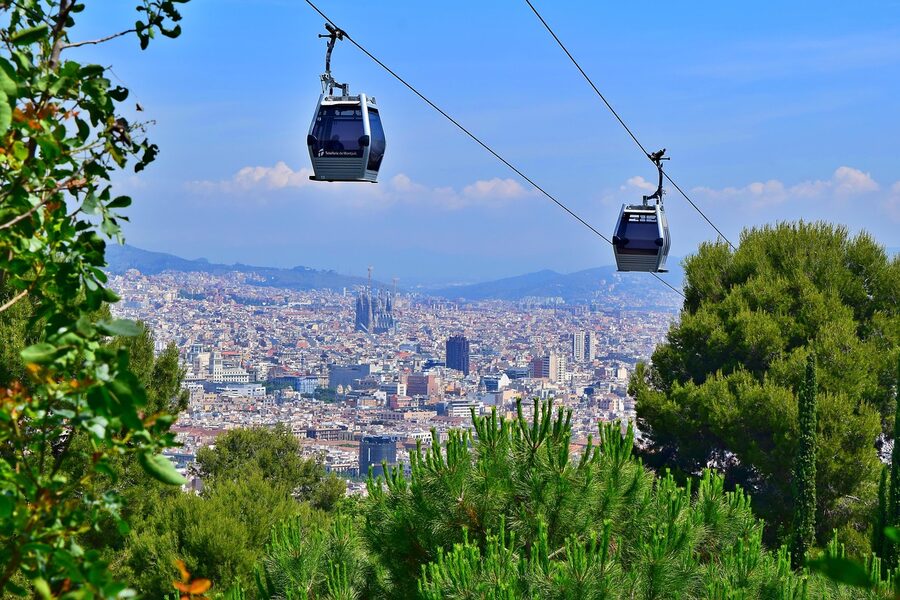
- Funicular de Montjuic to the castle — The TMB funicular from Paral-lel station IS covered. But the cable car from Montjuic up to the castle is NOT (that’s a separate €13.50 ticket).
Hola Barcelona Pricing — And When It’s Worth It

Here are the current prices for the Hola Barcelona card:
- 48 hours (2 days): ~€17.50
- 72 hours (3 days): ~€25.50
- 96 hours (4 days): ~€33.50
- 120 hours (5 days): ~€40.00
Now let me do the maths so you don’t have to.
Scenario 1: The Weekend Visitor (2 days)
Airport metro in: €5.15. Three metro rides per day for sightseeing: €7.20/day = €14.40. Airport metro out: €5.15. Total: €24.70. The 48h card costs €17.50. You save about €7.
Scenario 2: The Long Weekend (3 days)
Airport metro return: €10.30. Four metro rides per day for 3 days: €28.80. One bus ride: €2.40. Total: €41.50. The 72h card costs €25.50. You save about €16. That’s nearly a meal.
Scenario 3: A Solid Week (5 days)
Airport metro return: €10.30. Three-four rides daily across five days: roughly €48-€57.60. Total: €58-68. The 120h card costs €40. You’re saving up to €28 — and you never have to think about topping up or buying single tickets.
The tipping point is roughly 3-4 rides per day. If you’re just going from the hotel to one attraction and back, a T-Casual card might be cheaper. But the moment you add a couple of extra stops — a market visit here, a beach trip there — the Hola card wins.
Hola Barcelona vs T-Casual — Which Should You Get?
The T-Casual is Barcelona’s standard multi-ride ticket: 10 rides for €11.35. It works on the same transport network as the Hola card — metro, bus, tram, FGC.
When the T-Casual wins:
- You’re in Barcelona for just 1-2 days
- Your hotel is central and you plan to walk a lot
- You only need 2-3 rides per day
- You’re not arriving/departing by metro from the airport
When Hola Barcelona wins:
- You’re staying 3+ days
- You want the airport metro included (saves €10.30 round trip)
- You’ll be hopping around the city freely without counting rides
- You hate the mental tax of wondering if a ride is “worth it”
There’s also a psychological benefit to the unlimited card that’s easy to underestimate. With a T-Casual, I’ve caught myself walking 20 minutes in the heat to “save a ride.” With the Hola card, you just tap in. Tired? Metro. Wrong direction? Metro. Want to explore a random neighbourhood you saw from the bus? Jump off and get back on later. It changes how you experience the city.
One important note: the T-Casual is personal — it can’t be shared between travellers. Each person needs their own. The Hola Barcelona card is the same: one card per person.
How to Buy and Activate Your Hola Barcelona Card
You’ve got two options:
Option 1: Buy online before you go (recommended)
This is what I’d do. Book through GetYourGuide or Viator and you’ll get a voucher. When you land at Barcelona Airport, head to the TMB customer service office in Terminal 1 or Terminal 2 arrivals and exchange your voucher for the physical card. Takes about 5 minutes if there’s no queue.
The advantage of buying online? You lock in the price, and you skip the ticket machine interface — which is fine but slow when you’ve just gotten off a 3-hour flight and want to get to your hotel.
Option 2: Buy at the airport or any metro station
Every metro station has ticket machines where you can buy the Hola card directly. The airport terminals have them too. The machines accept cards and cash. Straightforward, no drama.
Activation: The clock starts when you first tap in at a metro gate or validator. Not when you buy it. So if you buy the 72h card at the airport at 11pm but take a taxi to the hotel, your 72 hours don’t start until you first use the card the next morning.
The Best Transport Cards to Book
1. Hola Barcelona Public Transport Travel Card — From $22
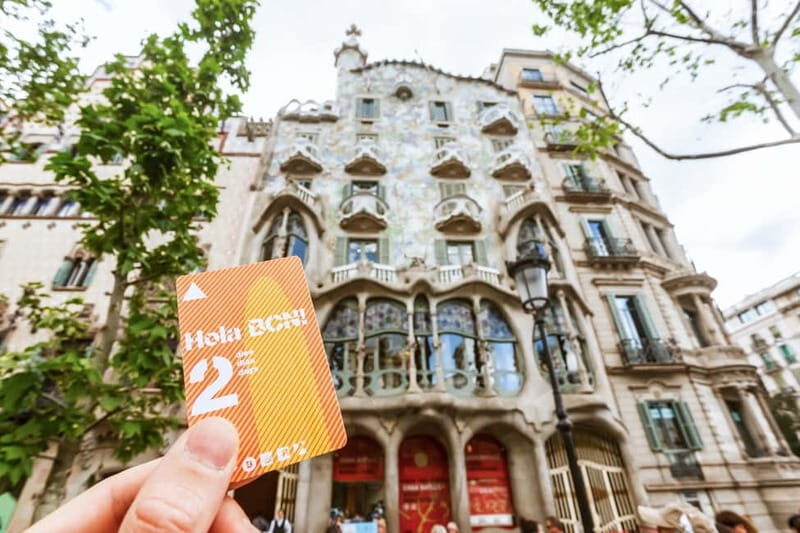
This is the one. The Hola Barcelona Public Transport Travel Card is by far the most popular transport pass for visitors, and the most reviewed travel card on any booking platform. Available in 48h, 72h, 96h, and 120h versions, it gives you unlimited rides on everything TMB operates — metro, buses, trams, FGC trains, and the airport metro line.
The 72-hour version hits the sweet spot for most trips. At around $22-26 per person, you’d need just four metro rides a day to break even — and most visitors do more than that without realising. Pick it up at the airport the moment you land and your entire transport situation is sorted.
What sets this apart from buying single tickets isn’t just the savings — it’s the freedom. You stop doing mental arithmetic every time you see a metro entrance. And if you’re traveling with kids, the card works for children too (ages 4+).
2. Barcelona Card: Museums + Transport — From $69
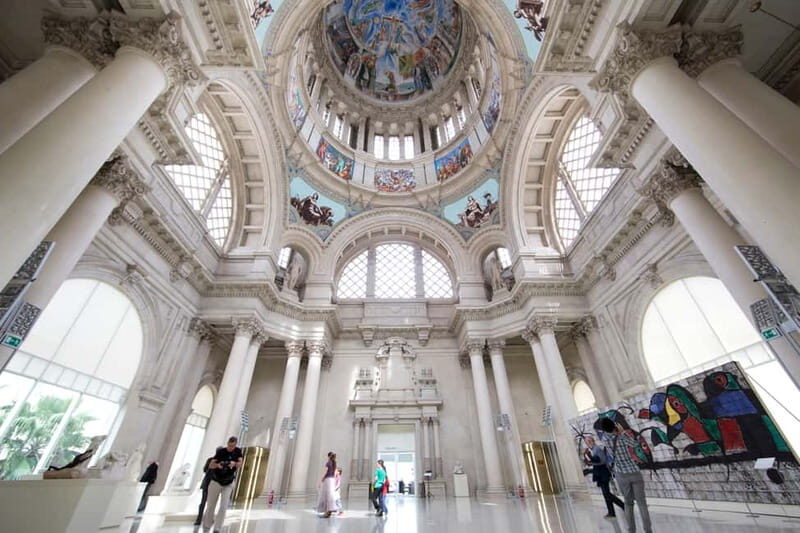
The Barcelona Card is the Hola card’s bigger sibling. It includes everything the Hola covers — unlimited metro, bus, tram — but adds free entry to over 25 museums and cultural venues, plus discounts at restaurants, shops, and more attractions.
At $69+, it’s a jump in price from the Hola card. But consider this: the Picasso Museum alone costs €12, MACBA is €11, and the MUHBA Barcelona History Museum is €7. If you’re planning three or four museum visits, the card starts to pay for itself, especially over 4-5 days. The discounts on other attractions (like the Sagrada Familia and Casa Batllo) push it further.
One honest caveat: the free museums on the Barcelona Card don’t include the really big-ticket attractions like Sagrada Familia or Park Guell — those still require separate admission. You get discounts, not free entry. So read the list of included museums before you commit.
3. Hola Barcelona Travel Card (Viator) — From $26
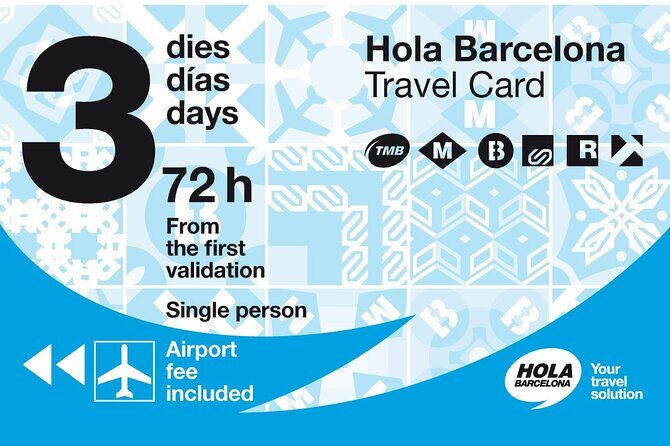
This is essentially the same Hola Barcelona card sold through Viator rather than GetYourGuide. Same features, same transport coverage, same pickup at the airport. The reason I’m listing both is that the pricing sometimes differs between platforms — I’ve seen a few dollars’ difference depending on the day and the duration you pick.
At from $26 per person, the 2-5 day options are all available. The collection process is identical: exchange your voucher at the TMB desk in airport Terminal 1 or 2. Some visitors have also reported picking up at tourist information offices around the city, though the airport is by far the most convenient.
If you already have a Viator account or prefer their cancellation policy, go with this one. The product is identical — it’s just a question of which platform you prefer booking through.
Getting from the Airport with Your Hola Card
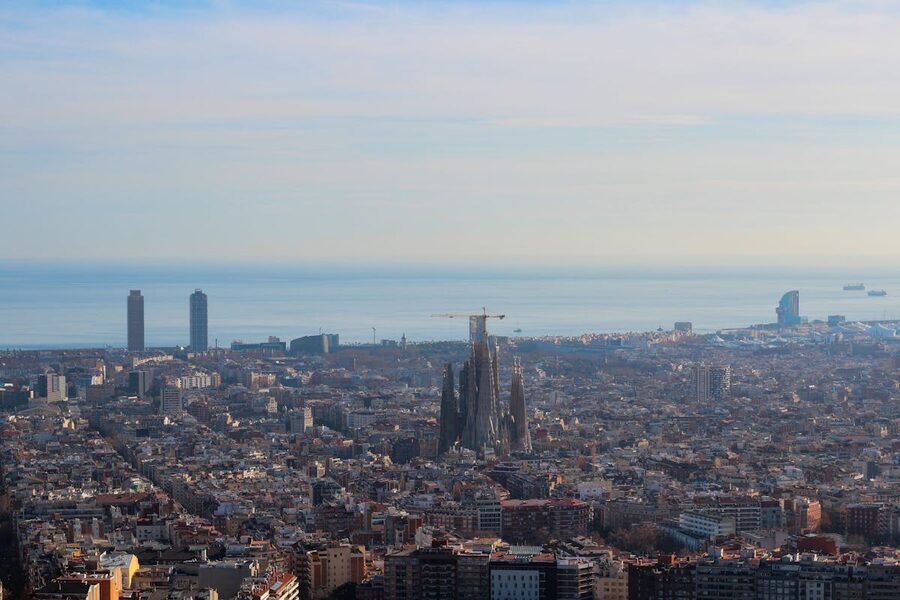
The airport metro situation in Barcelona used to be a mess. There was a supplement charge on top of your regular ticket, which made transport cards less attractive. That supplement is now included in the Hola Barcelona card — no extra charge.
Here’s the route: Take the L9 Sud (orange line) from either T1 or T2 at the airport. It runs every 7 minutes during peak hours. You’ll ride about 25-35 minutes to Zona Universitaria, where you switch to L3 (green line) to reach the city centre. Total journey from airport gate to Plaça Catalunya is about 45-50 minutes.
Is it faster than a taxi? No. A taxi to the centre takes 20-25 minutes and costs €39 flat rate. But the metro trip costs you nothing with the Hola card, and if you’re travelling as a couple, that’s €78 saved on airport transfers alone (both ways, two people). That nearly pays for two 72-hour Hola cards.
Pro tip: When you land, head to the TMB customer service desk BEFORE going through the metro gates. Exchange your voucher for the physical card there. The machines in the metro area only sell new cards — they can’t process vouchers.
Barcelona’s Transport System — A Quick History

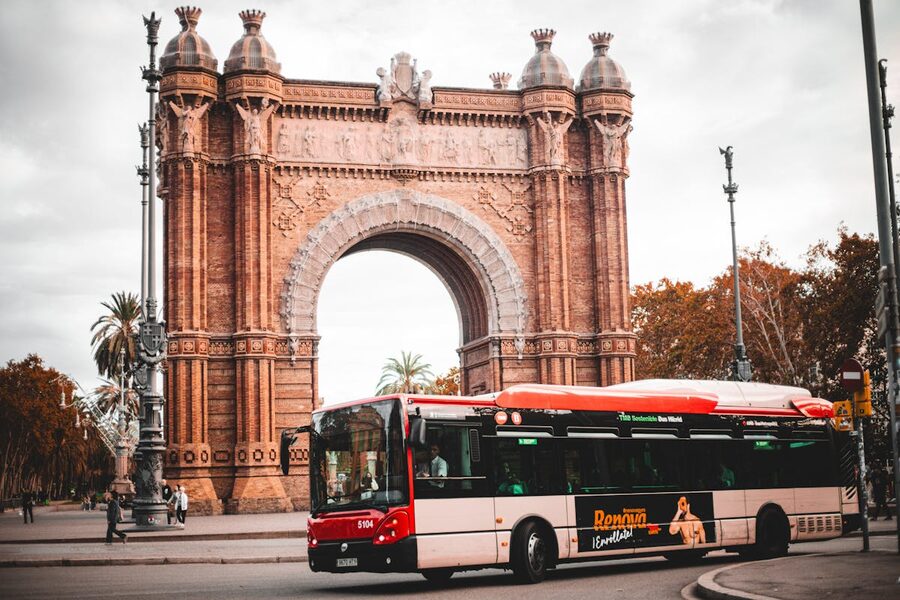
Barcelona’s metro opened on December 30, 1924, making it one of the oldest underground railway systems in Europe. The city was the third in Spain to get a metro after Madrid in 1919 — though it was originally just a single line running from Lesseps to Catalunya.
The system has grown to 12 lines and 187 stations today, but what makes Barcelona’s public transport genuinely excellent is the integration. Metro, buses, trams, FGC commuter trains, the funicular up to Montjuic — they all work together under a single zoning system. Your Hola card treats them as one network.
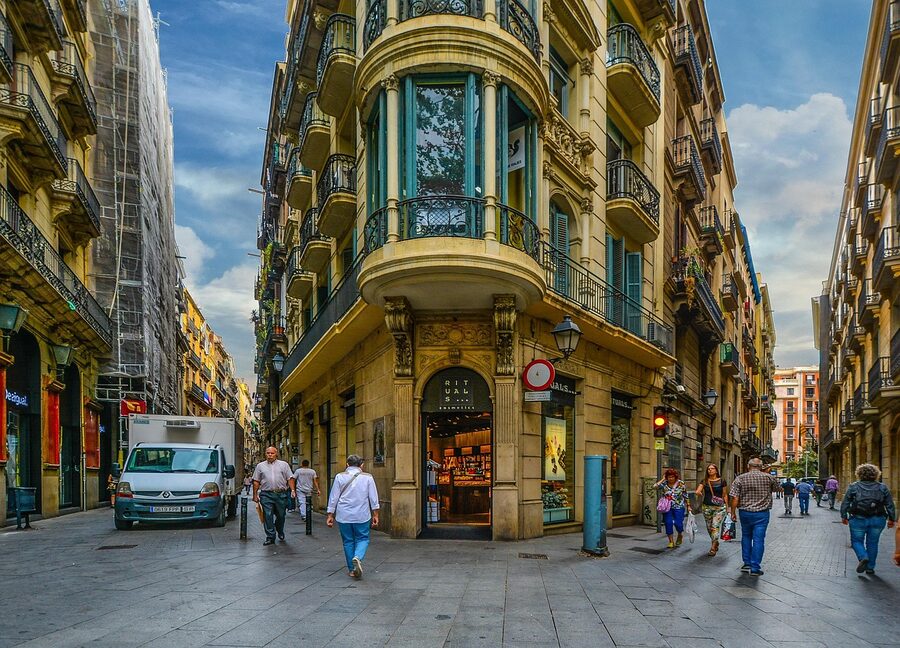
The city’s street layout deserves a mention too. Ildefons Cerda designed the Eixample district in 1859 as one of Europe’s first planned urban extensions. Those distinctive octagonal blocks — the ones that look so satisfying in aerial photos — weren’t just aesthetic. The chamfered corners improved visibility at intersections, letting horse traffic see what was coming. Today they create those wide, light-filled crossroads that make Barcelona feel more open than any other dense European city.
Where Can You Go with the Hola Card?
Practically everywhere a tourist wants to go. Here’s a quick rundown:
Sagrada Familia: Metro L2 or L5 to Sagrada Familia station. Literally named after the church. You can’t miss it.
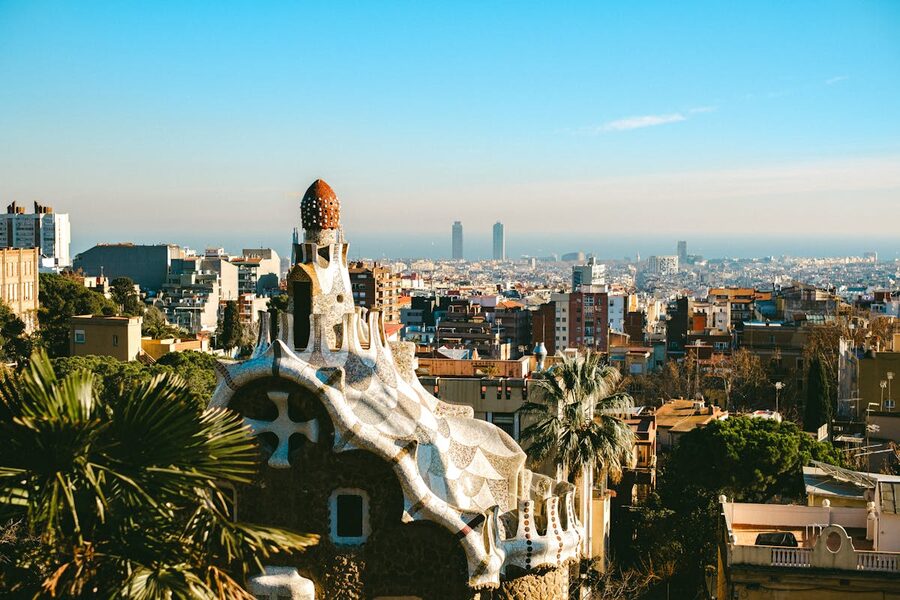
Park Guell: Metro L3 to Vallcarca or Lesseps. From there it’s a 15-20 minute walk uphill. Take the escalators from Vallcarca — they shave off the steepest part. Or bus 24 from Plaça Catalunya drops you right at the entrance (covered by the Hola card).
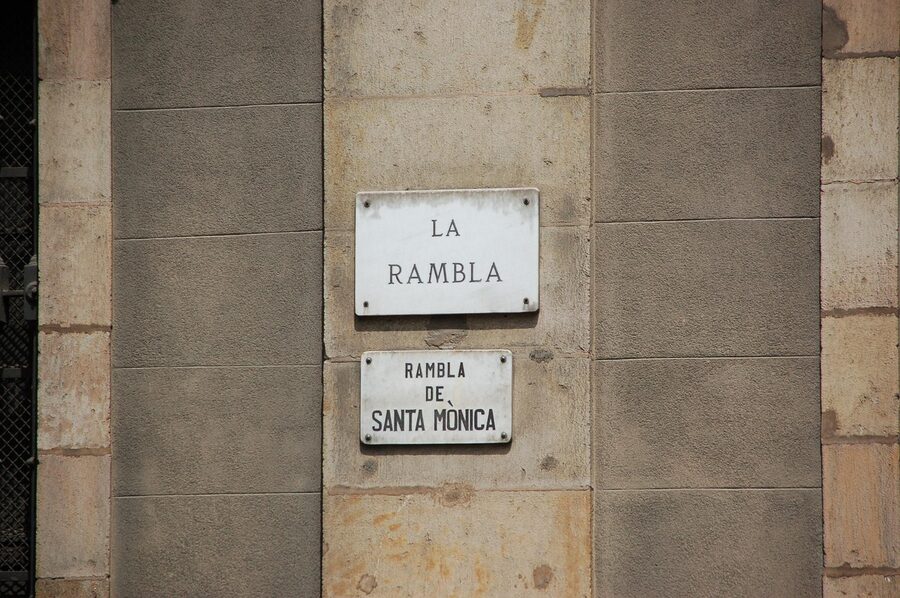
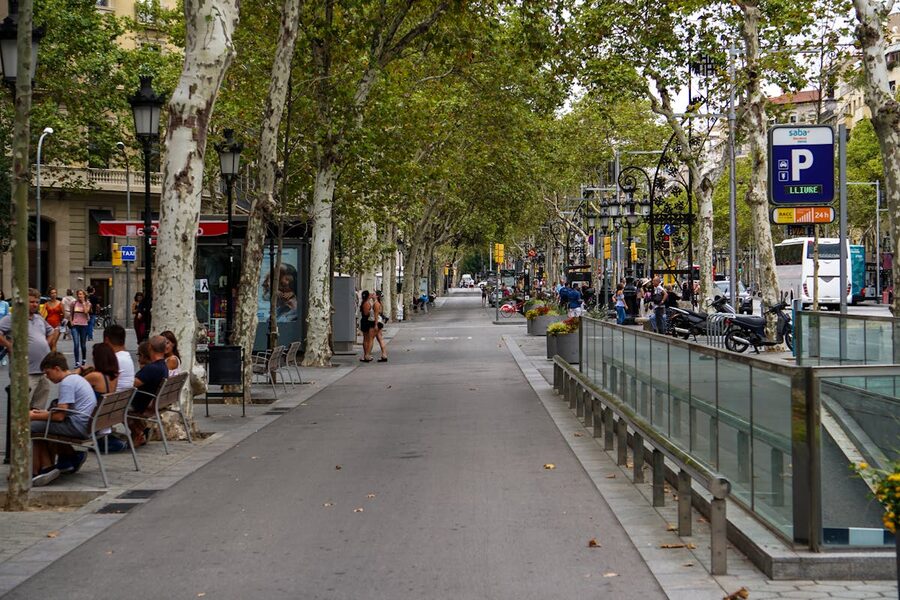
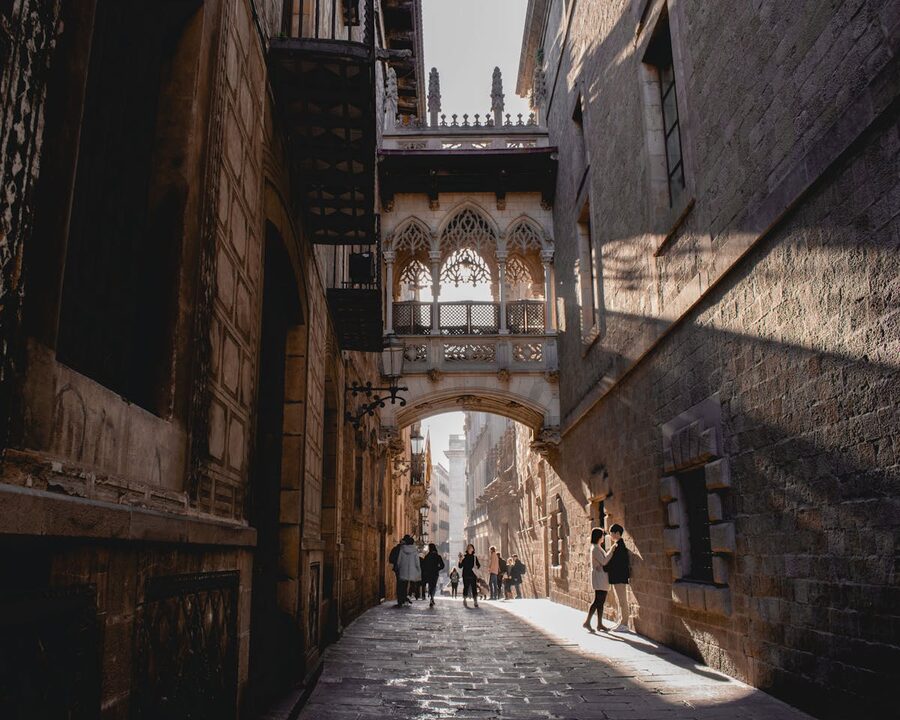
La Rambla & Gothic Quarter: Metro L3 to Liceu or Drassanes. This drops you right onto La Rambla. From here you can walk to the entire Gothic Quarter and the waterfront.
Casa Batllo & Casa Mila (La Pedrera): Metro L3 or L5 to Diagonal or Passeig de Gracia. Both Gaudi houses are on Passeig de Gracia within walking distance of each other.
Montjuic: Metro L2 or L3 to Paral-lel, then the TMB funicular (included with the Hola card) takes you up to Montjuic. From there, you can walk to the castle, the Magic Fountain, MNAC, and the Olympic stadium.
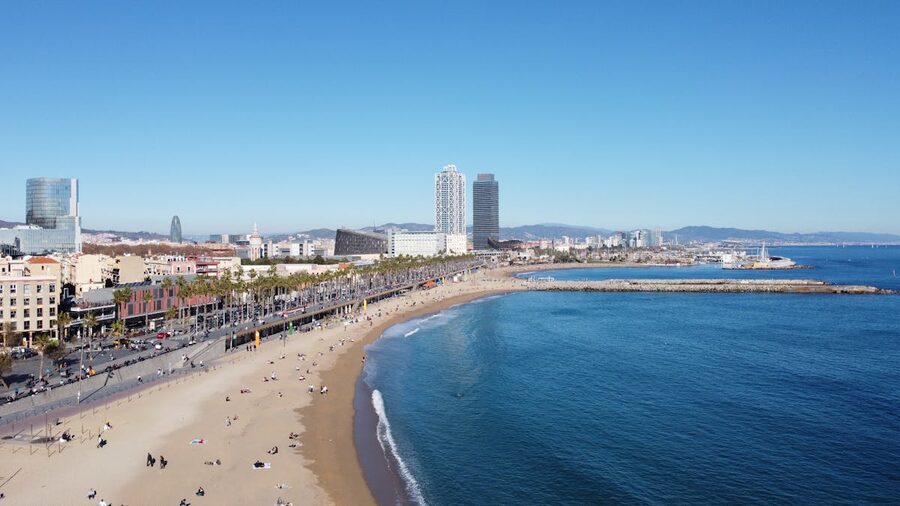
Barceloneta Beach: Metro L4 to Barceloneta station. Five-minute walk to the sand.
Camp Nou (FC Barcelona): Metro L3 to Les Corts or L5 to Collblanc.

Practical Tips That Will Save You Time
Validate once, not twice. The Hola card is contactless — just tap on the reader at the metro gate or bus validator. You don’t need to tap off when exiting the metro. Buses require a tap when boarding.
Keep your card in an accessible pocket. You’ll be tapping it 6-8 times a day. Digging through a bag every time gets old fast.
Download the TMB app. Free, works offline for route planning, and shows real-time arrival estimates. Extremely useful for planning bus routes, which aren’t as intuitive as the metro.
Metro hours vary by day. Monday-Thursday: 5am-midnight. Friday: 5am-2am. Saturday: 24 hours. Sunday: 5am-midnight. On the night before public holidays, it often runs all night — check the TMB website before you go out.
Rush hour is real. Between 8-9:30am and 5:30-7:30pm, the L3 (green line) between Passeig de Gracia and Sants Estacio gets packed. If you’re flexible, avoid these windows or take bus alternatives.
Bus 24 is your friend. The direct bus from Plaça Catalunya to Park Guell. It’s faster and less crowded than the metro + walk option. Covered by the Hola card.
The FGC trains are underrated. Tourists usually default to the metro, but FGC trains are often cleaner, less crowded, and run to places like Tibidabo and Vallvidrera. All covered by the Hola card in Zone 1.
Should You Get the Hola Card or the Barcelona Card?

This is the question most visitors get stuck on, so I’ll make it simple.
Get the Hola Barcelona card if: You mainly care about getting around cheaply and easily. You’re happy buying separate tickets for the specific attractions you want to visit. You’re on a budget and want the cheapest transport solution.
Get the Barcelona Card if: You’re a museum person. You want the convenience of one card for everything — transport and attractions. You’re staying 3-5 days and planning to visit at least 3-4 of the included museums. You appreciate the restaurant and shop discounts.
For most visitors I talk to? The Hola Barcelona card is the right call. It does the one job it’s supposed to — unlimited transport — and it does it well. The Barcelona Card is great if you’re genuinely into museums, but if you’re mainly coming for Sagrada Familia, Park Guell, and the beaches, those top attractions aren’t included in the card’s free admission anyway.
Getting Around Without a Card
Maybe you’ve decided the transport card isn’t for you. Fair enough. Here are your other options:
Single tickets: €2.40 per ride. Buy at any metro station machine. Works on metro, bus, and tram. Transfers within 75 minutes count as one ride if you’re switching between metro and bus. But metro-to-metro transfers don’t count — each time you exit and re-enter the metro, it’s a new ride.
T-Casual: €11.35 for 10 rides. Best value if you’re in the city for 1-2 days and taking 3-5 rides daily. Available at all metro stations.
T-Dia (Day Pass): €10.50 for unlimited travel within one calendar day (not 24 hours — it expires at midnight). Only worth it if you’re absolutely hammering the metro for one specific day.
Walking: Barcelona is surprisingly walkable if you’re staying in the centre. La Rambla to Sagrada Familia is about 30 minutes on foot. La Rambla to Barceloneta Beach is 10 minutes. But Barcelona in July is 33°C and humid — factor that into your walking ambitions.
Taxis: Reasonable by European standards. Airport to centre is a fixed €39. Within the city, most rides are €8-15. Useful for late nights when even the NitBus feels like too much effort.
Exploring Beyond the Metro
If you’re spending more than a long weekend in Barcelona, you’ll probably want to venture further. Montserrat is the most popular day trip — the mountain monastery sits about an hour northwest by train. The Hola card doesn’t cover this journey (it’s outside Zone 1), but the FGC train from Plaça Espanya gets you partway there before you need to switch to the rack railway.
The coastline north and south of the city is gorgeous too. Sitges is 35 minutes by Renfe train and worth a day of your time if you like beach towns with character. Again, separate ticket needed — the Hola card stays within Barcelona’s Zone 1.
While You’re in Barcelona
If you’re using the Hola card to get around, you’ll probably find yourself near most of Barcelona’s major sights without even trying. Our guide to booking Sagrada Familia tickets covers the skip-the-line strategies that actually work, and Park Guell is worth the uphill walk from Vallcarca metro. For something less expected, Montjuic is one of the most underrated areas of the city — the funicular from Paral-lel station (covered by your Hola card) takes you up to gardens, museums, and a castle with views that rival anything in the Eixample. If you’ve got a full day spare, Montserrat is the day trip everyone recommends, and for good reason. And for the Gaudi completionists, both Casa Batllo and Casa Mila are on Passeig de Gracia — one metro stop from the centre.
This article contains affiliate links. If you book through our links, we may earn a small commission at no extra cost to you. This helps support our work in producing detailed, honest guides for travellers. All recommendations are based on thorough research and our own experience.