
Joan Miró deliberately destroyed his own paintings. He called it “the assassination of painting” — a protest against the idea that art should be precious or untouchable. And somehow, the museum dedicated to his work became one of the most welcoming art spaces I’ve been to in Barcelona. No stuffy galleries. No velvet ropes keeping you at arm’s length. Just light, colour, and Miró’s wild imagination spreading across an entire hillside on Montjuïc.
The Fundació Joan Miró sits at the top of Montjuïc hill, about a 15-minute walk from the funicular station. Getting tickets is straightforward — you can buy them online for €16 general admission (saving €1 off the door price) or through third-party platforms that include skip-the-line entry. Below, I’ll cover the best ticket options, what to expect inside, and how to make the most of your visit.
- In a Hurry? Top Picks for Miró Foundation Tickets
- How to Buy Joan Miró Foundation Tickets
- Best Tour Options for the Miró Foundation
- 1. Fundació Joan Miró Skip-the-Line Entry Ticket — €8
- 2. Skip-the-Line Access Ticket via Viator —
- 3. Private Joan Miró Tour: Art Expert Guide — €279/group
- What to Expect Inside the Miró Foundation
- The Man Behind the Art: Who Was Joan Miró?
- Getting to the Miró Foundation
- Practical Tips for Your Visit
- Is the Miró Foundation Worth It?
- More Barcelona Guides Worth Reading
In a Hurry? Top Picks for Miró Foundation Tickets
Best overall: Fundació Joan Miró Skip-the-Line Entry Ticket — €8 per person, skip-the-line access, most booked option by far. Check Availability
Budget option: Skip-the-Line Access Ticket to Fundación Miró — $18 per person via Viator, another solid skip-the-line ticket. Check Availability
Premium experience: Private Joan Miró Tour with Art Expert Guide — €279 per group (up to 1), 2 hours with a specialist who explains the symbolism behind every piece. Check Availability
How to Buy Joan Miró Foundation Tickets
You have three options for getting your tickets, and honestly they all work fine. The main difference is whether you want guaranteed skip-the-line or you’re happy to queue.
Option 1: Direct from the museum website. General admission is €16, or €15 if you buy online in advance. Students and over-65s pay €11. Under-15s get in free. The official site lets you pick a time slot, which is useful during peak season (June through September). One thing to know: the official site doesn’t always translate well from Catalan, so navigate to the English version before starting.
Option 2: Through GetYourGuide or Viator. These third-party tickets typically include skip-the-line access, which during summer can save you 20-30 minutes. Prices vary — I’ve seen them as low as €8 on GetYourGuide, which is actually cheaper than the official site. The trade-off is less flexibility on timing, but most are valid for the entire day.
Option 3: At the door. Totally possible outside of peak season. The queue rarely exceeds 10-15 minutes from October through April. But in July and August? Don’t risk it. I watched people wait 40 minutes one Saturday afternoon in July. Not worth it when online tickets cost the same or less.
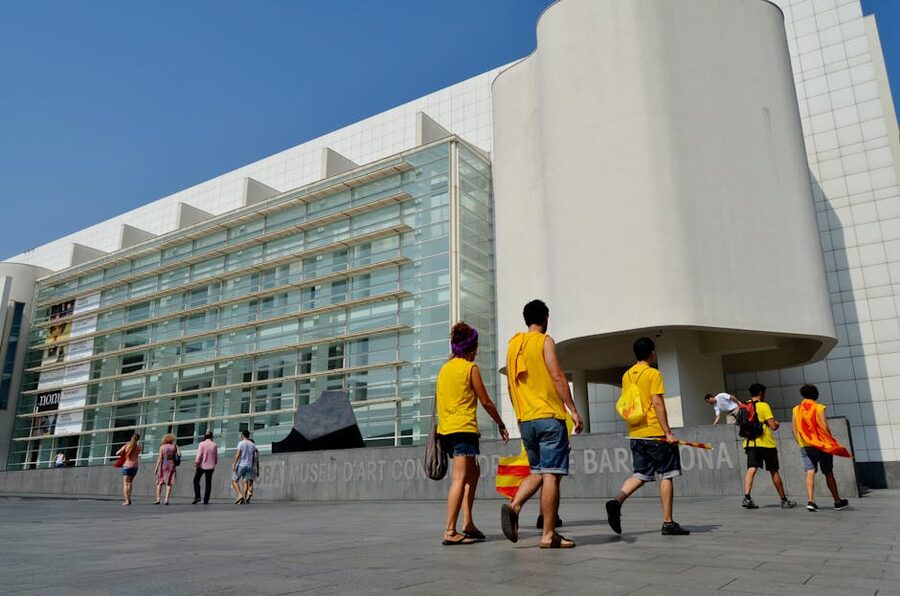
The ArticketBCN combo pass is worth mentioning if you’re planning to visit multiple art museums. For €38, you get entry to six museums including the Miró Foundation, MACBA, MNAC, the Picasso Museum, CCCB, and Fundació Antoni Tàpies. If you’re hitting even three of those, the pass pays for itself. You can also look into the Barcelona Card, which bundles transport and museum entries.
Best Tour Options for the Miró Foundation
I’ve gone through the available tours and narrowed it down to three options. Most people will be fine with the first one — it’s the cheapest and most popular. But if you want to actually understand what Miró was trying to do (and trust me, some context helps with abstract art), the guided option is worth the extra money.
1. Fundació Joan Miró Skip-the-Line Entry Ticket — €8
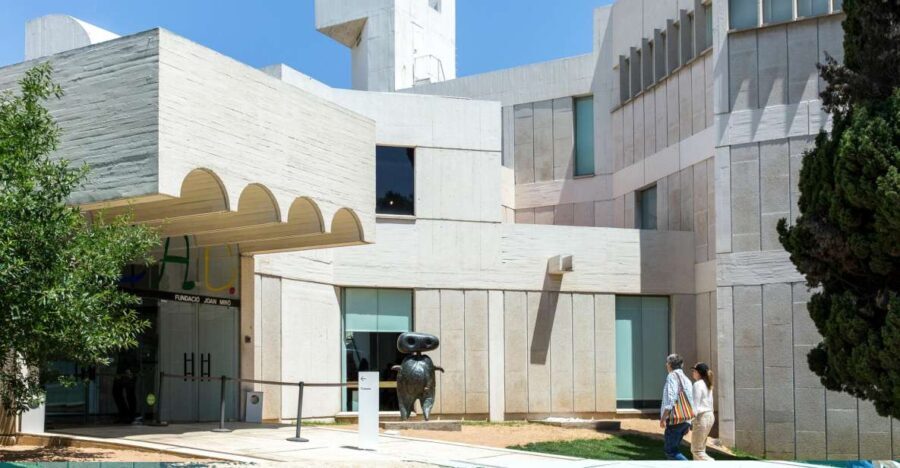
This is the ticket most people buy, and for good reason. Skip-the-line entry to the full permanent collection and whatever temporary exhibition is running. Our detailed review breaks down exactly what you’ll see inside. At €8 per person, it’s a fraction of what you’d pay at the Picasso Museum or Sagrada Familia. Self-guided, so you go at your own pace — plan for 90 minutes to two hours.
2. Skip-the-Line Access Ticket via Viator — $18
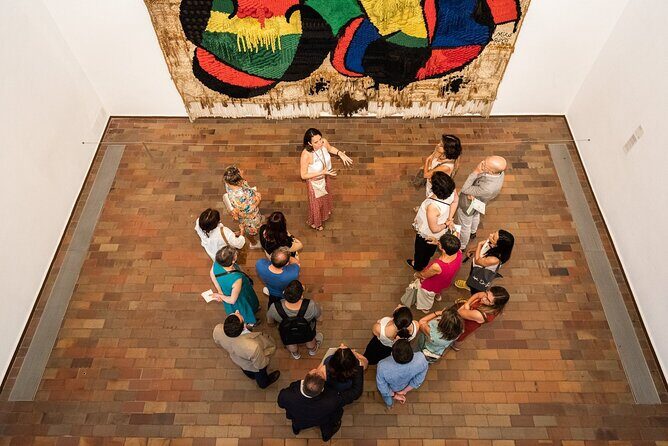
Same museum, same collection, slightly different booking platform. This Viator ticket gives you skip-the-line access with free cancellation up to 24 hours before. If your Barcelona plans are flexible and you might need to cancel, that’s useful. Our review covers the visitor experience in full. The cafe inside, by the way, has surprisingly good coffee and a terrace overlooking the sculpture garden.
3. Private Joan Miró Tour: Art Expert Guide — €279/group
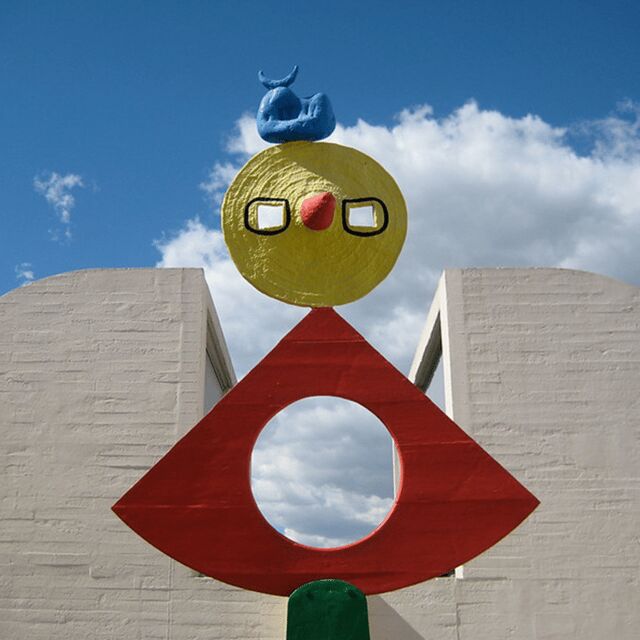
This is the option for people who want to understand Miró, not just look at him. A 2-hour private tour with an art history specialist who explains the Catalan symbolism, the political context, and why Miró burned his own canvases. Split between two people, it’s roughly €140 each — not cheap, but visitors consistently rave about the guides, particularly one named Laura who seems to come up again and again. Skip-the-line included.
What to Expect Inside the Miró Foundation
The building itself is half the experience. Designed by Josep Lluís Sert — who was a close friend of Miró — it opened in 1975, right at the end of the Franco era. That timing wasn’t accidental. The foundation was a statement: Catalan culture wasn’t dead, and it wasn’t going to be quiet about it.
Sert’s design uses natural light brilliantly. Skylights and open courtyards flood the galleries with Mediterranean sun, which changes the mood of the art depending on the time of day. Afternoon light, around 3-4pm, is particularly good in the main halls. The building wraps around itself in a way that feels organic rather than institutional — you’re never stuck in a corridor or shuffling through a crowd.
The permanent collection holds over 14,000 pieces, though only a fraction are displayed at any time. You’ll see paintings, sculptures, textiles, and ceramics spanning Miró’s entire career. The early works (1910s-1920s) look almost traditional — landscapes of his family’s farm in Mont-roig del Camp, portraits that owe something to Cézanne and van Gogh. Then something shifts around 1924-25 and the colours explode into the abstract style he’s known for.
The transition is fascinating to watch room by room. One moment you’re looking at careful, almost photographic depictions of Catalan farmhouses. The next, you’re staring at a canvas covered in floating eyes, stars, and crescent moons connected by thin black lines. Miró didn’t abandon reality overnight — he stretched it, bent it, and eventually let it go entirely.
The Constellations series is the highlight for most visitors. These small gouache paintings from the 1940s — created while Miró was hiding from the war in Normandy and later Mallorca — are intricate and strange and genuinely mesmerising. The foundation displays them so you can see both front and back, which adds another layer.
Don’t miss the rooftop terrace. It has several Miró sculptures and some of the best views on Montjuïc. It’s free to access once you’re inside, and most people walk straight past it. Their loss.
The Man Behind the Art: Who Was Joan Miró?
Miró was born in Barcelona in 1893 in the Barri Gòtic, barely a five-minute walk from the Gothic Quarter travelers walk through today. His father was a goldsmith and watchmaker. His mother came from Mallorca. Barcelona and Mallorca would define his entire life — even when he lived in Paris, he kept coming back.
He started drawing seriously at eight years old. By 14 he was enrolled at Barcelona’s School of Fine Arts. His teachers found him frustrating — technically gifted but completely uninterested in following rules. That attitude never changed.
In the 1920s he moved to Paris and fell in with the Surrealists. André Breton, the movement’s unofficial leader, initially embraced Miró but later called him “the most Surrealist of us all” — which was both a compliment and an acknowledgment that Miró had gone further than anyone else in breaking with reality.
The Spanish Civil War and World War II shaped him deeply. He fled to Normandy, then back to Mallorca. During those years he created some of his most intense work — the Constellations series, which he described as a way of escaping a world that had gone completely mad. He also developed his most famous technique during this period: working on the floor, dripping paint, scratching into surfaces, incorporating found objects.
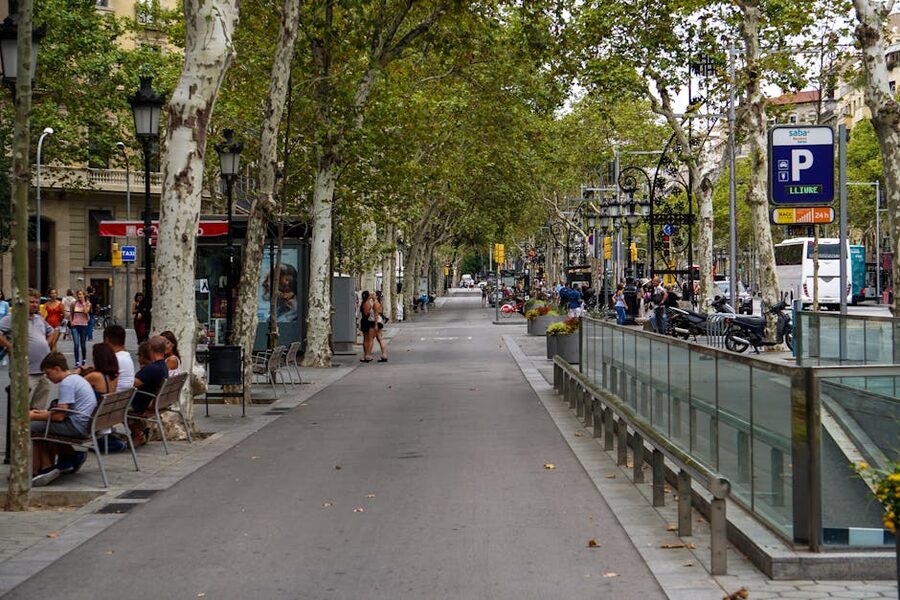
In his later years, Miró turned increasingly to sculpture, ceramics, and monumental public works. His UNESCO murals in Paris (1958), the Barcelona airport mural, and that La Rambla pavement mosaic all date from this period. He died in Mallorca on Christmas Day, 1983, at age 90.
What makes Miró different from Picasso or Dalí — the other two giants of 20th-century Spanish art — is accessibility. Picasso demands that you understand Cubism. Dalí demands that you appreciate Surrealist symbolism. Miró just asks you to look. His shapes, colours, and compositions work on an almost instinctive level. Kids love his art, and that’s not an insult — he would have taken it as the highest compliment.
The foundation also houses the Mercury Fountain by Alexander Calder — originally displayed alongside Picasso’s Guernica at the 1937 Paris International Exposition. It’s one of those pieces with a history as powerful as the art itself: a political protest against the Franco-backed forces that had seized the mercury mines at Almadén during the Civil War. The fact that it ended up permanently installed in a museum dedicated to another Catalan artist feels right. Barcelona’s artistic community was tightly knit, and their politics and art were inseparable.
Getting to the Miró Foundation
The museum is on Montjuïc hill, which means you’re going uphill no matter what. Here are your options:
Funicular from Parallel metro station. This is the easiest route. Take the L2 or L3 metro to Parallel, then follow signs for the Funicular de Montjuïc. It’s included in your T-Casual or Hola Barcelona transport card. From the funicular top station, it’s a 10-minute walk to the museum. Most of it is flat or gently sloped once you’re up.
Bus 150 from Plaça Espanya. Runs directly to the museum entrance. Useful if you’re coming from the Eixample district or combining with a Poble Espanyol visit. Buses run every 15-20 minutes.
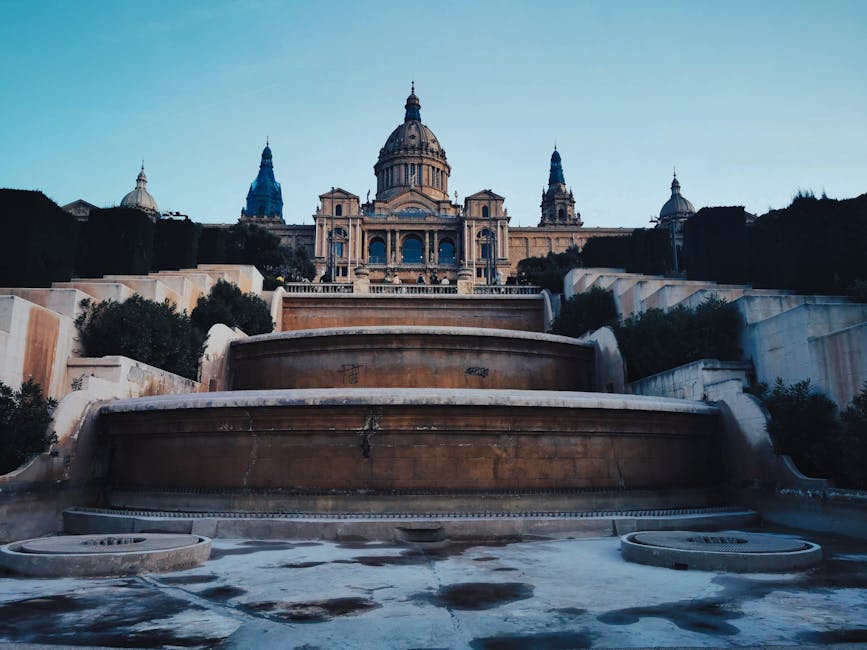
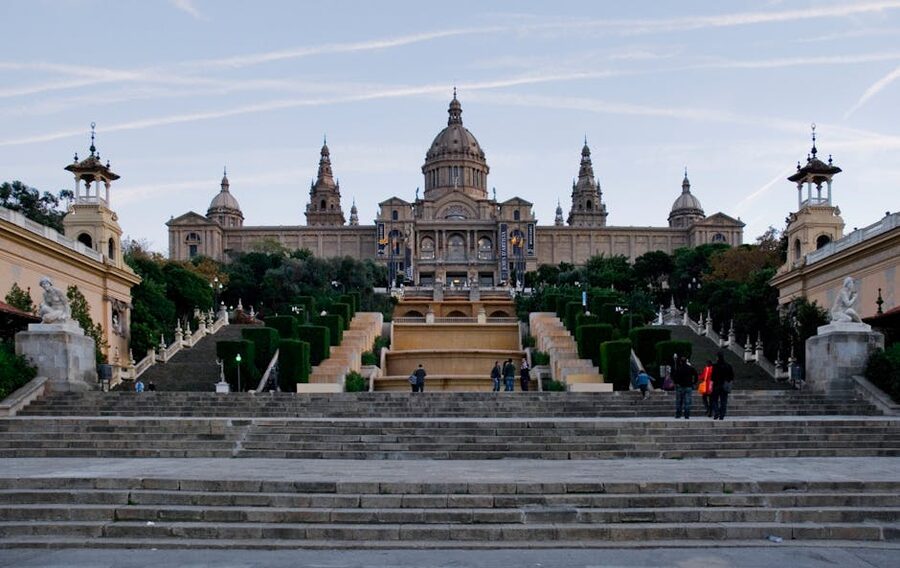
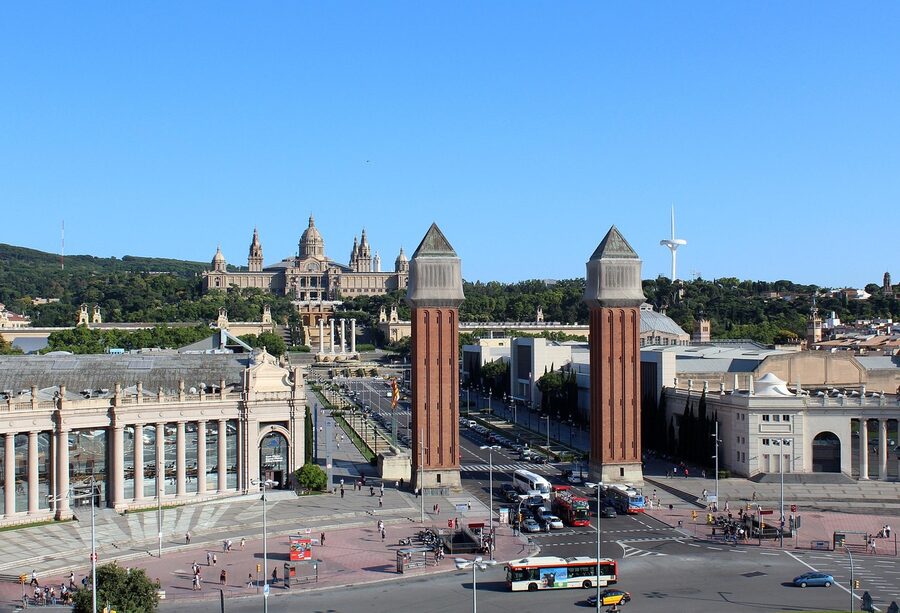
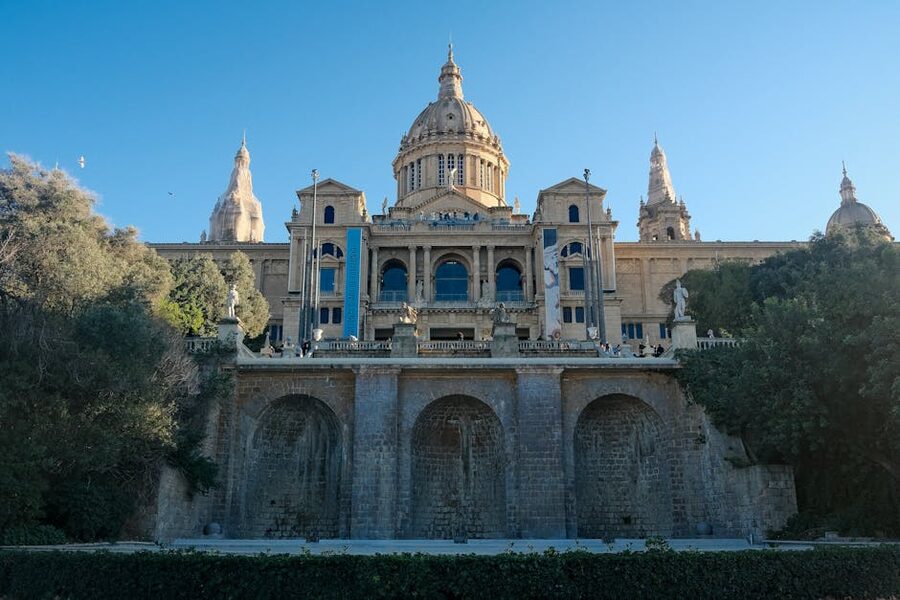
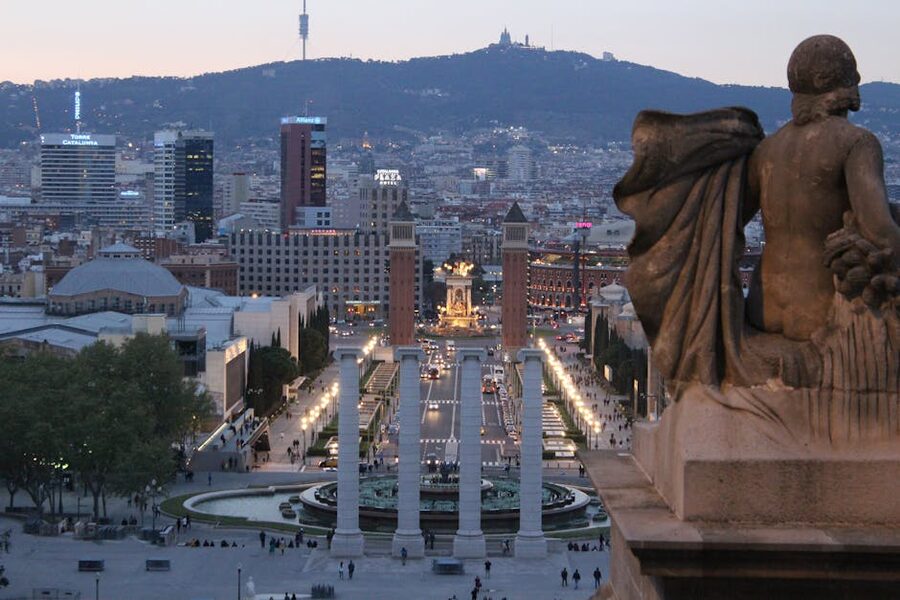
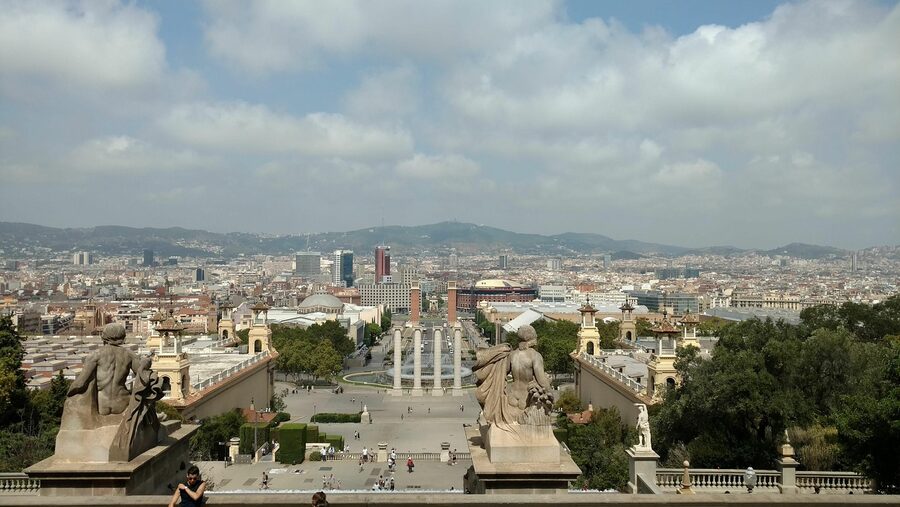
Walking from Plaça Espanya. Takes about 25-30 minutes. The route goes past the Magic Fountain and MNAC, so it’s pleasant — but steep in places, especially the last stretch. In summer, start early or go late to avoid the midday heat. Bring water.
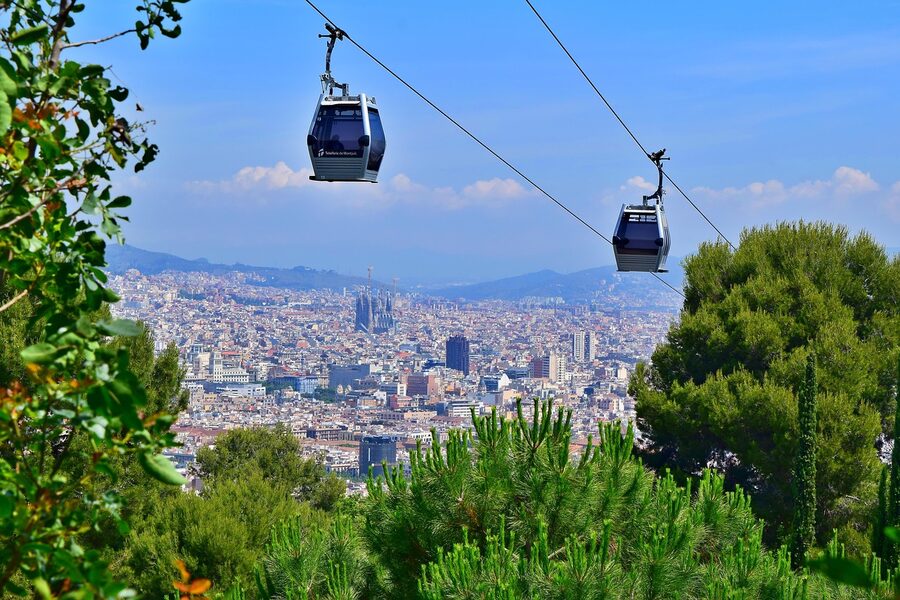
Montjuïc cable car from Barceloneta. The most scenic option. The Telefèric crosses the harbour from Barceloneta to Montjuïc. It’s not the most direct route to the museum, and it costs €13 one-way, but the views are spectacular.
Practical Tips for Your Visit
When to visit: Tuesday to Saturday, 10am to 8pm (to 6pm in winter). Sunday hours are shorter — 10am to 3pm. Closed Mondays. Thursday evenings from 6-8pm tend to be the quietest. Saturday mornings are the busiest.
How long to spend: Budget 90 minutes to two hours. The permanent collection takes about an hour if you don’t rush. Add 30 minutes for the temporary exhibition and rooftop. If you’re really into modern art, you could spend three hours here easily.
Audio guide: Available for €5 at the entrance desk. Worth it if you’re going alone and want context for the abstract works. Skip it if you’re doing the private guided tour — a real person is always better.
The gift shop is genuinely good. Miró’s bold, simple designs translate well to prints, scarves, and tote bags. Prices are reasonable compared to most Barcelona museum shops. The poster selection is one of the better ones I’ve seen.
Photography: Allowed in the permanent collection, no flash. The temporary exhibitions sometimes restrict photography depending on the artist. The rooftop and gardens are fair game.
Wheelchair access: The museum is fully accessible. Lifts connect all floors, and the pathways between buildings are ramped. This is a well-designed modern museum, not a cramped historic building — movement is easy throughout.
With kids: Surprisingly good. Miró’s colourful, playful style appeals to children more than most modern art. The foundation runs family workshops on weekends (check the website for current schedules). The rooftop and gardens give kids space to move around between gallery rooms. Budget 60-90 minutes with young children — enough to see the highlights without pushing it.
What to wear: Comfortable shoes. You’ll be standing and walking on concrete floors for at least an hour, and the walk to/from the funicular adds another 20 minutes of pavement. In summer, bring sunscreen and a hat for the rooftop and the walk up the hill. The museum interior is air-conditioned, so in peak July heat it also functions as a very cultured escape from the sun.
Combining with other Montjuïc attractions: You could easily fill a whole day on the hill. The MNAC is 15 minutes’ walk away. Poble Espanyol is 10 minutes in the other direction. The Montjuïc Castle and Olympic Stadium are further up. Most people underestimate how much there is on this hill.
Is the Miró Foundation Worth It?
Yes. Especially if you think you don’t like modern art.
I went in sceptical. Abstract art isn’t really my thing. But Miró’s work has a warmth and playfulness that’s hard not to enjoy. The colours are childlike and joyful. The building lets in real light and real air. And the rooftop sculptures — with Barcelona spread out below — are the kind of thing that makes you stop and just stand there for a while.
At €8-16 for entry, it’s also one of the more affordable major museums in Barcelona. Compare that to €26 for Park Güell or €36 for Sagrada Familia and it feels like a steal.
The one downside: getting there requires some effort. Montjuïc isn’t conveniently placed for a quick pop-in between other sightseeing. Plan it as a half-day combined with other hill attractions, and you’ll get the most out of the trip.
More Barcelona Guides Worth Reading
If you’re building a Montjuïc day, our guide to visiting Montjuïc covers the full hill including the castle, gardens, and Olympic ring. The Poble Espanyol tickets guide is useful if you want to add the open-air architectural museum next door. Art lovers should also check our guides to the MNAC and Casa Batlló. And if you’re trying to fit everything in, the Barcelona Card guide explains which city passes actually save money and which ones are a waste of time.
This article contains affiliate links. We earn a small commission if you book through our links, at no extra cost to you. It helps keep the site running.