
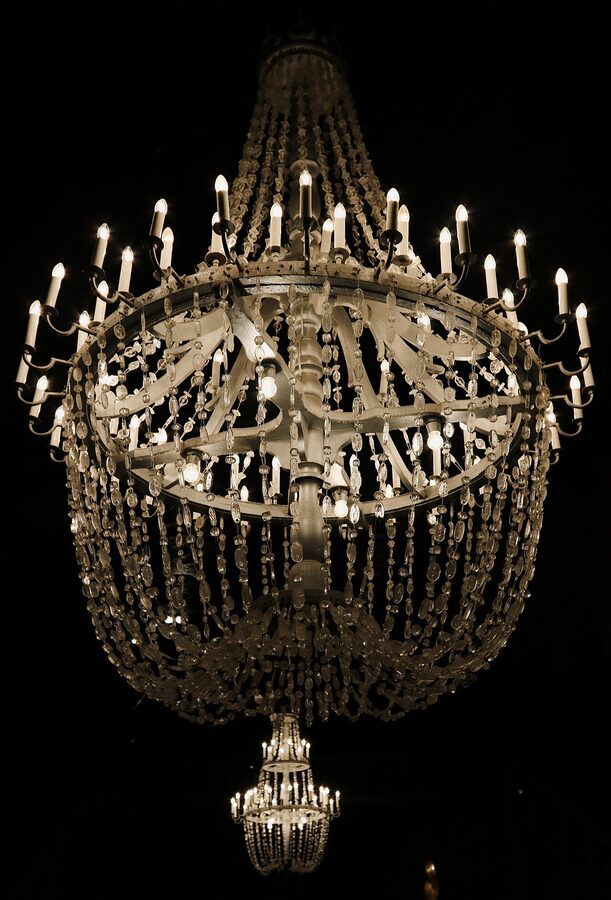
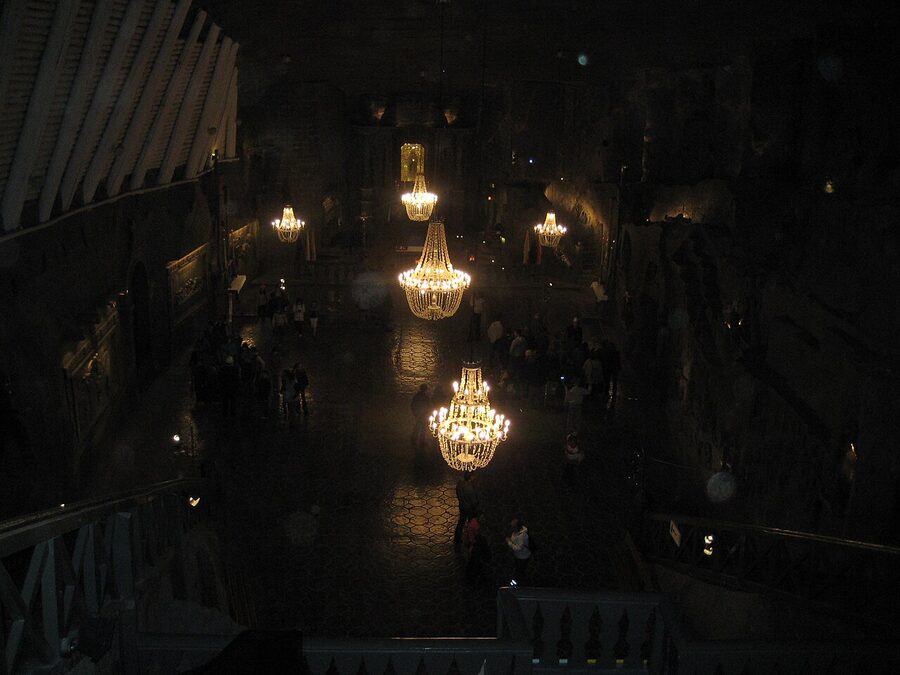
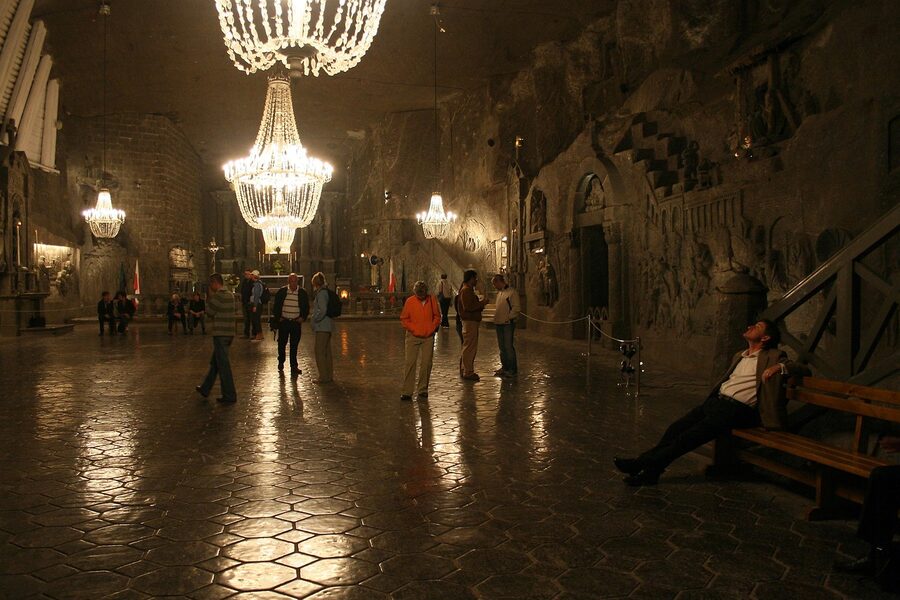
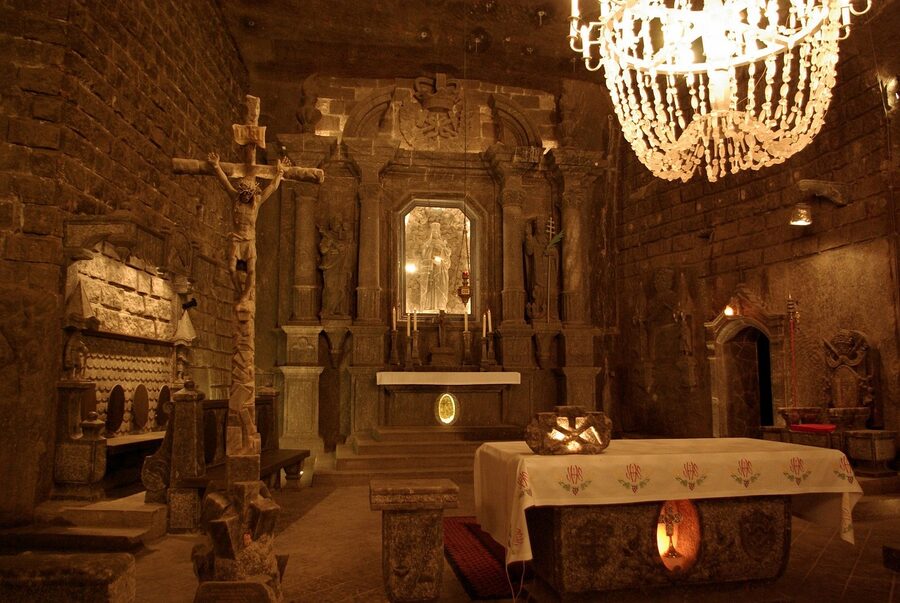
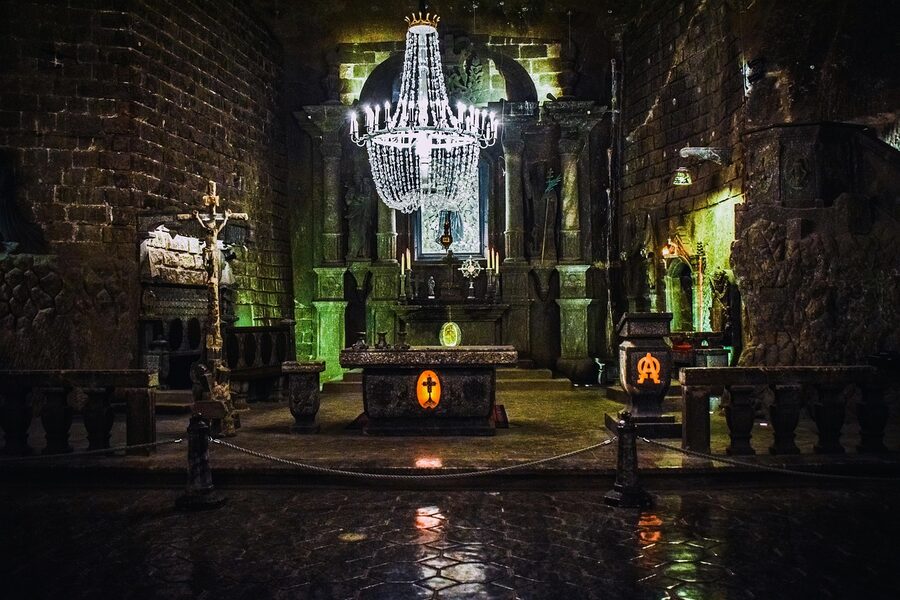
Here is a sentence I never thought I’d type before going underground in southern Poland: the chandeliers are made of salt. Not glass. Not crystal. Pure rock salt, carved by miners in their off-hours over the course of a couple of centuries. So is the floor. So are the altar reliefs. So is the four-meter Last Supper hanging above pew level. The whole of St Kinga’s Chapel, 101 metres below a quiet town 30 kilometres from Krakow, is a working Catholic church carved out of the salt itself, and it is the strangest, most disorienting space I’ve stood in anywhere in Europe.
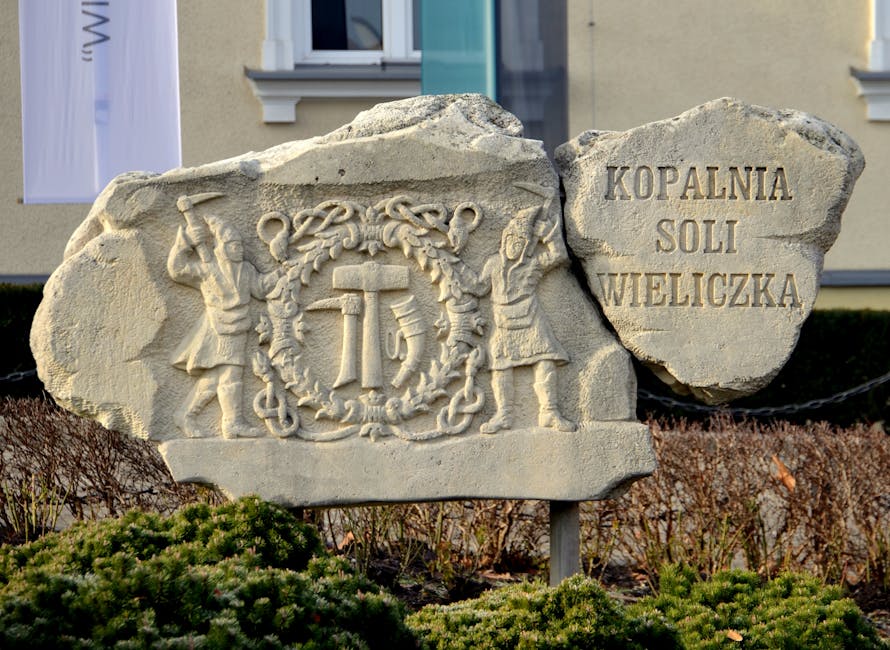
The Wieliczka Salt Mine has been worked continuously since the 13th century. UNESCO put it on its very first World Heritage list in 1978, alongside the Galapagos and the Yellowstone caldera, which tells you something about how the rest of the world rates it. This guide is the practical version: how to get tickets, which tour to book from Krakow, what the trip actually involves, and why I think you should book the round-trip transfer rather than try to wing it with the train.

.jpg)
- Best value: From Krakow: Wieliczka Salt Mine Tour from $33. Round-trip transfer plus skip-the-line tickets and a guide. The simplest version.
- If you want skip-the-line on arrival: Wieliczka Salt Mine: Skip-the-Line Ticket and Guided Tour from $33. Meet your guide on site, no transport included.
- For pickup at your hotel: Krakow to Wieliczka Salt Mine Tour with Pickup from $56. The door-to-door option, with hotel pickup included.
- Why book a tour instead of going independently
- Which Wieliczka tour to actually book from Krakow
- 1. From Krakow: Wieliczka Salt Mine Tour: from
- 2. Wieliczka Salt Mine: Skip-the-Line Ticket and Guided Tour: from
- 3. Krakow to Wieliczka Salt Mine Tour with Pickup: from
- What the Tourist Route actually involves
- St Kinga’s Chapel up close
- Practical ticket information
- How long does the whole trip take from Krakow
- Best time of year and time of day
- What to wear and what to bring
- Accessibility and families
- The history, briefly
- Things people regret about the visit
- Combining Wieliczka with other Krakow stops
- Where to stay near Wieliczka or in Krakow
- What else is worth your Krakow days
Why book a tour instead of going independently
Short answer: because the mine doesn’t sell entry without a guide. Book through GetYourGuide, Viator, the official site, or a third-party reseller, and the price always includes a guided walk through the Tourist Route. There is no version where you wander around alone with a map. So the real question is just this: do you organise the transport yourself, or let someone else handle it?
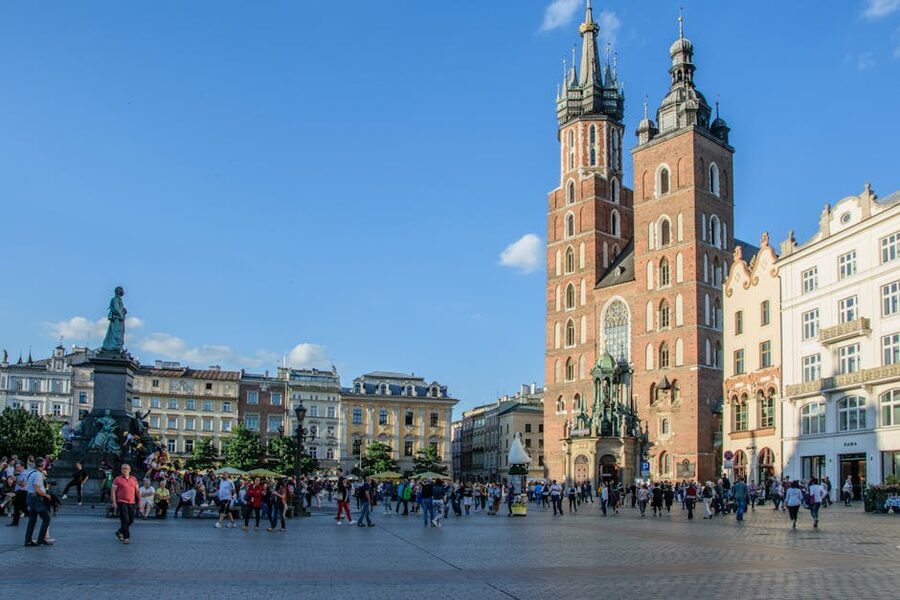
Going independently means catching the SKA1 (Koleje Małopolskie) regional train from Kraków Główny to Wieliczka Rynek-Kopalnia, which runs every half hour and costs around 7,50 zł (under €2). The ride is about 25 minutes. From the Wieliczka Rynek-Kopalnia station it’s a 10-minute walk to the mine, signed clearly, and you then queue for an English-language tour at the entrance, paying around 134 zł (about €31) for the standard ticket. There is also bus 304 from Galeria Krakowska, which costs 6 zł and takes 35 minutes.
The catch with the independent route is the queue and the slot. In high summer the on-site English tours can be sold out by 11am, and the ticket office only sells tours starting in the next few hours. If you arrive at 1pm and the next English slot is 4pm, you wait. Booking online through GetYourGuide or the official bilety.kopalnia.pl site fixes the slot but doesn’t fix the transport. A €33 organised tour usually works out the same total cost as DIY (train plus on-site ticket plus a tip for the guide), with the difference that you don’t have to think about any of it. For most people that’s the trade worth making.
Which Wieliczka tour to actually book from Krakow
I’ve sifted through every Wieliczka product currently sold from Krakow and these three are the ones I keep coming back to. They cover the three styles people want: the standard small-group transfer tour, the cheaper meet-on-site option, and the door-to-door private-style pickup.
1. From Krakow: Wieliczka Salt Mine Tour: from $33
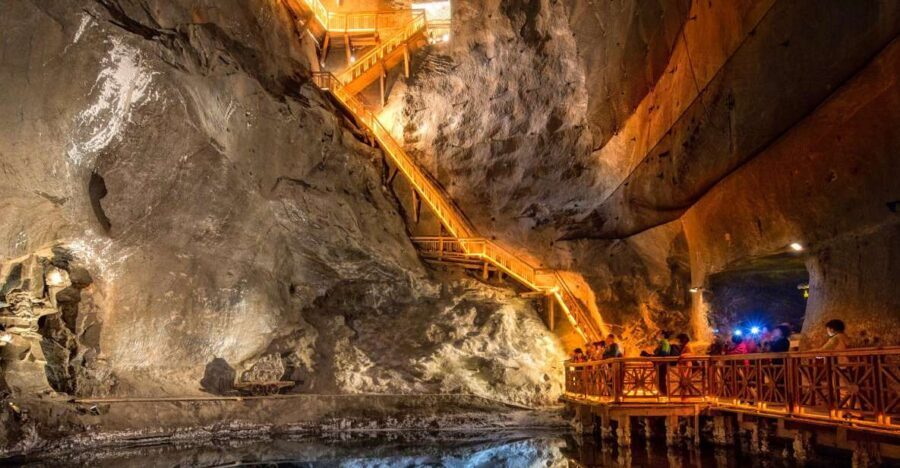
This is the one I’d book if you only do one Wieliczka tour. Round-trip from a central meeting point in Krakow, skip-the-line entry, English-speaking guide for the whole route. Our full review of this tour goes into the meeting-point logistics in more detail. Three hours total, no hidden fees, no figuring out the train.
2. Wieliczka Salt Mine: Skip-the-Line Ticket and Guided Tour: from $33
Pick this if you’ve already worked out you want to take the train and just want the entry sorted. You meet the guide at the mine entrance, skip the on-site queue, and walk straight in. Our full review covers the meeting-point details and what to do if the SKA1 timetable doesn’t line up neatly with your tour slot.
3. Krakow to Wieliczka Salt Mine Tour with Pickup: from $56
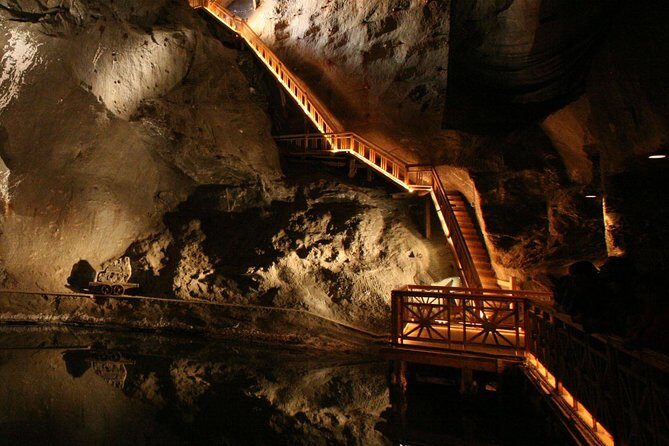
Pickup straight from your hotel, drop-off at the end. The price difference vs the standard transfer tour is mostly the door-to-door convenience. Our full review tells you whether the pickup window is realistic if your hotel is in Kazimierz or further out.
What the Tourist Route actually involves
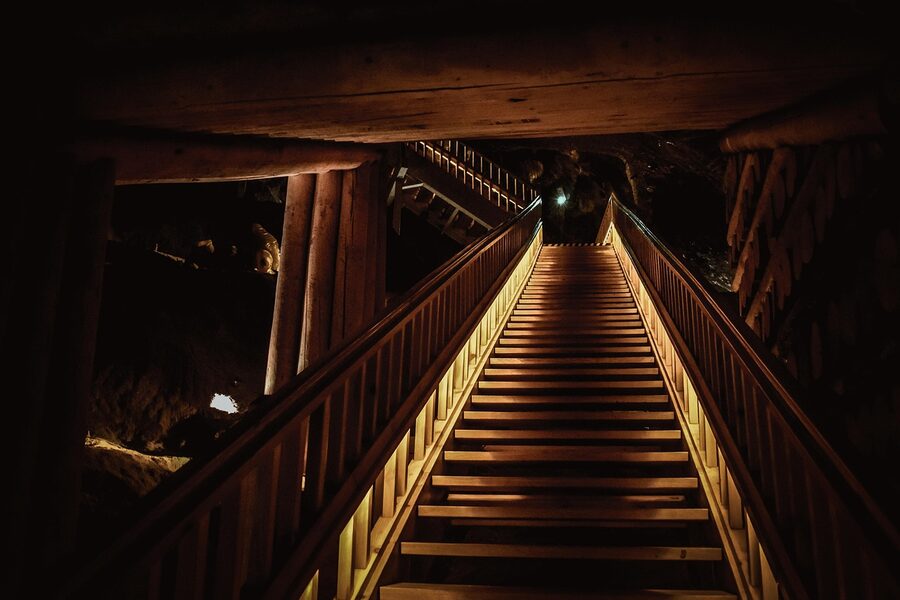
You start at the Daniłowicz Shaft and descend the wooden staircase to Level I, 64 metres down. That’s 800 steps. Take it slowly, especially if you’re with kids or older relatives, because there’s no shortcut. The good news: at the end you ride a small lift back up. You don’t have to walk the steps in reverse.
From there the standard Tourist Route runs about 3.5 kilometres at a pace of around two hours underground, ending up at Level III, 135 metres below the surface. You walk past 20 chambers, and the route is mostly flat between them with the occasional short stair. The temperature stays a steady 14 to 17°C all year. Bring a light jacket in summer and don’t bother with anything heavier than a thin coat in winter; you’ll be carrying it the whole way.
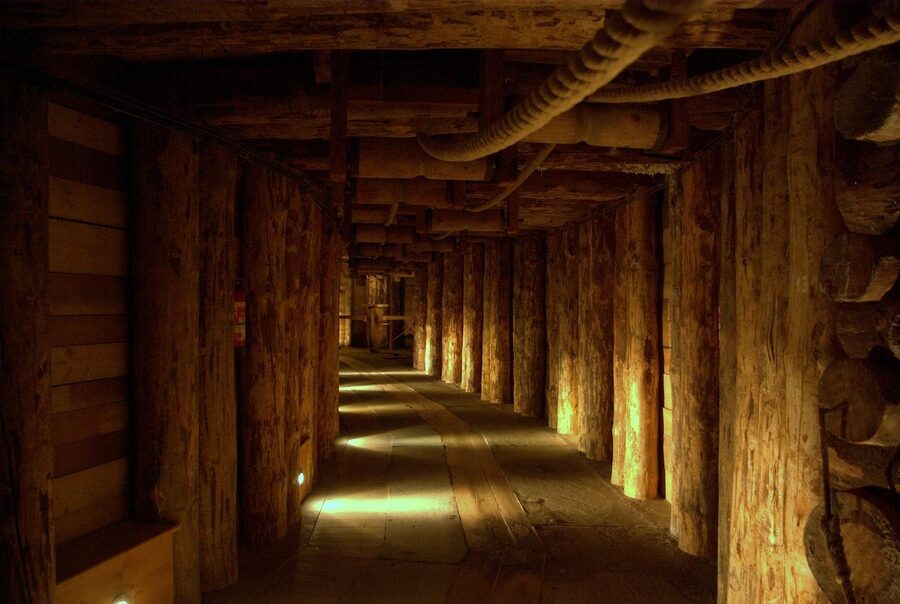
The chambers come in a particular order, and the guides have it down. Highlights along the way:
- Mikołaj Kopernik Chamber. Named for Copernicus, who reportedly visited in the 15th century. The salt statue of him there is a 20th-century addition by miner-sculptor Władysław Hapek.
- St Anthony’s Chapel. The first underground chapel on the route. Carved in 1698. Smaller than St Kinga’s, but older and rougher, which I actually preferred.
- Kazimierz Wielki Chamber. Named for the medieval king who issued the original mining statute. Houses a salt statue of him.
- Janowice Chamber. Tells the legend of how Princess Kinga supposedly threw her engagement ring into a Hungarian salt mine and the ring travelled underground to Wieliczka, where the first miners broke through to find it. There’s a salt-tableau of the moment.
- Pieskowa Skała Chamber. A salt grotto with carved scenes from Polish folklore.
- St Kinga’s Chapel. The set piece. About ninety minutes in. More on this below.
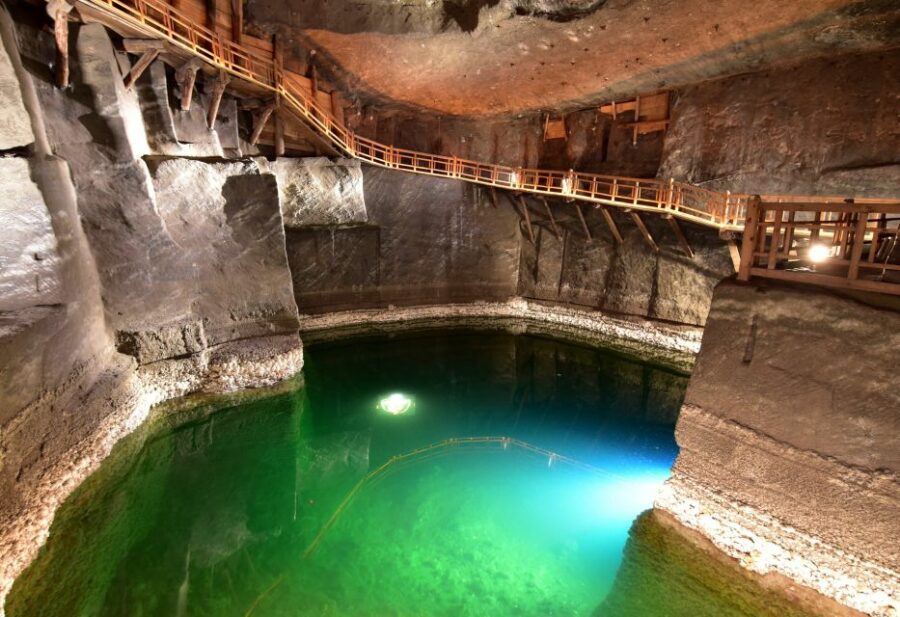
- Erazm Barącz Chamber. Has an underground brine lake, 320 grams of salt per litre. The reflections are the photo every group lingers for.
- Stanisław Staszic Chamber. Tallest chamber on the route at 36 metres. Hosts concerts and weddings.
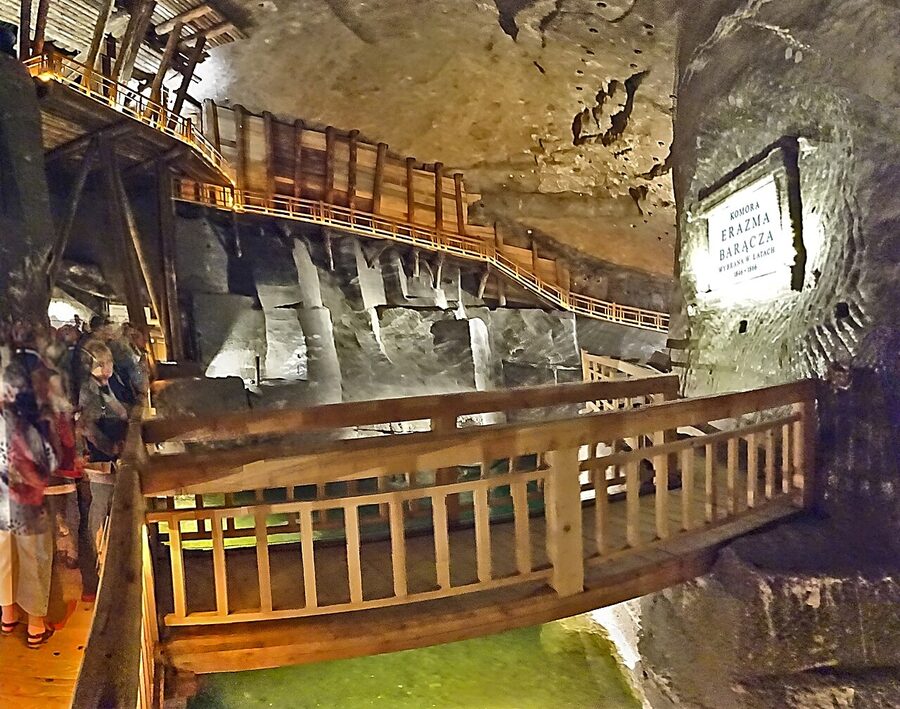

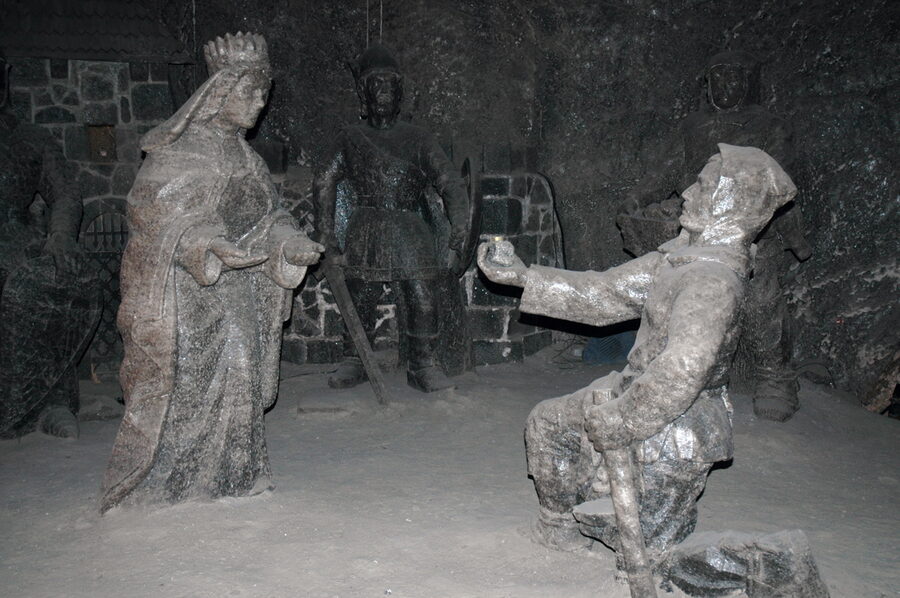

St Kinga’s Chapel up close
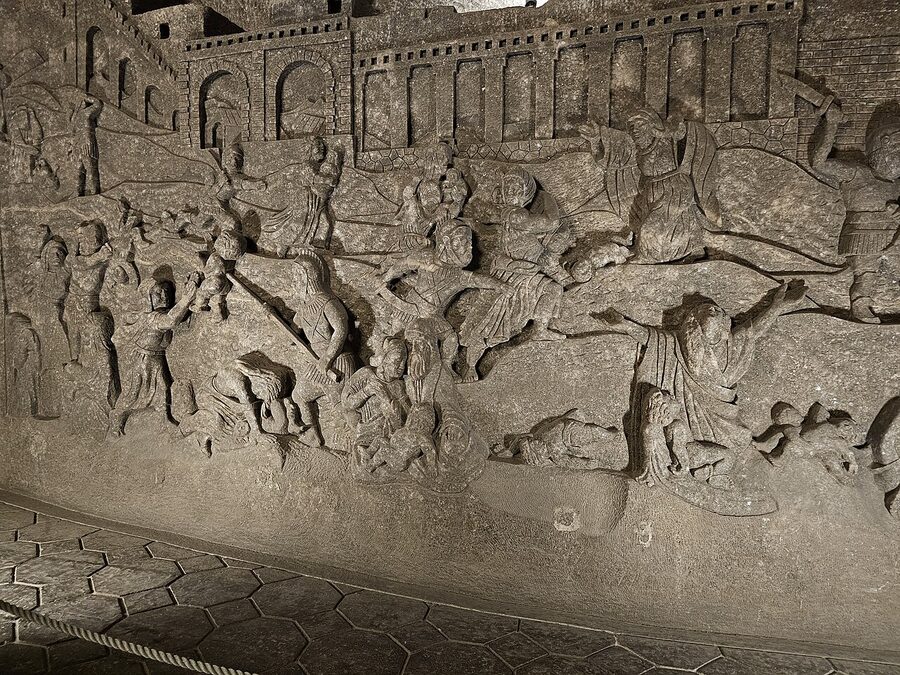
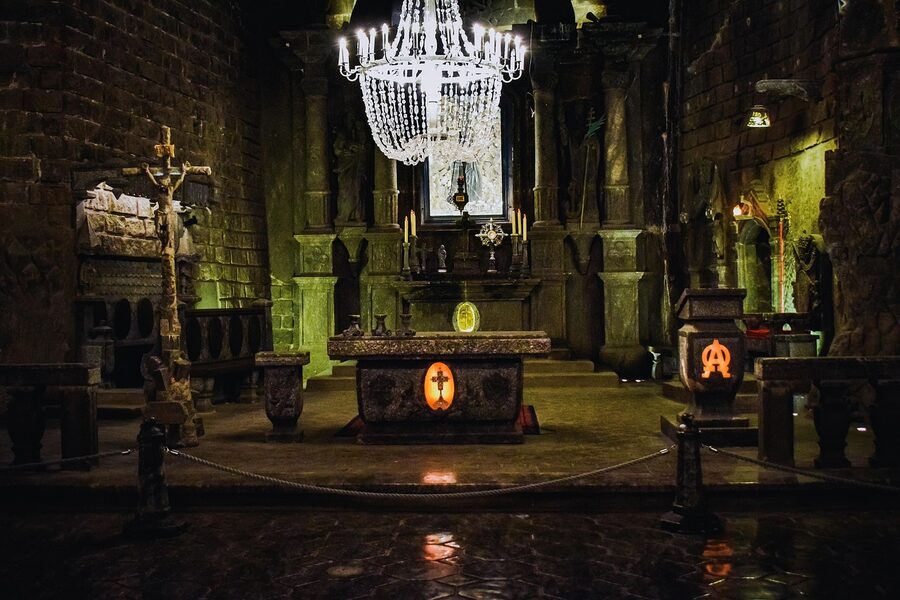
If you only remember one place from the whole trip, it’ll be this one. The chapel is 101 metres below the surface, 54 metres long, 17 metres wide, 12 metres tall. It took three miners more than 70 years to carve, working evenings and Sundays in their off-hours. The first of them, Józef Markowski, started in 1895. The last, Antoni Wyrodek, finished the major reliefs in 1963. They were untrained sculptors. The work is not.
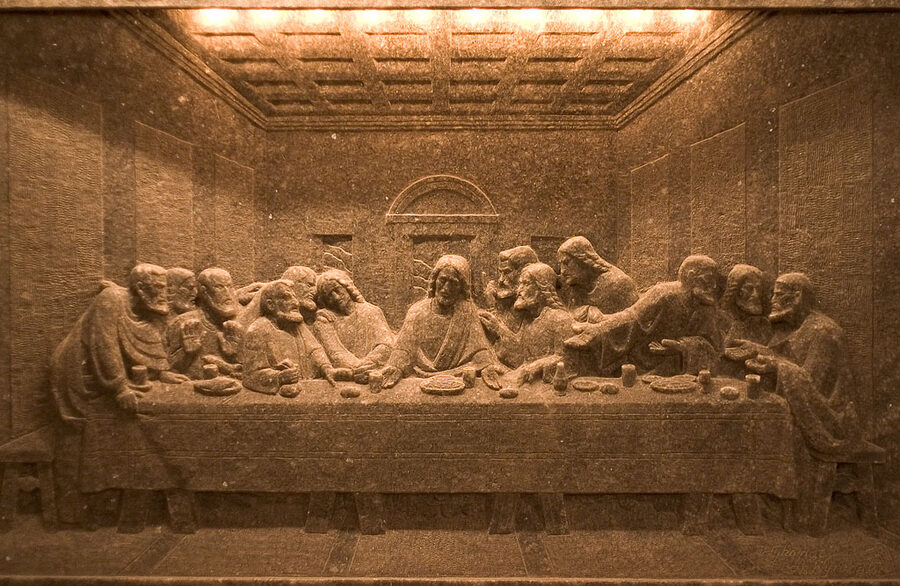

What you should look for, in this order:
- The floor. Walk on it. It’s salt. Polished so you can see your reflection.
- The chandeliers. Three of them. The salt is not naturally clear; the miners dissolved it in pure water and re-crystallised it to get the glass-like effect. The cleaning process is repeated every few decades.
- The altar. Carved by Józef Markowski. The figures of Mary and the saints are full-body, life-size, all in salt.
- The Last Supper relief. Wyrodek’s masterpiece. Look at how the perspective is created. He carved it deeper at the back to make Christ recede into the wall.
- The crucifix above the side altar. Smaller. Easier to miss. Worth a second look.
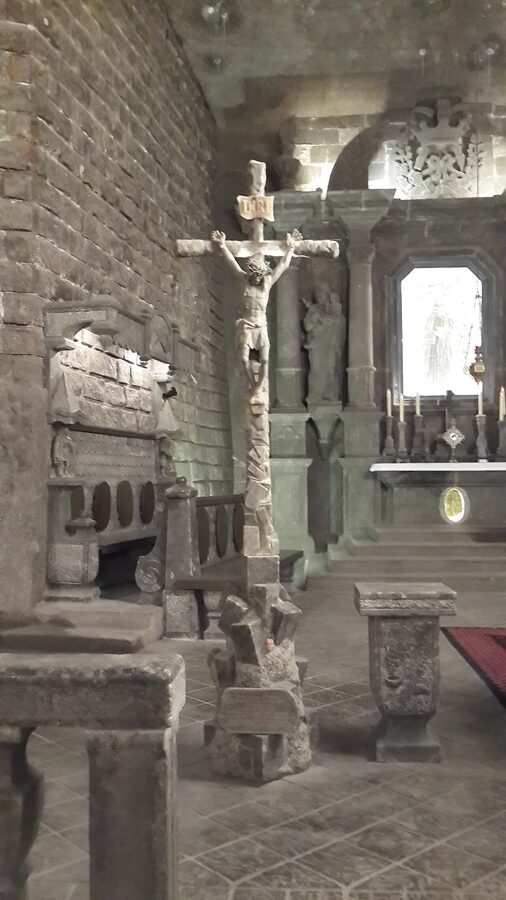

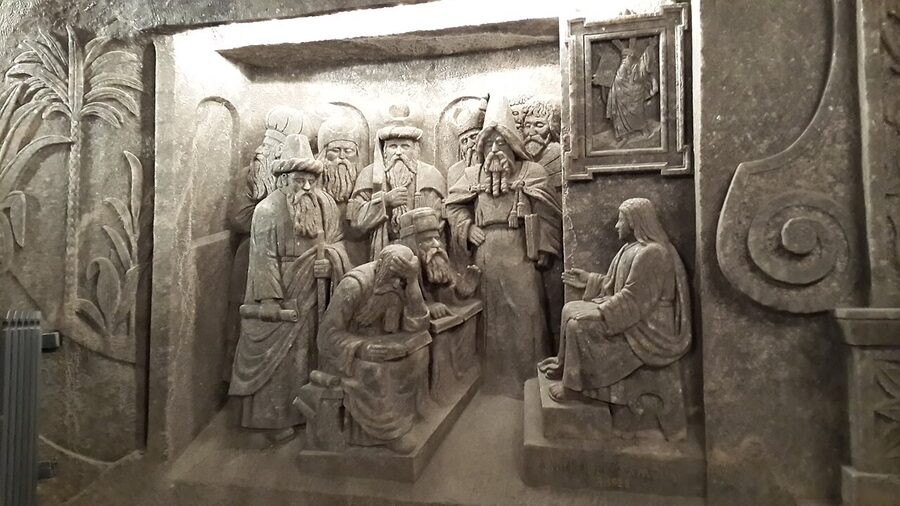

Mass is still celebrated here on Sundays and major Polish feast days. Tourists are not allowed in during services. If you want the chapel quiet, pick the earliest morning slot you can find. The 9am tours arrive while the guides are still warming up and the lighting feels softer.
Practical ticket information
The mine has its own official ticketing site at bilety.kopalnia.pl. Here’s how the prices break down (April 2026 rates from the official site, verify before booking).
- Standard Tourist Route, English-language guide: 134 zł (about €31 / $34) per adult. Reduced rate for students, kids, pensioners.
- Polish-language Tourist Route: Cheaper, around 107 zł, but you won’t understand a word.
- Photography permit: 10 zł extra. Add this to your booking. The guides do enforce it.
- Miner’s Route (different ticket): Around 99 zł. You wear overalls and a helmet, follow a different path with hands-on tasks. Two and a half hours, separate booking, not part of the standard tour.
- Pilgrim’s Route: Special programme focused on St Kinga’s Chapel and the religious sites. Less commonly available.
If you book through GetYourGuide or Viator, the price you see usually bundles the entry, guide, and (for transfer tours) the round-trip ride. The “from $33” price you see is the lowest tier, generally a shared coach with about 15-20 other people. Private and small-group versions cost more and run to about €70-€100 per person. For solo travellers and couples the shared version is the obvious choice. For families of four or more, do the math; a private tour is sometimes only marginally more expensive once you add up four shared tickets.
One thing the official site doesn’t make obvious: tickets sell out. Real summer weekends, especially in July and August, the on-site English slots can be gone for two days ahead by 10am. Book online a week out if you’re travelling in peak season. If you’ve already booked a Zakopane day trip for one of your other Krakow days, slot Wieliczka in early in your stay so you have a buffer if the time you want is full.
How long does the whole trip take from Krakow
For the standard transfer tour, count on three to three-and-a-half hours door to door. The drive each way is 30 to 40 minutes depending on traffic, the underground tour is around two hours, and there’s usually 10-15 minutes at the start for the head-count and walk to the entrance. So if you book a 9am tour from Krakow, expect to be back in the city by lunch.
The half-day timing is what makes Wieliczka work so well as a Krakow side trip. You can do it on the same day as a Wawel visit, or pair it with the afternoon segment of a Krakow walking tour. The combo I see people enjoying most: morning at Wieliczka, lunch at the Old Town, afternoon at Schindler’s Factory. Three contrasting experiences, one day, no rushing.
The exception is if you book the Auschwitz combo. There are tours that pair Auschwitz-Birkenau and Wieliczka in a single day from Krakow, leaving around 7am and getting back at 7pm or later. It’s a long day. Some people prefer it because it knocks out the two big day-trip names in one logistical hit; others find it emotionally too much. If that combo is on your list, see our separate guide on how to book the Auschwitz and Wieliczka combo for a fuller breakdown.
Best time of year and time of day
.jpg)
The temperature underground stays at 14-17°C year-round, so weather isn’t really a factor. What does shift across the year is crowding.
April through October is the busy stretch. July and August are the heaviest, especially with school groups. Book a week ahead if you’re travelling then. May, June, September, and October are softer; you can sometimes book day-of in those months.
November through March is quiet enough that on-site walk-up English tours are usually possible. The light gets dim early in winter, so you walk into the entrance shaft in the dark and come out into the dark. It feels strange in a good way. December has a Christmas market on the surface in Wieliczka town if you stick around an hour after the tour.
Within a single day: the 9am and 10am tours are quieter. The 12-2pm slots are the busiest. By 4pm the light feels different, the chapels are dimmer, and the place takes on a stillness it doesn’t have at midday. If you’re a photographer, late afternoon. If you’re with kids who’ll get tired, early morning.
What to wear and what to bring
.jpg)
Closed shoes with grip. The floors aren’t slippery in a dangerous sense, but there are stairs and the salt crust does flake. Trainers, hiking shoes, anything with a flat sole. Skip the heels.
A light layer. The 14-17°C means a cardigan or light jacket is enough, even in summer. In winter you’ll want a coat for the walk in and out, and you can carry it folded over your arm underground.
Water. There’s a café underground at the end of the route, but it’s expensive and the queue is long. Bring a bottle.
A camera or phone. Photography is allowed everywhere except in the chapel during mass. The lighting is dim, so bring a phone with a decent low-light mode or expect grainy photos. Tripods are not permitted on the standard tour. If you really want long exposures, the photography pass on the Miner’s Route lets you set up properly in the chambers.
Don’t bring: large backpacks (over 50 cm in any dimension are not allowed underground; small daypacks are fine), strollers (the staircase makes them impossible), or anything you don’t want to carry for two hours.
Accessibility and families
The descent is 800 wooden steps. There is no lift down, although there is a lift back up at the end. People with serious mobility issues should look at the dedicated Disabled Tourist Route, which uses a different entrance with a lift and a flatter path. It needs to be pre-booked through the official site at least a few days in advance and runs only a few times per day in English.
For families with young kids: the tour works best for kids 6 and up. Younger children find the descent tiring and the chambers between the highlights drag. The mine’s website offers a “family ticket” rate that’s cheaper per person, and some chambers have a slightly more game-like commentary track if you book the family-specific tour. Strollers can’t go in. If you have a baby, you’ll need a soft front-carrier.
For older relatives: the 800 steps down are the issue, not the walking. The route itself is mostly flat with some short staircases between chambers. If those steps are a problem, again, take the Disabled Tourist Route, which avoids the wooden spiral entirely.
The history, briefly
.jpg)
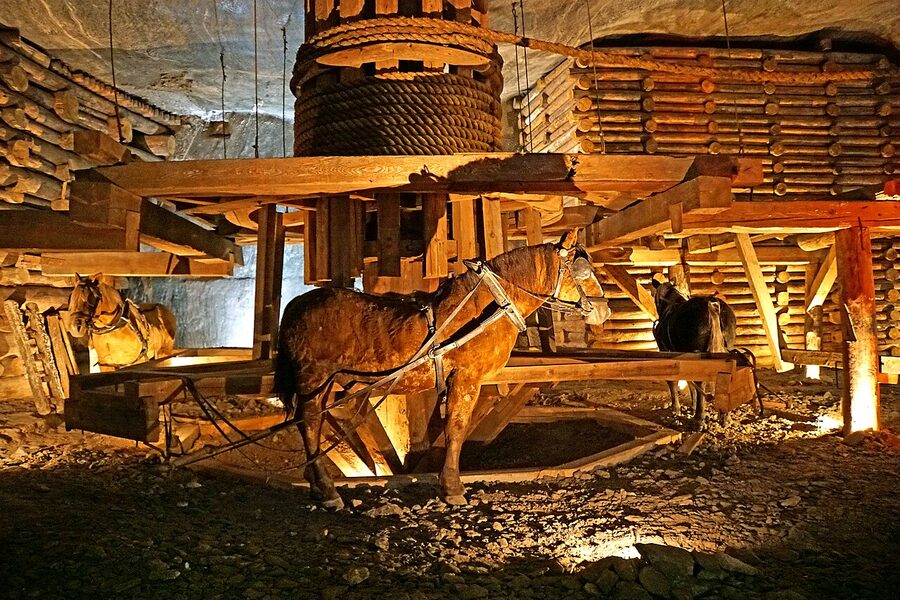
Salt has been mined here since at least the 11th century, but the deep-shaft operation that became Wieliczka started in the 1280s under King Casimir I. By the 14th century it was producing roughly a third of Poland’s royal revenue. The Royal Court spent that money on, among other things, the founding of the Jagiellonian University in Krakow, which is why the mine and the city are historically tied together so tightly.
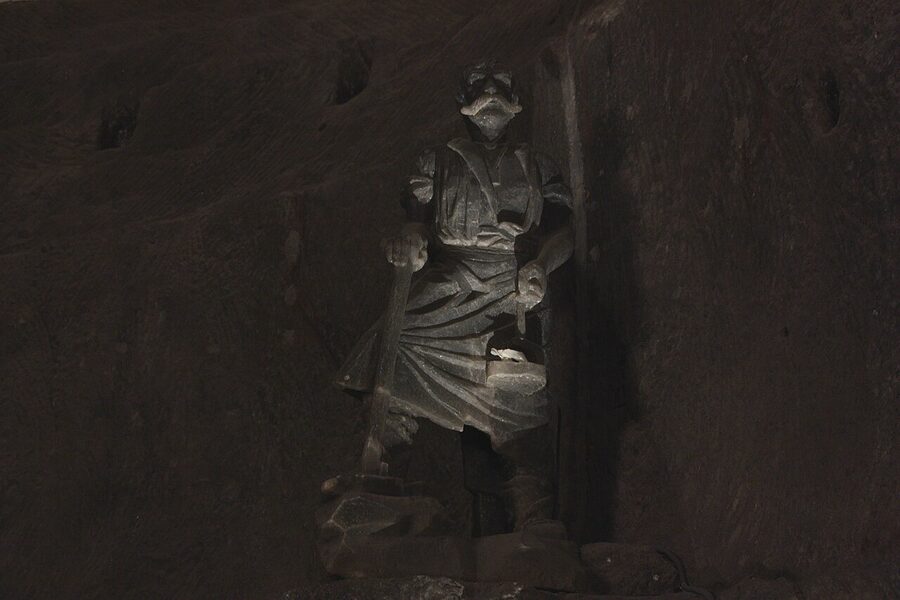
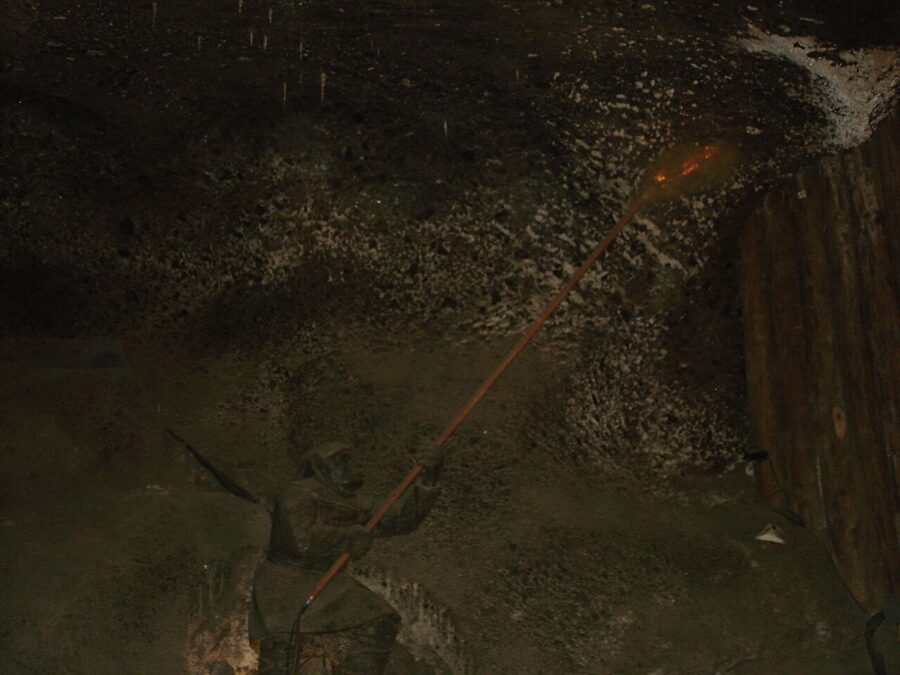
Mining was so lucrative that for centuries the kings of Poland personally controlled the operation. The salt was sold across Central Europe for cooking, food preservation, and medicine. By the 19th century cheap sea salt began to undercut the rock-salt economics, and Wieliczka’s industrial role started to fade. Tourist visits to the mine had already begun in the 15th century. (Kopernik may have come down in 1493. Goethe certainly did in 1790.) The St Kinga’s Chapel carving started during exactly this transition, in the late 1800s, when miners had time and the management was looking for a reason to keep the place culturally relevant. They succeeded so completely that today the tourist economy is bigger than the salt industry ever was.
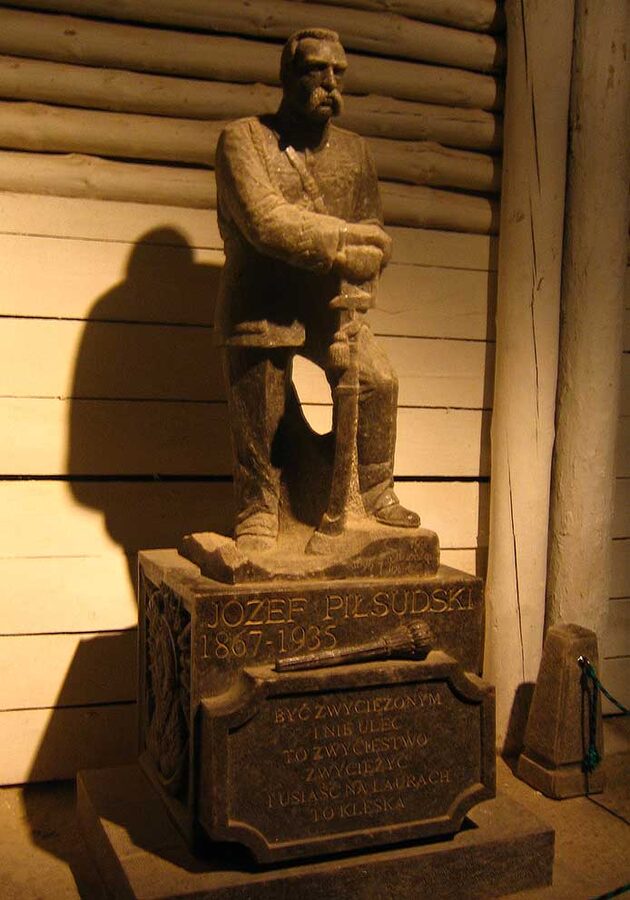

Industrial salt extraction at Wieliczka stopped in 1996. The mine still produces small quantities of “salt souvenir” you can buy at the underground gift shop, but the operation now is overwhelmingly tourist-focused. Around 1.5 million people visit each year, which makes it one of the most-visited paid attractions in Poland.
The mine continues 327 metres deep, with 287 kilometres of corridors and around 2,400 chambers across nine levels. The Tourist Route covers a tiny fraction of that. Most of what’s down there is closed off, partly because flooding is a constant maintenance issue and partly because the lower chambers are still active mining and conservation territory.
Things people regret about the visit
.jpg)
Honest things that come up after the fact:
The tour is sometimes too long. Two hours underground is on the longer side of comfortable. Some chambers feel repetitive (lots of “and here’s another statue of a Polish king”), and the pace can drag. If you have small kids or a short attention span, the Miner’s Route, which is more interactive, is sometimes the better option even though it costs slightly more.
The gift shop at the end is overpriced. The salt-lamp tat is cheaper anywhere in Krakow’s Old Town. Skip it.
Photos don’t do it justice. The lighting is dim and warm, and most camera sensors handle it poorly. If you want decent photos of the chapel, accept that you need a good low-light phone or a real camera with a wide-aperture lens. Don’t waste the visit fighting your phone; just look.
The lift back up has a queue. Allow 15-30 minutes at the end, depending on how many groups arrived together. The “two-hour tour” can stretch to two-and-a-half once you factor that in.
If you have claustrophobia, this is real. Most chambers are tall and open, but a few corridors between them are tight, and the lift back up is small and slow. If you’re prone, sit at the back of the group, breathe, and tell the guide. They’ve heard it before.
Combining Wieliczka with other Krakow stops

Wieliczka pairs well with other Krakow itineraries because of how short it is. Some combinations that work:
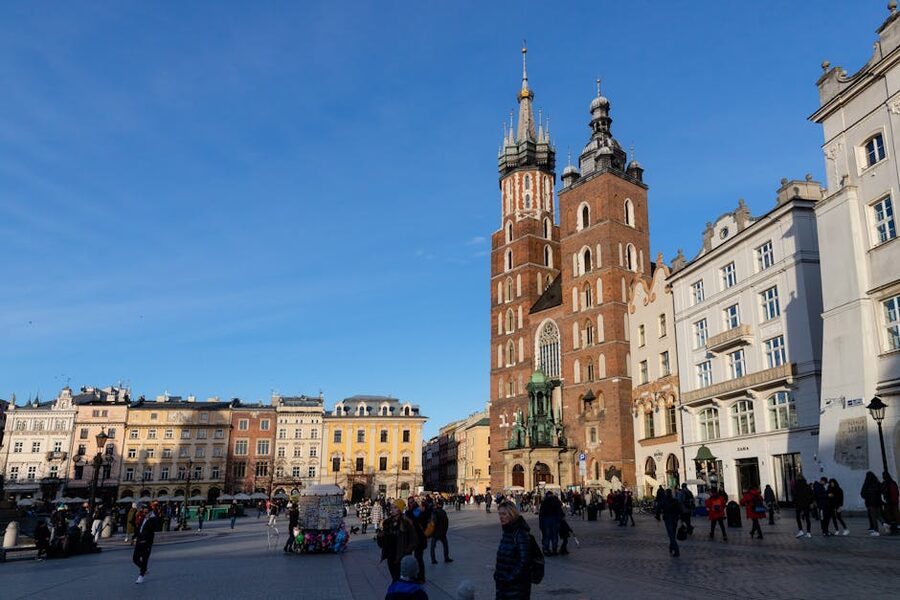
Morning Wieliczka, afternoon Krakow Old Town. Back by 12.30, lunch on the Main Market Square, afternoon at the Cloth Hall and St Mary’s Basilica. Easy.
Wieliczka half-day plus a Vistula river cruise. The river cruises run mostly in the afternoon and evening; details in our Vistula river cruise guide. Wieliczka morning, lunch, river late afternoon, dinner in the Old Town.
Wieliczka morning, Schindler’s Factory afternoon. Two thematic opposites. The mine is celebratory; Schindler’s Factory is the WWII story. Don’t be surprised if the second one hits harder than expected.
Wieliczka day plus Wawel. Closer in spirit; Wawel is the seat of the Polish kings, Wieliczka funded them. Logical pairing. Get your Wawel Castle tickets ahead of time so you don’t have to queue twice.
Auschwitz and Wieliczka in one long day. See the dedicated combo guide above. Long, intense, but cleared in one day if you’re tight on time.
Where to stay near Wieliczka or in Krakow
Almost everyone visits Wieliczka as a day trip from Krakow. There’s no reason to base in Wieliczka unless you specifically want to. The town has a few pensions and budget hotels, but Krakow’s Old Town and Kazimierz neighbourhoods have far more to offer in the evening.
If you’re staying in Krakow’s Old Town for the bulk of your visit, the standard transfer tours pick up within a 5-10 minute walk of most central hotels. If you’re in Kazimierz, the same applies. If you’ve got a hotel further out, near the Galeria Krakowska or in the Podgórze district, take the hotel-pickup version (option 3 above) so you don’t have to find the meeting point.
For Krakow Old Town walking tour options, see our separate guide on booking an Old Town walking tour in Krakow; combine that with Wieliczka in your second day for the easiest two-day intro to the city.
What else is worth your Krakow days
The Krakow region rewards more than a long weekend, which is why most visitors who come for Wieliczka end up doing two or three other day trips while they’re at it. The big three to plan around: a visit to Auschwitz-Birkenau (heavy but essential, allow a full day), a Zakopane day trip for the Tatra Mountains (especially good in autumn or winter for the snow), and the city’s own attractions like the Royal Castle at Wawel and the Schindler’s Factory museum. A bike tour through the Old Town and Kazimierz, which we cover separately at how to book a bike tour in Krakow, is the easiest way to see those neighbourhoods without walking yourself into the ground. Wieliczka itself is the half-day option you can slot in between any of these. The mine doesn’t take a full day, so use it as your “easy” tour and pair it with whichever of the heavier sites you’ve still got energy for.
Affiliate disclosure: When you book through the GetYourGuide and Viator links above, we earn a small commission at no extra cost to you. We pre-tested the tours we recommend before listing them. If a tour disappears from our shortlist after a price hike or a quality slip, we update this page.