
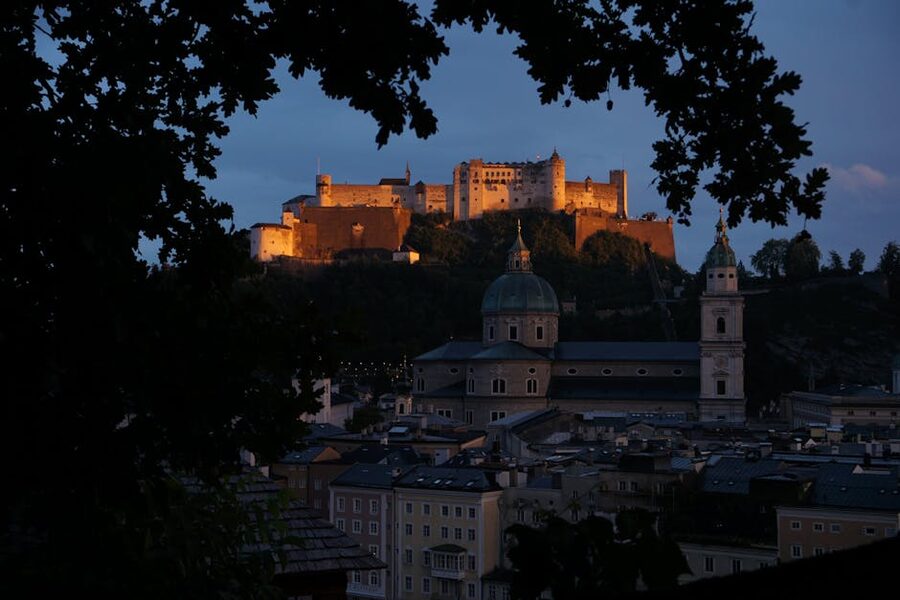
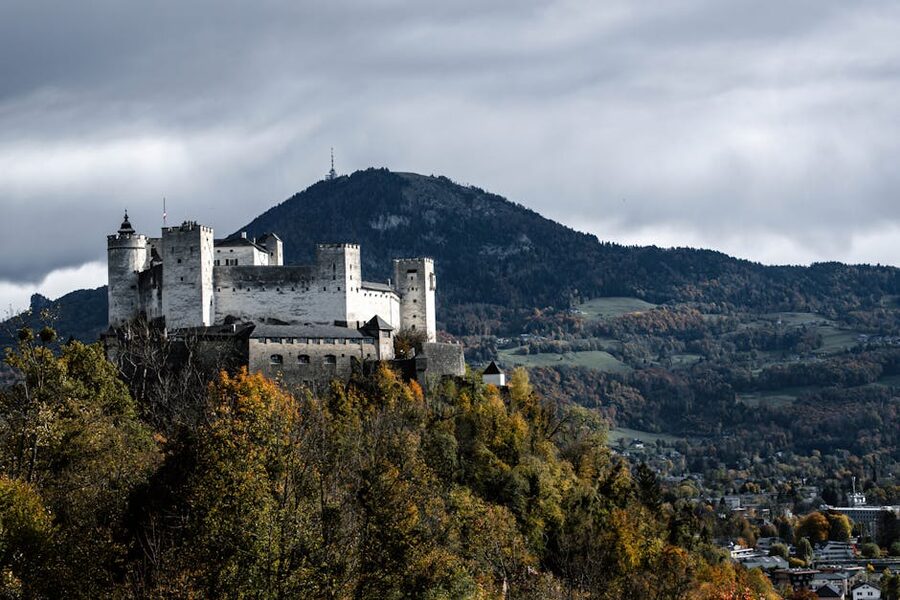
Hohensalzburg Fortress sits 120 metres above the old town and has never been successfully attacked in its 950-year history. Not once. The Prince-Archbishops of Salzburg built it in 1077 and kept expanding it until 1681; every siege army that turned up — Bavarian, Peasant Army, Napoleonic — either gave up or was paid off. It’s one of the largest fully intact medieval castles in Europe, and the funicular up from the old town takes 60 seconds.
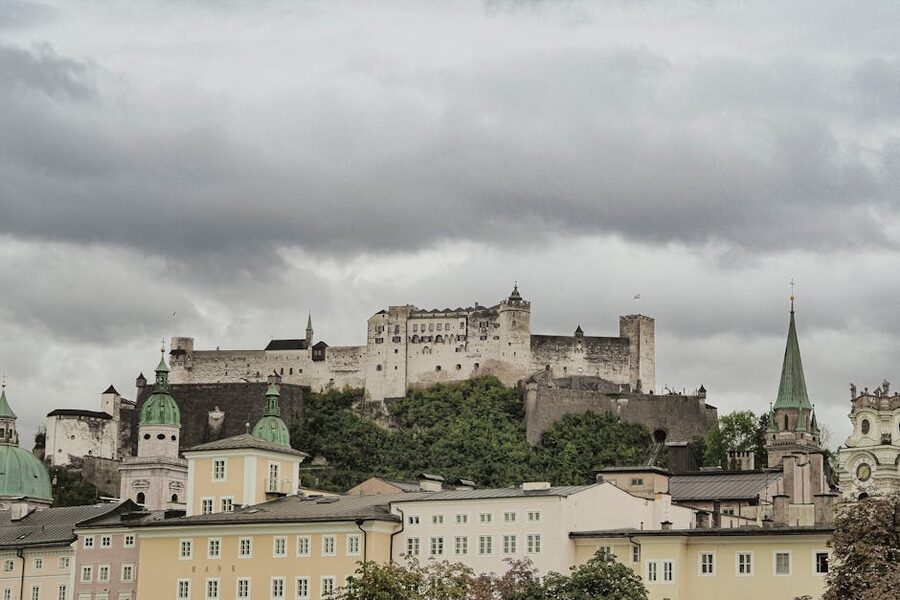
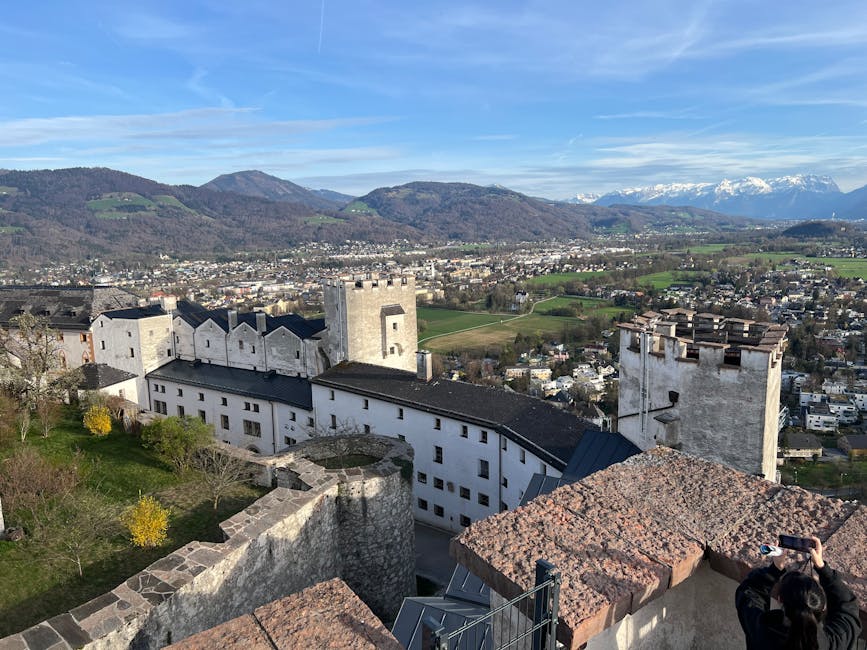
Admission is €17, which includes the funicular ride up. A full visit takes 2-3 hours: funicular, self-guided tour of the state apartments, the Fortress Museum, the Salzburg Panorama Museum, the Torture Chamber, plus time on the ramparts. The view from the north bastion shows the entire city of Salzburg laid out below, with the Alps rising behind it.
In a Hurry? The Three Hohensalzburg Ticket Options
- Best overall: Hohensalzburg Fortress Admission — $17, 2,236+ reviews. Includes funicular, state apartments, museums.
- Best evening experience: Mozart Fortress Concert — $49, 2-hour chamber concert inside the Prince’s Chamber.
- Best full evening: Fortress Concert + Dinner — $93, 3-course Austrian dinner at Stern Bräu + concert.
- In a Hurry? The Three Hohensalzburg Ticket Options
- Which Ticket to Book
- 1. Salzburg: Hohensalzburg Fortress Admission Ticket — from
- 2. Salzburg: Best of Mozart Fortress Concert — from
- 3. Salzburg: Fortress Concert + Dinner — from
- What You See Inside the Fortress
- A Short History — 950 Years of Expansion
- When to Go
- Getting There — The Funicular
- Combining with Other Salzburg Sites
- The Prince-Archbishops — Who Actually Built This
- Food and Drink at the Fortress
- Special Events and Seasonal Programmes
- Common Mistakes
- Practical Details
- The Short Version
- The Dungeon — Where Wolf Dietrich Died
Which Ticket to Book
1. Salzburg: Hohensalzburg Fortress Admission Ticket — from $17
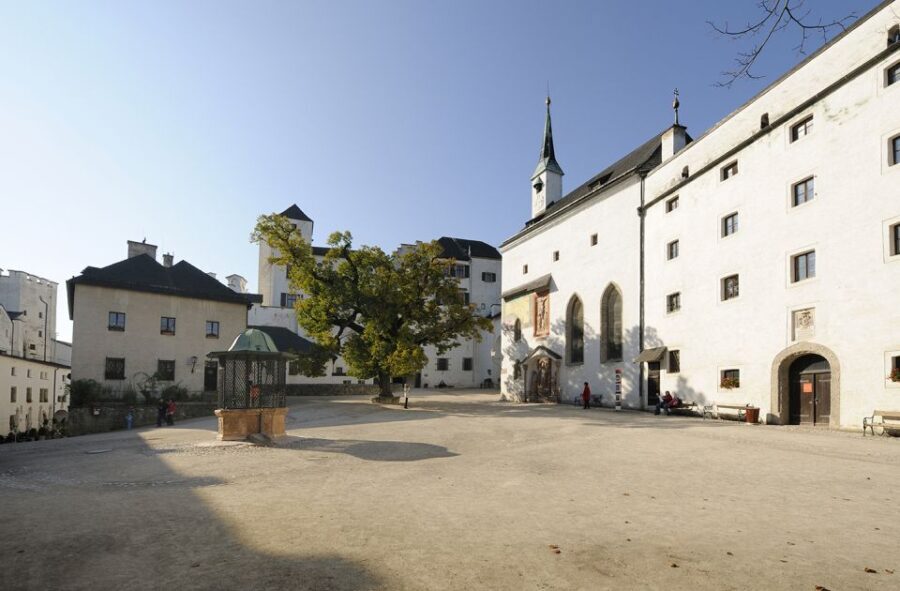
The main ticket. €17 gets you the funicular up, self-guided access to the Prince’s Chambers, the Fortress Museum, the Marionette Museum, the Salzburg Panorama Museum, and the Torture Chamber. Audio guide included. Valid for a full day — you can leave and re-enter. Our full review has the recommended route through the fortress.
2. Salzburg: Best of Mozart Fortress Concert — from $49
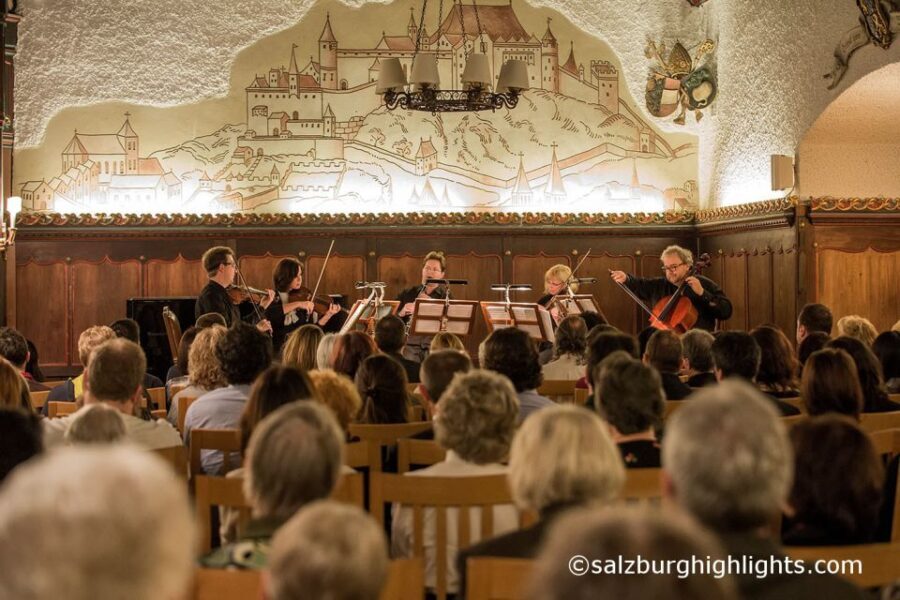
For visitors who want the fortress as a concert venue rather than a daytime tourist stop. 2-hour Mozart chamber programme in the Fürstensaal (Prince’s Chamber), 80-seat audience. Meet at the Festungsgasse funicular at 7:30pm; concert ends 10pm. The setting is the differentiator — medieval stone versus Mirabell Palace’s baroque rooms. See our Mozart concert Salzburg guide for the full concert comparison.
3. Salzburg: Fortress Concert + Dinner — from $93
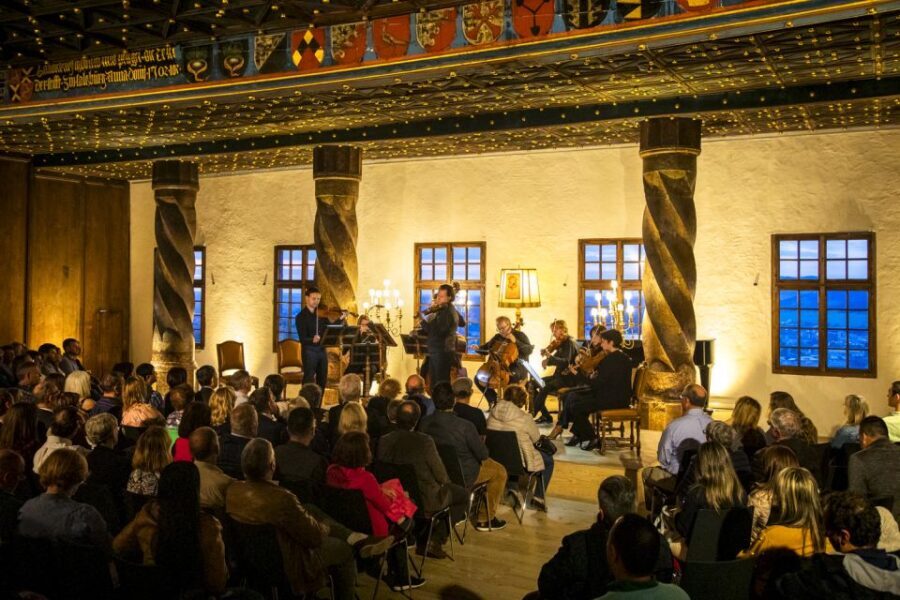
For visitors wanting a complete evening. Arrive at 6:30pm, funicular up, dinner 7-8:30pm at Stern Bräu (inside the fortress), concert 8:30-10pm. The dinner is traditional Austrian (Wiener Schnitzel, Tafelspitz, apple strudel), the premium over the concert-only ticket covers what a decent Salzburg dinner would cost anyway. Good value.
What You See Inside the Fortress
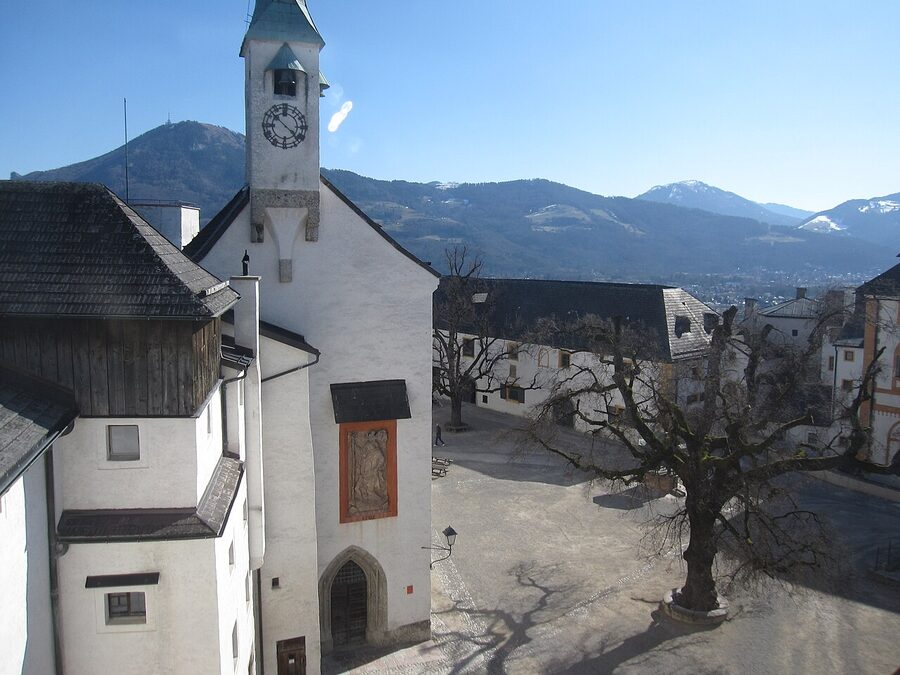

The €17 ticket covers five separate attractions inside the fortress. Budget 2-3 hours to see them properly.
The Princely Chambers (Fürstenzimmer). The 16th-century state apartments where the Prince-Archbishops lived. The Golden Hall (Goldene Saal) with its gilded ceiling coffers and the Golden Chamber (Goldene Stube) with its Gothic wooden walls are the architectural highlights. These are two of the most important late-Gothic interiors preserved anywhere in central Europe.
The Fortress Museum (Festungsmuseum). Military history of the castle and Salzburg — weapons, armour, battlefield equipment from 1000 years of Prince-Archbishop wars. Not a dry armoury museum: the exhibits are well-designed and include a reconstructed kitchen, a model of the castle’s construction phases, and an interactive siege-defence section.
The Marionette Museum (Marionettenmuseum). Salzburg has the most important marionette puppet tradition in Europe — dating from the 19th century and still active today. The museum displays 200+ marionettes from Mozart opera productions (The Magic Flute, Bastien und Bastienne) and traditional Salzburg folk performances. Short but memorable.
The Salzburg Panorama Museum. A separate museum accessed by walking along the outer walls, this includes a 1829 Panorama of Salzburg — an early 19th-century 360-degree oil painting of the city as it was. The panorama’s artistic merit is modest; the historical value is the detailed representation of Salzburg’s pre-industrial cityscape.
The Torture Chamber. Modest, but the audio-guide commentary covers the Prince-Archbishops’ judicial procedures — which were brutal even by 16th-century European standards. Short visit, 10-15 minutes.
The ramparts and bastion views. The real draw for many visitors. The north bastion has the classic Salzburg panorama. The south-facing walls look out to the Alps, with a clear-day view to the Watzmann (2,713m, the iconic peak visible from several Salzburg vantage points).
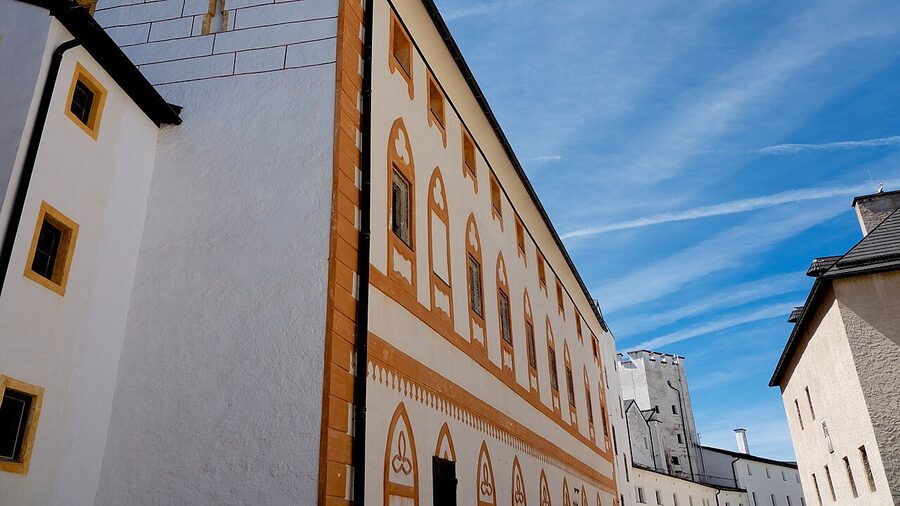

A Short History — 950 Years of Expansion
1077 — founded. Prince-Archbishop Gebhard of Salzburg built the original wooden fortress during the Investiture Controversy between the Pope and Holy Roman Emperor Henry IV. Gebhard was Pope Gregory VII’s appointee; he needed a defensible seat in case Henry’s supporters attacked. The castle’s first stone walls went up within 20 years.
1200s-1400s — early expansion. Each successive Prince-Archbishop added to the castle. The basic outline of today’s fortress dates from this period.
1495-1519 — Keutschach expansion. Prince-Archbishop Leonhard von Keutschach oversaw the largest expansion: the Prince’s Chambers (Fürstenzimmer) were decorated with the Gothic carved wood interiors and gilded ceilings still visible today. The golden mark of Keutschach (a golden turnip — his family symbol) appears in dozens of spots throughout the fortress.
1525 — the Peasant Siege. During the German Peasants’ War, a peasant army besieged Hohensalzburg for several months. Prince-Archbishop Matthäus Lang survived by negotiating. The siege was the closest the fortress ever came to falling.
1612-1619 — Baroque redesign. Prince-Archbishop Markus Sittikus modernised the defensive walls with bastions, updated some interior rooms in Baroque style, and built the Salzburg Residenz in the old town (for political reasons — the Archbishops increasingly governed from the city rather than the mountain).
1803 — Secularisation. The Napoleonic reorganisation of the Holy Roman Empire dissolved the Prince-Archbishopric. The fortress was transferred to Habsburg military control and served as barracks and a prison for most of the 19th century.
Late 19th century — opening to the public. The fortress was demilitarised and opened as a tourist attraction under Emperor Franz Joseph. The funicular (FestungsBahn) opened in 1892 — one of the oldest operating funiculars in Europe.
WW2 — prisoners of war. The fortress served as a POW camp for captured Italian soldiers from 1943 to 1945. No combat damage; the fortress came through the war intact.
Modern era. Hohensalzburg is now owned by the Austrian Federal Property Agency and managed by the Salzburg Regional Museum. Roughly 900,000 visitors per year.
When to Go
Best time of year: April-May and September-October. Mild weather, manageable crowds, clear views from the ramparts.
Peak season (July-August): busiest. Expect 30-60 min funicular queues on summer Saturdays. Book skip-the-line online or go early (9am opening) or late (last funicular 5pm).
Winter (December-March): snow-covered, quieter, some indoor rooms colder than summer. The Christmas Market in the fortress courtyard (late Nov-early Jan) is worth a dedicated visit.
Best day of week: Tuesday-Thursday. Weekends are Austrian domestic tourism heavy.
Best time of day: 9am opening or 4-5pm late afternoon. Morning has the clearest light for north-bastion photos; afternoon has warmer light on the stone walls.
Avoid: rainy weather — the Alps view disappears, the ramparts are slippery, and photos from the bastion become grey mush.
Getting There — The Funicular
The FestungsBahn funicular is the standard way up, included in your €17 admission ticket.
Funicular station: Festungsgasse 4, at the south end of Salzburg’s old town. 10 minutes on foot from Mozartplatz, 5 minutes from the Salzburg Cathedral.
Operating hours: daily 9am-7pm (summer), 9:30am-5pm (winter). Last funicular 30 min before official closing.
Frequency: every 10-12 minutes, more frequent during peak arrival hours.
Ride time: 60 seconds. The funicular is a historic 1892 piece of engineering — modernised but still operating on the original route.
Walking up: 15 minutes via a steep zigzag path from Festungsgasse. Free but genuinely uphill. Only recommended if you’re specifically interested in walking up or if the funicular is mobbed.
Walking down: 15-20 minutes along Nonnberggasse (past the Abbey) back to Mozartplatz. A pleasant alternative to the funicular return; no time pressure at the end of the day.
Accessibility: the funicular is wheelchair-accessible. Inside the fortress, several areas (state apartments, museums) have lifts; the ramparts and some interior routes are not accessible.
Combining with Other Salzburg Sites
Classic Salzburg day: morning Hohensalzburg (2-3 hours), lunch in the old town, afternoon Sound of Music tour, evening Mozart concert. Full 12-hour day.
With Hallstatt: morning Hohensalzburg, afternoon Hallstatt day trip. Tight but doable.
With Eagle’s Nest: morning Eagle’s Nest from Salzburg, afternoon back in Salzburg for fortress. Good heavy day.
With Salzburg Salt Mines: morning salt mines, afternoon fortress. Two hills, two perspectives on Salzburg’s mountain-mining history.
Half-day only: fortress morning (9-12), lunch at Stiftskulinarium in the old town, afternoon free. Works well for a 24-hour Salzburg stopover.
The Prince-Archbishops — Who Actually Built This
The Prince-Archbishops of Salzburg ruled a semi-independent religious state for 900 years. Understanding them helps the fortress make sense — you’re not looking at a royal castle but at the fortress-capital of an elected ecclesiastical prince.
The role: the Archbishop of Salzburg was simultaneously a bishop (appointed by the Pope, spiritual authority) and a Reichsfürst (imperial prince, political ruler of a territory). Salzburg’s Prince-Archbishopric covered most of modern Salzburg state plus parts of Styria and Bavaria — about 7,000 km² of Alpine territory.
Election: the Prince-Archbishop was elected by the cathedral chapter of Salzburg, not appointed by emperors or kings. The election pool was limited to noble clerics; in practice a handful of Austrian and Bavarian families rotated the position for centuries.
Power base: salt. The Hallein salt mines (still visible today) produced most of central Europe’s food-preservation salt for 800 years. The Prince-Archbishops’ wealth came from taxing the salt trade along the Danube and Rhine systems — enough money to commission Mozart, build Schloss Mirabell for a mistress, and pay armies to fend off the Peasants’ War.
The 47 Prince-Archbishops: from Gebhard (1077) to Hieronymus Colloredo (1803). Several left particular marks on the fortress. Leonhard von Keutschach (1495-1519) — the expansion into Gothic gold. Markus Sittikus (1612-1619) — the Baroque bastions. Wolf Dietrich von Raitenau (1587-1612) — the most controversial, commissioned Schloss Mirabell for his long-term mistress, eventually imprisoned in the fortress by his own successor, died in the dungeon below you on your tour.
The end: Napoleon’s 1803 Reichsdeputationshauptschluss dissolved the Prince-Archbishopric. The territory was secularised and eventually incorporated into the Austrian Empire. Hieronymus Colloredo (Mozart’s employer, the one who had him kicked down the stairs) was the last Prince-Archbishop.
Food and Drink at the Fortress
Stern Bräu: traditional Austrian, inside the fortress complex. Mains €18-28. Wiener Schnitzel, Tafelspitz, strudel. Good for a proper meal.
Burgerhof Restaurant: simpler café-style food inside the fortress. Mains €12-18. Good for a mid-visit lunch.
Funicular café (at the top station): coffee, pastries, snacks. €4-8. Good for a quick break before returning.
Bring your own: permitted. Several benches in the fortress courtyards make good picnic spots.
Opening hours: restaurants inside the fortress close at 4:30pm (earlier than the fortress itself). Plan accordingly.
Special Events and Seasonal Programmes
The fortress hosts a rotating calendar of events beyond the standard self-guided visit.
Sommerkonzerte: the Mozart chamber concert series runs in the Prince’s Chamber from May through September, several nights a week. Covered above — see the Mozart fortress concert ticket.
Christmas Market (Adventmarkt): late November to early January. The main courtyard hosts a small Christmas market with Glühwein, Lebkuchen, handmade crafts, and live traditional music. Worth a dedicated evening visit even if you’ve already done the daytime tour. Admission to the market is free with your fortress ticket; the funicular runs extended hours.
Easter Market: smaller than Christmas but in the same courtyard. Held the weekend before Easter with traditional Austrian Easter crafts and food.
Medieval Festivals: intermittent throughout summer. Costumed re-enactors, falconry displays, period craft demonstrations. Check the fortress website for dates.
Lantern walks: guided evening walks through the fortress by candlelight. Twice-weekly in summer. €25 including funicular. Unusual atmosphere — the stone walls take on a different character under lantern light.
Private events: the Prince’s Chambers can be rented for weddings, corporate events, or milestone celebrations. Not cheap (€3,000+ starting) but genuinely unforgettable.
Common Mistakes
Rushing through in 60 minutes. You’ll see the view and miss the interiors. Plan 2-3 hours minimum.
Missing the Princely Chambers. The Gothic wooden interiors are the most significant thing inside the fortress — many visitors skip them in favour of the outdoor ramparts. Don’t.
Not bringing a jacket in spring/autumn. The fortress is 120m above the town — consistently 3-5°C cooler. The winds across the Festungsberg are substantial.
Walking up to save the funicular fee. The funicular is included in the ticket. Walking up is free but takes 15 minutes vs 60 seconds.
Forgetting to buy a concert ticket in advance. Fortress concerts cap at 80 seats; summer weekends sell out 2-3 weeks ahead.
Going in pouring rain. Indoor museums are fine; the ramparts and panorama are ruined. Check the weather.
Skipping the Marionette Museum. Salzburg’s marionette tradition is UNESCO-recognised — the museum is small but culturally unique.
Practical Details
Hours: summer (May-September) daily 9am-7pm. Winter (October-April) daily 9:30am-5pm. Last funicular 30 min before closing.
Admission: €17 adult, €9.80 child 6-18, €15 student. Family ticket (2 adults + 2 children) €37.
Annual pass: €35 — pays for itself in 2-3 visits.
Funicular alone: €9 round-trip if you don’t buy the admission ticket.
Audio guide: included in the ticket (10+ languages).
Photography: allowed throughout. Tripods require a permit.
Wheelchair access: partial. Funicular + Princely Chambers + courtyard cafés accessible. Some ramparts and upper walls are not.
Salzburg Card holders: fortress included free. City card worth considering if you’re visiting 3+ Salzburg attractions.
Free entry: under 6. Austrian residents on certain holidays.
The Short Version
Book the €17 Hohensalzburg Fortress Admission for a morning visit. Arrive at 9am opening, take the funicular up, see the Princely Chambers first (before tour groups), then the Fortress Museum, Panorama Museum, and ramparts. 2-3 hours total. If you’re interested in the Prince-Archbishops’ full story, the Wolf Dietrich dungeon near the end of the tour route is worth a dedicated 10 minutes — the audio guide makes the context land.
If you’re adding an evening, book either the €49 fortress Mozart concert or the €93 concert-and-dinner package. Both give you the fortress at a quieter time (after the day-trippers leave) and the view at dusk.
The fortress is the single most historically substantial site in Salzburg — 950 years of continuous Prince-Archbishop power condensed into one 14,000 m² mountain-top complex. It’s also the easiest to skip, because the old town itself is photogenic from every angle. Don’t skip it. The Gothic Princely Chambers alone are worth the €17 entry; the view from the north bastion is the most-photographed panorama of Salzburg for good reason.
The Dungeon — Where Wolf Dietrich Died
One of the fortress’s more unusual tourist stops is the dungeon room where Prince-Archbishop Wolf Dietrich von Raitenau was imprisoned for 5 years by his own successor. It’s near the end of the self-guided tour route and easy to miss.
The story: Wolf Dietrich was Prince-Archbishop 1587-1612. He was ambitious, politically combative, and kept a long-term mistress (Salome Alt, for whom he built Schloss Mirabell). In 1611 he got into a military confrontation with Bavaria over salt taxation; he lost badly. The cathedral chapter forced his abdication. His successor — his own nephew Markus Sittikus — had him imprisoned in the fortress he’d partly modernised. Wolf Dietrich spent the last 5 years of his life in a small stone cell, dying there in 1617.
The room is displayed as a memorial rather than a reconstruction. A plaque on the wall, a period-appropriate iron door, and the original 16th-century masonry. It’s a deliberately uncomfortable space — damp, cold, low-ceilinged — and the audio guide gives you the full historical context while you’re standing in it.
Wolf Dietrich is also buried at Schloss Mirabell in an unmarked family crypt. The fortress’s dungeon and Mirabell’s crypt together make for a morbid but memorable Wolf-Dietrich day if you’re so inclined.
Affiliate disclosure: Some links in this article are affiliate links. If you book through them we may earn a small commission at no cost to you. All recommendations are based on my own visit.