
It took 16 years to drill a tunnel through the inside of the Eiger. Sixteen years of dynamite, frozen hands, and workers hauling rubble out of a mountain at altitudes where most people struggle to breathe. Adolf Guyer-Zeller sketched the plan on a napkin during a hike in 1893. He died before the railway opened in 1912. But the train he dreamed up still runs every day, climbing to 3,454 metres above sea level — the highest railway station in Europe.
I keep coming back to that detail when people ask me whether Jungfraujoch is worth the money. Yes, the tickets are expensive. Yes, the crowds can be thick. But standing on that observation deck at the Sphinx Observatory, staring down at 23 kilometres of the Aletsch Glacier creeping through the valley below, you’re not thinking about the price. You’re thinking about the fact that someone was stubborn enough to build a railway through solid rock so you could stand here.
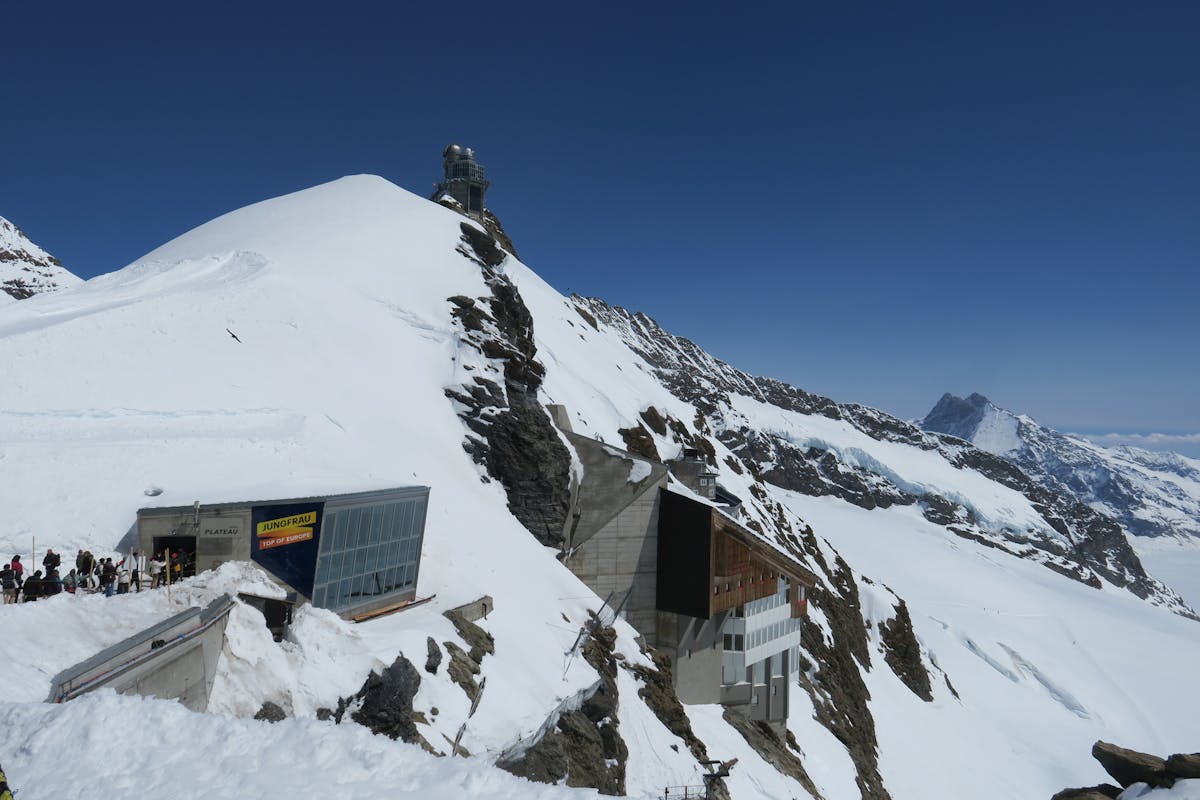
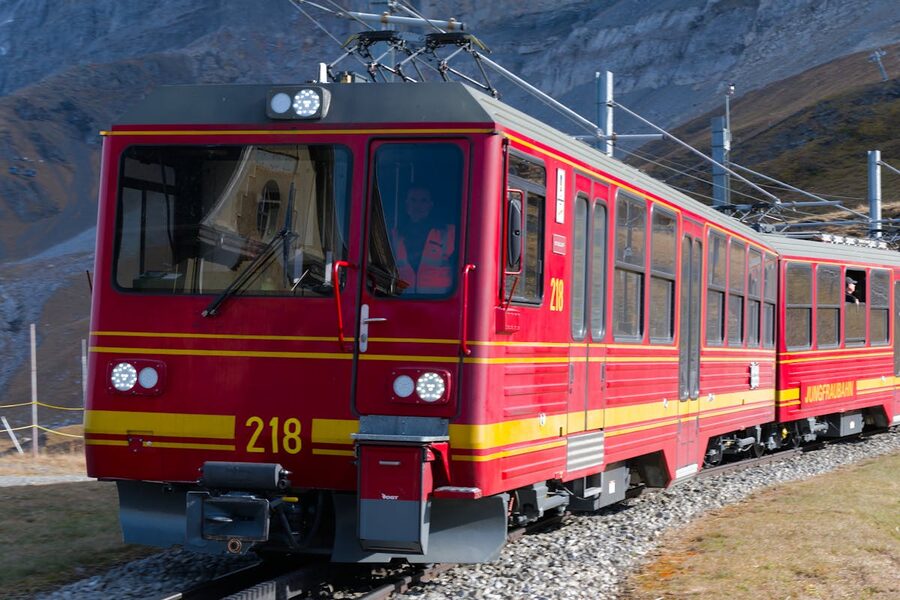
Getting from Interlaken to the summit takes about two hours each way by cogwheel railway, and the journey itself is half the reason to go. The train climbs through Grindelwald or Lauterbrunnen, past waterfalls and Alpine meadows, before plunging into the seven-kilometre tunnel that burrows through the Eiger and the Monch. There are two brief stops inside the mountain where you can look out through windows cut into the rock face. It feels like something out of a Jules Verne novel.
Short on time? Here are my top picks:
Best from Interlaken: Day Trip to Jungfraujoch by Bus and Train — $342. Full guided day with bus transfer to Grindelwald and train to the top. Smoothest option if you’re already in Interlaken.
Best budget (self-guided): Roundtrip Train Ticket to the Top of Europe — $303. Just the train ticket, no guide. You set your own pace at the top.
Best from Zurich: Guided Day Trip from Zurich — $367. Full-day trip with pickup, scenic drive through the Bernese Oberland, and guided summit visit. Worth it if you’re based in Zurich and don’t want to figure out the train connections yourself.
- How the Jungfraujoch Ticket System Works
- Discount options that actually work
- Official Tickets vs. Guided Tours — Which Is Better?
- The Best Jungfraujoch Tours to Book
- 1. From Interlaken: Day Trip to Jungfraujoch by Bus and Train — 2
- 2. From Zurich: Guided Day Trip to Jungfraujoch with Train Ride — 7
- 3. Jungfraujoch: Roundtrip Train Ticket to the Top of Europe — 3
- 4. Jungfraujoch Top of Europe Day Trip from Lucerne — 6
- When to Visit Jungfraujoch
- How to Get There from Interlaken
- Tips That Will Save You Time (and Money)
- What You’ll Actually See at the Top
- A Brief History of a Mad Idea
- Combine It With Grindelwald or Lauterbrunnen
- While You’re in Switzerland
How the Jungfraujoch Ticket System Works
The Jungfrau Railway company controls all access to Jungfraujoch. There’s no road up there, no cable car alternative, no helicopter pad for travelers. The only way to the top is by train, and they know it.
You can buy tickets directly from jungfrau.ch or at the station in Interlaken Ost, Grindelwald, or Lauterbrunnen. The standard roundtrip from Interlaken Ost costs CHF 254.80 (roughly $285 USD) for adults at full price. That covers the full journey: Interlaken Ost to Grindelwald Terminal (or Lauterbrunnen), the Eiger Express gondola (or cogwheel train), and the final Jungfrau Railway segment from Kleine Scheidegg to the top.
There are two routes up from Interlaken, and you can mix them:
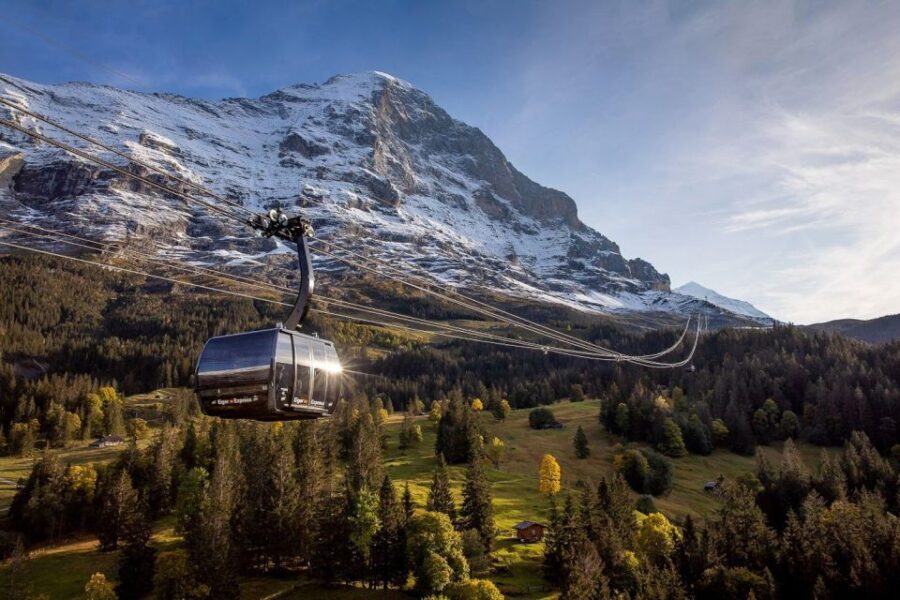
Route A — Via Grindelwald + Eiger Express (faster): Take the train from Interlaken Ost to Grindelwald Terminal, then the Eiger Express tricable gondola directly to Eigergletscher station. From there, the Jungfrau Railway takes you the rest of the way. Total time: about 1 hour 45 minutes. This route opened in 2020 and cut a solid 45 minutes off the old journey.
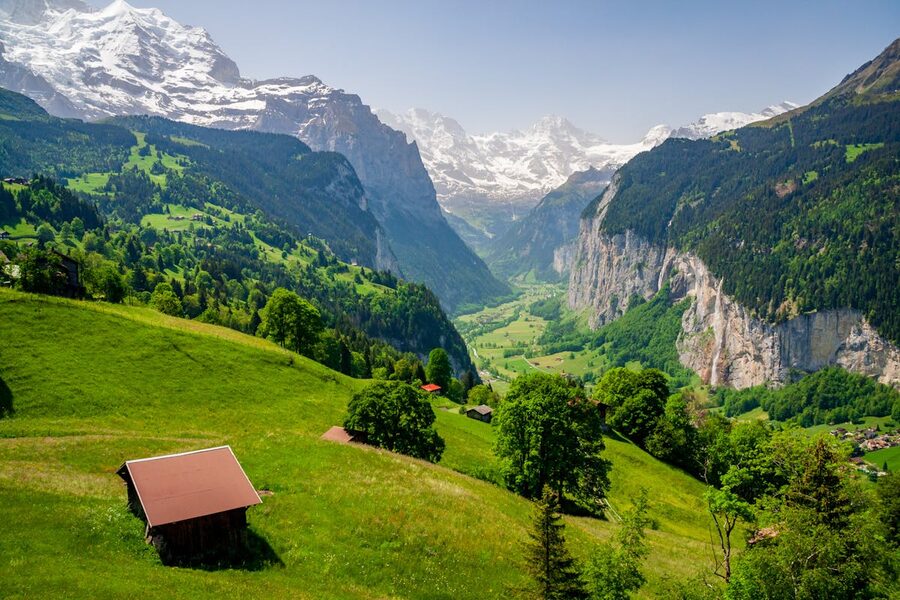
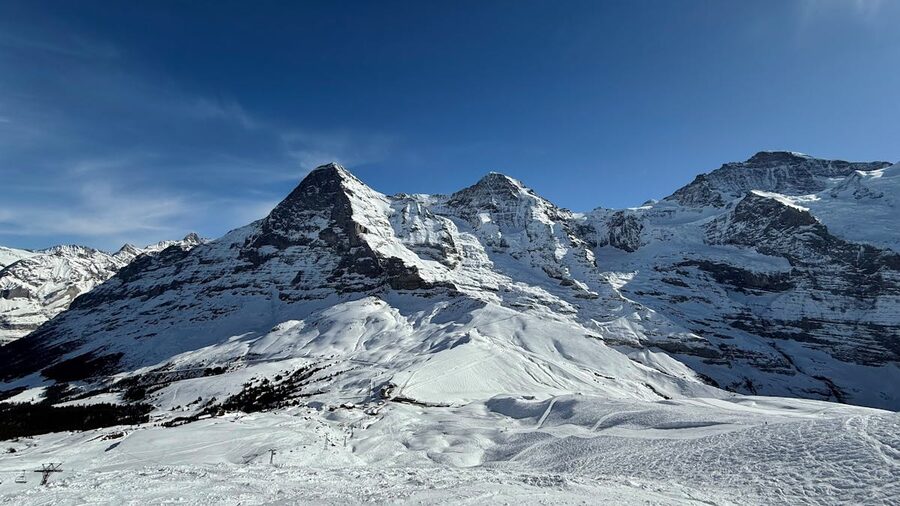
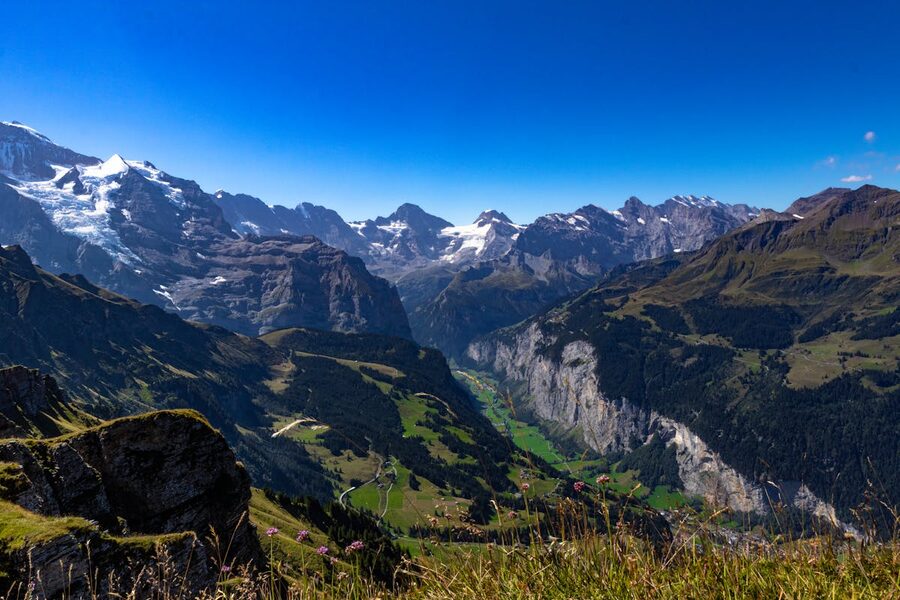
Route B — Via Lauterbrunnen + Kleine Scheidegg (scenic): Train from Interlaken Ost through Lauterbrunnen, then cogwheel train through Wengen up to Kleine Scheidegg (with those famous Eiger North Face views), and finally the Jungfrau Railway into the tunnel. Takes about 2.5 hours. Slower, but the scenery through Lauterbrunnen Valley is worth it.
My recommendation: go up via the Eiger Express (Route A) and come down through Lauterbrunnen (Route B). You save time on the ascent when you’re excited and impatient, and soak in the valley views on the descent when you’re relaxed.
Discount options that actually work
A few ways to bring the cost down:
- Swiss Half Fare Card — Cuts the price in half. If you’re spending more than a few days in Switzerland, this card pays for itself fast. The Jungfraujoch roundtrip drops to about CHF 127.
- Swiss Travel Pass — Gets you 25% off the Jungfraujoch ticket. Not as good as the Half Fare Card for this particular trip, but if you’re using it for other travel across Switzerland, the math may work out.
- “Good Morning” ticket — Take the first train of the day (departing before 07:30 from Interlaken Ost) and you’ll pay less. The station is quiet, the trains are emptier, and the light on the mountains in early morning is incredible. Fewer people fighting for space on the observation deck, too.
- Jungfrau Travel Pass — A regional pass covering unlimited travel in the Jungfrau area for 3-8 days. If you’re planning to explore Grindelwald, Murren, and Schilthorn as well, this can be better value than individual tickets.
Children under 6 travel free. Kids aged 6-15 get 50% off with a Junior Card (CHF 30 for the card, valid for a year).
Official Tickets vs. Guided Tours — Which Is Better?
This is the question everyone asks, so here’s my honest take.
Buy your own tickets if: You’re already in Interlaken or the Jungfrau region, you’re comfortable reading Swiss train schedules (they’re straightforward), and you want to set your own pace. You’ll save money and can spend as long as you want at the top. The train system is efficient and well-signposted — you genuinely don’t need someone holding your hand for this one.
Book a guided tour if: You’re coming from Zurich, Lucerne, or another city and don’t want to deal with multiple train connections. The guides handle all the logistics, the bus portion through the Bernese Oberland is scenic, and you get historical context you’d miss on your own. Also worth it if you have limited time in Switzerland and want to be sure the day runs smoothly.
The price difference is surprisingly small. A self-purchased roundtrip from Interlaken is CHF 254.80 at full price. A guided day trip from Interlaken runs about $342 and includes the guide plus bus transfers. When you factor in the convenience, the gap doesn’t feel unreasonable.
The Best Jungfraujoch Tours to Book
I’ve gone through every Jungfraujoch tour option on the market and narrowed it down to four. These are the ones worth your money, ordered by where you’re starting from.
1. From Interlaken: Day Trip to Jungfraujoch by Bus and Train — $342
This is the one I’d pick if you’re staying in Interlaken. The tour starts with a bus ride through the Bernese Oberland to Grindelwald, where you board the train for the ascent. You get about two hours at the summit — enough to see the Ice Palace, walk out to the Plateau, and hit the Sphinx Observatory. The guide fills in the history during the bus sections, which makes the transit time feel useful rather than dead.
At $342, it’s priced right for what you get. The GYG reviews consistently praise the guides — several specifically mention someone named Andrea who apparently makes the geological history of the Eiger feel like a thriller. It’s a seven-hour round trip, so you’ll still have the evening free in Interlaken.
2. From Zurich: Guided Day Trip to Jungfraujoch with Train Ride — $367
If you’re based in Zurich and only have one day for Jungfraujoch, this is the tour. It’s a long day — 12 hours door to door — but the drive through the Bernese Oberland is genuinely beautiful, not just filler between Zurich and the mountain. The bus stops in Interlaken area before the train portion begins.
At $367 it’s only $25 more than the Interlaken departure, which is remarkable considering you’re adding three hours of bus transfer each way. The tour has nearly 2,400 reviews with a 4.8 rating, which makes it one of the highest-rated Jungfraujoch experiences on any platform. Multiple reviewers mention guide Marianne by name — that level of consistent guide quality across thousands of trips is unusual.
3. Jungfraujoch: Roundtrip Train Ticket to the Top of Europe — $303
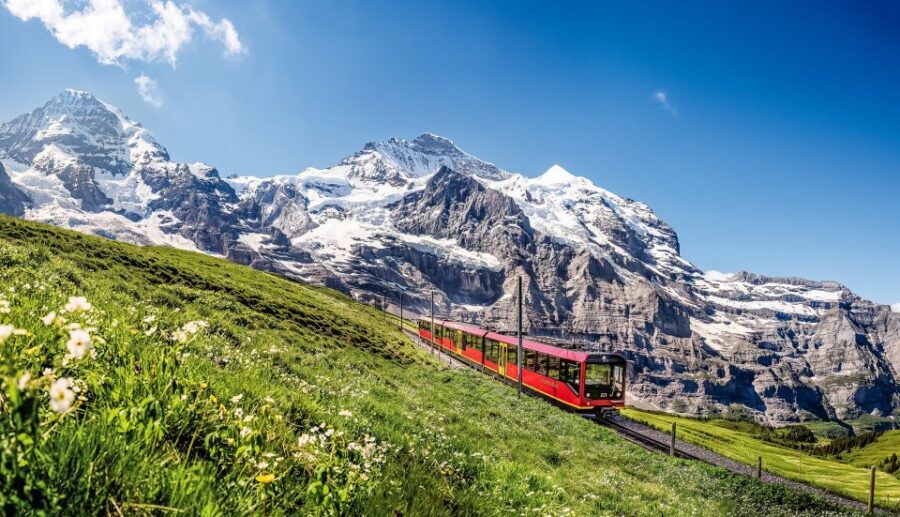
This isn’t a tour — it’s a pre-booked roundtrip train ticket from Interlaken to Jungfraujoch and back, bundled through GYG. No guide, no bus, just you and the railway. The advantage? At $303, it’s the cheapest option on this list, and you have complete freedom at the top. Stay for an hour or stay for four. Come down via Grindelwald or Lauterbrunnen — your call.
The catch is you need to figure out the connections yourself, which honestly isn’t hard. The Jungfrau Railway schedule is straightforward — trains run roughly every 30 minutes from Kleine Scheidegg. If you’re the kind of traveller who hates being herded through attractions on someone else’s timeline, this is your pick. Duration is 6-6.5 hours but you control the clock.
4. Jungfraujoch Top of Europe Day Trip from Lucerne — $366
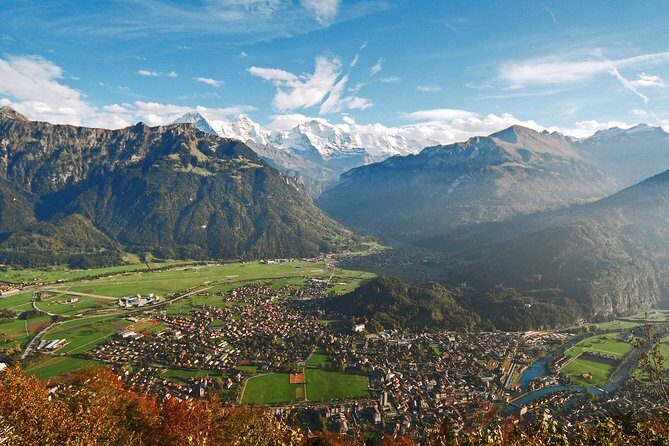
Same concept as the Zurich departure but starting from Lucerne, which knocks 90 minutes off the total bus time. If you’re spending a few nights in Lucerne (and you should — it’s one of the most underrated cities in Switzerland), this is the natural Jungfraujoch option. The 9.5-hour duration means you’re back in time for dinner.
At $366 it sits between the Interlaken and Zurich options price-wise. The reviews mention guide Ray and driver Marc — the kind of specific, repeated name-drops that tell you the operation is well-run, not a rotating cast of temps. One reviewer described the Eiger Express gondola descent as the highlight of the entire trip.
When to Visit Jungfraujoch
Jungfraujoch is open year-round, which is rare for mountain attractions in Switzerland. The trains run daily, though weather can cause delays or suspensions (high winds are the usual culprit).
Best months: June through September. The skies are clearest, temperatures at the summit hover around -1 to 1C (compared to -15C in January), and you’ll have the longest daylight hours for the trip. July and August are the busiest — expect company on the observation deck.
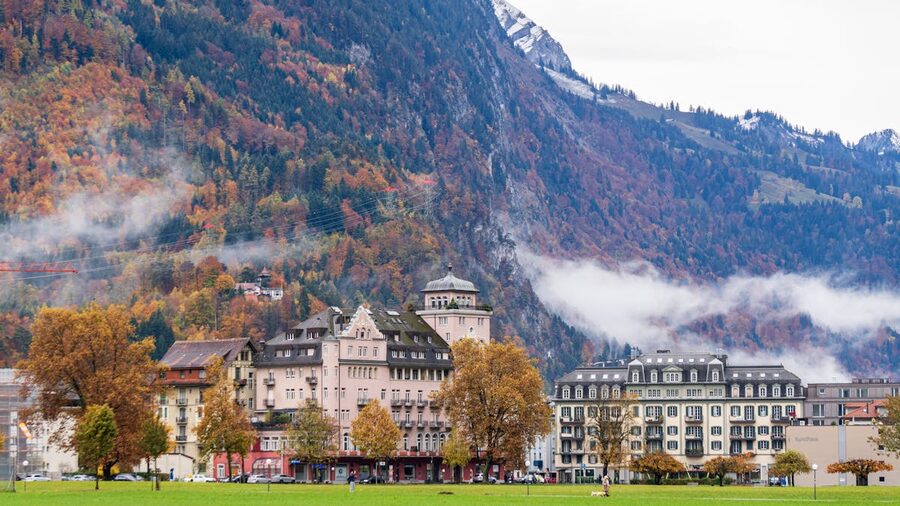
Shoulder season (April-May, October): Fewer crowds, lower prices if you combine with shoulder-season hotel rates in Interlaken. The weather is less predictable but the scenery — especially with autumn colours in the valley below — can be extraordinary.
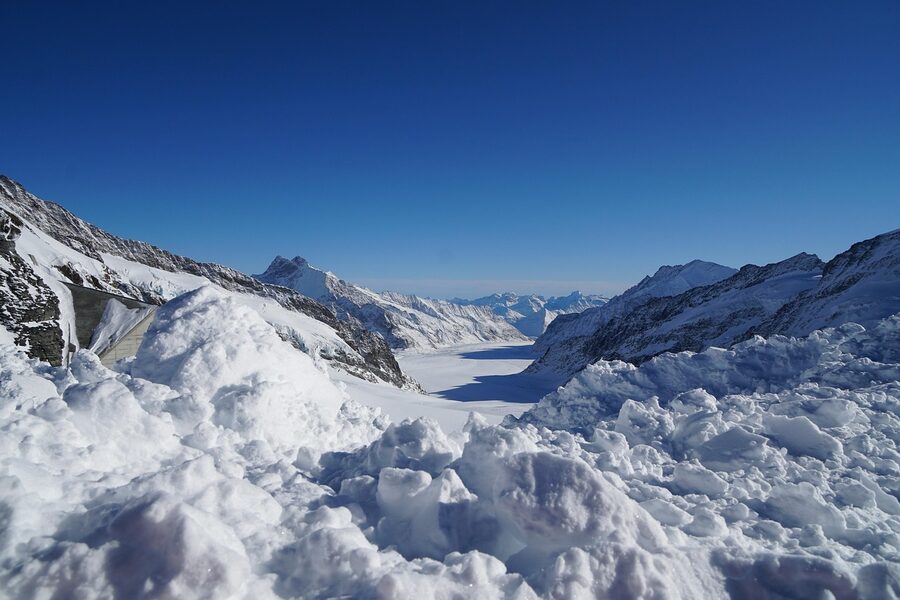
Winter (November-March): It’s cold. Really cold. The summit platform temperature regularly drops below -20C with wind chill. But the glacier is at its most dramatic, the crowds thin out dramatically, and if you get a clear day, the contrast between the snow and the sky is unreal. Just bring proper layers — your trendy autumn jacket won’t cut it up here.
Time of day matters: Go early. The first train departures have the clearest skies (clouds tend to build through the afternoon), the smallest crowds, and those “Good Morning” discount fares. By noon the observation deck can feel uncomfortably packed on summer days.
How to Get There from Interlaken
Everything starts at Interlaken Ost station (not Interlaken West — this catches people out). It’s a 10-minute walk between the two stations if you end up at the wrong one, but save yourself the stress and go directly to Ost.
From Interlaken Ost, you have two options:
The fast way (Eiger Express): Train to Grindelwald Terminal (20 min) → Eiger Express gondola to Eigergletscher (15 min) → Jungfrau Railway to Jungfraujoch (30 min). Total: roughly 1h 45min.
The scenic way (classic route): Train to Lauterbrunnen (20 min) → cogwheel train through Wengen to Kleine Scheidegg (45 min) → Jungfrau Railway to Jungfraujoch (50 min). Total: roughly 2h 30min.
Getting to Interlaken: Direct trains run from Bern (50 minutes), Zurich (2 hours via Bern), Lucerne (2 hours via Brienz), and Basel (2 hours 15 minutes). All Swiss rail connections are at sbb.ch. Interlaken is also reachable by car, though parking at Interlaken Ost costs CHF 15-20 per day.
If you’re driving to Grindelwald directly, there’s a large parking structure at Grindelwald Terminal (the Eiger Express base station) — CHF 20 per day. This saves you one train connection.
Tips That Will Save You Time (and Money)
- Check the webcam before you go. Jungfrau.ch has live webcams at the summit. If the cloud cover is thick, postpone by a day. You’re paying CHF 200+ for this — don’t waste it on fog. The views are literally the entire point.
- Dress warmer than you think. It’s freezing at the top year-round. Even in July, the summit temperature sits around 0C, and the wind makes it worse. Bring a proper jacket, hat, and gloves. I’ve seen people in sandals up there and they looked miserable.
- The Sphinx Observatory is the highlight — go there first. When you arrive, most people follow the crowds to the Ice Palace or the gift shop. Head straight for the elevator to the Sphinx Observatory instead. You’ll get 10-15 minutes of relatively crowd-free views before everyone else catches on.
- Eat before you go up. Food at the summit is expensive and underwhelming. The restaurant at Kleine Scheidegg is better and cheaper, or pack a lunch from Interlaken. The Coop supermarket near Interlaken Ost has everything you need.
- Bring sunscreen. The UV at 3,454m is no joke. Snow reflects it, thin air amplifies it. I’ve seen people come back from the outdoor deck looking like lobsters after 30 minutes.
- The altitude affects some people. 3,454m isn’t extreme by global standards, but if you’ve never been that high, take it easy. Walk slowly, drink water, sit down if you feel dizzy. The thin air hits harder than you’d expect, especially if you climbed fast on the Eiger Express.
- Mix your routes. Go up via the Eiger Express (fast, modern) and come down through Lauterbrunnen (scenic, old-school). Or vice versa. The combination ticket covers both at no extra cost. Doing the same route both ways means missing half the scenery.
What You’ll Actually See at the Top
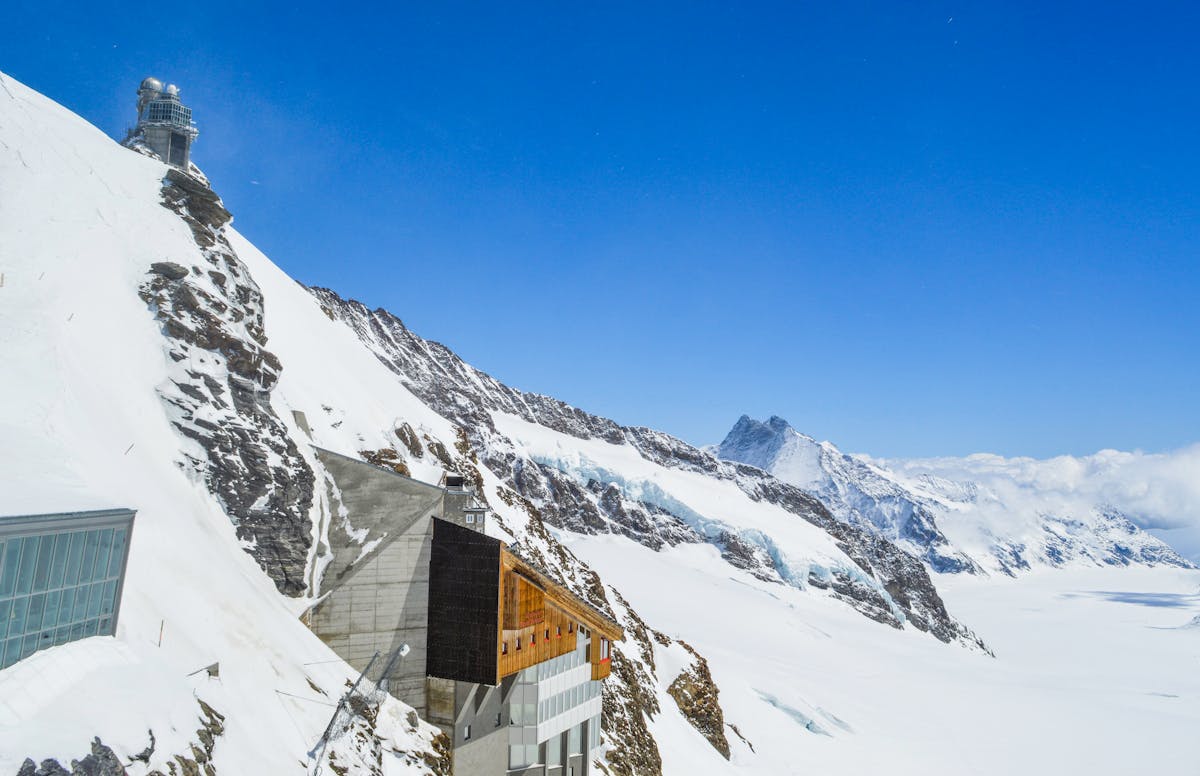
Jungfraujoch station sits inside the mountain, so when you step off the train, you’re in a tunnel complex. Don’t panic — the outdoor viewing platforms and the Sphinx Observatory are a short walk and elevator ride away.
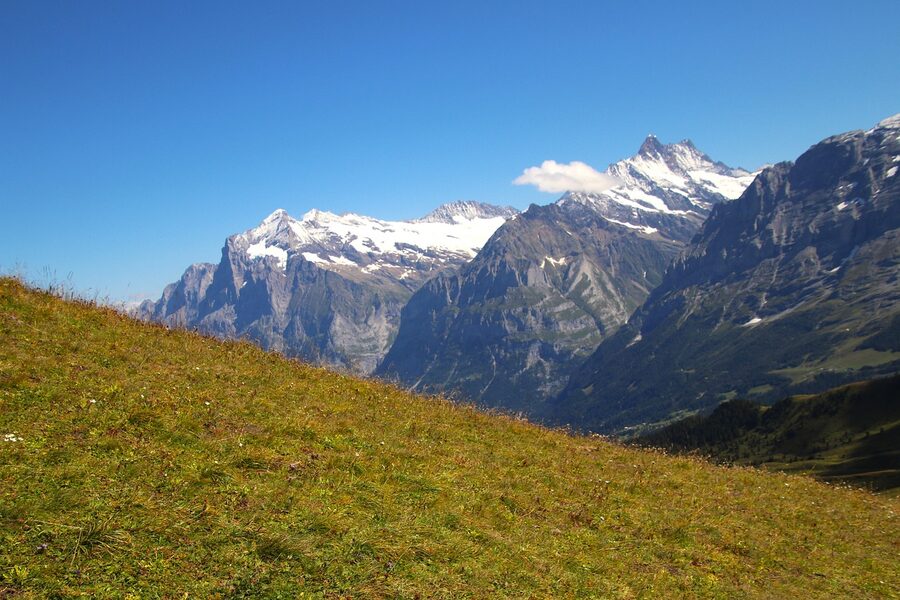
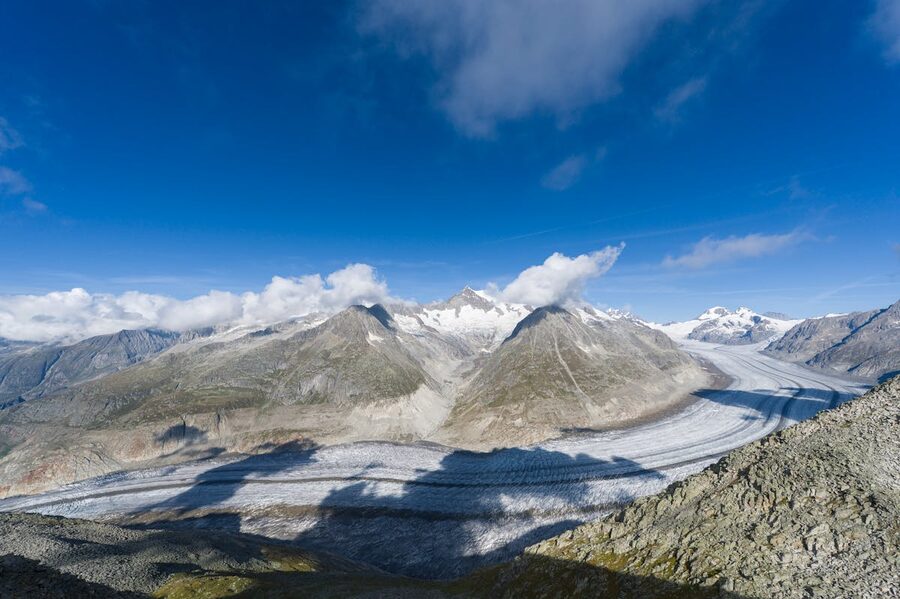
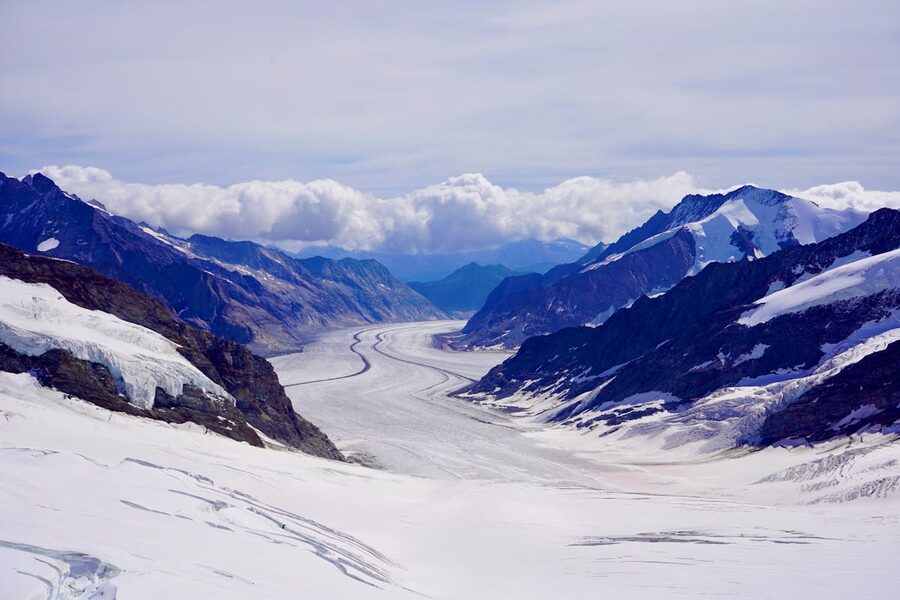
The Sphinx Observatory (3,571m): This is the money shot. An indoor gallery wraps around the building with floor-to-ceiling windows, and there’s an outdoor terrace with 360-degree views. On a clear day, you can see the Aletsch Glacier curving south toward the Valais, the Eiger and Monch on either side, and peaks stretching into France and Germany. The observatory has been a working meteorological research station since 1937 — it’s not just for travelers.
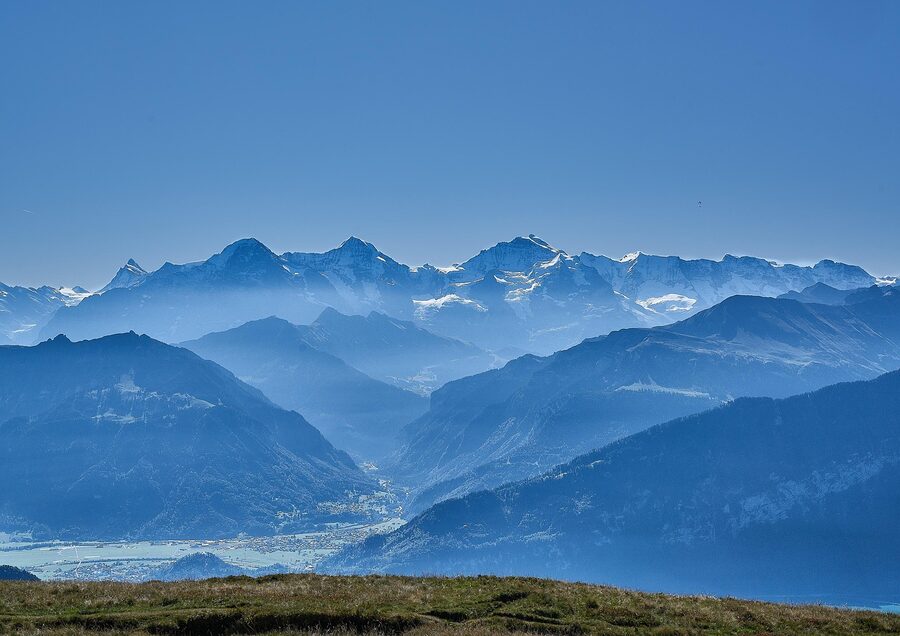
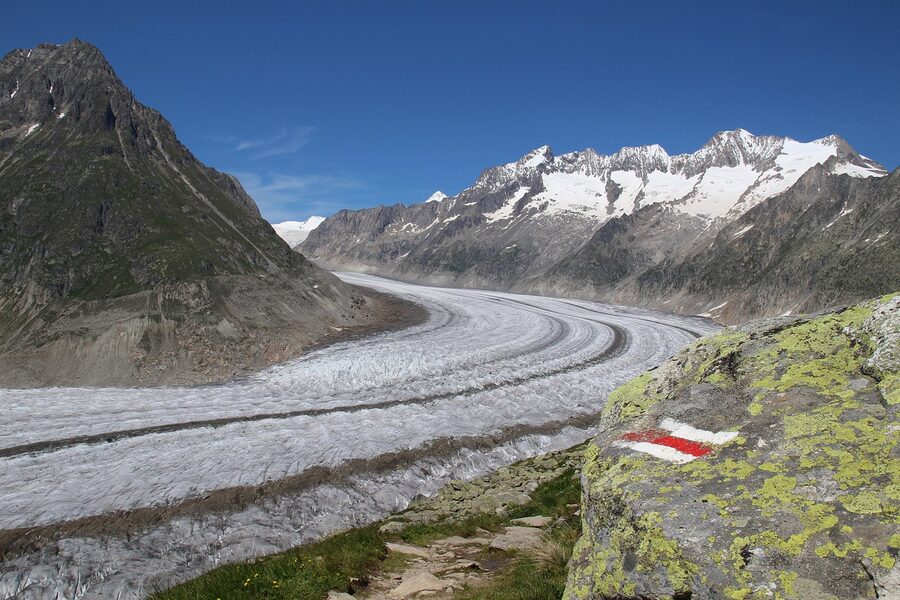
The Aletsch Glacier: At 23 kilometres, it’s the largest glacier in the Alps and a UNESCO World Heritage Site. You can see it from the Sphinx terrace, and there’s a marked trail that takes you out onto the snow field above the glacier (about a 20-minute walk from the station). The glacier has been retreating noticeably — old photos at the station show how much ice has been lost since the 1900s.
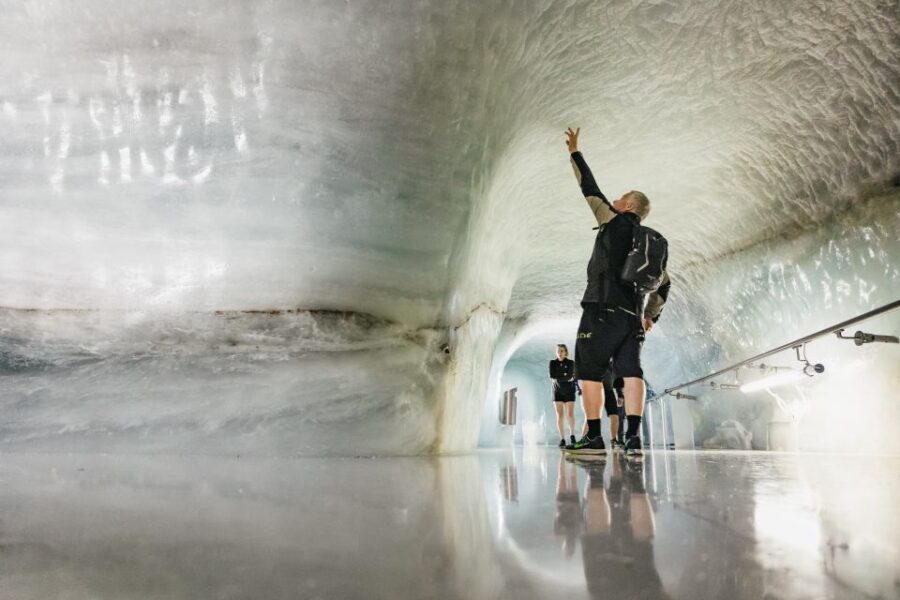
The Ice Palace: Carved into the glacier itself, this is a network of tunnels and chambers filled with ice sculptures. Sounds touristy, and it is. But the fact that you’re walking inside a glacier at 3,400 metres gives it a genuine wow factor. The floor is slippery — wear proper shoes, not smooth-soled sneakers.
The Alpine Sensation tunnel: A multimedia exhibition about the history of the Jungfrau Railway and Alpine tourism. It’s free with your ticket and takes about 15 minutes. Skip it if you’re short on time — the views are what you came for.
Snow Fun Park: In summer, there’s a snow activities area on the Aletsch Glacier plateau with sledding, zip lines, and snow tubing. It’s included in the ticket price and surprisingly fun. Kids go wild for it, but I’ve seen plenty of adults losing their dignity on the snow tubes too.
The whole Jungfraujoch complex can be covered in about 2-2.5 hours if you’re thorough, or 90 minutes if you’re focused on the Sphinx Observatory and glacier views. I’d budget at least 2 hours to feel like you’ve done it justice.
A Brief History of a Mad Idea
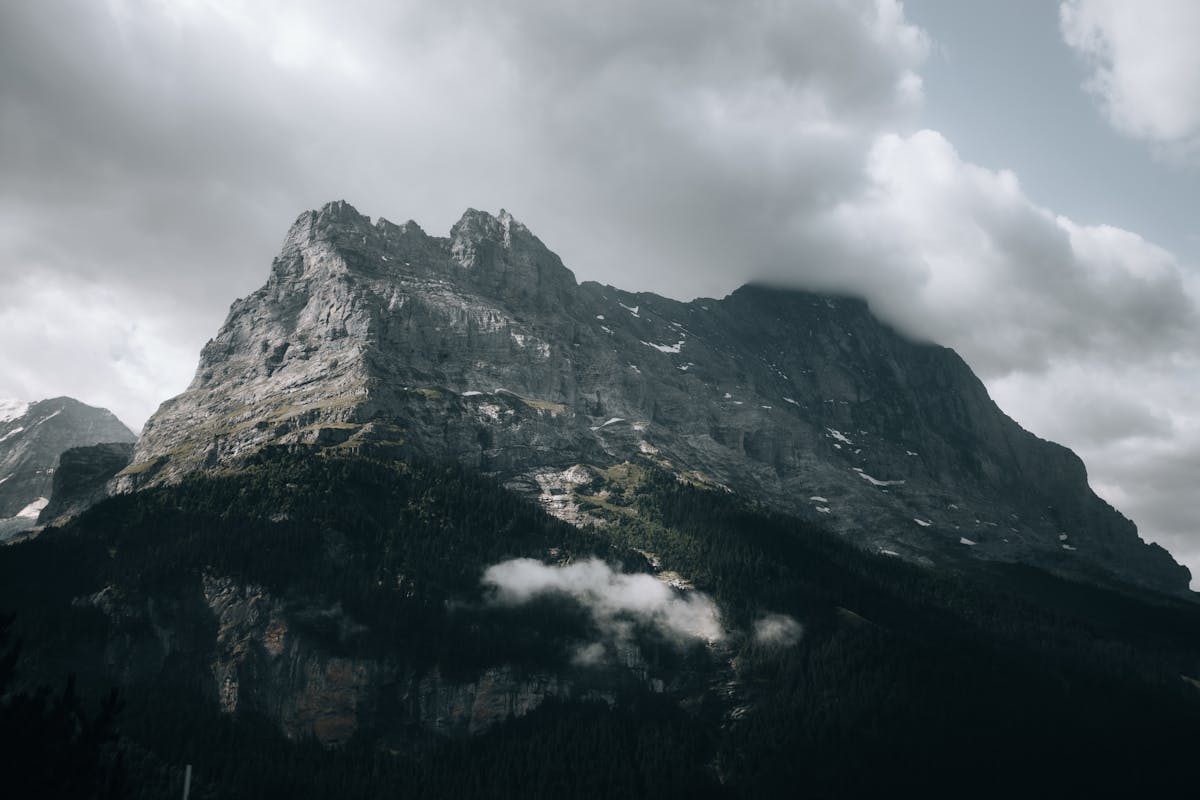
The Jungfrau Railway is one of those engineering projects that sounds impossible until you remember that the Swiss don’t really believe in impossible.
Adolf Guyer-Zeller, a wealthy industrialist and politician, conceived the idea in 1893 during a hike. His plan: build a railway from Kleine Scheidegg (2,061m) through the Eiger and the Monch to Jungfraujoch (3,454m). The total tunnel length would be 7.3 kilometres — drilled through solid Alpine limestone and gneiss rock.
Construction began in 1896. Workers drilled from the Eiger side, working in shifts at altitudes where temperatures rarely rose above freezing. Avalanches, rockfalls, and a catastrophic dynamite accident in 1908 (which killed six workers and injured many more) marked the 16-year build. Guyer-Zeller died in 1899, just three years into construction, never seeing his vision completed.
The railway opened on August 1, 1912 — Swiss National Day. The final cost was roughly CHF 16 million, an astronomical sum at the time. The two window stops inside the tunnel (Eigerwand and Eismeer) were originally planned as construction access points but were kept as viewing stations. Through those windows, passengers could look out at the Eiger’s North Face or down at the glaciers — from inside the mountain.
The Sphinx Observatory was added in 1937, built on the rock peak above the station. At 3,571 metres, it remains one of the highest permanently staffed research stations in Europe. Scientists study atmospheric chemistry, cosmic radiation, and glaciology here — it’s a working lab, not just a tourist attraction.
In 2020, the Eiger Express gondola opened, connecting Grindelwald Terminal directly to Eigergletscher and cutting travel time to Jungfraujoch by 47 minutes. The V-Cableway, as the Jungfrau Railway company calls it, was the biggest infrastructure addition since the original tunnel and cost CHF 470 million. It fundamentally changed the logistics of visiting — what used to be a slow, all-day commitment is now doable as a half-day trip from Interlaken.
Combine It With Grindelwald or Lauterbrunnen
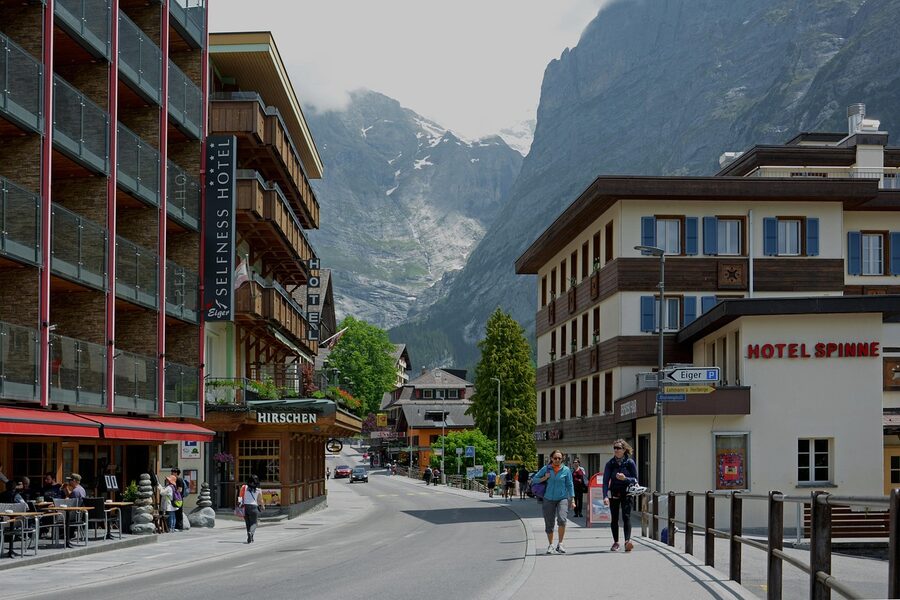
Most guided tours get you back to Interlaken by mid-afternoon, which leaves time for more. If you’re spending multiple days in the region (and you should be), here’s what pairs well with Jungfraujoch:
Grindelwald: The Grindelwald First area has the Cliff Walk, the Bachalpsee hike, and the First Flyer zip line. It’s a completely different experience from Jungfraujoch — warmer, greener, more active. Do Jungfraujoch one day and Grindelwald First the next.
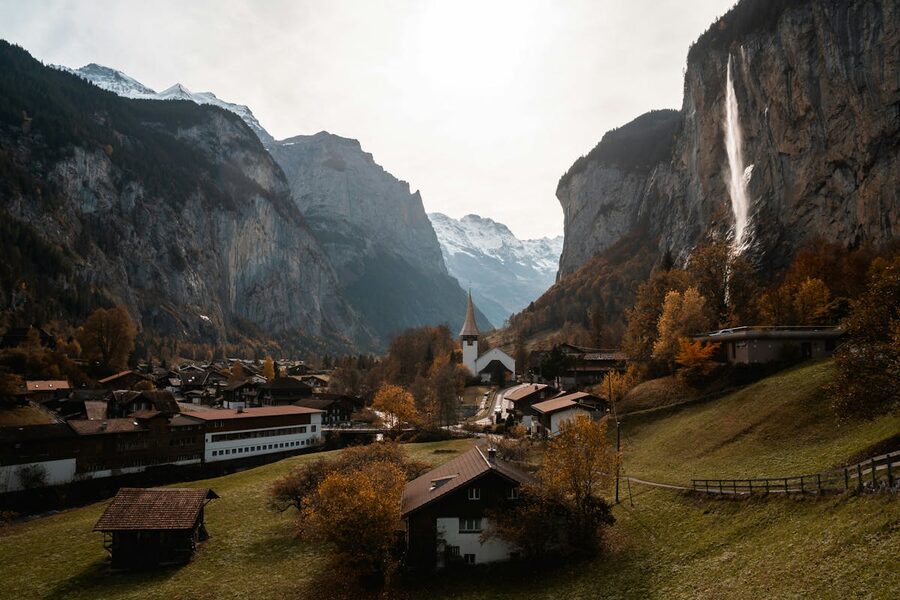
Lauterbrunnen: The valley floor is stunning on its own. Trummelbach Falls (ten glacial waterfalls inside the mountain, accessed via elevator) and Staubbach Falls (the 297-metre waterfall visible from the main street) are both worth a stop. Free to see Staubbach; CHF 11 for Trummelbach.
Schilthorn/Murren: If Jungfraujoch is the famous mountain attraction, Schilthorn is the underrated alternative. The cable car to Schilthorn (2,970m) is cheaper, less crowded, and the revolving restaurant at the top — the Piz Gloria, featured in the James Bond film On Her Majesty’s Secret Service — has better food than anything at Jungfraujoch. The views of the Eiger, Monch, and Jungfrau from Schilthorn are arguably better because you’re looking at them, not standing on them.
Paragliding in Interlaken: If you’re the adrenaline type, tandem paragliding over Interlaken is one of the most popular adventure activities in Switzerland. You launch from high above the town and float down with the whole Bernese Oberland spread beneath you. Book it for the afternoon after your morning at Jungfraujoch and you’ll have one of the best one-two punches of any trip anywhere.
While You’re in Switzerland
Jungfraujoch pairs naturally with the rest of the Bernese Oberland, but if you’re covering more of Switzerland, there’s plenty worth adding to the trip. The Lindt Home of Chocolate in Zurich is a good rainy-day backup or a stop on your way to or from the mountains — it’s right next to the Kilchberg train station, about 20 minutes from Zurich HB. If Grindelwald grabs your attention on the way up to Jungfraujoch (and it will), give it its own full day — the First area alone needs 4-5 hours to do properly. And if heights are your thing, paragliding over Interlaken with the Jungfrau trio as your backdrop is the kind of experience you’ll be talking about at dinner parties for years.
This article contains affiliate links. If you book through our links, we earn a small commission at no extra cost to you. This helps us keep producing free travel guides.