
Five boys crawled into a hole in the rock face above Nerja in 1959, chasing bats through a narrow crack in the earth. What they found was a 42,000-year-old gallery of cave paintings, a 32-metre stalagmite (still the tallest on record), and evidence that humans had been sheltering inside those chambers for 25,000 years. The caves made Nerja famous. But the town and its neighbour Frigiliana — a whitewashed village clinging to the hillside above — were already worth the trip.
I did this day trip from Malaga on a Tuesday in late spring, and it was one of those days that reminds you why southern Spain keeps pulling people back. You get caves, cliffs, cobblestone streets, and the kind of light that makes everything look like an oil painting. All of it within an hour of Malaga.
Best overall: From Malaga: Caves of Nerja, Nerja and Frigiliana Day Tour — $81. Full-day trip covering all three highlights with transport and a guide who actually knows the history. This is the one I took.
Best for adventure: Nerja: Guided Kayak Tour — Cliffs and Maro Waterfall — $41. Half-day paddle along the Maro-Cerro Gordo cliffs with swimming stops in hidden coves.
Best for nature: Nerja: Cliffs of Maro-Cerro Gordo Guided Kayak Tour — $38. Similar route, smaller groups, and more time in the water at each stop.
- What Makes This Day Trip Worth It
- The Caves of Nerja — What to Expect Inside
- Frigiliana — The Prettiest Village You Have Never Heard Of
- Nerja Town and the Balcon de Europa
- The Best Nerja and Frigiliana Tours to Book
- 1. From Malaga: Caves of Nerja, Nerja and Frigiliana Day Tour —
- 2. Nerja: Guided Kayak Tour — Cliffs and Maro Waterfall —
- 3. Nerja: Cliffs of Maro-Cerro Gordo Guided Kayak Tour —
- How to Get from Malaga to Nerja on Your Own
- Kayaking the Maro-Cerro Gordo Cliffs
- When to Go and What to Bring
- Tips That Will Save You Time
- What Else to Do Near Nerja
- More Malaga Day Trip Ideas
What Makes This Day Trip Worth It
Most visitors to Malaga know about Ronda and the Caminito del Rey. Both are spectacular, but they sit to the west and north. Head east instead, along the coast, and you reach Nerja in under an hour — a town that feels more like the real Andalusia than anything on the western Costa del Sol.
The draw is three things stacked together. First, the Caves of Nerja, which hold some of the most significant prehistoric discoveries in Europe. Those 42,000-year-old paintings (possibly Neanderthal rather than modern human, which would rewrite everything we know about early art) are not open to the public, but the galleries you can see are staggering. The main chamber contains the world’s tallest known stalagmite at 32 metres. It took nature roughly 25,000 years to build it.
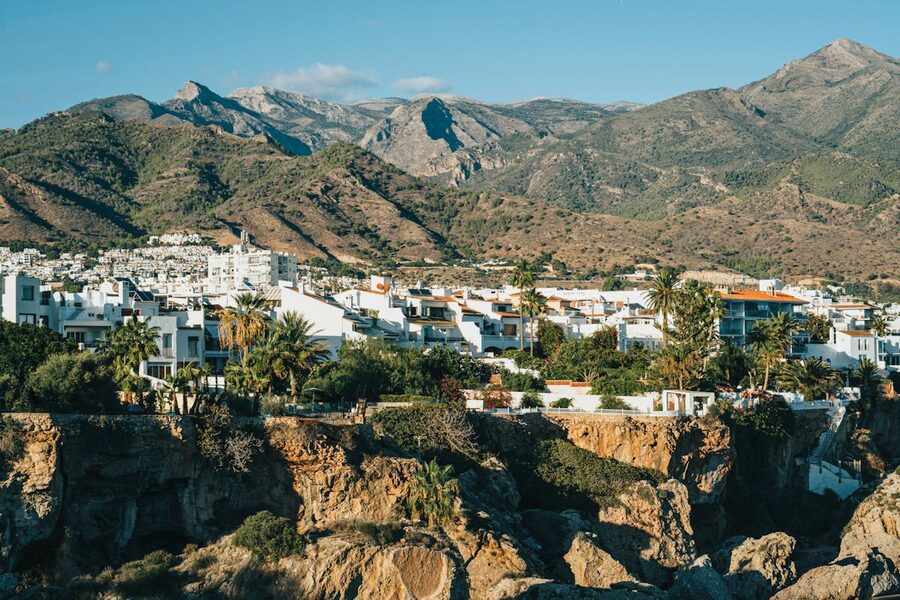
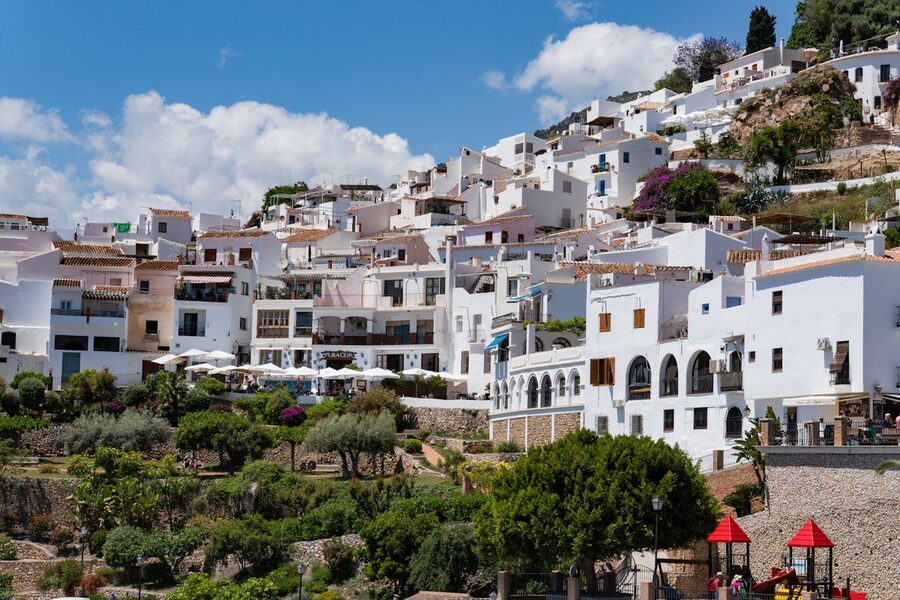
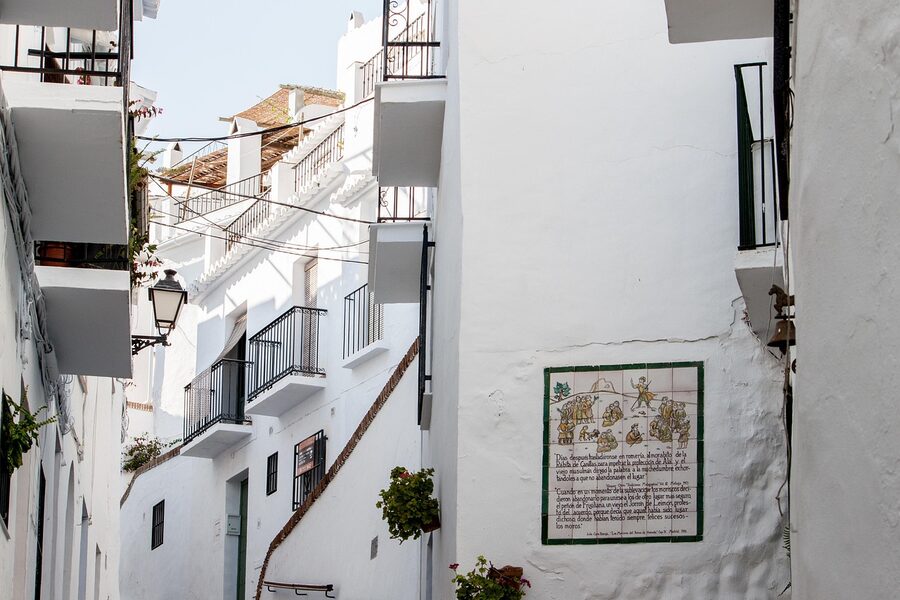
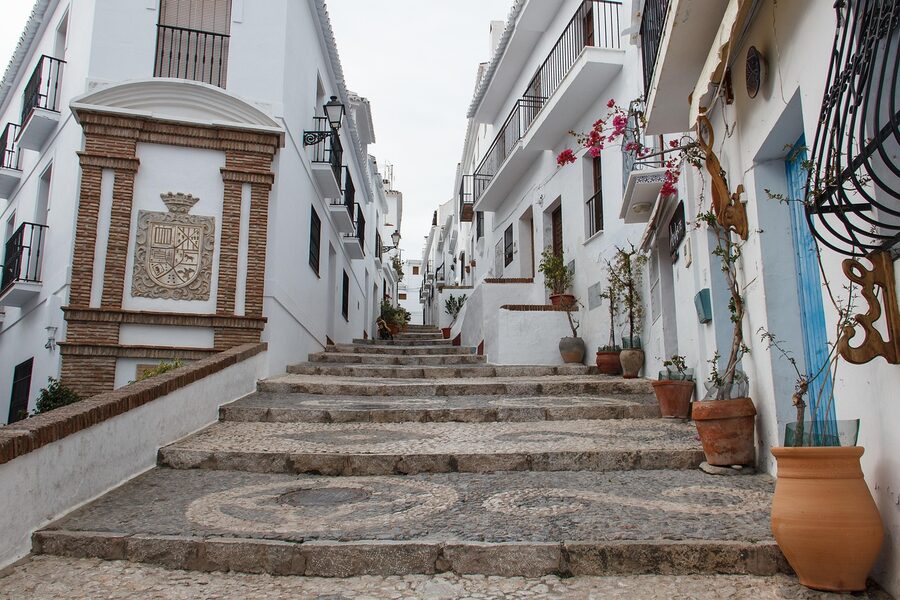
Second, Frigiliana, which sits in the mountains just above Nerja. It has been voted the prettiest village in Andalusia multiple times, and for once the award actually matches reality. Whitewashed walls, cobblestone lanes barely wide enough for two people, and Moorish-era ceramic tile mosaics embedded in the walls that tell the story of the 1569 Morisco rebellion — the last armed resistance of Spain’s Muslim population.
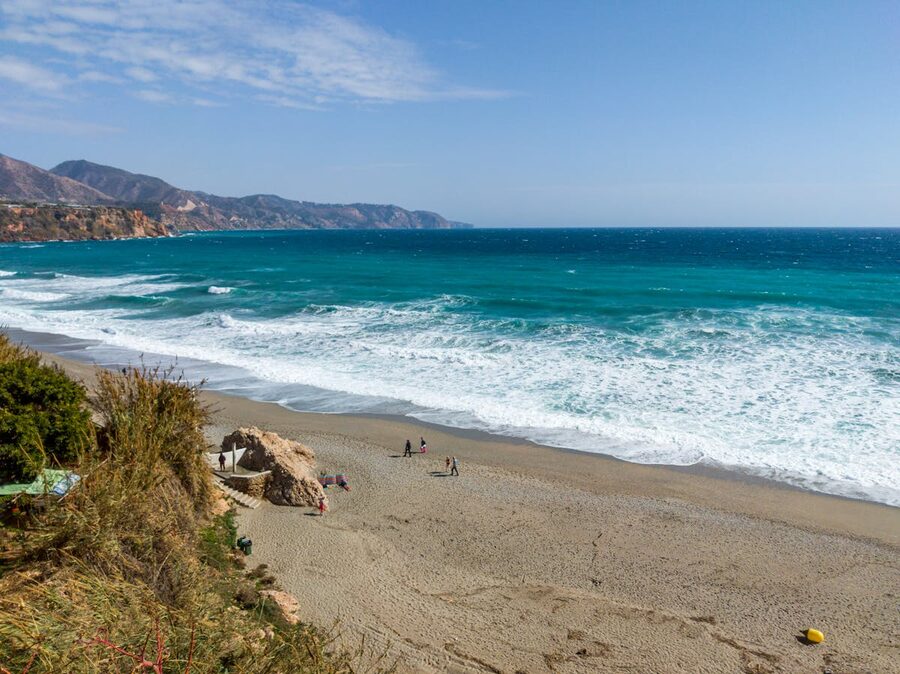
Third, the coastline itself. The Maro-Cerro Gordo cliffs between Nerja and the town of La Herradura are a protected natural area. The water here is some of the clearest on the Spanish mainland, and the only way to reach most of the hidden beaches is by kayak or on foot down steep trails.
The Caves of Nerja — What to Expect Inside
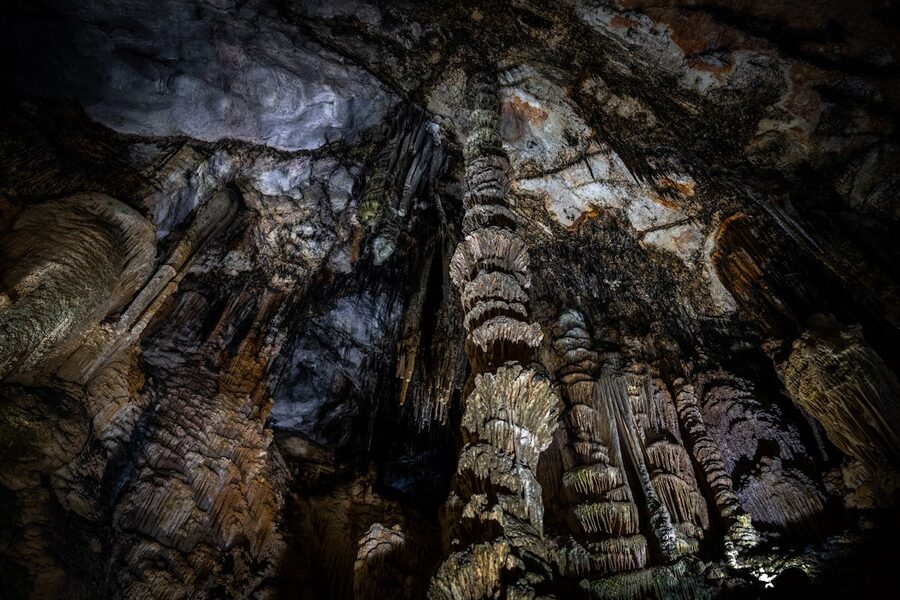
The caves sit about 3km east of Nerja town centre, on a hillside above the coast. They were discovered by accident by five local teenagers — Manuel, Miguel, Jose Luis, Jose Torres, and Jose Luis Barbero — who were out catching bats on a January evening. They squeezed through a narrow sinkhole and found themselves in a system that stretches nearly 5km deep into the mountain.
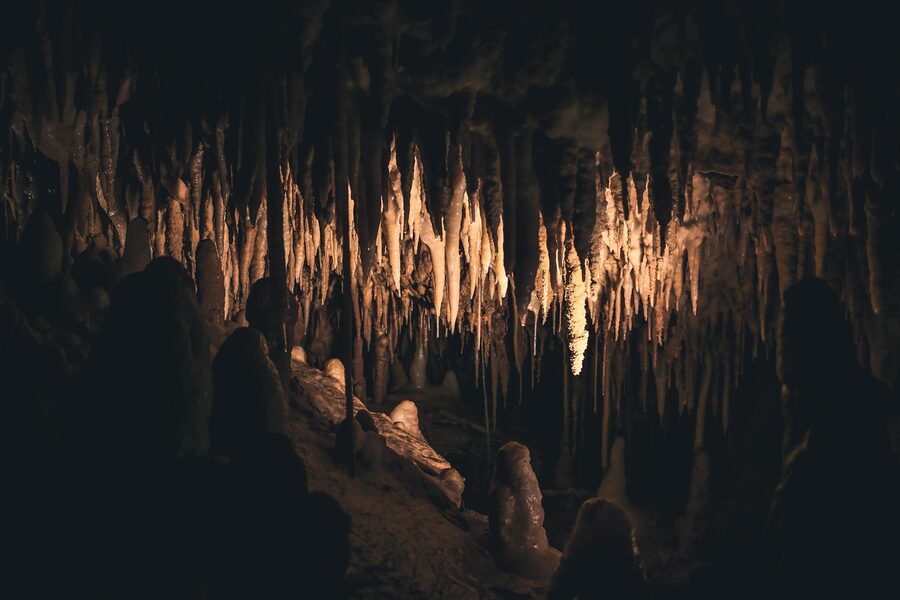
Today, about a third of the cave is open to visitors. You walk through three main galleries connected by paths with handrails and dramatic lighting. The temperature inside holds steady at around 19 degrees year-round, which feels perfect after the Andalusian heat.
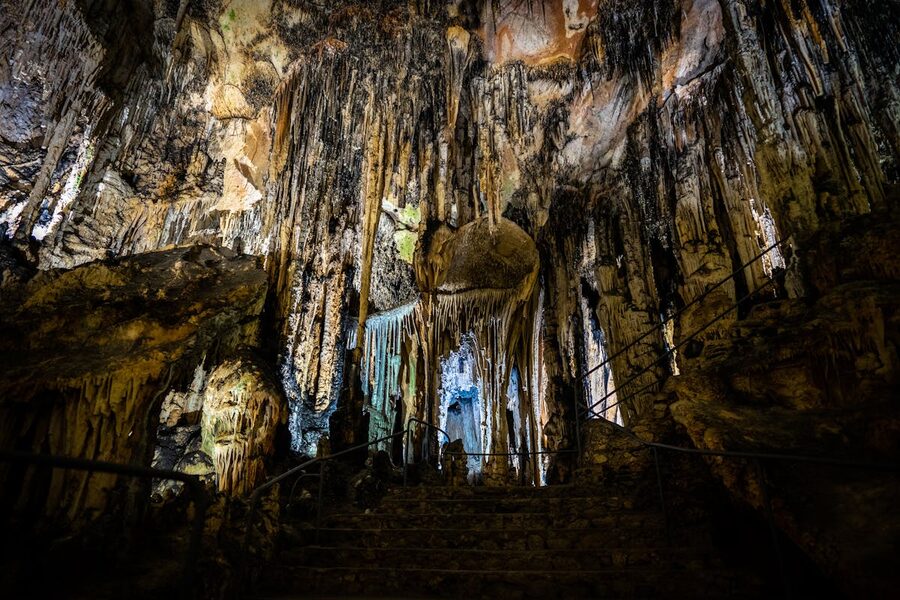
The highlight is the Hall of the Cataclysm — a vast chamber where the centrepiece column rises 32 metres from floor to ceiling. It is genuinely hard to believe it formed naturally. The cave also doubles as a concert venue in summer; the acoustics inside are remarkably good, and they hold festivals in the largest chamber.
Tickets cost around 14 euros for adults and you can buy them at the entrance or online. The guided portion takes about 45-60 minutes. Go early (before 10am) or late afternoon to avoid the thickest crowds. The caves are the single most-visited attraction in the province of Malaga after the Alhambra, so midday in summer gets packed.
Frigiliana — The Prettiest Village You Have Never Heard Of
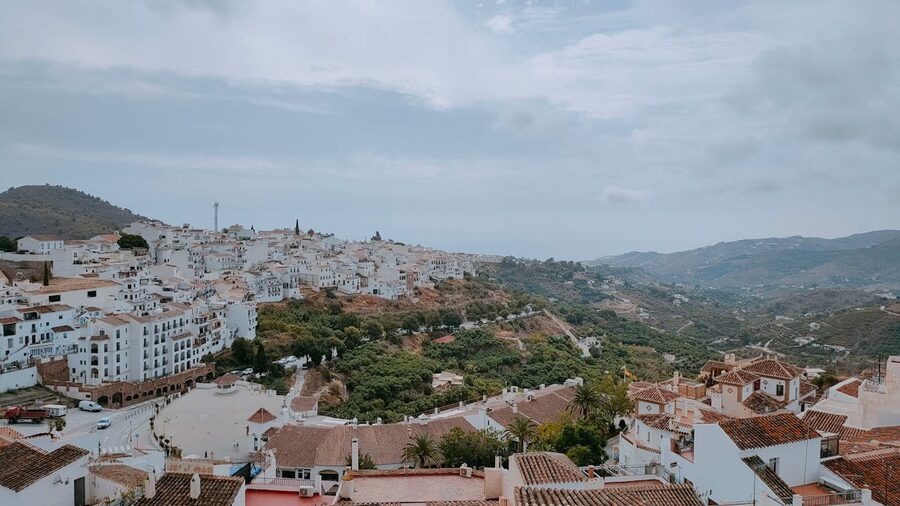
Frigiliana sits about 6km uphill from Nerja, at around 300 metres elevation. The drive takes 15 minutes, and the bus (line M-340) runs roughly every hour. Most organized day trips from Malaga stop here either before or after the caves.
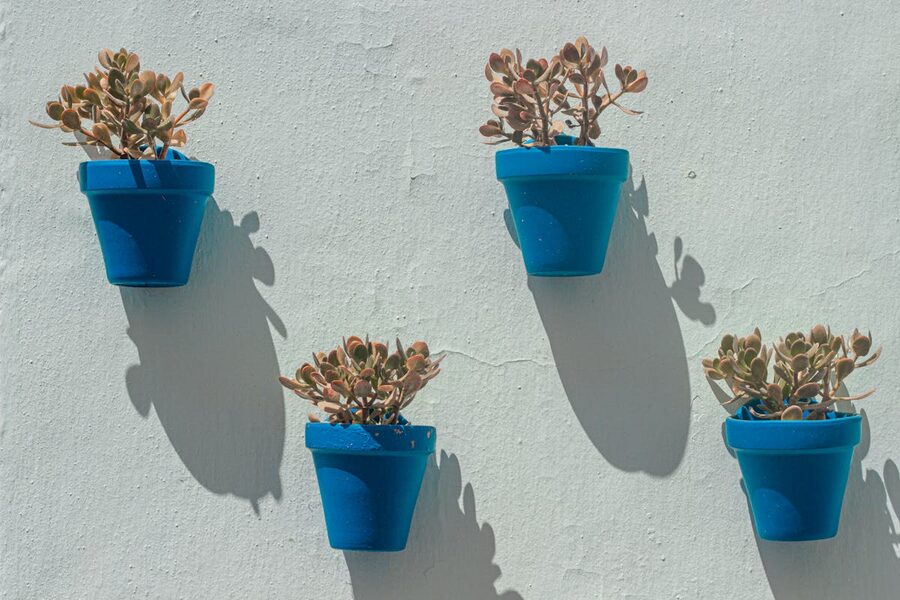
The old Moorish quarter — the barrio alto — is where you want to spend your time. The streets are so narrow that cars cannot fit through most of them. Every wall is whitewashed, every balcony drips with geraniums, and embedded into the walls along the main walking route are a series of ceramic tile mosaics created by local artists. These panels tell the full story of the 1569 Battle of the Rock of Frigiliana, when the remaining Morisco (Muslim convert) population made their last stand against Philip II’s army. It is local history told through public art, and most visitors walk right past without realizing what they are looking at.
The village is also known for its miel de cana — cane honey, a thick dark syrup made from sugar cane that has been produced here since the Moorish period. The last remaining traditional sugar cane factory in Europe still operates in Frigiliana. You will find it drizzled on everything from cheese to fried aubergine at the local restaurants.
Spend about 90 minutes to two hours here. Walk up to the ruins of the Moorish castle at the top for views that stretch to Africa on a clear day. The Rif Mountains in Morocco are just 150km across the Strait of Gibraltar.
Nerja Town and the Balcon de Europa
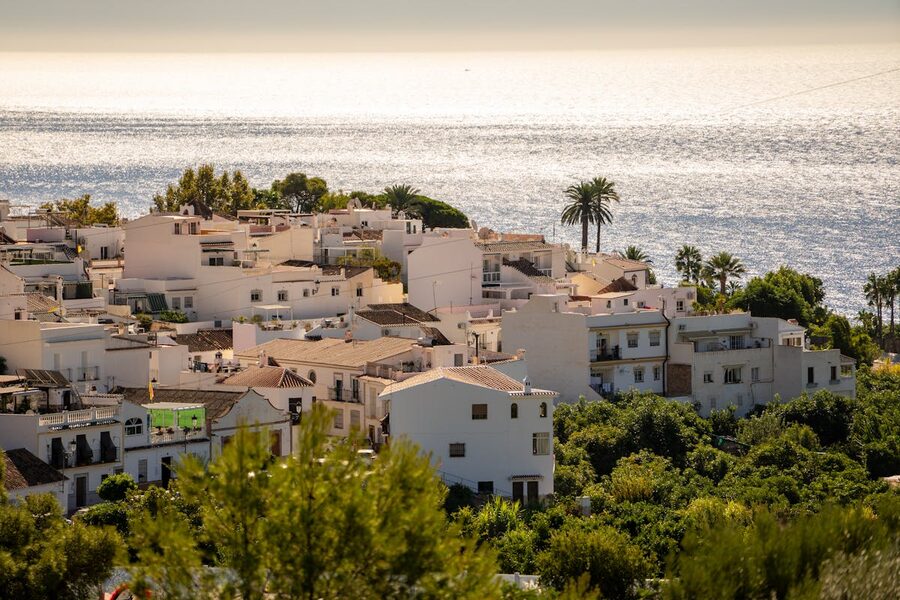
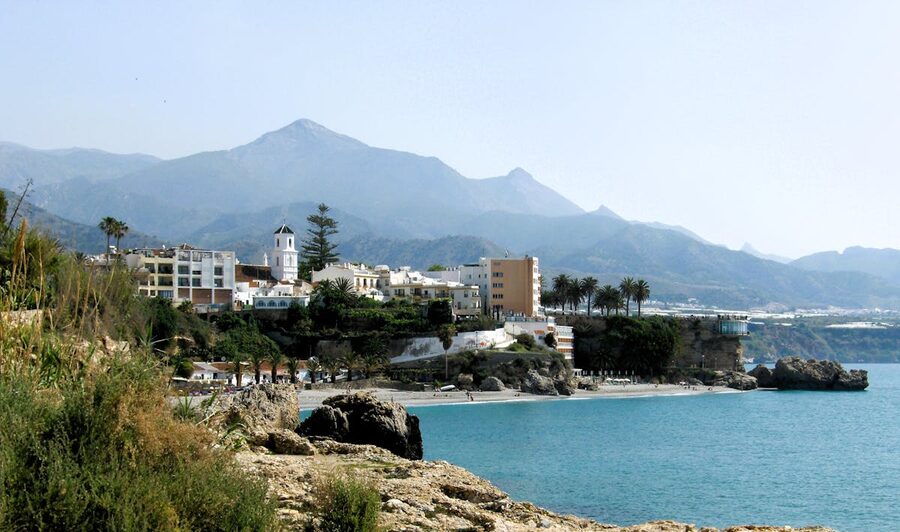
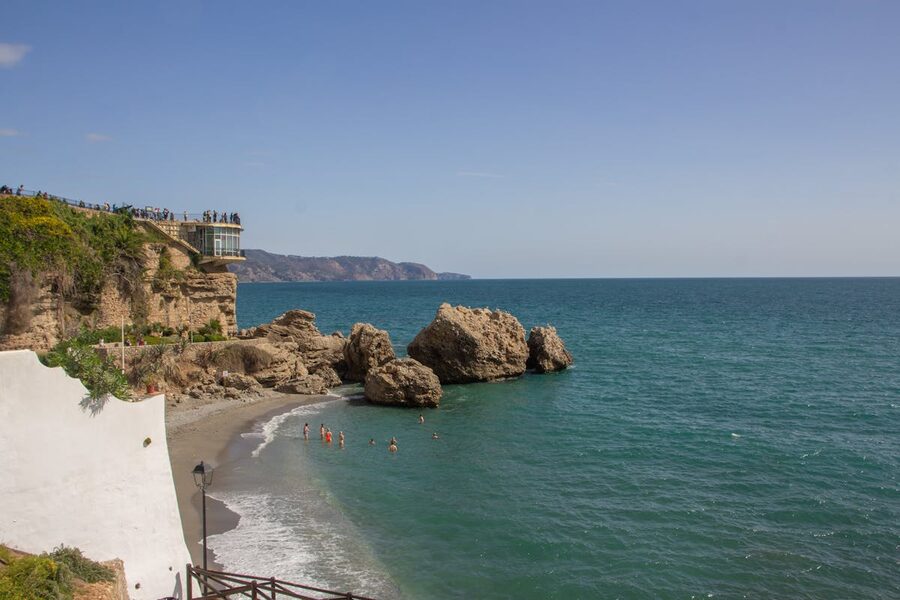
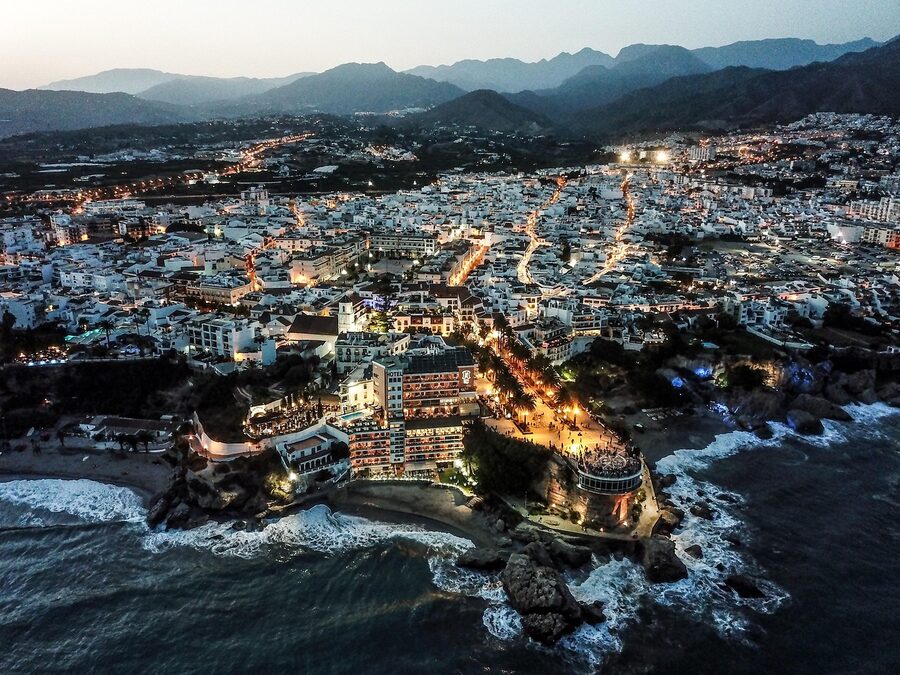
The Balcon de Europa is Nerja’s centrepiece — a palm-lined promenade jutting out from the cliff like the prow of a ship. King Alfonso XII visited in 1885 after a devastating earthquake damaged the town, stood at this spot, and declared it the balcony of Europe. The name stuck, and the viewpoint has been drawing visitors ever since.
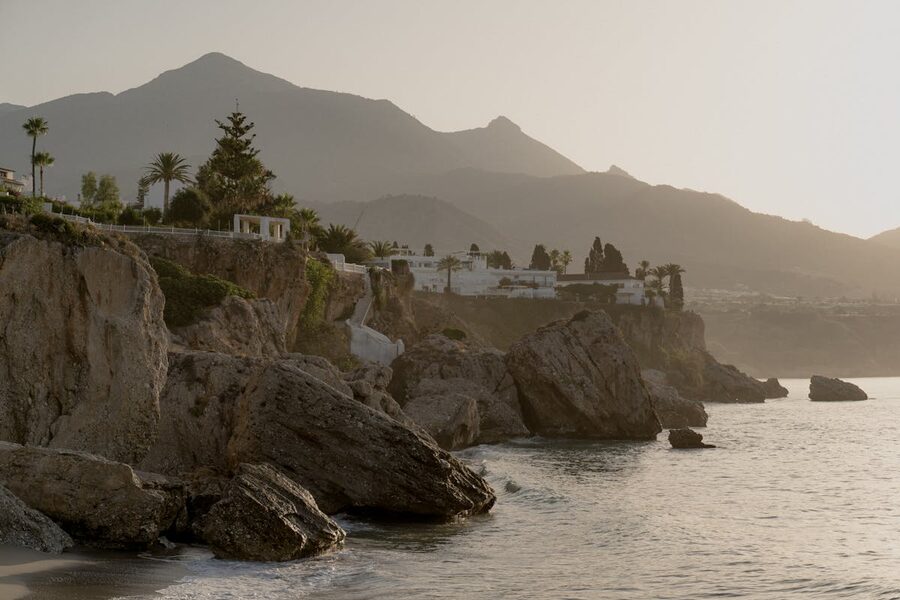
Below the Balcon, small beaches tuck into the rocky coves on either side. Playa Calahonda to the east and Playa del Salon to the west are both walkable. Calahonda is the more photogenic of the two, with its narrow access through a rock tunnel.
The old town behind the Balcon is compact and walkable in 30-40 minutes. There are no must-see museums or churches — the appeal is the streets themselves, the small plazas, and the general atmosphere of a Spanish town that has not been entirely taken over by tourism. Eat lunch here if your day trip schedule allows it. The seafood on Calle Almirante Ferrandiz is fresh and reasonably priced.
The Best Nerja and Frigiliana Tours to Book
These are the top-rated tours that cover this route from Malaga. I have ranked them by what they include and how well they deliver on the day. Each one has been reviewed by hundreds (in some cases thousands) of real visitors.
1. From Malaga: Caves of Nerja, Nerja and Frigiliana Day Tour — $81
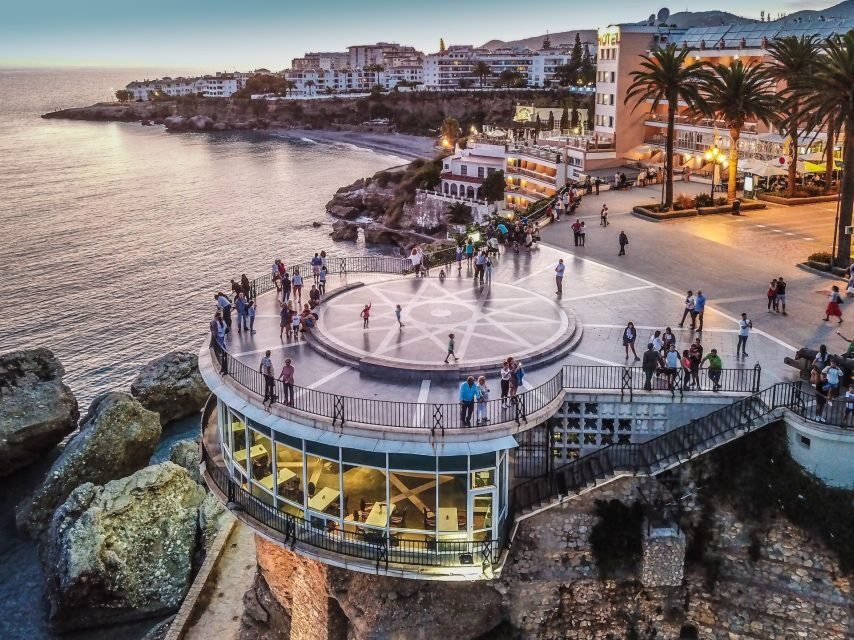
This is the tour I took, and it is the one I recommend if you want everything in a single day without worrying about logistics. A full 9-hour day that picks you up in central Malaga, drives you to the caves first (before the midday crowds), then up to Frigiliana for the walking tour and free time, and finishes with an hour or so in Nerja town itself. The guide on my trip knew the history cold — the Morisco rebellion, the cave discovery story, the local food traditions. At $81 per person, it is reasonable for what you get, especially considering the cave entry fee is included.
The only downside is the schedule is fixed. If you want longer in Frigiliana (and you might — it is that charming), you are at the mercy of the group timing. But for a first visit where you want to see it all, this covers more ground than you could manage independently unless you rent a car.
2. Nerja: Guided Kayak Tour — Cliffs and Maro Waterfall — $41
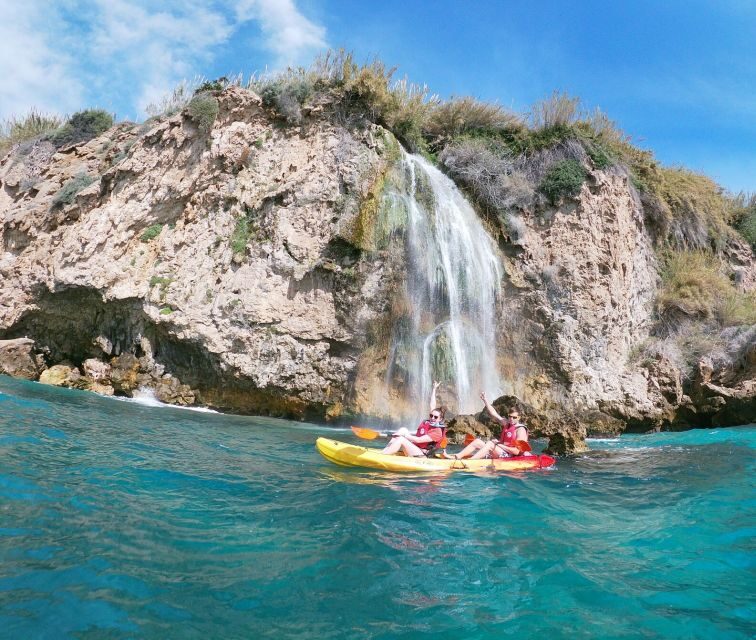
If you have already seen the caves and Frigiliana (or if the underground stuff is not your thing), this is where Nerja really comes alive. A 2.5-hour guided paddle along the base of the Maro-Cerro Gordo cliffs, with stops at hidden beaches and the Maro waterfall. The cliffs here are part of a protected natural reserve, and the water clarity is genuinely striking — you can see the bottom at 8-10 metres depth.
No previous kayaking experience needed. The guides bring tandem kayaks, snorkelling gear, and waterproof bags for your phone and camera. At $41 per person, this is one of the better-value water activities on the Spanish coast. The full review covers what to expect in more detail, but the short version is: if you are even slightly interested in kayaking, book this one.
3. Nerja: Cliffs of Maro-Cerro Gordo Guided Kayak Tour — $38
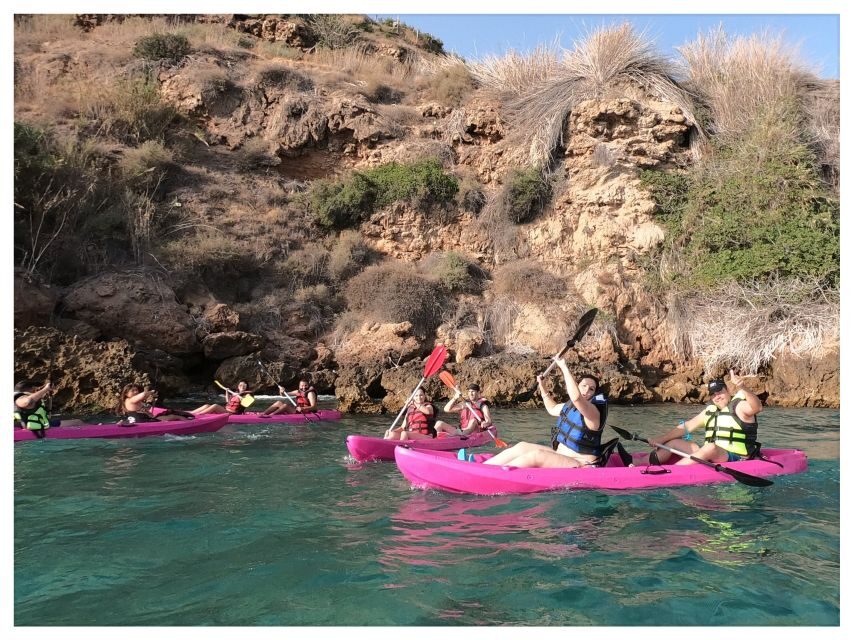
Very similar route to the tour above, but run by a different operator with smaller group sizes and a slightly different emphasis. This one spends more time at each swimming stop and less time covering distance, which suits people who want to snorkel and soak rather than paddle hard. At $38 per person, it is marginally cheaper too.
The trade-off is that you may not reach the Maro waterfall depending on conditions — the route is more flexible and the guide adjusts based on weather, current, and group fitness. If seeing the waterfall specifically matters to you, go with option 2. If you just want a great morning on the water with fewer people, this Maro-Cerro Gordo tour is the one.
How to Get from Malaga to Nerja on Your Own
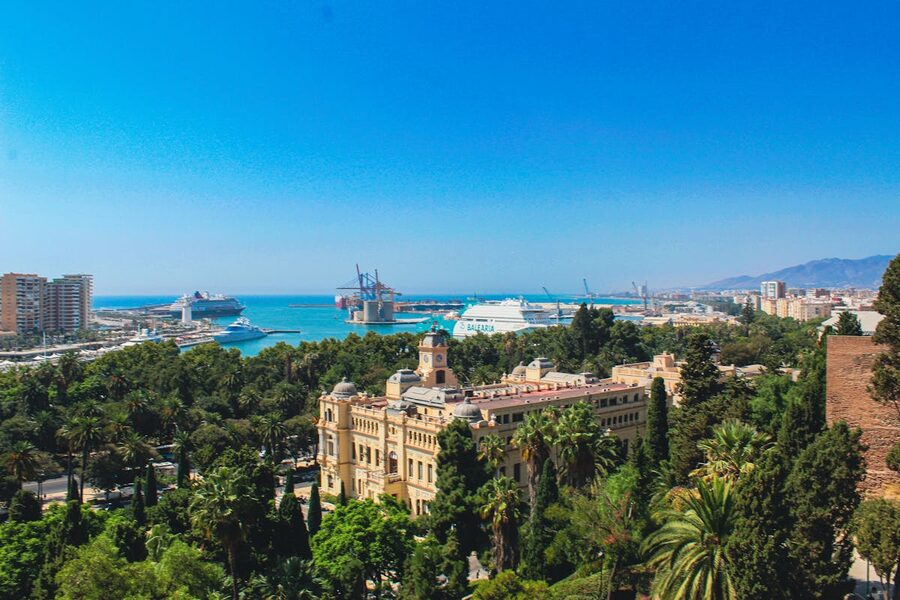
If you prefer doing this independently rather than on a guided tour, here are your options.
By bus: ALSA runs direct buses from Malaga bus station (Estacion de Autobuses) to Nerja. The ride takes about 1 hour and 15 minutes and costs around 5-6 euros each way. Buses run roughly every hour from early morning. From Nerja, a local bus (line M-340) connects to Frigiliana in about 15 minutes.
By car: Take the A-7 / AP-7 motorway east from Malaga. The drive is about 50 minutes to Nerja and another 10 to Frigiliana. Parking in Nerja is manageable outside of July-August — there is a large free car park near the caves and paid parking near the town centre. In Frigiliana, park at the bottom of the village and walk up; the streets inside the old quarter are too narrow for cars.
By taxi or transfer: A private transfer from Malaga to Nerja costs around 60-80 euros one way. This makes sense if you are splitting between 3-4 people and want flexibility, but a guided tour at $81 per person including the cave entry and guide is often better value.
Kayaking the Maro-Cerro Gordo Cliffs
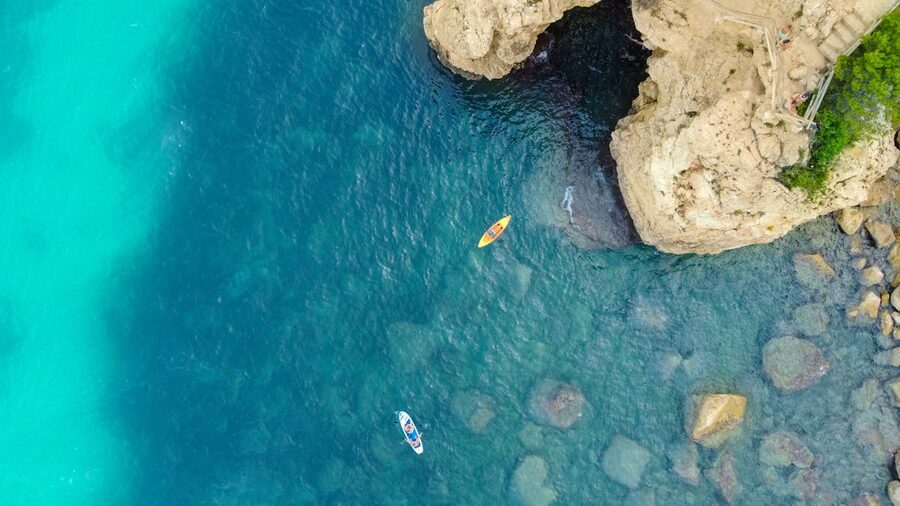
This is the part of the day trip that most people skip — and they are wrong to. The stretch of coastline between Nerja and La Herradura (about 12km to the east) is a protected natural park, and it is wildly different from the built-up beaches further west toward Malaga. No hotels, no chiringuitos, no concrete. Just vertical limestone cliffs dropping into water so clear you can see schools of fish from your kayak.
The kayak tours launch from Burriana Beach in Nerja and follow the cliffs eastward. Depending on conditions and your group, you will paddle for 1-2 hours with stops at small coves and sea caves along the way. The Maro waterfall — a freshwater cascade that drops directly into the sea from the cliff face — is the usual turnaround point.
You do not need to be fit or experienced to do this. The tandem kayaks are stable, the guides handle safety briefings properly, and the sea along this coast is usually calm in the morning. Bring water shoes, sunscreen, and a waterproof phone pouch. The guides usually bring snorkelling gear.
Book the morning slot. The wind picks up after midday along this stretch of coast, and the water gets choppier. Morning sessions are calmer, cooler, and the light on the cliffs is better for photos.
When to Go and What to Bring
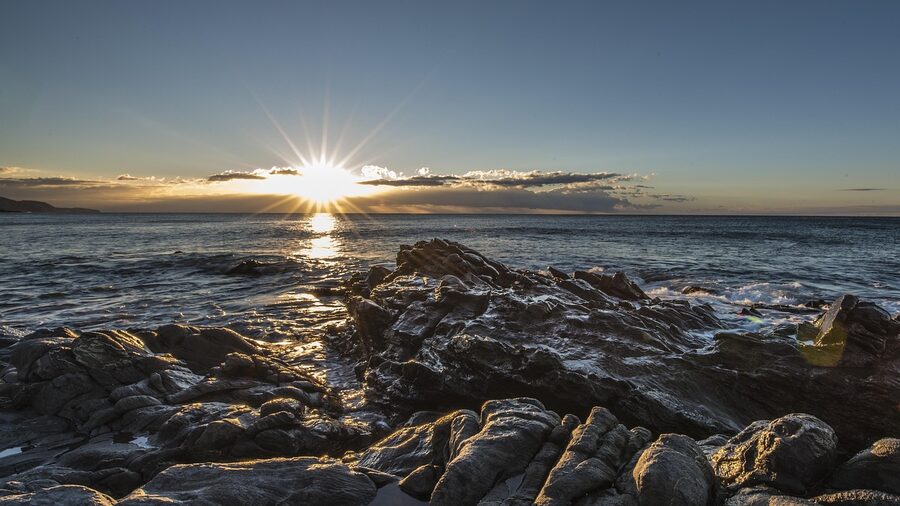
Best months: April through June and September through October. Summer works too, but July-August brings peak crowds and temperatures above 35 degrees that make walking Frigiliana’s steep streets uncomfortable. The caves stay cool year-round, so they are actually a great mid-summer escape.
Worst time: Monday mornings in summer, when coach tours from the entire Costa del Sol converge on the caves simultaneously. Tuesday through Thursday tends to be quieter.
What to wear: Comfortable walking shoes with grip — Frigiliana’s cobblestone streets are steep and can be slippery. If you are kayaking, wear swimwear under a light layer and bring a dry change of clothes. The caves are 19 degrees inside, so a light sweater is worth having if you run cold.
What to bring: Sunscreen, water (at least 1 litre per person), a hat, and cash for the small shops in Frigiliana. Card payment is hit or miss in the village — the bakeries and ceramic workshops mostly take cash only.
Tips That Will Save You Time
Do the caves first. Every tour operator knows this, which is why most guided trips start at the caves early. If you are going independently, arrive at the cave entrance by 9:30am. The parking lot fills up by 11, and the queue for tickets can stretch to 30 minutes by noon.
Frigiliana is best mid-morning. The village faces east, so the morning light hits the white walls perfectly. By early afternoon the upper streets are in full sun with no shade and it gets punishing in summer.
Eat in Nerja, not Frigiliana. Frigiliana’s restaurants are fine, but they know they have a captive audience of day-trippers and the prices reflect it. Nerja has more competition and better value. Try the sardines a la brasa (charcoal-grilled sardines on a stick) at any beachside place — it is the local speciality and costs almost nothing.
Buy cave tickets online. You can get them at cuevadenerja.es and skip the ticket queue entirely. The entry slot is not strictly timed, but having a ticket in hand saves 15-20 minutes during peak season.
Combine with kayaking. If you are spending a full day, do the caves and Frigiliana in the morning and book an afternoon kayak session. Or do it the other way: early morning kayak (calmer water), then caves and village after lunch. Either sequence works, but trying to fit all three into a half-day is too rushed.
What Else to Do Near Nerja
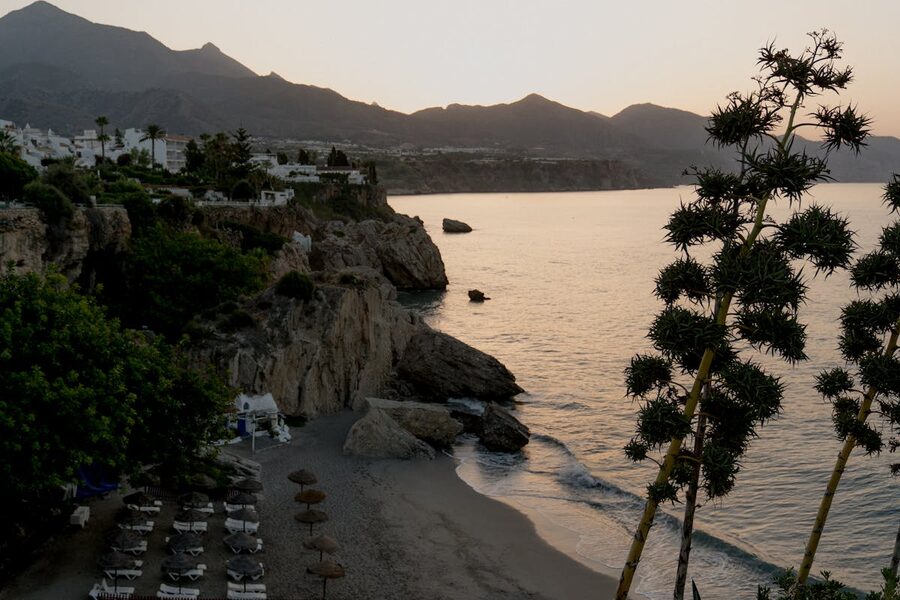
The beaches east of Nerja centre are worth exploring if you have time. Playa de Maro is the standout — a small crescent of sand backed by sugar cane fields, consistently rated one of the best beaches in Spain. Get there early because parking is limited to about 30 cars.
The Chillar River walk (Rio Chillar) starts from the north edge of Nerja and follows the riverbed upstream through a narrow gorge. You walk in the water for most of it — ankle to knee depth depending on the season — and the limestone walls close in around you as you go further. It takes about 3-4 hours return and requires no special gear beyond water shoes. On a hot day it is one of the best free activities in southern Spain.
For something different, the Acueducto del Aguila (Eagle Aqueduct) sits on the old road between Nerja and Maro. It is a 19th-century aqueduct spanning a deep ravine, and it is free to visit. Most people drive right past it. Stop for five minutes — it is more impressive than it sounds.
More Malaga Day Trip Ideas
If Nerja and Frigiliana left you wanting more of the Malaga province, there is no shortage of day trips heading in the other direction. Ronda is the big one — the clifftop town with the famous bridge is about 90 minutes west of Malaga and pairs well with a wine tasting stop in the Serrania hills. The Caminito del Rey is closer and shorter — a walkway pinned to the walls of a gorge that used to be one of the most dangerous paths in Spain before they rebuilt it. Back in Malaga itself, a catamaran cruise along the coast is a solid way to see the city from the water, especially at sunset. And the Picasso Museum is worth a morning if you want to understand why the city keeps calling itself the capital of the Costa del Sol.
This article contains affiliate links. If you book through our links, we earn a small commission at no extra cost to you. This helps us keep producing free travel guides.