
The 79 AD eruption of Vesuvius released 100,000 times the thermal energy of the Hiroshima bomb. Pyroclastic flows — superheated gas and rock travelling at 700km/h — killed the inhabitants of Pompeii and Herculaneum almost instantaneously. Not the slow ash fall you see in the movies. The real thing was faster than a speeding car and hotter than a furnace.
And today, you can stand on the crater rim of that same volcano, look down into it, and then walk the streets of the city it destroyed. All in a single day trip from Rome.
I’ve done this trip. The combination of Pompeii and Vesuvius together is genuinely different from visiting either one alone. Pompeii gives you the history; Vesuvius gives you the scale. You walk the Forum, you see the plaster casts, you read the graffiti — and then an hour later you’re standing 1,281 metres above sea level looking directly into the crater that caused all of it. That perspective changes the whole experience.
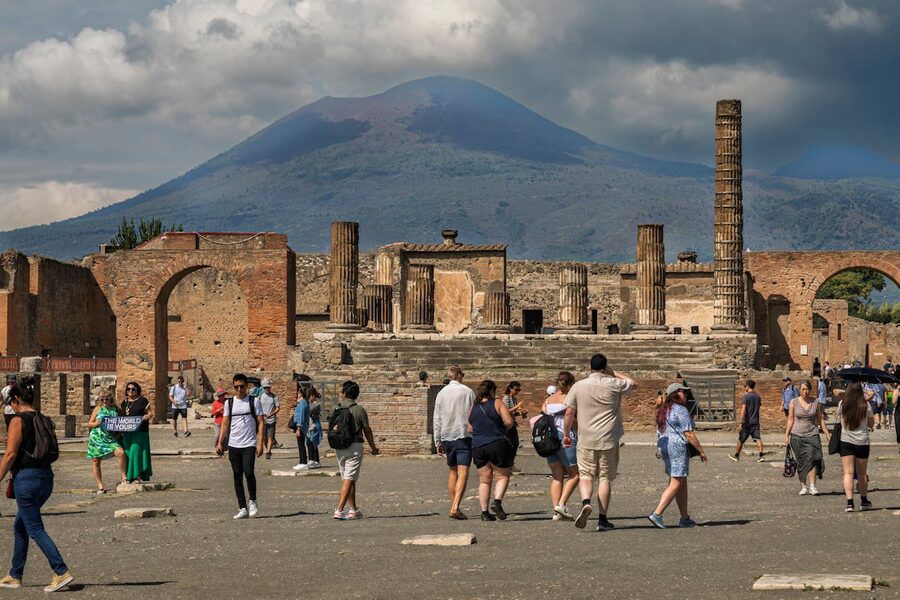
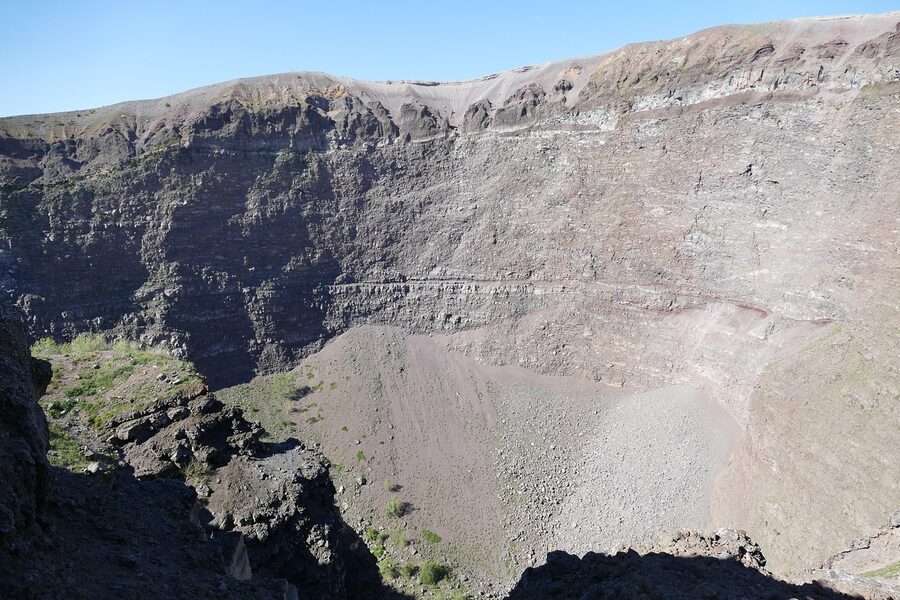
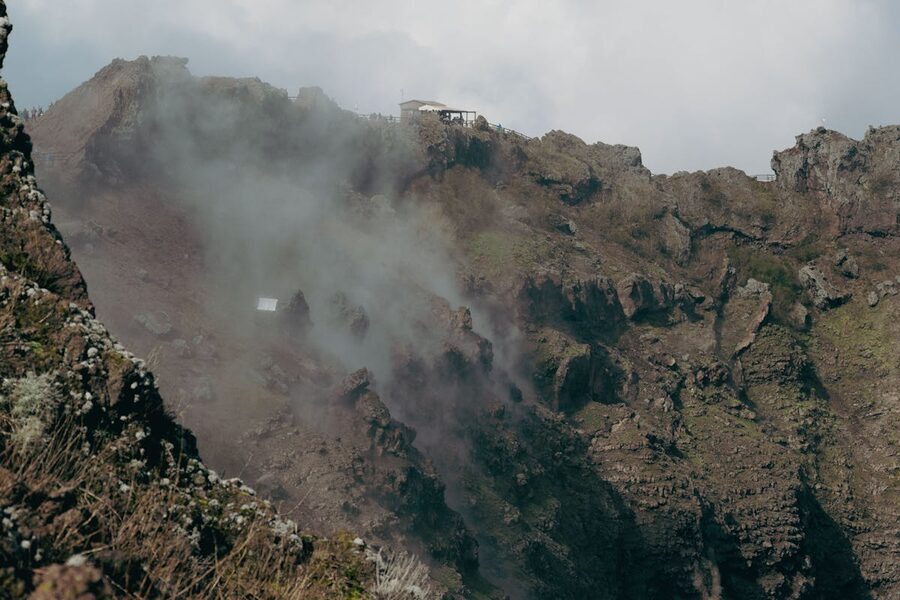
Best overall: Pompeii and Mount Vesuvius Day Trip from Rome with Pizza Lunch — $90.70. Full-day combo with guide, volcano hike, Pompeii tour, and authentic Neapolitan pizza lunch included. The one most people book and for good reason.
Best premium: Pompeii and Vesuvius Crater Experience with lunch — $171.90. Smaller group, more personal attention, and a proper sit-down lunch rather than quick pizza. Worth it if you want a less rushed pace.
Best for flexibility: Vesuvius Volcano Experience: from Naples, Pompeii and Rome — Self-paced Vesuvius hike without a guide breathing down your neck. Good if you want to linger at the crater rim and take your time.
- How the Day Trip Actually Works
- Vesuvius vs Pompeii-Only: Why the Combo Matters
- The Best Pompeii and Vesuvius Tours from Rome
- 1. Pompeii and Mount Vesuvius Day Trip from Rome with Pizza Lunch — .70
- 2. From Rome: Pompeii and Vesuvius Crater Experience with Lunch — 1.90
- 3. Vesuvius Volcano Experience: from Naples, Pompeii and Rome — Self-Paced
- The Vesuvius Crater Hike: What to Expect
- What You’ll See at Pompeii
- When to Go
- Getting There (If You’re Doing It Yourself)
- Tips That Will Actually Help
- What You’ll Actually See at the Crater
- The Eruption of 79 AD: Quick Context
- More Italy Guides
How the Day Trip Actually Works
Here’s the honest version of what a Pompeii + Vesuvius combo day looks like from Rome, because the tour descriptions on booking sites tend to gloss over the logistics.
You’re looking at a 12-hour day, minimum. Most tours depart Rome between 7:00 and 7:30 AM and return between 6:30 and 7:30 PM. The drive is about 2.5 hours each way on the A1 motorway, cutting through the Campania countryside past Cassino and down toward Naples.
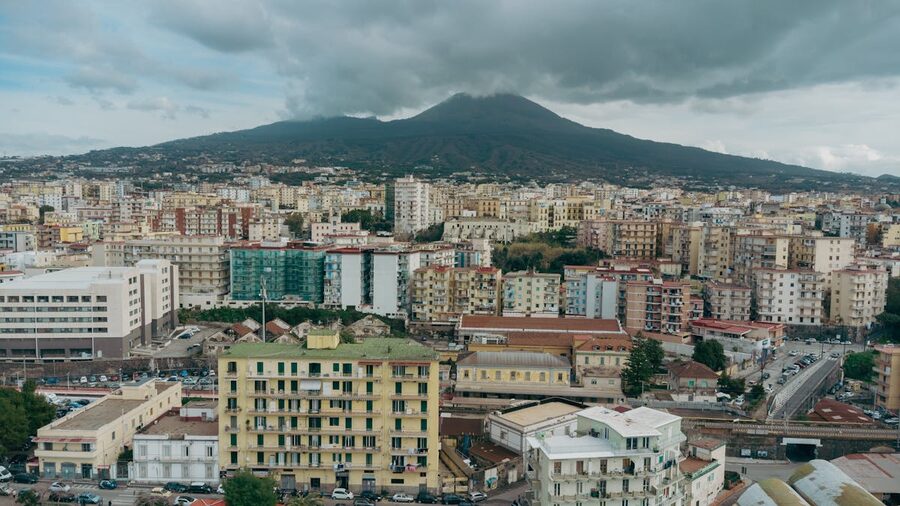
The typical itinerary runs in one of two orders:
Order A (most common): Vesuvius first, then Pompeii. Your bus drives up the winding road to the Vesuvius car park at 1,000 metres. From there, you hike about 30 minutes up a gravel trail to the crater rim at 1,281 metres. Spend 20-30 minutes at the top. Then back down, bus to Pompeii, pizza lunch, guided tour of the ruins.
Order B: Pompeii first, then Vesuvius. Some tours prefer this because the afternoon light is better for crater photos and the crowds at Pompeii are thinner in the morning.
Either way, expect about 2 hours at Pompeii and 1-1.5 hours at Vesuvius (including the hike). The rest is travel time and lunch.
Vesuvius vs Pompeii-Only: Why the Combo Matters
If you’re already visiting Pompeii from Rome, you might wonder whether adding Vesuvius is worth the extra cost and time. Short answer: yes, if you have the physical ability to do the hike.
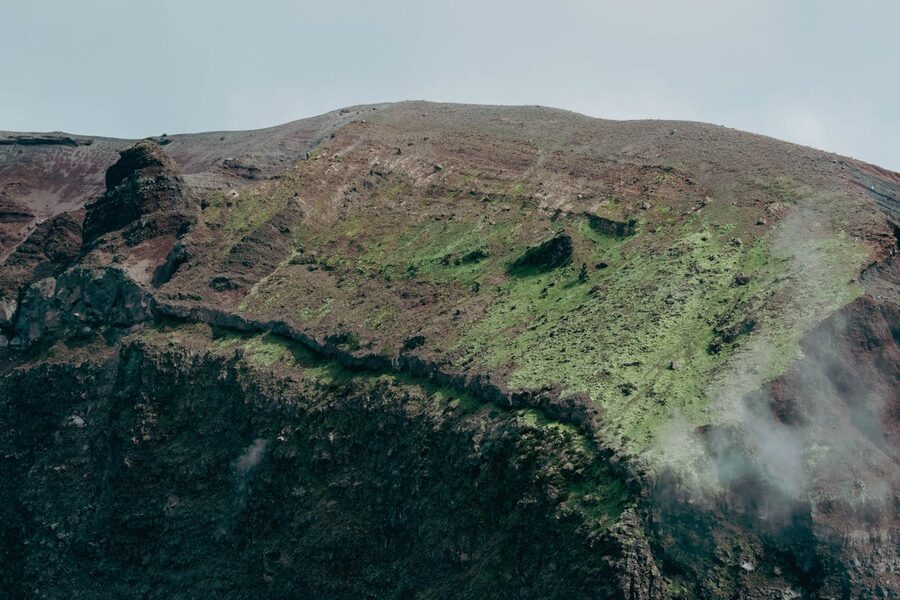
Pompeii alone is an archaeological site. Impressive, but intellectual. You’re looking at ruins and trying to imagine what happened. Adding Vesuvius turns it physical and visceral. You walk up the actual volcano. You see the crater. You smell the sulphur. And then when you look down from the rim and see the ruins of Pompeii spread out below, the whole story clicks in a way that no museum exhibit or documentary can replicate.
Vesuvius is the only active volcano on mainland Europe. The last eruption was in 1944 — during the Allied occupation of Italy, American B-25 bombers were destroyed on the ground at nearby Terzigno airfield. Volcanologists classify it among the most dangerous volcanoes in the world, with three million people living within its potential blast zone. The Italian government has an evacuation plan covering 700,000 people in the “red zone” — and that plan gets updated regularly because the threat is real, not theoretical.
A Pompeii-only trip costs less and takes less time. But the combo gives you something you can’t get separately: the cause and the effect in the same day, seen from both directions.
The Best Pompeii and Vesuvius Tours from Rome
I’ve narrowed it down to three tours worth booking. The market is flooded with options, but most are resold versions of the same two or three operators — these are the originals with the strongest track records.
1. Pompeii and Mount Vesuvius Day Trip from Rome with Pizza Lunch — $90.70
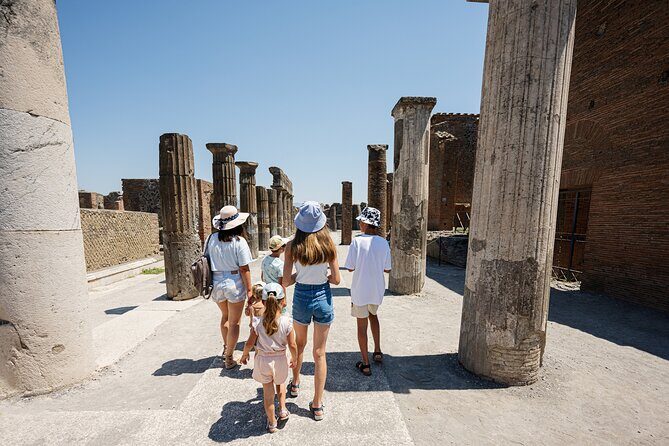
This is the tour most people end up on, and honestly it is hard to argue with the formula. For under $100 you get transport from central Rome, a guided tour of Pompeii with a licensed archaeologist, the Vesuvius crater hike, and an authentic Neapolitan pizza lunch at a local restaurant near the ruins.
The group size runs around 25-30 people on the bus, which sounds like a lot, but the guide splits you into smaller groups for the Pompeii walkthrough. The pizza lunch is surprisingly good — you’re in the region that invented pizza, after all, and the restaurants they use aren’t tourist traps. At $90.70 for a full 12-hour day, this is genuinely solid value. The Vesuvius entrance fee (currently around EUR 10) is sometimes included and sometimes not — check your specific departure date.
One thing to know: you’ll spend about 5 hours in buses. That’s unavoidable on any Rome day trip to this area. Bring headphones, a book, or just enjoy the Campania scenery rolling past.
2. From Rome: Pompeii and Vesuvius Crater Experience with Lunch — $171.90
This is the upgrade pick. At nearly double the price of the budget option, what you’re actually paying for is a smaller group and a more relaxed pace. Instead of a quick pizza stop, you get a proper sit-down lunch. The Pompeii guide goes deeper into the history because there are fewer people asking questions simultaneously.
If you’ve travelled enough to know that big bus tours make you miserable, $171.90 is reasonable for a full-day private experience. The guides on this tour tend to be archaeologists or history graduates rather than generalist tour operators — they’ll answer the weird, specific questions about Roman plumbing or volcanic geology that the big-group guides have to wave off to keep the schedule.
Best for couples, small families, or anyone who values not feeling rushed. Not the best choice if you’re a solo traveller on a budget — the first option gives you 90% of the experience at half the price.
3. Vesuvius Volcano Experience: from Naples, Pompeii and Rome — Self-Paced
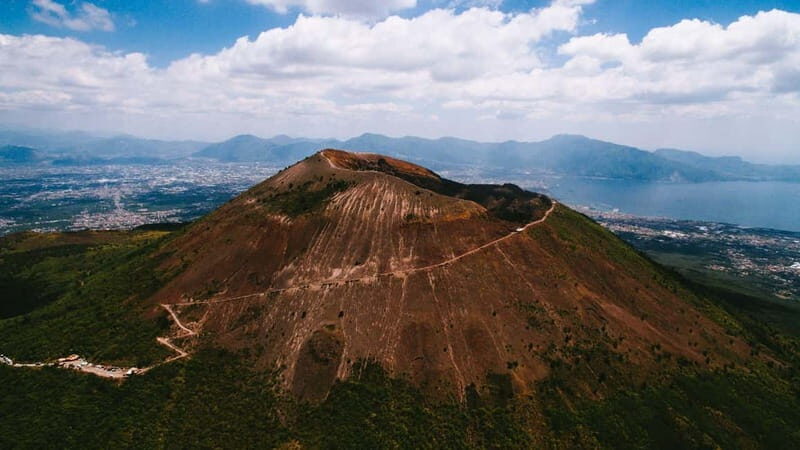
This one works differently from the other two. Instead of a full-day guided experience, you get transport to Vesuvius and time to explore the volcano at your own pace. No guide on the crater rim means you can linger as long as you want — if the view grabs you (it will), you’re not being whistled back to the bus after 20 minutes.
The reviews mention that the meeting point logistics are straightforward and the transport runs on time. You get about 2 hours to explore Vesuvius, which is generous compared to the 30-45 minutes most guided combo tours allow. The trade-off is that you won’t get the running commentary from a volcanologist, and you need to be comfortable navigating the crater trail on your own (it’s well-marked, but still).
This is the right choice if Vesuvius is your main draw and you’re happy to do Pompeii separately — or if you’ve already done the Pompeii from Naples trip and just want the volcano this time.
The Vesuvius Crater Hike: What to Expect
This is the part of the day trip that surprises people. The Vesuvius hike isn’t a gentle stroll — it’s a legitimate uphill walk on loose gravel and volcanic rock, and you need to take it seriously.
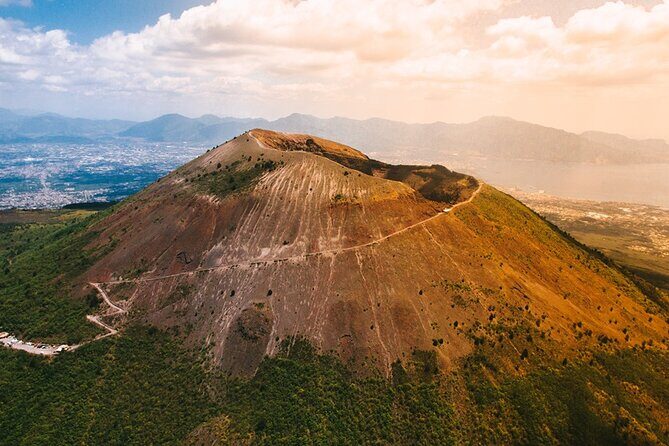
Your bus drops you at the car park around 1,000 metres elevation. From there, it’s a 30-minute walk up a zigzagging gravel path to the crater rim at 1,281 metres. The elevation gain is about 280 metres — not terrible, but on slippery volcanic scree it feels harder than the numbers suggest. Wear proper shoes. Trainers are fine. Sandals will ruin your day.
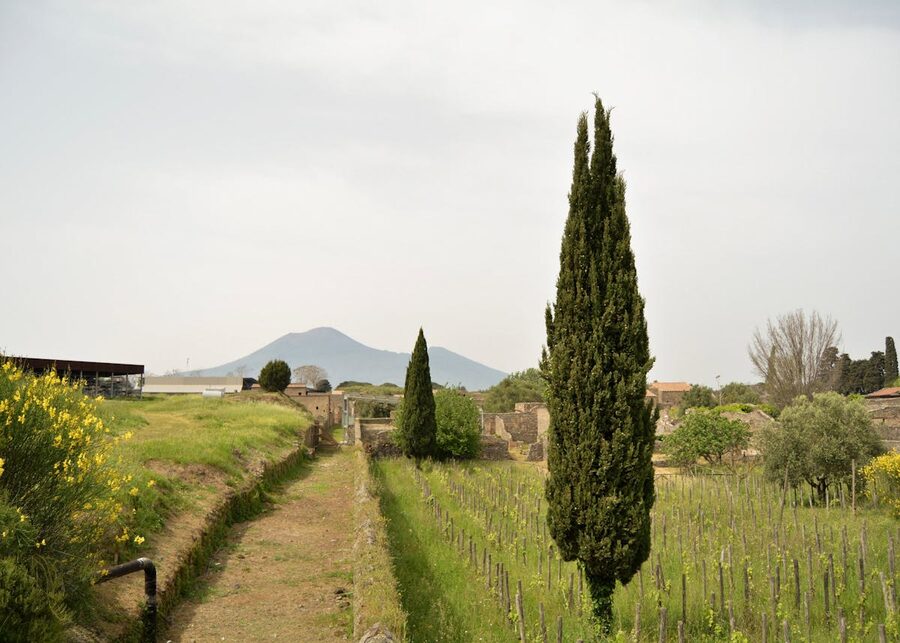
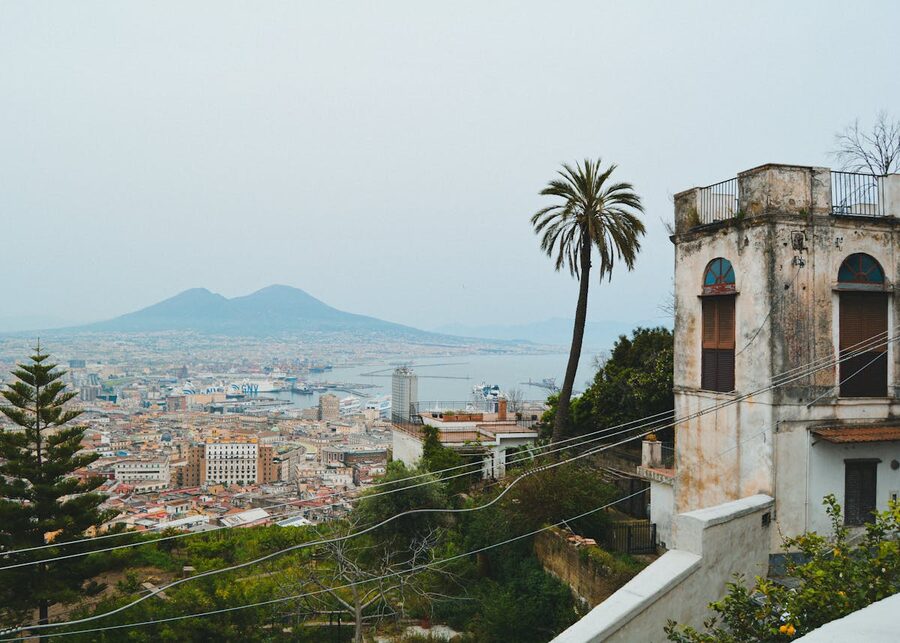
At the top, you walk along the crater rim for about 200 metres. The views are extraordinary on a clear day — the Bay of Naples, Capri, the Sorrento peninsula, and the ruins of Pompeii visible below. On a cloudy day, you might see fog and the inside of the crater and nothing else. That’s the gamble.
The entrance fee for the Vesuvius National Park is currently EUR 10 for adults (EUR 8 reduced). Some tour prices include this; many don’t. Tickets can be booked online through the official site, but if you’re on a tour they’ll handle it.
One practical tip: it gets windy at the crater rim. Bring a light jacket even in summer. And bring water — there’s a small kiosk at the top selling drinks at premium prices, but don’t count on it being open.
What You’ll See at Pompeii
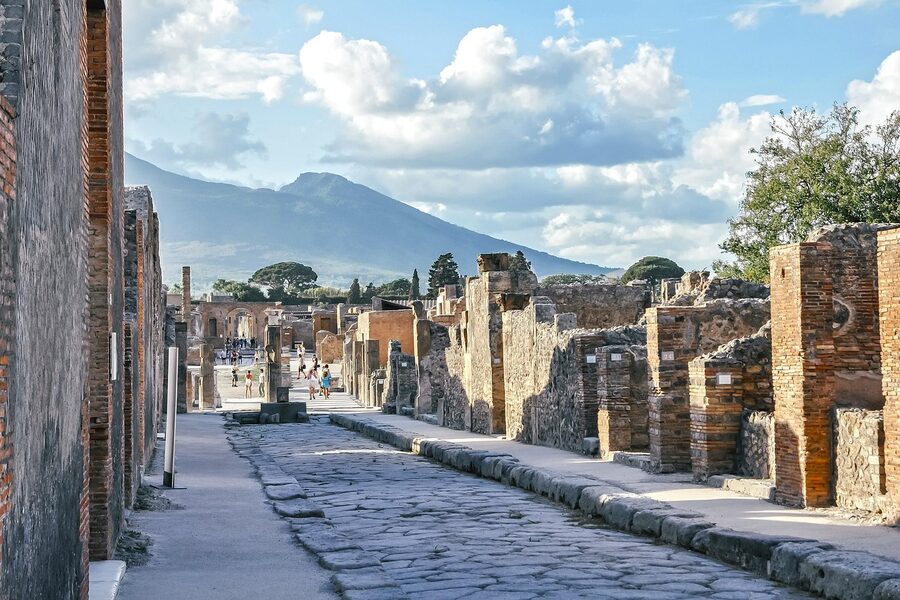
Two hours at Pompeii sounds short, and it is. The site covers 170 acres and even after 250 years of excavation, roughly a third of the city is still buried. But a good guide will hit the highlights efficiently, and you’ll come away with a solid understanding of how this place lived and died.
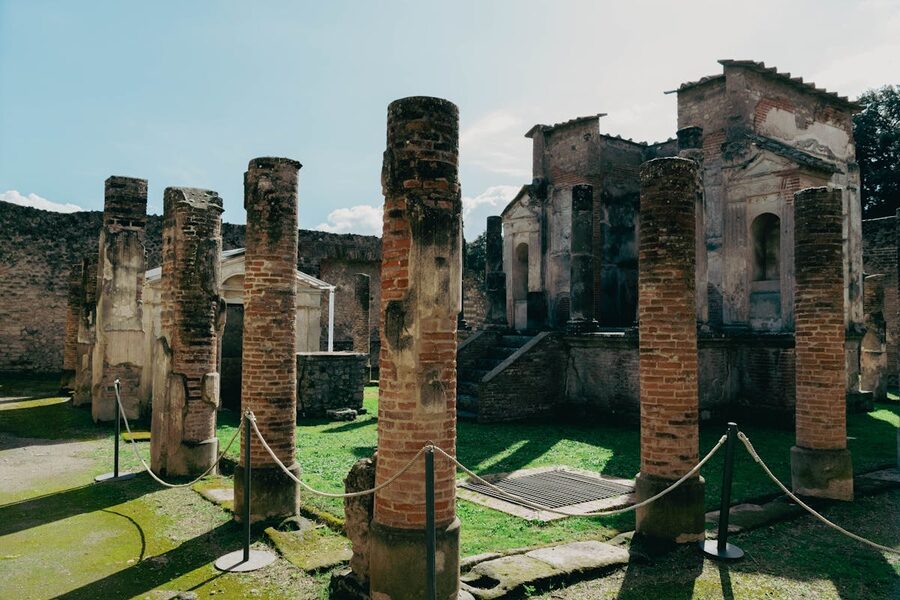
The standard tour route covers:
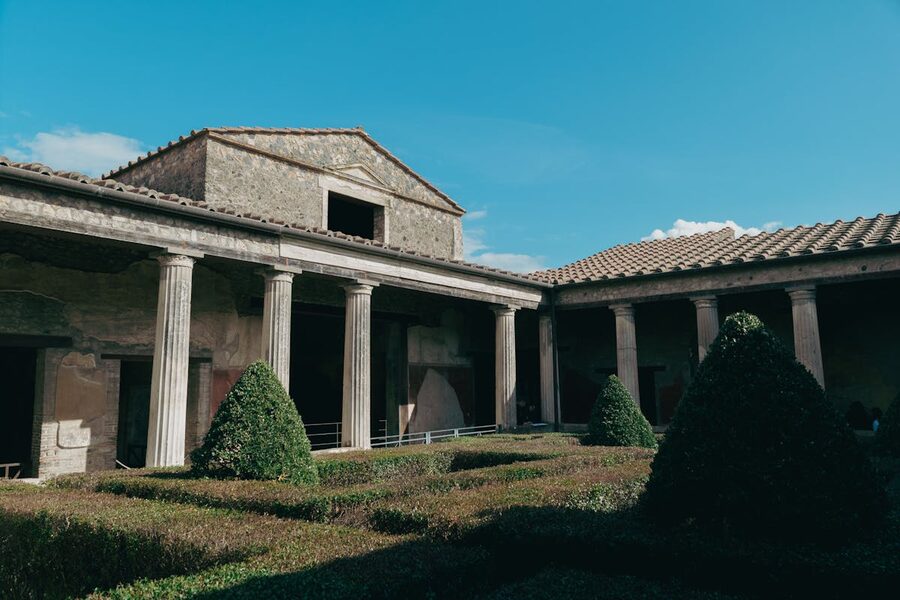
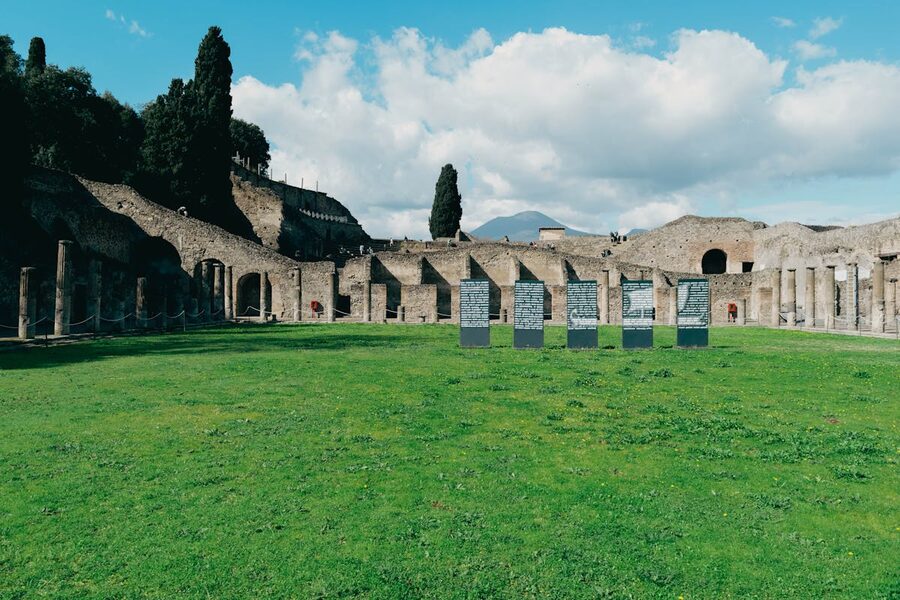
The Forum — the political and commercial centre. Your guide will start here because the views of Vesuvius looming behind the ruined temples set the tone for everything that follows.
The Stabian Baths — the best-preserved bathhouse, with intact stucco ceilings and the heating system visible underneath the floors. The Romans had underfloor heating 2,000 years ago. Let that sink in.
The House of the Faun — one of the largest private homes in Pompeii, covering an entire city block. The famous Alexander Mosaic was found here (the original is in the Naples Archaeological Museum).
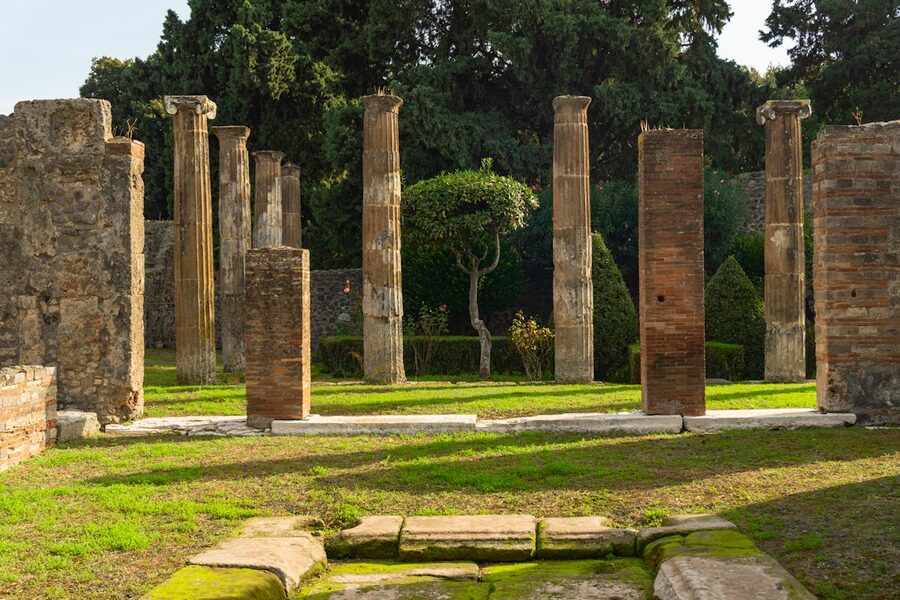
The Plaster Casts — the bodies of victims, preserved as hollow cavities in the hardened ash, filled with plaster by archaeologists. These are the images that stay with you. A dog straining against its chain. A mother shielding her child. A man covering his face. Difficult to look at, impossible to forget.
If your tour also visits Herculaneum (most don’t, but some premium ones do), that’s where you see the truly extraordinary preservation — organic materials like wood, food, and rope survived because the city was buried by pyroclastic material rather than ash.
When to Go
This matters more than you’d think. The wrong timing can turn a great experience into a sweaty, crowded slog.
Best months: April, May, September, October. Comfortable temperatures for the Vesuvius hike (which has zero shade), manageable crowds at Pompeii, and the best chance of clear skies at the crater rim.
Avoid if possible: July and August. Temperatures regularly hit 35-38C, the Vesuvius hike becomes genuinely unpleasant, and Pompeii is packed with summer tour groups. If you must go in summer, book a tour that does Vesuvius first thing in the morning before the heat peaks.
Winter: November through March is quieter and cooler, which is nice for Pompeii. But Vesuvius access can be restricted or closed due to weather — fog, rain, and occasionally snow at the summit. Check conditions before booking.
Time of day: Early morning departures mean you arrive before the biggest crowds. Tours leaving Rome at 7:00-7:30 AM typically reach Vesuvius or Pompeii by 9:30-10:00 AM, which is ideal.
Getting There (If You’re Doing It Yourself)
Most people book a tour from Rome because the logistics of doing both Pompeii and Vesuvius independently in one day from Rome are genuinely difficult. But it is possible.
By train: Take the Frecciarossa high-speed train from Roma Termini to Napoli Centrale (about 1 hour 10 minutes, EUR 20-45 depending on when you book). From Naples, take the Circumvesuviana commuter train to Pompeii Scavi station (35 minutes, about EUR 3). For Vesuvius, you need a separate bus from Pompeii or Ercolano station — the EAV bus runs from Ercolano to the Vesuvius car park (about EUR 8 return).
The problem: doing both in one day by public transport means a very early start and tight connections. The Circumvesuviana is notoriously unreliable — delays of 20-30 minutes are common and there’s no air conditioning in summer. You’ll spend more time waiting for connections than exploring.
My honest take: if you want both Pompeii and Vesuvius in one day from Rome, book a tour. The bus handles all the logistics, you don’t waste time on connections, and the cost difference once you factor in train tickets + bus fares + Vesuvius shuttle isn’t as big as you’d think. Save the independent approach for when you’re based in Naples and have more flexibility.
Tips That Will Actually Help
Pack lunch provisions. The included pizza lunch on most tours is fine, but if you’re doing it independently, bring snacks. There’s a small cafe at the Pompeii entrance and overpriced kiosks at the Vesuvius car park, but nothing substantial in between.
Vesuvius closes in bad weather. If there’s heavy rain or high winds forecast, the crater trail closes. Tours typically reroute to a winery visit on the slopes instead. Disappointing, but non-negotiable — the gravel path becomes a mudslide in rain.
Sunscreen and water are mandatory. There is almost no shade at Pompeii (the roofs are gone, obviously) and zero shade on the Vesuvius trail. In summer you’ll be exposed for 4-5 hours straight. People underestimate this and end up with heat exhaustion.
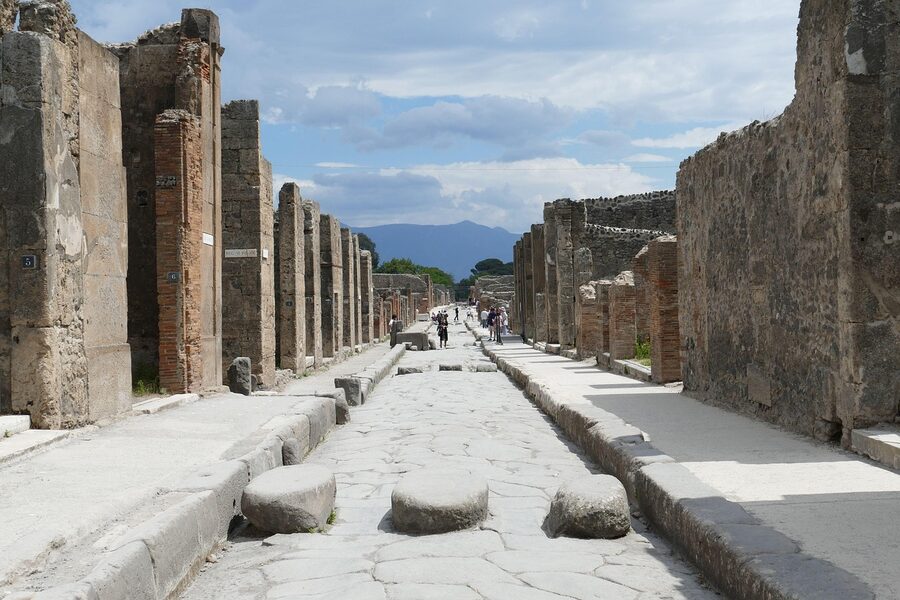
The stepping stones in Pompeii’s streets are slippery. They’re polished smooth by millions of feet and can be treacherous when wet. Watch your step, especially on the raised crossings.
Bring a light jacket for the crater. Even in summer, the wind at 1,281 metres can be surprisingly cold. I’ve seen people in t-shirts shivering at the rim while it was 30C at sea level.
Download offline maps. Mobile signal on Vesuvius is spotty and data can be slow around Pompeii due to the sheer number of travelers all trying to use the same cell towers.
What You’ll Actually See at the Crater
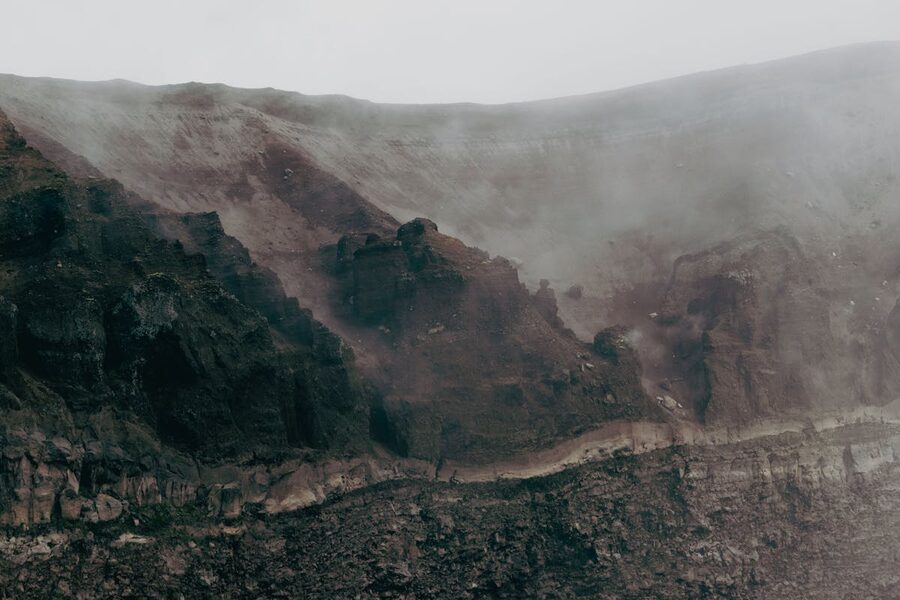
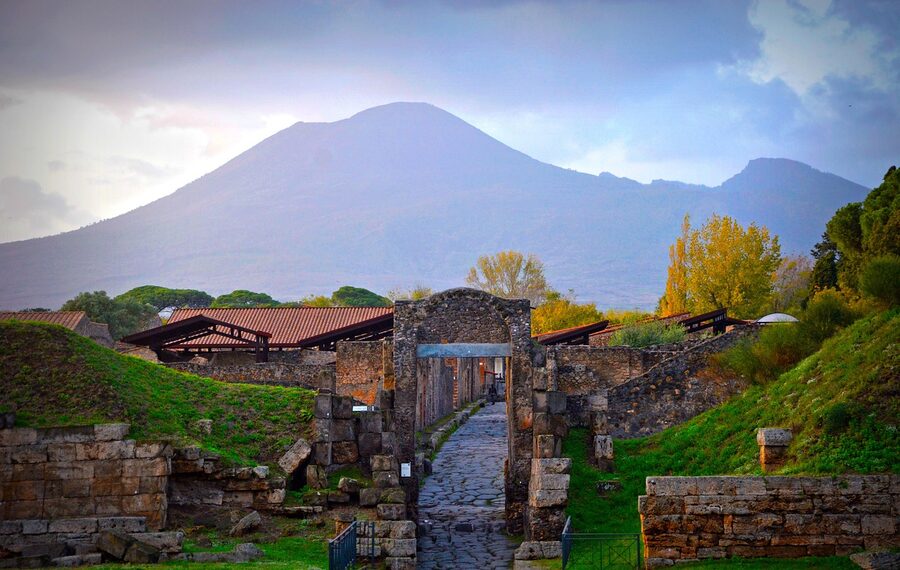
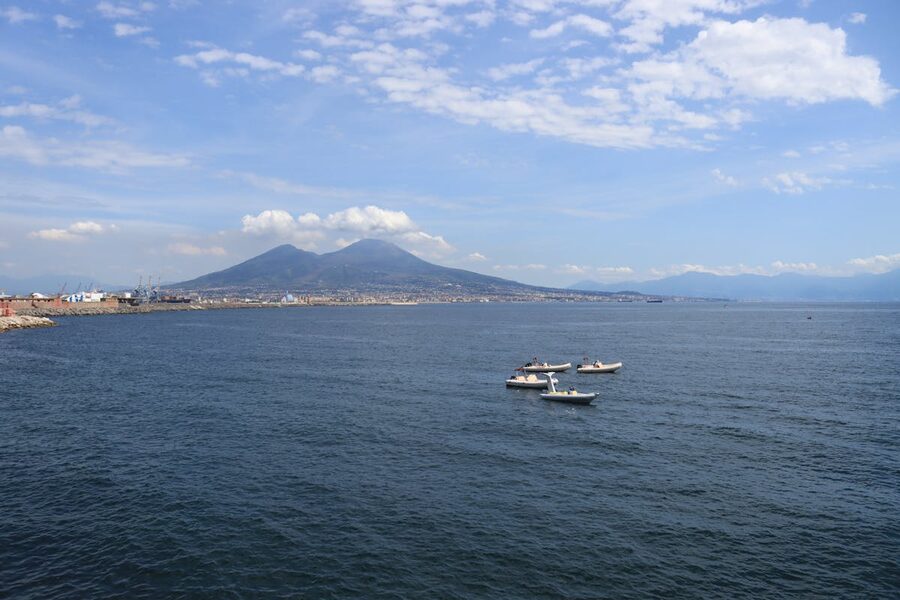
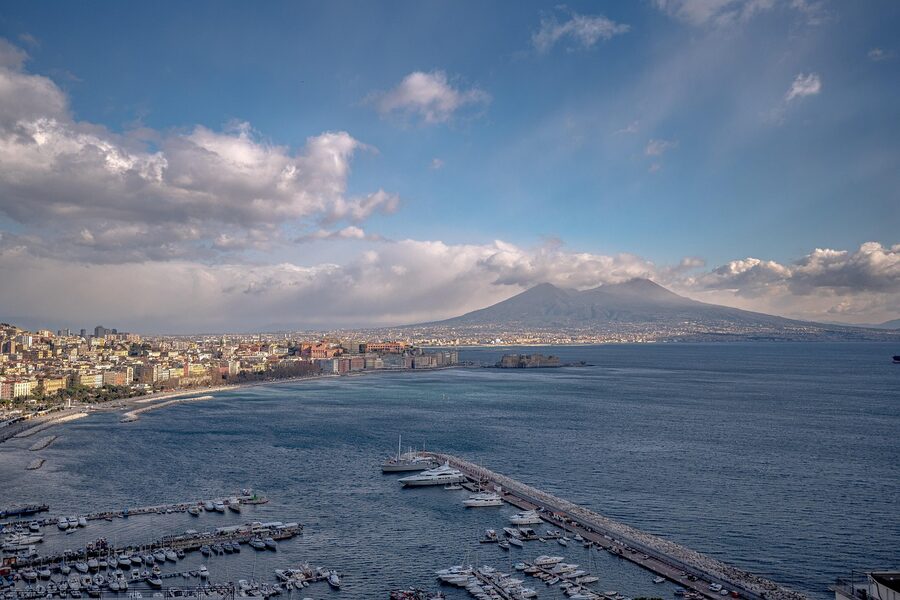
The crater of Vesuvius is about 300 metres across and roughly 200 metres deep. When you reach the rim, there’s a railing and a walkway that runs along part of the circumference. On clear days the views are genuinely spectacular — the entire Bay of Naples spreads out below, with Capri floating in the distance, the Sorrento peninsula curving away to the south, and Naples sprawling right up to the base of the mountain.
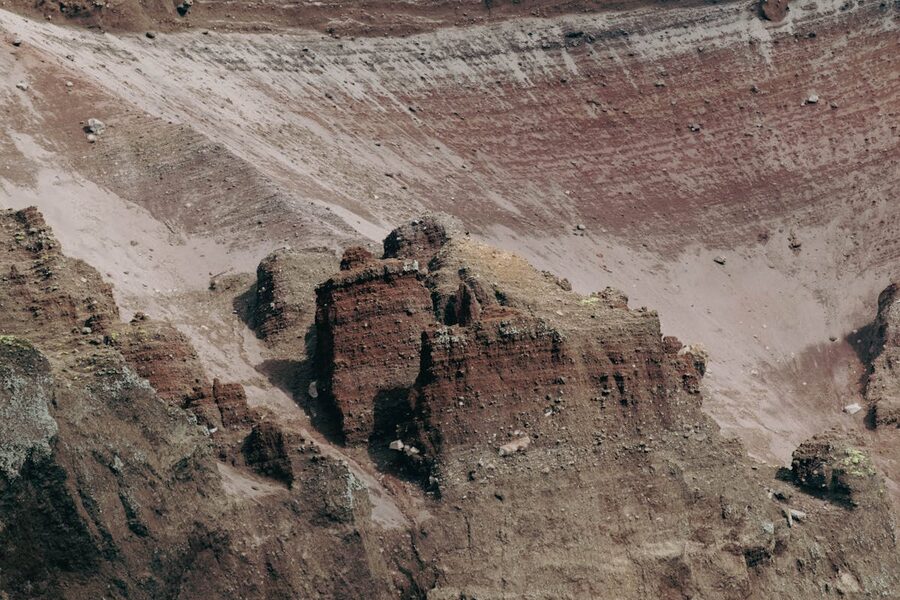
Inside the crater itself, you can see layers of volcanic rock in different colours — reds, blacks, yellows, and greys — each representing a different eruption over thousands of years. Steam vents (fumaroles) still release sulphurous gases from fissures in the rock. The ground is warm in places. The volcano is dormant, not dead, and the geological activity is a constant reminder.
If your tour includes a volcanologist guide at the crater (some do, especially the premium options), they’ll point out features you’d otherwise miss — the 1944 lava flow, the different layers of eruption deposits, and exactly where the 79 AD eruption vented from. It adds a lot to the experience.
The Eruption of 79 AD: Quick Context
You don’t need a history degree to appreciate Pompeii, but knowing a few key facts makes the ruins hit differently.
The eruption lasted about 18 hours. It started around midday on August 24, 79 AD with a massive column of pumice and ash shooting 33 kilometres into the sky. For the first 12 hours, it was “just” a rain of pumice stones — terrifying, but survivable if you sheltered indoors. Most of Pompeii’s population actually escaped during this phase.
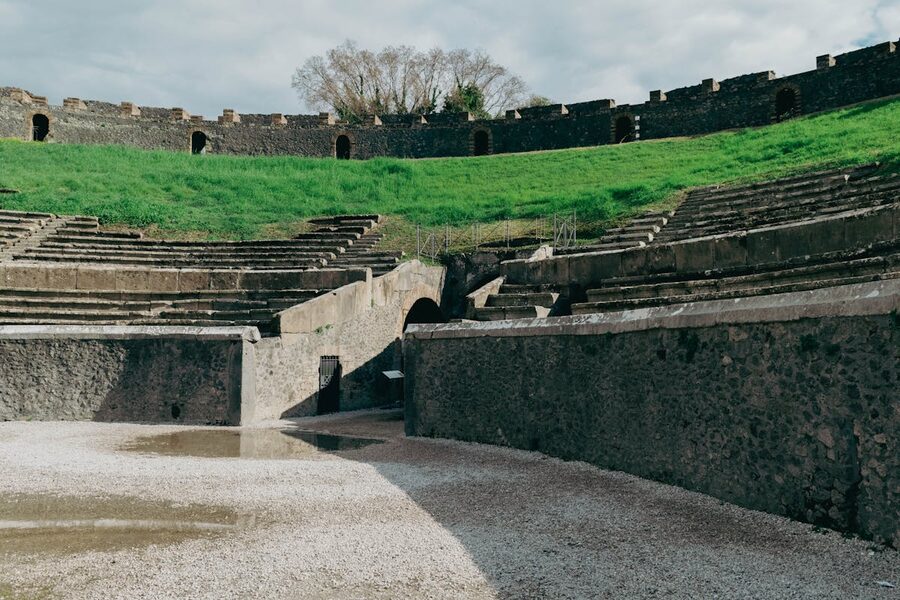
The killing blows came after midnight: six pyroclastic surges — waves of superheated gas and pulverized rock moving at up to 700km/h at temperatures exceeding 300C. These killed everyone who remained, instantly. The plaster casts you see at Pompeii are people caught by these surges — death was so rapid that they’re preserved in their final postures.
Nearby Herculaneum, which was closer to the volcano, was hit even harder but preserved even better. The pyroclastic material sealed organic materials — wood, cloth, food, rope, even scrolls — in an airtight layer. It’s the only site in the ancient world where such materials survived.
More Italy Guides
If you’re building a trip around this part of Italy, there’s a lot more within striking distance. Our Pompeii-only guide from Rome covers the option without the volcano if you’d rather spend more time in the ruins. From Naples, the Amalfi Coast and Sorrento and Positano are both doable as day trips — the coastal scenery is extraordinary. Naples Underground is worth a half-day if you’re spending a night in the city, and a pizza-making class in Naples is genuinely one of the best food experiences in Italy. For another ruins experience, Herculaneum is smaller, less crowded, and in many ways better preserved than Pompeii — most people skip it, which is exactly why you shouldn’t.
This article contains affiliate links to tour operators and booking platforms. If you book through these links, we earn a small commission at no extra cost to you. This helps us keep producing detailed travel guides. All opinions and recommendations are our own, based on independent research and real traveller experiences.