
Pompeii was forgotten for 1,700 years. Workers digging a water channel in 1748 hit the ruins by accident — and what they found underneath the ash changed how we understand the ancient world. Bread still in ovens. Wine still in jugs. Graffiti on the walls about who owed who money and who was sleeping with whose wife.
I’d visited Pompeii before from Naples, but doing it as a day trip from Rome is a completely different beast. You’re looking at 2.5 hours each way by coach, an 11-13 hour day, and the kind of fatigue that makes your hotel bed feel like a cloud when you finally get back. But here’s the thing — if your entire Italy trip is based in Rome and you don’t want to deal with trains and transfers, these guided day trips handle everything. And the guides turn what could be a confusing field of rubble into one of the most memorable days of your trip.
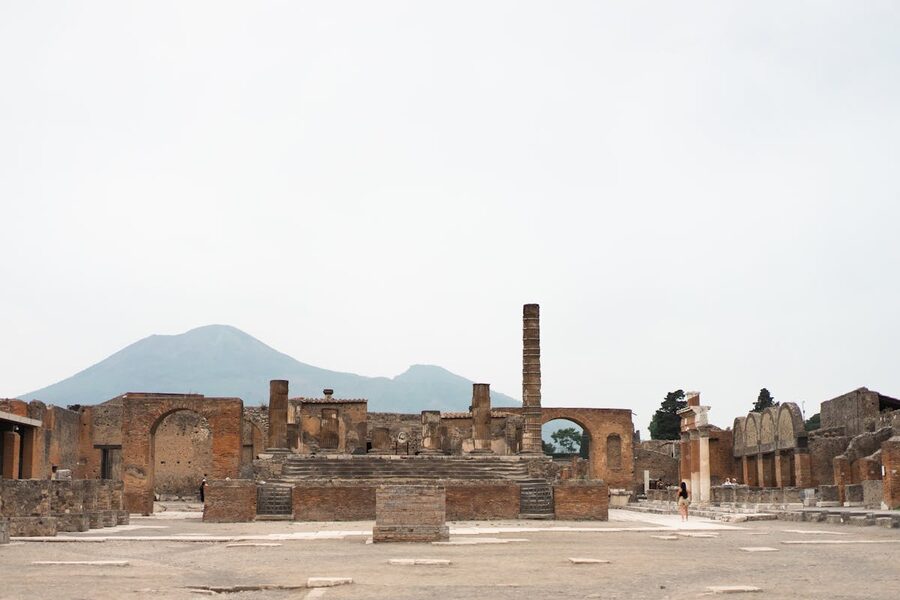
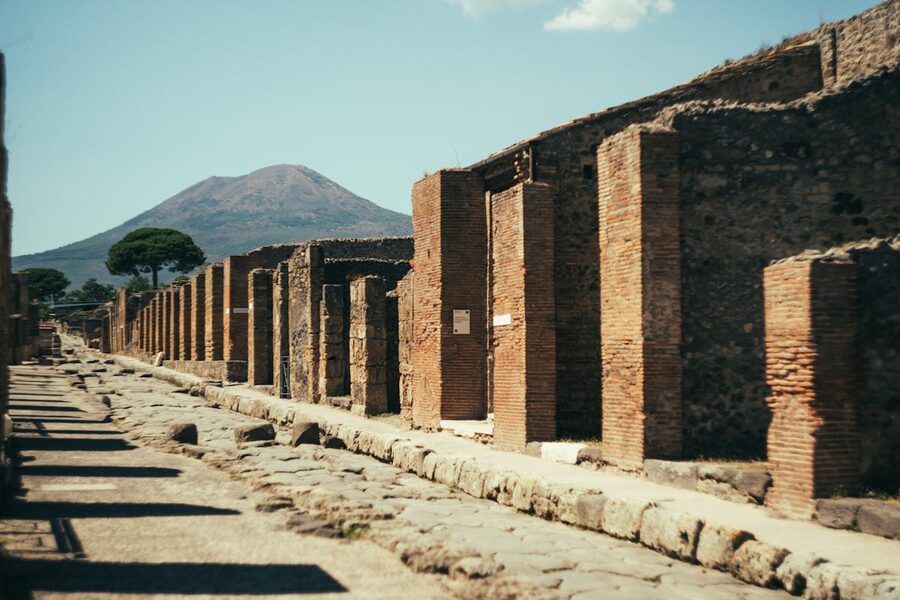
The eruption happened on August 24, 79 AD. Pliny the Younger watched the whole thing from across the Bay of Naples and wrote the only surviving eyewitness account — his letters were so detailed that scientists now call this type of eruption “Plinian.” His uncle, Pliny the Elder, died trying to rescue people by boat. That kind of story sticks with you when you’re standing in the actual streets where it happened.
Best overall: Pompeii & Vesuvius from Rome with Pizza Lunch — $90.70. The classic combo — Pompeii ruins plus a Vesuvius crater hike, and they throw in a real Neapolitan pizza lunch. Best value for the full experience.
Best for scenery: Pompeii, Amalfi Coast & Positano from Rome — $101.58. Swaps Vesuvius for a drive along the Amalfi Coast with a Positano stop. The coast road alone is worth it.
Best premium: Pompeii Tour with Positano & Amalfi Coast — $240.65. Small group, more personal attention, and a slower pace through Positano. If you don’t want to feel rushed.
- Why Visit Pompeii from Rome (Instead of Naples)
- Self-Guided Tickets vs. Guided Day Trips
- The Best Pompeii Day Trips from Rome
- 1. Pompeii and Mount Vesuvius Day Trip from Rome with Pizza Lunch — .70
- 2. Pompeii, Amalfi Coast and Positano Day Trip from Rome — 1.58
- 3. Pompeii Tour with Positano & Amalfi Coast Day Trip from Rome — 0.65
- When to Visit Pompeii
- How to Get to Pompeii from Rome
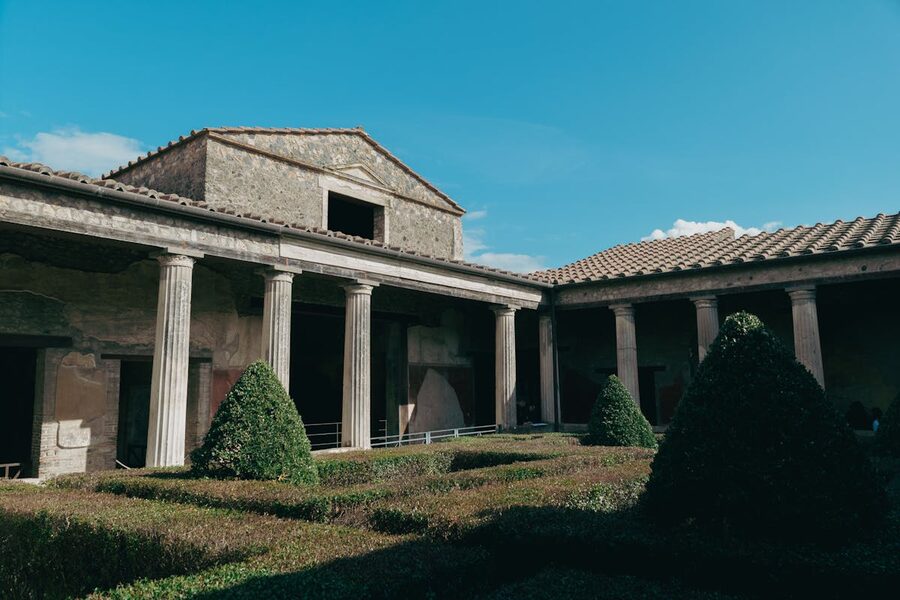
- What You’ll Actually See Inside Pompeii
- Tips That Will Save You Time (and Energy)
- Planning the Rest of Your Rome Trip
Why Visit Pompeii from Rome (Instead of Naples)
Let me be honest — if you have a spare day to get yourself to Naples first, visiting Pompeii from Naples is easier, cheaper, and shorter. Naples is only 40 minutes from Pompeii by train.
But most people visiting Italy don’t have that spare day. They’re based in Rome for 3-4 nights, maybe doing the Colosseum one day, the Vatican another, and they want to squeeze in Pompeii without relocating. That’s exactly what these day trips are built for.
The coaches leave Rome early (usually 7-7:30 AM from near Termini station) and get you back by 7-8 PM. Yes, it’s a long day. The drive south on the A1 autostrada takes about 2.5 hours each way, with a service station stop. But you’re on a comfortable bus, someone else is dealing with the traffic around Naples (which is genuinely chaotic), and when you arrive, your guide already has the skip-the-line tickets sorted.
The alternative — doing it independently from Rome — means navigating Trenitalia or Italo to Naples, then the Circumvesuviana commuter train to Pompeii Scavi station. It’s doable, but you’ll spend almost the same amount of time travelling and won’t have anyone explaining what you’re looking at.
Self-Guided Tickets vs. Guided Day Trips
If you’re coming from Rome, the guided day trip is almost always the better call. Here’s why.
Official tickets through the Pompeii archaeological site cost EUR 18 (about $19.50) for adults, free for EU under-18s, and EUR 2 for EU citizens aged 18-25. You can buy them on the Parco Archeologico di Pompei website. They get you through the gate, but that’s it — you’re on your own with a map and whatever you Googled on the bus.
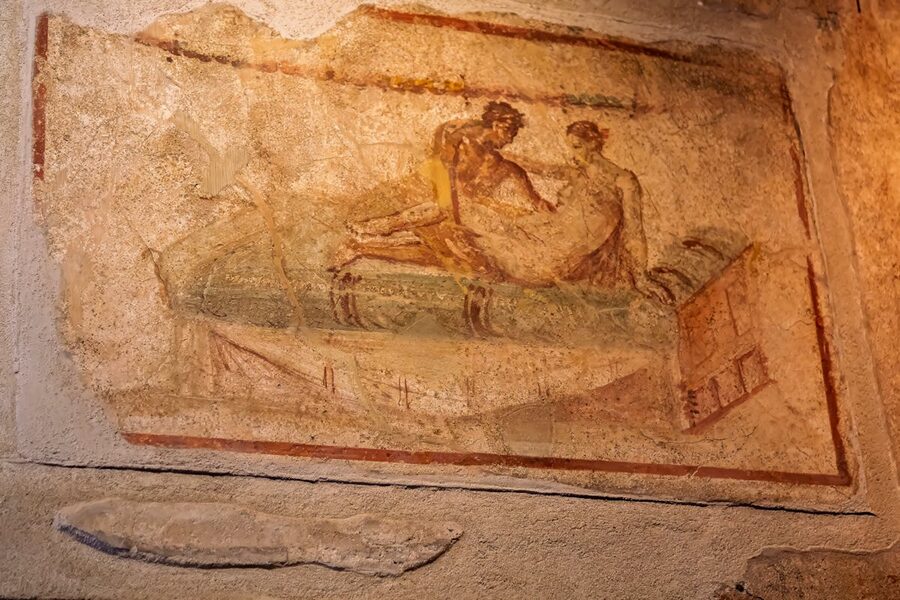
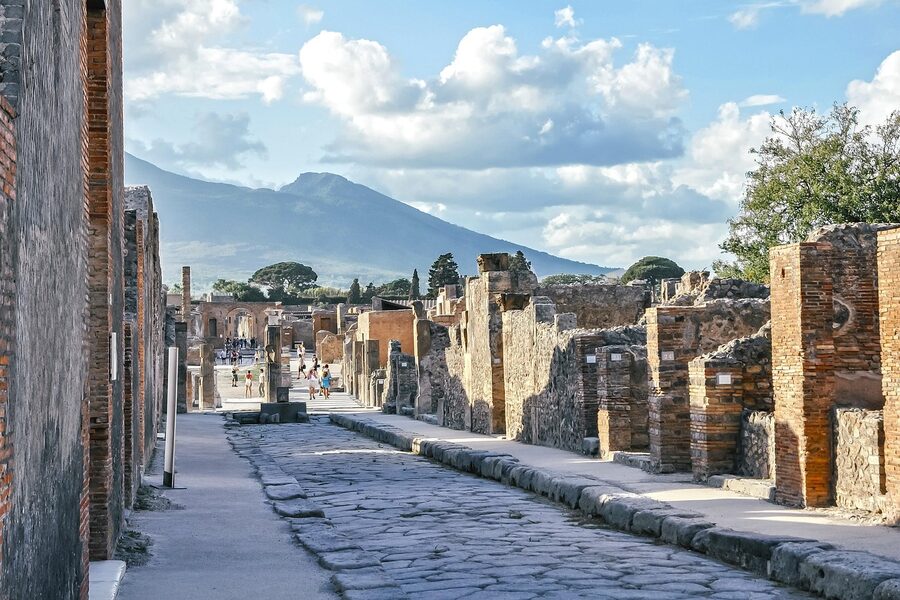
Guided day trips from Rome cost $90-$240 depending on what’s included, but that covers return transport, skip-the-line entry, a licensed guide who actually knows where the good stuff is, and usually lunch. The guide makes an enormous difference at Pompeii specifically. Without context, it’s a big field of old walls. With context, you’re seeing a bakery where they found carbonized loaves still in the oven, a bar with a marble counter and serving holes, and the Lupanar (the brothel) with its explicit frescoes — the single most visited room in the entire site.
The biggest thing guides add is the human stories. In 1863, archaeologist Giuseppe Fiorelli figured out that the cavities left by decomposed bodies in the hardened ash could be filled with plaster — creating haunting casts of people in their final moments. Covering their faces, holding children, trying to run. Your guide will take you to see some of these casts and explain the context. It’s the kind of thing that stays with you.
The Best Pompeii Day Trips from Rome
I’ve ranked these by what you actually get for the money, factoring in group size, included extras, and how the day is structured.
1. Pompeii and Mount Vesuvius Day Trip from Rome with Pizza Lunch — $90.70
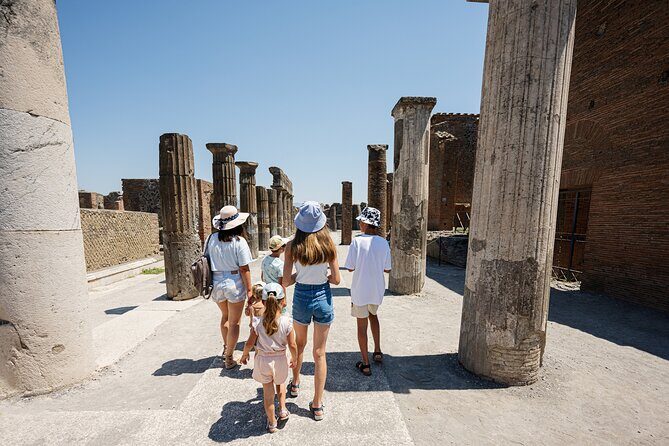
This is the day trip I recommend to most people. At $90.70 per person for a 12-hour day, you’re getting Pompeii’s ruins with a licensed guide, a drive up Mount Vesuvius with time to hike to the crater rim, and a proper Neapolitan pizza lunch in between. That last part matters more than it sounds — by the time you’ve walked Pompeii for 2+ hours in the sun, you’ll be grateful someone’s put a real meal in front of you.
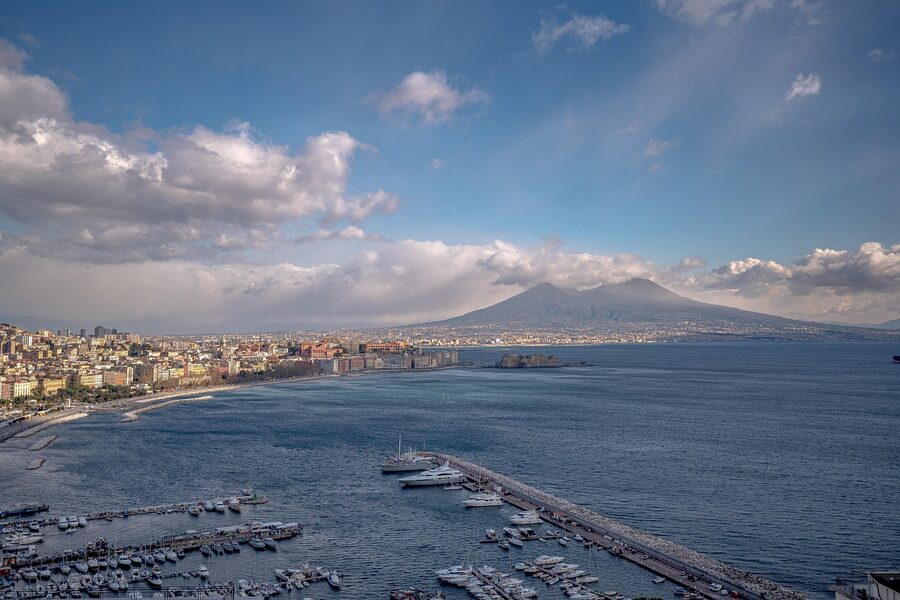
The Pompeii and Vesuvius combo with pizza lunch is the most popular Rome-to-Pompeii trip on the market for a reason. The Vesuvius crater walk adds something you don’t get on the Amalfi combo trips — standing at the rim of the volcano that buried the city you just walked through. The views from up there across the Bay of Naples are spectacular on a clear day.
2. Pompeii, Amalfi Coast and Positano Day Trip from Rome — $101.58
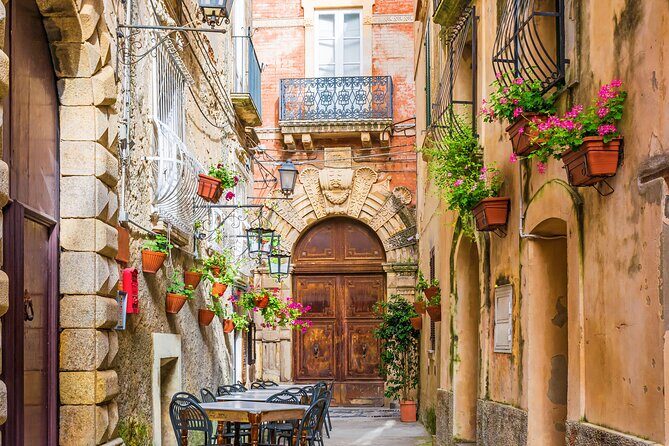
This is the one for people who want the ancient history AND the coastal scenery. At $101.58 per person for 13 hours, you get a guided tour of Pompeii plus a drive along the Amalfi Coast road with a stop in Positano. The Amalfi Coast drive is genuinely jaw-dropping — the road clings to cliffs above the sea and every turn opens up a new view of pastel-coloured villages and blue water.
The trade-off compared to the Vesuvius trip is clear: you swap the volcano crater hike for Positano and the coast road. If you’ve already done Vesuvius (or if you’re more interested in the Amalfi Coast than volcanoes), this is the better pick. The Pompeii and Amalfi combo from Rome is the second most booked option in this category. Positano is genuinely beautiful, but keep expectations realistic — you get about 45-60 minutes there, which is enough for a walk, some photos, and maybe a gelato, but not a leisurely afternoon.
3. Pompeii Tour with Positano & Amalfi Coast Day Trip from Rome — $240.65
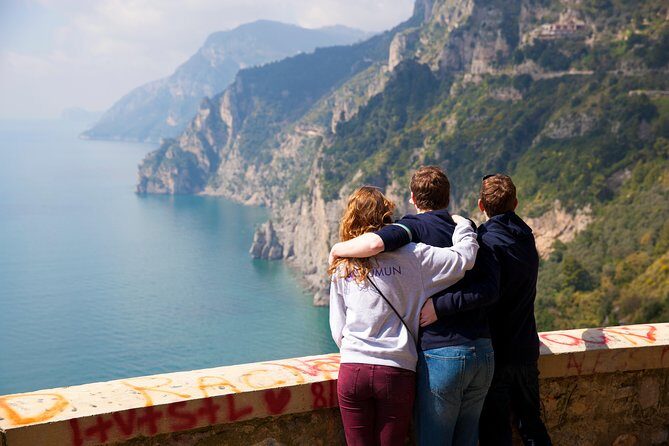
At $240.65 per person, this is the premium pick. The core itinerary is similar to option 2 — Pompeii plus Amalfi Coast drive and Positano — but the experience is different. Smaller groups mean more time with the guide, more flexibility to linger where you want, and a less rushed feel overall. If the price doesn’t faze you, you’ll enjoy the day more.
The Pompeii and Positano premium tour from Rome works well for couples or small groups who don’t want to feel like they’re on a school trip. The guide can adjust the pace, answer more questions, and take you to spots the bigger groups skip past. That said, it’s nearly three times the price of the Vesuvius combo — so unless you really value the smaller group, the $90 option covers the same ground at Pompeii with an equally good guide.
When to Visit Pompeii
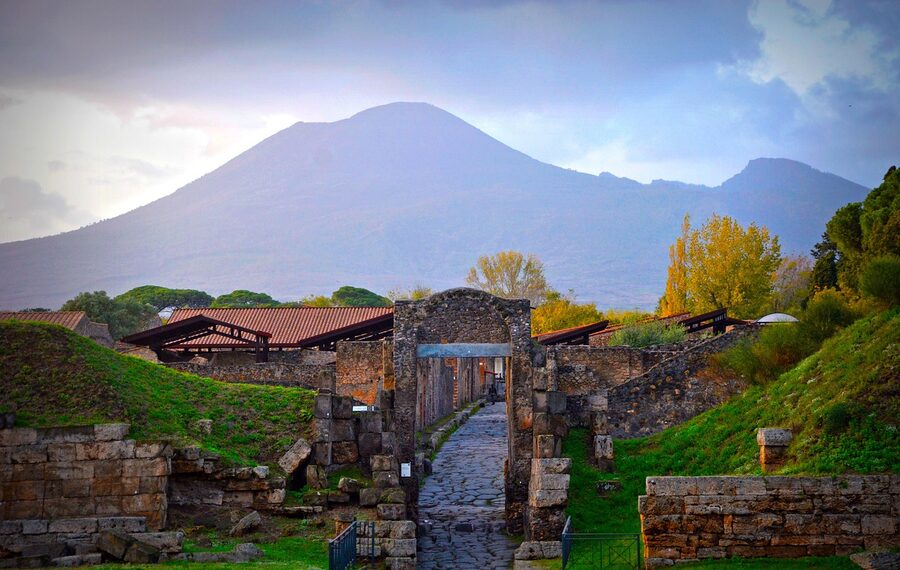
Pompeii is an open-air site with very little shade. That’s the single most important thing to factor into your planning.
Best months: April, May, early June, September, and October. Comfortable walking temperatures, manageable crowds, and the light is beautiful for photos — especially in the late afternoon when golden hour hits the columns of the Forum.
Worst months: July and August. Temperatures regularly hit 35-38°C (95-100°F) and there’s nowhere to escape the sun. I’ve seen people genuinely struggling by noon. If you must go in summer, pick the earliest morning departure from Rome.
Winter: November through March is quiet and cool. The site closes earlier (last entry at 3:30 PM vs 5:30 PM in summer), but fewer travelers means a more atmospheric experience. Some day trips from Rome don’t run in deep winter, so check availability.
Opening hours: 9 AM to 7 PM (April-October), 9 AM to 5 PM (November-March). Last entry is 90 minutes before closing. The guided tours handle timing, but it’s good to know.
How to Get to Pompeii from Rome
By guided day trip (recommended): Most tours depart from near Roma Termini station between 7:00 and 7:30 AM. The drive takes about 2.5 hours via the A1 autostrada southbound, with a rest stop. You’ll arrive at Pompeii around 10 AM, spend 2-2.5 hours inside, then do the second part of the trip (Vesuvius or Amalfi Coast depending on your tour). Return to Rome by 7-8 PM.
By train (independent): Take the Frecciarossa high-speed train from Roma Termini to Napoli Centrale (about 1 hour 10 minutes, EUR 25-50 depending on when you book). From Naples, switch to the Circumvesuviana commuter line towards Sorrento and get off at “Pompei Scavi – Villa dei Misteri” (about 35 minutes, EUR 3.20). The Circumvesuviana is… functional. It runs, it gets you there, but it’s usually packed and not air-conditioned. The entrance to Pompeii is right next to the station.
By car: About 240 km south on the A1 motorway. Parking at Pompeii costs EUR 5-8 for the day. Not recommended unless you’re combining it with a longer southern Italy road trip — driving around Naples is stressful and parking near the site fills up.
What You’ll Actually See Inside Pompeii
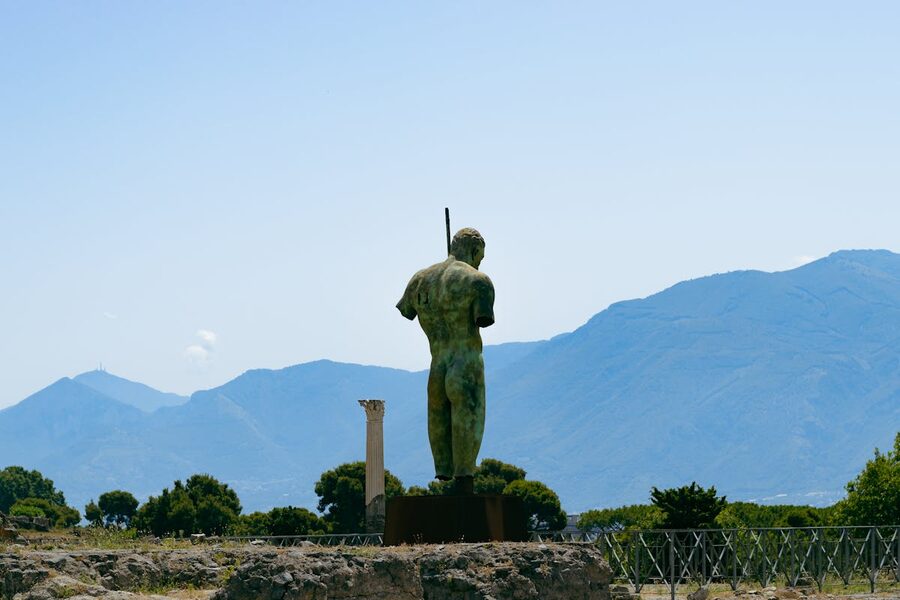
The excavated area covers about 66 hectares, but the guided tour focuses on the highlights in roughly 2-2.5 hours. Here’s what you’ll typically see.
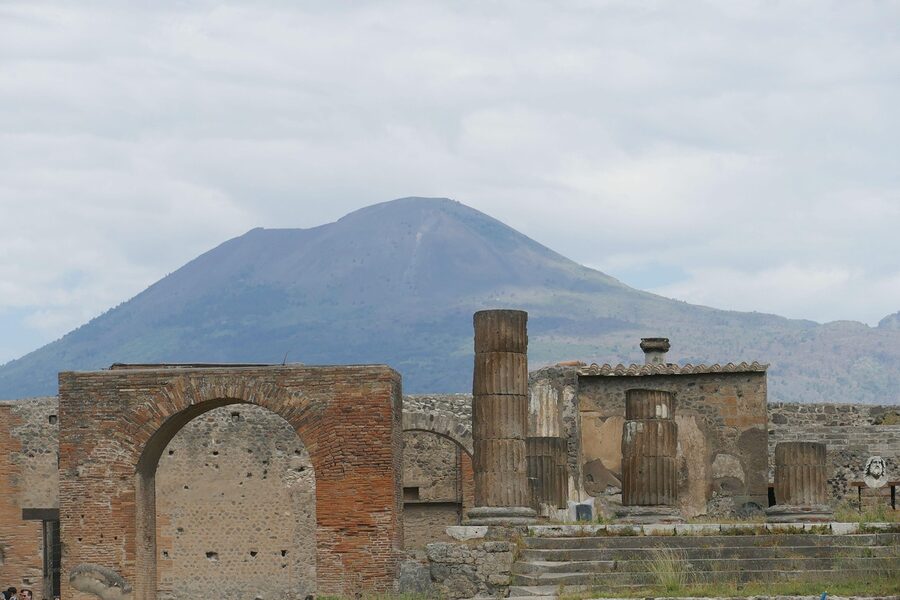
The Forum — the civic and commercial heart of the city. It’s a large open plaza surrounded by the ruins of temples, markets, and government buildings. On a clear day, Vesuvius frames the entire scene from the north end. This is where your guide will set the historical scene and explain how 20,000 people lived here before the eruption.
The Lupanar (Brothel) — the most visited single room in Pompeii, and for good reason. The explicit frescoes above each doorway served as a menu of sorts, and they’ve survived in remarkably frank detail. Your guide will explain the social context — this was a perfectly normal part of Roman daily life, not the scandalous curiosity that modern visitors sometimes treat it as.
The Thermopolium — essentially an ancient fast food counter. A marble counter with holes for terracotta pots that held different foods. The Romans ate out constantly — most apartments didn’t have kitchens.
The Garden of the Fugitives — this is where you’ll see some of the plaster casts that Fiorelli created in the 1860s. Thirteen bodies were found here, people who were trying to flee the eruption through one of the city gates. It’s sobering and quiet in a way that the rest of the site isn’t.
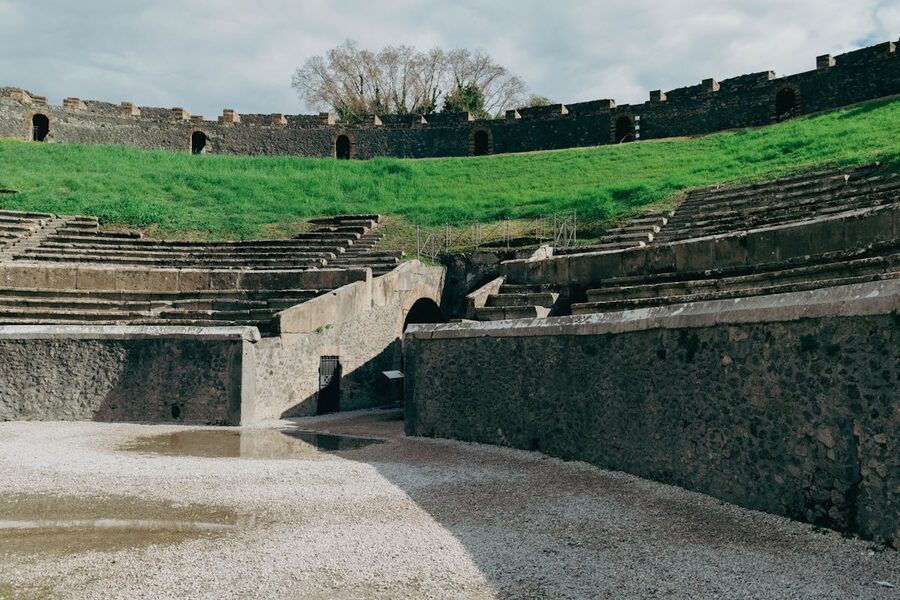
The Amphitheater — the oldest surviving stone amphitheater in the Roman world, built around 70 BC. It held about 20,000 spectators (the entire population of the city). It’s older than the Colosseum by over a century.
The House of the Faun — one of the largest and most elaborate private homes in Pompeii, famous for its mosaic floors (the originals are in the Naples Archaeological Museum, but the house itself gives you a sense of how the wealthy lived).
Tips That Will Save You Time (and Energy)
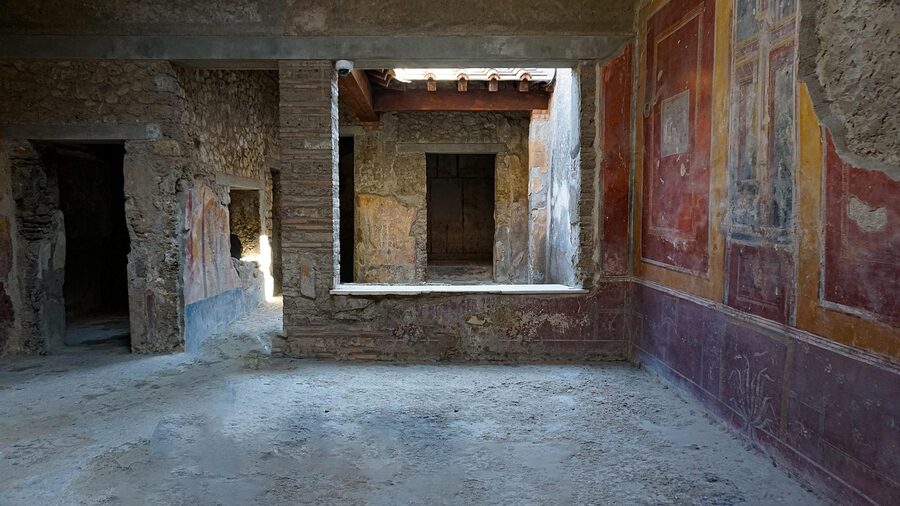
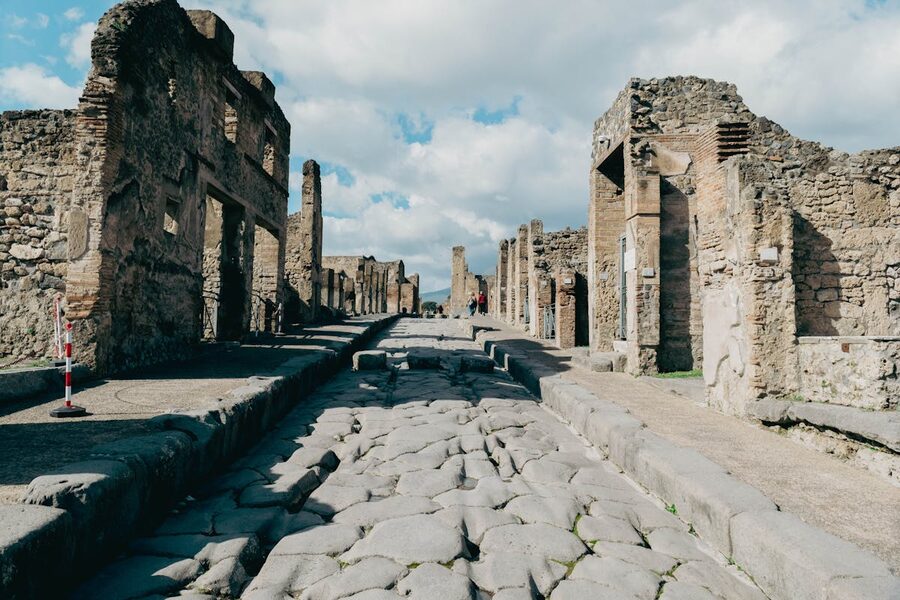
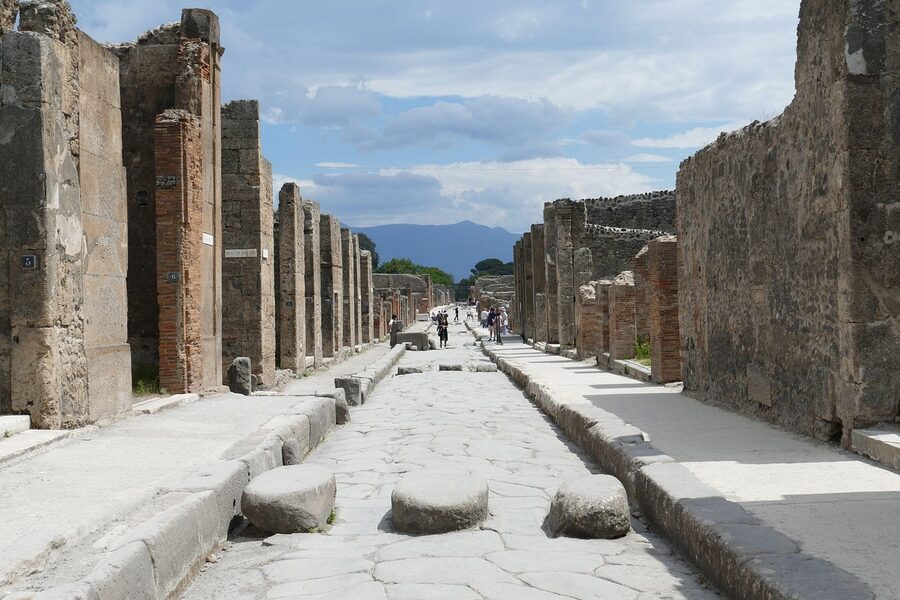
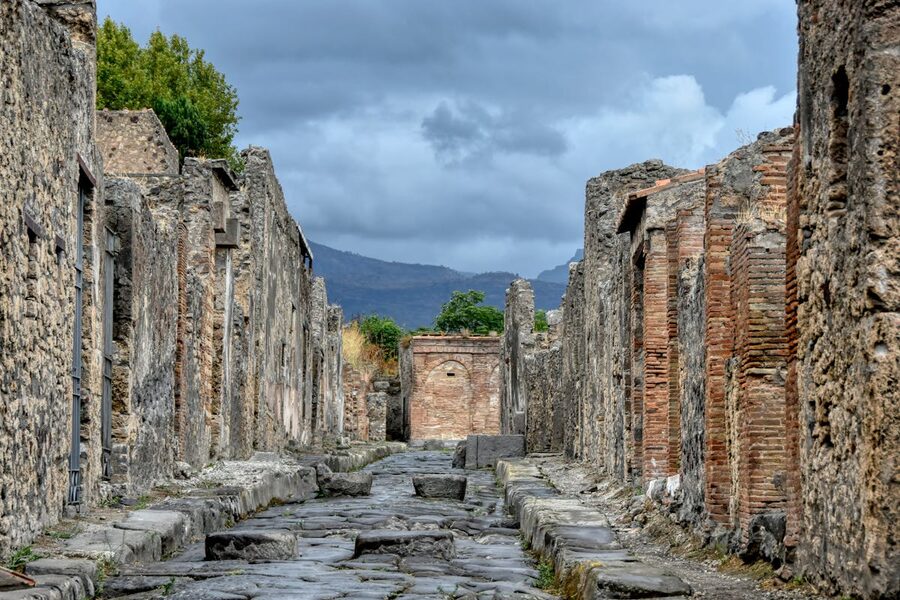
Wear proper shoes. The streets are original Roman stone — uneven, slippery when wet, and hard on your feet. Sandals are a bad idea. Proper trainers or walking shoes are essential.
Bring water and sun protection. There are a couple of cafes inside the site, but they’re overpriced and out of the way. Bring a water bottle and a hat. Sunscreen is non-negotiable from April to October.
Use the toilet at the rest stop. The facilities inside Pompeii are limited and the queues can be long, especially around midday.
Don’t try to see everything. Even with a full day, you won’t cover the entire excavated area. The guided tour hits the essential highlights. If you want to explore more, you’d need to come back independently — which is actually a great reason to spend a night in Naples.
Keep your bag small. Large bags and backpacks need to be checked at the entrance. A small day bag or crossbody is fine.
The audio guide at the entrance is worth it if you’re visiting independently. It’s about EUR 8 and gives context for the major points. But if you’re on a guided tour, you won’t need it — your guide covers the same ground and more.
Tipping the guide. Not mandatory in Italy, but EUR 5-10 per person is appreciated if they did a good job. Most Pompeii guides are passionate archaeologists or historians, and the good ones genuinely transform the visit.

Planning the Rest of Your Rome Trip
If you’re spending a few days in Rome, you’ll want to sort your Colosseum tickets and Vatican Museum entry before they sell out — both have skip-the-line options that save serious time. A Rome walking tour is a good way to get your bearings on the first day and discover corners you’d walk right past on your own. And if Pompeii from Rome has you wanting more of southern Italy, our Pompeii from Naples guide covers the shorter, cheaper route for a future trip — plus the Amalfi Coast from Naples is a completely different experience when you have a full day for it.
This article contains affiliate links. If you book through our links, we earn a small commission at no extra cost to you. This helps us keep producing these guides.