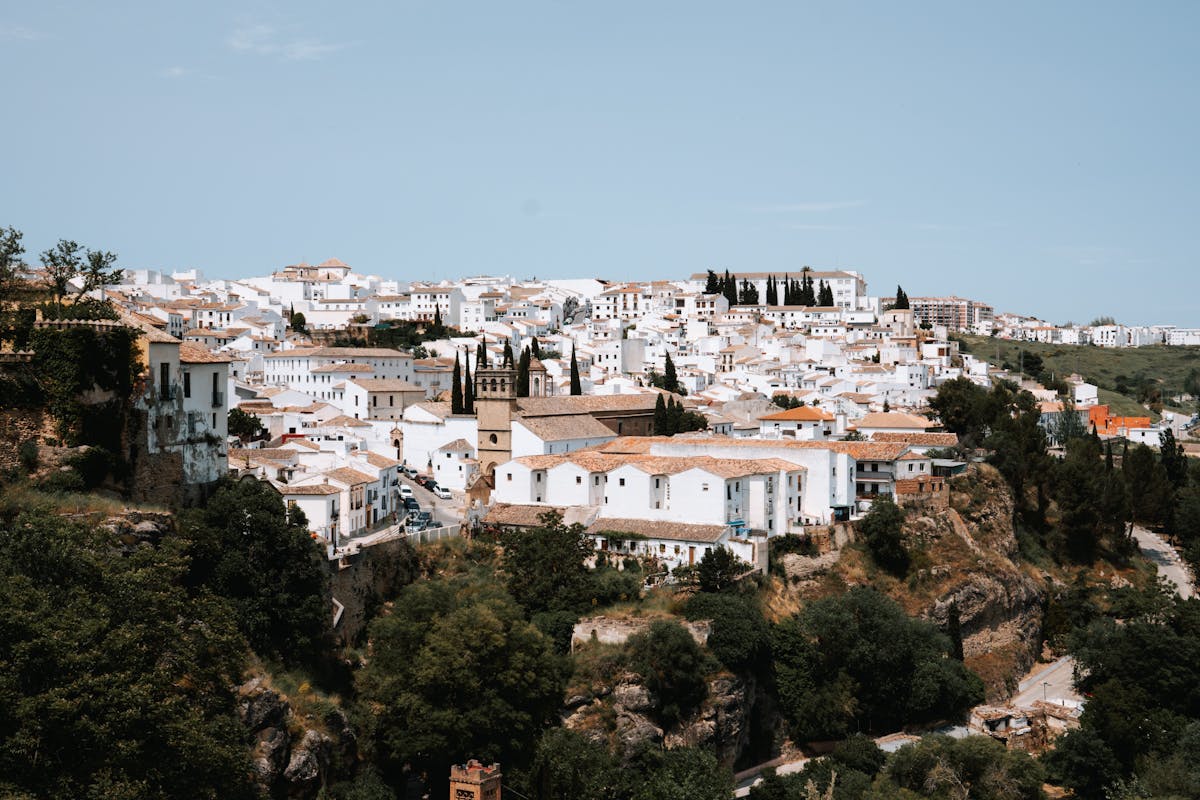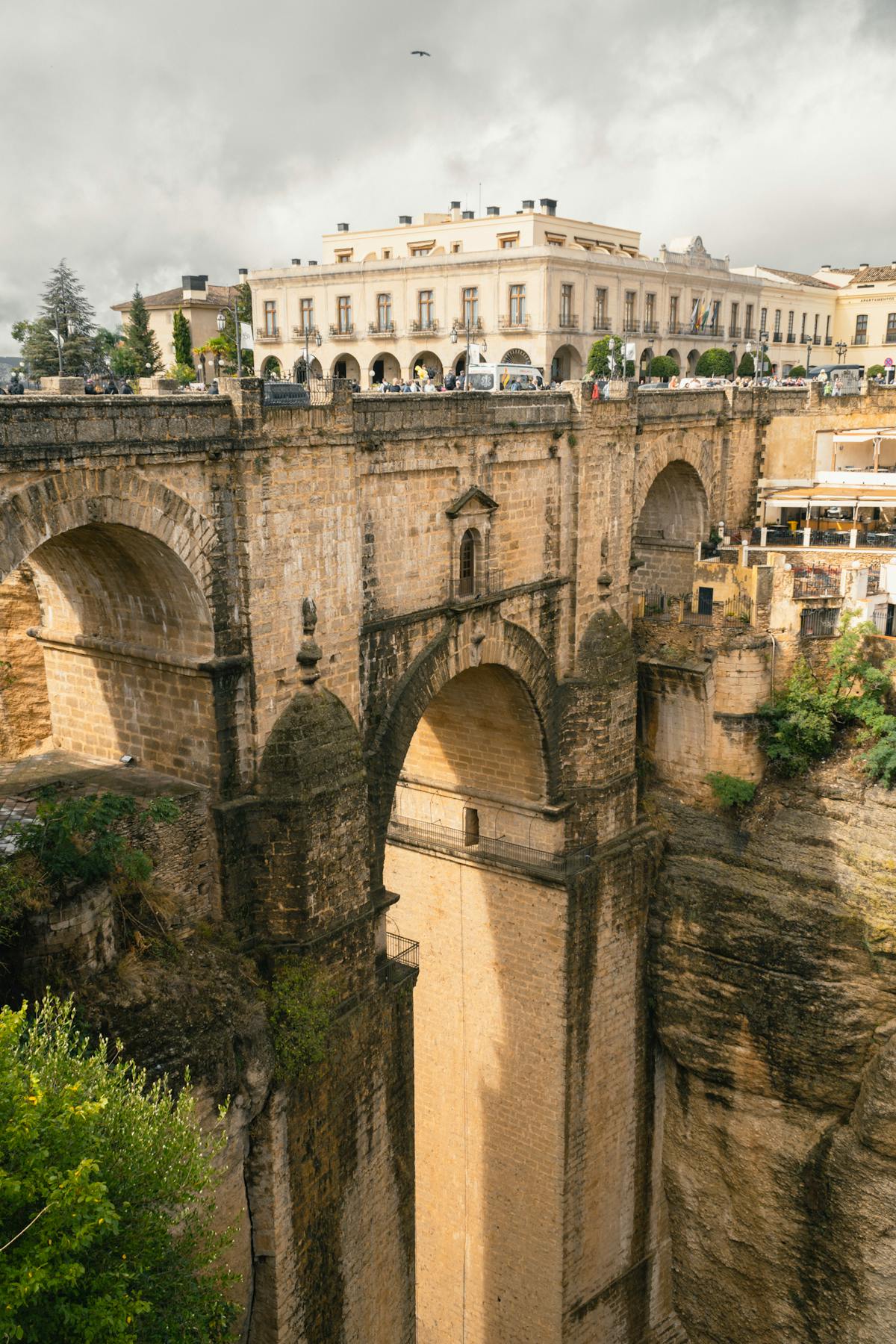
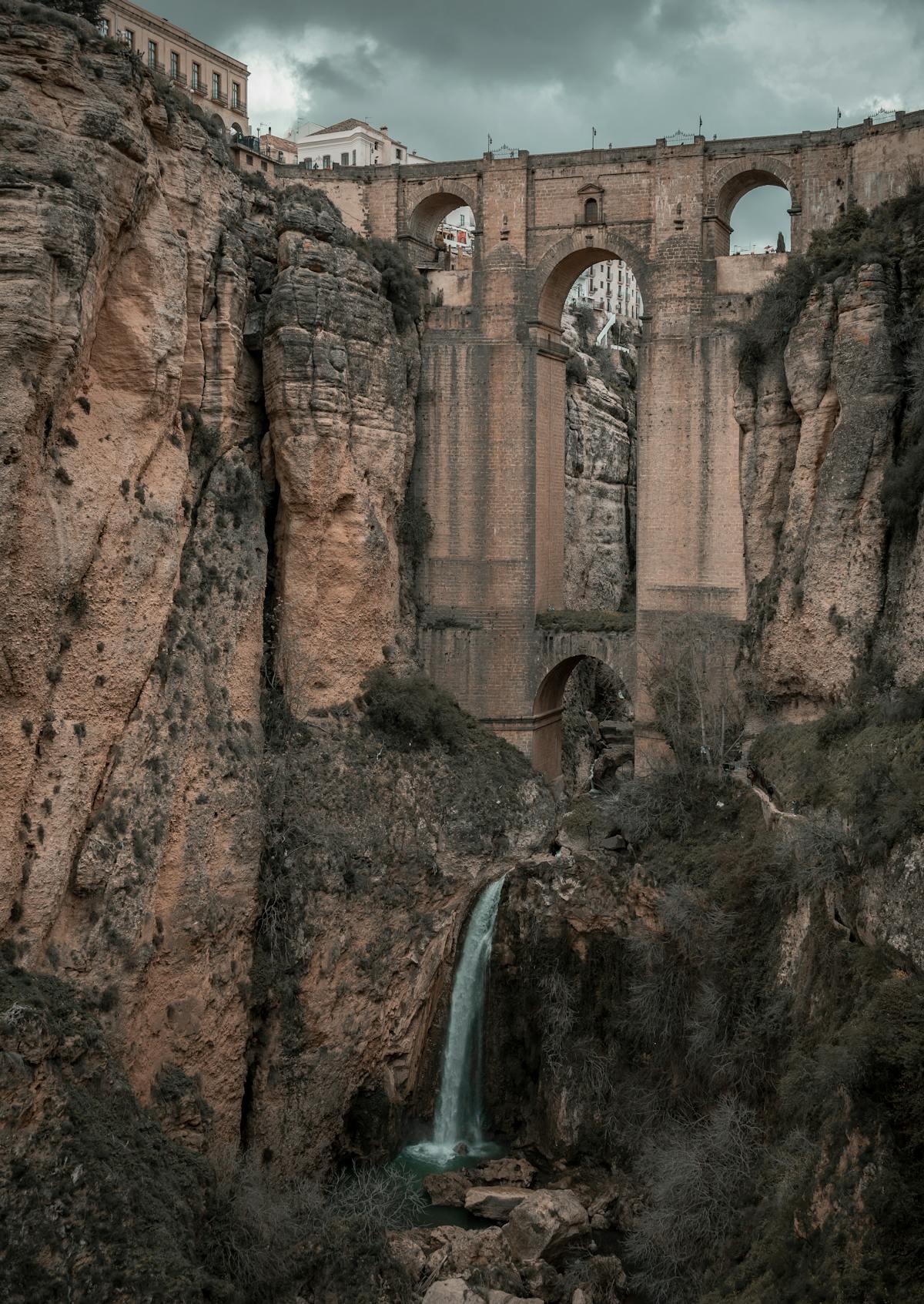
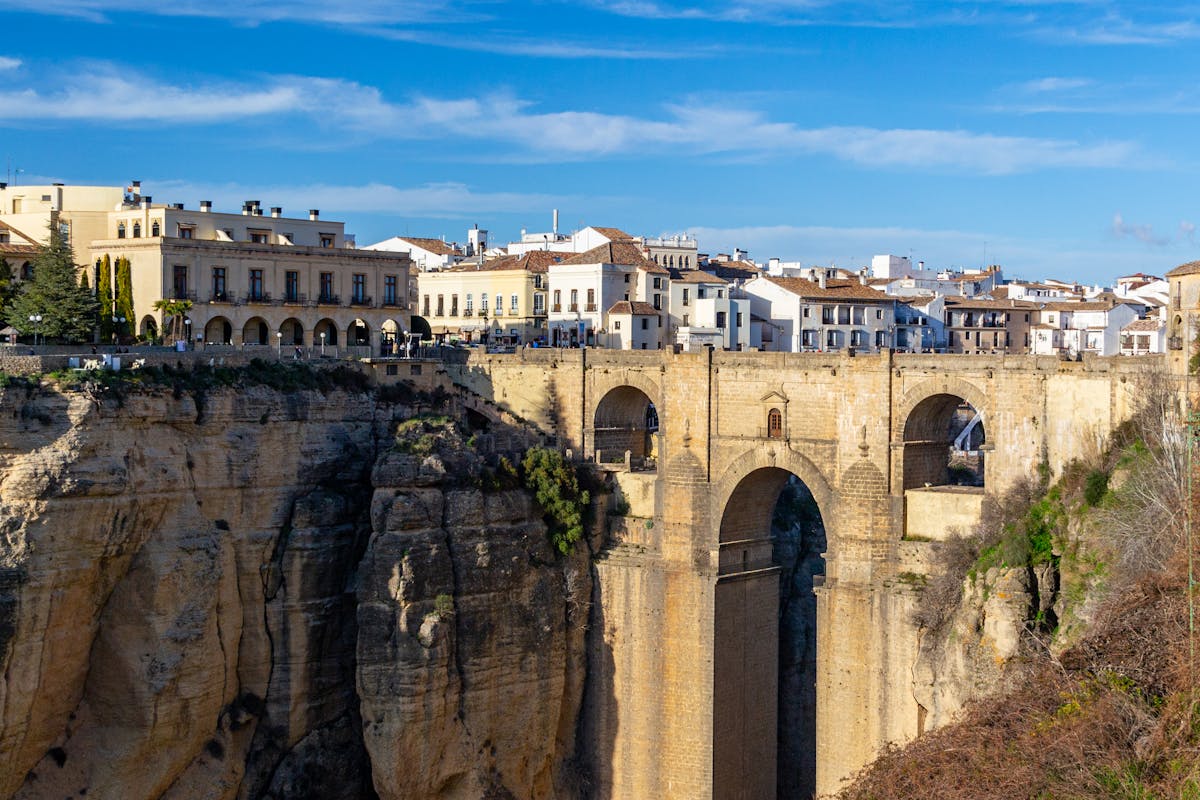
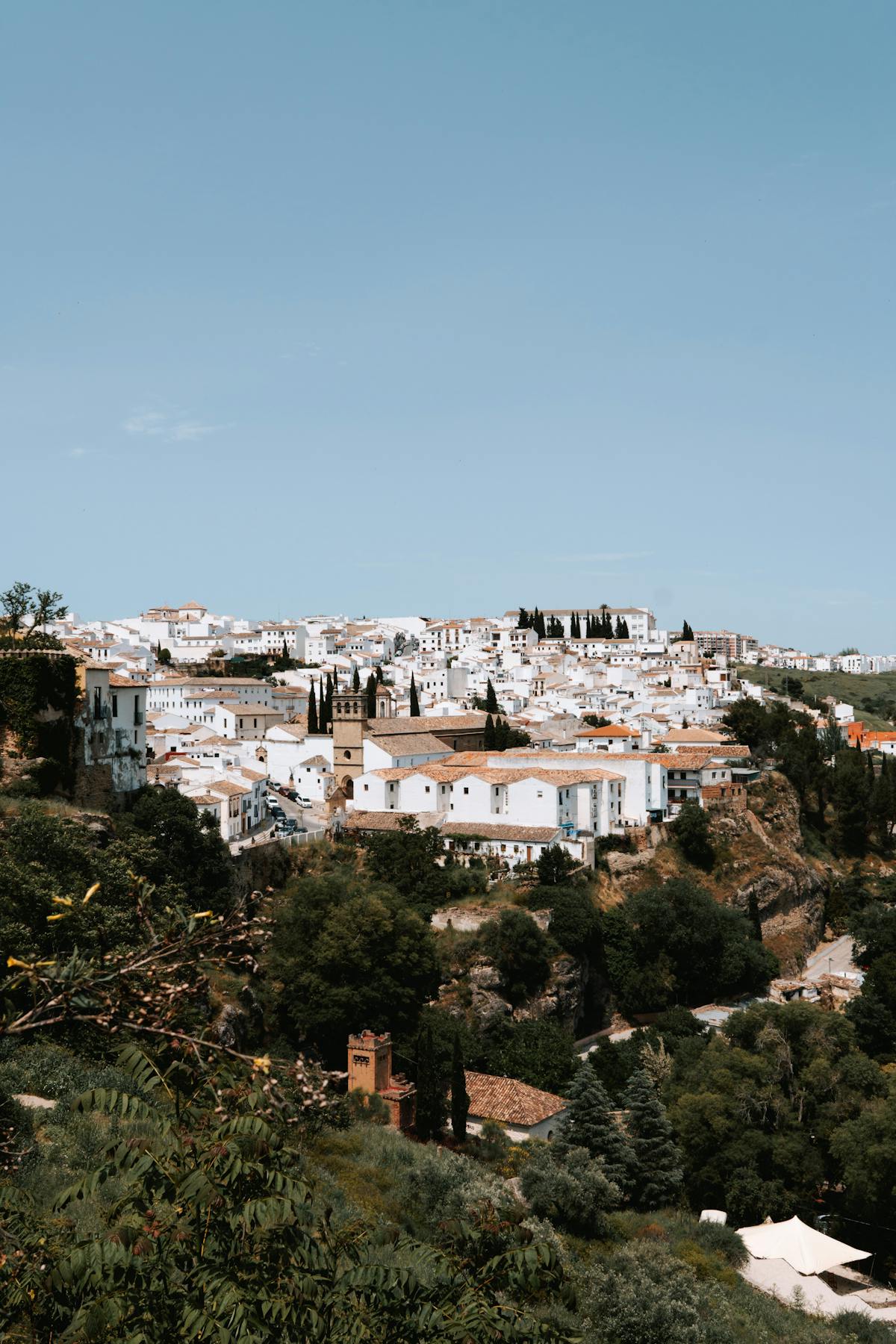
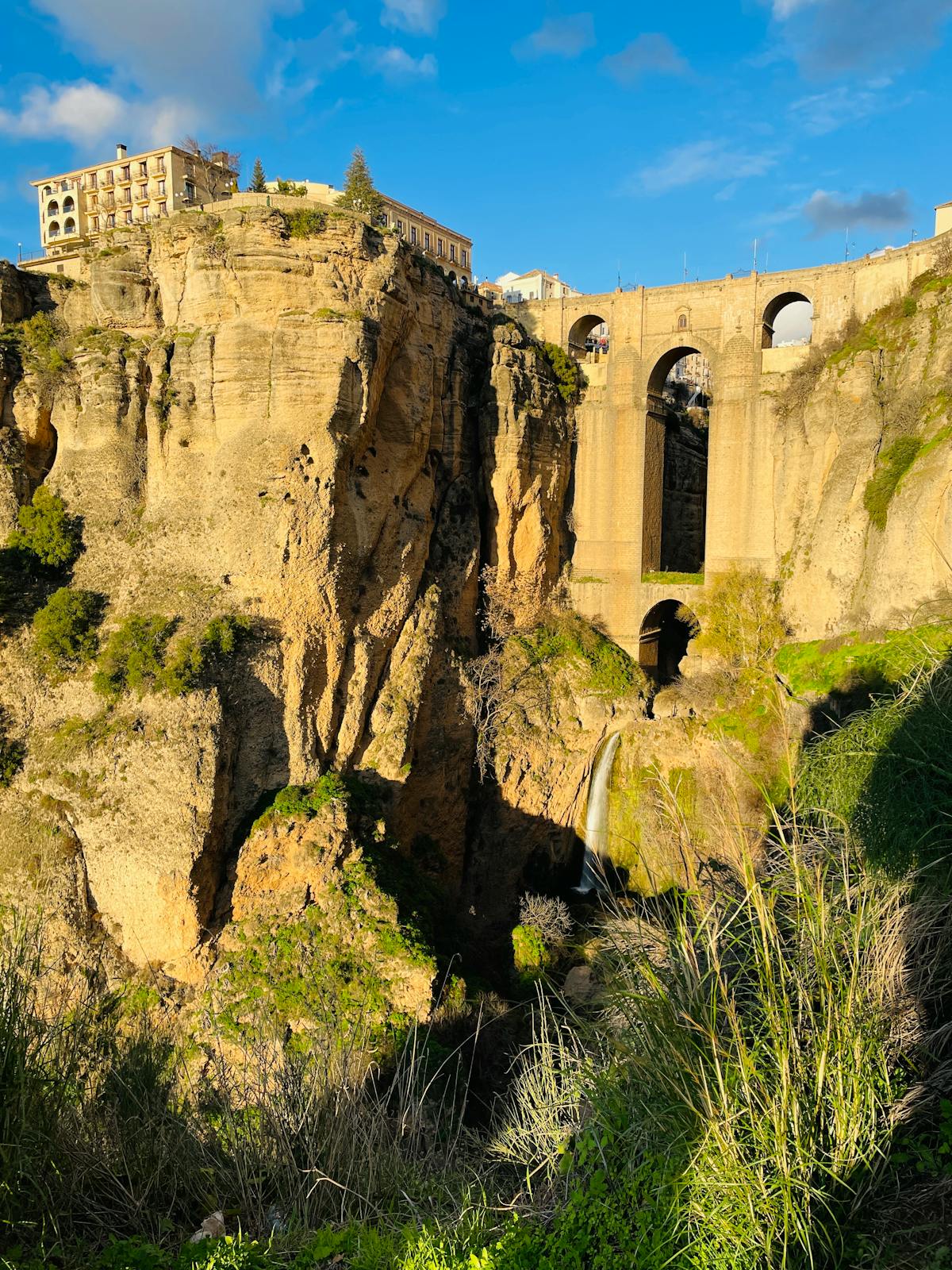
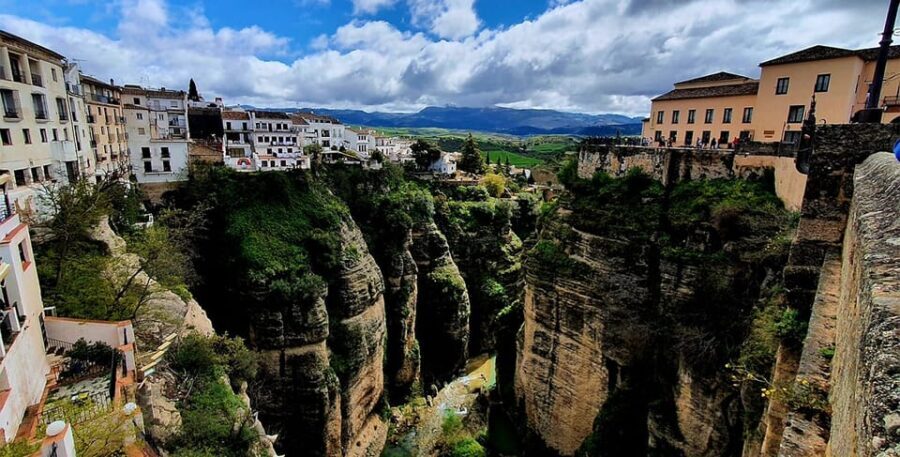
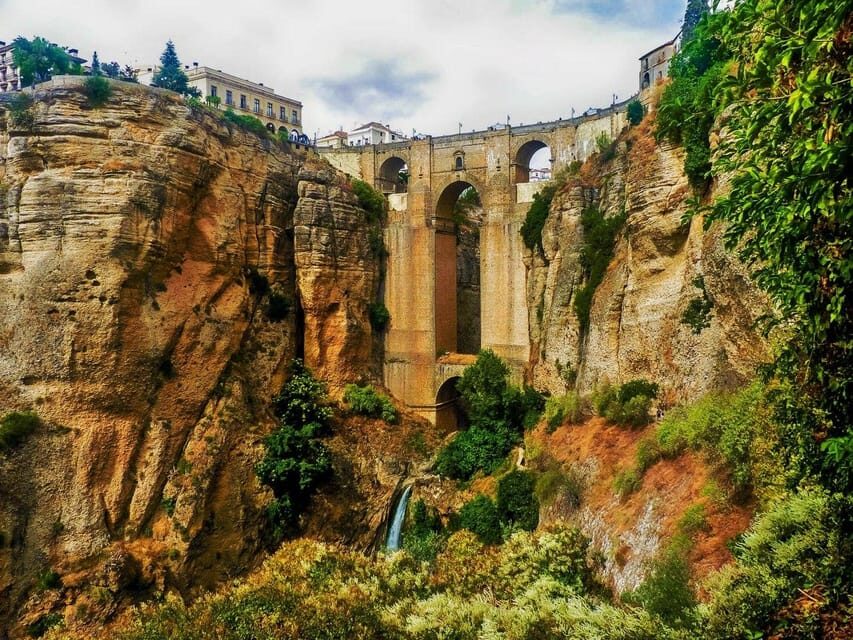
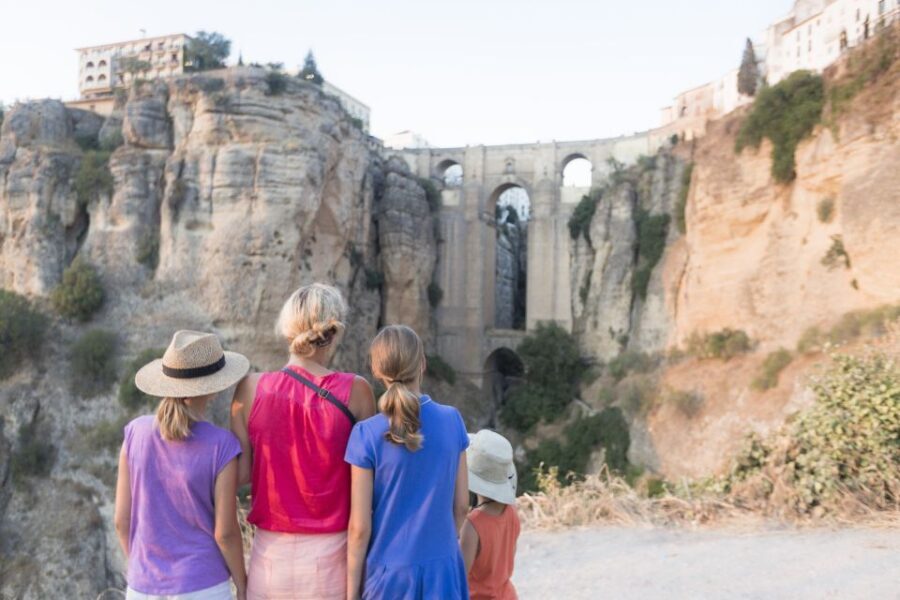
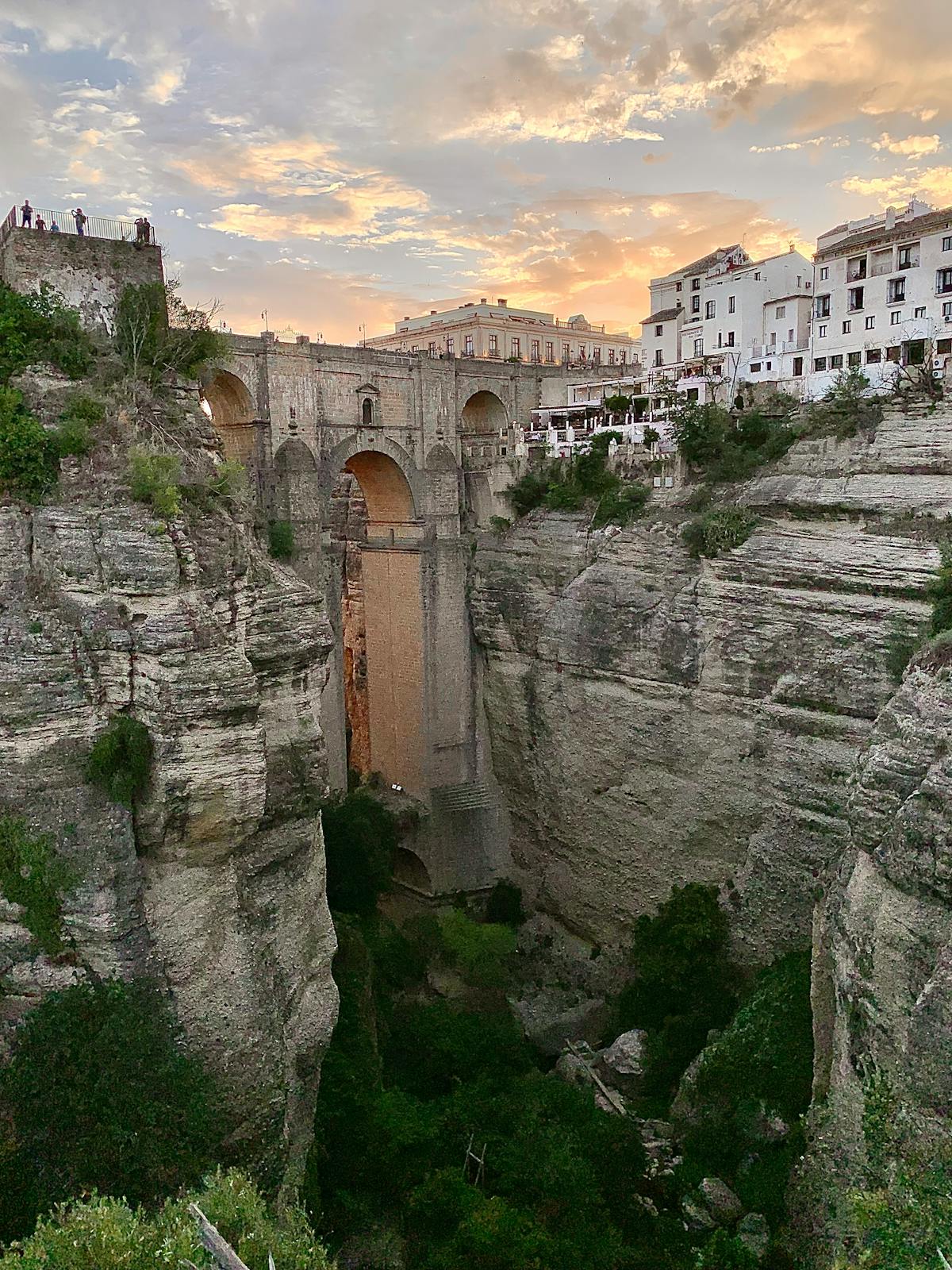
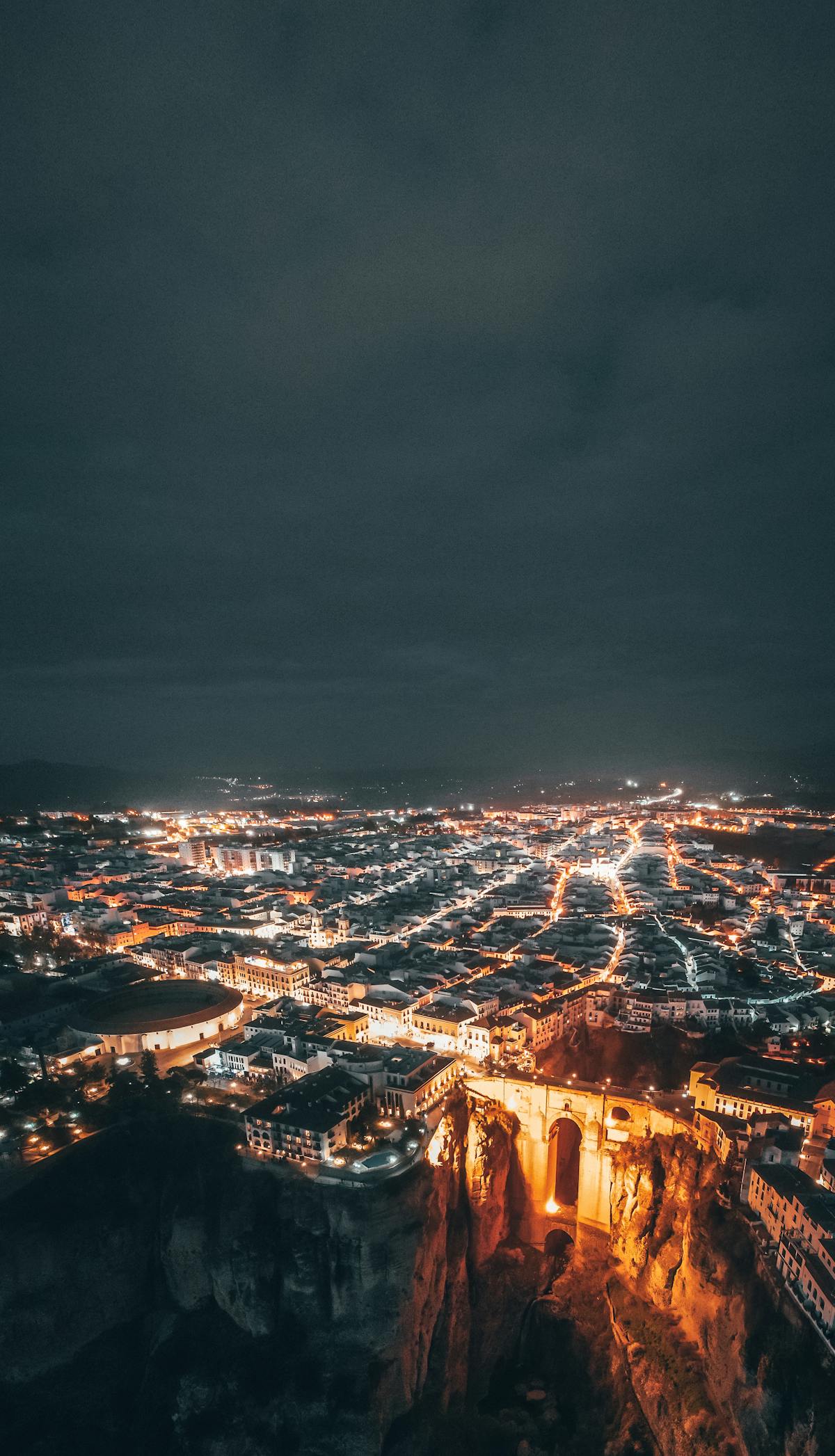
Ronda sits on top of a cliff. Not near a cliff, not beside one — on top of it, split in two by a gorge so deep and sudden that the first time you peer over the railing of the Puente Nuevo bridge, your hands tighten involuntarily. The El Tajo gorge drops over 100 meters straight down, and the 18th-century bridge that spans it is one of those structures that makes you wonder how anyone built it without falling off. They did fall off, actually. The architect, Martin de Aldehuela, died during construction in 1802, though local legend and historical accounts disagree on the details.
Ernest Hemingway spent time here. So did Orson Welles, who loved the place so much that his ashes were scattered at a local bull-breeding ranch. Ronda has Spain’s oldest bullring, still standing in perfect condition since 1785. The town gave birth to modern bullfighting rules. The Moorish baths are some of the best-preserved in the Iberian Peninsula. And then there is the food — almonds, olive oil, local wine from vineyards you can see from the gorge rim, and slow-cooked rabo de toro that has been a regional specialty for longer than anyone can trace.
The town is about 100 kilometers from Malaga — roughly an hour and a half by car, two hours by the scenic train that winds through the mountains. Most visitors come on a day trip, and most of them come from Malaga or the Costa del Sol. I have put together everything you need to decide between going independently or booking a guided tour, plus the five best tours from the database and a rundown of what to actually do once you get there.
In a Hurry? My Top Picks
- Best overall day trip: Ronda and Setenil Tour with Free Time from Malaga — $33 per person. Nine hours, includes Setenil de las Bodegas, free time in Ronda to explore at your own pace. The combination of structured touring and unstructured wandering hits the right balance. Book this tour
- Best guided experience: Ronda and Setenil Guided Tour Day Trip from Malaga — $65 per person. Nine hours with a knowledgeable guide throughout. More structured than the free-time option — better for people who want the full historical context. Book this tour
- Best budget pick: Ronda and Setenil de las Bodegas Day Trip from Malaga — $29 per person. Same route, lower price, still a full day. Perfectly solid for travelers watching their budget. Book this tour
- Best for culture lovers: Ronda Village Tour with Maestranza Ticket from Costa del Sol — $78 per person. Includes entry to Spain’s oldest bullring and the bullfighting museum. Worth the premium if that history interests you. Book this tour
- In a Hurry? My Top Picks
- How to Get to Ronda from Malaga
- DIY vs. Guided Tour — Which Makes Sense
- Best Tours for Visiting Ronda from Malaga
- 1. Ronda and Setenil Tour with Free Time from Malaga —
- 2. Ronda and Setenil Guided Tour Day Trip from Malaga —
- 3. Ronda and Setenil de las Bodegas Day Trip from Malaga —
- 4. Ronda Village Tour with Maestranza Ticket from Costa del Sol —
- 5. Ronda: La Almazara LA Organic, Olive Oil Museum and Tasting —
- When to Visit Ronda
- What to See and Do in Ronda
- Practical Tips
- More Malaga Guides
How to Get to Ronda from Malaga
Three ways to make the trip, each with its own trade-offs.
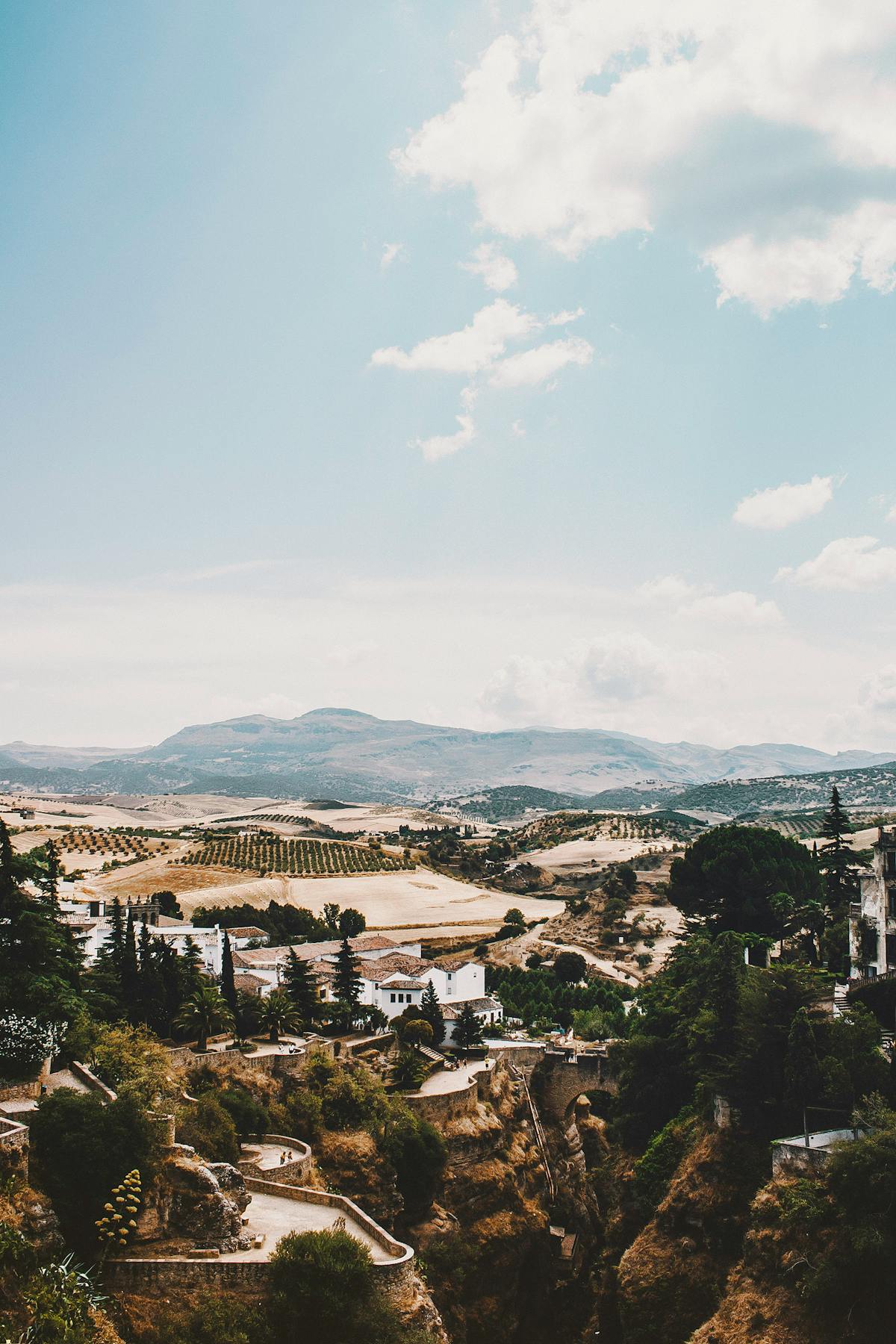
By car (1 hour 20 minutes): The A-357 and then A-367 highways take you through rolling hills, olive groves, and a few tunnels carved through the mountains. The road is well-maintained and the drive is genuinely scenic — particularly the final descent into Ronda, where the town appears perched on the clifftop ahead of you. Parking in Ronda costs a few euros per day in the lots near the bullring. Street parking exists but fills up early on weekends. The car gives you complete flexibility: stop at viewpoints, visit Setenil de las Bodegas on the way back, take a detour to a winery. If you already have a rental car, this is the obvious choice.
By train (1 hour 45 minutes): The Malaga-Ronda train follows one of the most scenic rail routes in Andalusia. It winds through the Gaitanes Gorge (the same gorge the Caminito del Rey passes through), crosses valleys on old stone viaducts, and tunnels through the mountains. The station in Ronda sits about a 10-minute walk from the old town. Trains run several times a day, and tickets cost roughly 12 to 15 euros each way. The trade-off: you are locked into the train schedule, and the last return trains leave in the late afternoon. Check Renfe (the Spanish rail operator) for current timetables, because they shift seasonally. For travelers without a car, the train is the best independent option — atmospheric, affordable, and it drops you right in town.
By bus (1 hour 45 minutes to 2 hours): Several daily buses run from Malaga bus station to Ronda. Cheaper than the train at around 10 to 12 euros each way, but the ride is less scenic and the bus station in Ronda is a slightly longer walk from the center. Buses run by companies like ALSA and Portillo. Practical and cheap, but if you have the choice, the train is a better experience for nearly the same price.
DIY vs. Guided Tour — Which Makes Sense
Both approaches work. The right choice depends on what kind of day you want.
Go DIY if: You have a rental car or enjoy taking the train. You want to set your own pace, linger at viewpoints, eat where you feel like it, and potentially combine Ronda with other stops. A DIY day trip costs about 25 to 40 euros per person for transport, depending on your method. You skip the guided commentary, but Ronda is a town that speaks for itself — the gorge, the bridge, the bullring, and the views do not need narration to be impressive. The downside: you handle all logistics, and if you take the train, your time in Ronda is dictated by the schedule.
Book a guided tour if: You do not have a car and do not want to deal with Spanish train schedules. You want someone to explain the history — and Ronda has centuries of it, from the Romans and Moors through to the Spanish Civil War. Most guided tours also include Setenil de las Bodegas, the extraordinary village where houses are built directly into the rock face, which is tricky to reach independently without a car. At $29 to $78 per person, the tours include transport, a guide, and usually one or two additional stops. When you factor in the cost of train tickets, taxis, and entry fees, the price difference between DIY and guided shrinks considerably.
My take: if Ronda is your one day trip from Malaga, book a guided tour that includes Setenil. The combination of both places in a single day is hard to replicate independently unless you have a car. If you have a rental and plan to explore the region over several days, drive yourself and spend a full afternoon in Ronda without watching the clock.
Best Tours for Visiting Ronda from Malaga
Five tours from the database, ranging from a $29 budget day trip to a $78 cultural deep-dive with bullring entry. All depart from Malaga or the Costa del Sol and include transport.
1. Ronda and Setenil Tour with Free Time from Malaga — $33
Duration: 9 hours | Price: $33 per person | Type: Full-day tour with transport from Malaga
This is the tour I would pick for a first visit to Ronda. The format works: your guide introduces both towns with historical context, then you get substantial free time to wander, eat, and photograph without feeling herded. Ronda is not the kind of place you want to experience while speed-walking behind a flag on a stick.
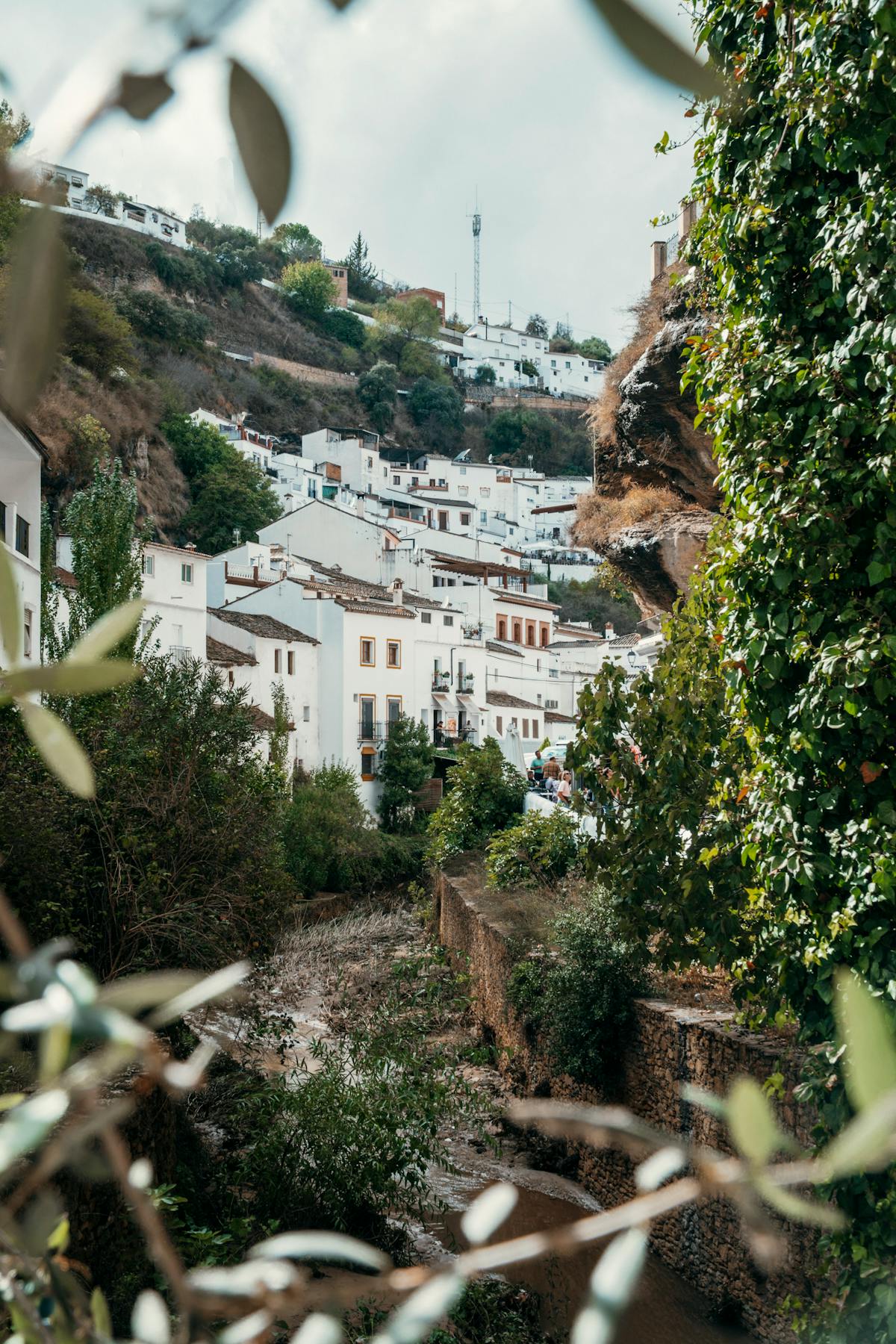
The Setenil de las Bodegas stop adds genuine value. This village — where the houses are literally built under massive rock overhangs, with cliffs forming the ceilings of shops and restaurants — is one of the most photogenic places in Andalusia. It is also about 30 minutes from Ronda by road, which makes it awkward to reach independently without a car. Having the tour handle the logistics between the two is worth the ticket price alone.
At $33, this is also remarkable value for a nine-hour day that includes hotel pickup from central Malaga, air-conditioned transport, a bilingual guide, and two towns. You will need to budget for lunch separately (Ronda and Setenil both have excellent, affordable restaurants), but the core experience is thoroughly covered.
2. Ronda and Setenil Guided Tour Day Trip from Malaga — $65
Duration: 9 hours | Price: $65 per person | Type: Fully guided day trip with transport from Malaga
The step up from the budget option, and the difference is in the depth of the guiding. Where the $33 tour gives you an introduction and sets you loose, this one keeps the guide with you through Ronda’s key sites. You get the history of the Puente Nuevo (including the grim details about its use as a prison and execution site during the Spanish Civil War, which George Orwell wrote about). You get the story behind the bullring — why Ronda’s is considered the birthplace of modern bullfighting, and how the Romero family transformed the spectacle from horseback jousting to the on-foot tradition that persists today. You get context for the Moorish walls, the Arab baths, and the layout of the old town.
The extra $32 per person buys you knowledge that turns a pretty town into a deeply layered historical experience. For history-minded travelers, this is the better investment. For travelers who prefer to explore independently and read a guidebook later, the cheaper option is perfectly fine.
Nine hours door-to-door, same as the budget tour. The pacing is slightly different — less free time, more guided content — but you still get time for lunch and independent exploration.
3. Ronda and Setenil de las Bodegas Day Trip from Malaga — $29
Duration: 9 hours | Price: $29 per person | Type: Full-day tour with transport from Malaga
The budget pick, and at $29 it is cheaper than a return train ticket from Malaga to Ronda when you factor in taxis and logistics. You get the same route as the other Malaga departures — pickup from a central meeting point, drive through the Andalusian countryside, time in both Ronda and Setenil, and return by evening.
The trade-off at this price point is the guiding. You get an introduction to each town but less in-depth historical commentary than the $65 option. For many travelers, that is actually preferable — an orientation to get your bearings and then freedom to discover things yourself. Ronda is a walkable town with excellent signage, and the major sites are hard to miss. The Puente Nuevo is, well, a massive bridge over an enormous gorge. You will find it.
This tour works especially well for travelers who plan to eat a long lunch (Ronda is full of excellent restaurants with terrace views over the gorge), take their time photographing the old town, and generally want transport solved without paying for a structured experience they do not need.
4. Ronda Village Tour with Maestranza Ticket from Costa del Sol — $78
Duration: 9 hours | Price: $78 per person | Type: Full-day cultural tour with transport from Costa del Sol
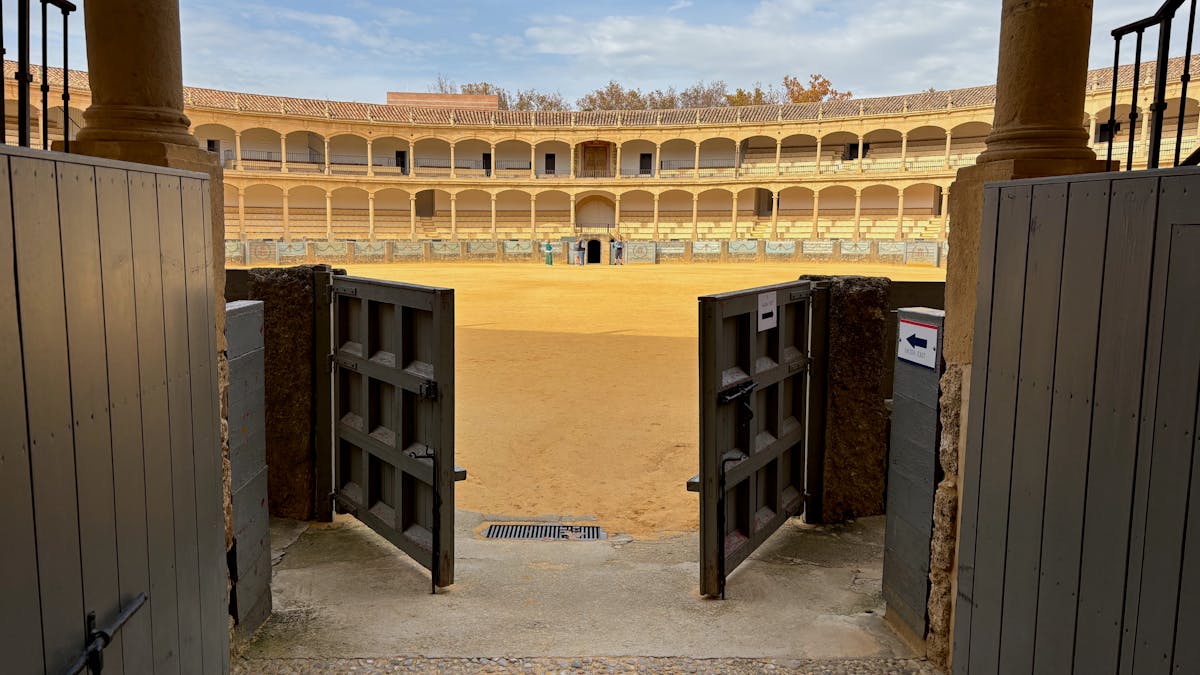
This tour does something the others skip: it takes you inside the Plaza de Toros de Ronda, Spain’s oldest bullring, built in 1785 by the same architect who designed parts of the Puente Nuevo. The arena is striking — stone-columned galleries in a neoclassical style, remarkably well-preserved, with a museum attached that traces the history of bullfighting from its mounted Moorish origins to the modern cape-and-sword tradition the Romero family codified right here in Ronda.
Whether you find bullfighting compelling or uncomfortable, the history is genuinely fascinating. This is where Pedro Romero — who reportedly fought over 5,000 bulls without being seriously injured — developed the techniques that became the foundation of the art form. The Maestranza is not just a building; it is the place where an entire cultural tradition was shaped. Walking through the gates and standing in the sand of the arena gives that history a physical weight that reading about it cannot match.
The tour departs from various Costa del Sol hotels (Torremolinos, Benalmadena, Fuengirola), making it the best option for travelers not based directly in Malaga city. At $78, the premium over the budget tours buys you the bullring entry (normally 8 euros), more structured guiding, and Costa del Sol pickup.
5. Ronda: La Almazara LA Organic, Olive Oil Museum and Tasting — $29
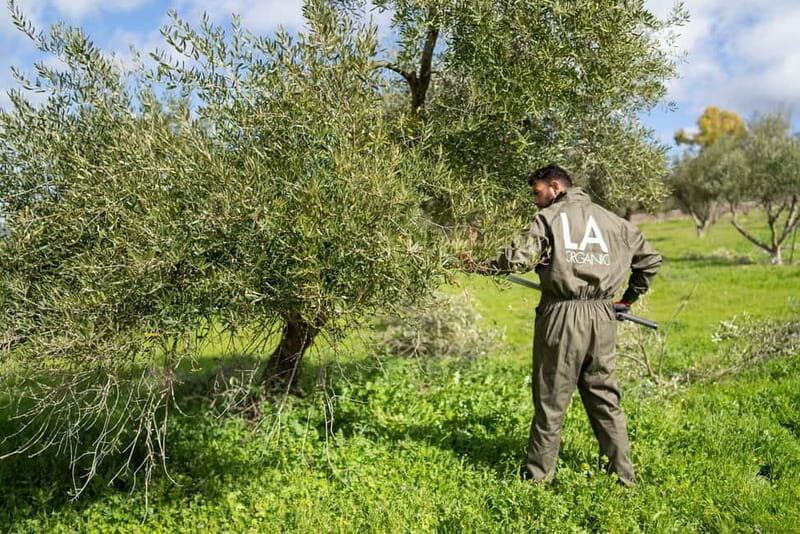
Duration: 1.5 hours | Price: $29 per person | Type: In-Ronda experience (olive oil museum and tasting)
This is not a transport-from-Malaga tour — it is an experience you book for when you are already in Ronda, either on a DIY trip or during your free time on a guided tour. La Almazara LA Organic sits in the countryside just outside town, in the heart of the olive groves that cover the hills around Ronda.
The visit takes about 90 minutes. You tour the working olive press, learn about organic cultivation methods and the difference between early-harvest and late-harvest oils (the first time someone explains this to you, the way you think about olive oil changes permanently), and then sit down for a proper tasting. The oils range from grassy and peppery to smooth and buttery, and the staff walk you through how to taste them properly — swirl, warm, sip, breathe.
This makes a perfect afternoon pairing with a morning spent exploring Ronda’s old town and bridge. It also makes an excellent gift stop — the organic oils they sell are some of the best in the region, and they pack well for suitcases. At $29 for ninety minutes of education, tasting, and a genuinely unique experience, this is one of the best-value activities in the Ronda area.
When to Visit Ronda
Ronda is worth visiting year-round, but some months are noticeably better than others.
Best months: March through May and September through November. Spring brings wildflowers to the surrounding countryside, comfortable walking temperatures in the low 20s Celsius, and manageable crowds. The gorge looks its most dramatic when winter rains have left the landscape green and the streams running. Autumn is equally pleasant — warm days, cool evenings, smaller crowds than summer, and the light takes on a golden quality that photographers prize. October in particular is excellent: warm enough for outdoor lunches, cool enough for comfortable walking, and the summer tour groups have dispersed.
Summer (June to September): Ronda sits at 750 meters elevation, so it is a few degrees cooler than coastal Malaga, but it still gets hot. Temperatures regularly reach 35 degrees in July and August, and the sun on the exposed bridge and gorge viewpoints is relentless. If summer is your only option, arrive early — before 10 in the morning if possible — and plan a long lunch in a shaded restaurant during the peak heat. The evenings cool down nicely and the town comes alive after dark, but most day-trippers are gone by then.
Winter (December to February): Cool and occasionally rainy, but Ronda in winter has a stark beauty. The crowds thin dramatically, the almond trees blossom in February, and the low-angle winter light creates deep shadows in the gorge that give the whole scene a different character. The risk: rainy days can close some viewpoint paths, and the wind on the bridge in January is no joke. Pack layers.
Festivals worth timing around: The Feria de Pedro Romero in early September is Ronda’s biggest annual event — corridas (bullfights) in the historic Maestranza ring, flamenco in the streets, and the town in full celebration mode. The Semana Santa (Easter week) processions through the narrow old town streets are also deeply atmospheric. Both periods bring larger crowds and higher prices, but the atmosphere is worth it if you happen to be in the area.
What to See and Do in Ronda
Ronda is compact enough to see the highlights in a day, but interesting enough that you could spend two days without repeating yourself. Here is what to prioritize on a day trip.
The Puente Nuevo and El Tajo Gorge: This is why you came. Walk across the bridge, then follow the paths that lead down to viewpoints on both sides. The best view of the bridge itself (the classic postcard angle) is from the Camino de los Molinos path that descends into the gorge from the south side. It is a steep walk down and back — about 30 minutes each way — but the view of the bridge framed by the gorge walls is worth every step. There is also a small museum inside the bridge itself, in the room that was once used as a prison.
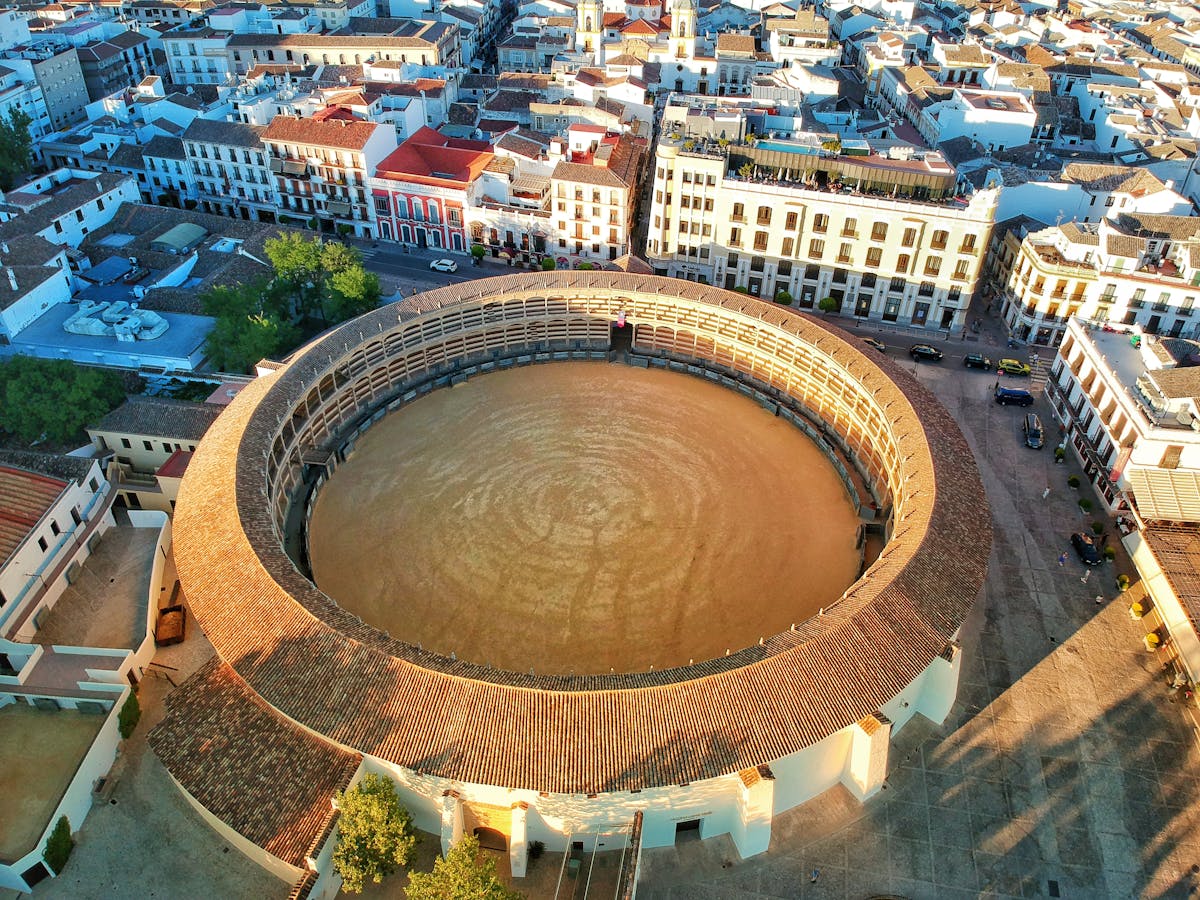
Plaza de Toros de Ronda: Spain’s oldest bullring, opened in 1785. The Maestranza-style arena has a double tier of arcaded seating in pale sandstone, and the attached museum covers the evolution of bullfighting with period costumes, engravings, and photographs. Entry is about 8 euros and includes an audio guide. Even travelers with no interest in bullfighting find the architecture alone worth the visit — the covered galleries and the proportions of the ring are beautiful in a purely structural sense.
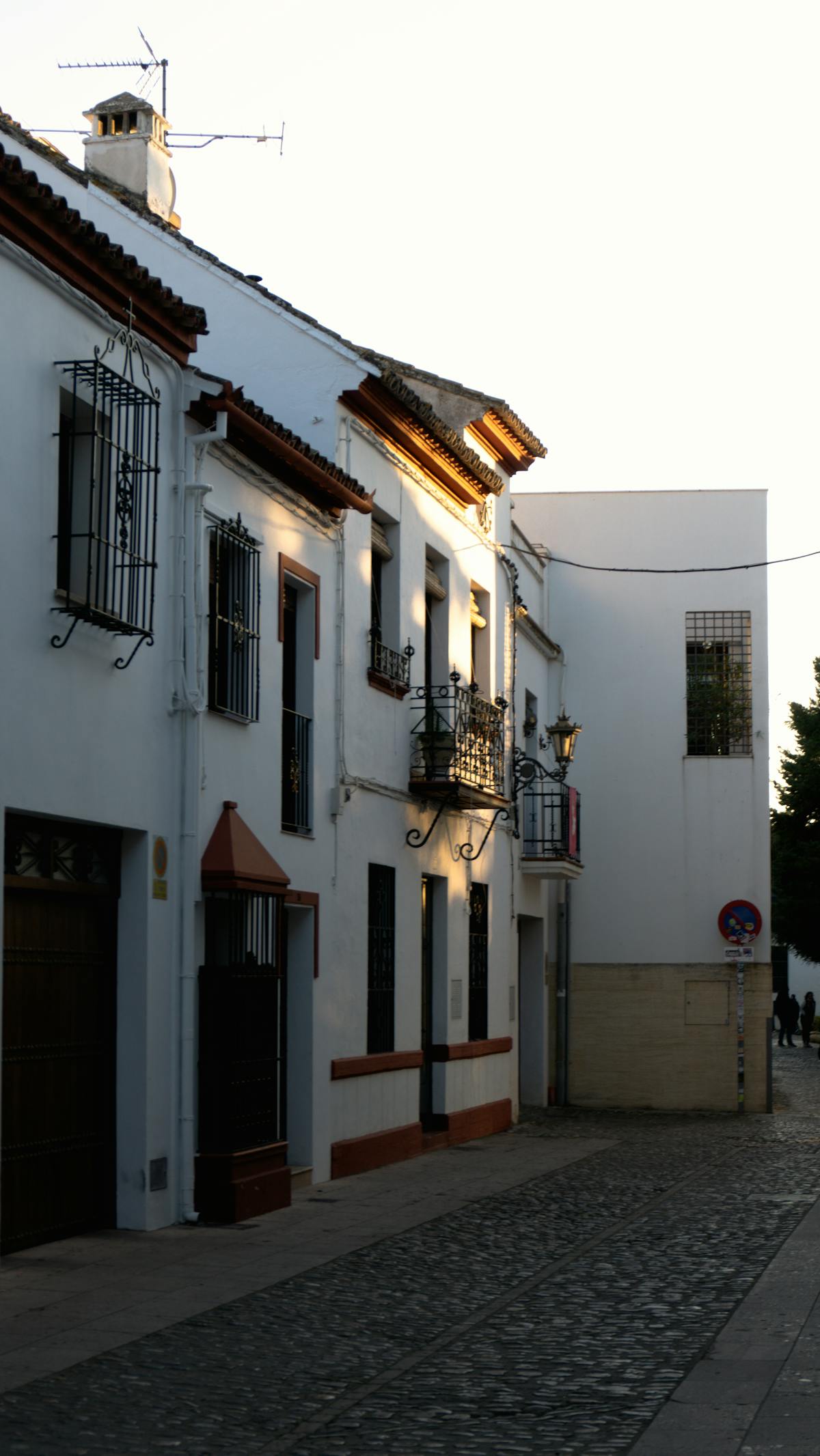
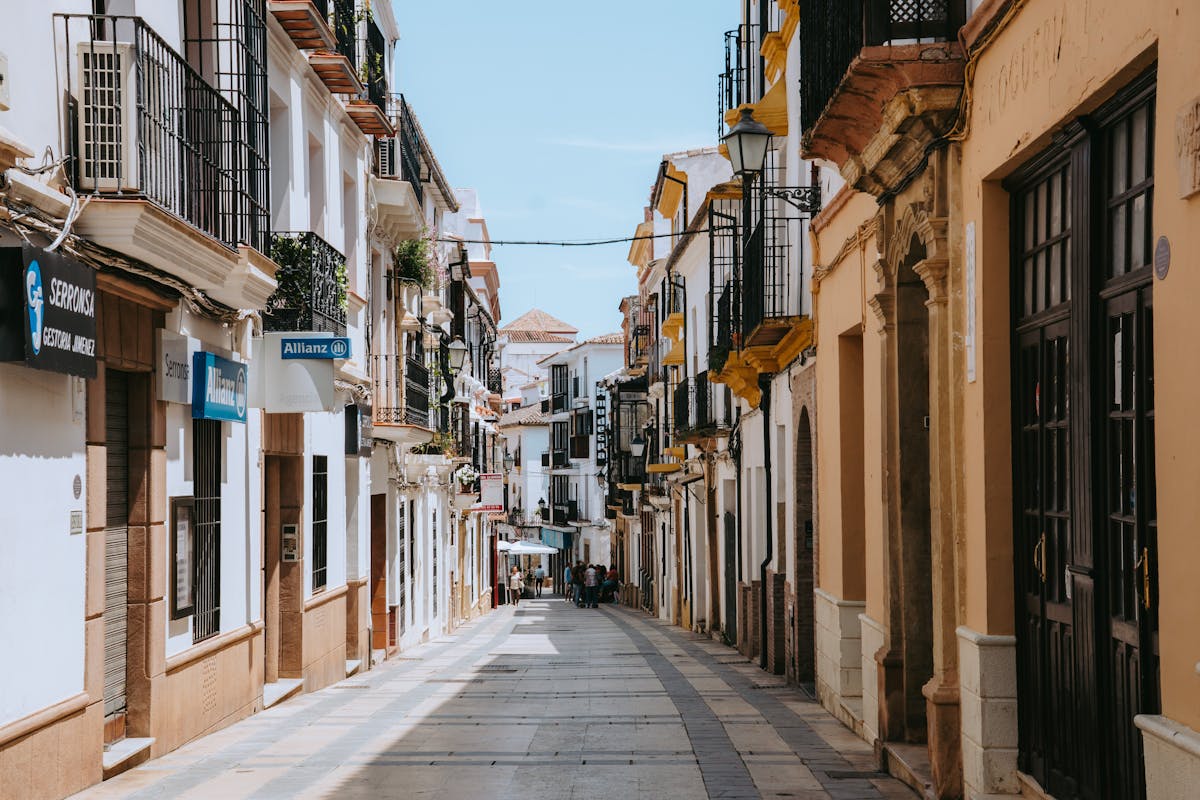
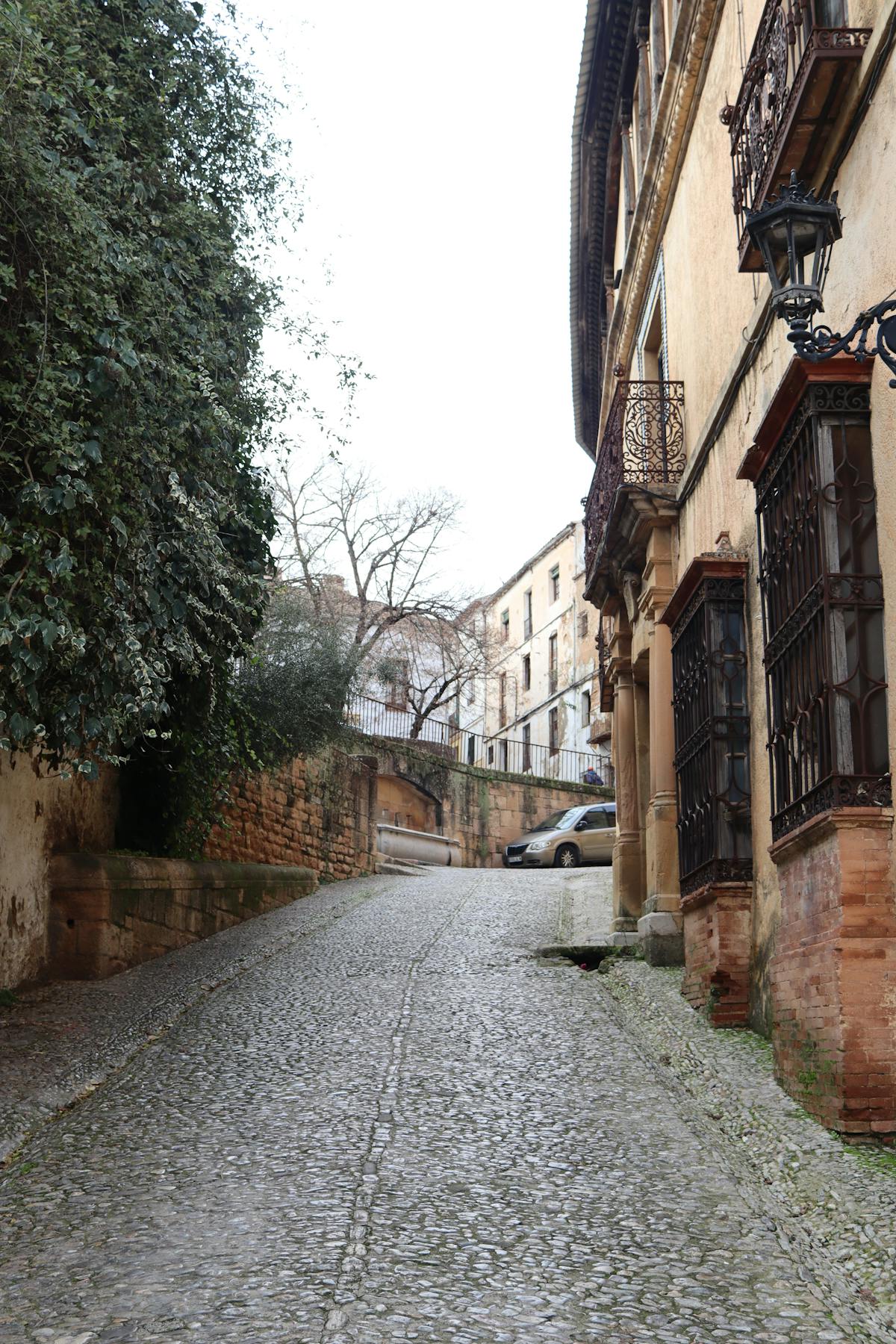
The Old Town (La Ciudad): The part of Ronda south of the gorge is the historic core, and it is all narrow streets, whitewashed walls, iron balconies, and hidden courtyards. Walk without a map for an hour. You will find the Mondragon Palace (now the municipal museum, with excellent Moorish-era gardens), the Santa Maria la Mayor church built on the site of Ronda’s main mosque, and the remnants of the old Moorish walls with their horseshoe-arched gates.
The Arab Baths (Banos Arabes): Some of the best-preserved Moorish baths on the Iberian Peninsula, dating to the 13th century. The star-shaped skylights in the vaulted ceilings still filter light exactly as they were designed to 800 years ago. It is a small site — 20 minutes is enough — but the atmosphere is remarkable. Entry is about 4 euros.
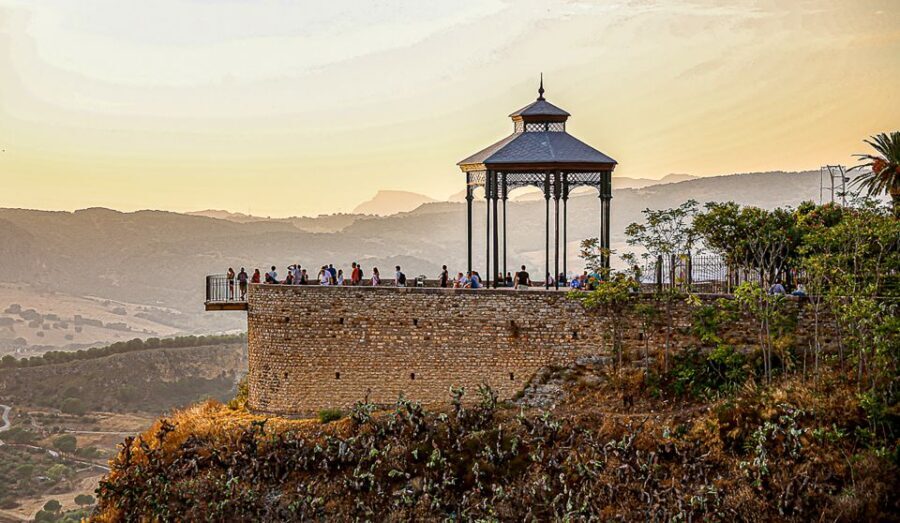
Alameda del Tajo: A formal garden and promenade on the clifftop edge of town, with sweeping views over the surrounding countryside, the Sierra de las Nieves mountains, and — on very clear days — all the way to the coast. This is where locals come to stroll in the evenings, and it is a perfect spot to sit on a bench with an ice cream and watch the light change over the valley.
Wine and food: The Ronda wine region (Sierras de Malaga DO) has been producing wine for over 2,500 years and has experienced a renaissance in the past two decades. Several bodegas offer tastings just outside town. For food, do not leave without trying rabo de toro (oxtail stew), migas (fried breadcrumbs with pork and peppers), and local almonds. Restaurants along the gorge rim charge slightly more for the view, but the view is genuinely spectacular, so it is money well spent.
Practical Tips
Wear comfortable shoes. Ronda is built on uneven terrain, with cobblestoned streets, steep paths down to gorge viewpoints, and old-town lanes that alternate between flat stretches and unexpected staircases. Sandals are fine in summer; boots or sneakers are better in cooler months when paths might be slippery.
Bring cash. Smaller shops, tapas bars, and entry to some sites still prefer cash. ATMs are available in the new town but less common in the old quarter. Have 20 to 30 euros in small bills and coins for admissions, coffee, and snacks.
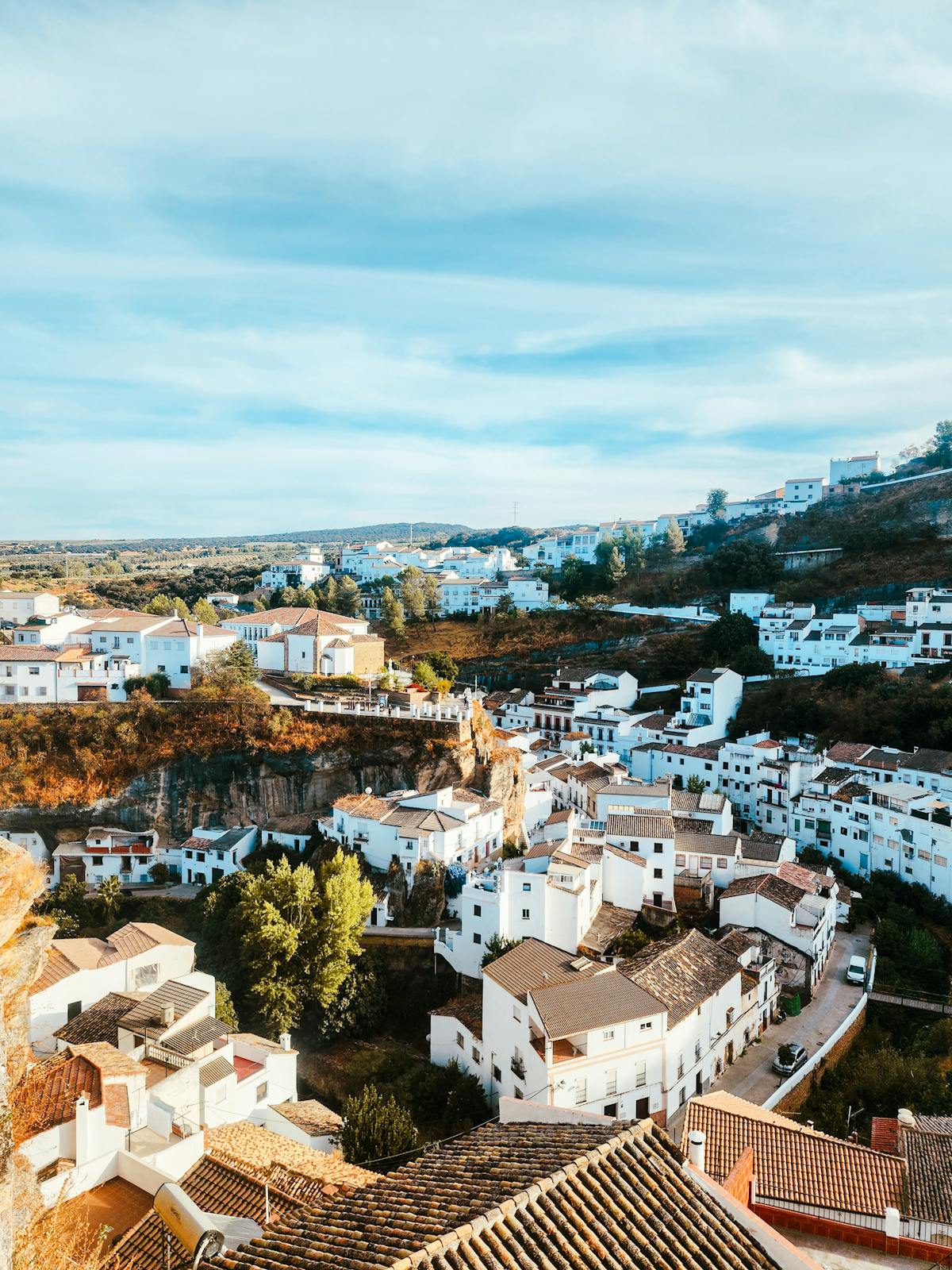
Do not skip Setenil de las Bodegas. If you are booking a guided tour, pick one that includes Setenil. If driving yourself, add it to your route — it is 30 minutes from Ronda, clearly signposted, and one of the most unusual villages you will see anywhere in Spain. The cave-like streets where the rock overhangs form the ceilings of buildings are extraordinary, and the bars serve excellent cheap food.
Go early or stay late. Day-trip buses from the coast arrive between 10 and 11 in the morning and leave around 4 to 5 in the afternoon. If you are driving yourself, arrive before 9 to have the bridge and gorge viewpoints largely to yourself. Or visit in the late afternoon and stay for dinner — the sunset from the Alameda del Tajo is spectacular, and the evening paseo (stroll) through the old town is quintessentially Andalusian.
The gorge path is free and unmissable. The walk down to the viewpoints below the Puente Nuevo does not cost anything, and it provides the best photographs you will take all day. The path starts near the Parador hotel on the south side. It is steep and takes about 30 minutes down and 40 back up, but the view of the bridge from below, framed by the gorge walls, is the iconic Ronda image. Do not skip it because you are tired or short on time. This is the thing.