
The best part of this Ibaraki ride begins when the horses leave the riding ground for a forest path. You pass a stream, hear the water along the way, and get views of the Tsukuba Mountain Range and the fields below. A thatched-roof farmhouse is another rare sight on the route.
I like that staff lead the horses one by one, which makes this a practical first ride rather than a test of your riding skills. I also like the small-group limit of four: it leaves room for personal guidance, a family outing, or a solo booking without turning the trail into a parade.
The main consideration is getting there. The stable is outside central Ishioka, and pickup coordination by phone may take persistence. Staff are listed as Japanese-speaking, with language support described as gestures and body language, so do not count on a full English explanation.
A few things to know before booking
- A forest route with a stream: The ride leaves the riding ground for woodland paths, with a stream beside the trail.
- Gentle horses and one-to-one guidance: Staff lead each horse, so you do not need prior riding experience to join.
- Three durations: Choose a 40-minute lesson and ride, a 70-minute forest ride, or a 120-minute forest and ranch ride.
- A small group: The activity accepts one to four participants.
- Plan your transfer: A free shuttle is available from Kakioka Shako bus stop, but you need to contact the stable after booking.
- Check the limits: Riders must be at least five years old and weigh no more than 85 kilograms, including clothing.
- A few things to know before booking
- A forest ride at the foot of Mt. Tsukuba
- What happens from check-in to the trail
- Picking the right ride length
- The guides and language support
- Getting to the stable from Ishioka
- What to wear and when to go
- Is this a good fit for you?
- FAQ
- Where does the horseback riding experience take place?
- How much does the ride cost?
- How long are the available options?
- Do I need horseback riding experience?
- What is the minimum age, and can children ride alone?
- Is there a weight limit?
- What should I wear?
- How do I get to the stable without a car?
- What happens if the weather is too severe for the ride?
A forest ride at the foot of Mt. Tsukuba
 1 / 5
 2 / 5
 3 / 5
 4 / 5
 5 / 5
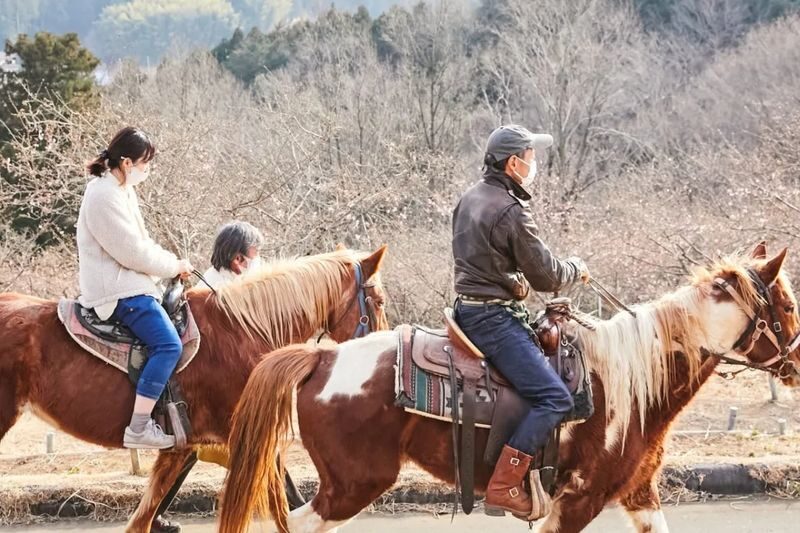
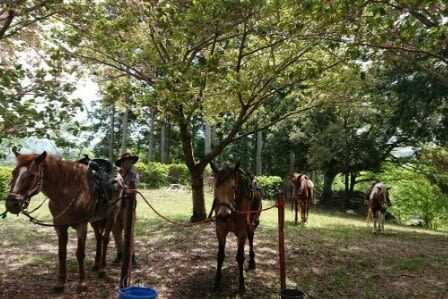
This is a countryside outing, not a fast-paced riding lesson. The horses walk along a forest route while a guide manages the pace and keeps riders together. You can pay attention to the trees, water and mountain views instead of worrying about steering every turn.
The stable uses horses bred for riding, not racing thoroughbreds, and describes them as gentle. That matters if you are new to horses: a calm animal and staff-led route can make the first few minutes less daunting. One rider found the transition from nerves to confidence came as the ride went on.
The setting changes along the route. You start at the riding ground, then head into the forest, where a stream runs beside the path. The rural views include the Tsukuba Mountain Range and fields at its base. A very old thatched-roof farmhouse is also visible along the way, a striking detail in an otherwise natural ride.
The 40-minute plan covers a basic riding class and an approximately 2-kilometer forest ride. The class is listed as about 10 minutes, followed by roughly 30 minutes on the trail. It is a compact introduction, best suited to someone who wants a guided taste of riding rather than a long lesson or independent time in the saddle.
What happens from check-in to the trail
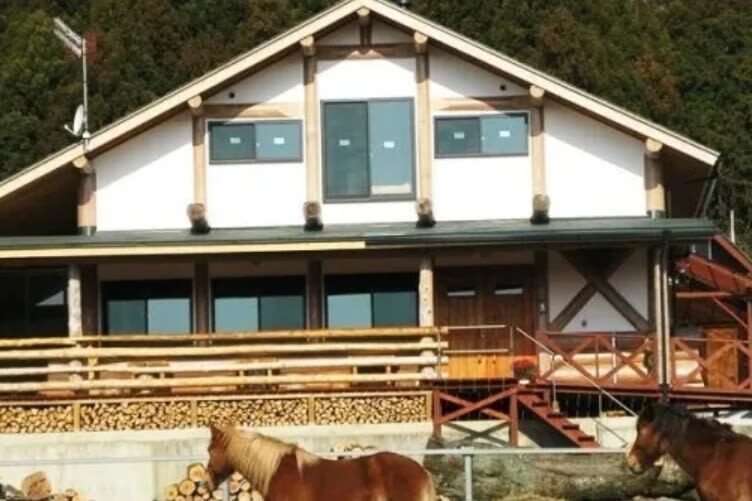
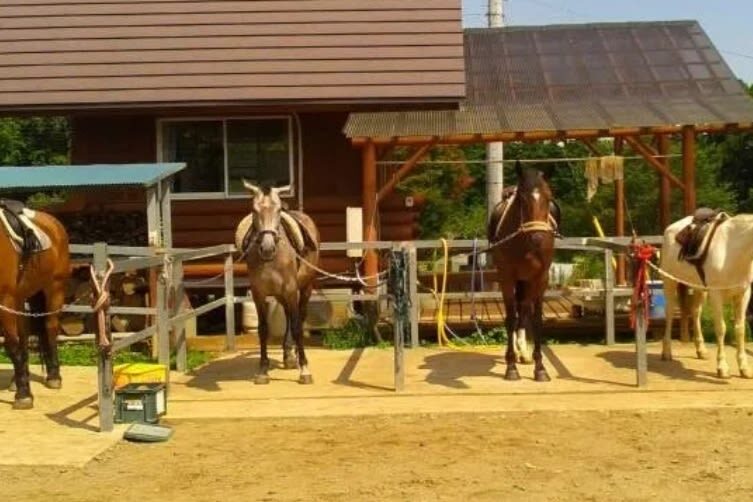
Your meeting point is Wind Comes Village Horse Shack, also listed as Komorebi Uma Koya, at 716-16 Koya in Ishioka. The booking offers departure times at 09:00, 10:00, 11:00, 13:00, 14:00 and 15:00. Choose a time when booking and arrive for that session.
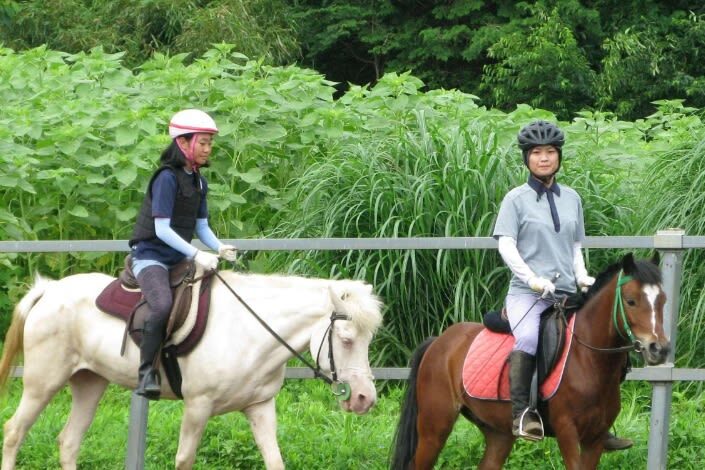
The first part of the 40-minute plan is a short basics class at the stable. You receive the equipment needed for the ride and a simple introduction to riding. The exact teaching format may vary, but the activity is intended for beginners and the staff guide the horses on the trail.
One rider described learning how to use the reins and keep the horse from stopping to eat roadside weeds. That is a useful reminder: even with a guide leading the horse, you may need to pay attention and respond to simple instructions. It is not a ride where you can switch off completely, but you do not need to arrive with riding experience.
Once the group leaves the riding ground, the horses follow a forest path for about two kilometers on the 40-minute option. Guides ride or walk at the front and back of the line, helping keep the group together. Along the way, you can listen to the stream and take in the countryside. There may be time for photos; one guide and his wife helped riders take pictures and videos, but do not assume photography is a formal service.
The ride returns to the stable. Beverages may be served afterward, though they can be cancelled due to COVID-related conditions. Past offerings included tea, coffee or sports drinks, and the stable has had cats around. Treat those details as pleasant possibilities, not guaranteed parts of the booking.
Picking the right ride length
The 40-minute Basic Horseback Riding Lesson and Forest Trail Riding Experience starts at $78.85. It is the clearest choice for a first-timer, a family with limited time, or anyone who wants a short introduction before deciding if they enjoy riding. The basic class is included, and the route is described as about two kilometers.
The 70-minute Forest Trail Horseback Riding Experience starts at $118.25. It gives you more time in the saddle, but the available details do not specify a different route or exactly how the extra time is divided. If the longer ride matters to you, confirm what it includes before booking.
The 120-minute Forest Trail and Ranch Horseback Riding Experience starts at $157.65. Its name indicates a forest and ranch ride, but details such as distance and lesson time are not provided. It costs more, so I would choose it if you specifically want the longer outing and have confirmed the plan with the operator.
At first glance, the 40-minute price may seem high for a short activity. The value is in the guided nature ride, the horses, equipment, insurance and transfer arrangement, rather than a long stretch of instruction. Taxes are included. If you are comparing prices, remember that the route takes place in rural Ibaraki, not an urban riding arena, and staff lead each horse on the trail.
The guides and language support
A guide’s attention is central to this experience. Staff lead horses individually, a reassuring setup for beginners and younger riders. One solo rider singled out guide K and his wife for making the outing memorable, and another described the instructors as a couple who managed the line from front and back.
There is also a report of the stable owner communicating well in English. Still, the formal language information lists Japanese-speaking staff and says explanations are given through body language, without translation tools. English communication may be possible on a given day, but it is not something I would rely on for every detail.
If you are nervous about riding, tell the staff before setting off. You can ask for help with the reins, stopping or how to signal the horse. Keep instructions simple and watch the guide’s demonstrations. The guided format does much of the work, but clear communication still matters.
Getting to the stable from Ishioka
By train, take the JR Joban Line to Ishioka Station, then transfer to the Kanto Railway GREEN BUS bound for Kakioka Shako bus stop. A free shuttle is available from that stop. Contact information is provided after reservation, and the operator asks you to call after reaching Ishioka Station.
Build in time for that handoff. One rider had trouble reaching the stable after calling from the station and needed several attempts at the pickup point. The ride itself was worth the effort for that person, but the practical lesson is sound: confirm the shuttle plan early, save the contact details, and do not leave the call until the last minute. Calling the day before may help you feel more secure.
If you are driving, the stable is about 30 minutes from Tsuchiura Kita IC on the Joban Expressway via Asahi Tunnel. Free parking is available. The address is 716-16 Koya, Ishioka, Ibaraki 315-0164, Japan.
The activity information mentions round-trip transfers, but the train directions describe a free shuttle from Kakioka Shako. Confirm which transfer applies to your booking rather than assuming a vehicle will collect you at Ishioka Station.
What to wear and when to go
Wear easy-to-move-in trousers and sneakers. The stable provides the necessary riding equipment, so you do not need to bring your own. Avoid clothing that restricts your legs or makes it difficult to sit comfortably.
I would also think about the season. A rider who visited in summer was told that mosquitoes can be numerous then, while spring, autumn and winter were described as beautiful times to visit. Conditions vary, but that is useful advice if you are choosing dates and are sensitive to insects. A light rain did not prevent one outing from being enjoyable, though the operator can cancel for extreme weather.
The listed rider limit is 85 kilograms, including clothing. Participants must be at least five years old. Children aged five to 12 must be accompanied by a paying adult, and that adult must also take part and pay. Group size is one to four people, so this is not an option for a large party.
Is this a good fit for you?
I would put this ride high on the list if you want a gentle way to experience rural Ibaraki and have little or no riding experience. The guided horses, small group size and short introductory class make the 40-minute option approachable. It also suits a solo visitor: one person can book, and the small-group format does not require bringing a crowd.
Families may appreciate the minimum age of five, but this is an active outdoor experience, not a horse-themed attraction where adults can watch from the sidelines. Children must be accompanied by a paying adult who rides too. Check the weight limit for every participant before booking.
Choose another activity if you need detailed English instruction, dislike being around horses, or want a long, independent riding lesson. And if you are travelling by public transport, be ready to coordinate the shuttle carefully. The countryside setting is the reason to come, but it also makes transport planning part of the day.
The 40-minute ride offers the strongest case for first-timers who want a taste of forest trail riding without committing to two hours. Book the longer plans if you want more saddle time, but confirm their route details first. If the idea of a quiet ride beside a stream, with mountain views and a thatched farmhouse along the way, sounds better than a polished arena lesson, this is a sensible Ibaraki choice.
Ibaraki | Mt. Tsukuba Horseback Riding Experience
“The service is excellent, and there's staff to look after the riders.”
FAQ
Where does the horseback riding experience take place?
It takes place at Wind Comes Village Horse Shack, also called Komorebi Uma Koya, at 716-16 Koya, Ishioka, Ibaraki 315-0164, Japan.
How much does the ride cost?
Prices start at $78.85 for the 40-minute basic lesson and forest ride. The 70-minute ride starts at $118.25, and the 120-minute forest and ranch ride starts at $157.65.
How long are the available options?
You can choose a 40-minute, 70-minute or 120-minute package. The 40-minute option includes about 10 minutes of basic instruction and a roughly 30-minute, 2-kilometer forest ride.
Do I need horseback riding experience?
No. The experience is described as suitable for first-timers, and staff guide the horses one by one. The 40-minute package includes a basic riding class.
What is the minimum age, and can children ride alone?
Participants must be at least five years old. Children aged five to 12 must be accompanied by a paying adult, and the adult must also participate in the ride.
Is there a weight limit?
Yes. Participants must weigh 85 kilograms or less, including clothing.
What should I wear?
Wear easy-to-move-in pants and sneakers. The necessary riding equipment is included.
How do I get to the stable without a car?
Take the JR Joban Line to Ishioka Station, then the Kanto Railway GREEN BUS to Kakioka Shako bus stop. A free shuttle is available there. Contact the operator after booking, and call after arriving at Ishioka Station.
What happens if the weather is too severe for the ride?
The operator may cancel due to extreme weather or unforeseen events. If the operator cancels, you can request a full refund.