
In one day, this trip pairs Japan’s autumn maples with a sight you might not expect in fall: cherry blossoms. You’ll see Eiho-ji’s celebrated old ginkgo, Obara’s spring-and-autumn-blooming sakura, and Korankei’s maple-covered valley, all on a route from Nagoya.
I like two things especially: the unusual contrast of cherry flowers and red leaves at Obara, and the relief of having transport arranged for three out-of-town sights. Eiho-ji adds a quieter, temple-centered pause between the flower displays.
The trade-off is a full day with fixed stop times, and the scenery depends on weather and seasonal timing. The cherry blossoms may not be flowering when you visit, while peak-season traffic can change how long you get at Korankei.
- At a glance
- Three very different autumn scenes
- Eiho-ji: an old ginkgo and a quieter start
- Obara: cherry blossoms in the season of red leaves
- Korankei: the day’s main maple stop
- The Nagoya departure and a long day on the road
- What the price covers, and what to check
- How to choose the right date
- Who should book this day trip?
- FAQ
- Where does the tour depart from?
- When does the tour return to Nagoya?
- How long do you spend at each stop?
- Are the cherry blossoms at Obara guaranteed to be in bloom?
- What is included in the tour price?
- What languages may the guide use?
- Can children join the tour?
- Can I bring luggage?
- Is the tour suitable for seniors or pregnant participants?
- What happens if I arrive late or leave the group?
- More Tours in Aichi
- More Tour Reviews in Aichi
At a glance
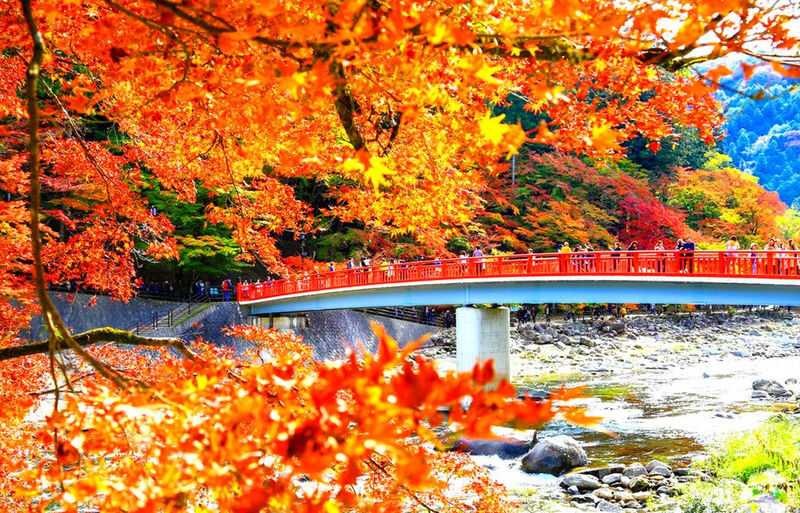
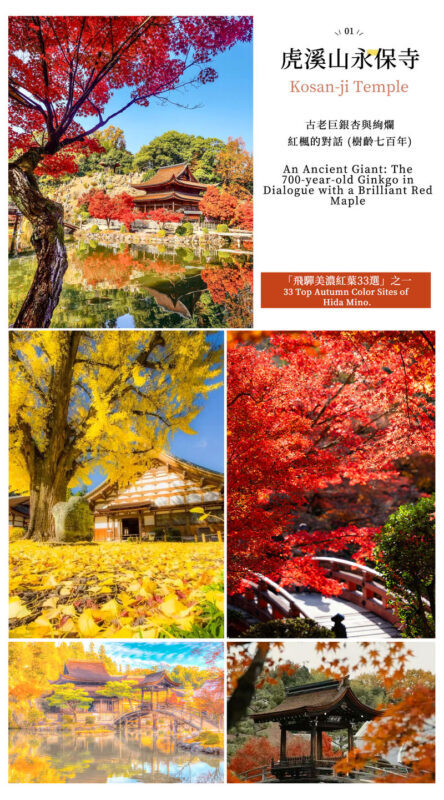
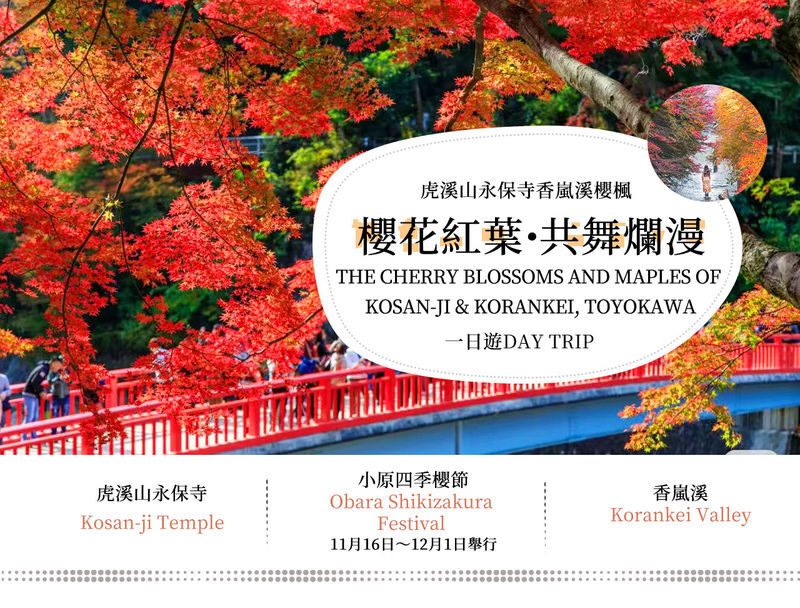
- Eiho-ji’s 700-year-old ginkgo: See the ancient tree by the main hall, along with temple buildings and a pond garden.
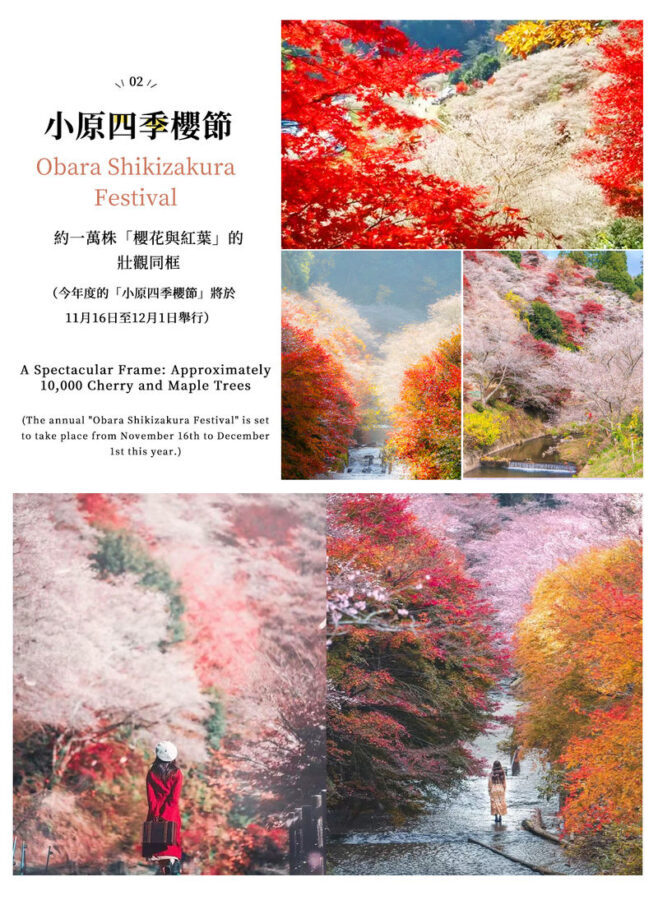
- Obara’s unusual autumn sakura: Shikizakura bloom in both spring and fall, creating a rare pairing with autumn leaves.
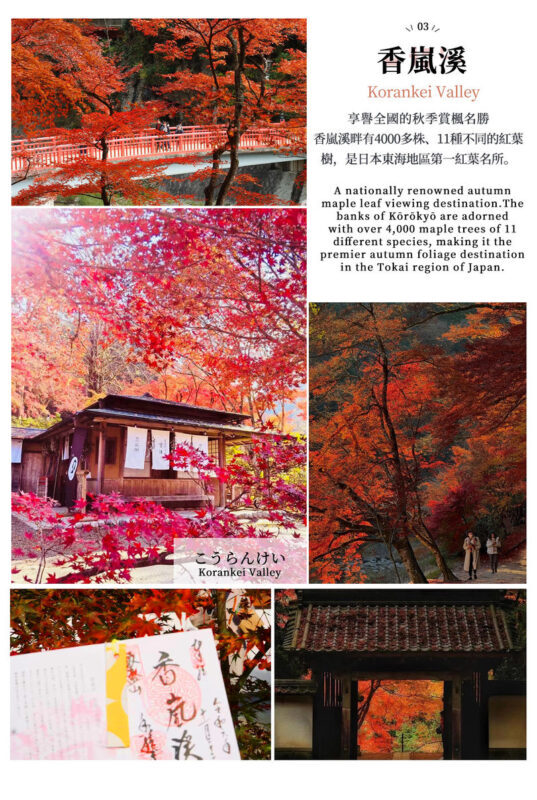
- Korankei’s maple collection: More than 4,000 trees across 11 varieties make this the day’s main foliage stop.
- Transport from Nagoya: The tour includes round-trip transfers, tolls, parking, and fuel.
- A set, traffic-sensitive schedule: Expect a long day, with Korankei time adjusted according to road conditions.
- Season matters: Natural color and bloom vary, so the three stops may not all be at their best on your date.
Three very different autumn scenes
This is not simply a drive to one famous maple spot. Each stop offers a distinct reason to go: an old Zen temple, a rare cherry-blossom season, and a valley known for its maples. That variety is the tour’s main appeal, especially if you have only one day outside Nagoya.
The route also solves a practical problem. These sights are spread out, and arranging separate transport can take planning. Here, you travel in one vehicle and leave the driving, tolls, and parking to the operator. That convenience is worth considering against the tour’s fixed pace and limited time at each stop.
The advertised starting price is US$49.20, while the Xianglan Stream Cherry & Maple Leaves package is listed from US$70.29. Confirm the exact package and date price before booking. The fare can be good value if you want a full day of transport to three places, but it is not an all-inclusive day: personal expenses and tips are extra.
You can also read our reviews of more tours and experiences in Aichi.

Eiho-ji: an old ginkgo and a quieter start
The first stop is Kokeizan Eiho-ji, reached at about 11:00 after a 10:00 departure from Nagoya. You have roughly an hour to explore on your own. Founded during the Kamakura period by Zen master Muso Kokushi, the temple takes its name from the Tiger Stream of Mount Lu, a reference to the scenery associated with that Chinese mountain.
The main draw for autumn visitors is the 700-year-old ginkgo in front of the main hall. Its age and setting give the tree more presence than a quick photo stop might suggest. Ceramic lanterns add another distinctive detail, while the temple’s pond garden is designated a national scenic spot.
The Kannondo and Kaisando halls are national treasures of Japan. You should allow time to notice the buildings and garden rather than making the ginkgo your only goal. This is a self-guided visit, however, so the hour goes quickly if you want a calm look around and time for photos.
Eiho-ji also gives the day a change of mood. The next two stops are about seasonal color and outdoor scenery; the temple offers a more contemplative setting. If you like historic religious sites, this stop is a useful counterpoint. If your only aim is maximum maple time, you may wish the schedule gave more hours to the later stops.
Obara: cherry blossoms in the season of red leaves
Around 13:15, the tour reaches the Obara Shikizakura Festival for a scheduled 30-minute visit. Shikizakura are a type of cherry tree that can flower in both spring and autumn, unlike the familiar Somei Yoshino, which is associated with spring. In Obara, more than 10,000 of these trees create the possibility of cherry flowers and autumn foliage in the same view.
That combination is the day’s most unusual feature. It is also the least predictable. The trees do not guarantee a full display on every visit: flowering depends on the season and weather, and the red leaves can be ahead of or behind their peak too. If the blossoms are sparse, this short stop may feel less compelling than the temple or Korankei.
The festival dates provided are November 16 to December 1, with local events and stalls. Check the dates for your travel year, since the listed festival window may not apply every year. A half-hour is enough for a brief look, but it does not leave much room to linger or explore beyond the immediate viewing area.
Bring a warm layer, particularly if rain or wind is forecast. A cold, wet day can make the short outdoor stop feel shorter still. The route’s value comes from seeing several different sights, not from a guarantee that each one will be in perfect seasonal condition.
Korankei: the day’s main maple stop
The tour reaches Korankei at about 15:00. This is the headline foliage stop, with over 4,000 maple trees across 11 varieties. The planting tradition began in the 17th century, when Sansuei Zenji started planting maples near Kojaku-ji Temple and Mount Arashi. Today, Korankei is regarded as a leading autumn-leaf destination in the Tokai region.
The planned visit is two hours, but time here can range from about 120 to 210 minutes depending on traffic and the day’s arrangements. That flexibility matters. Korankei is the stop most likely to reward a slower walk and unhurried viewing, but congestion can also eat into the time available or delay the return.
This is where the tour’s practical strengths and limitations meet. You avoid organizing transport and parking yourself, yet your visit still follows the group schedule. Keep an eye on the agreed meeting time and return point. The parking area can be some distance from where you spend your time, and a delay getting back to the vehicle can affect departure.
For many people, Korankei will be the day’s highlight. The tree count and variety offer more than a single photogenic corner, and the mix of temple surroundings, mountain setting, and autumn color gives the visit a different feel from a city park. Still, the foliage is natural, not staged. A late or early season, rain, or changing temperatures can alter what you see.
The Nagoya departure and a long day on the road
The meeting point is beside the Ministop Tsubakicho store at Nagoya Station’s Taikodori Exit, at 5-10 Tsubakicho, Nakamura-ku. Arrive 15 minutes before the 10:00 departure. Late arrivals and no-shows are treated as forfeiting the tour, with no refund.
The expected return is around 20:00 to 20:30, though the return may begin around 18:30 and arrival depends on road conditions and how smoothly the day runs. Do not plan an evening booking, train connection, or flight that relies on arriving at a precise time. The operator advises leaving the evening free, and that is sensible for a peak-season road trip.
This is a fixed international group tour. The guide may communicate in Chinese and English, or use simple multilingual explanations. Depending on how many people book, you might travel in a small vehicle with the driver also acting as guide. In that arrangement, safety comes first and commentary may be brief.
Guide assignments vary. Ms. Guo has been praised for adjusting arrangements to conditions and helping with photos, but you cannot assume she will lead your departure. Treat the guide primarily as your organizer and practical point of contact, rather than expecting a long, detailed talk at every stop.
What the price covers, and what to check
The listed inclusions are round-trip transfers from the meeting point, toll fees, parking, fuel, and a professional driver-guide. Personal expenses and gratuities are not included. Food is not listed as an inclusion, so plan to cover any meals or snacks yourself.
The fare can make sense if you value a day without managing several transport legs. It is less suited to someone who wants to set their own pace, spend a long time at one site, or change plans on the fly. There are no temporary stops in non-scenic areas, and leaving the group means giving up the remaining tour services.
Infants and children must be counted in the passenger total. Children aged 0 to 2 ride free only if they do not need a separate seat; children aged 3 and older pay the adult rate. Child seats are not available. Each passenger may bring one piece of luggage free, while extra pieces incur a fee of ¥2,000 each, payable on-site. The operator can refuse a booking if people or luggage exceed the vehicle’s capacity.
The tour is not recommended for people with epilepsy, heart disease, asthma, or other serious medical conditions. Participants aged 70 and over need a medical certificate, and seniors aged 70 or above and pregnant participants must return a waiver form at least one day before departure. Pets are not allowed, and anyone who appears intoxicated may be refused service without a refund.
How to choose the right date
For this trip, date choice matters as much as the route. The Obara festival is listed for November 16 to December 1, but the actual bloom and foliage conditions vary with the weather. The operator does not offer a refund simply because the colors or blossoms are not as expected once the itinerary is confirmed.
If seeing both cherry flowers and red leaves is your main reason for booking, check seasonal updates close to your date and keep your expectations flexible. The rare overlap is the appeal, but nature does not work to a timetable. Korankei is a strong reason to go even if Obara is past or short of its best display.
Weather can change the experience too. Rain and wind make outdoor stops colder and less comfortable, and traffic can compress the schedule. Wear layers and shoes suitable for time outdoors, and avoid stacking another commitment onto the return evening.
Who should book this day trip?
I’d choose this tour if you are based in Nagoya, want to see several autumn sights in one day, and prefer transport arranged for you. It is particularly appealing if the Obara cherry-and-maple combination catches your eye, or if Korankei is on your wish list but you do not want to work out the journey yourself.
It is less ideal if you want a leisurely temple visit, a long festival stop, or a guaranteed peak display. The hour at Eiho-ji and half-hour at Obara are short, while the Korankei visit can shift with traffic. If you prefer independent travel, the group’s fixed route may feel restrictive.
Book it for variety and convenience, not certainty. The most rewarding version of the day brings together the old ginkgo, autumn sakura, and Korankei’s maples at the right moment. But if the blossom overlap is your one must-see, choose your date carefully and accept that seasonal conditions are part of the bargain.
Must-See Autumn Foliage Spots in Nagoya, Japan | Kokeizan Eiho-ji Temple: 700-Year-Old Ginkgo Trees & the Unique Spectacle of Obara Cherry Blossoms and Maple Leaves Together & Korankei Valley Autumn Leaves One-Day Tour
“It rained at least 3/4 of the day on Nov 25, Korankei and the temple was worth a visit the view was spectacular. The cherry tree place can skip as…”
FAQ
Where does the tour depart from?
Meet beside the Ministop Tsubakicho store at Nagoya Station’s Taikodori Exit, at 5-10 Tsubakicho, Nakamura-ku. Arrive 15 minutes before the 10:00 departure.
When does the tour return to Nagoya?
The expected return is around 20:00 to 20:30, but the actual arrival time depends on road conditions. The return may begin around 18:30, so keep the evening free.
How long do you spend at each stop?
The planned visits are about one hour at Eiho-ji, 30 minutes at Obara, and two hours at Korankei. Korankei time may range from 120 to 210 minutes depending on traffic and the day’s arrangements.
Are the cherry blossoms at Obara guaranteed to be in bloom?
No. Shikizakura bloom in spring and autumn, but the actual display varies with climate and timing. The tour does not provide a refund because natural scenery differs from expectations.
What is included in the tour price?
The price includes round-trip transfers, toll fees, parking fees, fuel, and a professional driver-guide. Personal expenses and tips are not included.
What languages may the guide use?
The tour is multilingual. Communication may be in Chinese and English or in simple multilingual explanations. If a small vehicle is used, the driver may also serve as guide and commentary may be brief.
Can children join the tour?
Yes. Infants and children must be included in the passenger headcount. Children aged 0 to 2 are free if they do not need a separate seat, while children aged 3 and older pay the adult rate. Child seats are not available.
Can I bring luggage?
Each passenger may bring one piece of luggage free. Extra pieces cost ¥2,000 each, payable on-site, and the operator may refuse a booking if the vehicle cannot accommodate the group or its luggage.
Is the tour suitable for seniors or pregnant participants?
Participants aged 70 and over need a medical certificate. Seniors aged 70 or above and pregnant participants must also sign and return a waiver form at least one day before departure.
What happens if I arrive late or leave the group?
Late arrivals and no-shows are treated as forfeiting the tour, with no refund. If you leave after the tour begins, you give up the remaining services and are responsible for your own safety and belongings.