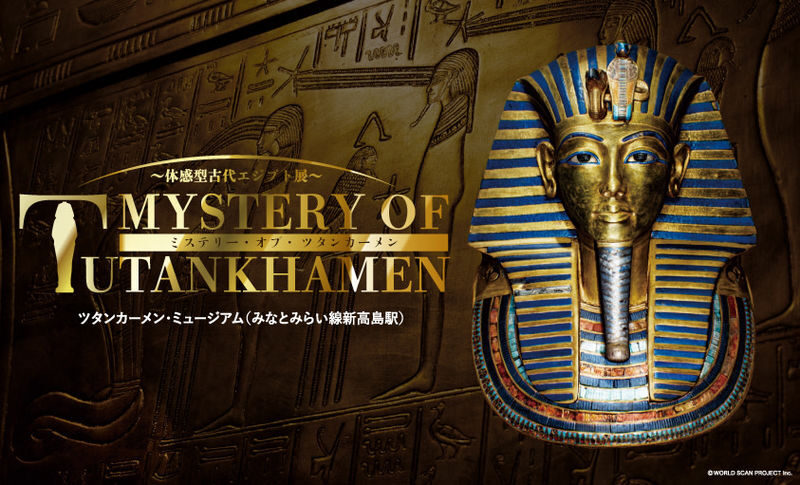
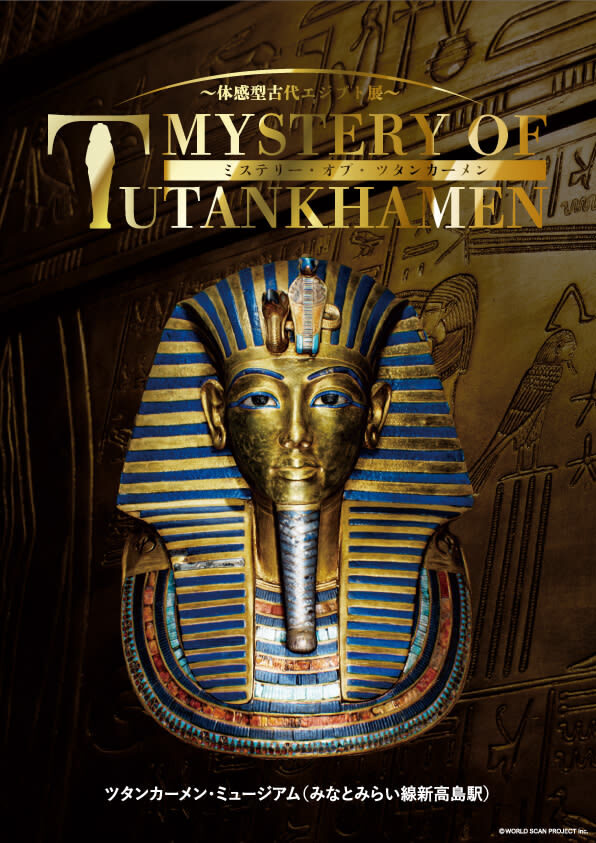
King Tutankhamun’s tomb is the main event here: a life-size recreation that gives you a sense of the chambers and treasures, without a flight to Egypt. More than 130 replicas, projections and 3D scans of the actual golden mask and throne build a picture of the young king and the world around him.
I like two things in particular: the mix of careful replicas and digital displays, which makes the story accessible, and the freedom to explore at your own pace. The main consideration is that this is a fairly small exhibition, not a day-long museum visit. Some video content may also lack English translation.
- Key points before you book
- What the Tutankhamen exhibition sets out to explain
- The recreated tomb gives the visit its sense of place
- More than 130 replicas, and why that distinction matters
- Projections and 3D scans bring key objects closer
- A compact visit with a clear route through the story
- Is the admission price fair for the time inside?
- Getting to the venue and planning your visit
- Who should put this on a Yokohama itinerary?
- Should you book the Tutankhamen exhibition?
- FAQ
- How long should I plan for the exhibition?
- What are the opening hours?
- Are the items original artifacts?
- Is there a full-scale recreation of Tutankhamun’s tomb?
- Are the exhibits available in English?
- Can I take photos?
- How do I get to the museum by train?
- Do children under six need a ticket?
- Can I leave and come back in?
- The Best Of Yokohama!
- More Museum Experiences in Yokohama
- More Tours in Yokohama
- More Tour Reviews in Yokohama
Key points before you book
 1 / 3
 2 / 3
 3 / 3
- The tomb replica is full scale: It helps you picture the tomb as a place, not just a set of objects.
- More than 130 replicas fill the rooms: The exhibition focuses on recreated artifacts, not original Egyptian treasures.
- Digital elements add scale and detail: Projections and 3D scans show the golden mask and throne.
- Allow about one to one and a half hours: The hall is compact, but its explanations and displays give you plenty to take in.
- English support may vary: Some exhibit text is available in Japanese and English, but a video at the start may not have English subtitles.
- The train is the practical choice: Shin-Takashima Station is about a seven-minute walk away.

👉 See our pick of the 6 Fantastic Workshops & Classes In Yokohama
What the Tutankhamen exhibition sets out to explain
This exhibition is more than a parade of golden-looking objects. Its story begins with a family upheaval. Akhenaten and his family promoted a shift from Egypt’s many gods toward worship of one god. After their rule, they were erased from history for a long time. Their son, Tutankhamun, inherited a kingdom shaped by that change, and the gaps in the historical record help explain why so much about him remains uncertain.
The exhibition uses that background to frame Tutankhamun’s short life and the later discovery of his tomb. That context matters. Without it, a collection of replicas can feel like a room of striking objects with little to connect them. Here, the displays aim to show how the king’s family, reign and burial fit together.
The attraction’s name promises mystery, and the exhibition leans into it through recreated spaces and digital imagery. But keep expectations grounded: the objects are replicas, not original artifacts from Egypt. If you approach the visit as an accessible introduction to Tutankhamun and a chance to see how his tomb might have looked, the format makes sense.
You can also read our reviews of more museum experiences in Yokohama


The recreated tomb gives the visit its sense of place
The one-to-one-scale tomb replica is the clearest reason to choose this exhibition over a book or a quick video. You can see the burial setting as a connected space, which helps make the objects feel part of a larger story. One small but useful point: a visitor who had missed another Tutankhamun exhibition found the full-scale recreation a highlight. That is a strong clue about what to prioritize when you enter.
The scale also helps you reset your expectations. The whole exhibition hall is not especially large, and the visit is often about an hour to 90 minutes. The tomb may give you a vivid sense of the subject, but this is not an expansive museum with room after room of original finds. A visitor who expected a large collection found the overall venue smaller than anticipated, though the atmosphere and final section still made an impression.
I’d take time here rather than rush straight to the golden objects. Look at the recreated setting as a way to understand where the treasures belonged. If you’re visiting with children or anyone who learns better through space and images than long text panels, the full-scale element may make the subject easier to grasp.
More than 130 replicas, and why that distinction matters
The exhibition presents more than 130 replicas, including carefully made versions of objects associated with Tutankhamun. The aim is visual access: you can get close to the forms and details without treating the objects as untouchable museum treasures. One visitor specifically appreciated that the displays were not behind glass and that photography was allowed. That can make the exhibition feel less distant and lets you take pictures of pieces you want to remember.
The trade-off is straightforward. Replicas can look convincing, but they don’t carry the same historical weight as the originals. If your main goal is to see authentic Egyptian artifacts, this is not a substitute for a museum collection. If you want an approachable look at the tomb’s contents and the visual world around the young king, replicas are a useful way to make that story tangible.
There is also a practical benefit to the replica format: you can spend your attention on shape, decoration and arrangement rather than trying to peer through glass. Still, photography rules and exhibit access can change, and some facilities or displays may be unavailable on a particular date. Treat the advertised contents as the planned experience, not a guarantee that every display will be present.
Projections and 3D scans bring key objects closer
Alongside the physical recreations, projections and CG 3D scans of the actual golden mask and throne add a different kind of detail. The replicas give you objects to look at in space; the digital material can help you notice the form of objects that are famous partly because of their craftsmanship and surface detail.
The exhibition’s digital tools are worth seeing as supplements, not replacements for a full museum display. They can show shape and detail in a way that a static object may not. Visitors have particularly praised the 3D video and the realistic coffin figures. If you’re drawn to the visual side of ancient Egypt, this combination of replicas and digital presentation is likely to be the most rewarding part of the visit.
One caution for English-speaking visitors: a video near the start may not have English subtitles. English and Japanese writing is available in at least some parts of the exhibition, but that does not mean every film or explanation is translated. If you need English for every detail, be ready to rely on the text panels where available and enjoy some sections mainly for their visuals.
A compact visit with a clear route through the story
Think of this as a self-guided exhibition rather than a scheduled tour with a named guide. You can move at your own pace, spend longer with the tomb and replicas, and keep going when you’ve had enough of a display. The self-guided format is especially handy if you’re visiting with children or have different levels of interest in the group.
The precise layout and sequence can change, so I wouldn’t promise a fixed stop-by-stop route. Broadly, expect the exhibition to connect the story of Akhenaten’s family and Tutankhamun with the tomb, its objects and the process of archaeological discovery. The replicas and recreated setting give you the visual framework; the explanatory displays provide the historical thread.
Allow about one to one and a half hours for a steady visit. Some people finish in roughly an hour, while a special event or a closer read of the explanations can stretch the visit. One event marking 300,000 visitors included staff acting out scenes as they explained archaeological work and the origins of the exhibits. That kind of performance is an occasional event, not something to count on every day.
The compact scale is a strength if you want a manageable indoor stop in Yokohama. It is less appealing if you’re looking for a large museum to fill half a day. Pair it with another Minato Mirai activity if you want a fuller day out, but don’t book it expecting the exhibition alone to occupy several hours.



Is the admission price fair for the time inside?
Admission is listed from $16.45, with the actual price depending on the selected ticket and booking details. One past visitor referred to paying 2,600 yen and felt the venue was small for that price. That reaction is worth taking seriously: value here depends less on the number of rooms than on how much you enjoy the subject and the presentation.
I’d consider it good value if you’re curious about Tutankhamun, want to see a full-scale tomb recreation, or need an indoor activity that fits into a short Yokohama visit. The number of replicas, the digital displays and the historical explanations add substance to a compact space. If you’re mainly seeking original artifacts or a long museum visit, you may feel the ticket costs too much for the time spent inside.
Children aged 0 to 5 enter free, which can make the outing easier to plan for families. The exhibition is also a sensible choice when weather makes outdoor plans uncertain. One visitor specifically found it useful as an indoor option when the forecast was unstable.
Getting to the venue and planning your visit
The museum is at Yokohama Minato Mirai PLOT48, 4-chome-3-1 Minatomirai, Nishi Ward, Yokohama. Shin-Takashima Station on the Minatomirai Line is about a seven-minute walk from Exit 2. The activity details also give a separate meeting-point address of 3-chome-4-1 Minatomirai, so check the map pin and venue address before setting out. That small address difference is worth sorting out in advance.
Opening hours are listed as 10:00 a.m. to 6:00 p.m. every day, with last admission 30 minutes before closing. Hours and closure dates can change, so check the official information close to your visit. If you arrive late in the day, leave enough time to get inside by 5:30 p.m. and see the displays at a comfortable pace.
A mobile voucher is accepted for entry. Tickets are date-specific, so choose carefully, and re-entry is not allowed once you leave the venue. Cancellations made at least one day before the activity date are eligible for a full refund under the stated conditions, through Klook customer service. Since one visitor reported frustration when unable to cancel an order, don’t assume a last-minute change will be easy.
If you’re driving, be aware that parking may take time. One visitor reported spending more than an hour looking for a space outside the premises. That is an individual experience, not a promise of what you’ll face, but the nearby train connection makes public transport the safer plan.
Who should put this on a Yokohama itinerary?
I’d recommend this exhibition to anyone with an interest in ancient Egypt who wants a visual introduction rather than a dense academic museum visit. It also suits families and curious first-timers: a recreated tomb, coffin figures and digital content give the subject more variety than a wall of text alone.
It may not be the right pick if your priority is seeing original Egyptian artifacts, or if you’re sensitive to untranslated video content. The exhibition is also short, so travelers who want a full-day attraction should combine it with other plans in Yokohama.
Should you book the Tutankhamen exhibition?
Book it if the idea of seeing a full-scale tomb recreation and more than 130 replicas appeals to you, and you’re happy with a focused visit of about an hour to 90 minutes. The best case for the ticket is the combination of place, objects and digital displays, not the size of the hall.
Skip it if you expect a large museum or a collection of originals. For a short indoor stop with a clear subject and plenty to look at, though, it offers a useful glimpse of Tutankhamun’s world. Check the language support and venue pin before you go, then leave yourself enough time to explore without rushing.
Mystery of Tutankhamen: An immersive Ancient Egyptian exhibition in Yokohama
“It is a lot of fun. The exhibition hall is actually not very large, but the exhibits and explanations are very rich. We happened to catch an event…”
FAQ
How long should I plan for the exhibition?
Plan for about one to two hours. A typical visit may take around an hour to 90 minutes, depending on how long you spend with the exhibits and explanations.
What are the opening hours?
The listed hours are 10:00 a.m. to 6:00 p.m. daily. Last admission is 30 minutes before closing. Hours and closure dates may change, so check the official information before visiting.
Are the items original artifacts?
No. The exhibition features more than 130 replicas, along with projections and CG 3D scans of the actual golden mask and throne.
Is there a full-scale recreation of Tutankhamun’s tomb?
Yes. The exhibition includes a recreation of the tomb at a one-to-one scale.
Are the exhibits available in English?
Some written information is available in Japanese and English, but English support may vary. A video at the start may not have English subtitles.
Can I take photos?
A visitor reported that photography was allowed and the objects were not behind glass. Exhibit rules may change, so follow any instructions at the venue.
How do I get to the museum by train?
Take the Minatomirai Line to Shin-Takashima Station. The venue is about a seven-minute walk from Exit 2.
Do children under six need a ticket?
Children aged 0 to 5 enter free.
Can I leave and come back in?
No. Re-entry is not allowed after you leave the venue.