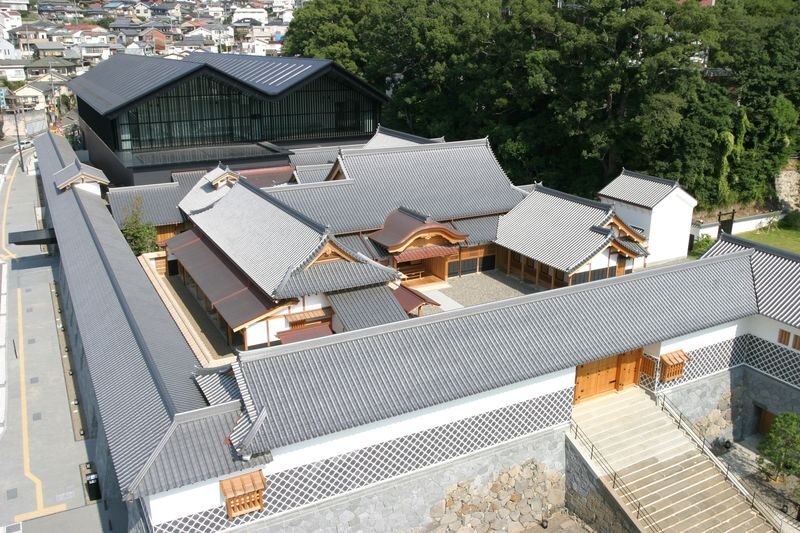
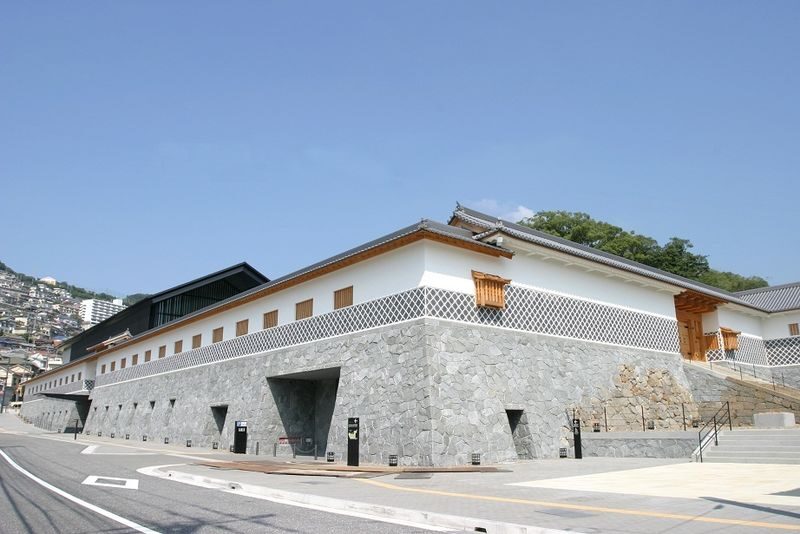
Nagasaki’s long history of overseas exchange comes into focus at this museum, where a historic building has been restored to its original location. The permanent exhibition covers about 400 years of contact with the outside world, alongside a reconstructed magistrate’s office that brings the city’s former civic life into view.
I like the contrast between the broad history displays and the more specific material on Christian persecution in the magistrate’s office zone. I also like that the museum mixes objects with video and hands-on displays, so you have more than labels to work through.
The main drawback is that English information is limited, which can make some exhibits harder to follow. A translation app may help, and you should check ahead for the Sunday plays if you want to see one.
- What to know before you go
- Start with Nagasaki’s overseas connections
- The restored magistrate’s office
- How to make the most of the exhibits
- Is the low entry price good value?
- Getting there and timing your visit
- Using the mobile ticket without a hitch
- Who should put this museum on the plan?
- FAQ
- What does the permanent exhibition ticket include?
- Are special exhibitions included?
- How much does admission cost?
- What are the museum’s opening hours?
- Which days is the museum closed?
- How do I get to the museum?
- Do I need to show the voucher on my phone?
- The Best Of Nagasaki!
- More Tickets in Nagasaki
- More Tours in Nagasaki
- More Tour Reviews in Nagasaki
What to know before you go
 1 / 4
 2 / 4
 3 / 4
 4 / 4
- The permanent exhibition covers roughly 400 years of Nagasaki’s overseas exchange and local history.
- A restored historic building anchors the visit, returning part of the old magistrate’s office to its original site.
- Christian history has its own focus, with related materials displayed in the Nagasaki Magistrate’s Office Zone.
- Sunday short plays bring historical events to the stage, but the information provided does not give performance times.
- The entry price starts at about $3.15, while special exhibitions require a separate ticket.
- Plan for limited English interpretation and have your mobile voucher ready for staff to operate at entry.

👉 See our pick of the 15 Best Walking Tours In Nagasaki (With Reviews & Prices)
Start with Nagasaki’s overseas connections
The museum’s main subject is early modern Nagasaki and its role in overseas exchange. That focus gives your visit a useful frame: instead of treating the city’s past as a string of dates, the displays bring together historical materials and fine art objects connected with centuries of contact beyond Japan.
The time span is broad, about 400 years, so the permanent exhibition is best approached as an introduction to the city rather than a single-topic collection. If you are coming from Nagasaki’s harbor, historic streets, or other sights, it can help explain why the city’s past has a character distinct from many other places in Japan.
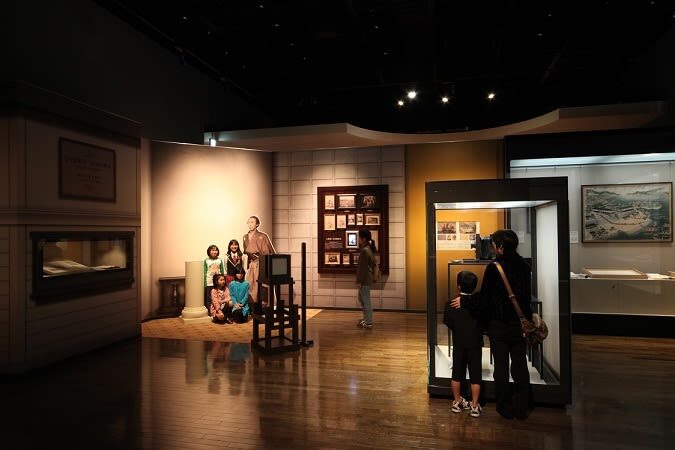
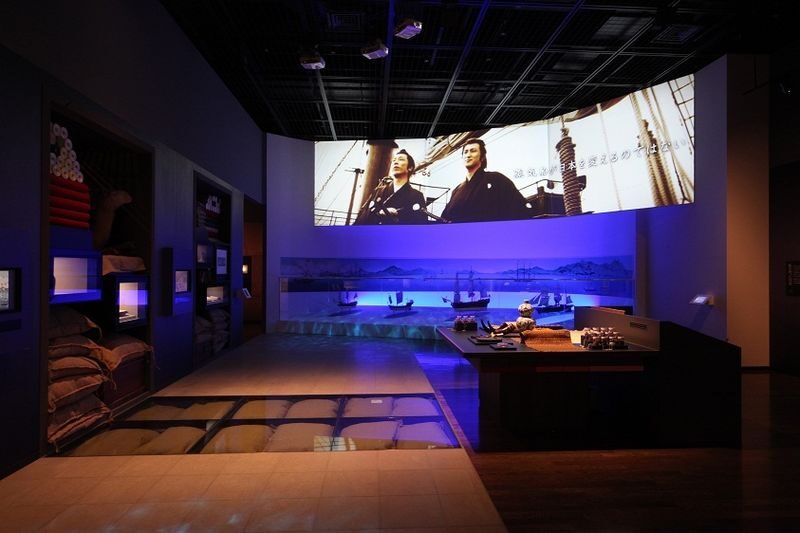
The museum also includes hands-on and video corners. These offer a change of pace from viewing objects in cases, and can help you follow the subject even if you do not read every label. Still, do not count on every part of the visit being easy to understand in English. One useful preparation is to download a translation app before arriving, as reliable internet access is not guaranteed everywhere.
I would give yourself time to pause and look closely rather than treating this as a quick stop between attractions. The exhibitions cover different periods and themes, and the museum’s value comes partly from seeing how those pieces fit together.
You can also read our reviews of more tours and experiences in Nagasaki



The restored magistrate’s office
The Nagasaki Magistrate’s Office Zone is the museum’s most distinctive feature. A historic building has been restored to its original location, giving you a tangible connection to the civic setting behind the exhibits. It is a welcome shift from displays that rely only on cases and text panels.
The zone explains the role of the magistrate’s office and includes materials related to Christians. That makes it a worthwhile stop if you want to understand more than Nagasaki’s trade links. The display about Christian persecution places a difficult part of the area’s past alongside the wider story of the city.
Short plays introduce historical events in this zone on Sundays. They can add a human scale to the history, but the available information does not specify start times, length, or language. If the performance matters to your plans, check the museum’s official information before you go rather than assuming a show will be running when you arrive.
You can visit the zone as part of the permanent exhibition ticket. The ticket does not include special exhibitions, which have a separate fee, so check what is on if a temporary show is the main reason for your visit.
How to make the most of the exhibits
The permanent exhibition combines historical materials, fine art, video, and interactive displays. I would move between these formats instead of trying to read every panel in order. A video or hands-on corner can help reset your attention, especially if you are visiting with children or have already spent the morning in other museums.
For English-speaking visitors, the main practical point is to set expectations. Some displays may be difficult to follow without translation, so a phone-based translation tool can be useful. Download the app or any material you plan to use in advance, and do not assume you will have a strong connection inside the building.
The museum has drawn visitors who value its careful presentation and the chance to look through the displays at an unhurried pace. It can also be relatively quiet, though crowd levels will vary. That quieter feel is helpful when you want time with the objects, but it also means the experience depends on your own interest in history rather than a lively group atmosphere.
There is no fixed guided route or named guide included in the ticket information. Think of this as a self-paced museum visit with the option of a Sunday performance, not a guided tour. You can spend more time on the themes that interest you and skim sections that do not.
Is the low entry price good value?
At a starting price of about $3.15, the permanent exhibition is an inexpensive way to add historical context to a Nagasaki visit. You get access to both the History and Culture Exhibition Zone and the Nagasaki Magistrate’s Office Zone, along with the video and hands-on areas described for the museum.
That price makes the museum an easy choice if you have a genuine interest in local history, overseas exchange, or the city’s Christian past. The value is less clear if you are looking for a highly interactive English-language experience or a short attraction with an obvious visual payoff at every turn. Limited English material may mean you get more from the visit if you are comfortable using a translation app.
Special exhibitions are not included. If one is on during your visit, decide whether it is worth the extra cost after checking the subject and fee. The permanent exhibition ticket remains useful on its own, but it does not cover every display the museum may have open.
Children aged five and under enter free. That can make the museum a modest family stop, though the displays are history-focused and the specific child-friendly elements listed are the hands-on and video corners.
Getting there and timing your visit
The museum is at 1-1-1 Tateyama in Nagasaki. From JR Nagasaki Station, you can take a prefectural bus from the FamilyMart bus stop on the Kazagashira-machi to Yumemiyako Line and get off at the Museum of History and Culture stop. Another option is to get off at Sakuramachi Koen-mae and walk about three minutes.
By tram, Sakuramachi is about a five-minute walk away. You can also get off at Nagasaki Ekimae or City Hall and walk about ten minutes toward the Sakuramachi area. The museum is around a ten-minute walk from JR Nagasaki Station, so walking is an option if you are happy to make the trip on foot.
There is parking, but spaces are limited. Public transport is the more practical choice, particularly if you are already moving around central Nagasaki by tram or bus.
Opening hours change by season. From April through November, the museum is open from 8:30 a.m. to 7 p.m.; from December through March, it closes at 6 p.m. Last entry is 30 minutes before closing. The museum closes on the first and third Monday of each month, with the closure moving to the following day when a public holiday falls on a Monday.
Exhibition rooms can also close for changes or other reasons. Check the official website before setting out, especially if you are visiting on a specific day or hoping to see a Sunday play.
You can also read our reviews of more historical tours in Nagasaki


Using the mobile ticket without a hitch
The ticket is a mobile voucher, and you need to show it on a smartphone or another internet-connected device. Open your Klook booking and select View Voucher before reaching the entrance if you can. The display link may not load where Wi-Fi or mobile service is unavailable, so having it ready in advance is sensible.
At entry, museum staff must operate the electronic voucher. Do not try to redeem it yourself: operating it incorrectly can invalidate the ticket and prevent entry. Although the booking is digital, be prepared to show it at the counter or to staff as directed.
The voucher is valid for 180 days from booking confirmation and expires at 11:59 p.m. on the final day. It is nonrefundable, so confirm your date and check the museum’s opening schedule before purchasing. Same-day booking and instant confirmation are available, but neither removes the need to check that the museum is open.
Who should put this museum on the plan?
I would recommend the museum to anyone who wants more context for Nagasaki’s role in overseas exchange and its local history. It is especially relevant if you are interested in Christian history, historical buildings, or the way civic institutions shaped the city.
It also suits visitors looking for an affordable indoor stop with room to explore at their own pace. The restored magistrate’s office, historical materials, and Sunday plays give the visit several points of interest beyond a standard display of objects.
If you prefer English-first interpretation or a guided experience, this may not be the best fit on its own. You can still get value from the visit, but plan to use a translation app and check whether the Sunday performance fits your schedule. For a low-cost history stop that adds depth to a Nagasaki itinerary, the permanent exhibition is a sound choice.
Nagasaki Museum of History and Culture Ticket in Nagasaki
“Definitely worth a visit. 2 permanent exhibitions, 1 on the history of Nagasaki and the other on Christian persecution.”
FAQ
What does the permanent exhibition ticket include?
It includes admission to the History and Culture Exhibition Zone and the Nagasaki Magistrate’s Office Zone at the Nagasaki Museum of History and Culture.
Are special exhibitions included?
No. Special exhibitions require a separate fee.
How much does admission cost?
The ticket price starts at about $3.15. The exact price may depend on the package option available when you book.
What are the museum’s opening hours?
From April through November, it is open from 8:30 a.m. to 7 p.m. From December through March, it is open from 8:30 a.m. to 6 p.m. Last entry is 30 minutes before closing.
Which days is the museum closed?
It is closed on the first and third Monday of each month. If one of those Mondays is a public holiday, closure moves to the following day. Exhibition rooms may also close for changes or other reasons.
How do I get to the museum?
You can take a prefectural bus from JR Nagasaki Station to the Museum of History and Culture stop, or use tram stops including Sakuramachi, Nagasaki Ekimae, and City Hall. The museum is also about a ten-minute walk from JR Nagasaki Station.
Do I need to show the voucher on my phone?
Yes. You must present the mobile voucher on a smartphone or another internet-connected device. Museum staff must operate the electronic voucher at entry, so do not try to redeem it yourself.