
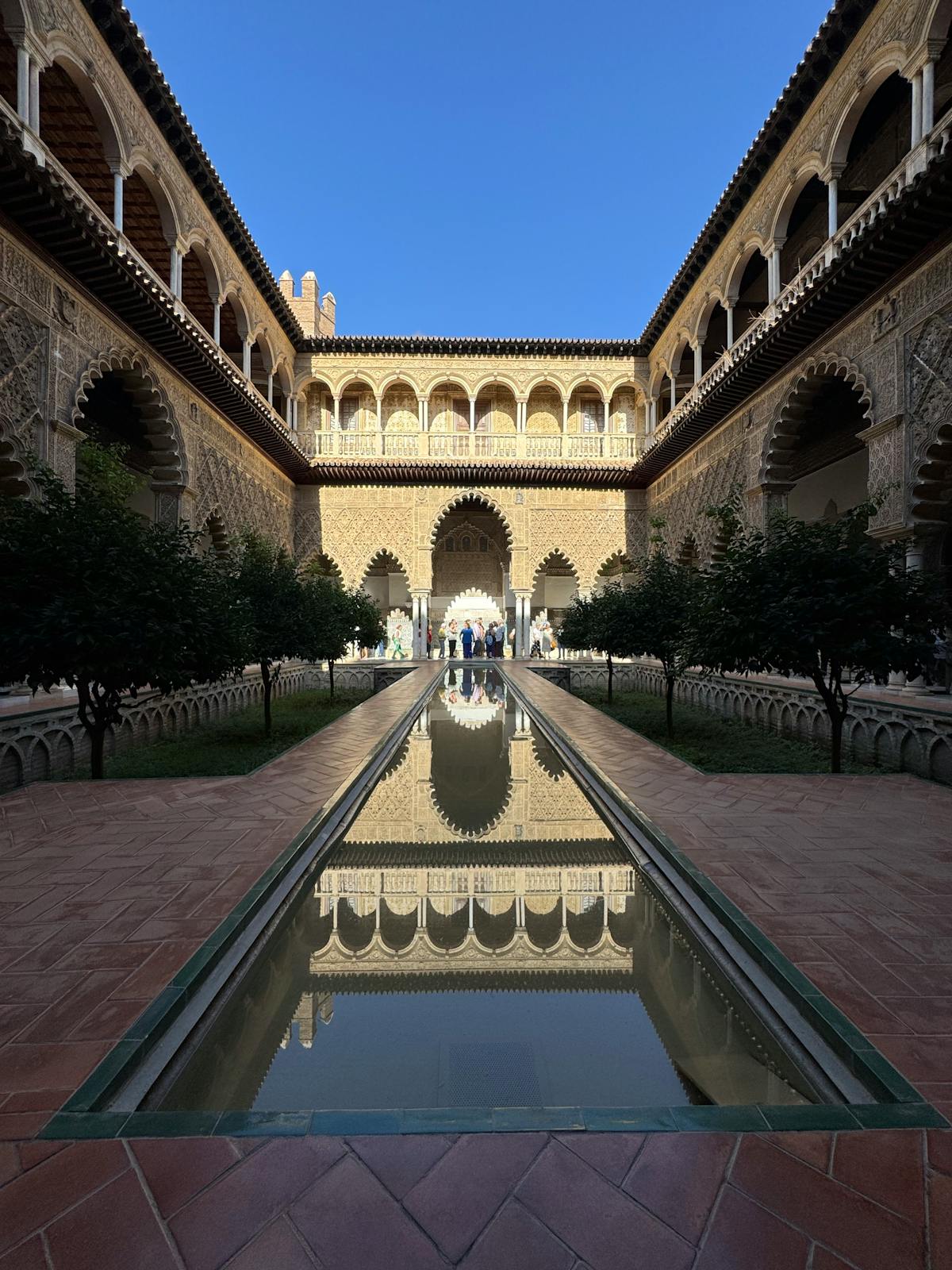
You might know the Royal Alcazar as the Water Gardens of Dorne from Game of Thrones. That is how most people first hear about it. But the real story is better than any HBO script: a fortress started by a Muslim caliph in 913 AD, expanded by every ruler who took Seville for the next six centuries, and still used as a residence by the Spanish royal family today. When King Felipe VI visits Seville, he stays here. It is the oldest active royal palace in Europe, and it shows — every corridor is a collision of Moorish geometry, Gothic vaulting, Renaissance tiling, and Baroque gardens that somehow works.
The catch? Like the Alhambra in Granada, this place has a strict visitor cap — 750 people inside at any time. Tickets are timed-entry, nominative (your passport or ID number is printed on them), and they sell out days or weeks ahead during peak season. Show up without a reservation and you will join a line that may not move. I have seen March and April slots disappear two to three weeks in advance.
This guide covers every way to get in: official tickets, guided tours, combo deals with the Cathedral, and what to do if your dates are already sold out. Plus the practical stuff — what you will actually see inside, when to go, and the ID rules that trip people up at the gate.
In a Hurry? My Top Picks
- Best guided tour (Alcazar only): Alcazar Skip-the-Line Tickets and Guided Tour — $44 per person. Ninety minutes with skip-the-line entry and a guide who knows the Mudejar details cold. Book this tour
- Best combo (Alcazar + Cathedral): Alcazar and Cathedral Tour with Skip the Line — $71.35 per person. Four hours covering both of Seville’s heavyweight attractions in one morning. Book this tour
- Best small group (max 9): Alcazar Exclusive Small Group — $67.72 per person. You actually hear the guide, and 90 minutes in a group this size feels like a private tour. Book this tour
- Best budget guided option: Royal Alcazar Skip-the-Line Guided Tour — $42 per person. The cheapest guided tour that still includes entry. 105 minutes, solid guides. Book this tour
- In a Hurry? My Top Picks
- How Royal Alcazar Tickets Work
- Self-Guided vs. Guided Tour
- Best Tours for the Royal Alcazar
- 1. Alcazar Skip-the-Line Tickets and Guided Tour —
- 2. Alcazar and Cathedral Tour with Skip the Line — .35
- 3. Alcazar Exclusive Small Group, Max 9 — .72
- 4. Royal Alcazar Skip-the-Line Guided Tour —
- 5. Alcazar and Cathedral Exclusive Group, Max 9 — .21
- When to Visit the Alcazar
- Tips That Save You Hassle
- What You Will See Inside
- More Seville Guides
How Royal Alcazar Tickets Work
The ticket system at the Alcazar is strict, and understanding it before you book saves you from the common mistakes that leave people locked out.
Nominative tickets: Every ticket requires your full name, passport or national ID number, and nationality at the time of booking. Staff check IDs at the entrance. You can show the original document or a photo on your phone, but the name and number must match. Tickets cannot be transferred or resold. If you booked under the wrong name, you are not getting in.
Timed entry in 30-minute slots: You pick a specific half-hour window when you buy. Entry times run from 9:30 AM to around 4:30 PM in winter, extending to 6:30 PM in spring and summer. You can enter from 15 minutes before your slot until 30 minutes after. So a 13:30 ticket lets you in between 13:15 and 14:00. Miss that window and the ticket is gone — no refunds, no exchanges.
The capacity limit: Only 750 people are allowed inside at any given time. Once a slot fills, it fills. During March through May and September through October, popular morning slots sell out one to three weeks in advance on the official site. Summer is slightly easier because the heat scares off some visitors, but do not count on walk-up availability.
Official ticket price: General admission is currently around 14-16 euros through the official Alcazar website (alcazarsevilla.org). That gets you the ground floor palace rooms and the full gardens. The Royal Apartments (Cuarto Real Alto) on the upper floor cost extra and have even stricter time slots — book those the moment they become available if you want them.
What the official ticket does NOT include: No guide. No audio guide (though you can rent one inside). No skip-the-line — you still queue with everyone else who has a ticket for your time slot. And the official site can be finicky; it occasionally shows availability that disappears during checkout.
Self-Guided vs. Guided Tour
Two very different experiences, and the right choice depends on how you travel.
Going solo with the official ticket: Works if you have done your homework beforehand. The Alcazar’s history spans from the Umayyad caliphate through the Spanish Empire, and the building does not explain itself. The information panels inside are sparse. Download the free official app or grab an audio guide at the entrance (around 5 euros). The advantage is total freedom — linger in the Patio de las Doncellas for twenty minutes, speed through the less interesting Gothic Palace, spend an hour in the gardens. At 14-16 euros, it is also significantly cheaper.
Going with a guide: The Alcazar rewards explanation more than most monuments. Why did a Christian king hire Muslim craftsmen? What do the Arabic inscriptions say in a Catholic palace? How did Columbus’s voyages change the building? A good guide turns carved plaster into a story about power, religion, and cultural collision that you genuinely remember a year later. The skip-the-line entry also means you walk past the general admission queue, which on a busy spring morning can stretch for 30 to 45 minutes even with a ticket.
The price gap between a basic official ticket and a guided tour is roughly $25 to $55 depending on the tour. For the Alcazar specifically, I would say the guide is worth it for first-time visitors. The building is confusing to navigate on your own (multiple palaces built across different centuries, connected by narrow passages), and the cultural layering — Moorish, Gothic, Renaissance, Baroque — makes no sense without context.
Best Tours for the Royal Alcazar

Five tours from the database covering different needs: an Alcazar-only guided tour, a combo with the Cathedral, a small-group option, a budget pick, and a premium combo for people who want the best of both with fewer crowds.
1. Alcazar Skip-the-Line Tickets and Guided Tour — $44

Duration: 1.5 hours | Price: $44 per person | Type: Guided tour with skip-the-line entry
This is the one I would point most first-time visitors toward. You get a knowledgeable guide, skip-the-line entry (which matters more here than at almost any other Seville attraction), and a focused 90-minute walkthrough of the palace complex and gardens.
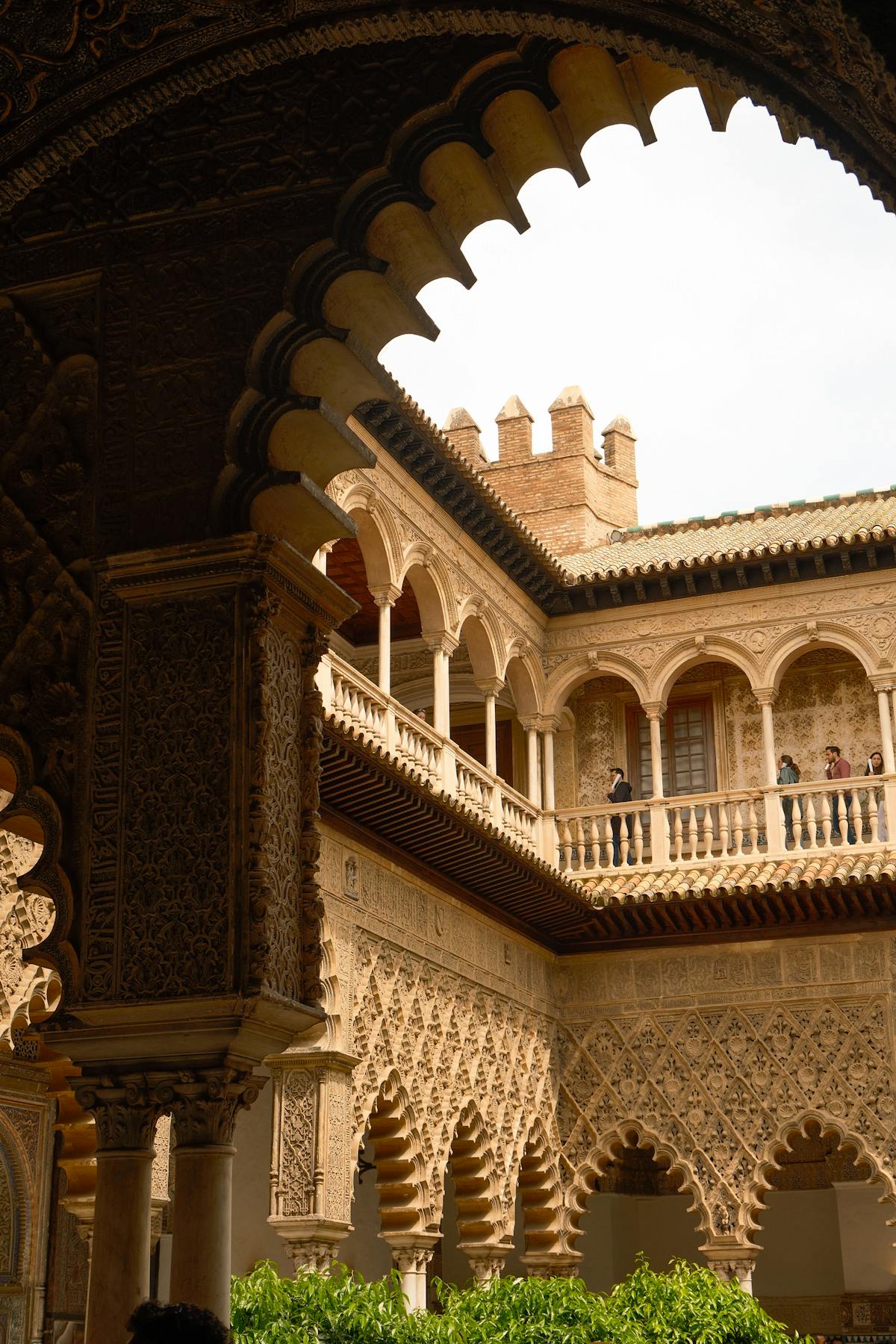
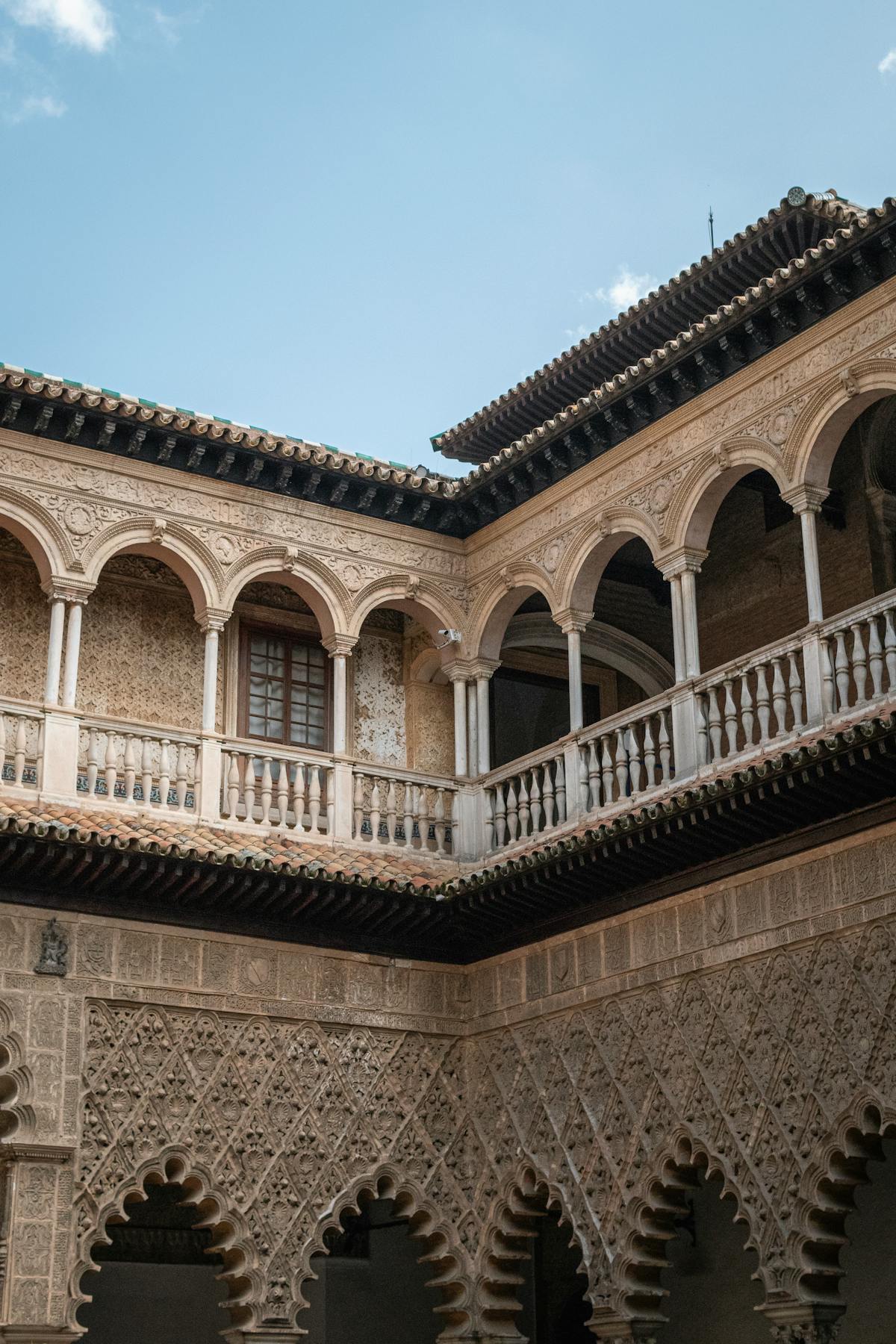
The guides on this tour tend to be local historians who specialize in the Mudejar period — the fascinating era when Christian kings hired Muslim craftsmen to build in Islamic style. That cultural collision is the entire story of the Alcazar, and having someone explain the Arabic calligraphy on the walls of a Catholic palace makes the building click in a way that wandering alone does not.
Ninety minutes sounds short, but the guides are efficient. You hit the Patio de las Doncellas, the Hall of Ambassadors, the Patio de las Munecas, and the gardens without feeling rushed. After the tour ends you are free to stay and wander the gardens on your own — and you should, because they are enormous.
At $44, you are paying about $28 more than the official ticket. But you are buying guaranteed entry, no queuing, and expert commentary in a building that genuinely needs it.

2. Alcazar and Cathedral Tour with Skip the Line — $71.35
Duration: 4 hours | Price: $71.35 per person | Type: Guided combo tour with skip-the-line
If you are planning to visit both the Alcazar and the Seville Cathedral (and you should — they are 200 meters apart), this combo saves you the hassle of booking two separate tickets and tours. Four hours covers both sites without the sprint-through-every-room feeling that plagues shorter combo tours.
The Cathedral portion includes the Giralda tower climb — 35 ramps (no stairs, because the muezzin rode a horse up to call prayers) leading to a panoramic view of Seville that puts every other viewpoint in the city to shame. The guide splits time roughly 50/50 between the two sites.
At $71.35, compare this to buying an Alcazar ticket ($16), a Cathedral ticket ($12), and two separate guided tours. The math works out in the combo’s favor, and you avoid the logistical headache of coordinating timed entries at two different monuments.
The four-hour duration is solid but not for everyone. If you have got small children or are not keen on a half-day walking tour, the Alcazar-only options might serve you better.
3. Alcazar Exclusive Small Group, Max 9 — $67.72
Duration: 1.5 hours | Price: $67.72 per person | Type: Small group guided tour (max 9 travelers)
The Alcazar has narrow corridors and small rooms where large tour groups become a problem. You end up straining to hear the guide while being pushed along by the group behind you. This tour caps the group at nine people, which changes the experience entirely.
You can pause in doorways. You can ask the guide about specific details without holding up a crowd. In rooms like the Patio de las Munecas — which is genuinely tiny — having just a handful of people means you can actually look at the intricate plasterwork instead of someone’s backpack.
The guide quality on small-group tours tends to be higher too. The operators who run these charge more per person, attract travelers willing to pay for a better experience, and assign their best guides accordingly. Expect someone who can field detailed questions about the Mudejar period, the Nasrid influence, and the centuries of additions that make the Alcazar feel like an architectural timeline.
At $67.72, it is $24 more than the standard guided tour. For couples or small groups who treat this as a highlight rather than a checkbox, the premium is justified. For budget travelers, the $42-44 options cover the same ground with more company.
4. Royal Alcazar Skip-the-Line Guided Tour — $42

Duration: 105 minutes | Price: $42 per person | Type: Guided tour with skip-the-line entry
The budget pick if you want a guide but do not need the smallest group or the combo deal. At $42, it is the cheapest guided Alcazar tour available, and the 105-minute duration gives you 15 extra minutes compared to most competitors — which the guides typically use to spend more time in the gardens rather than rushing through them.
The skip-the-line entry is included, and the guides cover the same key areas: Patio de las Doncellas, Hall of Ambassadors, the gardens, and the major highlights in between. Group sizes run larger than the small-group option — expect 15 to 25 people depending on the day — but the guides handle it with headsets so you can hear clearly even in crowded rooms.
For budget-conscious travelers who recognize that the Alcazar needs a guide but do not want to spend $68-71 on one, this hits the right balance. The two dollars you save over the $44 GYG option is negligible, but the extra 15 minutes of tour time is a genuine advantage.
5. Alcazar and Cathedral Exclusive Group, Max 9 — $99.21
Duration: 3 hours | Price: $99.21 per person | Type: Small group combo tour (max 9 travelers)
The top-shelf option. Both the Alcazar and Cathedral with a maximum of nine people and a guide who does not have to project over a crowd. Three hours is well-paced for both sites — you are not sprinting through either one, and the guide can adapt based on what interests the group.
The Cathedral portion alone justifies some of the premium. Seville Cathedral is the largest Gothic cathedral in the world, and seeing it with a small group means your guide can actually stop in front of specific altarpieces, point out details in the stained glass, and explain the tomb of Columbus without being swept along by foot traffic.
At $99.21, it is not cheap. But consider what you are getting: two of Spain’s most important monuments, skip-the-line at both (the Cathedral queue can be 45 minutes on its own), a specialist guide, and a group small enough that you can ask questions. If you are spending two or three days in Seville and these are your must-see sites, spending $99 to experience them properly beats spending $60 on two mediocre experiences.
The trade-off versus the $71.35 combo is group size and guide quality. If budget matters, the standard combo is perfectly fine. If experience matters, this is the upgrade.
When to Visit the Alcazar
Seville’s climate is extreme, and it affects both crowds and your ability to enjoy the visit. Get the timing wrong and you are shuffling through packed rooms in unbearable heat.
Best months: March, April, October, November. Warm enough to enjoy the gardens, cool enough that three hours of walking is not miserable. Spring is particularly good because the gardens bloom — jasmine, orange blossoms, roses — and the scent inside the complex is something you do not get from photos. Book tickets at least two weeks ahead for March through May.
Summer (June to August): Seville regularly hits 40+ degrees in July and August. The palace rooms offer shade but little ventilation, and the gardens — while beautiful — feel like a furnace between noon and 5 PM. If you must visit in summer, book the first slot of the day (9:30 AM) or the last evening slot. The Alcazar offers evening visits in summer, typically from 9:30 PM to 11:00 PM, with atmospheric lighting and far fewer people. Those evening tickets cost around 14 euros and are worth it for the temperature alone.
Winter (December to February): Seville winters are mild compared to most of Europe — daytime temperatures around 12-16 degrees Celsius. Crowds thin out considerably, ticket availability improves, and the low winter sun creates beautiful light through the palace arches. The gardens are less impressive (fewer blooms), but the palace interiors are the star anyway. Shortest hours though — closing at 5:00 PM.
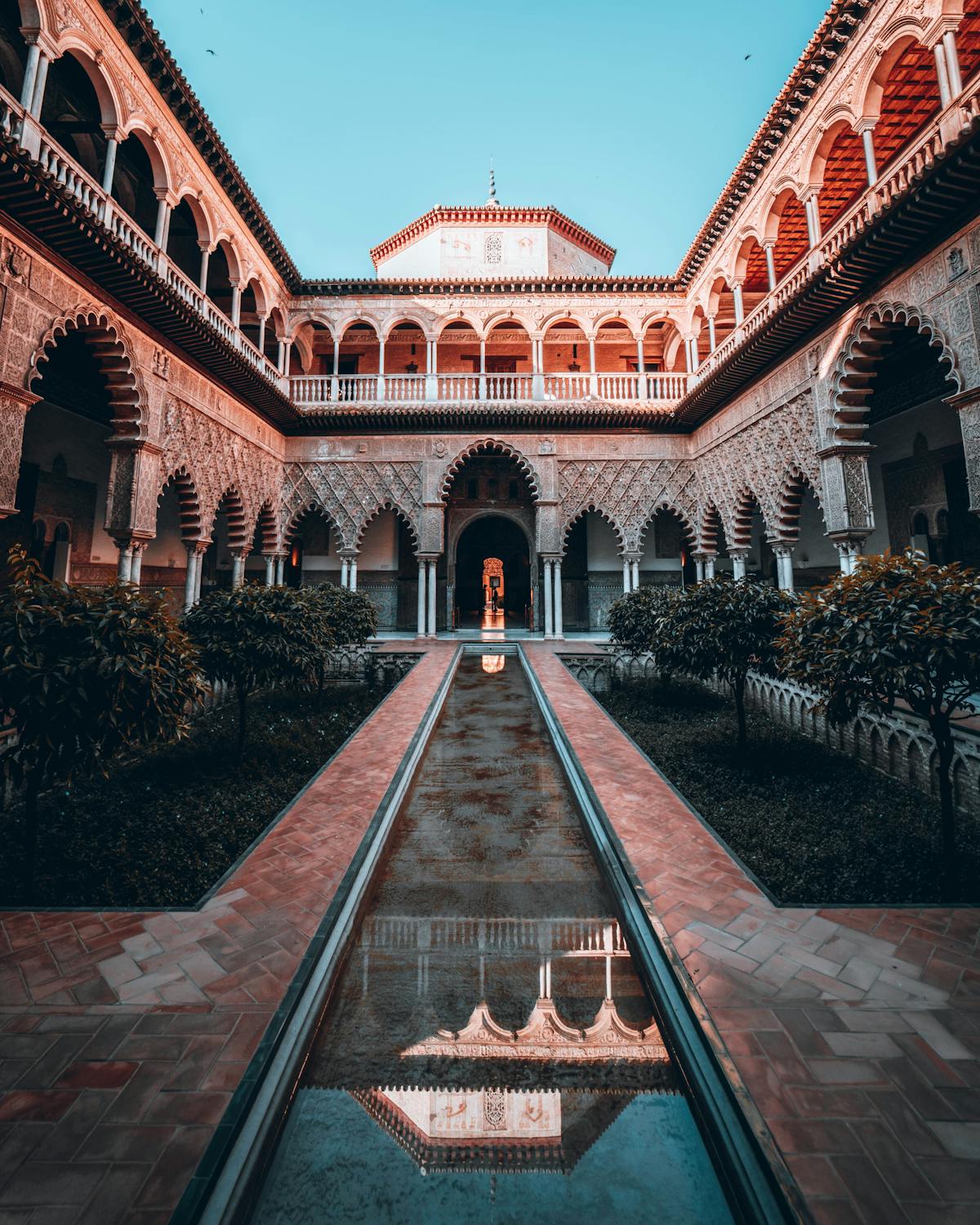
Time of day: First slot of the morning, without question. By 11:00 AM the tour groups converge and the smaller rooms become uncomfortable. The Patio de las Doncellas — the single most photographed spot — goes from serene to packed within about an hour of opening. If you can not get a morning slot, late afternoon (after 3:30 PM) is the second-best option as day-trippers start leaving.
Tips That Save You Hassle
Bring your ID to the gate. This is non-negotiable. Your ticket has your passport or national ID number printed on it. If you can not show a matching document, you do not enter. A clear photo on your phone works, but have it ready — the line moves faster when you are not fumbling through your camera roll.
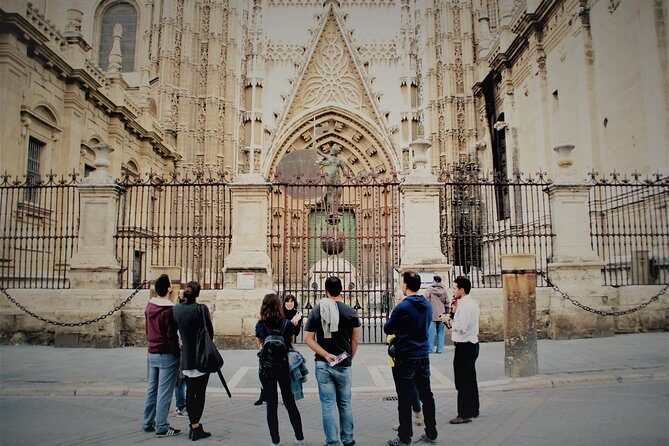
The entrance is at the Puerta del Leon, not the Patio de Banderas. First-time visitors often get confused. The Patio de Banderas is where you exit and where the onsite ticket office is. The actual entrance queue forms at the Lion Gate on the south side. If your guided tour has a meeting point, it is usually at or near the Lion Gate.
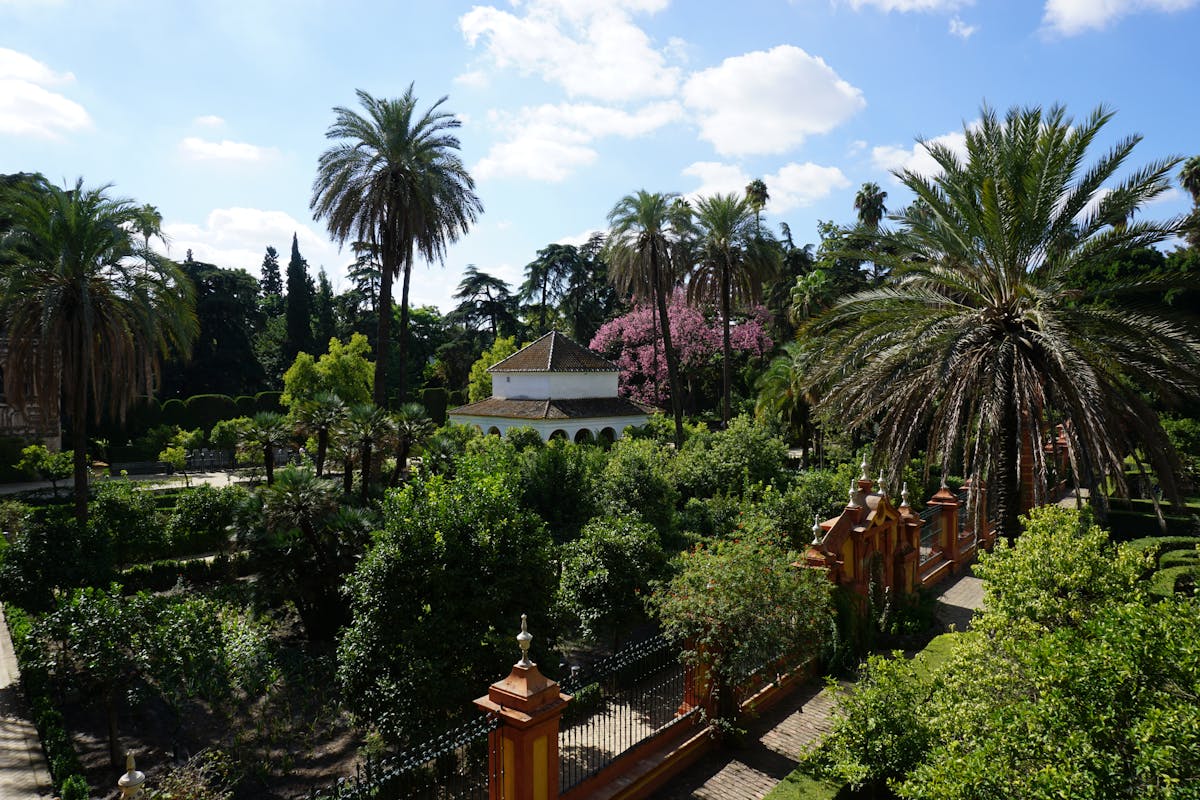
You can stay after your tour ends. All guided tours let you remain inside the complex after the guide finishes. Use this. Spend the post-tour time in the gardens, which most tours cover only briefly. The Mercury Pool, the Grotto Gallery, and the Garden of the Poets are all worth finding on your own.
The Royal Apartments are a separate booking. The Cuarto Real Alto (upper floor) requires its own ticket and time slot, separate from general admission. It is an additional 5-6 euros and shows you the private rooms the royal family actually uses. Availability is very limited — if you want it, book it the moment you secure your main ticket.
Wear comfortable shoes on flat soles. The palace floors are a mix of original tile, polished stone, and uneven cobblestones in the gardens. Heels are a bad idea. The garden paths are gravel in places and can be slippery after rain.
If tickets are sold out, book a guided tour instead. Tour operators hold reserved allocations of entry slots. When the official site shows no availability for your dates, a guided tour through GetYourGuide or Viator will often still have space. It costs more than the base ticket, but it gets you in.
Combine with the Cathedral while you are in the area. The Seville Cathedral and Giralda tower sit literally next door to the Alcazar. You can visit both in a morning or afternoon. If you are doing this, the combo tours in the list above are the most efficient way to handle it — one guide, one booking, skip-the-line at both.
What You Will See Inside
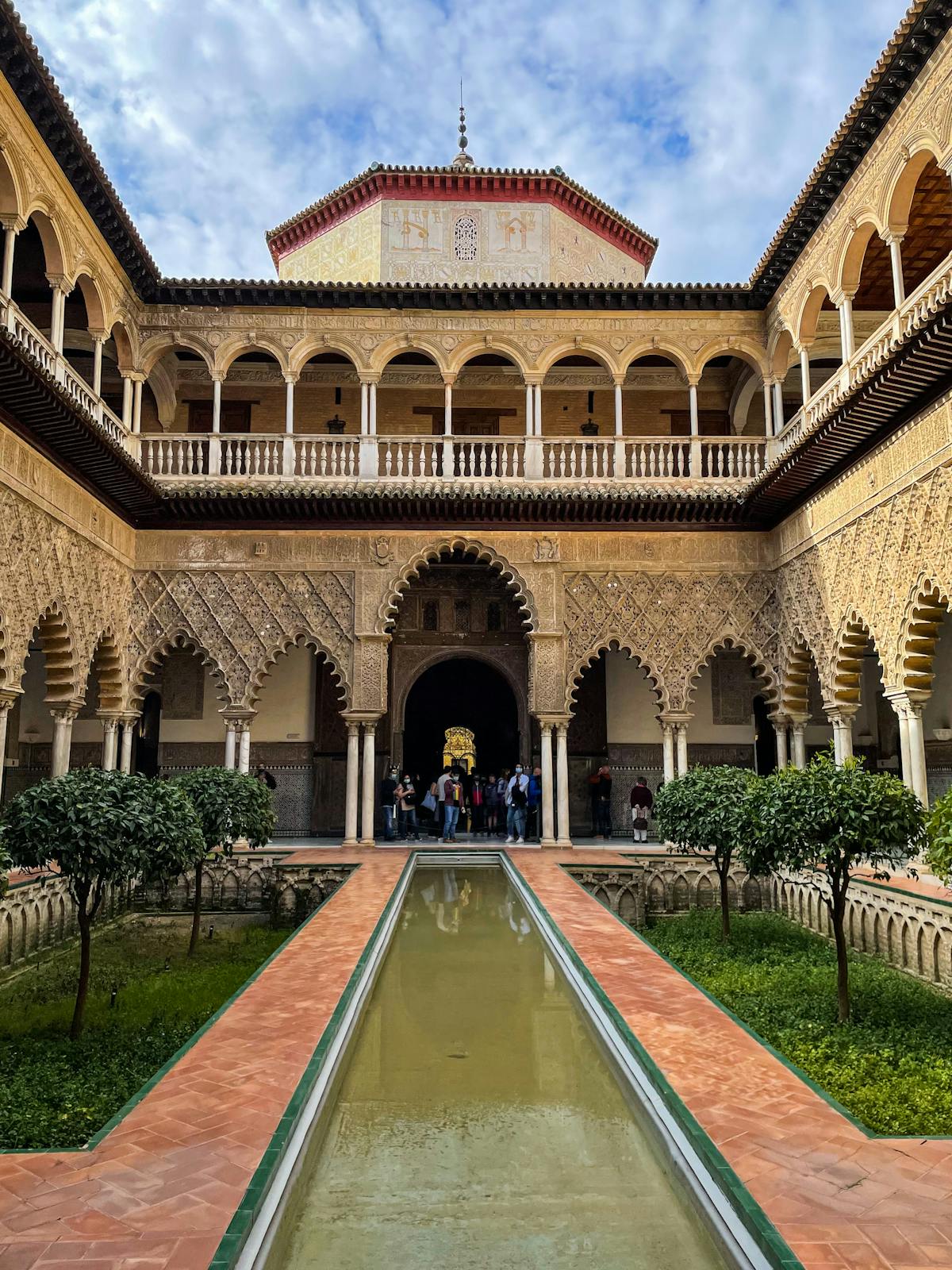
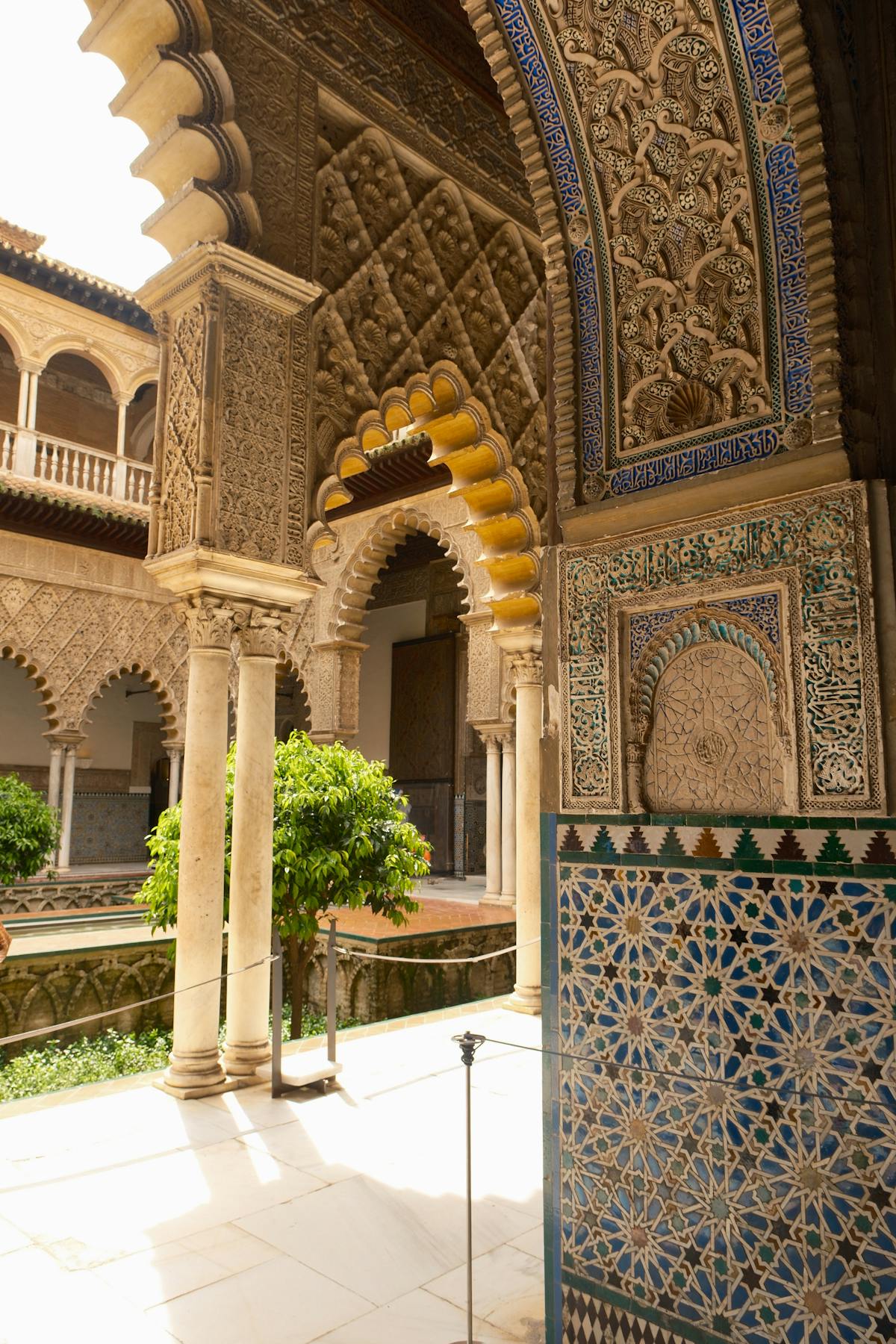
The Alcazar is actually several palaces built over six centuries, and understanding the layout makes the visit ten times better.
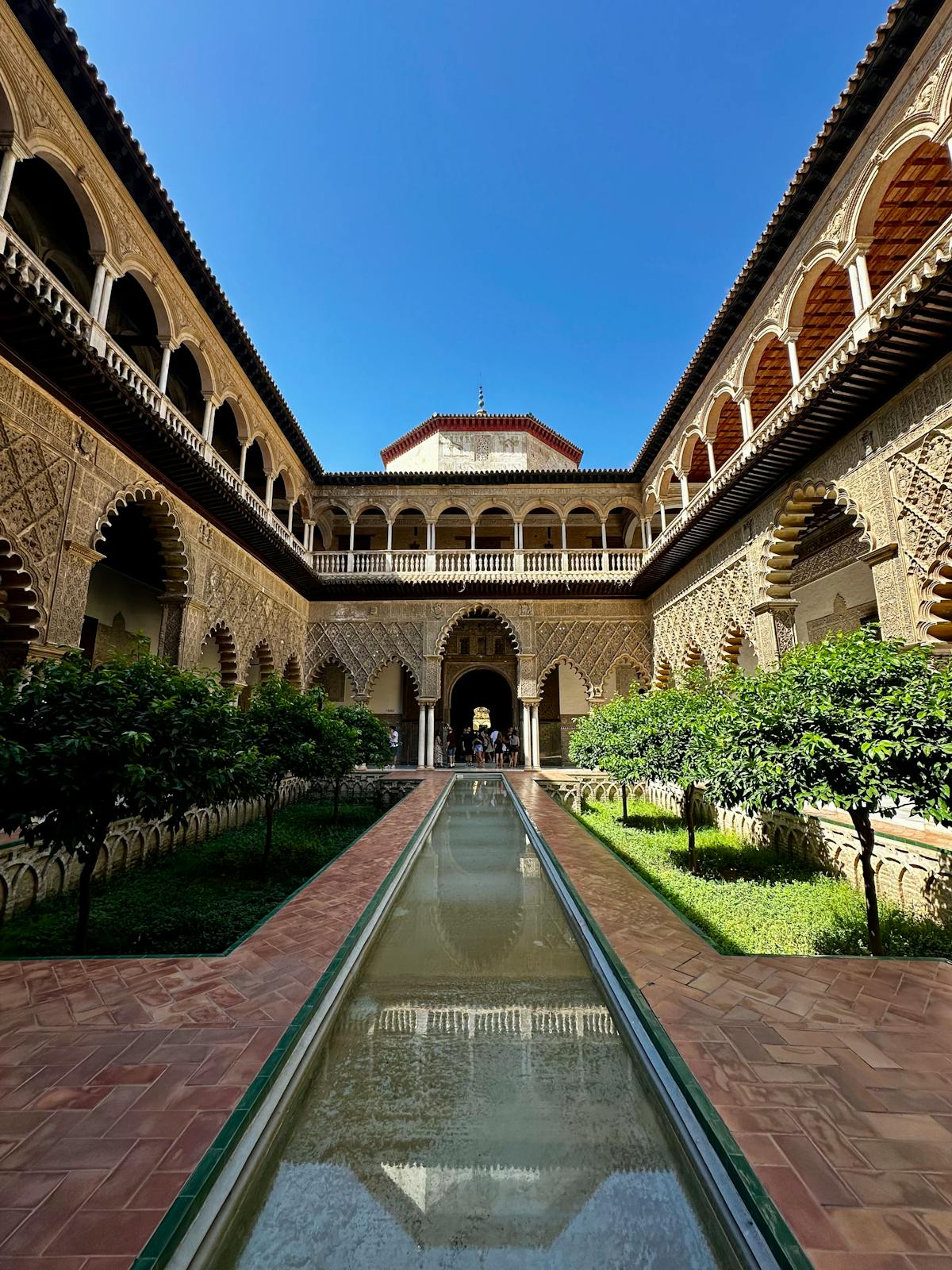
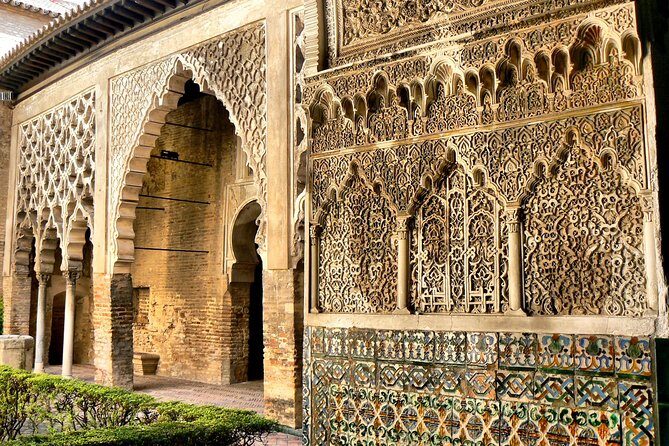
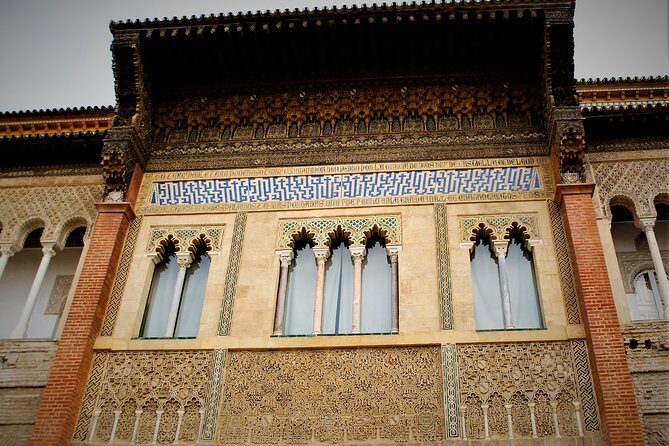
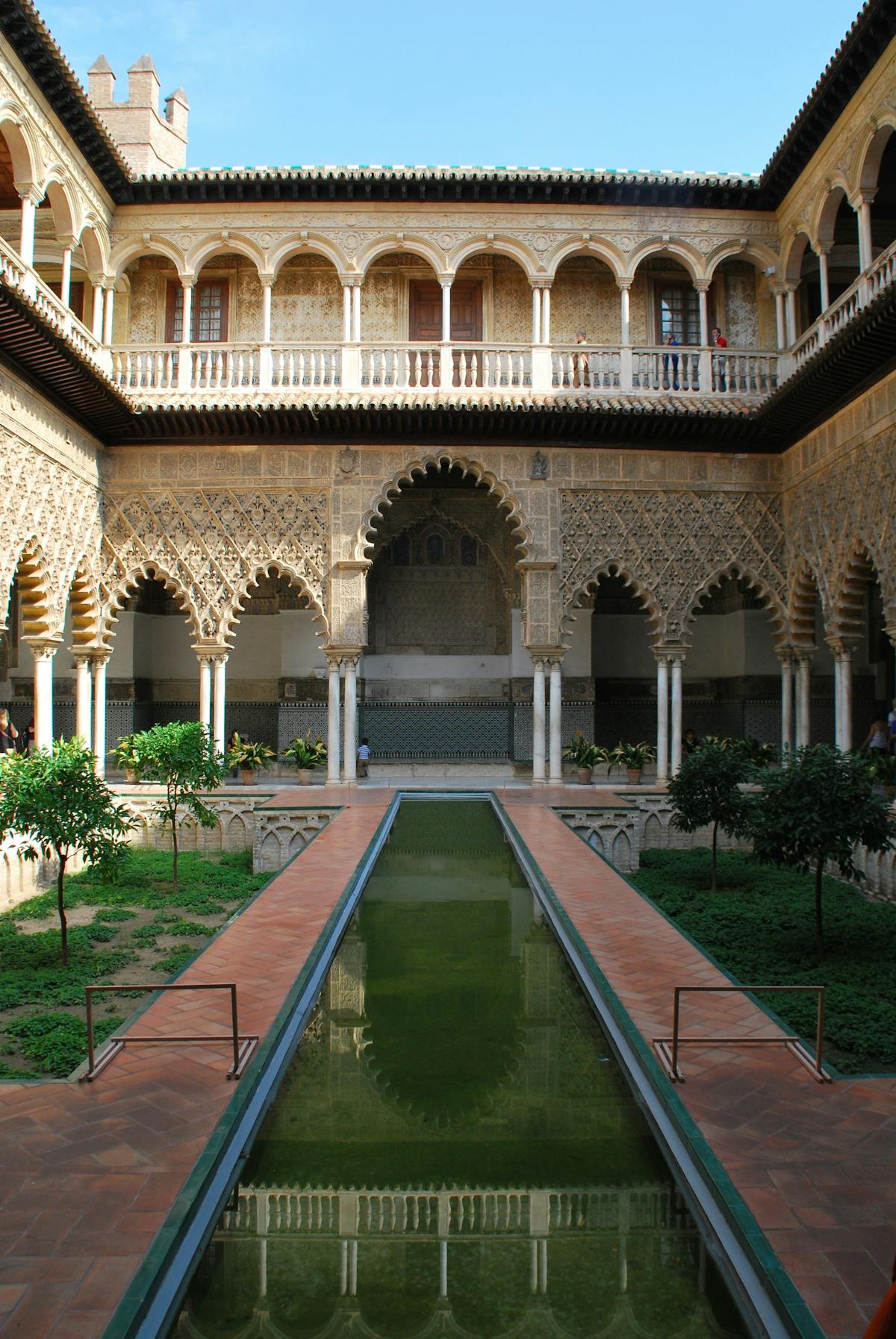
The Patio de las Doncellas (Courtyard of the Maidens): The centerpiece of the whole complex. A long sunken garden with a reflecting pool, surrounded by Mudejar arches with the finest tilework in the palace. King Peter I built this in the 1360s, hiring craftsmen from the Nasrid Kingdom of Granada — the same artisans who were building the Alhambra. The result is basically a satellite Alhambra inside a Christian palace.
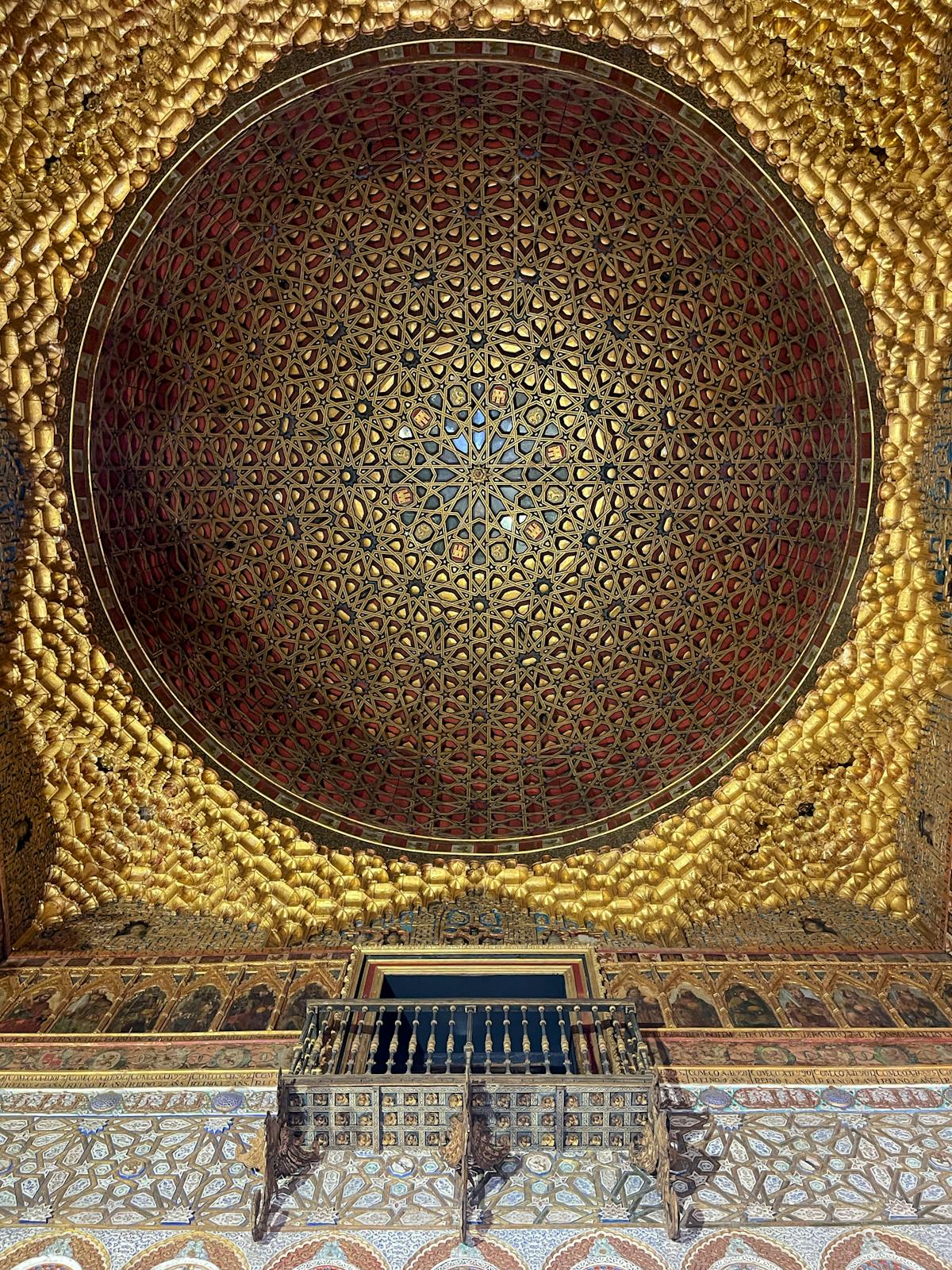
The Hall of Ambassadors (Salon de Embajadores): The largest room in the palace, capped by an extraordinary dome made of interlocking carved cedar wood that forms a half-sphere representing the heavens. The gold leaf catches whatever light enters the room, and the acoustic effect of speaking beneath it is eerie. This is where the Spanish monarchs received foreign dignitaries — and where Isabella and Ferdinand reportedly met with Columbus.
The Gothic Palace: A stark contrast to the Mudejar sections. Built by Alfonso X in the 13th century, it is austere, vaulted, and cool — almost church-like. The Tapestry Room here holds 16th-century wall hangings depicting Charles V’s North African campaigns. It is less flashy than the Mudejar rooms but worth a slow walk through.
The Patio de las Munecas (Courtyard of the Dolls): Tiny, intimate, and named for the small faces carved into the arch decorations. You need to look carefully to find them — they are worked into the geometric patterns and easy to miss if you do not know they are there. This was the private family area of the palace, away from the public reception rooms.
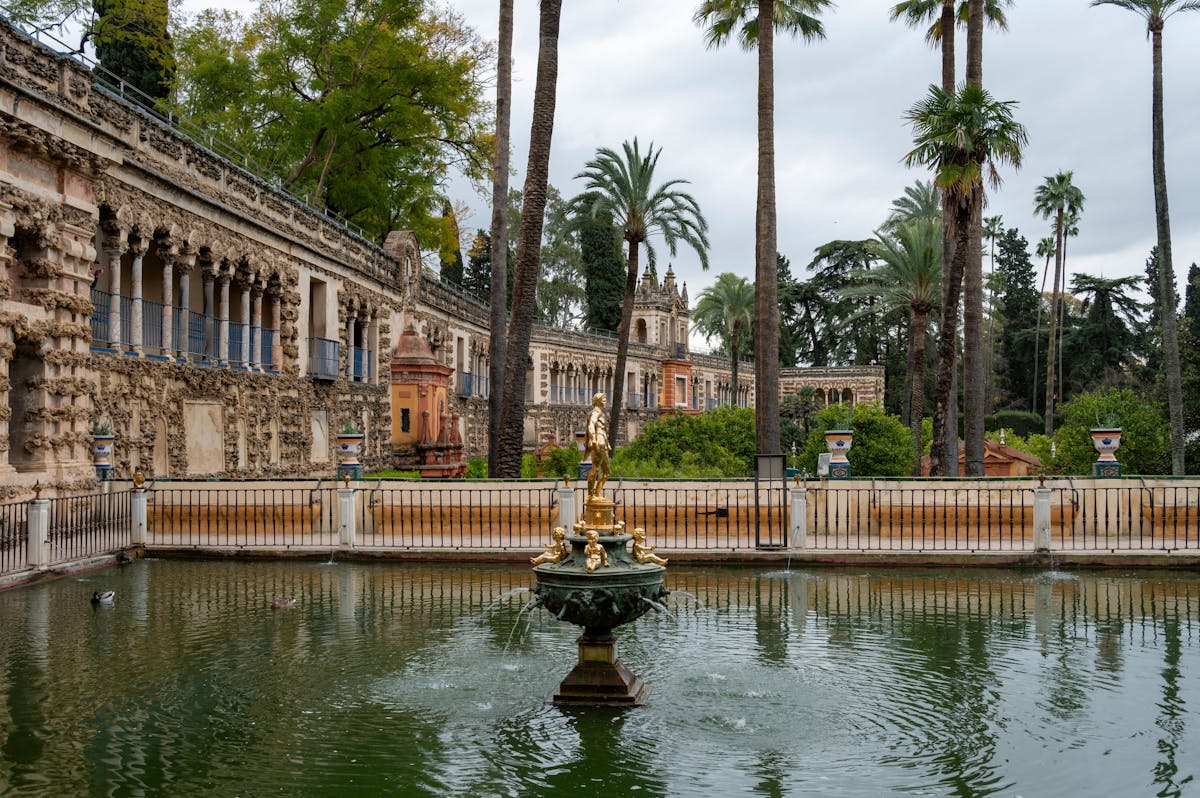
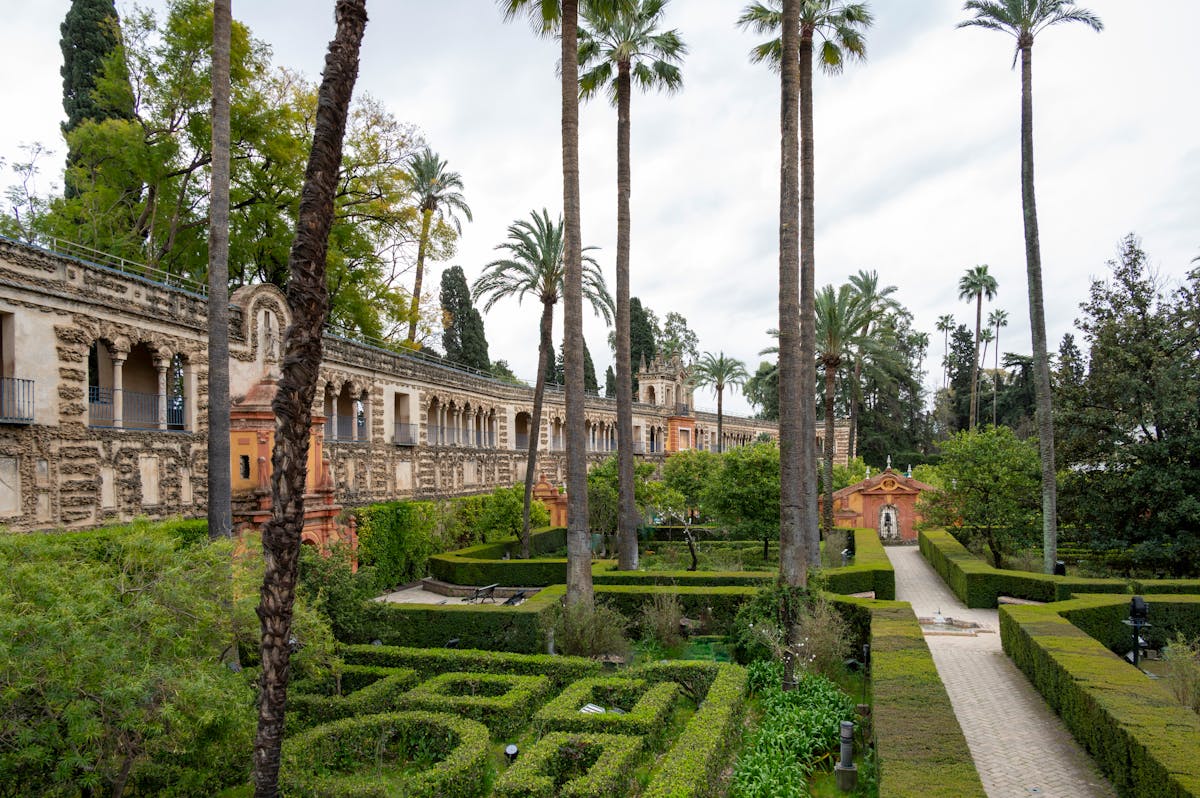
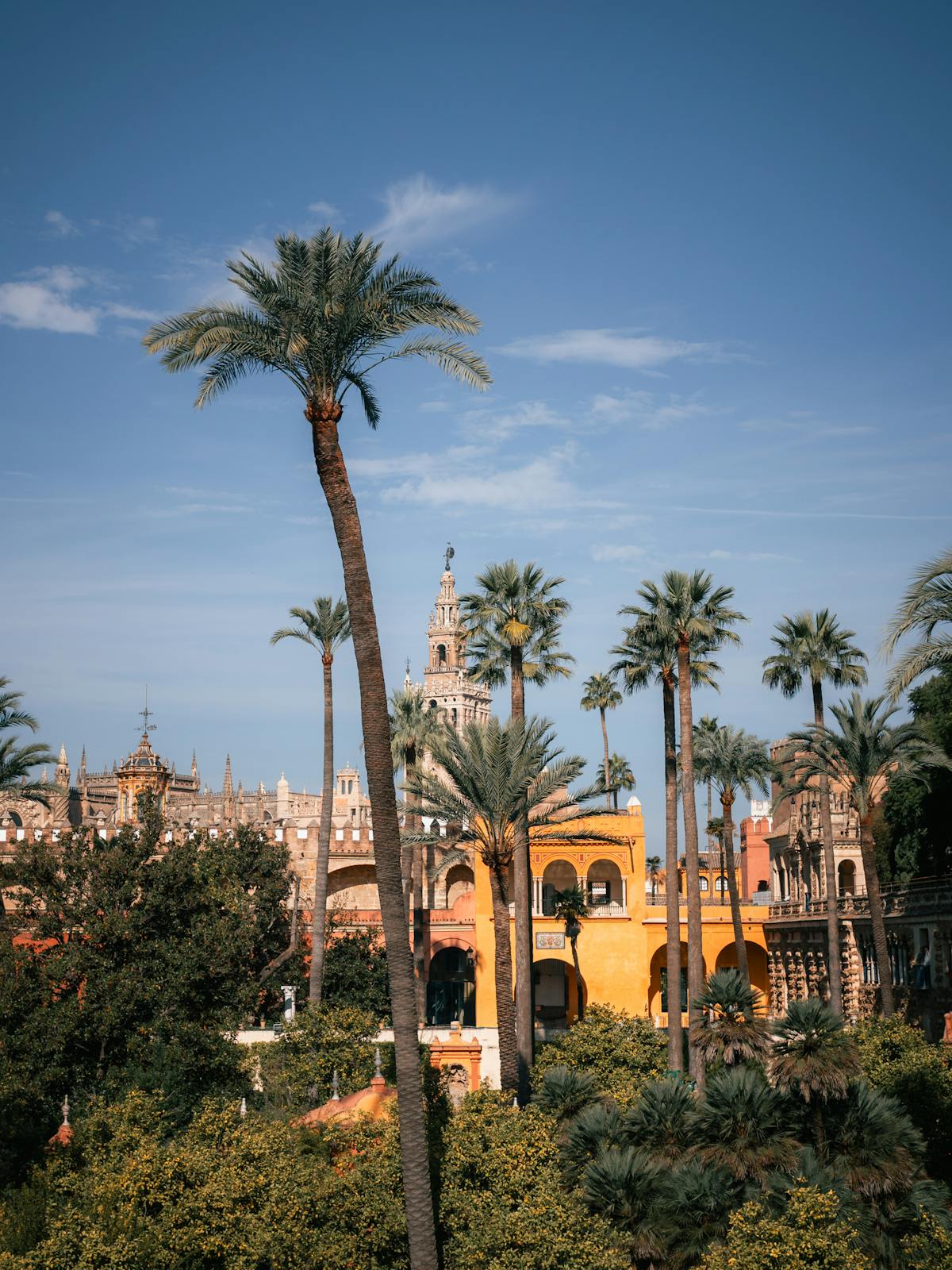
The Gardens: Covering about 60% of the entire complex, the gardens are a destination on their own. The Mercury Pool is the largest water feature, surrounded by Renaissance-era walls. The Grotto Gallery (Galeria del Grutesco) is a raised walkway along the garden walls with views over the entire complex. The Garden of the Poets is the quietest corner — tucked away behind hedges, with a pool and fountain that most visitors walk right past.
The Casa de Contratacion: The old trading house where Spain managed all commerce with the Americas after Columbus’s voyages. A small chapel inside has 15th-century navigational instruments and a painting of the Virgin of the Navigators that is one of the earliest depictions of the New World.
Looking for more things to do in the city? Check out our other Spain booking guides, including our Alhambra tickets guide for Granada. Browse our full collection of Seville tours and activities for ideas on flamenco shows, river cruises, and day trips to Cordoba or the white villages of Andalusia.
Disclosure: This article contains affiliate links to tours and tickets. If you book through these links, we earn a small commission at no extra cost to you. We only recommend tours that are well-reviewed and that we would book ourselves. All opinions are our own.