
Ferdinand and Isabella sat in this exact building and decided to fund an expedition that would accidentally reshape the entire world. Columbus walked through these halls, unrolled his maps on a table somewhere near where you’ll be standing, and pitched the idea of sailing west to reach the Indies. They said yes. That was 1486.
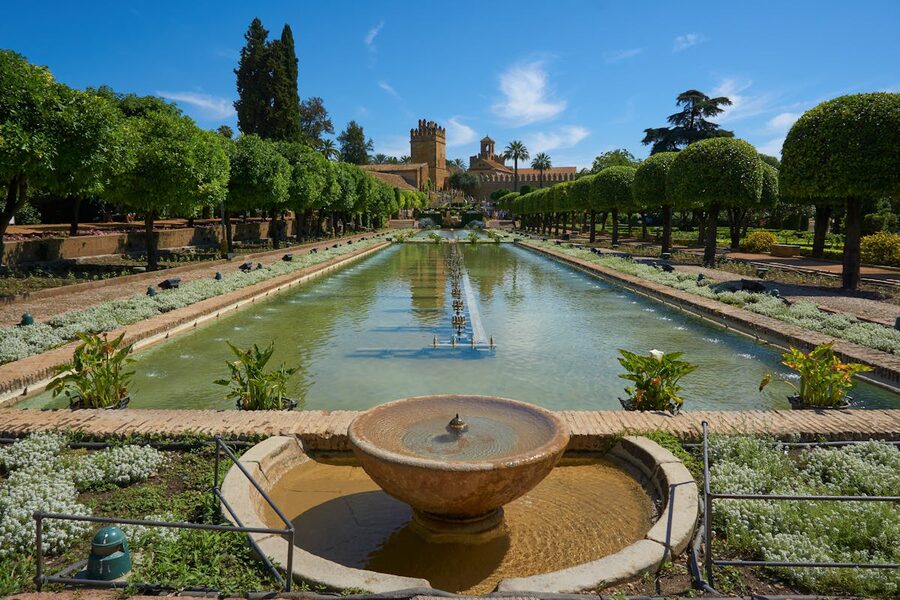
The Alcazar de los Reyes Cristianos isn’t Cordoba’s most famous monument (that’s the Mezquita, obviously), but it might be the most interesting once you know what happened inside. After the Catholic Monarchs finished using it as a military headquarters, the Spanish Inquisition took over the building and ran operations from here for the next three centuries. Then it became a prison. Then, in the 20th century, someone finally had the good sense to add gardens, and now those gardens are the main reason most people visit.
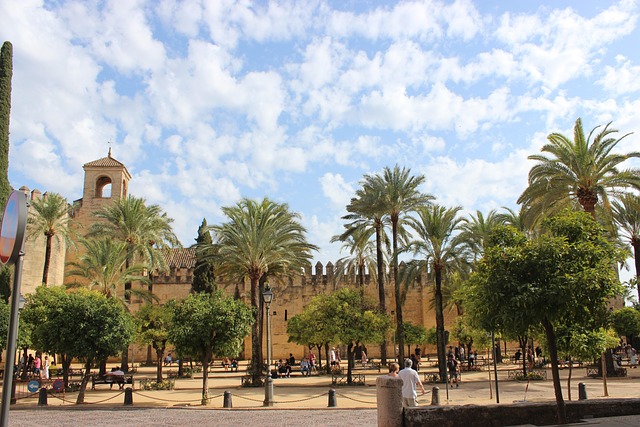
Getting tickets is straightforward but there are a few things that trip people up, especially if you’re trying to combine the Alcazar with the Mezquita and Jewish Quarter on the same day. Here’s everything I know about booking.

Best overall: Jewish Quarter, Mosque, and Alcazar Tour — $48. Four hours covering all three top Cordoba sights with skip-the-line entry. If you only have one day in Cordoba, this is the one.
Best budget: Alcazar Guided Tour with Skip-the-Line — $23. One hour, Alcazar only. Good if you’ve already done the Mezquita separately and want context for the fortress without the full combo price.
Best premium combo: Mosque-Cathedral, Jewish Quarter and Alcazar Tour — $53. The 3.5-hour version with consistently excellent guides. Slightly more polished than the budget combo options.
- How the Alcazar Ticket System Works
- Official Tickets vs Guided Tours
- The Best Alcazar Tours to Book
- 1. Jewish Quarter, Mosque, and Alcazar Tour —
- 2. Alcazar Guided Tour with Skip-the-Line —
- 3. Mosque-Cathedral, Jewish Quarter and Alcazar Tour —
- When to Visit the Alcazar
- How to Get to the Alcazar
- Tips That Will Save You Time
- What You’ll Actually See Inside
- More Andalusia Guides
How the Alcazar Ticket System Works
The Alcazar de los Reyes Cristianos sells tickets directly at the entrance and online through the official Cordoba tourism website. General admission is around EUR 5 for adults, which makes it one of the cheapest major attractions in Andalusia. Students and seniors get a reduced rate, and children under 14 enter free.
But here’s the catch: the ticket office queue can be brutal in peak season (April through October, and especially during Semana Santa and the Patio Festival in May). I’ve seen waits of 30-40 minutes on a regular Tuesday in June. The building has a limited capacity, so even after buying your ticket you might wait again to get inside.
Night visits are available during summer months (typically July and August) and are worth considering. The gardens are illuminated, the crowds are thinner, and the temperature drops to something bearable. Times vary by year, but it’s usually Friday and Saturday evenings from around 9:30 PM.
Free entry is offered on certain days for Cordoba residents, and occasionally during European Heritage Days in September. But honestly, at EUR 5, paying the entrance fee and skipping the free-day crush is the better move.
Official Tickets vs Guided Tours
You have two basic options: buy the EUR 5 ticket at the door and walk around on your own, or book a guided tour that bundles the Alcazar with other Cordoba sights.
Self-guided pros: Cheapest option by far. You move at your own pace. The gardens don’t really need a guide — you just wander. The interior rooms have some signage, though it’s pretty sparse.
Self-guided cons: Without context, the Alcazar interior is underwhelming. It’s a series of rooms with some Roman mosaics and a few medieval artifacts. If nobody tells you that Columbus presented his plans here, or that the Inquisition operated from this building for 300 years, you’ll walk through in 20 minutes and wonder what the fuss was about.
Guided tour pros: The history is the entire point of this building, and a good guide transforms the experience. Most combo tours include the Mosque-Cathedral and Jewish Quarter too, which means you cover Cordoba’s three essential sights in one morning without any logistics headaches.
Guided tour cons: Groups can be large (15-25 people). Some guides rush through the Alcazar to spend more time at the Mezquita. And you’re on someone else’s schedule — no lingering in the gardens for an extra hour.
My recommendation: if you care about history at all, book a guided tour. The Alcazar without context is a nice building with pretty gardens. The Alcazar with context is the room where Spain’s trajectory changed forever.
The Best Alcazar Tours to Book
1. Jewish Quarter, Mosque, and Alcazar Tour — $48
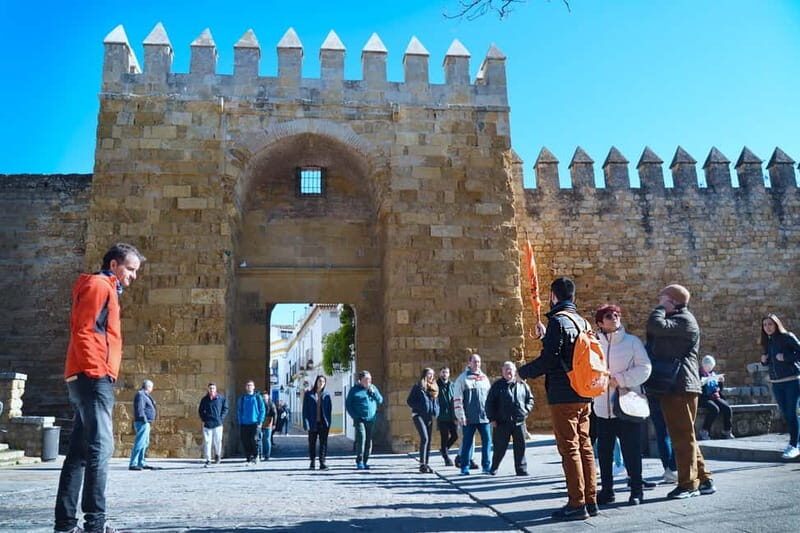
This is the one I’d pick if I had to choose a single tour in Cordoba. Four hours covers the Jewish Quarter walking section, the Mezquita interior (with skip-the-line entry), and the Alcazar including the gardens. The guides on this tour consistently get excellent feedback — several specifically named Ruben as a standout, calling him a walking encyclopedia of Cordoba history.
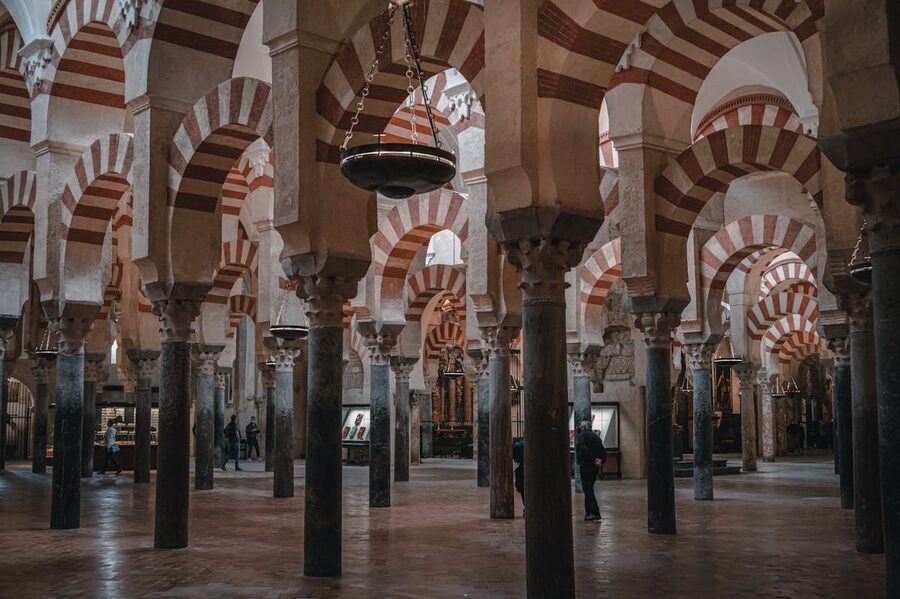
At $48 for four hours including all entrance fees, the math works out well. You’d pay EUR 5 for the Alcazar and EUR 13 for the Mezquita independently, plus spend time in two separate queues. The tour eliminates both queues and adds the Jewish Quarter context you’d otherwise miss entirely. Our Mosque-Cathedral guide has more detail on that part of the visit.
2. Alcazar Guided Tour with Skip-the-Line — $23
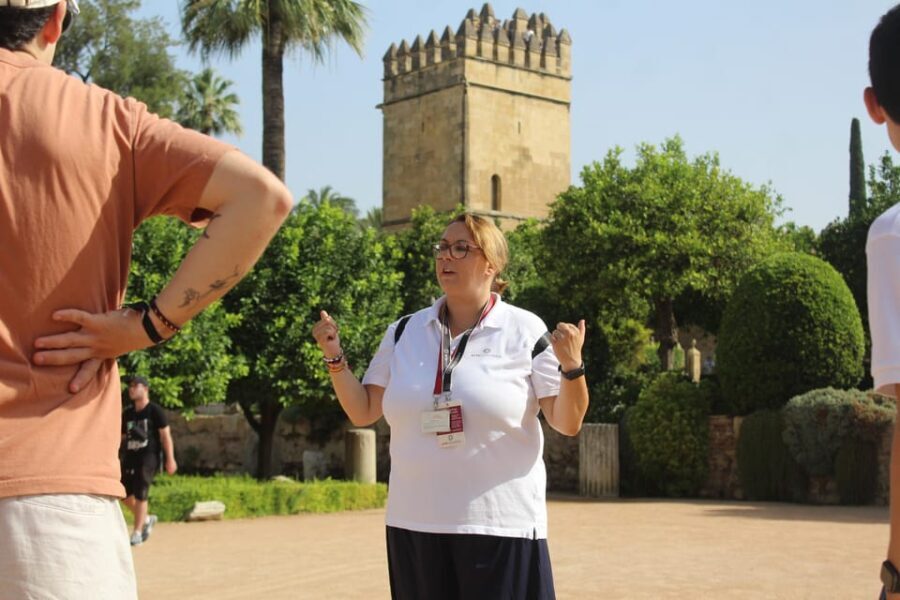
The budget pick. At $23 for a one-hour guided tour with skip-the-line entry, this is really just paying for a guide plus queue avoidance — the entrance fee alone is EUR 5, so you’re paying roughly $18 for the guide’s time and the line skip. Worth it if you’re visiting in summer or during any festival period.
This is Alcazar-only, no Mezquita or Jewish Quarter included. It works best for people who’ve already visited the Mosque-Cathedral on a separate tour (or who are planning to) and want dedicated time at the fortress. The guides cover the Inquisition history, the Columbus connection, and the Roman mosaics in the underground level. One hour feels tight for the gardens though — you’ll probably want to stay on after the tour ends to explore them properly.
3. Mosque-Cathedral, Jewish Quarter and Alcazar Tour — $53

Similar coverage to the first pick but at 3.5 hours and $53, with generally smaller group sizes and guides who tend to go deeper into the historical detail. This one gets consistently top marks — visitors frequently single out the Mosque-Cathedral portion as one of the best guided experiences they’ve had in Spain. Jose, who handles the second half of the tour, has been specifically praised as outstanding.
The Alcazar portion on this tour includes more time in the gardens than the budget combo options, which matters because the gardens are honestly the highlight. The terraced pools, the orange and lemon trees, the geometric hedges — it’s a different world from the fortress interior. If your budget allows the extra $5 over the first option, this is the slightly better experience. If you’re also exploring nearby Seville’s Royal Alcazar, having context from this tour makes that visit much richer.
When to Visit the Alcazar
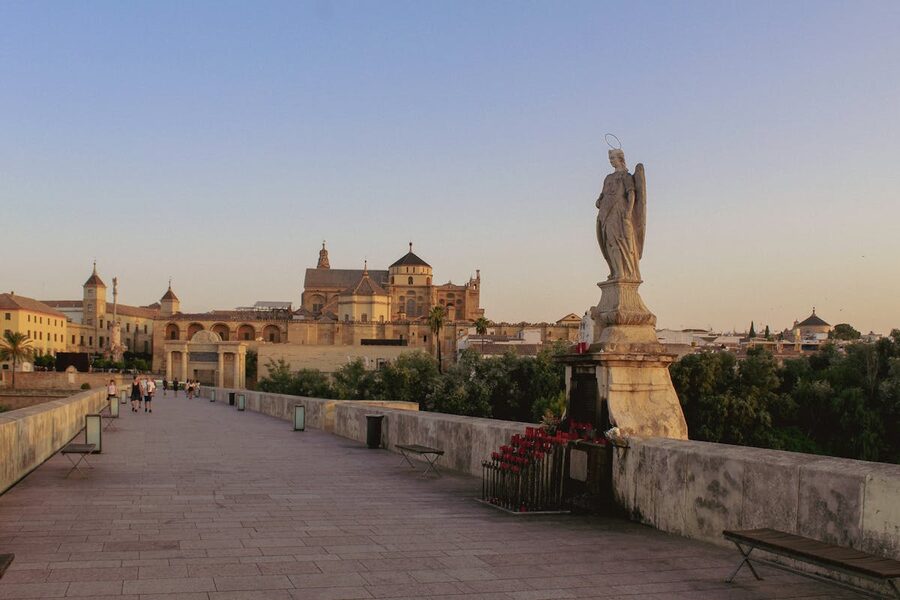
Opening hours vary by season but generally run Tuesday to Saturday from 8:30 AM to roughly 8:45 PM in summer (shorter in winter — closing around 5:30 PM). Sundays have reduced hours, and the Alcazar is closed on Mondays. Always double-check the exact times before your visit, because Cordoba loves adjusting schedules for festivals and holidays.
Best time of day: Late afternoon, without question. The morning light is flat and the tour groups are at their peak. By 4-5 PM, the crowds thin dramatically, the gardens catch golden light from the west, and the temperature drops to something manageable (this matters more than you think — Cordoba routinely hits 40-45°C in July and August).
Best months: April, May, and October. April brings the orange blossoms. May is Patio Festival season, when the whole city is decorated with flowers and the Alcazar gardens are at their absolute peak. October gives you warm days without the crushing summer heat. Avoid July and August unless you genuinely enjoy walking around a shadeless fortress in extreme heat.
Worst times: Monday (closed), any day during Semana Santa week without advance tickets (sold out), and summer afternoons before 5 PM. I once made the mistake of visiting at 2 PM in July. I lasted about 25 minutes in the gardens before retreating to the nearest cafe for cold water.
How to Get to the Alcazar
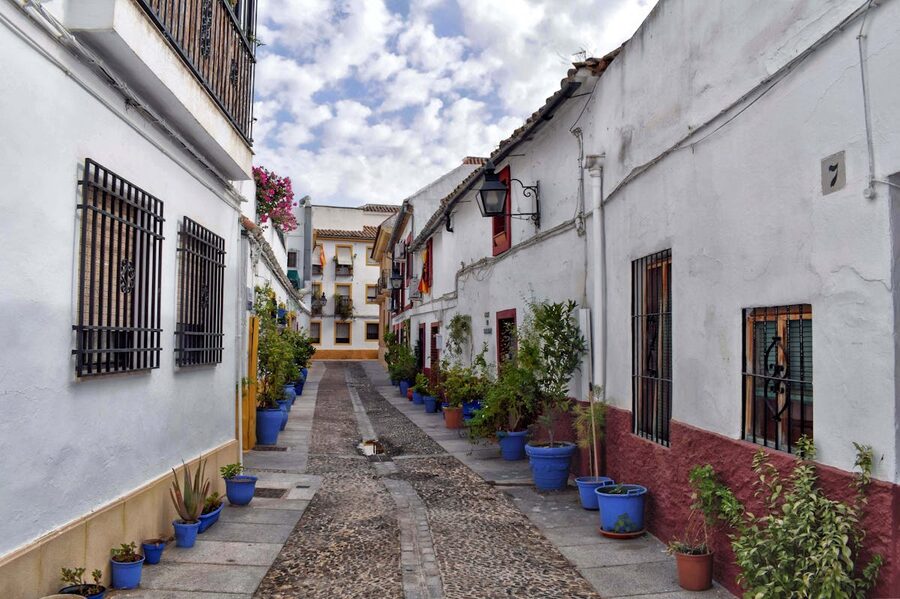
The Alcazar sits on Calle de las Caballerizas Reales, right at the edge of the old city next to the Guadalquivir River. From the Mezquita, it’s an 8-minute walk south through the Jewish Quarter. From Cordoba’s train station, you’re looking at a 20-minute walk or a quick taxi.
By train: Cordoba is on the AVE high-speed line between Madrid and Seville. Madrid to Cordoba takes about 1 hour 45 minutes. Seville to Cordoba is just 45 minutes. This makes Cordoba an easy day trip from either city, though I’d argue it deserves at least one overnight.
By bus: Cheaper than the AVE but slower. The bus station is further from the old city than the train station, so factor in taxi time.
Walking from other Cordoba sights: The Alcazar, Mezquita, and Jewish Quarter are all within a 10-minute walk of each other. This is a compact old city. No transport needed between sights.
Tips That Will Save You Time
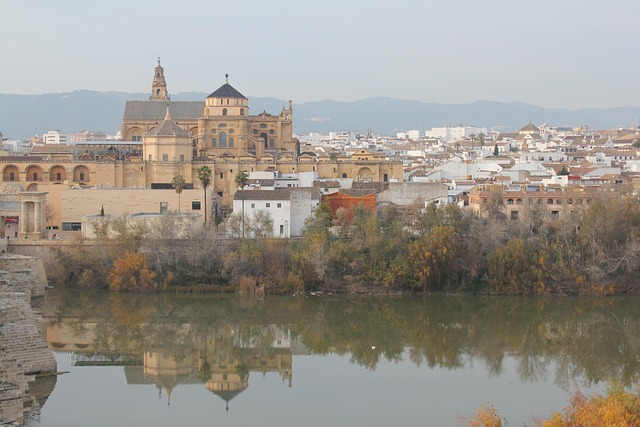
- Combine the Alcazar with the Mezquita. They’re 8 minutes apart on foot. A combo tour handles both in one morning, or you can do the Mezquita first (go early, 8:30 AM opening) and the Alcazar afterwards.
- Bring water. Cordoba is one of the hottest cities in Spain. The Alcazar gardens have almost no shade. Dehydration sneaks up on you faster than you’d think.
- Wear comfortable shoes. The gardens have gravel paths, the interior has uneven stone floors, and the tower climb (if you do it) is on narrow stone steps.
- Don’t skip the tower. The Torre del Homenaje (main tower) gives you panoramic views over the gardens, the river, and the old city. It’s included in your ticket. Most people walk right past it.
- The underground baths are easy to miss. Look for the entrance near the main courtyard — the Moorish-era baths are some of the best-preserved in Cordoba and most visitors don’t even realize they’re there.
- Allow 1.5-2 hours total. The fortress interior takes 30-40 minutes. The gardens and towers need another hour if you’re not rushing.
- Patio Festival in May — if you can time your visit for the first two weeks of May, Cordoba’s annual flower festival transforms the city. The Alcazar gardens are spectacular during this period, and the surrounding neighbourhood patios are open to the public.
What You’ll Actually See Inside
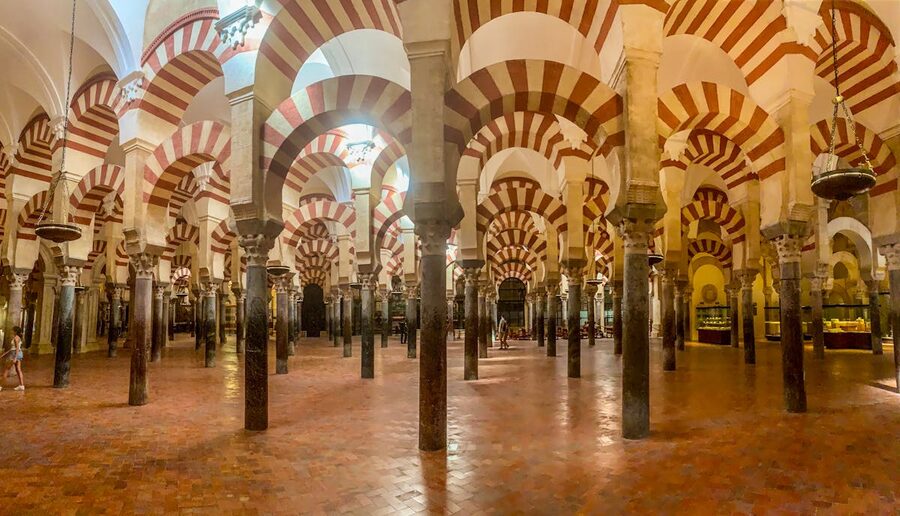
The Alcazar de los Reyes Cristianos was built in 1328 by Alfonso XI on the ruins of an earlier Moorish fortress. The name translates to “Fortress of the Christian Monarchs,” which tells you everything about the political statement it was designed to make.
Inside, the main draw is the collection of Roman mosaics recovered from excavations around Cordoba. They’re displayed in a long hall on the ground floor and they’re genuinely impressive — intricate geometric patterns and mythological scenes from the 2nd and 3rd centuries AD. This building sits on layers of history that go back far beyond the medieval fortress you see today.
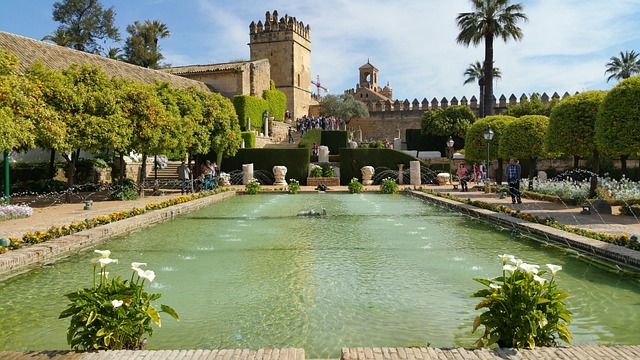
The four towers offer different perspectives: the Torre del Homenaje (Tower of Homage) for city panoramas, the Torre de la Inquisicion for river views, and the Torre de los Leones (Lions Tower) which is the oldest part of the complex. The Torre de la Paloma (Dove Tower) is sometimes closed for conservation.
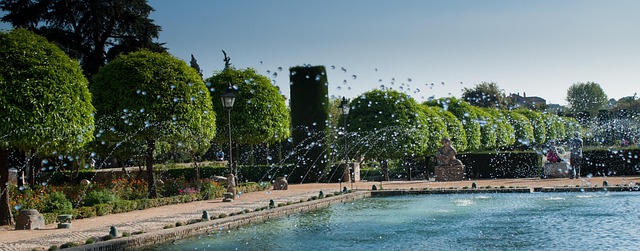
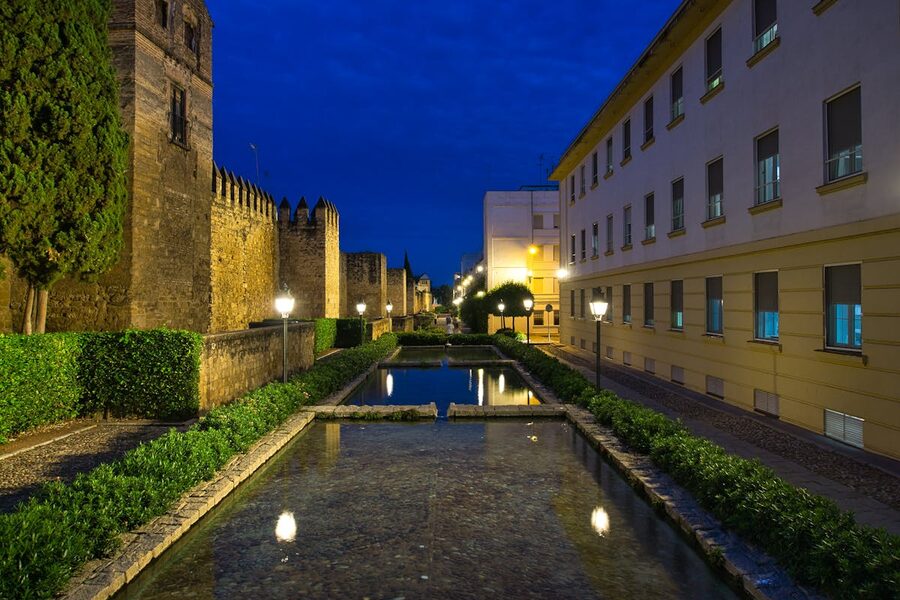
Then there are the gardens. They were added in the 20th century but designed in the Moorish style that Cordoba is known for — terraced pools, fountains, citrus trees, roses, and clipped hedges in geometric patterns. The water features work on gravity, the same engineering principle the Moors used a thousand years ago. In spring, the combination of orange blossoms, jasmine, and roses is almost overwhelming. This is the part that earns the Alcazar its reputation.
More Andalusia Guides
If you’re spending more time in the region, Cordoba pairs naturally with Seville’s Royal Alcazar — a completely different building despite the shared name, with far more ornate Mudéjar detail. The Seville Cathedral and a tapas tour through Triana round out a solid Seville day. For something completely different, Caminito del Rey is a two-hour drive from Cordoba and one of the most spectacular walks in Spain. And if you’re heading south towards the coast, Ronda from Malaga is another excellent day trip. The Alhambra in Granada is the obvious comparison to the Cordoba Alcazar — book those tickets as far in advance as possible, they sell out fast.
This article contains affiliate links. If you book through our links, we earn a small commission at no extra cost to you. It’s how we keep this site running.