
The Colosseum in Rome gets about 7 million visitors a year. The Pula Arena — older, better preserved in some ways, and the sixth-largest Roman amphitheatre ever built — gets around 300,000. You can walk in on most days and have the place close to yourself.
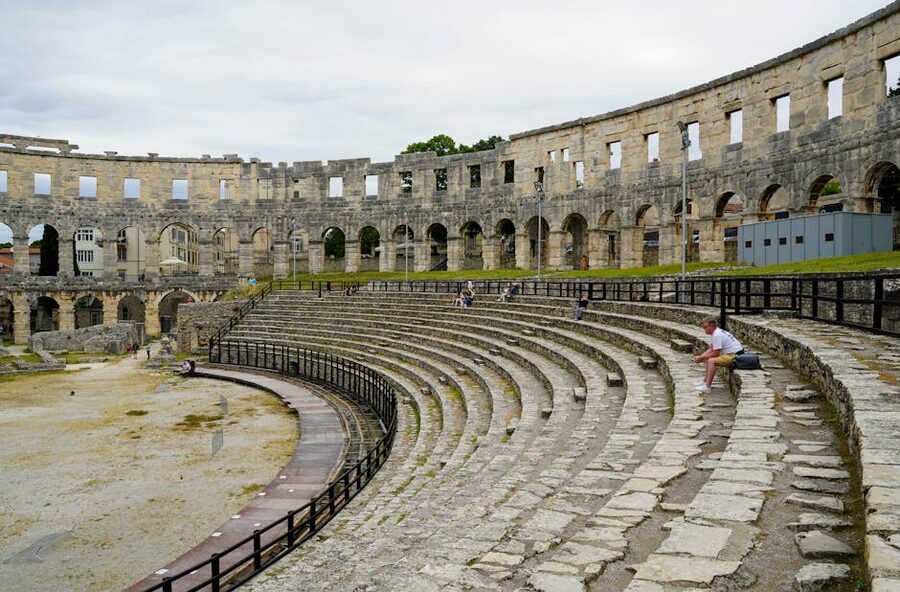
That’s the case for Pula. You get the same awe as the Colosseum without the queues, with a ticket that costs €11 instead of €18, and a venue that still hosts concerts and film festivals — you can buy a seat in the stalls and watch Nick Cave play on the same stones that held gladiators. It’s also the obvious first stop if you’re routing through Istria; our best-places-to-visit Croatia guide puts Pula in context with Rovinj, Motovun, and the Dalmatian coast further south.
This guide covers how to buy tickets, how long you actually need inside, and how to combine the Arena visit with the rest of Pula.
- In a Hurry? Here Are the Top Picks
- How the Ticket Works
- What’s Actually Inside
- The Arena Floor
- The Underground Passages
- The Upper Level
- The Best Tours to Book
- 1. Pula Arena Entrance Ticket —
- 2. Pula: Brijuni National Park & Dolphin Cruise —
- 3. Pula: Cave Kayak Tour, Snorkeling and Island Jumping —
- A Short History of How This Thing Is Still Standing
- How Long You Actually Need
- The Summer Concert Season
- How to Get to Pula
- Where to Stay if You Want More Than a Day
- What to Wear and Bring
- Worth Knowing Before You Book
- Pairing Pula with the Rest of Croatia
- Worth the Detour or Skippable?
- More Croatia Guides
In a Hurry? Here Are the Top Picks
The essential: Pula Arena Entrance Ticket — $11 per person. The only ticket you actually need. Valid all day; you can come back in the evening.
Best add-on: Pula: Brijuni National Park & Dolphin Cruise — $76 per person. A 5.5-hour cruise to the nearby island of Brijuni. Pairs perfectly with an Arena morning.
Best for active travellers: Pula: Cave Kayak Tour with Snorkeling — $67 per person. Three hours in the Adriatic caves south of Pula. Do the Arena in the morning, the kayak in the afternoon.
How the Ticket Works
There’s one kind of ticket for the Arena: entry. It costs €11 (about $11.50) for adults, less for students and seniors. Buy it online in advance via GetYourGuide for the same price and skip the queue at the gate.
The ticket is valid for one day, not one entry. You can go in the morning, walk around the city, come back in the late afternoon for sunset, and use the same ticket twice. A lot of people don’t realise this.
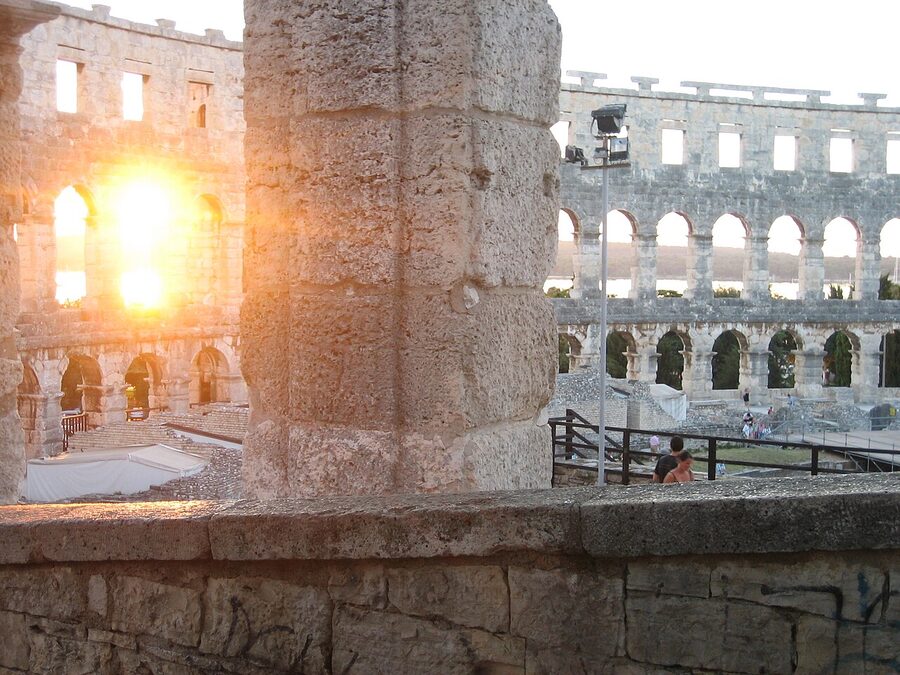

The entry gets you: the main arena floor, the second-level walkway, the underground passages (more on those below), and the small “Olive Oil Production” museum in the basement. No audio guide included — download the Pula Tourism app before you go if you want one.
If there’s a concert or film screening that evening, the Arena closes for daytime visits at 3-4pm to prepare. Check the schedule before booking a late-day visit.
What’s Actually Inside
A lot of people assume an empty Roman amphitheatre is just an empty Roman amphitheatre. The Pula Arena has more going on than that.
The Arena Floor
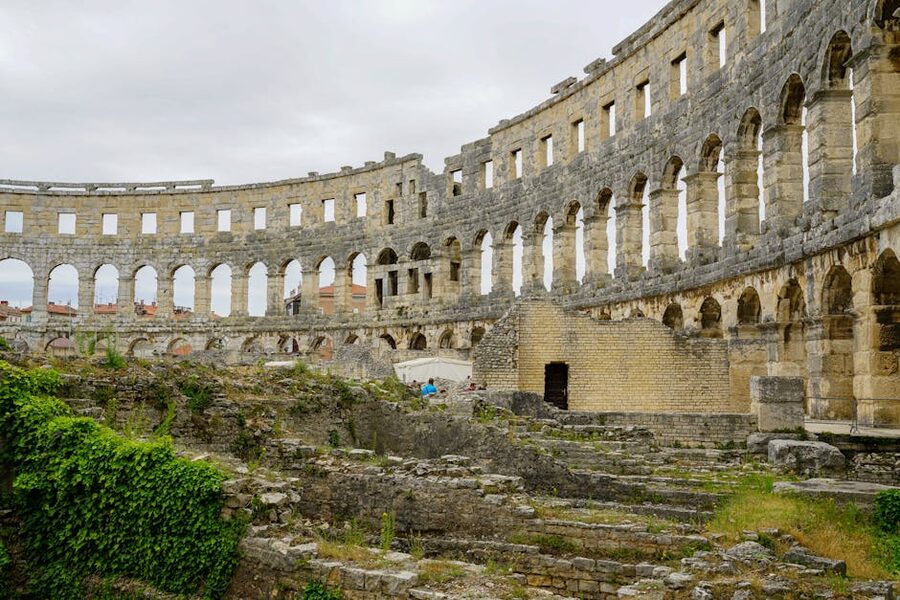
You walk in through one of two main gates — the same routes the gladiators used. The floor is now grass, but in Roman times it was packed sand with wooden trapdoors built over a substructure of animal cages and scenery pulleys. Walking across it, you’re on ground that has been walked by 2,000 years of crowds.
The Underground Passages
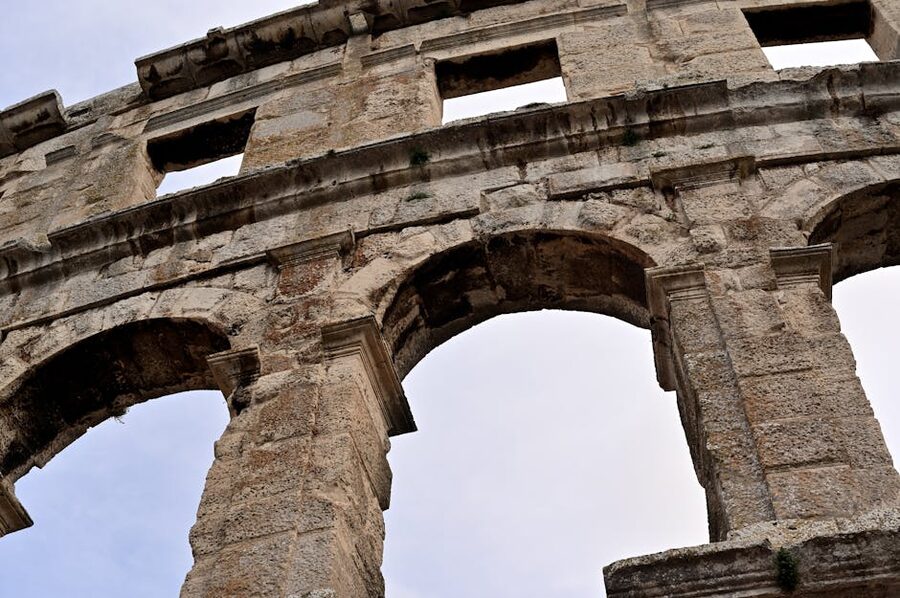
This is the hidden highlight. The substructures beneath the Arena floor are accessible as part of the standard ticket. Romans used them as staging areas, animal pens, and food-storage cellars. Today they’re a small, cool-temperature museum about olive oil and wine production in Roman Istria.
The museum is interesting in a specific way: these aren’t reconstructions, they’re Roman amphorae and press equipment found in Istria itself. If you’re the kind of person who likes museums, give this section 20-30 minutes. If you’re not, walk through quickly and focus on the architecture — the vaulted stone ceiling alone is worth the detour.
The Upper Level
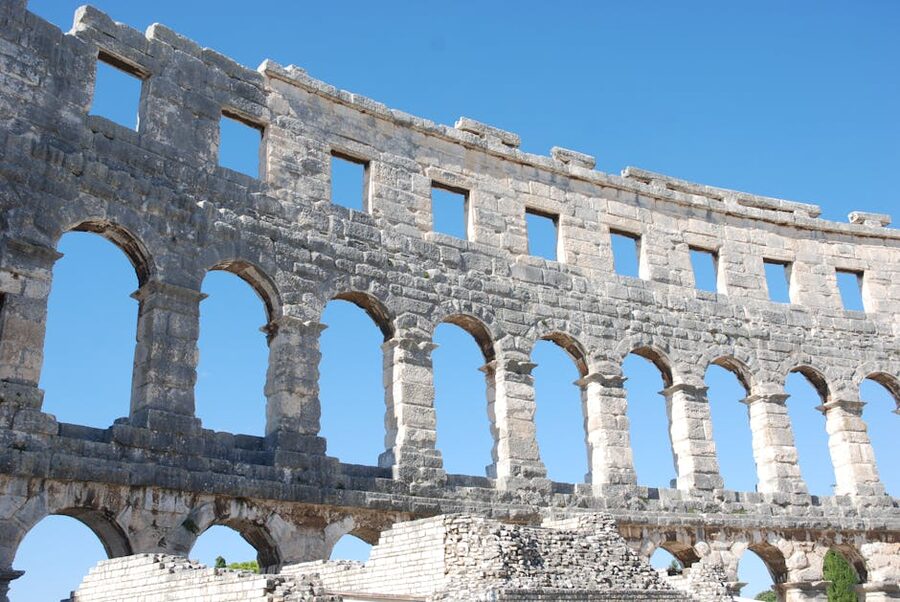
Climb the staircase near the main gate to reach the second level. This is where you get the best photos looking down into the arena and across to the sea — the Adriatic is visible over the top of the opposite wall, which is something no other Roman amphitheatre can claim.
The Best Tours to Book
1. Pula Arena Entrance Ticket — $11
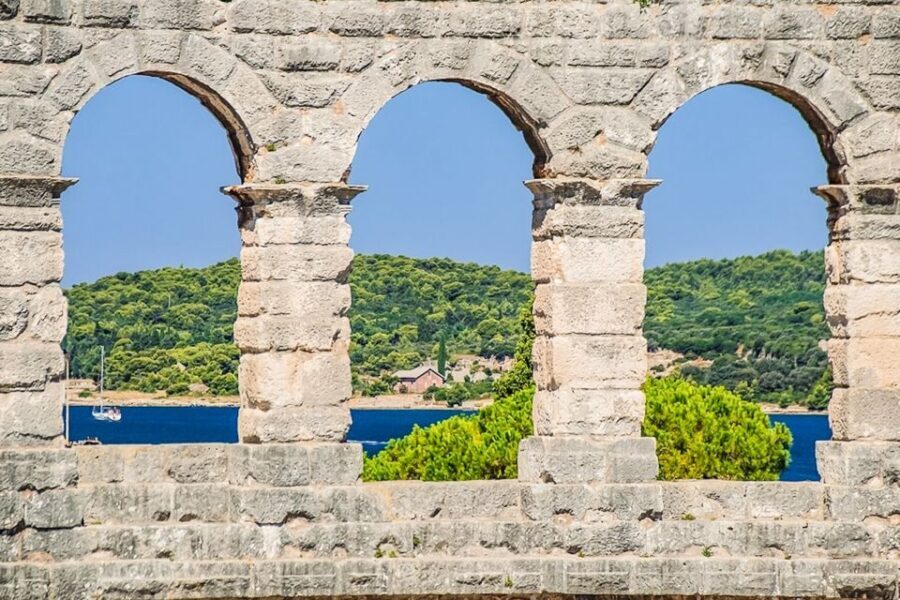
The only ticket you need to actually visit the Arena. Valid for one day with re-entry allowed, which most people miss — you can go in the morning and come back for sunset on the same ticket. Booking online gives you a mobile voucher; show it at the turnstile and you’re in. No guided tour is included, but the Arena is straightforward to navigate by yourself and informative signs are in multiple languages. Our review covers exactly what’s included and when to time your visit. At $11 it’s one of the best-value major attractions in Croatia.
2. Pula: Brijuni National Park & Dolphin Cruise — $76
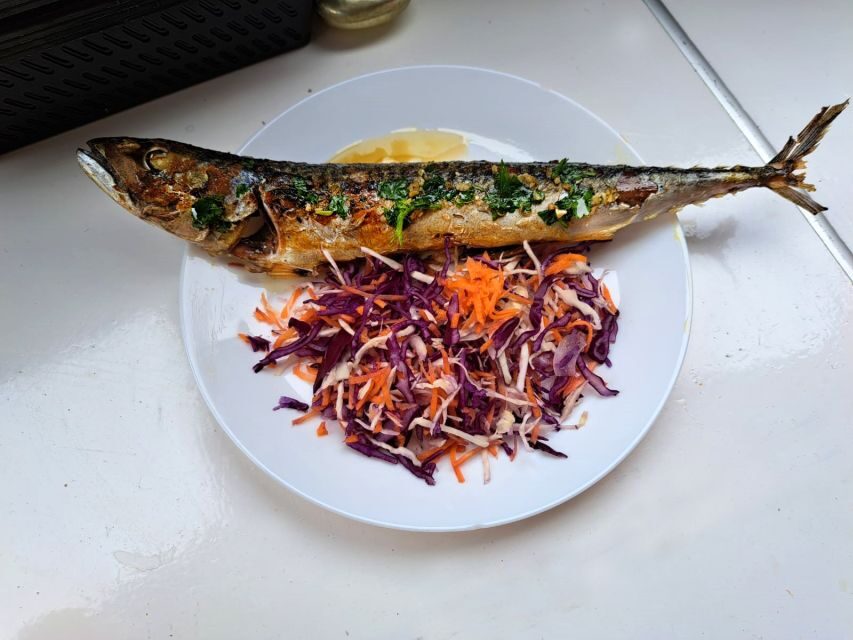
Once you’ve done the Arena, this is what most travellers book next. A 5.5-hour cruise to Brijuni National Park — the small archipelago offshore from Pula where Yugoslavia’s Tito once entertained heads of state with an exotic-animal safari he’d stocked with gifts from Nehru, Haile Selassie, and Gaddafi. You’ll see peacocks, the (surviving) ostriches, Roman villa ruins, and a decent chance of dolphins on the boat ride. Our review covers what the island visit actually includes versus the sometimes-oversold itinerary.
3. Pula: Cave Kayak Tour, Snorkeling and Island Jumping — $67
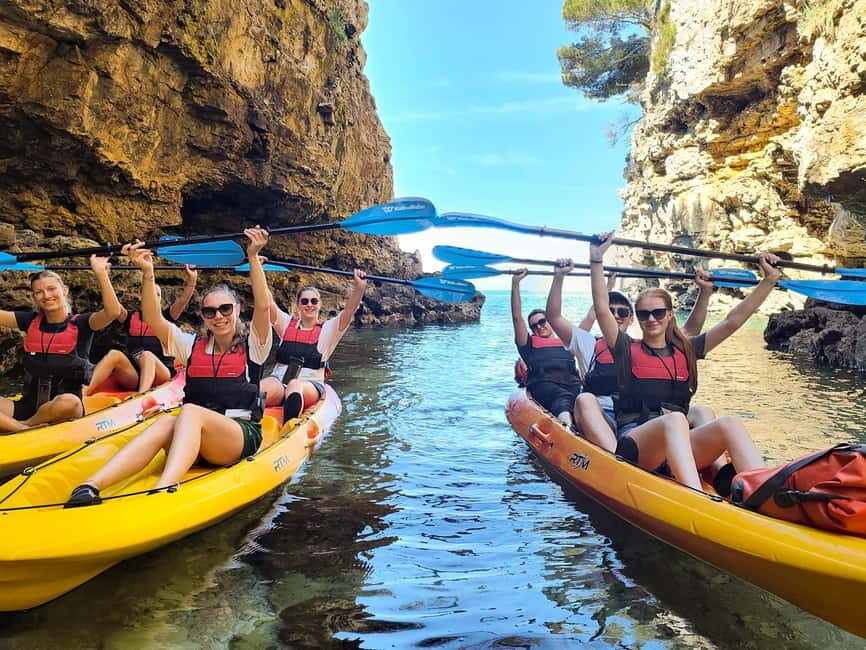
If you’ve done the Arena in the morning and want something active for the afternoon, this is the pick. Three-hour kayak trip through sea caves south of Pula, with snorkelling stops at a couple of small islands and (on the full route) a cliff jump. The caves are Istria’s answer to the Blue Cave at Biševo but you actually go inside them, rather than looking at them from a boat. Our review covers how difficult the kayaking actually is — it’s beginner-friendly but you need to be reasonably comfortable in the water.
A Short History of How This Thing Is Still Standing
Most Roman amphitheatres got quarried for building stone in the Middle Ages. Pula’s survived for a slightly silly reason: the Venetians thought about moving it. In 1583, the Venetian Senate seriously considered dismantling the Arena stone by stone and rebuilding it in Venice as a tourist attraction. The plan was blocked by a single senator who argued that moving the most important Roman building on the Adriatic would be bad for trade. So it stayed.

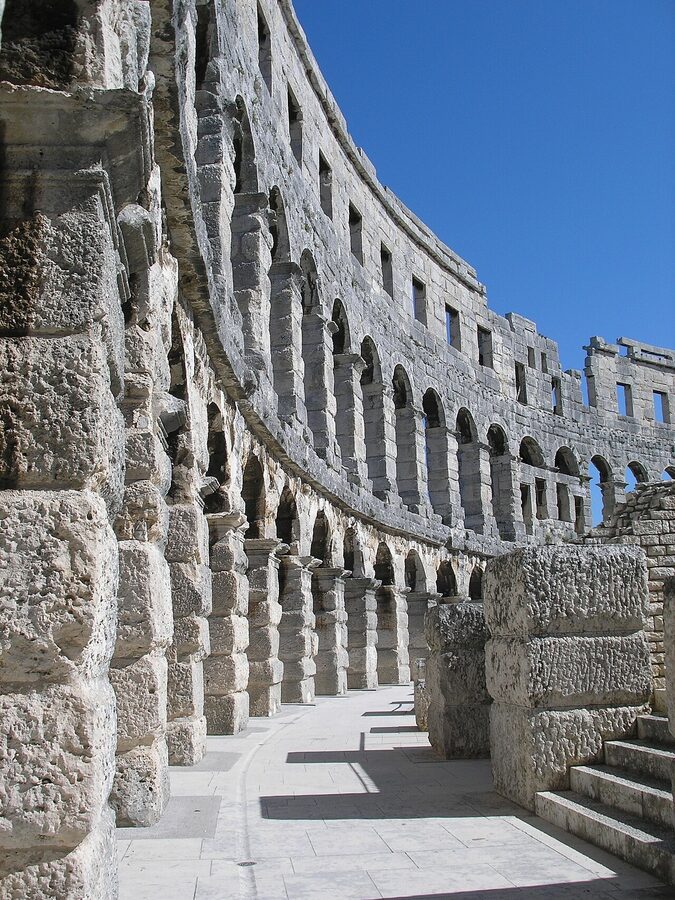
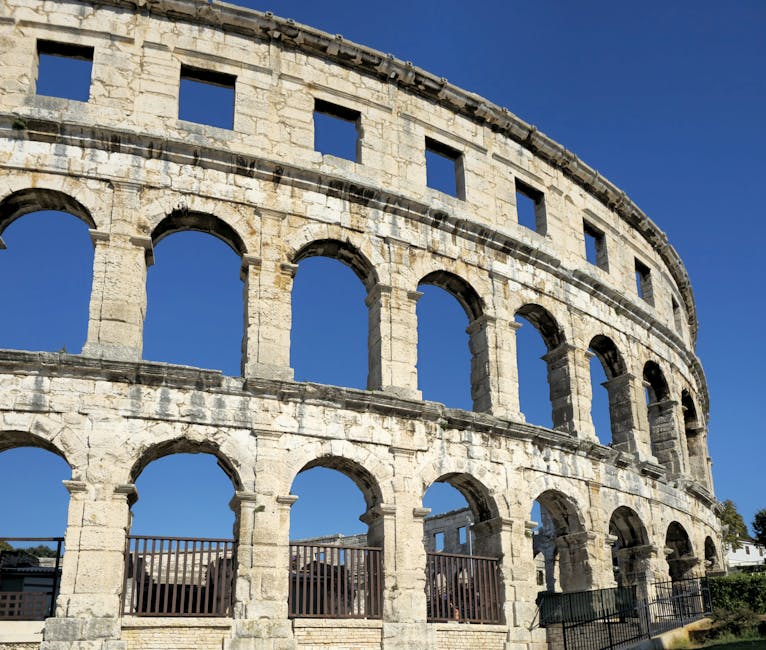
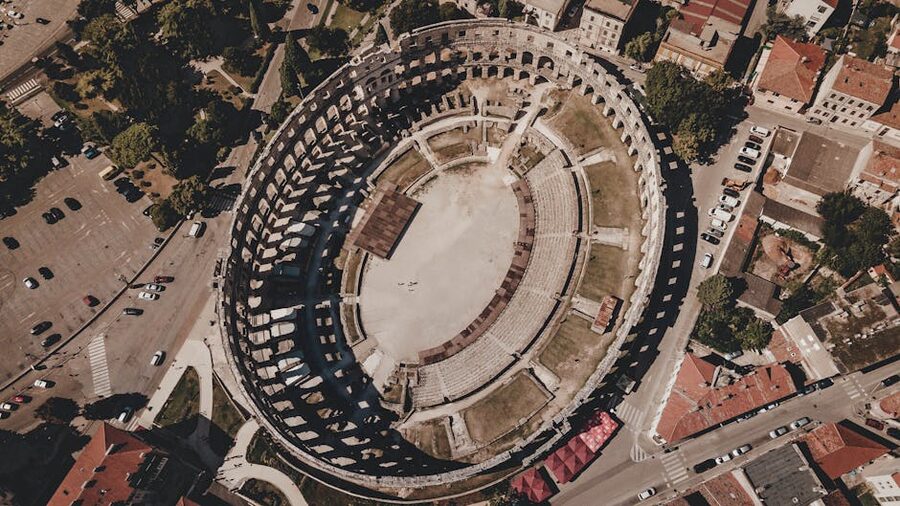
Emperor Vespasian, the same one who started the Colosseum in Rome, completed the Pula Arena in 81 AD. His son Titus inaugurated the Rome one and probably never visited Pula’s, though Pula sat on the route between Rome and his Dalmatian campaigns. The two buildings share the same blueprint: three tiers of arches on the outside, elliptical seating inside, a substructure of gladiator and animal holding cells below.
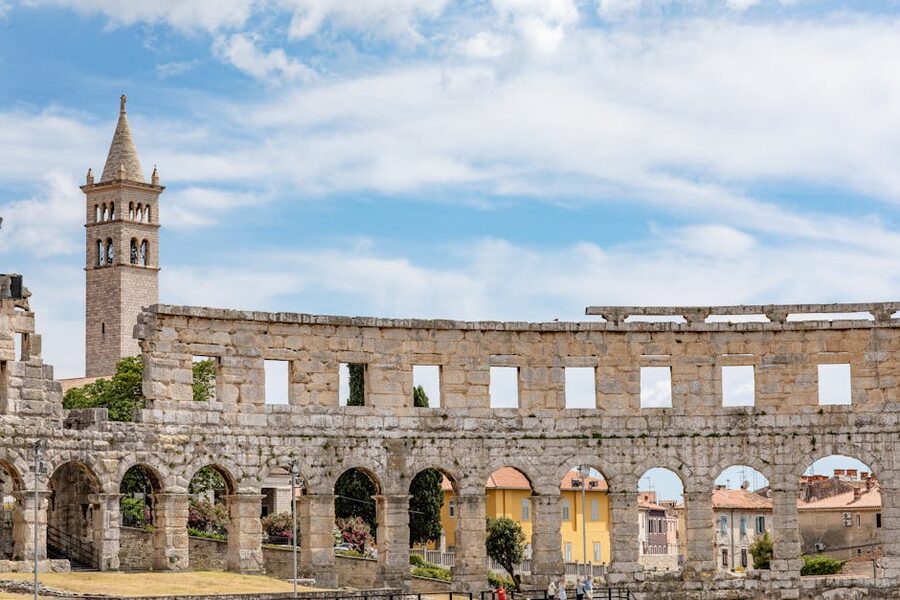
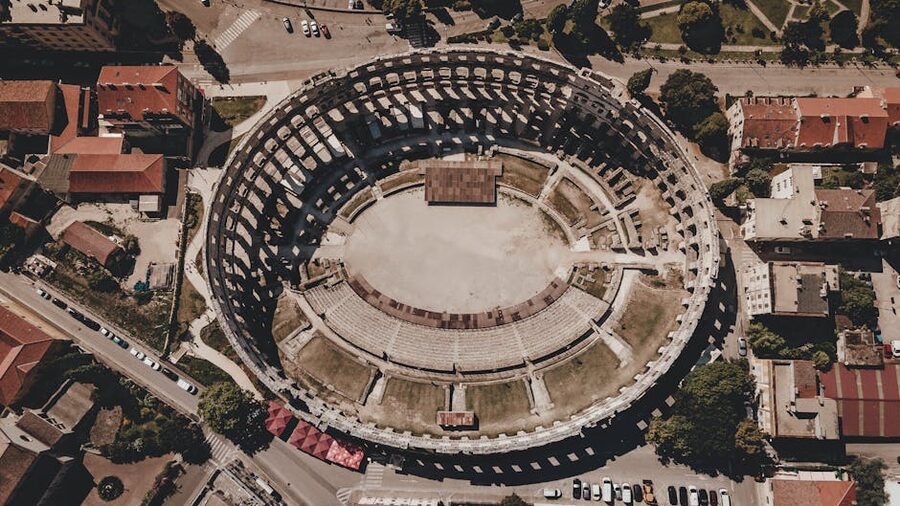
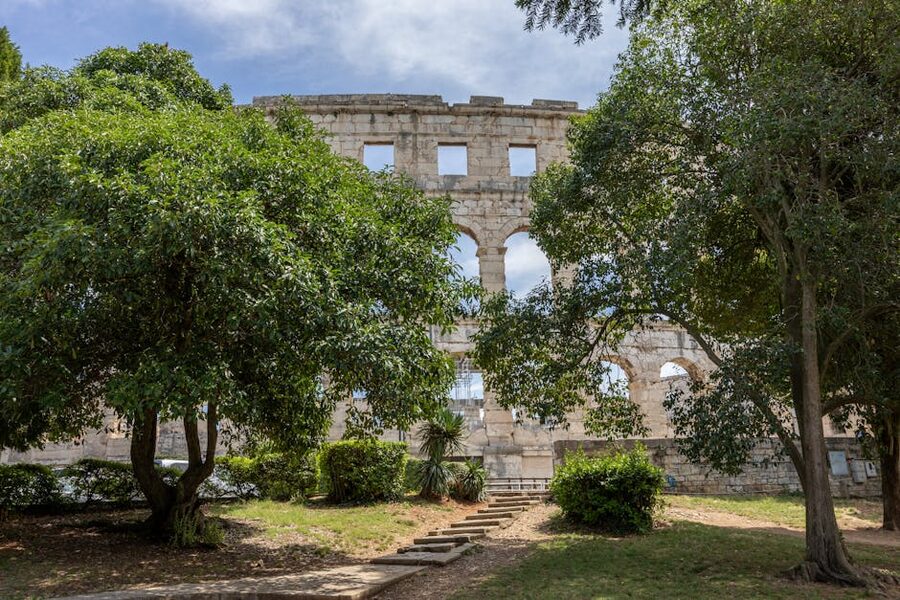
Unlike most Roman amphitheatres, Pula’s outer wall is complete. Rome’s Colosseum has only half its outer shell standing after a 9th-century earthquake brought the southern side down and the Popes quarried the rest for building stone. Pula’s full oval is a rarity — you can walk the complete circle outside in about 10 minutes.
How Long You Actually Need
The official guide suggests 60-90 minutes. That’s accurate. Push it to two hours if you’re doing the underground museum properly.
A more realistic breakdown: 20-30 minutes walking the floor and upper walkway, 20-30 minutes in the underground museum, 10 minutes for photos from the outside. If you’re doing it twice (morning + sunset) add another 20-30 minutes for the second visit.
The Summer Concert Season
The Arena runs a summer concert season from late June to mid-September. Past headliners include Pavarotti, Elton John, David Gilmour, Nick Cave, Tom Jones, and a rotating cast of Croatian folk-rock acts. Tickets are €50-150 depending on the act.
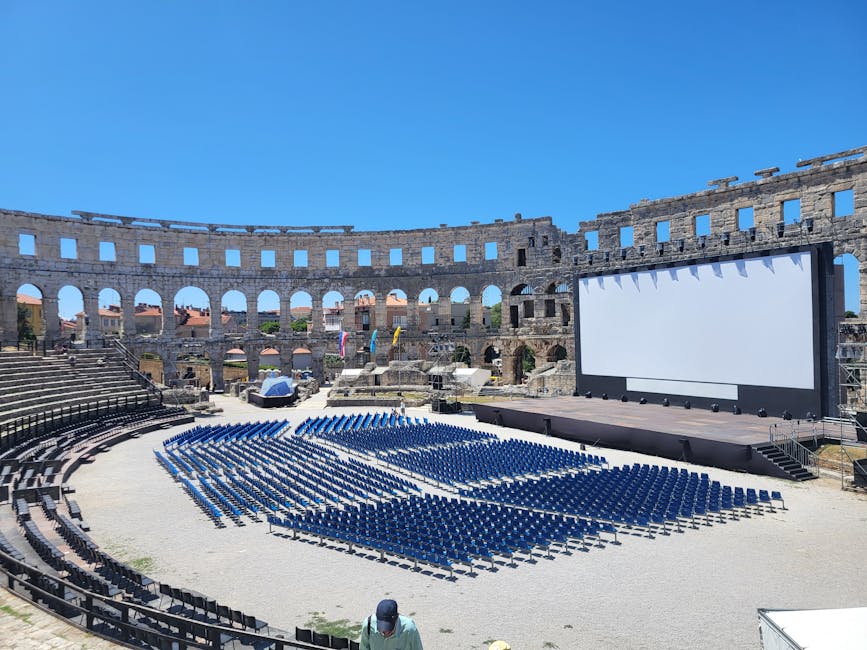
If you want to go: book in advance via the Arena’s official box office or the promoter’s website. GYG and Viator don’t sell concert tickets. Most shows sell out months ahead.
The Pula Film Festival also uses the Arena — late July, 8-10 evenings of outdoor cinema under the stars on the world’s most dramatic movie screen. Tickets are €7-10 per film. Genuinely magical experience.
If there’s an event scheduled for the evening you visit, the Arena closes to regular travelers at 3-4pm. Plan around it.
How to Get to Pula
Pula is in Istria — the peninsula on Croatia’s northwest, easier to reach from Italy than from Split or Dubrovnik. Three main approaches:
From Zagreb: 3 hours by car, 4-5 hours by bus. The train is slow and awkward; skip it.
From Venice: 4 hours by bus via Trieste, or a 3.5-hour catamaran in summer only. The catamaran (seasonal, April-October) is the scenic route and costs €45-60 one-way.
From Split: 6 hours by car or 8+ by bus. Too far for a day trip. If you’re Split-based, fly to Pula (50-minute hop) or skip it.
Pula Airport has direct flights from London, Stockholm, Berlin, and other European cities in summer — often cheaper than Zagreb-Pula connections.
Where to Stay if You Want More Than a Day
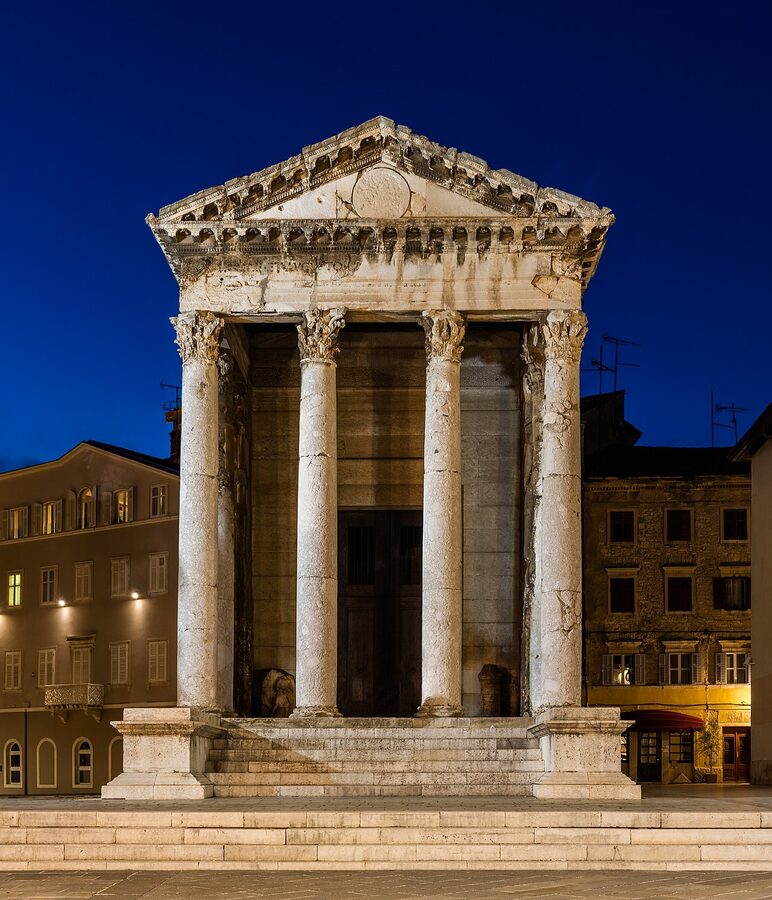
One day in Pula is enough for the Arena and a meal. To see Brijuni, do a kayak tour, and visit the other Roman sites (the Forum, Temple of Augustus, and Hercules Gate), you need two days. Most travellers base in Pula centre within walking distance of the Arena.
Rovinj, 35 minutes north, is the prettier alternative — a smaller Venetian-era fishing port that most travellers agree is Istria’s most attractive town. Staying in Rovinj and day-tripping to Pula is a valid strategy.
What to Wear and Bring
Comfortable walking shoes. The arena floor and the substructure stairs are uneven; sandals are fine, flip-flops are pushing your luck on the steps.
Water. There’s a small café inside but water fountains outside; bring a refillable bottle.
Hat and sunscreen in summer. The interior has almost no shade — the stone walls trap heat, and the arena floor is effectively an oven from 11am to 4pm in July and August. Morning or evening visits are strongly better. Our Croatia weather-by-month piece gives you the realistic temperature range for each season.
Light jacket for the substructure museum even in summer. The underground section is 5-6°C cooler than outside, which feels great in July and chilly in May.
If you’re a keen photographer, a wide-angle lens or panorama-mode phone. The full oval doesn’t fit in a standard 35mm shot.
Worth Knowing Before You Book
The “skip the line” upgrade some operators sell is not actually a different queue. It’s just an online ticket with a mobile voucher — which is identical to what you get from the standard online booking. Don’t pay extra.
The Arena closes on Easter Sunday, Christmas Day, and New Year’s Day, and may have reduced hours on other Croatian public holidays. Check the official website if you’re travelling on a major holiday.
Accessibility is limited. The arena floor is accessible by wheelchair from the main gate but the upper level and substructure both involve stairs. The tourism office can arrange a guide for mobility-impaired visitors with advance notice.
Evening visits (after 6pm in summer) are often 25% cheaper because you’re paying a late-entry rate. Check the website’s current timetable before booking online.
The photo ban you might have heard about is for weddings and commercial photoshoots, not regular tourist photography. Phones and cameras are fine. Drones are not allowed inside the Arena or within 500m of it.
Concert nights: if the evening has a performance, daytime admission usually ends at 3pm or 4pm. Book a morning slot if you’re there on a concert day.
Pairing Pula with the Rest of Croatia
Pula is a different Croatia from what you see on the Dalmatian coast. The architecture is more Italian (Istria was under Venice for 400 years), the food leans more toward truffles and pasta than grilled fish (our Croatian food guide covers the key regional dishes), and the crowd is heavily Italian in summer — half the licence plates in town are from Trieste or Venice.
Most travellers split between Istria (2-3 nights in Pula or Rovinj) and Dalmatia (3-5 nights in Split or Dubrovnik); our complete Croatia travel guide maps out the north-south logic of a proper trip. Consider the Split walking tour as the Dalmatian counterpoint — another Roman building, very different vibe. If you’re adding water to your trip, the Blue Lagoon cruise from Split and the Cetina rafting tour cover the Split-area water activities.
For Istrian contrast, pair the Arena with a truffle-hunt tour in Motovun (available separately) or a Rovinj walking tour — both do well as half-day add-ons during a Pula base.
Worth the Detour or Skippable?
Worth the detour if you have any interest in Roman history or architecture, if you’re a music fan who wants to see a concert in a 2,000-year-old venue, or if you’re looking for Roman remains without the Italian crowds.
Skippable if you’ve already been to the Colosseum in Rome, the Arles Arena in France, or the El Jem amphitheatre in Tunisia — Pula is a better-preserved example but covers similar ground. In that case, make your Istria stop about Rovinj or the truffles.
For everyone else: eleven dollars and an hour of your day gets you one of the most underrated experiences in Europe. Book the ticket, bring a hat, and go.
More Croatia Guides
Pula is the gateway to Istria, and the rest of your Croatia trip is probably Dalmatia-focused. The Split walking tour guide is the one to read next — Diocletian’s Palace is the other major Roman site on this coast and the contrast between the two is worth the trip. For Split-area day trips, the Blue Lagoon cruise guide and the Cetina rafting guide cover the water and adventure options. Heading further south, the Dubrovnik city walls guide and the Montenegro day trip guide are where most Croatia trips finish. Pula on the way in, Dubrovnik on the way out is the classic Croatia route — and the Arena is the best first-impression Roman building you can bookend it with.
Affiliate disclosure: We may earn a small commission from bookings made through the links on this page. It doesn’t change the price you pay and helps keep the site running.