
Under the cobblestones of Zagreb’s Upper Town there’s a network of tunnels 350 metres long that runs straight through the hill. The city built them in 1943 as air-raid shelters, used them through the rest of WWII, reopened them briefly during the 1990s Balkan wars, and then forgot about them until 2016 when someone cleaned them up and opened them as a tourist attraction.
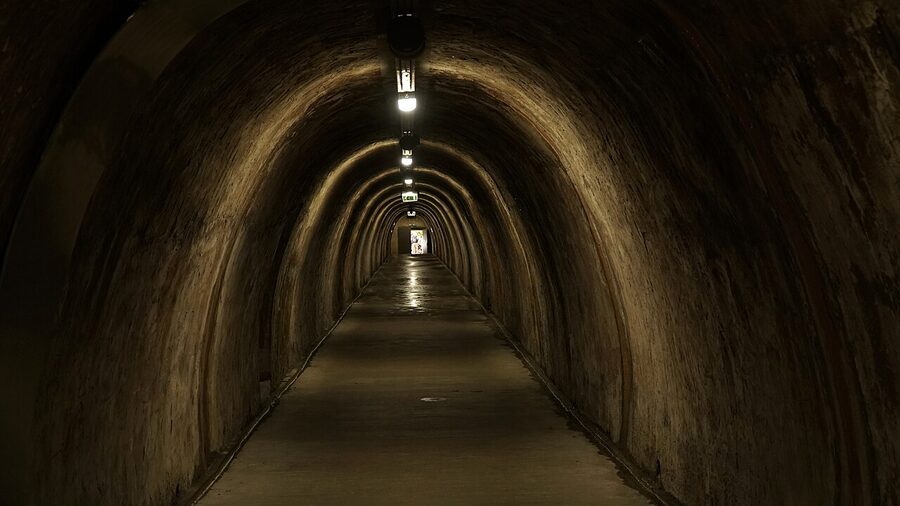

The Grič Tunnel is why most Zagreb walking tours exist in the form they do. Before 2016, a city walking tour was a straightforward two-hour loop through Ban Jelačić Square, the Cathedral, St Mark’s Church, and Dolac market. After the tunnel opened, tour operators added it to the route and the product got more interesting — a walk through a medieval-to-modern city with a WWII shelter as its centrepiece. If you’re trying to work out whether to stay 2 or 4 nights, our things-to-do-in-Zagreb piece argues hard for the longer stay.

.jpg)
This guide covers which tour to book, what you actually see in 2.5 hours, and whether the tunnel add-on is worth the extra.
- In a Hurry? Here Are the Top Picks
- What a Zagreb Walking Tour Covers
- Ban Jelačić Square
- Dolac Market
- The Cathedral
- St Mark’s Church
- The Grič Tunnel
- The Art Pavilion and Green Horseshoe
- The Best Tours to Book
- 1. Zagreb: City and WWII Tunnels Walking Tour —
- 2. Zagreb: City & History Walking Tour with WW2 Tunnels —
- 3. Zagreb: Communism and Croatian Homeland War Tour —
- Why the Tunnel Actually Matters
- How Long Zagreb Really Takes
- When to Take the Tour
- What to Wear and Bring
- Self-Guided vs Guided
- Worth Knowing Before You Book
- What to Pair This Tour With
- More Croatia Guides
In a Hurry? Here Are the Top Picks
Best premium option: Zagreb: City and WWII Tunnels Walking Tour — $14 per person. 2.5 hours, licensed guide, tunnel entry included. The most popular tour in Zagreb.
Best value: Zagreb: City & History Walking Tour with WW2 Tunnels — $11 per person. Same itinerary, smaller-group focus, $3 cheaper.
Best for history buffs: Zagreb: Communism and Croatian Homeland War Tour — $45 per person. Less about the old city, more about 1945-1995. Deeper and darker.
What a Zagreb Walking Tour Covers
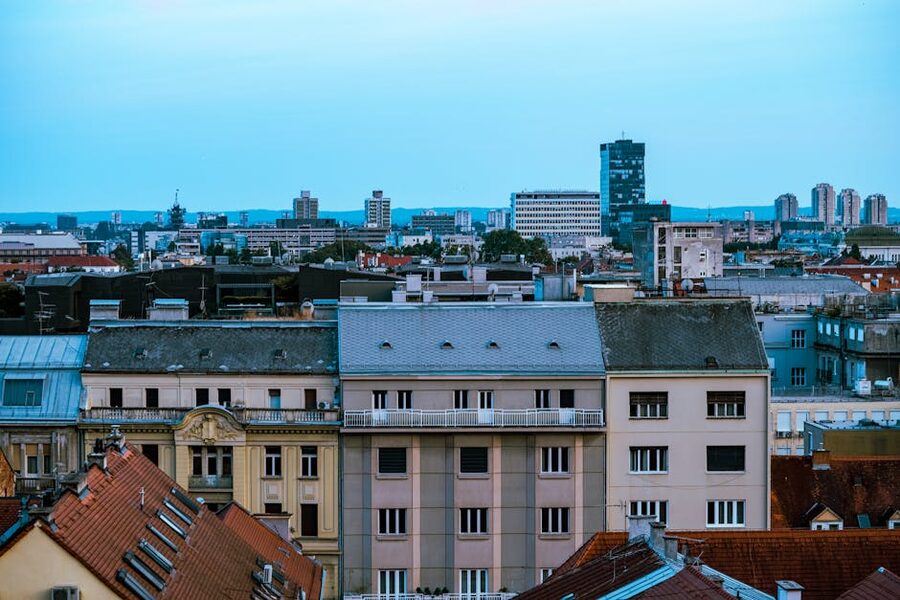
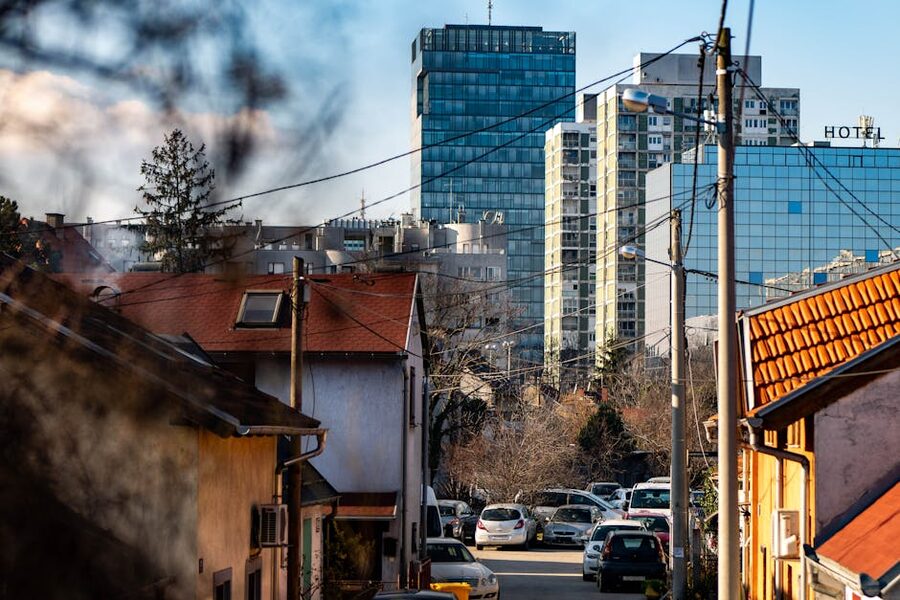
The standard 2.5-hour route runs through both halves of the old city — the medieval Upper Town (Gornji Grad) and the 19th-century Lower Town (Donji Grad). Here’s what’s on almost every itinerary.
Ban Jelačić Square
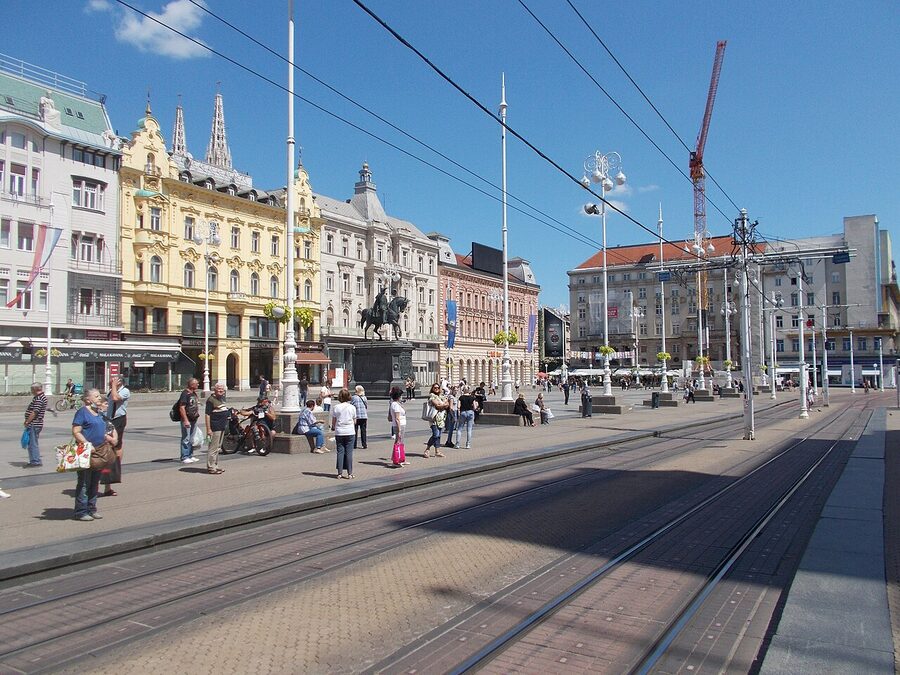
Every tour starts here. It’s the central square of Zagreb, named after a 19th-century Croatian ban (governor) who briefly made Zagreb the capital of everything south of Vienna. The equestrian statue in the middle was removed in 1947 by the Communists, stored in a warehouse, and put back in 1990. It’s become a kind of metaphor for the city’s relationship with its own history.
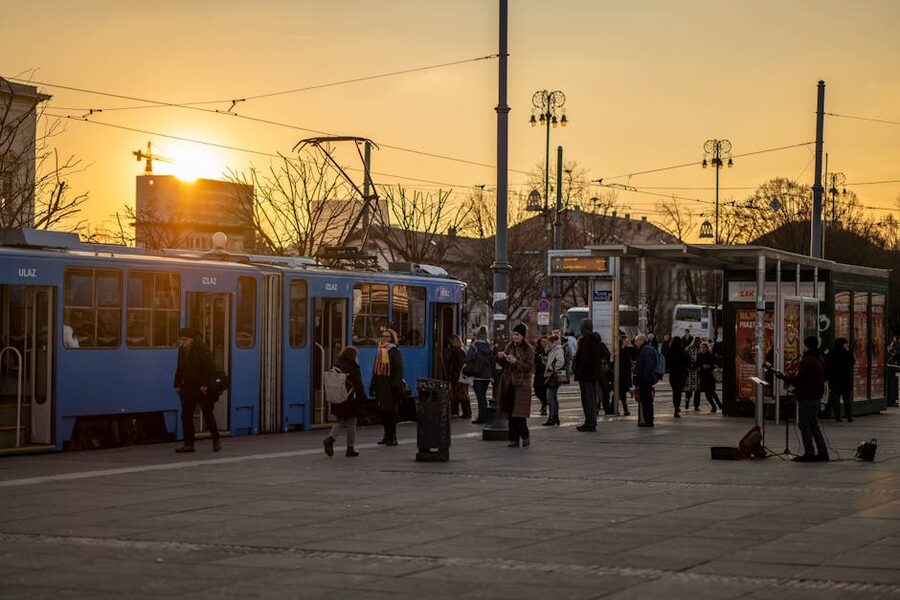
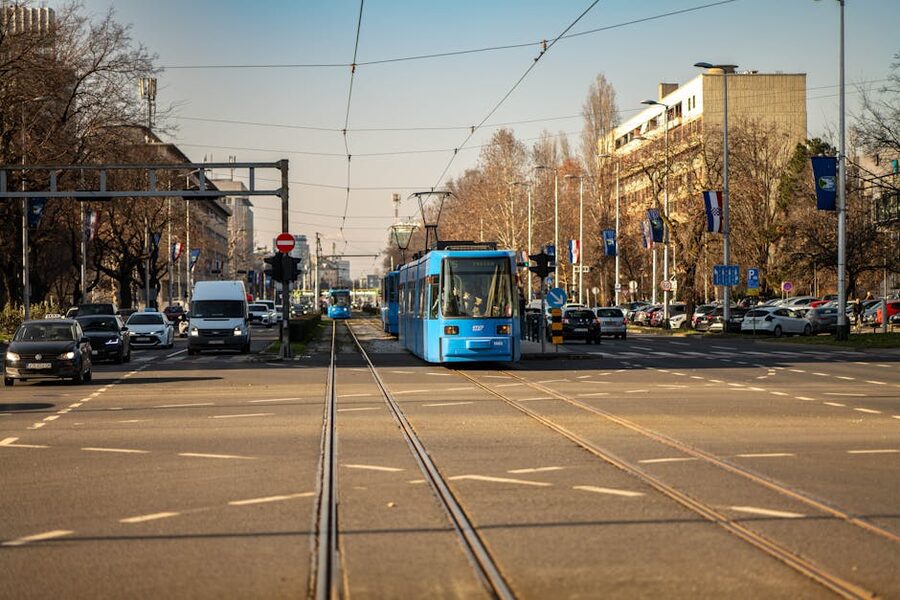
Your guide will probably point out the tram lines and explain the Zagreb public transport system in a way that makes you realise the rest of Europe has somehow made buses more complicated than they need to be.
Dolac Market
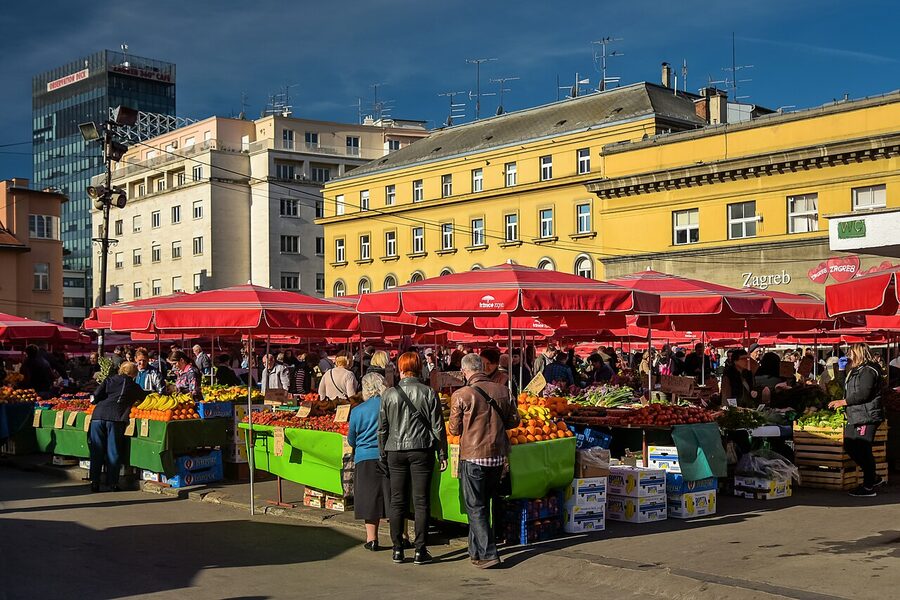
Five minutes’ walk from the main square, Dolac is the main open-air farmers’ market. Red umbrella stalls, rows of vegetables arranged by colour, a flower section that looks like a still-life painting. For the story behind what you’re actually looking at — ajvar, soparnik, pašticada, the regional dishes — our Croatian food guide is the fastest way to stop feeling lost in Dolac. Your guide will walk you through but probably won’t give you time to buy anything — save that for after the tour.
.jpg)
The Cathedral
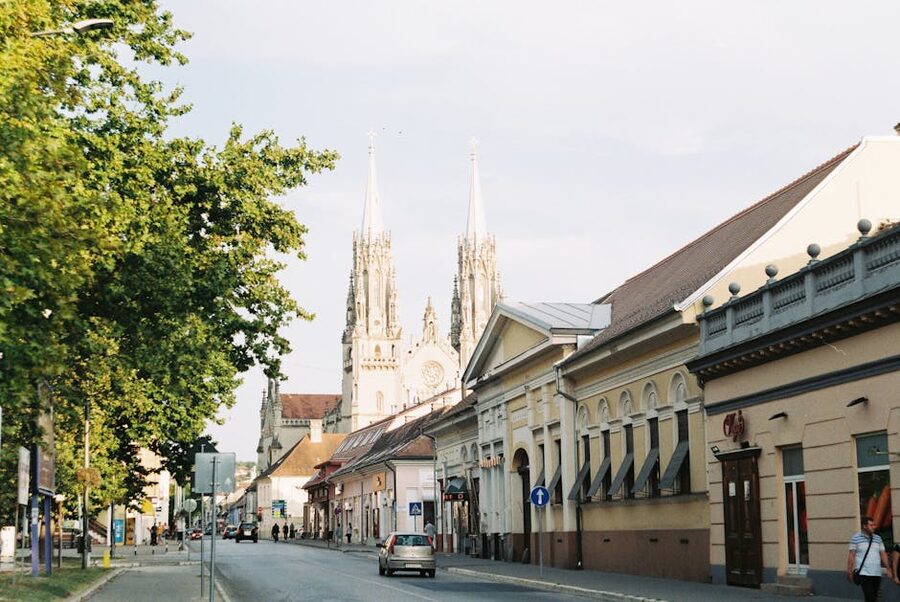
Zagreb Cathedral towers over the north side of the old town — or it did. A 2020 earthquake damaged both spires, and one is currently wrapped in scaffolding for a multi-year restoration. Your tour will probably acknowledge this honestly, walk around the outside, and point out the damage patterns.
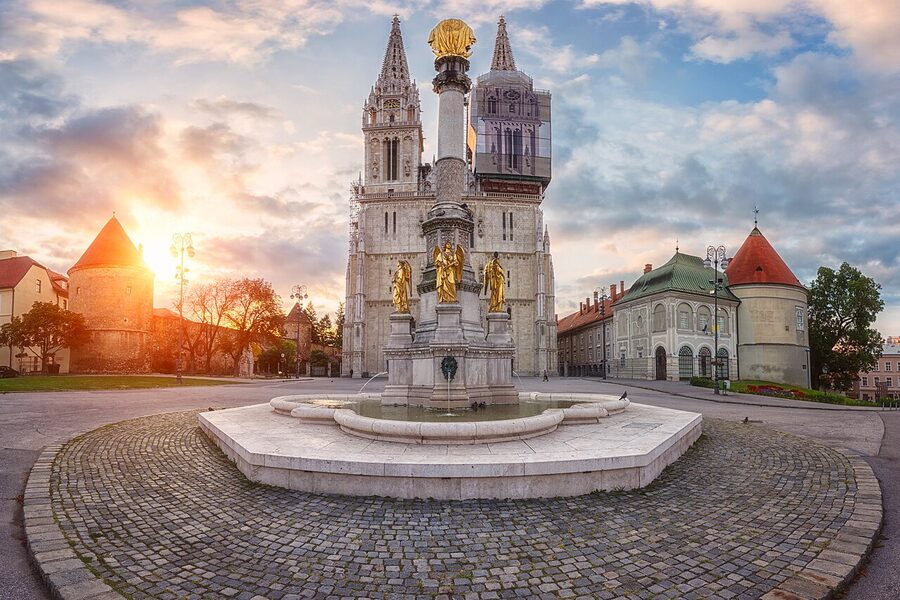

Entry to the cathedral is free when it’s open, though access can be limited during restoration work. Worth five minutes if the scaffolding allows.
St Mark’s Church
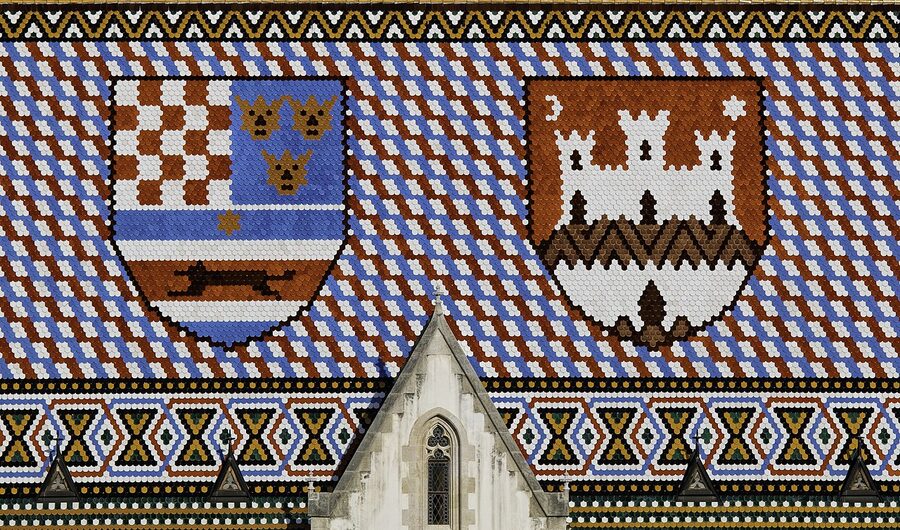
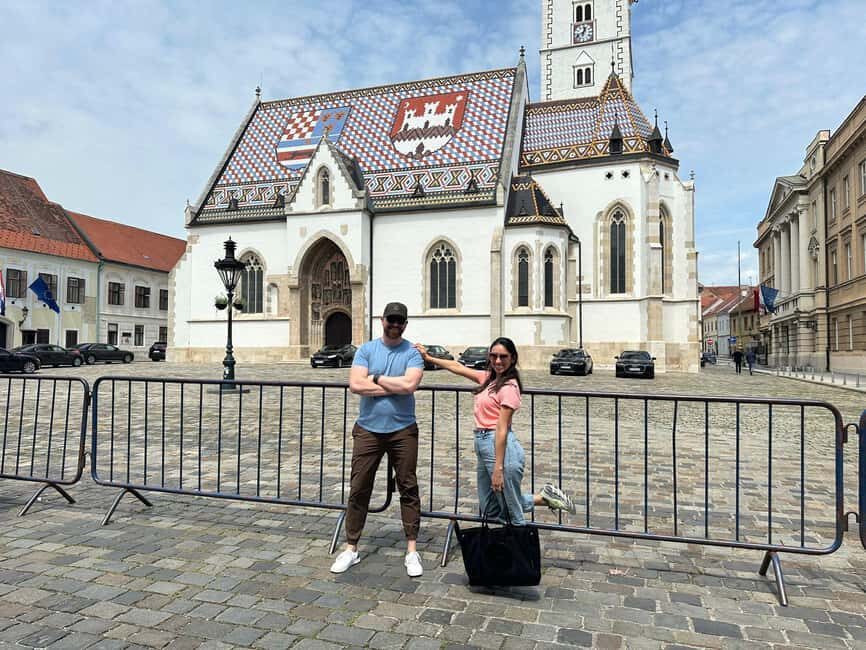
The photo stop. The church has a small footprint but is famous for its tiled roof — two coats of arms in glazed mosaic tile, one for Croatia and one for Zagreb. The roof was added in 1880; the church itself is medieval.
The surrounding small square (Markov Trg) is the most political spot in Croatia. The Parliament building is on the west side, the prime minister’s office on the east. Tour guides usually point this out and add some dry commentary about which door you’d be knocked back at if you tried to walk in.
The Grič Tunnel
The centrepiece. You descend a long set of steps from Mesnička Street on the west side of Upper Town, walk through the main tunnel for about 10-15 minutes with the guide explaining the WWII context, and emerge at Tomićeva Street on the east side. The tunnel is open from 9am to 9pm daily and entry is free — so technically you could do this alone. A guide adds the history, which is what you’re paying for.
The Art Pavilion and Green Horseshoe
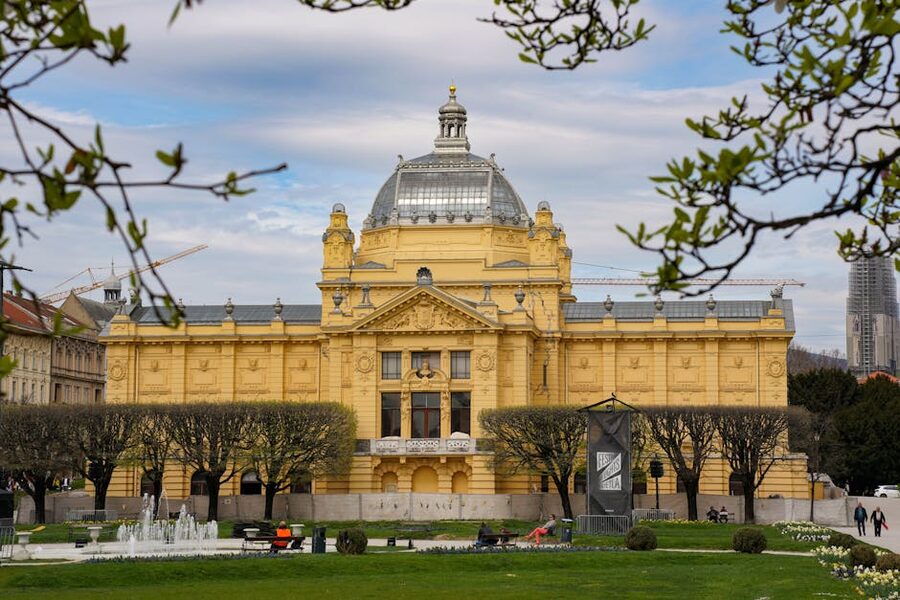
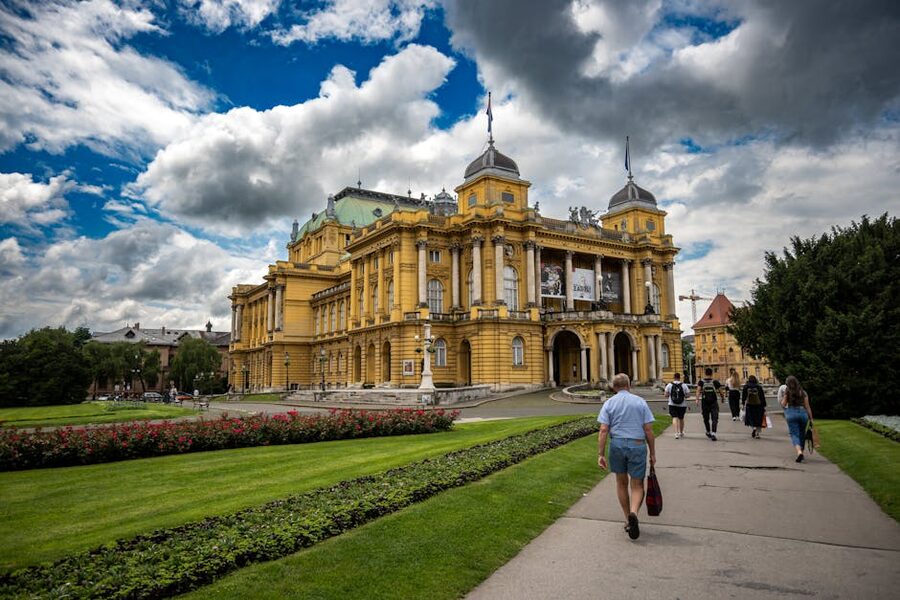
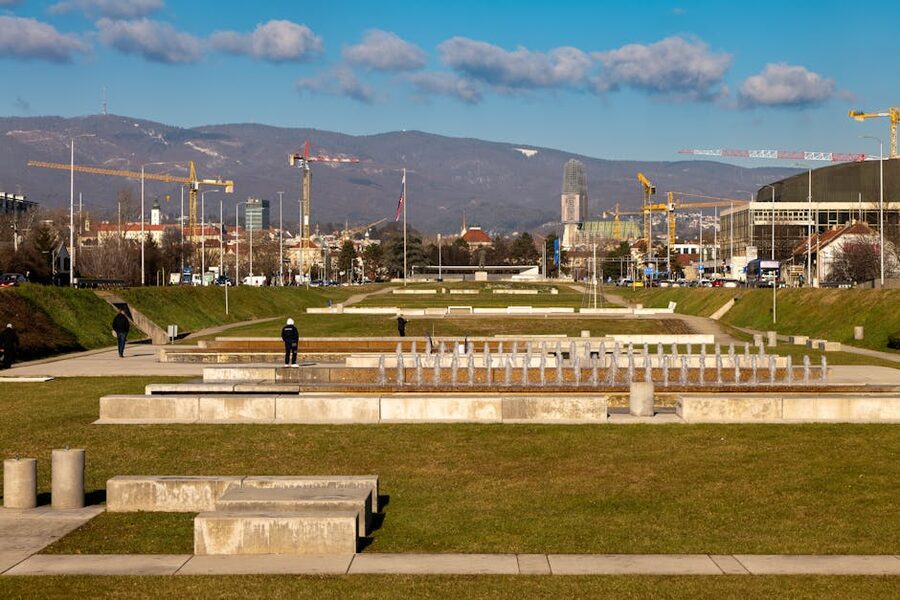
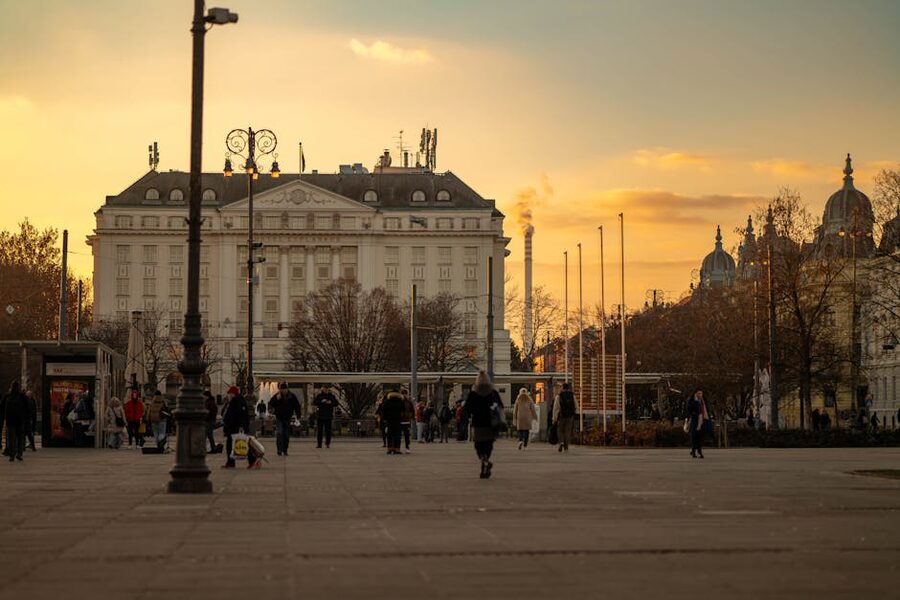
Most tours end (or include a pass through) the Green Horseshoe — a U-shape of seven parks in Lower Town laid out in the 1880s. The Art Pavilion, the National Theatre, and the Croatian National Archives all sit in it. Your guide will cover the highlights in 10-15 minutes.
The Best Tours to Book
1. Zagreb: City and WWII Tunnels Walking Tour — $14
The default choice. Licensed guides who mostly live in Zagreb and take real pride in explaining the city beyond the tourist script. Two and a half hours, small groups, tunnel entry at the end. At $14 this is one of the best-value city walking tours in Europe. Our review covers exactly what’s included and how the guide quality stacks up against the cheaper version. Solo travellers and couples get sorted into mixed groups of about 12-15 people.
2. Zagreb: City & History Walking Tour with WW2 Tunnels — $11
Nearly identical to the top pick for $3 less. Same itinerary — Ban Jelačić, Dolac, Upper Town, cathedral, St Mark’s, Grič Tunnel — with guides from the same local pool. The main difference is group size: this one stays smaller by design, capped at about 10 people. Our review covers the guide quality. Past visitors mention the smaller groups make the tunnel section feel less like a queue and more like a conversation — which is a real difference.
3. Zagreb: Communism and Croatian Homeland War Tour — $45
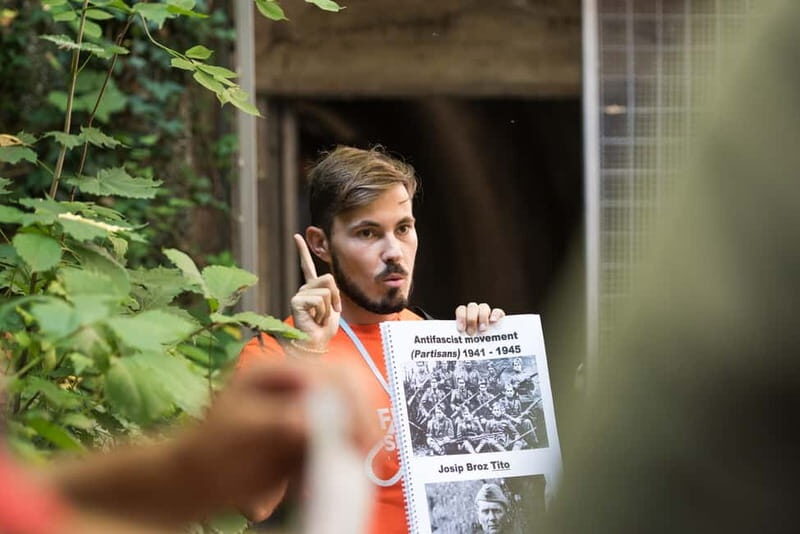
The grown-up option. Skip the pretty-buildings tour and get a serious walk through Zagreb’s 20th-century history — Yugoslav socialism under Tito, the breakup in the early 1990s, and the Croatian Homeland War. Guides tend to be older locals who lived through the war and can speak personally about the experience. Our review covers the emotional weight of this tour. It’s not for first-time visitors looking for a city intro — book this for the second or third day of your Zagreb stay, after the standard walking tour has covered the architecture.
Why the Tunnel Actually Matters
Most cities have WWII air-raid shelters. Most have quietly repurposed them as car parks, storage, or rubble. Zagreb is unusual because its tunnel was specifically built as a shelter by the Croatian Ustaše government (1941-1945), used again during Allied bombing in 1944-1945, abandoned after WWII, and then reopened for sheltering during Serbian rocket attacks in 1991.
What your guide will explain (and it’s worth hearing properly) is that the tunnel was used by two very different sets of people for very similar reasons within a single human lifetime. The same concrete walls sheltered civilians from German bombs in 1944 and Yugoslav bombs in 1991. There’s a specific weight to that.
If this is the kind of history that interests you, skip the budget tour and book the Communism and Homeland War tour instead — it covers the 1990s war context in much more depth. The standard city tour gives you a few minutes on the tunnel; the specialist tour gives you two hours.
How Long Zagreb Really Takes
Most travellers stay 2-3 nights in Zagreb, and that’s about right. One day for the walking tour and the Cathedral-Upper Town-Lower Town walk, one day for Plitvice Lakes, maybe a third day for museums (the Museum of Broken Relationships is genuinely good) and more relaxed café time. For the bigger country picture — how Zagreb fits into a Croatia itinerary — our complete Croatia travel guide is the overview worth reading first.
If you have only one day in Zagreb, do the walking tour in the morning and the Plitvice tour on a different day. If you have just one day and you’re adding a Plitvice day trip, you’ll need two days minimum.
When to Take the Tour
Morning tours (9-11am) are the best. Crowds are thin at the cathedral, Dolac market is in full swing (buying produce happens before noon, travelers arrive after), and the temperature is manageable even in July.
Evening tours (5-7pm) are a solid alternative. You miss Dolac (the market closes at 2pm) but gain the Upper Town’s cobblestones in late light. The Grič Tunnel is the same temperature at any hour.
Winter (December-February) tours run less frequently but still operate. If you’re in Zagreb for the Christmas Markets (the city’s biggest winter draw), a walking tour in the afternoon followed by the markets in the evening is an ideal day. Our Croatia-by-month guide explains what the off-season here is actually like.
What to Wear and Bring
Comfortable shoes. Zagreb’s Upper Town is cobblestone with some uphill sections; heels or stiff shoes are uncomfortable. Trainers or walking shoes are ideal.
Jacket for the tunnel. It’s genuinely 14°C down there year-round, and you’ll spend 15-20 minutes inside. A light windbreaker is enough even in summer.
Water bottle. The tour is 2.5 hours and cafés are limited to the bookends; bring water.
A small amount of cash for Dolac market if you want to grab a piece of fruit or some cheese after the tour ends nearby.
Camera or phone — Dolac’s red umbrellas, St Mark’s roof, and the Peristyle-style streets of Upper Town are all among Zagreb’s most photographed spots and all show up on the route.
A small pocket of curiosity. Zagreb’s guides tend to be opinionated, sometimes funny, occasionally sarcastic — they’re often better-informed than the Split and Dubrovnik guides, and they’ll ask you real questions. Come willing to chat.
Self-Guided vs Guided
You can see the same places by yourself. The Grič Tunnel is free, the city streets are free, and St Mark’s Church and the cathedral only charge for specific interior sections.
But Zagreb rewards a guided tour more than other Croatian cities, for one specific reason: the history is layered in a way that’s hard to see without context. Everything you look at is three or four different cities stacked on top of each other — Roman, medieval, Austro-Hungarian, Yugoslav, and independent Croatian. Without a guide, it all looks like a pretty European city. With one, it becomes a sustained 2,000-year argument about identity.
At $11-14 for 2.5 hours, a guided tour is cheaper than a museum ticket in most European capitals. There’s no real argument for skipping it.
Worth Knowing Before You Book
Group sizes vary wildly. The budget tour (11) tends to keep groups small by design; the main tour (14) can have groups of 16-20. If small groups matter to you, book the cheaper one.
The tunnel section is not accessible for wheelchairs — there are stairs at both ends. If mobility is an issue, ask the operator about alternatives; some will do an adjusted route that skips the tunnel but keeps the rest of the tour.
Tours run in multiple languages. English is standard; ask about Spanish, French, German, or Italian if you want a non-English tour — availability depends on the day.
Reviews consistently name individual guides (Robert, Petra, etc.) as highlights. This is because Zagreb’s guide pool is small — about 40 licensed guides regularly work these tours — and personalities come through. If your guide was great, mention their name in a review; if not, try a different operator.
Same-day booking works in off-season but is unreliable in peak (June-September). Book at least 24 hours ahead.
Some tours advertise the tunnel as “included” but meet at different tunnel entrances than they actually use. The standard entrance is Mesnička; confirm before booking if you care.
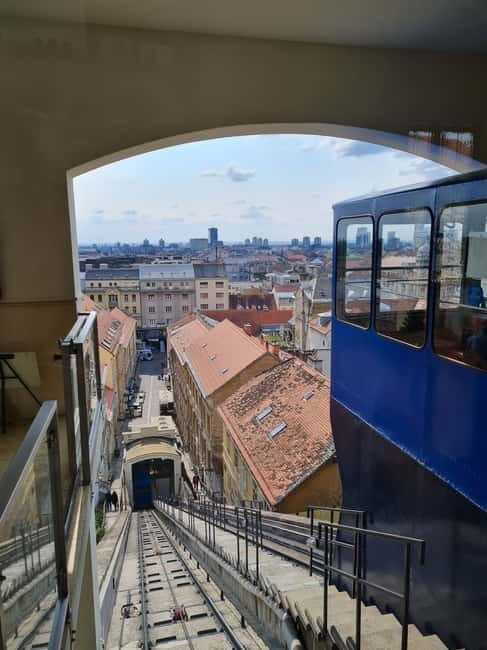
The Museum of Broken Relationships and the Zagreb Upper Town Funicular aren’t usually included in walking tours but are worth adding to your day. Ask your guide for recommendations at the end — most will happily point out where to go next.
What to Pair This Tour With
The Zagreb walking tour is the obvious first-day activity. From there, your Croatia route usually goes in one of two directions.
If you’re going south to the coast, the Plitvice day trip is the essential second day from Zagreb before moving on. In Split, the Diocletian’s Palace walking tour is the direct equivalent of what you just did in Zagreb — a 2.5-hour city walk through layered Roman and Venetian history. In Dubrovnik, the Dubrovnik old town walking tour is the southern counterpart.
If you’re going west to Istria, the Pula Arena guide covers the main draw, a two-hour drive from Zagreb.
Either direction, the Zagreb walking tour is a good first-day orientation before the bigger day trips. Get the city itself into your head first; then go see the nature and the Dalmatian coast with a clearer sense of Croatia as a whole country rather than a series of pretty places.
More Croatia Guides
Most Zagreb itineraries end up including Plitvice as a day trip — the Plitvice from Zagreb guide is the one to read next. If you’re heading south, the coastal trio is the Diocletian’s Palace guide, the Blue Lagoon cruise guide, and the Cetina rafting guide. In Dubrovnik, the city walls guide and the Montenegro day trip guide are the two must-reads. And if you’re making it to Istria, the Pula Arena guide is the Roman-history counterpoint to Zagreb’s Austro-Hungarian streets.
Affiliate disclosure: We may earn a small commission from bookings made through the links on this page. It doesn’t change the price you pay and helps keep the site running.