
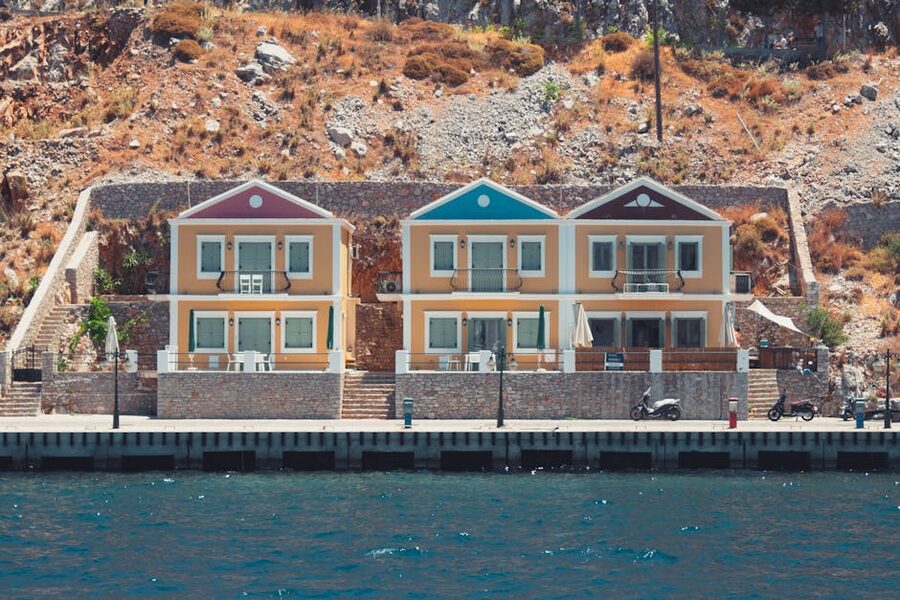
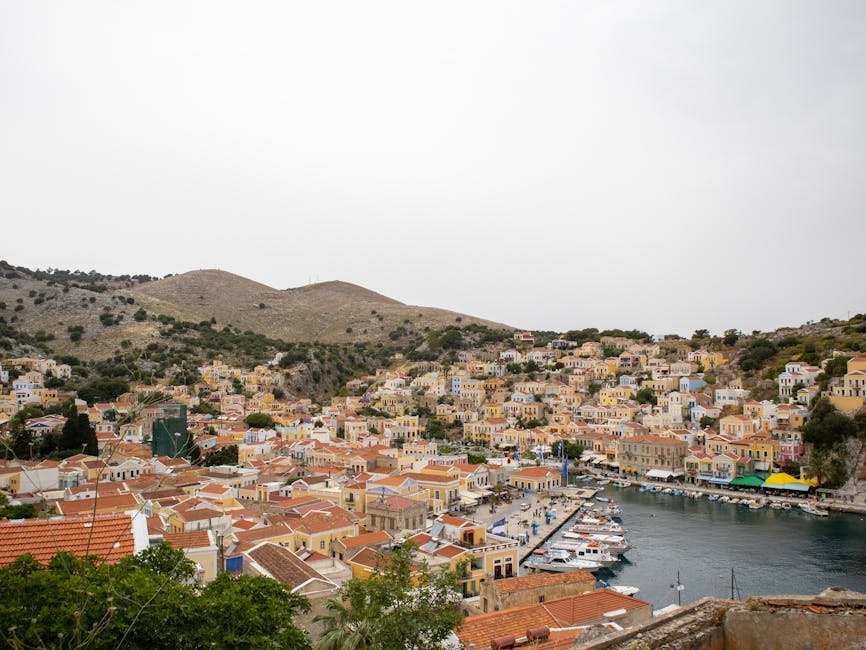
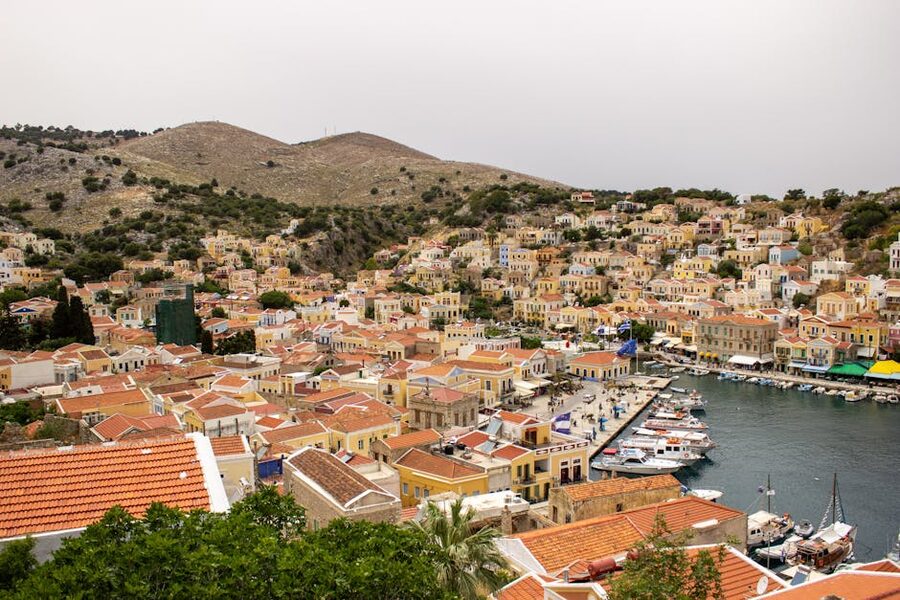
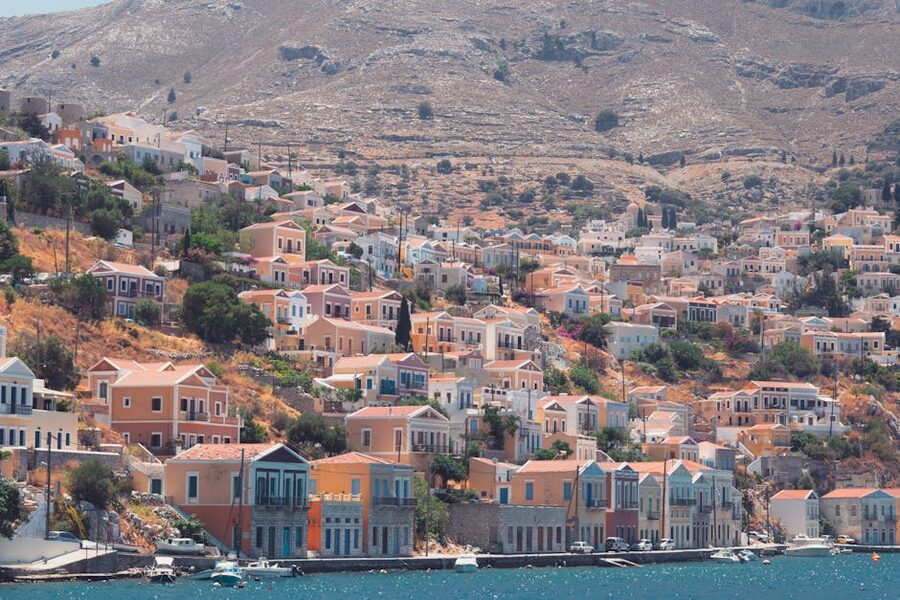
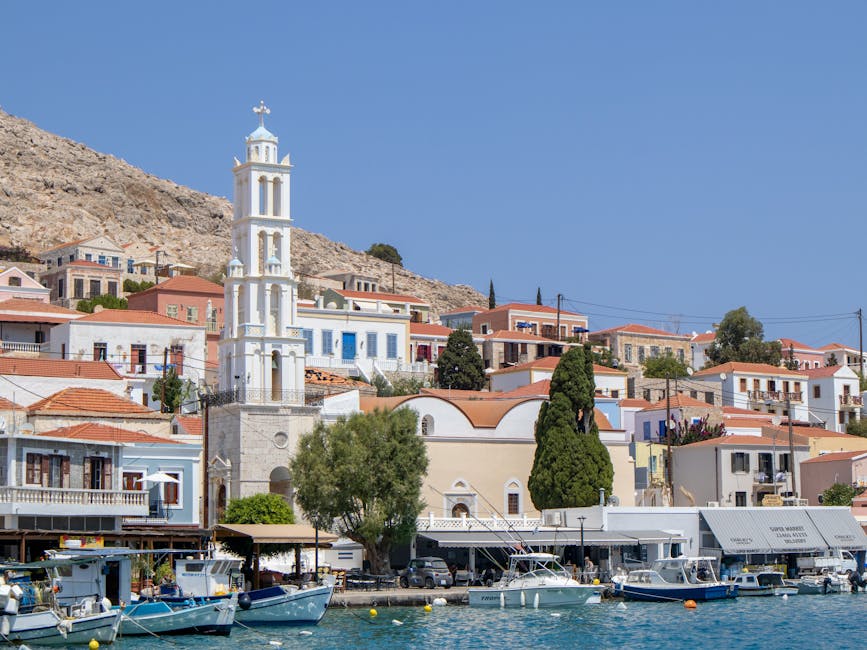
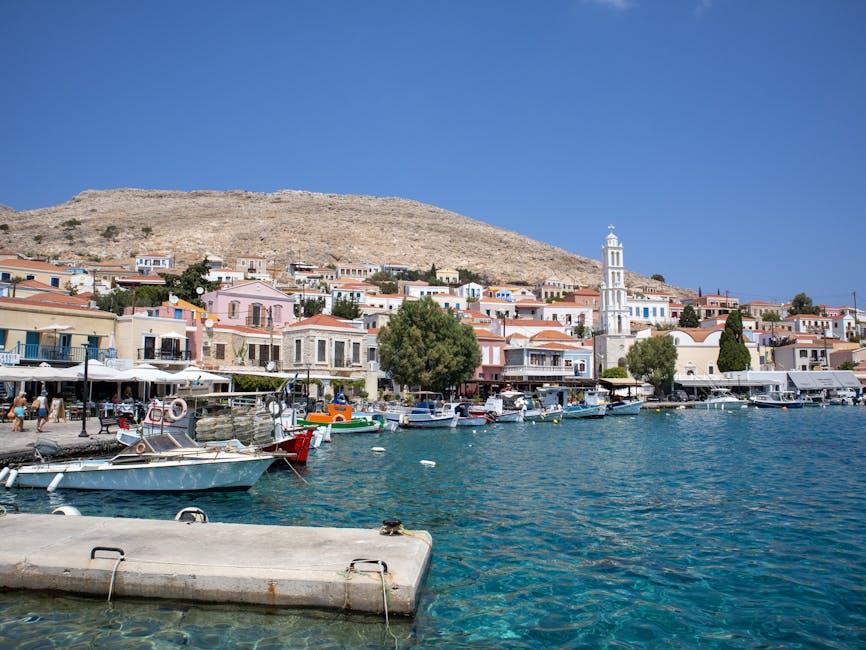
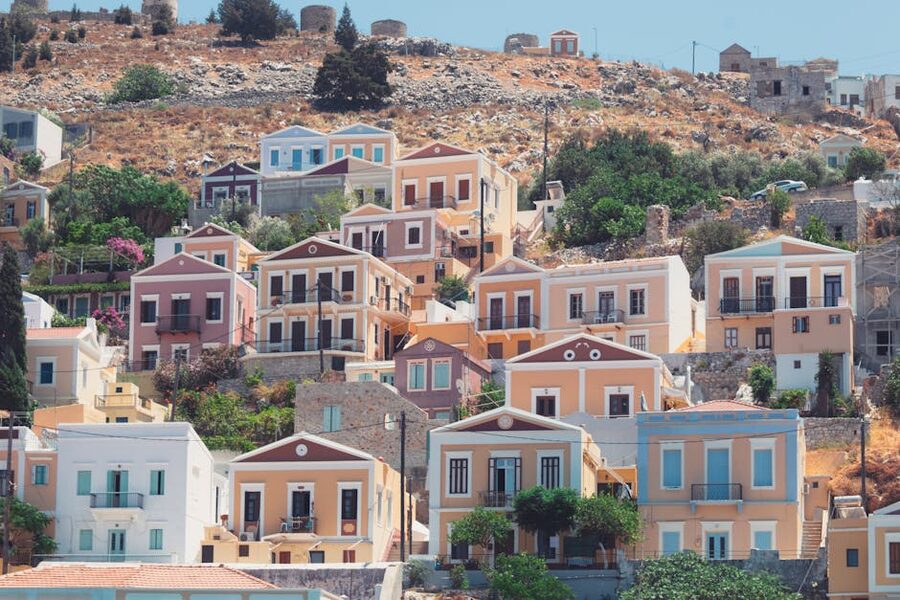
Symi is the postcard island. When you see a photo of a Greek harbour with multicoloured neoclassical houses stacked up a hillside, there’s about a 60% chance it’s Symi. The town — all pink, orange, yellow, and ochre buildings rising 150 metres above a horseshoe harbour — was built by wealthy sponge traders in the 18th and 19th centuries and has barely changed since.
Getting there from Rhodes is a 50-minute speedboat or 90-minute regular ferry. Most visitors go on a day cruise — the boat leaves Rhodes at 9am, arrives Symi at 10:30, gives you 3-4 hours in the harbour, stops at Saint George’s Bay for swimming on the return, and gets you back to Rhodes by 6pm. This guide covers the three main cruise options, what to actually do in Symi town, and whether the speedboat upgrade is worth the extra money. If you’re Rhodes-based and also considering the general Rhodes boat tour or Lindos tour, this is the north-eastern Dodecanese counterpart.
- In a Hurry? Here Are the Top Picks
- What the Day Looks Like
- What to Do in Symi Town
- Walk the Harbour (Gialos)
- Climb the Kali Strata
- Lunch at a Harbour Taverna
- Visit the Folk Museum
- Swim in the Harbour
- The Best Tours to Book
- 1. Rhodes: Speedboat Trip to Symi with Free Time —
- 2. Rhodes: High-Speed Boat to Symi & Saint George’s Bay —
- 3. From Rhodes: Cruise to Symi & Saint George’s Bay —
- A Short History of Symi
- Saint George’s Bay
- When to Go
- A Note on Sponge Shops
- What to Bring
- Worth Knowing Before You Book
- Pairing with Other Rhodes Activities
- Worth the Day or Skippable?
- More Greece Guides
In a Hurry? Here Are the Top Picks
Most booked: Rhodes: Speedboat Trip to Symi with Free Time — $35 per person. 7-8 hour day, fast boat, lots of free time.
Premium speedboat: Rhodes: High-Speed Boat to Symi & Saint George’s Bay — $69 per person. Smaller boat, premium experience, Saint George’s Bay swim stop.
Classic cruise: From Rhodes: Cruise to Symi & Saint George’s Bay — $41 per person. Regular boat, slower crossing, more classic cruise feel.
What the Day Looks Like
All three cruise options follow a similar schedule.
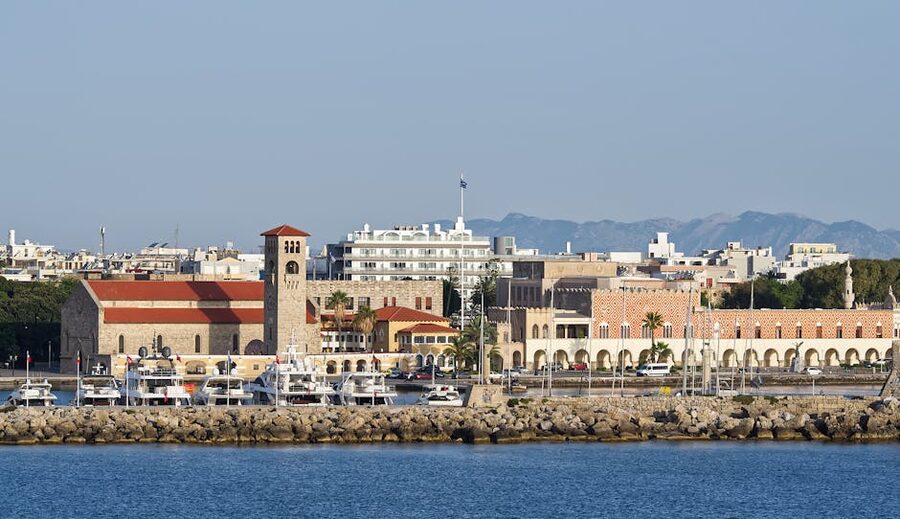
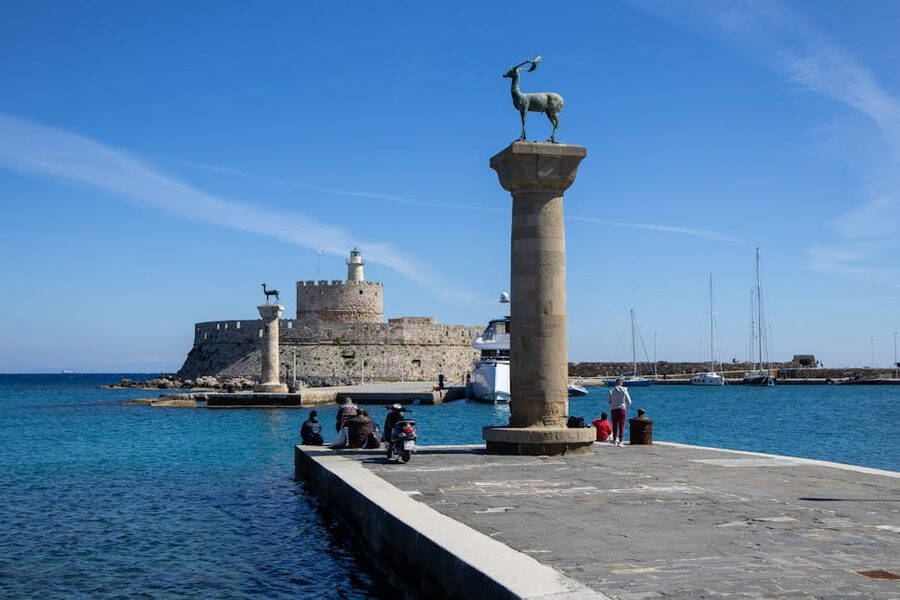
08:30-09:00: Boarding at Mandraki Harbour in Rhodes Town.
09:15: Depart Rhodes. Cross the 20 km to Symi — 50 minutes by speedboat, 90 minutes by regular boat.
10:15-11:00 (depending on boat): Arrive Symi harbour. Most cruises give you 3-4 hours in town.
14:30-15:00: Depart Symi. Stop en route at Saint George’s Bay — a small beach on the south coast of Symi accessible only by boat, with crystal-clear water and limited facilities.
16:00-17:00: One hour at Saint George’s Bay for swimming.
17:30-18:00: Return to Rhodes.
What to Do in Symi Town
You get 3-4 hours in Symi town. Here’s what’s worth doing.
Walk the Harbour (Gialos)
The lower town. One main waterfront road, maybe 500 metres long, lined with cafés, jewellery shops, and restaurants. Start at the northern end (where the ferry docks), walk the full length, circle back for lunch. 45 minutes.
Climb the Kali Strata
A 500-step staircase leading from the harbour to the upper town (Chorio). Takes 25-30 minutes going up. The views from each switchback are progressively better — by step 300 you have the whole harbour spread below you. At the top, Chorio is smaller and quieter than Gialos — a village within the island rather than a tourist harbour.
Lunch at a Harbour Taverna
Symi is famous for small shrimp (Symi shrimp — garides Symi). They’re tiny — 2-3 cm long — and served whole with shells and heads on. Deep-fried and eaten with lemon and ouzo. Every harbour taverna serves them; €10-15 per portion.
Best places: O Meraklis (local favourite, one street back from the harbour), Tholos (waterfront view, slightly touristy), Manos (family-run, excellent grilled fish).
Visit the Folk Museum
A small museum in a restored neoclassical mansion. Shows how wealthy sponge merchants lived in the 1880s — furniture, clothing, household goods. 30 minutes, €5 entry.
Swim in the Harbour
Yes, you can. Steps lead straight down into the water at several points along the waterfront. The water is deep (5+ metres) and clean; swimming in the centre of a UNESCO-worthy town is a specific experience. Many day-trippers skip this and then regret it.
The Best Tours to Book
1. Rhodes: Speedboat Trip to Symi with Free Time — $35
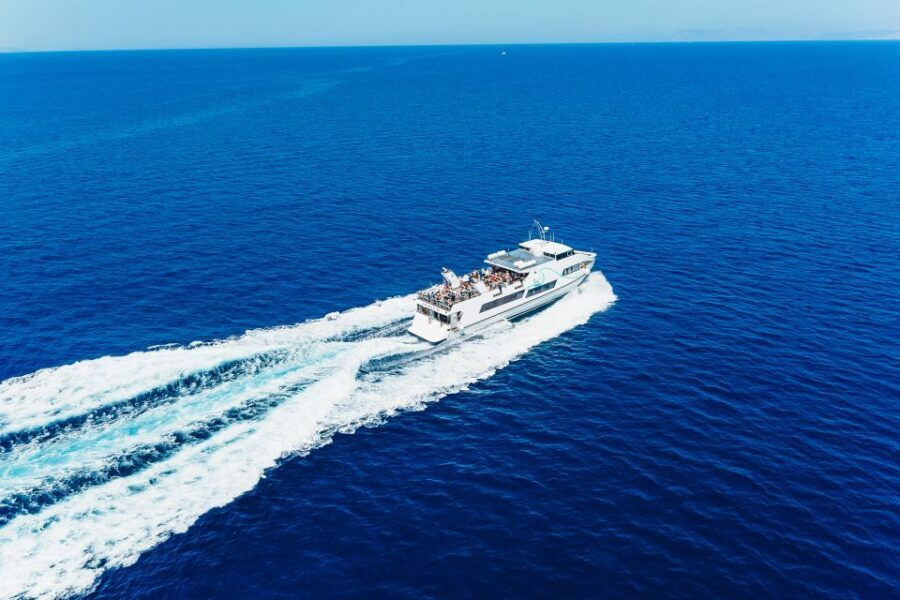
The best-value pick. $35 is unusually low for a 7-hour speedboat day in Greece — the operator keeps prices down by running multiple trips per day in summer with efficient turnarounds. Past visitors praise the free time — 4 hours in Symi is enough to properly explore rather than rushing through. Our review covers exactly what’s included. No lunch on board; you eat in Symi which is much better than standard cruise buffet.
2. Rhodes: High-Speed Boat to Symi & Saint George’s Bay — $69
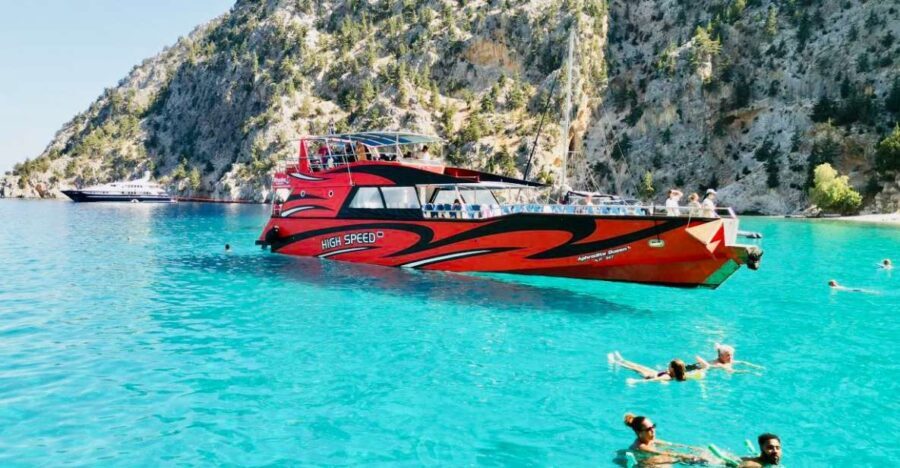
The upgrade pick. $69 vs $35 gets you a smaller boat (typically 20-30 passengers vs 60+), more comfortable seating, and a confirmed Saint George’s Bay swim stop (which the budget option sometimes skips if running late). Our review covers what the premium gets you. Worth it if the Saint George’s Bay swim is a priority.
3. From Rhodes: Cruise to Symi & Saint George’s Bay — $41
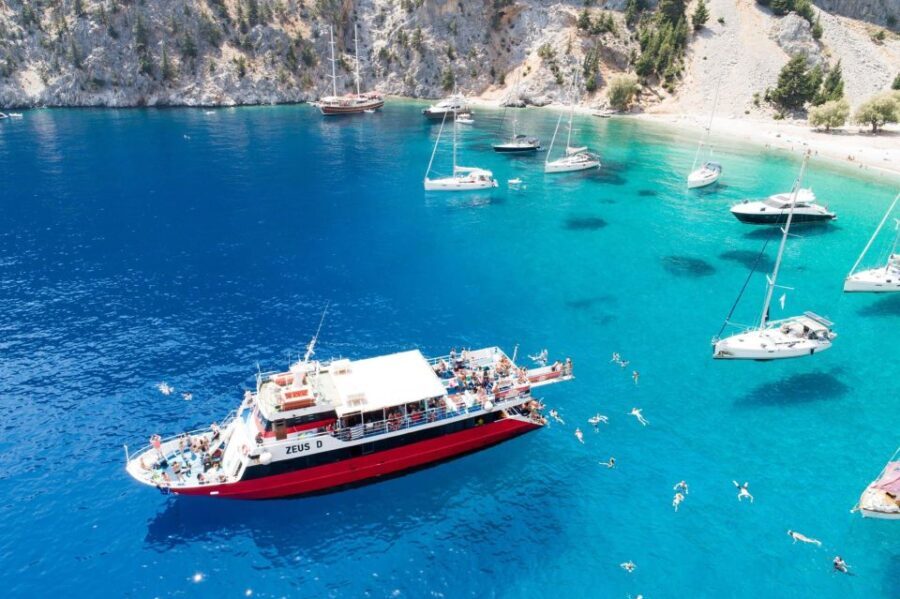
The middle option — a traditional tour boat rather than speedboat. The crossing takes 90 minutes instead of 50, but you can walk around during it. Usually includes a light lunch on board. Our review covers the pros and cons. Better for travellers who get seasick or with children — the larger boat is more stable on rough days.
A Short History of Symi
Symi’s wealth came from sponges. From the 18th century through the 1940s, Symiots dominated Mediterranean sponge diving — harvesting sea sponges from the eastern Aegean and selling them across Europe. The island was the sponge-trading capital of the Ottoman Empire; at its peak it had 30,000 residents and built some of the finest neoclassical architecture in Greece.
Sponge diving was brutal. Divers used weighted rocks to sink 30-40 metres down, held their breath for 3-5 minutes at a time, and frequently suffered decompression sickness (which nobody understood until the 1850s). Many divers were permanently paralysed in their 30s. Wealthy merchants funded ever-deeper diving operations from profits the divers rarely shared in.
Symi’s fortunes collapsed when synthetic sponges were invented in the 1940s. The population crashed to 3,000 within a generation. Today about 2,500 permanent residents live on the island; most of Symi’s income now comes from tourism.
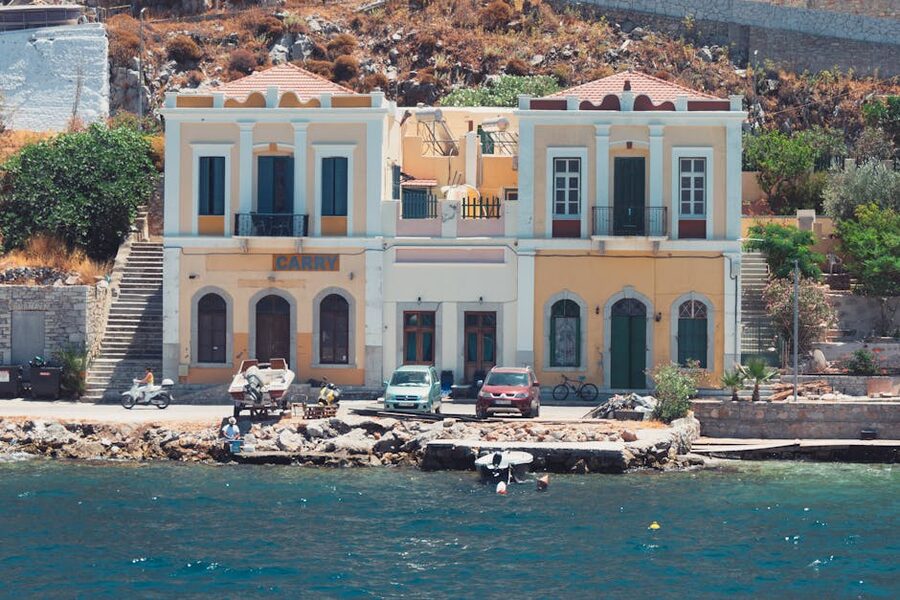
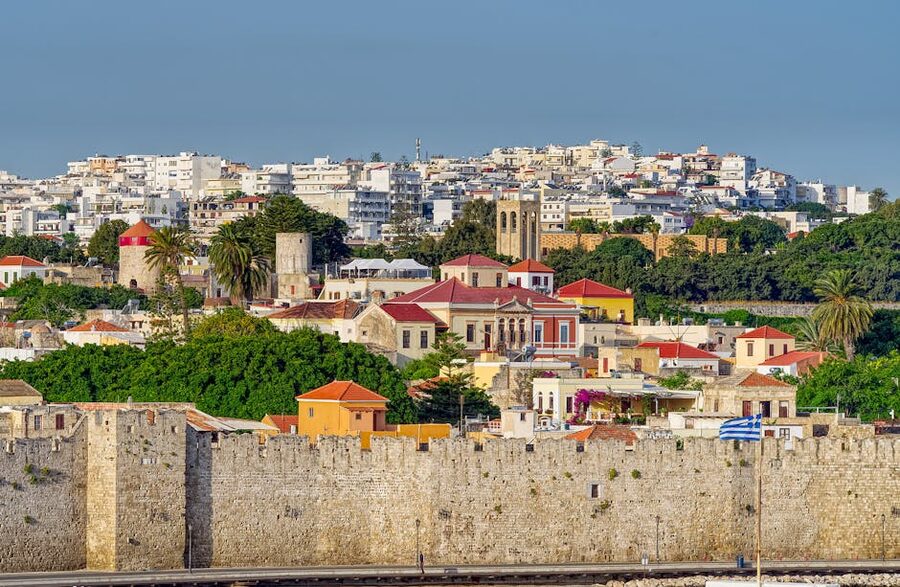
The houses you see are almost all from the 1850-1910 period when sponge money peaked. They were built to show off — elaborate facades, painted colours, pediments and balconies — because Symi’s merchant class was competing with each other as much as with Italian or French merchants abroad.
Saint George’s Bay
The swim stop on the return leg. A small, steep-walled bay on Symi’s south-east coast accessible only by boat. White limestone cliffs on three sides, blue-green water, a small pebble beach.
The water here is genuinely striking — deep enough (8-10 metres) for the blue to look electric, clear enough to see straight down. No sand on the bay floor, so visibility isn’t spoilt by stirring. Most cruises give you 45-60 minutes. The bay is exposed to northerly winds; on rough days the cruise skips it.
A cave on one side of the bay is worth swimming into if your cruise has inflatable ringboats — you can see into the cave entrance but need a smaller craft to enter properly.
When to Go
Cruises run May through October.
May-June: Moderate crowds, cool water (20-22°C), uncrowded Symi town.
July-August: Peak. Water 24-25°C. Symi harbour gets packed with cruise boats by 11am.
September: Best month. Warm water, thin crowds.
October: Reduced schedule. Weather can be unreliable.
Winter cruises occasionally run for locals (ferry service to Symi is year-round) but tourist cruises don’t operate.
A Note on Sponge Shops
Symi’s old industry lives on in the form of dozens of sponge shops along the harbour. Most sell Mediterranean natural sponges — actual sponges, not synthetic — harvested from the eastern Aegean. Prices range from €5 for a small shower sponge to €80+ for a large natural bath sponge.
What to know: most of the “Symi sponges” sold today are actually sourced from Tunisia or Libya and cleaned in Symi. Genuine locally-harvested sponges exist but are rarer and more expensive. The larger legitimate shops (Aegean Sponges, Demetris Sponges) will show you documentation if asked. The pavement stalls selling cheap sponges are almost certainly not local.
Colours vary: natural sponges range from pale cream to deep brown depending on species and location. The pale ones are usually “Fine silk” Spongia officinalis — the highest quality. Darker sponges are usually more durable. Quality is judged by softness, uniformity of pores, and density. A good natural sponge lasts 8-10 years of daily use; cheap ones deteriorate within a year. Worth bringing home if you’re committed to natural products; skip if you’d rather pack lighter.
What to Bring
Swimsuit. Under everything, always. Saint George’s Bay is the swim stop; harbour swimming is a bonus.
Walking shoes. The Kali Strata is 500 steps of uneven marble. Flip-flops work if you’re careful; trainers are better.
Hat, sunglasses, sunscreen. No shade in Symi harbour; limited shade on the boat.
Water bottle. Refill in Symi (most cafés will fill yours for free).
Cash for lunch. €25-40 per person for a proper meal with wine. Cards accepted but some small places are cash-only.
Camera. Symi is designed for photography. Most phones handle the colour well; any DSLR works.
Dry bag for Saint George’s Bay. Optional. Useful if you want to take photos while swimming.
Worth Knowing Before You Book
Speedboat vs cruise: speedboats are faster but bouncier. If you get seasick, book the cruise option even at the premium.
Saint George’s Bay isn’t guaranteed. Some cruises skip it when the sea is rough on the Symi-to-Rhodes return leg. The cheaper $35 cruise is most likely to skip; the $69 speedboat most likely to make the stop.
Symi is in the Dodecanese (eastern Aegean), not the Cyclades (central Aegean). Different island group, different aesthetic. The architectural style here is distinct from Santorini, Mykonos, or Paros.
Independent travellers can do this trip via public ferry. Dodekanisos Seaways runs daily; about €20 each way, takes 90 minutes. No guided time in Symi but more flexibility.
Photography-wise, the best Symi harbour shots come from the Kali Strata’s lower steps looking down — not from the harbour itself. Climb 100 steps for the shot, then come back.
Pairing with Other Rhodes Activities
Rhodes is a 3-5 day island. The Symi day is one full day; pair it with:
Another day trip: Lindos is the obvious second day — Rhodes’ other headline village, 1 hour south. Acropolis on a hilltop, whitewashed houses below.
Rhodes Town walking: UNESCO-listed medieval Old Town. Our Rhodes boat tour guide covers the water-based alternatives.
Beach day at Tsambika or Faliraki: East coast beaches, 30-45 minute drive from Rhodes Town.
Worth the Day or Skippable?
Worth the day if: you’re on Rhodes for 3+ nights, you like harbour towns, or you’re a photographer.
Skippable if: you’ve booked a 2-night Rhodes stopover. In that case do Lindos instead — closer and more accessible.
For most Rhodes visitors, the Symi day is one of the single most photogenic experiences in Greece. The island is small enough that 4 hours covers everything you’d want to see, compact enough that the walking isn’t tiring, and genuinely different enough from Rhodes to feel like a proper day trip rather than just a longer drive. If you’re on a 3+ day Rhodes base, it’s usually the second-most-photographed day of the trip after the Lindos visit.
The other thing worth knowing: Symi has no beaches in the town itself. All beach swimming on the island requires a boat or a 30-minute uphill-downhill hike to the nearest cove. This is why the Saint George’s Bay stop on the return trip matters — if the cruise skips it, the whole “island beach day” part of the experience is missing. When booking, confirm the swim stop is included rather than “weather dependent.” It’s what Instagram expects Greece to look like; the real version is better than the filtered version.
More Greece Guides
For Rhodes-base stays, the Lindos tour guide and Rhodes boat tour guide are the natural next reads. For other island cruises, the Corfu to Paxos guide covers the western Ionian equivalent and the Kos island cruise covers the Dodecanese counterpart. Athens-based travellers looking for context on the broader country should start with the Acropolis combo pass and Meteora day trip guides.
Affiliate disclosure: We may earn a small commission from bookings made through the links on this page. It doesn’t change the price you pay and helps keep the site running.