
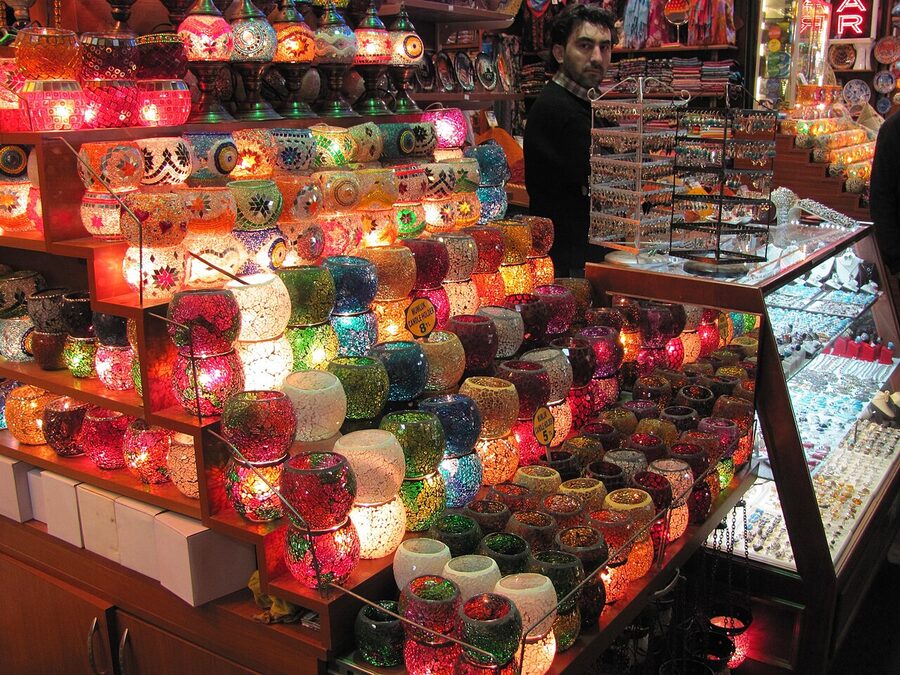
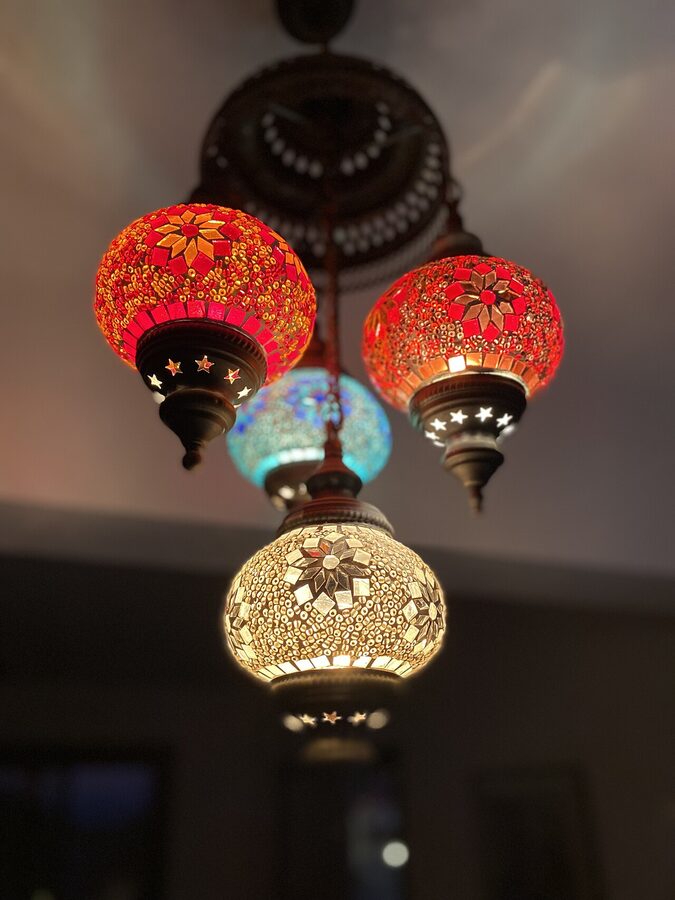
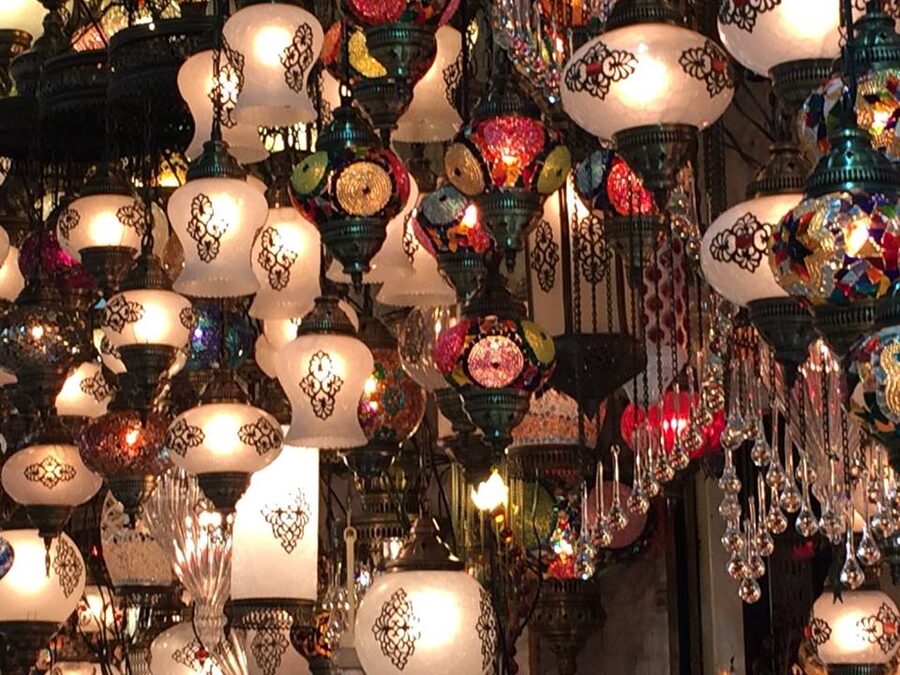
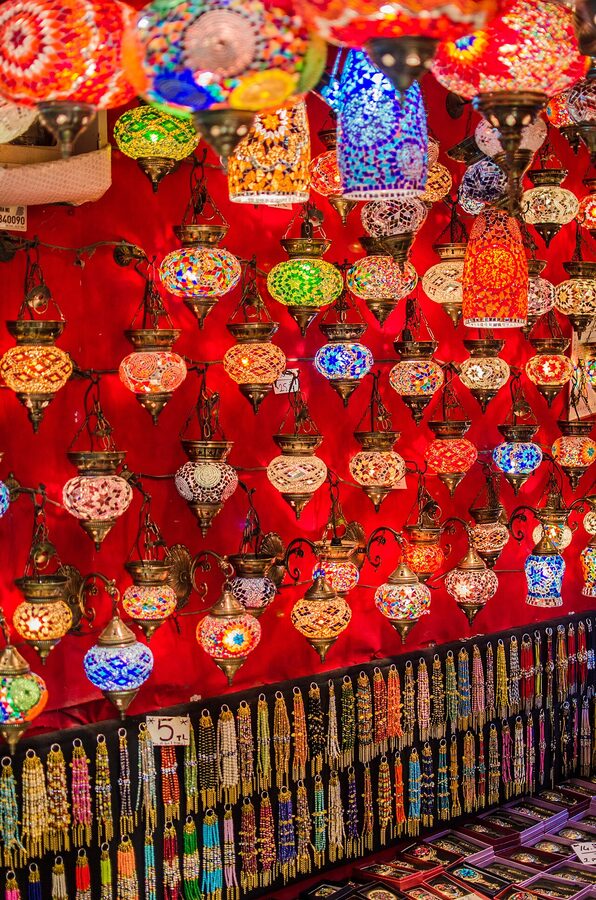
The mosaic lamps hanging in every tourist photo of the Grand Bazaar — stained-glass shades of blue, red, and amber, lit from the inside — cost about €80 each if you buy one there. A mosaic lamp workshop lets you make your own for €45-60, over 90-120 minutes, choosing every piece of glass yourself. You leave with something you actually made, not something you bought. The resulting lamps travel well (carry-on sized, individually boxed), and unlike most tourist souvenirs, the process of making it is more memorable than the object.

Workshops are 90-180 minutes depending on the lamp complexity you choose. Most run between 4pm and 8pm — the timing that fits neatly into an Istanbul day of sightseeing earlier. You sit at a workbench with glass tiles, mosaic grout, a lamp frame, and instructions. By the end of the session you’ve glued maybe 200-400 small glass pieces into a pattern of your own choosing, finished the grout lines, and handed over the lamp for a drying cycle. You collect it the next day or have it shipped.


.jpg)
In a Hurry?
- Best overall: Istanbul Turkish Mosaic Lamp Workshop — €45, 90-120 min, Turkish tea and snacks included, central Sultanahmet location.
- Best atelier: Galata Atelier Mosaic Lamp Workshop — €55, Beyoglu/Galata setting, slightly smaller group, artier feel.
- Best Antalya option: Antalya Old Town Mosaic Lamp Workshop — €50, candle-holder option available, Antalya Kaleiçi setting.
- In a Hurry?
- What You Actually Do in a Workshop
- The Three Tour Options
- 1. Istanbul Turkish Mosaic Lamp Workshop with Drinks & Snacks — from €45
- 2. Galata Atelier Mosaic Lamp Workshop — from €55
- 3. Antalya Old Town Mosaic Lamp or Candle Workshop — from €50
- A Short History of Turkish Glass and the Modern Lamp
- How to Get Your Lamp Home
- Who the Workshop Works For
- What to Wear
- When to Book
- Combining With Other Istanbul Activities
- Getting There
- Food and Drink
- Accessibility
- What Guides Won’t Tell You
- Common Mistakes
- The Short Version
What You Actually Do in a Workshop
.jpg)
0-15 min — Introduction. Guide explains the tradition (briefly — maybe 5 minutes on history), shows you finished examples, introduces the materials: metal lamp frame (blank, ready for decoration), coloured glass tiles (broken into small pieces of various shapes), mosaic glue, and grout for filling between the glass pieces.
15-30 min — Design. You pick a colour palette and rough pattern. Workshop staff have template designs — geometric, star pattern, floral, spiral — that beginners can follow. Some people freelance; most go with a template for their first piece. Typical lamp sizes: small table lamp (15cm × 20cm), hanging pendant (similar), or slightly larger chandelier style.
30-90 min — Glass placement. The core work. You pick up each glass piece with tweezers or fingers, dip it in glue, and place it on the metal frame. Pieces are small — 3-8mm — so a full lamp uses 200-400 of them. The repetition is meditative; the time passes faster than you’d expect.
90-120 min — Grouting. Once you’ve placed all the glass, you apply white mosaic grout between the pieces, then wipe the excess off to reveal the glass. This is satisfying. The lamp suddenly transforms from “random glass pieces on a frame” to “finished lamp.”
120 min — Done. Tea and tea biscuits, photos with your lamp, final instructions. You leave; the lamp stays to cure overnight. Pickup next day or shipping arranged.
The Three Tour Options
1. Istanbul Turkish Mosaic Lamp Workshop with Drinks & Snacks — from €45
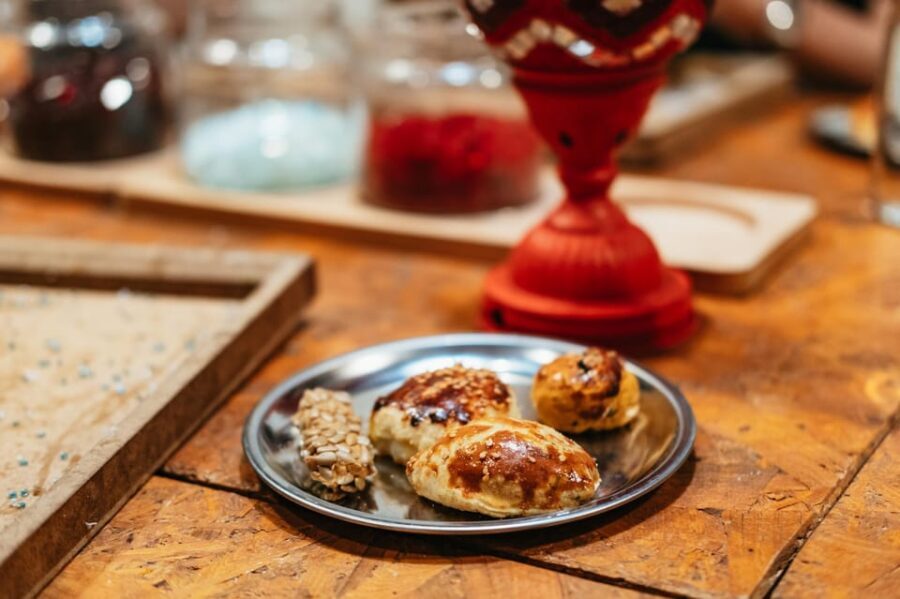
The default pick. Central Sultanahmet location near the Blue Mosque/Hagia Sophia area, so you can combine with morning sightseeing. Turkish tea and snacks served during the workshop. Good for beginners — templates available, English-speaking guides. Full review.
2. Galata Atelier Mosaic Lamp Workshop — from €55
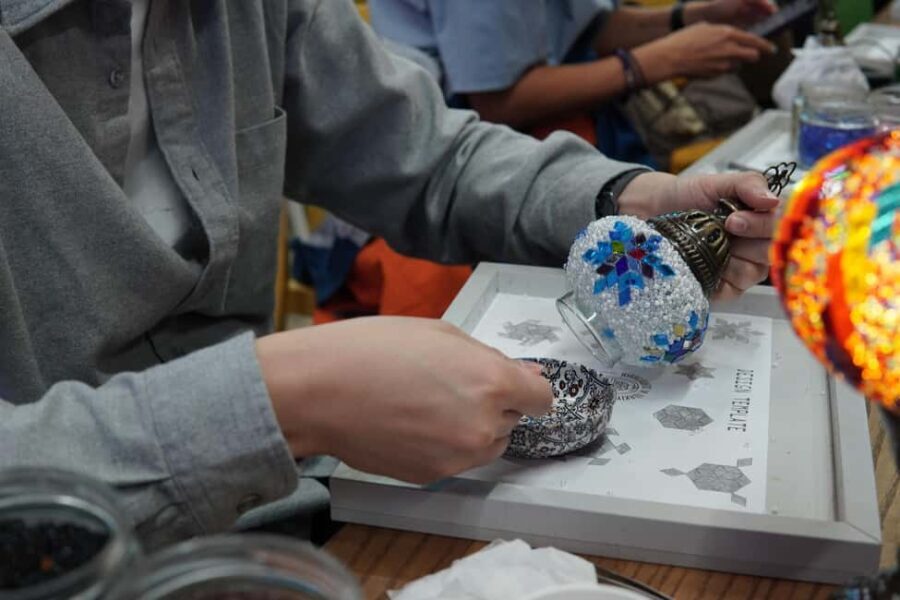
For visitors who prefer the Beyoglu side of Istanbul. The atelier-style space is smaller and more design-focused than the Sultanahmet tourist version. Same craft, different atmosphere. Group sizes typically 4-8. Good for couples and small groups who want a more intimate format.
3. Antalya Old Town Mosaic Lamp or Candle Workshop — from €50
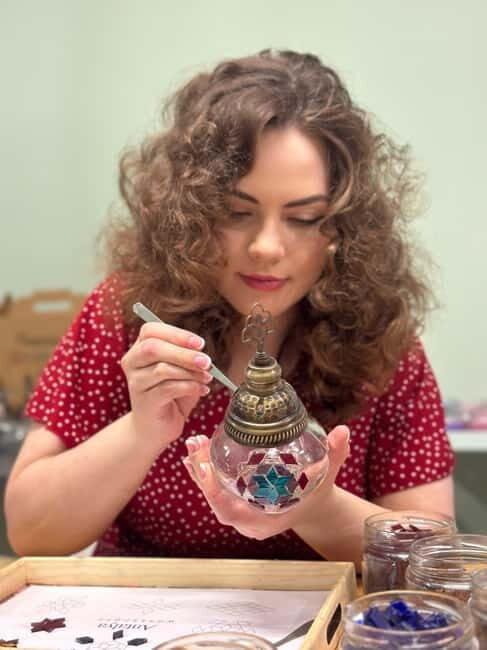
For travellers visiting Antalya rather than Istanbul. Kaleiçi Old Town setting is genuinely atmospheric — cobblestoned Ottoman-era streets. You choose between making a full lamp or a simpler candle holder (about 75% of the work, €10 cheaper). Good combination with a Suluada boat day or Antalya coastal boat tour.
A Short History of Turkish Glass and the Modern Lamp
The craft you’re doing in the workshop is specifically 1990s-commercial but draws on genuine Ottoman-era glass traditions. Worth knowing the distinction.
Pre-Ottoman glass (Byzantine and earlier): Constantinople was a major Mediterranean glass-making centre through the Byzantine period. Surviving examples include stained-glass church windows and enamelled liturgical objects. Techniques were imported from Venice and refined locally.
Ottoman glass (15th-19th centuries): after the 1453 conquest, glass production continued at a smaller scale. Ottoman workshops specialised in perfume bottles, oil lamps, and decorative objects rather than architectural glass. The famous “Çeşm-i Bülbül” glass (a specific Ottoman-era style with blue-and-white swirled patterns) comes from this period.
20th-century decline: industrialisation hurt Turkish glass craft, as cheaper mass-produced European glass took over the market. By the 1970s, traditional glass-making was nearly extinct in Turkey.
1990s revival: a cluster of craftspeople in Istanbul and Cappadocia began adapting Ottoman glass techniques to tourist-market products. The modern “mosaic lamp” — a metal-framed lamp decorated with coloured glass tiles — emerged in this period. By 2000 it was a standard Turkish tourist item.
Today: the lamps you see in the Grand Bazaar are still made largely by hand, mostly in small workshops scattered across Istanbul, Ankara, and Cappadocia. The glass is imported from Iran (which has a large commercial glass industry). The metal frames are made in Turkey. Assembly is the artisan work.
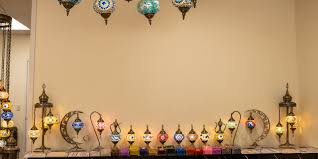

The workshops use the same glass and techniques as commercial production, simplified for amateur hands. Your lamp won’t be as delicately patterned as a professional one, but it’ll be authentic Turkish mosaic work using authentic Turkish materials.
How to Get Your Lamp Home
The single practical question that determines whether the workshop is worth it. Options:
Carry-on: the standard size lamps (15-20cm) are carry-on compatible. Workshops pack them in hard-shell boxes with foam. Pack the box in the middle of your suitcase padded with clothes for maximum protection. Airline rules allow glass/decorative items in carry-on; no customs issues.
Checked bag: also fine, but more risk. Put the box in the middle of your suitcase, surrounded by clothes and soft items.
International shipping: most workshops offer shipping for €30-60 depending on destination. Slower (5-15 business days) but removes the luggage worry. Recommended for larger lamps or travellers with only carry-on allowance.
Customs: handmade craft items are generally exempt from import duty under €200 threshold in most countries. The US, UK, EU, Canada, and Australia all have similar rules. Keep the receipt and the workshop’s name — customs rarely queries but occasionally does.
Wiring: the lamp comes with a basic E14 (European) screw-base socket and cord. If you’re outside Europe, you may need to rewire or add an adapter for your specific socket standard. Not difficult — any electrician can swap the socket in 10 minutes.
Who the Workshop Works For
Strong yes: couples on a date night (the activity is conversation-friendly), families with kids 10+ (the manual work engages them), solo travellers who want a conversation-starter souvenir, anyone who’s been to Istanbul multiple times and wants something beyond standard sightseeing.
Maybe: first-time visitors on a 3-day Istanbul trip. The workshop takes 2 hours that could otherwise be sightseeing. On a 4+ day trip it’s a fine afternoon slot.
No: visitors on a single-day Istanbul visit (not enough time); travellers with only carry-on bags and no shipping budget; people with fine-motor difficulties (the small glass pieces require steady hands).
Kids: minimum age varies by operator. Usually 10+; some accept 8+ with parent help. Under 10 struggle with the small glass pieces and the 2-hour attention span.
What to Wear
Comfortable clothes that can handle glue splashes. The glue is white, dries clear, but fresh glue can splash. Wear something you don’t mind getting minor marks on.
Closed-toe shoes. Small glass pieces sometimes fall on the floor during placement.
Short sleeves or rolled up. Long sleeves catch on the workshop tools and can knock glass pieces around.
Minimal jewellery. Rings and bracelets get in the way of the fine work.
Reading glasses if needed. The glass pieces are small. If you wear readers, bring them.
When to Book
Best time of year: works any time. The workshops are indoor, climate-controlled. Summer is nice for pairing with other outdoor activities; winter is nice for filling rainy days.
Best day of week: midweek. Weekend evenings book out faster.
Best time of day: afternoon 4-6pm or evening 6-8pm. Morning works too but evening sessions feel more atmospheric — the Grand Bazaar is quieter, the natural light outside is golden/dark, and the lamps you’re making start to glow under the workshop lights.
Booking window: 2-3 days ahead is fine in normal periods. Weekend evening slots can book 5-7 days ahead in peak summer.
Cancellation: most operators offer free cancellation up to 24 hours before. Within 24 hours, non-refundable.
Combining With Other Istanbul Activities

The workshop works well as an afternoon slot on a busy Istanbul day. Good pairings:
Morning: Hagia Sophia + Blue Mosque. Afternoon: mosaic lamp workshop. The workshop is walking distance from both. Lunch at a local lokanta between.
Morning: Basilica Cistern + Topkapi Palace. Late afternoon workshop. Heavy sightseeing day; workshop is the calm-down.
Morning: Bosphorus cruise. Afternoon workshop. Water morning, craft afternoon.
Day after Princes Islands. The islands are a full-day activity; the workshop fits nicely the next day when you want something lower-intensity.
Before dinner at a nice restaurant. 4-6pm workshop, then dinner in the same neighbourhood. The lamp stays at the workshop overnight; you pick up or arrange shipping the next morning.
Pairing with a Turkish bath: a hamam before the workshop is a good “calm morning” combination.
Getting There
From Sultanahmet hotels: walking distance (5-15 minutes) to the main Istanbul workshop. Directions are straightforward.
From Taksim/Beyoglu: the Galata atelier version is actually in this neighbourhood. If staying in Taksim, pick the Galata workshop.
From other Istanbul districts: tram T1 to Sultanahmet for the main version; funicular F1 to Karaköy for the Galata version.
Antalya workshop: Kaleiçi Old Town is walking distance from most Antalya hotels. No transport needed.
Food and Drink
Most workshops serve Turkish tea (çay) and small biscuits during the session. Some include Turkish delight or baklava. A few offer wine in evening sessions (Galata atelier specifically).
Before: light meal. Full-stomach concentration on small glass pieces doesn’t work.
After: the workshop is set in the restaurant district regardless of which version you pick. Plenty of dinner options within 10 minutes’ walk.
Specifically: if you want a full Istanbul food experience, do the food tour on a separate day. The lamp workshop’s food is just fuel for the workshop itself.
Accessibility
Workshops are indoor, typically with step-up entrances (Ottoman-era buildings rarely have ramps). The work itself is fine-motor — seated at a workbench, handling small glass pieces. Wheelchair users can usually be accommodated with advance notice.
Mobility limitations: the workshop is seated for 90-120 minutes, which works for most visitors.
Visual impairments: the glass pieces are small and colour-sensitive. The craft is challenging without good vision. Workshops don’t specifically accommodate visually impaired visitors; alternative cultural activities might work better.
Dexterity issues: the fine motor work is genuinely demanding. Arthritis, tremor, or hand weakness makes it harder. Workshops can offer partial help (staff does the hardest parts) for significant fees.
Kids under 10: as above, most operators don’t accept below 10 years old.
What Guides Won’t Tell You
The “templates” are rigid. Workshop staff strongly encourage you to follow template patterns. If you want to freestyle completely, say so upfront — some operators are flexible, others are not.
The lamp you finish won’t be perfect. There will be uneven glass spacing, slightly-off grout lines, maybe a missed area. This is fine — it’s your lamp, imperfections included. Compare to the flawless Grand Bazaar commercial lamps and you’ll feel less impressive; compare to any other souvenir, and you made this.
Shipping works but takes time. International shipping from Istanbul averages 8-14 business days for Europe, 12-20 for North America. If you need the lamp by a specific date, don’t rely on shipping — carry it with you.
The metal frames come in a few sizes. Small (tea-light size), medium (standard), large (chandelier). Workshops typically only offer small and medium; large is commercial-scale.
Two-person or group lamps. Some workshops let couples work on one lamp together. Check if that interests you — it’s faster but less individually-customised.
You can’t take the grout to make another lamp. The workshop provides everything for one lamp only. If you want to make more lamps at home, you’ll need to source Turkish glass separately (which is surprisingly hard outside Turkey).
Common Mistakes
Booking on day 1 of your trip. You’ll be jet-lagged; fine motor work is unpleasant. Day 3+ is better.
Trying to make the lamp perfect. The imperfections are part of the charm. Aim for “good enough” rather than “professional quality.”
Picking too many colours. Beginner lamps with 2-3 colours usually look better than beginner lamps with 6+ colours. Restraint is hard when you’re surrounded by beautiful glass; try for it anyway.
Shipping the lamp separately when you have carry-on space. Check your luggage dimensions. A lamp box is usually 25×25×25cm — fits in most carry-ons easily.
Forgetting to pick up the lamp next day. Set a phone reminder. You don’t get a refund for abandoned lamps.
Wearing loose sleeves. They’ll catch on the workshop tools and glass arrangements. Roll them up or wear short sleeves.
The Short Version
Book a €45-55 mosaic lamp workshop for an afternoon slot on day 3 or 4 of your Istanbul trip. Central Sultanahmet version if you’re sightseeing nearby; Galata version if you prefer Beyoglu atmosphere; Antalya version if you’re on the coast. Expect 90-120 minutes of fine-motor work producing one handmade lamp, with Turkish tea and snacks throughout.
The workshop isn’t about making perfect commercial-quality lamps. It’s about making something real, in a city where “buying a souvenir” is the usual alternative. The resulting lamp travels well and genuinely means something when you put it on your desk at home.
Affiliate disclosure: Some links in this article are affiliate links. If you book through them we may earn a small commission at no cost to you. All recommendations are based on my own visit.