
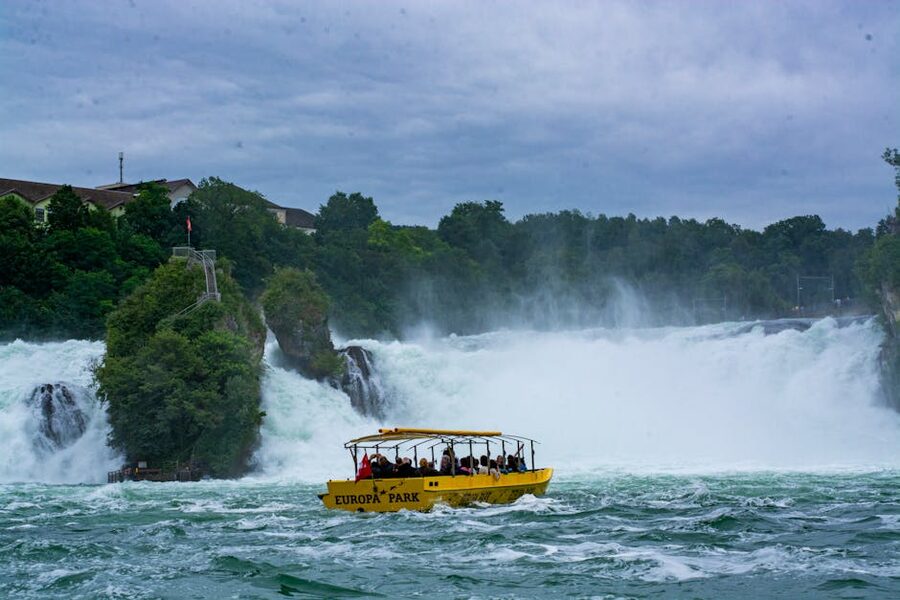
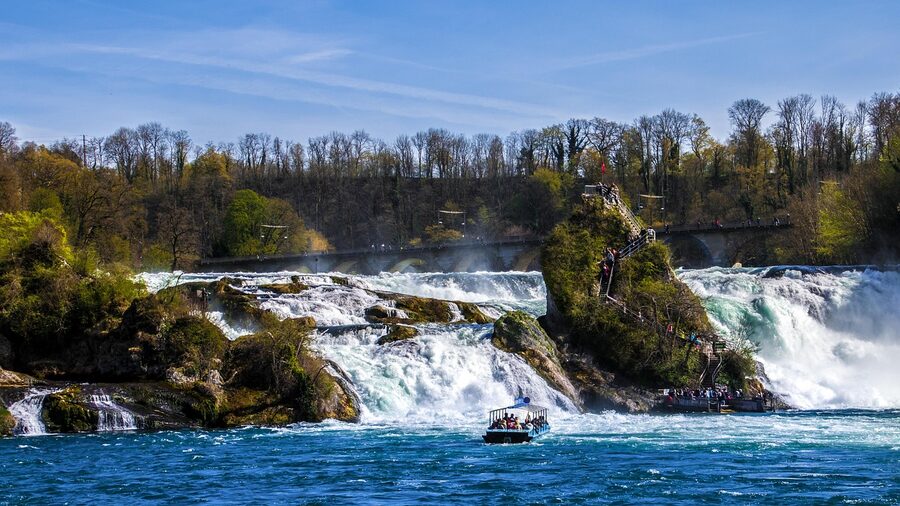
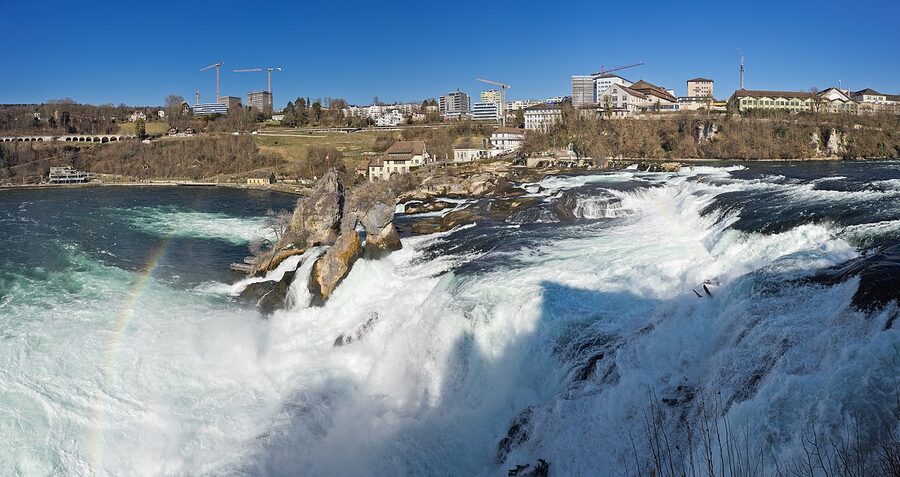
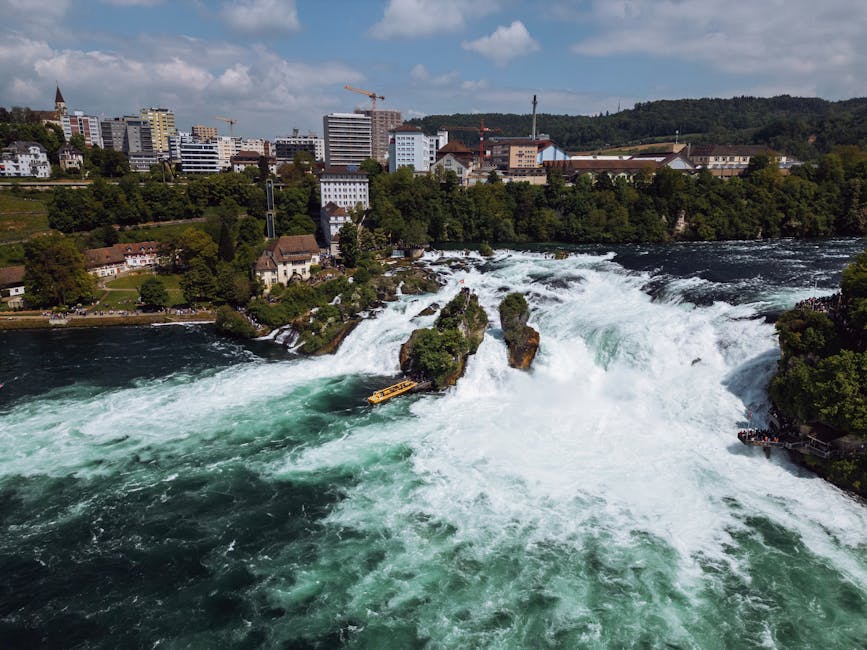
The first time the Rhine Falls boat noses up to the central rock, you understand why the ticket might be the best value in Switzerland. The water is white in three directions, the noise is at maximum, and you are about to climb a small ladder onto a chunk of limestone that has been parting Europe’s biggest waterfall for 14,000 years. Cameras down for a minute. Most people stop talking before the boat does, and what shouting still happens has to compete with a sound the size of a freight train rolling past at full speed.
This guide covers how to book a Rhine Falls boat tour: the cheap 30-minute boat from Neuhausen, the longer combo day trip that pairs Rhine Falls with the medieval village of Stein am Rhein, and how to time your visit to avoid the worst of the day-tour coach crowds.
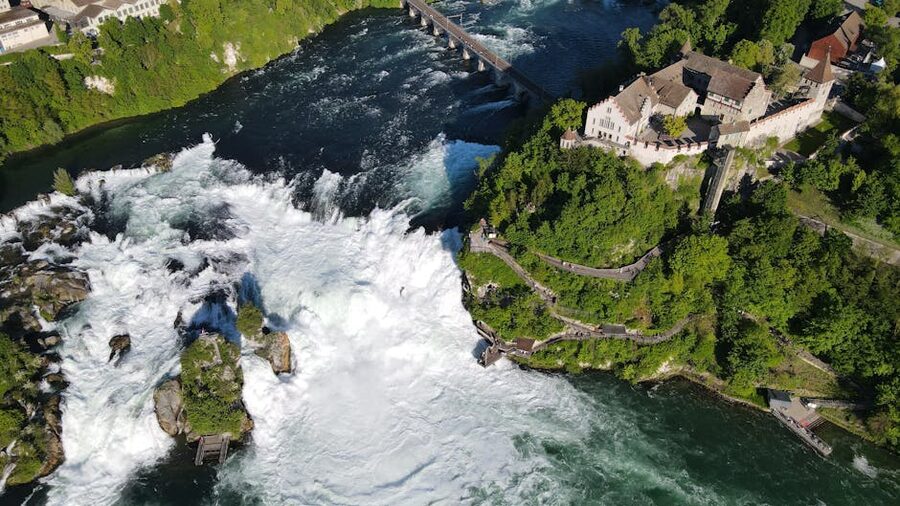
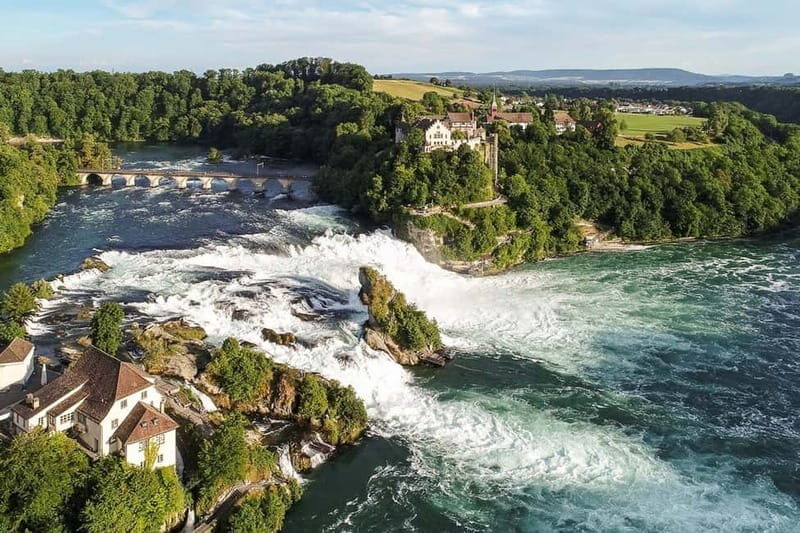
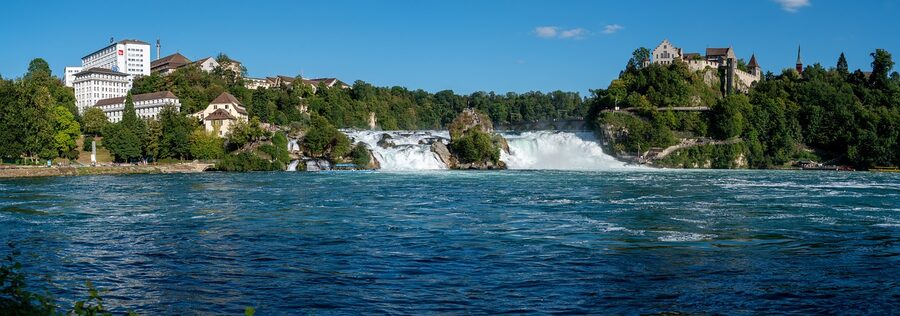
The falls sit between Neuhausen am Rheinfall and Schloss Laufen, about 50 km north of Zurich and a 50-minute train ride away. They are easy to reach as a self-guided half-day or as part of a guided combo tour from Zurich. The actual waterfall is roadside — you walk five minutes from either train station to the viewing platforms. The boat tours leave from below the platforms.
In a Hurry? The Three Tours Worth Booking
- Cheapest pick: Rhine Falls 30-Minute Boat Tour from Neuhausen — around $13, 30 minutes, the actual boat to the central rock.
- Day trip from Zurich: Stein am Rhein and Rhine Falls from Zurich — around $103, 5 hours, includes the medieval village stop.
- Alternative day trip: Rhine Falls and Stein am Rhein Half-Day Tour — around $109, 5.25 hours, similar itinerary from a different operator.
- In a Hurry? The Three Tours Worth Booking
- Which Tour to Book
- 1. Rhine Falls 30-Minute Boat Tour from Neuhausen — from
- 2. From Zurich: Stein am Rhein and Rhine Falls — from 3
- 3. Rhine Falls and Stein am Rhein Half-Day Tour from Zurich — from 9
- What the Boat Tour Actually Does
- The Falls vs the Platforms
- The Stein am Rhein Detour
- The Falls Themselves — Some Geography
- Getting There — Self-Driving and Trains
- When to Go and What to Expect
- Photography at the Falls
- Pairing With the Rest of Your Switzerland Trip
Which Tour to Book
If you can self-drive or train to Neuhausen, book just the $13 boat and skip the guided day trip. The boat is the only Rhine Falls experience you cannot do for free, and it is the genuinely worthwhile one. If you do not want to plan the train, the Zurich day trip bundles transport plus a stop in Stein am Rhein — the medieval village 30 km upriver — into a 5-hour package. Both are valid; the choice is about logistics, not what you see.
1. Rhine Falls 30-Minute Boat Tour from Neuhausen — from $13
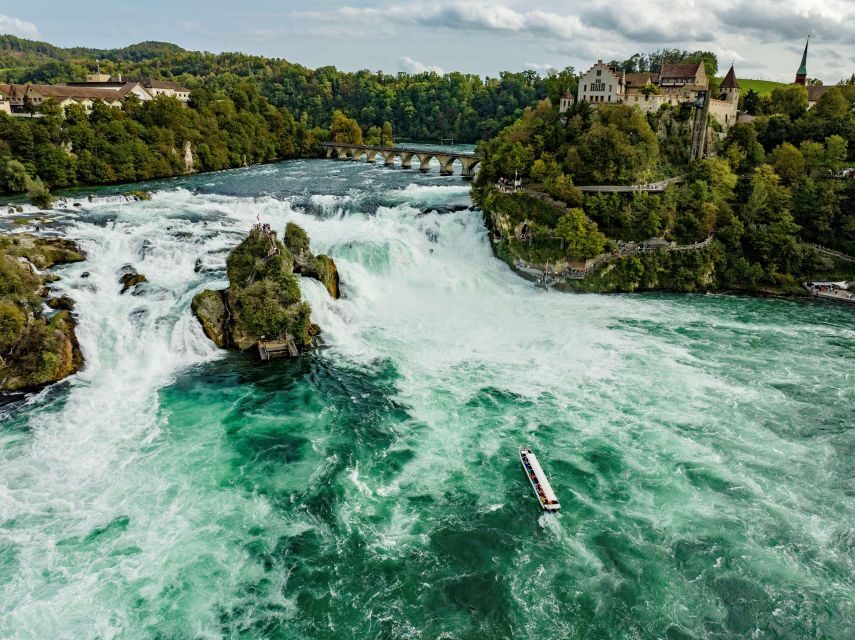
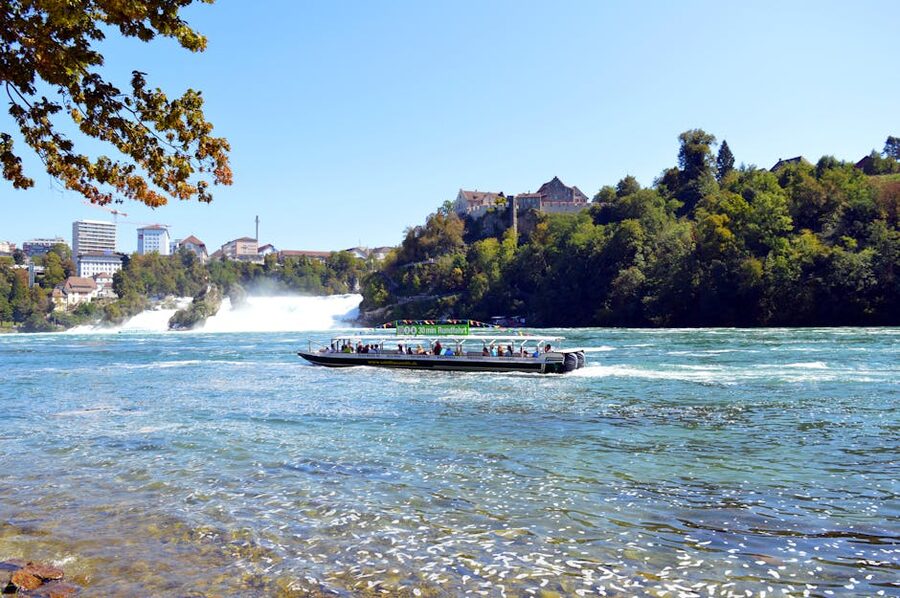
The boat tour itself, sold standalone for travellers who can get to Neuhausen on their own. Small electric boats leave continuously from the dock below Schloss Laufen, take you right up to the central rock (you can climb out and stand on top of it), and return. Total time about 30 minutes including the rock stop. Operates every 15 minutes from April through October. Our full review covers the boat experience and which of the boat operators (yellow vs blue boats) goes where.
2. From Zurich: Stein am Rhein and Rhine Falls — from $103
The 5-hour day trip from Zurich. Coach picks you up around 9am, drives 50 minutes to Stein am Rhein for a 90-minute walking break, then continues to Rhine Falls for 90 minutes including the boat tour, then returns to Zurich by 2pm. Bundles transport, two stops, and the boat into a single booking. Our full review walks through the actual day timing and how the Stein am Rhein stop fits in.
3. Rhine Falls and Stein am Rhein Half-Day Tour from Zurich — from $109
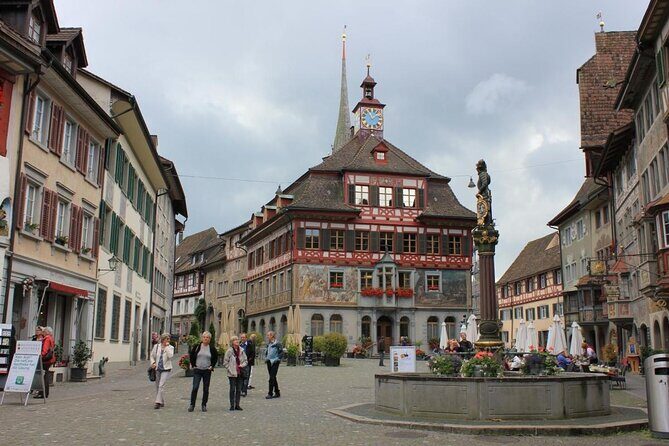
Functionally the same trip as option 2, sold by a different reseller (Viator instead of GetYourGuide) at a small premium. The actual coaches and ground operators are similar. Worth picking based on which platform’s calendar gives you the slot you want, or which other Switzerland tours you have booked already. Our full review covers the booking mechanics.
What the Boat Tour Actually Does
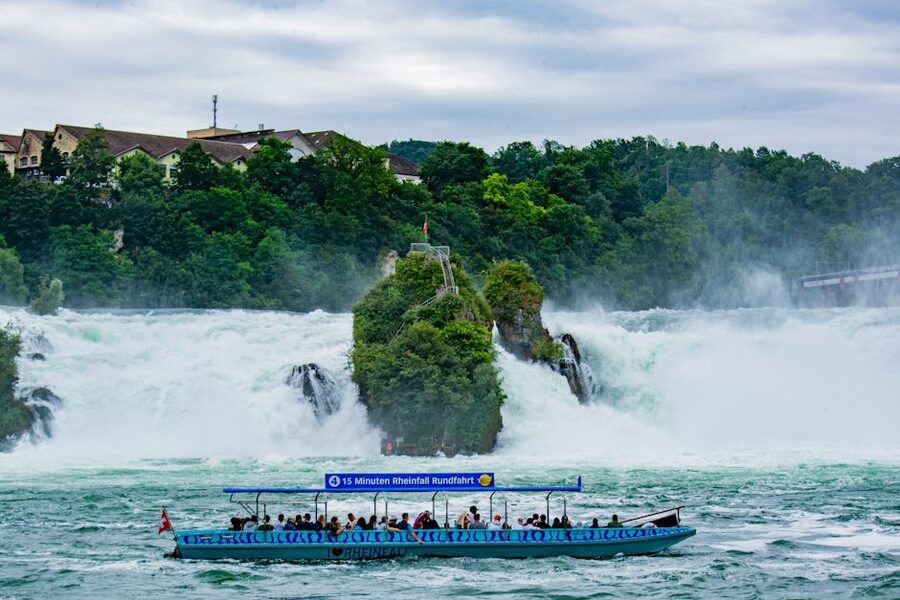
You buy the boat ticket from a small kiosk at the dock below the south bank platform. There are usually two operators running boats, distinguishable by colour: one runs the short loop ($13, 15-minute round trip to the central rock with a brief landing), the other runs the longer experience ($20, 30-minute round trip with a longer rock visit and a slower approach). Both are worth the money but the short version covers what you actually came for.
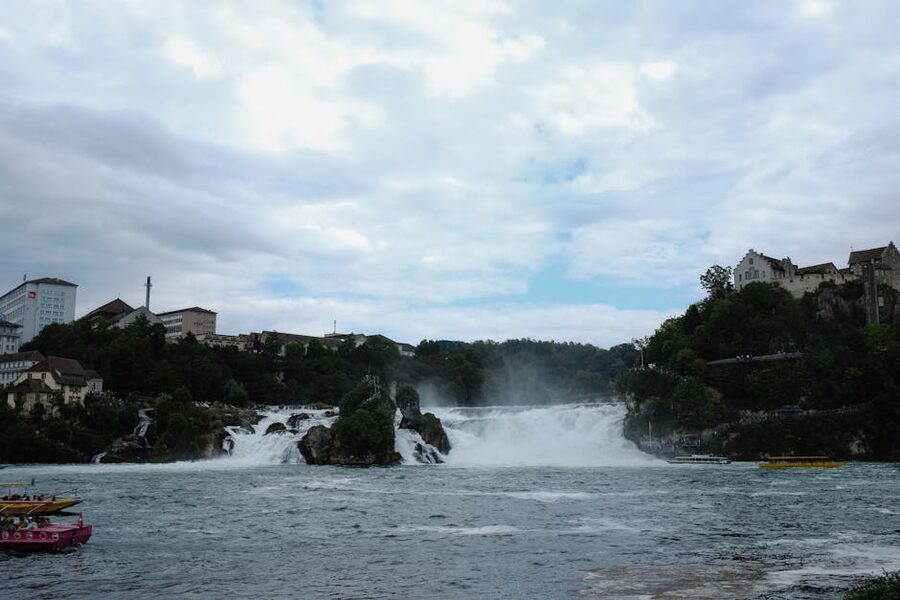
The boats are open-top with bench seating for about 30 people. They are battery-electric — silent enough that you hear the falls from the moment you push off from the dock. The crossing to the central rock takes about 5 minutes against the current. Once you reach the rock, the boat ties up and a metal staircase lets you climb the 30-or-so steps to the top, where there is a small viewing platform.
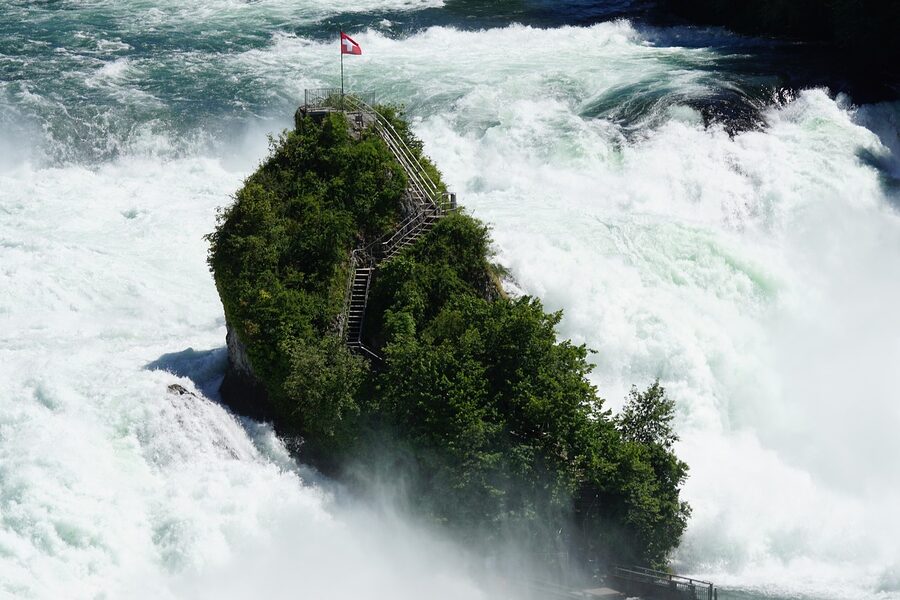
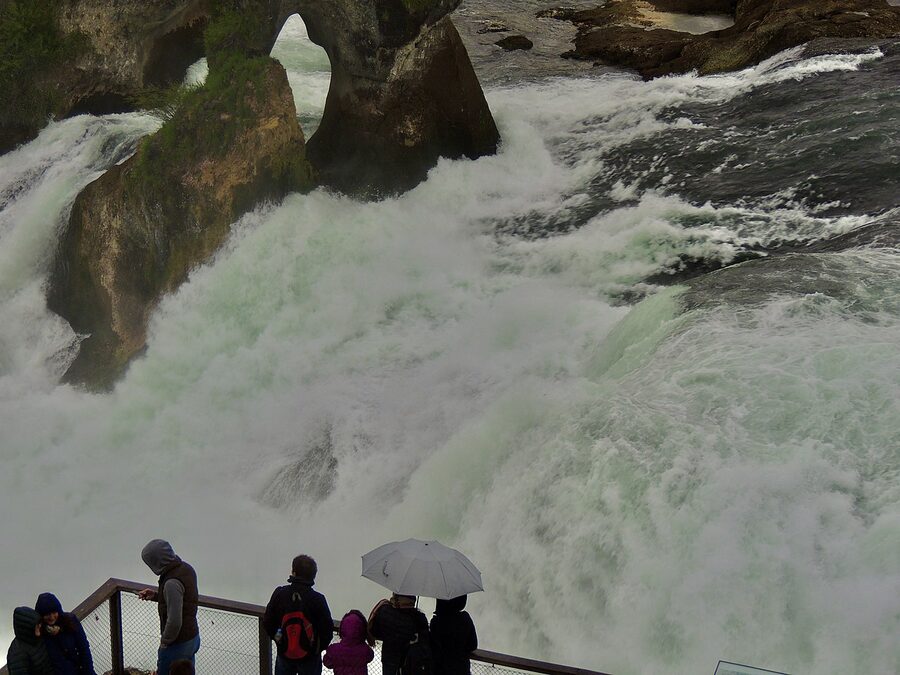
Standing on the rock platform is the experience worth the ticket. You are surrounded on three sides by falling water, the spray reaches you, and the noise — the actual roar — is at maximum because there is nothing between you and the falls. Most people stay 5-10 minutes before re-boarding the boat for the return crossing. Cameras out, voices unable to compete with the river.
The Falls vs the Platforms
_05.jpg)
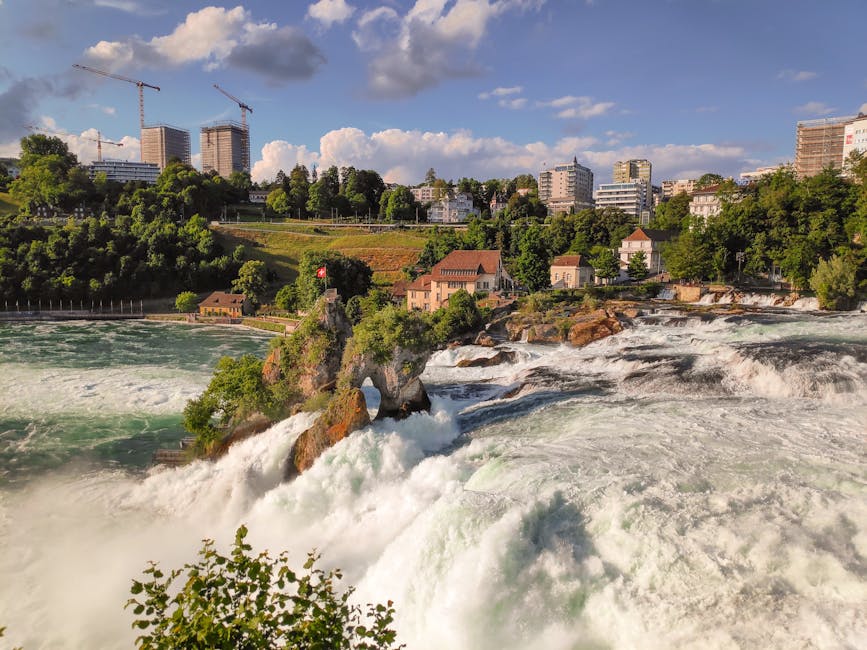
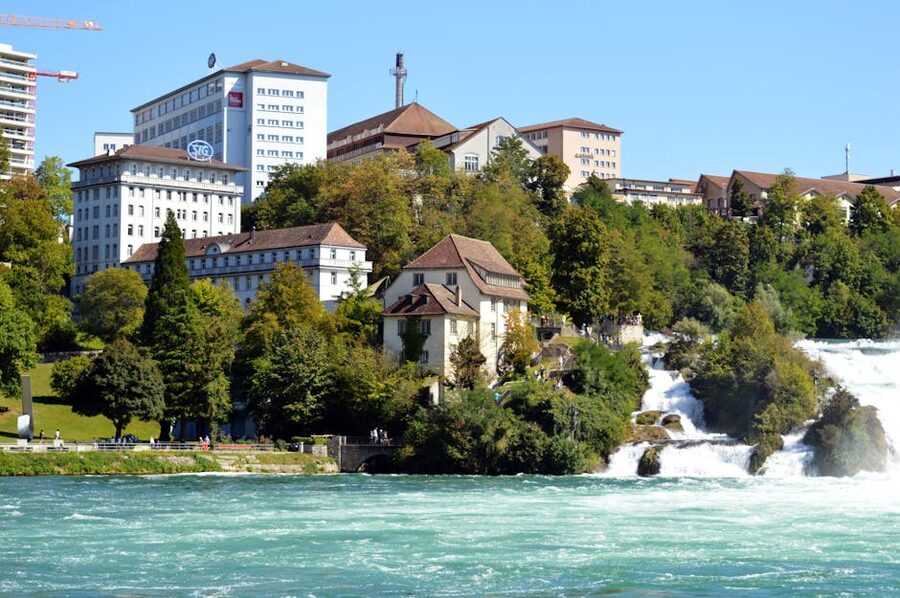
You can also see the falls from a series of platforms cantilevered out from the south bank — the Känzeli platforms attached to Schloss Laufen castle. These cost $5 to access (entry through the castle grounds) and put you about 30 metres from the falling water at platform level, descending to as close as you can get without actually being in the river. The view is excellent. The boat tour is a different experience — you are at water level, you can stand on the rock — but the platforms give you the wider compositional shots that work for photographs.
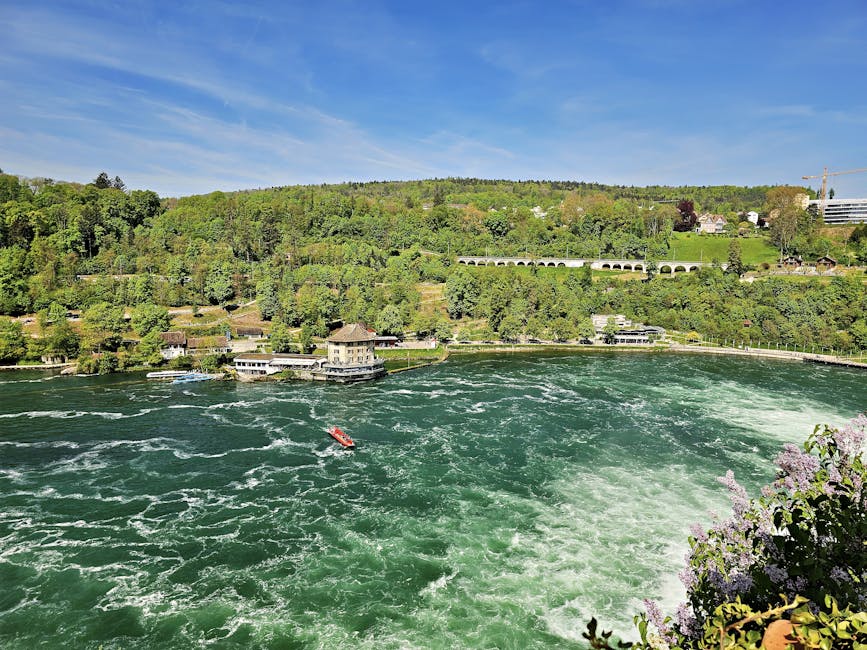
If you only have time for one, take the boat. The platforms are good but the view from above is essentially a photograph you have already seen many times. The boat takes you somewhere you have not been — into the middle of all that water — and the rock platform is the unique-to-Rhine-Falls experience.
The Stein am Rhein Detour
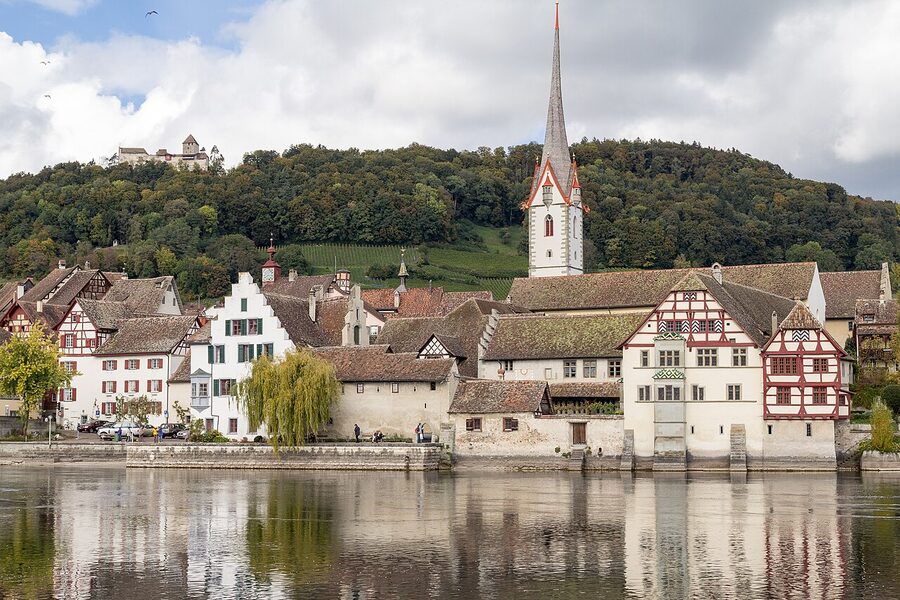

If you take the day-trip combo, the second half of your day is in Stein am Rhein, a small medieval village 30 km east along the Rhine. Population about 3,300. The selling point is the Rathausplatz — the central square — where every facade is covered in painted frescoes from the 16th and 17th centuries. The buildings have all been restored and are still in use as private homes, shops, and restaurants. Walking the square is the entire reason for the stop.
You get 60-90 minutes here, which is about right. Walk the square, walk along the Rhine waterfront, eat lunch at one of the cafés on the square or down by the river, then re-board the coach. There is a Benedictine monastery (Kloster St. Georgen) at one end of the village that you can visit if you have extra time — it is a nice museum about medieval monastery life with restored cells and a working printing press exhibit.
The Falls Themselves — Some Geography
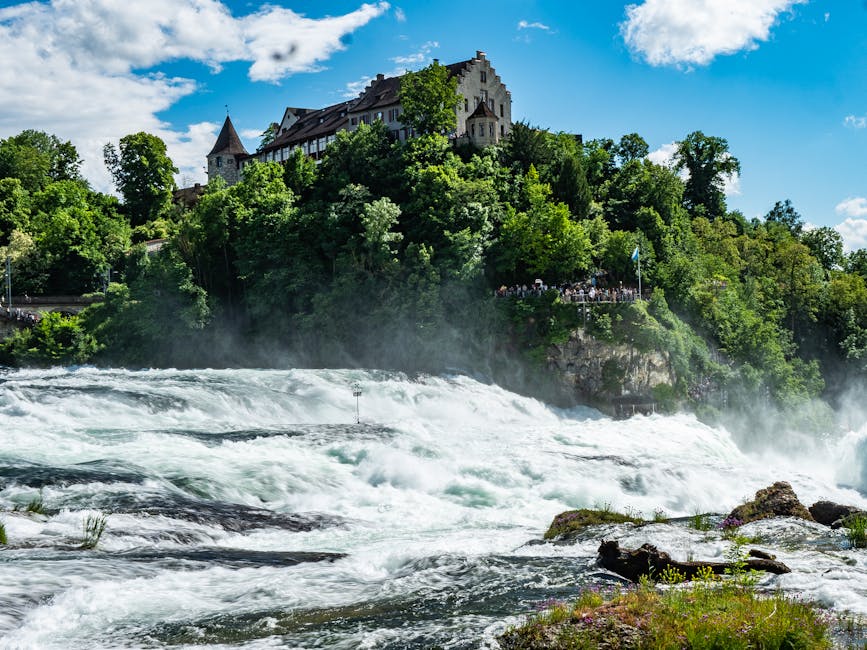
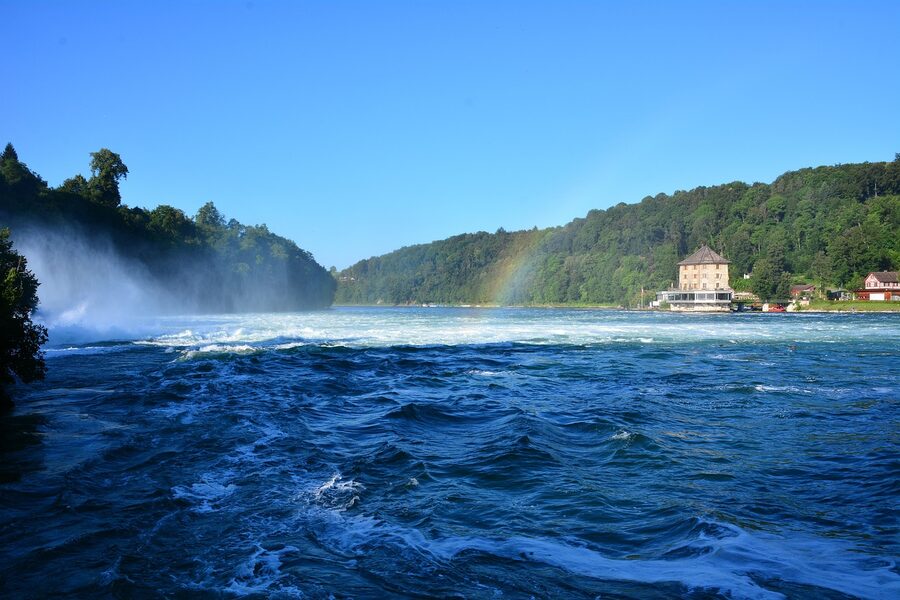
The Rhine Falls formed about 14,000 years ago when the river found a new course through harder limestone after the Last Ice Age. Before that the Rhine flowed differently and there was no waterfall. The current site is the limestone band that resisted erosion long enough to maintain the drop while the surrounding river bed eroded around it. The two central rocks (the larger one is the boat tour destination) are remnants of an even older limestone formation that the water has carved around for millennia.
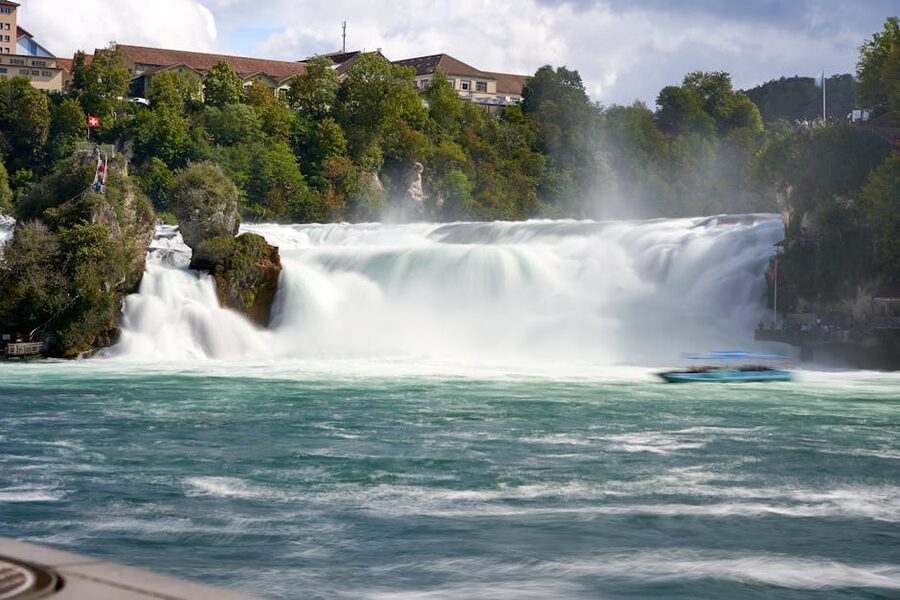
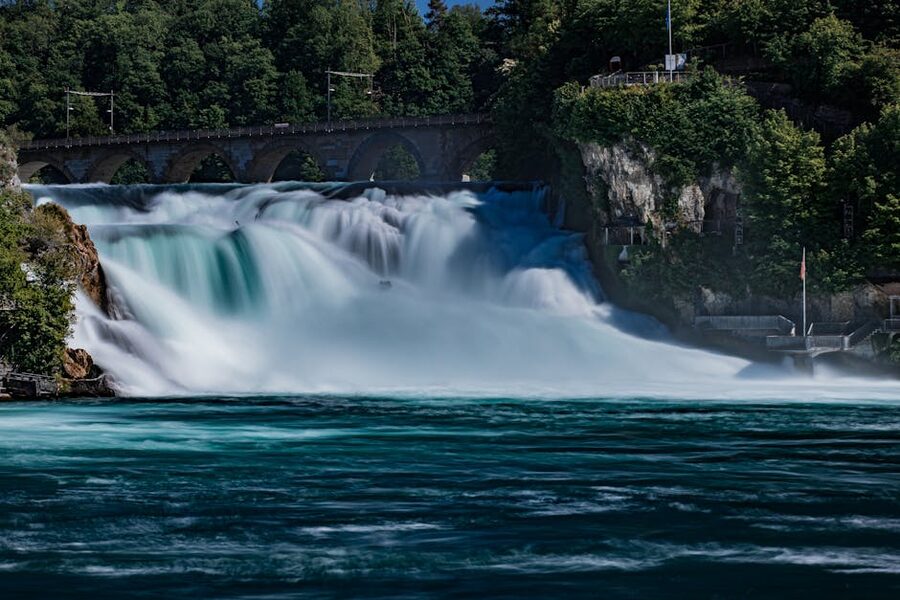
Volume varies dramatically by season. Average flow is 600 cubic metres per second. Peak flow in May during snowmelt can hit 1,250. Low flow in February drops to about 250. The falls always look impressive but May, June, and July are when they are at their most overwhelming. February visits show you a more graceful version of the same falls.
Getting There — Self-Driving and Trains

Self-drive: 50 minutes from Zurich on the A1 motorway. Plug “Schloss Laufen am Rheinfall” into Google Maps for the south bank parking (closer to the platforms) or “Schlössli Wörth Rheinfall” for the north bank dock (closer to the boat). Both have paid parking, $5-8 for a few hours.
By train: 50 minutes from Zurich Hauptbahnhof to Schloss Laufen am Rheinfall station. The train terminates directly at the falls — you walk down a flight of stairs from the platform and you are at the south bank viewing area. This is one of the easiest train day trips in Switzerland. A second-class round-trip ticket costs about $40.
If you are doing a Switzerland rail trip with the Swiss Travel Pass, the train to Rhine Falls is included in the pass — making the trip essentially free for travellers already holding one. The boat tour is not included; you still pay $13 at the dock.
When to Go and What to Expect
The boats run April through October. November through March the river is too cold and the dock infrastructure shuts down for the winter. Visiting in winter is fine for the platforms but the boat tour — the actual main event — is not available. Plan accordingly.
Best times to visit within the season: weekday mornings before 10am are the quietest. Saturday afternoons in August are the worst — every Zurich resident with relatives in town brings them here. Late afternoon (4pm onwards) is also quiet because the day tours have left and the light gets warmer. The boats run until 7pm in peak summer.
What to bring: a windproof layer for the boat (you take spray on the upper deck), closed shoes (the rock platform is wet), and a phone with a waterproof case if you have one. The spray is more than enough to ruin a phone left out for too long. Towels and changes of clothes if you are travelling with kids who will get fully soaked.
Photography at the Falls
The Rhine Falls is photographed millions of times a year and almost all the photographs look the same. The two angles that work best for photography: the Känzeli platforms on the south bank give you the wide-angle shot with castle in the frame; the central rock platform from the boat gives you the dramatic vertical shot looking up the falls. The boat dock area itself has a third angle from water level that captures the boats in motion against the falls.
Time of day matters more than weather. The falls face roughly north, which means morning light is unflattering (backlit from the south) and afternoon light is excellent (the falls are lit from the side, the spray catches the sun). Late afternoon between 4-6pm in summer is the photographic sweet spot. On overcast days the spray is more visible because it does not get blown out by direct sun.
Phone cameras struggle here because the contrast range is extreme — bright sky, deep shadow under the falls. If you have a real camera with manual exposure control, lock to the shadows; if you are using a phone, tap to expose for the spray and accept that the sky will blow out. Slow shutter speeds (1/15 second or slower) give you the silky water effect; fast shutter speeds (1/500+) freeze individual droplets.
Pairing With the Rest of Your Switzerland Trip
Rhine Falls is most efficiently combined with either a half day in the town of Schaffhausen (Renaissance fortress, painted facades, much less touristy than the falls village) or with the full Stein am Rhein detour as the day tours arrange. From Schaffhausen the train continues to Stein am Rhein in 25 minutes — a half-day Schaffhausen morning plus an afternoon train to Stein am Rhein and back is the same as the day tour, just self-organised.
If you are slotting Rhine Falls into a longer Switzerland trip, this is the easy half-day to do on the day you arrive in Zurich (jet-lagged, low-effort, train + boat + back) or the day before you fly out (also low-effort). Pair with Lindt Chocolate Museum for a full Zurich-area day, or with one of the bigger excursions like Mount Titlis as part of a 2-3 day Zurich base.
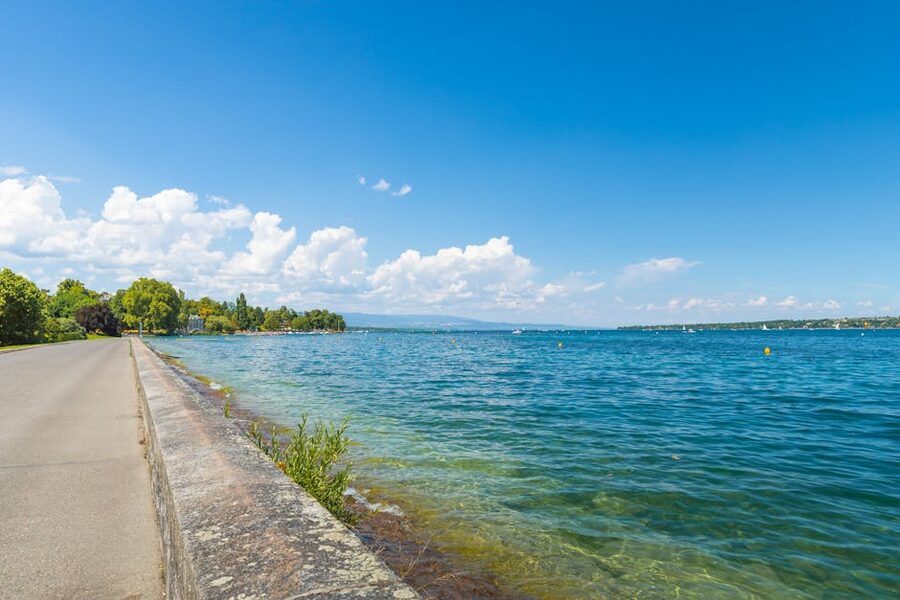
For travellers spending more time in central Switzerland, Rhine Falls fits naturally into a Zurich-Lucerne loop. Do Rhine Falls as a Zurich half-day on arrival, then train down to Lucerne for two days of Mount Titlis and lake activities, then back to Zurich via a quick visit to Geneva if your trip goes that far west. The Swiss train network makes this kind of triangle painless — never more than 90 minutes between any two of the cities.
One last note. If you are travelling with kids, the boat tour is the single best thing you can do with them in Switzerland. They will remember standing on the rock for the rest of their lives. The price is right, the experience is short enough that nobody gets bored, and the rock-climbing section makes everyone feel like they did something. I have watched a five-year-old get more excited at the Rhine Falls rock than at any other Switzerland attraction her parents booked her. Worth knowing.
This article contains affiliate links. If you book through our links, we may earn a small commission at no extra cost to you. This helps us keep producing detailed travel guides.