
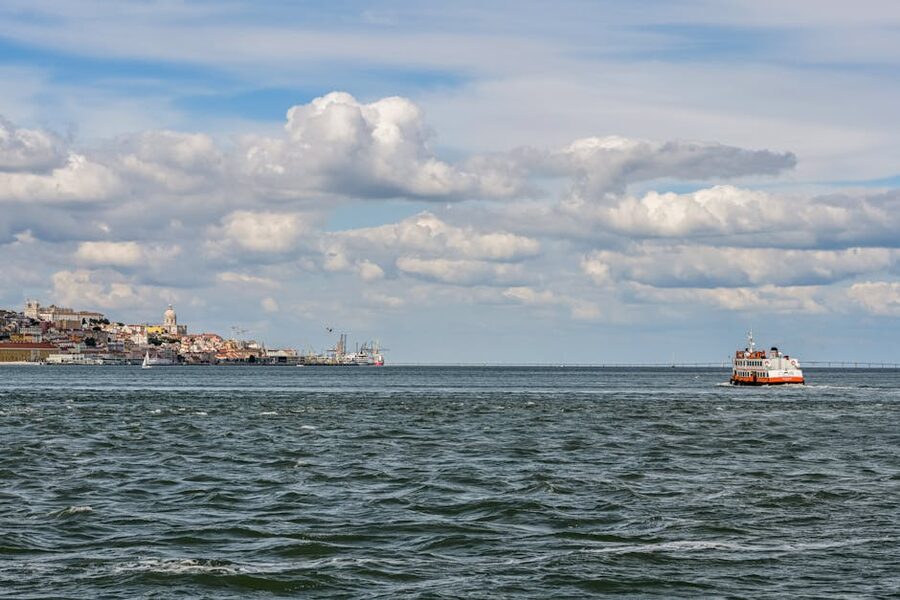
From the top of Alfama the Tagus looks like a polite blue ribbon with a few miniature sailboats on it. Down at the water, it’s nothing like that. It’s huge — 14 km across at the widest point, more estuary than river — and the moment you push off from Cais do Sodré you realise you’ve been looking at Lisbon from the wrong angle all along.
That’s the thing nobody tells you about a Tagus river cruise. The appeal isn’t the boat. It’s the city from the middle of the water, with the Alfama tumbling down one hill and Cristo Rei watching from the other side.
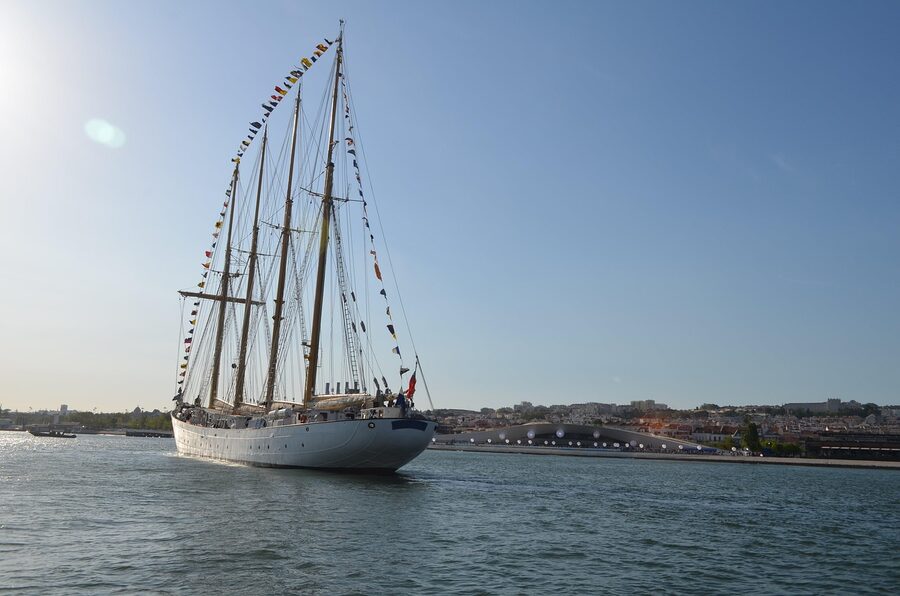
I’ve taken three different boats on the Tagus over the years. Booking is straightforward once you know what you’re choosing between: a short sightseeing loop past Belém, a longer run out to the mouth of the river to look for dolphins, or a proper sailing trip where a sailboat does the work and you sip something on deck. They’re all priced within a few euros of each other but the experience is very different.
- In a Hurry
- How booking actually works
- Prices in plain English
- Which cruise should you actually pick?
- 1. Lisbon: Tagus River Cruise with Welcome Drink — about
- 2. Lisbon: Sailing Tour on the Tagus River — about
- 3. Lisbon: Tagus River Cruise to the Ocean & Dolphin Watching — about
- What you’ll actually see from the boat
- Best time of day to go
- What to bring and what to skip
- The dolphin question
- How it compares to the other Lisbon water options
- A tiny bit of history, because the bridge is lying to you
- Meeting point logistics
- Pairing a Tagus cruise with the rest of your day
- Common screw-ups
- Why book now
- A few other Lisbon guides worth your time
In a Hurry
Best value: Tagus River Cruise with Welcome Drink — about $16, roughly 90 minutes, classic sightseeing loop with a drink in hand.
Most fun: Sailing Tour on the Tagus — about $23, one to two hours under sail, tiny group, proper boat vibe.
Longest trip: Tagus Cruise to the Ocean & Dolphin Watching — about $38, heads out to the Atlantic mouth, possible dolphin sightings, no promises.
How booking actually works
Almost every Tagus cruise in Lisbon is sold through GetYourGuide or Viator. The operators — Lisbon Cruises, Rent a Boat Lisbon, a handful of sailing outfits — mostly don’t bother with their own checkout. You pick your slot online, the confirmation hits your email in about thirty seconds, and you either print it or just show it on your phone at the dock.
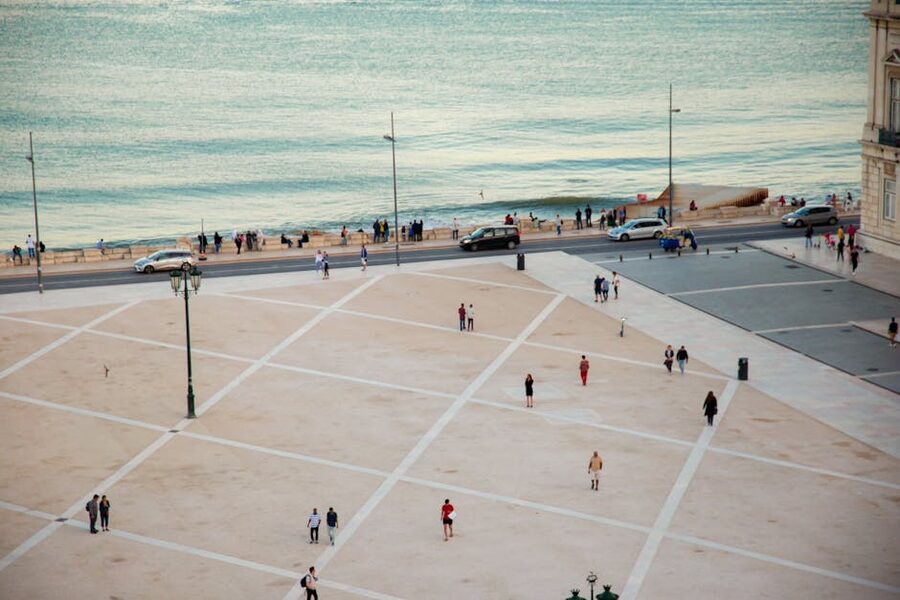
Meeting points cluster in two places. Most of the shorter sightseeing boats leave from Terreiro do Paço or Cais do Sodré, right next to the main square. The sailing trips and some of the dolphin cruises leave from Doca de Santo Amaro, which sits underneath the 25 de Abril Bridge and is a ten-minute tram ride west of the centre. Read your booking confirmation carefully — I’ve watched more than one group sprint across the city when they realised they’d gone to the wrong dock.
Book at least a day ahead in summer. In June, July and August the afternoon and sunset departures sell out by morning. In the off-season — November through February — you can usually walk up and get on the next boat, but the weather is a gamble. I’ve had a perfect blue-sky January cruise and a February one where we bounced through white horses and I gave up on photographs.
Prices in plain English
The short sightseeing cruise sits at the $15–20 mark. Sailing trips are $20–30. Dolphin-watching cruises — longer, bigger boats, open sea — are $35–45. Sunset trips carry a small premium because the slot is in demand, not because the boat is different. If a “luxury yacht experience” is charging over $80 for a shared group booking, you’re paying for the marketing, not the boat.
Kids usually get 25-50% off on the short cruises. Under-4s are often free. Some sailing trips have a minimum age of 6 or 8 — check the listing before you book a family boat, a few operators are strict about it.
Which cruise should you actually pick?
Here’s the quick version: if it’s your first time in Lisbon and you want the bridge-Belém-skyline money shots, take the short sightseeing cruise. If you want the experience to be about the boat and not the narration, go sailing. If you have a full afternoon and you’re chasing dolphins, take the long one — but only if you’re okay with the possibility of not seeing any.
1. Lisbon: Tagus River Cruise with Welcome Drink — about $16
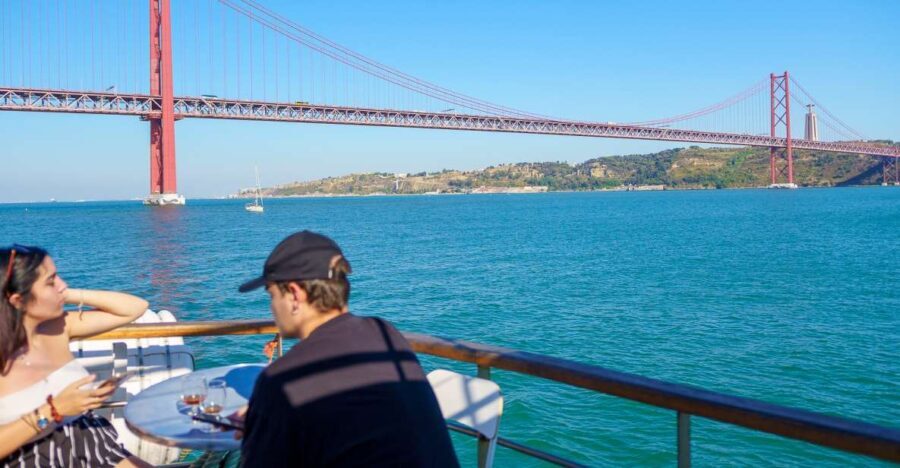
This is the cruise most people think of when they picture a Tagus trip. It leaves from Terreiro do Paço, pushes past the Alfama, ducks under the 25 de Abril Bridge, slides in front of Belém Tower and the Discoveries Monument, and loops back. Our full review digs into the boat size and seating — worth skimming if you’re prone to seasickness. The welcome drink is a small glass of white port or sangria. Nothing fancy, but it’s a nice touch.
2. Lisbon: Sailing Tour on the Tagus River — about $23
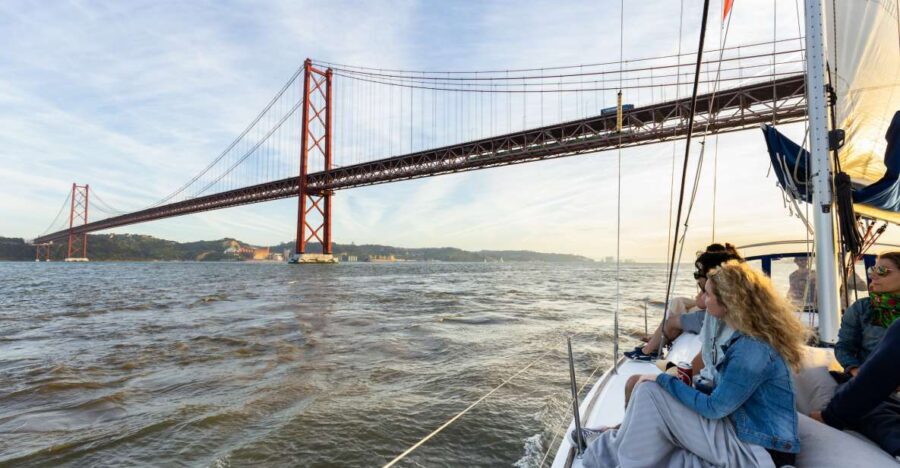
If you care more about the feel of being on the water than ticking off the monuments, this is the one. Groups are small — usually four to ten people — and the crew actually lets you help with the ropes if you want. We cover the operators and what to wear in our review. One thing: the captain reads the weather on the morning, so the exact route shifts. Some days you tack upriver to Parque das Nações, other days you drift west towards Belém.
3. Lisbon: Tagus River Cruise to the Ocean & Dolphin Watching — about $38
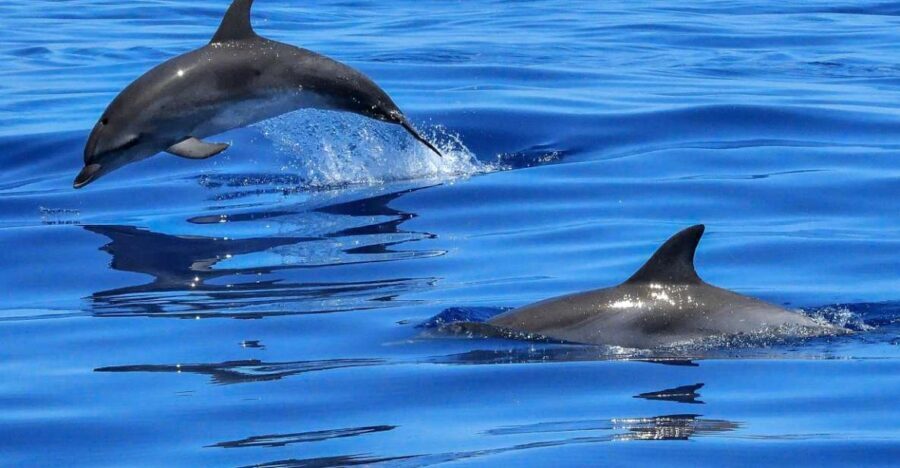
This is a bigger, faster boat and it takes you past the Torre de Belém, out under the Vasco da Gama sightline, all the way to where the Tagus empties into the Atlantic. The dolphins are opportunistic — pods do feed near the mouth, but it’s wild sea, not an aquarium. Our full review goes into what to expect on a no-dolphin day (still a worthwhile trip). Book this for the ocean breeze and the chance, not the guarantee.
What you’ll actually see from the boat
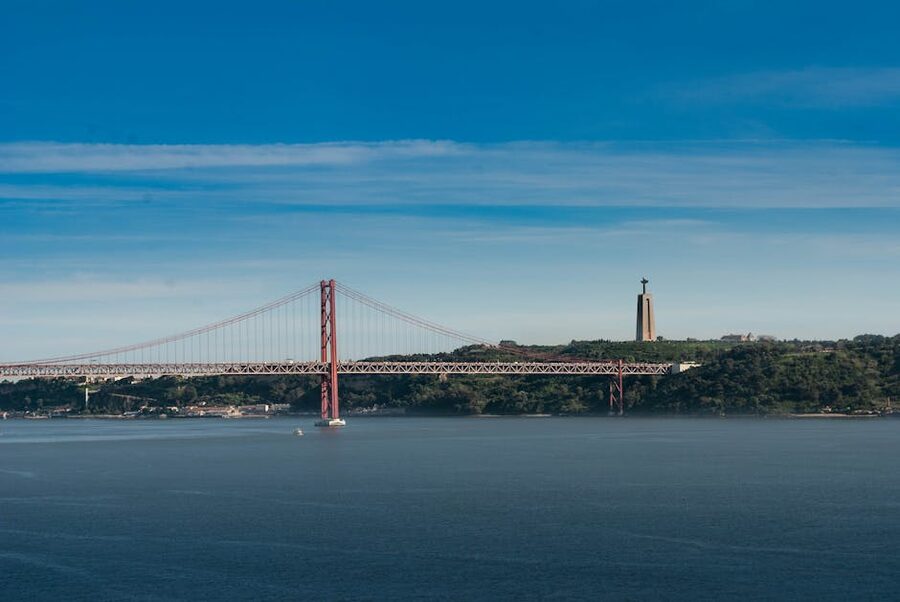
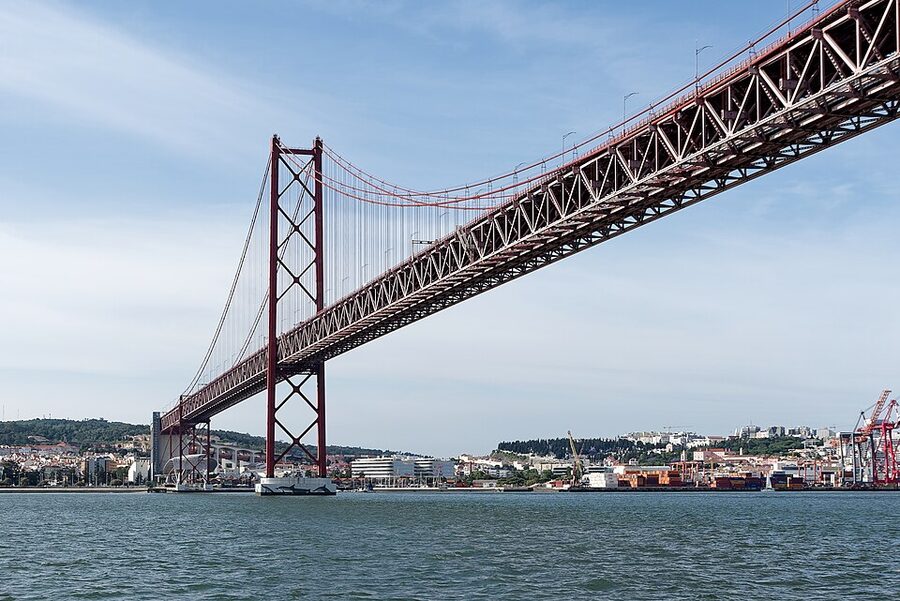
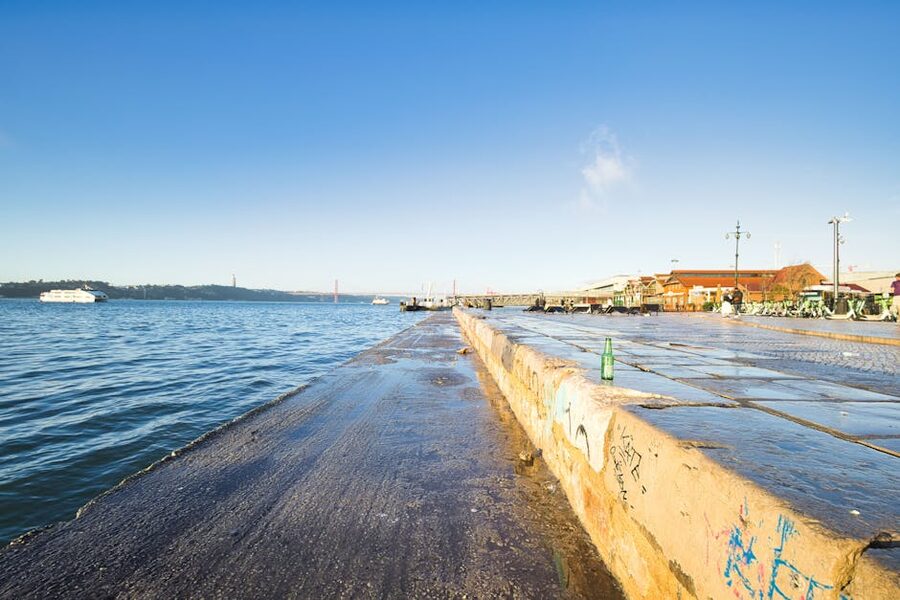
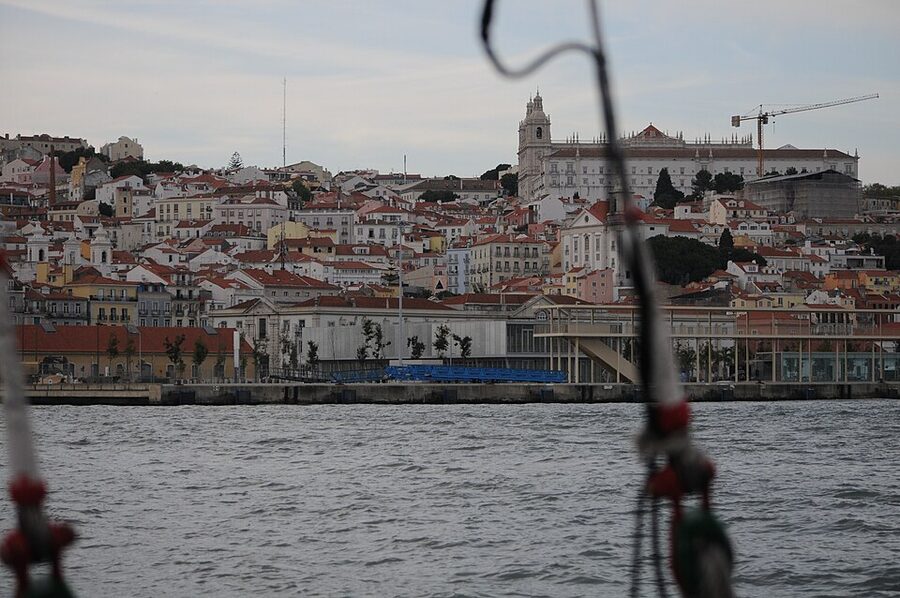
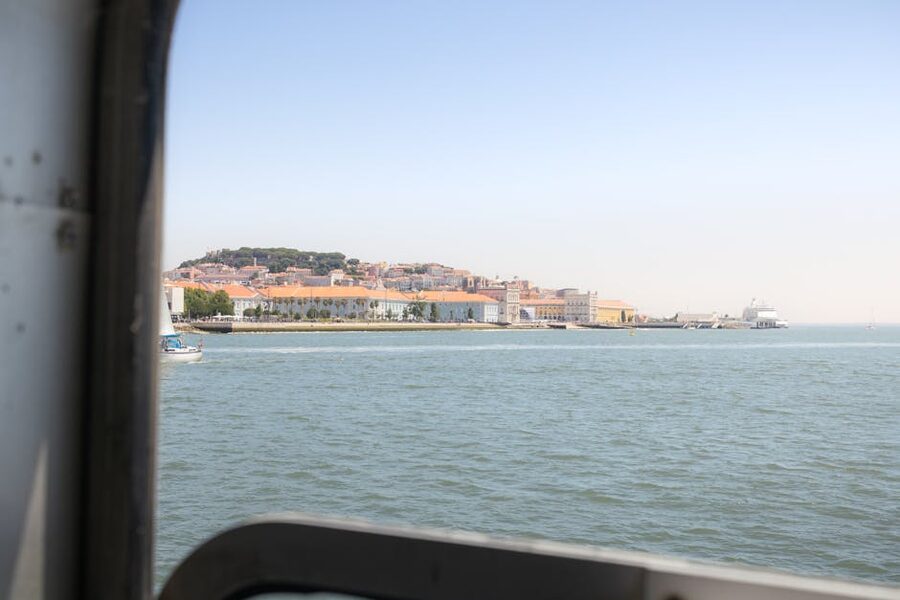
The Tagus runs east-to-west through Lisbon, so the city sits on your right-hand side the whole way out. You leave Terreiro do Paço and within minutes you’ve got a head-on view of the Sé cathedral crowning the Alfama. Then comes the Cais do Sodré promenade, a long stretch of waterfront bars and skateboards. A few minutes later you’re under the 25 de Abril Bridge — and it’s big from down there. Properly big. Steel ribs going up forever, rust streaks on the paint, ferries buzzing underneath.

On the south bank, directly opposite, Cristo Rei stands on a cliff with his arms open. It’s a smaller copy of Rio’s Christ the Redeemer, built in thanks after Portugal survived World War II. Most cruise narration skips over this detail, which is a shame — it’s a better story than “big statue.”
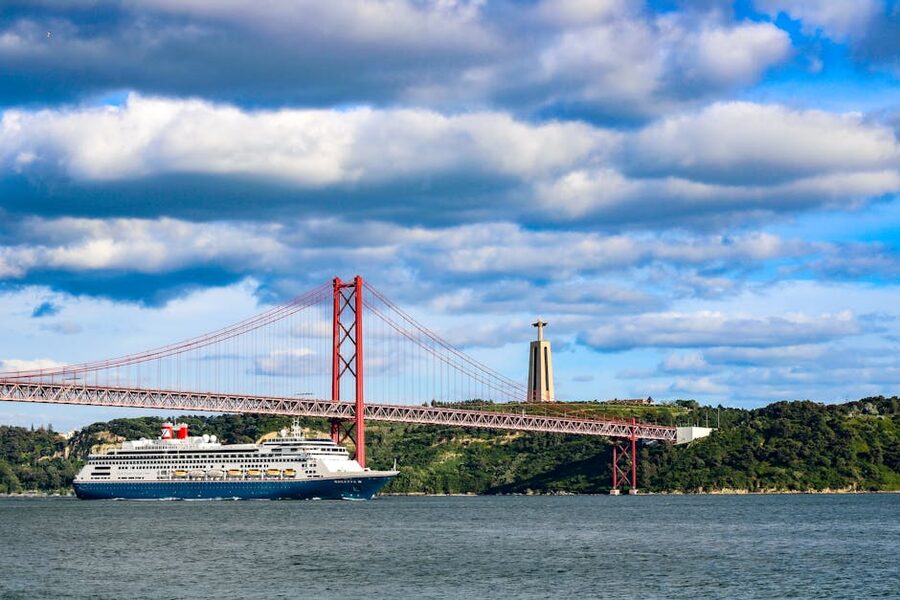
Push on another ten minutes and you’re in Belém. This is the stretch most people come for. The Discoveries Monument — a massive limestone prow pushing east, stacked with statues of Vasco da Gama and Prince Henry — is easiest to read from the water. From land you can’t really get far enough back to see the whole thing.
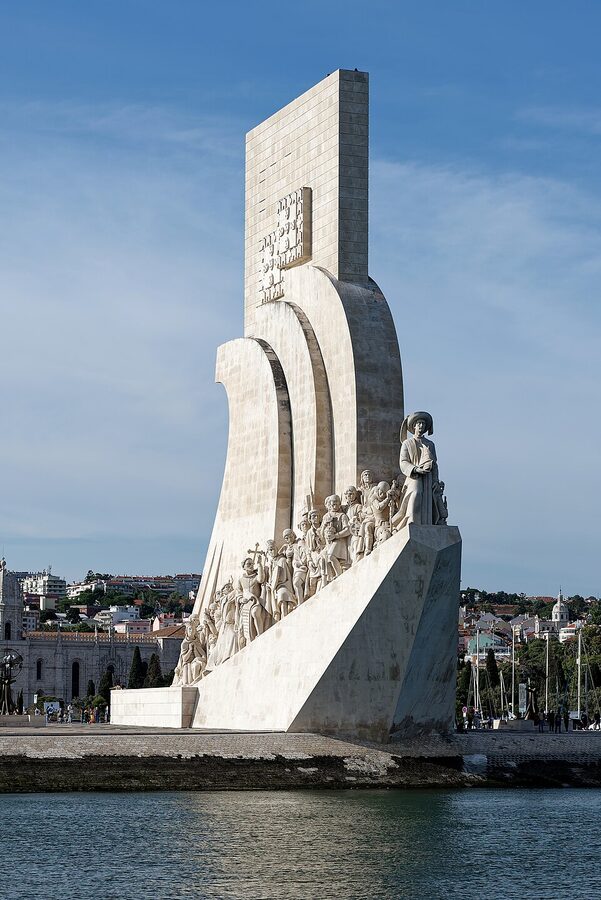

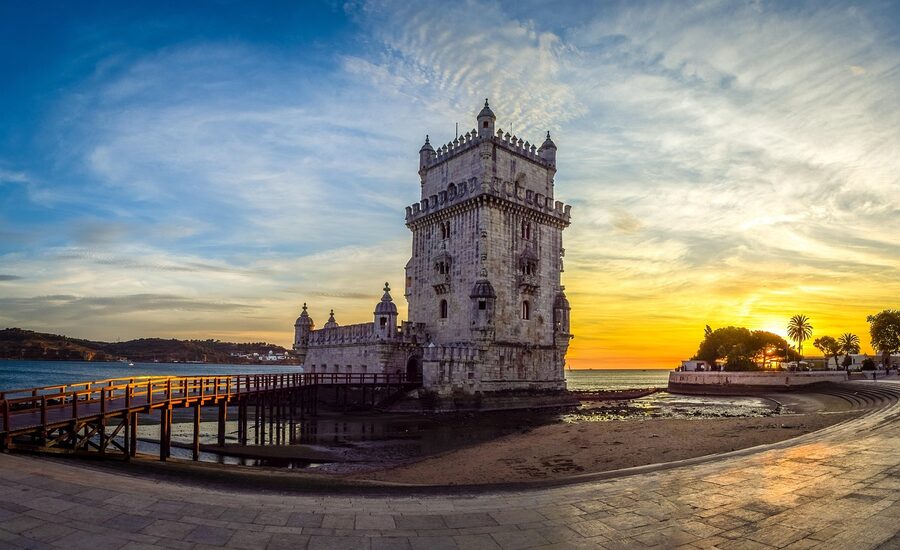
Then, a few hundred metres further, the Belém Tower itself. This is the classic postcard shot. A white limestone fortress with Moorish turrets, sitting on what used to be a shoal in the middle of the river. The river has since silted up around it so now it’s basically on the bank, but if you squint and remember it was once completely surrounded by water, the sixteenth-century version still shows through.
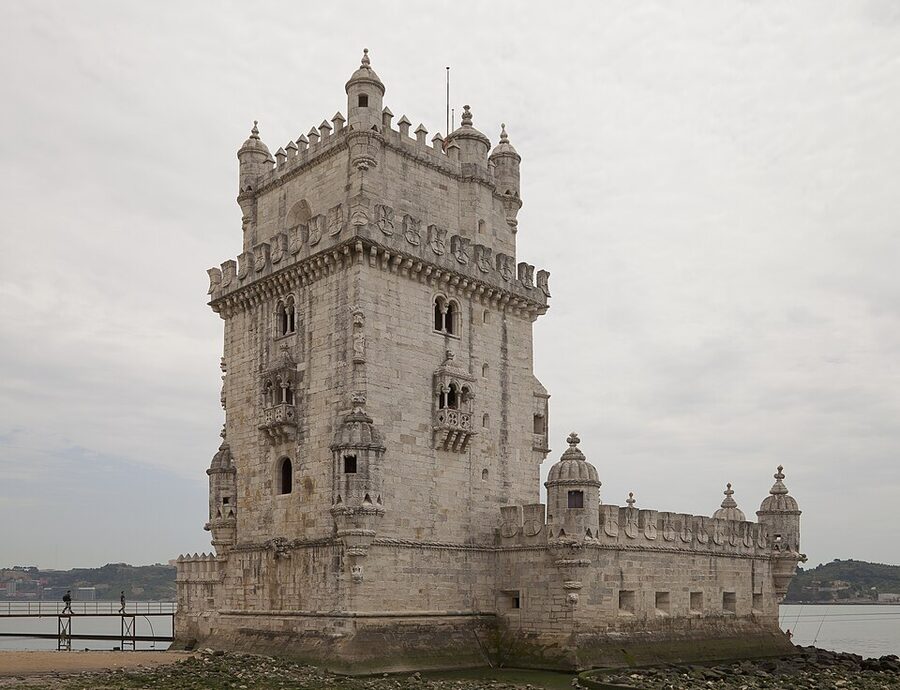

Past Belém, the view opens out. The Tagus widens into what the Portuguese call the Mar da Palha — the Sea of Straw — because of how the shallow water shimmers when it catches low sun. If you’re on the ocean cruise you keep going west; if you’re on the standard loop, this is roughly where you turn around and head back.
Best time of day to go
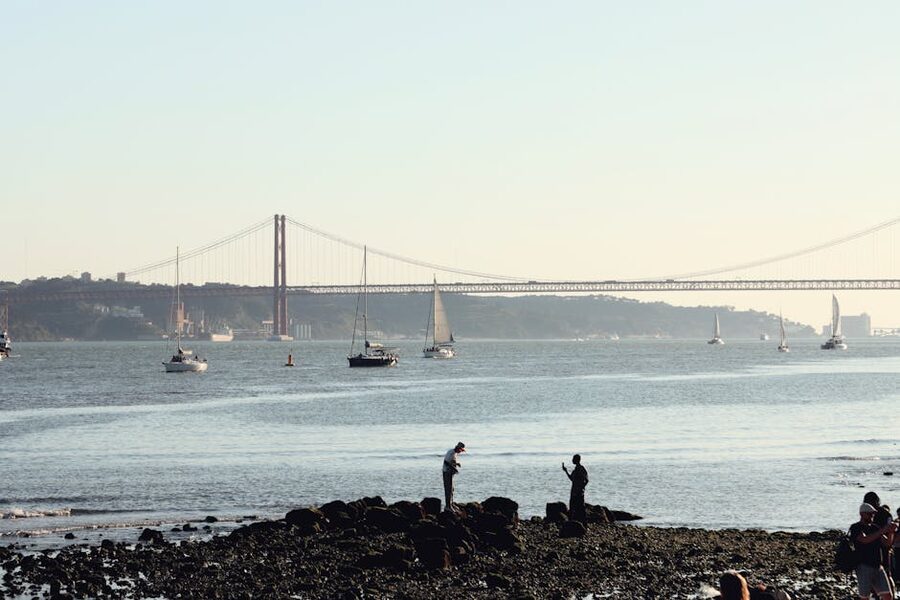
Sunset is the one you want if you only do it once. Board about ninety minutes before sunset and you’ll get the bridge lit up in full amber, the Alfama turning pink, and then the whole city shifting to indigo as the lights come on. Lisbon at dusk from the water is genuinely something people remember ten years later.
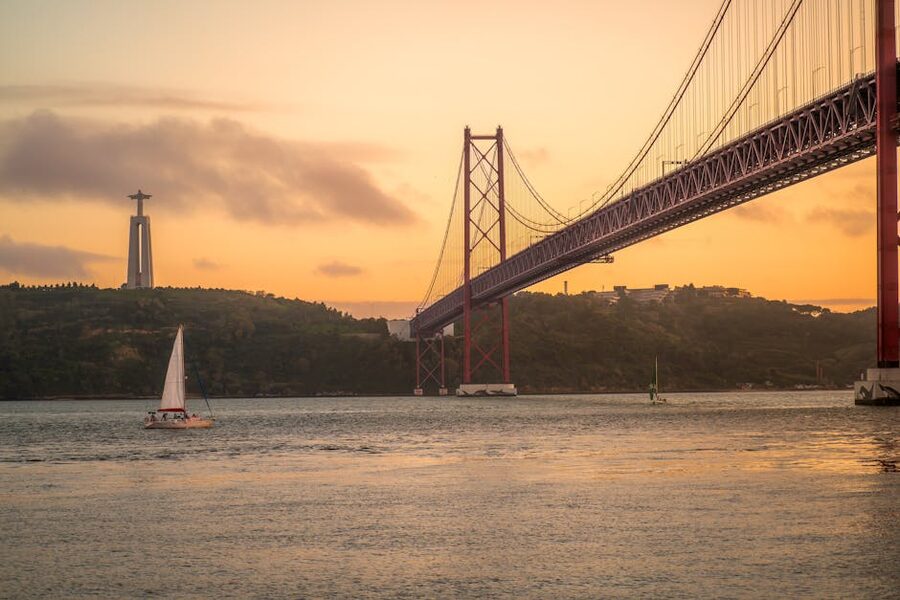
If you’d rather see everything clearly, go mid-morning. Light is flatter but you can actually read the details — the coat of arms on Belém Tower, the statues on the Discoveries Monument, the tile work on the river-facing buildings. Afternoon is the worst shooting light because the sun is in your face the whole westbound leg.
Mornings are also usually calmer water. The wind on the Tagus builds through the day and by mid-afternoon you can have a solid chop. If you’re sailing, that’s great. If you’re prone to motion sickness, it isn’t.
What to bring and what to skip
A light jacket — even in August. Out on the water the wind knocks five to eight degrees off the land temperature, and the sun drops fast after six. If you’re doing the dolphin-watching cruise, take a proper fleece. The ocean air is cold, and the boat gets going at 20+ knots on the way out.
Sunglasses. The glare off the water is harsh and you’ll burn if you underestimate it, even with cloud cover. Sunscreen in summer, obviously.
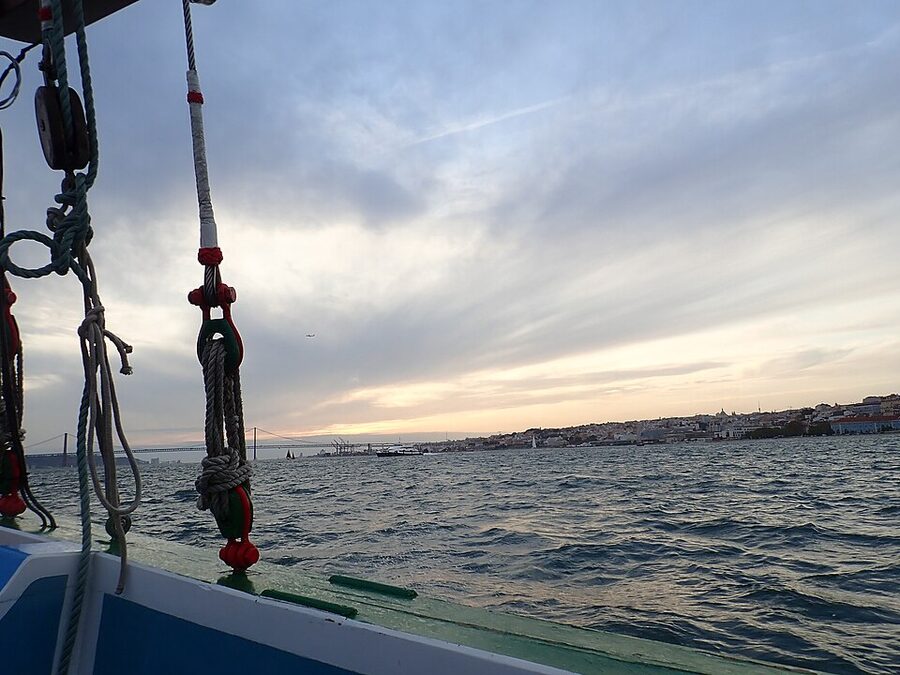
Skip the heavy camera gear on the sailing trips. You want your hands free. Phone is plenty — the light does most of the work for you. On the sightseeing cruises, there’s enough deck space that a mirrorless + one lens is fine, but don’t bring a tripod. You’ll spend the whole trip apologising to other passengers for blocking their view.
.jpg)
The dolphin question
Let me be clear about this, because the marketing copy for the ocean cruise makes it sound like a zoo tour. It isn’t. There’s a resident pod of common dolphins that feeds near the mouth of the Tagus, and in summer the sightings rate runs around 60-70% from what operators tell me. In winter it’s lower. Some days you see a handful of fins in the distance. Other days a pod of twenty comes right up to the boat.
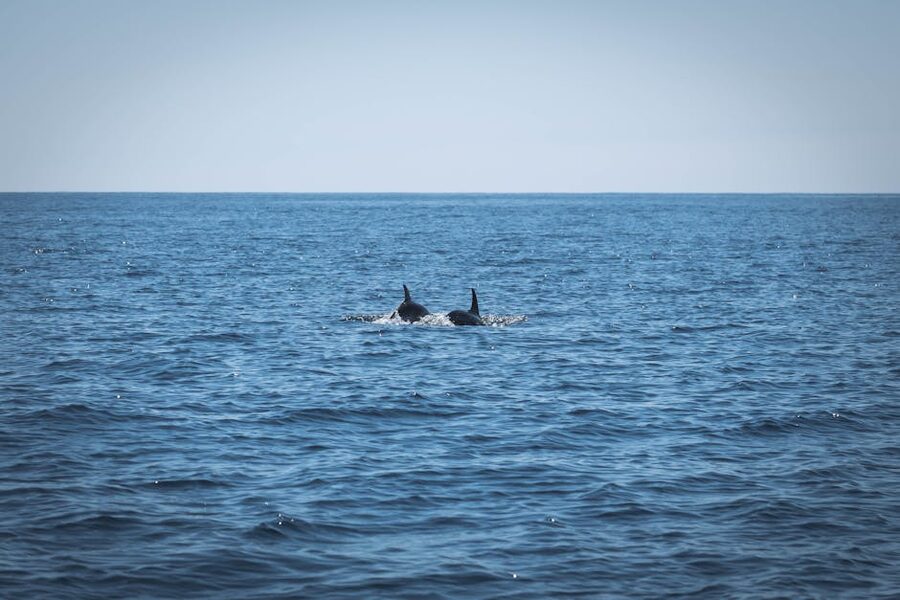
If dolphins are the whole point of the trip for you, book an operator that has a no-sighting discount or a free re-ride policy. Some do, some don’t. The one we reviewed does a partial credit if nobody sees anything, which took the sting out of a grey February trip where the sea was empty.
And if you’re specifically obsessed with marine life, head to the Algarve instead. Lagos and Sesimbra have much higher sighting rates. The Tagus mouth is a bonus on a nice cruise, not the reason to fly to Portugal.
How it compares to the other Lisbon water options
Lisbon has a few overlapping water-based things to do, and the labels can be confusing. A Lisbon boat tour is the umbrella term. A Tagus river cruise is the sightseeing subset — engines on, narration, set route. A sunset cruise is a time-of-day variant, usually with Champagne or sangria thrown in. Sailing tours are wind-powered and small-group. Dolphin cruises go further west than the others.
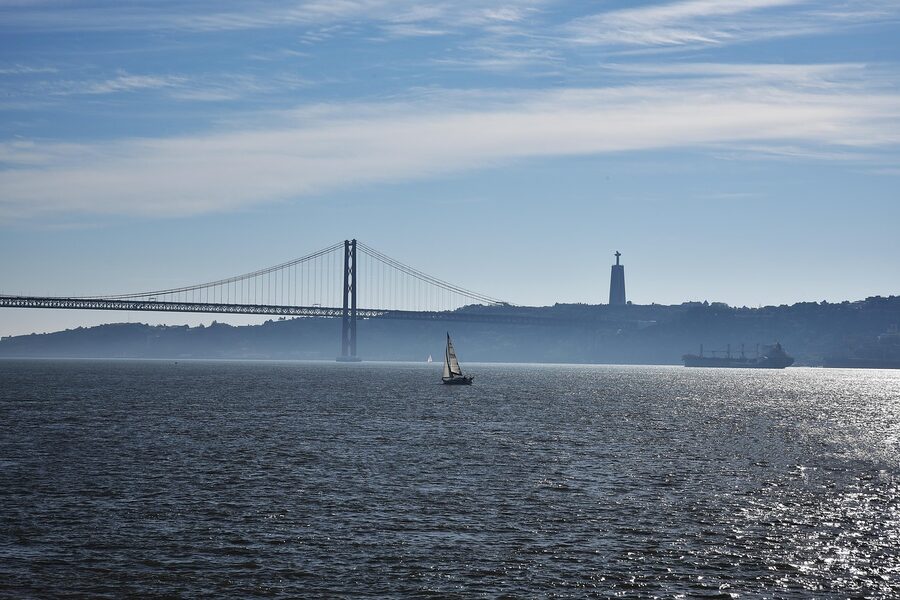
If you’re trying to pick just one, think about what’s driving you. Photos and sights: short cruise. A slow afternoon: sailing. A full outing with the wind in your hair: dolphin. Romance: sunset.
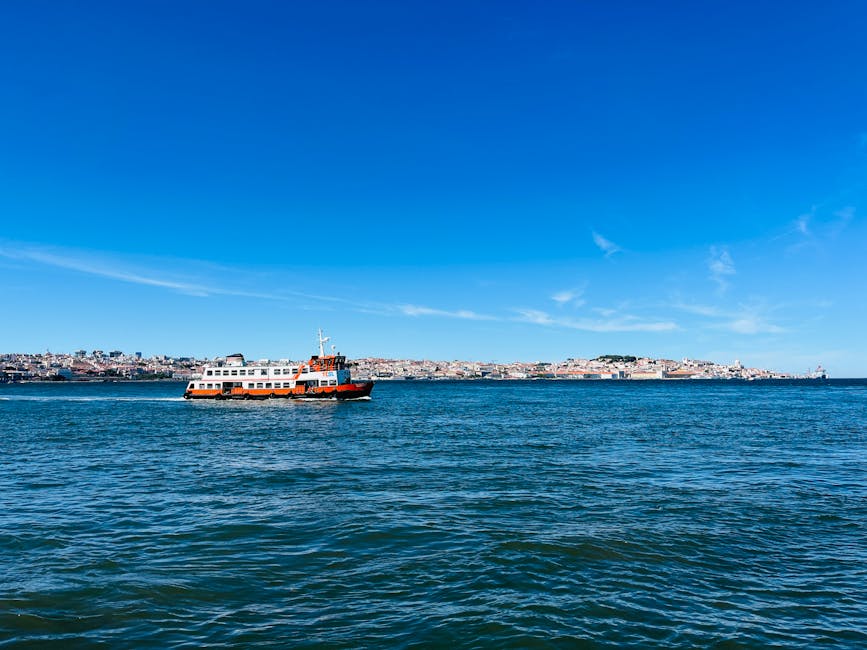
One other thing: the local ferries. The commuter boats from Cais do Sodré to Cacilhas cost €1.40 each way, run every 15 minutes, and give you a functional-if-charmless Tagus crossing. If you only want the cheap view of Lisbon from the water, that works. You skip the narration and the drink and you won’t see Belém, but at two euros return it’s almost rude not to do it at some point.
A tiny bit of history, because the bridge is lying to you
The 25 de Abril Bridge is the thing every first-time visitor clocks — and most people assume it’s the Golden Gate twin. It isn’t. It was built by American Bridge Company in the 1960s, the same firm that built a lot of the other big US bridges, but the bridge it’s actually modelled on is the Bay Bridge in Oakland, not the Golden Gate. They share the red paint, which is where the confusion starts.
.jpg)
It was originally named the Salazar Bridge, after the dictator who commissioned it. After the Carnation Revolution on 25 April 1974 — a bloodless coup that ended the dictatorship — they renamed the bridge for the date. So every time you pass under it, you’re passing under a memorial.
The Belém Tower has an even better story. It was built between 1514 and 1520 as a defensive fort at the mouth of the river. The decorative style — all those twisted ropes carved in stone, armillary spheres, nautical motifs — is called Manueline, after King Manuel I. He made an entire architectural movement out of celebrating sea voyages. The tower is essentially a stone brag about Portuguese navigation.
The Discoveries Monument is much newer — 1960, built for the 500-year anniversary of Henry the Navigator’s death. It’s the one piece of Salazar-era public sculpture the post-revolution government kept. The consensus was that it’s a statue about Portuguese navigation, not about the regime that built it.
Meeting point logistics
Cais do Sodré is the easiest starting point. Green Line metro, tram 15E and 25E, and the main commuter railway all stop there. Walk two minutes and you’re at the dock. If you’re coming from the airport, the red line drops you at São Sebastião, then change to green and you’re at the dock in about 35 minutes.
Terreiro do Paço is also right on the waterfront, four minutes walk east of Cais do Sodré. Tram 15E will drop you at either. Blue line metro stops here too.
Doca de Santo Amaro is trickier. Tram 15E from the centre goes there, but it’s a 25-minute ride and the tram gets crowded. Grab or Bolt is about €7-9 from the centre and takes 10 minutes. If you have a Lisbon Card, the tram is free.
Show up fifteen minutes before the listed time. Boats have designated seating sections for people who arrive early. Arrive on the dot and you’ll end up on the wrong side for photos.
Pairing a Tagus cruise with the rest of your day
The cleanest itinerary I’ve done: sightseeing cruise in the morning, then stay in Belém. The boats drop you back at the starting dock, but you can easily hop off the tram at Belém and spend the afternoon at the Jerónimos Monastery, the MAAT museum, and Pastéis de Belém. The cruise gives you the orientation, and the walking fills in the detail.
If you’re pairing with a Lisbon food tour, do the cruise first — food tours are evening-heavy and you’ll want the walking to burn off the sardines. A walking tour of Alfama in the morning and a sunset cruise to round off the day is a solid Lisbon-in-one-day plan, if you’re only in town for 24 hours.
Rainy day contingency — don’t book a cruise in hard rain. Operators run them because they’re contractually required to, but the visibility is nothing, you’ll be wet, and you’ll hate every minute. If the forecast is grim, shift the cruise to a different day and do an indoor thing — the National Tile Museum or the MAAT. The weather on the Tagus is genuinely better than the Lisbon forecast about 30% of the time because the Atlantic pushes clouds inland, but there’s no reliable way to tell from a forecast app which day is which.
Common screw-ups
Wrong dock. The single most common issue. “Terreiro do Paço” and “Doca de Santo Amaro” sound similar and they’re five kilometres apart. Read your confirmation twice.
Wrong boat size. People book the “luxury” variant expecting an intimate experience and end up on a 200-seater with a loud tour guide. If the listing has a group-size figure, trust it. “Small group” with no number usually means 30 or 40.
Assuming the welcome drink is alcoholic. On family-friendly boats it’s often juice. Check the listing if you actually care.
Not bringing motion sickness tablets. The sea off the mouth of the Tagus is properly open ocean. If you’ve ever felt queasy on a ferry, take a Dramamine an hour before the dolphin cruise. The short sightseeing cruise is fine for almost everyone.
Buying in person from the port-side sellers. There are touts who hang around Terreiro do Paço selling “same-day” cruise tickets at a premium. Just book through GetYourGuide on your phone — it’s cheaper, you get free cancellation, and you’re not buying a paper receipt that may not correspond to an actual boat.
Why book now
June to September is when Tagus cruise slots fill first. If you’re travelling in those months, book two to three days ahead. April, May and October are shoulder season — easier to walk up but still busy on weekends. Winter is fine to book the day of.
Sunset slots fill faster than daytime slots at all times of year, even in February.
Most GetYourGuide and Viator bookings are free to cancel up to 24 hours before. So if the weather looks grim, you can shift — there’s no downside to booking early.
A few other Lisbon guides worth your time
If you’re piecing together a couple of days in the city, a fado show is the natural evening companion to a cruise — one is the city from the water, the other is the city from inside one of its oldest taverns. For a day trip, Sintra is an hour on the train and worth a full day, with Quinta da Regaleira and Pena Palace as the two must-sees. If you’re saving money on transport, the Lisbon Card bundles trams, metro and 25+ museums into one price and pays for itself on day two. And for getting around, the hop-on hop-off bus sounds cheesy but the Belém route actually runs along the Tagus and gives you a useful second angle on everything you’ve just seen from the boat.
Affiliate disclosure: Some of the links in this guide are affiliate links. If you book through them we may earn a small commission at no extra cost to you — it helps keep this site running. We only recommend tours we’d actually take.