
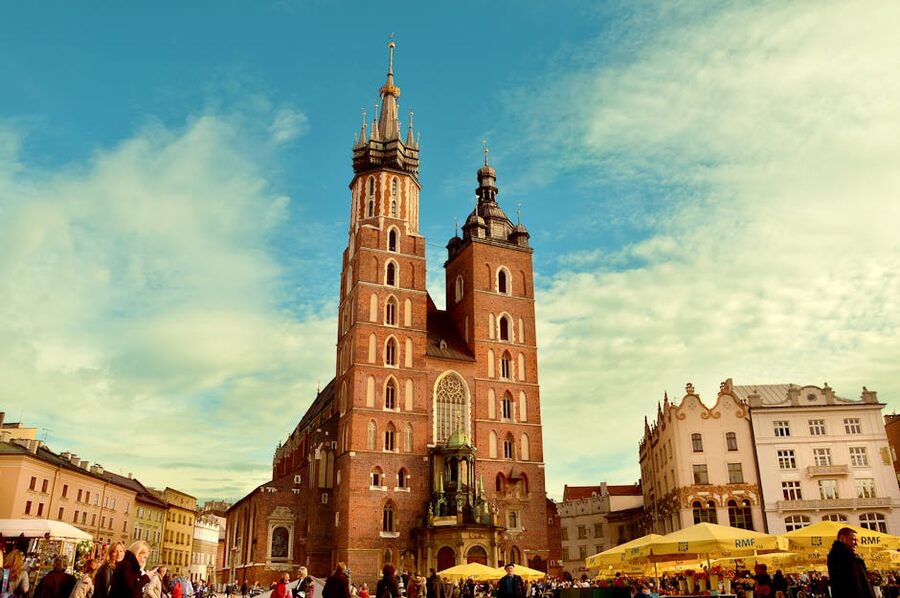
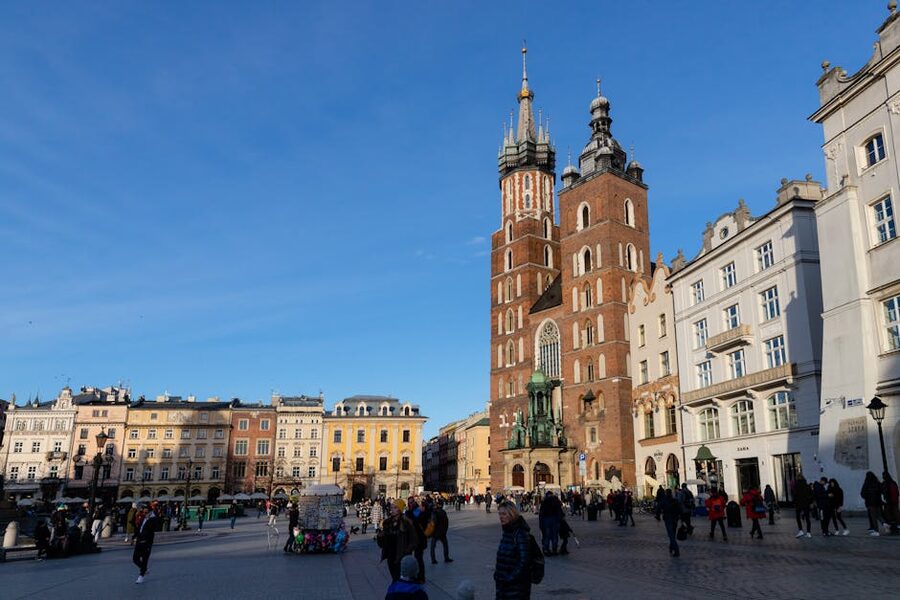
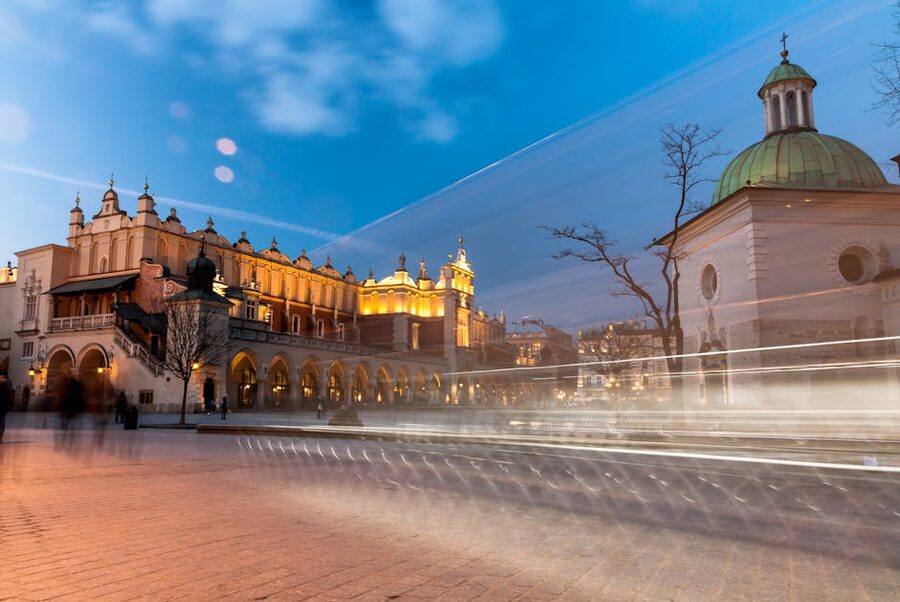
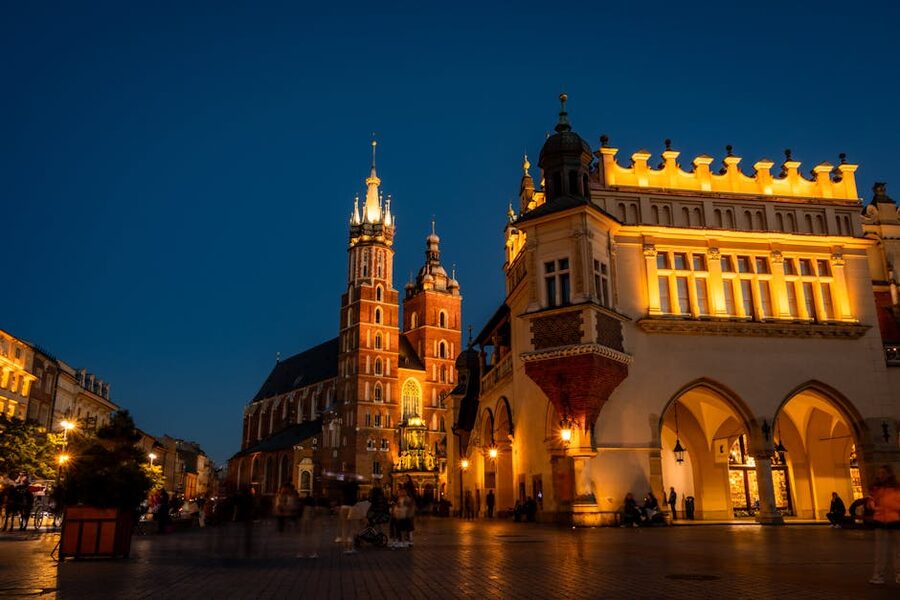
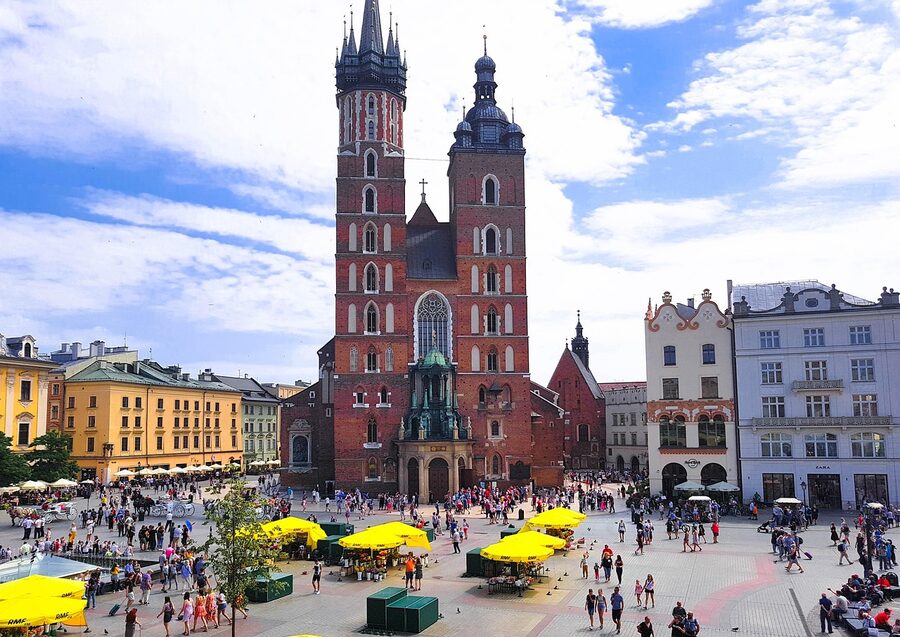
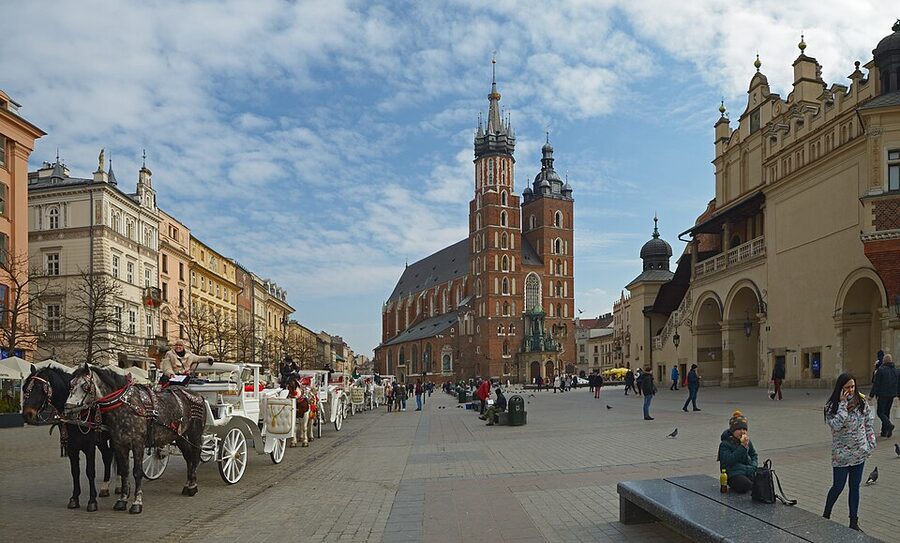
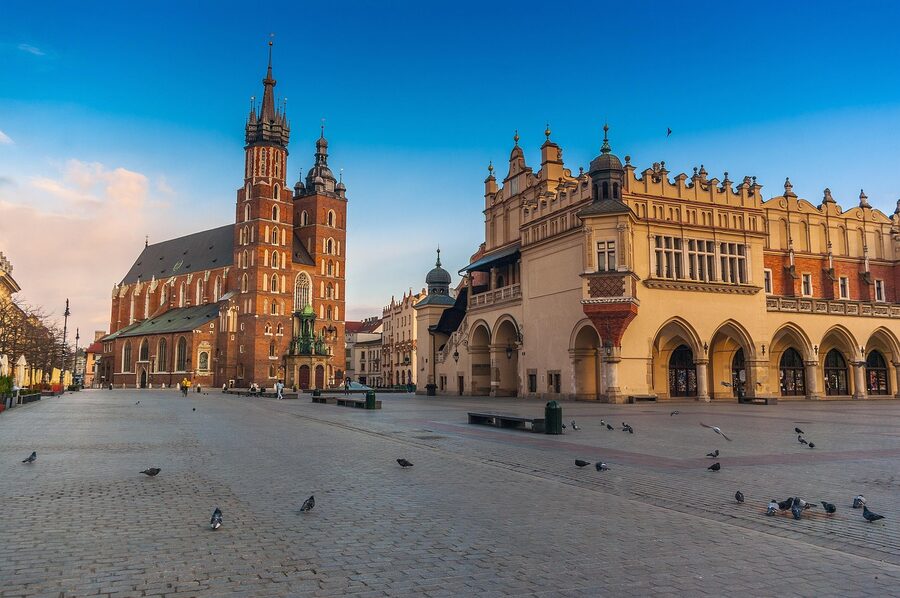
Why is Krakow’s Main Square the largest medieval market square in Europe? It’s the question that hits you about three minutes after you walk into Rynek Główny for the first time. The whole expanse just keeps going. You stand there at the edge with St Mary’s Basilica filling one corner and the Cloth Hall stretched across the middle and you can’t quite believe nobody chopped it up over seven centuries of redevelopment. The short answer is that the city was rebuilt from a clean slate after the Mongols flattened it in 1241, and the German engineers who laid out the new street grid in 1257 went big on purpose. The longer answer is what a good walking tour will give you, and that’s what this guide is about.
.jpg)
- Best small-group: Old Town Krakow and Wawel Castle Walking Tour, around $27, 2.5 hours, covers the square plus the Wawel approach with a strong local guide.
- Best value: Krakow: The Old Town Walking Tour, around $19, 2.5 hours, the cheapest serious option that still has a paid guide instead of a tip-based free walk.
- Best Wawel-focused: Krakow: Wawel Castle Guided Walking Tour, around $30, about 75 minutes, perfect if you’ve already done the square and just want the castle storytelling.
- What an Old Town walking tour actually covers
- How Krakow’s Old Town differs from Prague’s
- The hejnał: why you’ll hear a trumpet cut off
- The three Old Town walking tours worth booking
- 1. Old Town Krakow and Wawel Castle Walking Tour: around
- 2. Krakow: The Old Town Walking Tour: around
- 3. Krakow: Wawel Castle Guided Walking Tour: around
- Should you do a free walking tour instead?
- How long should the tour be?
- When to take the tour
- Where to start: meeting points decoded
- What you’ll see beyond the obvious
- The Wawel approach: what walking tours include
- How the Old Town survived: the short history
- Practical things the tour won’t tell you
- What to do next, after the walking tour
- Worth pairing with
What an Old Town walking tour actually covers
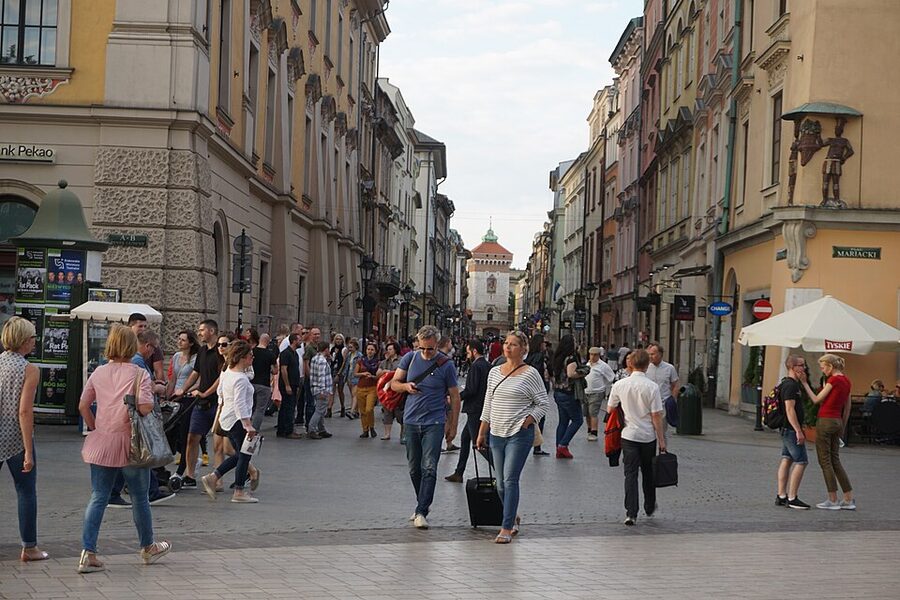
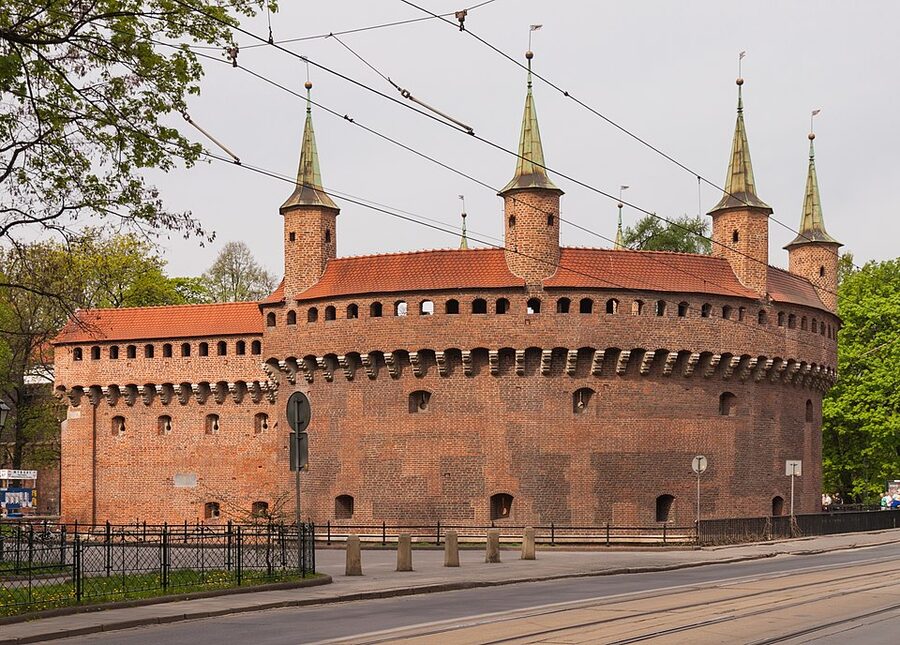
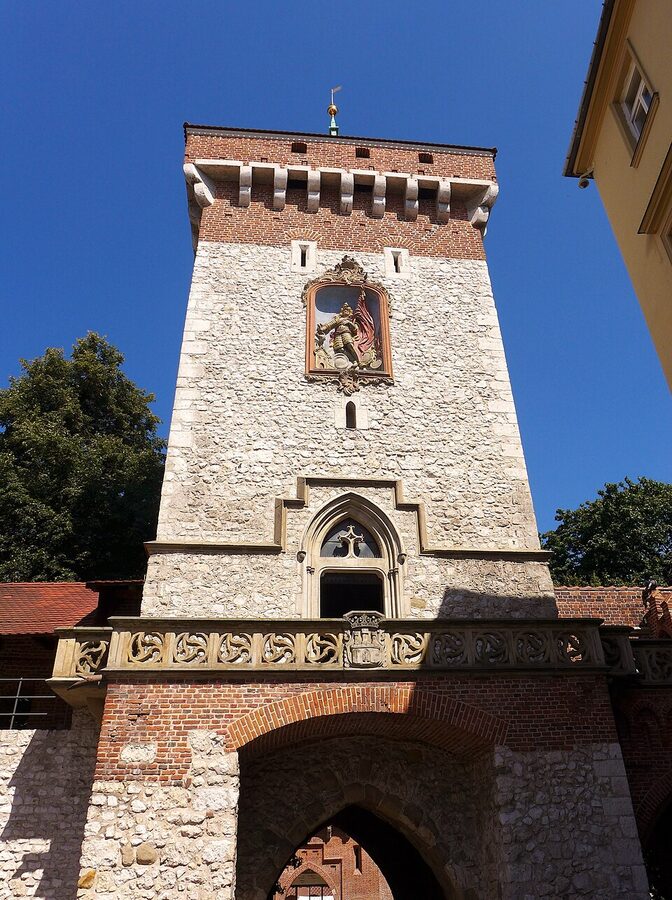
Almost every paid Old Town tour follows the same loop, with small variations on where it starts and how deep it goes into Wawel. The standard route goes Barbican, St Florian’s Gate, down Floriańska Street to the Main Square, around St Mary’s Basilica, across to the Cloth Hall and Town Hall Tower, then south along Grodzka to the foot of Wawel Hill. Some tours stop there. Others walk you up onto the hill and around the castle exterior. A few include interior tickets, but those are the exception. Most are walking-only.

.jpg)
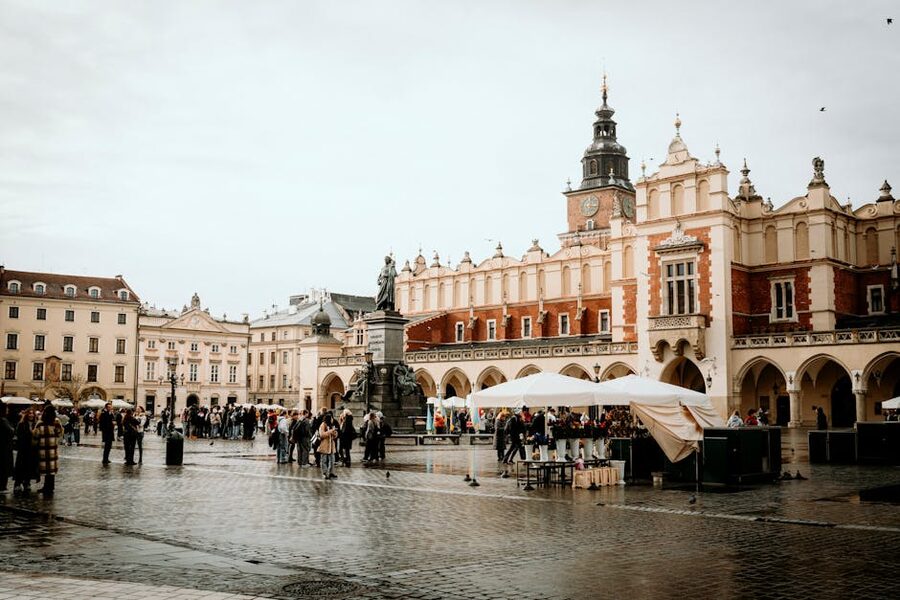
The pace is unhurried. A good guide spends 15 to 20 minutes on the square alone, pointing out details you’d miss without context: the Eros Bendato sculpture, the well in front of the Cloth Hall, the small green plaque marking where Tadeusz Kościuszko swore his oath in 1794. You learn that the square’s strange double-room shape comes from the Cloth Hall dividing it down the middle, and that the dark patch on the wall at one corner is original 13th-century brickwork left exposed during the last restoration.
How Krakow’s Old Town differs from Prague’s
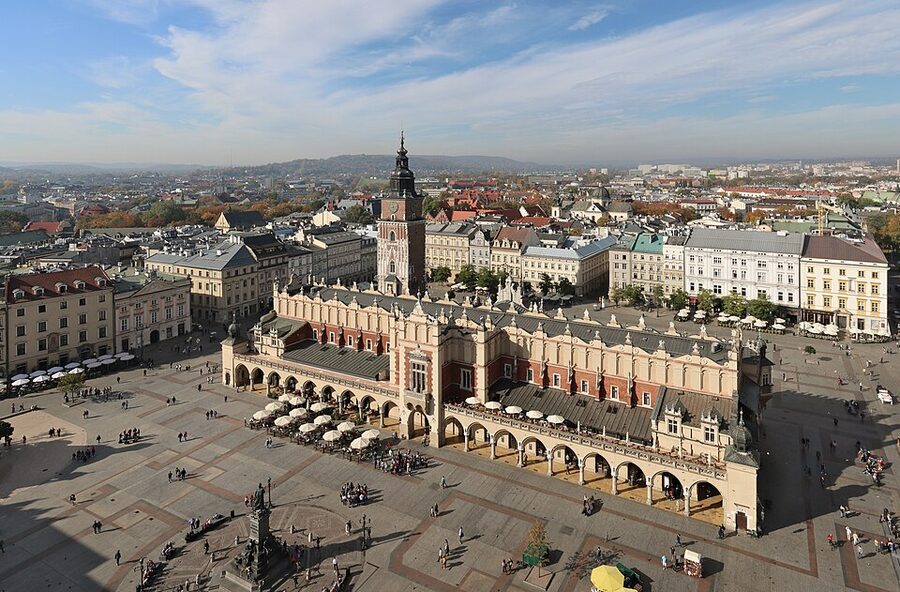
People who’ve already been to Prague always ask this on the tour. The two cities have the same UNESCO listing and the same era of construction, but they feel different on the ground. Prague’s Old Town Square is smaller and more enclosed: buildings tower over you on three sides and the Astronomical Clock pulls every crowd toward one wall. Krakow’s square is open. You can see across to the other side. The buildings are lower. There’s air.

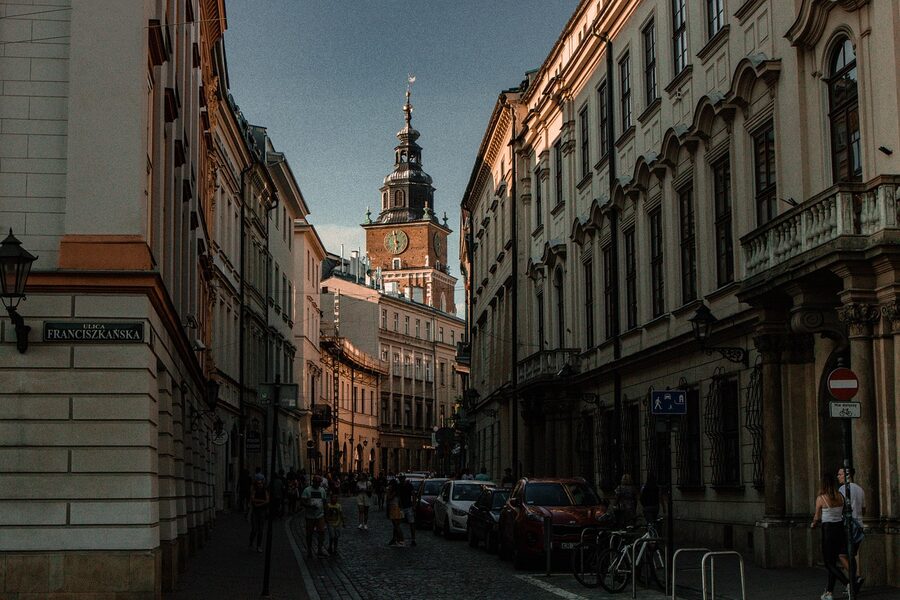
The other big difference is what survived the Second World War. Warsaw’s old town was dynamited and rebuilt from photographs. Krakow’s was occupied as the Nazi general government capital and that, paradoxically, is what saved it. The Germans intended to keep Krakow as a German city, so they didn’t bomb it. The streets you walk are the streets people walked in 1900, in 1700, in 1500. That’s the thing the guides keep coming back to. The buildings aren’t reconstructions.
The hejnał: why you’ll hear a trumpet cut off
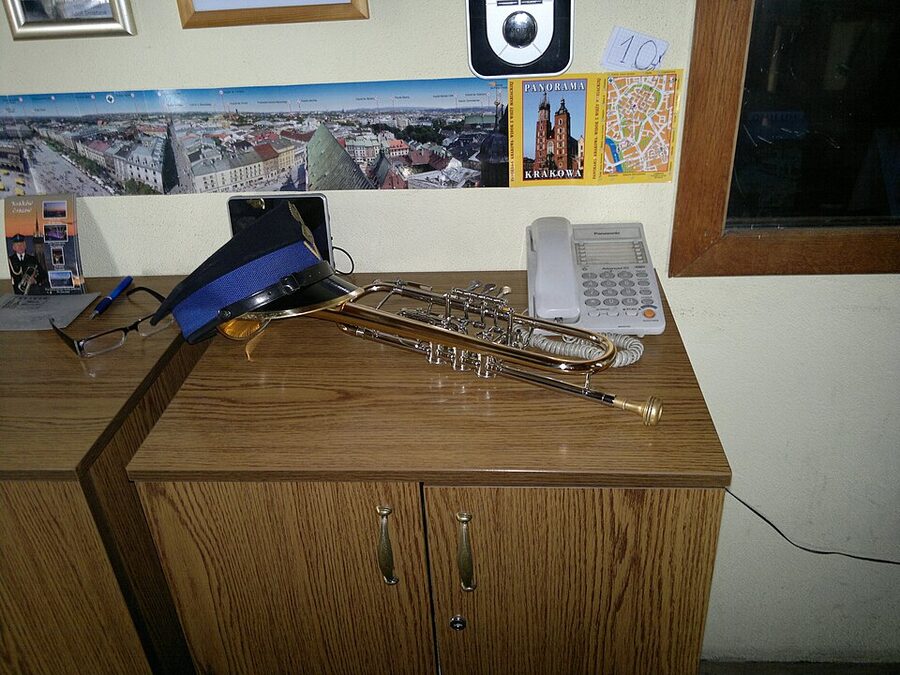
Every hour, on the hour, a trumpeter plays the hejnał from the higher tower of St Mary’s Basilica. It plays four times, once toward each cardinal direction, and every single time the melody stops mid-note. People notice. First-timers look up wondering what just happened. The story is that during a Mongol attack in the 13th century, the trumpeter raising the alarm was shot in the throat by an arrow, and his unfinished call has been preserved ever since.
.jpg)
The legend doesn’t hold up to history. There’s no record of the arrow story before the 1920s, and the hejnał was originally a time signal for opening and closing the city gates. But the cut-off is real, and the tradition is unbroken back to at least the 14th century. Time your tour to hit the square at 11am or noon and you’ll hear it from below. The trumpeter leans out of a small window; wave and he sometimes waves back. Local kids do this constantly.
The three Old Town walking tours worth booking
There are dozens of Krakow walking tours on the market and most of them are fine. These three are the ones I’d actually book. They cover slightly different ground and at slightly different price points, and between them they’ll suit most visitors.
1. Old Town Krakow and Wawel Castle Walking Tour: around $27

Run by Walkative, this is the most-booked Old Town tour in the city for good reason. It’s small-group (capped around 15), it’s 2.5 hours, and it covers the square, the Cloth Hall area, the route down Grodzka, and the Wawel exterior in a single walk. Our full review goes deeper on what the guide style is like and which start time works best. The tour does not include Wawel Castle interior tickets; if you want those, see our guide on Wawel Castle tickets separately.
2. Krakow: The Old Town Walking Tour: around $19
This is the price-leader. Around $19, also 2.5 hours, also small-group. It skips the deep Wawel coverage of the Walkative tour and stays inside the medieval walls, which honestly suits a lot of visitors better. If you’ve only got an afternoon and you want the square, the basilica context, the Cloth Hall, and the side streets, this is enough. Our full review covers the meeting point and how to spot the guide in the square.
3. Krakow: Wawel Castle Guided Walking Tour: around $30
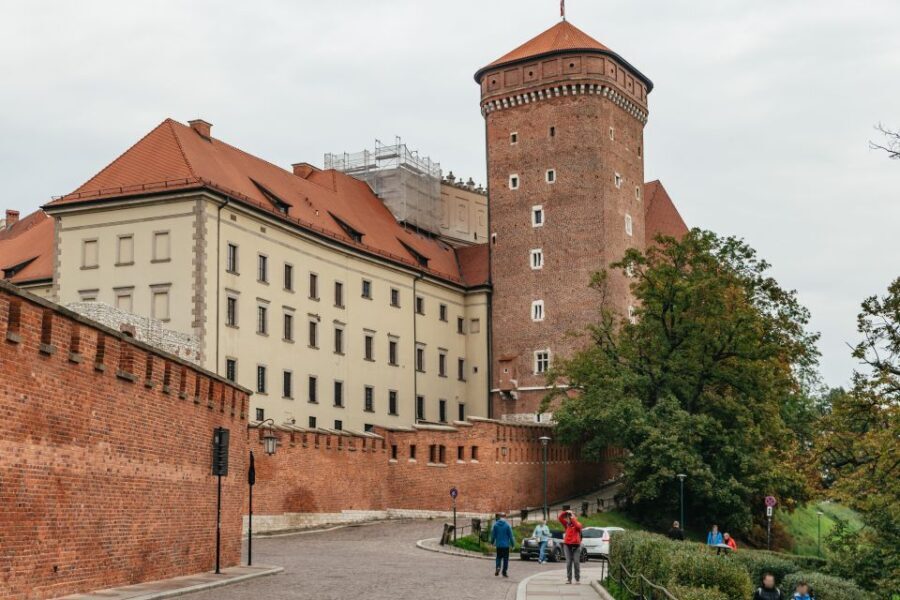
This one is shorter and more focused. It’s about 75 minutes covering the castle exterior, the courtyard, the gardens, and the dragon cave entrance. The guide talks through the kings buried in the cathedral, the alchemical experiments of Sigismund III, and the castle’s near-miss survival of the wars. It does not include castle interior tickets; for those see our Wawel Castle ticket guide. Our review goes into how this pairs with an Old Town walk.
Should you do a free walking tour instead?
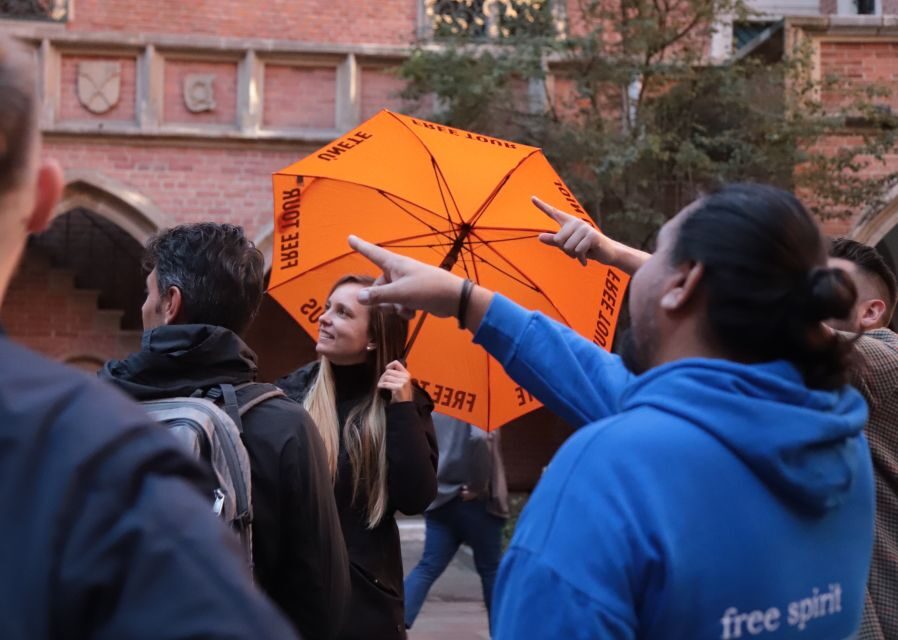
Krakow has a famous free walking tour scene. Walkative, City Walks Poland, Krakow Explorers, and Guruwalk all run tip-based tours from the square daily. They’re free in the sense that you don’t pay upfront, but you’re expected to tip 50 to 100 zloty per person at the end (about $13 to $27). So they’re not actually cheaper than the $19 paid option above.
What you get with a free tour is volume: groups of 25 to 40, less individual attention, a guide optimising for tips by being entertaining. What you get with a paid tour is a smaller group (12 to 15), a fixed price, and a guide who isn’t constantly performing. Solo? Free is fine. With a partner or family who want substance? Pay.
One practical warning. The free tours operate without a permit system, so meeting points cluster around the same square, and guides hold up coloured umbrellas to attract their group. It’s chaotic at 10am during summer. If you’ve prepaid for a small-group tour, look for the meeting point board with the operator’s logo (Walkative’s is a green W) rather than a generic umbrella. Don’t get sucked into the wrong tour.
How long should the tour be?
Two and a half hours is the sweet spot. That’s enough time for the Barbican, the Florian Street approach, the basilica context, the square, the Cloth Hall, and the route down to Wawel without anyone getting tired. Three hours starts to drag in summer heat. Four-hour tours exist (usually combining Old Town with Kazimierz, the Jewish Quarter) and they’re great if you have the stamina.
If you only have an hour, skip the tour and self-guide. Walk from the Barbican to the square, do a slow lap around the basilica, walk through the Cloth Hall, and stop at the Town Hall Tower. The reason to book a guided tour is to get the stories you can’t read off a plaque.
When to take the tour
Morning slots (9am, 10am) are the most pleasant. The square is quieter, the light is good, and your guide hasn’t had three rounds of tourists trample on their patience yet. Mid-day (11am, noon) gets you the hejnał from St Mary’s tower. Afternoon slots (2pm to 4pm) are the worst in summer: heat is brutal, crowds peak, cafes are slammed. Evening slots (5pm, 6pm) come back around to good because the heat drops and the golden hour starts.
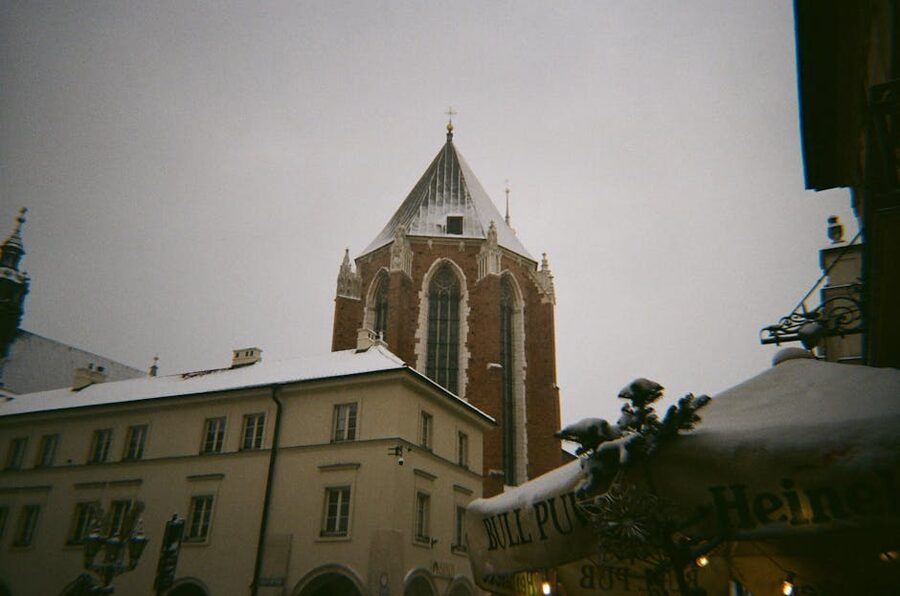
Winter has its own logic. Tours run year-round but days are short, so morning slots are better than afternoon. Christmas market season (late November to late December) puts a wooden chalet circuit across the square that the tour will weave through. Beautiful, but slows the pace. Budget an extra 30 minutes during the Christmas period.
Where to start: meeting points decoded
Most paid tours meet at one of three places. Knowing which is which saves a lot of stress on the day.
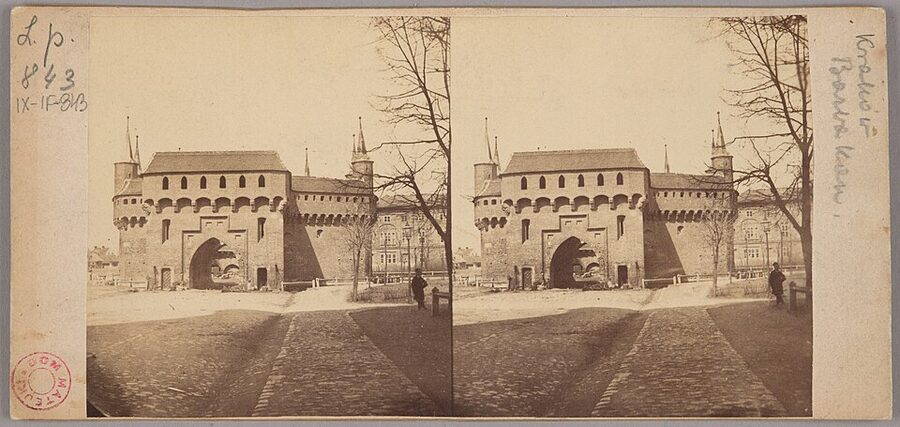

The Barbican is the most common starting point. Tours meet on the lawn just outside the south side, where the moat used to be. The operator boards cluster together. If you’re early, walk through to St Florian’s Gate so you can see your guide approach.
The second meeting point is in front of St Mary’s Basilica, on the square itself. This one is confusing because guides for ten different tours stand within five metres of each other. Look for the operator’s exact logo on the board, not just the colour or language.
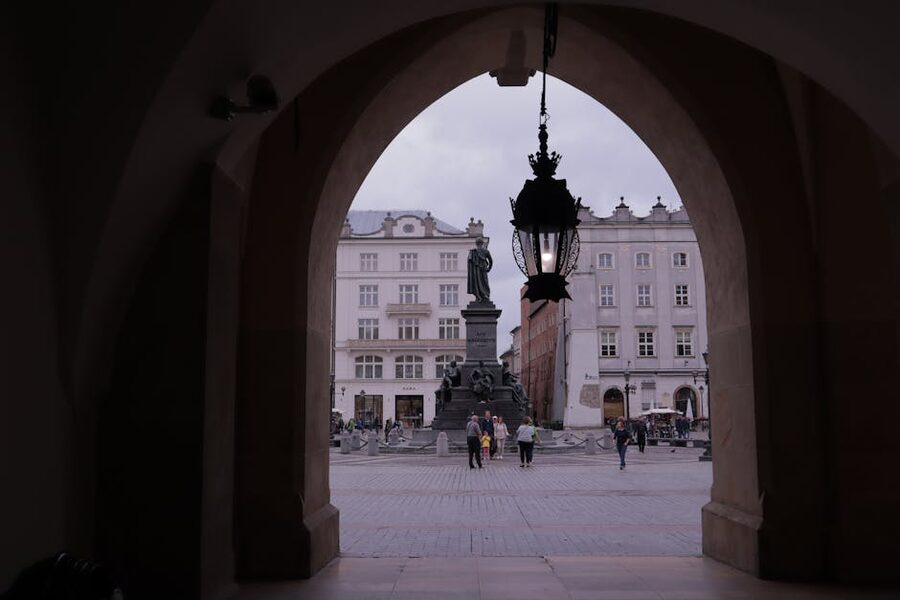
The third option is at the Adam Mickiewicz Monument in the centre of the square. Used mostly by Wawel-focused tours that walk south first. The monument is the easiest of the three to spot.
What you’ll see beyond the obvious
The square and the basilica are the headline acts but a good walking tour finds the smaller stories. Here are the spots a decent guide will pull out of the woodwork that you’d otherwise walk past.
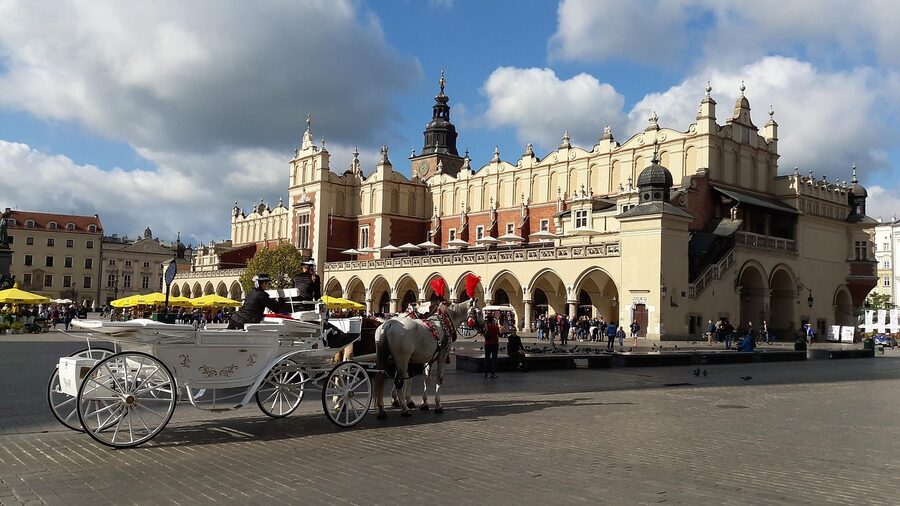
The Pod Jaszczurami building on the western side of the square has been a student hangout since the 14th century and the cellar bar is still open. The lizard sculptures by the door are 700 years old.
The Pijarska wall artists hang their paintings directly on the brick inside the wall just before St Florian’s Gate. Some have been doing it for forty years. The portraits are uneven, the cityscapes are reliably good.
The Eros Bendato sculpture, the big bronze head lying on its side in front of the Town Hall Tower, is a 2005 work by Igor Mitoraj. Locals climb inside it. Tour guides will tell you not to but everyone does anyway.
The Holy Cross markers in the cobbles. Small stone crosses set into the paving on Mariacka Street and Floriańska Street, marking historical murders. Krakow has at least eight of these and most guides will only point to one.
The Wawel approach: what walking tours include
Tours that include Wawel split into two camps. The first walks you down Grodzka to the foot of the hill, points up at the castle, and stops there. You get the view, the dragon cave story, the line about the seven chakra stones, and then the tour ends near the Vistula riverbank. The second walks you up onto the hill, around the courtyard, and finishes near the cathedral entrance. Either is fine. The second takes about 30 minutes longer and adds maybe 800m of walking.
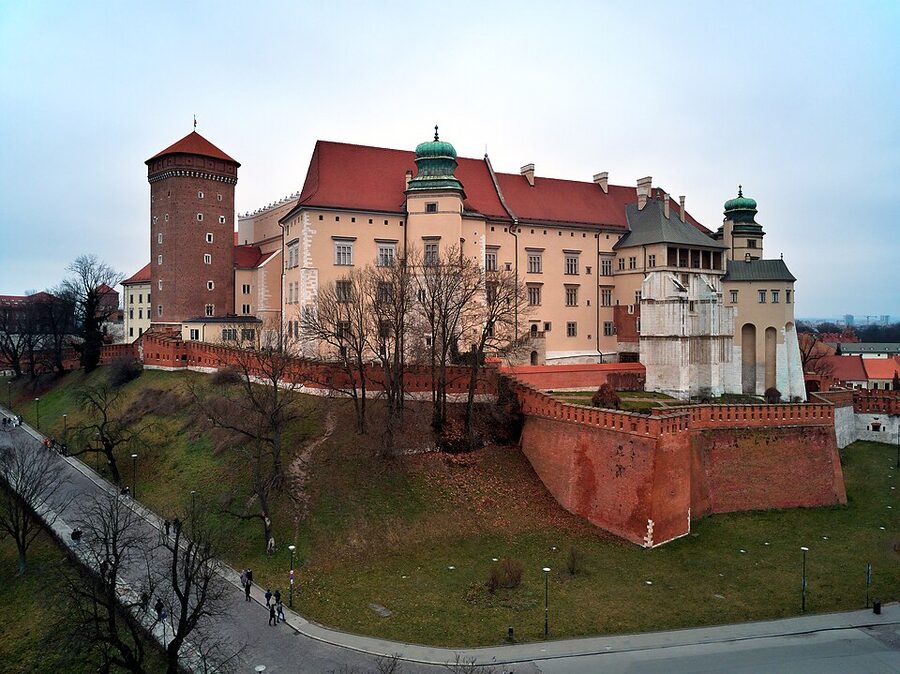

The thing nobody tells you is that the castle interior, the cathedral, and the dragon cave are all separate paid tickets, and walking tours don’t include them. If you want to actually go inside, plan a half-day before or after. Our Wawel ticket guide covers the timed-entry system and which combo to pick. The dragon cave is a separate ticket again (cheap, about 9 zloty) and it’s only open from May to October.
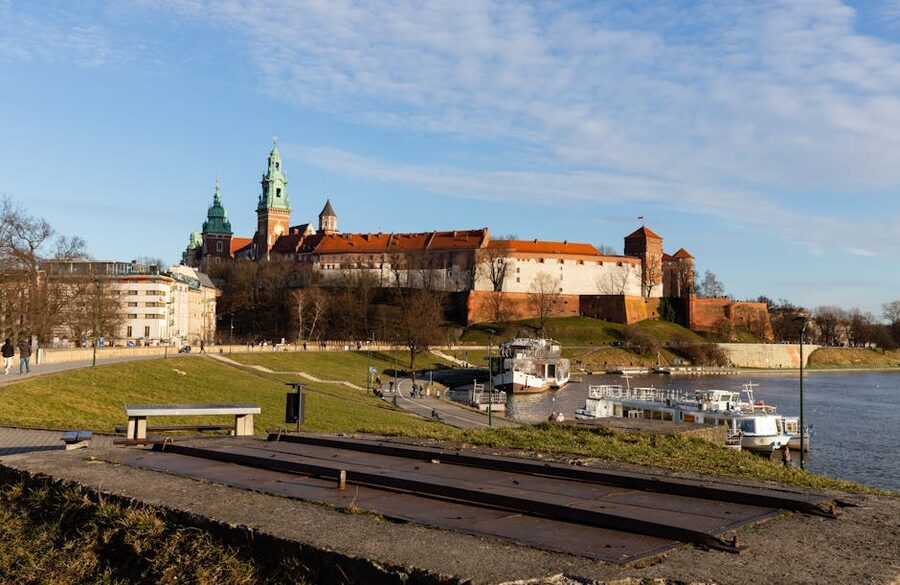
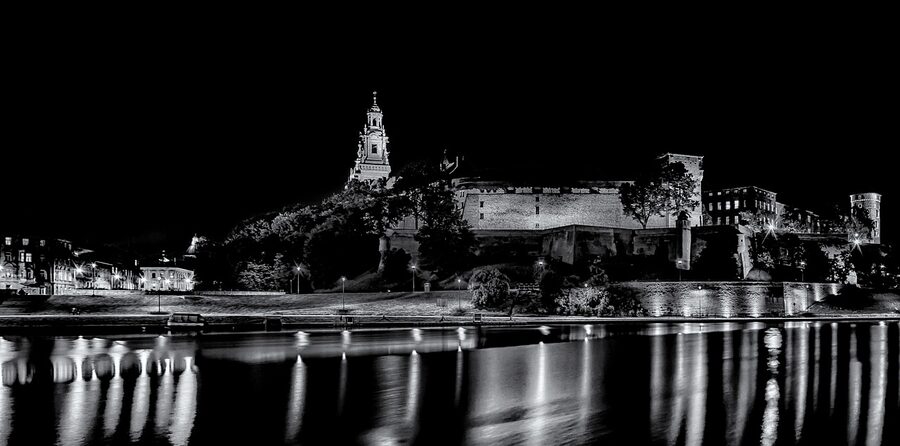
If your walking tour ends at Wawel and you want to extend it, the easiest pivot is a Vistula River cruise. The boats leave from a dock at the foot of Wawel hill, the cruise is about 50 minutes, and it gives you the city from the river angle. Pair it with the walking tour and you’ve covered all the major sightlines of the Old Town in one half-day.
How the Old Town survived: the short history
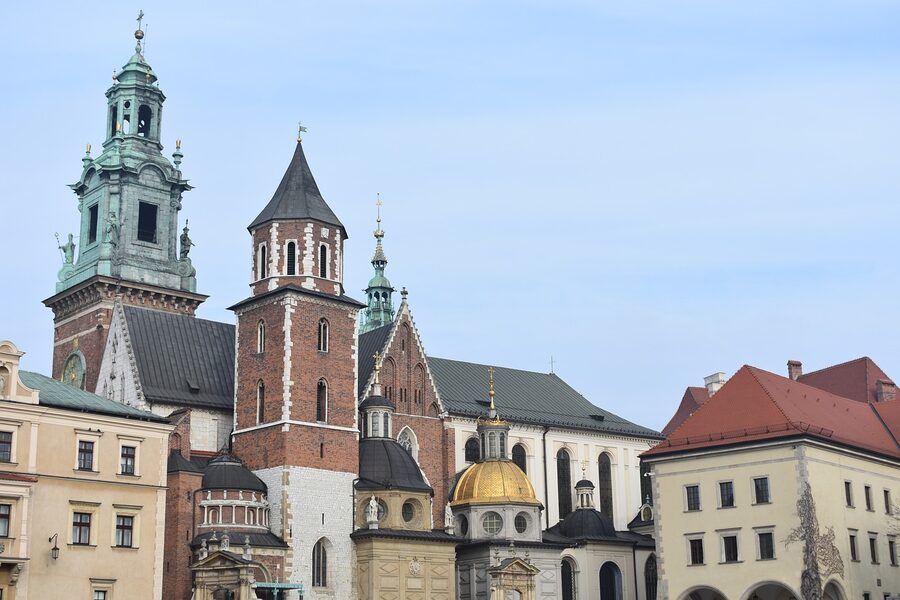
The thing that makes Krakow’s Old Town what it is, the thing that makes it stand out from every other medieval European city centre, is that almost all of it is original. Not reconstructed. Not bombed and rebuilt. The streets, the buildings, the layout, the bricks: 80 percent of what you see has been there since the 1500s, and the bones go back to the 1257 grid laid out after the Mongol invasion of 1241.
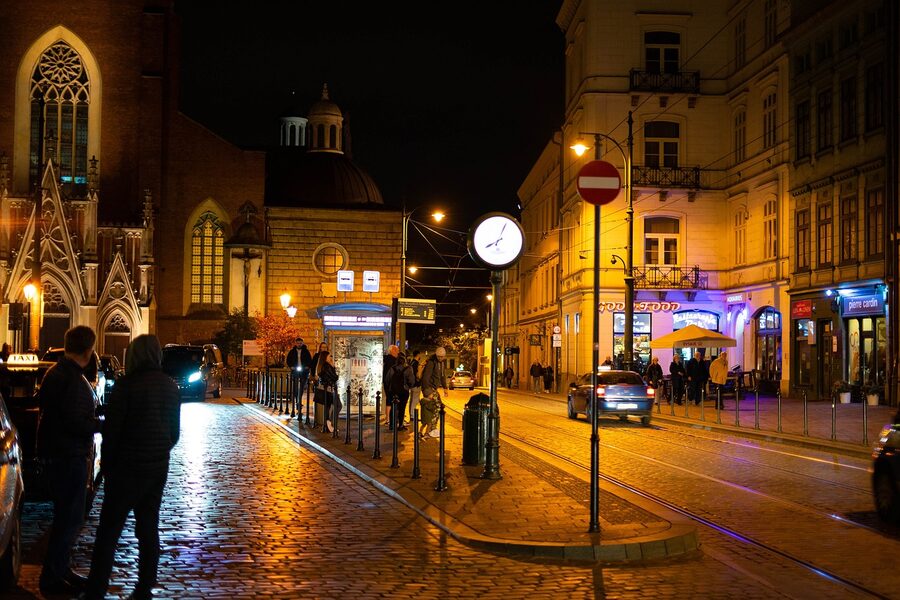
The Mongol attacks of 1241 reduced the city to almost nothing. Bolesław the Chaste rebuilt it in the German law style (Magdeburg Rights), with a regular grid and a central square sized to be the largest market in the region. The plan was to attract merchants away from competing trade cities further west. It worked. By 1300, Krakow was one of the wealthiest cities in central Europe.
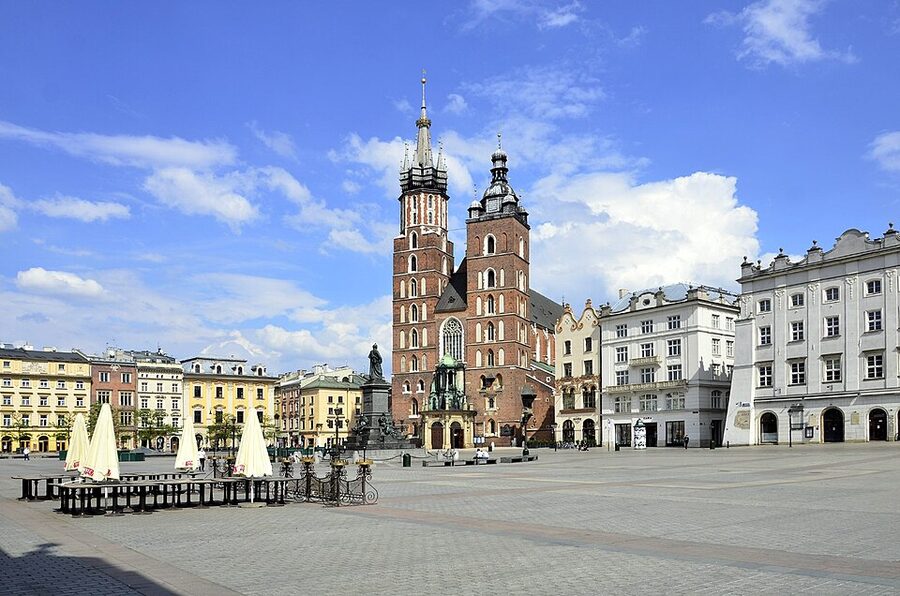

The 16th century is when most of what you see today was finished. Bartolommeo Berrecci’s Renaissance courtyard at Wawel, the Cloth Hall’s current form after the 1555 fire, the townhouse facades. Krakow stayed Poland’s capital until 1596, when the court moved to Warsaw. After that the city declined slowly for two centuries, and counterintuitively, the decline is what saved the buildings: nobody had money to redevelop, so nothing got knocked down.
The 19th century brought partition. Krakow ended up in the Austrian zone, which turned out to be the gentlest of the three. The Austrians demolished the medieval walls (the only major loss of that century, and the reason there’s a green ring of Planty park around the Old Town today), but they left the buildings alone and even encouraged restoration.
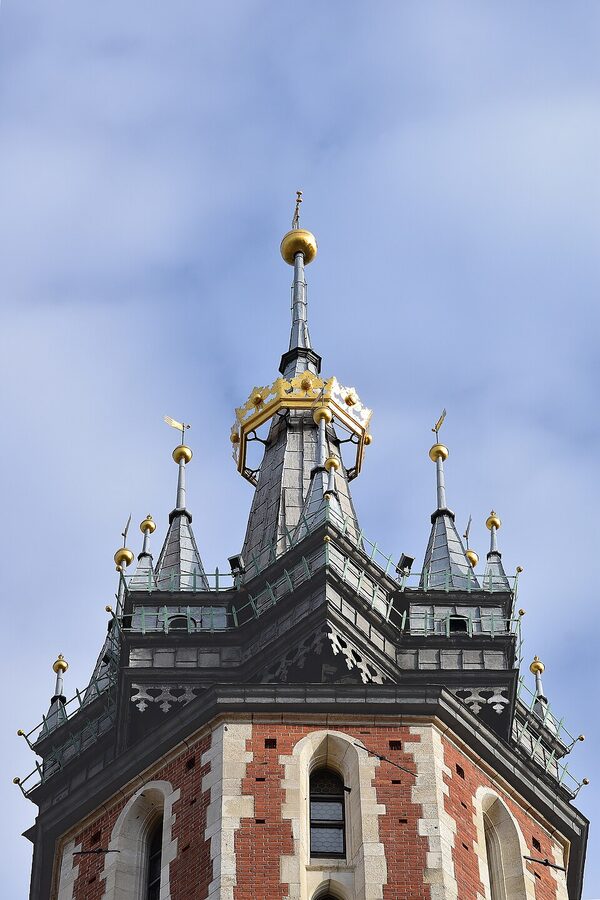

Then came the war. Krakow was occupied by Nazi Germany on 6 September 1939 and made the seat of the General Government. Hans Frank moved into Wawel. The plan was to make Krakow a German city, so the Old Town wasn’t bombed. Krakow was liberated by the Red Army on 18 January 1945 and emerged structurally almost intact, the only major Polish city that did. Warsaw, by contrast, was over 80 percent destroyed.
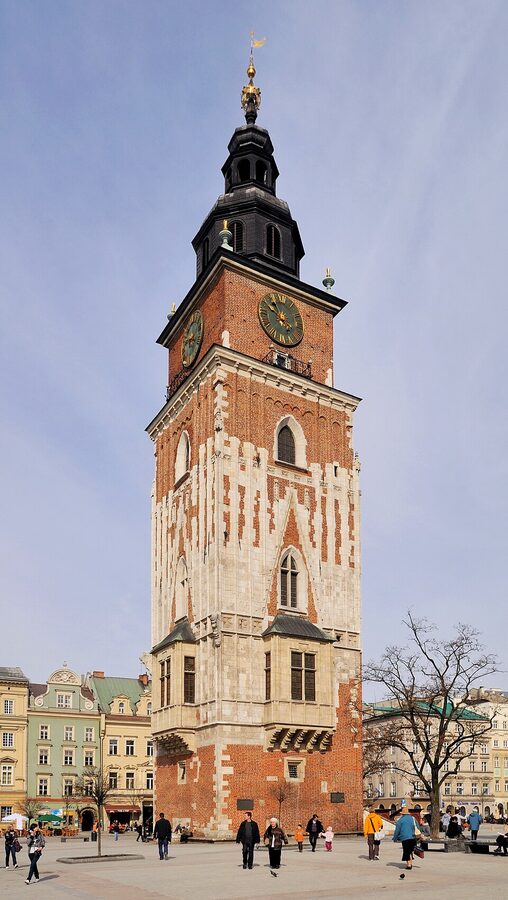

UNESCO listed the Old Town in 1978 as one of the very first 12 World Heritage sites in the world. The post-1989 cleanup restored the facades, pedestrianised the core, and turned the square into what you see now: still 700 years old, still the largest medieval market in Europe.
Practical things the tour won’t tell you
Wear actual walking shoes. The cobblestones are uneven and slippery in any weather; people in heels twist ankles every day. Boots in winter, real sneakers in summer.
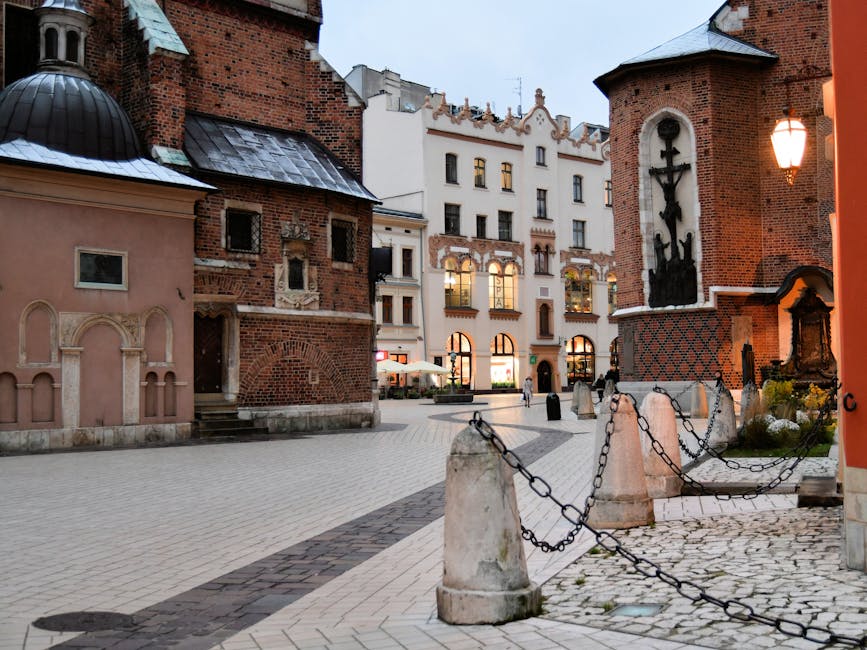
Bring a water bottle from a Żabka or Carrefour Express (4 zloty) before going into the square. Cafes around the square sell water for 12 zloty (about $3), a markup. Polish złoty is the currency, ATMs are everywhere on Floriańska and Grodzka, and most cafes take card. Tip your guide 20 to 30 zloty per person on a paid tour, more on a free one. Toilets cost 3 to 5 zloty; the big public block is in the Cloth Hall basement.

Pickpocketing is rare but Old Town in summer has the highest density in Poland. Watch your phone in the square at peak times. Most incidents are around the basilica entrance during the hejnał when everyone is looking up.
One last quirk: Krakow doesn’t have a Prague-style astronomical clock. People sometimes book Old Town tours expecting one. The Wawel tower clock runs but it’s not a public spectacle. Don’t be the person standing in the square at noon waiting for figures to appear.
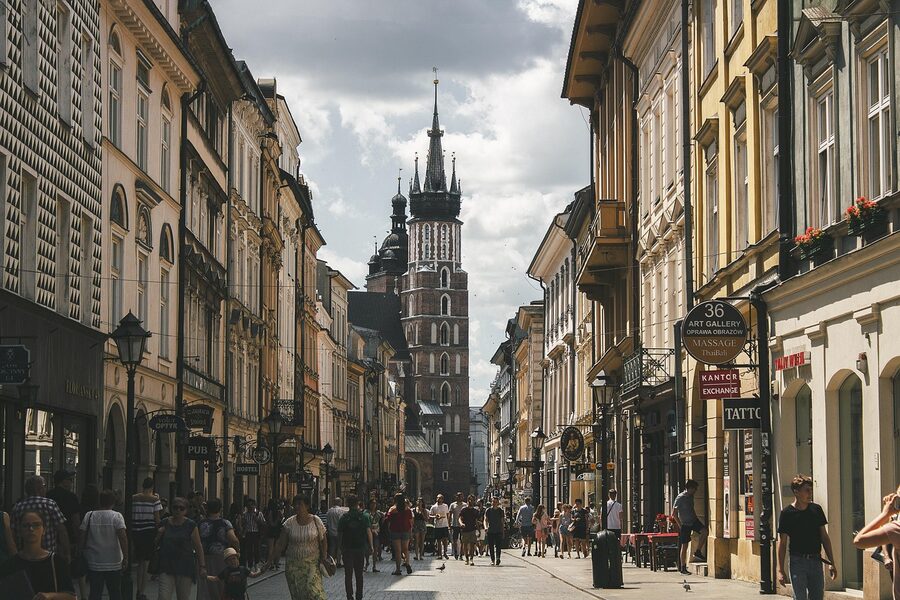
What to do next, after the walking tour
Three to four hours is the sweet spot for what you can do after a 2.5-hour Old Town walk without hitting the wall. A solo lunch on the square (anywhere off the square is half the price), then one of the following depending on energy and interest.
For history continuity, the obvious next move is Schindler’s Factory, on the other side of the river. It’s a tram or 25-minute walk. Reserve tickets in advance because walk-ins are tight. The exhibition is heavy and you’ll want a clear afternoon.
For something lighter, a Vistula river cruise from the foot of Wawel takes about 50 minutes and gives you the city from the water. The boats run roughly hourly from May to October.
For day-after planning, the heavyweight options are Auschwitz from Krakow (full day, sobering), the Wieliczka Salt Mine (half day, family-friendly), or Zakopane in the Tatra mountains (full day, scenic). Don’t try to combine Auschwitz with anything else; it’s not the kind of visit you bounce off into a Cloth Hall shopping trip. The Wieliczka mine pairs well with a morning Old Town tour because the mine entry is timed and the morning slot finishes by lunch. There’s also a popular combined day trip if you want both attractions in a single dawn-to-dusk day; see our guide on how to book the Auschwitz and Wieliczka combo.
And for the bike fans: a Krakow bike tour is the next logical step after a walking tour, because it covers ground (Old Town, Kazimierz, the Vistula path) you can’t do efficiently on foot. The bike tour and the walking tour don’t overlap much. They’re complementary.
One last note on cost. The Old Town tour isn’t expensive. Even the most expensive option above is around $30 for 2.5 hours of paid guiding. Compared to what a similar tour costs in Rome (around $80) or London (around $70), it’s a steal. Take it as the first thing you do on day one. It frames everything else.
Worth pairing with
If you’re in Krakow for a long weekend and want a full plan, the obvious extras are the Wieliczka Salt Mine for an underground morning, the city bike tour for the Kazimierz and riverside coverage, and either Auschwitz or the combined Auschwitz plus Wieliczka day for the heavyweight history piece. None of these overlap with the Old Town walking tour, which is the point. The walking tour grounds you in the centre. Everything else fans outward.
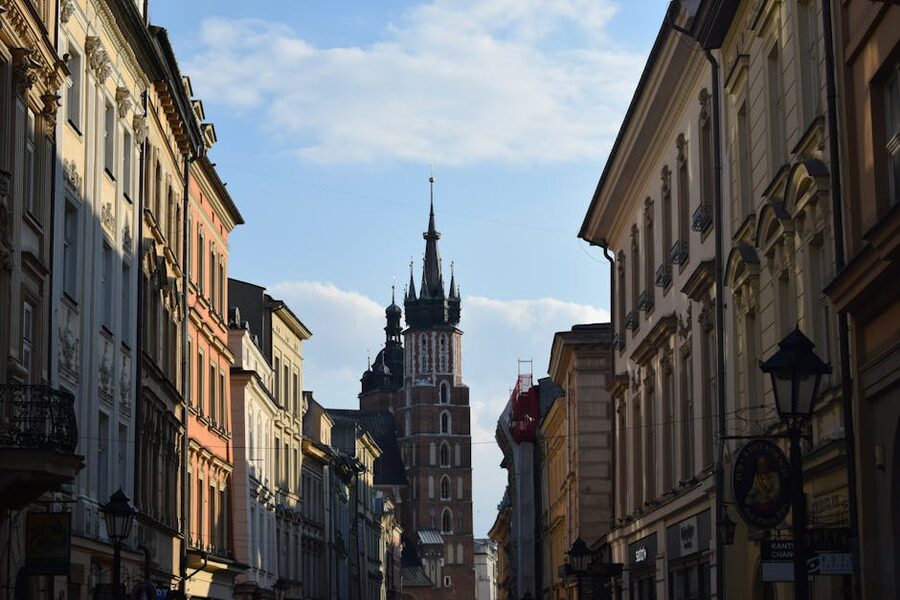
If you’ve got more time, walk the route again on your own the day after the tour. With the stories in your head, the same buildings hit differently. Mariacka Street starts to feel like a street you live on, even if you never come back.
Affiliate disclosure: some links go to GetYourGuide and Viator, and we may earn a commission if you book through them. The price stays the same. We only link to tours we’d book ourselves.