
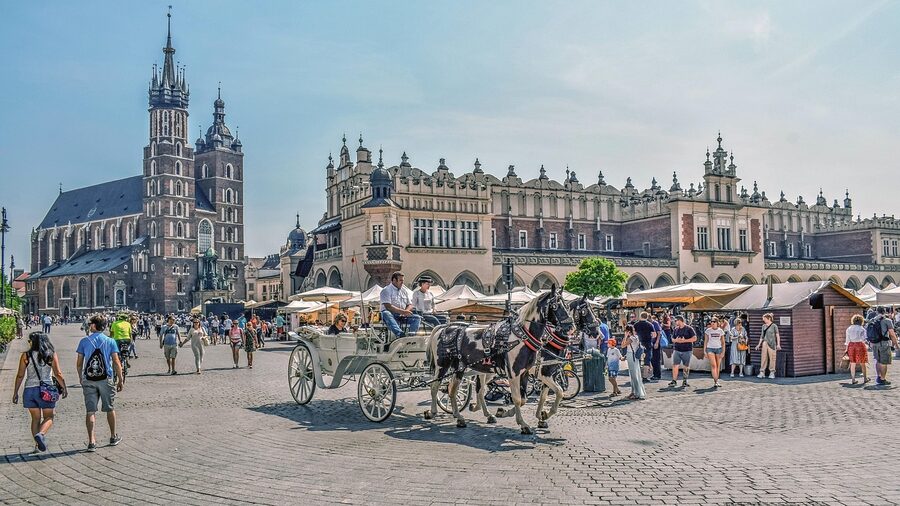
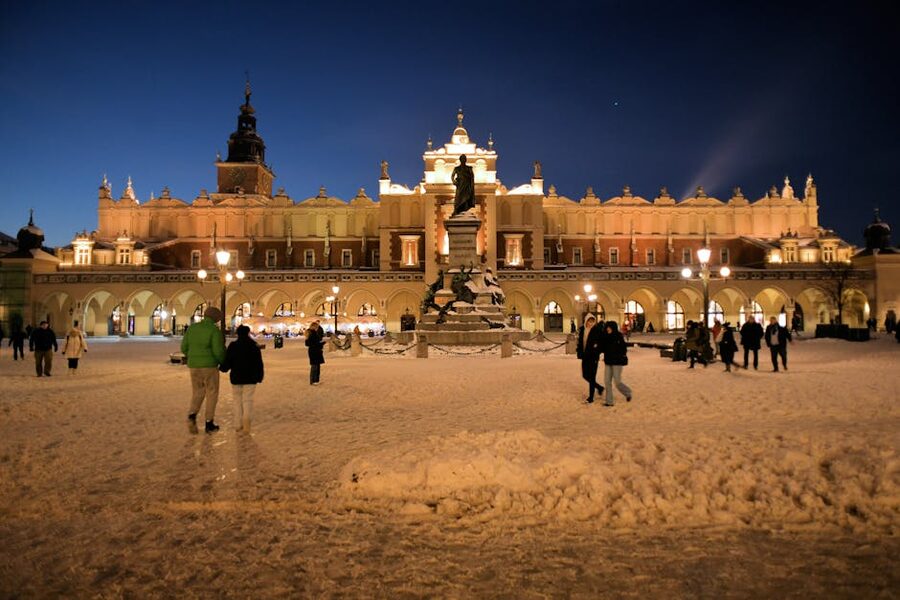
Step out of the cobbled lanes around Krakow’s Main Square at half past six on a Tuesday and you’re squarely in the 21st century: trams clatter past, students cycle home from Jagiellonian, and someone’s queueing for a flat white outside the Cloth Hall. Forty minutes later you’re sitting at a wooden trestle table in a thatched cottage on the edge of Kryspinów Lake, the bus parked out front, an accordion warming up beside the door, and the women bringing soup wear dresses that look like they came out of a pre-war village photograph. That’s the trick of a good Polish folk show, and Krakow has the best of them in the country.
This guide walks through how the evening actually works, what the food is, which operator runs each version, and how to pick a show that suits the kind of night you want. I’ve kept the practical stuff up top so you can book and get on with planning the rest of your stay.
- In a Hurry? Top Picks
- What a Polish Folk Show Actually Is
- The Food: What’s on Your Plate
- How the Evening Runs
- Best Polish Folk Shows in Krakow: My 3 Picks
- 1. From Krakow: Polish Folk Show with All-You-Can-Eat Dinner:
- 2. Krakow: Folk Show & 3-Course Dinner at Jama Michalika Café:
- 3. Polish Folk Show with 3 Course Dinner in Krakow Legendary Restaurant:
- Which Show Suits Which Evening
- Why a Folk Show in the First Place
- Practical Stuff
- What to wear
- How to get to the pickup point
- Vegetarian and dietary options
- With kids
- Booking ahead
- Tipping the band
- The Music: Listen for These
- Krakow Region Folk: A Quick Cultural Map
- Where to Eat Before or After
- Common Questions Worth Answering
- How It Fits With Your Krakow Trip
- Other Krakow Guides You’ll Want
In a Hurry? Top Picks
Best overall: From Krakow: Polish Folk Show with All-You-Can-Eat Dinner ($50): biggest production, all-you-can-eat-and-drink, transfer included.
Best in the Old Town: Krakow: Folk Show & 3-Course Dinner at Jama Michalika Café ($45): historic Art Nouveau café, central, 90 minutes, no transfer.
Best for solo bookers: Polish Folk Show with 3-course Dinner at Krakow Legendary Restaurant ($49): smaller restaurant setting, fixed three-course menu, drinks at extra cost.
What a Polish Folk Show Actually Is
The format is the same across operators with small variations: dancers in regional costume work through pieces from different parts of Poland, a small band plays live (accordion almost always, fiddle and clarinet often, sometimes a hand drum), and the audience eats a Polish dinner while it all unfolds. Most shows last between 90 minutes and three hours including the meal.
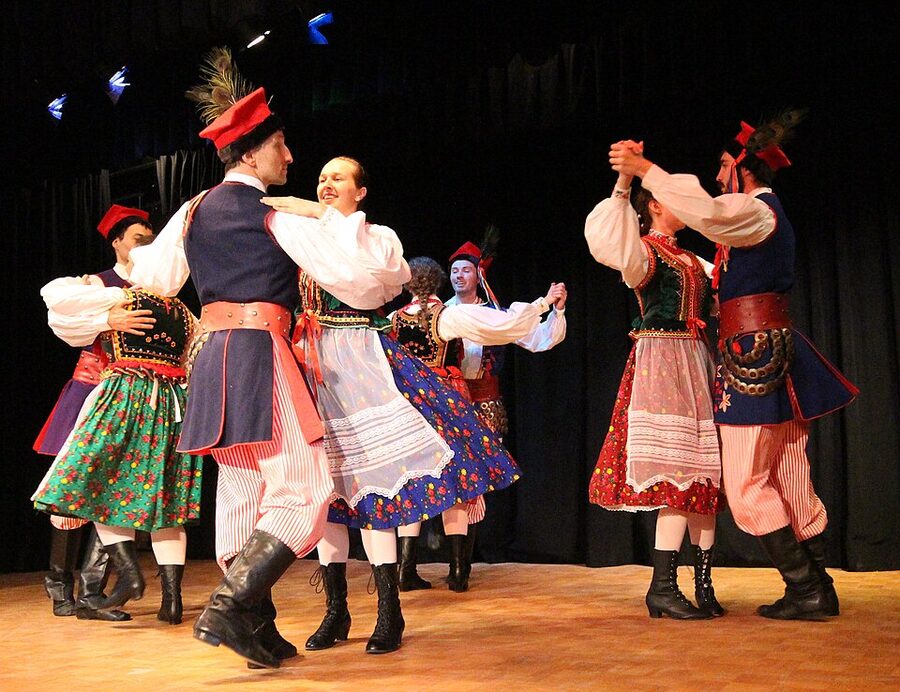

The dances themselves rotate through Poland’s main folk regions. The Krakowiak comes from this part of the country, fast and showy, with the men in those striped trousers and red caps with peacock feathers. The Polonez (polonaise) is slower and grander, the dance you’d see at a 19th-century court ball. The Mazur is somewhere between them. And then there’s almost always a Górale highlander piece from the Tatra mountains south of Zakopane, with the dancers in white wool, leather belts, and the men doing kicks that look harder than they are.
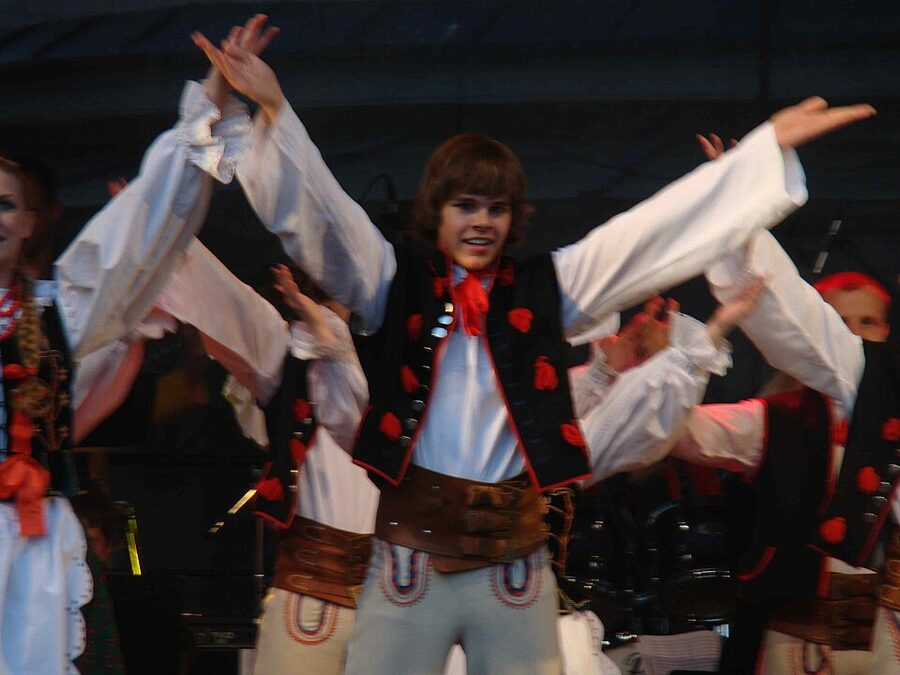

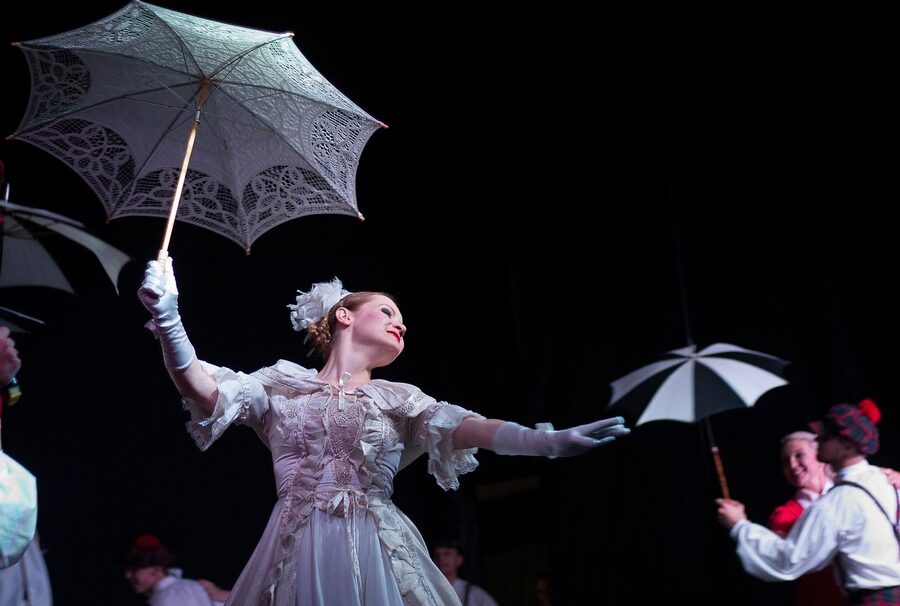
You won’t get every region in one evening. Most shows pick four or five and rotate the rest. Don’t expect a museum-style explanation either. There’s usually a host who introduces each piece in English (and sometimes Polish), but the show is about the energy, not the lecture.
The Food: What’s on Your Plate
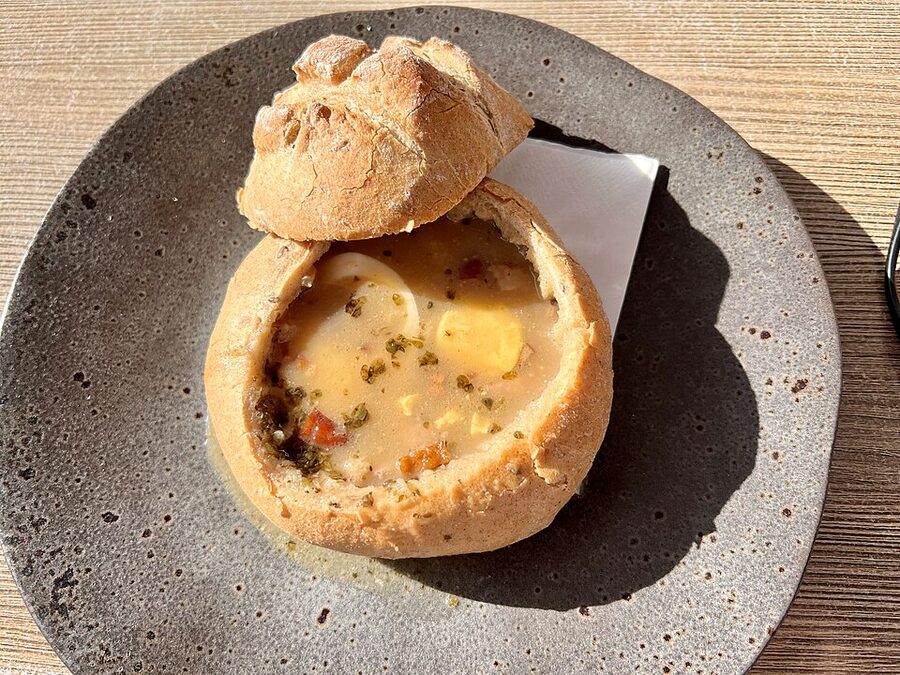

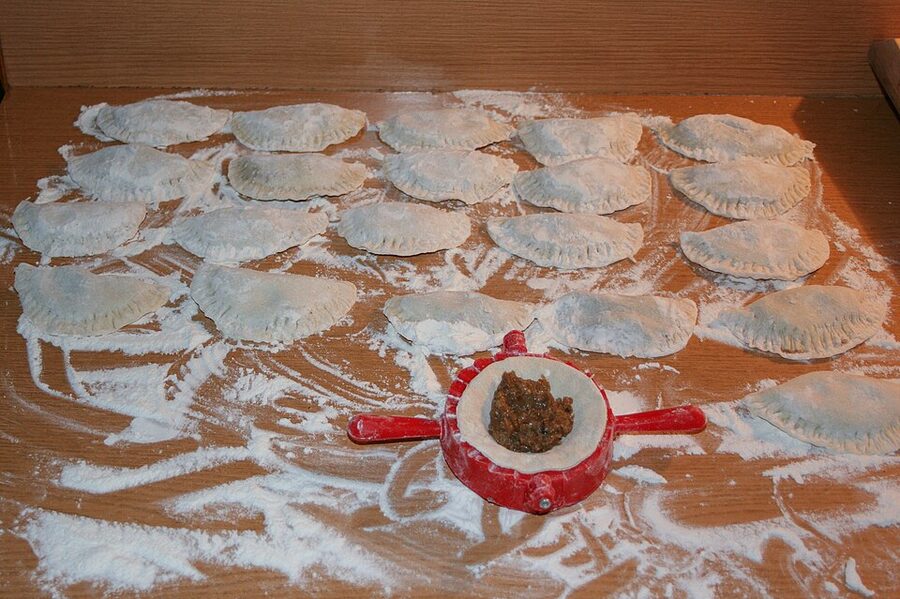
Polish folk dinners follow a rhythm. Soup first, then a main, then a buffet. The soup is almost always either żurek (sour rye soup with smoked sausage and a half-boiled egg) or barszcz (clear beetroot broth, sometimes with little dumplings called uszka floating in it). Both are old, both are excellent, and żurek in particular is the kind of thing you’ll want to learn how to cook before you fly home.
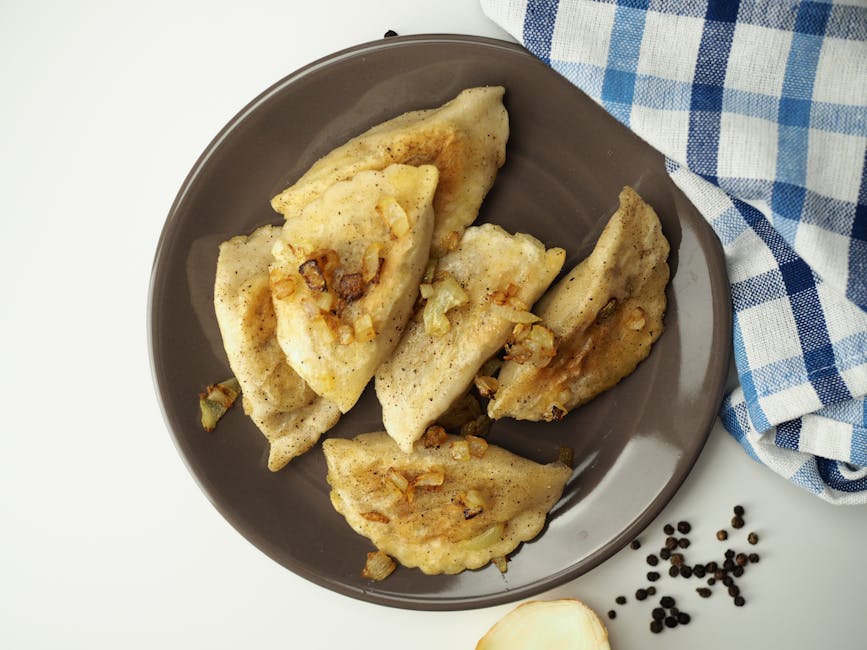
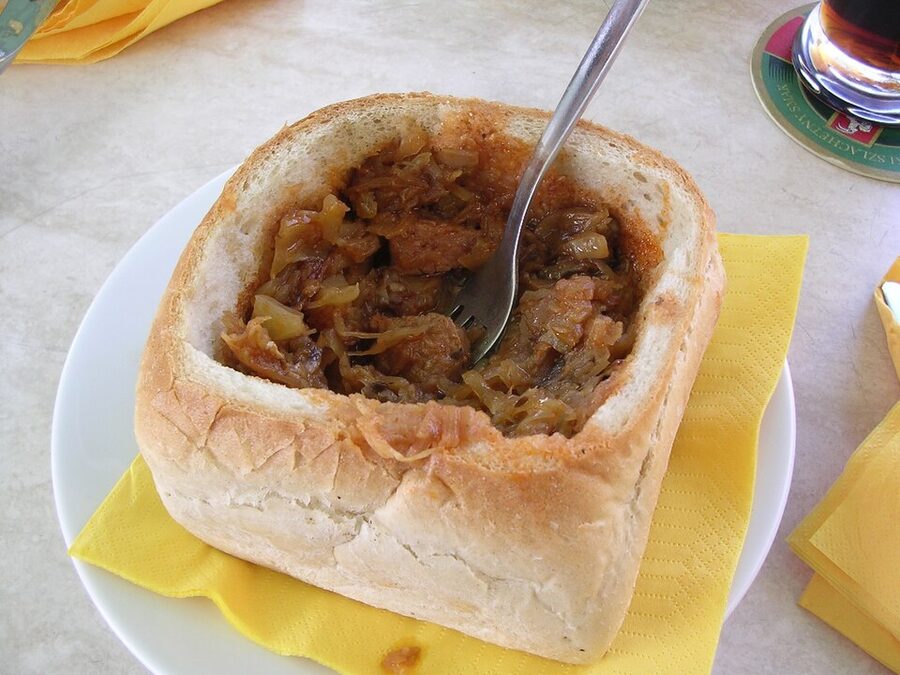
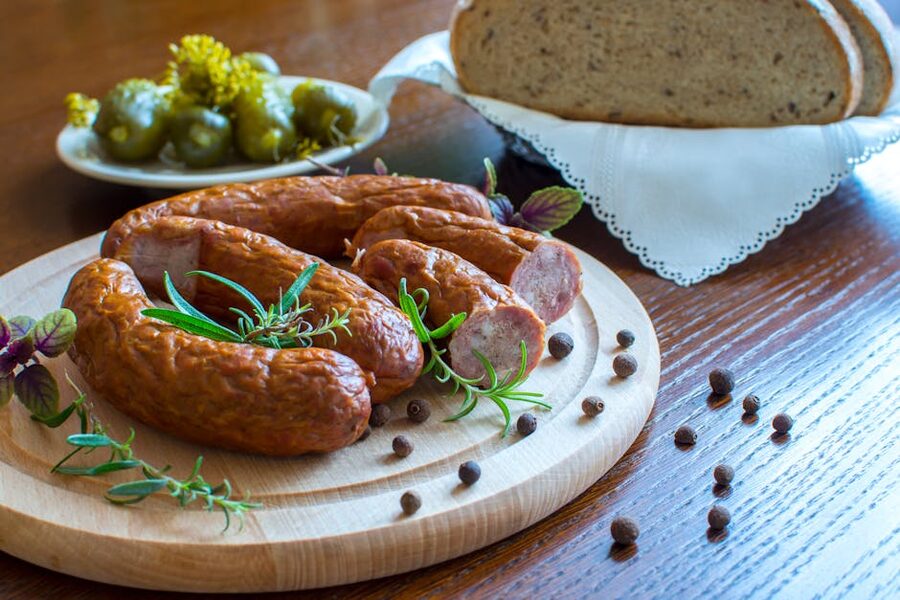
Then the mains. The all-you-can-eat-and-drink show outside the city goes hardest here: a long buffet of grilled meats, potato gratin, bigos, smoked sausage, pickled cucumbers, lard with crackling spread on dark bread (smalec, much better than it sounds), and a constant rotation of pierogi. The Old Town shows are more measured, a fixed three-course meal with smaller portions but no less detail. Both are good. They’re aimed at slightly different evenings.
.jpg)
Drinks vary. The all-you-can-eat-and-drink version genuinely means it: beer, table wine, soft drinks, vodka shots brought around between courses. The Old Town shows include a glass or two of wine and let you order more. The Viator-listed restaurant version doesn’t include drinks at all, and one reviewer there got a real shock when the bill for two wines and a lager came in heavier than the show ticket. Read the inclusions before you book.
How the Evening Runs
Most shows start at 18:30 or 19:00 and end around 22:00. If you’ve booked the all-you-can-eat-and-drink version outside Krakow, the bus picks up at the Powiśle 11 Street parking opposite the Sheraton, around 18:30. Drive is about half an hour. You’re back in Krakow by ten. If you’re at Jama Michalika or another Old Town venue, you walk in, the show is 60 to 90 minutes, you eat, you walk home.

Audience participation is real. About two-thirds of the way through, the dancers come down from the stage and pull people up. You can refuse, nobody minds, but the photos are better if you say yes. They’ll teach you a basic Krakowiak step in about ninety seconds, which is exactly as humbling as it sounds. The guide on the all-you-can-drink show told us to “leave your dignity on the bus”, and that’s roughly the energy.
Best Polish Folk Shows in Krakow: My 3 Picks
1. From Krakow: Polish Folk Show with All-You-Can-Eat Dinner: $50
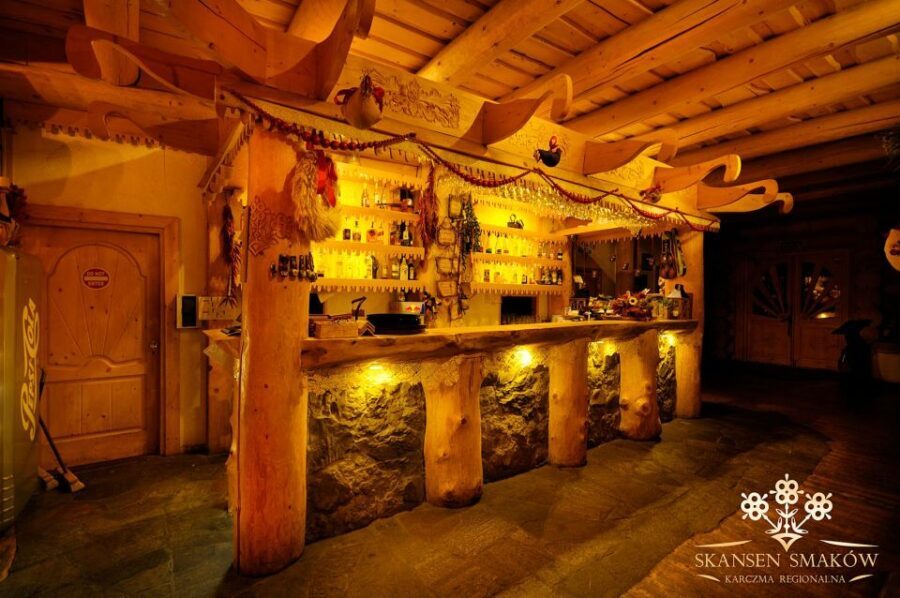
This is the show I’d send a first-time visitor to, hands down. It’s the most produced, the food is unlimited (and the food is genuinely good, not just plentiful), and the transfer makes it the easiest evening to book if you’re staying in the Old Town. Our full review of the all-you-can-eat folk show goes deeper into what’s on the buffet and how the bus pickup works.
2. Krakow: Folk Show & 3-Course Dinner at Jama Michalika Café: $45
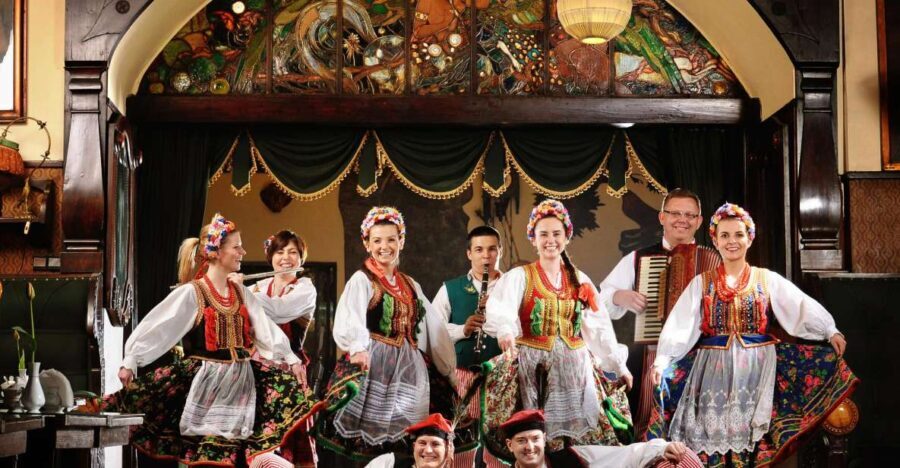
Pick this one if you’d rather stay in central Krakow and skip the bus, or if you care about the venue itself (Jama Michalika is one of the city’s heritage cafés, going since 1895). The show is shorter at 90 minutes and the meal is a proper three-course affair rather than a buffet. Our review of the Jama Michalika folk show covers the room itself, which is worth half the ticket on its own.
3. Polish Folk Show with 3 Course Dinner in Krakow Legendary Restaurant: $49
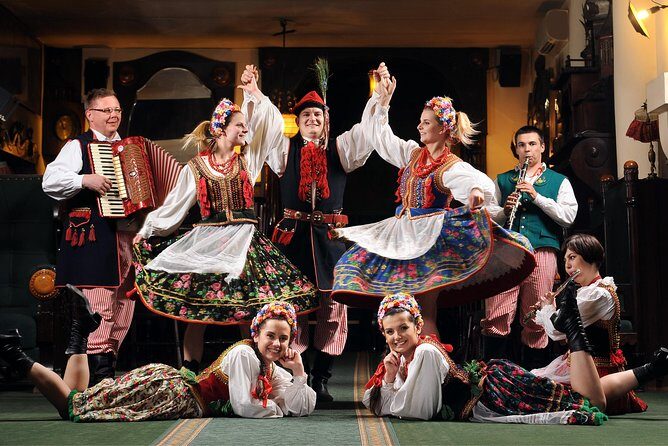
The Viator-listed option is the one I’d pick if I wanted a more intimate dinner with a folk performance built in, rather than a full-on production. The catch: drinks aren’t included, and they’re priced like a tourist restaurant, so factor that in. Our review of the legendary restaurant folk show notes the food is solid but the drinks bill stings.
Which Show Suits Which Evening
Three rough rules of thumb after watching a few of these.
If it’s your first night in Poland and you’ve never been to a folk show: book the all-you-can-eat one outside the city. The production value is highest, the food is the most varied, and the bus removes the logistics question entirely. It’s the show that’s least likely to disappoint, and the one you’ll talk about for the rest of the trip.
If you’re staying central and want an after-dinner thing rather than a whole evening: Jama Michalika. The room itself does half the work, the show is tight, and you can be back in your hotel by 21:30 if you want. Good for a Tuesday when you’ve already done a long day at Wieliczka Salt Mine or Auschwitz and don’t want a late finish.
If you’re with a small group and want something more like a meal out: the legendary restaurant version. Smaller room, no bus, more conversation between dances. Just budget separately for drinks.
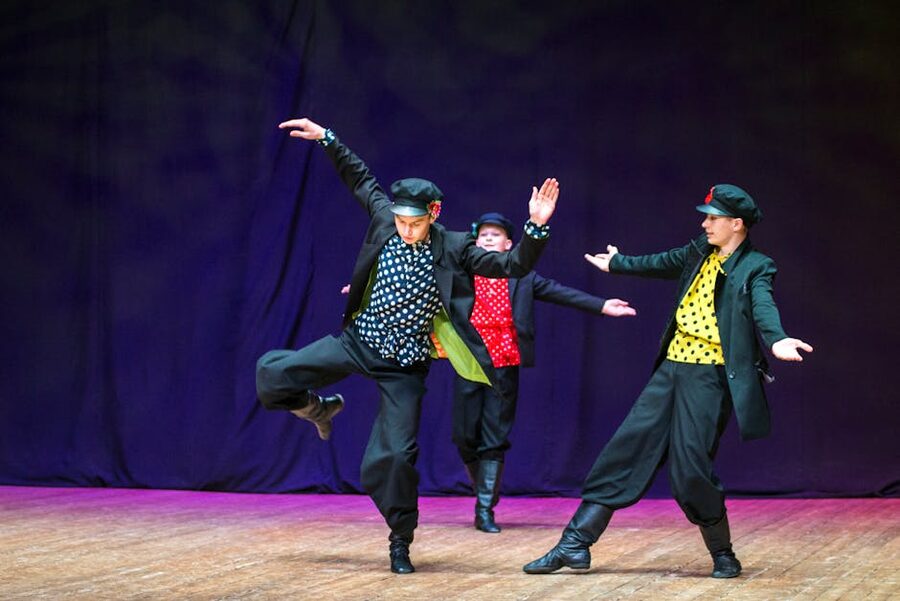
Why a Folk Show in the First Place
This is the contrast that doesn’t quite hit until you’re inside it. Modern Krakow is a sharp, fast city. The Main Square is one of the largest medieval squares in Europe, but you walk across it and pass three speciality coffee shops, a Vietnamese banh mi place, two cocktail bars run by people who’ve worked in London. Step into a folk show venue, though, and the room is dressed for 1890. Wooden benches, oil lamps, dried garlic strung over the door, the band leader greeting you with chleb i sól (bread and salt), the old Polish welcome.
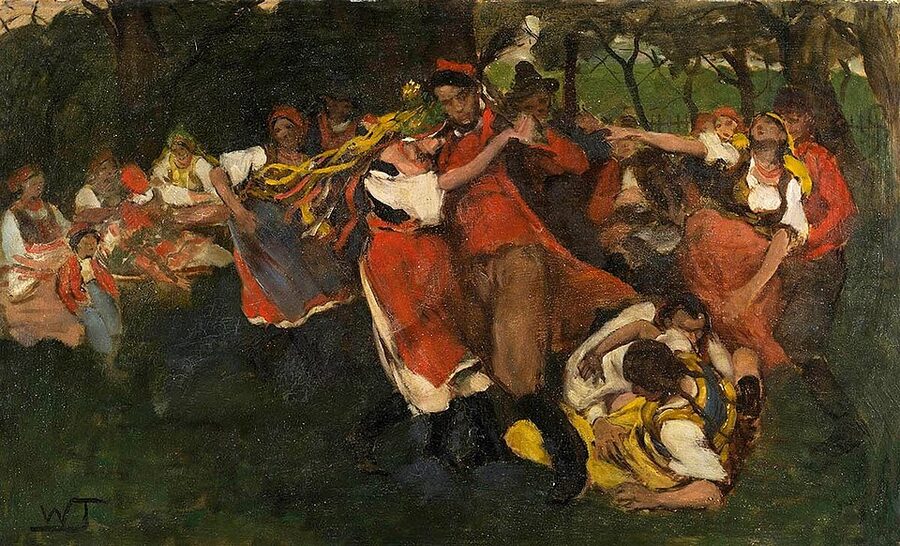
Polish folk culture went through a strange survival. The country was wiped off the map of Europe between 1795 and 1918, partitioned three ways, and through that whole century-and-change of statelessness, the village dances and songs were one of the few things that held the idea of Poland together. Painters like Włodzimierz Tetmajer and Stanisław Wyspiański deliberately put peasant dancers on canvas as a political act. By the time independence came back in 1918, the Krakowiak wasn’t just a dance, it was a stand-in for the country.
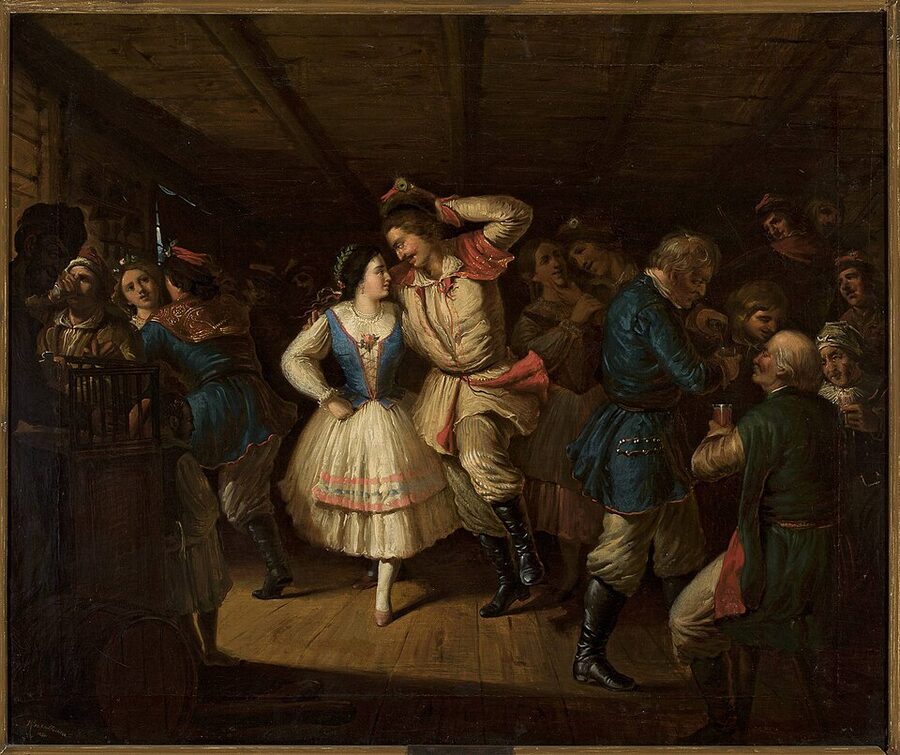
That’s why every folk show in Krakow leans so hard on regional costume and 19th-century cottage decor. It’s not theme-park nostalgia, it’s the version of Polishness that survived three partitions, two world wars, and four decades of communism. The dancers in front of you on a Tuesday evening are part of an unbroken chain that runs back through Soviet-era state ensembles, pre-war village weddings, and oil paintings hanging in the National Museum. That’s the part that doesn’t show up in the tour listing.
Practical Stuff
What to wear
Smart-casual is fine. The all-you-can-eat venue is a barn-style restaurant, so jeans and a decent shirt work. Jama Michalika is a heritage café and people lean a bit smarter, but nobody’s checking. Skip heels, you’ll be on a wooden floor when they pull you up to dance, and the floor is uneven.
How to get to the pickup point
For the all-you-can-eat show, pickup is at Powiśle 11 Street, opposite the Sheraton Grand Hotel. Walk there from the Main Square in about 12 minutes. Show your voucher (mobile is fine), look for the bus marked with the operator’s name. They’ll cross-check your booking. If you’re driving, the venue at Cholerzyn 424, Liszki, has parking, and you can skip the bus by going direct.
Vegetarian and dietary options
All three operators handle vegetarian requests, but the all-you-can-eat buffet is by far the easiest to navigate without meat (potato gratin, pierogi ruskie, salads, pickles, plenty of bread and cheese). The fixed three-course menus need a heads-up at booking: tell them at least 48 hours ahead and they’ll set up a separate plate. Vegan is harder. Most pierogi fillings are dairy-based, so you’ll be living on cabbage, potato, and bread unless you ask specifically.
With kids
Children under five are free on the all-you-can-eat show. Older kids do fine, the music is loud and the dancing is fast and the dancers make a point of pulling kids up first. The Old Town shows are technically open to children but the tables are tighter and the format is more sit-down-and-eat, so younger kids get bored faster. Decide based on your child’s tolerance for two hours of indoor sitting, not on the show itself.
Booking ahead
This is one to book in advance, especially May to September and around Christmas markets. The all-you-can-eat show in particular sells out three or four days ahead in peak season. GetYourGuide and Viator both handle free cancellation up to 24 hours before, so book the date you want as soon as you’ve confirmed your trip and adjust later if needed.
Tipping the band
Optional, but the band passes a hat at the end of most shows. 20 to 30 zloty (around $5 to $8) per couple is normal if you enjoyed yourself. The dancers don’t take tips directly, the operator pays them, but if a particular dancer made the night, a smile and a thank you afterwards goes a long way.
The Music: Listen for These
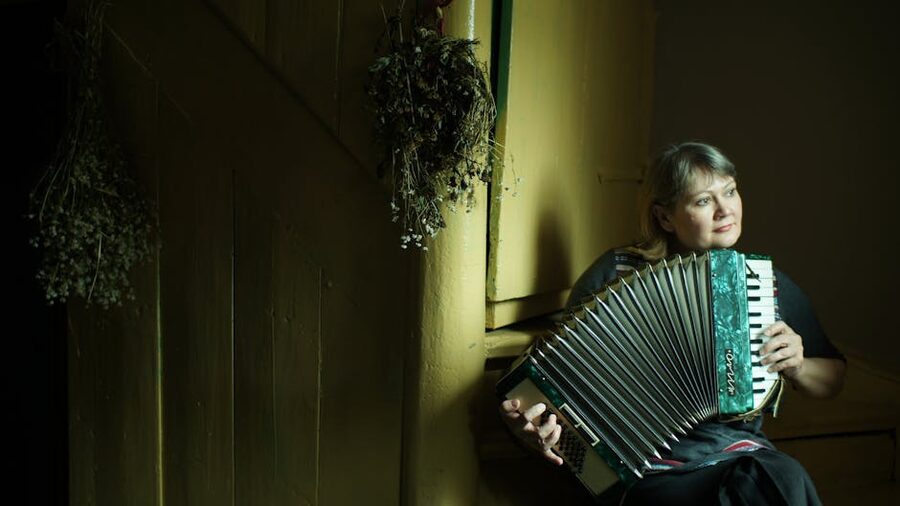
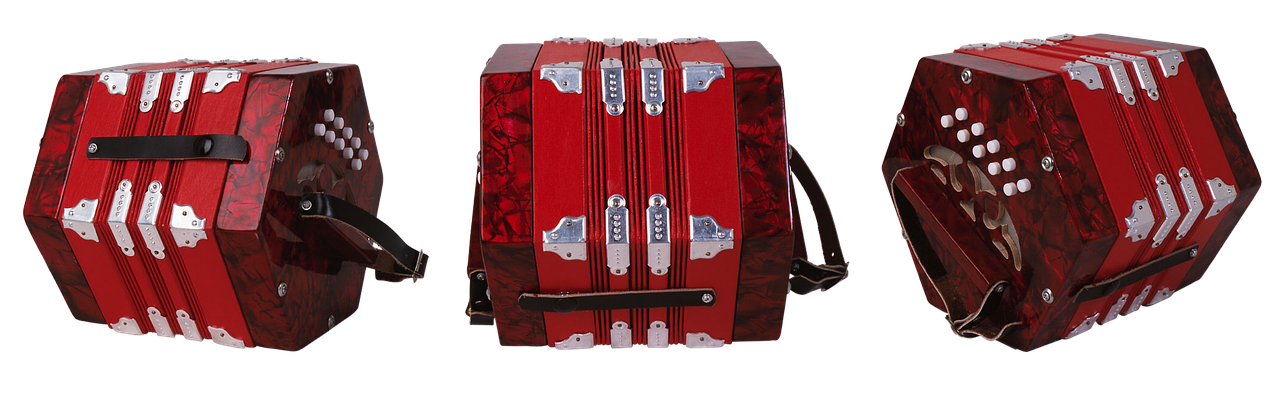
The accordion is the centre of every Polish folk band, and it’s worth listening to. A good player switches between styles in seconds: the slow stately Polonez, the medium-tempo Mazur, the very fast Oberek (try to count the beats, you’ll lose them by the second bar), and the regional variants like the Krakowiak in this part of the country. The fiddle handles the melody on most pieces. There’s usually a wind instrument, often a clarinet, that takes over for the highland Górale pieces and shifts the whole sound several notches more haunting.
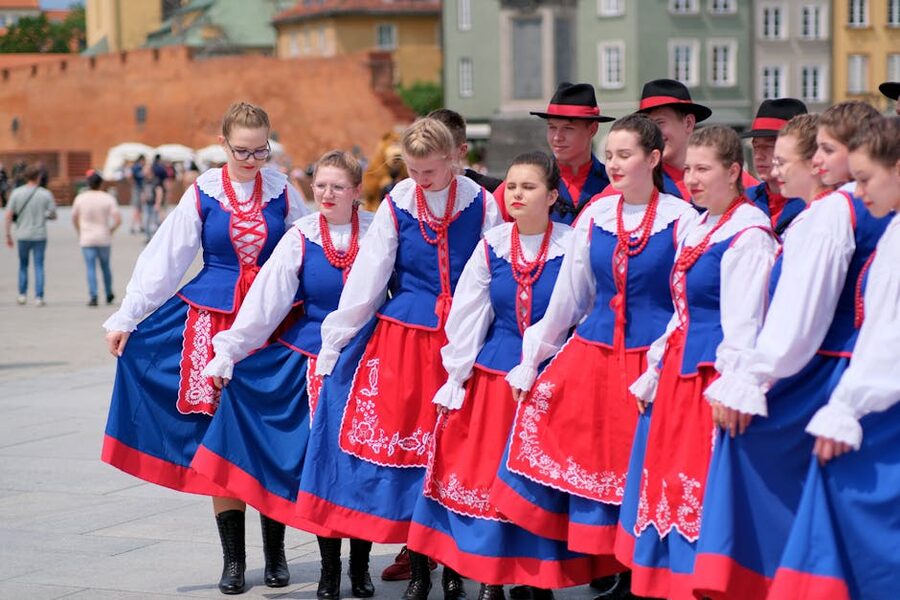
One thing worth knowing: the songs in between dances are real. They’re not stage filler. Most are folk ballads collected from villages in the 19th century, and several are still sung at family weddings in rural Poland. If a song sounds melancholic in the middle of the set, that’s not by accident, Polish folk music is half celebration and half lament, often back-to-back.
Krakow Region Folk: A Quick Cultural Map
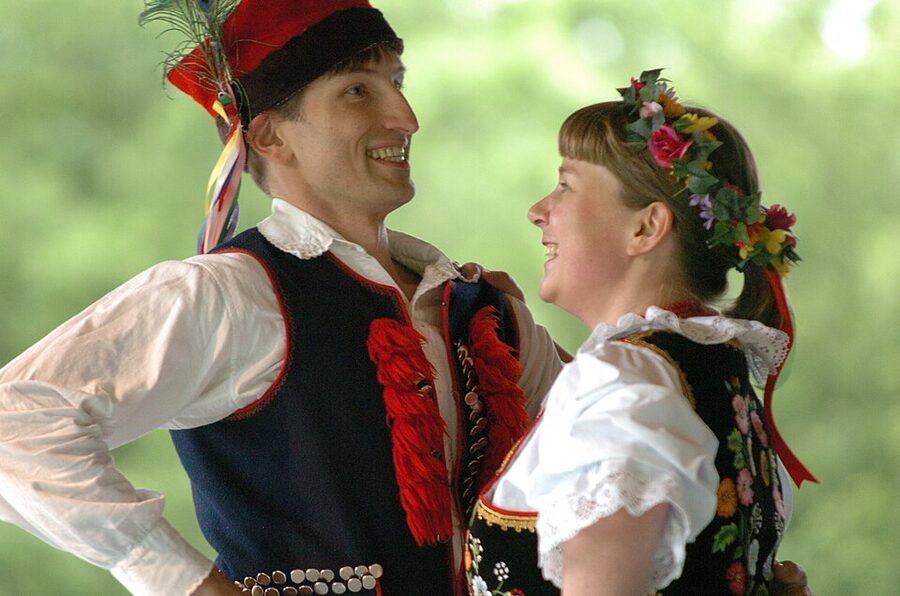

Five Polish folk regions show up most often on a Krakow stage. Worth knowing the basics so you can tell what you’re watching:
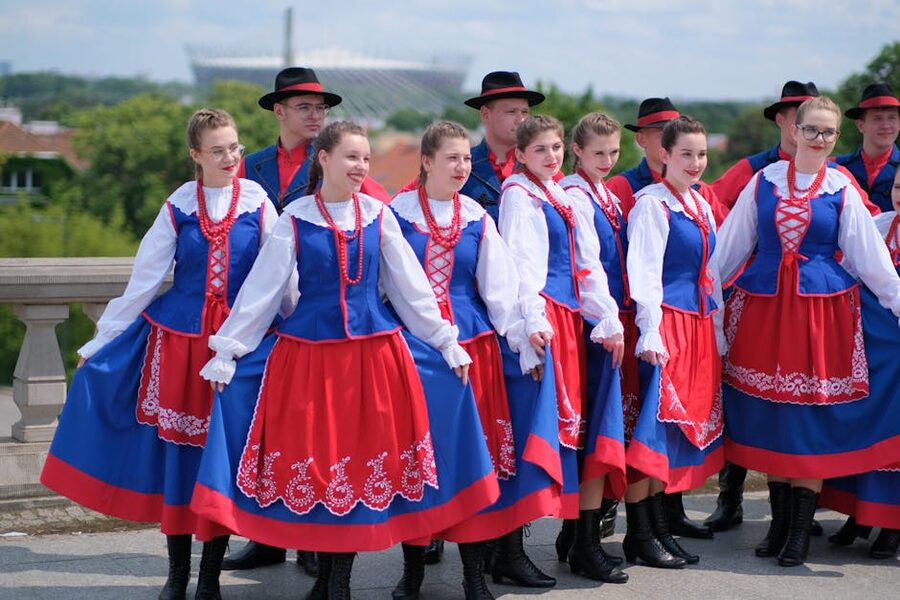
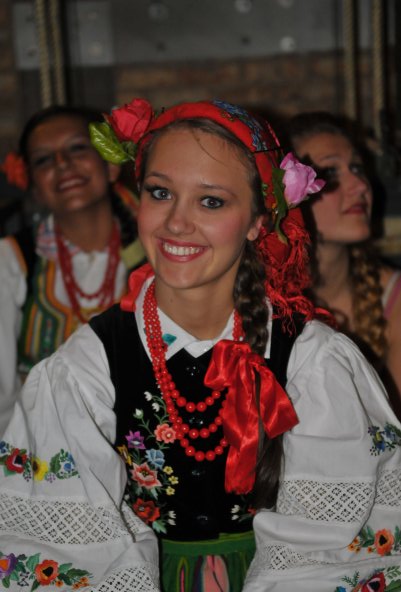
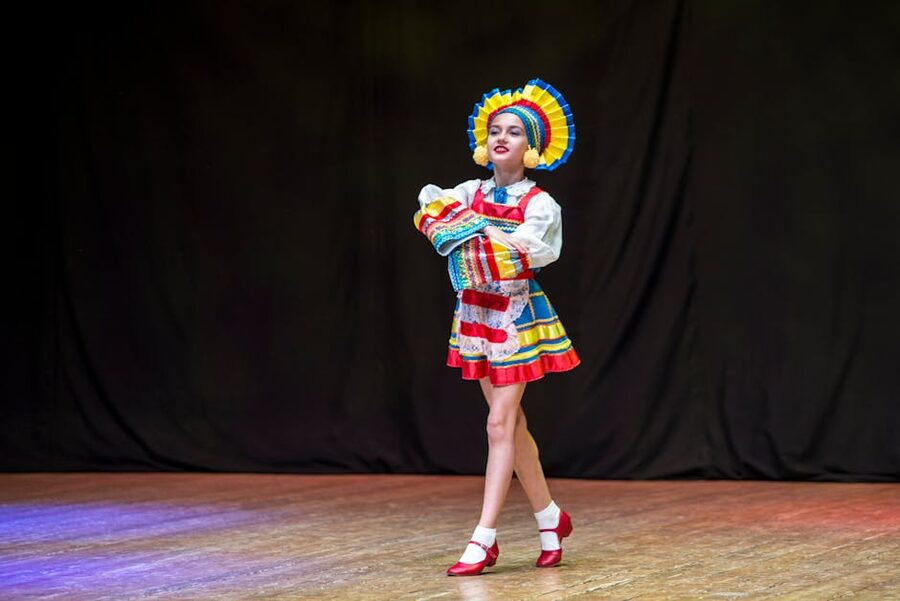
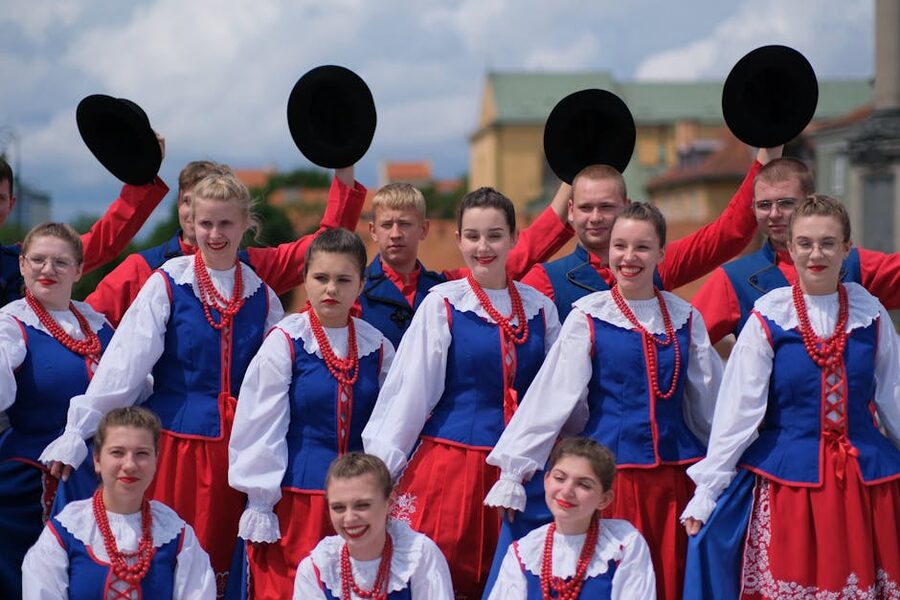
Małopolska / Krakowiacy. The Krakow region itself. Men in striped trousers, embroidered linen vests, red caps with peacock feathers. Women in dark vests over white blouses, full red or floral skirts, beaded necklaces in long heavy strings. The Krakowiak is the dance.
Górale / Tatra Highlanders. The mountain people from south of Zakopane. White wool trousers with blue or red embroidery, dark hats with shells and feathers, leather belts wide enough to break a hand on. The dances are male-led and acrobatic. If you’re heading south after Krakow, our Zakopane day trip guide covers the same culture in its native habitat.
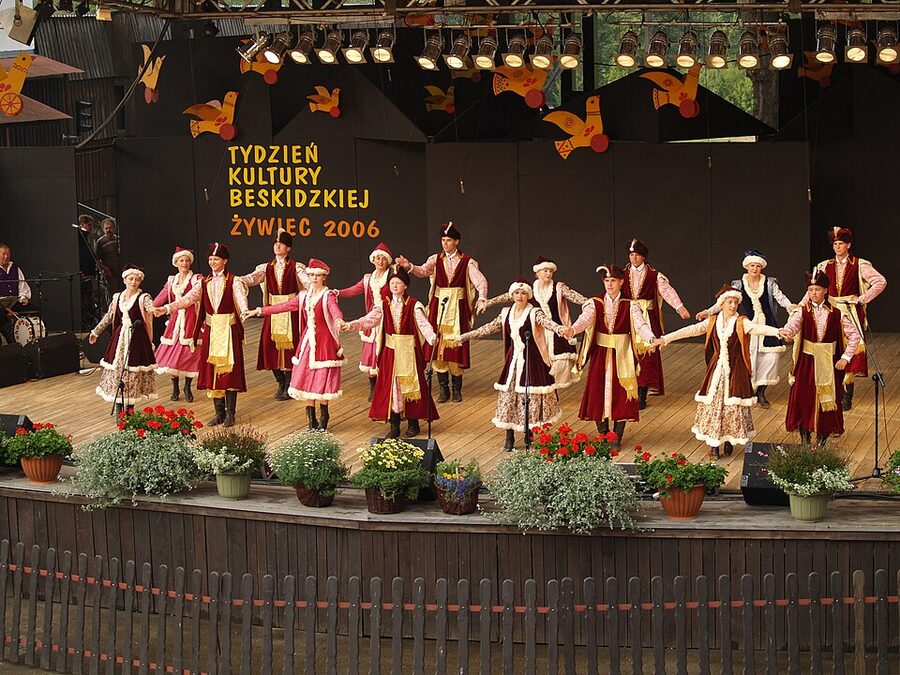

Mazowsze. Central Poland around Warsaw. The dance is the Mazur, slower than the Krakowiak, more graceful. The famous Mazowsze ensemble (founded after WWII) standardised what most international audiences think of as “Polish folk”, so a lot of what you see at a Krakow show actually comes from this regional tradition.
Śląsk (Silesia). Western Poland, near the Czech border. Costumes lean dark and ornate, with heavy lace and aprons. The dances are usually couple dances with intricate footwork. You might or might not see Śląsk depending on the operator.
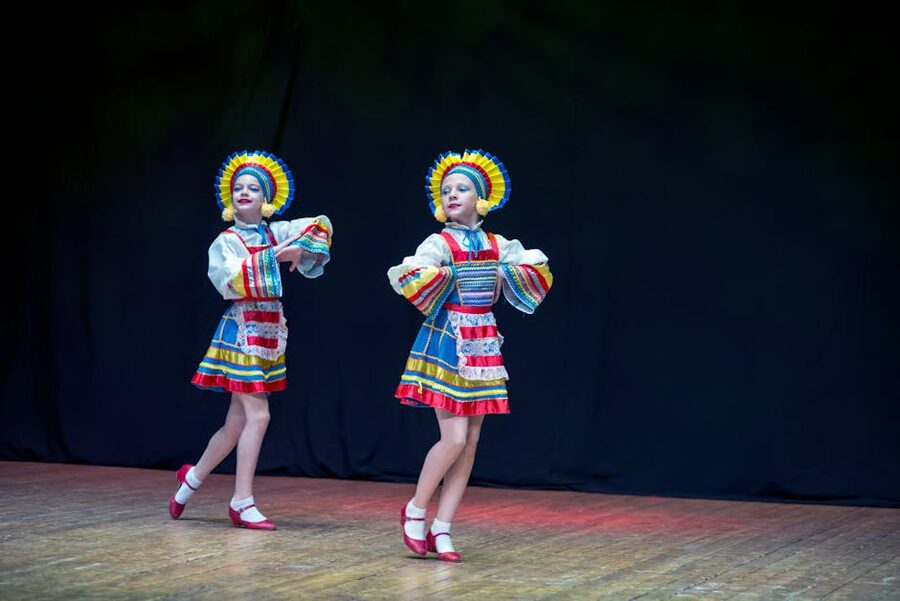
Łowicz. A region west of Warsaw famous for its incredibly bright striped skirts. If a dancer comes out in vertical red, yellow, green, and pink stripes that look almost too cheerful to be real, that’s Łowicz. The pattern is on UNESCO’s Polish craft heritage list.
Where to Eat Before or After
If you’ve booked the 90-minute Old Town show and want a fuller meal afterwards, you’re spoiled for choice within five minutes of the Main Square. Pod Wawelem (a beer hall just below the castle) does the same regional dishes in larger portions. Morskie Oko (right on the square) is touristy but the kitchen is solid, and the highland decor matches the folk show vibe if you’ve just left one. For something quieter, the Kazimierz district to the south has a cluster of small restaurants doing modern Polish, which works well after a heritage-heavy show.
Before the all-you-can-eat show, don’t eat. Don’t snack. Don’t even have a big lunch. The buffet is the entire point and you’ll regret arriving full. Maybe a coffee at 16:00, that’s it.

Common Questions Worth Answering
Is the show in English? The host introduces each piece in English (and usually Polish). The dances and songs are in Polish, which is exactly what you want. Subtitles aren’t a thing.
Will the food be too heavy? Polish food is rich, no point pretending otherwise. The all-you-can-eat-and-drink show is a heavy meal by design. The fixed three-course Old Town shows are easier to manage. If you’re worried about the buffet, eat the soup, eat the salads and pickles, take a couple of pierogi and one piece of meat, leave space for a small dessert. You’ll be fine.
Can I just go to the show without dinner? Not really. The dinner is bundled in and there’s no cheaper “show only” version on any of the three operators. The exception is the Jama Michalika afternoon show some weeks, which is shorter and sometimes available as a coffee-and-show option, but the standard listings are dinner-included.
How loud is it? Loud. The accordion and fiddle carry the room without amplification at the Old Town shows, and the bigger venue uses light PA for the band. If you’re sensitive to noise, ask for a table at the back when you book.
Is it cheesy? A little. It has to be, that’s the format. But it’s cheesy the way a wedding band at a friend’s wedding is cheesy: everyone in the room knows the format and everyone leans into it anyway. By the time you’re being pulled up to dance the Krakowiak with a costumed stranger and a 60-year-old accordion player is calling counts, you’ve stopped caring.
How It Fits With Your Krakow Trip
Folk shows are best as a third- or fourth-night activity, after you’ve already done the Old Town and at least one heavy day-trip. Stack it like this: Old Town walking tour on day one to orient yourself, the Wieliczka Salt Mine or Wawel Castle on day two, Auschwitz on day three (which is a hard, sober day), and the folk show that evening as a deliberate counterweight. After Auschwitz you’ll want something life-affirming and a room full of dancers in feathered caps eating bigos is exactly that.
Other Krakow Guides You’ll Want
If the folk show is on your list, you’re probably building a fuller Krakow itinerary, so a few pointers from the rest of our coverage. The Wieliczka Salt Mine is the most-booked attraction near the city and works well as a half-day before the folk show, you’ll be back by 14:00 with plenty of time to nap before the bus. Auschwitz is the harder day, and pairs naturally with a folk show evening for the contrast. A Vistula river cruise is the easy lazy option for an afternoon, especially if you want to see Wawel from the water before going up to it. A bike tour covers more ground than walking and gets you out into Kazimierz and Podgórze in a couple of hours. And Schindler’s Factory is the indoor counterpart to Auschwitz that fills the gap on a rainy afternoon. The Auschwitz plus Wieliczka combo day trip is the way to compress the two big day-trips if you only have three days in the city.
Affiliate disclosure: Some links in this guide go to GetYourGuide or Viator. If you book through them I get a small commission at no extra cost to you. Prices and availability change, so always confirm on the operator’s page before booking.