
Louise wrote her review in early December last year, three days after the Christmas markets had opened up in Warsaw’s Old Town. She’d come for the markets, expected to spend the week eating pierogi and drinking mulled wine, and somehow ended up booking a galar boat on a whim because the weather was warmer than she’d packed for. Her one-line summary stuck with me: “lovely to experience a trip along the Vistula river on a Galar boat cruise.” Lovely. Not amazing, not incredible. Just lovely. And that, after sitting in one for an hour myself, is exactly the right word.
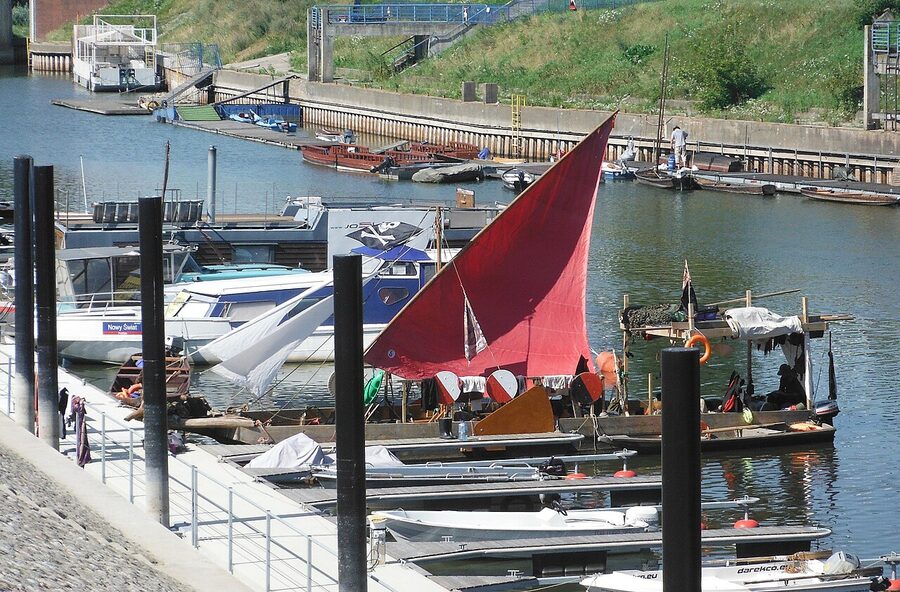
This is the only galar cruise running in Warsaw, and it’s nothing like the modern motorboats they run down in Krakow on the Vistula. A galar is a flat-bottomed wooden boat, the kind Polish merchants used to drift grain and timber down to Gdansk three hundred years ago. Restored. Quiet. No engine throb, no DJ, no welcome cocktail. Just the river and a guide.


- In a Hurry?
- What a galar actually is, and why it matters
- What you’ll see on the route
- Booking the galar tour
- 1. Warsaw Traditional Galar Cruise on the Vistula River:
- 2. Warsaw Vistula River Sunset Cruise with Welcome Drink:
- 3. Warsaw Scenic Cruise by Gondola on the Vistula River:
- Why this is different from a Krakow Vistula cruise
- Old Town from the river: the rebuilding question
- What to bring, what to skip
- When to book
- Getting to Czerniakowski Port
- The river vs the city
- The audio guide
- If the galar is sold out
- Pairing with other Warsaw activities
- A bit of context: Warsaw’s mermaid
- One small honest note
- The bridges, named
- Other Warsaw guides on the site
In a Hurry?
Three quick picks if you’ve already decided you want to be on a boat tonight.
- The galar itself: Warsaw Traditional Galar Cruise on the Vistula. About $20 per person, 54 minutes, audio guide included. The article is mostly about this one.
- Sunset version: Warsaw Vistula Sunset Cruise with Welcome Drink. Around $27, 55 minutes, comes with a glass of something. Different boat (modern), different feel.
- Slightly different boat: Warsaw Scenic Cruise by Gondola on the Vistula. About $27, 55 minutes. A wooden gondola, smaller, more intimate. Pick this one if the galar is sold out.
What a galar actually is, and why it matters
I’d never heard the word galar before I came to Poland. Most Polish people I asked hadn’t either, or they’d heard it once in a primary school history lesson and forgotten. So it’s worth understanding before you book, because the boat itself is a lot of why you’d do this cruise instead of one of the others.
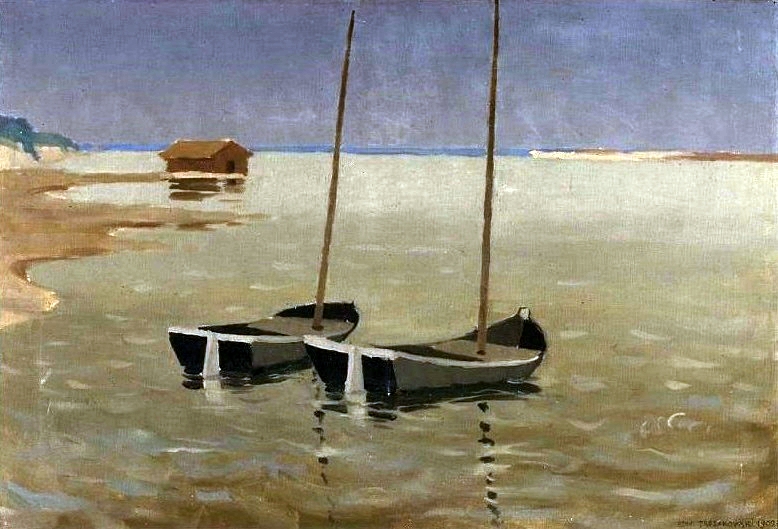
The short version: a galar is a flat-bottomed wooden river boat. Shallow draft, heavy build, square ends. They were the workhorses of the Vistula trade route from the 1500s through the 1800s. Polish farmers and merchants would build them upriver in Sandomierz or Krakow, load them with grain or salt or timber, and float them downstream to Gdansk. At Gdansk they’d sell the cargo, then sell the galar itself for the wood, and walk home. One way only. The boats weren’t built to come back upstream.
Knowing this changes the cruise. You’re not on a tourist replica of a fishing boat or a Venetian gondola. You’re on the boat that carried Polish grain to Hanseatic merchants. The flat bottom that’s making the ride so smooth, that’s the same design that let medieval boats slide over Vistula sandbanks. The wooden frame creaking gently under your feet, that’s the sound nobody on the river had heard for about a hundred years until these restoration cruises started up.
It is, frankly, slow. The boat moves at maybe 7 or 8 km/h. That’s the only speed it does. If you’ve come for adrenaline, book the speedboat (yes, Warsaw has one of those too, and I’ll come back to it). If you’ve come to actually look at Warsaw from a different angle, this is the one.
What you’ll see on the route
The cruise leaves from Czerniakowski Port, just south of central Warsaw, and runs north along the river before turning around and coming back. Total run about 54 minutes. You don’t cover huge distance, maybe 4 km in total there and back, but the whole point is to drift, not to go anywhere.
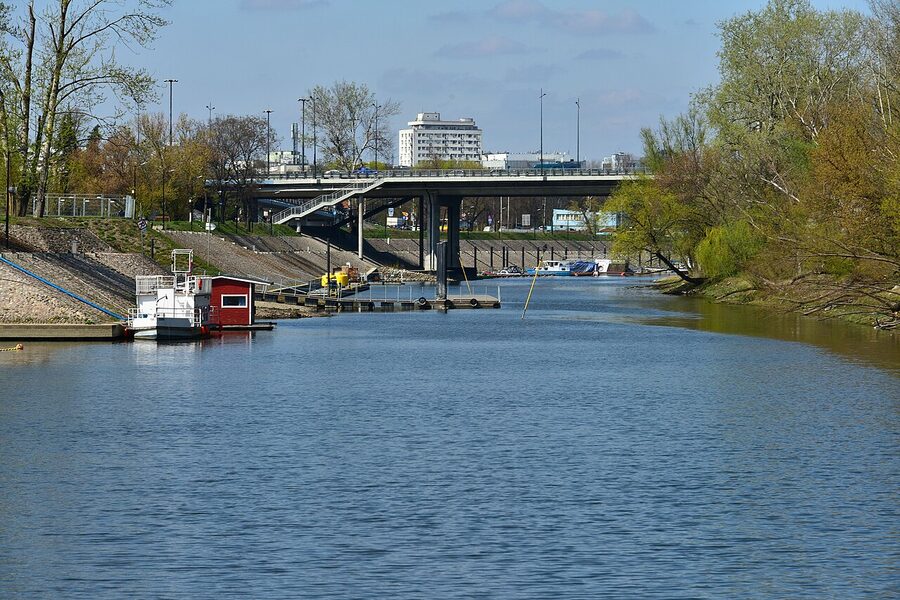

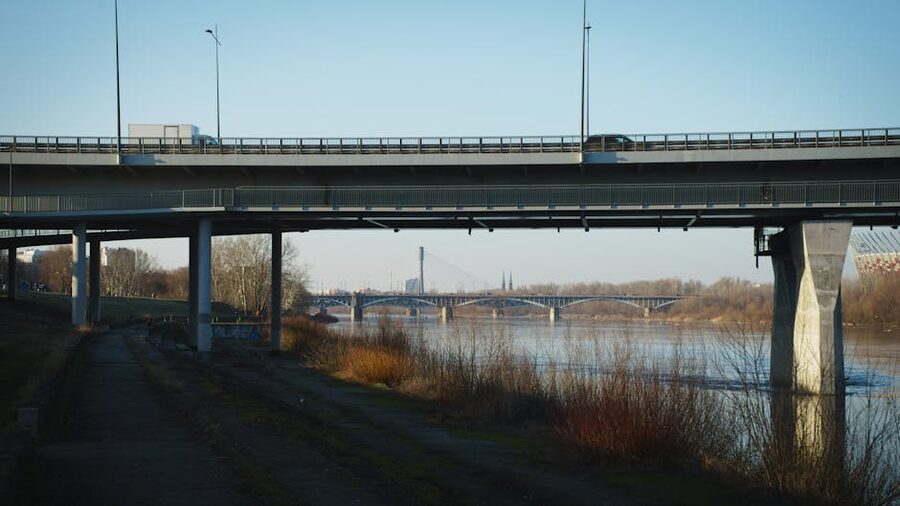
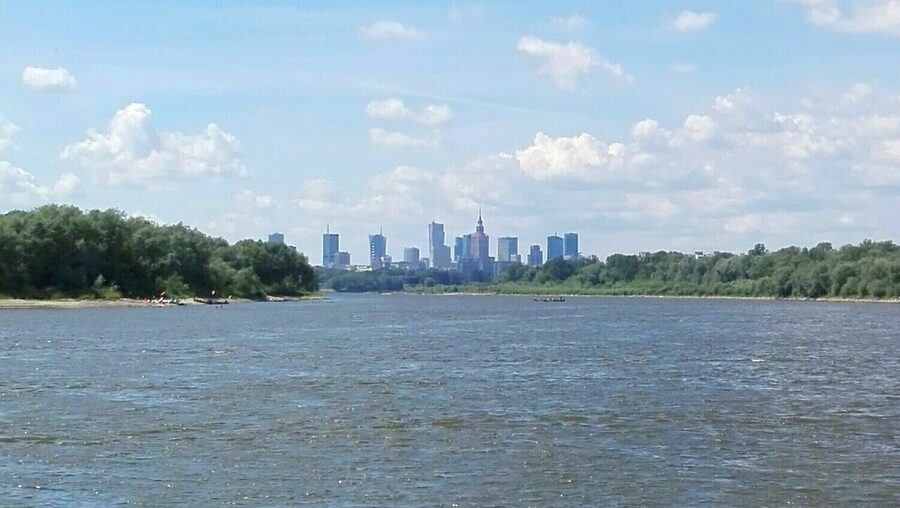
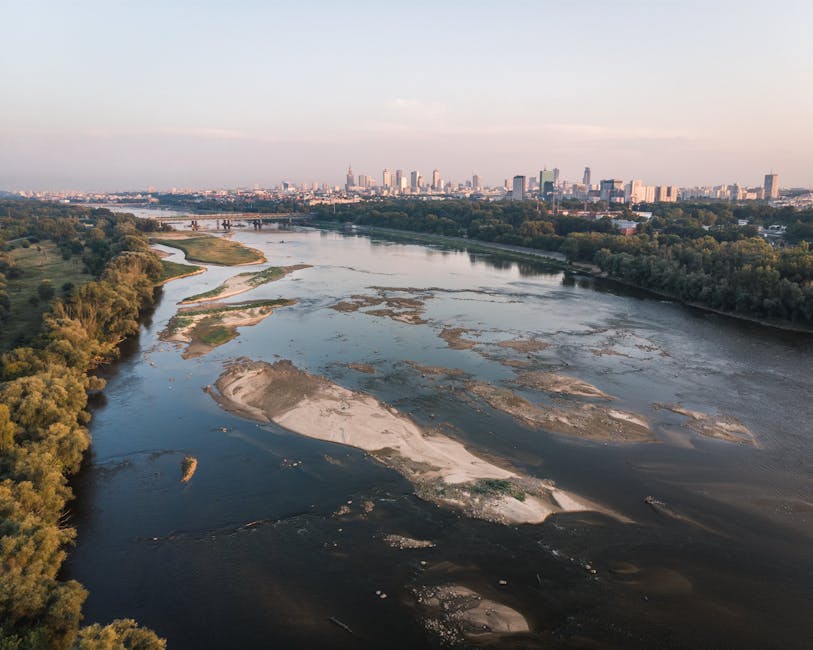
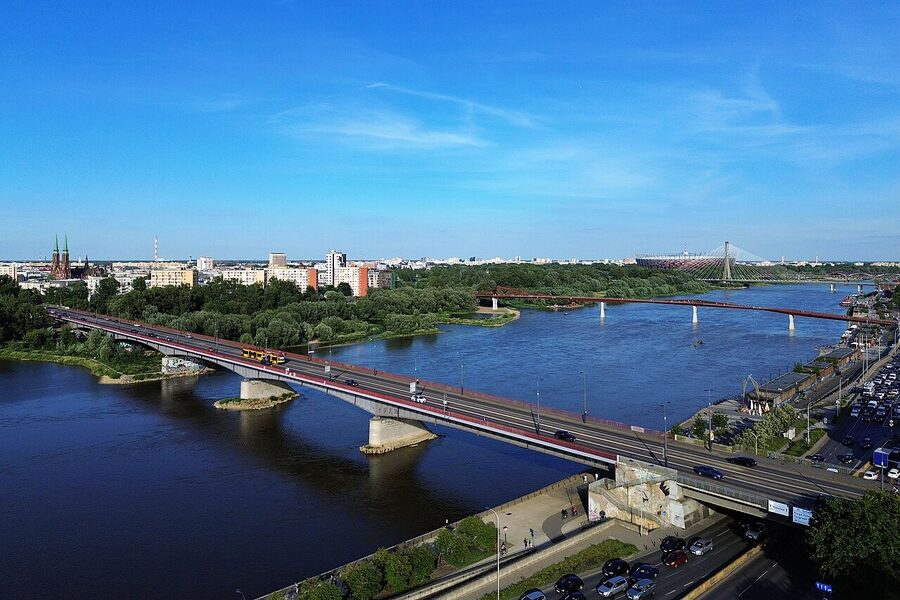
From Czerniakowski Port you head north, past the embassy district on the left bank and the wild reserve of the Vistula’s east bank on the right. The east bank is officially a Natura 2000 protected zone. Wild. You’ll see herons. Possibly beavers if you’re cruising at dusk. The contrast between protected wilderness on one side and the EU’s tallest skyscraper on the other is, I think, the most surprising thing about this stretch of the river.
.jpg)
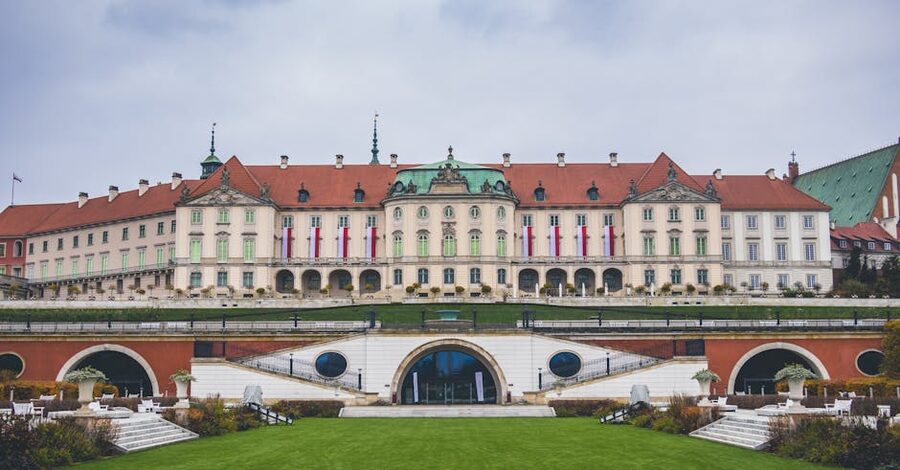
Then the river curves and the Old Town appears on your left. Royal Castle red brick. The roofs of the merchant houses just visible above the embankment. This is the moment Louise probably meant by “lovely.” It’s the angle nobody photographs Warsaw from, because tourists are usually walking the streets above. From the water you can see how the city was built around the river, not the other way around.
The boat turns somewhere around the National Stadium and comes back the way it came. By then the sun’s lower, the bridges are starting to light up, and the audio guide has moved on from medieval river trade to modern Warsaw and how the Vistula was mostly forgotten for fifty years between the Soviet era and about 2015 when the riverbanks finally got their boardwalks and bars.
Booking the galar tour
One galar tour, two alternates, in priority order. Pick the first if it’s available; the others are good fallbacks.
1. Warsaw Traditional Galar Cruise on the Vistula River: $20
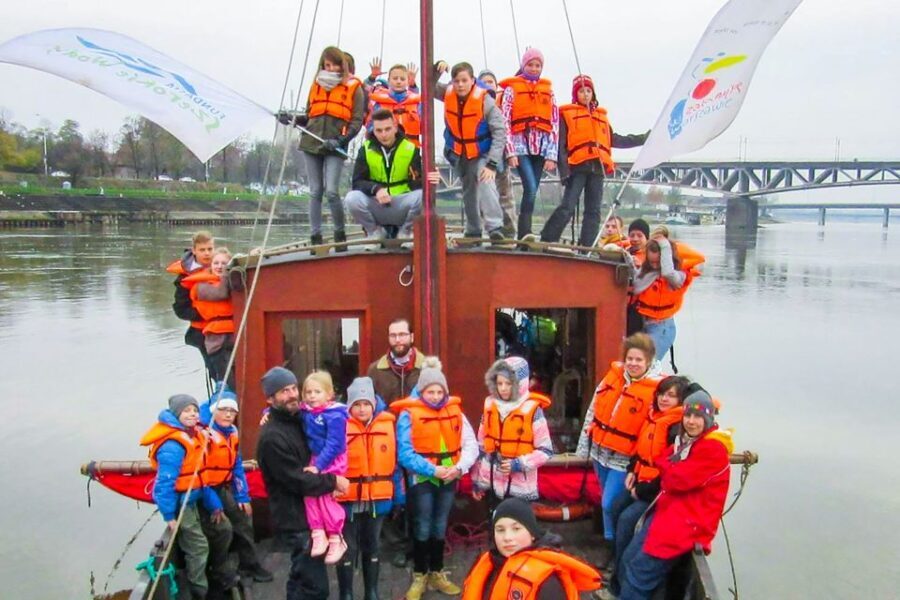
This is the only galar cruise running in Warsaw and the one this whole article is about. It’s a 54-minute run from Czerniakowski Port north past the Old Town with audio commentary in eight languages. Boats run roughly hourly between April and October, less often in the cold months, so check before you fly in. Our full review covers what the audio guide actually tells you (it’s better than most), and the small detail that nearly tripped me up about boarding time.
2. Warsaw Vistula River Sunset Cruise with Welcome Drink: $27
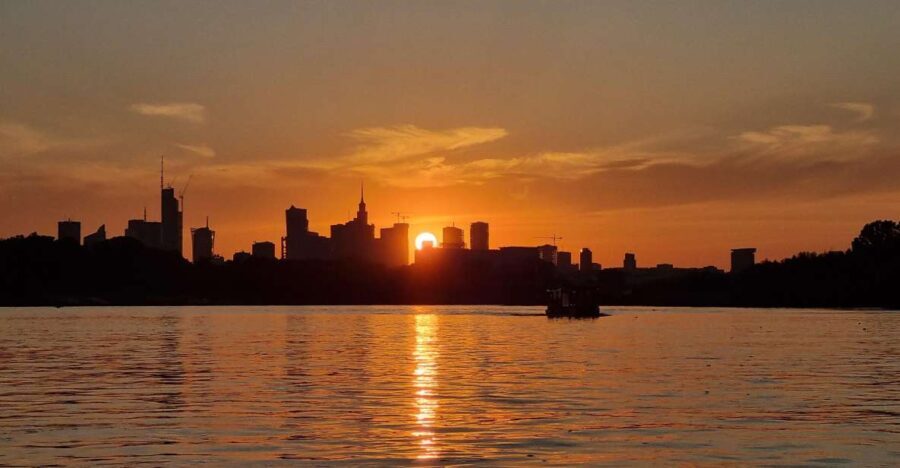
Not a galar, but worth flagging if your evening’s free and the galar slot is full. This is a 55-minute sunset cruise on a modern boat, with a welcome drink (sparkling wine or non-alcoholic) and a guide telling you about the city as the sun drops behind the Old Town. It’s a different vibe: less heritage, more atmosphere. Our review goes into the timing question (it’s not always actually at sunset, depending on season).
3. Warsaw Scenic Cruise by Gondola on the Vistula River: $27
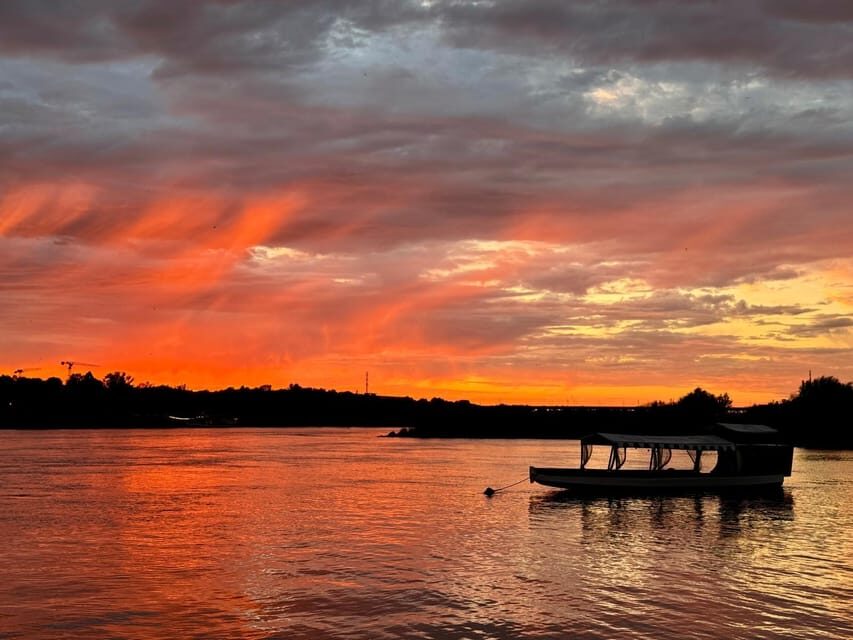
This one’s a separate operator running smaller wooden gondolas along the same stretch of river. The gondola is not historically Polish (gondolas are from Venice, no one in Warsaw is pretending otherwise) but the boat itself is hand-built and the cruise is the most intimate of the three. Best for couples. Our review covers what the gondolier actually does on this cruise (more guiding than rowing, in this case).
Why this is different from a Krakow Vistula cruise
I get this question a lot from people who’ve already cruised the Vistula in Krakow. The answer is: it’s the same river but it’s a completely different experience.
The Krakow cruises run on modern motorboats, mostly enclosed, with audio guides and tickets that often include a glass of mulled wine. Look at how the Krakow evening cruise works and you’ll see the difference: that’s a 60-minute river ride past Wawel Castle in a glass-roofed riverboat with bench seating and a bar.
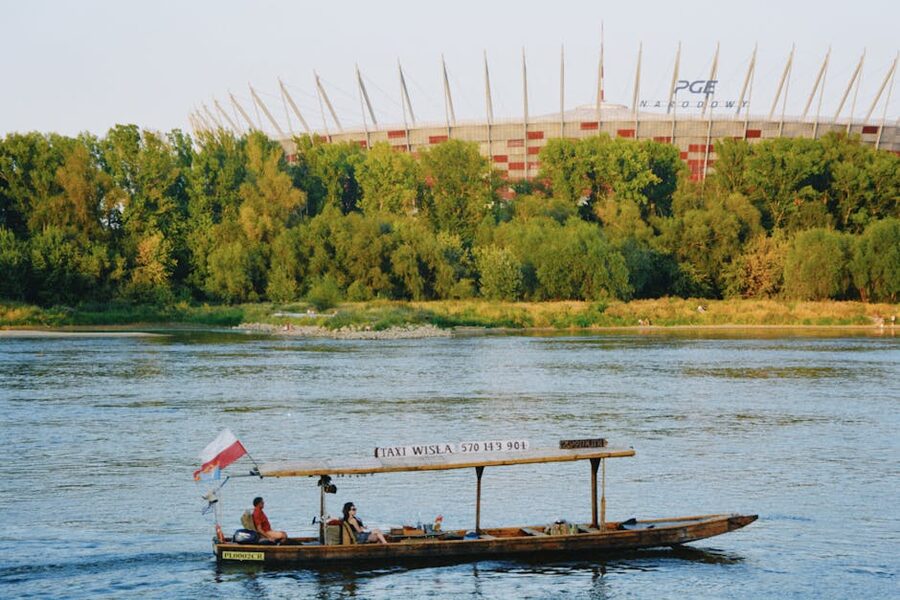
The Warsaw galar is none of those things. Open boat. No roof. No bar (some operators may bring drinks in summer; mostly they don’t). The boat is wooden, the bench is wooden, the only sound for most of the trip is the audio guide in your ear and the slap of the river under the hull. If you’ve done both, you’ll find this one quieter, slower, and more contemplative. Less of a cruise and more of a slow drift.
Two other practical differences. The Vistula in Warsaw is much wider than in Krakow. In Krakow you’re cruising past Wawel and the boats are close to both banks. In Warsaw the river is 300m wide and you stay roughly mid-channel. The Old Town never quite gets the close-up you’d expect. And the Warsaw cruise is shorter on landmarks: Krakow gives you castle, abbey, monastery in 60 minutes. Warsaw gives you Old Town, embassy district, wilderness, a stadium. Different rhythm. Different city.
Old Town from the river: the rebuilding question
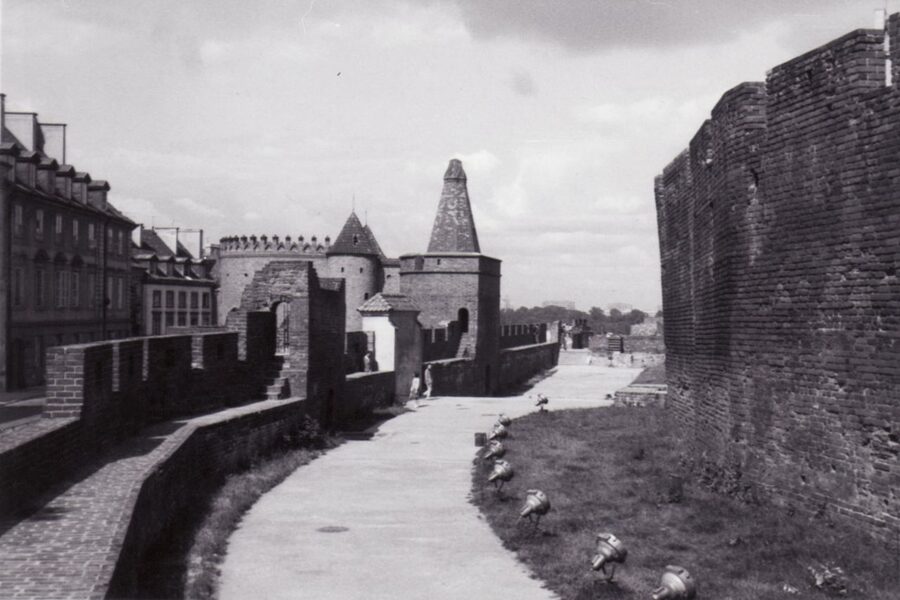
One of the things the audio guide spends time on, and which most cruise reviews don’t mention, is the fact that almost everything you can see from the river is a reconstruction. Warsaw was 85% destroyed by the Germans in 1944. The Royal Castle, the merchant houses, the Sigismund Column, the city walls, all rebuilt between 1949 and 1962, painstakingly, using paintings and old photos as reference. From the water you can see the eighteenth-century Bellotto paintings of Warsaw and compare them, in real time, to the city in front of you. The match is uncanny.
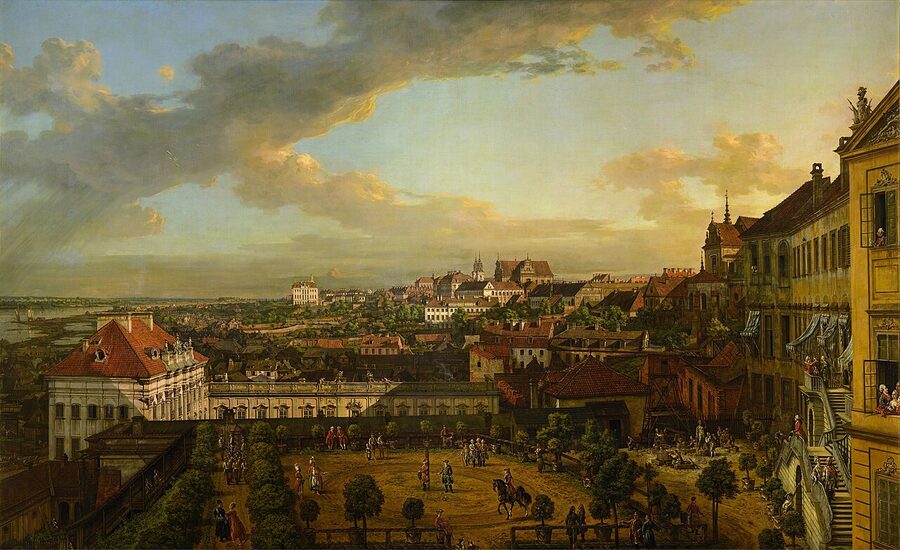
Whether the rebuilt Old Town counts as “the real Warsaw” is the kind of question my guide on the cruise spent ten minutes on, and it’s worth thinking about. From the river you’re cruising past a UNESCO World Heritage site (yes, the rebuilt Old Town has UNESCO status, specifically because of the meticulousness of the reconstruction) but it’s also a 1950s site, sixty years younger than the Bellotto paintings it was based on. If the question fascinates you, our companion piece on the Warsaw Old Town walking tour goes much deeper into it.
What to bring, what to skip
A short practical section, because cruise blogs always pad these and most of it doesn’t matter. The real list:
- Layers. The boat is open and even on a 25C summer day the river is several degrees cooler than the city. In April or October bring a fleece or you’ll suffer.
- Hat or sunglasses if the sun’s out. The water reflects directly into your face for the southbound stretch.
- Phone with downloaded offline map of Warsaw. The audio guide is good but I found myself wanting to look up things mid-cruise. Polish 4G works but signal under the bridges drops.
- Cash for tips. The crew don’t ask for tips and won’t be bothered if you don’t, but 10 zloty for the captain at the end is the polite move.
Things you don’t need: a guidebook (the audio guide handles it), a camera with a long lens (your phone is fine, you’re never that far from the bank), or any kind of formal dress. People show up in jeans and trainers and that’s normal.
When to book
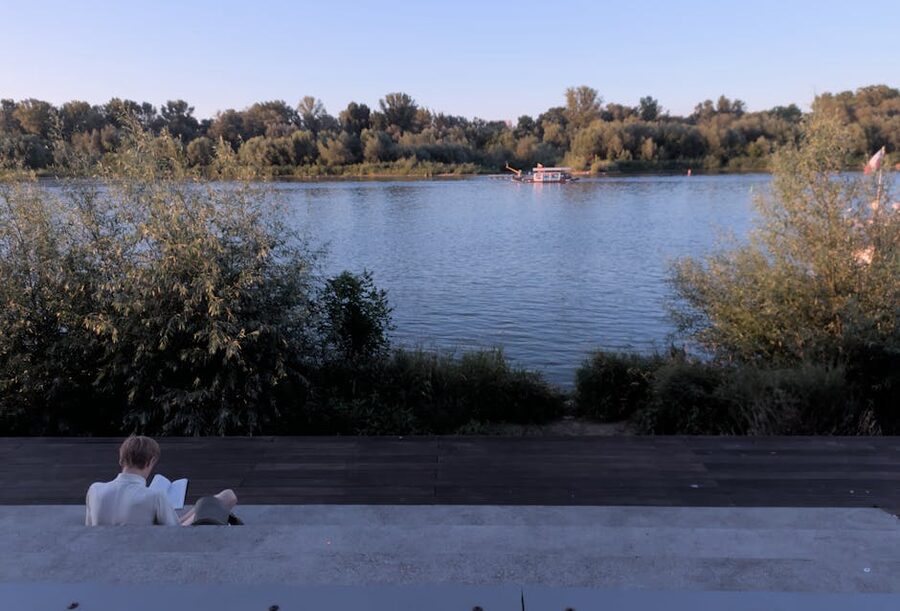
Galar cruises run from late April through October. The boats are stored over winter (the Vistula doesn’t freeze hard enough to matter, but the wooden hulls don’t love prolonged rain). In peak summer, July and August, slots fill up two or three days ahead, especially the early evening 19:00 sailing. In May, September and October you can usually walk up on the day. April is borderline; some years the boats are running, some years they’re still in the boatyard.
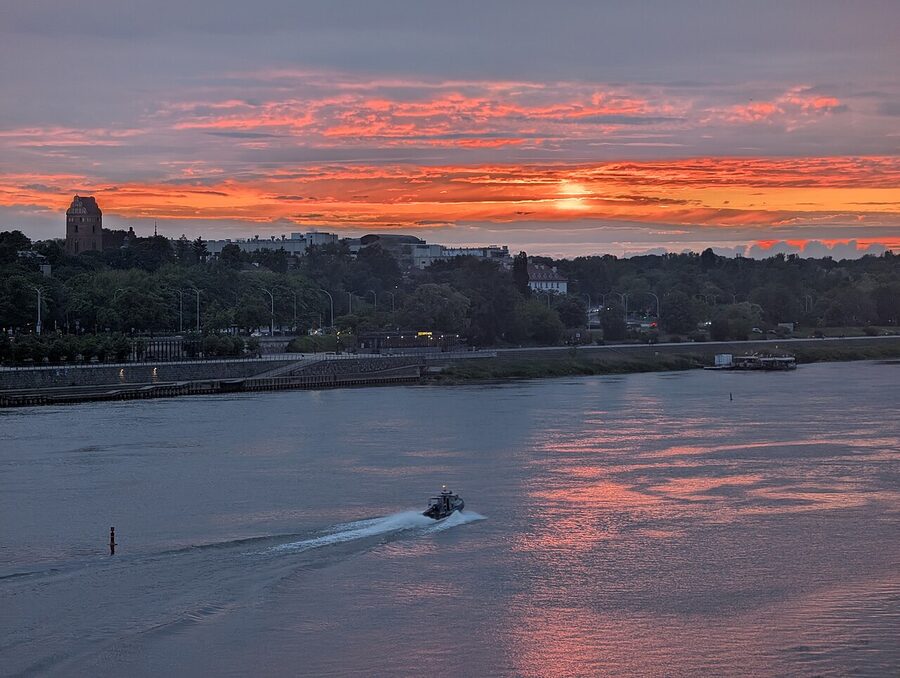
The single best slot is the last one before sunset. In Warsaw in June that’s roughly 19:30. In September it’s 18:00. The audio guide times out around bridge 4, the sun drops behind the Old Town, and you have about twenty minutes of pure drift coming back south as the city lights up. If you can choose your time, choose this one.

Avoid Sundays in summer if you can. The river boardwalks are heaving, the embankment bars are at full volume, and some of the contemplative quality of the cruise is lost. A Tuesday evening at the same time slot is half the people for the same boat.
Getting to Czerniakowski Port
The boats leave from Czerniakowski Port, on the western bank of the Vistula about 3 km south of the Old Town. Address: ul. Czerniakowska 199, but the entrance to the actual marina is from ul. Statkowa, a small side street. Google Maps will steer you wrong if you set the destination to Czerniakowska. Set it to “Port Czerniakowski Warszawa” and walk in from the river side.
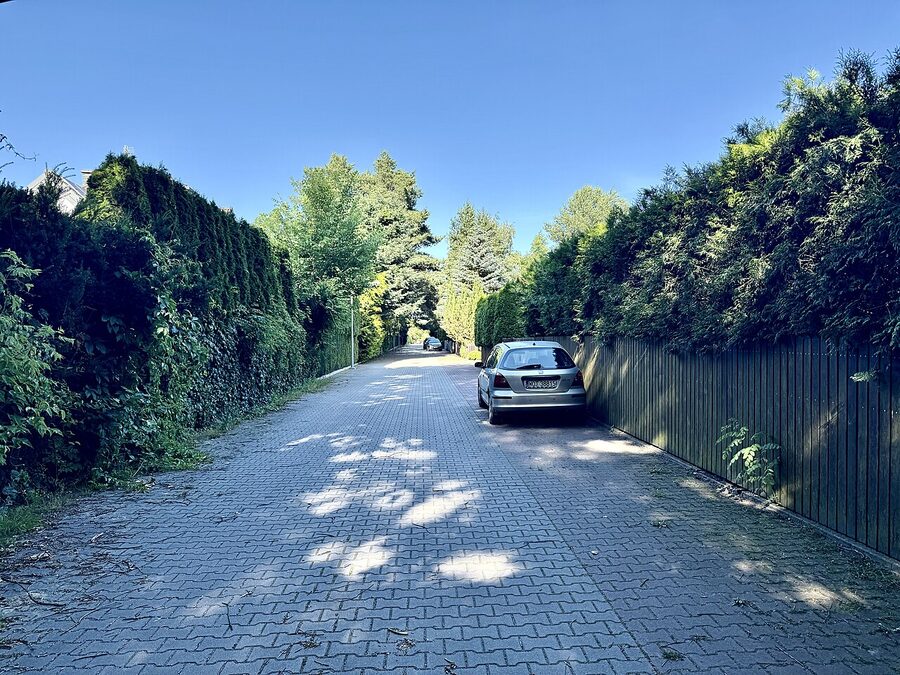
From the centre, your options are: tram 22 from Centrum (15 minutes, get off at “Park im. R. Sikorskiego”), bus 162 from Centrum (about the same), Uber from anywhere central (around 25 zloty, ten minutes), or walk along the river boardwalk (about 35 minutes from the Royal Castle, very pleasant in good weather). I’d walk it on a clear evening and Uber back if you’re tired and the cruise has run late.
The marina itself takes about five minutes to find once you’re inside the gate. The galar is moored at the far end. There’s a small wooden ticket office; you can collect tickets you’ve pre-booked online or buy walk-up if there’s space. Arrive 20 minutes before sailing time. The boat boards at sailing time minus 10 and waits for nobody.
The river vs the city
One of the things you’ll notice about Warsaw, if you do this cruise after spending a day or two in the city, is how disconnected the river feels from the streets. The embankments are high. The boulevards run along the top of them. From street level you barely see the water. From the water you barely see the city, except where the Old Town climbs the bluff and the bridges cross overhead.
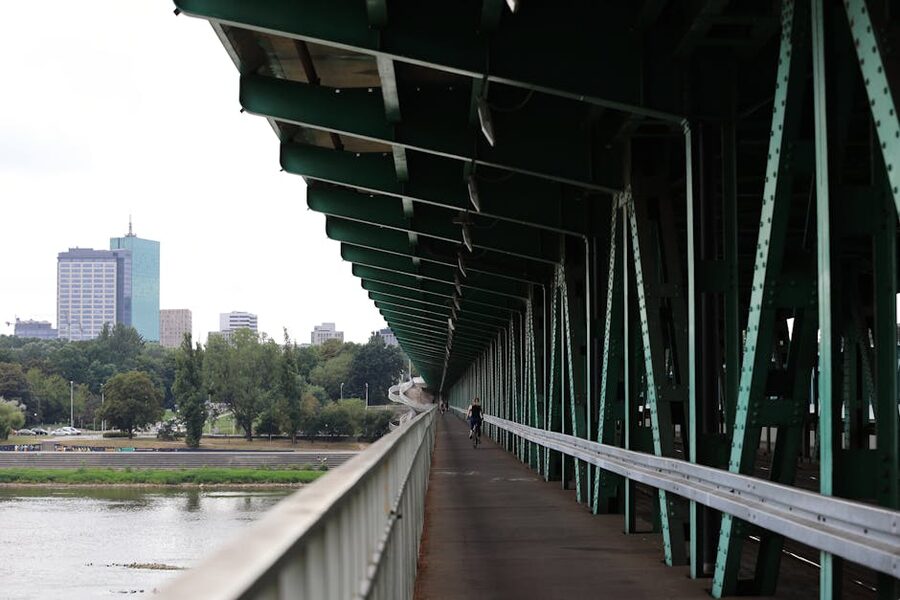
This is intentional, sort of. Warsaw spent the second half of the twentieth century turning its back on the river. Polluted, industrial, edged in concrete embankments, the Vistula was something to be crossed, not something to enjoy. Only in the last fifteen years has the city started reclaiming its waterfront. The boardwalks on the eastern bank are mostly post-2015. The galar cruises themselves only started running in roughly 2018.
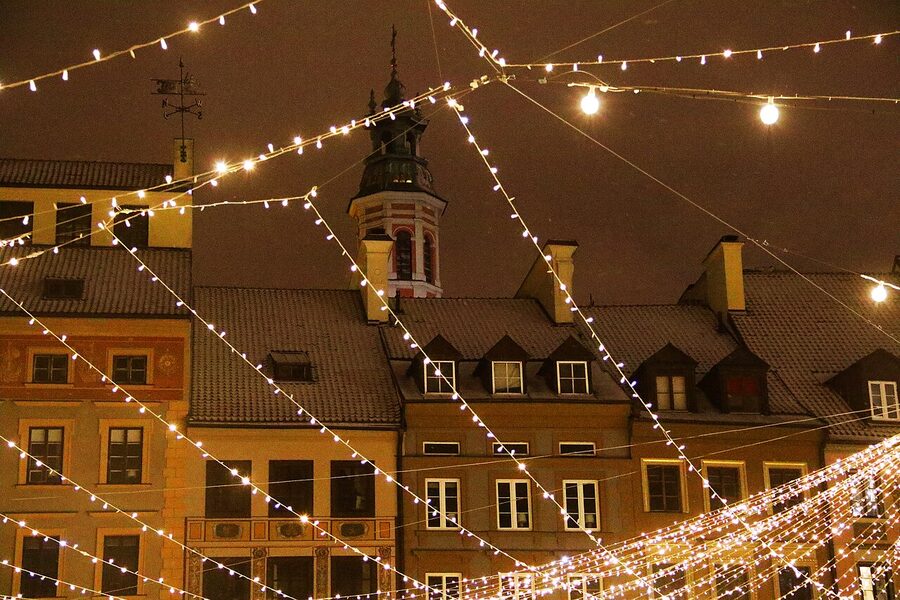

So part of what you’re doing on the galar is participating in a recent rediscovery. The river is genuinely new again as a Warsaw thing. The crews running the boats are passionate about it because for most of their lives nobody used the Vistula. Now they’re trying to convince people to come back.
The audio guide
I want to spend a paragraph on the audio guide because it’s one of the surprising things about this cruise. The galar has a properly produced multilingual audio commentary that runs the length of the trip. English, Polish, German, French, Italian, Spanish, Russian, Ukrainian. You pick one up at boarding, plug in headphones, and it keys off GPS so the right segment plays at the right point on the river.
What makes it good: it doesn’t just narrate the bridges. It tells the story of the Vistula trade, the rafters who used to live in the river settlements, the destruction of the city in 1944, the slow reconstruction, the modern reclaiming. There’s about ten minutes of pure history, ten minutes of architecture, and ten minutes of contemporary stuff. Plus a few quiet stretches where the recording goes off and you just listen to the water.
What makes it weirder than most: it includes audio recordings of old Polish boatmen songs from a hundred years back, played at low volume during the wilderness stretch. You float past the Natura 2000 reserve listening to a 1940 recording of a man singing about salt barges. It’s strange and quite moving.
If the galar is sold out
Most likely cause: peak summer Saturday, late afternoon. In which case you have a few options. Of the alternatives, the gondola comes closest in feel; it’s a small wooden boat, similarly slow, similarly quiet. The sunset cruise is more polished and louder, with a guide doing live commentary rather than audio guide. Or you skip the boat entirely and walk the eastern boardwalk from Most Slasko-Dabrowski south, which costs nothing and gives you most of the same views from land.
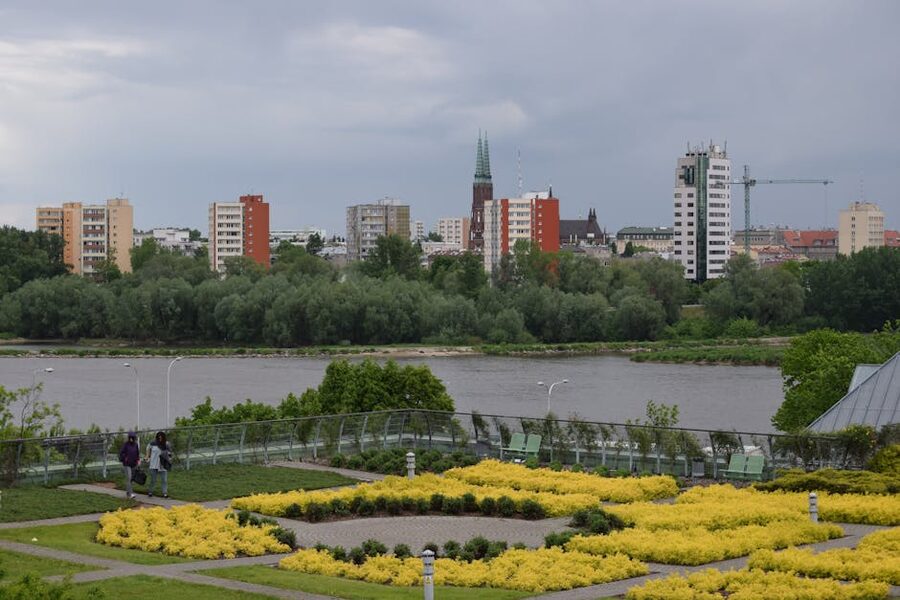
If you’ve got a few days and you want to get the full picture of Warsaw and its relationship with the river, do the galar one evening and the eastern boardwalk walk on a different evening. The two views, water-side and land-side, complete each other.
Pairing with other Warsaw activities
The galar is a 54-minute thing. It doesn’t fill a day. The natural day plan around it: spend the morning in the rebuilt Old Town, lunch in Powisle, walk south along the river to Czerniakowski Port for an early-evening galar, dinner back in the city.
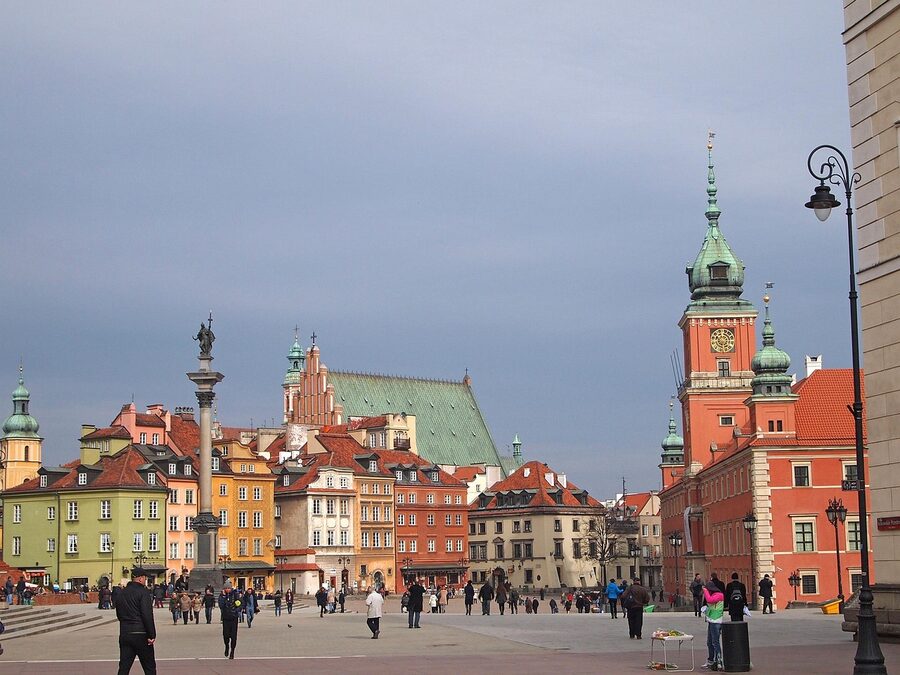
The Old Town walking tour, in particular, pairs well: that’s where you get the inside-the-walls perspective on the rebuilding question, which is the thing the galar audio guide raises but doesn’t answer. Our Old Town walking tour guide covers the best operators.
If you’re a music person, the other natural pair is a Chopin concert in the evening. Warsaw runs solo piano recitals nightly in the Old Town venues. The galar at 18:00 followed by a Chopin recital at 20:00 in the Royal Castle complex is a strong evening. Our Chopin concert guide covers the venues and how to book.
For day-two: hop-on hop-off bus to handle the wider city (Warsaw is sprawling and 9km of it stretches from Old Town to Wilanow Palace), then dive into a specific neighbourhood on foot. Our Warsaw hop-on hop-off guide goes into which line covers what.
A bit of context: Warsaw’s mermaid
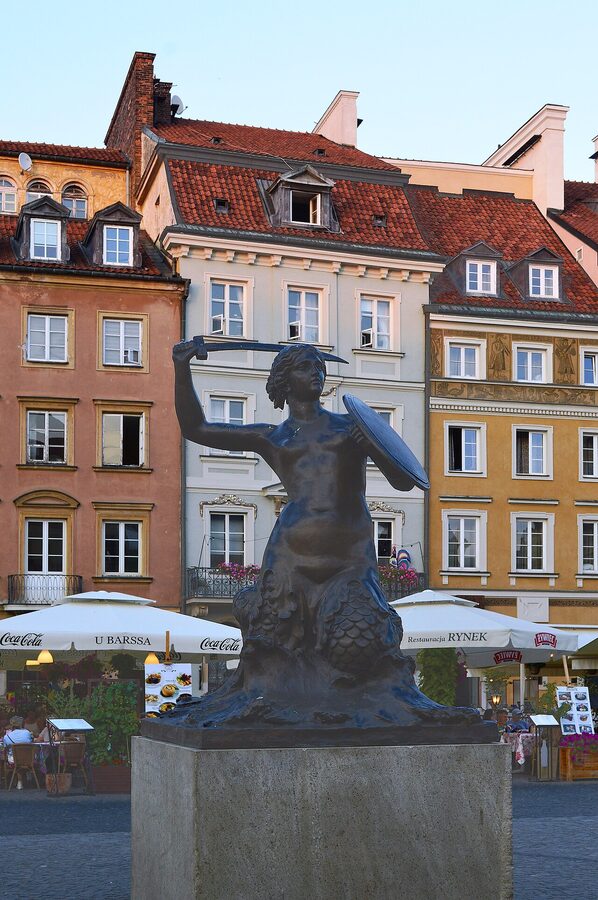

The Vistula has a mermaid. In the legend, a mermaid swam up from the Baltic, fell in love with the river, and stayed near where Warsaw would later be founded. The fishermen who lived on the river at the time tried to net her; she was rescued by a local prince who heard her singing and refused to let her be killed. In return she promised to defend the city. That’s roughly the story; details vary between tellings. The audio guide tells one version and the figure on the city’s coat of arms is the same mermaid.
I found this charming and a useful piece of context for the cruise. You’re floating up a river that, in the local imagination, has been guarded by a mythical creature for the better part of a thousand years. The galar is the only boat I’ve been on where the audio guide tells you who’s protecting you.
One small honest note
If you’ve done a lot of European river cruises, the galar is a 6 out of 10 on raw spectacle. The river is not as photogenic as the Seine. The bridges aren’t as architectural as Prague. The buildings on the bank are not, in absolute terms, as old as Lyon. What makes this trip worth doing is the boat. You’re on a heritage vessel that’s a working piece of Polish history, and the experience of moving through Warsaw at the speed of an eighteenth-century grain barge is genuinely unusual. If that doesn’t appeal, do the sunset cruise instead. If it does, the galar is the only one of its kind and the price is honest.
The bridges, named
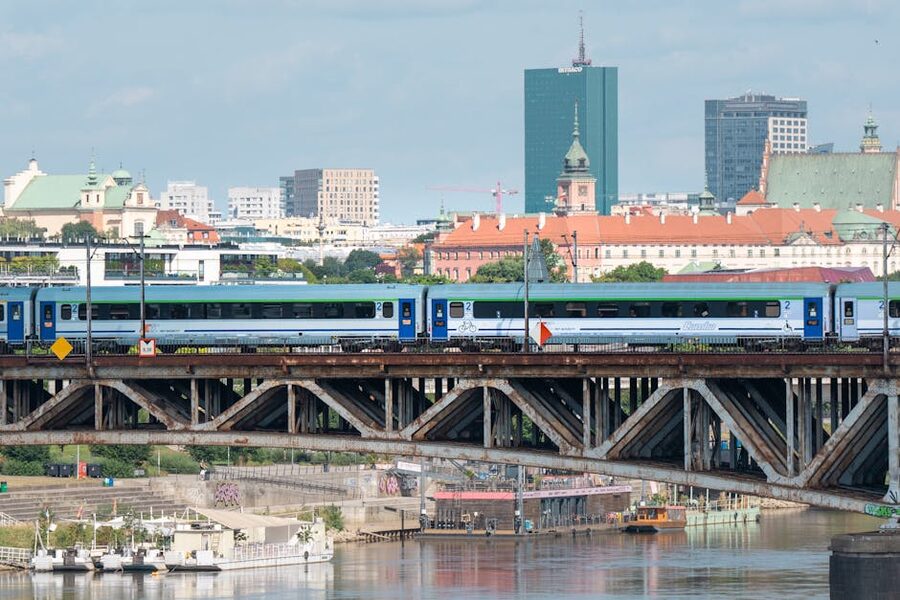
For people who like a bit of structure, the Warsaw river segment passes under or near (depending on the day’s route) the following bridges, north to south: Most Gdanski, Most Slasko-Dabrowski, Most Swietokrzyski, Most Poniatowskiego, Most Lazienkowski, Most Siekierkowski. Six bridges in roughly six kilometres. You only see four of them on the standard cruise.
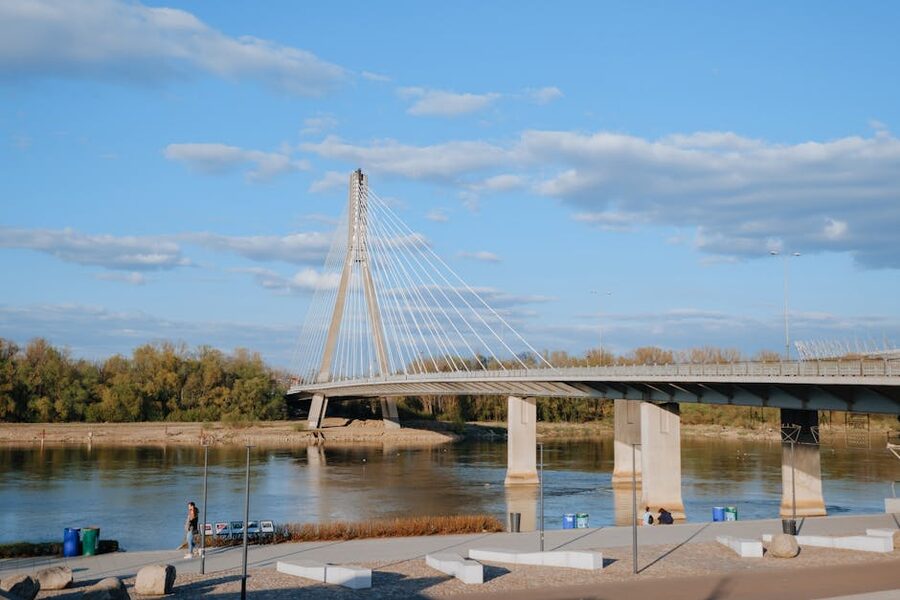
The audio guide gives each bridge a little history. The most interesting one, to me, is Slasko-Dabrowski, which sits on the foundations of the original 1864 Kierbedzia Bridge that the German army demolished in 1944. The current bridge is from 1949. The pillars are pre-war. You go directly over a piece of nineteenth-century engineering you can’t see from above.
Other Warsaw guides on the site
If you’re building out a few days in Warsaw and want practical guides on the rest, our coverage of the city is starting to fill in. The natural pairs with this cruise are the Old Town walking tour for the rebuilding question, the Chopin concert for the evening cultural slot, and the hop-on hop-off bus if you want to cover the wider city in one go. For a day-trip-style thing with similar river atmosphere but a totally different feel, our Krakow evening Vistula cruise guide is worth reading: it’s the same river, a different city, a completely different boat. Read both and you’ll know roughly what to expect on the Vistula in either place.
Affiliate disclosure: this page contains affiliate links. If you book through them I may earn a small commission at no extra cost to you. The opinions on the boats are my own.