
So when you walk through Warsaw’s Old Town, are you actually seeing a medieval city, or are you looking at a meticulous 1950s film set built on top of one? It’s a fair question. The answer is more interesting than you’d expect, and it shapes how you should approach a walking tour here.
I’ll get to the answer below. First, the practical stuff: how to book a guided walking tour, what to look for, which operator to pick, and what the routes actually cover.
In a Hurry? My Top Picks
Best value: Warsaw Old Town Guided Walking Tour at $13 per person. Two hours, small group, locals who actually live in the neighbourhood.
Best overall: Warsaw Old Town Highlights Walking Tour in English at $26 per person. The 2.5-hour version covers Old Town plus the Royal Route down to Copernicus.
Viator pick: Old Town Warsaw Walking Tour at $26.60 per person. Same coverage, useful if you already have a Viator account or credits.
- In a Hurry? My Top Picks
- Why You Want a Guide Here (Even If You Normally Skip Them)
- How Booking Actually Works
- Free Walking Tours: The Honest Verdict
- The Three Tours I’d Actually Book
- 1. Warsaw Old Town Guided Walking Tour:
- 2. Warsaw Old Town Highlights Walking Tour in English:
- 3. Old Town Warsaw Walking Tour (Viator): .60
- What the Routes Actually Cover
- Castle Square and Sigismund’s Column
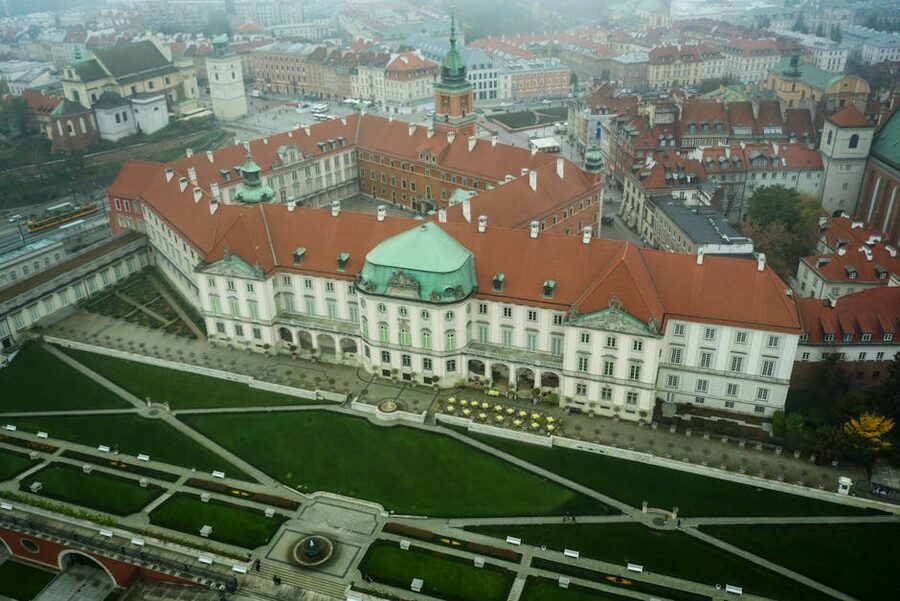
- The Royal Castle Exterior
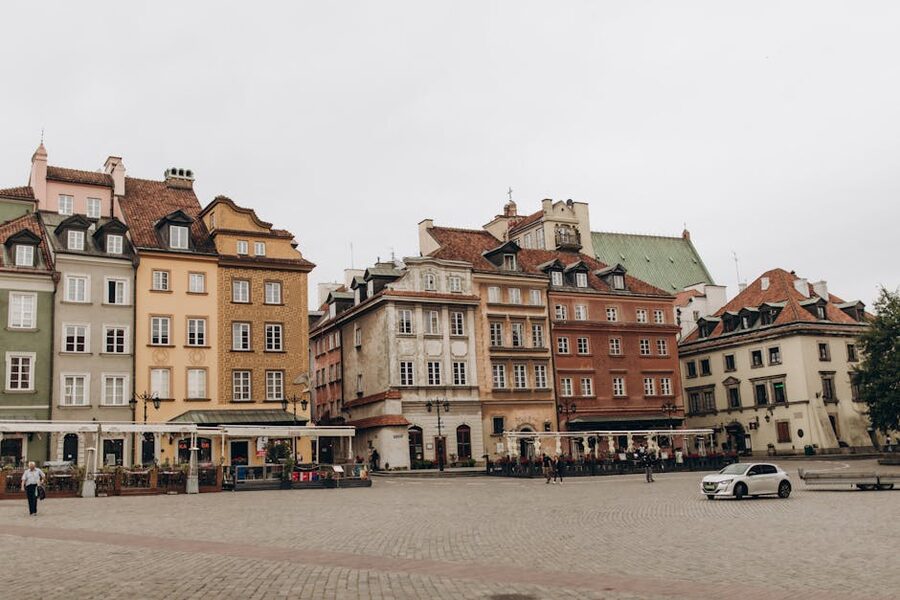
- The Market Square (Rynek Starego Miasta)
- The Barbican and the City Walls
- St John’s Archcathedral
- The Viewing Terrace and the Vistula
- Are You Really Seeing The Medieval City? The Honest Answer
- When to Book and When to Go
- What to Wear and Bring
- What the Tour Doesn’t Cover (And Where to Go After)
- How Warsaw Old Town Compares to Krakow
- Practical FAQs People Actually Ask
- Is the tour wheelchair accessible?
- Are kids OK on a walking tour?
- Do I need to book anything else for the tour day?
- Will the guide actually go off the tourist script?
- What about photos?
- Other Warsaw Guides Worth Reading
Why You Want a Guide Here (Even If You Normally Skip Them)
I’m usually the first to tell people to skip the guided walk and just wander. Krakow Old Town? Wander. Prague? Wander. Warsaw is different.
The whole quarter was 85% destroyed in WWII. Not damaged. Destroyed. If you walk Warsaw Old Town without context, you’re looking at pretty pastel buildings that don’t actually mean anything to you. With a good guide, you’re looking at one of the most ambitious urban resurrection projects in European history, and every cornice, every brick stamp, every window sash is part of the story.
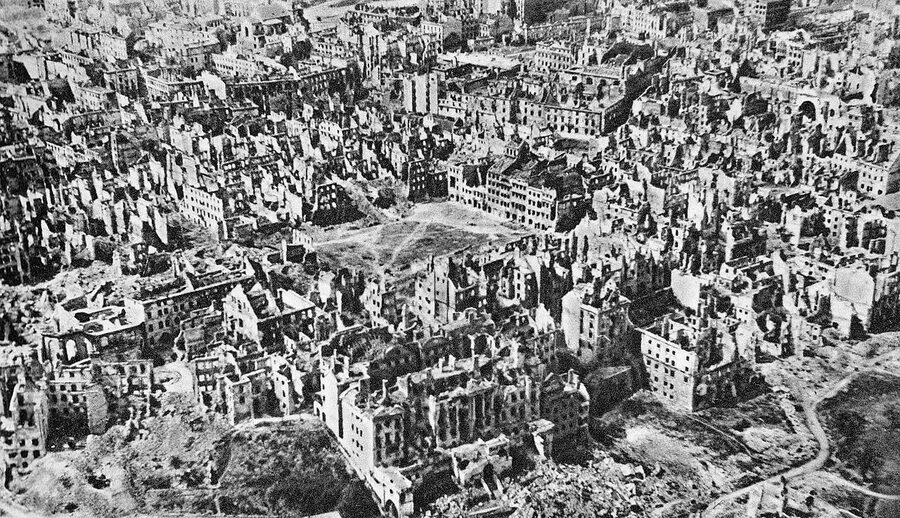

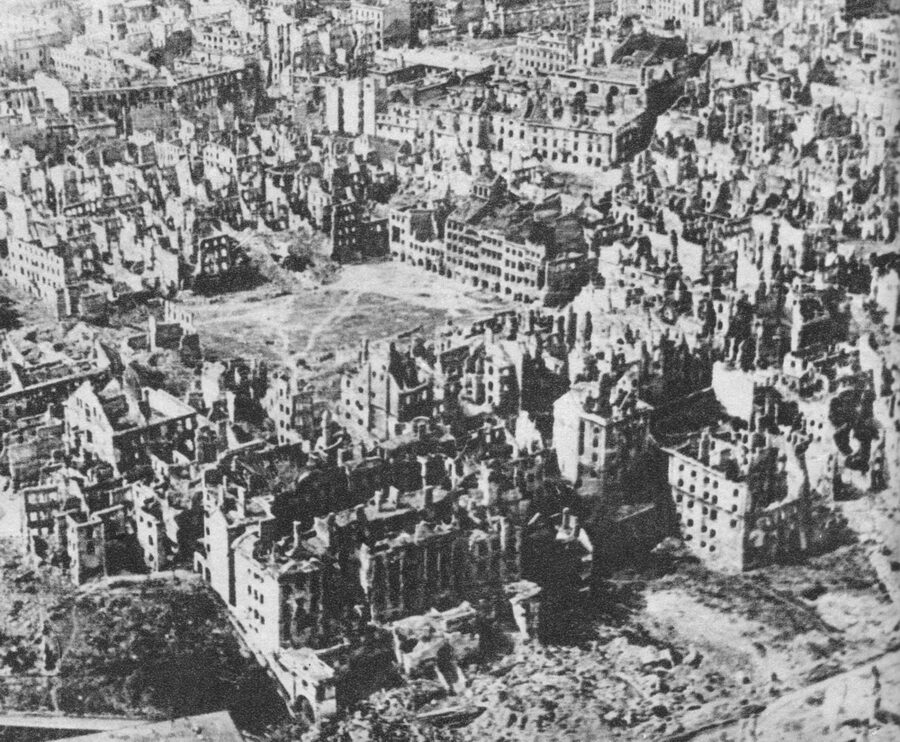

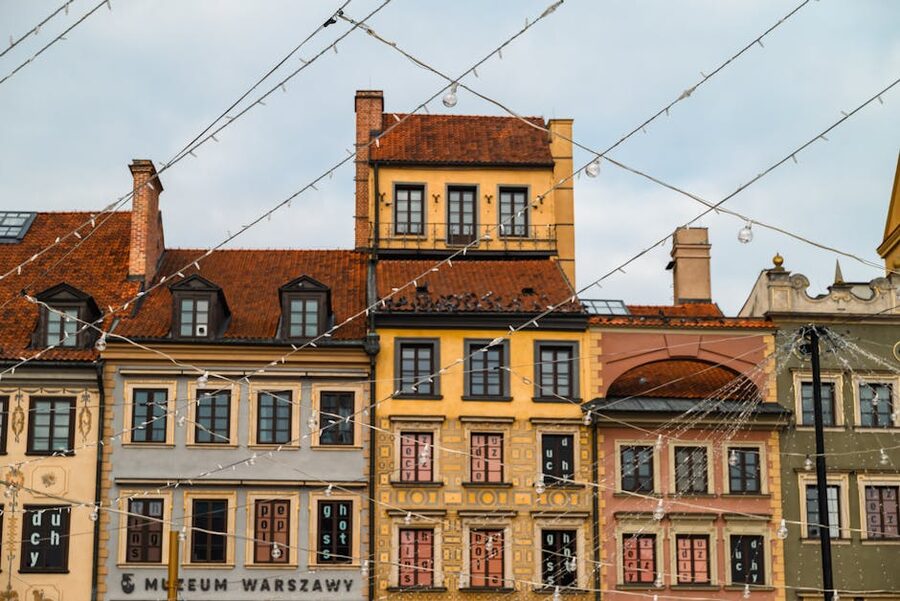
So back to my question. Are you seeing the medieval city or a 1950s reconstruction? Both. Genuinely. The street plan, the foundations of many buildings, parts of the cellars, sections of the city walls. Those are real medieval Warsaw. The facades, the gables, the painted decoration above almost every window. Those are 1948 to 1953, lovingly rebuilt from old photographs and 18th-century paintings.
Does it matter? UNESCO thought so. The Old Town is on the World Heritage list, but unusually, it’s listed for the reconstruction itself: the philosophy and craftsmanship of rebuilding, not the medieval authenticity. There’s no other site like it on the list. A walking tour is the one way to get this across without reading a 400-page book.
How Booking Actually Works
Three platforms cover almost every Warsaw Old Town walking tour worth booking: GetYourGuide, Viator, and a handful of independent operators with direct booking sites. I default to GetYourGuide for Warsaw because the small-group local-guide tours dominate the top of their listings, and cancellation up to 24 hours before is standard.
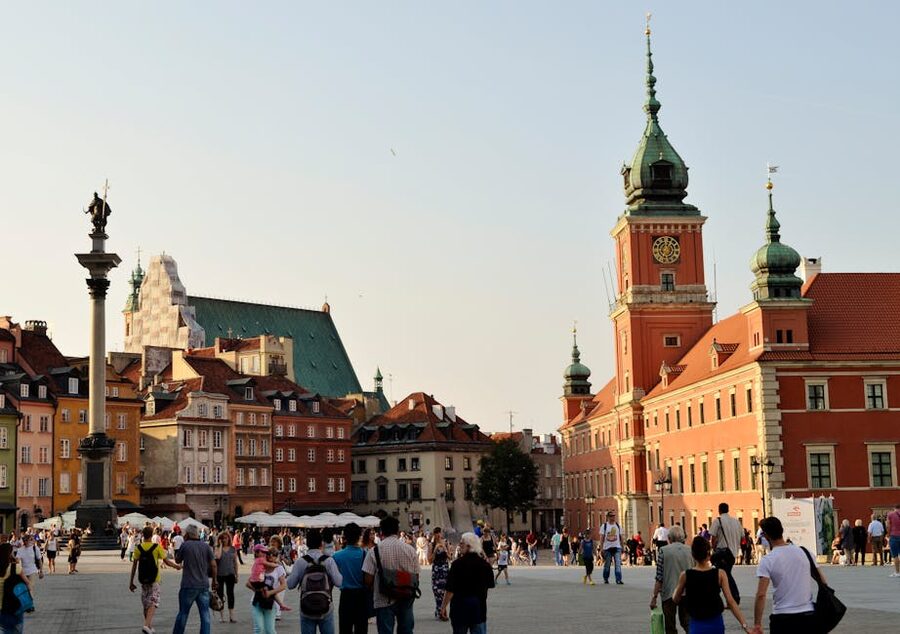
Booking takes about three minutes. Pick your date, pick your time slot (10am and 2pm are the two main slots in summer), enter your email, pay, done. You’ll get a PDF voucher with a QR code and the meeting point. Most tours meet at Castle Square (Plac Zamkowy) at the base of Sigismund’s Column. Show up ten minutes early and look for guides holding umbrellas, signs, or a clipboard with the tour name.
One booking detail I learned the awkward way: Warsaw guides are extremely good at English, but if you book a tour labelled simply “guided walking tour” without checking the language, you might end up on a Polish-language slot. Always confirm “in English” in the listing title or on the booking page.
Free Walking Tours: The Honest Verdict
Yes, free walking tours exist in Warsaw. Walkative, GuruWalk and a few others run pay-what-you-want Old Town walks twice a day in summer. They’re fine. But the guides work for tips, the groups are huge (often 30-plus people), and on a busy day you’ll be at the back straining to hear someone talk about the Royal Castle while a tuk-tuk revs behind you.
For $13 to $26 you get a small group, a guide who isn’t aggressively closing the tour with a tip pitch, and a microphone or headsets where needed. If you can spare the price of two beers in a Warsaw bar, book a paid tour.
The Three Tours I’d Actually Book
Most of what’s listed on GetYourGuide and Viator is variations on the same Old Town walk. The differences come down to length, group size, price, and whether the route extends down the Royal Route to Copernicus or stops at the New Town. Here are the three I’d put real money on.
1. Warsaw Old Town Guided Walking Tour: $13
This is the one I send most travellers to. Two hours, small groups, $13 a head, and the guides are almost all Warsaw locals who studied art history or architecture rather than the typical tourist-script crowd. Our full review notes the viewing terrace stop in particular. Most operators skip it. This one doesn’t, and it’s the best free panorama of the rebuilt skyline you’ll get.
2. Warsaw Old Town Highlights Walking Tour in English: $26
If you want context that goes beyond the medieval quarter, this is the one. The guide takes you down the Royal Route to the statue of Copernicus and the Holy Cross Church where Chopin’s heart is buried, then loops back through the Old Town. Our review flagged the pace as full but not rushed. You stop properly at the Royal Castle, Sigismund’s Column, the Barbican, and the Curie museum without the death-march feeling some longer tours have.
3. Old Town Warsaw Walking Tour (Viator): $26.60
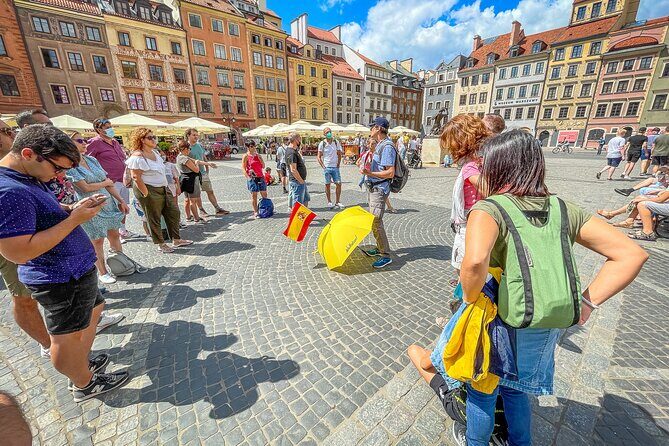
I’m not going to pretend this one is wildly different from the GYG version above. It runs about 2.5 hours, covers the same major stops, and the guide quality is similar. Our review noted the guide called Aga as a particular highlight. Not all Viator operators name their guides on the booking page, but worth checking. Pick this one if you have Viator credit or already have an account.
What the Routes Actually Cover
Most Old Town walking tours follow a similar arc. Knowing the stops in advance helps you decide which version to book and lets you skip ahead in your own head when the guide is between buildings.
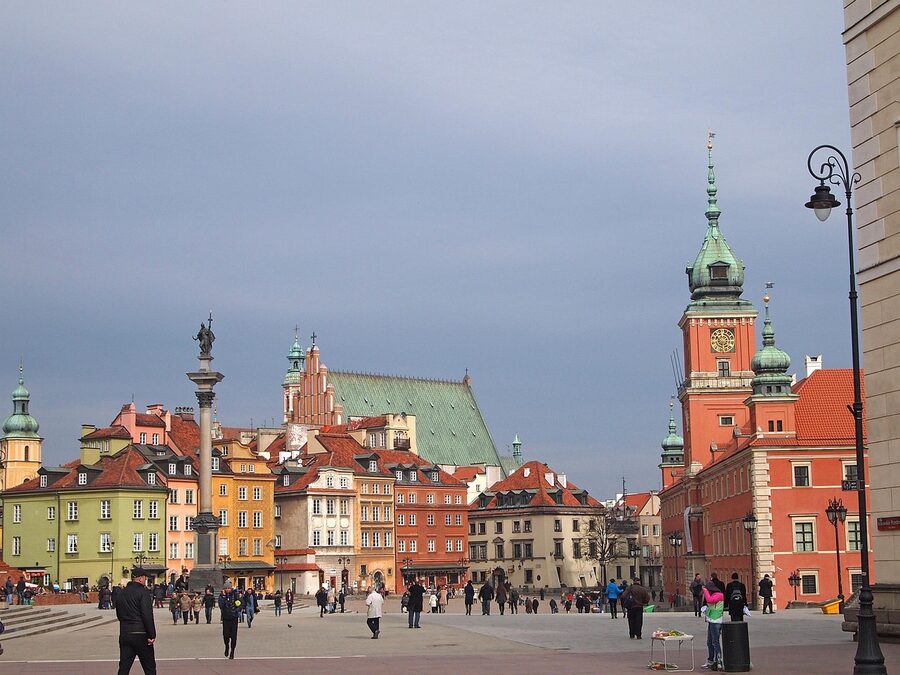
Castle Square and Sigismund’s Column
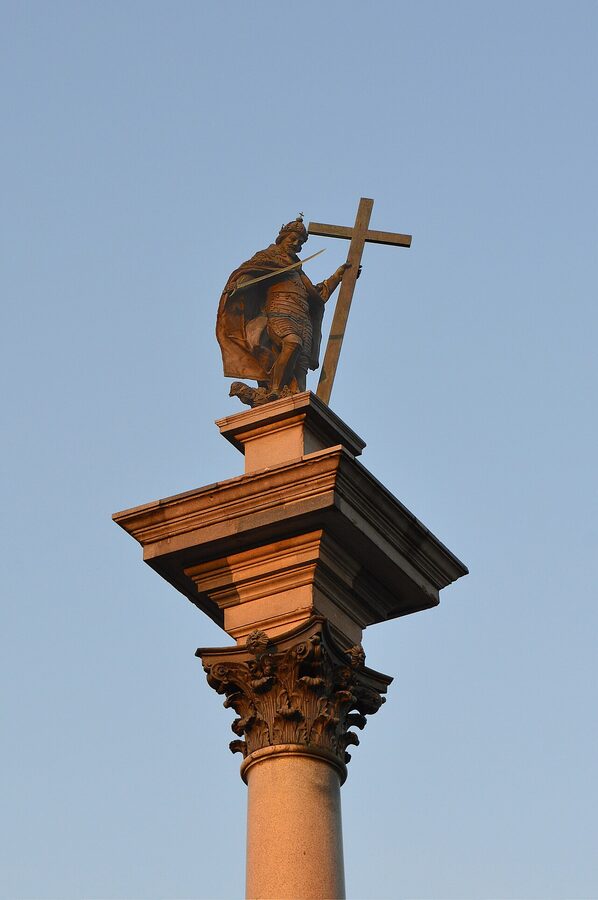
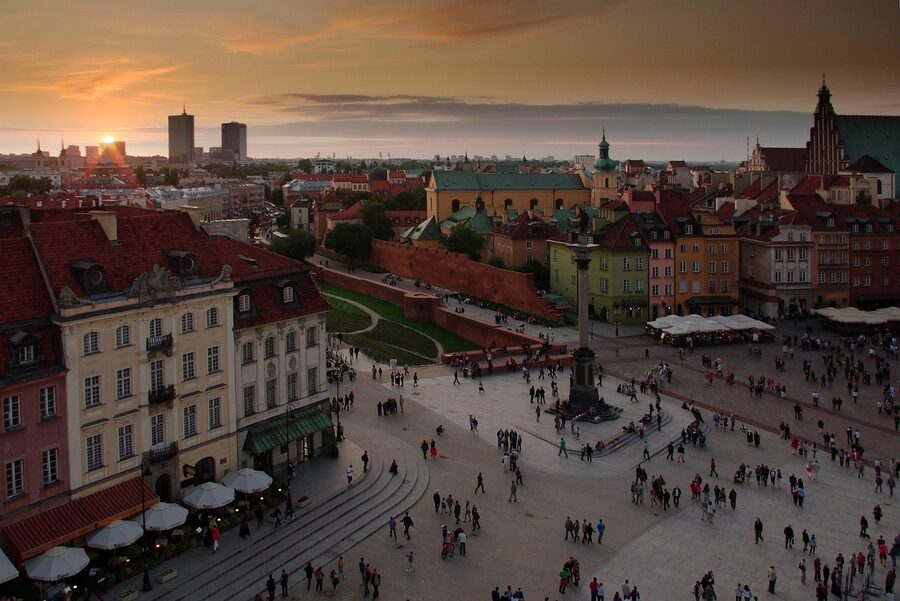
This is the meeting point. Sigismund’s Column is the oldest secular monument in the city, originally raised in 1644. The figure on top was destroyed in WWII and recast from old plaster casts, and most of the shaft is rebuilt. Your guide will point out the cracked old shaft displayed on its side near the entrance to the Old Town, which is a quiet reminder of what was lost.

The Royal Castle Exterior
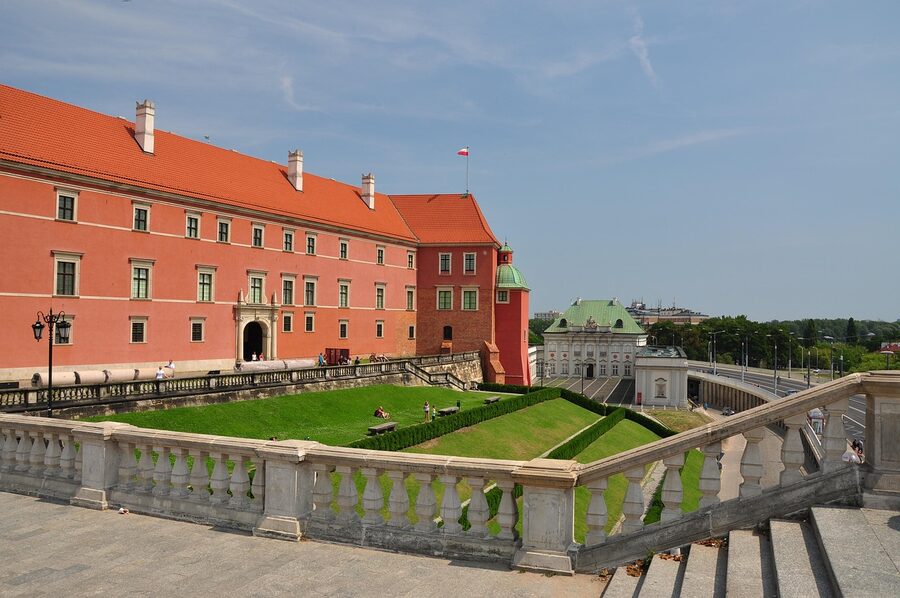
You don’t go inside on a walking tour. That’s a separate ticket and a separate few hours. But the guide will stand you at the right angle for the photo and explain how the castle was rebuilt entirely from scratch in the 1970s, decades after the rest of the Old Town. The interiors weren’t completed until the 1980s, partly because the communist government couldn’t decide whether rebuilding a royal palace was politically acceptable.
The Market Square (Rynek Starego Miasta)
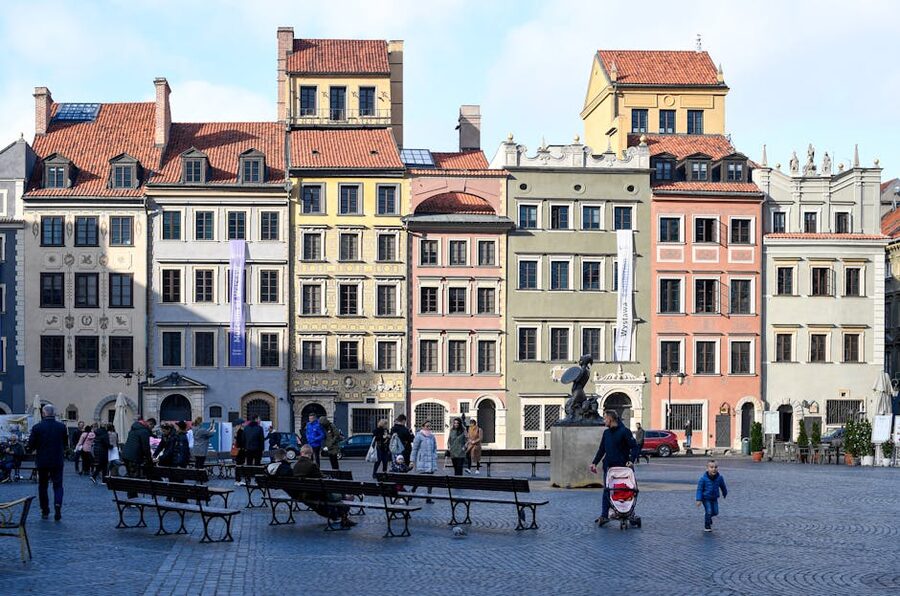
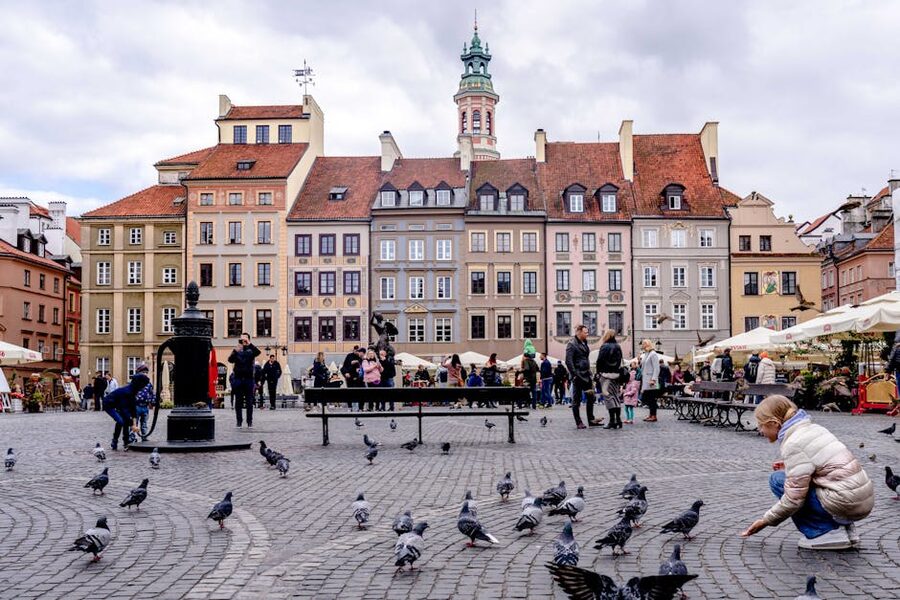
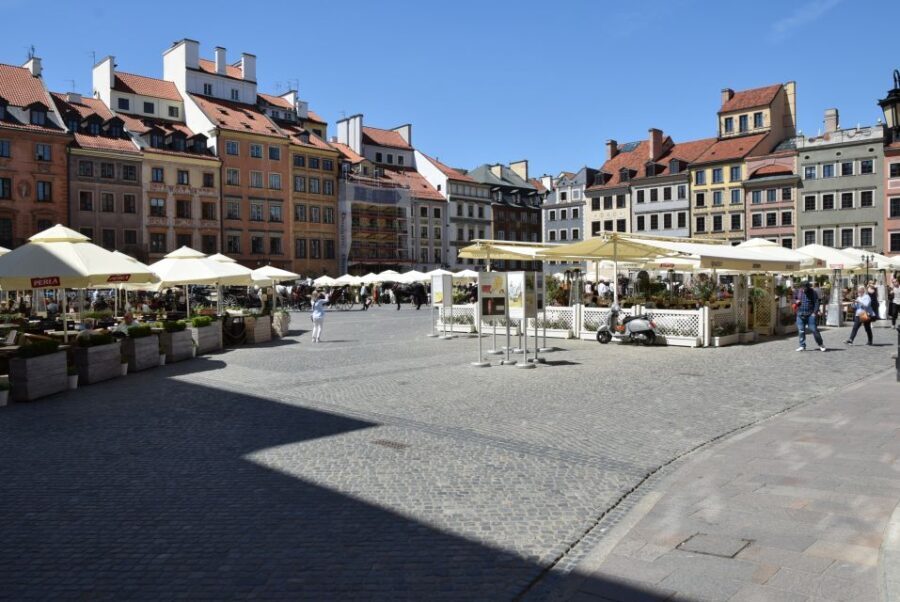
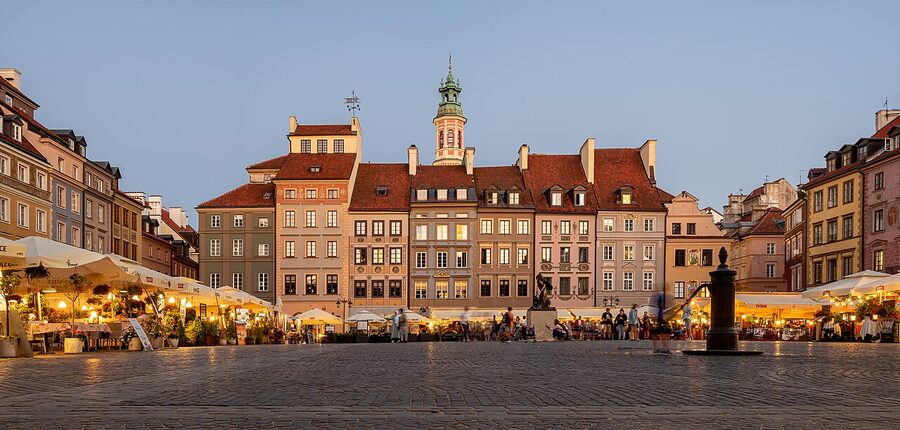
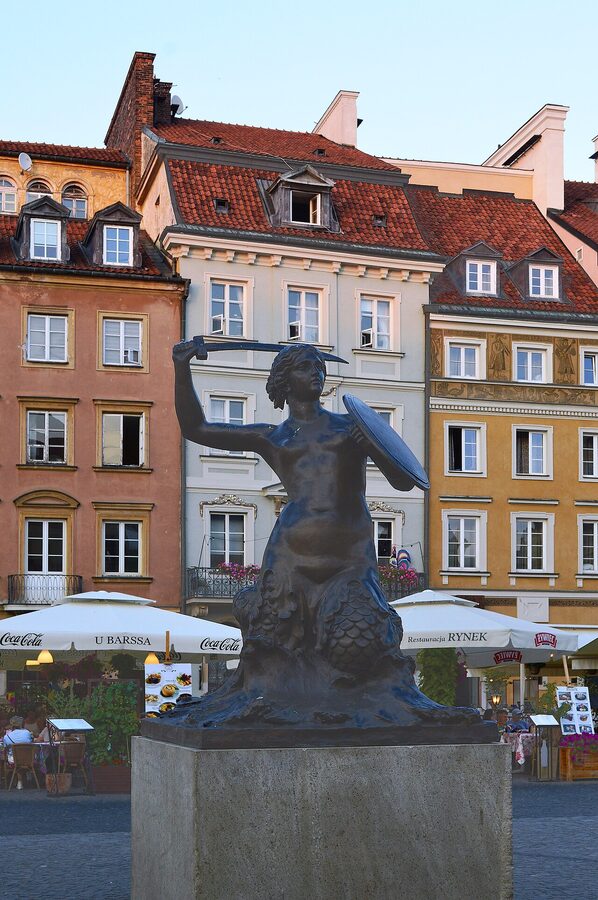
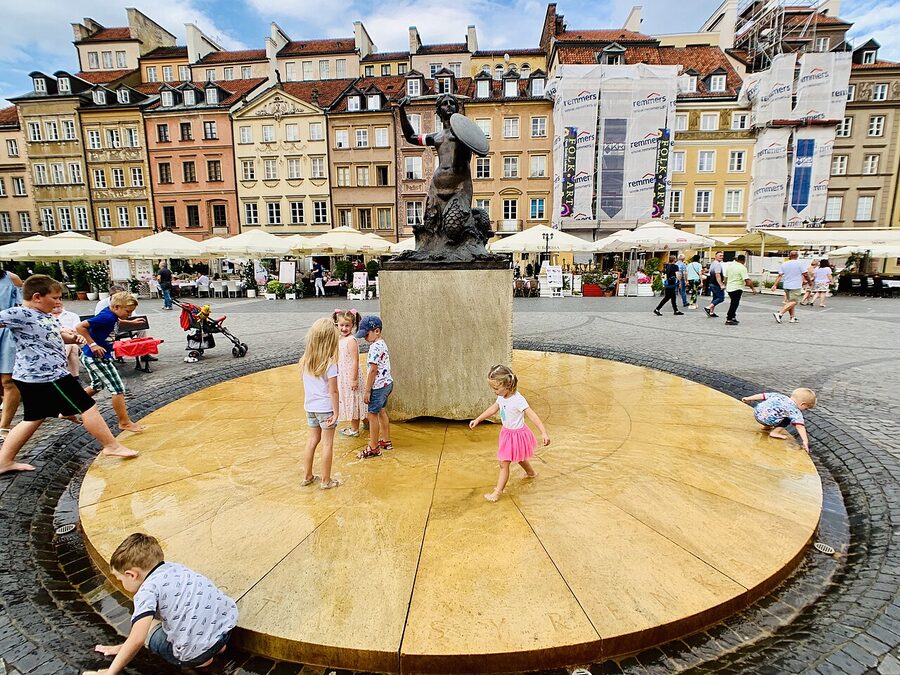
The heart of every Old Town tour. Four sides: Dekert, Barss, Zakrzewski, Kollataj. Each named after a historical mayor of Warsaw, each rebuilt to look slightly different so the square doesn’t feel artificially uniform. The Mermaid statue in the centre is a 1999 replacement of a 1855 original (which itself replaced an earlier one). The mermaid is the symbol of Warsaw and your guide will tell you the legend of how she ended up here.
.jpg)

The Barbican and the City Walls
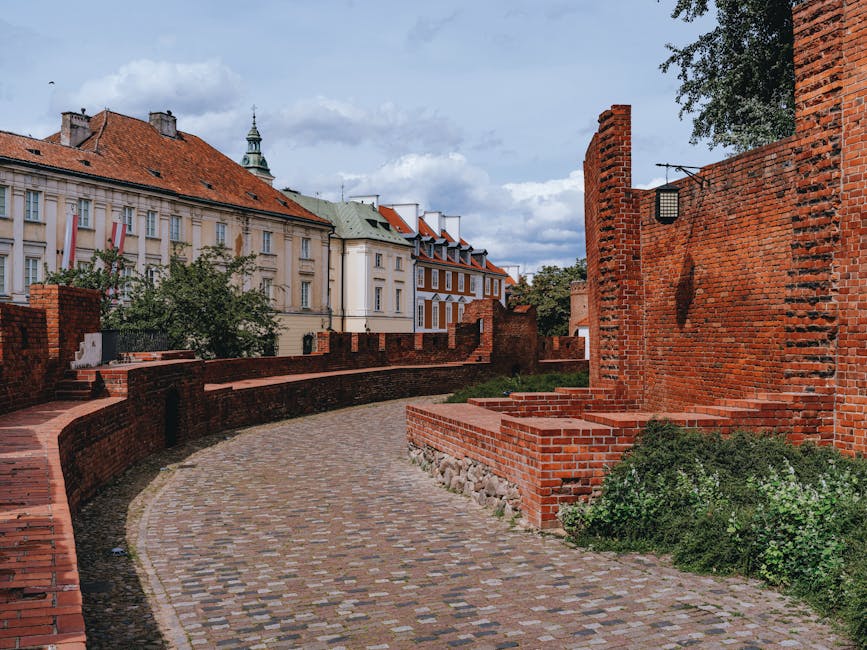
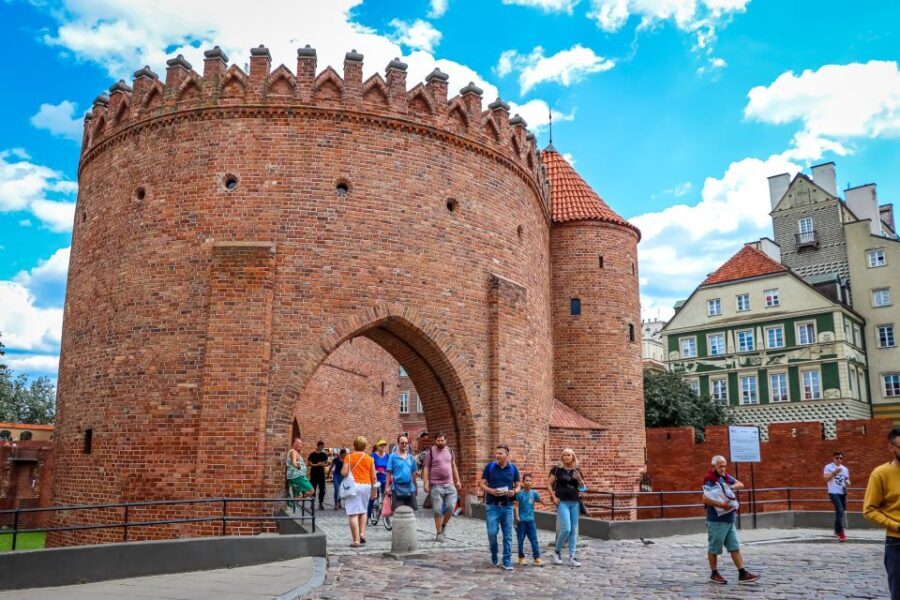
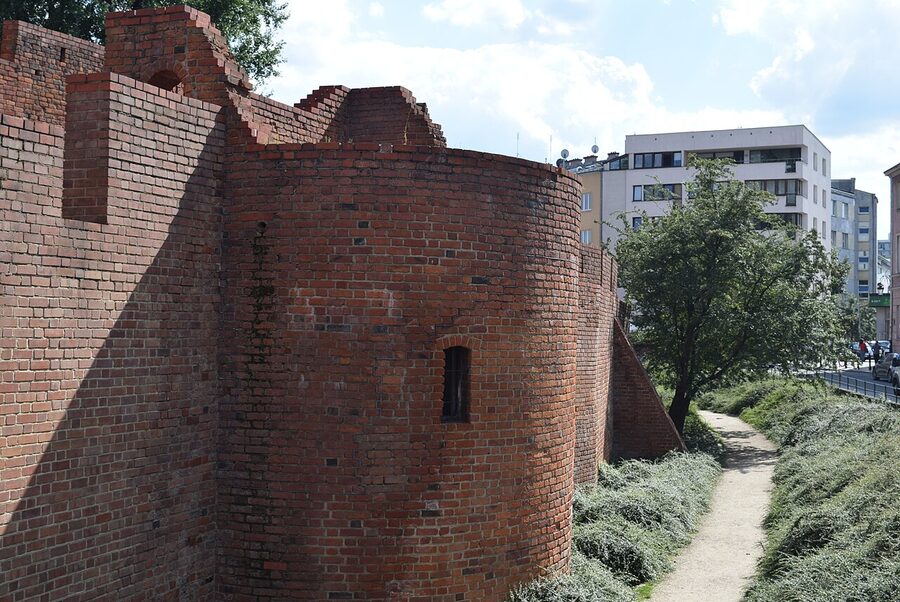
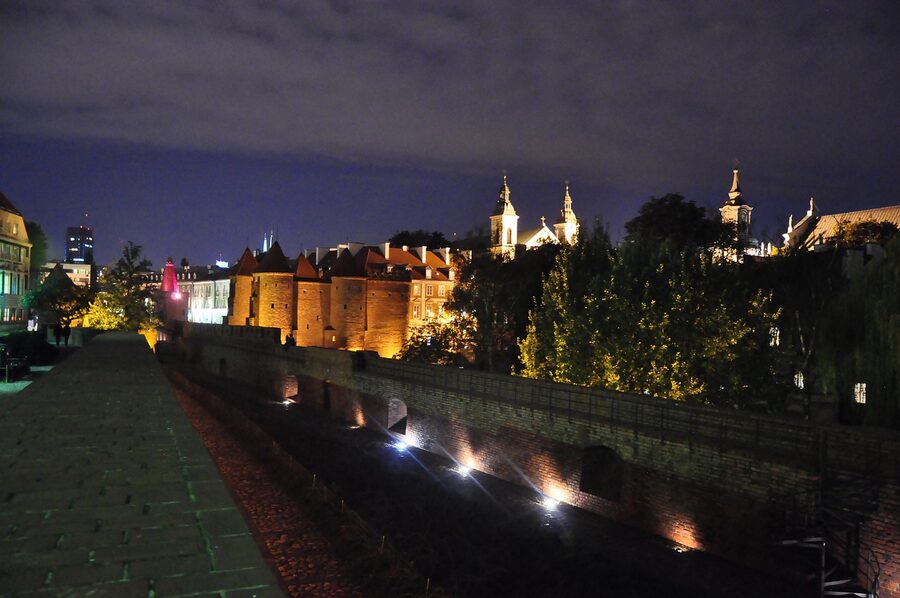
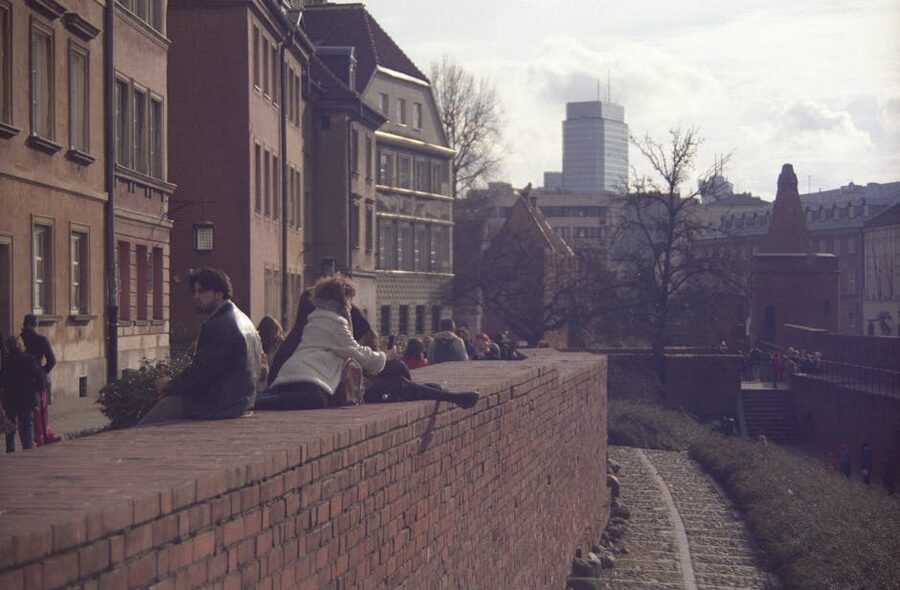
The fortified red-brick gateway between the Old Town and the New Town. This is where your guide will most likely stop and show you the photos of the same spot in 1945. Heaps of brick, no recognisable shape. The Barbican was rebuilt using surviving foundations and a single 16th-century engraving as reference. It’s the most evocative single before-and-after on the route.
.jpg)
St John’s Archcathedral
The brick-Gothic cathedral on the way down to the river. Most tours pop inside for two minutes if a service isn’t on. The interior is dim, calm, and surprisingly austere. The reconstruction architects went deliberately stripped-back, choosing a 14th-century Mazovian Gothic style over the more decorated 17th-century version it had become before the war. Polish kings are buried in the crypt, not that you’ll see it on a normal walking tour.
The Viewing Terrace and the Vistula
This is the stop the better tours include. There’s a viewing terrace at the eastern edge of the Old Town, looking out over the Vistula River and across to the Praga district. From here you can see the rebuilt skyline of Old Town from outside it, which is when the scale of the reconstruction really hits you.
Are You Really Seeing The Medieval City? The Honest Answer
Time to circle back. I said I’d answer the question I opened with.
The street plan is genuinely medieval. Warsaw’s Old Town was laid out from the late 13th century, and the reconstruction kept the street pattern down to the metre. So when you walk Świętojańska Street or turn into Krzywe Koło (the “crooked wheel” street that bends in a near-circle), you’re walking in the same geometry that locals walked in 1380.
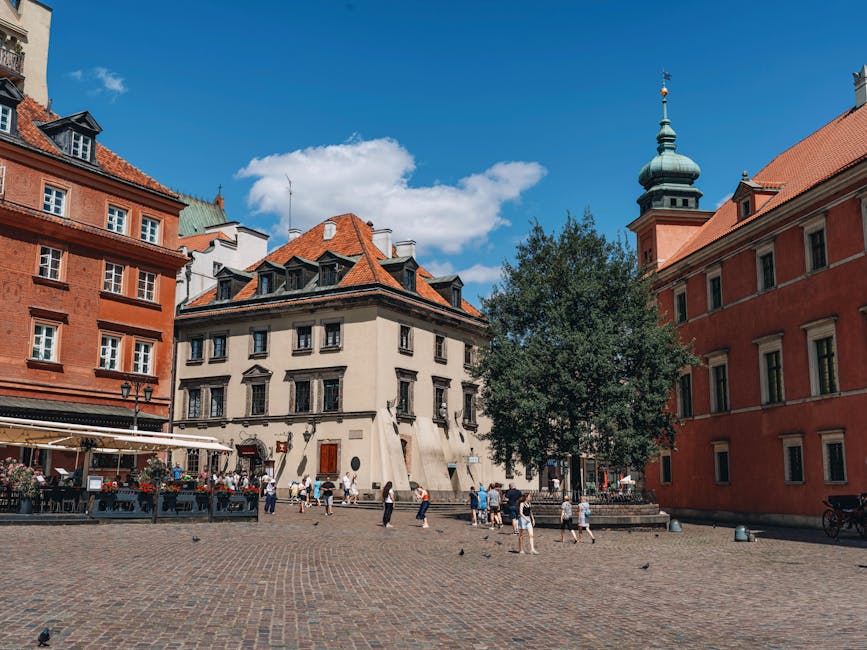
The foundations and cellars are partly original. Many of the houses in the Market Square were rebuilt directly on top of medieval foundations that survived the bombs, and several have 14th- and 15th-century brick cellars open to the public on guided tours that include interior visits. So below ground level, you’re often genuinely in old Warsaw.
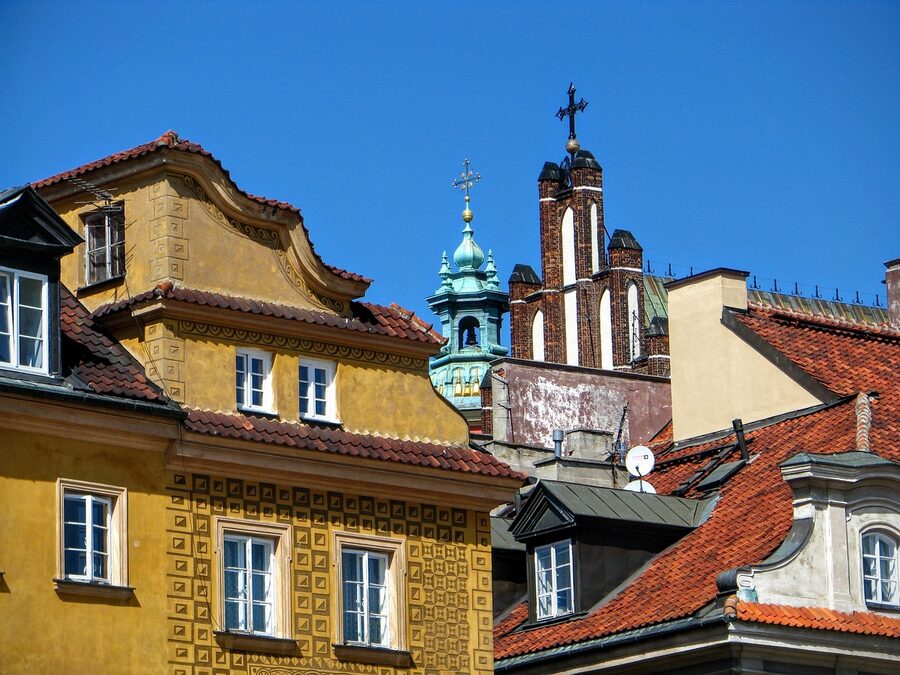
Above ground level is where reconstruction takes over. The facades, painted decoration, gables, sgraffito panels above the windows, balconies, doorframes are almost all 1948 to 1953. Reconstruction architects led by Stanisław Żaryn used three main reference sources to get the look right.
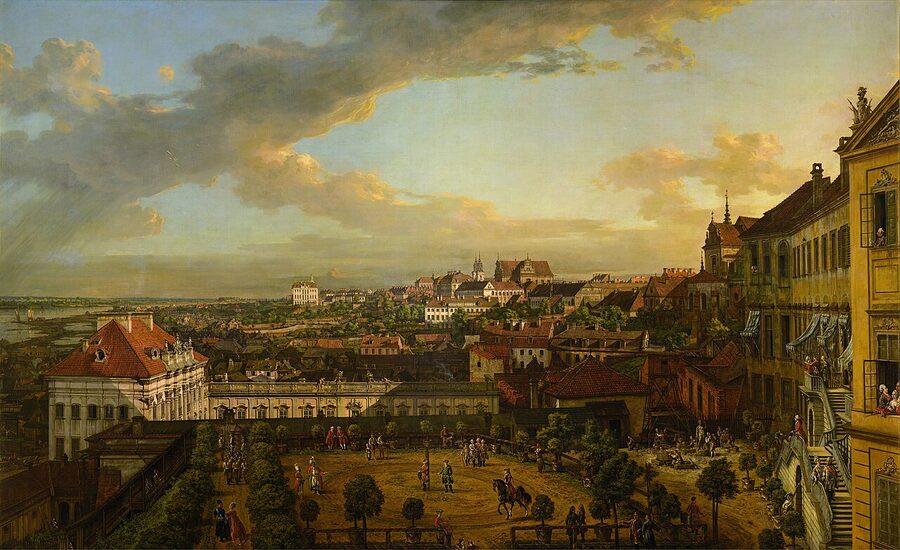

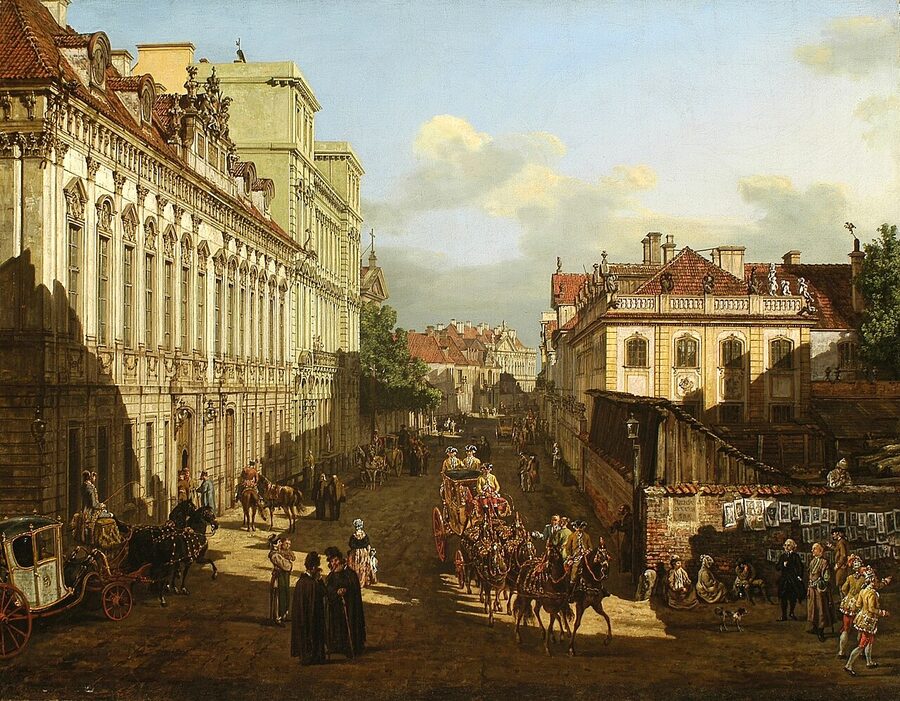
One: Bellotto’s paintings. Bernardo Bellotto, the nephew of the Venetian Canaletto, lived in Warsaw from 1768 until his death in 1780. He painted the city with near-photographic accuracy. His paintings survived the war (they had been moved to safety) and became the single most important reference for the reconstruction. There’s a whole room of them in the Royal Castle now, and your guide will probably point out the building you’re standing in front of and tell you which Bellotto it appears in.

Two: photographic surveys from the 1930s. Polish architecture students had documented the Old Town in detail before the war. Those drawings survived in archives and gave the reconstructors precise dimensions for everything from window proportions to gable angles.
Three: salvaged fragments. Decorative ironwork, stone door surrounds, even some painted plaster panels were dug out of the rubble and reset into the rebuilt walls. If you see a worn-looking carved coat-of-arms above a Market Square doorway, there’s a real chance it’s the original 17th-century one.
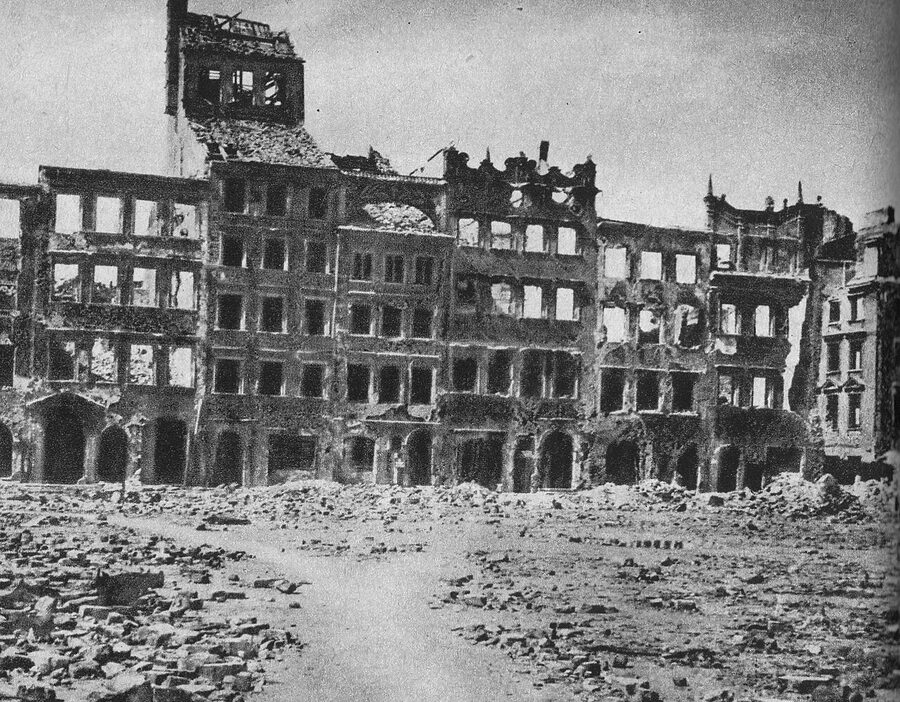

So the answer to the opening question is layered. You’re walking on a medieval plan, often above medieval cellars, looking up at 1950s reconstruction work that was based on 18th-century paintings of the medieval city. It’s not a fake. It’s not exactly real either, in the strict sense of unbroken continuity. It’s something else: a city that chose to remember itself by rebuilding from memory.
And does it matter? I don’t think so. The act of rebuilding was itself a statement, made by Polish architects and craftspeople who had survived occupation, that this place would not be erased. UNESCO listed it for that reason. Walking it with a guide who can tell you all this transforms a pretty square into one of the most moving stretches of urban history in Europe.
When to Book and When to Go
Pre-book in summer. June through August, morning slots fill up two or three days in advance, and the rare English-language afternoon slots can sell out a week ahead. Off-season (November to March), you can usually book the day before, and morning tours sometimes run with three or four people, which is basically a private tour at group prices.
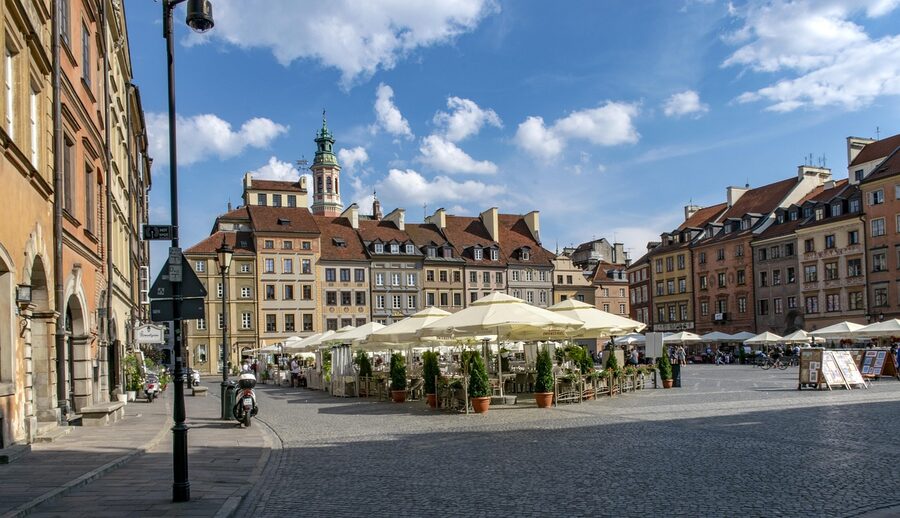
The 10am slot is the one I recommend. The square is quieter, the light is good for photos, and you finish in time for lunch at one of the Old Town milk bars (Bar Mleczny Familijny on Nowy Świat is the most famous, technically just outside the Old Town but a five-minute walk).
The 2pm slot is the busiest. School trips and cruise-ship day-trippers from Gdansk pile in around then. If you’re sensitive to crowds, skip it.
Evening tours exist but they’re rarer. A handful of operators run dusk walks in summer that include the Sigismund Column at blue hour and finish at the Vistula viewing terrace as the lights come on. Beautiful in June and July, less so in October when it’s dark by 5pm.
What to Wear and Bring
Cobblestones throughout, so heels are out and sandals are fine in summer but not on a wet day. Layers in shoulder season. Warsaw weather is moodier than Krakow, with sudden rain showers common in May and September. Most tours run rain or shine, so a fold-up umbrella in your bag is smart.
Bring some cash. The tour is paid online, but tipping the guide 20 to 50 zloty (about $5 to $12) is normal at the end. Some operators have a tip jar; others wrap up quietly and people hand over notes.
What the Tour Doesn’t Cover (And Where to Go After)
A two-hour Old Town walk doesn’t get you inside the Royal Castle, the cathedral crypt, the Warsaw Uprising Museum, the POLIN Museum of Polish Jews, or the Praga district across the river. Those are all separate visits, and the city deserves more than a single afternoon.
The walking tour is the right place to start. It gives you the framework. Once you’ve understood the Old Town as a reconstruction project, the rest of the city’s WWII memorials and museums make far more sense.
Most Old Town walking tour operators also run themed follow-up walks: a Jewish heritage tour, a communist-era walk, a Warsaw Rising walk. If your guide was good, ask which of these they run. Booking a second tour with the same operator is a smart move.
How Warsaw Old Town Compares to Krakow
Polish travellers will often pit Warsaw and Krakow against each other, and the question always comes up: which Old Town is better?
Krakow Old Town is medieval-original. The buildings, the Market Square, the Cloth Hall, the basilica all survived WWII largely intact because the Germans used Krakow as a regional capital and didn’t dynamite it on retreat. So Krakow is real medieval Europe in a way Warsaw can’t claim to be.
Warsaw Old Town is a memorial. It’s the same square footage, the same street plan, but it’s a square mile of post-war Polish defiance. The two cities are doing different things, and a walking tour in each is a different experience even though the format looks identical on a booking page.
If you’re choosing between them on time constraints, do Krakow for medieval Europe and Warsaw for 20th-century Polish history. If you have time for both, which you should given the train between them is two and a half hours, book a walking tour in each. Our Krakow Old Town walking tour guide covers the southern equivalent.

Practical FAQs People Actually Ask
Is the tour wheelchair accessible?
Mostly yes. The Old Town is paved with cobblestones throughout, which makes wheelchair use bumpy, but the routes don’t include stairs and the main square and side streets are flat. Some operators specifically advertise accessibility, so check the listing. The Royal Castle interiors (separate visit) are also accessible via lift.
Are kids OK on a walking tour?
Yes, but think about age. A two-hour history-heavy walk can be a slog for under-eights. A few operators run kid-friendly versions with games and shorter durations. If you’re with younger kids, a hop-on hop-off bus or a tuk-tuk loop can be a better option for the first day, then come back for the deeper walk if they’re hooked.
Do I need to book anything else for the tour day?
No, just the tour. You don’t need separate Royal Castle tickets unless you plan to go inside (which most walking tours don’t). You don’t need transit tickets unless you’re staying outside the centre. The Old Town is fully walkable from any hotel within a kilometre of Castle Square.
Will the guide actually go off the tourist script?
The good ones will. The two GetYourGuide tours I rated tend to draw art history graduates or working architects. They have opinions and they’ll tell you which reconstruction details are debatable. Free walking tour guides are more script-driven because the rotation is higher.
What about photos?
Photography on the tour is fine. The guide won’t slow down for everyone’s shots, so take quick photos as you walk and return to favourite spots later. The Market Square and Castle Square both reward a return at golden hour.
Other Warsaw Guides Worth Reading
Most travellers spend two or three days in Warsaw, and a single walking tour is just the opener. If you want to get a feel for the wider city, our Warsaw Chopin concert guide covers the candlelit Old Town piano recitals that pair beautifully with a daytime walking tour. Book the walk for 2pm, dinner at a milk bar, then a 7pm Chopin recital, and you’ve had a perfect Warsaw evening. The Warsaw galar boat cruise guide is another one I’d pair with this tour: a flat-bottomed historic Polish boat ride down the Vistula gives you the city from the river side, which a walking tour can’t.
For getting around the wider city, you have to cover serious ground. Wilanów Palace is 9km south of the Old Town, the Warsaw Uprising Museum is in another district, and the POLIN museum is north. The Warsaw hop-on hop-off bus guide covers a route that links these spots without three taxi rides. And if you’re crossing from Krakow on the same trip, the Krakow Old Town walking tour, the Wieliczka Salt Mine ticket guide, the Krakow bike tour, the Krakow pub crawl, and the Auschwitz combo day trip all sit in the same Polish travel arc.
One last thing. After you’ve done the walking tour, walk the Old Town once more on your own, slowly, at dusk. Take your guide’s stories with you. Look at the buildings differently this time. That second walk is when the place really lands.
Affiliate disclosure: We use affiliate links to GetYourGuide and Viator. If you book through them we earn a small commission at no extra cost to you. It’s how we keep the lights on. Prices in this guide are subject to change, so always confirm on the booking page.