
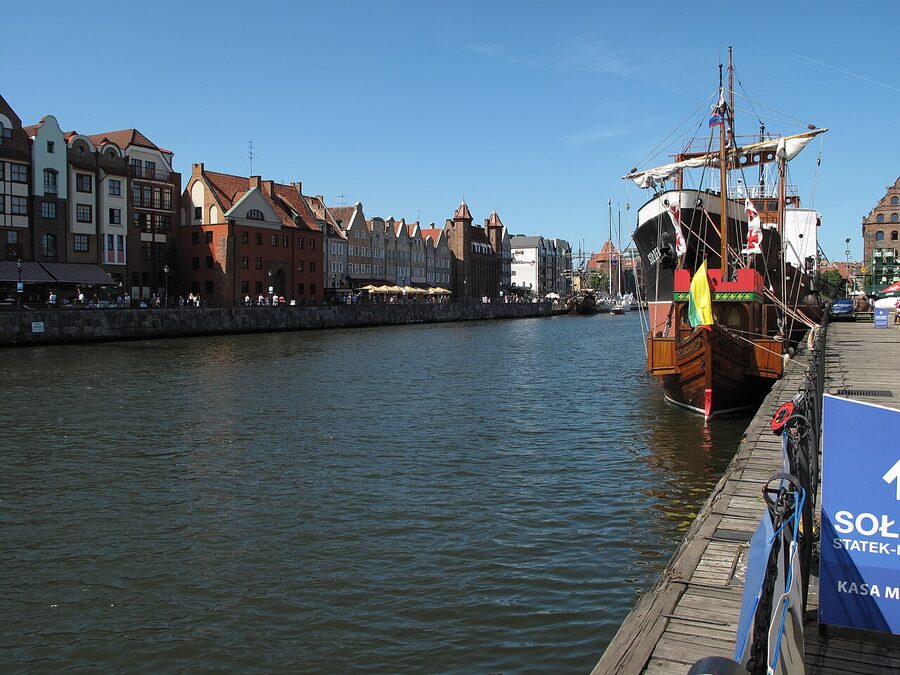
The first thing you notice is the smell of pitch and warm timber, then the slow creak as twelve people step on board and the boat dips an inch under the weight. The captain unties from the bollard right under the Gdańsk Crane, gives the rope a flick onto the deck, and the Motława River starts moving past you instead of the other way around. Five seconds in and the Old Town brick fronts on the Long Embankment look completely different from how they did when you were standing on them.
That was my third Gdańsk visit. I’d done the walking tour, eaten the herring, photographed the Crane from every angle. The historical Polish boat cruise was the one thing that made me see the city for what it actually is, which is a Hanseatic port that built its whole identity on the river, not on the streets behind it.


- In a Hurry
- What “Historical Polish Boat” Actually Means in Gdańsk
- Where the Boats Actually Leave From
- Tours I’d Actually Book
- 1. Gdańsk City Cruise on Historical Polish Boat: from
- 2. Sunset Cruise Through the Imperial Shipyard: from
- 3. Viator Galley Boat City Cruise: from about
- What You Actually See on the Route
- Booking: How It Works in Practice
- What to Pay Attention To Before You Book
- When to Go and Which Slot to Pick
- Avoid the Public Holiday Trap
- What This Cruise Has That a Walking Tour Doesn’t
- Where the Galary Came From: A Quick History
- Comparing Gdańsk Boat Cruises Across Europe
- Practical Tips From Three Trips on the Water
- How Much to Tip
- Combining the Cruise With Other Gdańsk Activities
- Where the Experience Falls Short
- Getting to Gdańsk for the Cruise
- Other Gdańsk Guides Worth Reading
In a Hurry
Best overall: The 70-minute Gdańsk City Cruise on a Historical Polish Boat from $22. Twelve seats, one guide, and a route that hits every landmark on the river without rushing.
Best for evening: The 90-minute Sunset Cruise Through the Imperial Shipyard from $26. Same boat, different light, and the shipyard ruins look almost cinematic at golden hour.
Viator alternative: The same daytime experience booked through Viator’s Galley Boat Cruise from about $22. Pick this one if your loyalty points sit on Viator.
What “Historical Polish Boat” Actually Means in Gdańsk
This is the part most blogs skim over, and it matters because the same word can mean three different things depending on which Polish city you’re in.
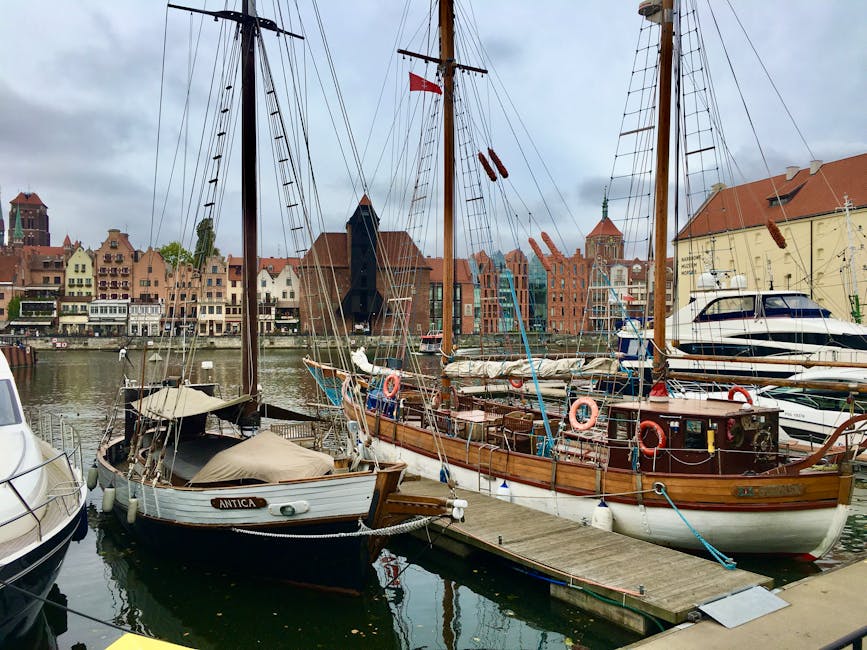
In Gdańsk, “historical Polish boat” almost always refers to a small wooden replica based on the type of river craft that worked the Vistula and the Baltic ports for around four hundred years. They’re shallow, open, with bench seating for about twelve passengers, and a single canvas awning if you’re lucky. The captains call them galary in Polish, but a galar in Gdańsk is shaped and rigged differently from the much heavier wooden barges you’ll find on the Vistula in Warsaw. Different river. Different working purpose. Same word.
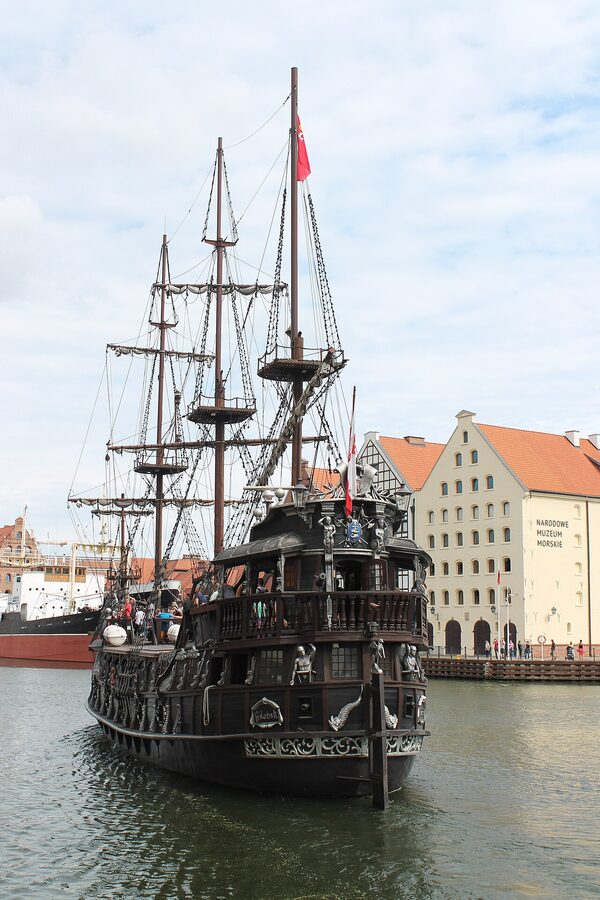
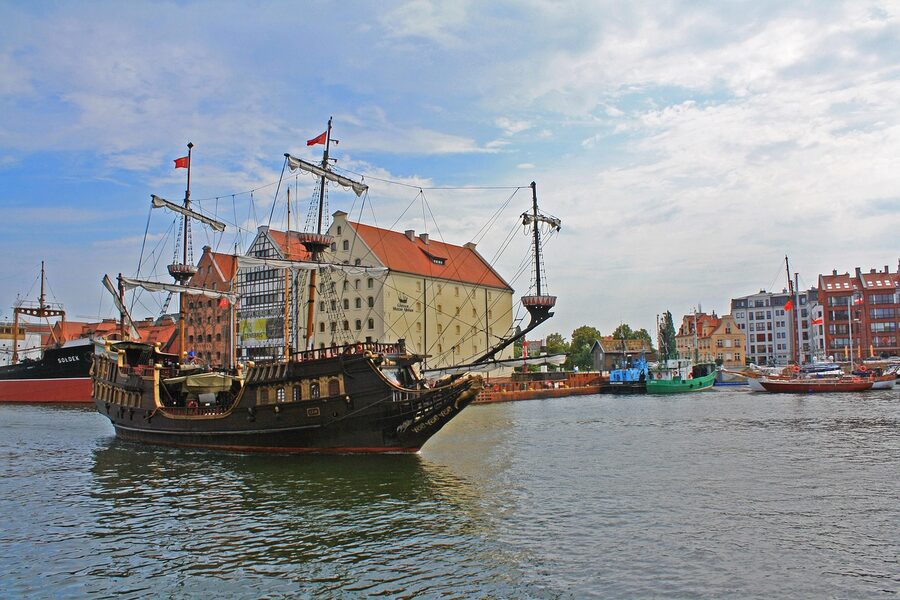
You’ll also see two larger boats marketed alongside the small replicas. The Galeon Lew (Lion Galleon) is a full-size sixteenth-century-style galleon used for longer trips down to Westerplatte. The river cruise on Chleb i Wino’s restored 1975 ship is a totally different beast again, a steel passenger boat from the late communist era used for evening dinner cruises. None of these are the same as the small twelve-seat replica that most people mean when they Google “historical Polish boat in Gdańsk.”
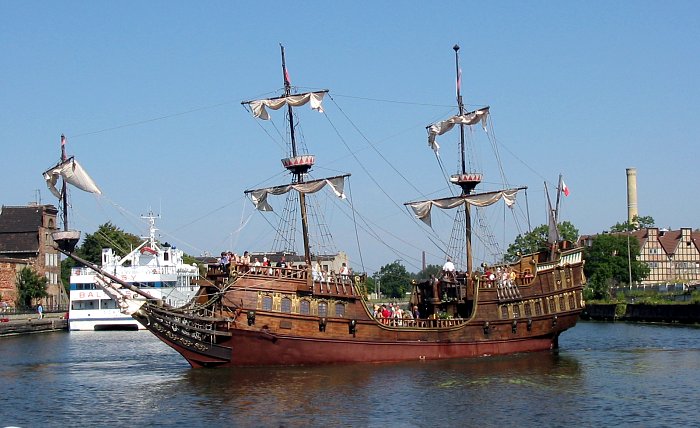

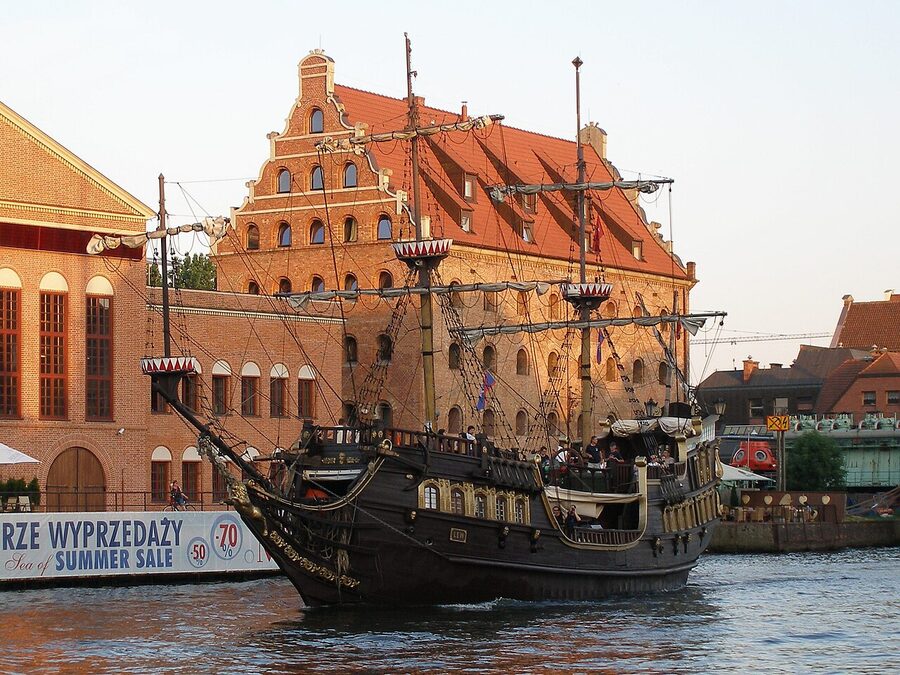

For the rest of this guide, when I say “historical Polish boat” I mean the small twelve-seater replicas that depart from the Long Embankment. Those are what the top-reviewed cruises on GetYourGuide and Viator are using. They’re also the ones that match what most travellers picture in their head before they book.
Where the Boats Actually Leave From
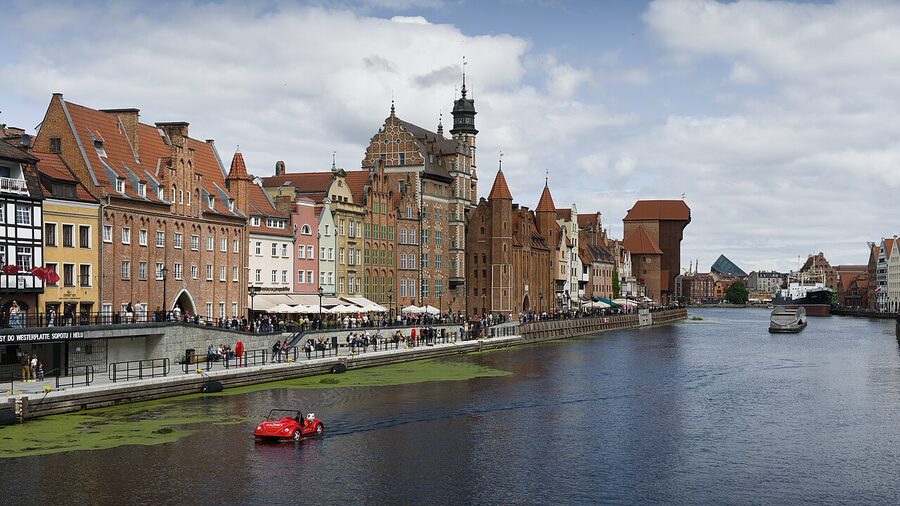
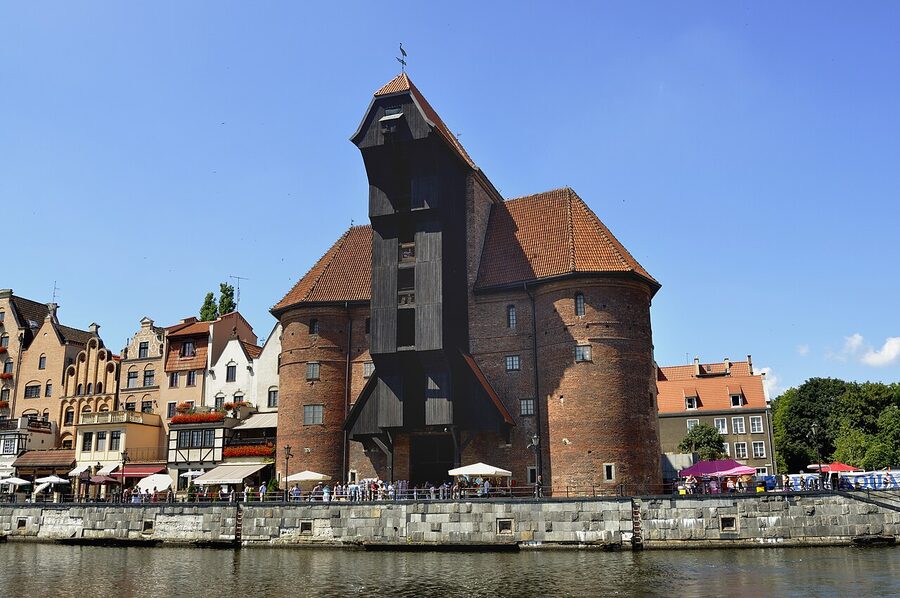
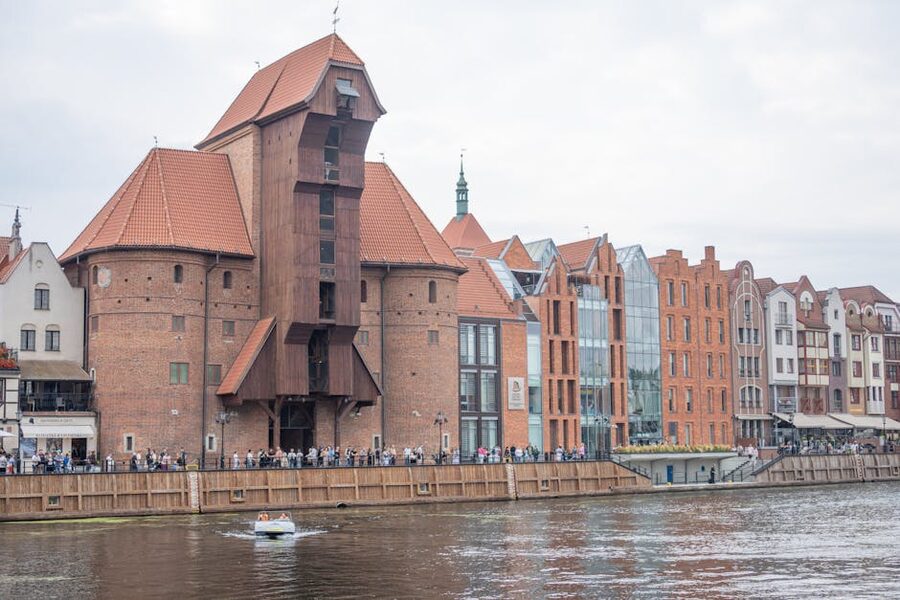
Every operator I’ve checked uses the same general stretch of dock. You head to the Długie Pobrzeże, the Long Embankment, on the west bank of the Motława River. Look for the Gdańsk Crane (Żuraw), which is the huge wooden structure that looks like a kind of medieval warehouse with two giant hamster wheels inside. The boats moor in a row south of the Crane, between the Crane and the Mariacka Gate.
The exact slip changes depending on the operator and the time of year. GetYourGuide’s pickup point for the City Cruise is described as “the post-shipyard area” in some listings and “the Long Embankment near the Crane” in others. Both are technically correct because most operators run a small skiff to ferry passengers to the proper boat if it’s moored further north. Read the confirmation email carefully. Don’t assume.

If you’re staying anywhere in the Main Town (Główne Miasto), you can walk to the embankment in under ten minutes. From the Hilton on Targ Rybny, it’s about three minutes south along the river. From the Old Town further north, give yourself fifteen.
One thing nobody tells you: arrive at least fifteen minutes early. The dock has no proper ticket office, and the operators rotate small boats in and out of the slip every hour. If you turn up at the exact departure time, you’ll watch your boat leave from a different mooring while you’re still asking the wrong captain where to board.
Tours I’d Actually Book
Three tours cover almost every angle of the historical-boat experience. I picked these based on my own time on the river, the route each one runs, and what makes them genuinely different rather than three versions of the same thing.
1. Gdańsk City Cruise on Historical Polish Boat: from $22
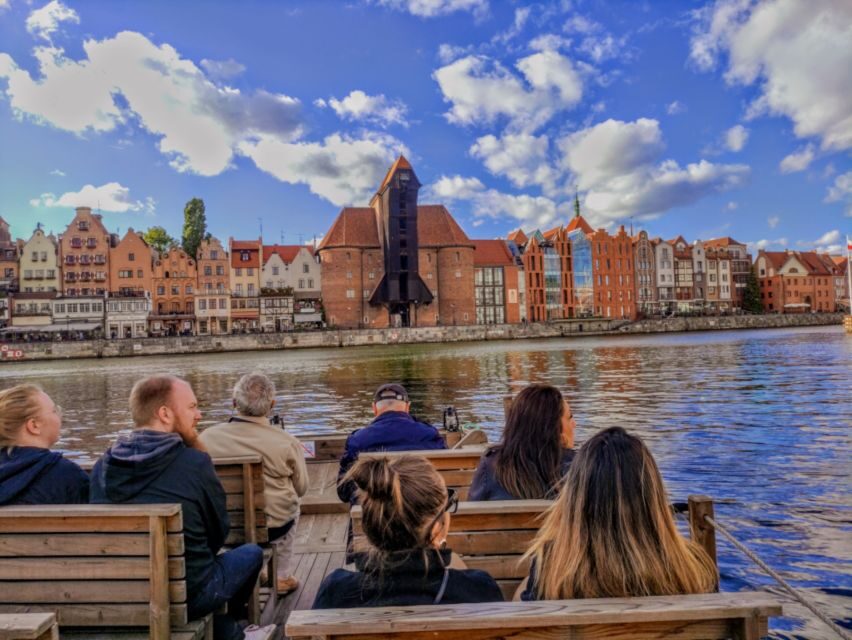
This is the one to book if you’ve never done the river before. Twelve seats, a live guide who switches between Polish and English depending on who’s on board, and a route that takes in the Crane, the Mariacka Gate, the Imperial Shipyard ruins, and a section of the modern port. Our full review covers the seasonal differences and which slot in the day works best, but in short: morning sailings get you the calm water, late afternoon gets you the warmer light. The boat is wooden, low to the river, and exactly the kind of thing you’d expect for the price.
2. Sunset Cruise Through the Imperial Shipyard: from $26
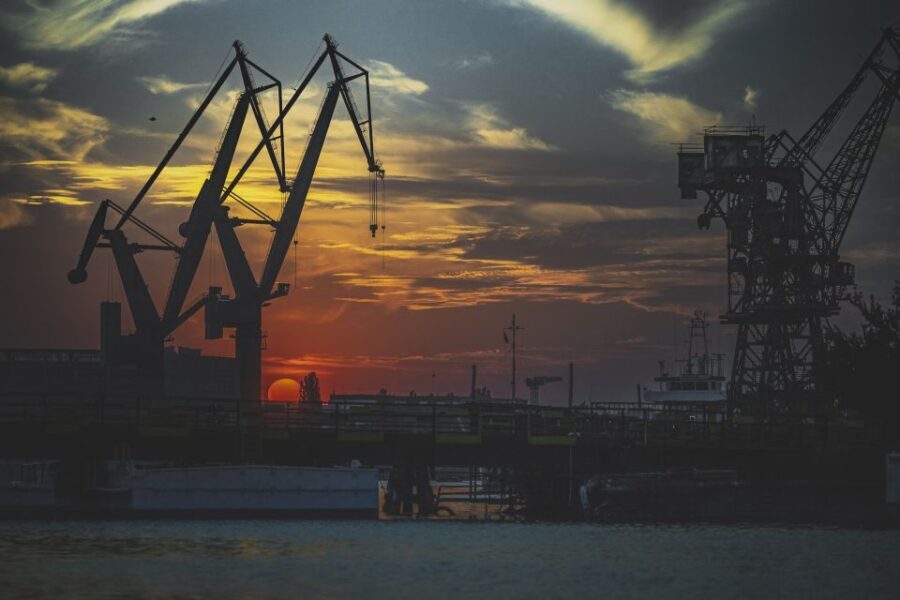
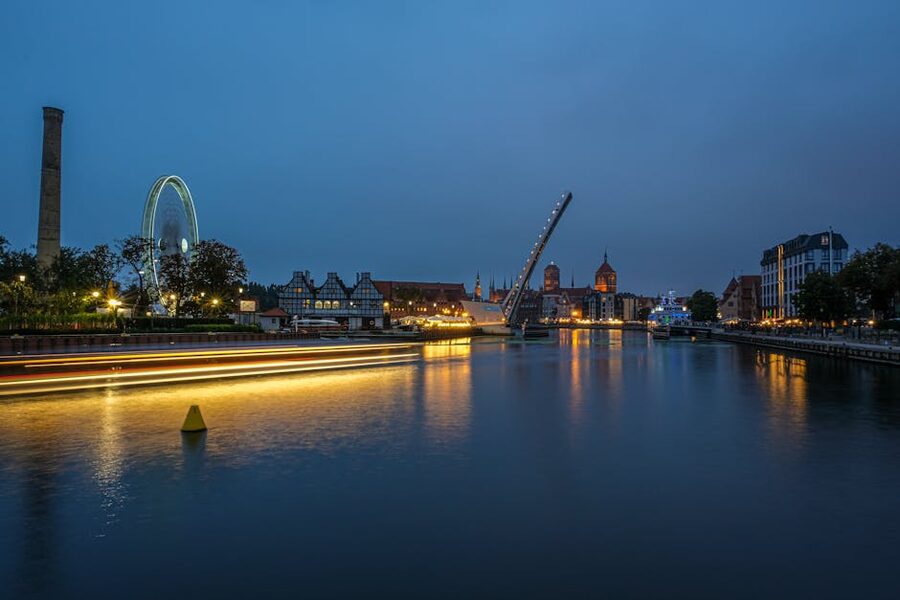
If you’re only doing one cruise and you don’t mind paying four dollars more, do the sunset version. The route is longer, the boat goes deeper into the post-industrial Shipyard zone that was closed to the public for over 170 years, and the captain usually slows down for the bend right where the gantry cranes are silhouetted against the sky. Our review goes into the timing trade-off (you’ll be on the water through dinner hour, plan around it). Bring a light jumper. The river drops about three degrees once the sun is gone.
3. Viator Galley Boat City Cruise: from about $22
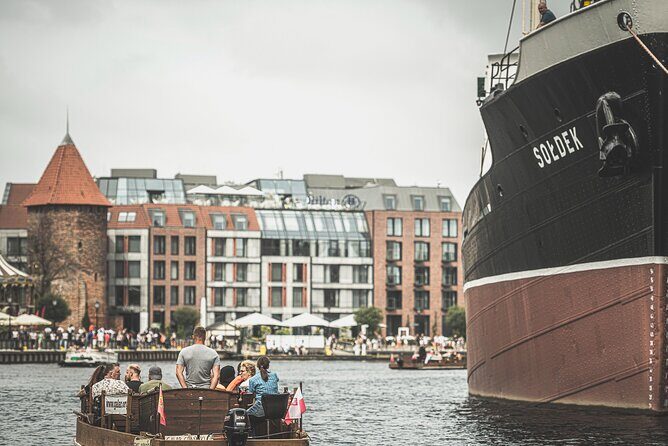
This is genuinely the same operator and the same boat as the first card, just listed through Viator instead of GetYourGuide. Pick it if you have a reason to. We’ve reviewed it with notes on the small differences in cancellation policy. The Viator listing tends to confirm slightly faster around peak summer, which is the one practical reason to choose it. Otherwise the experience is the GetYourGuide cruise above.
What You Actually See on the Route
The river is the spine of old Gdańsk. From the small replica boats, you get angles on the city you simply can’t reach on foot.
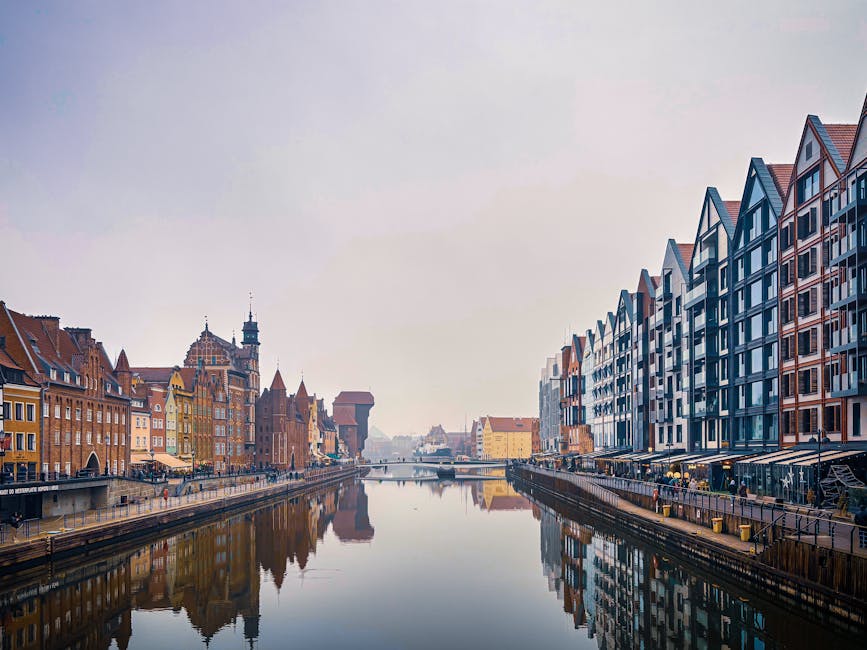
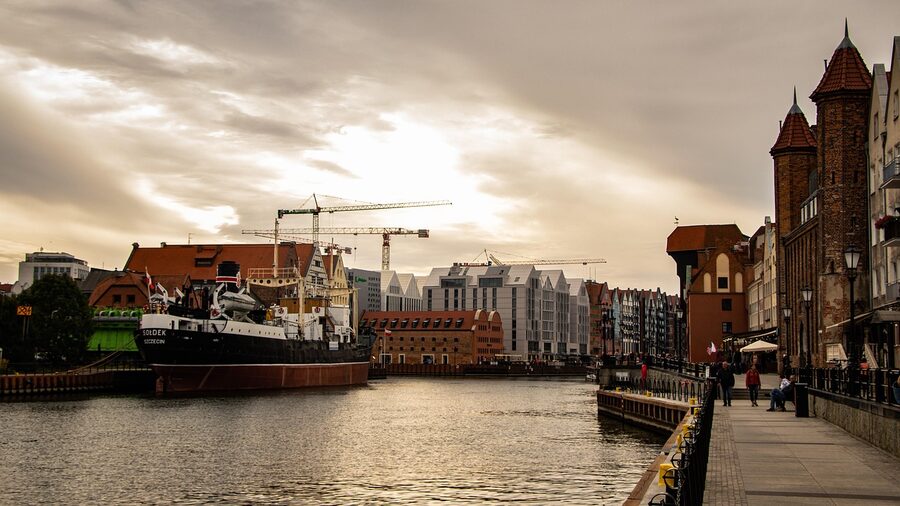
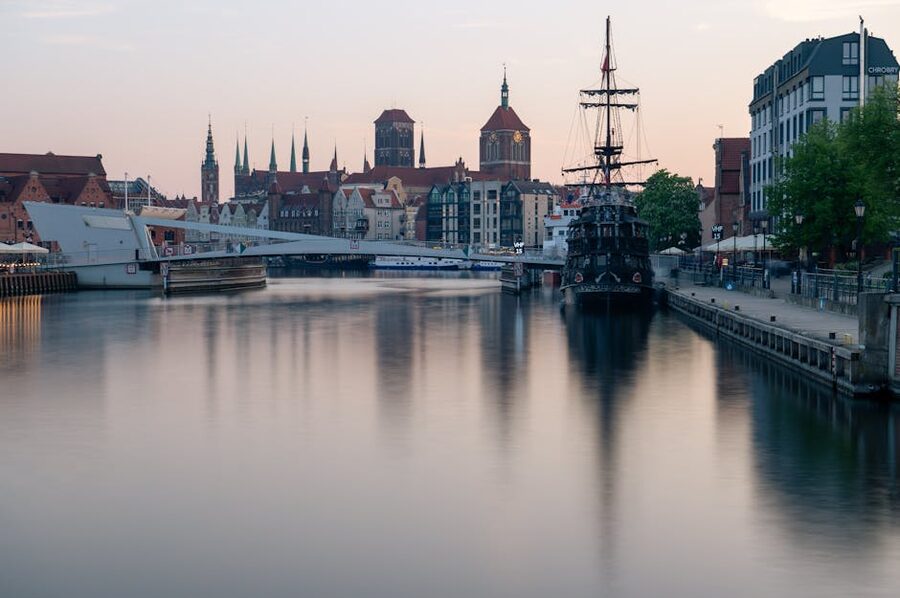
The first ten minutes are the Old Town stretch. You leave the Crane and pass under the Green Bridge (Zielony Most) heading north. Look up at the Mariacka Gate from below and you’ll see how thick the brick is, easily a metre. The merchant houses on the embankment were rebuilt almost exactly as they stood before 1945, so the stretch you’re floating past is a careful reconstruction rather than a survival. It still works.
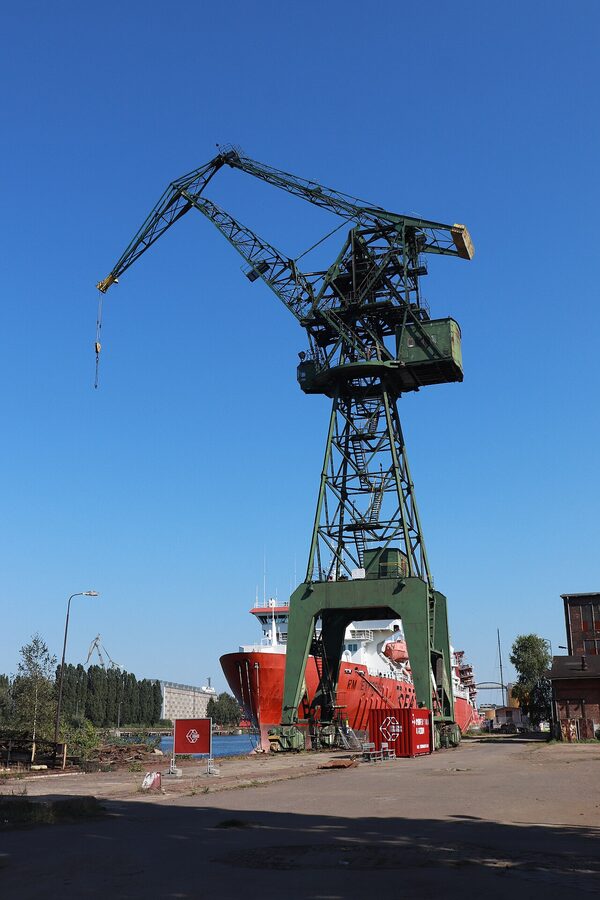
Past the Old Town, the river opens into the post-shipyard zone. This is where the cruise pays off. Soviet-era cranes, abandoned slipways, and the brick ruins of the Imperial Shipyard line both banks. The captain usually slows here and tells the story of where Solidarity was born in 1980, and where the U-boats were built during the war. It’s an unsettling stretch and you can feel the weight of it from the water.

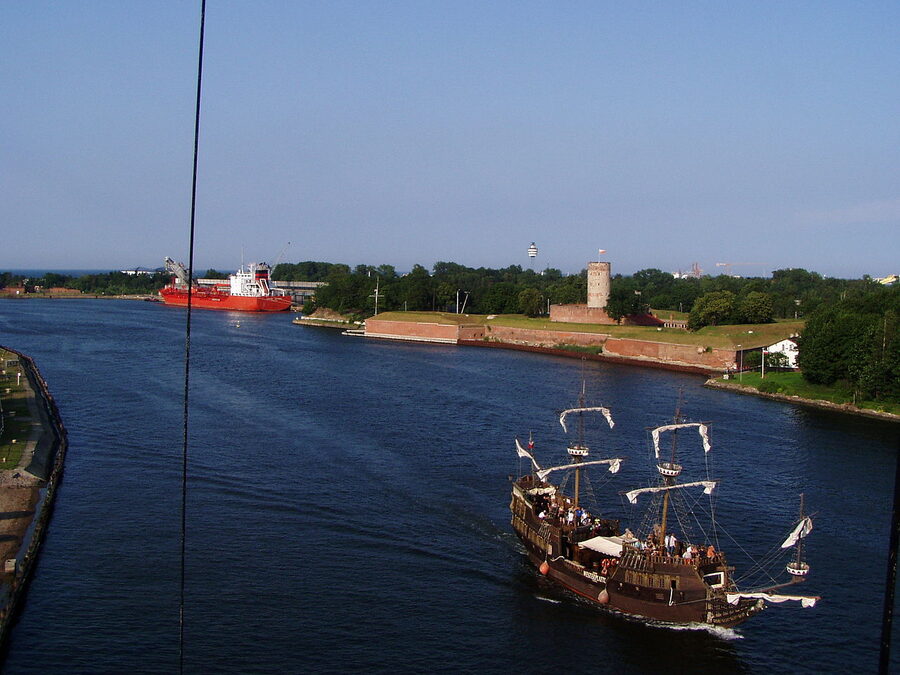
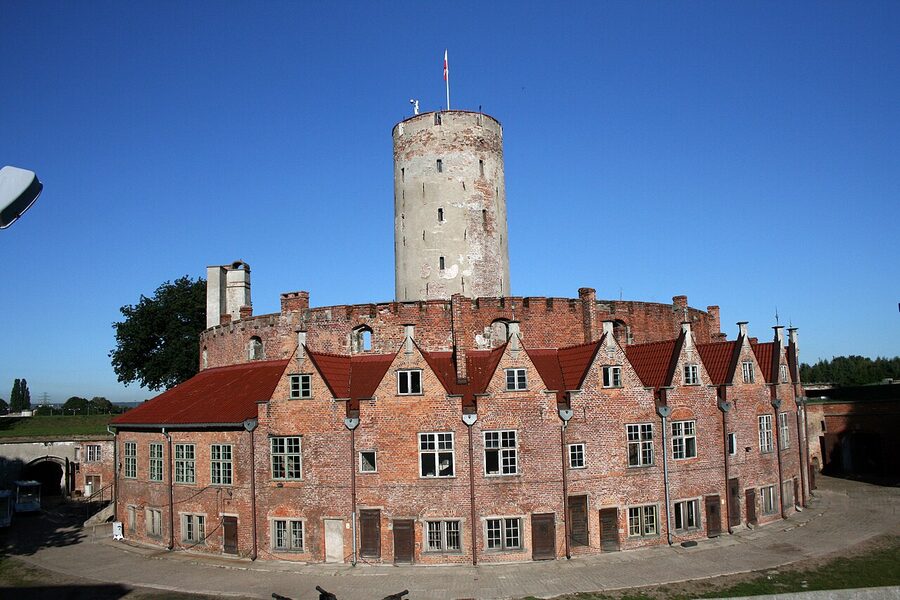
The longer cruises (the sunset one, plus the Westerplatte route which I cover in our Westerplatte cruise guide) carry on out to the Wisłoujście Fortress, the seventeenth-century star fort that guarded the entrance to Gdańsk Bay. The City Cruise (70 min) usually turns around before that point.

Booking: How It Works in Practice
Both GetYourGuide and Viator carry the same flagship cruises, sometimes operated by the same company. There’s no advantage to walking up to the dock and trying to book in person, and there’s a real disadvantage in summer when the boats sell out by lunchtime.
What I do, every time, is book online the night before. Pick your time slot, pay, and the confirmation email arrives within a minute. Show the QR code at the dock. The whole process is faster than buying a museum ticket.
If you’re booking more than one cruise (say a daytime ride with one operator and a sunset one with another), check that the meeting points aren’t more than a few minutes apart. They almost always are, but I’ve seen one operator move its slip seasonally without updating the listing.
What to Pay Attention To Before You Book
Three things are worth knowing.
First, the small replica boats are open, with at most a canvas awning. There’s no inside cabin. If the weather is doing anything serious, the captain will reschedule, but in light rain the cruise still runs and you’ll get damp. Pack a light waterproof for spring and autumn. In July and August, this isn’t a worry.
Second, the boats are flat and shallow. They roll a little but they don’t pitch. If you’ve done the river cruise in Kraków or any standard river ride in Europe, this is calmer. Children handle it without trouble. I’ve seen toddlers asleep on a parent’s lap by minute fifteen.
Third, the live guide does most narration in Polish first, English second. Some captains skip the English on quieter midweek slots. If you specifically want a fully English-narrated cruise, message the operator before you book and confirm the slot has an English guide on duty.
When to Go and Which Slot to Pick
The boats run from roughly mid-April to early October, sometimes a bit longer if the weather holds. Outside that window, the Motława can ice over and the operators stand the fleet down for the winter.
If I had one slot to pick, I’d take the 10:00 or 11:00 morning sailing in late May or early September. The water is glass-flat before the wind picks up, the river isn’t crowded with private craft yet, and the photographers among you will get the reflections you’re hoping for.
For the sunset version, check the actual sunset time for your date and book the slot that puts you on the water about an hour before. In late June that means a 21:00 boarding. In early September it shifts back to 18:30. The operator listings sometimes lag the actual sun, so do your own quick check.
Avoid the Public Holiday Trap
Polish public holidays bring a wave of domestic tourism into Gdańsk that the operators don’t always staff for. May Day weekend, Corpus Christi, and the August 15 Assumption holiday are all peak. The boats run but they sell out earlier and the dockside scrum is unpleasant.
If your dates land on one of these, book five to seven days ahead instead of the night before, and pick the earliest available slot to dodge the worst of the queue.
What This Cruise Has That a Walking Tour Doesn’t
You can absolutely see the same warehouses and the same Crane from the Long Embankment on foot. The walking tour will tell you the same dates, the same Hanseatic-League trivia, the same Solidarity stories. The cruise isn’t more accurate, it’s more felt.
From the boat, you get the smells. Diesel and brine over by the post-shipyard. Wood smoke when the riverside grills are working. The faint creosote of the new pilings the city has been quietly replacing under all the merchant houses for the last decade. None of that lands when you’re walking.
You also get the perspective. Photos taken from the water look completely different from anything you can shoot on the bank, because the boat puts you below the height of the warehouse cellars. That’s roughly the height the original eighteenth-century crews would have worked at when they were unloading grain into the Crane. It’s the closest you’ll get to seeing the city the way the people who built it saw it.
That’s the part the walking tour can’t do, even with the best guide in the city.
Where the Galary Came From: A Quick History
The galar is a flat-bottomed wooden river boat that worked the Vistula and its tributaries from roughly the late sixteenth century. Crews used them to move grain, salt, and timber down from the Polish heartland to the Baltic ports, including Gdańsk, where the cargo was loaded onto Hanseatic ships and sent on to Amsterdam, Bruges, and London.
The boats had no engines. They drifted downstream loaded, then either sold for timber at the destination or rowed back up empty by a fresh crew. The trip from Warsaw down to Gdańsk took about a week if the river behaved, longer if it didn’t. The grain trade was the backbone of the Polish economy for two centuries, and the galar was its workhorse.
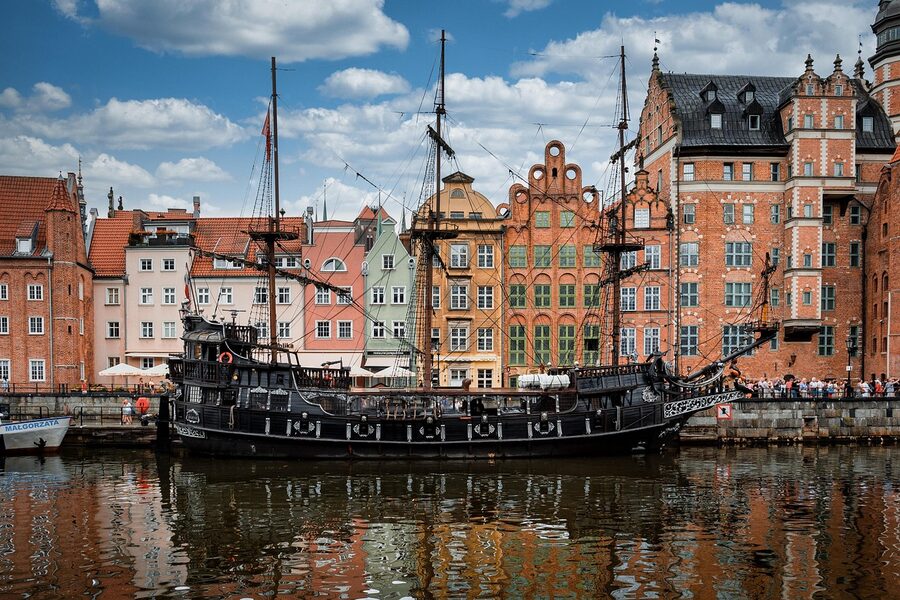
By the late nineteenth century, the railway had killed the galar trade. The boats were gone within a generation. The replicas you see in Gdańsk today were built in the 2000s using historical drawings and surviving photographs, mainly for tourism. They’re not original. They’re functional reconstructions, which is fine for the price.
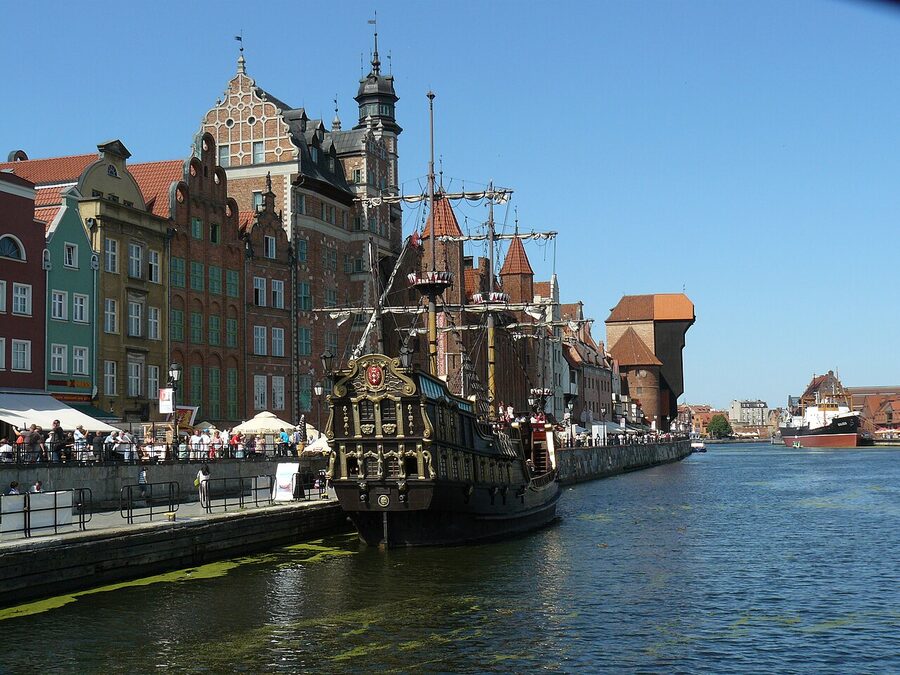
The Gdańsk Crane on the Long Embankment is the other half of this story. It was built in the fifteenth century as the working port crane, lifting cargo straight off boats like the galar onto the warehouse floors above. Two giant treadmill wheels inside the Crane were turned by men walking; the rope ran out over the river. It was, until the seventeenth century, the largest working port crane in medieval Europe.
You’ll pass it twice on every cruise. Once leaving, once coming back.

Comparing Gdańsk Boat Cruises Across Europe
If you’re a few river cruises into your travels already, here’s how Gdańsk slots in.
Compared with the Warsaw galar cruise on the Vistula, Gdańsk’s boats are smaller, the water is calmer, and the urban skyline is far more visually rewarding. Warsaw’s galar is more of a flat-water glide through riverside parks. Gdańsk is a port cruise through eight centuries of architecture in one go.
Compared with Kraków’s evening Vistula cruise, Gdańsk wins on density. Kraków’s cruise is beautiful but the route is mostly castles and parkland with one or two bridges. Gdańsk gives you the merchant houses, the Crane, the shipyard, the fortress, all in seventy minutes. More variety per minute on the water.
Compared with the Amsterdam canal boats or the Seine bateaux mouches, Gdańsk is much smaller scale and far more personal. Twelve people on a wooden replica is closer to a private boat hire than to a tourist barge. Both the Amsterdam and Paris cruises pack you in by the dozens.
Practical Tips From Three Trips on the Water
A few things I’ve learned that aren’t on the operator pages.
Bring cash for snacks at the dock. Most operators don’t sell drinks on board. Two or three of the embankment kiosks take card, but the small kvas and pretzel stand right by the Crane is cash only and runs out by 14:00 in summer.
The seats on the small replicas are wooden benches with thin cushions. Seventy minutes is fine. Ninety minutes (the sunset cruise) is the upper end of what I’d want to sit on without a back-stretch break. If you have a stiff lower back, ask for the seat closest to the captain’s bench. There’s slightly more legroom there.
Sunglasses are not optional in summer. The Motława reflects the sun straight up under the canvas awning, and there’s nowhere to look that isn’t bright.

How Much to Tip
The captains I’ve ridden with all said the same thing when I asked: tipping isn’t expected, but it’s appreciated for any cruise where the guide does most of the narration in real time. Five złoty per person is the floor, ten or fifteen is generous and won’t get awkward looks. Cash, into a small jar at the gangway. Don’t try to tip on the card terminal.
Combining the Cruise With Other Gdańsk Activities
The cruise is a 70-90 minute slot that fits cleanly into a half-day plan. Here’s what I’d combine it with.
For history-focused days, do the cruise in the morning and follow with a walk through the Old Town. The Old Town walking tour picks up exactly where the cruise leaves off, both physically and narratively. You’ll have heard about Solidarity from the river; the walking tour shows you the European Solidarity Centre and the Solidarity gates up close.
For longer day-trips, pair the cruise with the Westerplatte boat trip. The two cruises share the same launch point but the Westerplatte version goes much further, all the way to the peninsula where the first shots of the Second World War were fired in 1939. It’s a heavier experience, and worth treating with appropriate weight.
If you have a flexible day, the cruise also pairs well with a visit to the Maritime Museum on Ołowianka Island, which sits directly across the river from the Long Embankment. Most cruises pass within fifty metres of the museum building, so you’ll already have seen it from the water. The exhibits inside cover the same maritime history the river guide hints at, in proper depth.

Where the Experience Falls Short
Two things to be straight about.
First, the small replicas are not original boats. They’re modern reconstructions built for tourism. Some travellers come expecting to see a genuine eighteenth-century vessel and walk away disappointed. The boats are absolutely period-correct in shape and fit-out, but the wood is new, the bolts are stainless, and the safety equipment is contemporary. That’s a feature, not a bug, but worth knowing.
Second, the cruise is not a full city tour. The historical commentary covers what you see from the water, which is genuinely a lot, but if you’ve never been to Gdańsk before you’ll still want a walking tour for the inland stories. The river is half the city’s story, not the whole one.
Getting to Gdańsk for the Cruise
If you’re flying in, Gdańsk Lech Wałęsa Airport (GDN) is the obvious option. It’s about twelve kilometres west of the centre. The PKM commuter train from the airport to Gdańsk Główny station takes thirty minutes and costs around six złoty. Tram 4 then takes you within a five-minute walk of the Long Embankment.
If you’re already in Poland and arriving by train, Gdańsk Główny is the city’s main station. From the platform exit it’s a fifteen-minute walk through the Old Town to the Long Embankment. Easy enough that I wouldn’t bother with a taxi unless you’re carrying heavy bags.
Sopot and Gdynia, the other two cities of the Tricity area, are both about thirty minutes away on the SKM commuter train. If you’re staying in Sopot, you can comfortably do a half-day Gdańsk trip with the cruise included.
Other Gdańsk Guides Worth Reading
If the cruise has whetted your appetite for the city, the next thing to book is the Old Town walking tour, which fills in the inland half of the story you only half-hear from the river. After that, the Westerplatte cruise is the deeper-water counterpart to this one, taking you out to the peninsula where the Second World War began. For a different city entirely but a similar boat-on-historic-river experience, the Warsaw galar cruise is the closest sibling. And if you’re working through Poland’s main cities, the Kraków evening Vistula cruise rounds out the river trio. The Warsaw walking tour and Kraków walking tour are good companions if you’re piecing together a multi-city Polish itinerary, and the Wrocław e-car tour rounds out the four-city circuit if you can squeeze a southern stop in.
Affiliate disclosure: links to GetYourGuide and Viator may earn us a commission at no extra cost to you. We only recommend tours we’d book ourselves.