
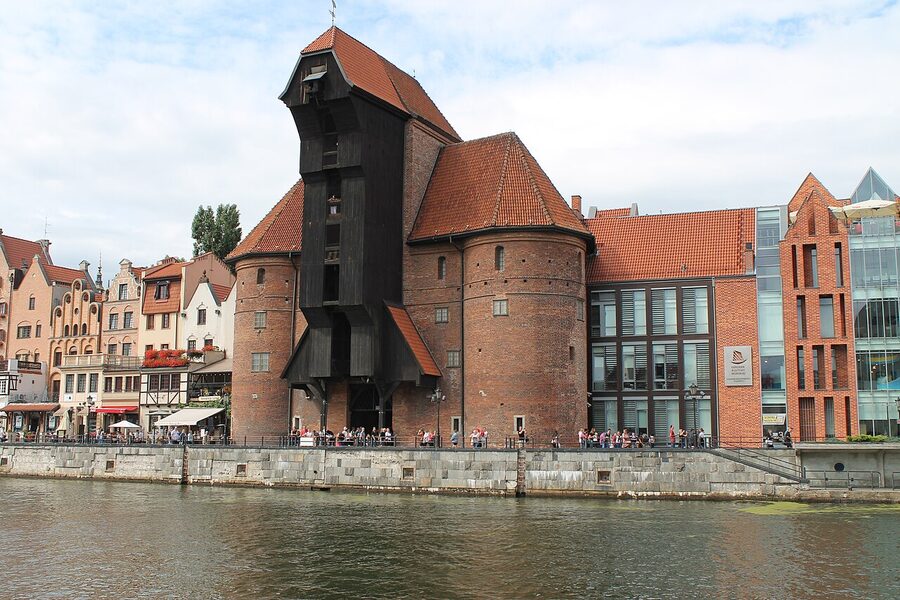
Here’s something almost no walking tour mentions in the first ten minutes: the wooden crane sticking out over the Motława River in Gdańsk’s Old Town was once the largest medieval port crane in all of Europe. Two giant treadwheels inside, four men walking inside them, and the thing could hoist four tonnes off a Hanseatic merchant ship using nothing but bodyweight and lunch. That’s about a small SUV, hand-powered, in 1444. The Crane is sometimes the last stop on a Gdańsk walking tour, sometimes the first, and the good guides will let you stand right under the wooden bellies and tell you that until late industrialisation, this was the most powerful machine on the Baltic.
So that’s the kind of thing you miss if you wander Gdańsk Old Town on your own. Below: how to actually book a guided walking tour, what the routes cover, which operators are worth it, and which ones I’d skip.

Best overall: Gdańsk City Sights & History Guided Walking Tour. 2.5 hours, around $26, English-speaking local guide who actually opens up about the rebuilding.
Best small-group budget pick: Main Town Gdańsk Walking Tour. 2.5 hours, around $27, small group, the guides have personality (Dynamite is a real name).
Best for couples: Old Town Private Walking Tour with Legends and Facts. Flexible 2 to 6 hours, around $107 for the group, you set the pace and the questions.
- Should you take a guided walking tour at all?
- The three tours I’d actually book
- 1. Gdańsk City Sights & History Guided Walking Tour:
- 2. Main Town Gdańsk Walking Tour:
- 3. Old Town Private Walking Tour with Legends and Facts: 7 (group)
- What every Old Town walking tour actually covers
- Highland Gate (Brama Wyżynna)
- Foregate Complex and the Prison Tower
- Golden Gate (Złota Brama)
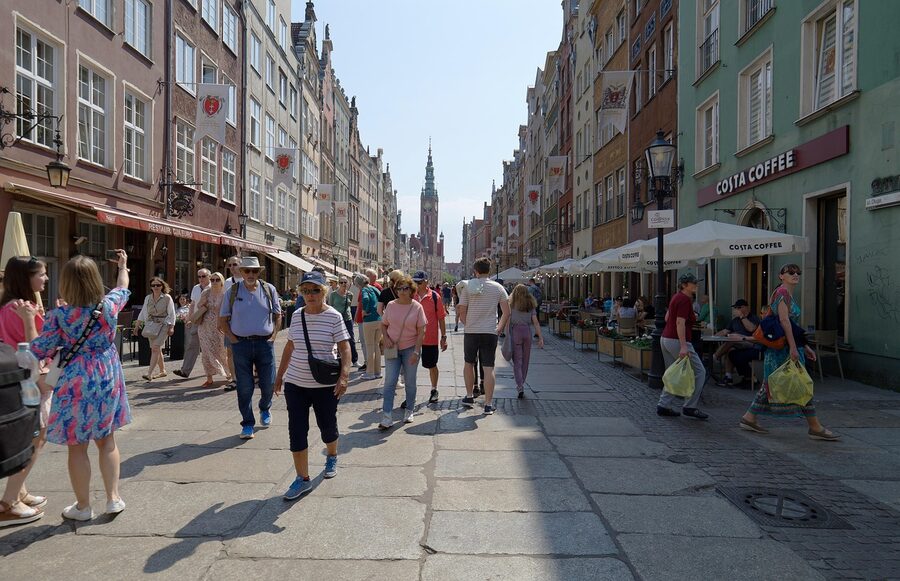
- Długa Street (Long Street)
- Main Town Hall
- Long Market (Długi Targ) and the Neptune Fountain
- Green Gate (Zielona Brama)
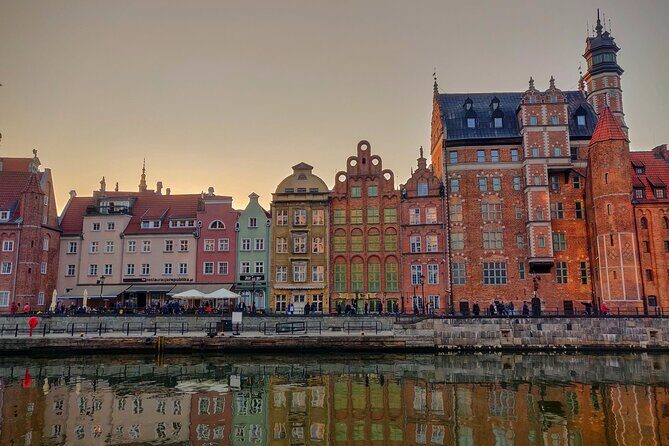
- The Long Embankment and the Crane
- Mariacka Street
- St. Mary’s Basilica
- How to actually book
- When to go
- Practical things your guide won’t say
- The reconstruction question
- What about the cruise option
- What you can skip
- Some things worth doing right after the walk
Should you take a guided walking tour at all?
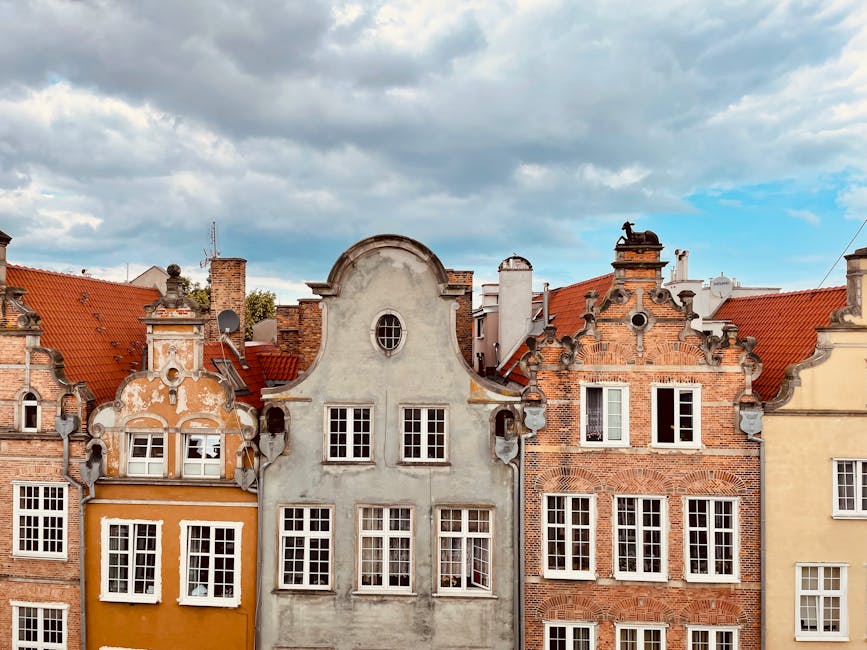
Honest answer first. If you’re in Gdańsk for one full day and you’ve never been before, yes. The Old Town looks like a textbook of Hanseatic and Dutch Mannerist architecture, but unless someone tells you which bits are 14th century and which are 1950s reconstructions, you’ll just see pretty buildings and miss the actual story. Roughly 90% of the historic core was flattened in 1945 when the Red Army took the city. The whole thing you’re walking around now was rebuilt from rubble between the late 1940s and the 1990s.
If you’re staying three nights or more and you like wandering, a self-guided walk works fine for the second pass. Get a guide for the first one. There’s just too much packed into the half-square-kilometre between the Highland Gate and the river.

The three tours I’d actually book
I’ve narrowed this to three. There are a hundred listings on the booking sites, but most are slight variants of the same route. These three cover the genuinely different price points and styles.
1. Gdańsk City Sights & History Guided Walking Tour: $26
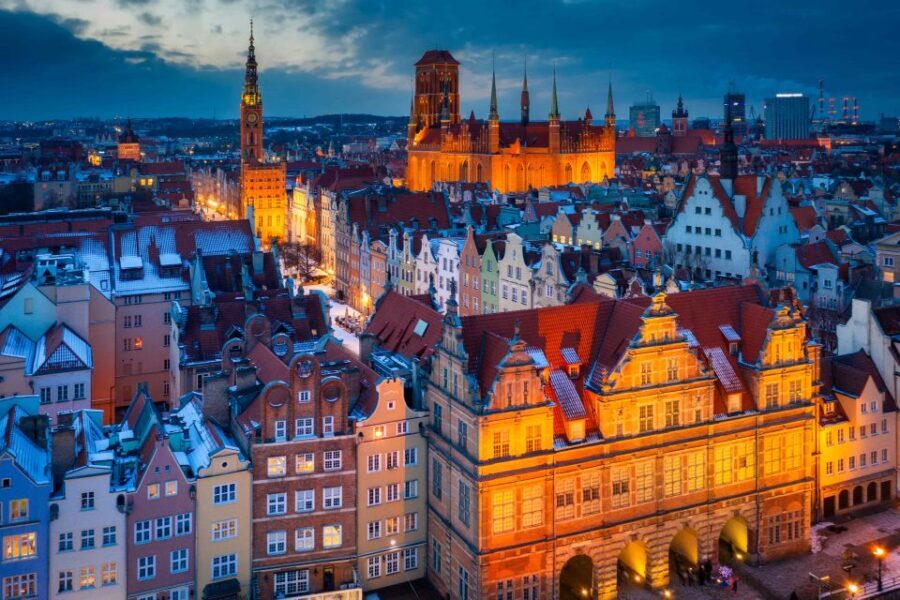
This is the one I’d put first on the list, and it’s the one I’d recommend to a friend who messages me asking what to book. The guides are local, the English is properly fluent, and the route hits every Royal Route landmark plus the river. If you read our full review, you’ll see the recurring praise is for guides who actually answer questions instead of running a script.
2. Main Town Gdańsk Walking Tour: $27
Functionally similar to option one but on Viator instead of GetYourGuide, and the small-group cap means you’ll never be in a herd of fifty. The guides have nicknames (Dynamite, Tufi, Czarek) and that signals what kind of tour this is: chatty, opinionated, slightly cheeky. Our take on this one goes into how it covers the Golden Gate, Long Market, and the riverside crane.
3. Old Town Private Walking Tour with Legends and Facts: $107 (group)

The other two are public tours. This one is private, runs anywhere from two to six hours depending on how interested you are, and the guides have a thing for the city’s stranger stories. The Solidarity story, the legend of how the Neptune fountain stopped working in 1633 and is rumoured to flow with vodka, the rebuilding decisions that didn’t get made the obvious way. Our review covers what’s worth asking the guide to dig into.
What every Old Town walking tour actually covers
The routes converge. Below is what your guide will probably show you, in roughly the order they’ll show it. If you do a self-guided walk later, follow this same chain.
Highland Gate (Brama Wyżynna)
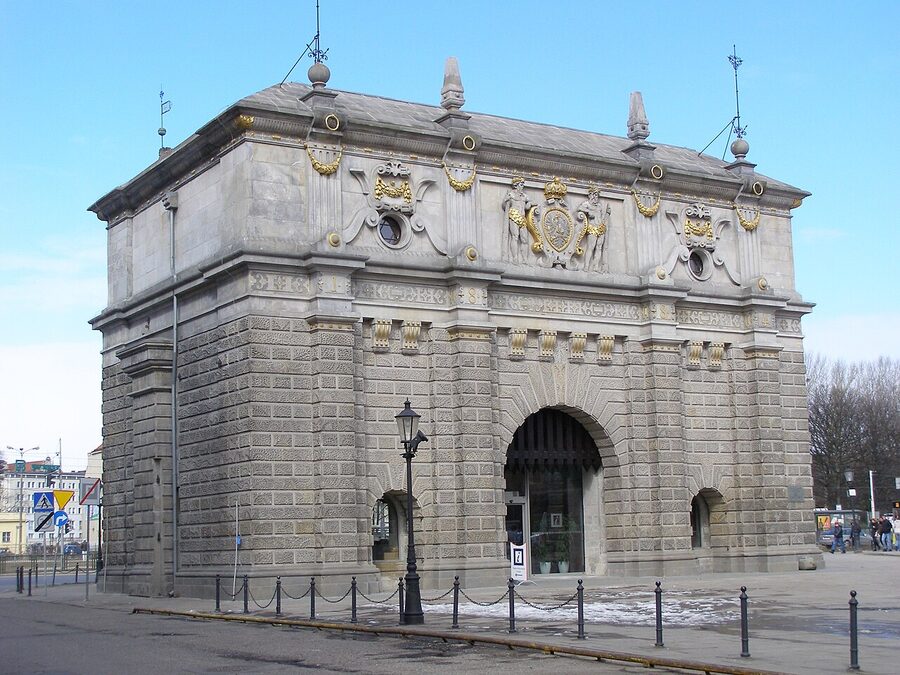
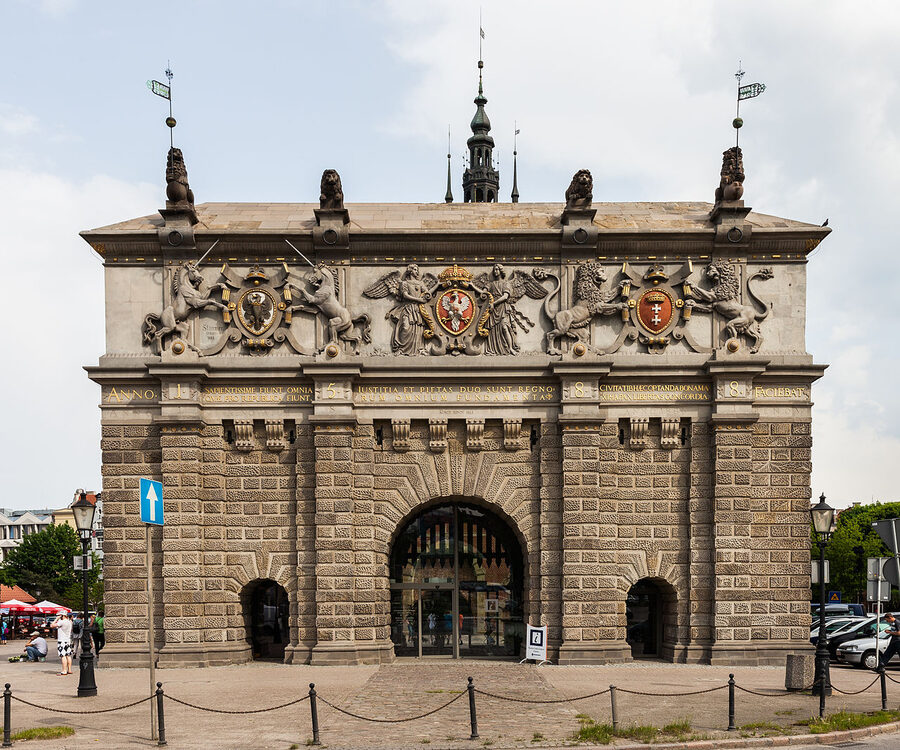
Your meeting point on most tours. The 16th-century gate has three coats of arms across the top: Poland, Gdańsk, and the historical province of Royal Prussia. That triple-crest tells you everything about how the city saw itself. Not Polish, not Prussian, not German. Gdańsk. A self-governing trading republic from 1457 to 1793, which is, fun fact, longer than the United States has currently existed.

Foregate Complex and the Prison Tower
Right after the Highland Gate, you hit the Foregate Complex, which is a fortified passage with the Prison Tower attached. There’s a Torture Museum inside that some tours include and most don’t. If your guide is the type who relishes the macabre, you’ll get the full medieval punishment lecture. If they’re not, they’ll skim it and push you on. I’d skip the museum unless you’re travelling with kids who like that sort of thing. The information is more digestible when a good guide tells you about it on the street outside.
Golden Gate (Złota Brama)
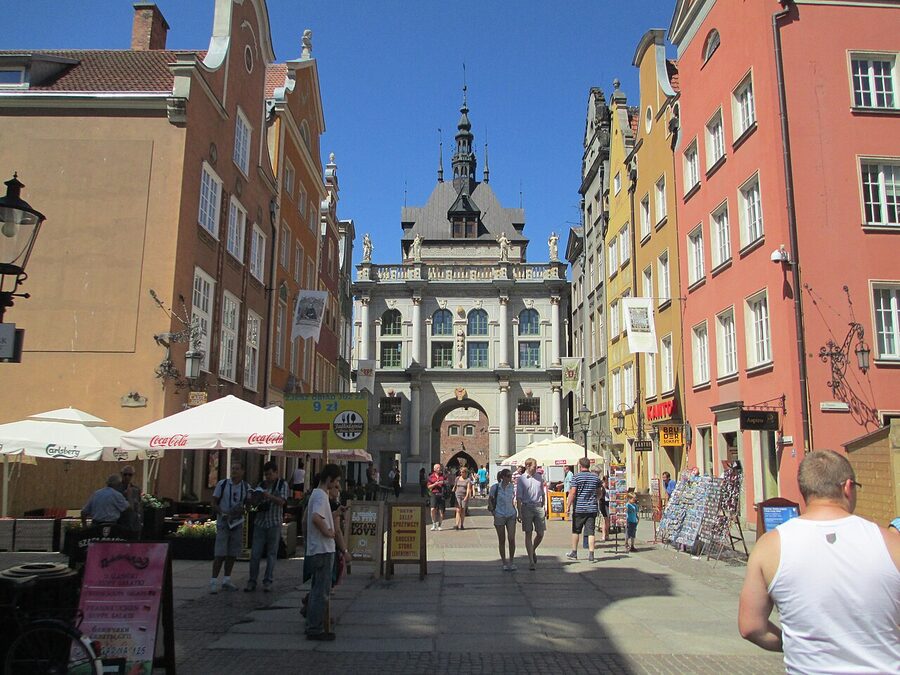

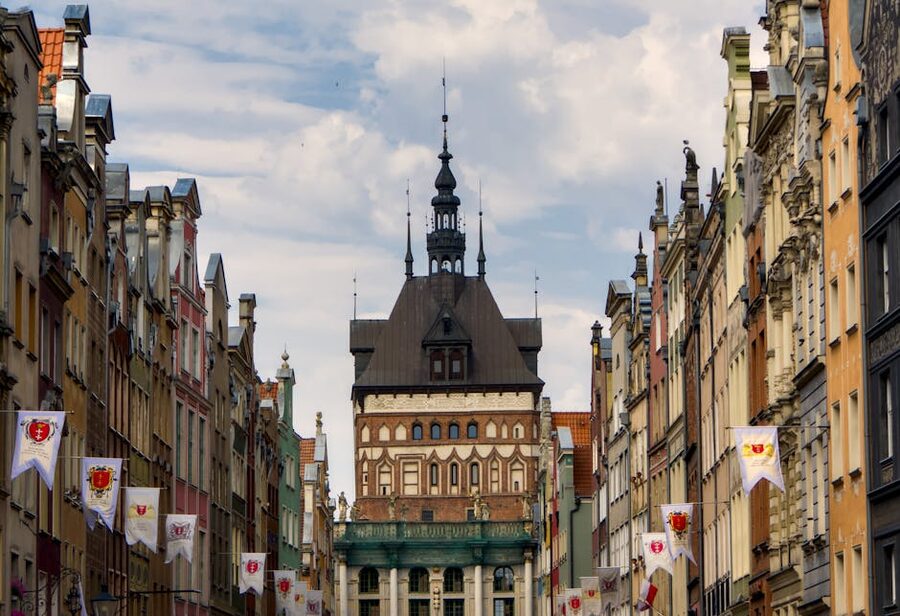
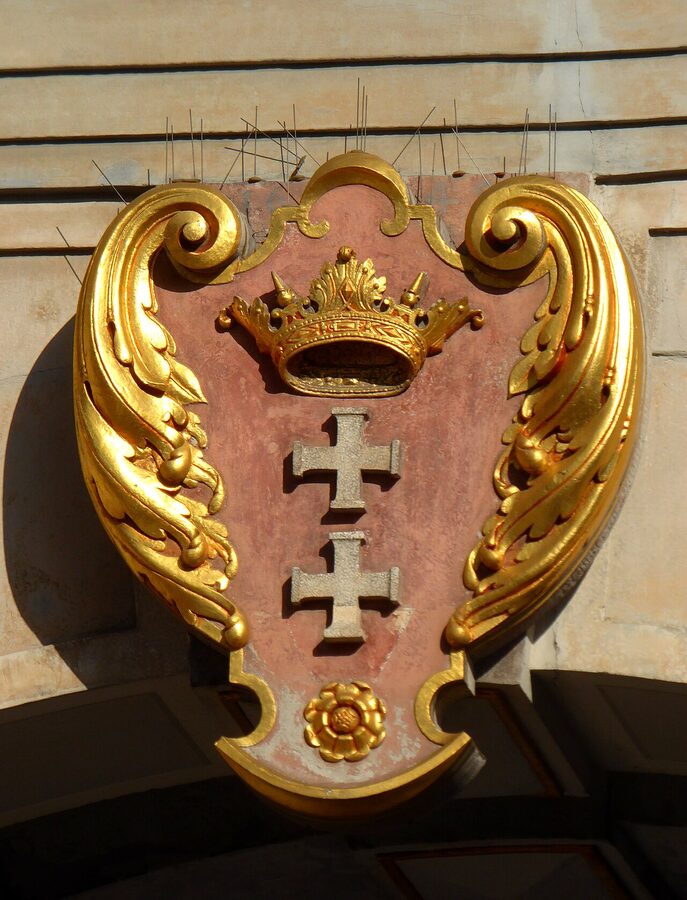
This is where the Royal Route opens up onto Długa Street. A good guide will pause here and make you turn around to look at it from the city side, because the statues facing inward are different: Agreement, Justice, Piety, Prudency. The four virtues a citizen should have, looking at you as you walk in. The four virtues a leader should have, on the outside. It’s the kind of detail you’d never spot on your own.
.jpg)
Długa Street (Long Street)
.jpg)
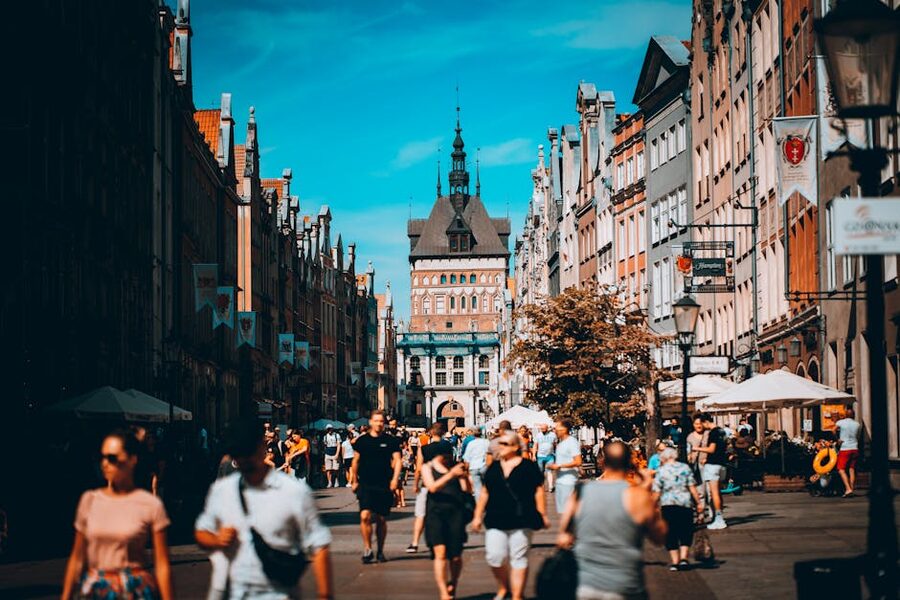
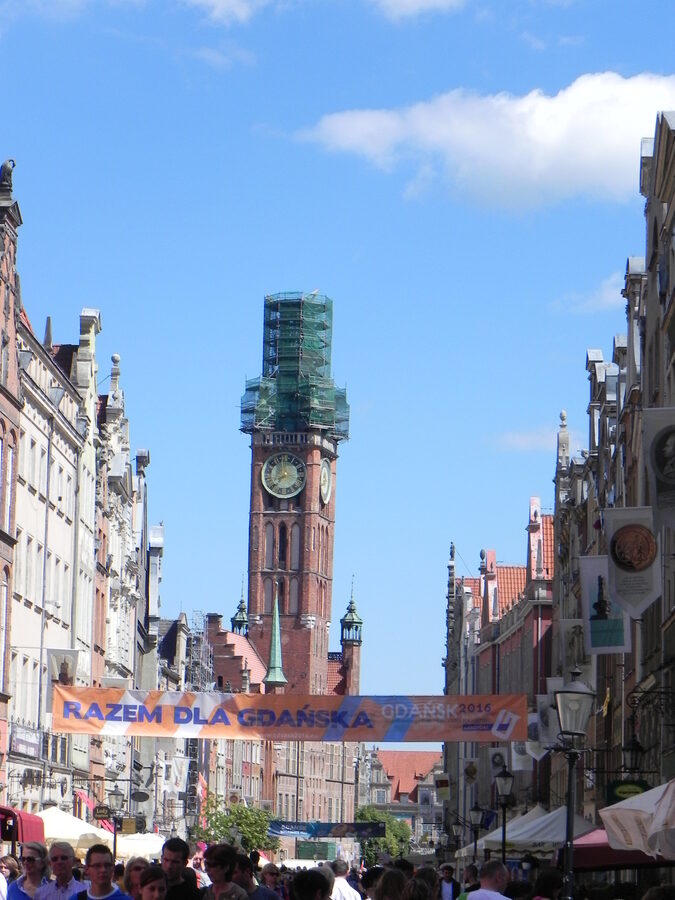
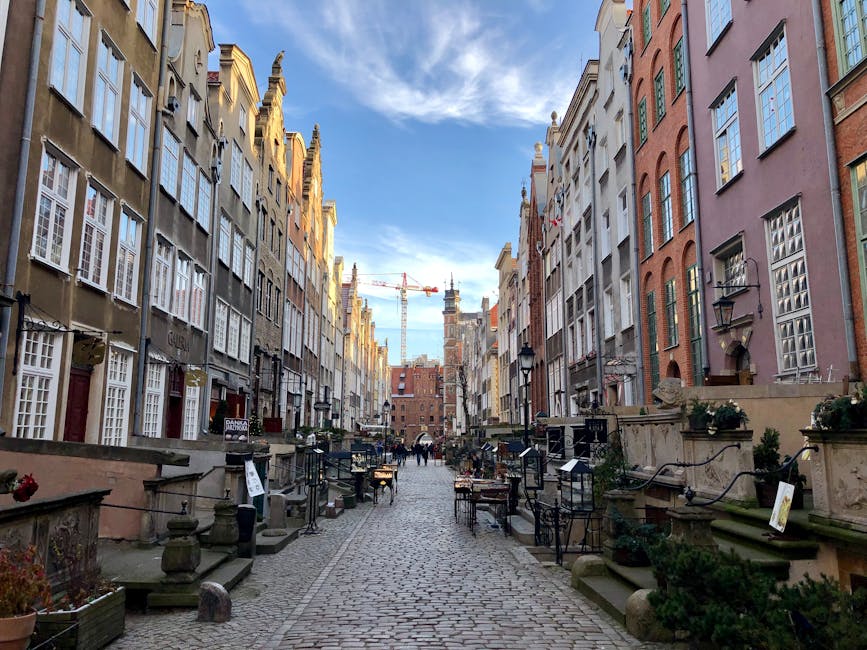
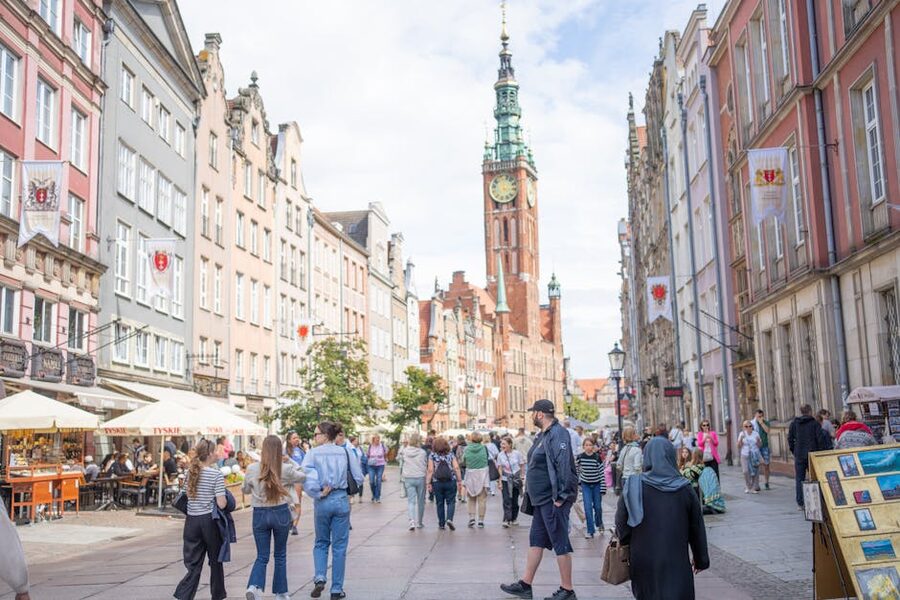
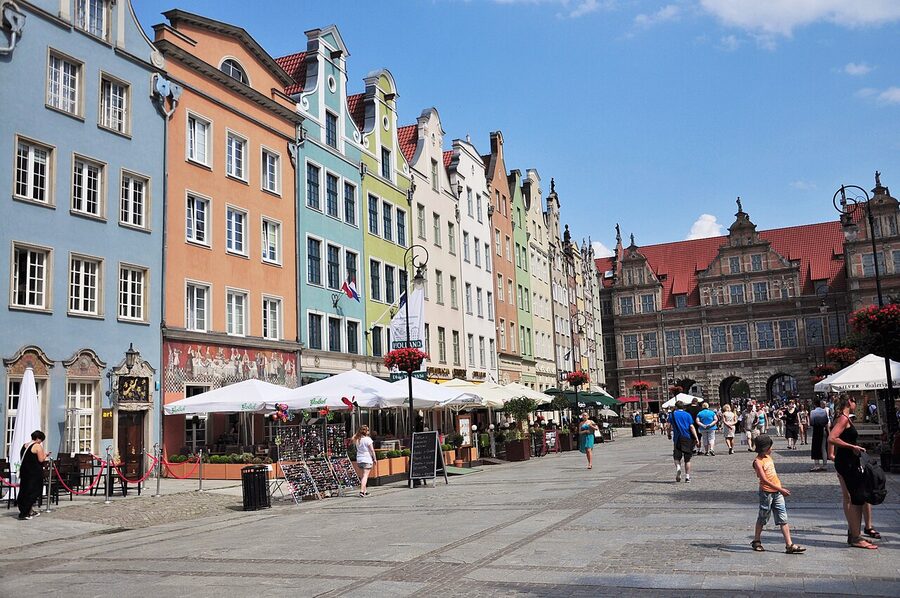
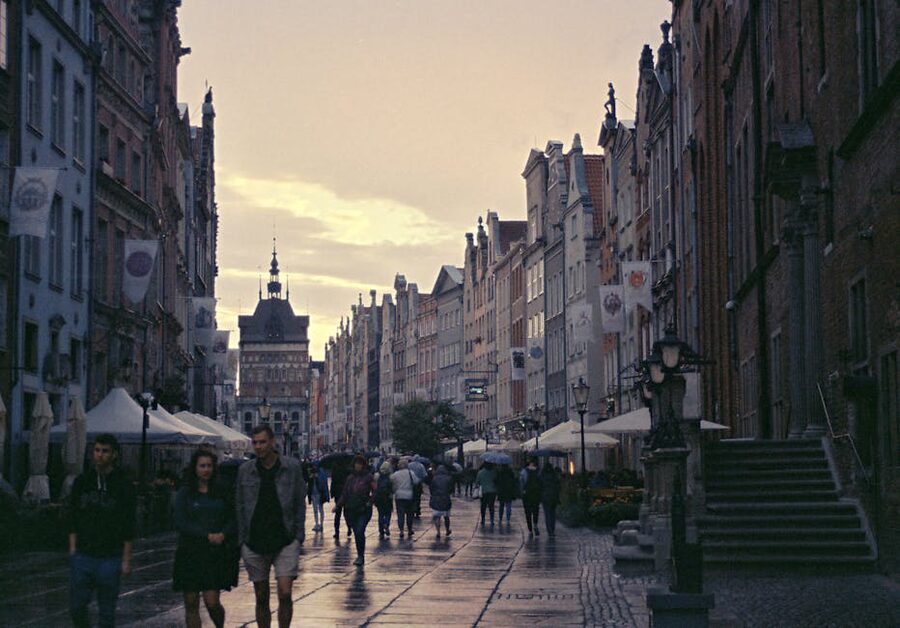
Długa is the spine of the Old Town. Pedestrian-only, lined with the famous tall, slim merchant houses, this is where you’ll spend the next thirty minutes. The houses have those distinctive perrons (the raised stone porches) where 16th-century merchants would sit and watch their cargo go past on its way to the river. A few of those perrons survived the war intact. Most are reconstructions. Your guide will point out which ones.
Main Town Hall
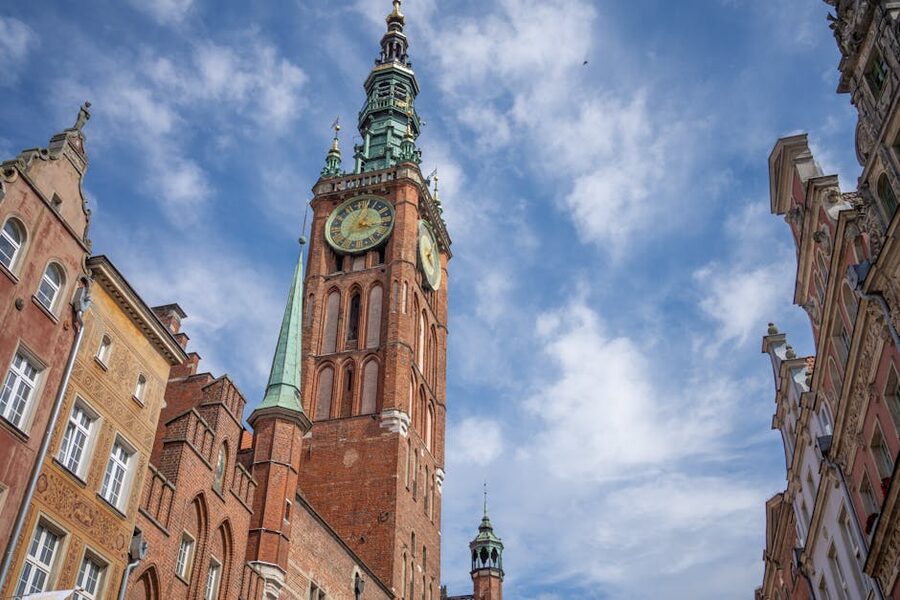
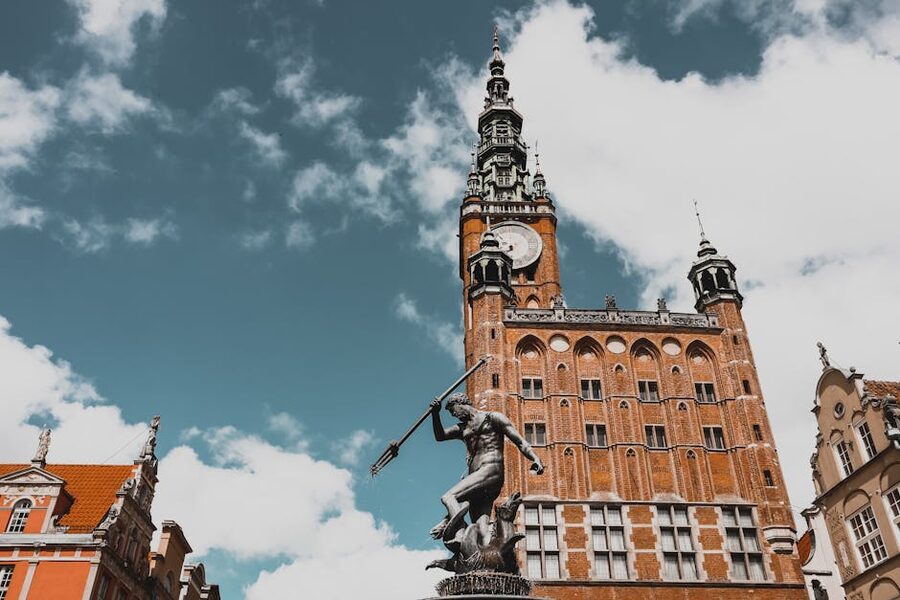
Where Długa ends, the Town Hall rises. Parts of the building date to the 14th century, but like everything else, it was bombed flat and rebuilt. The Gdańsk History Museum lives inside. Tickets are separate from the walking tour. If you want to climb the bell tower, the carillon is genuinely impressive and the view over the Old Town from the top is the single best one you’ll get without leaving the historic core.

Long Market (Długi Targ) and the Neptune Fountain
,_Gda%C5%84sk.jpg)
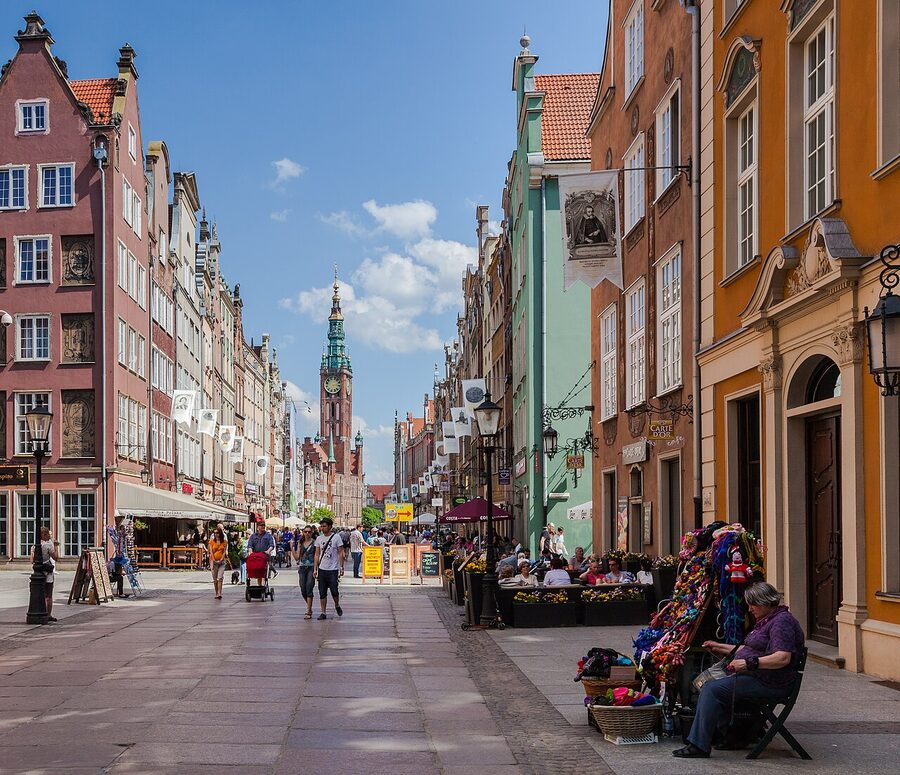
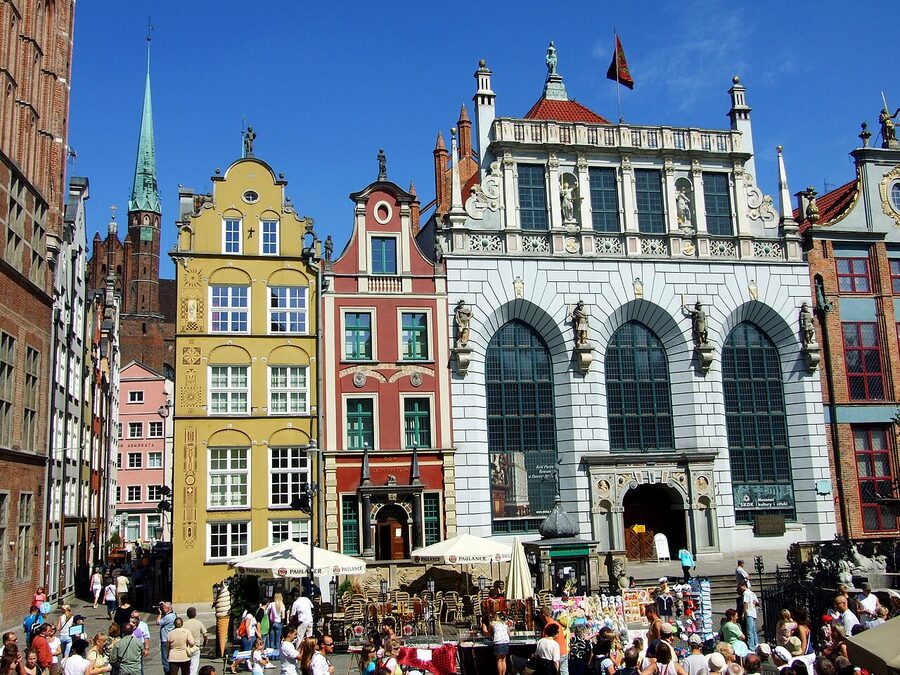
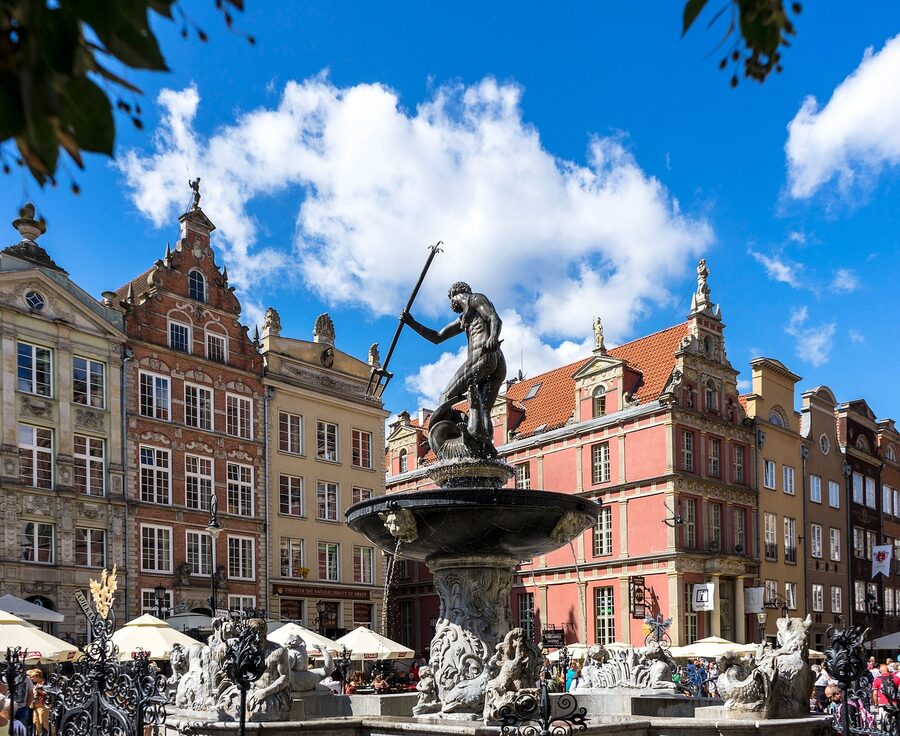
Long Market opens up where Długa ends. The good guides will point out that despite the name, this is a street, not a square. It’s one of the longest pedestrian shopping streets in Europe, although nobody actually shops here anymore. They eat ice cream, photograph the Neptune fountain, and wait in line for a free seat at one of the cafes. Compare with the parallel feeling on Warsaw’s reconstructed Old Town: same wartime story, different scale.
_in_Gdansk.JPG)
Green Gate (Zielona Brama)
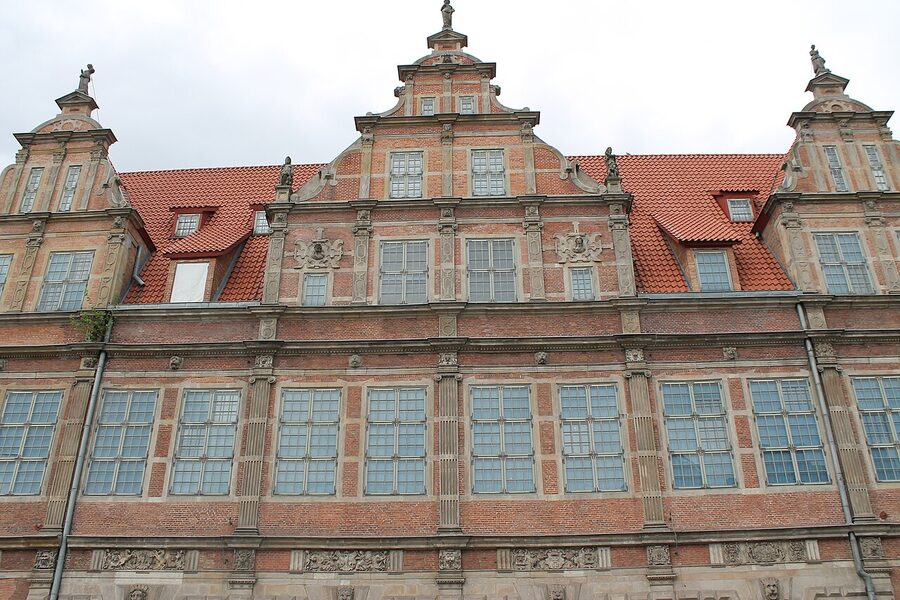

End of the Royal Route. Walk through the Green Gate and you’re suddenly on the Motława River, looking at the medieval port. This transition is the single best moment of any Gdańsk walking tour, and the guides know it. They build up to it. You go from cobblestone shopping street to wide brown river in the space of one archway.
The Long Embankment and the Crane
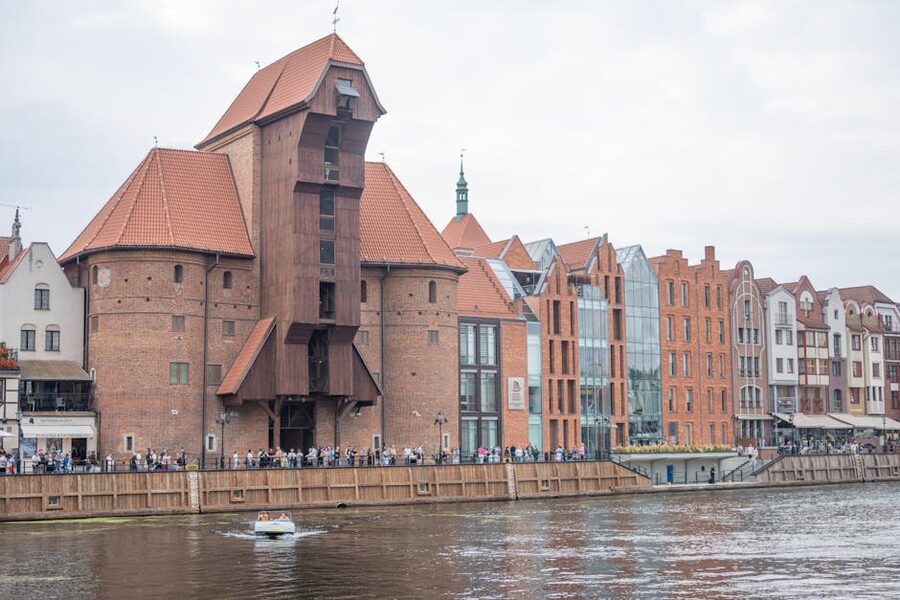
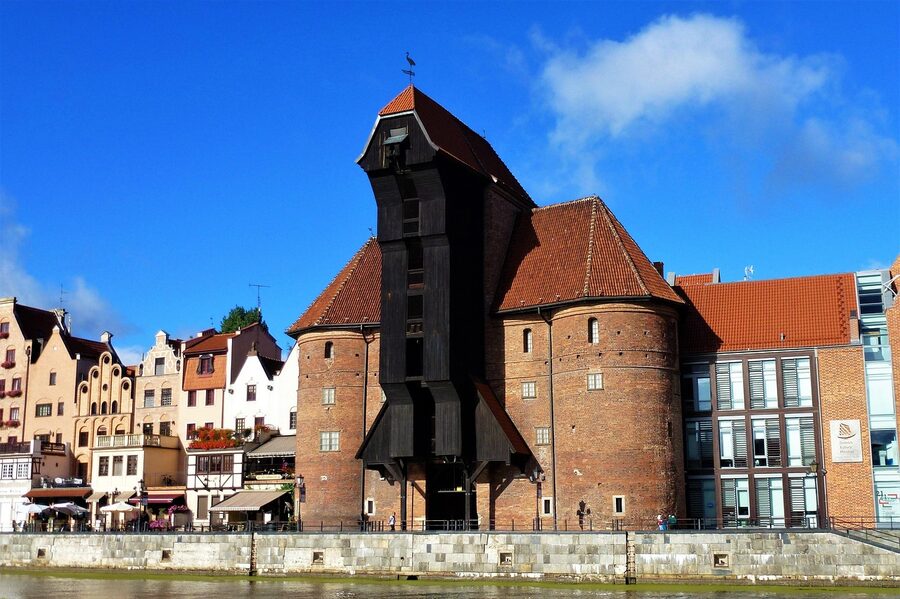
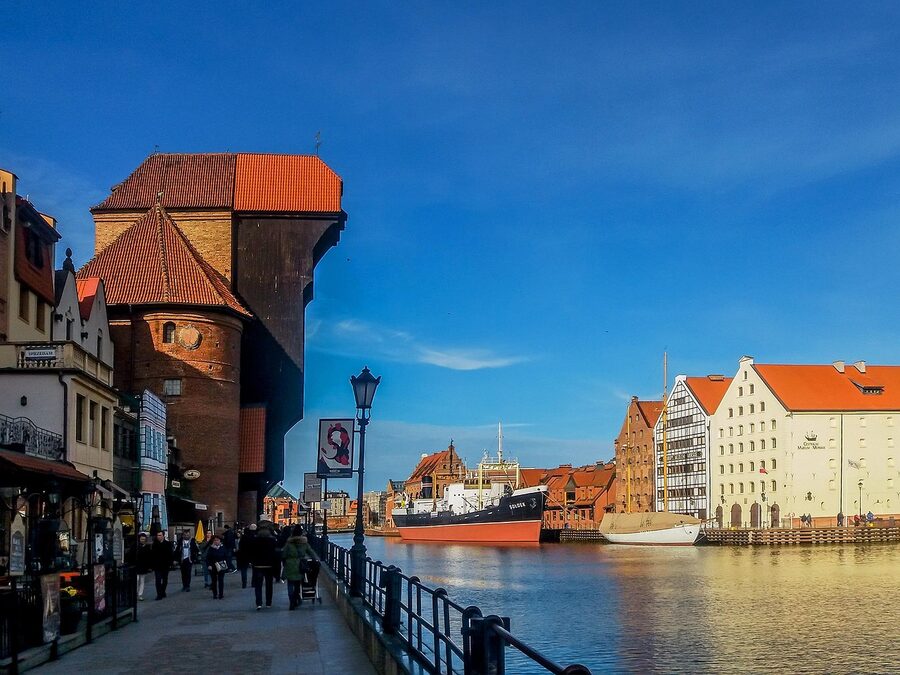
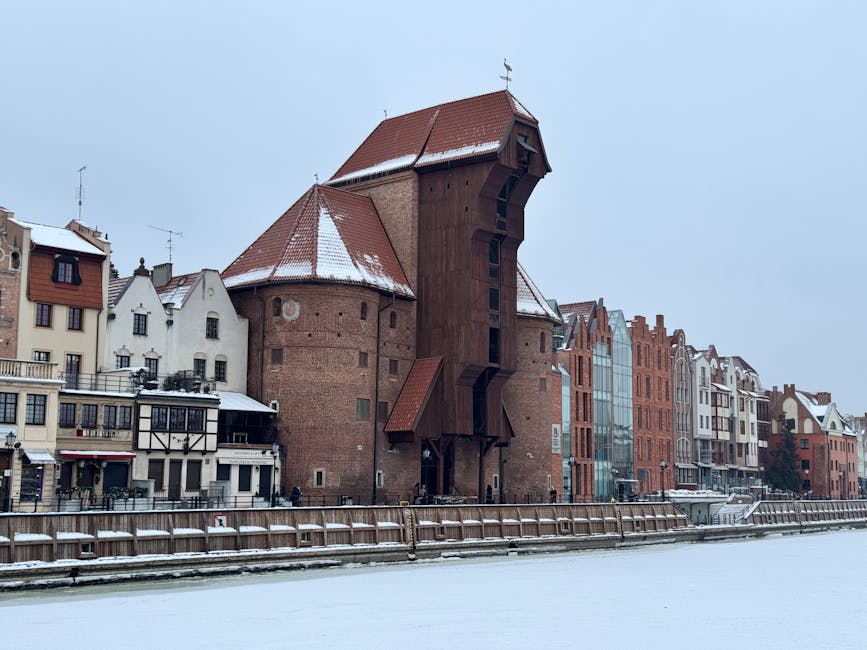
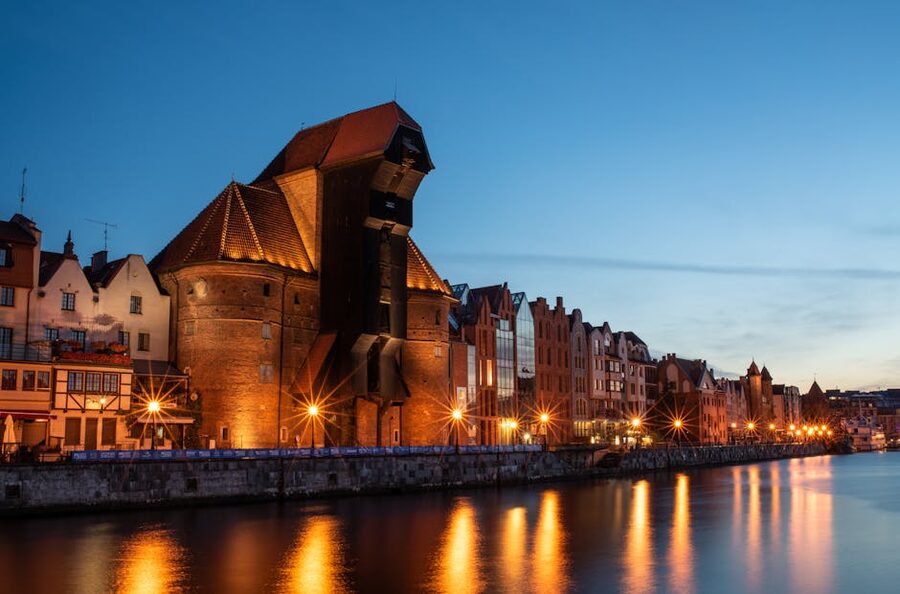
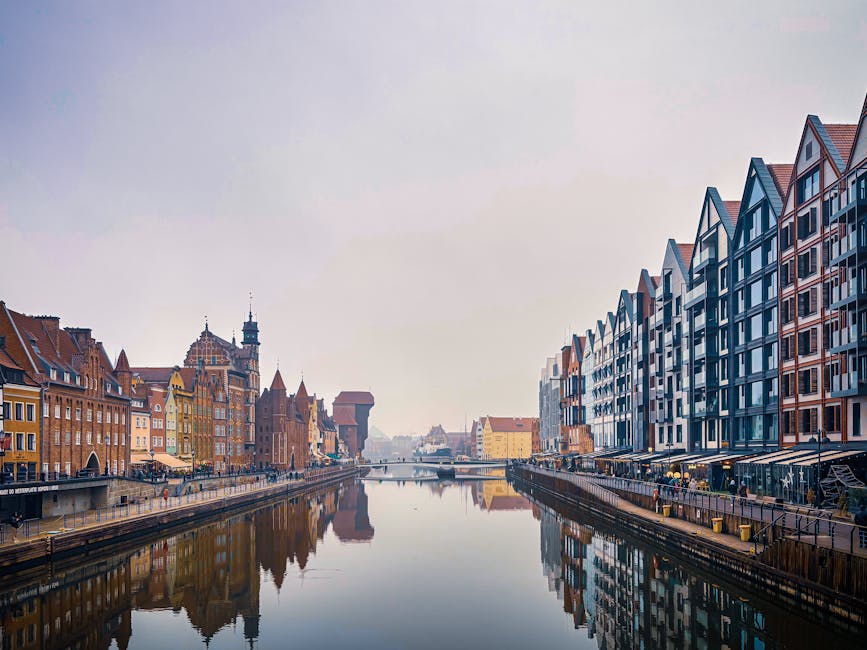
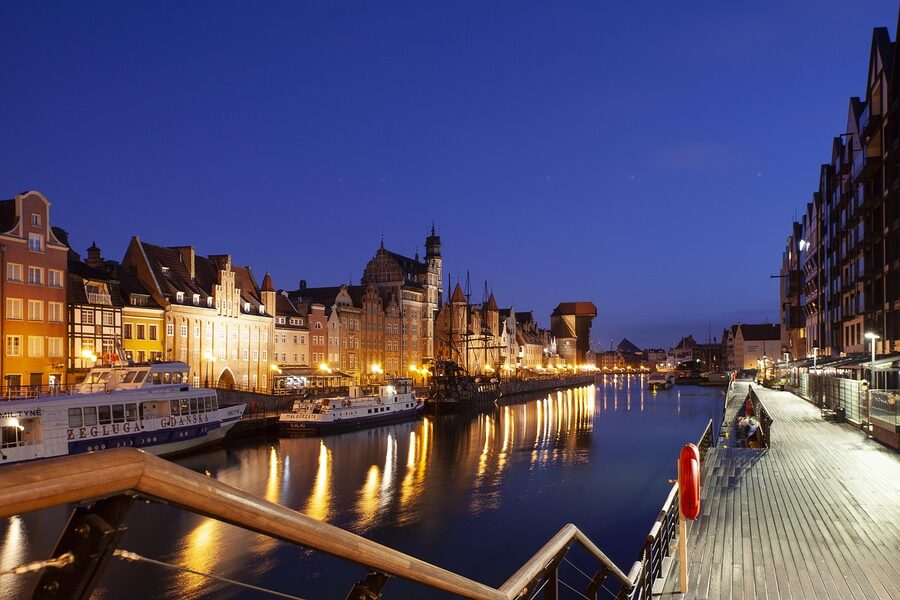
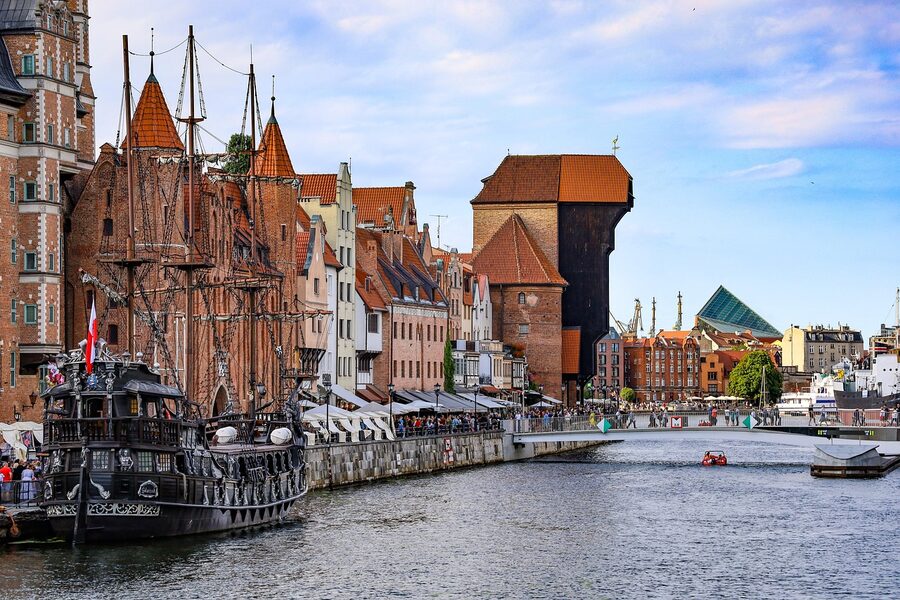
The Crane (Żuraw) is the icon. The largest medieval port crane in Europe, built between 1442 and 1444, with two pairs of treadwheels operated by men walking inside them. The thing could lift four tonnes. It loaded ships’ masts, hoisted barrels of grain and amber, and worked continuously until 1858. The fire of 1945 gutted it. What you see now was rebuilt between 1957 and 1962 using the original timber design. Inside is the National Maritime Museum.
Mariacka Street
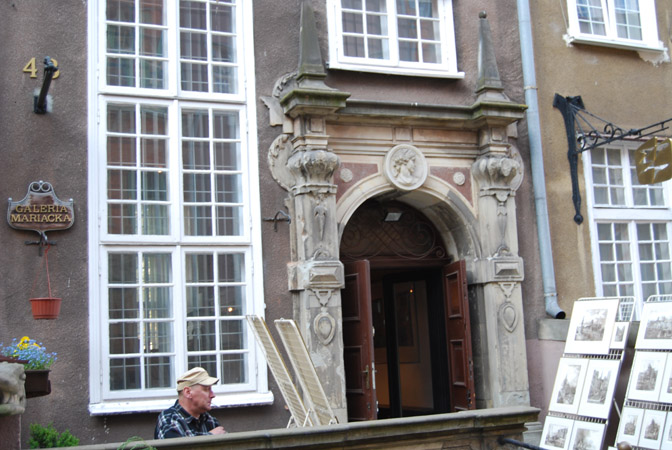
If your tour doesn’t loop through Mariacka, ask why. It’s the most photographed street in Gdańsk and the most concentrated patch of amber sellers anywhere in the world. The merchant houses here have those raised stone perrons running the full length of both sides, and they’ve been turned into open-air shop counters. The amber is genuine. Quality varies. The pieces with insects in them tend to be more expensive and harder to authenticate. If you’re spending more than about $50, ask for a certificate.
St. Mary’s Basilica
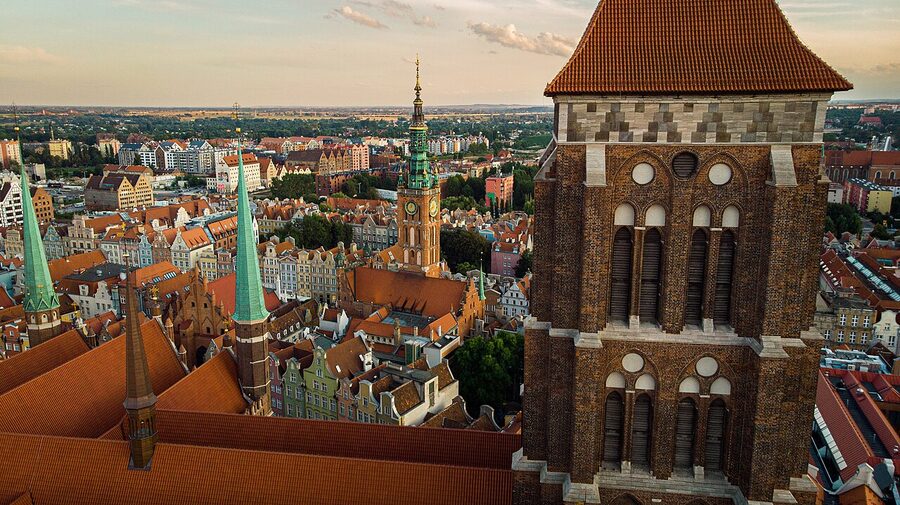

End or near-end of every tour, depending on which way you’re walking the loop. St. Mary’s holds the record for the largest brick church in the world by volume. You can climb the tower (separate ticket, 408 steps, no lift, worth it for the panorama if your knees still cooperate). The 15th-century astronomical clock inside is mostly a reconstruction, and the original Hans Memling Last Judgement triptych that used to hang here is now in the National Museum about a kilometre away.
How to actually book
Three platforms cover almost everything. GetYourGuide, Viator, and the local Walkative free walking tour. Pick by what you want.
GetYourGuide. Cleaner interface, the booking confirmation comes through quickly, and most paid Gdańsk Old Town tours are listed here. Cancellation up to 24 hours before is standard.
Viator. Same booking experience, slightly different operator pool. The Main Town Walking Tour I recommended above is on Viator.
Walkative free walking tour. Tip-based. You don’t book; you turn up at the meeting point at 11am or 1:30pm or 4pm. The guides are usually local students or recent grads. The quality is genuinely good but variable. Tip range is about 30 to 80 PLN per person, which is roughly $7 to $20. Cash, in złoty, ideally.
When to go
I’d avoid August. The Old Town is genuinely heaving with cruise-ship day trippers from Gdynia and the Polish school holiday traffic. Tour groups bottleneck at the Crane and the Neptune fountain.
May, June, and September are the sweet spots. Long days, weather that’s usually mild, and the cruise season hasn’t peaked yet. October still works, although you’ll see more rain. November through March is genuinely off-season; some smaller tours don’t run, but the streets are empty in a way that makes the architecture feel like a stage set after the audience has left.
Time of day matters more than month. The 10am tours are the best of any season. Cruise groups don’t get into town until midday. By 11am, the Royal Route is filling up. By 1pm, you’re queuing for ice cream.
Practical things your guide won’t say
Cash matters less than it used to. Most Old Town cafes, restaurants, and the bigger shops on Długa take cards, including Apple Pay and Google Pay. Smaller amber sellers and the milk bars usually want cash. ATMs are easy to find. Avoid the Euronet ones with the orange branding; the conversion fees are punitive.
Public toilets are scarce. The cafes are your friends. The McDonalds at the bottom of Długa has a clean public toilet. The one near the Neptune fountain is reliable.
Tipping. Round up at restaurants. For paid walking tours, tipping is appreciated but not expected. For free walking tours, the tip is the entire payment. Twenty to thirty złoty is fine. Fifty is generous.
Comfortable shoes. The cobblestones go on for kilometres. They’re slippery when wet. They will eat thin soles.
Pickpockets. Less of an issue here than in Kraków or Warsaw, but still keep phones in front pockets in the Mariacka Street crowd and around the Neptune fountain in summer.
The reconstruction question
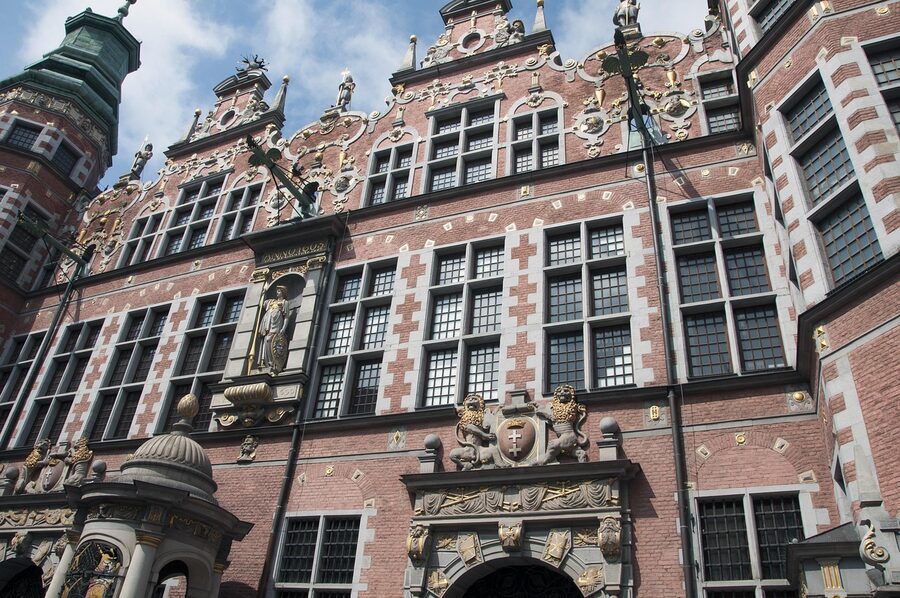
Here’s something I’d want to know before booking: what you’re seeing in the Old Town is partly a deliberate architectural fiction. After 1945, when the city was 90% rubble, the post-war Polish government had a choice. They could rebuild Gdańsk to its 1939 state (which was a mix of merchant houses, German Imperial additions, and 19th-century industrial buildings), or they could restore it to its 17th-century commercial peak. They chose the latter. So a lot of what you walk past on Długa was last lived in by someone in 1700, conceptually. Some of the houses had detailed photographs and original drawings to work from. Some were rebuilt from rough sketches and best guesses. A few are genuinely invented to plug the gaps in the streetscape.
This isn’t a criticism. It’s an extraordinary act of urban resurrection, and the architectural board that ran it was meticulous about getting things right. But it does mean that “the Old Town of Gdańsk” is an idea as much as a place. A good tour guide will tell you this. A bad one will pretend everything you’re looking at has been there since 1500.
If this kind of layered history pulls you in, the parallel walking-tour story is just down the coast. Warsaw’s Old Town went through the same wartime destruction and rebuild on an even larger scale, while Kraków escaped most of the fighting and is largely original medieval, which is a very different feeling on the ground.
What about the cruise option
If you’ve got two days here and you’ve already done the walking tour, the historic boat cruise is the second-best way to see the city. Replica galleons run the Motława every hour in season, and the perspective from the river is genuinely different. You see how compact the Old Town really is and how dominant the Crane was on the medieval skyline. There’s also a serious option: the cruise out to Westerplatte, the peninsula where the first shots of the Second World War were fired in September 1939. That one is about an hour each way and substantially heavier in tone than anything else on this list.
What you can skip
The Torture Museum unless you’re with curious teenagers. The amber museum unless you’re already buying serious amber. The Wax Museum on Mariacka. The Solidarity Centre is a different conversation: it’s an extraordinary museum, but it’s a 25-minute walk from the Old Town and an entire half-day in itself. Don’t try to combine it with the Old Town walking tour. Do it as a separate visit.
If you’re spending more than two days in the city, expand outwards. The historic galleon cruises on the Motława give you the river view of the same Old Town you walked. The trip out to Westerplatte is the obvious historical follow-up. Day trips to Malbork Castle (50 minutes by train) or the seaside town of Sopot (15 minutes on the SKM commuter train) are better uses of a third day than going around the Old Town again. If you’re combining Gdańsk with a southern Polish leg, the equivalent visit-the-camp day is the Auschwitz combined day trip from Kraków, a serious half-day in roughly the same emotional weight class as Westerplatte.
Some things worth doing right after the walk
Lunch at a milk bar. Bar Mleczny Neptun on Długa is the famous one. Order pierogi, a bowl of żurek, and a kompot, sit at a shared table, eat, leave. Total cost about $6 to $9. It’s the most authentic non-touristy meal you can get within ten minutes of where your tour ended.
If you have the energy, walk the river. South from the Crane along the Long Embankment, across the wooden footbridge to Granary Island, then back. About 40 minutes. It’s the second-best way to see how the Old Town fits its waterfront, after a guided walk.
And if you’re settling into Gdańsk for several days, parallel cluster reading: my Warsaw Old Town walking tour guide covers the same wartime-rebuild story at the bigger end, the Kraków Old Town walking tour shows you a Polish historic core that survived the war intact, and the evening Vistula cruise in Kraków is the southern Polish equivalent of doing the Motława river circuit by boat. For a wider Polish food angle, the Kraków food tour is the closest food-walk equivalent to what you’d get on a Gdańsk milk-bar lunch. If you’d rather see Kraków by bike than on foot, the Kraków bike tour covers ground a walking tour can’t, and the Kazimierz Jewish Quarter walk handles the city’s deeper history. The Warsaw galar river cruise is the Vistula equivalent of Gdańsk’s Motława boat circuit, and the Warsaw hop-on hop-off bus is the easier alternative for anyone whose feet have decided enough is enough.
That’s everything I’d want to know before showing up in Gdańsk’s Old Town for the first time. The tours are good, the city is genuinely beautiful, and the Crane, when you finally stand under it, is even bigger than the photographs make it look.
Affiliate disclosure: Some of the links in this article are affiliate links. If you book through them we may earn a small commission at no extra cost to you. We only recommend tours we’d actually book ourselves.