
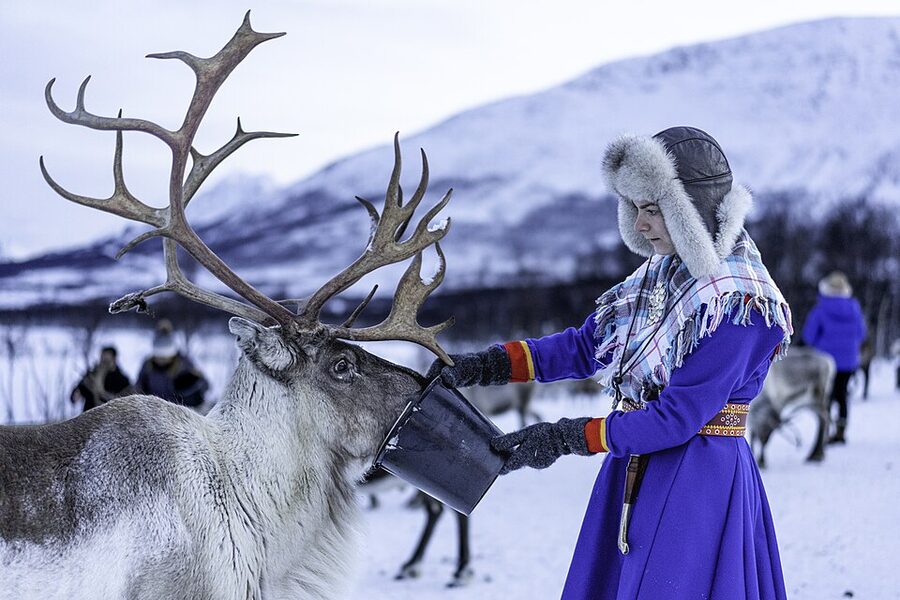
Out at the camp, snow swallows every other sound. The reindeer harness bells jingle softly as the herd shifts in the half-light, woodsmoke drifts from the lavvu chimney, and somewhere a Sami guide is hauling firewood through knee-deep powder. This is what booking reindeer sledding in Tromsø actually buys you. Not a theme park ride, but a few hours inside a working Sami camp where the silence does most of the talking.
.jpg)
Almost every reindeer tour out of Tromsø is run by a Sami family with a permanent winter camp 30 to 40 minutes out of town. The tour day looks roughly the same wherever you book: pickup from a central hotel, a short bus ride into the hills, then four hours of sledding, feeding, lavvu time, hot food, and storytelling. What changes is the camp itself, the size of the group, and whether you stay until dark for the chance of aurora overhead.
I’ll cover what you’ll actually do at the camp, the three tours I’d send anyone toward first, what to wear so you don’t freeze, and a few things the booking pages don’t bother explaining. Reindeer sledding gets sold as a one-line bullet point on a Tromsø itinerary. It deserves more thought than that, mostly because the camps are not equal.
- In a Hurry
- What a Reindeer Tour From Tromsø Actually Includes
- Three Tours I’d Book First
- 1. Tromsø: Reindeer Sledding & Feeding with a Sami Guide: 8
- 2. Tromsø: Reindeer Ranch and Sami Cultural Tour with Lunch: 1
- 3. Tromsø: Reindeer Feeding with Chance of Northern Lights: 3
- The Sledding Part: Manage Your Expectations
- What’s in the Lavvu Lunch
- How to Dress (Or You Will Hate This)
- Where the Camps Actually Are
- When to Book
- Cost: What 0 Actually Buys
- The Sami Side of It
- Joik: The Part Most Tours Skip the Best
- Combining Reindeer Sledding With Other Tromsø Activities
- Common Misconceptions Before You Book
- Practical Booking Tips
- Other Tromsø Guides Worth Reading
In a Hurry
Best overall: Tromsø Reindeer Sledding & Feeding with a Sami Guide. The full package with sledding, feeding and lavvu lunch, $198.
Best for cultural depth: Reindeer Ranch and Sami Cultural Tour with Lunch. Feeding plus extended Sami storytelling, no sledding, $141.
Best evening pick: Reindeer Feeding with Chance of Northern Lights. Late afternoon into dark, dinner in the lavvu, aurora if the sky cooperates, $163.
What a Reindeer Tour From Tromsø Actually Includes
.jpg)
The standard four-hour tour is built around five things. They run in roughly this order at most camps:
- Pickup from a Tromsø hotel on a small bus. Most operators meet outside the Scandic Ishavshotel or the Radisson Blu on the harbour. Confirm your meeting point the night before, not the morning of.
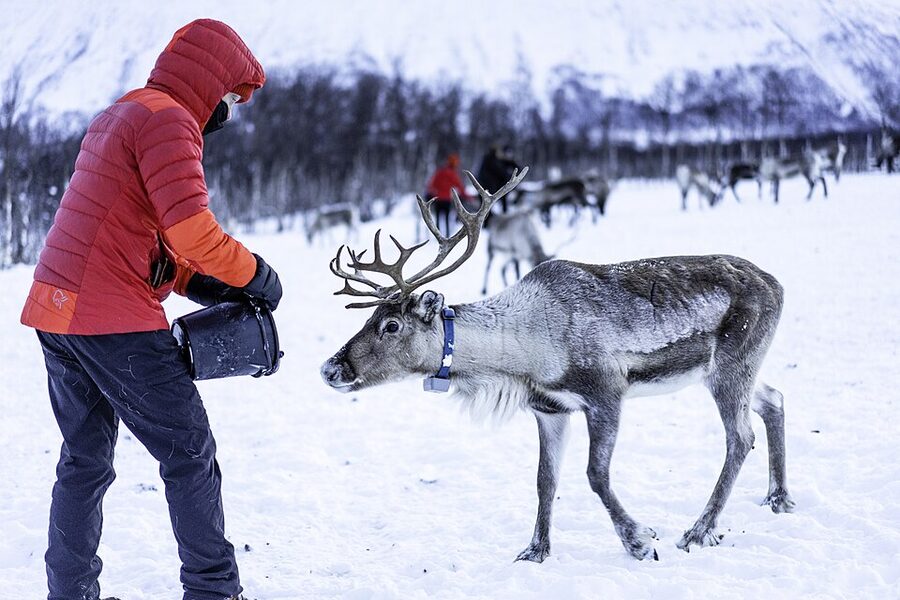
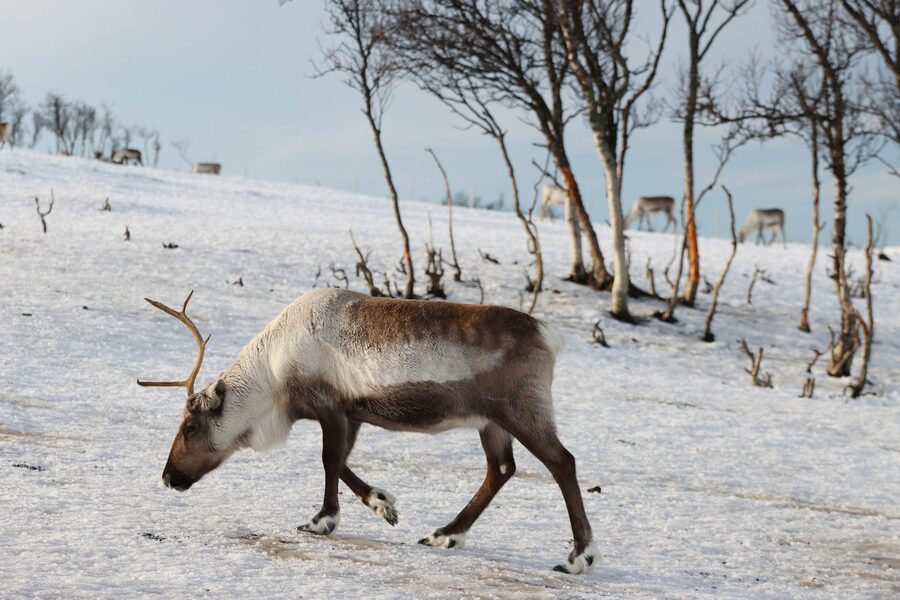
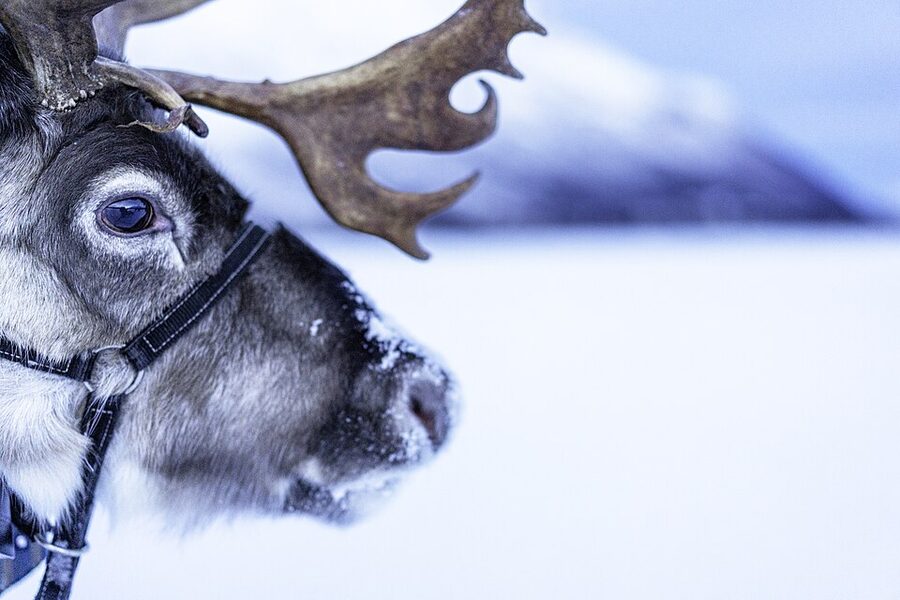
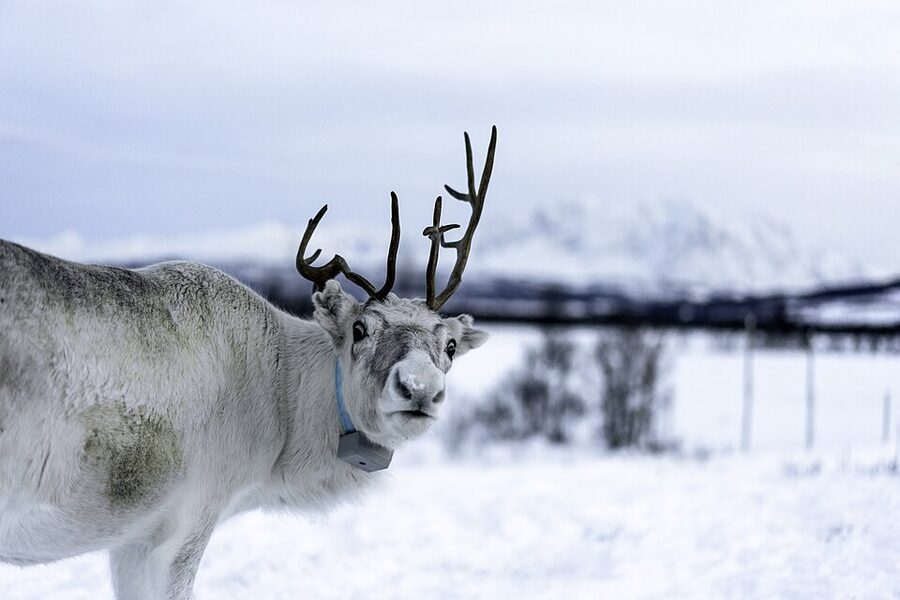
- Reindeer feeding. You’re handed a bucket of pellets and turned loose with the herd. Camps in Tromsø usually keep around 200 to 300 reindeer, and most of them will come straight to you. Hold the bucket high if one starts shoving.
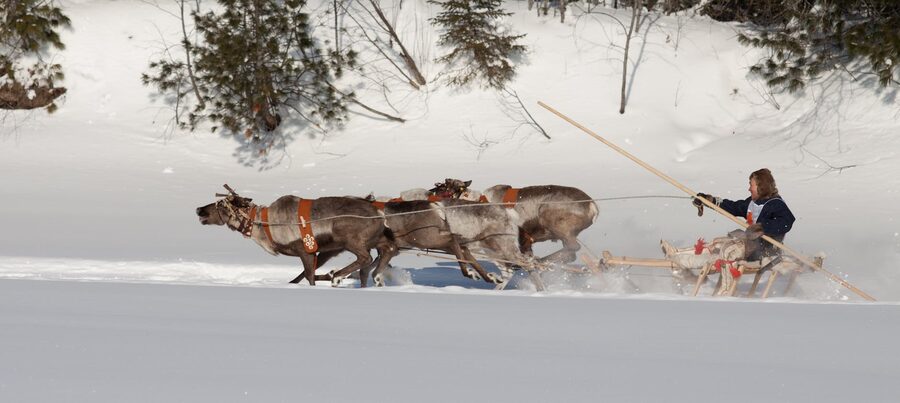
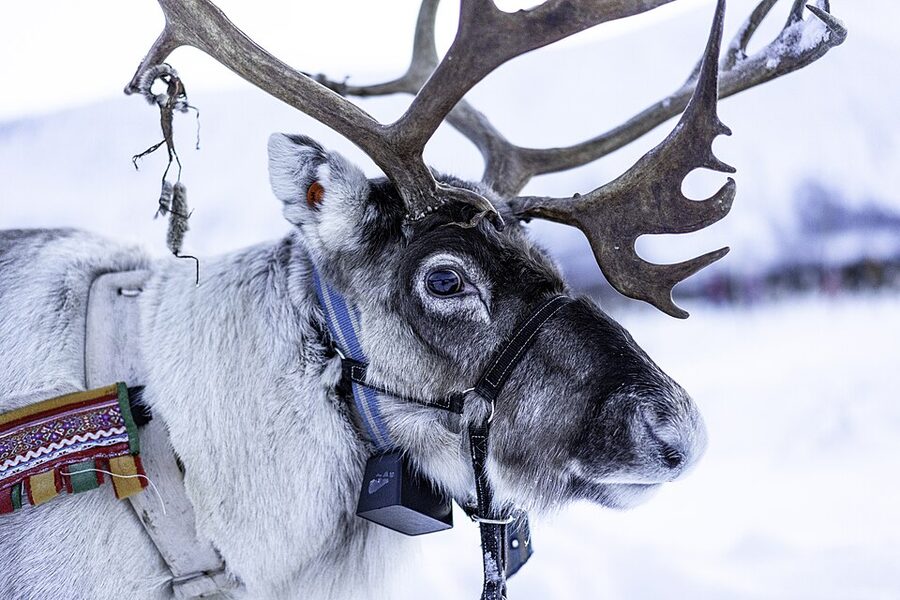
- Sled ride. Two reindeer harnessed to a wooden sled tow you on a short loop, usually 5 to 10 minutes through pine forest or open tundra. There’s no driving involved. You sit in the sled wrapped in a reindeer hide while a guide leads the team on foot or skis.
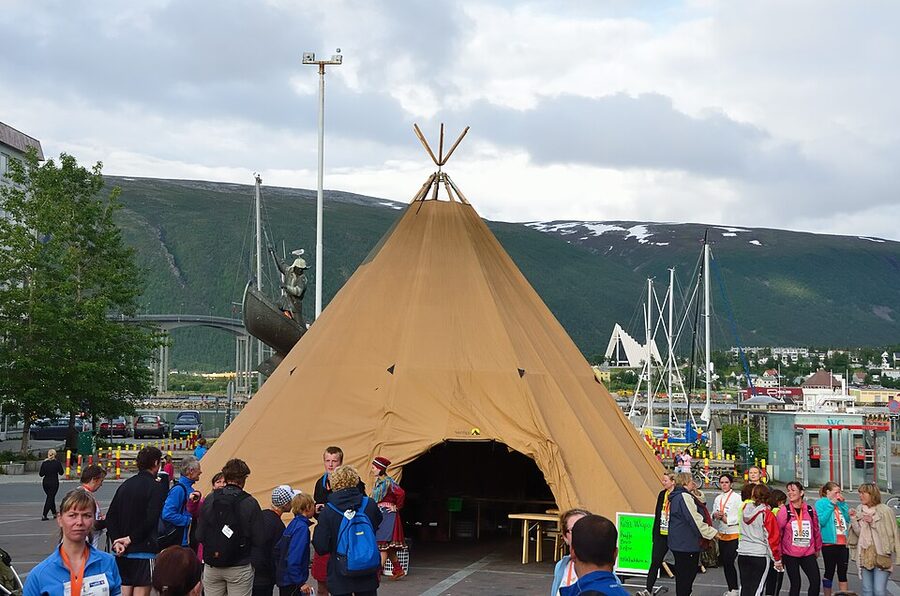
- Lavvu time with hot food. The lavvu is a Sami tipi-style tent with a fire pit in the centre and reindeer hides around the walls. Lunch is bidos, the slow-cooked reindeer stew Sami families serve at weddings.
- Storytelling and joik. Most guides spend half an hour after lunch explaining how their family ended up in this valley, what reindeer husbandry actually involves, and how the Norwegian state’s relationship with the Sami has shifted in their lifetime. Some end with a joik, the traditional Sami song that imitates the spirit of a person, place, or animal.
.jpg)
A few camps add lasso practice or a snowshoe loop after lunch. These are optional and usually not advertised heavily because the schedule depends on weather. Don’t book a tour for the lasso lessons specifically. They’re a 10-minute add-on, not a headline.
.jpg)
Three Tours I’d Book First
There are roughly a dozen reindeer experiences sold under various names out of Tromsø, but they map onto three real options. One does the full sledding-plus-feeding-plus-lunch package. One skips the sled and leans into the cultural side. One runs late so you can chase the aurora on the same trip.
1. Tromsø: Reindeer Sledding & Feeding with a Sami Guide: $198
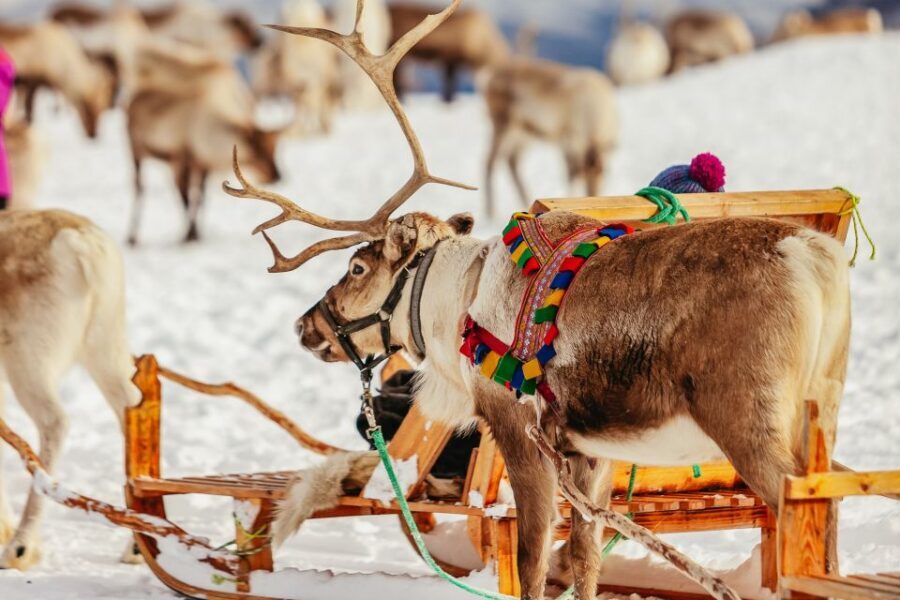
This is the tour most people mean when they say “the reindeer experience” in Tromsø. It runs from late November through early April, takes about four hours door to door, and combines all the elements that matter: a sled ride, the feeding session with the herd, and a sit-down lunch in the lavvu. Our full review goes into the herd size and pickup logistics in more detail. The sledding portion is short, a 5 to 10 minute loop is normal, but the feeding and the lavvu time are what people remember.
2. Tromsø: Reindeer Ranch and Sami Cultural Tour with Lunch: $141
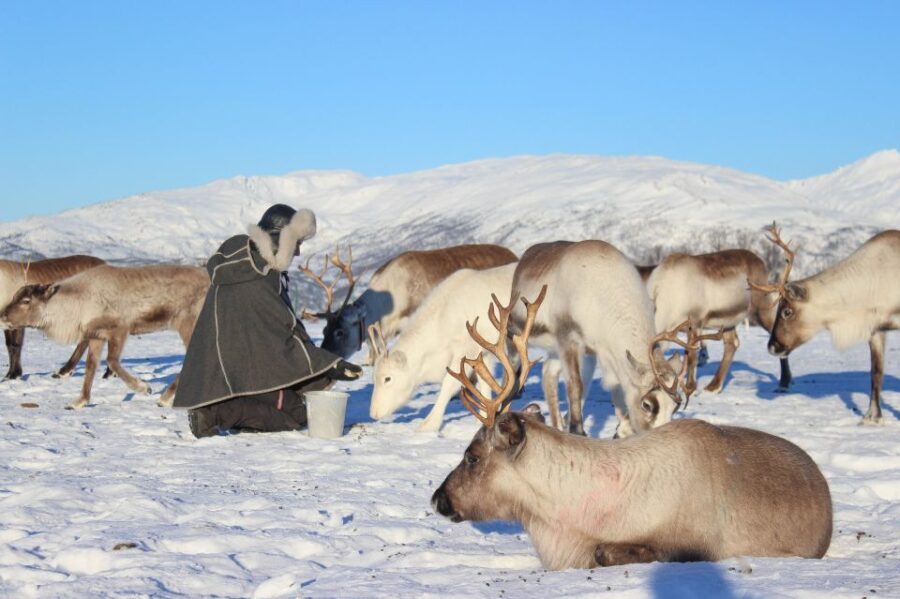
If you’ve read enough about reindeer sledding to know it isn’t really a sled “ride” in the husky sense, this is the smarter pick. You still get up close to roughly 300 reindeer for the feeding session, you still eat bidos in a lavvu, but the time saved on the sled circuit goes into the storytelling. Our review covers what the cultural section actually involves. It’s not a museum lecture, more a conversation around the fire. Pick this if you’ve already got a husky sledding day in your Tromsø plan and you don’t need a second sled experience.
3. Tromsø: Reindeer Feeding with Chance of Northern Lights: $163
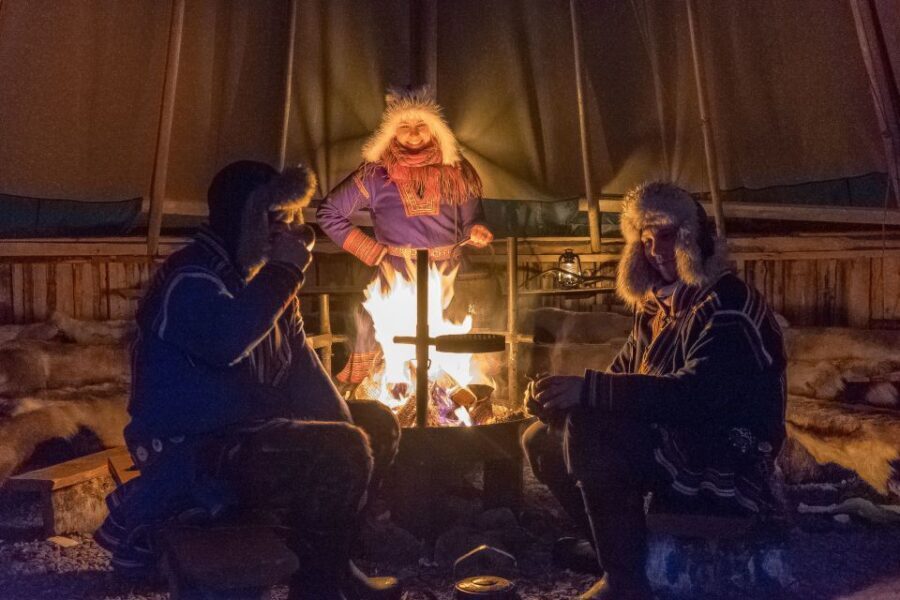
This one trades the sled for an extra hour or two outside the lavvu after dinner, ideally with the aurora on the horizon. The tour leaves Tromsø in the late afternoon and runs about 4.5 hours total, including a 40 minute drive each way. Our review is honest about the catch: this is not a dedicated northern lights chase, which means the guides won’t drive 200km to find clear sky. If the camp is socked in, you have dinner in a lavvu and go home. Book it because you want the dinner; treat aurora as the bonus.
The Sledding Part: Manage Your Expectations
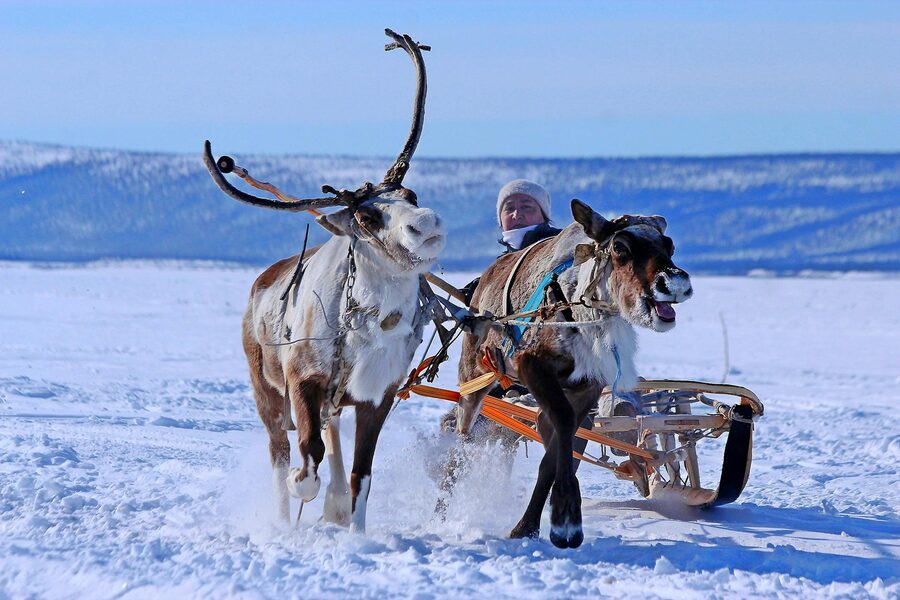
Here’s the thing nobody tells you on the booking page. Reindeer sledding is slow. Genuinely slow. The reindeer plod along at maybe 6 or 7 km/h, the track is a flat loop through the camp’s home pasture, and you’re tucked into a wooden sled with a hide over your knees. It’s about 5 to 10 minutes total. If you’re imagining the breakneck dog-sled vibe, this isn’t that.
What it is instead is quiet. Properly quiet, in a way most modern travel experiences aren’t. The only sound is the squeak of the runners on cold snow, the breath of the reindeer in front of you, and the harness bells. You sit, the reindeer walk, the world goes past at the pace of someone strolling. That’s the whole appeal. People who book this expecting husky-style adrenaline come back disappointed; people who book it expecting a slow Arctic lullaby come back happy.
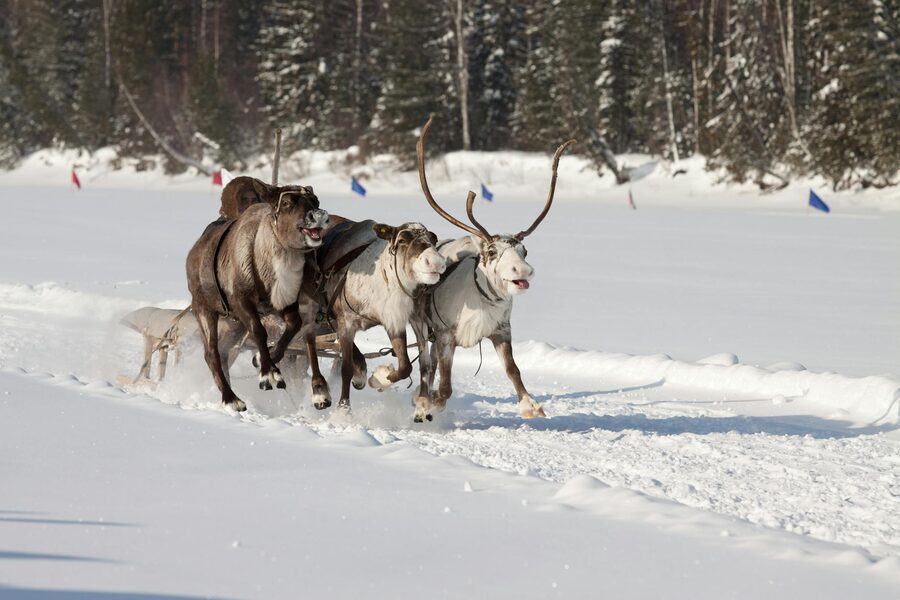
If you want the faster, more athletic version, look at husky sledding from Tromsø instead. That’s a different animal entirely, both literally and in terms of energy. A lot of travellers do both: huskies for adrenaline, reindeer for atmosphere.
What’s in the Lavvu Lunch
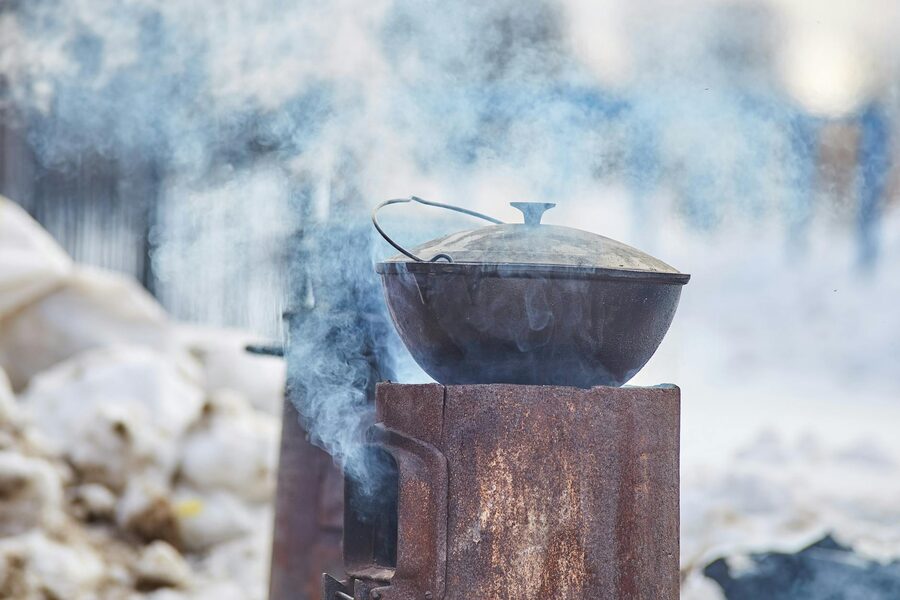
Lunch is bidos (sometimes spelled bidus), a Sami slow-cooked stew built around reindeer meat, potatoes, carrots, and stock. It’s a celebration dish, historically served at weddings, and it’s the food most likely to convince a sceptic that reindeer is genuinely good eating. The flavour sits somewhere between beef and venison: leaner than beef, less gamey than venison, with a slight sweetness from the slow cook.
You eat sitting on hides arranged around the fire pit, usually out of a wooden bowl with bread on the side. Some camps offer flatbread or a thin Sami crepe called gáhkku alongside. Coffee or warm berry juice comes after, and most camps offer a slice of cake or a piece of chocolate before sending you back to the sleds.
If you don’t eat reindeer: tell the operator at booking, not on the day. Vegetarian alternatives are usually a thick mushroom or root vegetable stew. Vegan options are possible but need 24 to 48 hours’ notice.
How to Dress (Or You Will Hate This)
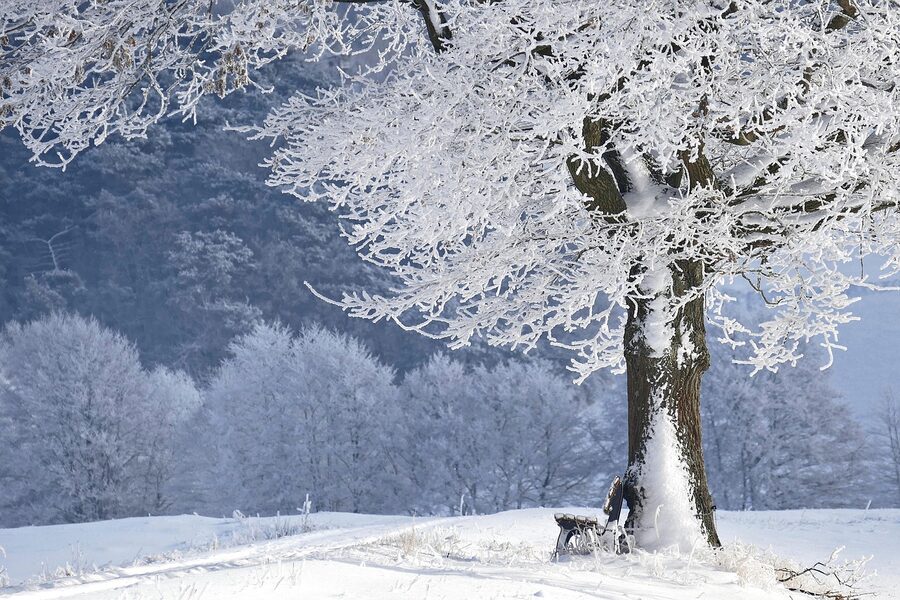
Most operators provide a thermal overall, mittens, and snow boots at the camp before you go out. Use them. They’re shaped for sitting still in a sled at minus 15°C, which is not what your everyday winter coat is built for. Even so, the layers you wear under the camp gear matter:
- Base layer: merino wool top and bottom. Cotton kills you here because it holds sweat against the skin and freezes.
- Mid layer: a fleece or wool sweater.
- Wool socks. Two pairs is fine, but make sure your boots aren’t tight enough to cut circulation.
- Beanie or warm hat. The camp gear sometimes includes a hood but rarely a hat.
- A neck buff or balaclava for the sled ride. Wind in the face is what tips a comfortable day into a miserable one.
Your face is the part most people forget about. The sled ride is short, but it’s exposed, and even at slow reindeer pace a 5-minute pull at minus 12°C numbs cheeks. Bring a buff you can pull up.
.jpg)
Where the Camps Actually Are
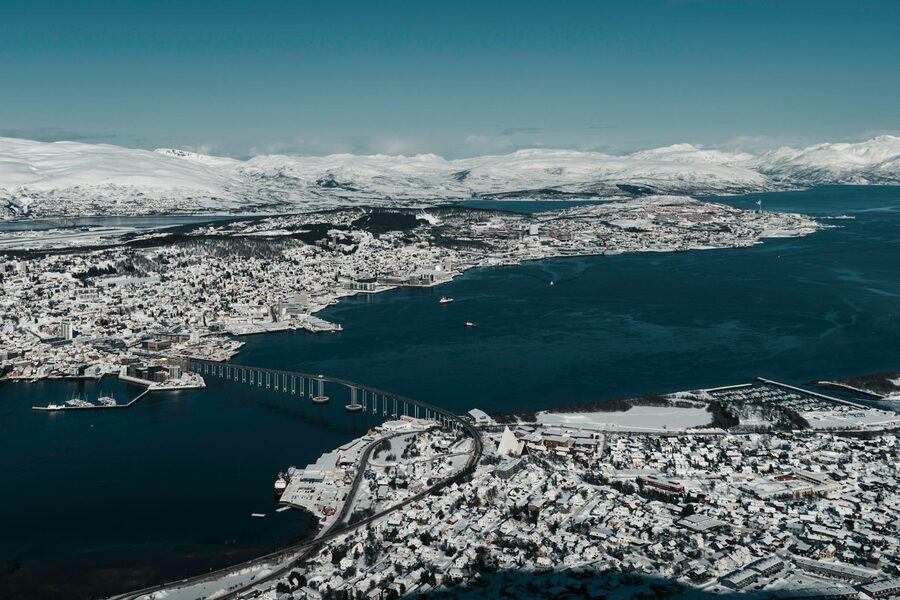
The two main camps Tromsø operators use are both 30 to 40 minutes by minibus from the city centre. Tromsø Arctic Reindeer is in Kvaløya, west of town, on flatter pasture with views toward the fjord. The other big camp, used by several Sami-run operators, sits in the hills north of Tromsø in pockets of birch forest. Both camps are real working reindeer operations: when you visit, you’re driving onto an actual herder’s land, not a theme park.
Pickup is almost always a central hotel (Scandic Ishavshotel, Radisson Blu, the Edge) or the tourist information centre on the harbour. If your hotel isn’t on the pickup list, you walk to the nearest one. The drive out runs along the edge of the same fjords you’ll be hunting aurora over later in the trip, so don’t sleep through it. The afternoon light at 11:30am in midwinter is something you have to see in person to believe.
When to Book
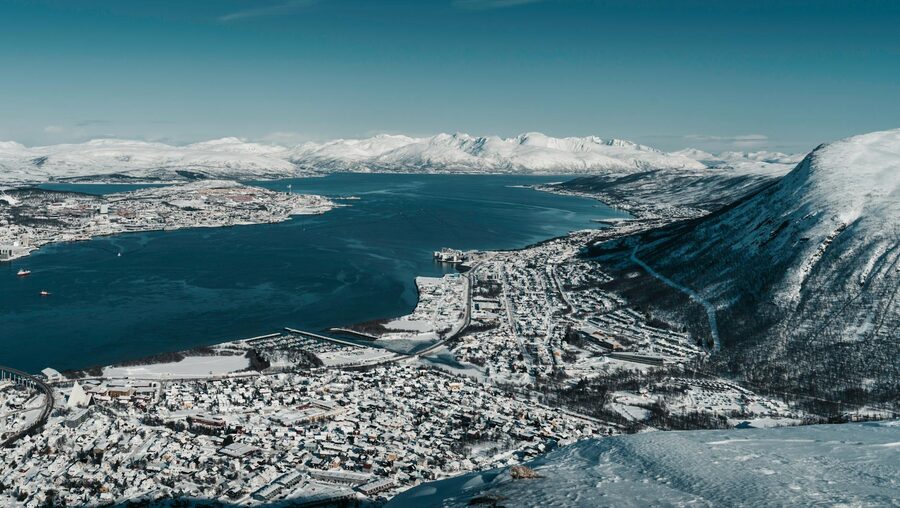
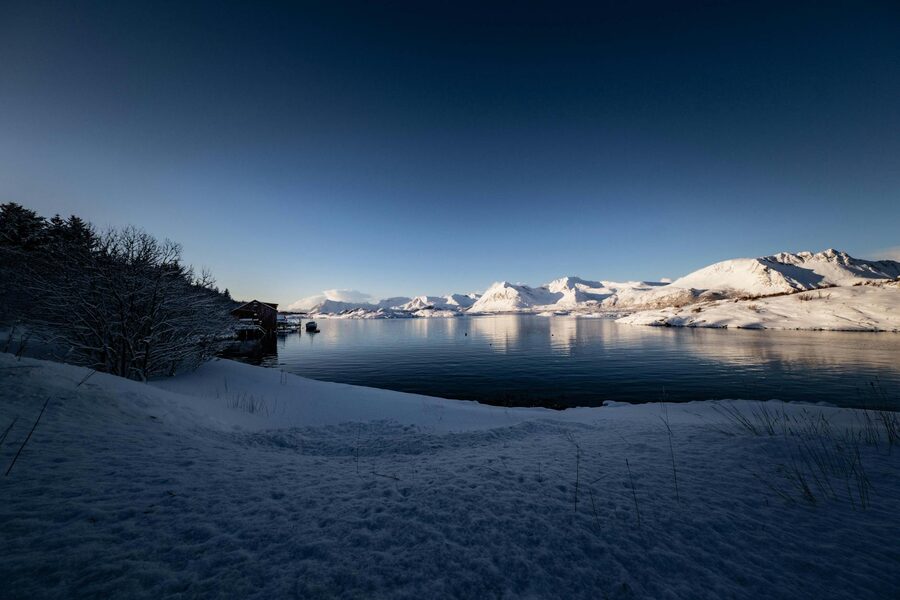
The reindeer tour season runs roughly November 1 to late April, but the prime months are December through March. Earlier and later, you risk patchy snow on the sled track and warmer days that turn the camp into mud. Mid-January and February are the safest weather bets: colder, drier, more consistent snow.
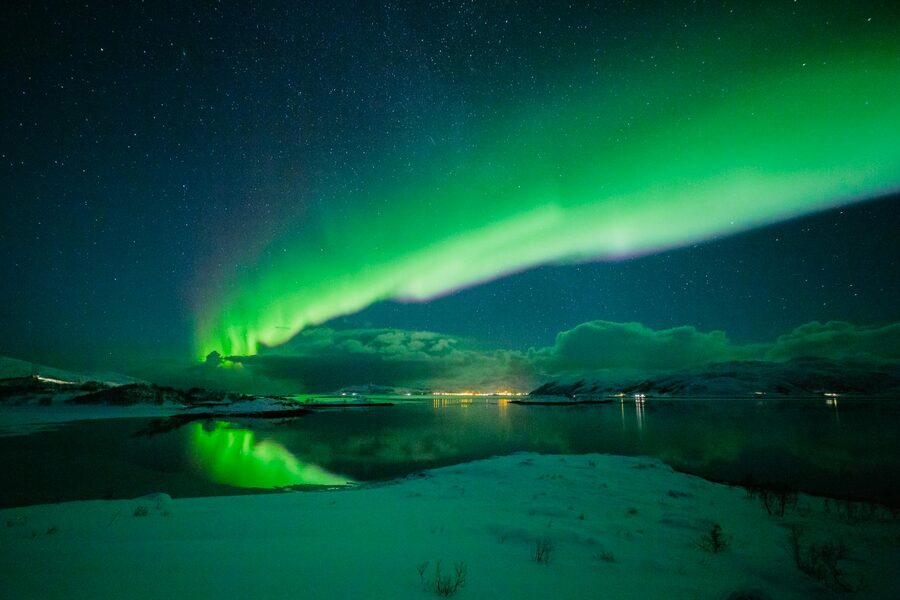
Aurora season overlaps but isn’t identical. The dark months (late September to early April) are when northern lights are even possible. So if you want both reindeer sledding and a real aurora chance on the evening dinner option, target the mid-December to mid-March window.
Booking lead time:
- December and February school holidays: book at least 6 weeks ahead, sometimes longer. These are the busiest weeks in Tromsø and Sami operators have a hard limit on group size.
- January (excluding the first week) and March: 2 to 3 weeks ahead is usually fine.
- November and April: often available a few days out, but watch the snow forecast.
If you only have one reindeer day in your Tromsø trip, book the morning departure. The afternoon tour runs the same itinerary but the sky is already getting dark by the time you start sledding, which limits photos and makes the camp feel rushed.
Cost: What $200 Actually Buys
.jpg)
Expect to pay between $140 and $220 per adult for a half-day tour. The price reflects:
- Round-trip transport from a Tromsø hotel
- Thermal overall, mittens, and boots
- The sled ride (usually 5 to 10 minutes per person)
- A bucket of pellets for the herd
- Bidos lunch with bread and a hot drink
- 30 to 60 minutes of Sami storytelling, often with a joik
That’s not cheap, and Tromsø is not cheap generally. Most things up here are 1.5 to 2x what you’d pay in Oslo or southern Norway. A few quick honest takes on value:
Worth the money: if you want the Sami cultural exposure as much as the animals. The Ranch and Cultural Tour at $141 is the best value of the three because the storytelling really is good, and you don’t lose much by skipping the brief sled loop.
Possibly not worth it: if you’re imagining a fast sled chase. Spend the same money on huskies and you’ll get the speed you want.
Watch for: tours sold cheaper than $130. They tend to mean shorter sessions, larger groups, or a camp where the reindeer are kept in a small paddock rather than free-ranging. Check the operator’s name. Sami-run camps are usually clearly identified as such, and the Sami operators tend to invest more in the cultural side than third-party intermediaries do.
The Sami Side of It
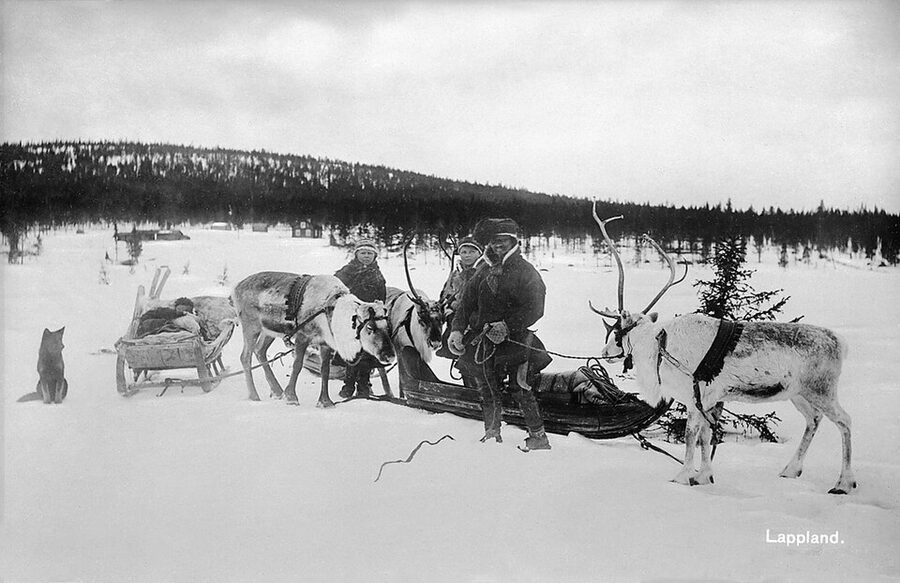
The Sami are the indigenous people of northern Scandinavia. Their traditional homeland, Sápmi, runs across the top of Norway, Sweden, Finland, and a slice of Russia. Reindeer husbandry is central to Sami identity but not universal. Only about 10% of Norwegian Sami families herd full-time. The ones running tours out of Tromsø are typically still active herders who use tourism to supplement an income from selling reindeer meat to the Norwegian market.
This is worth knowing because it changes how you behave at the camp. You’re not at a folk theme park. The animals you’re feeding will be slaughtered in autumn for meat, that’s how reindeer husbandry works, and there’s no version of it that doesn’t end that way. Most guides will be happy to talk about it if you ask, but be ready for a real answer rather than a sanitised one.
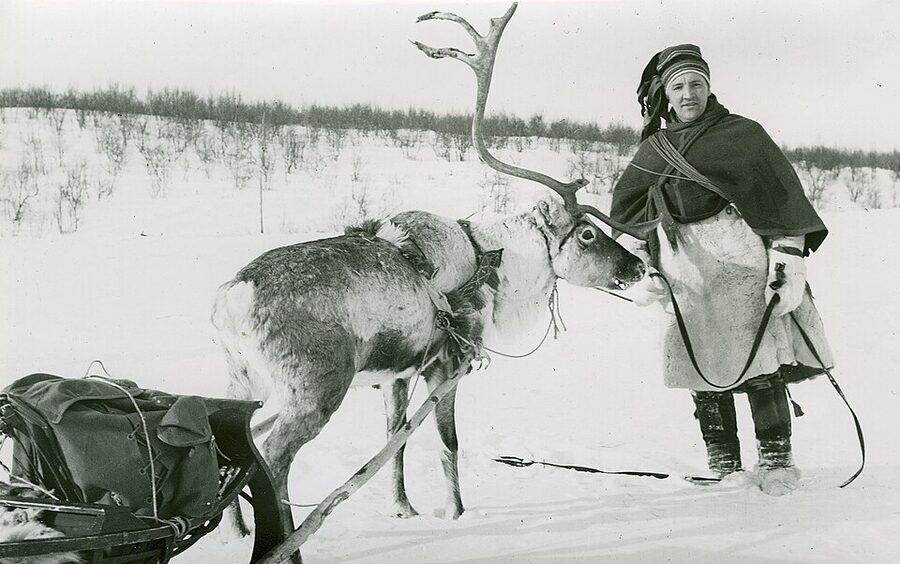
The other thing worth knowing: Norwegian government policy toward the Sami has shifted dramatically in living memory. As recently as the 1960s and 70s, Sami children were sent to boarding schools where their language was forbidden. The Sámi Parliament in Karasjok wasn’t established until 1989. When your guide tells you their grandmother lost her language, that isn’t a tour gimmick, that’s family history. The storytelling section of these tours is, in part, an act of cultural recovery, and the better camps treat it that way.
Joik: The Part Most Tours Skip the Best
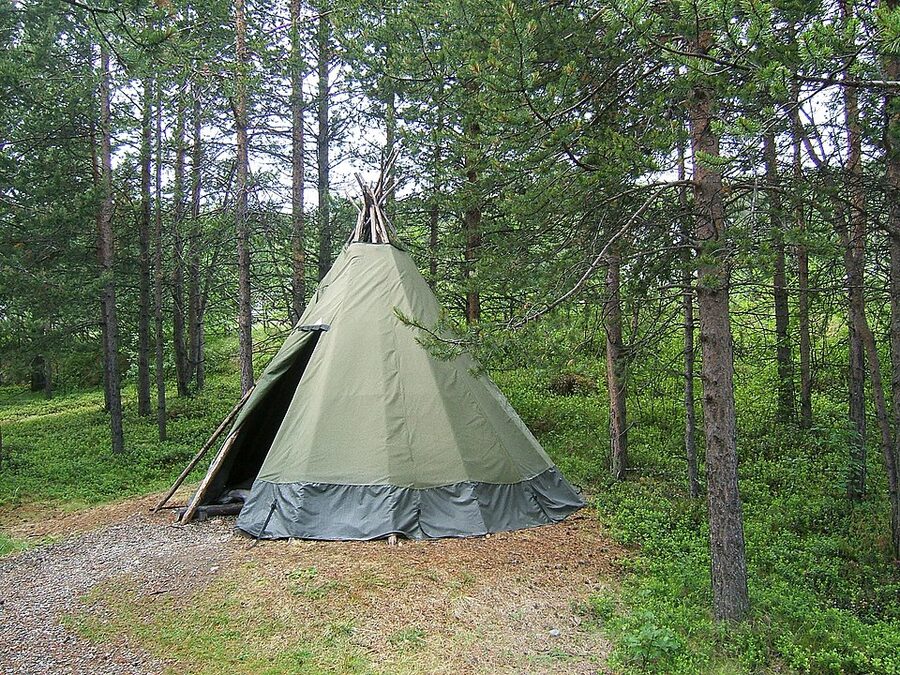

The joik (sometimes spelled yoik) is a traditional Sami vocal form that doesn’t really translate to anything in Western music. It’s not a song about a person or place. It’s an attempt to evoke that person or place, to be it, sonically. Joiks have specific subjects: a particular grandmother, a specific reindeer, a named valley. They don’t have lyrics in the conventional sense, more vocal patterns repeated and varied.
If your guide offers a joik, listen properly. Phones away. They tend to be short, three or four minutes, and they’re easily the most distinctive part of the day. The reason most tour reviews mention the storytelling rather than the joik is that not every guide performs one. Ask politely whether your guide will joik, and accept whatever answer you get.
Combining Reindeer Sledding With Other Tromsø Activities
Most Tromsø trips run 3 to 5 nights, which is enough time to combine reindeer sledding with two or three other winter activities. The smart pairings:
- Morning reindeer plus evening aurora chase: the cleanest combo. Book the late-morning reindeer tour, you’re back in town by 4pm, then join a dedicated northern lights tour from 6pm onward. A dedicated aurora hunt drives 100km+ to find clear sky, which the reindeer dinner tour does not.
- Reindeer one day, huskies the next: the two sled experiences feel completely different. Huskies are loud, fast, and high-energy; reindeer are slow and quiet. Doing both back to back is a good comparison if you’ve never done either before. The husky sledding guide covers what to expect.
- Reindeer and Sommarøy day trip: if you’re staying 5+ nights, slot a Sommarøy islands tour on a different day for the white-sand-beach-inside-the-Arctic-Circle weirdness. Different vibe entirely from the snowed-in camps inland.
- Reindeer plus a fjord cruise with fishing: a fjord and fishing cruise gives you the water-side perspective on Tromsø to balance out the inland reindeer day. Catching dinner adds a different kind of arctic story than the lavvu lunch does.
The one thing I wouldn’t combine with reindeer is whale watching on the same day. Both involve long drives or boat rides, and you’ll be cold, tired, and out of daylight before the second activity is done justice.
Common Misconceptions Before You Book
.jpg)
A few things people get wrong before they show up:
“It’s a fast sled ride.” No. See above. It’s a slow, atmospheric ride. The sledding is the smallest part of the day in time terms.
“I’ll be driving the team.” Also no. A guide leads each team on foot or skis. You sit in the sled. There’s no driving for guests on a standard tourist tour.
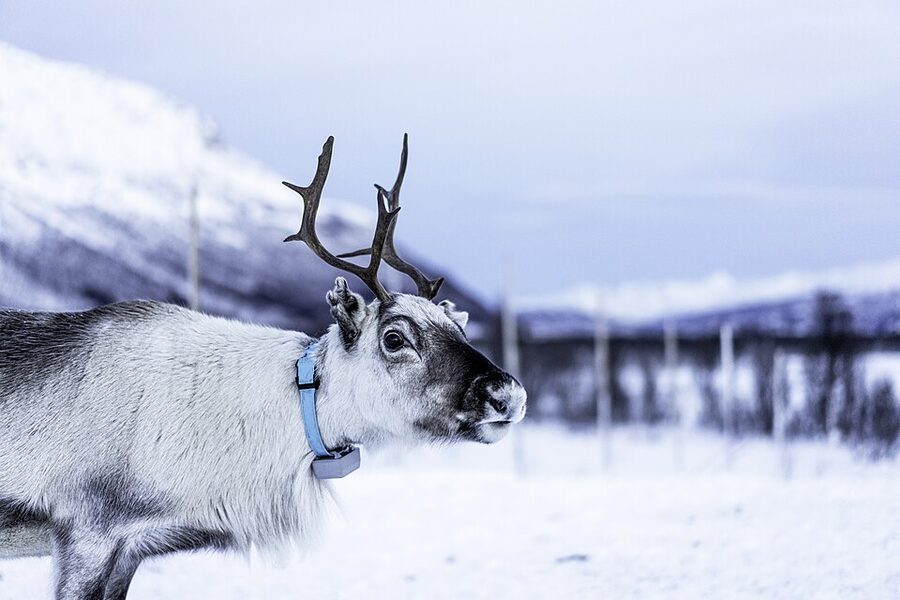
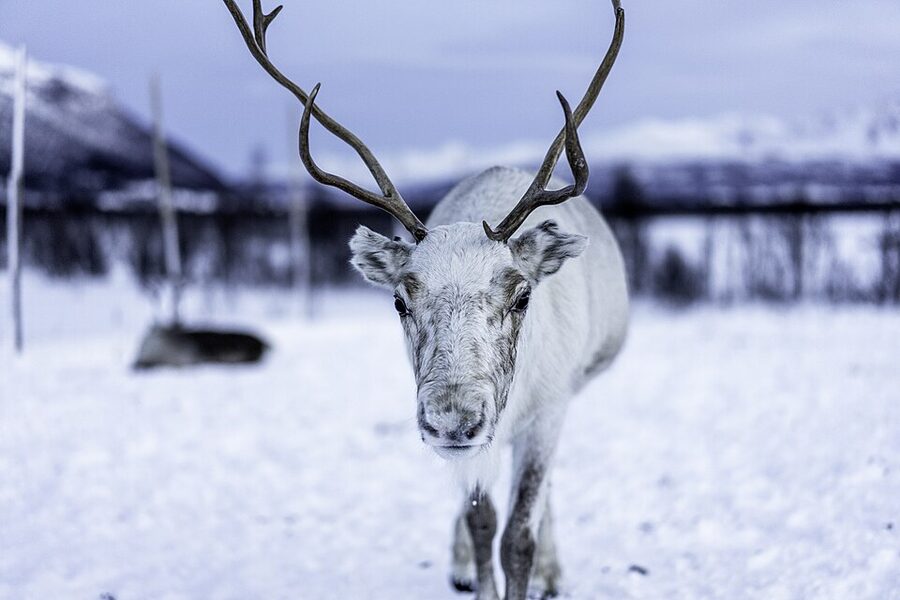
“Reindeer are gentle and you can hug them.” They’re tame enough to feed by hand, but they have antlers, hooves, and personalities. Don’t try to grab one or get between two animals competing for food. The guides will tell you how to behave; listen to them.
“I’ll definitely see the northern lights on the dinner tour.” It says “chance” for a reason. The camp doesn’t move, so if it’s overcast above your camp, you don’t see anything. A dedicated aurora chase has a much higher hit rate.
“It’s the same as a Lapland Christmas attraction.” The Tromsø tours are run by working Sami families on real herding land. They’re more sedate, more cultural, and less Christmas-themed than the Rovaniemi/Lapland tourism set-ups across the border in Finland. Different product entirely.
Practical Booking Tips
.jpg)
A few last things that make life easier:
- Book through GetYourGuide or Viator rather than direct on the operator’s website. Free cancellation up to 24 hours and a clean refund process if your flight gets delayed by the weather, which happens more in January than airlines admit.
- Reconfirm pickup the night before. Tromsø operators occasionally swap pickup hotels at short notice if a snowstorm closes a bus route.
- Check what camera/phone you’ll bring. Phones drain battery fast in cold; a fully charged phone at 9am can be dead by noon. Bring a power bank in an inside pocket where it stays warm.
- Eat breakfast. The bidos at lunch is filling, but the gap between Tromsø breakfast and 1pm lavvu lunch is a long one in arctic cold. Pack a snack.
- Carry cash for tips. Norwegian kroner, not euros. The guides don’t expect tips, but a 50 to 100 NOK note from each adult is appreciated and usually goes back into the operation, not the guide’s pocket.
Other Tromsø Guides Worth Reading
If you’re building out a few days in Tromsø, the city has more to it than reindeer. The northern lights guide covers the dedicated aurora chases that consistently outperform the camp dinner option. Husky sledding from Tromsø is the obvious counterpart to this article and runs at a totally different energy. If you’ve got a clear-weather day spare, a Sommarøy islands tour shows you the Arctic Circle’s strangest beach scenery, and a fjord fishing cruise swaps the snow camp for the water and a haul of cod for dinner. For the rest of Norway, our guides to the Bergen fjord cruise, Oslo fjord cruise, the Flåm Railway, and Pulpit Rock from Stavanger cover the best of the south.
This article contains affiliate links. We earn a small commission if you book through them, at no extra cost to you. It helps us keep producing detailed Norway guides.