
Here’s the rookie mistake that ruins Trollfjord. You book the cheapest cruise leaving Svolvær harbor, hop on a regular diesel boat, and spend three hours listening to a bass-heavy engine grind through the most acoustically interesting fjord in Norway. The cliff walls are 1,100 metres high. The fjord narrows to about 100 metres at the inner basin. Every sound bounces. And you’re hearing none of it because the boat you’re on is louder than a coffee grinder.
The fix is simple. You take a silent electric cruise. The engine cuts. The cliffs do their thing. You actually hear Trollfjord.


The one to book: Silent Electric Trollfjord Cruise from Svolvær. About $140, three hours, hybrid-electric catamaran, panoramic lounge, white-tailed eagle spotting.
If you want speed and adrenaline: RIB Sea Eagle Safari to Trollfjord. About $125, two hours, exposed RIB boat, sea-eagle feeding included.
Cheapest spotter option: Sea Eagle Safari to Trollfjorden. About $141, open-top boat, two hours, lots of birdwatching.
- Why the silent boat actually matters
- The three Trollfjord cruises worth booking
- 1. Silent Electric Trollfjord Cruise from Svolvær: about 0
- 2. RIB Sea Eagle Safari with Trollfjord Cruise: about 5
- 3. Sea Eagle Safari to Trollfjorden (Open-Top): about 1
- What three hours on the silent cruise actually looks like
- How to actually book it
- The best season is not the one most people think
- What to actually wear
- Trollfjord, Tysfjord, and the others: getting the geography right
- The 1890 Trollfjord battle (yes, it really happened)
- What can go wrong (and what doesn’t)
- Where to stay near the cruise dock
- Getting to Svolvær
- Combining Trollfjord with other Lofoten activities
- The eagle thing, in detail
- Common questions
- Building a Norway trip around it
- One more thing
Why the silent boat actually matters
Most fjord cruises in Norway are diesel. They have to be. Standard tour boats run engines that put out somewhere between 80 and 95 decibels at the deck, which is the noise floor of a hairdryer pointed at your head. You can shout over it. You can’t hear anything else over it.
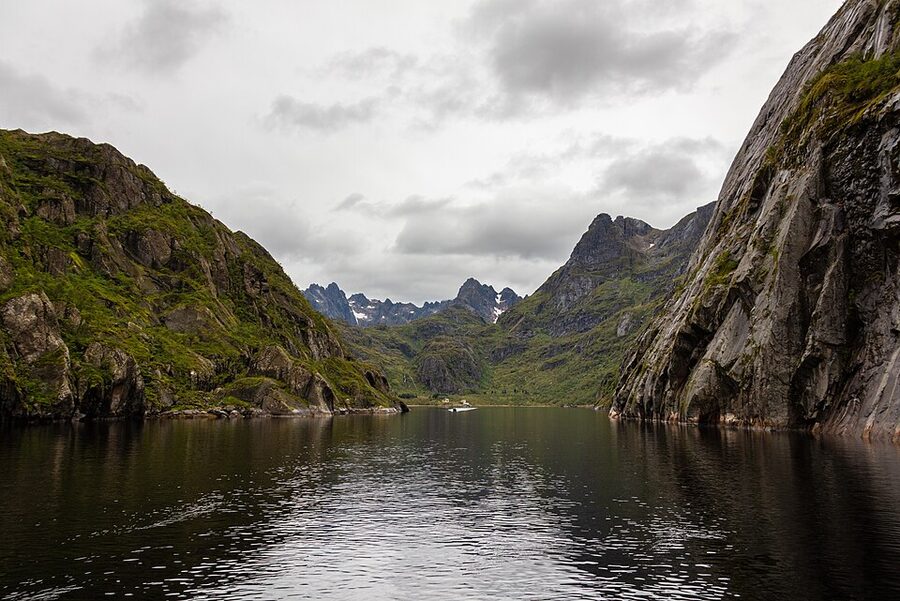
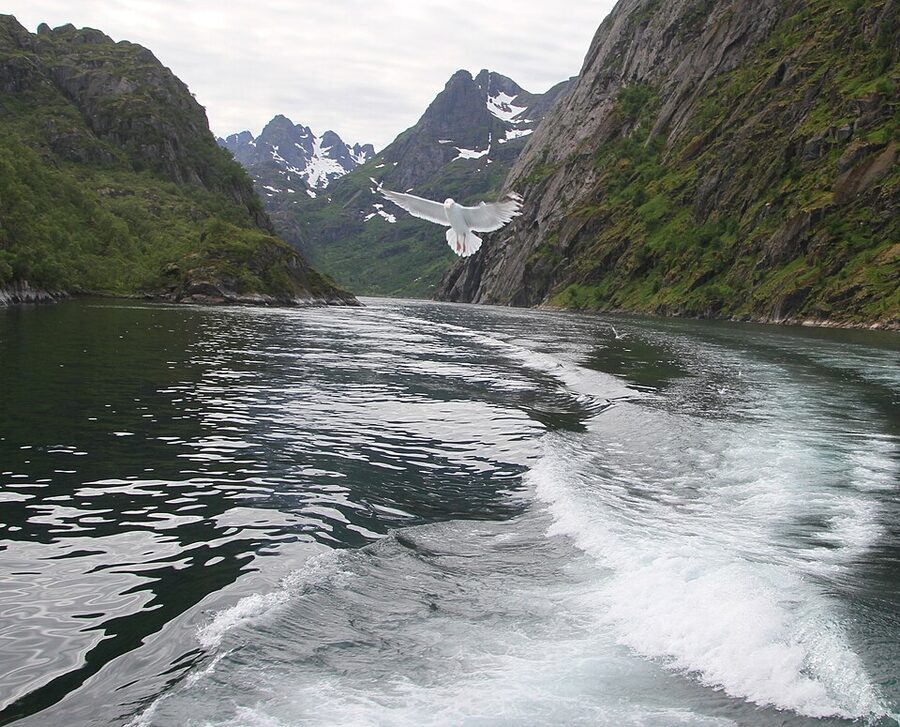
Trollfjord is the one fjord in Lofoten where that’s a serious problem. The geometry is unusual. From Raftsundet you slip through a tight opening, then the fjord broadens slightly, then it tapers to a 100-metre throat with vertical granite walls rising 600 to 1,100 metres above the water. The walls are close enough that sound from the cliffs reaches you in fractions of a second. Distant waterfalls echo. Sea eagles call from ledges most people would miss with their eyes, let alone their ears.
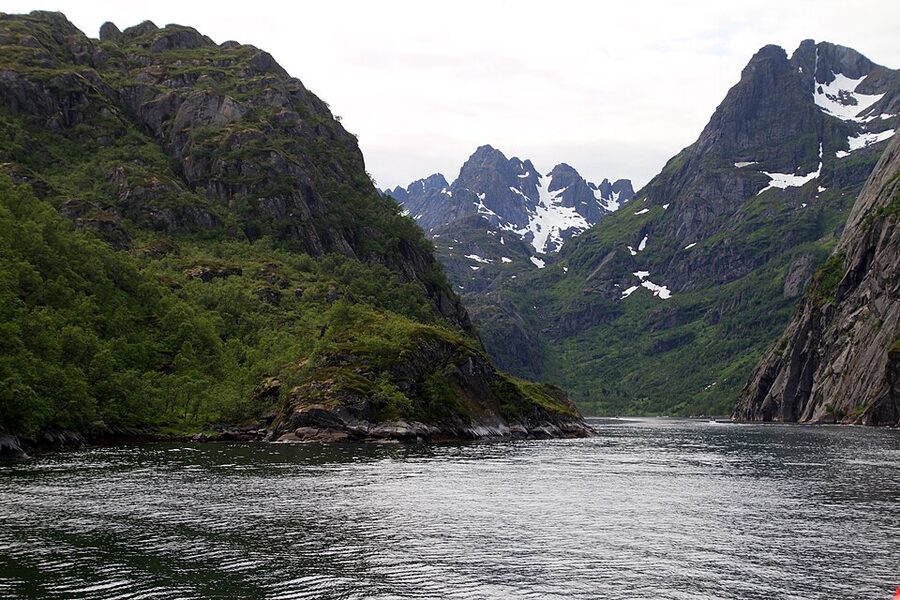

On a noisy boat you get the visual. The visual is incredible. But you’re missing about half of why this fjord is special.
Brim Explorer, the operator running the silent cruise, built a hybrid-electric catamaran specifically for this. The diesel-electric system charges batteries while you cruise the open water sections, then switches fully to electric inside the fjord itself. From the moment the captain cuts the engines, the loudest thing on the boat is the water against the hull. Everything else is the fjord.
That’s the actual product. Not the boat. Not the route. The silence.
The three Trollfjord cruises worth booking
Svolvær has a confusing number of operators. Most of them go to the same fjord, so the choice comes down to boat type, length, and what you want to do once you’re there. These are the three I’d actually pay for, and the one I always recommend first.
1. Silent Electric Trollfjord Cruise from Svolvær: about $140
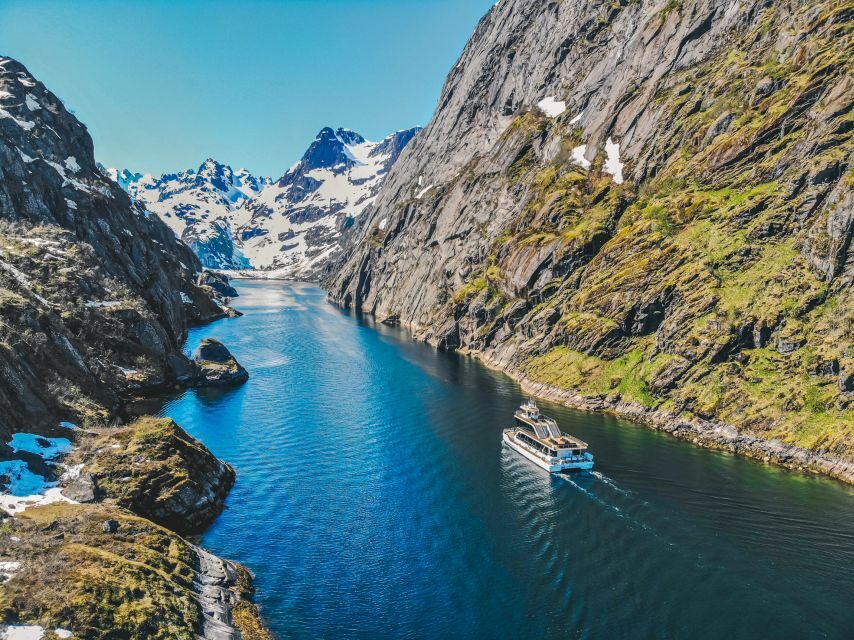
This is the only cruise I’d book first time round. It’s three hours, it goes silent inside the fjord, and the lounge is genuinely warm with proper food and coffee for sale. Our full review covers the panoramic windows and the underwater drone they sometimes deploy at the inner basin. Pay the extra over a RIB and don’t think about it.
2. RIB Sea Eagle Safari with Trollfjord Cruise: about $125
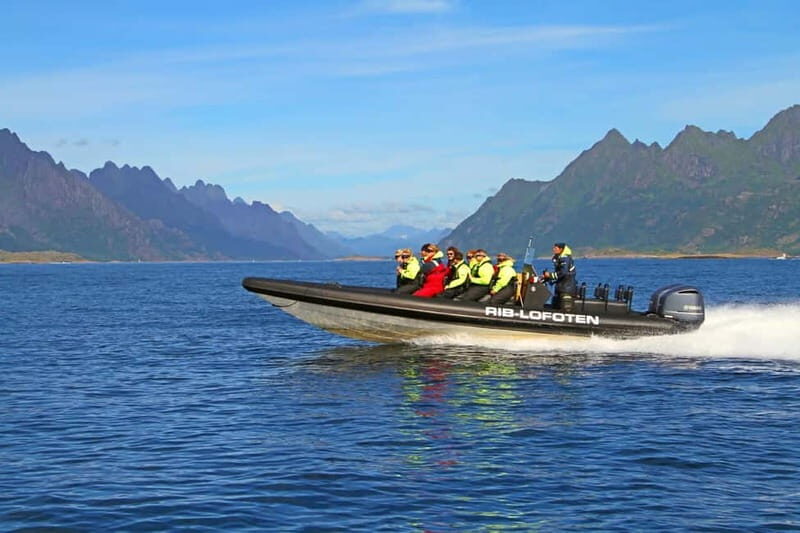
Different product entirely. You’re outside the whole time, you’ll get wet, and the boat covers more ground in two hours than the catamaran does in three. The sea-eagle feeding is the headline draw. Guides toss fish and the eagles dive for them within metres of the boat. The full review is honest about the tradeoff: it’s louder, colder, and shorter inside Trollfjord itself, but it’s the better pick if you’ve already done a quiet fjord cruise elsewhere in Norway.
3. Sea Eagle Safari to Trollfjorden (Open-Top): about $141
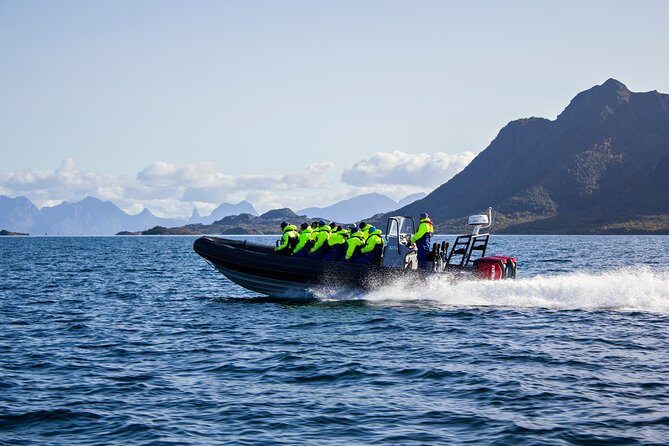
This sits between the silent catamaran and the RIB. Two hours, open-top boat, lots of birdwatching, less of the cliff-acoustic experience inside Trollfjord but more eagle action than the silent cruise. Read our review of this one if you’re travelling with kids. The open-top deck is easier for little ones than a RIB harness.
What three hours on the silent cruise actually looks like
The boat leaves Svolvær on time. They mean it. Show up 20 minutes early or you’ll be the person watching it pull away. Tickets are scanned at the dock and you board into a panoramic lounge with bench seating along both sides and a small bar at the back.
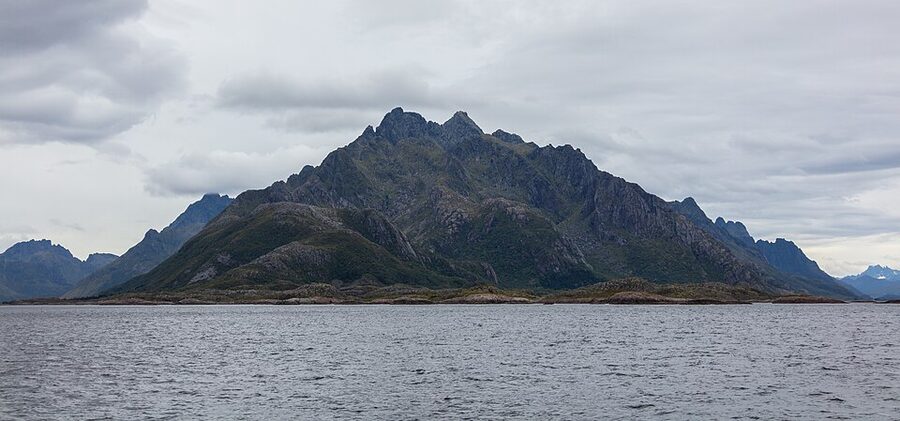

For the first 30 minutes you’re cruising past Svolvær’s outer islands and the entrance to Raftsundet, the strait that separates Austvågøya from Hinnøya. The boat is on diesel-electric here, which is quiet but not silent. Most people get warm drinks and stand on the upper deck. There’s a guide on the loudspeaker pointing out fishing villages, the goat-cheese farm on Skrova, and the line of fishing buoys that mark the cod spawning grounds.
Then the captain announces the entrance to Trollfjord. The engines cut. The boat goes silent and starts gliding on battery only.
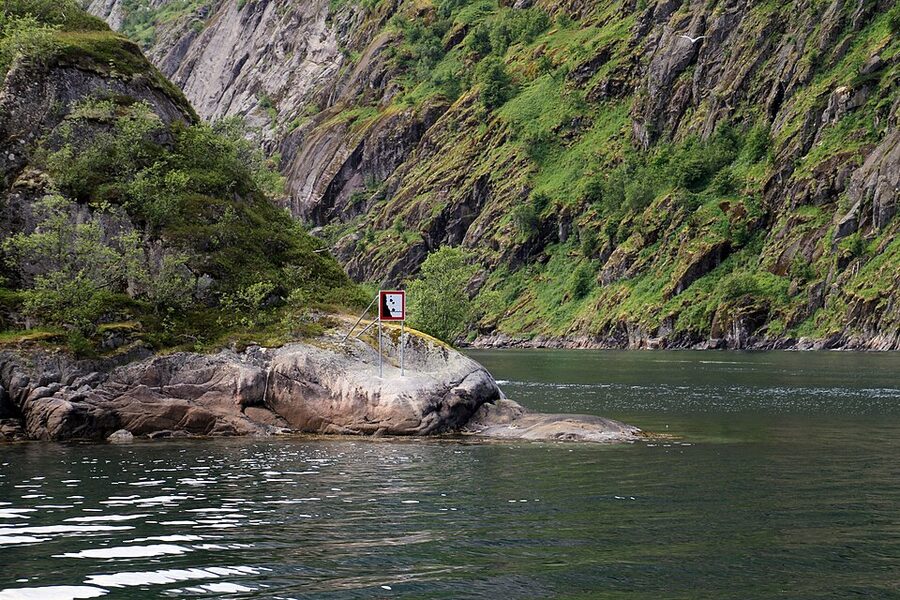

This is the part everyone remembers. The boat moves at a walking pace. The cliffs slide past at a speed that lets you actually look at them. Most people stop talking on their own. Nobody really tells you to be quiet, you just are. It feels rude to break it.
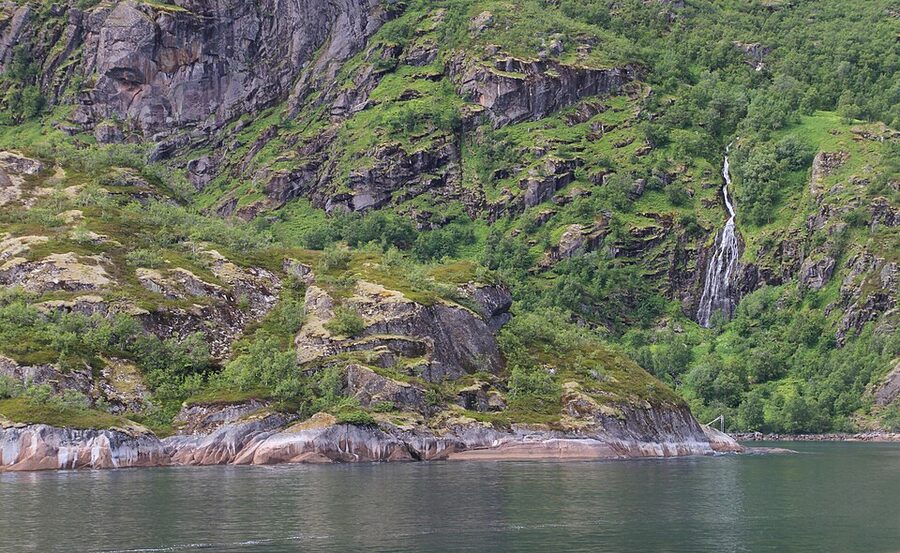
The fjord opens slightly into an inner basin where the boat stops. There are usually a few waterfalls running down the back wall, heavier in spring snowmelt, thinner in late summer. The captain often launches an underwater drone if conditions are calm. The drone footage gets streamed to a screen in the lounge. You can see life on the seafloor 30 metres down: kelp forests, jellyfish, occasional fish.
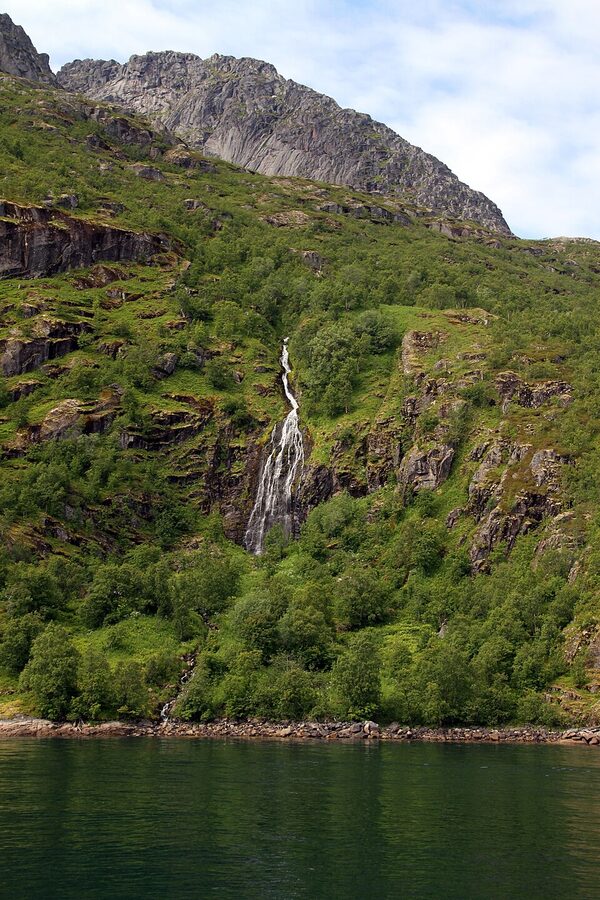

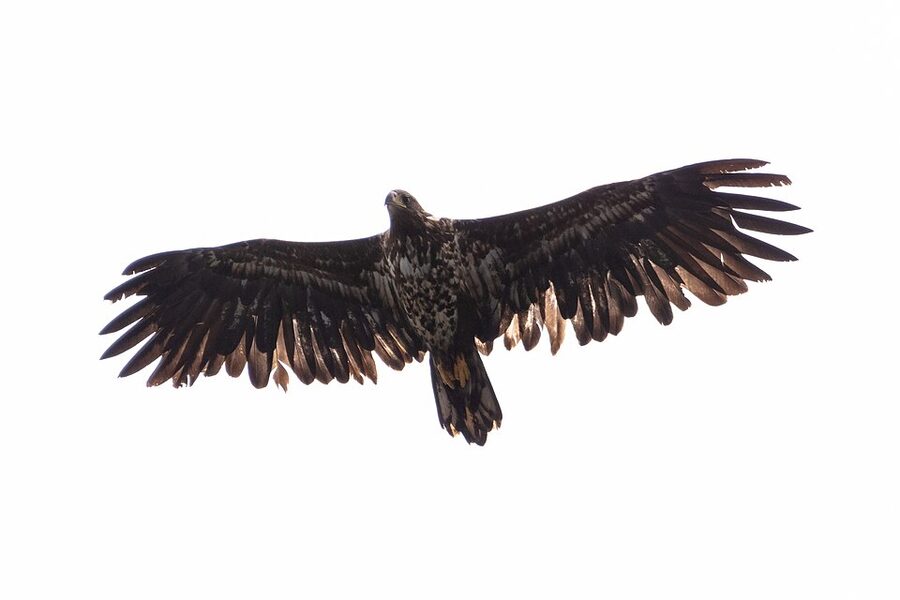
White-tailed eagles are the other reliable sighting. Trollfjord has resident pairs that nest on the cliff ledges, and the silent boat is the only Trollfjord cruise where you can hear them call before you see them. The wing span on an adult is about 2.4 metres. They’re the largest birds of prey in Europe.
,_Svolv%C3%A6r,_Lofoten,_Noruega,_2019-09-05,_DD_55.jpg)
After 25 to 30 minutes inside the fjord the boat fires up again and heads back to Svolvær via a slightly different route along the southern shore of Austvågøya. Total time on the water is about three hours. The return leg is when most people go for food. There’s a hot lunch option for around 270 NOK and the soup is genuinely good: fish soup with prawns, cream, and dill.
How to actually book it
You have three booking paths. They go to the same boat. The pricing is roughly the same.
GetYourGuide is what I use. The cancellation terms are the most generous (free up to 24 hours before), the confirmation is instant, and you can cancel from your phone if the weather turns. The price runs around $140 in summer.
Brim Explorer direct is slightly cheaper if you book in NOK rather than USD, usually 1,390 to 1,490 NOK depending on season. The cancellation policy is also 24 hours but the interface is in Norwegian first and English second. Worth using if you’re already a fan of the operator and want to support them more directly.
Hotel concierge in Svolvær. Works fine but you pay the rack rate. No discount.
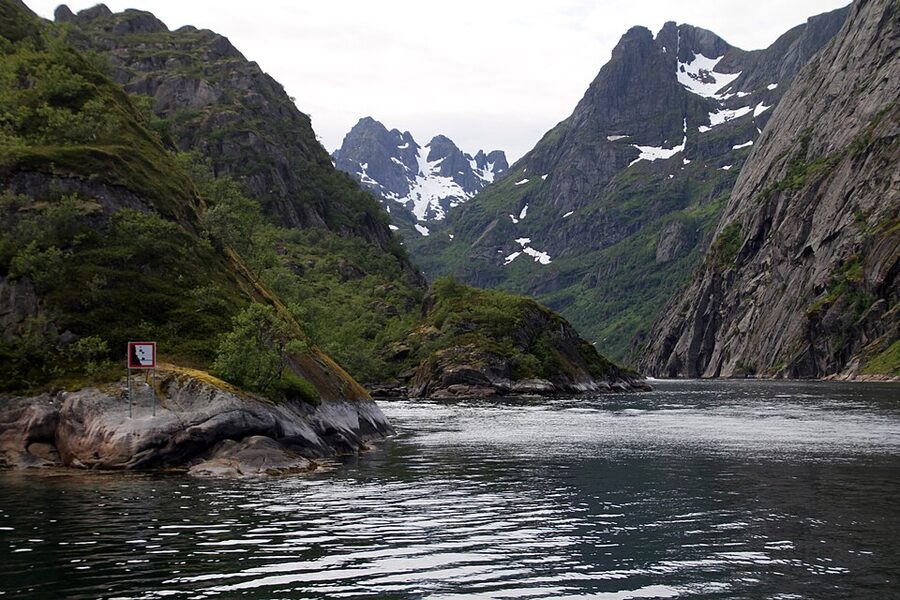

One thing worth knowing. Brim Explorer runs the cruise daily from 1 February to 31 October. There are usually three departures in summer (around 09:00, 13:30, and 20:00) and one or two in winter. The midnight sun cruise in late June is genuinely worth the late hour: you sail into the fjord in flat golden light and back out at midnight with the sun still touching the horizon. If you can pick that slot, do it.
The best season is not the one most people think
Peak demand is July and August. Boats sell out two or three days ahead. The weather is most reliable, the days are longest, and you’ll see the most eagles because the chicks are fledging.
But the actual best season for the silent cruise is the back end of May or early September. Fewer people on the boat, the same scenery, and the angle of the sun is better for photos because it’s lower in the sky. In September the autumn colour starts on the lower slopes. In May the snow is still on the upper cliffs and the waterfalls are full from melt.
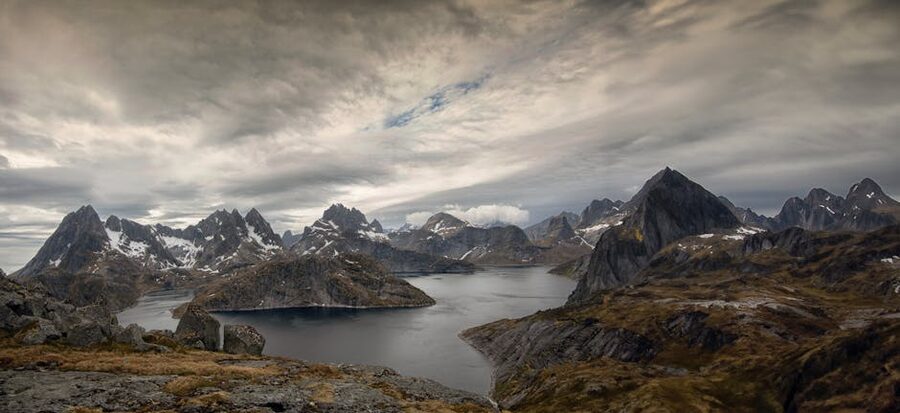
Winter cruises run too, and they’re a different animal. The fjord is partly snowbound, the waterfalls freeze in places, and the chance of seeing northern lights from the boat in late September through March is real. The downside is the weather window. Cancellations happen if Raftsundet is too rough, which can be 2 days out of 7 in February.
If you’re on a strict itinerary, summer. If you have a flex day, May/September. If you’re chasing aurora, late autumn.
What to actually wear
This catches people out. The silent cruise has a heated lounge, but the upper deck is open and the wind in the fjord can be much colder than Svolvær harbour even in July. The temperature drop between the sheltered town and the fjord wind is often 5 to 8 degrees C.
Bring layers. A wind shell. A warm hat. Even in midsummer. If you book a RIB instead, the operator hands you a full exposure suit, gloves, and a balaclava and you wear all of it.
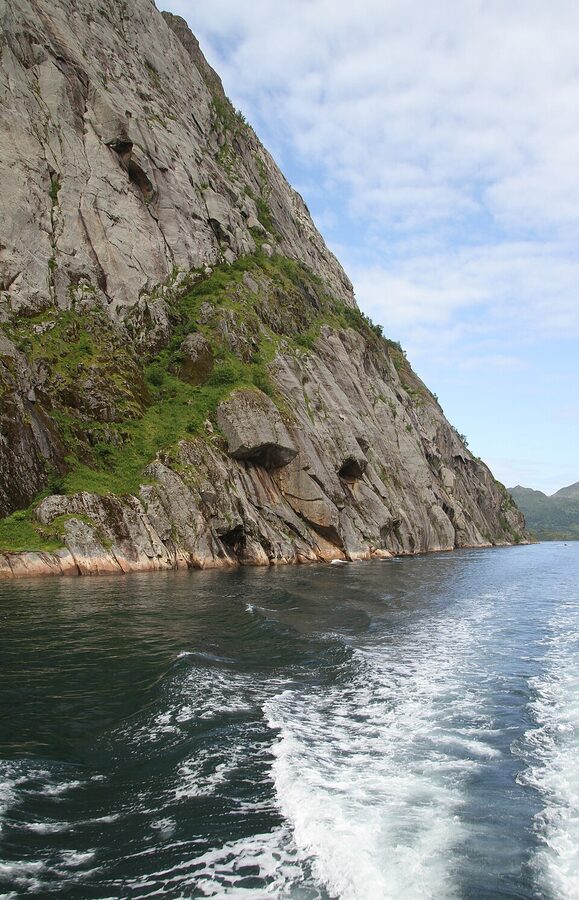

Camera tip. The light inside Trollfjord is high-contrast in summer. Bright sky, dark cliff face, dark water. Phones in HDR mode handle this well. Mirrorless cameras need exposure compensation of about minus 2/3 to keep cliff detail. If you’ve got a polariser, use it for the underwater drone screen reflections.
Trollfjord, Tysfjord, and the others: getting the geography right
Norway has a confusing number of fjords with similar names. Trollfjord is in Lofoten. There is also a Trollfjord in Senja, several Tysfjord branches further north, and dozens of fjord arms in the Vesterålen island chain just to the east. The Trollfjord cruise out of Svolvær only goes to the Lofoten Trollfjord. It’s the famous one. It’s the narrow one. It’s the one with white-tailed eagles.
The fjord is in Hadsel municipality, which means it’s technically just over the border from Lofoten in administrative terms, but the cultural and tourist border is loose. Locals in Svolvær consider it part of their patch. The Hurtigruten coastal ferry famously detours into Trollfjord between April and September if conditions allow, and that detour is how 19th-century painters first popularised the fjord.
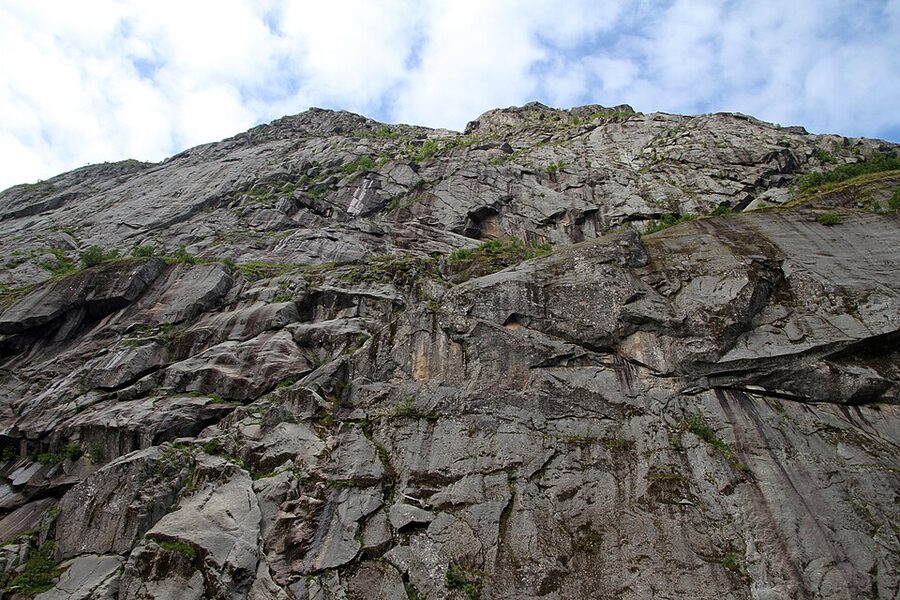

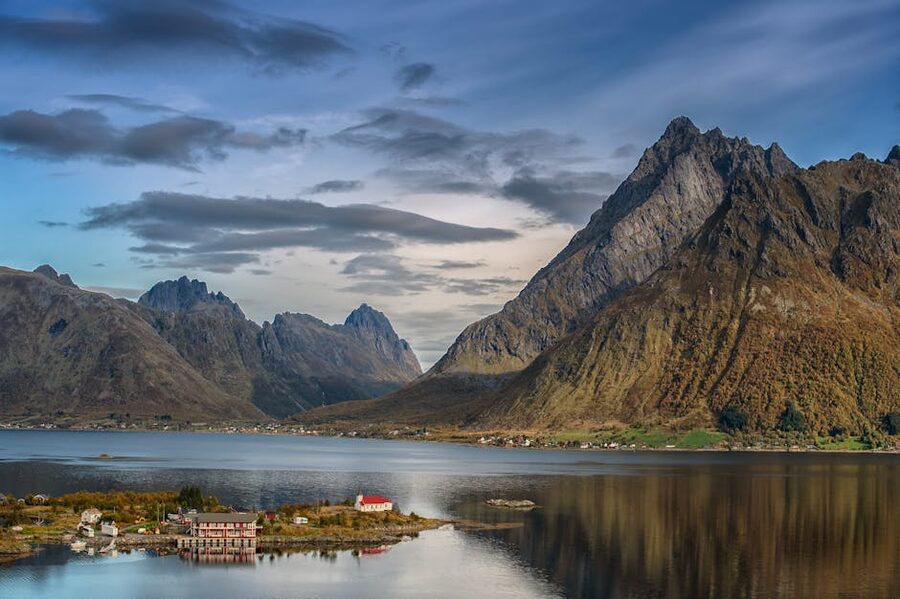
Geologically the fjord was carved by glacial scouring around 10,000 years ago. The U-shape is textbook. The narrowness comes from the fact that the glacier that cut it was relatively small, much smaller than the ones that cut Sognefjord further south. That’s why Trollfjord feels so intimate compared to other fjord cruises in Norway. The walls are right there. The space is small.
The 1890 Trollfjord battle (yes, it really happened)
In March 1890 Trollfjord was the site of one of the strangest naval incidents in Norwegian history. A massive school of cod had moved into the fjord and the small-boat fishermen who had followed them in were trapped against the back wall when steam-powered fishing vessels (bigger, faster, owned by industrial companies) blocked the narrow entrance and tried to claim the catch.
The smaller boats fought their way out. There were ramming incidents, fights with hooks and oars, and at least one boat was sunk. The Norwegian press picked it up. It became known as the Battle of Trollfjord, and it eventually led to legislation that protected small-boat fishing rights, laws still in place today.
The novelist Johan Bojer wrote about the incident in his 1921 book The Last of the Vikings, which is part of the standard Norwegian school curriculum. Most guides will mention this on the cruise. Some are good at it, some race through it. If you want the deep version, read Bojer.

What can go wrong (and what doesn’t)
Wind. The most common reason for a cancellation. Brim Explorer will not run the cruise if Raftsundet is rough, full stop. Their cancellation criteria is around 12-15 m/s sustained wind, which happens maybe 5 to 10 times a year. They’ll refund you in full or rebook you on a different day. Don’t argue with them on this. The captain is right.
Eagle no-shows. Statistically rare. The resident pairs in Trollfjord are basically always around. But on a quiet wind day, the birds may be roosting and not flying. You’ll still see them perched on the cliffs.
Underwater drone not deployed. This happens about 30 percent of the time. The drone needs calm water and good visibility, and on rougher days they don’t risk it. The cruise is still worth the price without the drone.
Seasickness. The open water leg between Svolvær and Raftsundet can be moderate to rough. The fjord itself is glass calm. If you’re prone to motion sickness, take Bonine or similar 30 minutes before boarding. The lounge has views from low down which helps a lot.
Where to stay near the cruise dock
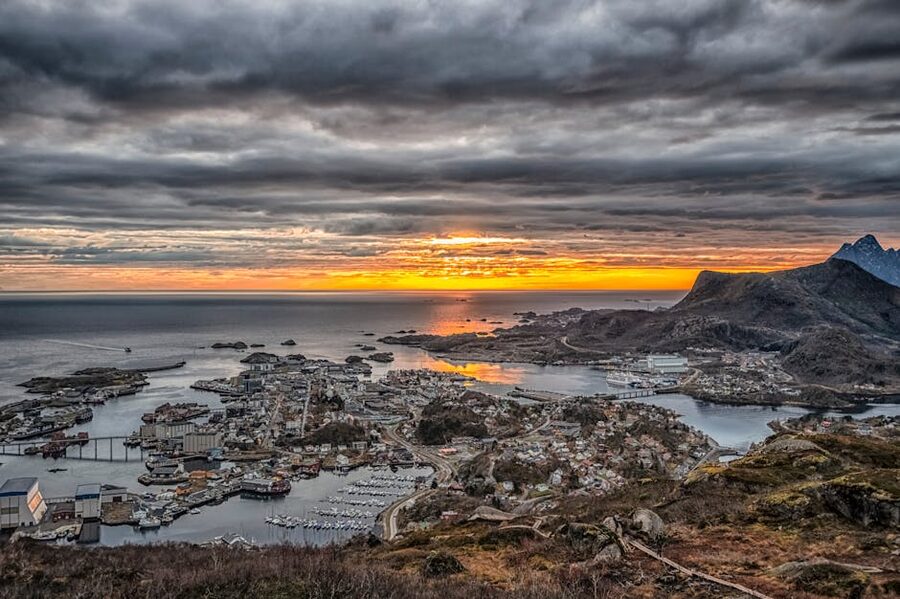
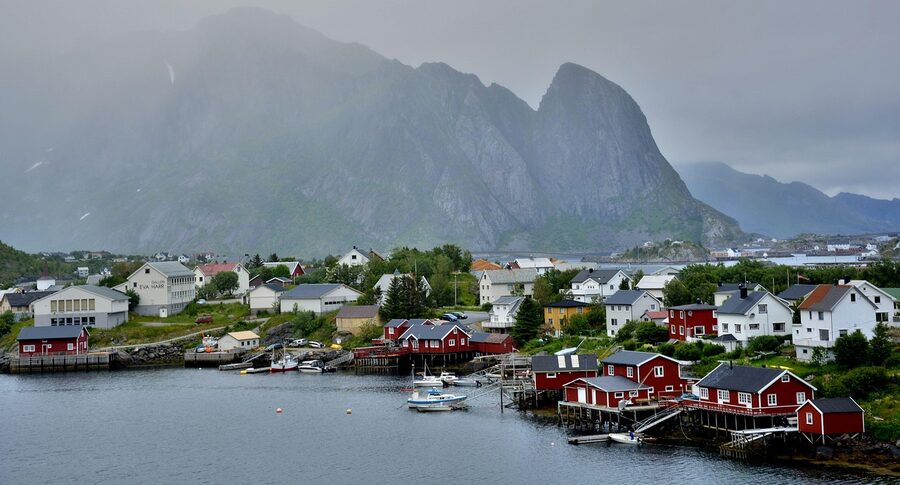
Most Lofoten visitors stay in Reine or Henningsvær for the photogenic red rorbu cabins. That’s a 90-minute drive from Svolvær and you absolutely cannot make the morning Trollfjord cruise from there without leaving at 06:30.
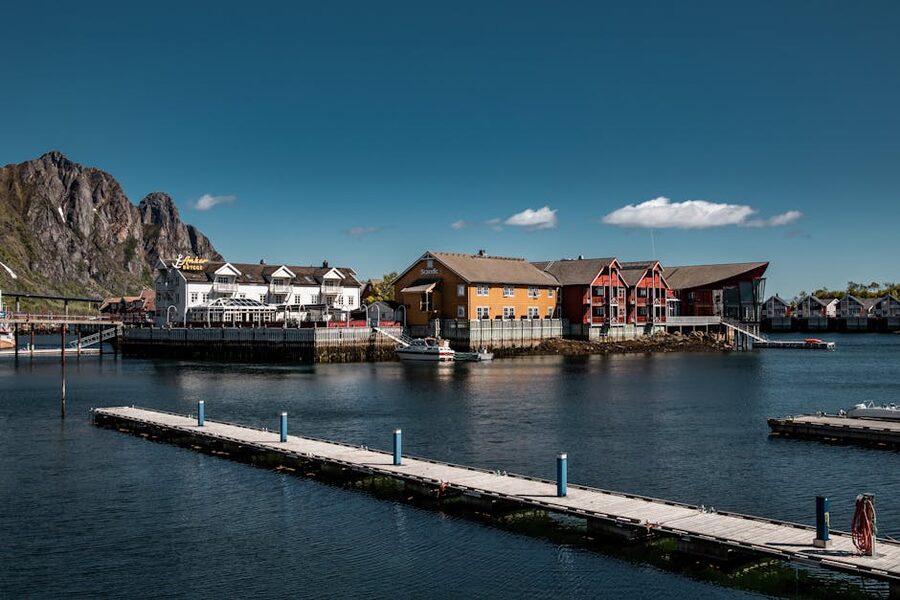
If you’re doing the silent cruise, stay one night in Svolvær itself. The town has decent options across the price range. Anker Brygge sits right on the harbour with rorbuer-style waterfront cabins. Thon Hotel Lofoten is the boring-but-reliable mid-range. Scandic Svolvær is the modern option with sauna and gym. All three are within five minutes’ walk of the cruise dock.
If you’re road-tripping the islands, time your itinerary so you arrive in Svolvær by mid-afternoon, do the morning or sunset cruise the next day, and continue west to Reine afterwards. That sequence flows.
Getting to Svolvær
Three sensible routes.
Fly to Bodø, ferry across. Bodø has direct flights from Oslo (1h 40m) and Tromsø (35m). From Bodø you take the high-speed passenger ferry to Svolvær (3h 30m, about 800 NOK). This is the most scenic option, since the ferry crosses Vestfjorden and the views of Lofoten approaching are exactly the postcards.
Fly to Svolvær (LKN) directly. Widerøe runs propeller flights from Bodø (25m) and Tromsø (45m). Tickets are usually 1,200 to 1,800 NOK one-way. Fastest option but the smallest planes are weather-sensitive in winter.
Drive from Narvik via the E10. About 3 hours. Beautiful drive across mainland Norway and over the Tjeldsundet bridge. This is what you do if you’ve already arrived by train at Narvik (the Arctic Circle Train from Stockholm is 18 hours overnight) or by car from southern Norway. Rental cars are widely available in Narvik and Bodø.
Combining Trollfjord with other Lofoten activities
The silent cruise is three hours including transit. That leaves you a full day for everything else if you book the morning slot.
The most natural combo is Trollfjord cruise in the morning, then a slow afternoon driving the E10 west to Henningsvær for late lunch. Henningsvær is the football-pitch-on-the-rocks village (yes, the famous aerial drone shot is real). It’s also where the best modern Norwegian restaurants in Lofoten are clustered.
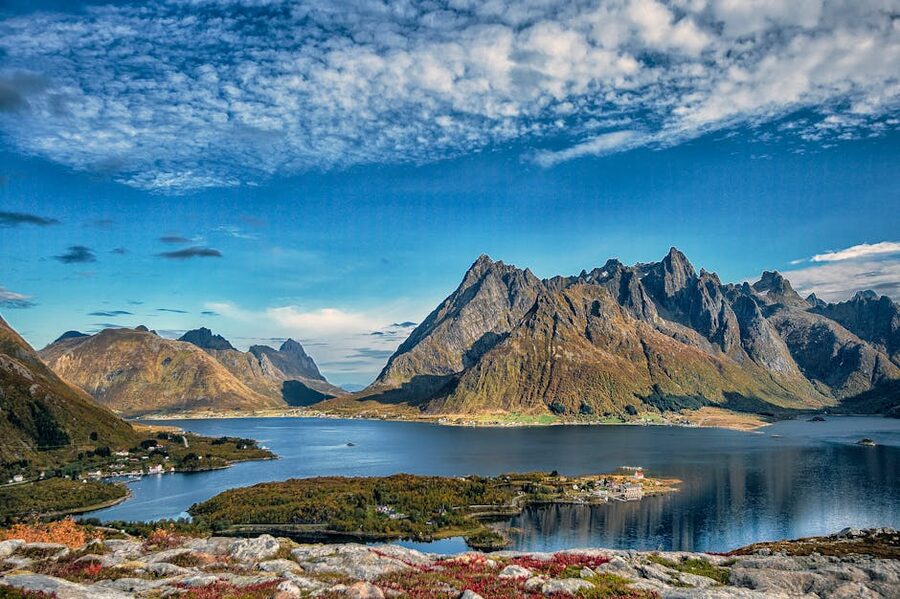
If you’ve got more time, the next day is for hiking. Reinebringen has a stone-step trail to a viewpoint over Reine that’s two hours up and one hour down. Festvågtinden above Henningsvær is shorter and gives you views back toward Trollfjord on a clear day. Both are best in dry conditions.
For wildlife specifically, the Lofoten Aquarium in Kabelvåg sits 15 minutes from Svolvær and has live cod, halibut, and harbour seals. It’s small but it’s an honest reflection of what’s actually in the water around you when you’re on the cruise.
The eagle thing, in detail
White-tailed eagles, Haliaeetus albicilla, are the headline wildlife here. They were nearly extinct in Norway by 1960, with fewer than 800 breeding pairs nationwide. Sustained protection since 1968 has brought the population back to over 4,000 pairs and Lofoten has one of the densest concentrations in Europe.
The Trollfjord population is resident year-round. They nest on cliff ledges 200 to 600 metres up. Females are larger than males with a wingspan reaching 2.4 metres. They live 25 to 30 years in the wild and pair for life.
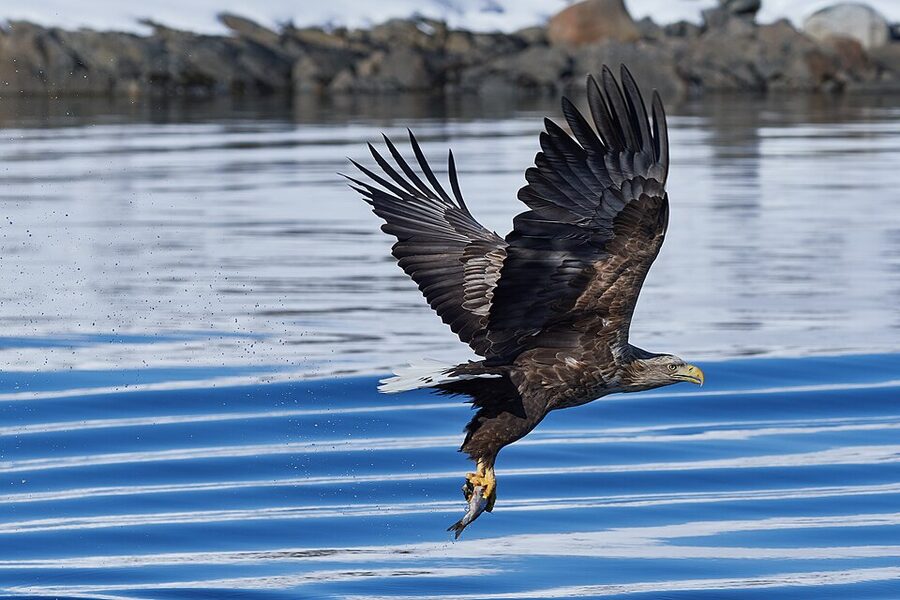

On the silent cruise the guides don’t bait the birds. The RIB safari operators do: they toss fish, the eagles dive, the photos are dramatic. There’s a real ethical question about whether bait feeding is acceptable for a wild apex predator. Some operators have moved away from it. If that matters to you, the silent cruise is the cleaner option. The eagles you see are doing their own thing.
Common questions
Is the silent cruise child-friendly? Yes. The lounge has bench seating, the cruise is calm enough that under-fives don’t get bored, and the boat is wheelchair-accessible. Bring snacks though, because the bar food is fine but the queue gets long inside the fjord.
Can I just turn up at the dock? In May and September yes, often. In July and August no. Book at least a day ahead.
Is the underwater drone footage worth it? Yes when it runs. The visibility in Trollfjord is unusually good for Norway, around 8 to 12 metres in summer, and you see kelp, jellyfish, and occasional cod or pollock. It runs maybe 7 days out of 10.
Can I see the northern lights from the cruise? Yes if you book the late autumn or winter slot. The boat does run year-round and there’s a dedicated aurora cruise from late September. For aurora-specific advice, our Tromsø northern lights guide covers the science of when and where the lights actually appear.
Is the silent cruise wheelchair-accessible? The lounge yes, the upper deck no. There’s no lift between decks and the upper deck has a small stair. The captain is happy to talk you through what you’ll see if you stay in the lounge.
Are there toilets onboard? Yes. Two on the lounge level. They’re tight but functional.
How much should I tip? Tipping isn’t expected in Norway. If the guide goes above and beyond, 100 NOK in the tip jar at the bar is generous.
Building a Norway trip around it
If Trollfjord is the centrepiece, the obvious extension is more Lofoten: beach hikes at Kvalvika, the Reinebringen trail, the food in Henningsvær. From there many people fly down to Bergen for the western fjords or up to Tromsø for the Arctic experience.
Tromsø is two hours by Widerøe propeller plane from Svolvær. The Arctic capital pairs well with Lofoten because the experiences are different: Tromsø is about wildlife and aurora, Lofoten is about scenery and silence. If you’ve already booked the silent cruise here, look at our Tromsø fjord fishing cruise guide for the cold-water fishing equivalent and the Tromsø husky sledding guide for the winter highlight.
Going south, Bergen makes sense as a contrast. The Bergen fjord cruise guide covers the wider, longer Sognefjord and Hardangerfjord, both of which feel completely different from Trollfjord: they’re huge open systems rather than the intimate slot canyon you get in Lofoten. The Flåm Railway from Bergen is the rail equivalent of what the silent cruise does on water: slow, scenic, no rush.
For Oslo, the trip works best as a connector flight rather than a separate destination. But if you’ve got a free day there, the Oslo fjord cruise is a much shorter, urban-flavoured fjord experience, useful if you want to see the difference between Oslo’s fjord and the real wild ones up north.
And if you’re combining Lofoten with Stavanger to get the iconic cliff hike, our Pulpit Rock guide covers the four-hour climb with the famous platform view at the top. It’s the visual opposite of Trollfjord: looking down at fjord water instead of up at fjord walls.
One more thing
People ask if Trollfjord is overhyped. It isn’t. The reason it works is that the silent format reveals how much of the experience is acoustic, not visual. You can take a hundred photos of the cliffs and they’ll all look like the same shot. But the memory most people carry away is the moment the engines cut and the fjord starts to talk.
Book the silent cruise. Show up early. Stand on the upper deck for the silent section. Then go inside for the soup.
Affiliate disclosure: We may earn a small commission if you book through links on this page. It costs you nothing extra and helps us keep the site running. We only recommend tours we’d take ourselves.