
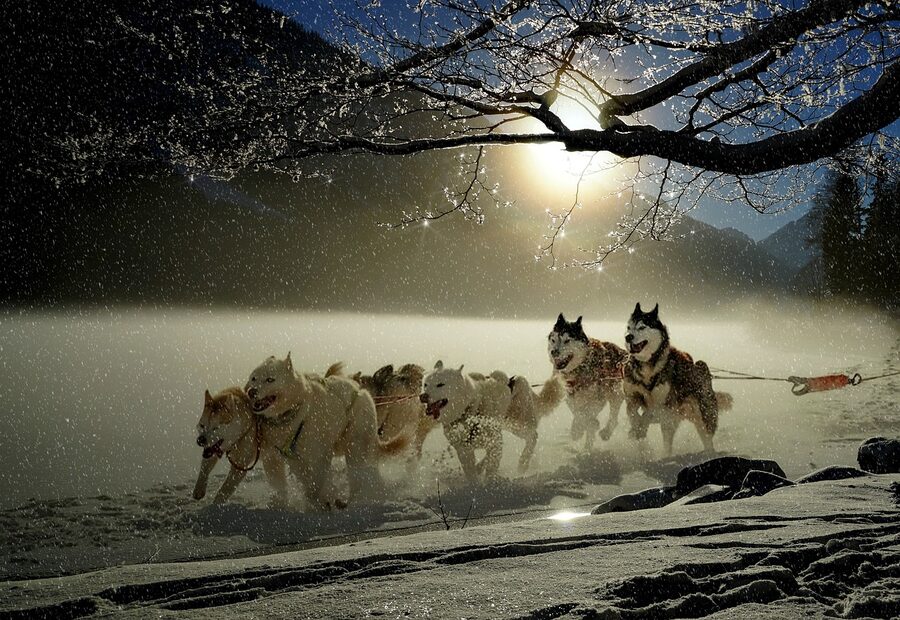
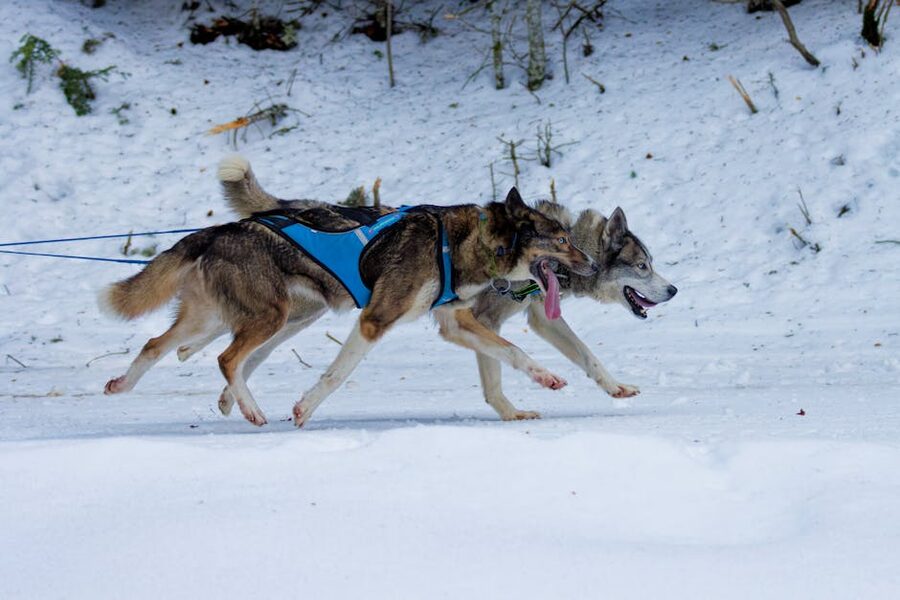
Here’s the thing nobody tells you before you book a husky sled tour in Kiruna: the dogs aren’t huskies. Not in the way you’re picturing them. The fluffy blue-eyed Siberian Husky from the calendar? Almost none of them work the trails up here. Kiruna’s sled dogs are mostly Alaskan Huskies, a working mix bred for speed and stamina, lean as a greyhound, and a six-dog team will hit 30 km/h on flat snow without breaking a sweat.
Best to actually drive: Sit and Drive Combo, $271.84. Four hours split between passenger and driver. The full experience.
Best with hot drinks: Morning Husky Sled with Coffee Break, $177. Two and a half hours including a fika stop in a forest cabin.
I’ve laid out three tours below, all running out of kennels within a 20 to 30-minute drive of central Kiruna, plus the practical stuff you need to know: when the season actually runs, what to wear, how the kennel pickup works, and why the dogs sound like they’re being murdered right before they take off (they’re not, they’re just thrilled).
Kiruna sits 145km north of the Arctic Circle and is, by some distance, the most accessible base for a sled tour in Swedish Lapland. There’s a small airport (KRN), daily SAS and Norwegian flights from Stockholm Arlanda, and the night train from Stockholm if you want the slow approach. Most operators will pick you up from your hotel, drive you out to their kennel, and have you on a sled within 90 minutes of leaving the lobby. Many people pair this with a Kiruna northern lights tour on the same evening, since the kennel work happens by day and the aurora hunting starts around 9pm.

- The Three Tours Worth Booking
- 1. Sit-Down Husky Ride Dog Sled Tour from Kiruna: 7.99
- 2. Husky Sit and Drive Combo from Kiruna: 1.84
- 3. Kiruna Morning Husky Sled Ride with Coffee Break: 7
- Sit-Down or Sit-and-Drive?
- Why the Dogs Aren’t What You Think
- When to Go
- What to Wear (and What the Operator Provides)
- Getting to Kiruna
- Where to Stay for Easy Pickup
- How a Tour Actually Runs
- Combining With Other Lapland Tours
- The Animal Welfare Question
- Cost and Value
- Things People Get Wrong
- Other Lapland Bookings to Pair With This
The Three Tours Worth Booking
I’ve narrowed this to three options that cover the spectrum: easiest entry, the full driving experience, and the morning-light variant with a coffee stop. All three operate from kennels just outside Kiruna town. Bookings fill up fast in February and March, so reserve at least two weeks ahead in peak season.
1. Sit-Down Husky Ride Dog Sled Tour from Kiruna: $197.99
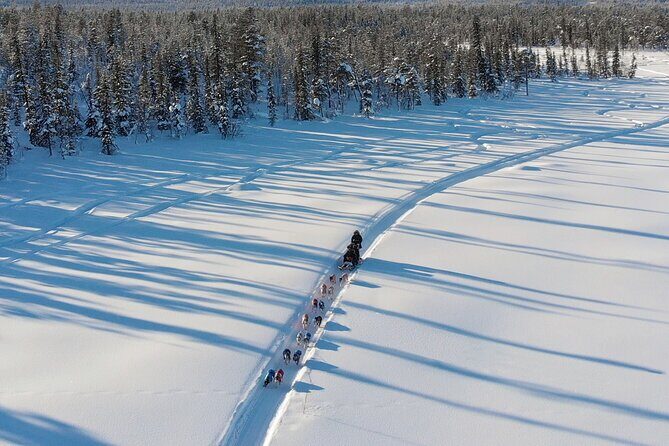
This is the one I’d book if you’ve never set foot near a sled dog before. You sit, the musher drives, and the run lasts roughly 90 minutes through forest trails outside Kiruna. Our full review covers the kennel logistics and what’s included with the pickup. Reviews mention the temperatures dropping to -35C on some runs, so dress for it.
Check Availability
Read our full review
2. Husky Sit and Drive Combo from Kiruna: $271.84
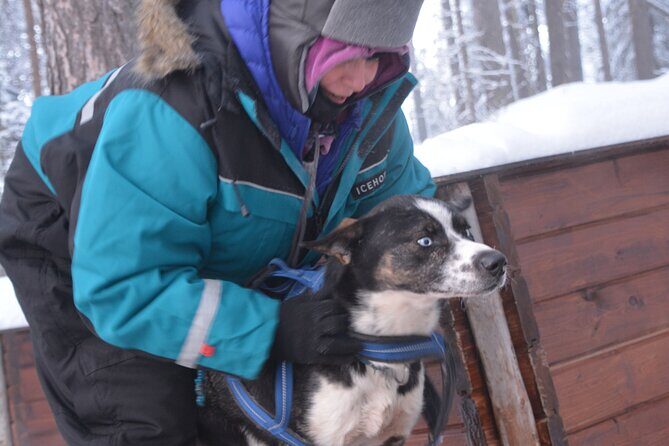
If you only book one tour and you’re up for the full experience, make it this one. Four hours, two sleds running back-to-back, and the second half puts you on the runners driving your own team of five or six dogs. The instruction is brief but solid, and our breakdown of the combo walks through how the kennel pairs you with a calmer or faster team based on the brief at the start.
Check Availability
Read our full review
3. Kiruna Morning Husky Sled Ride with Coffee Break: $177
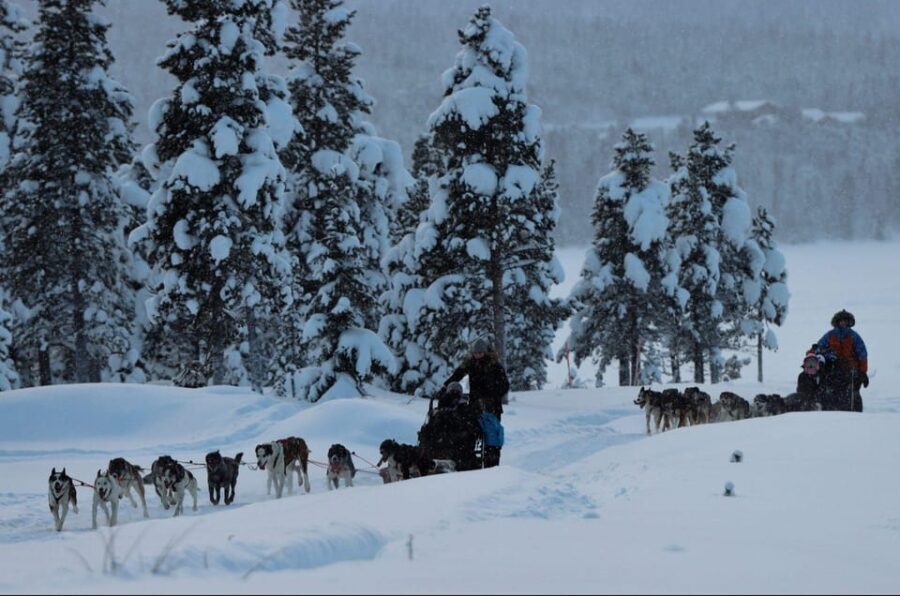
This is the cheapest of the three and the one most people overlook because it doesn’t have “drive” in the title. But the morning slot lands you on the trail when the light is best, and the fika stop at a forest cabin partway through is a genuine highlight. Read more in our morning ride review. Coffee, cookies, and a moment to actually look around.
Check Availability
Read our full review
Sit-Down or Sit-and-Drive?
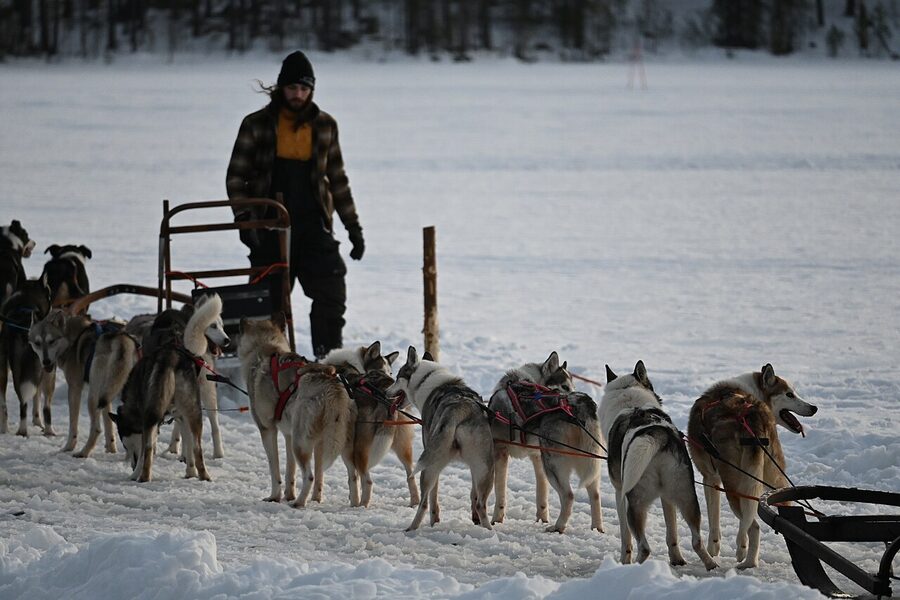

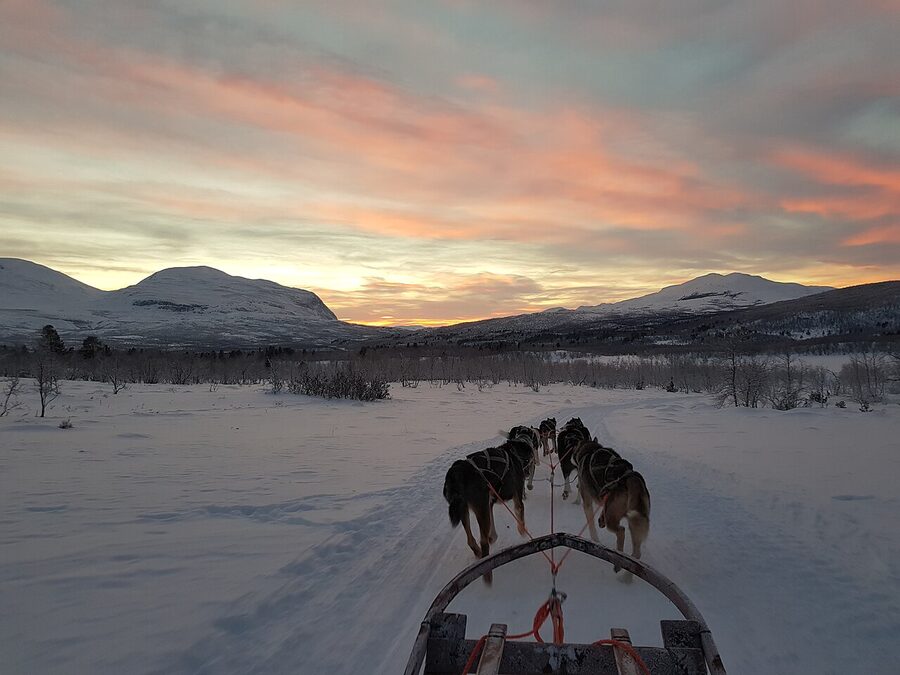
Worth thinking about before you book. Sit-down means you’re a passenger wrapped in reindeer hide on the sled, the musher behind you on the runners. You’ll see the landscape, you’ll feel the speed, you can take photos, and you can talk to the musher the whole way. It’s the version most families with kids book and it’s the right call if you’re nervous about animals or about being in charge of anything in subzero temperatures.
Sit-and-drive flips the experience. Half the trip you ride, half the trip you drive. The driving is real driving. You stand on the runners at the back of the sled, you keep your feet on the brake, and you have to lean the sled through corners. If the brake comes off and you’re not ready, the sled goes without you. (Operators have stories. Don’t be the story.) The dogs don’t actually need much instruction, they know the trail, but you need to keep your weight in the right place and not panic when they start running flat-out.
Drive tours have a minimum age, typically 12 to 14, sometimes 16 depending on the operator. Sit-down has no real minimum, though kids under about three need a parent on the sled with them.
Why the Dogs Aren’t What You Think
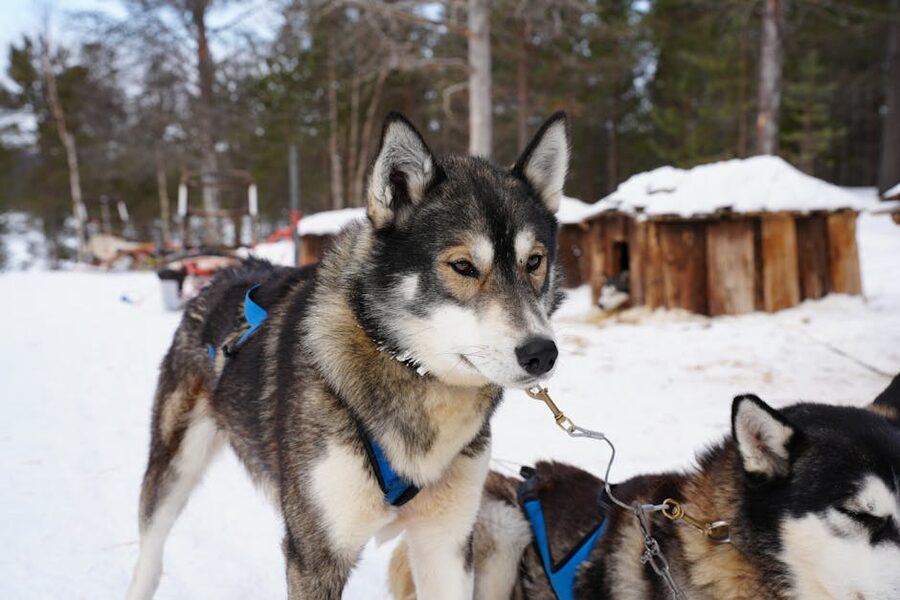
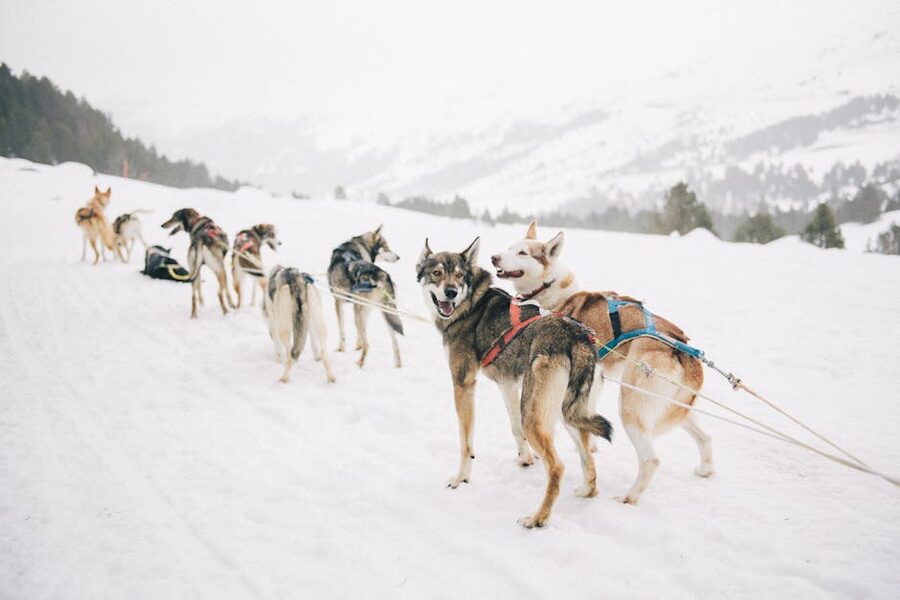
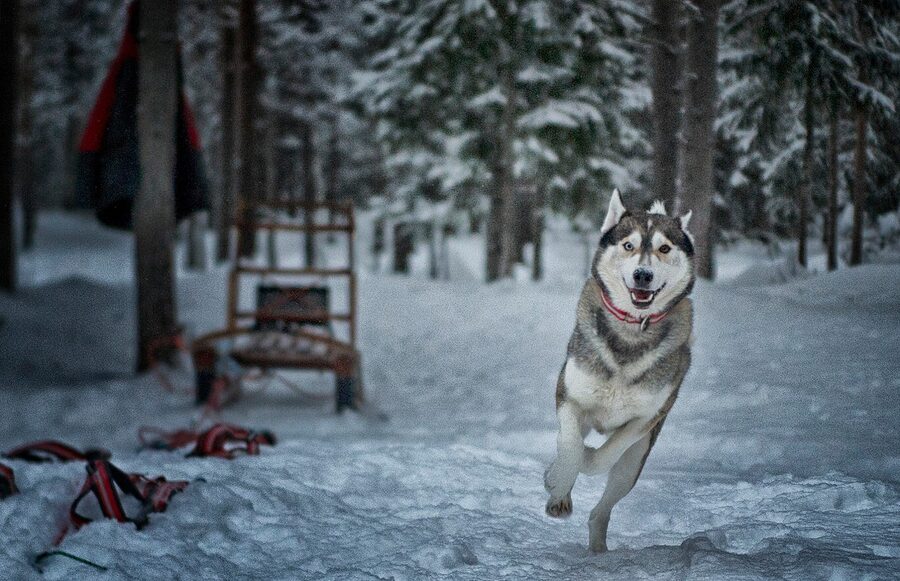
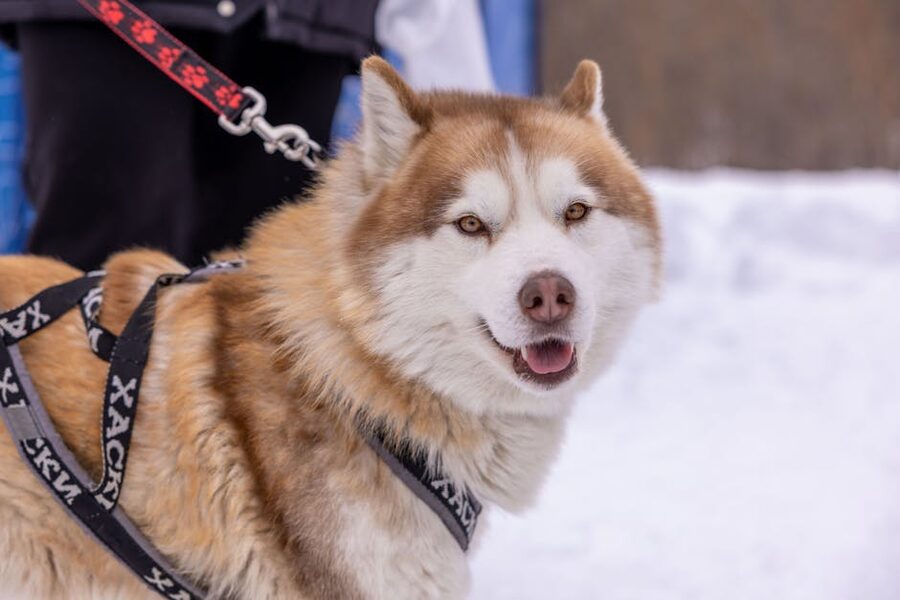
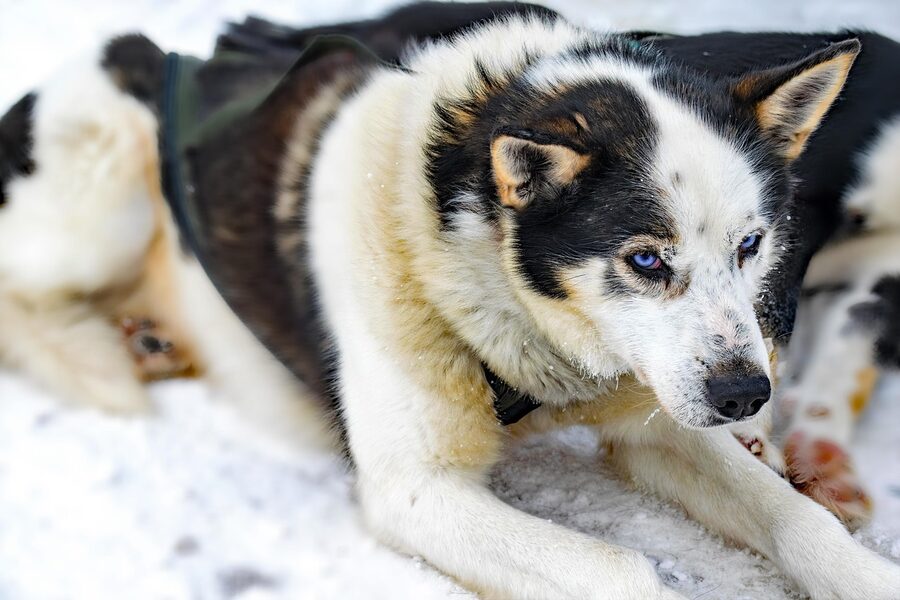
Most people show up expecting the calendar Husky. Big, fluffy, blue eyes, one of those Disney faces. What they meet at the kennel is something different. Alaskan Huskies are a working type, not a recognised breed. They’re a mix, often crossed with pointers, hounds, even border collies, all bred for what mushers actually need: a 20-22kg dog that can run 100km in a day and recover overnight.
They’re smaller than you’d expect. Most weigh less than a Labrador. Their fur is shorter than a Siberian Husky’s, their build is leaner, and the eye colour varies (brown is more common than blue). What they lack in postcard looks they make up for in pure work drive. These are dogs that genuinely want to run, and you can tell because the moment they’re harnessed they go quiet. The howling, the yipping, the chaotic noise, that’s all because they’re standing still and they hate standing still.

A few of the bigger Kiruna kennels have bloodlines that trace to Iditarod and Yukon Quest racing kennels in Alaska and Canada. Ask when you arrive. Most mushers love talking about lineage, especially the older ones who’ve been at it for decades. Some of the dogs will be retired racers, often used now for the gentler tourist runs.
When to Go
The Kiruna sled season runs late November to mid-April. Within that window, conditions vary more than you might expect.
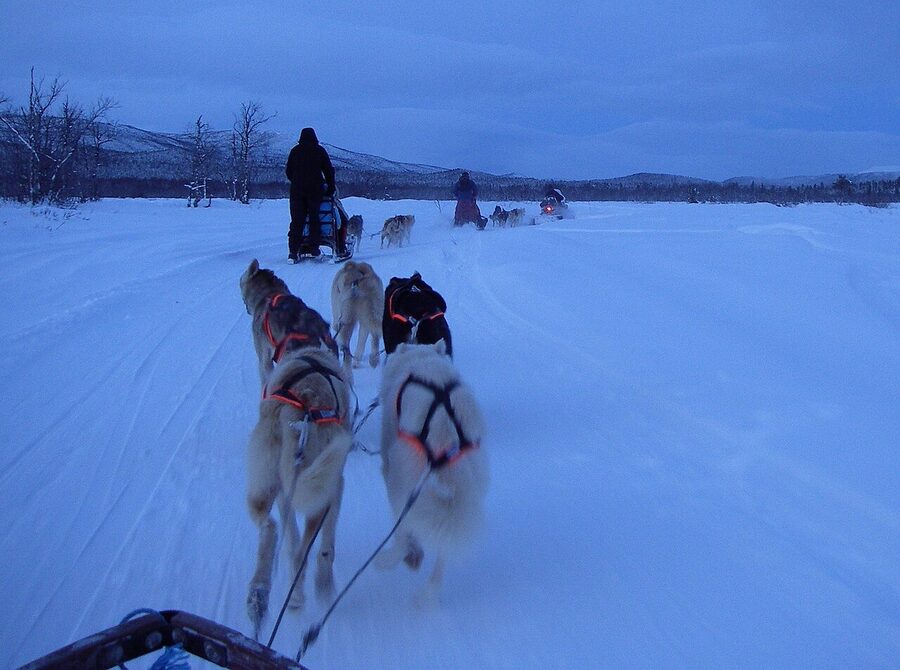
Late November to early January gets you the deepest dark and the highest aurora odds, but daylight is gone. You’ll be riding in twilight or by headlamp, and the temperatures sit around -15 to -25C with regular drops below -30. The runs are shorter (most operators cap them at 90 minutes when it’s that cold) and a few of the longer drive tours don’t run at all.
Mid-January to early March is the peak. Snow base is solid, the dogs are at their fittest, daylight is creeping back, and the temperatures average -10 to -20C. Book early. February weekends sell out by mid-November in popular years.
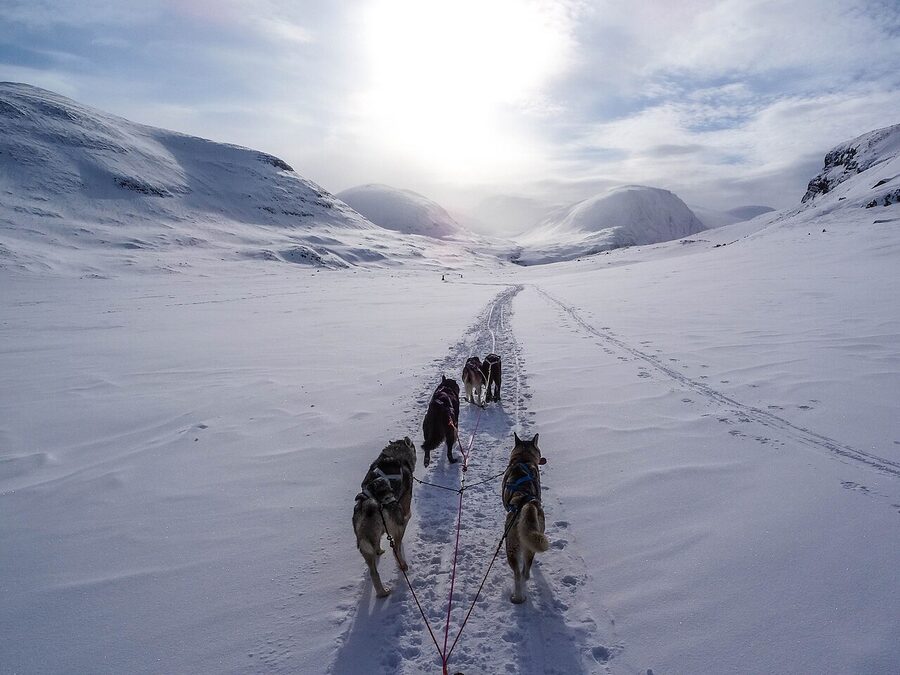
March to mid-April is my favourite. The light is enormous, you can ride at midday and still have shadows, and the temperatures sit around -5 to -15C. Comfortable. The downside is that snow conditions in mid-April can deteriorate quickly during a warm spell, so if you’re booking late season check the operator’s recent updates before you fly. The longest drive tours (full-day, 50km+) are mostly available from late February through March.
One trade-off worth knowing: if you’re combining a husky tour with a northern lights tour from Kiruna, the December-to-mid-February window gives the best aurora odds but the toughest sled conditions. Late February and early March is the sweet spot for both.
What to Wear (and What the Operator Provides)
Almost every Kiruna operator provides a full thermal overall, snow boots, mittens, and a balaclava. You’ll change into them at the kennel before the run. Don’t show up wearing ski gear and assume you’re set, the operator’s overalls go over what you’ve already got on, so you want a base layer and a mid-layer underneath.
What works:
- Merino base layer top and bottoms (not cotton, ever)
- Fleece or thin down mid-layer
- Wool socks, thicker than you think you need
- Liner gloves to wear inside the operator’s mittens
- A buff or thin scarf, even if the operator gives you a balaclava
What doesn’t:
- Jeans (cotton, holds moisture, freezes)
- Cotton socks (same reason)
- Sneakers under the operator boots (your feet will still freeze, the boots are sized for proper liner socks)
- Phone in your hand (battery dies in 2 minutes at -25C, your fingers freeze faster)
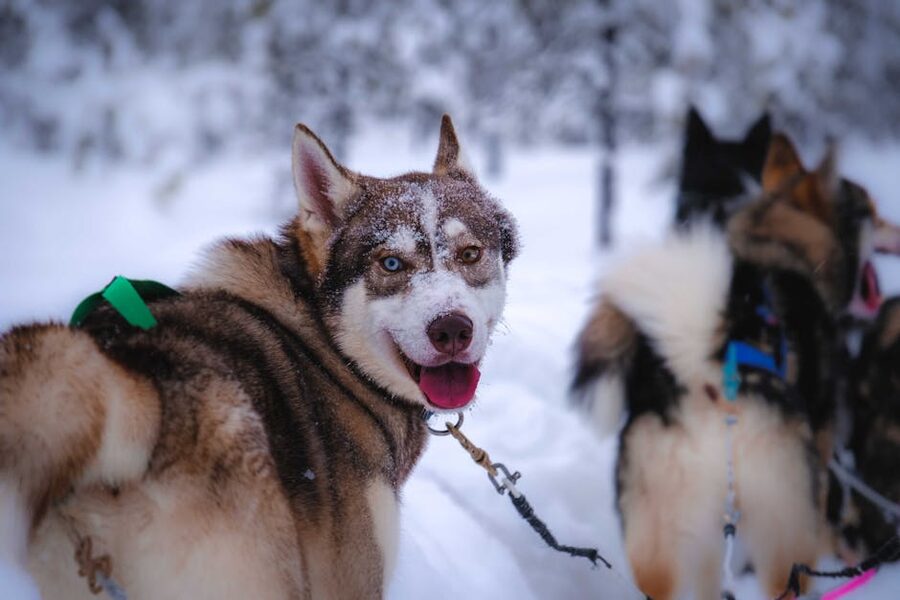
If it’s colder than -25C, the operator may give you chemical hand and foot warmers. Slip them in. They cost about 20 SEK each at any Coop in Kiruna if you want to bring extras. A camera tucked inside your jacket between shots will outlast a phone by a long way.
Getting to Kiruna
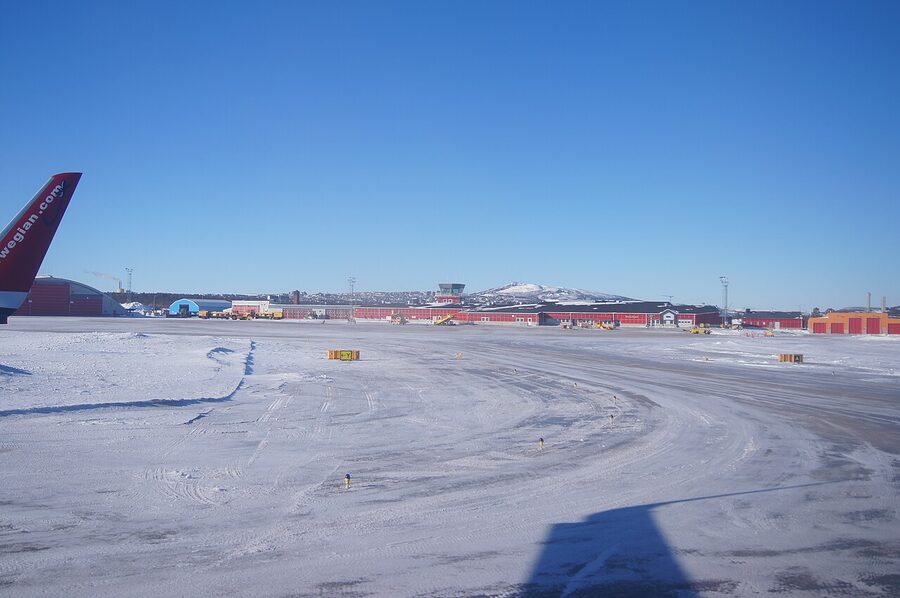

Kiruna Airport (KRN) is the easy option. SAS runs daily flights from Stockholm Arlanda, Norwegian flies a few times a week. Flight time is roughly 90 minutes. The airport is 9km east of town, taxis run about 250 SEK to the centre, the airport bus is cheaper but only meets some flights. Book the bus when you book the flight if you’re flying in mid-week.
The night train from Stockholm is the cult option. SJ’s Stockholm to Narvik service stops at Kiruna and takes around 16 hours. You sleep through most of it, you arrive in early afternoon, and you wake up watching the snow get steeper out the window for the last few hours. Cabin tickets sell out months ahead in peak season.
Once you’re in Kiruna, you don’t need a car. All husky operators do hotel pickup. Same goes if you’re heading to Abisko for the aurora chase, though you’ll either need the train (1.5 hours) or a transfer bus.
Where to Stay for Easy Pickup
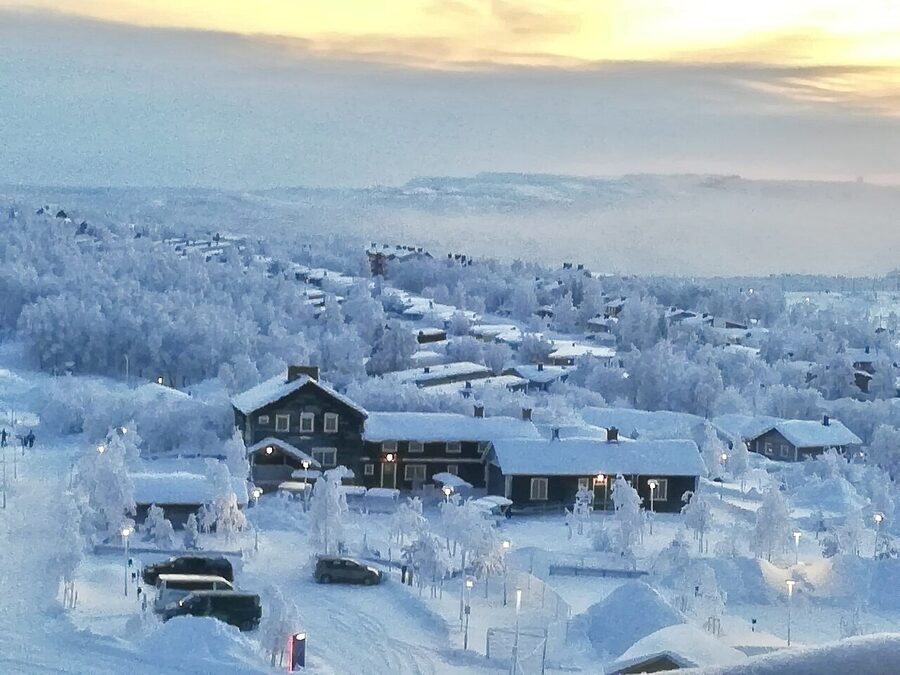
Two clusters of hotels work well. In central Kiruna itself, the Scandic Ferrum and Hotel Kiruna are the easiest pickups, both within five minutes of the train station. Outside town, the famous Icehotel in Jukkasjärvi is 17km east and most husky operators pick up there too (some kennels are practically next door). If you’re routing in from Stockholm with a stopover, the Stockholm Pass and a couple of city bookings work well as a bookend either side of the Kiruna days.
Stay central if you want to walk to dinner and bars. Stay in Jukkasjärvi if your priority is the full Arctic isolation experience and you don’t mind a 25-minute taxi back to town. There’s a third option a lot of people miss: a couple of operators run their own small lodging on-site at the kennel, which means you wake up to the dogs starting their morning chorus at 7am. It’s a very specific kind of holiday.

How a Tour Actually Runs
Pickup is usually 30 to 45 minutes before the tour starts, in a minibus from your hotel. The driver knows the schedule and there’s a spreadsheet on the dashboard with your name on it (don’t worry, they’ll find you). You’ll head out 15-25km from town to the kennel, then change into thermals in a heated cabin while someone gives you the safety brief.
The brief covers: how to ride a sled, how to brake, how to lean into corners, what to do if you tip (you might), and how to greet the dogs (palm down, let them sniff). The dogs at this point are losing their minds in the kennel because they can hear the sleds being prepared. It’s deafening. Take videos.
Then the brake comes off. Silence. The dogs lock into a flat-out run for the first 200 metres and the noise drops to nothing but sled runners on snow and dog breath. It’s surreal the first time. After about a minute they settle into a working pace and the trip starts properly.
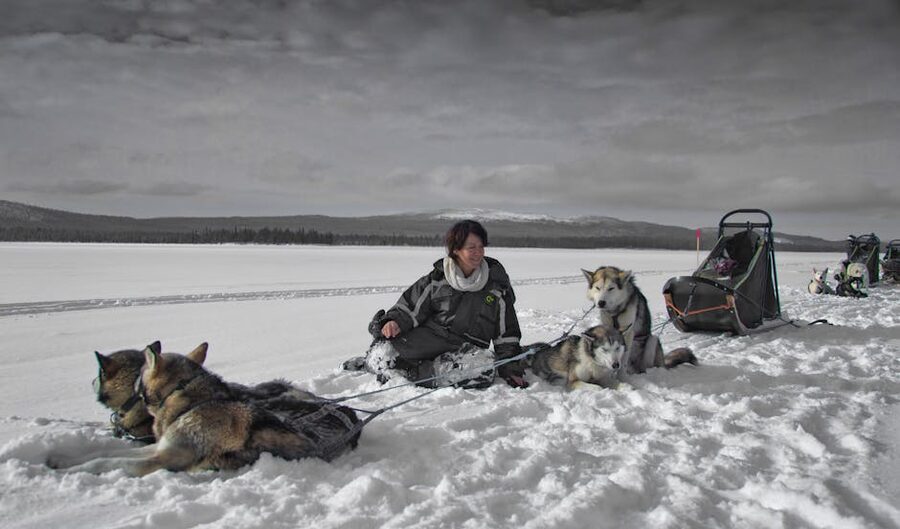
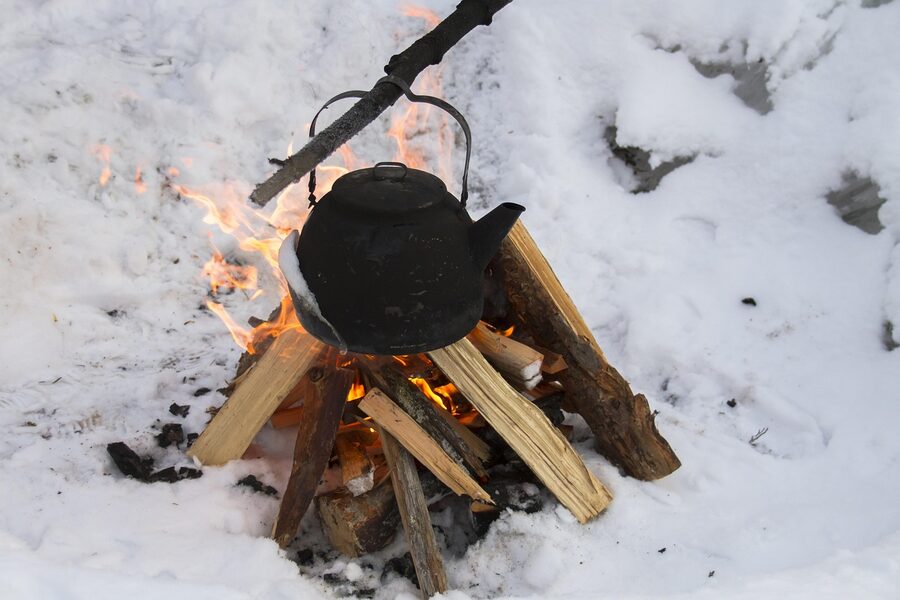
Most operators stop once partway through, either to swap drivers (on combo tours) or to do the fika stop with hot drinks. The dogs get water and a quick check, you get warm hands again, and then it’s another 30-45 minutes to home.
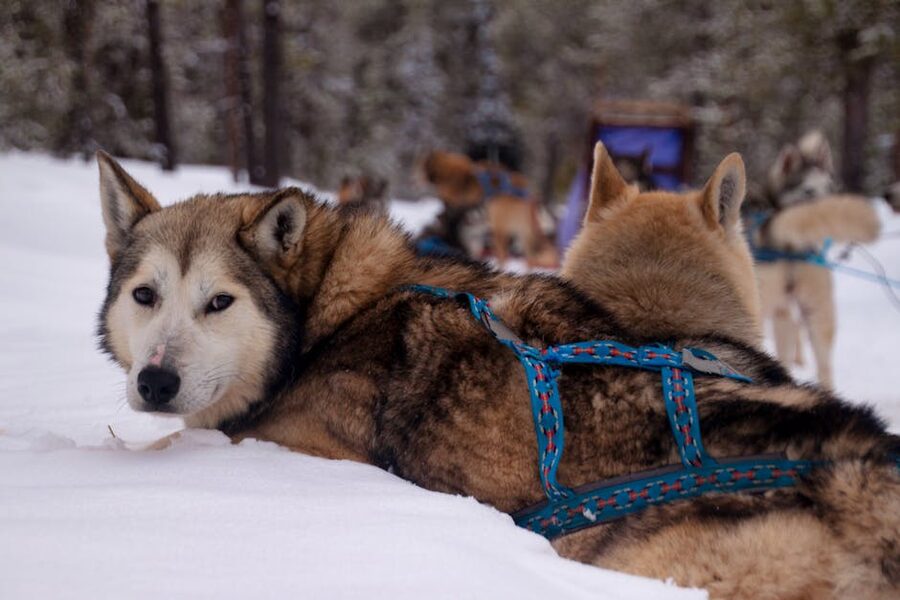
Back at the kennel, you help unhook the dogs (or watch, depending on your level of cold), and most kennels let you spend 15-20 minutes meeting them properly off-harness. This is the part most people remember best. The dogs that just hauled you across 20km of snow are now leaning against your leg trying to be cuddled.
Combining With Other Lapland Tours
Most people who fly to Kiruna do at least two activities. Husky sledding is the easy first booking. The natural pairs are a Kiruna northern lights tour on the same trip (different operator usually, photographer-led, evening departure), and a day trip to Abisko for either an aurora chase from Abisko or, if you’re up for something properly hard, ice climbing in the Abisko gorge.
If you’ve got three full days, my suggested order: husky sled day one (gets you used to the cold, easier on the body), aurora night one (you’ll be tired but the dark hours work for it), Abisko day two for either a snowshoe walk or the Abisko aurora chase, then a quieter cultural day in Kiruna town and the Sami museum on day three.

The Animal Welfare Question
This comes up. Worth being direct about. The bigger Kiruna kennels are run by people who race these dogs competitively in their off-season and breed them with the work in mind. The dogs live in proper outdoor kennels (their thick coats handle Lapland winter better than ours do, though they don’t run when it’s below -30C), they’re fed twice a day on a high-fat working-dog diet, and the run pace on tourist tours is well below what they’re trained to handle.
That said, kennel quality varies. If the kennel doesn’t let you walk around freely, doesn’t tell you the dogs’ names, doesn’t let you ask about retirement (most retired racers go to pet homes through the kennel network), or pushes you out the door fast at the end, that’s a flag. The reputable operators are happy to spend an extra 30 minutes after the tour answering questions about the dogs. The good kennels are the ones where the dogs sleep curled around the operator’s feet by the wood stove between runs.
Cost and Value
The price spread on Kiruna husky tours is wider than it looks. The cheapest decent tour is around $170, the longest full-day tours run to $500-600, and a few operators offer multi-day expeditions with overnights in trail cabins for $1,500 and up.
For most first-time visitors, a 2.5 to 4 hour tour in the $180-280 range is the right call. You get enough time on the runners to actually experience the activity, you get the kennel visit and the brief, and you don’t end up so cold you can’t enjoy the rest of the day.
The combo tours like sit-and-drive at $271.84 are the best value if you want the full experience without committing to a multi-day expedition. The morning ride at $177 is the best value if you’re cost-sensitive and don’t care about driving.
Things People Get Wrong
Five things I see new bookers get wrong, every season.
One: assuming the dogs need to be told to go. They don’t. They’re so eager that the brake is the only reason the sled isn’t moving. The musher works the brake more than anything else.
Two: holding the camera the whole time. You’ll tip. Or your hand will freeze. Or both. Take a few photos at the start, take a few at the fika stop, take a few at the end. The middle is for being there.
Three: choosing a tour by length and ignoring the format. A two-hour drive tour involves more time on a sled than a four-hour sit-down tour. The four-hour ones include kennel time, transfers, the brief, and the fika. Time-on-sled varies a lot.
Four: booking same-day. February and March weekends are gone weeks in advance. November and April have more flex. If you must book last-minute, look at weekday morning slots first.
Five: skipping the kennel time at the end. The tour is the activity, but the dogs off-harness are why you came. Stay 20 extra minutes if the operator lets you. They usually do.
Other Lapland Bookings to Pair With This
If you’re putting together a Lapland trip, the husky day pairs naturally with a northern lights tour from Kiruna on the same evening (different operator, photographer-led trips are the standout), or with an aurora chase from Abisko if you want to give yourself the best statistical odds at the lights. For something physically harder, the Abisko ice climbing experience runs the same season as sledding and a beginner day requires no prior climbing. Down south, a few people add a Stockholm stopover on the way home: the Vasa Museum and a quiet day in the archipelago are an easy contrast to a week in the Arctic. The night train back from Kiruna lands you in Stockholm at breakfast time, so you can do both.
Some links above are affiliate links. We earn a small commission if you book through them, at no extra cost to you. We only recommend tours we’d take ourselves.