
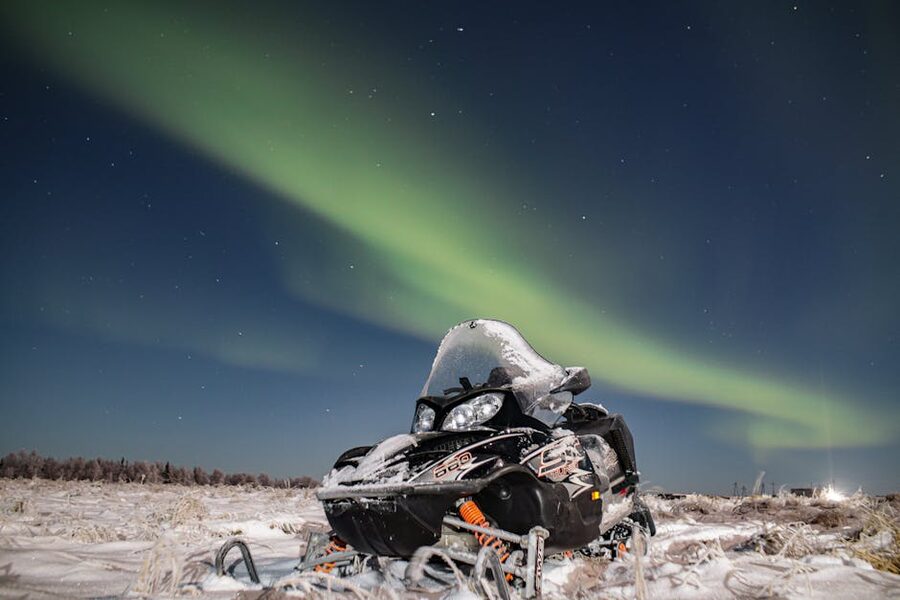
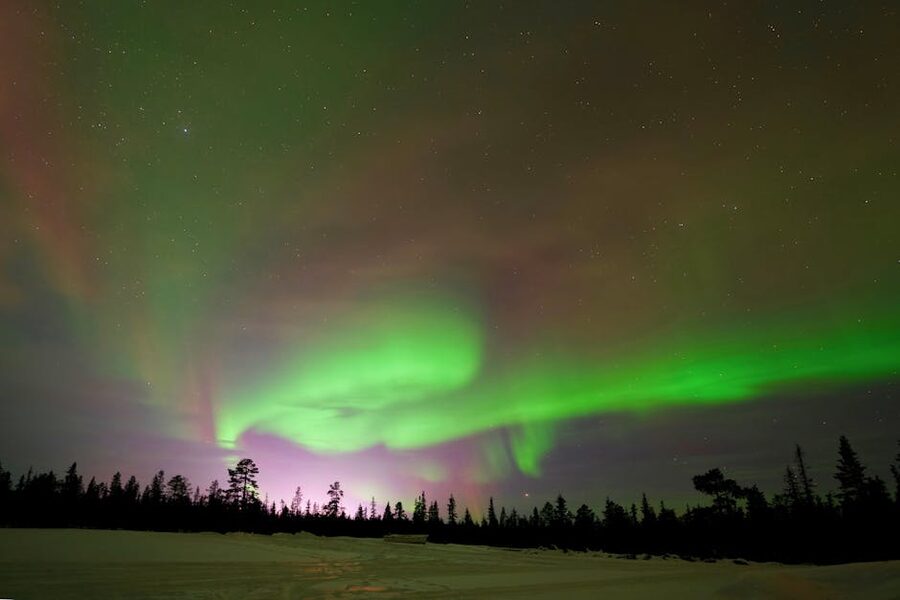
Knee-deep in soft snow off a forest road, the headlights cut, and for a long minute it’s just the sound of breathing. Then the photographer drops his voice to a whisper, points up over the spruce line, and says “look, look.” A pale green ribbon hangs over the northern horizon. Three seconds later it ripples, then sharpens, then suddenly there are two of them dancing. Behind us a tripod shutter starts firing, and your guide is already framing you against the lights with his second camera.
That’s a Kiruna northern lights tour at its best, and it’s why most people coming to Swedish Lapland fly into Kiruna over almost any other Arctic town. Below is what you actually need to know to book one.
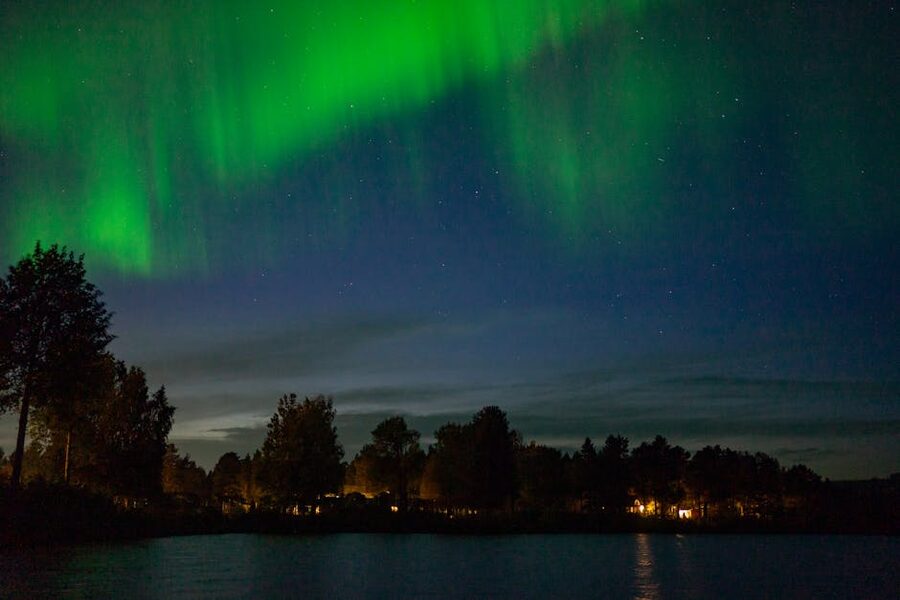
Most professional photos: Kiruna Northern Lights Tour with Photos, $187. Small group, photographer who keeps shooting until the lights stop.
If you want dinner included: Kiruna Aurora Tour with Stejk Street Food Dinner, $158. Reindeer and moose in a tepee before the chase.
- Why book a tour at all
- The tours worth booking
- 1. Kiruna Northern Lights Tour with Photographer: 3
- 2. Kiruna Northern Lights Tour with Photos: 7
- 3. Kiruna Aurora Tour with Stejk Street Food Dinner: 8
- What a Kiruna NL tour actually looks like
- The photographer angle (and why it matters)
- When to go (and what each month is like)
- How long should you stay
- Getting to Kiruna in the first place
- Kiruna town itself: what to know before you arrive
- What to wear (this part really matters)
- Stack the trip: combine the aurora chase with husky and dinner tours
- Where to stay: a practical short list
- The Sami connection
- What can go wrong (and how to handle it)
- Booking timing and pricing
- The Lapland trip beyond aurora
Why book a tour at all
You can absolutely walk to the edge of Kiruna town, look north, and see the aurora on a good night. People do it from the car park at the Scandic. So why pay $150 to $230 for a tour?
Three reasons, in order of how much they mattered to me.
First, the cloud problem. Kiruna’s weather flips fast. A sky that’s totally socked in over town can be wide-open clear 30 minutes east toward Esrange, or 40 minutes north up the E10. A tour operator is watching satellite cloud feeds and aurora forecasts in real time and driving you to whichever spot has the best window tonight. You aren’t doing that on your own without a rental car, snow tires, winter driving experience, and a confident plan for icy back roads in the dark.
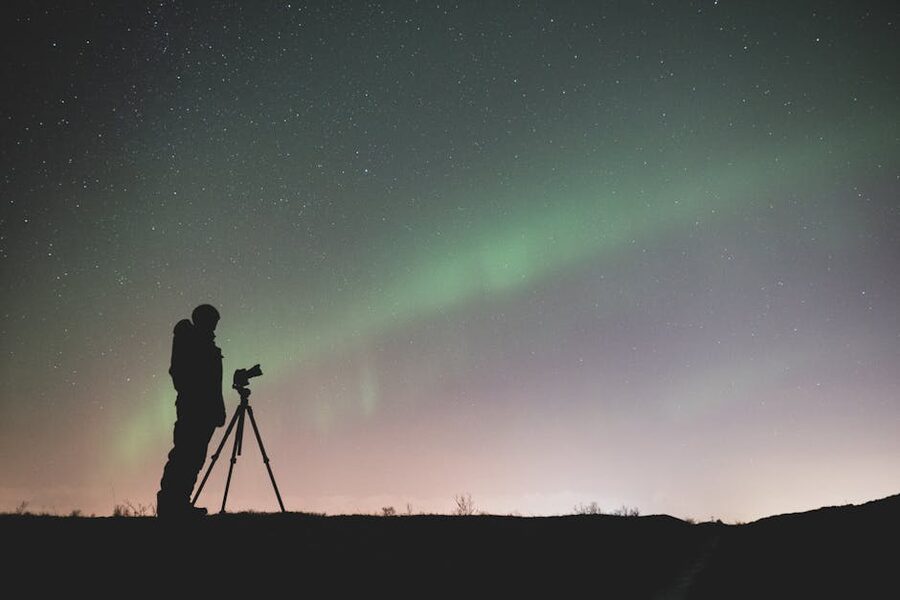
Second, the camera. Your phone can shoot the aurora now (long-exposure mode, prop it on something solid), but the images are flat and grainy. A photographer guide brings a real DSLR or mirrorless, knows the manual settings cold, and has done thousands of these. The flagship Kiruna tours include both shots of the lights themselves and posed shots of you standing in front of them, sent to you within a few days. Those photos are the souvenir.
Third, the warmth. A typical chase involves three or four hours outside between roughly 8pm and midnight, often standing still in minus 15 to minus 25 Celsius. The good operators provide thermal overalls, thick boots, mittens, hot drinks, and a campfire or hot tea breaks. Without that gear you’ll last about 40 minutes and miss everything that happens after.
The tours worth booking
I’ve kept this short on purpose. There are dozens of NL tour listings out of Kiruna and most run a similar formula. The three below are the ones with the strongest mix of price, reviews, and what you actually get for the money.
1. Kiruna Northern Lights Tour with Photographer: $223
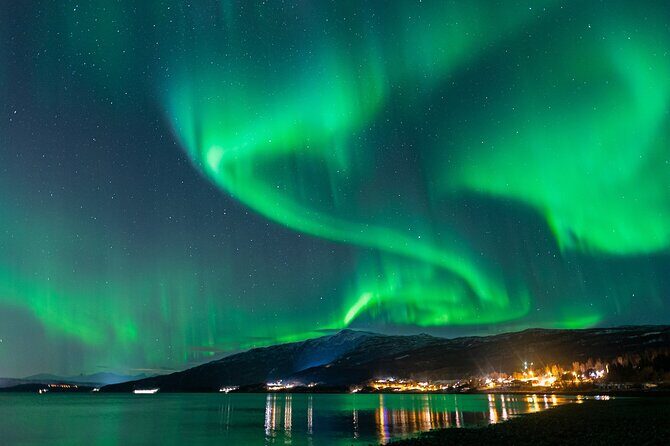
This is the one to book if you want the strongest photo deliverables and don’t mind paying a bit more. Our full review of the Kiruna Northern Lights Tour with Photographer covers the small-group format and the campfire stops in detail. Pickup is from your central Kiruna hotel, and the guides will drive 60 to 90 minutes out if needed to find clear sky. Family-friendly from age 15 up.
Check Availability
Read our full review
2. Kiruna Northern Lights Tour with Photos: $187
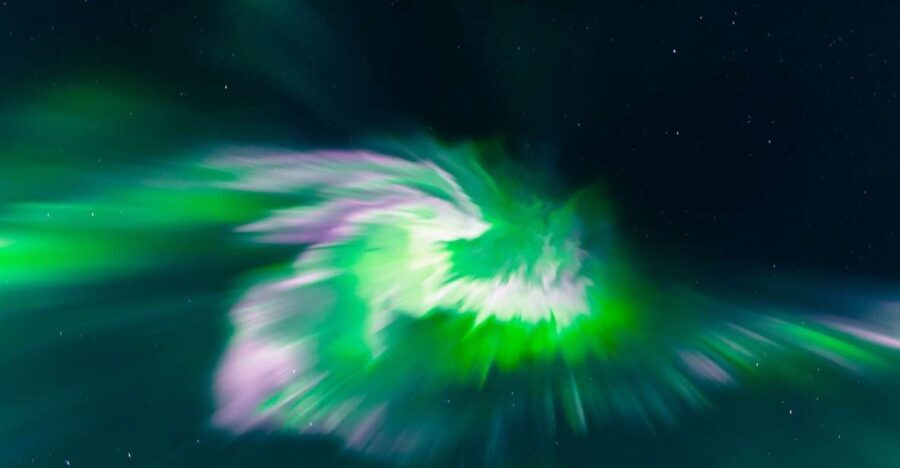
If $223 feels steep, this is the cheaper sibling and the one I’d pick first. Our deep dive on the Kiruna NL Tour with Photos notes that the cozy campfire setup and the unhurried pace are what most reviewers actually remember. Five hours, eight people max, hot drinks throughout.
Check Availability
Read our full review
3. Kiruna Aurora Tour with Stejk Street Food Dinner: $158
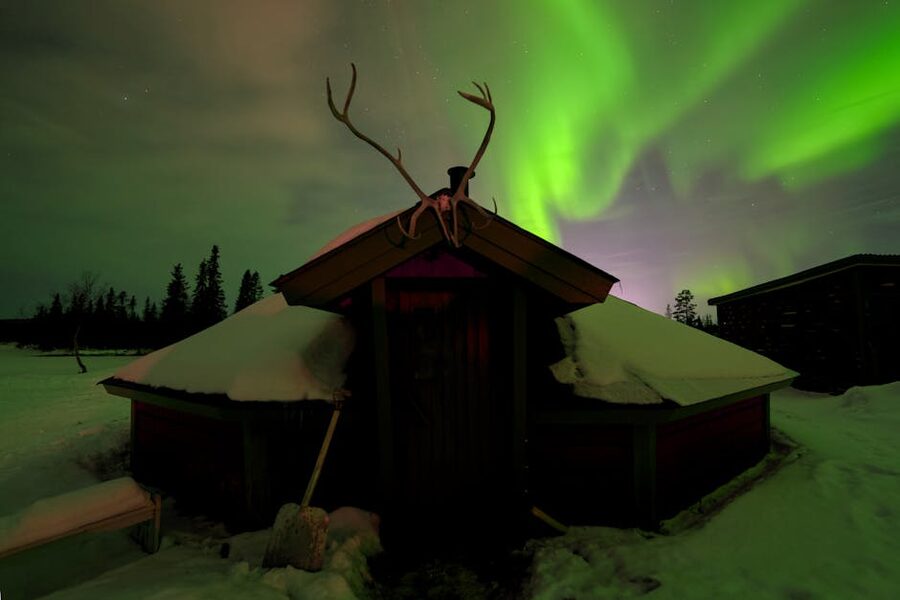
The cheapest of the three and the one to pick if you want food sorted as part of the night. Our review of the Stejk dinner aurora tour notes it isn’t a photo workshop. You’ll need to bring your own gear or accept phone-quality shots. What you get instead is the warm dinner first (an actual help when it’s minus 20 outside), and guides who’ll relocate as far as Abisko if Kiruna’s clouded over.
Check Availability
Read our full review
What a Kiruna NL tour actually looks like
The format is broadly the same across all three operators above. You get picked up from your hotel between 7:30pm and 9pm depending on the season and that night’s aurora forecast. You’re given a full thermal overall to pull on over your clothes, plus boots if you don’t have proper Arctic ones. The van fits roughly 6 to 8 people and you drive somewhere between 20 minutes and 90 minutes from town.
The destination changes nightly. Standard “good spots” include forest clearings off the E10 toward Abisko, lake-shore spots on Torneträsk if conditions permit, and viewpoint pullouts up toward Esrange. Sometimes the guide will get a forecast update mid-drive and reroute. That’s normal and a sign they’re doing their job.
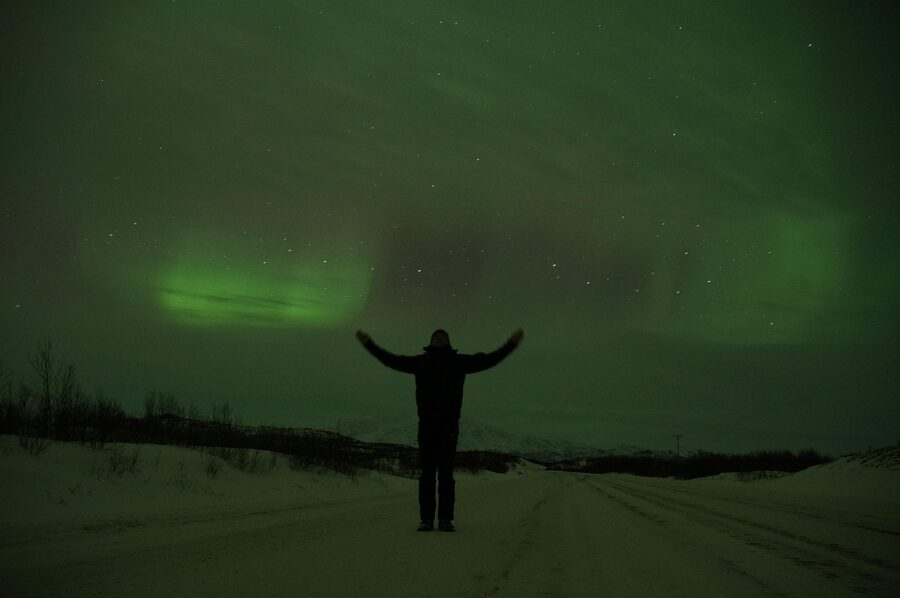
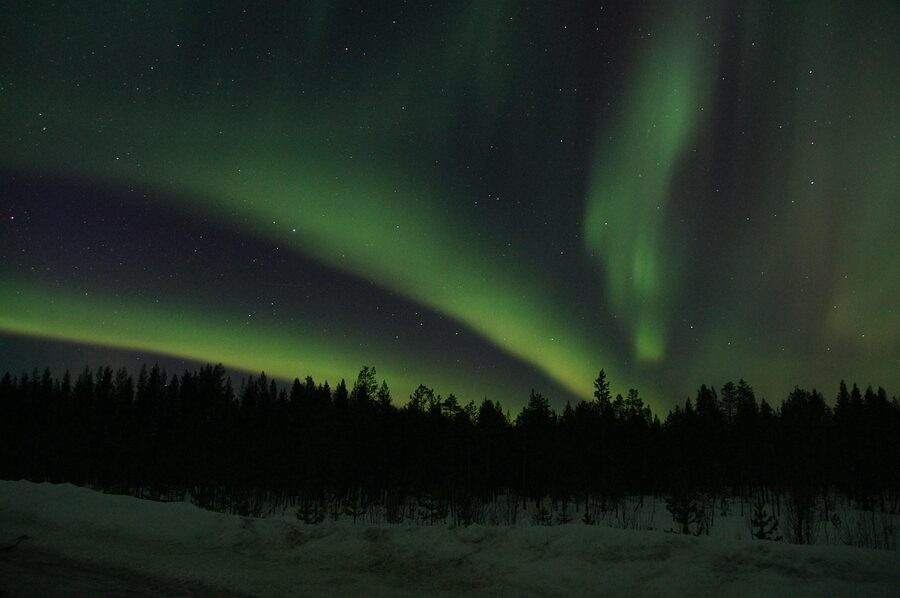
Once you’re in position the guide builds a small fire if it’s a recognised spot with a fire pit, hands round hot lingonberry tea or coffee, sets up his tripod, and starts watching. Aurora often comes in waves over an evening. A pale arc to the north is normal background; the real shows happen when that arc starts pulsing or breaking into curtains. The good guides will tell you what’s coming a minute or so before it does, just from watching the sky.
Pickup back at your hotel is usually between midnight and 1am. If the lights stay strong some operators will stay out later. If the night is a total cloud bust, most will end early and offer a free re-book on a future night if you’re staying in town long enough.
The photographer angle (and why it matters)
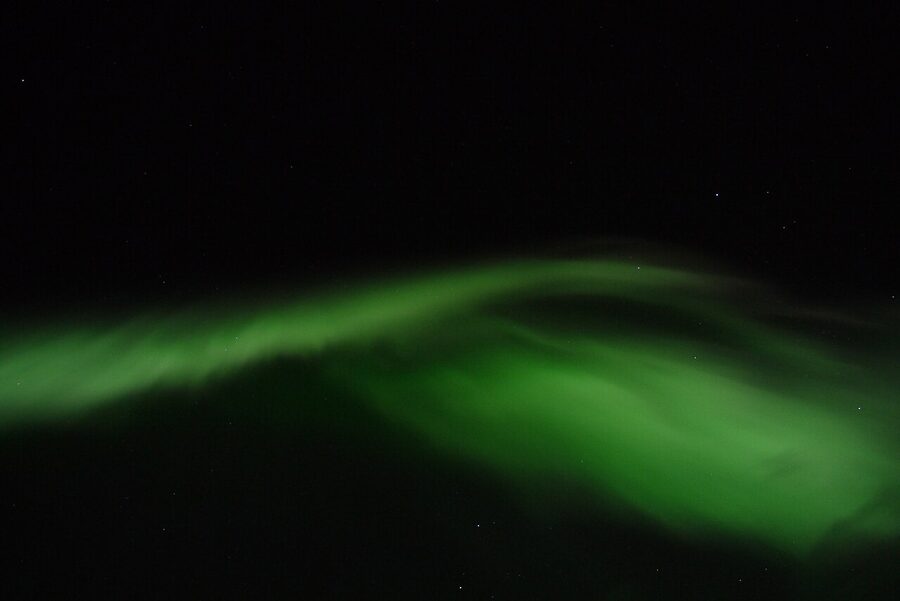
Almost every successful Kiruna NL operator brands themselves as “photographer-led”, and there’s a real reason. Aurora photography is technically demanding. You need a camera that can shoot 5 to 25 second exposures at ISO 1600 to 6400 with the lens wide open, on a stable tripod, with manual focus set to infinity in pitch dark. Phone cameras have closed the gap a lot in the last three years (iPhone 15 and 16 night mode, Pixel astrophotography), but they still produce flatter, noisier images than a proper rig.
What you actually get from a photographer-led tour:
- Posed shots of you (and your group) standing under the lights, lit by a soft head torch from the front so your face is visible, with the aurora as the backdrop. These are the photos that go on the wall later.
- Wide-angle scenic shots of the lights without you in them, often using a foreground feature like a frozen lake or pine line.
- Help getting your own phone or camera to actually capture something usable. Most guides will set your phone for you if asked.
- The files sent to you a couple of days later, usually via WeTransfer or a cloud link. Edited and ready to use.
If you only book one upgrade on this trip, this is the one. The price difference between a generic minivan tour and a photographer-led one is rarely more than $40 to $60, and the deliverable is permanent.
When to go (and what each month is like)
Kiruna’s aurora season runs roughly from late August to mid-April. The dark months at either end are the best, but each part of the season has its own character.
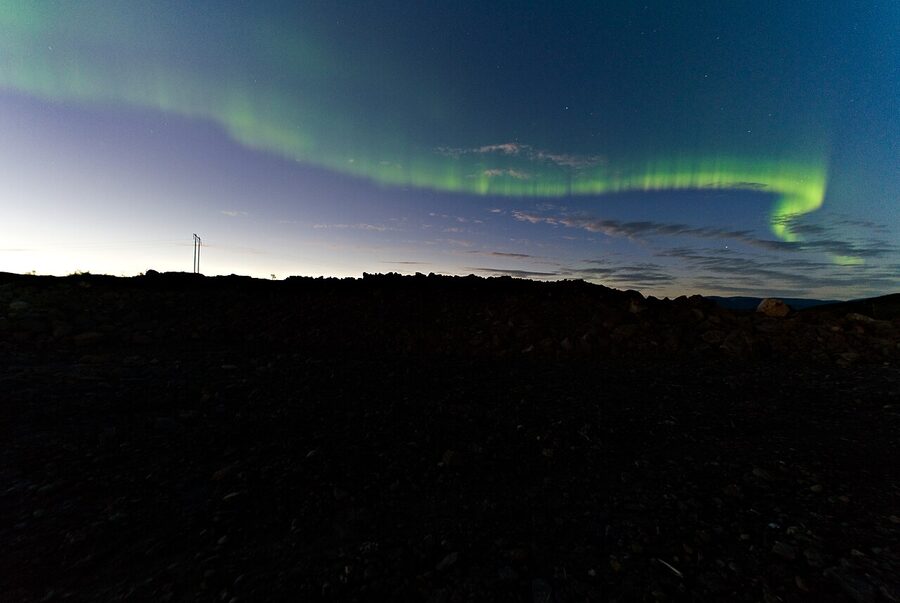
Late August to mid-October. Often the most underrated window. The autumn equinox period (around September 22) is statistically one of the strongest for solar geomagnetic activity, so the lights themselves can be excellent. Temperatures are still manageable (around 0 to 10 Celsius), the lakes haven’t fully frozen, and you can shoot the aurora reflected on open water at Torneträsk. Downside: the snow hasn’t really arrived yet so the country looks more forest than postcard winter.
Late October through November. The shoulder period. Snow arrives, days get short fast, and the temperatures drop hard from around minus 5 in early November to minus 20 by month-end. The aurora is the same; the experience gets more “Arctic.” Christmas markets start opening in town from late November.
December and January. The polar night period. The sun never properly rises in late December, which sounds depressing but means you can sometimes catch the aurora at 3pm. It’s also the coldest stretch (minus 25 to minus 35 is common) and the most weather-volatile. Tour cancellations happen here. If you book this window, build in a buffer of three or four nights minimum, not one.
February and early March. The popular window. The sun is back, snow is at its deepest, the days are long enough to do husky and snowmobile activities in the afternoon before your aurora chase. Temperatures are still cold (minus 15 to minus 25) but more manageable. Book accommodation early, especially around the Sami National Day (February 6) and the Kiruna Snow Festival (late January).
Mid-March to early April. My personal favourite. The aurora is statistically strong again around the spring equinox, daytime temperatures climb to a workable minus 5 to minus 10, and the snow stays deep but the dark hours are still long enough for proper viewing windows. Quieter than February. By mid-April the snow starts going and the aurora window shrinks.
How long should you stay
Three full nights minimum. Four or five is better. Anything less and you’re gambling.
The aurora is a probability game. Even on a strong solar week, cloud cover can wipe out a single night completely. Operators quote ballpark “75 to 90 percent sighting rates over three nights” and that matches what I’ve seen. Two nights gets you maybe 60 to 70 percent. One night is closer to 40, and if it clouds over you’ve spent thousands on a trip and seen nothing.
If you can only spare two nights, you can mitigate by going in late February or late March (statistically clearer than December/January), and by booking tours that promise to relocate. The photographer-led tours all do this; the dinner tour above will too.
Getting to Kiruna in the first place
The single biggest decision after when-to-go is how-to-get-there. There are three working options.
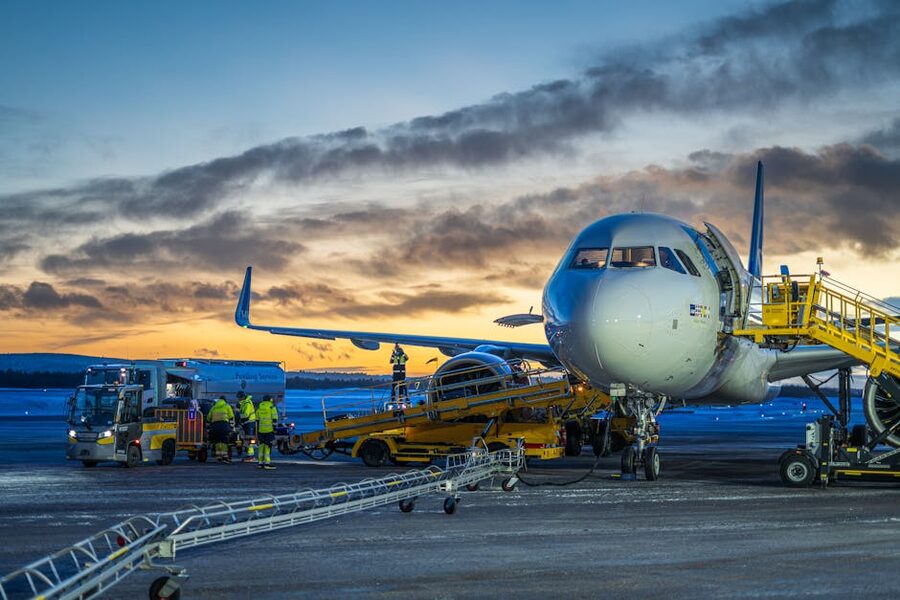
Fly via Stockholm. SAS, Norwegian, and seasonal charter operators run direct flights from Stockholm Arlanda to Kiruna (KRN) daily, typically 90 minutes one-way. Round-trip prices range from around $150 in shoulder season to $400 over Christmas and the February school holidays. This is what most international visitors do. It also lets you weave in a couple of days in Stockholm at either end. Our Stockholm guides cover the basics: how to book the Vasa Museum, whether the Stockholm Pass is worth it, and good walking tours of the old town.
Take the night train. SJ runs a sleeper train from Stockholm Central to Kiruna five nights a week in winter, leaving around 6pm and arriving the next morning around 11am. A two-berth compartment is around $200 per person. It’s slower than flying but you save a hotel night and the ride itself is part of the experience. Book on sj.se two to three months in advance.
Drive. Stockholm to Kiruna is about 1,250 km and at minimum 16 hours of winter driving. I wouldn’t recommend it for a NL trip unless you’re already in northern Sweden or Norway. Studded tires are mandatory north of about Sundsvall in winter and the roads are dark, icy, and have moose.
Kiruna town itself: what to know before you arrive
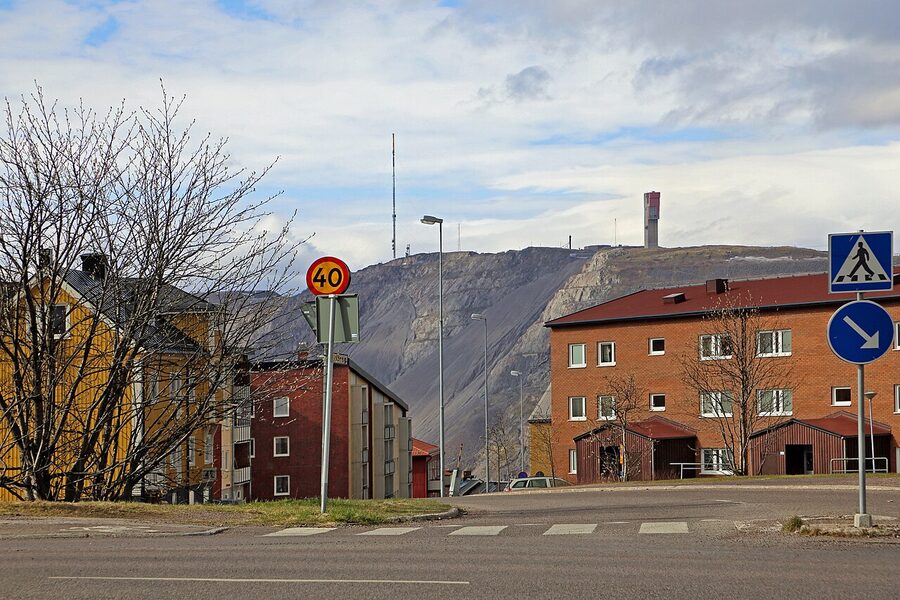
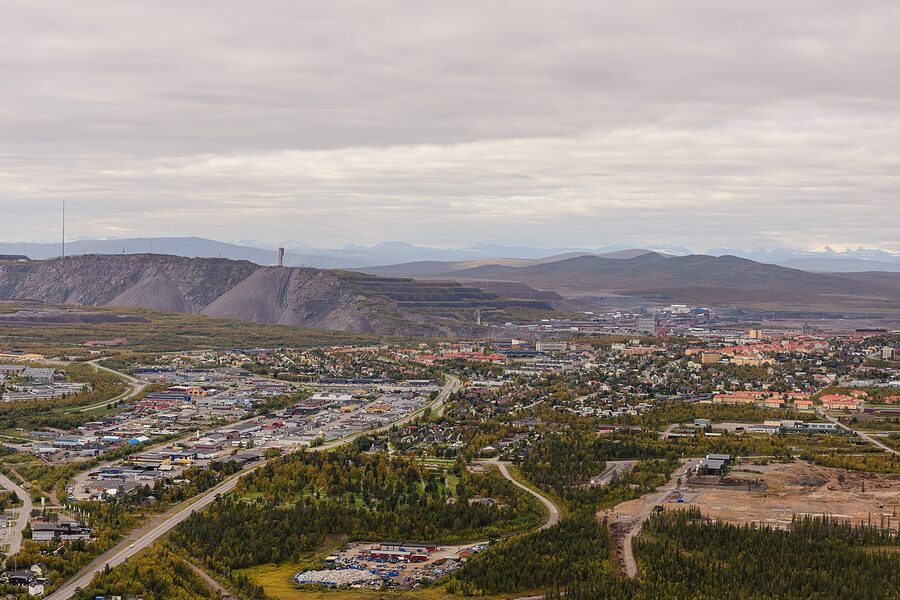
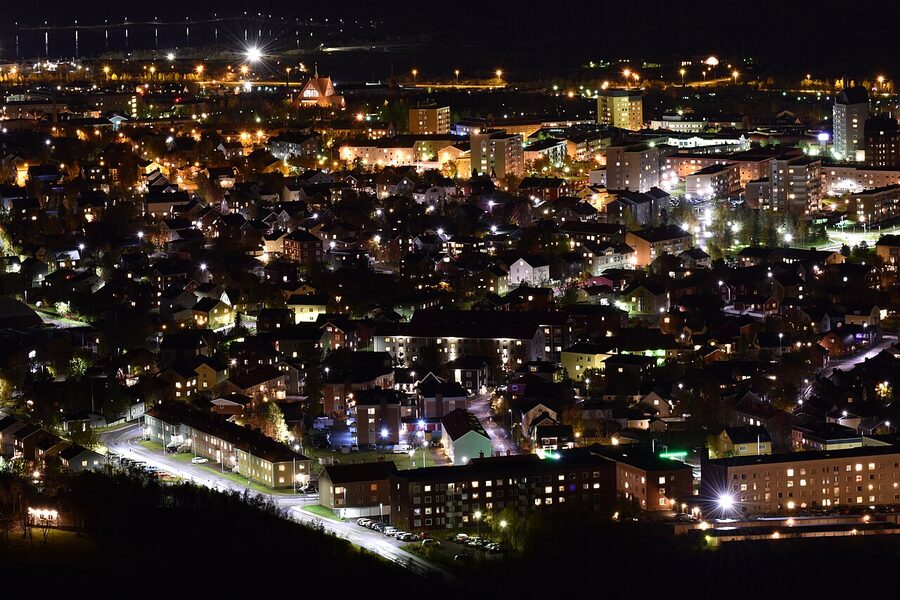
Kiruna is a small town built around an iron mine. Population is around 23,000 and it’s officially Sweden’s northernmost municipality. Two things make it unusual.
_-_Erzbergwerk.jpg)
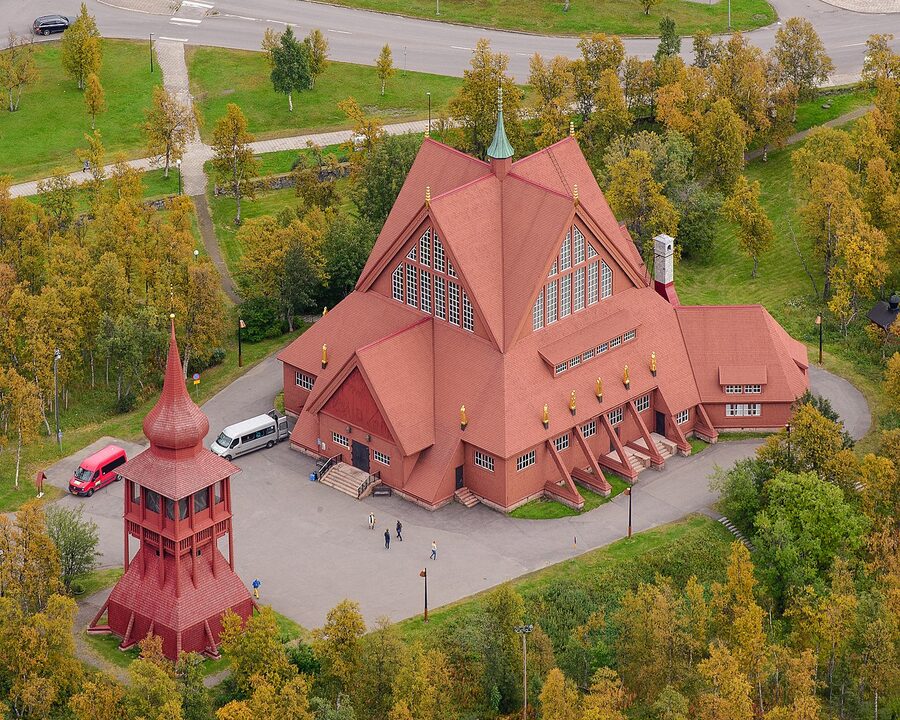
First, the town is moving. The LKAB iron mine has been undermining the bedrock under old Kiruna for decades, and around 2014 the town committed to physically relocating the centre about 3 km east. The new town hall opened in 2018. The famous wooden Kiruna church (often voted Sweden’s most beautiful building) is being moved as well, in one piece, on giant transport trailers. If you visit between 2024 and 2026 you’ll see both the old and new centres in different states of mid-move. It’s fascinating and also why some of the addresses on Google Maps don’t match what’s on the ground.

Second, Kiruna is the springboard for almost every other Lapland activity. Husky sledding kennels are 15 to 30 minutes out, the Icehotel in Jukkasjärvi is 17km east, Abisko (with the famous “blue hole” of clear sky) is 90km west on the E10, and the Esrange Space Centre is 40km out toward the satellites. Most aurora visitors stack a couple of these into a 3-4 day trip rather than just chasing lights every night.

What to wear (this part really matters)
The right gear is the difference between a great night and a miserable one. Kiruna NL tours all provide an outer thermal overall and usually boots. What you bring underneath is on you.
Layer one: thermal base. Merino wool top and leggings, ideally 200gsm. No cotton anywhere near your skin. Cotton holds sweat, sweat freezes, and you’re done.
Layer two: insulation. A fleece or wool mid-layer top, fleece pants or thick wool trousers. Two thin layers beat one thick one because you can adjust if you get warm during the drive.
Layer three: the operator’s overall goes over the top. Don’t bring your own ski jacket as your outer layer; their suits are warmer and rated for standing-still cold, not active skiing.
For your hands: silk or thin merino glove liners under thick mittens. Mittens beat gloves for warmth because your fingers share heat. The operator may provide outer mittens; bring your own liners.
For your feet: two pairs of wool socks (one thin, one thick), inside their boots if provided. If you’re bringing your own boots, they need to be rated to at least minus 25 and roomy enough that your toes can wiggle.
For your head: thin balaclava plus a thick wool beanie. Hand warmers (the disposable shake-to-activate kind) inside both gloves and boots. A thermos of something hot if you have one, even though they’ll provide tea.
Skip cotton hoodies, jeans, regular leather boots, and standard “winter” gloves rated for British weather. None of those will work below minus 15.
Stack the trip: combine the aurora chase with husky and dinner tours
Most aurora chases run 8pm to midnight, which leaves your daytime free. The smart move is stacking one or two daytime activities so you’re not just sleeping in and pacing the hotel.
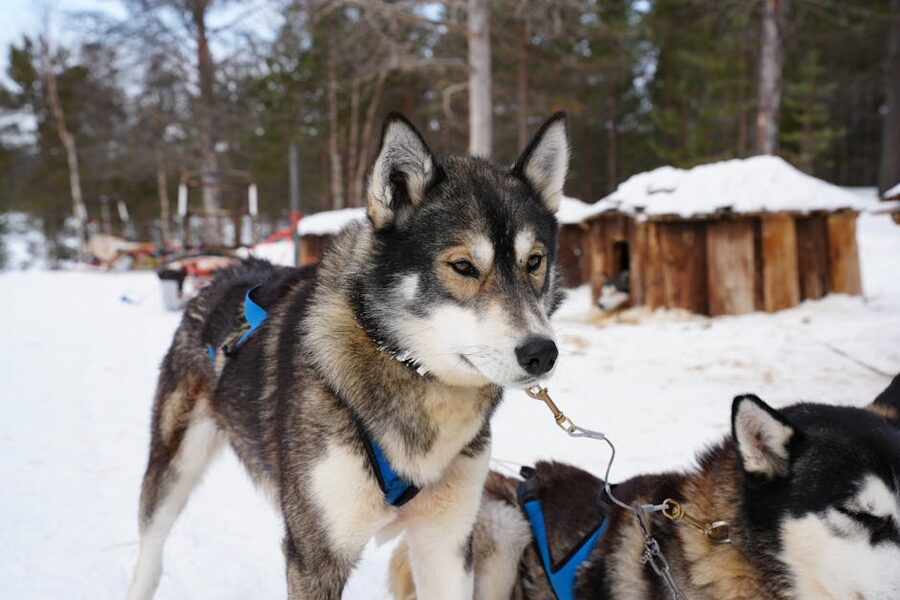
Husky sledding is the obvious pairing. Morning runs typically go 9am to noon, leaving you the afternoon to nap before the aurora chase. We’ve covered the practical side in our guide to booking a Kiruna husky sled tour, including the difference between sit-down rides and drive-your-own-team options.
Ice climbing is another option if you’re confident on rope. Beginner climbs in the frozen Abiskojokk gorge run roughly the same length as a husky morning. See our how to book ice climbing in Abisko guide for the season window and gear questions.
And if Kiruna’s weather looks like it’ll bust your aurora chase, day-tripping or relocating to Abisko is a real option. Operators based there run dedicated Abisko aurora chase tours that specifically work the famous “blue hole” microclimate. Some guests do one Kiruna chase and one Abisko chase across a single trip to maximise their odds.
Where to stay: a practical short list
Kiruna town has roughly fifteen hotels and apartment options. Three categories are worth knowing about.
Town centre standard hotels. Scandic Ferrum is the central reference point with reliable rooms, decent breakfast, and a sauna. Quality Hotel Lapland and Hotel Arctic Eden cover the same niche at slightly different price points. All three are within walking distance of the train station and the main pickup points for tours.
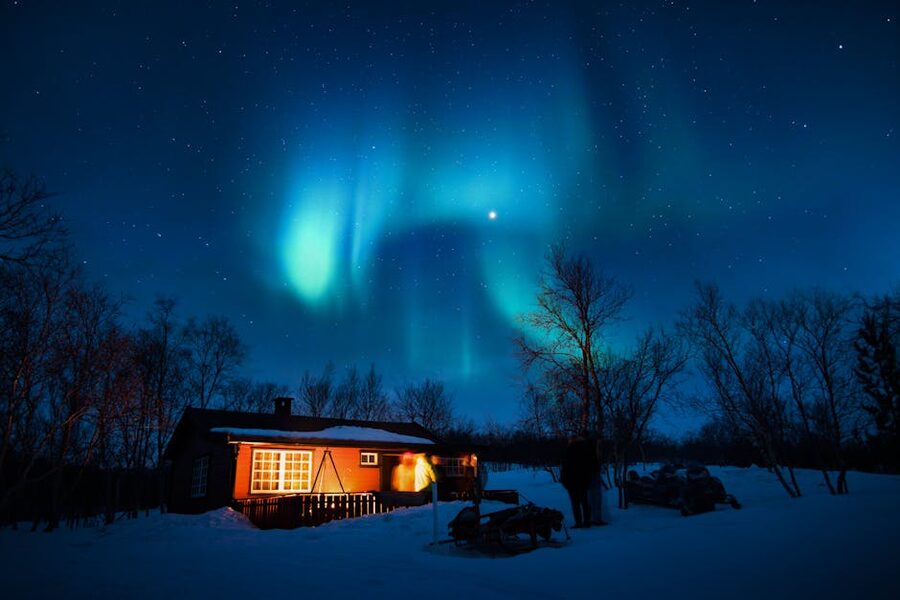
Out-of-town glass cabins and aurora-focused stays. Camp Ripan on the eastern edge of Kiruna has heated cabins with skylights for in-bed aurora viewing. Aurora Safari Camp (further out, near Råneå) is a more rustic option with traditional Sami-style lavvu tents. These are pricey ($300 to $500 a night) but compelling if you only have two nights and want to see the lights from your bedroom.
Icehotel. The famous one. Twenty minutes east in Jukkasjärvi. Real ice rooms or warm chalet rooms; the ice rooms are a one-night novelty (worth doing once for the experience), the chalet rooms are where you’ll actually sleep most nights of your stay. Book at least four months ahead for February and March dates.
The Sami connection
This is Sapmi, the traditional homeland of the indigenous Sami people, and a meaningful Kiruna trip includes some engagement with that. A handful of operators run reindeer-feeding visits to working Sami camps east of town. These are small operations, capped at 8 to 12 visitors, with a Sami guide explaining herding life over coffee and gahkku (Sami flatbread) by a fire.
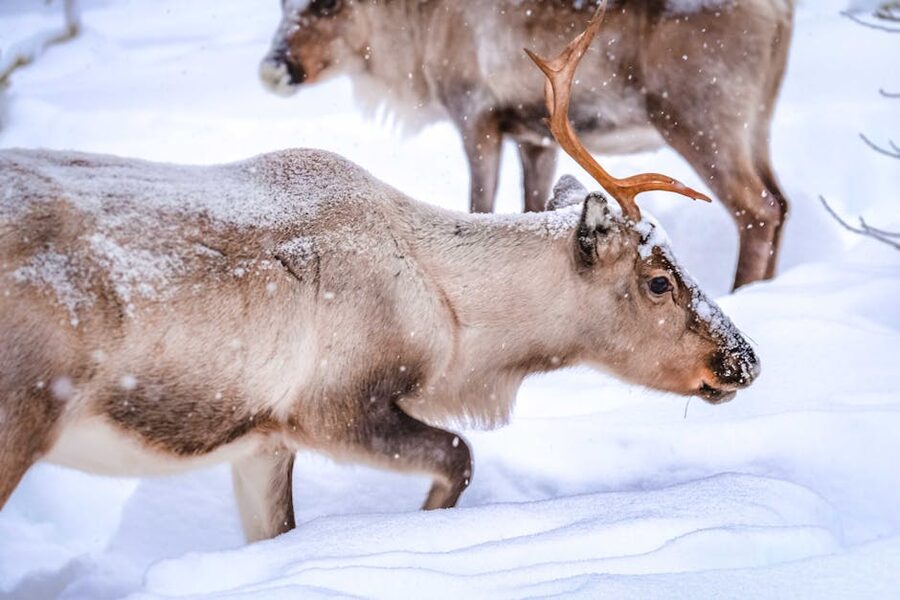
Skip the gimmicky “ride a reindeer in a Santa costume” version aimed at cruise stops. The real visits are quieter, more educational, and visibly run by Sami families. Ask your hotel concierge for a current operator recommendation; the field changes year to year.
What can go wrong (and how to handle it)
Quick rundown. None of these are deal-breakers if you’re prepared.
Cloud bust. The lights are there but you can’t see them. Most operators offer a free re-book if you have nights left in town. Photographer tours sometimes still pay off if your guide can drive far enough to find a clear pocket.
Low solar activity. Even with a clear sky, the lights might be a faint grey-green smear that barely shows. Check the Kp index for your night (kpindex.org or the My Aurora Forecast app). Anything 4 or above is a good night for Kiruna; 5 or above is excellent. Below 3 is a quiet night and you may need to extend your trip.
Cold injuries. Frostnip on cheeks and fingertips is real if you’re not paying attention. Tell your guide if you stop feeling something. Hot drinks, hand warmers, and getting back in the van for ten minutes will fix nip; actual frostbite needs to be avoided by not being stupid about exposure.
Phone batteries dying. Lithium-ion batteries crash in extreme cold. Keep your phone in an inner pocket against your body when not using it. Bring a power bank kept warm the same way.
Northern Lights on your face. If you’re using a head torch, point it down. Even a glance from someone else’s lamp three minutes before the curtains hit will wreck your night vision and your photos.

Booking timing and pricing
Lock your tour in 6 to 8 weeks ahead for February and March, 4 to 6 weeks for the autumn shoulder, and ideally 3 months for any of the late-December Christmas dates. The photographer-led tours sell out first because they cap at 7-8 people per night.
Prices in this guide ($158 to $223) are roughly stable across the season but can spike 10 to 20 percent over Christmas and the school holidays. Cancellation policies vary by operator: GetYourGuide tends to allow free cancellation up to 24 hours ahead; Viator’s range from 24 hours to 7 days. Read the fine print on your specific listing.
Pay in dollars or Euro online; most operators don’t accept walk-up bookings on the day, and the few that do mark up the price by roughly 30 percent.
The Lapland trip beyond aurora
If you’ve come this far north for the lights, give yourself one extra day to do something else properly. The husky sledding morning is the easy add. Beyond that: the Abisko aurora chase is the natural pairing for a second night of NL viewing under different sky conditions, and an ice climbing day in Abisko works for travellers who want a real adrenaline element to balance the slow-paced aurora evenings. Stockholm at either end of your trip is also worth a long weekend; the Vasa Museum and the archipelago are the obvious anchors there. Build the Lapland leg around three to four nights in Kiruna, one night in transit on the SJ sleeper, and a couple of days in Stockholm at one or both ends, and you’ve got a proper week-long Sweden trip.
Disclosure: Some links in this guide are affiliate links. If you book a tour through them we may earn a small commission at no extra cost to you. We only recommend tours we’ve researched and would book ourselves.