
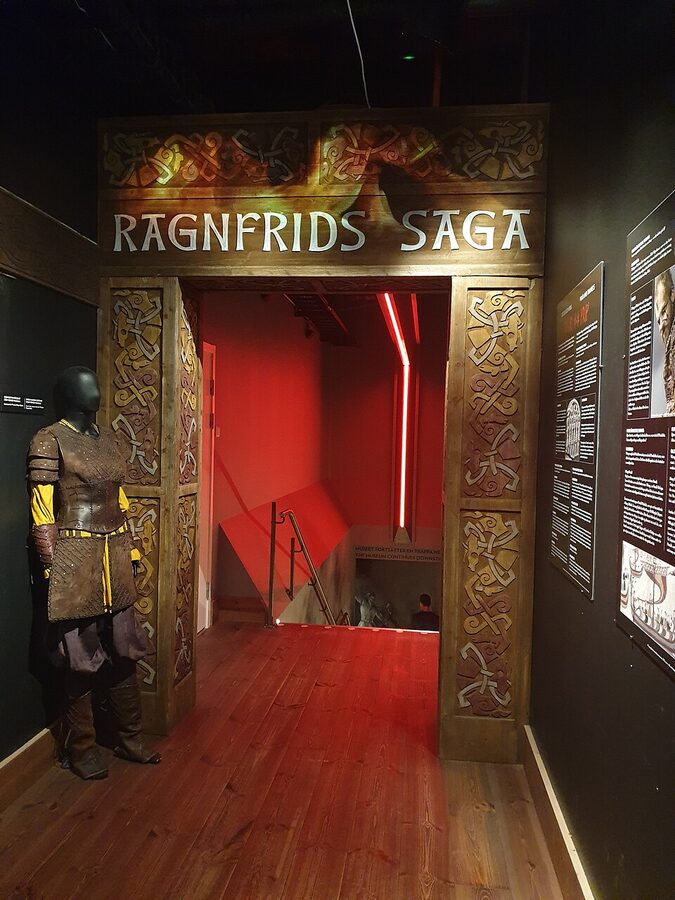
About seven minutes into Ragnfrid’s Saga, the soundscape shifts. The carts you’re sitting in have been rolling through a 10th-century Swedish village in dim warm light, narration in your headphones, and then a horn sounds and the lighting turns red and the audio goes thick with shouting and crackling and your village burns. It lands. You came in for an 11-minute dark ride and you leave a little quiet, walking back upstairs to the room of artifacts you didn’t really care about half an hour ago, suddenly caring.
That’s the trick of the Viking Museum on Djurgården, and it’s why I keep recommending it to people who think they’re “not really into museums.” Below is how to actually get tickets, what’s worth knowing before you go, and the three best ways to book.
If you’re picky about flexibility: Viator entry ticket, $23. Free cancellation up to 24 hours before, useful if your Stockholm plans are still moving.
If you’re doing 3+ Stockholm museums: Go City Stockholm Pass, from $95. Viking Museum, Vasa, Skansen, ABBA, archipelago cruise, all on one pass.
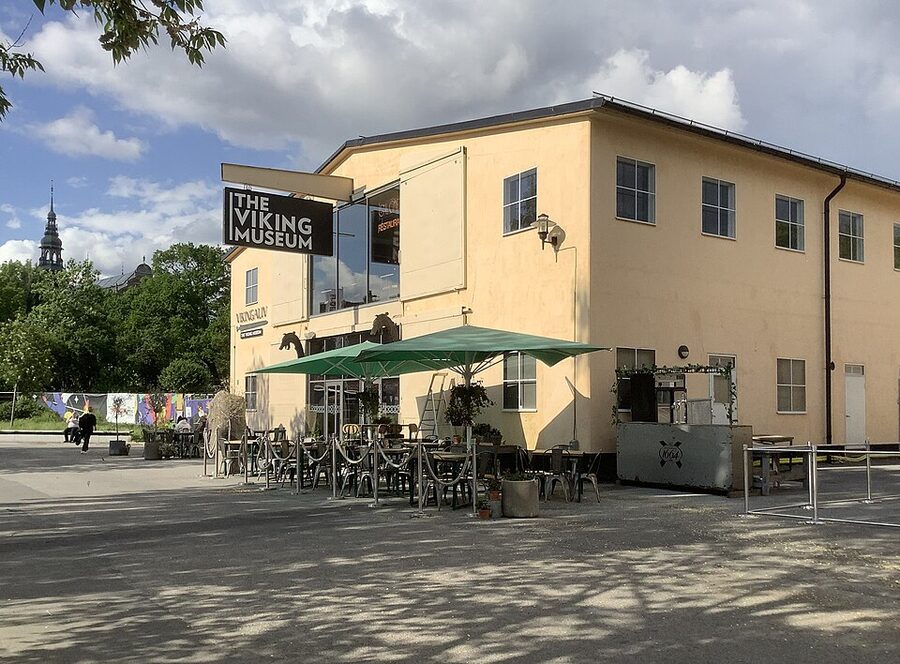

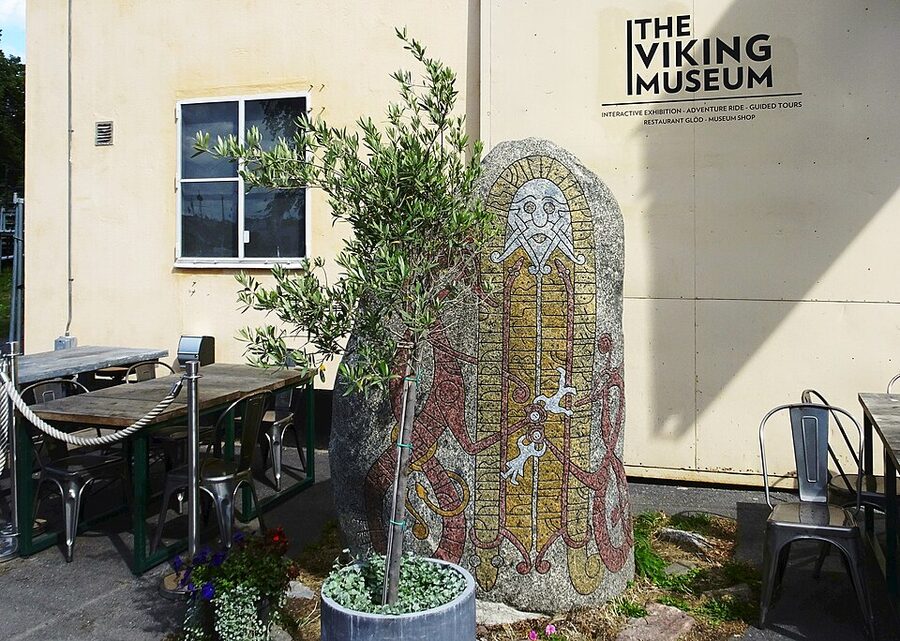

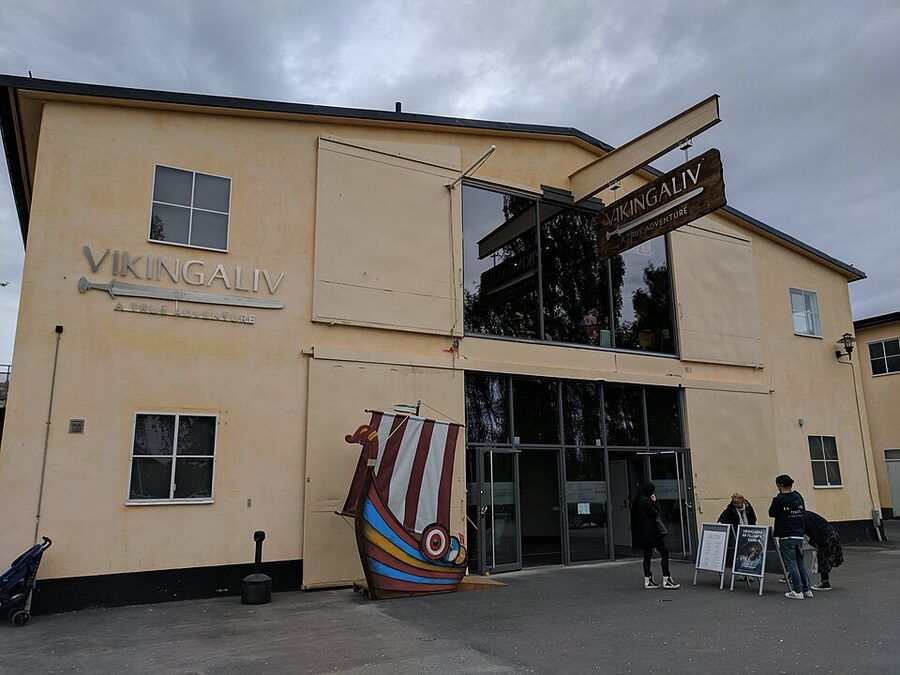

- What you actually get for your ticket
- Three ways to book
- 1. Stockholm: The Viking Museum Exhibition and Viking Ride:
- 2. Entrance ticket to The Viking Museum:
- 3. Stockholm Pass with Viking Museum included: from
- The Ragnfrid’s Saga ride, in more detail
- What’s upstairs and why it gets better after the ride
- Getting there
- When to go
- How long to budget
- Accessibility and practical bits
- The history bit, in plain English
- The Glöd cafe is worth a stop
- Other Stockholm tickets worth pairing this with
What you actually get for your ticket
One ticket, two halves. The first half is a self-guided museum walk on the upper floor, maybe 45 minutes if you read most of the panels. The second half is the Ragnfrid’s Saga dark ride downstairs, which runs about 11 minutes. You can do them in either order, but the museum recommends ride first, exhibition second, and they’re right. The exhibition lands harder once the ride has primed you to care about the world it’s set in.
The price hovers around 199 SEK at the door for adults (about $22) and is exactly the same online. The online ticket isn’t cheaper. It’s just less hassle, especially in summer when the Djurgården museum cluster gets busy and the door queue at Vikingaliv backs into the entrance hall.
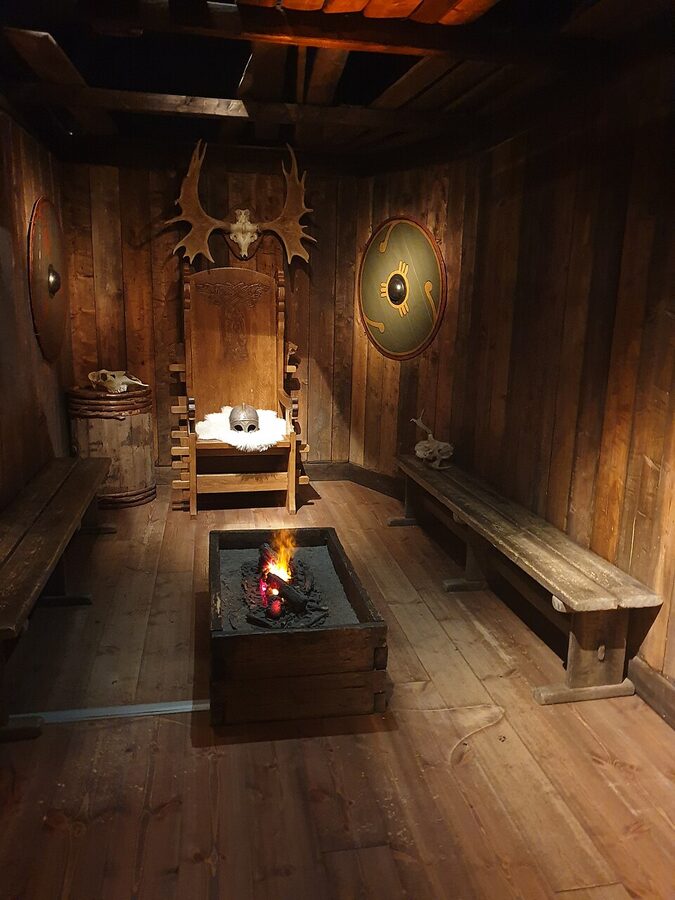

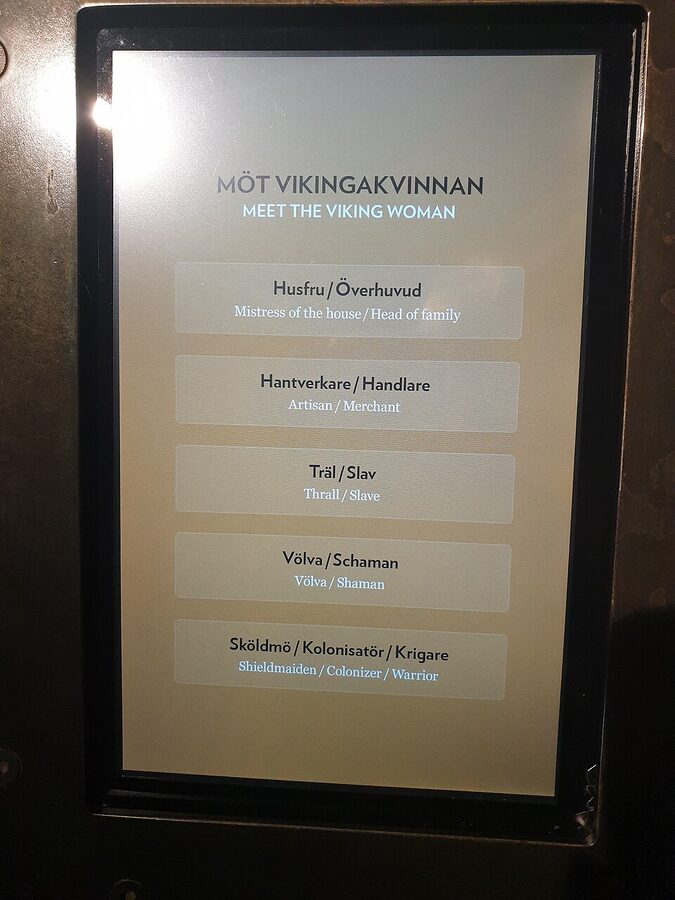
What’s actually in the upper-floor exhibition: a Viking-age timeline, around 30 real artifacts on loan from Swedish collections, a DNA-based reconstruction of a Viking man built from a skeleton excavated near Sigtuna, and interactive video panels where you pick a character (Völva the priestess, a child, a longbowman, a trader) and watch a 90-second testimonial in their voice. The video panels are the underrated bit of the upstairs section, easy to skip if you’re rushing through.
Three ways to book
I’d pick based on what you actually need. Flexibility, the lowest entry price, or value across enough Stockholm museums that a pass starts to pay for itself.
1. Stockholm: The Viking Museum Exhibition and Viking Ride: $22
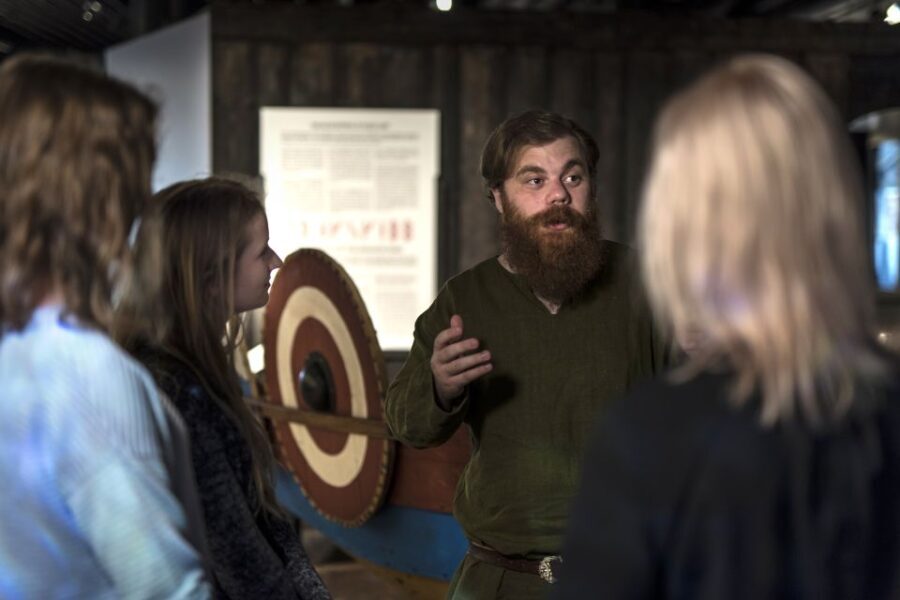
The default booking and the one I’d recommend first. Our full review of the GYG version goes into how the timed-entry slots work and why you don’t need to add the audio guide separately, it’s already in the ticket. Same price as walking up to the door, with a printed-on-paper QR you can show on your phone.
Check Availability
Read our full review
2. Entrance ticket to The Viking Museum: $23

Functionally identical to the GetYourGuide ticket once you’re inside. Our review of the Viator entry ticket is worth a look if you’re booking late and might still cancel. The 24-hour free-cancel window is the reason to pick this version over the GYG one if your Stockholm plans are still in flux.
Check Availability
Read our full review
3. Stockholm Pass with Viking Museum included: from $95
If the Viking Museum is one of several Stockholm tickets you’d buy, the Go City pass is the move. Our breakdown of the Stockholm Pass works through the math by attraction count. Rough rule: at three Djurgården museums you’ve broken even; at four-plus the pass is well ahead.
Check Availability
Read our full review
The Ragnfrid’s Saga ride, in more detail
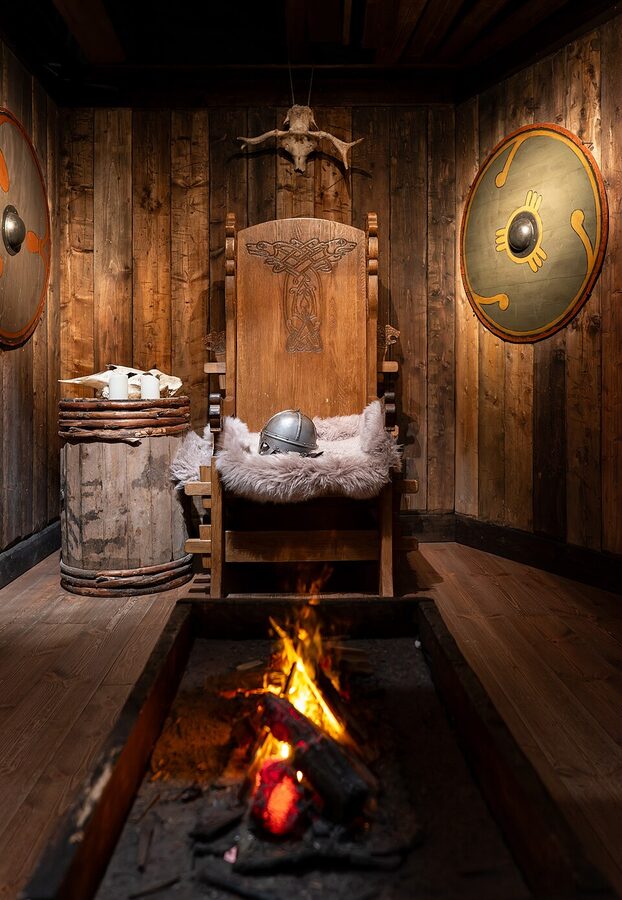
Worth its own section because most reviews undersell it. You sit in carts on a track, two abreast, three rows per cart. The ride moves slowly through a series of recreated 10th-century Viking-era sets, lit and scored to match the narrative. You wear personal headphones, plugged into a jack in your seat. Pick your language at the start; the museum lists 15, including English, Swedish, German, Spanish, French, Mandarin, Japanese.
The story is loosely based on a real 10th-century Swedish family. Ragnfrid is the wife of a farmer named Harald who leaves on a Varangian voyage east. The 11-minute narrative covers what happens to her household, the village, and her, while he’s gone. The pacing of the storytelling is what makes it land. There’s a long quiet middle, then a short brutal turn, then a quieter end.

For kids: the ride is recommended ages 7 and up. Younger than that, the dim lighting and the loud raid sequence in the middle can be too much. We watched a four-year-old start crying around the 6-minute mark on our last visit; her parents got off at the next set of doors and the ride staff were polite about it. If you’ve got a younger child, the upstairs exhibition is fine. Skip the ride and ask at the desk for the half-price option.
Practical: the ride runs continuously through opening hours. There’s no separate timed slot for it, you just queue at the lower-level entrance once you’re in. Wait time is usually under 10 minutes. Peak summer (mid-July to mid-August), it can stretch to 25.
What’s upstairs and why it gets better after the ride
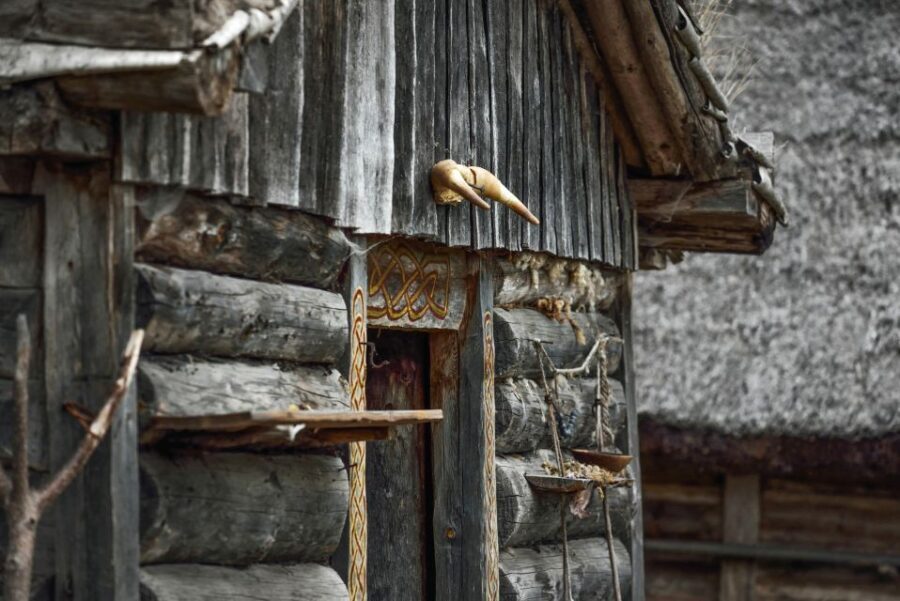
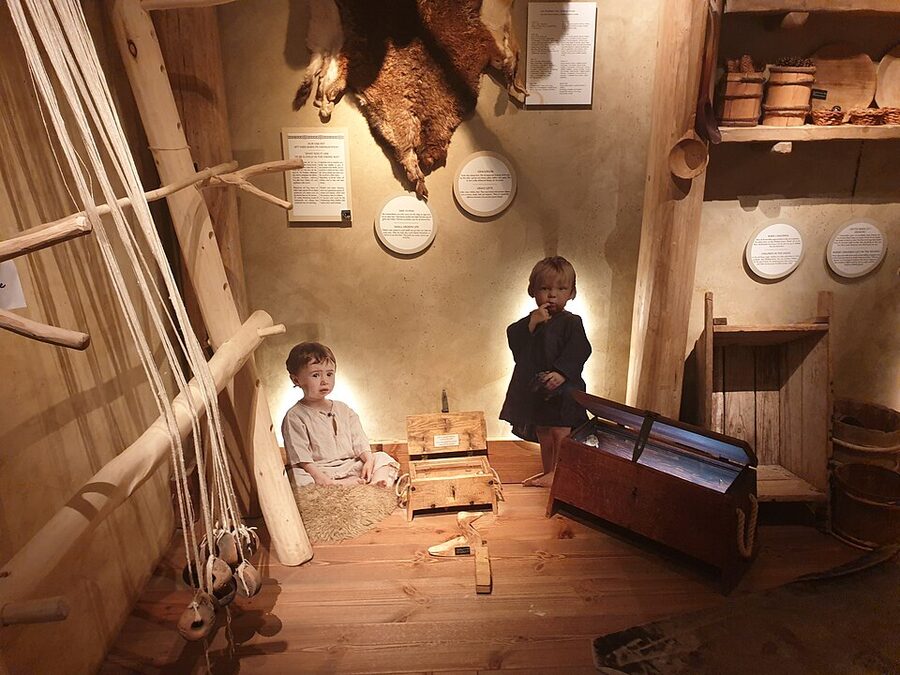
The upper-floor exhibition is darker and more atmospheric than a typical history museum. Less white wall and museum-board, more dim wood and pooled lighting on the artifact cases. The first time I went I assumed this was about ride-style theming. The second visit I realised it was practical: it lets the video panels and projection work without you having to step into a separate dark room.

The artifact case I’d point you at first is the Viking-man reconstruction near the centre of the upper floor. He’s built using DNA recovered from a skeleton found in Sigtuna (the same town the Sigtuna and Uppsala day trip visits, if you’re chaining your Viking-themed Stockholm days). Skin tone, hair colour, eye colour, facial structure, all reconstructed forensically rather than guessed. Most of the displays in this museum are recreations and reconstructions; this one is built on real evidence and it shows.

What I’d skip: the gift-shop section near the exit, which is reasonable but not unusual. Standard runestone-printed mugs, kids’ Viking helmets, jewellery copies that you can find cheaper at the airport. Skansen has a better craft selection if you’re shopping for Sweden gifts.
Getting there
Tram 7 is the simple answer. It runs from Sergels Torg in central Stockholm out to Djurgården and stops at Nordiska Museet, which is a three-minute walk from Vikingaliv’s front door. Tickets cost 42 SEK on the SL app or 50 SEK at the kiosk. The tram runs every 6-10 minutes most of the day.

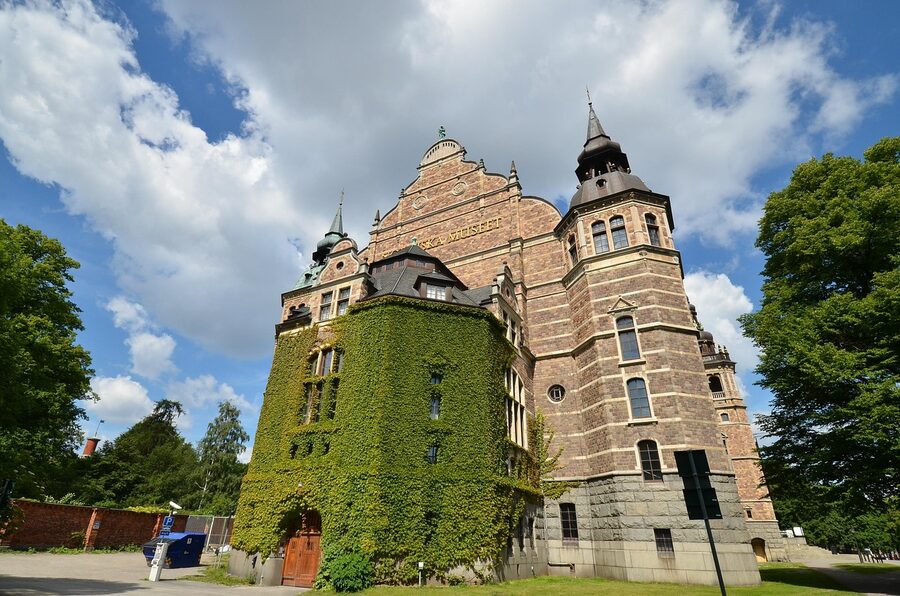
If the weather’s good, walk it. From Gamla Stan it’s about 25 minutes along the Strandvägen waterfront, one of Stockholm’s nicer harbour walks. From Sergels Torg / T-Centralen it’s closer to 35 minutes. You’ll pass the Nordiska Museet, the Vasa Museum and the Junibacken before you hit Vikingaliv, so you can easily plan a Djurgården museum afternoon and walk between them.
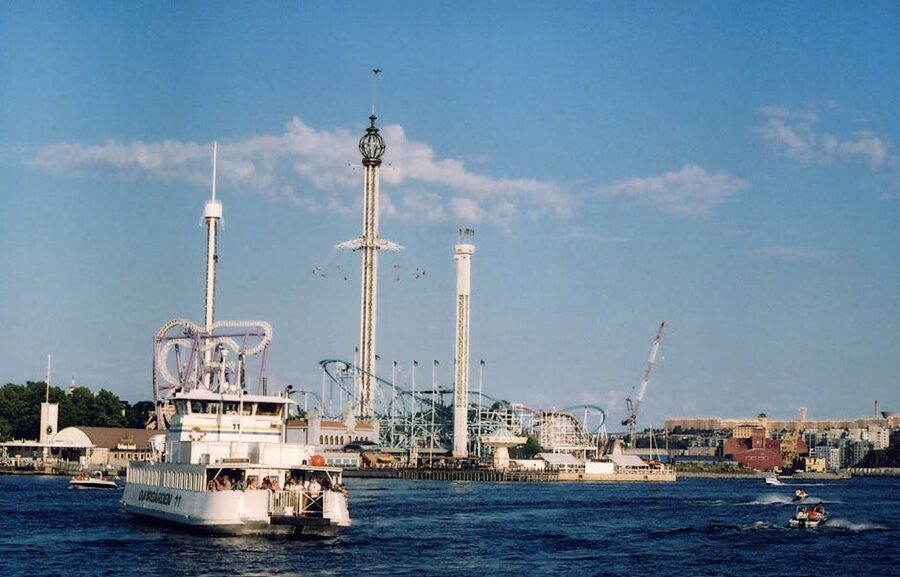
The Djurgården ferry from Slussen is the option I’d take if I was already on Södermalm. It runs every 15-20 minutes in summer, drops you at the Allmänna Gränd jetty, and from there it’s a 10-minute walk past Gröna Lund and the ABBA Museum to the Viking Museum.
When to go
Two things drive timing: weather and Djurgården crowds. Late May through August is peak; the museum gets busy, the ride queue can hit 25 minutes mid-afternoon, and Djurgården itself is heaving with cruise-ship day trips. If you’re going in summer, aim for opening (10am) on a weekday.
September through October is my favourite. The Djurgården trees turn, the ride queue is almost nothing, and the Viking-age aesthetic somehow lands harder when it’s grey and cool outside. The museum is also markedly quieter, which matters because the upper floor’s storytelling depends on you being able to hear the audio panels without other groups overlapping you.
Winter (December-February) the museum is open with reduced hours, usually 10am to 4pm. The ride still runs. If you’re in Stockholm for a Christmas market trip or to chase the northern lights up in Kiruna a couple of days later, this museum is one of the warm-and-dry options that holds up against the weather.

How long to budget
An efficient visit is 90 minutes. Ride, then upstairs, then out. A thorough visit, where you watch most of the video panels and read the timeline panels properly, runs to about two and a half hours. If you stop at the Glöd cafe for fika, add another 30 minutes.


I wouldn’t combine this with the Vasa Museum on the same morning unless you’ve got the full day on Djurgården booked out. The Vasa is a heavy, attention-demanding museum on its own; following it with another Viking-era exhibition burns most people out. Better order: Vasa in the morning, lunch on Djurgården, Vikingaliv in the afternoon. You’ll get more out of both.
Accessibility and practical bits
The museum is fully step-free. Lift access to the upper exhibition floor, level access to the ride loading platform. Wheelchairs are loaded into adapted carts on the ride; the staff handle this routinely and do not need advance notice for groups under 4. The Glöd cafe is also step-free, with one accessible toilet on the ground floor.
Lockers are on the entrance level, 10 SEK coin-return (you get the coin back). The lockers fit a daypack but not a full carry-on. If you’ve got bigger luggage, the Vasa Museum next door has a paid bag check that holds up to suitcase size, useful if you’re killing time before a train.
Wifi is free in the cafe, weaker in the exhibition. The audio panels work without phone data, the headphones for the ride are loaned at the platform. Photography is allowed throughout, no flash on the ride.
The history bit, in plain English
The Viking Age in Sweden runs roughly 750 to 1100 AD. Three things define it. First, the Swedes (technically the Svear and the Götar tribes) were the eastward-facing branch of the Norse, sailing down rivers into what’s now Russia and on toward Constantinople and Baghdad. The word “Russia” likely comes from “Rus”, the Slavic name for the Norse traders who came down those rivers.


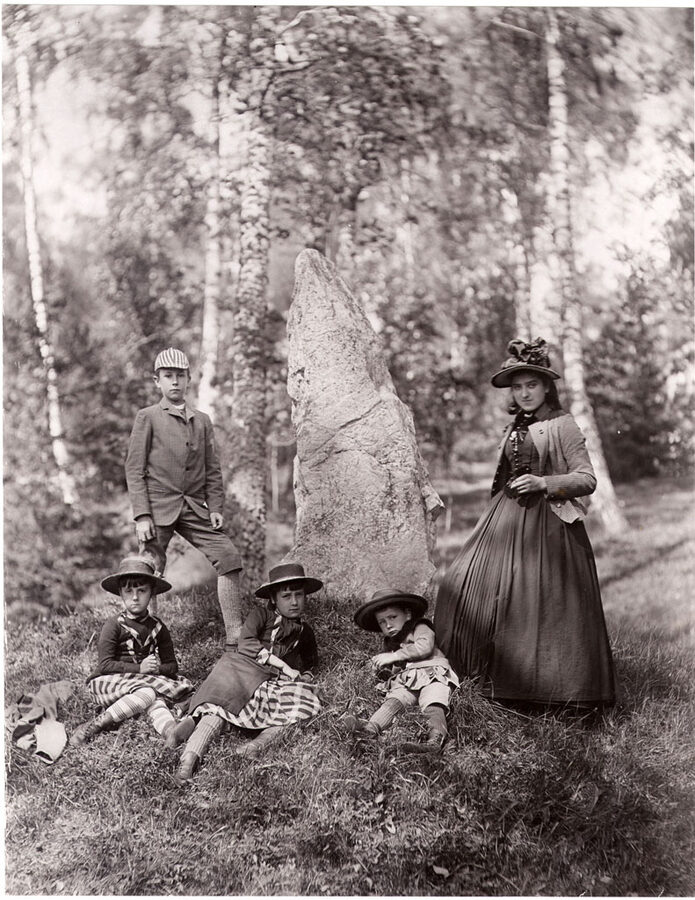
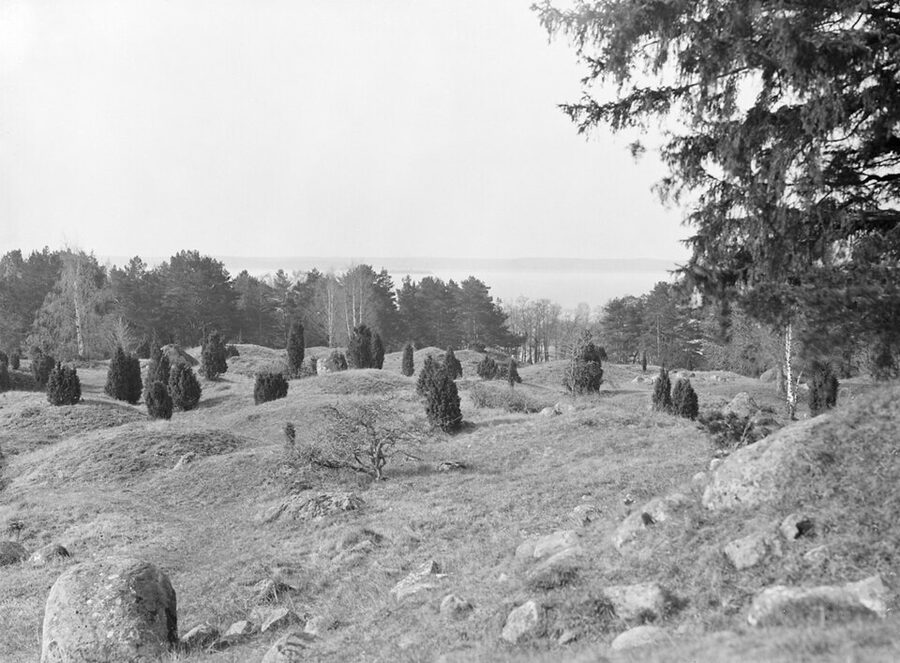
Second, this was a literate culture, not a barbarian one. Runestones (3,000+ of which survive in Sweden, more than anywhere else) were carved on commission, paid for, signed by named carvers. Birka, the trading town on Björkö in lake Mälaren just west of Stockholm, was a hub of cosmopolitan exchange where you could buy silk from China and amber from the Baltic in the same market.
Third, what ended the Viking Age wasn’t conquest, it was Christianity and centralised kingship. Once the Norse were Christianised (a process that took most of the 11th century in Sweden, lagging Denmark and Norway), the raiding economy stopped making cultural sense. The longships were repurposed; the warband culture dissolved into feudal retainer culture.
The museum doesn’t lecture you on any of this directly. It’s there in the timeline and the video panels, but the experience is built around feeling rather than instruction. The history bit comes alive once you’ve sat through Ragnfrid’s Saga and the abstract dates suddenly attach to people you can picture.
The Glöd cafe is worth a stop
Inside the museum, on the same floor as the entrance, with windows out to the boat-lined quay. Fika menu is the standard Swedish one (kanelbulle, kardemummabulle, chokladboll, coffee strong enough that one cup is enough), but the kardemummabulle here is genuinely good, not the airport-pastry kind. Around 50-55 SEK for a bun and a coffee; less than most central Stockholm cafes.

For lunch they do open sandwiches and a daily soup, more substantial than the cafes at most museums. Around 130-160 SEK per dish. The kitchen leans Nordic-seasonal: pickled herring, smoked salmon on rye, root vegetable soups in autumn, simpler salad bowls in summer. You don’t need a museum ticket to use the cafe, you can walk in off the street, which is useful to know if you’re meeting someone non-museum on Djurgården.



Other Stockholm tickets worth pairing this with
If the Viking Museum is one stop on a Djurgården day, the natural pairings are Vasa Museum tickets (the 17th-century warship next door, the most-visited museum in Sweden) and Skansen open-air museum entry (a 15-minute walk south, with old Swedish farmsteads and a Nordic zoo). For a Stockholm-history rather than Viking-history afternoon, the Nobel Prize Museum in Gamla Stan and a City Hall guided tour work well together. If you want to extend the Viking thread out of Stockholm, the Sigtuna and Uppsala day trip visits the actual town the Vikingaliv reconstruction skeleton came from, the burial mounds at Old Uppsala, and runestones in the woods. If your Sweden trip continues south to Malmö, the Disgusting Food Museum sits at the same quirky-museum end of the country’s catalogue. Less serious than Vikingaliv, more memorable. And if you want to book a bigger Sweden countryside day, the moose safari from Stockholm to Tiveden is the wild-Sweden flipside to a museum afternoon.
This article includes affiliate links. If you book through them, we earn a small commission at no extra cost to you. We only recommend tours we’ve vetted, and the recommendations don’t change based on commission rates.