
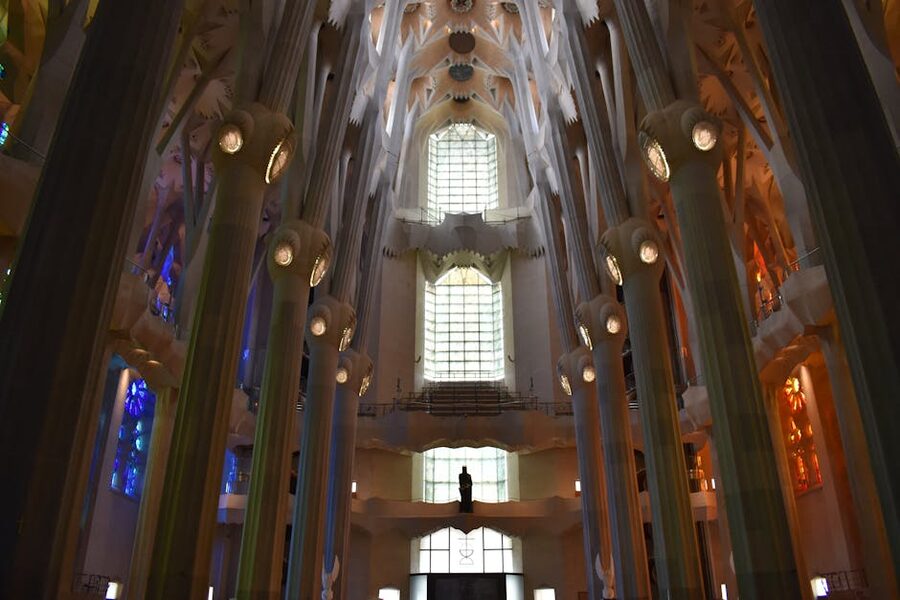
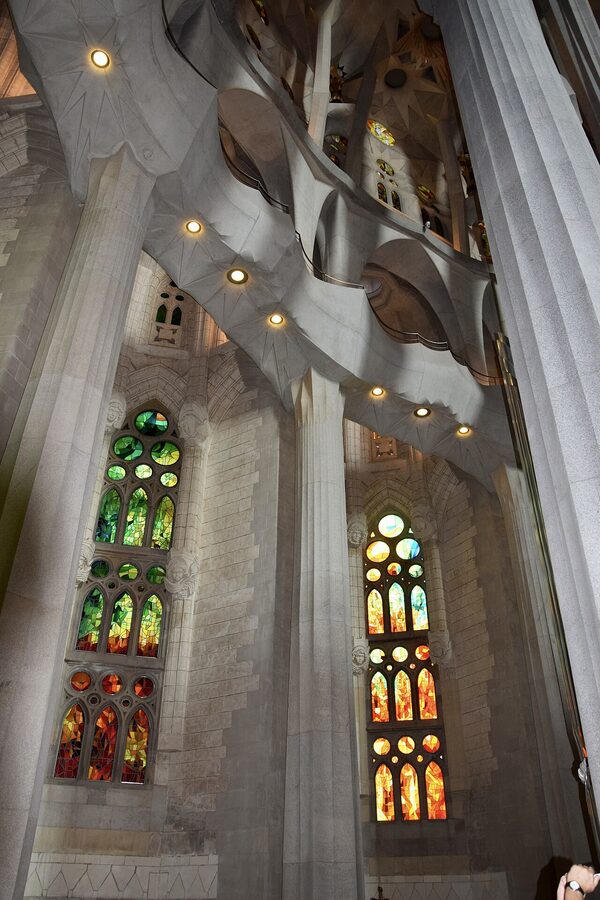
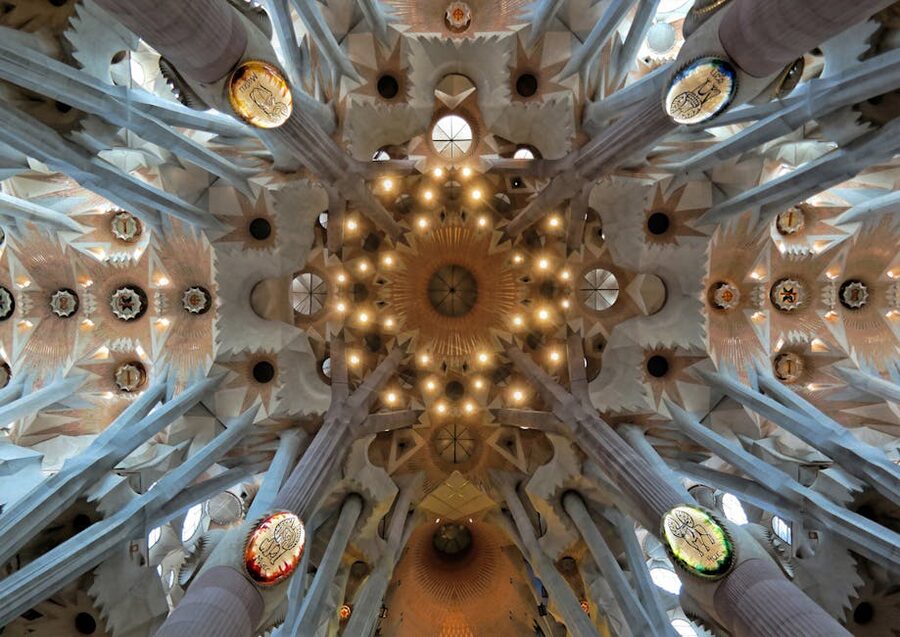
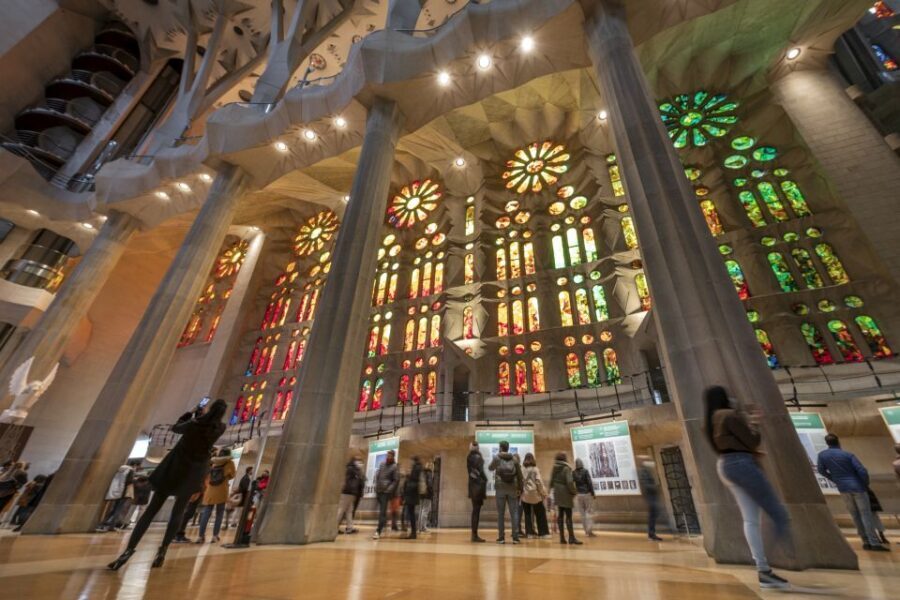
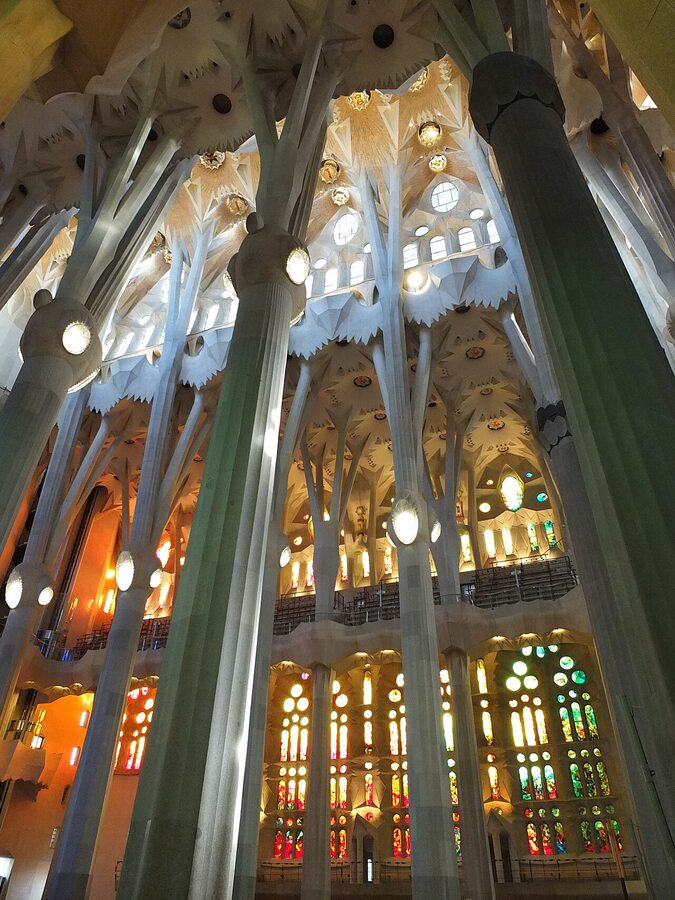
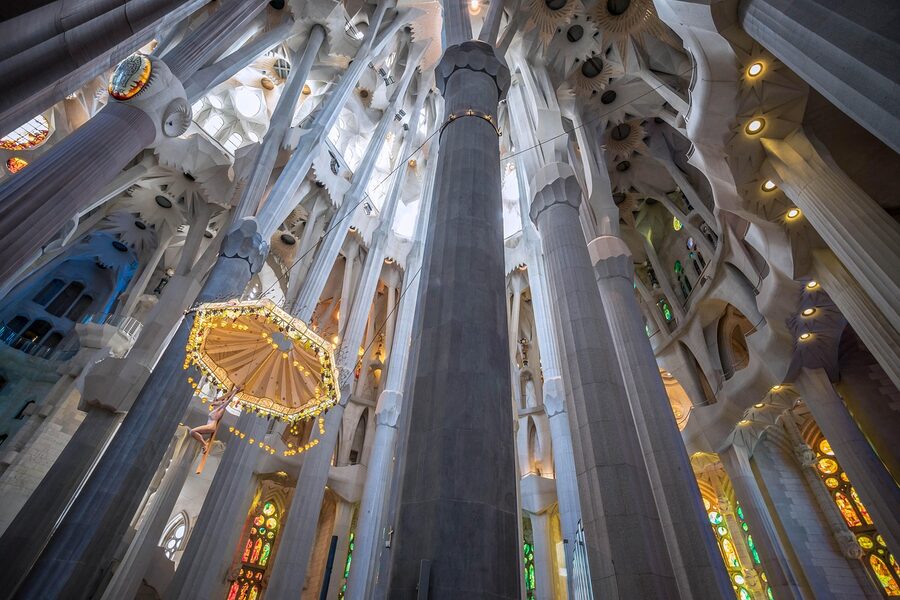
It happens about ten minutes after you walk in. You stop fiddling with the audioguide, you stop trying to take a photo of the ceiling, and you just stand there in the middle of the nave with your head tipped back. The columns split into branches like trees. The stained glass on the east side is throwing wide bands of green and blue across the stone floor; the west side is doing the same in orange and red. That’s the moment Sagrada Familia stops being a famous building you came to see and starts being something else entirely.
Below: how to get the right ticket, when to actually go, and the small decisions that turn a Sagrada visit from a queue-and-tick-a-box into the moment everyone tells you about for years afterwards.

Best with a guide: Sagrada Familia Skip-the-Line Entry & Tour, $67. 90 minutes with a real guide. The audioguide is fine, a guide is better.
If you want to climb a tower: Fast-Track Sagrada Familia and Towers Guided Tour, $85. Includes the Nativity tower lift and guided interior. Tower slots sell out first.
- How tickets actually work
- Walk-up vs booking ahead
- The three tours that actually make sense
- 1. Sagrada Familia Entry Ticket with Audio Guide:
- 2. Sagrada Familia Skip-the-Line Entry & Tour:
- 3. Fast-Track Sagrada Familia and Towers Guided Tour:
- What time of day to actually go
- What to actually look at, and where to slow down
- Getting to the basilica
- Why this building looks like nothing else
- The five-minute museum detour you shouldn’t skip
- What it costs and what’s worth paying for
- How long you actually need inside
- What to wear and bring
- What to do straight after
- Frequently asked, briefly
- What to pair with the Sagrada day
How tickets actually work
Sagrada Familia tickets are timed entries, not all-day passes. You pick a 15-minute slot at booking, you turn up within that window, and you go through security on the side of the building closest to your entrance (the door swaps depending on which facade is currently being used; staff direct you).
There are three ticket levels, and the price gap between them matters less than the gap between buying the right one and buying the wrong one.
Basic entry with audioguide, around €26 to €32 depending on season and source. This is the one most people end up wanting. You get the full basilica, the museum, the crypt, and a multilingual audioguide on a handset. About 90 minutes inside is normal at this level.
Entry with guided tour, around €45 to €50. Same basilica, same museum, but with a live guide for 60 to 75 minutes who walks you through the architecture, the symbolism, and the construction story. After the guided portion you’re free to stay as long as you want until closing.
Entry with tower access, around €36 to €40 for the basic + tower combo, or €50 plus for the guided + tower combo. You pick one of two towers, Nativity or Passion. You get a separate timed slot for the tower (usually 15 to 30 minutes after your basilica slot). A small lift takes you up; you walk down.
A note on the towers. The lift fits about six people at a time, the views are good but not life-changing (Barcelona is fairly flat, you mainly see Eixample’s grid below you), and the descent is via narrow spiral staircases inside the spire. If you have any issue with stairs, tight spaces, or vertigo, skip the towers and put the money toward the guided tour instead. The interior is the real draw, not the view.
Walk-up vs booking ahead
Don’t try to walk up. People still arrive at the door expecting to buy a ticket and a third of the year they get turned away on the spot. In high season (April through October, and especially July and August) the entire basilica sells out a week or two ahead. In low season (mid-November to February, excluding Christmas and the New Year) you might get a same-day slot online, but I wouldn’t bet a holiday on it.
Book at least four to seven days ahead in shoulder season. Book two to three weeks ahead in summer. If you want a specific time slot (golden hour, first slot of the day, a tower add-on) book even further out. The official Sagrada Familia website is the cheapest source by a few euros, but it sells out first because it has the smallest allocation. GetYourGuide and Viator hold their own ticket pools that often have slots when the official site says sold out, and the price difference is usually three to five euros.
If you’re in Barcelona for a few days and you find your ideal time is sold out everywhere, try refreshing booking platforms early in the morning local time. Cancellations release back into inventory throughout the day, and the dawn batch is the largest. I’ve grabbed a sold-out summer Saturday slot at 7am the morning of, twice.
The three tours that actually make sense
Three options cover almost everyone’s situation. Picking between them is mostly a question of how much context you want and whether you care about going up a tower.
1. Sagrada Familia Entry Ticket with Audio Guide: $39
This is the default ticket and the one most people should book. It’s the cheapest legitimate skip-the-line option, the audioguide is genuinely useful (you can pause and dwell on whatever you want), and you save fifteen euros over the guided versions for almost the same experience. Our full review covers exactly which audioguide stops are worth slowing down for. Skip the towers add-on unless climbing matters to you specifically.
2. Sagrada Familia Skip-the-Line Entry & Tour: $67
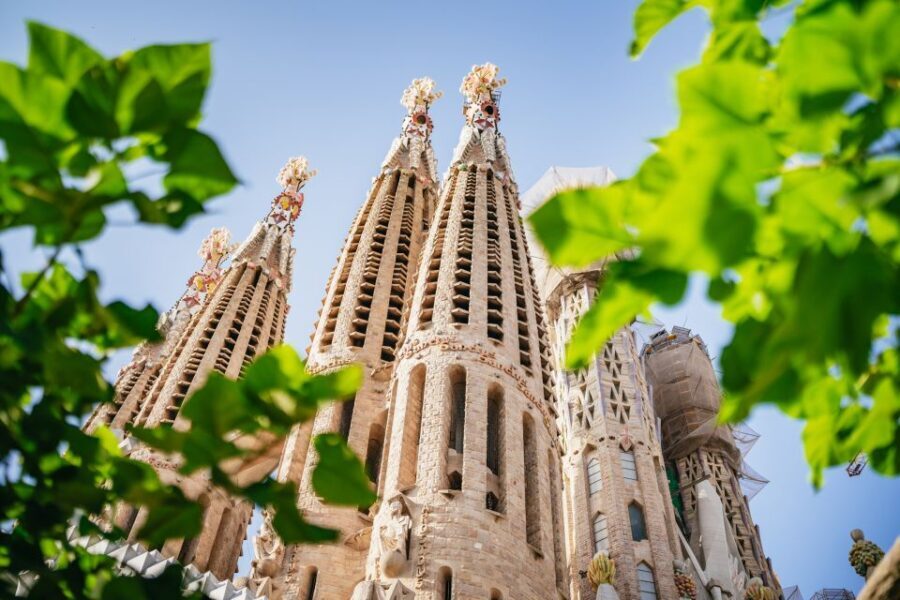
If it’s your first time and you actually want to understand what you’re looking at, the guided tour is worth the extra €15 to €20. A good guide tells you which sculptures Gaudí designed himself and which were finished from his sketches a century later, why the columns lean inward, what the four sets of bell towers will sound like when they’re finally hung. Our full review goes into how the guide quality varies by language and time of day.
3. Fast-Track Sagrada Familia and Towers Guided Tour: $85
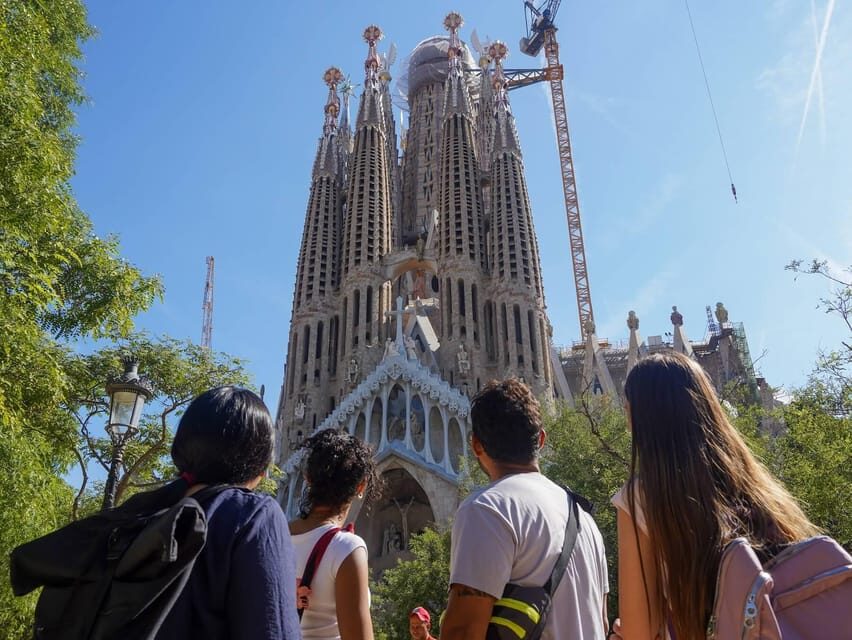
This bundles everything: skip-the-line, the live guide, and a tower slot. Pick this if you specifically want to go up, you have one shot at Sagrada, and you want zero ticket admin once you’re inside. Our full review compares Nativity and Passion tower access and which one to pick. Skip if stairs aren’t your friend, the descent is unavoidable.
What time of day to actually go
The colour of the light inside changes the building. So do the crowds. Here’s what each window does in practice.
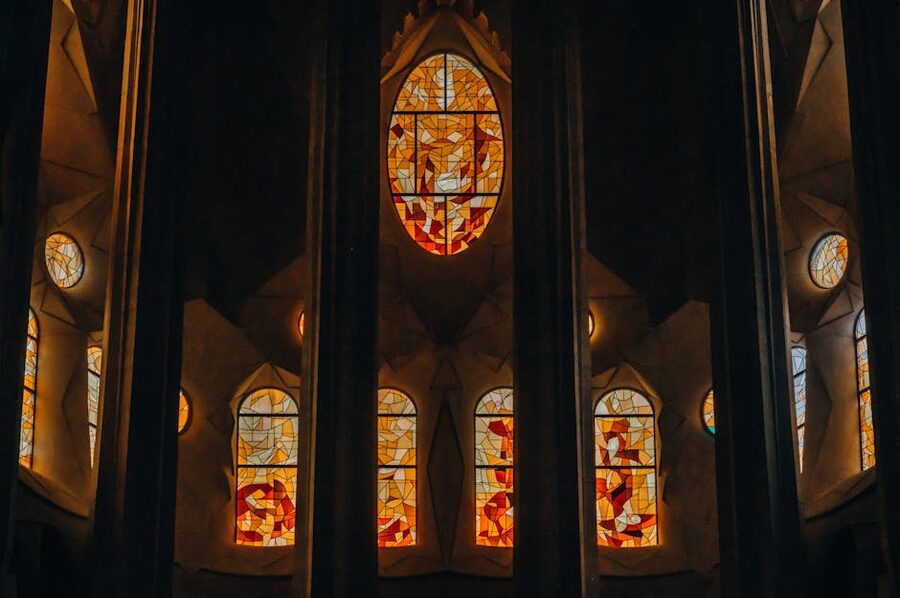
9am, the very first slot. Quietest light and quietest crowds. The east-facing stained glass (greens, blues) is starting to throw colour but hasn’t peaked yet. Best slot if you want to take photos without people in them, worst slot if you want the full colour-saturation effect.
10am to 11am. Sweet spot for the east-side colour. Crowds are picking up but tolerable. The most-booked slot, so book first.
Midday to 2pm. The sun is overhead, the windows are working but the light is more directly downward, and the basilica is at its busiest. Skippable if you have a choice.
3pm to 5pm. The west-side glass (oranges, reds, yellows) is now lit up and the warmth on the columns is spectacular. Crowds are starting to thin in shoulder season. My pick if you can only go once.
Last slot of the day, around 6pm to 7:30pm depending on season. Smaller crowds, but you’re racing closing time and the light is dropping fast. Tower visits aren’t great this late, the wind picks up.
In December and January the basilica closes at 6pm and the late-afternoon light is brief but very low and very orange, which is its own thing. If you’re visiting in winter, aim for around 3pm.
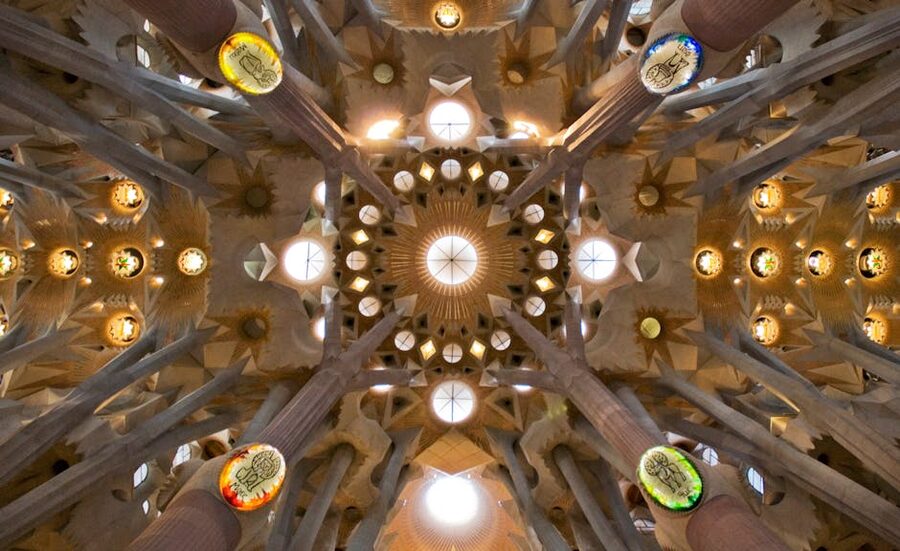
What to actually look at, and where to slow down
Most people walk the basilica anticlockwise, starting near the Passion facade entrance and finishing at the Nativity side. That works. But you’ll get more out of it if you know where to stop.
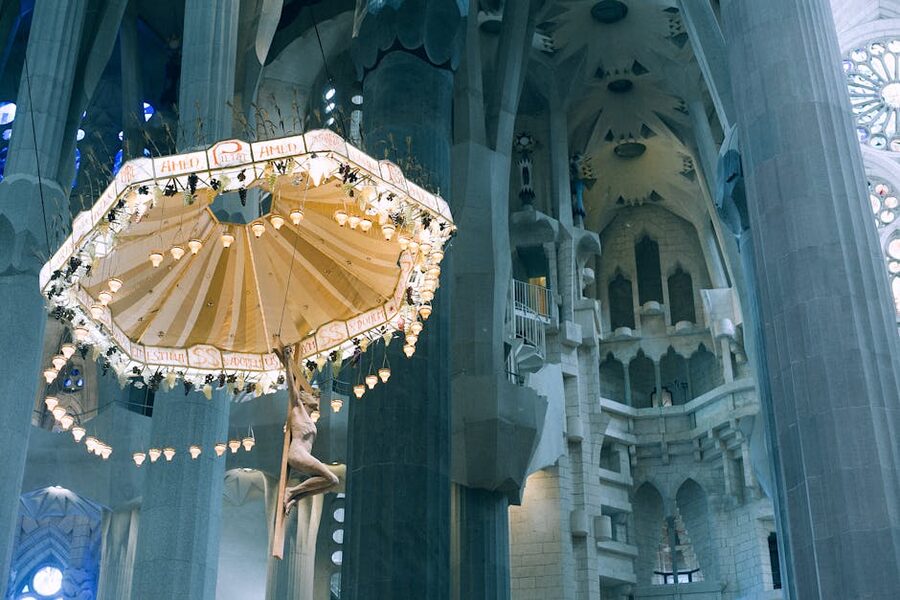
The central crossing, where the long nave and the transept meet. Stand on the marker on the floor and look straight up. This is the visual centre of the building. The four pillars here are the largest, made from porphyry stone, and they hold up the central vault. Five minutes minimum.
The apse, behind the altar. This is where the catenary curves are most visible (the inverted-arch geometry Gaudí worked out with hanging models in his workshop). The acoustics here are different from the nave; if a choir is rehearsing or the organ is playing, this is the spot.
The east stained glass, the side facing the sea and the morning sun. Greens and blues, designed to feel cool and calm. You’re meant to walk along the south aisle slowly here in the morning.
The west stained glass, the side facing inland. Reds, oranges, yellows, designed to feel warm and active. North aisle, late afternoon. The colour saturation across the columns is one of the things photographs don’t capture.

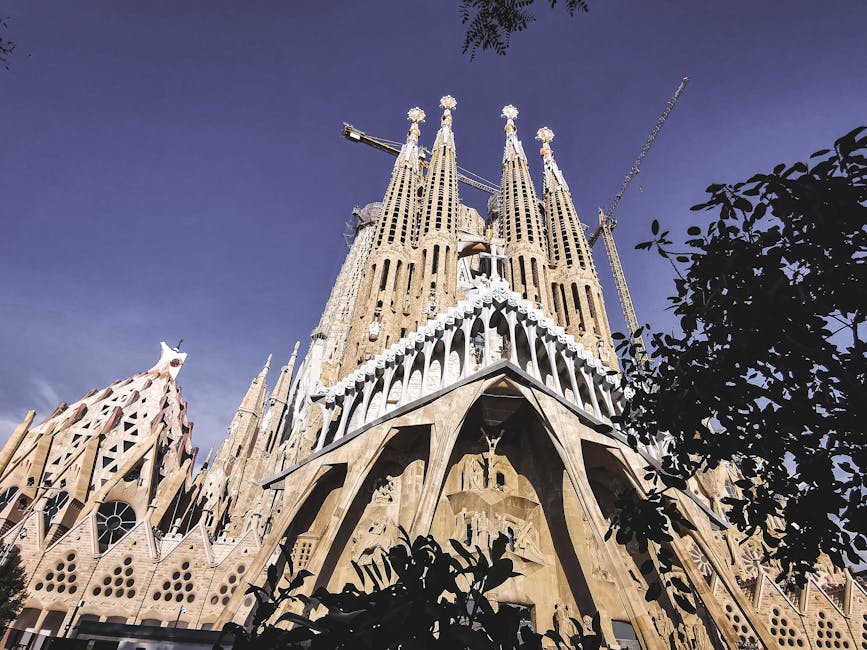
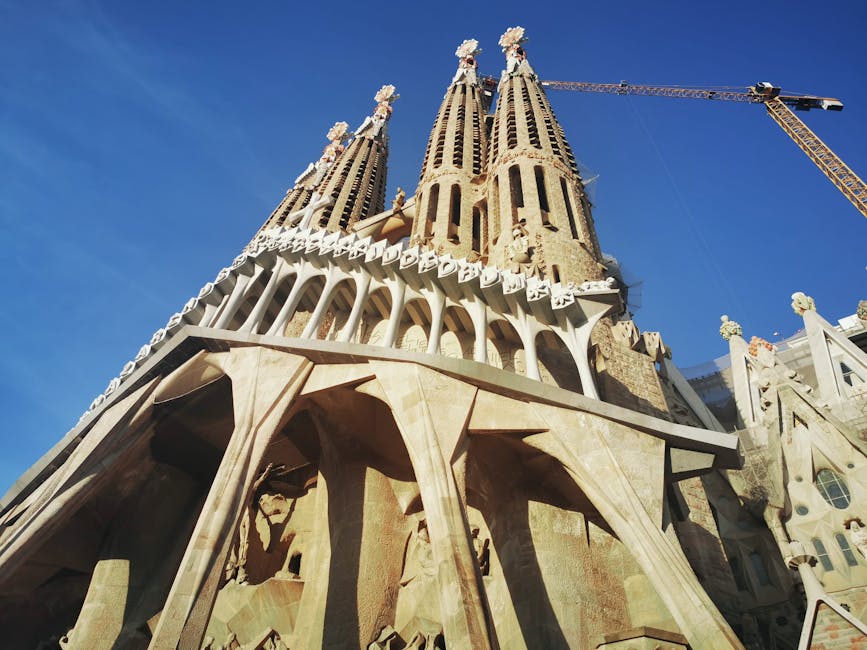
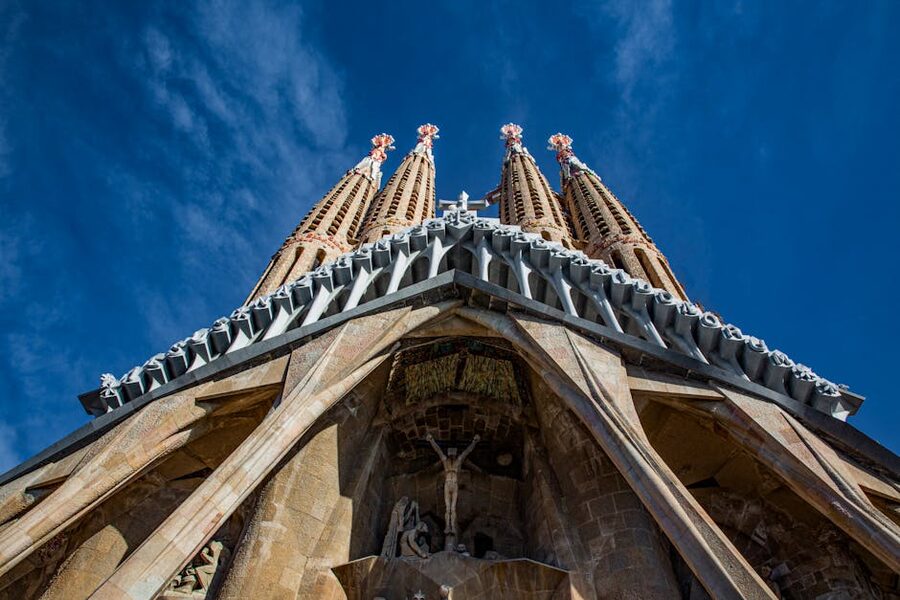
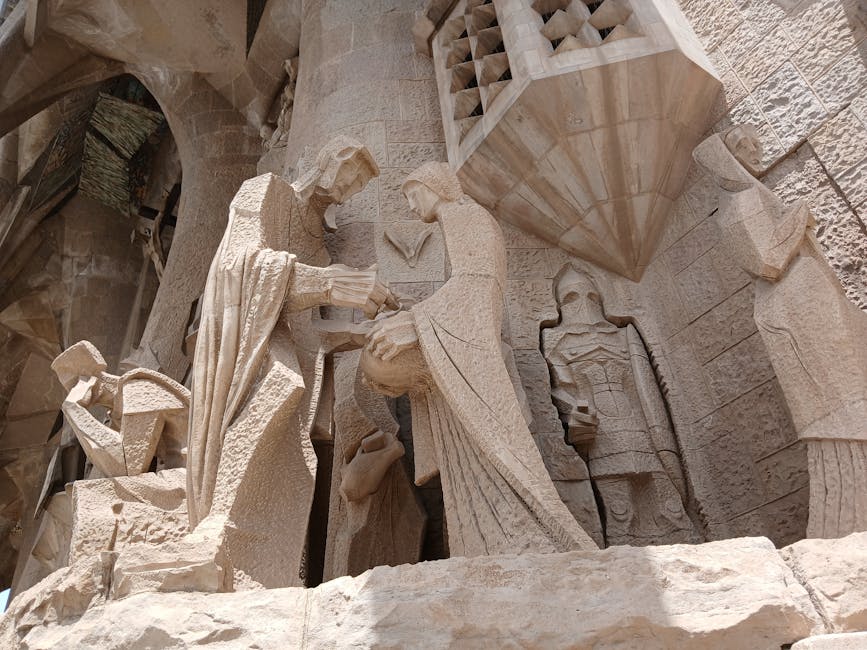
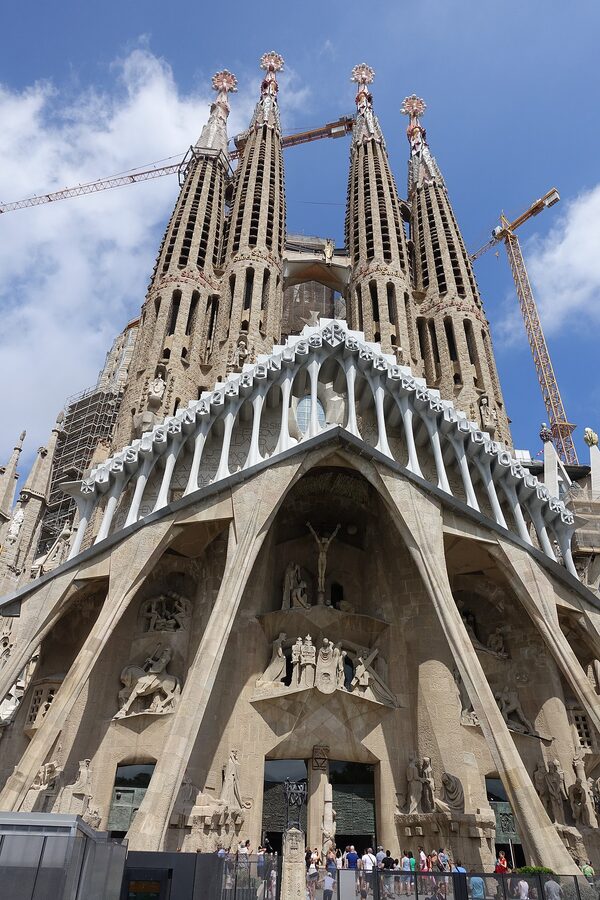
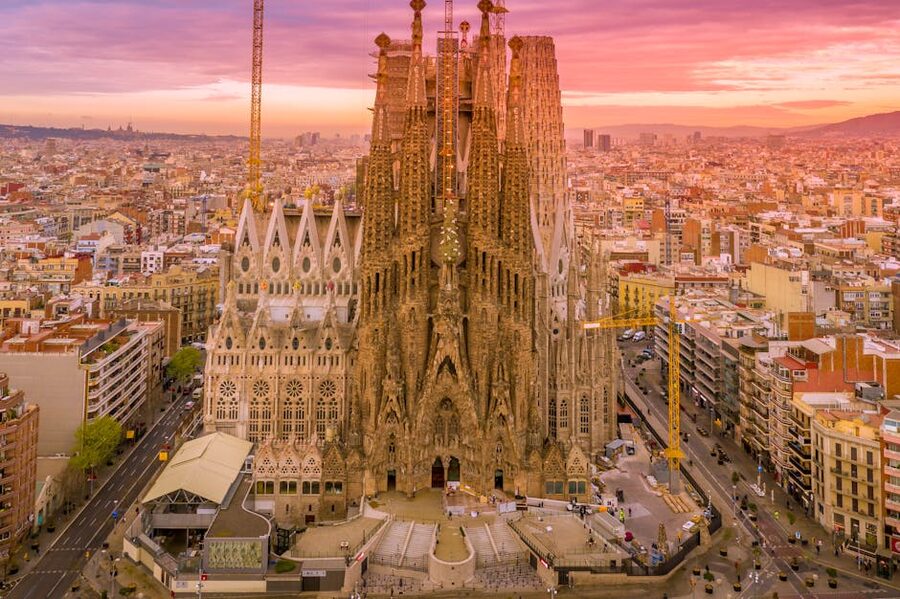
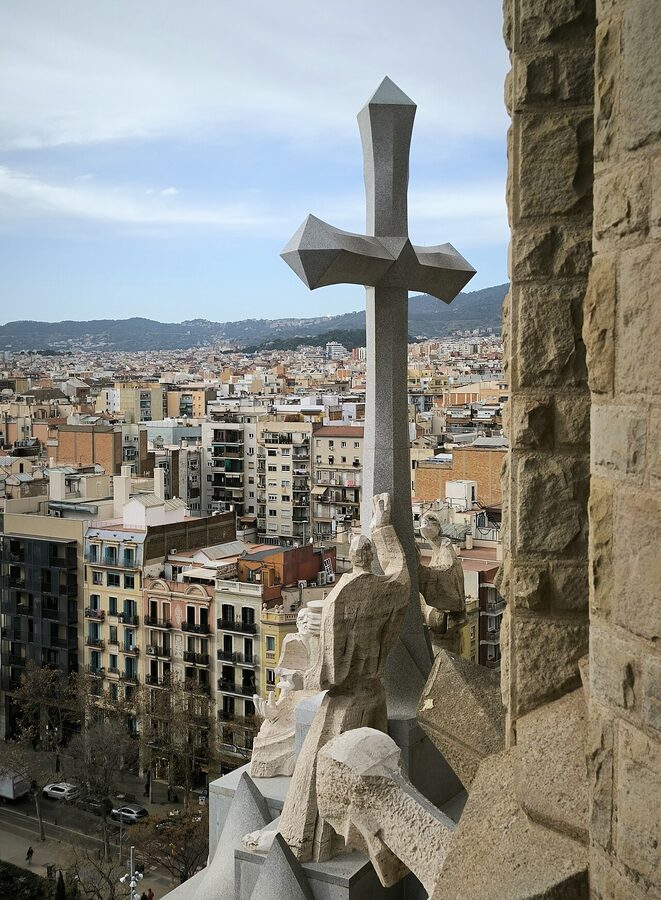
The Passion facade exterior, on the way out. The angular, modern figures here are by Josep Maria Subirachs, finished decades after Gaudí died. They’re controversial (purists hate the abrasiveness of the style), but the magic square on the facade adds to thirty-three in every direction. Spend two minutes finding it.
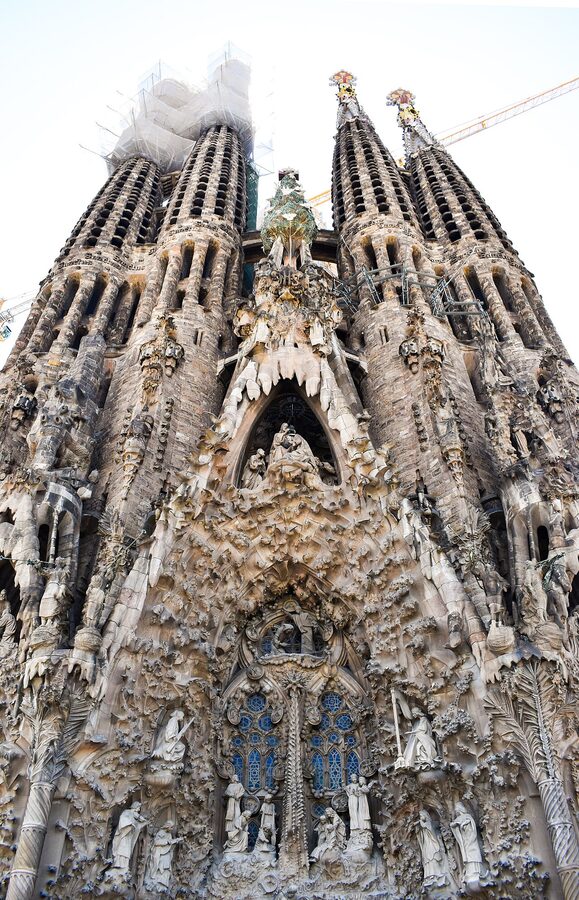
The Nativity facade exterior, the older side, finished before Gaudí died in 1926. Densely packed with carved animals, vegetation, and biblical figures. This is the one Gaudí actually saw built. If you only photograph one facade from outside, photograph this one.
The downstairs museum, easy to skip and a mistake to skip. It holds Gaudí’s original hanging chain models, the ones he used to work out structural loads with sandbags and string. There’s a mirror under the model that flips it upside down, which is what shows you the church taking shape from the geometry. Five quiet minutes here will make the rest of the visit click.
Getting to the basilica
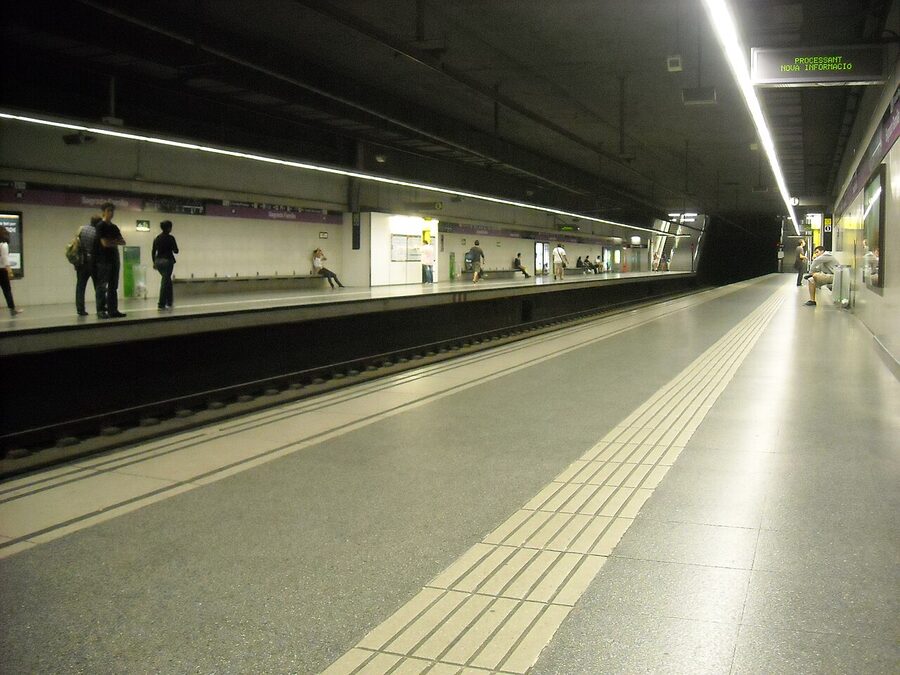
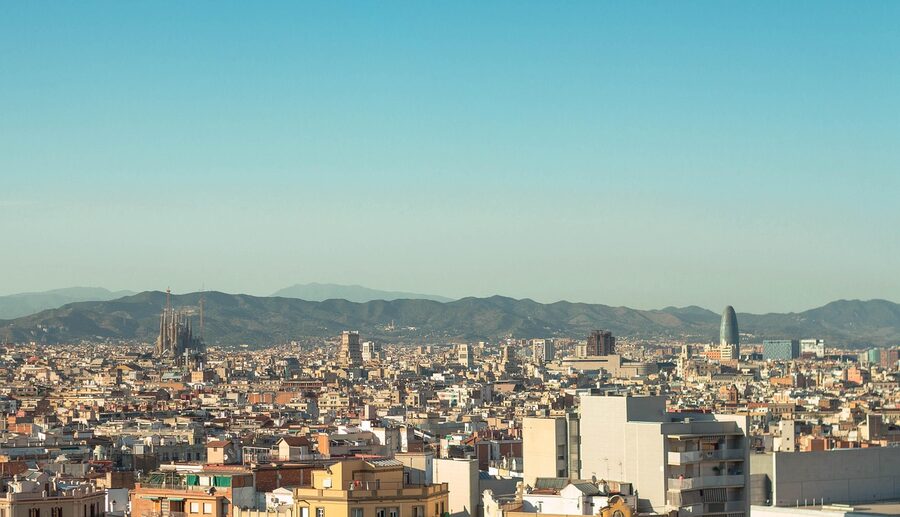
The metro is the easy answer. L2 (purple) and L5 (blue) both stop at Sagrada Familia station, which puts you out almost directly across the road from the basilica. The exit signs inside the station are signed for the basilica, you can’t really miss it. From Plaça Catalunya in the city centre, that’s about 12 to 15 minutes door to door.
.jpg)
If you’re staying in the Gothic Quarter, walking is doable but takes the best part of half an hour through Eixample’s grid. It’s a pleasant walk, but in July and August the heat radiating off the pavement makes the metro the smarter call. A taxi from Barri Gòtic runs about €10 to €15.
The Hop-On Hop-Off bus stops at Sagrada Familia on both its red (north) and blue (south) routes, which is fine but slow. If you’ve already got a multi-day pass, use it. If you don’t, buy a metro ticket and save the time. The hop-on hop-off bus guide has more on whether it’s worth the investment.
A couple of practical notes on the area. The metro station has working lifts and is wheelchair-accessible. The basilica itself is fully accessible at ground level (the towers are not). The closest taxi rank is on Carrer de Mallorca on the Nativity side. There are free public toilets inside the basilica next to the museum.
Why this building looks like nothing else
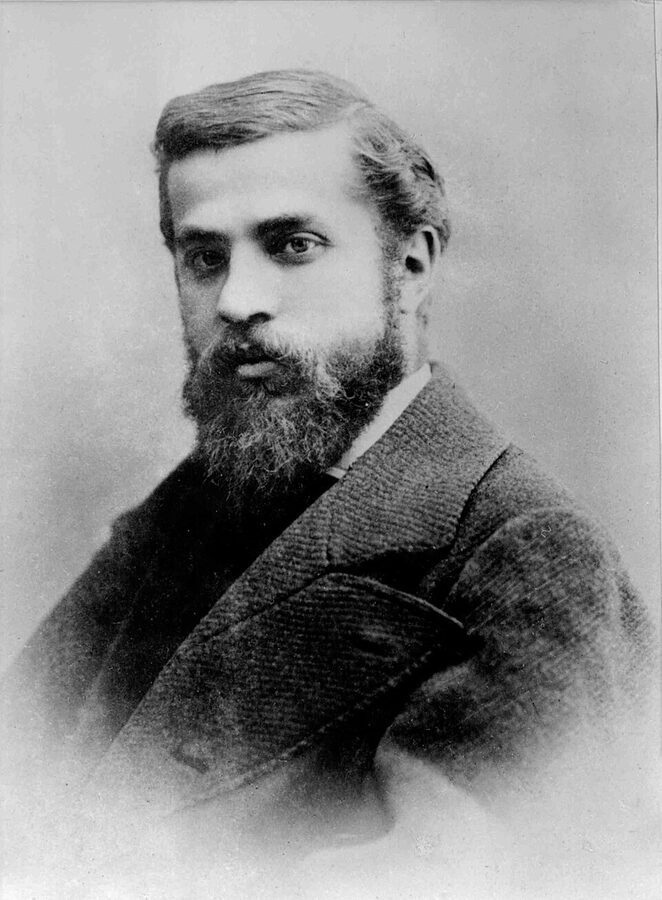
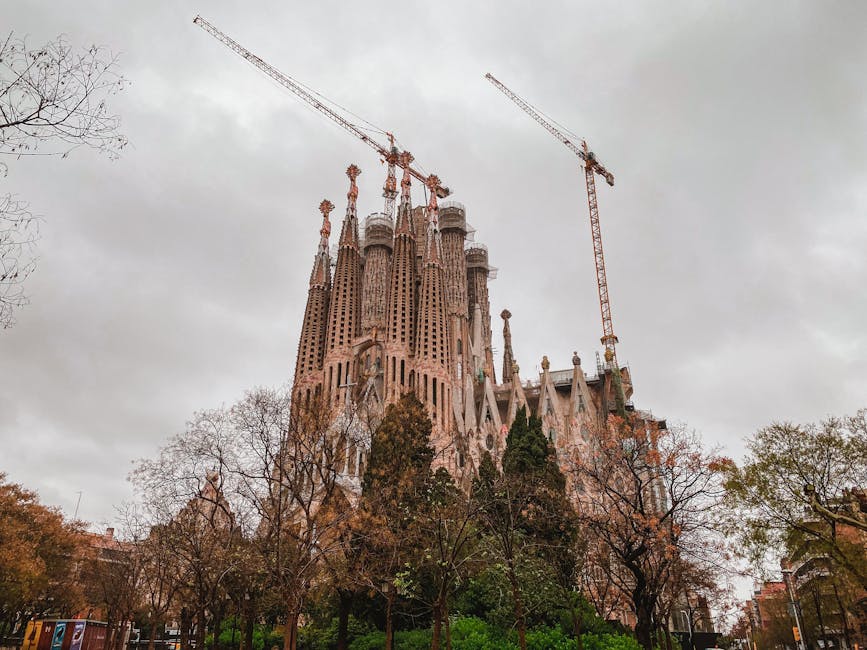
Antoni Gaudí took over the project in 1883, a year after construction started, when he was 31. He worked on it until he died in a tram accident in 1926, and for the last twelve years of his life it was the only project he worked on. He lived on the construction site in his later years, in a small studio that’s now part of the museum.
His method was almost the opposite of how big buildings get designed today. He didn’t draw plans, he built models. The most famous one was an inverted hanging structure of strings and small sandbags that he hung upside down from the ceiling of his workshop. Gravity pulled the strings into perfect catenary curves; flip the model in a mirror and you have the load-bearing geometry of the church right side up. The downstairs museum has a recreation of this model and the mirror under it. Stand under it for a minute, watch the curves invert, and the whole building suddenly makes a different kind of sense.
When Gaudí died in 1926, only the crypt, the apse walls, and one bell tower of the Nativity facade were finished. The Spanish Civil War in 1936 made things worse: anarchists broke into his workshop and burned most of his original drawings and plaster models. What’s been built since is reconstructed from the surviving fragments, photographs, and the memories of his collaborators. There’s a real argument among architectural historians about whether the modern parts honour Gaudí’s vision or distort it. Stand in the nave for ten minutes and decide for yourself.
The current target completion date is 2026, the centenary of Gaudí’s death. That date is going to slip; the central tower of Jesus Christ (which will be the tallest of the eighteen at 172 metres) and the surrounding structural work won’t be done by then. But the basilica was consecrated by Pope Benedict XVI in 2010, so technically it’s a working church even though it’s still a building site.
A small piece of trivia: the project is funded almost entirely by ticket sales and private donations. No public money. Your €26 entry ticket pays directly for the next column to be cut.
The five-minute museum detour you shouldn’t skip
The basement museum is included with every ticket level and the average visitor blows past it. Don’t. It’s the difference between walking through the basilica and understanding it.
.jpg)
What’s down there: scale models of the basilica at every stage of construction, the original hanging chain model with its mirror, photographs of the building site through the decades, and Gaudí’s own working tools. The captions are bilingual and the lighting is theatrical. Allow twenty minutes if you can; ten minutes will at least cover the hanging model and the central scale model of the finished building. The model of what the eighteen towers will look like when finished is genuinely shocking, the current basilica looks like a small fraction of what’s planned.
What it costs and what’s worth paying for
The basic ticket plus audioguide is the floor. Everything above that is an upgrade. The two upgrades that pay back: the live guide (worth the €15 to €20 jump if it’s your first visit), and the towers if climbing is the kind of thing you’d find satisfying. The two upgrades that don’t pay back: priority skip-the-line over standard skip-the-line (the line-skipping is built into every online ticket; “priority priority” is mostly marketing), and any ticket that bundles Sagrada with Park Güell at a flat rate (these almost always cost more than buying both separately).
If money is genuinely tight: book the cheapest legitimate skip-the-line audioguide ticket, go at first light or mid-afternoon, spend an extra twenty minutes in the downstairs museum, skip the towers. You’ll get 95% of the experience for around €30.
If money isn’t the constraint: book the towers + guided tour combo, go in the late afternoon, sit in a pew on the south side for ten minutes when the colour is at its strongest, and pair it with a Park Güell visit the same day or the next. The Park Güell tickets guide covers how to time the two together so you’re not running between them, and the Barcelona in 1 Day combo tour bundles both with a guide if you want it handed to you.
How long you actually need inside
Plan for 90 minutes minimum, two hours comfortable, two and a half hours if you’re doing the towers. You can blast through in 45 if you really want to, but you’ll regret it because the building rewards slowing down, not skimming. Most guided tours run 60 to 75 minutes for the guided portion and you’re free to stay after; budget 30 to 45 minutes after your guide leaves.
If you’re combining Sagrada with another Gaudí site the same day, mornings work better. Go to Sagrada at 9am, leave around 11:30am, and head to Park Güell or one of the Casa visits for early afternoon. Trying to do Sagrada late afternoon and Park Güell after that is a trap; Park Güell closes earlier than Sagrada in winter and the metro between them takes longer than it looks on the map.
What to wear and bring
It’s a working basilica, so the dress code is enforced. No bare shoulders, no shorts above the knee, no hats inside. Cover-ups are sold at the entrance for a few euros if you turn up unprepared, but you’ll want to spend zero time on that. A scarf or light cardigan in your bag handles it.
Other things worth having: a phone with a charged battery (the audioguide is on a separate device but you’ll want to take photos), a small bottle of water (drinks aren’t sold inside), and headphones if you want to use the audioguide more comfortably than the included single-ear handset. Bag size is restricted, large backpacks won’t fit through security and there’s no cloakroom on site; leave the big bag at the hotel.
Pickpockets work the queue area outside the basilica, especially the security line in summer. Front pockets, not back. The Barcelona Card guide covers transport and discount options across the city if you’re doing multiple Gaudí visits.
What to do straight after
The neighbourhood around Sagrada is residential Eixample, which is quieter and less obvious than the touristy zones near Plaça Catalunya. There’s a pocket park called Plaça de Gaudí directly across from the Nativity facade with a small reflecting pond; the cleanest reflection photo of the basilica is from the corner closest to the metro entrance.
For lunch in the area, walk a couple of blocks south on Avinguda Gaudí toward Hospital de Sant Pau. The strip of restaurants on Avinguda Gaudí itself is mostly tourist-priced; one block off it gets better fast. La Granota and Bodega Monumental are both reliable Catalan options at fair prices for the area. Restaurante Seoul on Carrer de Provença has excellent Korean food if you’ve already done your menu del día allotment for the trip.
Hospital de Sant Pau, ten minutes’ walk up Avinguda Gaudí, is a UNESCO-listed Modernista hospital complex that almost no tourists make it to. Lluís Domènech i Montaner designed it, the same generation as Gaudí. If you’ve been struck by Sagrada’s architecture, Sant Pau is a different angle on the same Catalan Modernista tradition. The Sant Pau tickets guide covers what to book.

For the rest of the Gaudí trail, Casa Batlló and Casa Milà (La Pedrera) are about 25 minutes’ walk away on Passeig de Gràcia. Casa Vicens is in Gràcia, slightly further north. All three are worth a visit, and all three need timed tickets booked ahead. The Casa Batlló guide, Casa Milà guide, and Casa Vicens guide cover each one.
Frequently asked, briefly
Can I just buy at the door? Almost never. Treat walk-up tickets as not a thing.
Are children’s tickets cheaper? Yes. Under 11 is free, 11 to 17 is reduced. Same booking platforms.
Is photography allowed? Yes, no flash, no tripods (full ones, monopods are fine). Be respectful, it’s a working church and Mass is held at certain times.
Is it wheelchair-accessible? The basilica and museum, yes. The towers, no, they involve stairs only on the descent.
Are dogs allowed? Service animals only.
Can I get a refund if my flight gets cancelled? Depends on the platform. GetYourGuide and Viator have generous cancellation policies (often free up to 24 hours before). The official Sagrada Familia site is stricter. If your travel plans are even slightly in flux, book through one of the OTAs.
Is the audioguide good? Yes. About 60 stops, 45 to 60 minutes of audio depending on how much you skip. The narration is clear and the historical detail is solid.
How does Sagrada compare to other Gaudí sites? It’s the headliner; everything else is supporting cast. If you only have time for one Gaudí site, this is the one. Park Güell is the second pick, the Park Güell guide covers timed entry there too.
What to pair with the Sagrada day
Most visitors who come for Sagrada also want to see the rest of the Gaudí stuff. Here’s how the pieces fit together. Sagrada in the morning, Park Güell in the early afternoon, and either Casa Batlló or Casa Milà for the late-afternoon golden-hour visit (Casa Batlló’s facade is the one that glows, Casa Milà’s roof terrace is the one with the chimney sculptures). If you’d rather have someone else handle the logistics and the timed-ticket admin, the Barcelona in 1 Day combo tour bundles Sagrada and Park Güell with a guide and pickup. For evenings, a flamenco show in one of the city’s tablaos rounds out the cultural evening, or the more architecture-focused Gothic Quarter walking tour if you want to swap the music for medieval stonework. The Barcelona Aquarium at Port Vell is the family-friendly option for a half-day with kids in tow. The Barcelona Card covers transport plus a handful of discounted entries if you’re stacking multiple sights, and the Casa Vicens guide covers the lesser-known Gaudí early work in Gràcia.
Affiliate disclosure: some of the booking links above are affiliate links. If you book through them we may earn a commission at no extra cost to you. We only recommend tours we’d take ourselves.