
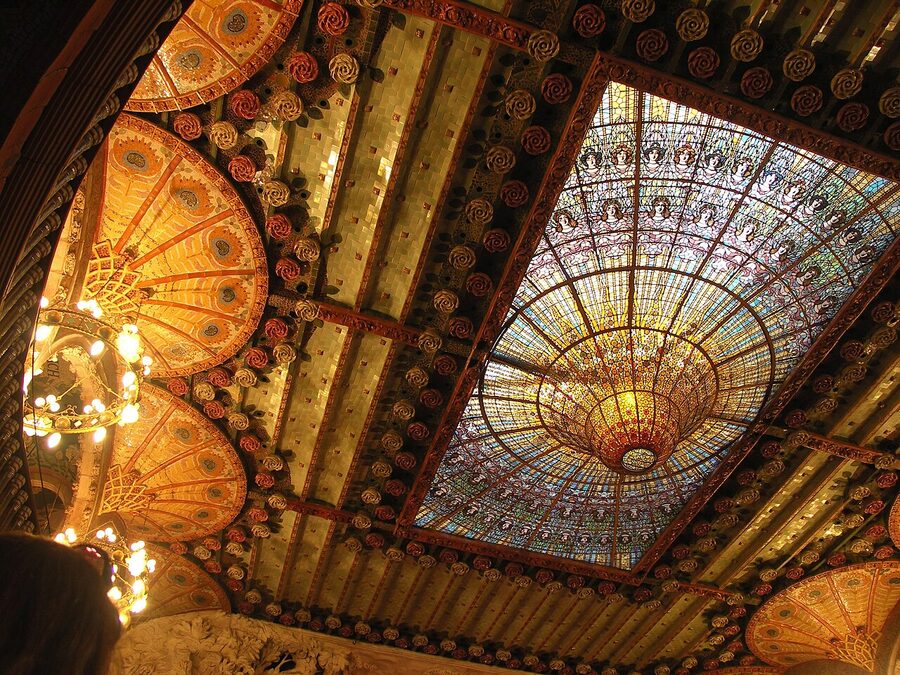
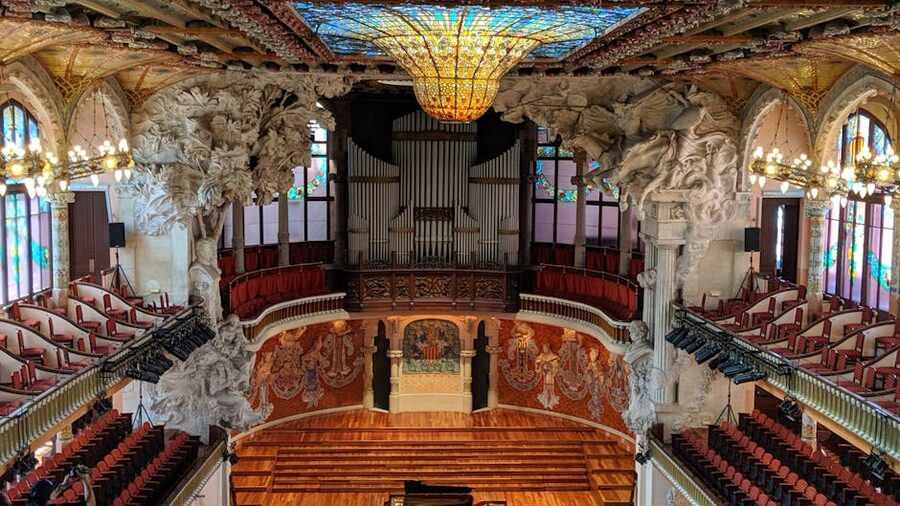
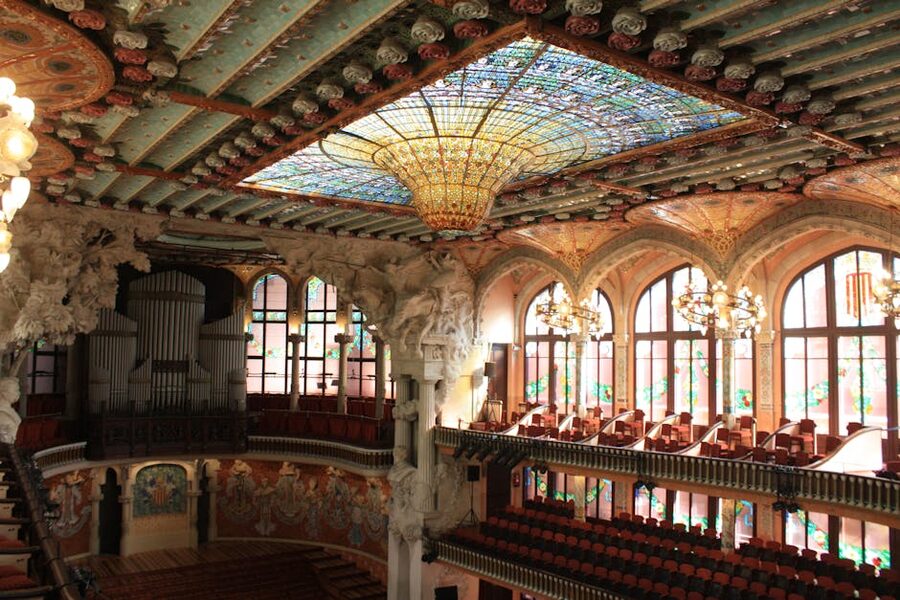
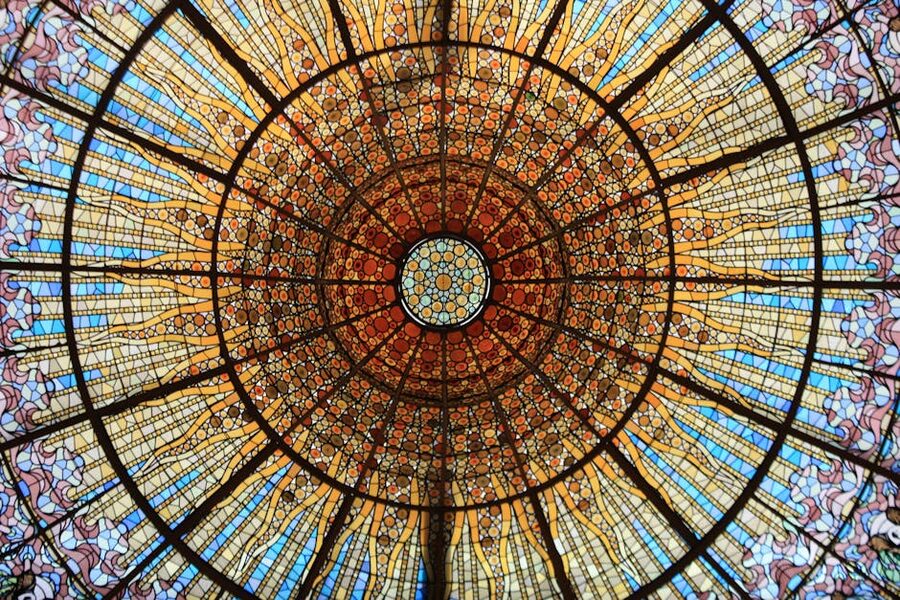
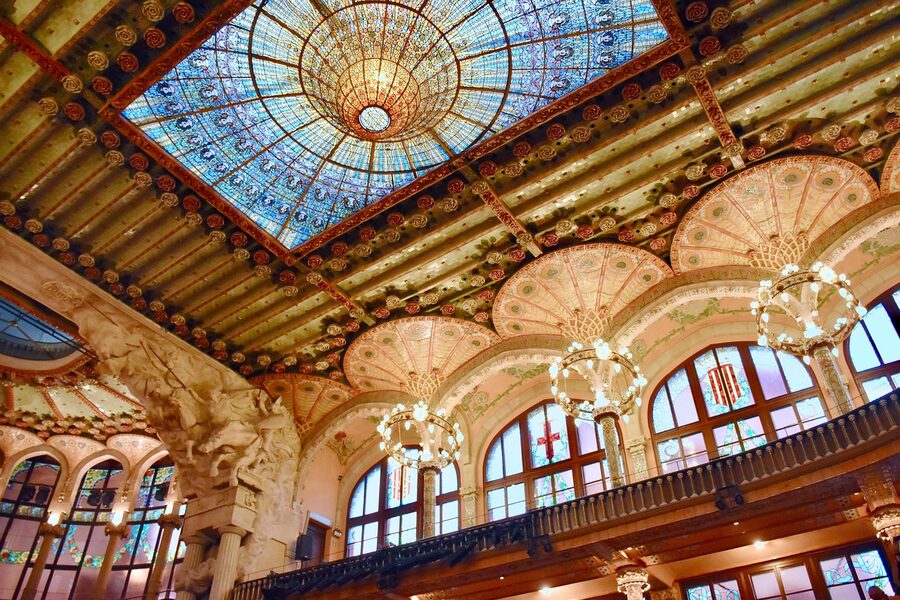
Here is something almost no Barcelona guidebook puts on the front page: the Palau de la Música Catalana is the only major auditorium in Europe lit entirely by daylight. No spotlights, no overhead rigs, no theatrical haze. Just a 26-metre inverted dome of stained glass, ringed by floor-to-ceiling stained-glass walls, with the sun doing the work. Walk in at the right time of morning and the whole concert hall glows.
That single design decision is why people still talk about this building 118 years after it opened. The rest of the article is how to actually see it.
Best experience: Palau de la Música Guided Tour, $28. 50-minute English-language tour with live organ demonstration. The one I’d book.
If you want the actual acoustic payoff: Skip the day visit and book a concert ticket on the official Palau site. A short orchestral or choral programme runs from about €20 and is the way the building was designed to be experienced.
.jpg)
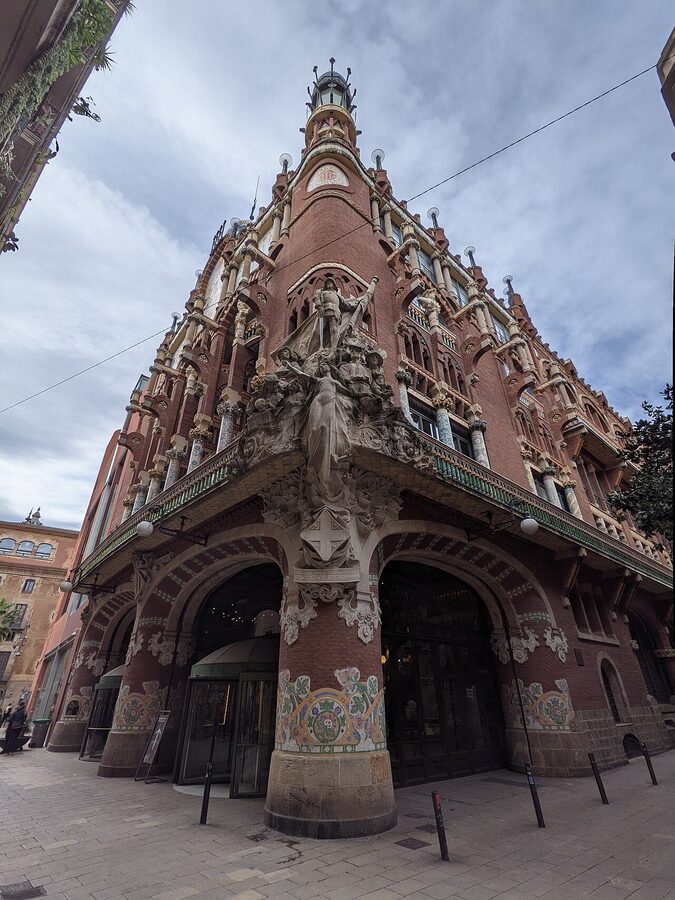
The Palau sits in El Born, on a tiny side street called Carrer Palau de la Música. Address: Palau de la Música 4-6. From the Plaça de Catalunya it’s about a 10-minute walk, from the Picasso Museum about 5. Metro is Urquinaona on the L1 (red) or L4 (yellow). Don’t try to drive there. The streets around it are barely wide enough for a delivery van.

Two ticket types matter. Self-guided entry gets you 45 minutes inside the building with an audio guide. The guided tour adds a real human plus a short organ demonstration, runs hourly in English from 9am to 1pm with an extra slot at 2pm, and lasts 50 minutes. Both end up in the same room. The difference is what you take away.
- How tickets actually work
- Self-guided or English guided: the actual difference
- The two ticket options worth knowing
- 1. Palau de la Música Entry Ticket:
- 2. Palau de la Música Guided Tour:
- What you actually see inside
- Concerts vs visits: the part everyone gets wrong
- The architect angle: why this building exists
- History without the dry stuff
- Practical bits
- What to do nearby
- If you only do one thing
- Other Barcelona Modernista guides
How tickets actually work
The Palau sells three things: the self-guided entry, the English-guided tour, and concert tickets. Pre-book all of them, especially in summer. Walk-up is theoretically possible at the box office (open 9:30am to 3:30pm daily) but the morning slots routinely sell out by mid-day during peak season and you’ll either kill an afternoon or get bumped to a slot that doesn’t suit your day.
Online prices through the official site sit at €18 for self-guided and €24 for guided. Through partners like GetYourGuide the prices come out around $21 and $28 because of currency, fees, and bundle discounts, but the date of entry is the same and you skip a queue. Children under 9 go free on either ticket, which is unusual for a Modernista landmark. Most of the others charge from age 7 or 5.
If you already have the Barcelona Card, you get 25% off the entry ticket. Worth knowing if you’re combining the Palau with several other museums and attractions on the card. The Palau is not on the Articket, the all-six-museums Catalan art pass, because the Articket is contemporary-and-modern art focused.
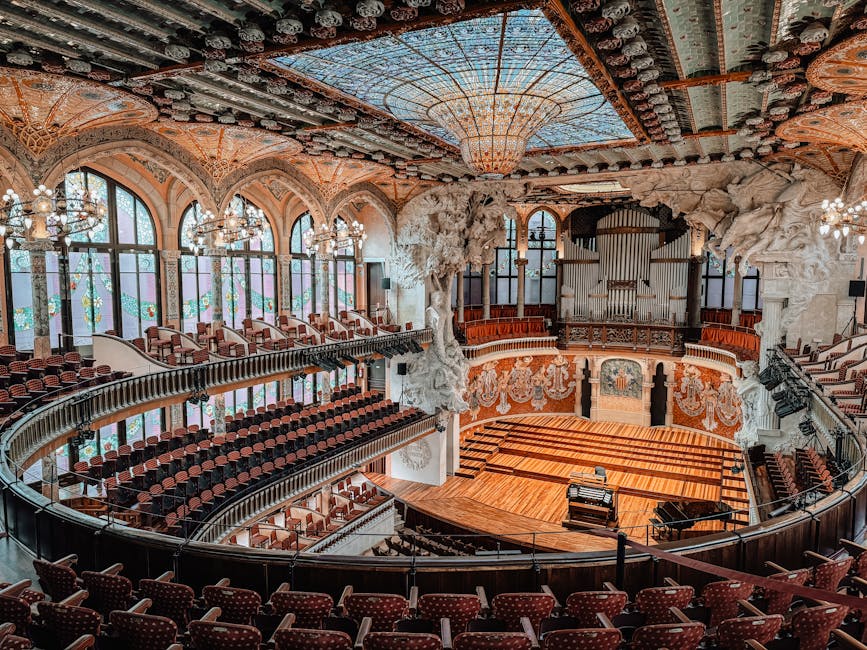
One specific tip on timing. The dome reads brightest from roughly 11am to 1pm on a sunny day, when the light hits the upper stained glass at the right angle to push amber down through the centre. Cloudy day, the colour goes flatter, the gold goes muted. If you only have one window in your trip and the weather is cooperating, take the late-morning slot. If it’s grey, the morning makes less of a difference and you might as well aim for a guided tour time that works with the rest of your day.
Self-guided or English guided: the actual difference
I’d take the guided tour. Here’s why, plainly.
The self-guided ticket is a competent introduction. You watch an opening video about the building’s history and the Orfeó Català, the choral society that commissioned it. You’re then sent up the stairs with an audio guide and 45 minutes to wander. You’ll see the famous concert hall, the Lluís Millet Hall above it (the rehearsal-and-foyer space with stained glass on three walls), the staircase, and the gift shop. Then you leave.
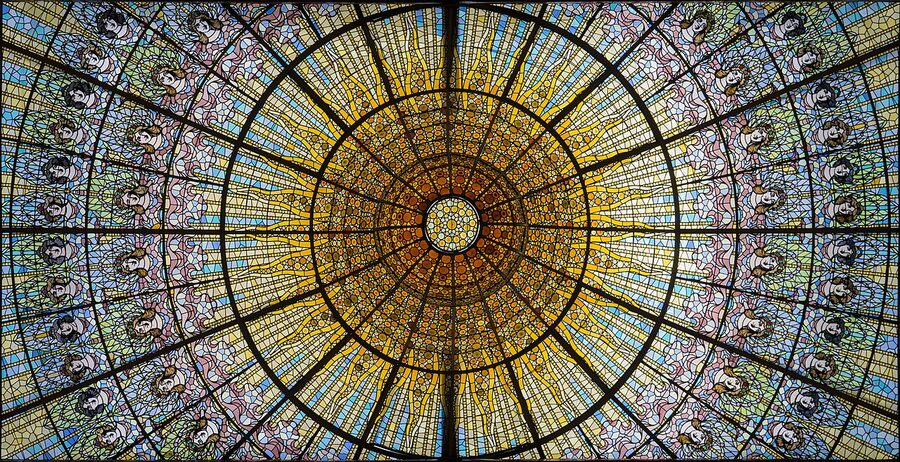

The guided tour adds three things the audio doesn’t. First, a live organ demonstration. The organist plays a short piece, usually two to four minutes, and you finally hear what the room sounds like. The contrast with silent self-guided viewing is huge. Second, access to the small balcony level where the seating reads slightly different and the dome view is from a totally different angle. Third, a guide who can answer questions, which sounds basic but matters when you’re standing under stained glass that took eighteen craftsmen two years to install and you have follow-up thoughts.
The price gap is small in absolute terms. About $7 between the two on most platforms. For the difference between “I saw the building” and “I heard the building”, that’s an easy upgrade. The only reason to skip it is if your Spanish or English is limited and there’s no language match in your time slot. Catalan and Spanish tours run on different schedules; check before you book.
The two ticket options worth knowing
1. Palau de la Música Entry Ticket: $21
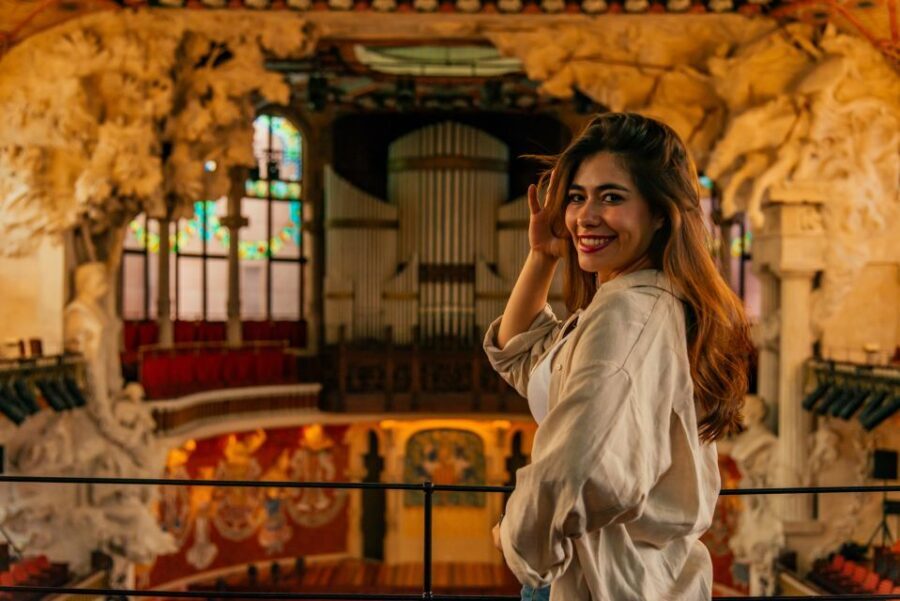
This is the cheapest legitimate way inside. The audio guide is solid, covers the main facts about Domènech i Montaner and the Orfeó Català, and is available in eight languages. Our full review of the entry ticket goes into what the audio actually covers and where the gaps are. Do this if you have one Modernista day and three buildings to fit in.
Check Availability
Read our full review
2. Palau de la Música Guided Tour: $28
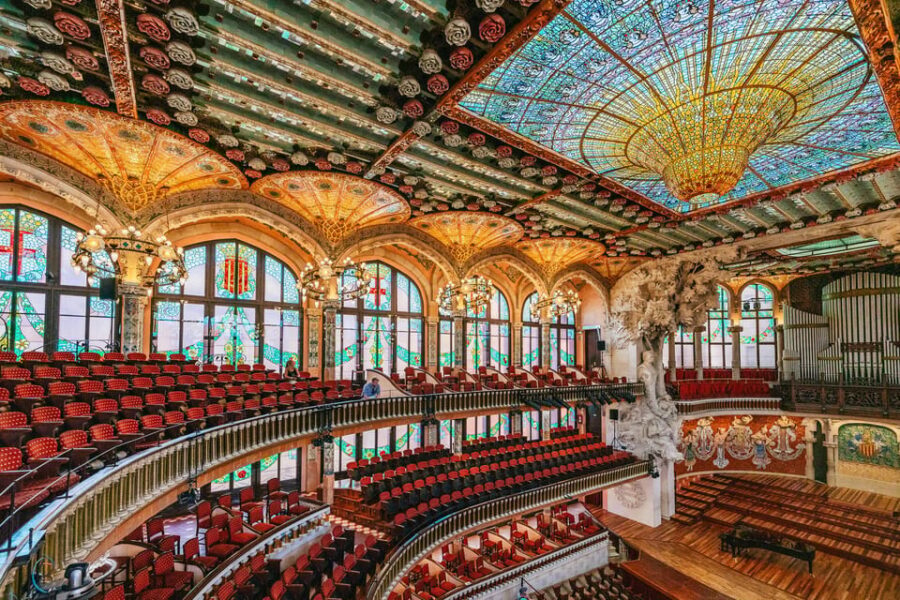
50 minutes, English (other languages on different schedules), small groups, includes a live organ demonstration and access to the balcony level. Our guided tour review covers what the human guide brings that the audio guide doesn’t. If you only see one Modernista interior on your trip, this is how you make it count.
Check Availability
Read our full review
What you actually see inside
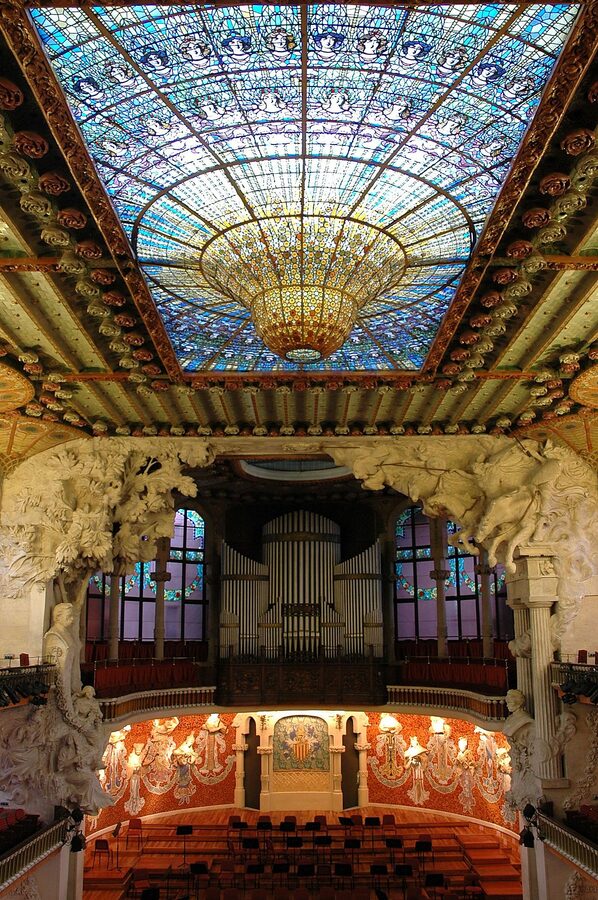

The route from the front door is short. Up a marble staircase, through the Lluís Millet Hall, then into the main concert hall. About 30 metres total in walking distance, plus whatever vertical space you cover going up.
Things to look for that most visitors miss:
- The eighteen muses on the back wall behind the stage. Half are sculpted in three dimensions, half painted flat into the same mosaic. The transition between flat and 3D is deliberate and basically only readable from one specific seat in the third row.
- The Pegasus heads on the columns of the upper balcony. Domènech i Montaner used variations of these across his work and they show up at Sant Pau Recinte too, his other major Modernista commission.
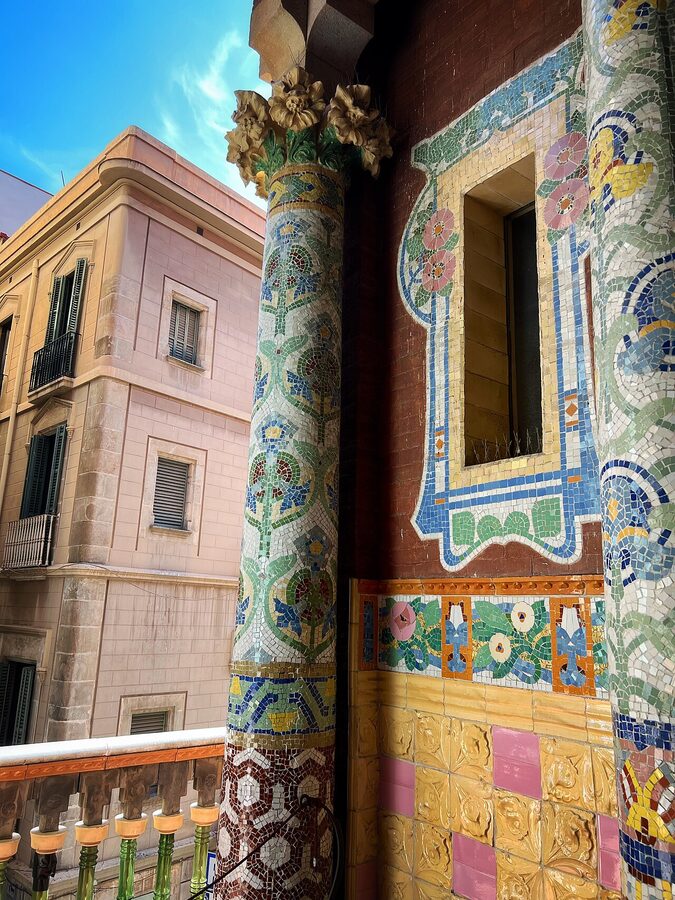
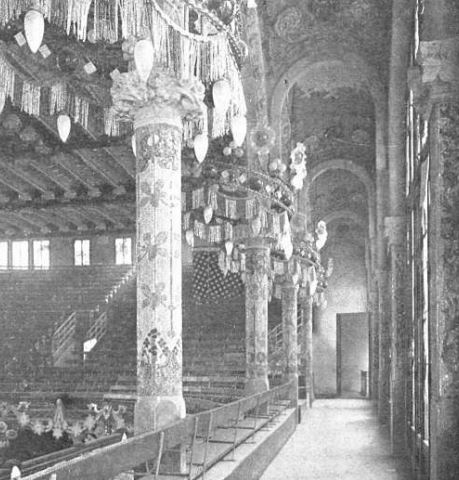
- The fact that there are no internal load-bearing walls. The whole concert hall is held up by an exterior steel frame. That’s why the walls could be stained glass at all. Anyone who tells you the building is brick and stone is looking at the cladding.
- The bar of the gallery on the second floor, which has a pegasus sculpture that you can stand directly under and not realise you’re under, because it’s three metres above your head and the eye gets pulled to the dome instead.

Concerts vs visits: the part everyone gets wrong
Most tourists who buy entry tickets to the Palau never come back for a concert. They walk through, look up, take photos of the dome, and leave. The building was designed as a working concert hall, not a museum. The Orfeó Català still performs here. So does flamenco, jazz, opera, classical, and the Barcelona Symphony from time to time. The acoustic experience during a real performance is the actual payoff the architects designed for.
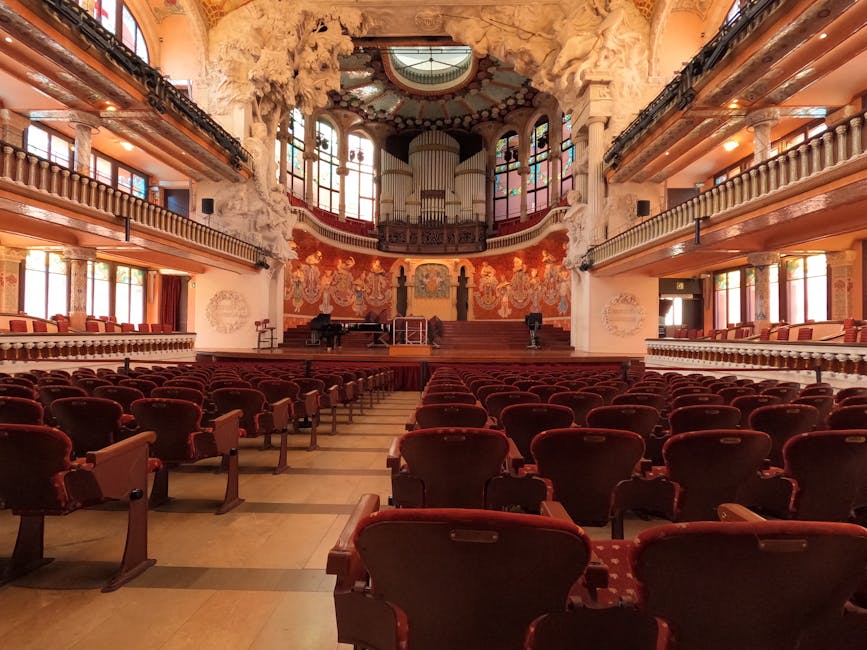
If you have a free evening and any flexibility, check the official Palau site for what’s on. Short concerts (opera highlights, guitar, classical chamber programmes) start from around €20 and run an hour. Big-name shows with major orchestras run €60+. Either way, you’re hearing the room as it was designed, in the lighting that the architects spent eighteen months tuning. Two completely different experiences from the same building. The day visit shows you the architecture; the concert visit shows you what the architecture is for.
Two practical asides. First, dress code is “smart casual” rather than formal, slightly nicer than you’d wear to dinner, no need for a jacket. Second, the seats in the upper balcony are tighter than the orchestra and you’ll feel it after 90 minutes. Worth the price difference if you can swing it.
The architect angle: why this building exists
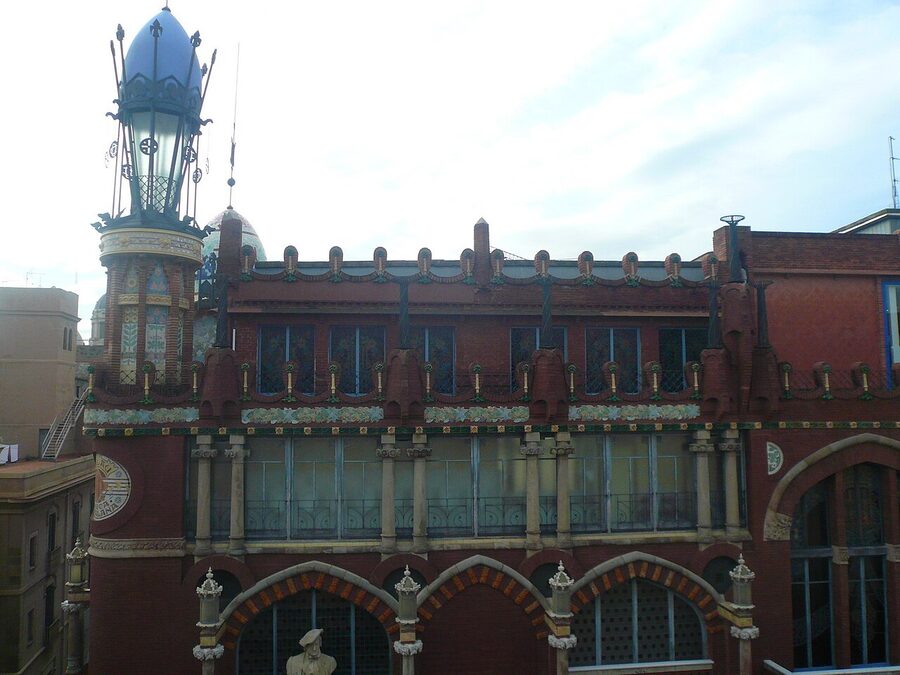

Lluís Domènech i Montaner is the Catalan Modernista architect everyone knows about second, after Gaudí. He was older, more academic, and politically more engaged. He ran the architecture school. He helped found the Catalan nationalist political movement. And he won the Palau commission in 1904 because the Orfeó Català had a falling-out with Gaudí, who was already deep into Sagrada Família and not interested in collaborating on someone else’s vision.
This is one of those small history beats that quietly reframes the building. Without that falling-out, you would have a Gaudí concert hall here, and modern Barcelona would have a different architectural map. Instead you got Domènech’s particular hybrid: Catalan flag colours in stained glass (red, yellow, and gold), Wagner busts on the back wall (the Orfeó were Wagner obsessives), and a building that competes with Gaudí by going in a deliberately different direction. Less organic curves, more flat planes broken by colour. Less plant life, more music. It’s a working response, not a copycat.
If Domènech’s other major work, Sant Pau Recinte Modernista, is on your list, you’ll start spotting the same patterns: the same shades of green ceramic, the same Pegasus motifs, the same approach to letting structural ironwork show. They’re sister buildings even though one was a concert hall and one was a hospital.
For the full Modernista circuit, pair the Palau with Gaudí’s three main domestic works: Casa Batlló, Casa Milà (La Pedrera), and Casa Vicens. The contrast is the point. Gaudí makes you feel like the building is alive; Domènech makes you feel like the building is singing.
History without the dry stuff
Quick version. Barcelona at the turn of the 20th century was rich, industrial, and politically restless. Catalan was banned in formal settings, and the Orfeó Català, founded in 1891, had been performing Catalan choral music as a form of low-grade cultural resistance for over a decade. By 1904 they had outgrown their rented spaces and needed a permanent home.
They commissioned Domènech i Montaner. Construction ran from 1905 to early 1908. The opening concert was 9 February 1908; the original audience was about 2,200 strong, which is what the hall still seats today. Cost about 900,000 pesetas, which sounds quaint until you remember that’s a fortune in 1907 money.
Then it sat there for most of the 20th century being an active concert hall. The big change came in 1989, when an extension by architect Òscar Tusquets added a small back square (Plaça del Palau de la Música), a glass-walled rehearsal hall, and the bar. The bar is genuinely useful. Most modern interventions on heritage buildings make them worse; the 1989 extension is a rare case of an addition that gives you somewhere to sit and process what you just saw.
UNESCO listed the Palau in 1997, alongside Sant Pau Recinte. The two are listed together as a single World Heritage entry, which makes them the only paired listing in Barcelona.
Practical bits
Hours. Self-guided entry usually 10am to 3:30pm daily. Guided tours run hourly in English from 9am to 1pm with an extra slot at 2pm. Concert times vary by event. Box office 9:30am to 3:30pm.
Photography. Allowed without flash. The guides are strict about this. Phones fine, no tripods.
Accessibility. The main entrance has steps but a side entrance is wheelchair accessible. Most of the route is on the first floor; lift available. Email accessibility services in advance to confirm your specific tour slot is staffed for assistance.
Bag check. Cloakroom available, free for ticket holders. No big bags or large camera kit allowed inside.
Combine with what. The Picasso Museum is a 5-minute walk away on Carrer Montcada. Picasso Museum tickets are also worth pre-booking. Both can be done in a half-day if you start with the Palau at 10am and walk over for an early Picasso slot at 12:30. The two are sufficiently different in pace that they pair well: the Palau is dense and visual, Picasso is contemplative and chronological.
If you’ve got more time, the Gothic Quarter is 5 minutes south and the Cathedral 5 minutes after that. A good half-day walk goes Palau → Picasso → Barcelona Cathedral → coffee in the Gothic Quarter → home.
What to do nearby
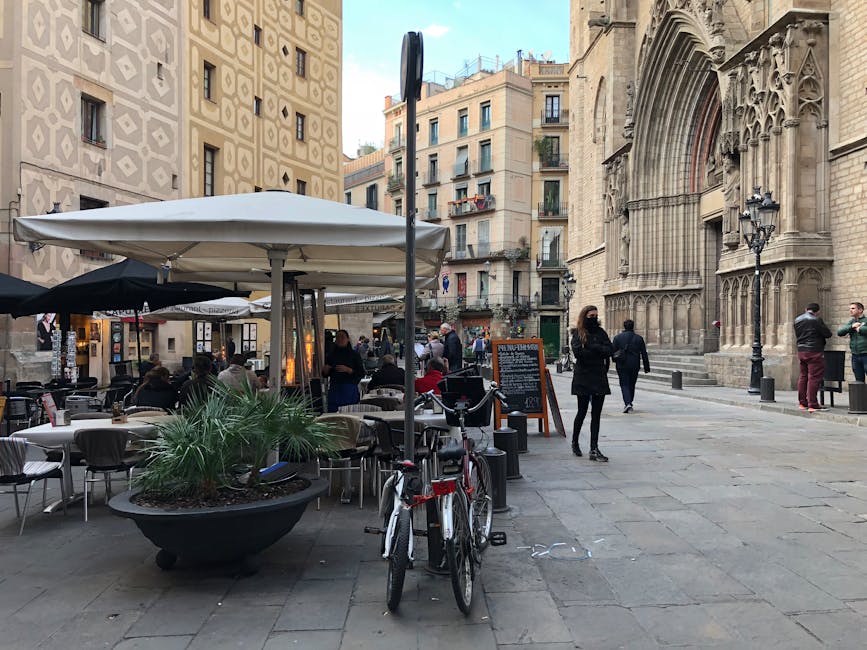
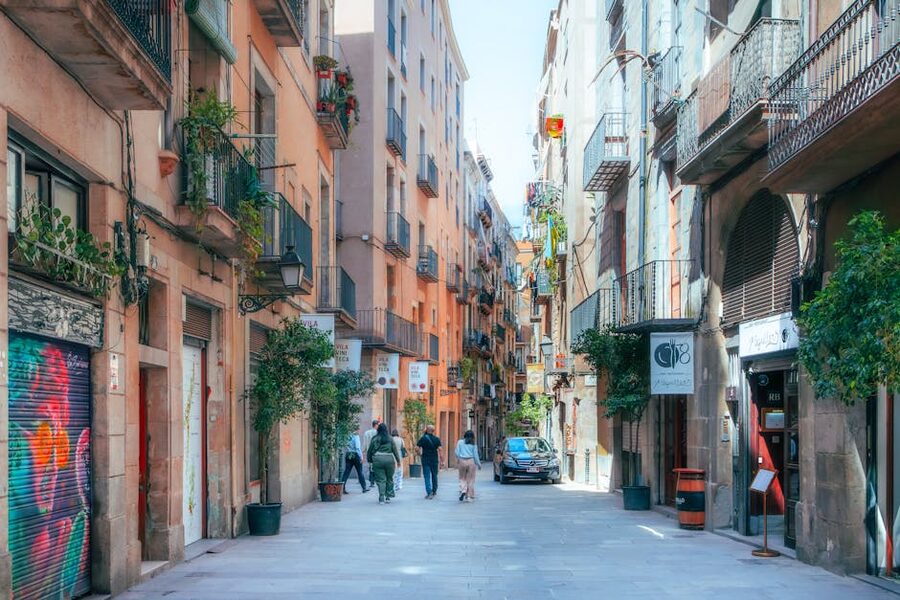
El Born itself is one of the better Barcelona neighbourhoods to wander after a Modernista visit. Carrer Montcada (the Picasso Museum street) is full of small bars, and the area gets quietly atmospheric in the evening. If you’ve got a free hour after your Palau slot, the Mercat del Born (the old market, now a cultural centre) is worth the 8-minute walk for the underground archaeological remains of 18th-century Barcelona, free to view.
For food, El Xampanyet (Carrer Montcada 22) is the classic post-museum tapas stop. Cash only, no reservations, opens at 12 sharp, queues by 12:15. Pa amb tomàquet, anchovies, and a cheap house cava in plastic cups. Real, no frills, exactly what you want after staring at stained glass for an hour. If you want a more structured tapas experience, a guided tapas tour through the Born and Gothic Quarter is the smart way to taste a few different bars without picking the wrong ones.
If you only do one thing
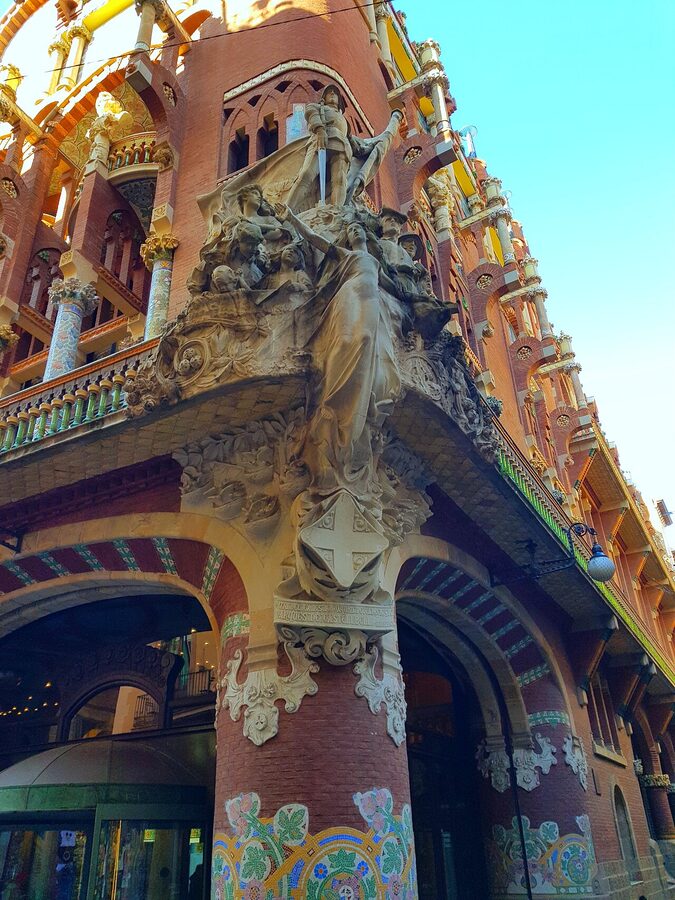
Book the guided tour for an 11am slot on a sunny day. Skip the entry-only ticket unless your time is genuinely tight. Spend the saved 5 minutes outside on Carrer Amadeu Vives looking at the corner sculpture before you go in.
And if you can stretch to it, come back at night for a concert. That’s where the building actually works.
Other Barcelona Modernista guides
If the Palau leaves you wanting more of the Catalan Modernista school, the obvious next stops are Domènech i Montaner’s other UNESCO building, Sant Pau Recinte Modernista, and the four major Gaudí works in the city: Sagrada Família, Casa Batlló, Casa Milà (La Pedrera), and Casa Vicens. For a different kind of Barcelona morning, the Montjuïc Cable Car swings you up to the castle for a view that resets the city’s scale, and the Picasso Museum is a five-minute walk from the Palau if you want to keep the El Born day going. For first-time visitors trying to see all of this in one go, the Barcelona-in-one-day tour hits the headline sites in the right order.
Affiliate disclosure: Some links in this article are partner links. If you book through them, we may earn a small commission at no extra cost to you. It helps keep the site running.