
My friend Sam landed in Barcelona thinking he had tapas figured out. He had eaten plenty of it in London, a few times in New York, once at a “Spanish-style” place in Brooklyn that served patatas bravas with chipotle aioli. He thought tapas was a category of small plates. He was about to find out it isn’t a category of anything. It’s a way of eating, and it took him three bars on a tapas tour to actually understand what was happening around him.
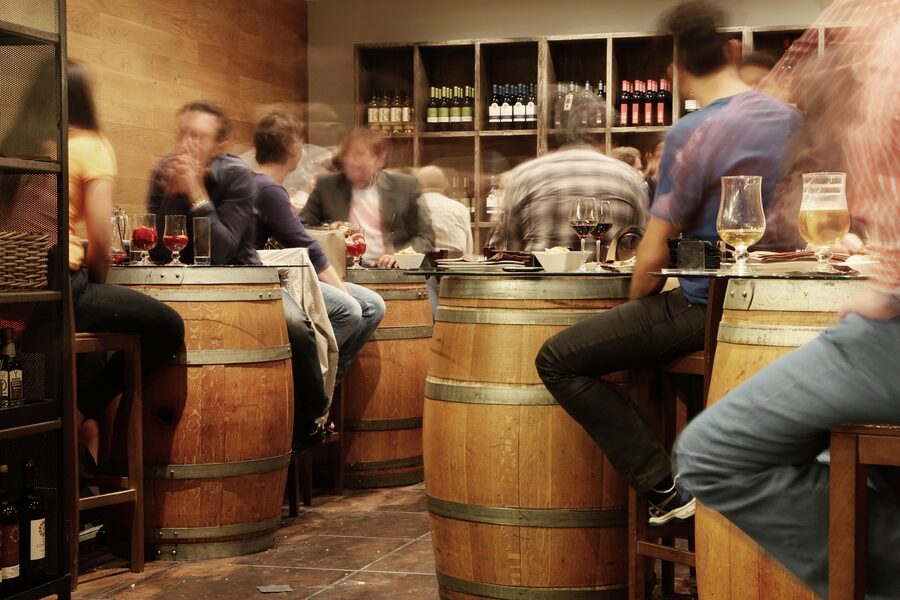
Tapas in Spain isn’t really food. It’s an excuse to keep drinking, slowly, with friends, while standing up at a counter or leaning against a tiled wall. The food is incidental. The pace, the rhythm, the ten-minute pour of vermouth on tap: that’s the thing. A good tapas tour in Barcelona doesn’t just feed you. It teaches you how to be in a tapas bar in the first place.
Most food per euro: Tapas Walking Tour with Food, Wine, and History, $78. Three hours, multiple bars, vermouth included. Heavy on quantity and storytelling.


- What a Barcelona tapas tour actually is
- Why tapas in Barcelona is different from anywhere else
- The two tours I’d actually book
- 1. Barcelona Tapas and Wine Experience Small-Group Walking Tour:
- 2. Tapas Walking Tour with Food, Wine, and Vermouth:
- How to actually book one
- What to expect on the night itself
- The drinks bit, which is half the point
- Where the tours go
- The market stop, if you get one
- The mistakes Sam made (and you can skip)
- Alternatives if a group walking tour isn’t your thing
- A short tapas history
- What it costs and what’s included
- Best time of year for a Barcelona tapas tour
- What to do after the tour
- Other Barcelona guides worth your time
What a Barcelona tapas tour actually is
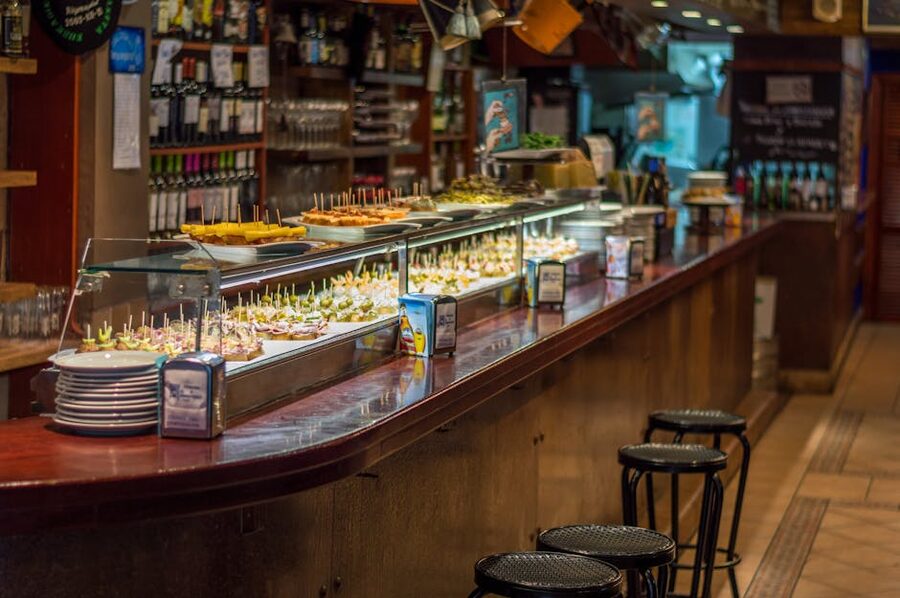
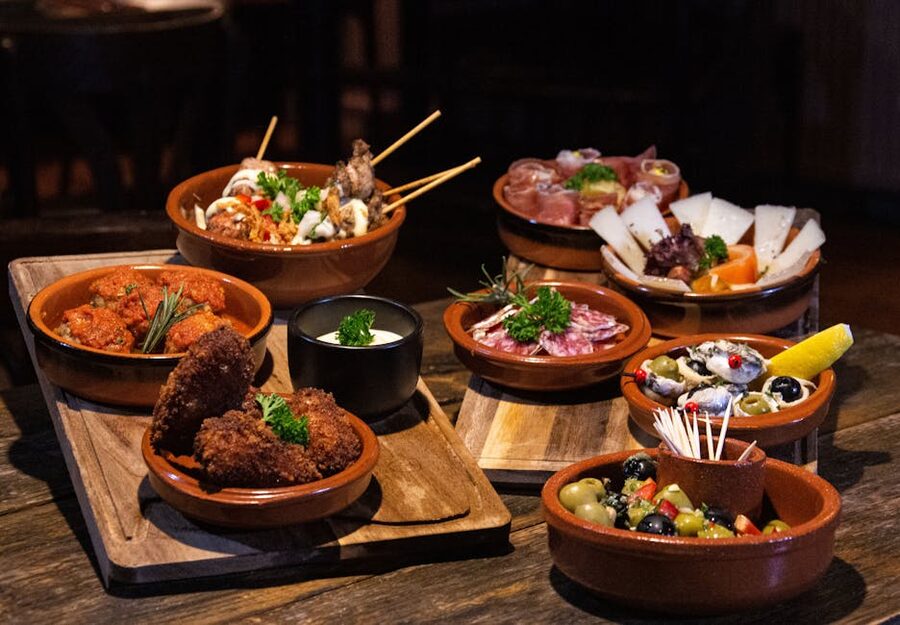
It’s a guided bar crawl with food. Three or four hours, four to six stops, eight to twelve people, English-speaking guide, food and drinks included in the price. You start somewhere central (usually the Gothic Quarter or El Born), the guide walks you to bar one, you eat two or three small plates with a glass of wine or vermouth, then you walk to bar two. Repeat until you can’t.
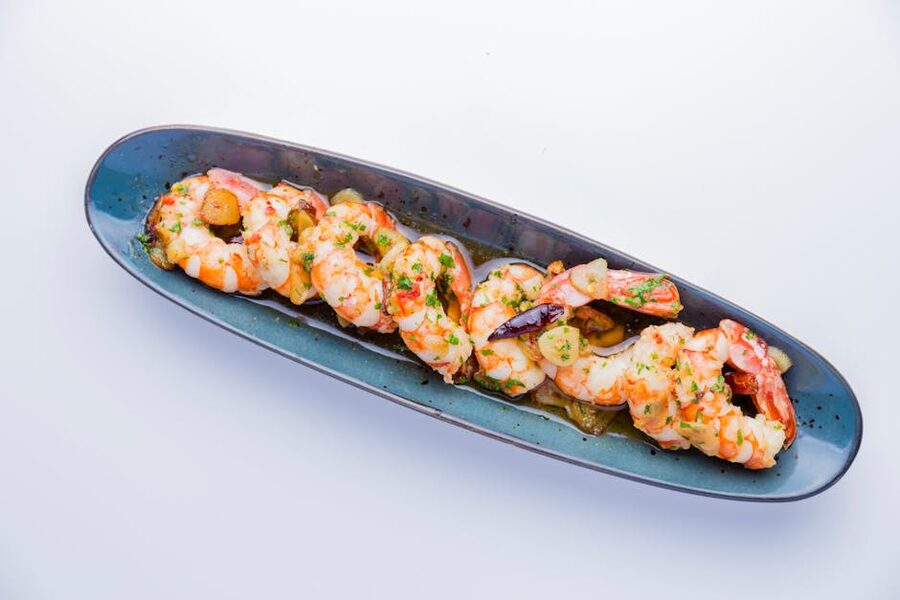
The structure isn’t complicated. What makes a tour worth booking is the bars they pick and the guide’s willingness to explain the why behind each dish. A bad guide just orders. A good guide tells you why this bar serves the boquerones and that bar serves the gambas, and which neighbourhood traditions you’re sitting inside.
Most decent operators run two slots: a midday tour starting around 1pm, and an evening tour starting around 6 or 7pm. The evening one is busier, livelier, and closer to how locals actually do tapas. The midday one is more relaxed and lets you eat lunch as a single combined meal. Both work. The evening is the one I’d book if it’s your only night in town.
Why tapas in Barcelona is different from anywhere else
This is the bit Sam didn’t get until bar three. Tapas isn’t Spanish in a generic sense. It’s regional, and Barcelona is Catalan. That changes what you eat.
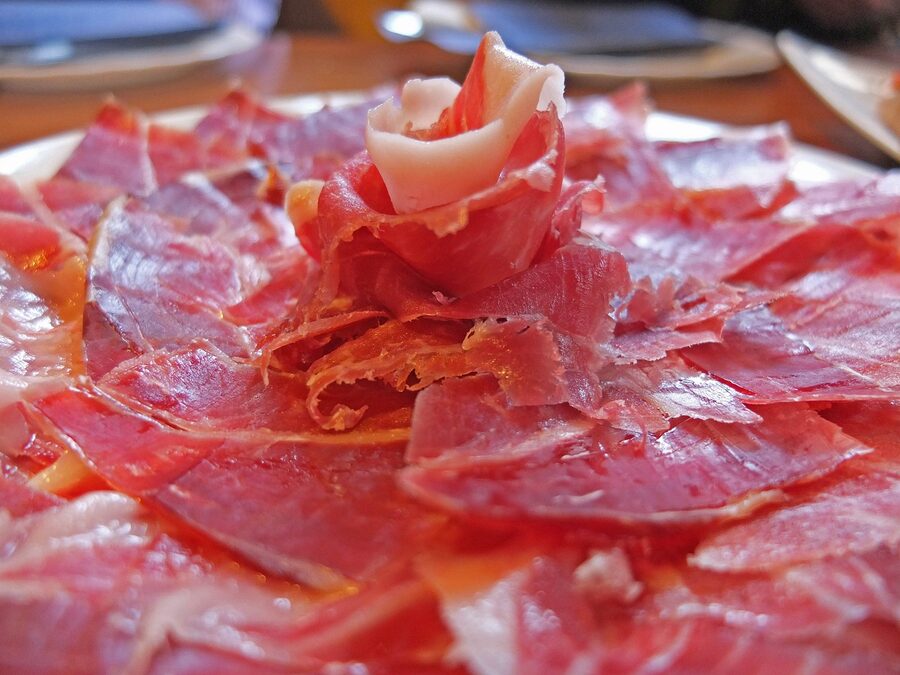
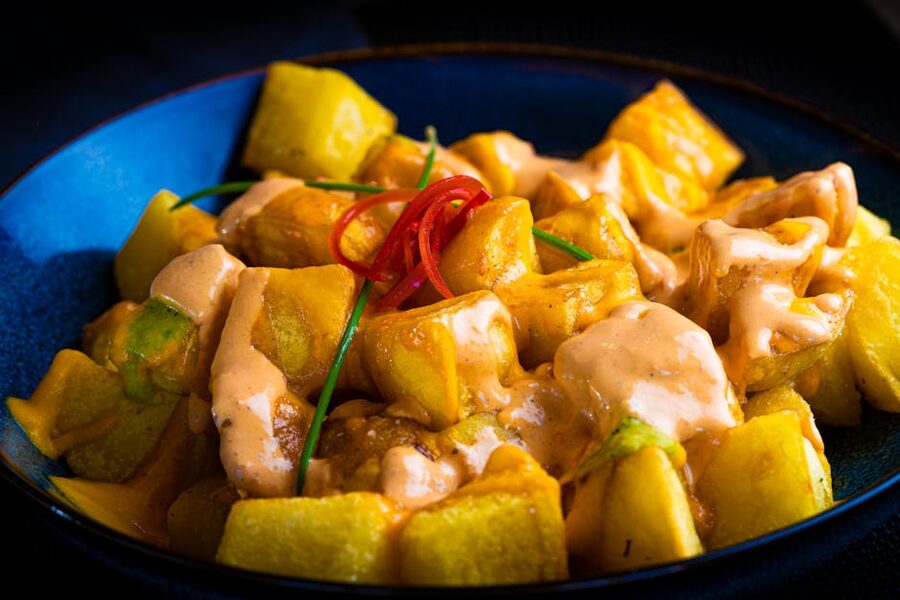
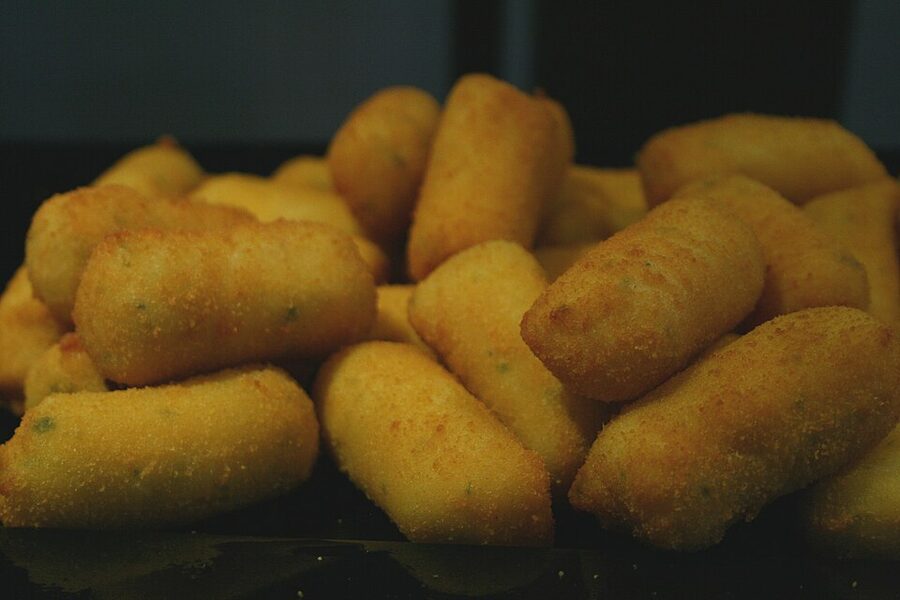
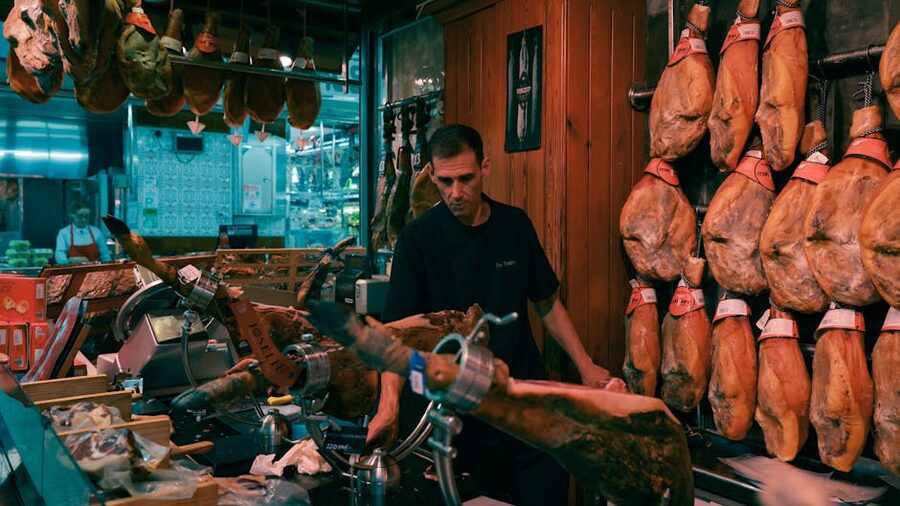
The tapas you’ve had abroad are almost always Andalusian, the southern style: jamón ibérico, gambas al ajillo, tortilla, croquetas, patatas bravas. You’ll get those in Barcelona too. They’re on every menu. But the Catalan dishes underneath them are what makes a Barcelona tour worth booking instead of one in Madrid or Seville.
Catalan tapas tend to be:
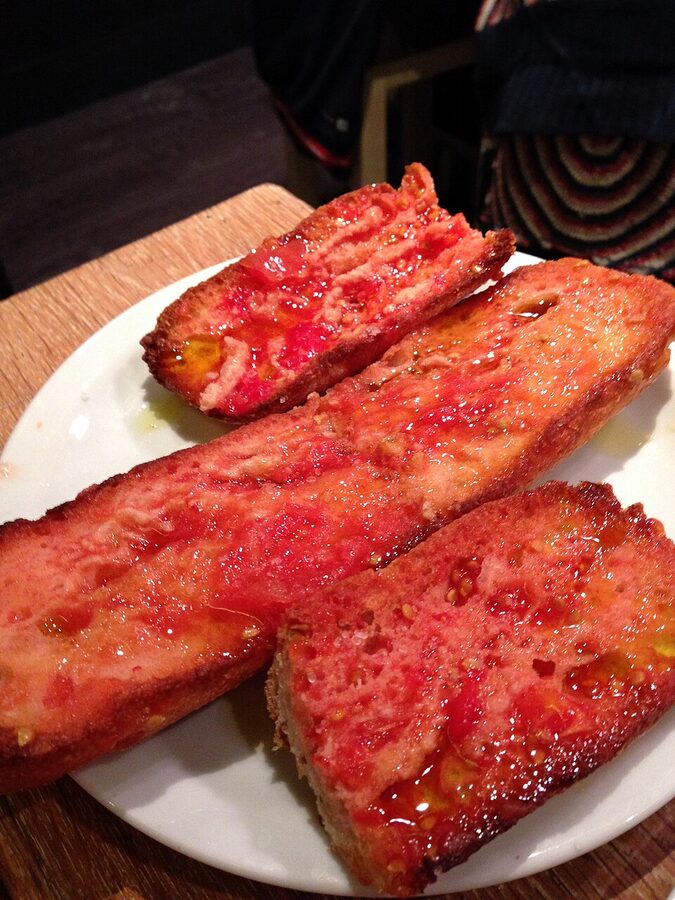
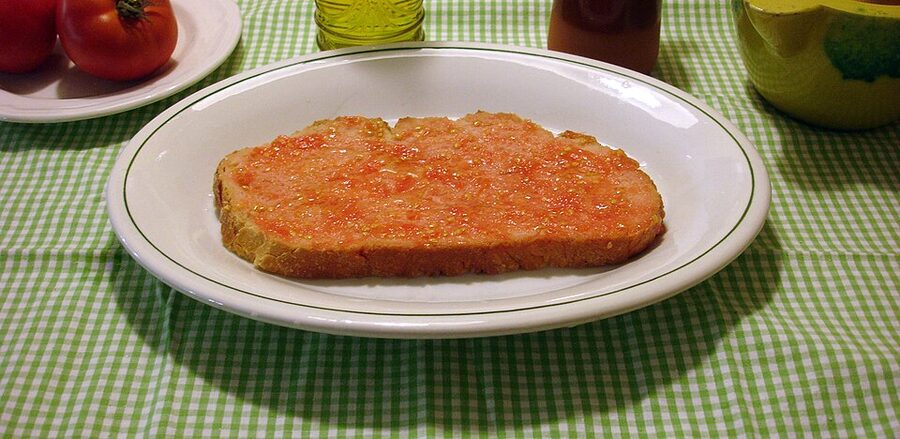
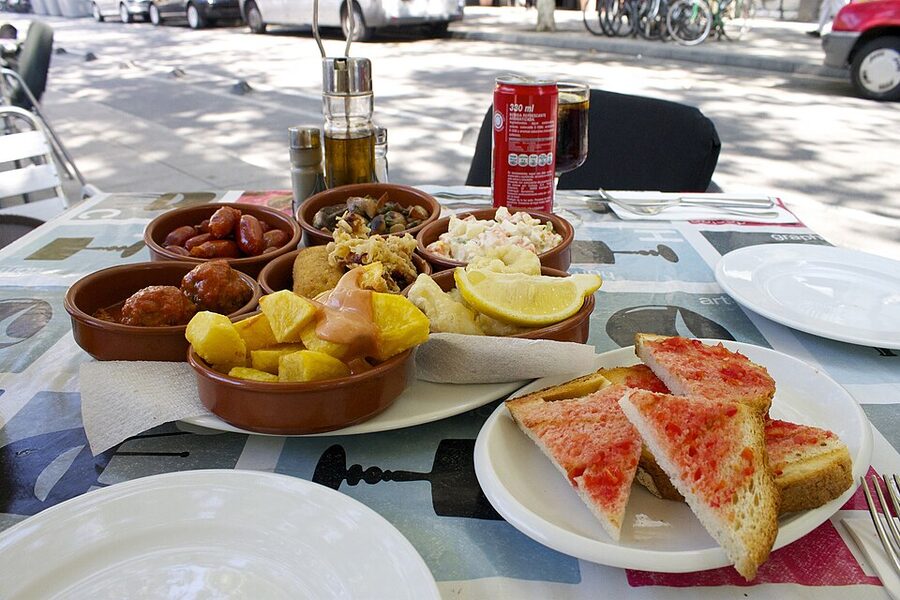
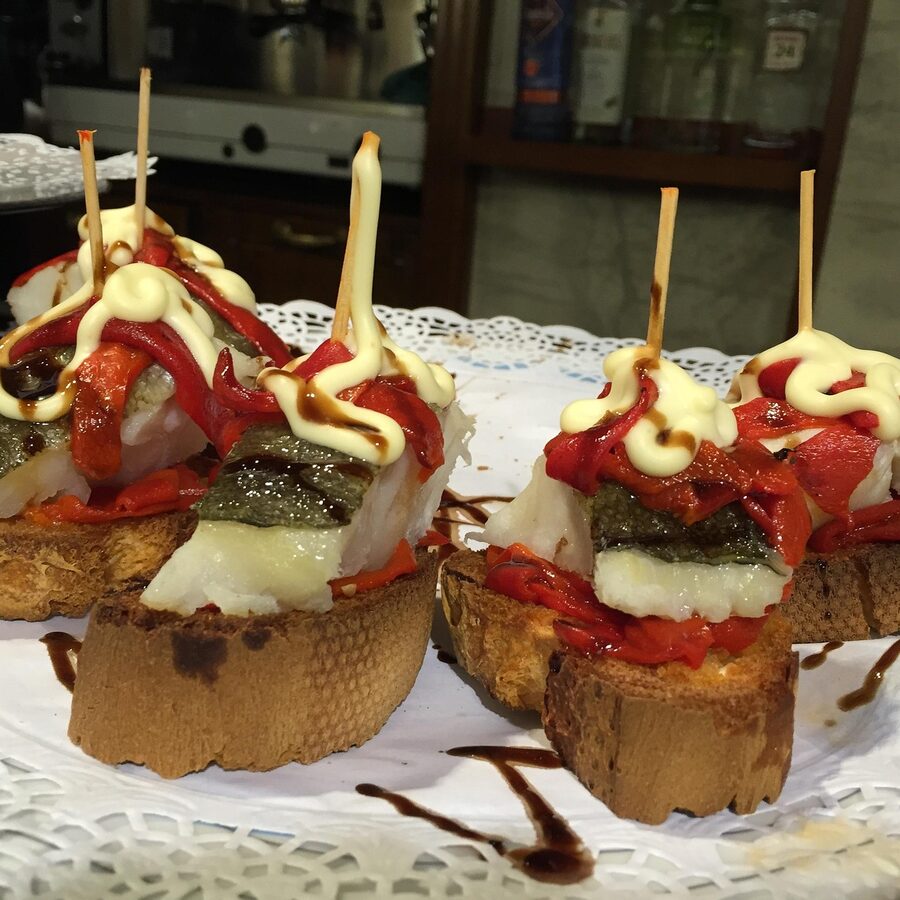
- Pa amb tomàquet, bread rubbed with a halved tomato, then olive oil and salt. Nothing else. It’s the bedrock. Every meal in Catalonia starts with this.
- Butifarra, a coarse white sausage usually grilled and served with white beans. Pork-heavy, not spicy.
- Escalivada, smoky roasted aubergine and red pepper, peeled and dressed in olive oil. Cold, eaten with bread.
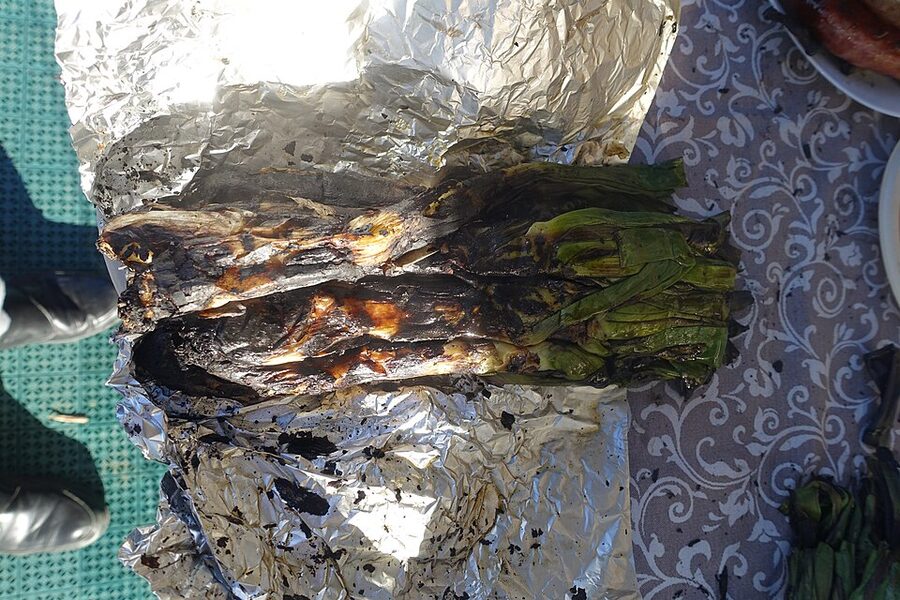
- Calçots, charred spring onions in season (Jan-March only). Eaten with romesco sauce, with a bib, with your hands. If you’re in Barcelona between January and March and your tour can include calçots, take it.
- Fideuà, paella made with short noodles instead of rice. A coastal Catalan dish, served in cazuelas.
- Bombas, a Barceloneta invention: deep-fried mashed-potato balls stuffed with seasoned meat, served with two sauces (one spicy, one garlic). Ask for them by name.
None of those are on Andalusian tapas menus. None of those are what you got at the place in Brooklyn. This is the food you booked the tour to find.
The two tours I’d actually book
I’ve eaten my way through more tapas tours in Barcelona than I’d care to count. Most are fine. A few are excellent. Two consistently come back as the ones I’d send a friend to, and they’re different enough that you can pick based on what you want from the night.
1. Barcelona Tapas and Wine Experience Small-Group Walking Tour: $83
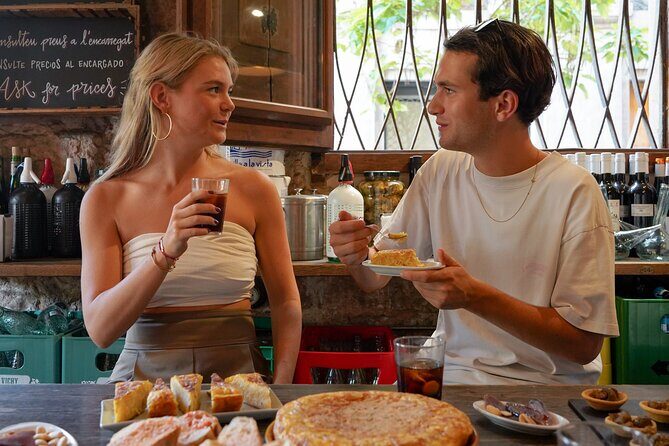
This is the tour I send first-timers on. Three hours, four restaurants, small group of around ten, and guides who actually know what they’re talking about (ask for Dasha if you can). The route covers the historic core without feeling rushed, and the food spans both Catalan and pan-Spanish classics so you leave with the full vocabulary. Our full review covers the route stops in detail and the upgrade options.
Check Availability
Read our full review
2. Tapas Walking Tour with Food, Wine, and Vermouth: $78
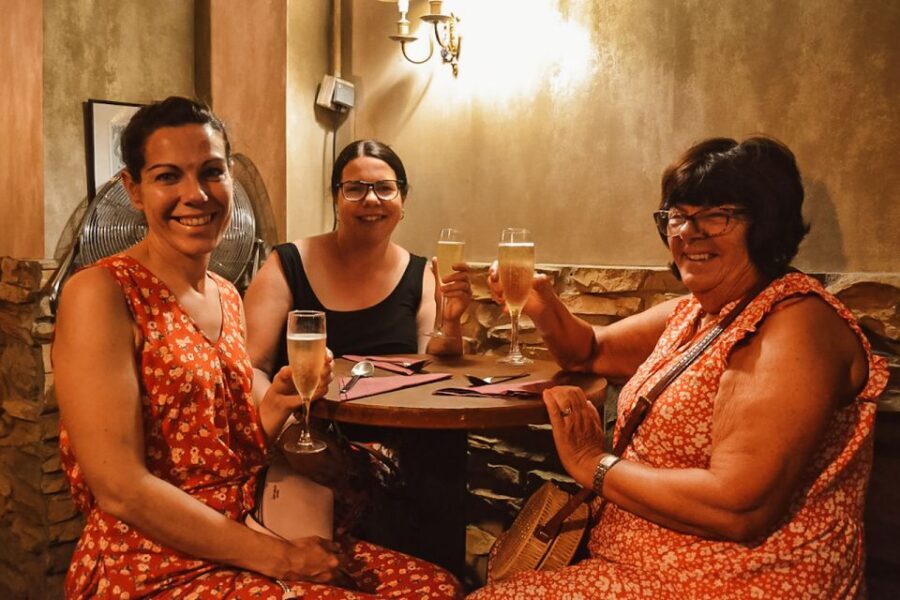
This is the better-value option, and the storytelling is sharper. The guide weaves the food into Barcelona’s history (this is where the “and History” in the title earns its keep), and the vermouth pour at one of the older bars is the moment most guests remember. Slightly bigger groups than the Viator tour, slightly more food, and a different operator. My write-up of this tour goes into the route and what to bring.
Check Availability
Read our full review
If you have to choose one: book the Viator tour for the best route and the most polished guides, the GetYourGuide one for the vermouth focus and the better price. They run on different operator licences, in different parts of the Gothic Quarter / El Born area, and visit different bars. Doing both on consecutive nights is honestly not a bad idea if you’re food-focused.

How to actually book one
Both tours sell out in summer. Sometimes a week ahead, sometimes the same day. The two operators above let you book through the standard platforms (Viator and GetYourGuide), free cancellation up to 24 hours before, and you can hold a spot without paying upfront on either platform now.
Practical booking notes:
- Book at least 3-4 days in advance in summer (June through September), 1-2 days the rest of the year. Friday and Saturday evenings go first.
- Free cancellation up to 24 hours before is standard. Check the box on the booking page if it isn’t there by default.
- If you’ve got dietary restrictions, flag them at booking. Most operators handle gluten-free and vegetarian fine. Vegan tapas tours exist but are a separate booking; the standard tour can’t really do vegan.
- Children: most tapas tours are 12+ or 18+ because of the wine. There are family-friendly food tours (with mocktails or juice) but they aren’t the same product.
- Group size matters. Anything above 14 starts to drag, because the bars are small and you can’t all crowd around a counter. Both tours above cap at around 10-12.
What to expect on the night itself
Show up at the meeting point ten minutes early. Almost every tour starts inside or just outside a metro station, and the meeting point will be on a street corner that is, in summer, full of other tour groups doing the same thing. Look for the guide holding a small sign. Don’t eat lunch.
You’ll do introductions on the walk to the first bar. Two minutes. American couple, two Australians, a Dutch family. The guide asks for dietary restrictions one more time. Then you’re inside, and the food starts coming.
The first bar is usually the lightest: bread, olives, anchovies, maybe one cured meat. A small glass of wine. The point is to settle the group. The second bar steps it up: hot dishes, fried things, more wine. The third or fourth bar is the heaviest, and at that point you’re full and the conversation has slowed and the guide is telling stories about the neighbourhood. That’s the bit you came for.
Pace yourself. New travellers eat everything at every stop and bonk by bar three. Locals know to leave half of each plate. You can do that without insulting anyone. The guide will explain.

The drinks bit, which is half the point
Every tapas tour pairs each plate with a drink. What that drink is matters more than what’s on the plate.
You’ll see four main pours:
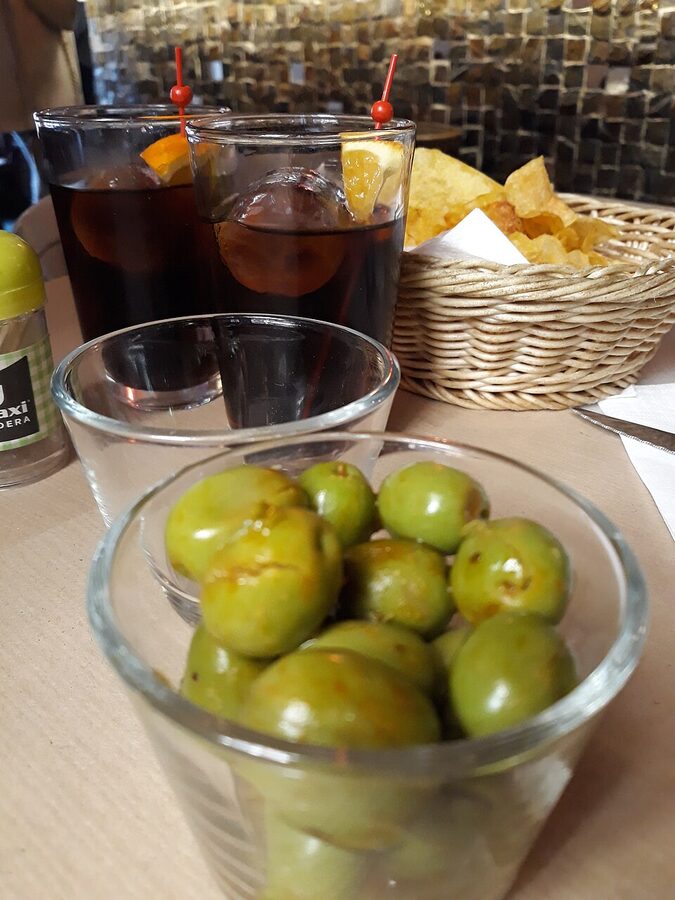
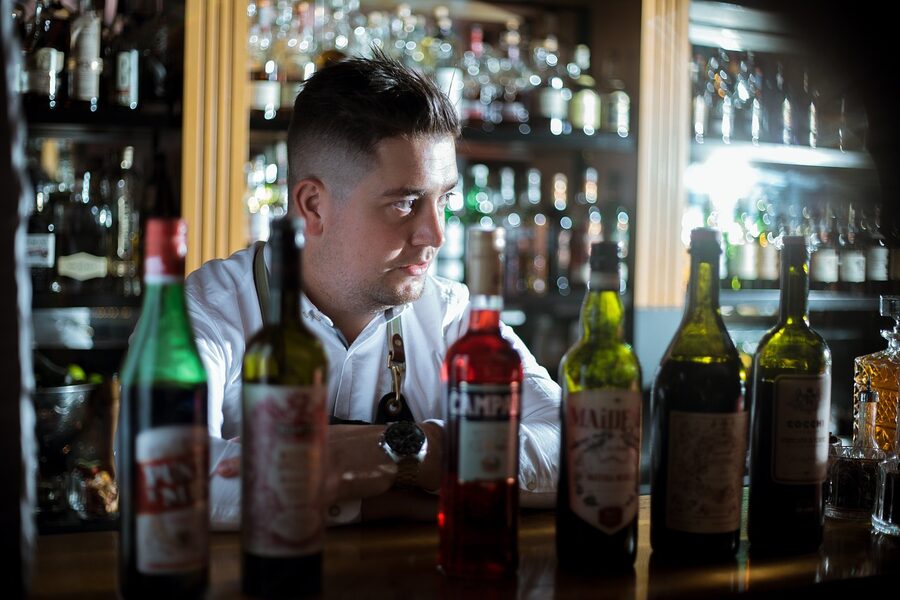
Vermut (vermouth on tap). The Catalan one. Red, slightly bitter, served in a tumbler over ice with an orange slice and an olive on a toothpick. “L’hora del vermut” (vermouth hour) is roughly noon to 2pm on a Sunday, and it’s the most Barcelona thing you can do before lunch. If your tour includes a vermouth pour, drink it slowly. It’s stronger than it tastes.
Cava. Catalan sparkling wine, made the same way as Champagne but in Penedès, an hour outside Barcelona. A flute with the first round of pintxos is standard. It’s better than people give it credit for.
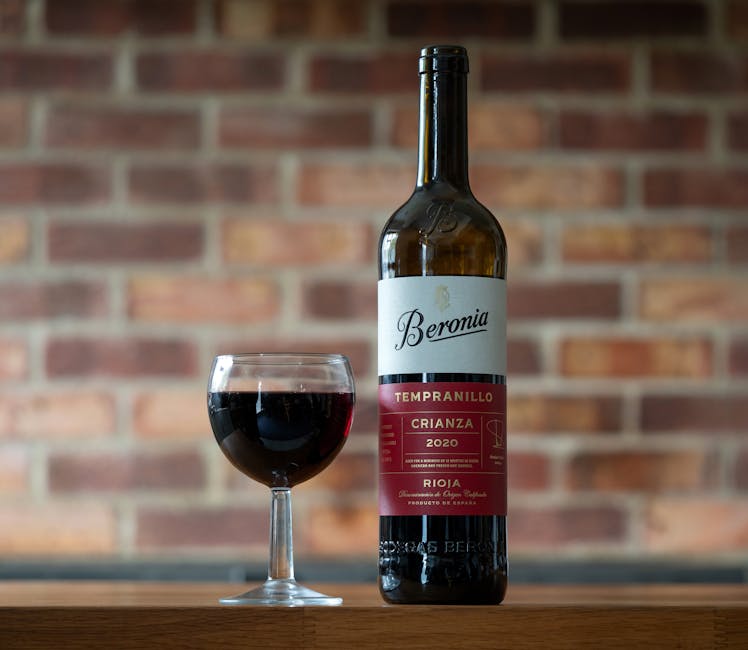
Garnacha or Tempranillo. Red wine, usually Spanish, sometimes specifically Catalan (Priorat, Montsant). The pairings get more serious by bar three. Don’t switch back to beer unless you actively prefer it.
Caña. A small glass of beer, about 200ml. The default beer pour in Spain. If you order “una cerveza” you’ll get a bigger glass and slightly stale beer. Order “una caña” instead.
Where the tours go
Almost every Barcelona tapas tour stays inside one of three areas. Good to know which before booking, because they feel different.
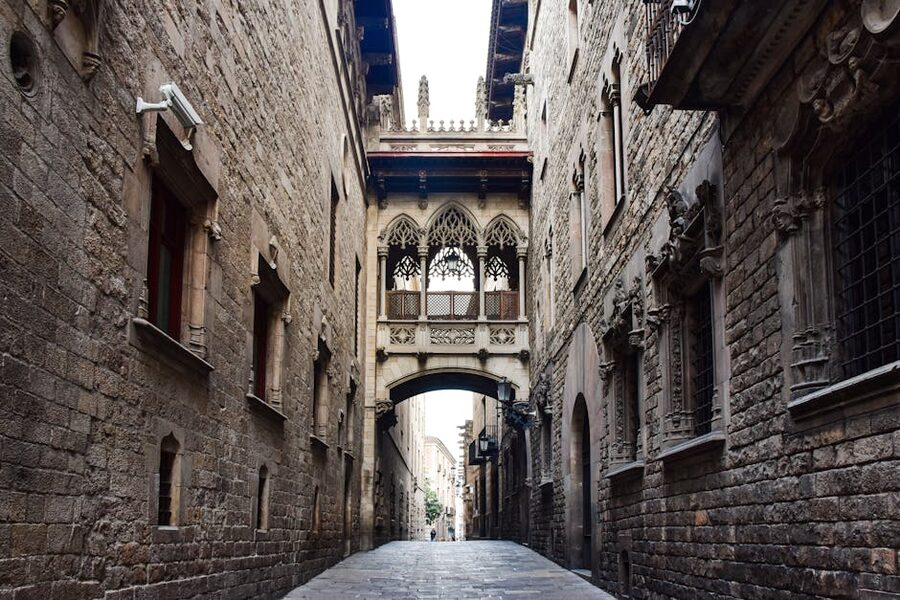
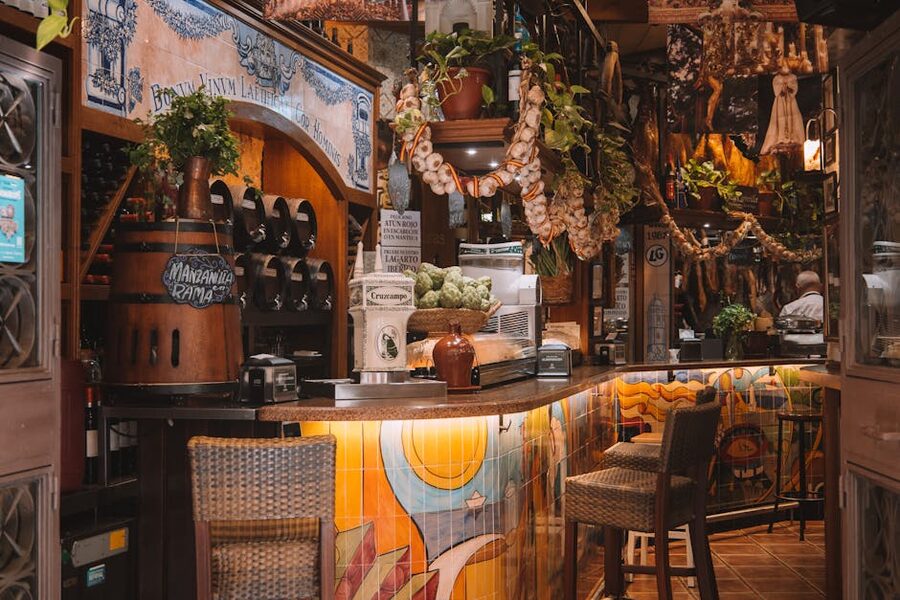
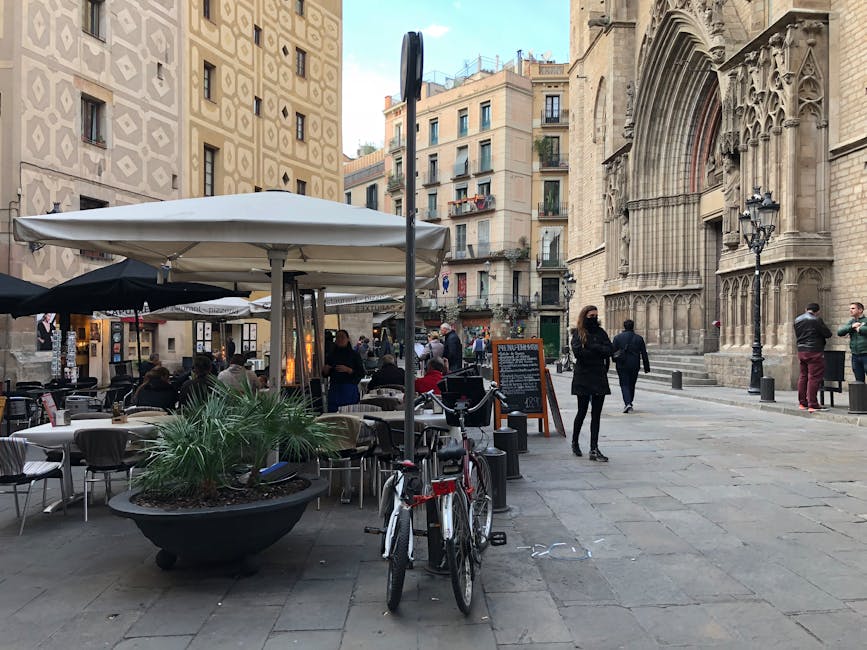
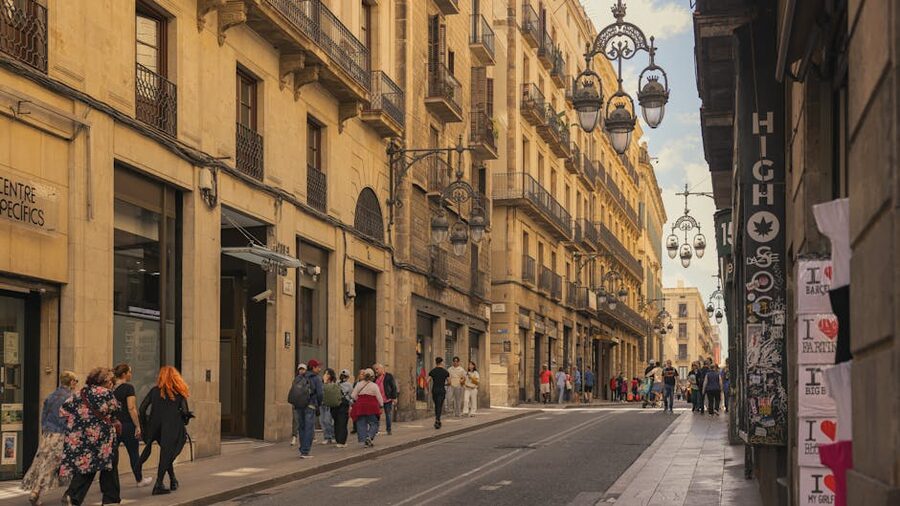
Gothic Quarter (Barri Gòtic): The medieval centre. Narrow stone alleys, hidden squares, bars carved into the walls of old buildings. Most tours start here. Atmospheric, occasionally crowded with other tour groups, and home to the tightest concentration of decent old-school bars in the city.
El Born (La Ribera): The next neighbourhood east. Looser, more bohemian, slightly newer feel. The bars here are more mixed: some old institutions, more modern places, plenty of natural-wine bars. Most tours dip into El Born around their second or third stop. If you’d rather skip the standalone tour and just walk it, our Gothic Quarter guide covers the corner where Born and Gothic merge.
El Raval: The other side of La Rambla, less polished, far more local feel. A few tours run El Raval routes specifically. They’re cheaper and the food is just as good, but the area is rougher around the edges and not what someone expects on their first night in Barcelona. Worth doing on a return trip.

The market stop, if you get one
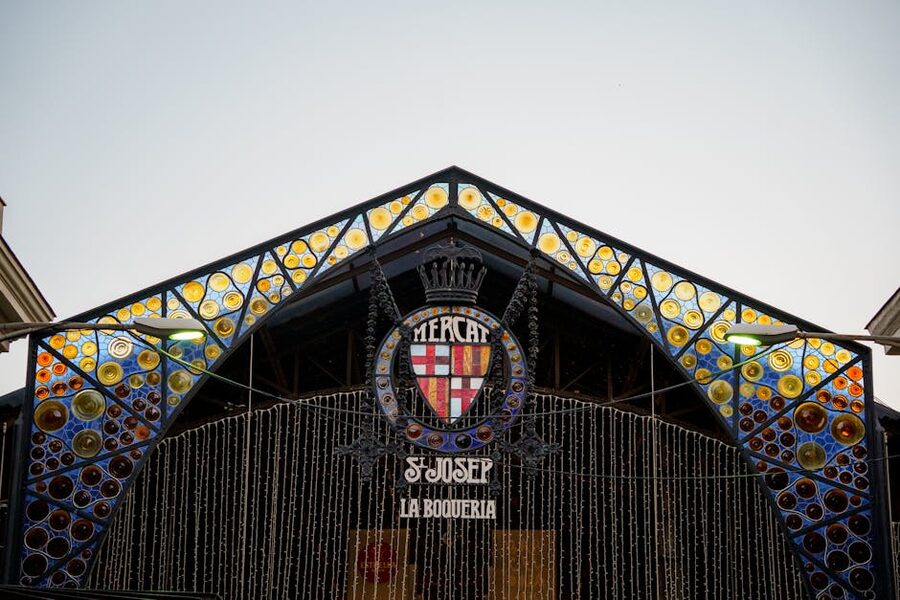
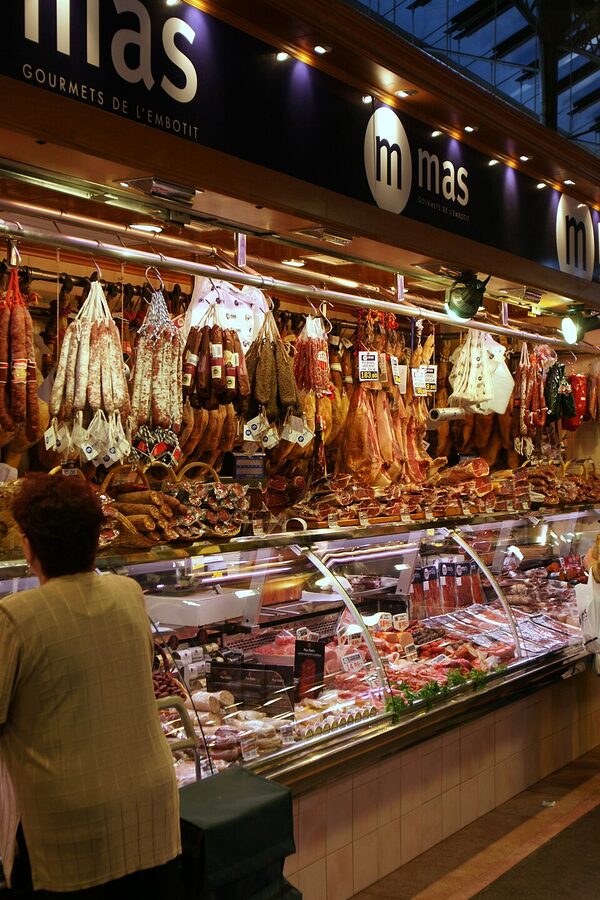
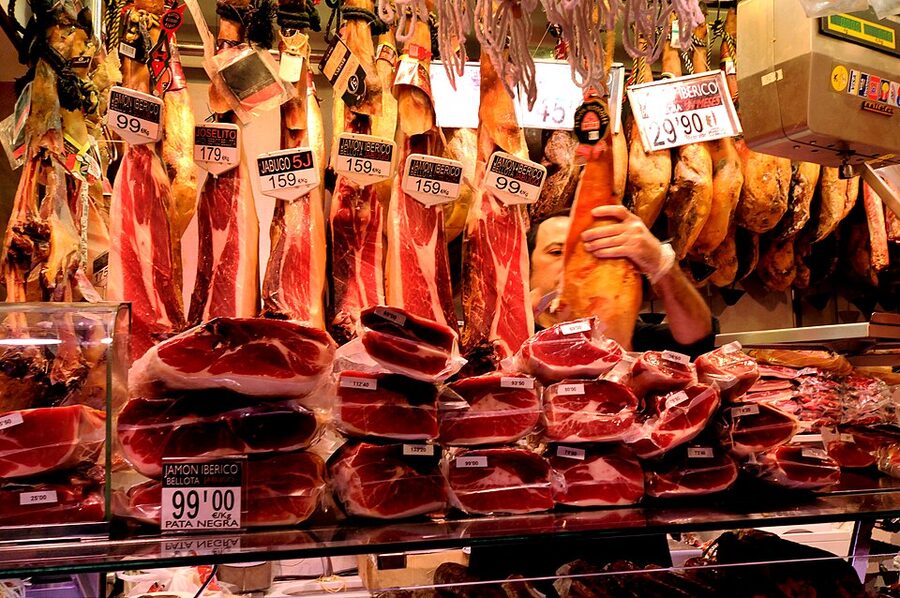
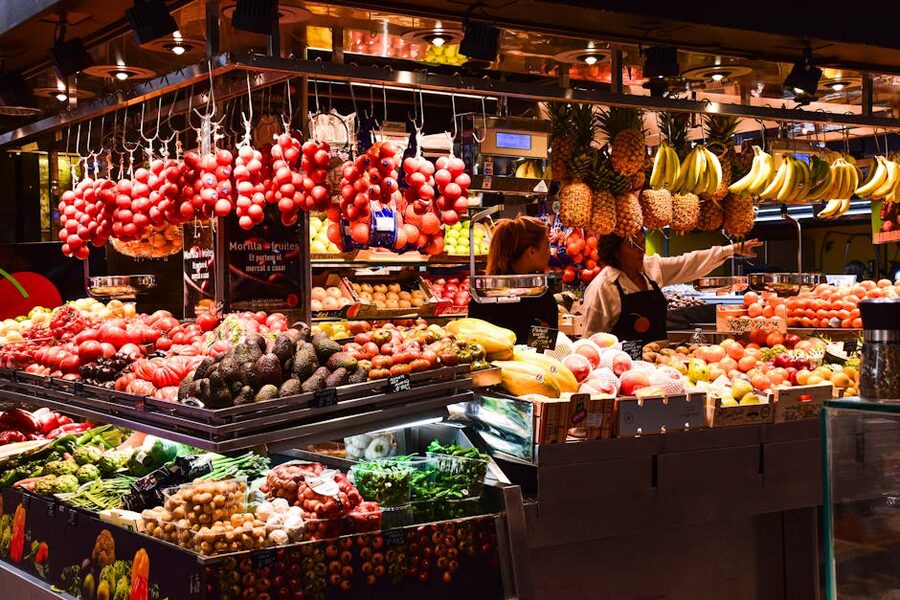
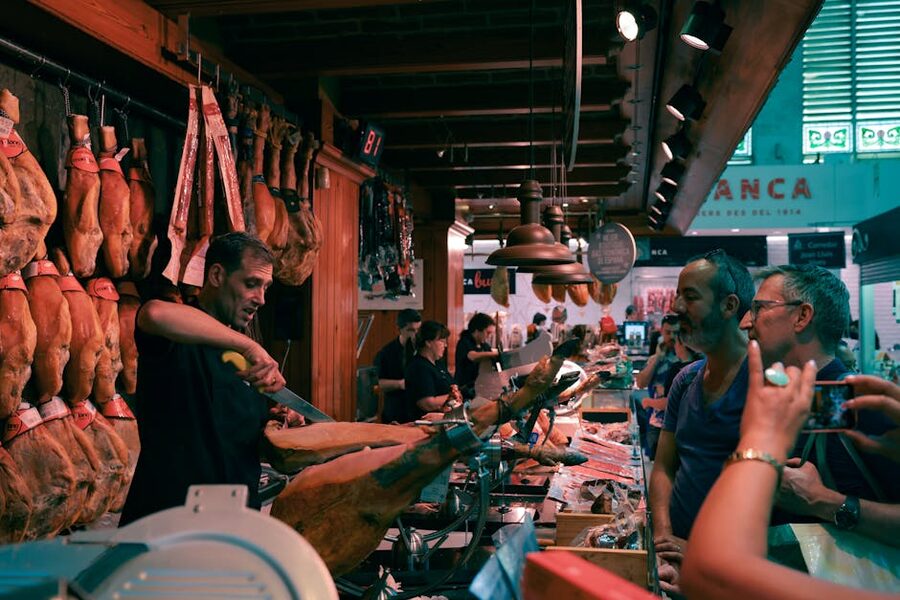
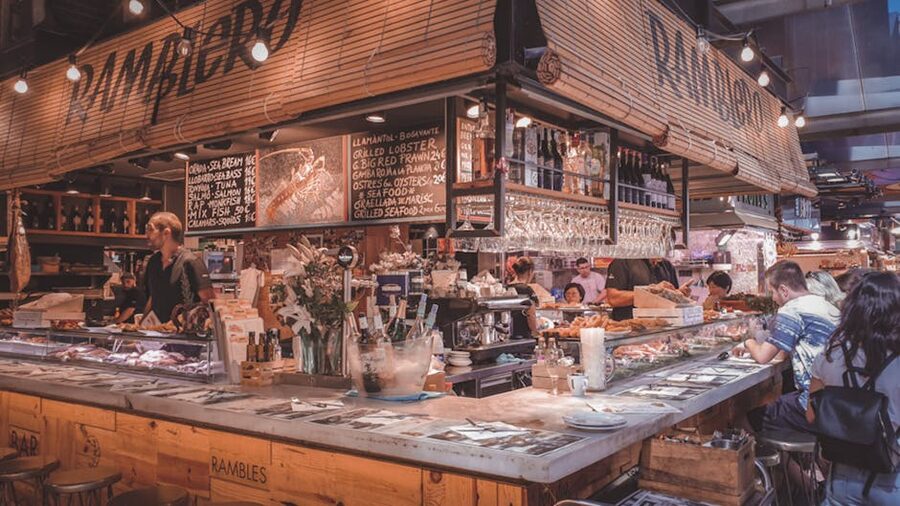
Some of the better tapas tours include a stop at La Boqueria or, less commonly, Santa Caterina. La Boqueria is the famous one, just off La Rambla, and yes it’s touristy, but the back half of the market (past the first three rows) is still where chefs from the Gothic Quarter buy their ingredients. The fishmongers in the centre lay out langoustines, monkfish cheeks, octopus tentacles in a way that is genuinely impressive at 9am and entirely deflated by 5pm.
If your tour stops at La Boqueria, the guide will buy a couple of items at the counter and either eat them on the spot at one of the standing-room bars (Pinotxo or El Quim) or carry them to the next bar. This is the bit where you actually start to understand how the food gets from the docks to the plate.
Santa Caterina is the other major Barcelona market, in El Born, with the wavy coloured roof. Quieter, more local, fewer tour buses. If your operator picks Santa Caterina over La Boqueria, that’s a small green flag.


The mistakes Sam made (and you can skip)
By the end of his three days in Barcelona, Sam had figured most of this out. But he made a few rookie mistakes on the first night that I should mention so you can skip them.
He sat down too early. At the first bar, there was an empty stool. He took it. The bartender raised an eyebrow, the price of the same plate went up by 15%, and he didn’t notice until the bill came. Spanish bars charge a “table” rate that’s higher than the bar rate. If you can stand, stand.
He ordered in English at the second bar. Fine, the bartender spoke English. But by ordering in English, he flipped the bar from local mode (small portions, fast service) into tourist mode (bigger portions, slower service, slightly higher prices). Even broken Spanish at the start (“hola, una caña, por favor”) changes how a Barcelona bar treats you. The guide can do the ordering on a tour, but if you’re solo afterwards, try.
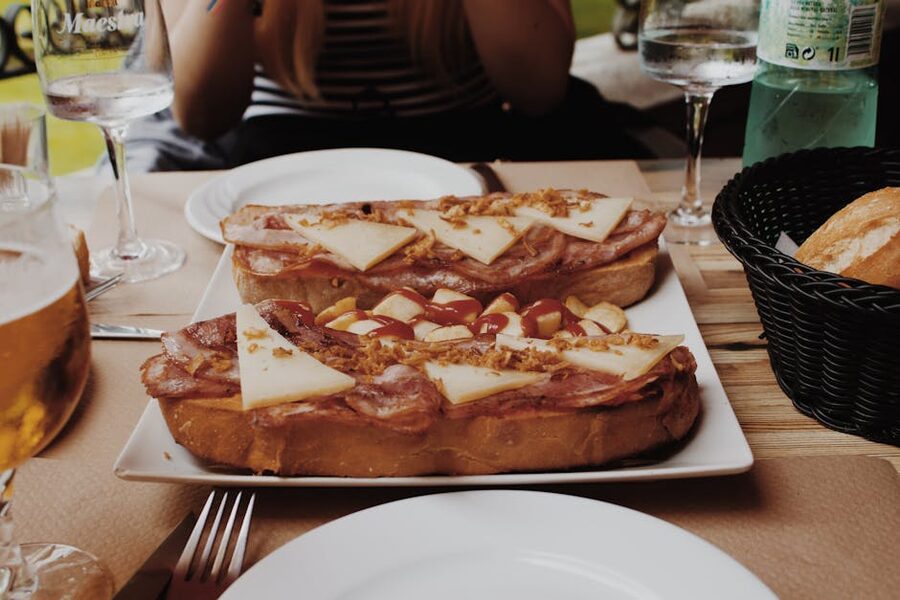
He skipped the bread. When the pa amb tomàquet came, he ate the toppings off the bread and left the bread itself. The bread was the dish. The toppings (jamón, anchovy, cheese) were the accompaniment. He inverted it. Eat the bread.
He tried to pay at the end. Spanish bars don’t bring you the bill. You go up to the bar and ask, “la cuenta, por favor”. On a tour you don’t have to do this, but afterwards, when you’re crawling on your own, this is how it works. Sit and wait and you’ll be there for an hour.
Alternatives if a group walking tour isn’t your thing
If you’d rather not be in a group of strangers, two solid alternatives exist.
Private tapas tour. Both Viator and GetYourGuide offer private versions of the tours above. You pay roughly double per person (because you’re covering the guide’s fee yourself), but the route can be customised. Worth it for a group of 4+ or if you have allergies that don’t mix with a group itinerary.
Self-guided crawl. Cheaper, harder. You need to know which bars to pick. The Gothic Quarter and El Born have hundreds of tapas places, of which maybe twenty are good. Pick from a curated list (any decent guidebook will give you 5-10), book a 1pm or 8pm start time, hit two bars in your area, then walk home. The savings over a tour are real but you don’t get the storytelling.
If your interest is more in cooking the food than eating it, consider a paella cooking class instead, or do both: tapas tour on the first night, cooking class on the second day. They cover completely different ends of the food experience and pair well as a “Spain food day” combination.
A short tapas history
The story most guides will tell you is that “tapa” comes from the verb “tapar”, to cover. Andalusian innkeepers in the 19th century put a slice of bread or ham on top of your sherry glass to keep flies out. The bread became more elaborate, eventually became the thing you actually came for, and the drink became the side. The drink-with-snack model spread north over the next hundred years.
Catalonia’s contribution to all this is fairly recent. The pa amb tomàquet rub-the-tomato move is mid-19th-century, born out of cheap rural eating. Vermouth came in from Italy in the early 20th century and got grafted onto the Sunday-lunch ritual. The tapas tour as a tourist concept barely existed before about 2005, and it scaled hard during the 2010s as Barcelona’s food scene professionalised.
Most of what tour guides describe as “ancient tradition” is actually 30-50 years old. That doesn’t make it less worth doing. It just means the food you’ll eat tonight is closer to a London curry house’s vintage than to anything medieval. Useful context for not over-romanticising it.
What it costs and what’s included
The two tours above run between $78 and $83 per person. That’s representative of the market: anything significantly cheaper (under $50) is going to be a bigger group, smaller plates, and a less experienced guide. Anything over $120 is either private, premium, or charging for the marketing.
What’s typically in the price:
- Three to four hours of guiding
- Food at every stop (about 8-12 small plates total per person, depending on operator)
- Three to five drinks (usually wine, sometimes vermouth, occasionally cava, water if you ask)
- The guide’s running commentary on the bars, the food, and the city
What’s not included:
- Anything you order off-menu (an extra glass of wine, a second portion)
- Tips for the guide (10-15% is standard if you enjoyed it; $10-15 per person on a $80 tour)
- Transport to the meeting point
- Dinner afterwards, if you’re somehow still hungry (you won’t be)
Best time of year for a Barcelona tapas tour
Tapas tours run year-round and the food doesn’t change dramatically by season, but a few things do:
January to early March: Calçot season. If your tour includes calçots (charred spring onions with romesco), this is the only time of year you’ll get them. Worth shifting a trip for if you’re a food traveller.
April to early June: The sweet spot. Mild weather, smaller crowds, terrace seating starts to make sense, and the markets are in spring fruit mode. Easier to book on short notice.
July and August: Hot, busy, expensive. Tours sell out, the bars are packed, and the standing-up-with-a-glass thing is sweatier than it should be. The food is the same. The vibe is more crowded. Book early or pick an evening slot when it’s cooler.
September to November: Second sweet spot. Wine harvest is happening (Penedès for cava, Priorat for the reds), so the wine pairings are slightly fresher. Weather still warm enough for outdoor stops.
December: Christmas markets and a few seasonal dishes (turrón nougat, escudella stew). Tapas-tour-wise it’s a quiet month with fewer operators running daily slots. Book ahead.
What to do after the tour
Most tours end around 10pm or 11pm at the last bar. The guide will leave you with a list of nearby places to keep going if you want, but most groups split at that point.
If you’re staying central, walk it off through the Gothic Quarter or El Born. Both are floodlit at night and atmospheric. If you want to keep eating, a digestif at any of the older bars (Marsella in El Raval is the famous one, allegedly Hemingway-related, take that with salt) is a good chaser. If you want to sleep, walk back. You’ll have eaten enough that doing anything else would be a stretch.
The next day, your stomach will tell you to skip lunch. Listen to it. Drink water, walk Barceloneta beach, and have a light dinner. Heavy two days in a row is a mistake.
Other Barcelona guides worth your time
Tapas is one of three or four food experiences worth booking in Barcelona, and most travellers stack them in a single trip. If you want to make it from raw ingredient to plate yourself, pair the tapas tour with our paella cooking class guide: tour first night, class on the second morning, you’ll know the food properly by day three. Walking the food neighbourhoods on foot also helps; our Gothic Quarter guide covers the daytime version of the streets your tapas tour will pass at night, and the walking tour guide is the obvious complement if you’d rather have the history without the wine.
If you’re checking off the rest of central Barcelona over the same trip, our Palau de la Música ticket guide handles the architectural Modernisme jewel a few blocks north of El Born, the Picasso Museum guide covers the museum on Carrer Montcada that’s almost on the route of most tapas tours through El Born, and the Montjuïc cable car guide is the daytime move I’d pair with a tapas night, because you’ll want a long walk and a view to digest the food.
For the bigger Barcelona ticket items: Sagrada Familia, flamenco show, and the Barcelona Card for transport. None of those are food-related but they are the spine of a four-day Barcelona trip, and a tapas tour fits naturally on the second or third night, after the heavy sightseeing days.
Affiliate disclosure: This article contains affiliate links to Viator and GetYourGuide. If you book through them we earn a small commission at no extra cost to you. We only recommend tours we’d send a friend on; the rankings here aren’t paid placements.