
The Picasso most people picture is the Cubist who broke painting in 1907, the man behind Les Demoiselles d’Avignon and Guernica, all sharp angles and re-arranged faces. The Picasso you find at the Museu Picasso in Barcelona is somebody else entirely: a fourteen-year-old boy in 1895 who could already paint like a Velázquez understudy. Two completely different artists, one name, and most tourists arrive expecting one and find the other.
Best for context: Small Group Picasso Tour with Museum, $47. Two hours, walks the streets Picasso lived on before going inside.
If you want flexibility: Picasso Museum Guided Tour, $45. Same skip-the-line setup, runs more time slots throughout the day.

,_July_2009.JPG)

- The Two Picassos Problem
- Where to Get Tickets
- The Three Tours Worth Booking
- 1. Barcelona Skip-the-Line Guided Tour of Picasso Museum:
- 2. Small Group Picasso Tour with Museum:
- 3. Picasso Museum Guided Tour with Skip the Line Ticket (Viator):
- What’s Actually Inside
- How to Get There
- When to Visit
- The El Born Neighbourhood
- The History Bit
- Practical Things People Get Wrong
- Is It Worth It?
- Other Barcelona Tickets You’ll Want
The Two Picassos Problem
You need to know which Picasso you’re getting before you walk in, because if you’re expecting the famous one you will be disappointed. This is worth saying up front.
The Cubist Picasso, the one who painted naked angular figures in Les Demoiselles d’Avignon in 1907, the one who painted the bombing of Guernica in 1937, the one whose late portraits look like they were assembled out of broken plates? That Picasso lived and worked mostly in Paris. His major Cubist and political works are at the Musée Picasso in Paris, the Museum of Modern Art in New York, and the Reina Sofía in Madrid (Guernica). Almost none of that work is in Barcelona.
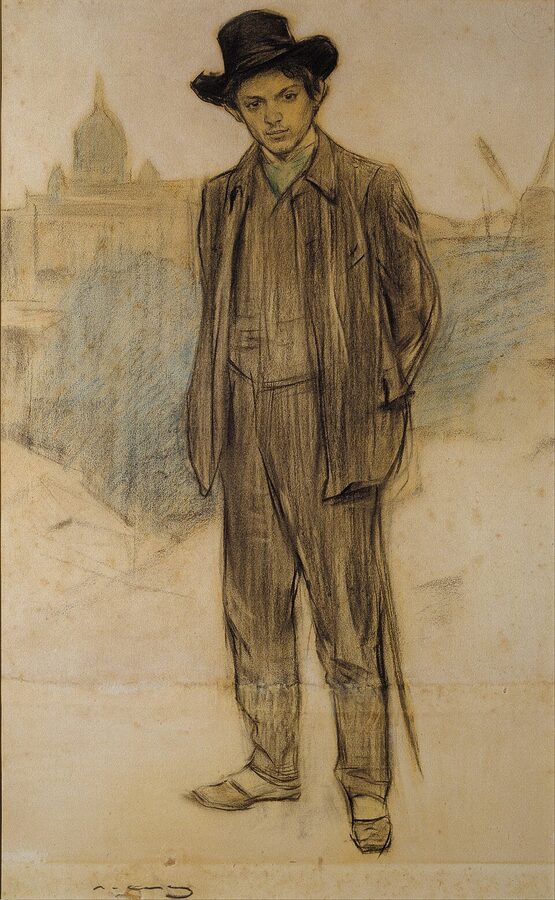
What the Museu Picasso has, and what nobody else in the world has, is the most complete record of his formative years. Roughly 1895 to 1904, ages fourteen to twenty-three, the years when he was still in Spain. Plus the Las Meninas series from 1957. That’s it. No Cubism. No Guernica. No Demoiselles.
So why come? Because the formative-years Picasso is genuinely the more interesting collection if you understand what you’re looking at. The fourteen-year-old who painted Science and Charity could already do everything a classical academy could teach. He painted that picture, full of academic light and shadow and a doctor taking a sick woman’s pulse, when most kids his age can’t draw a hand. The Blue Period work in here is rough and angry and personal in a way the famous Cubist stuff never quite is, because the Cubist stuff is technical and theoretical, and the Blue Period is the work of a young man whose best friend has just shot himself.
You’re getting the artist before the brand. That’s the pitch.
Where to Get Tickets
Three options, ranked by how much I’d recommend them:
Skip-the-line guided tour ($44 to $47). This is what I’d book. Ninety minutes to two hours, a guide walks you through the rooms in chronological order and explains why the early academic work matters. Without context the early rooms can read as just “good drawings by a kid.” With a guide you understand you’re watching a fourteen-year-old paint better than most working artists, and that frames the whole rest of the museum.
General admission online (€15). Cheaper, fine if you already know what you’re walking into. Buy on the official site, not at the door. Door tickets cost more and frequently sell out by midday on weekends. Pre-book by at least a day in summer.
Articket BCN (€38). A combined pass covering six Barcelona museums (Picasso plus MNAC, Fundació Joan Miró, MACBA, CCCB, Fundació Antoni Tàpies). Pays for itself if you’ll do three or more, which is realistic for an art-focused trip. Our MNAC ticket guide covers the same pass from the other direction.
.jpg)
Free entry windows, in case your timing lines up: Thursday afternoons from 4pm to 7pm, the first Sunday of every month all day, and the three annual Open Door days (12 February, 18 May, 24 September). Free tickets still need to be booked in advance through the official site, usually four days ahead. Don’t just turn up for free hours hoping to walk in. They’ve been wise to that for a decade.
Children under eighteen are free. Students with ID, 18-25, and 65+ get the discounted rate. Audio guide is €5 extra and worth it if you’re going self-guided, because the museum’s own labels lean academic.
The Three Tours Worth Booking
1. Barcelona Skip-the-Line Guided Tour of Picasso Museum: $44
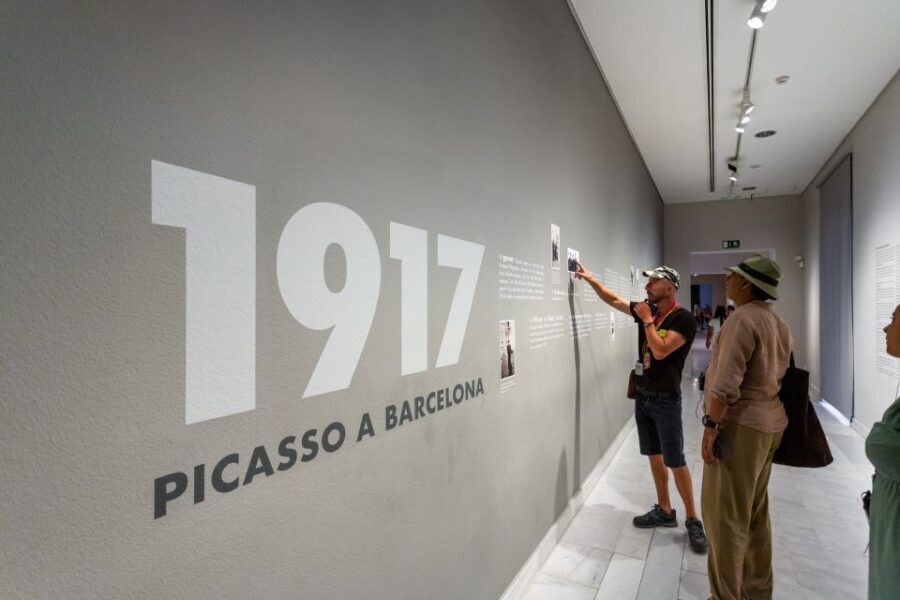
This is the highest-volume Picasso Museum tour booked through GetYourGuide, and the format is the right one: ninety minutes with skip-the-line entry, headsets so you can hear the guide in busy rooms, a chronological walk-through of Picasso’s life through the collection. The meeting point is around the corner from the museum entrance, not the museum door itself, which catches a few people out (so leave a bit of buffer). For the early-Picasso framing, our full review goes into what you actually see room by room.
Check Availability
Read our full review
2. Small Group Picasso Tour with Museum: $47
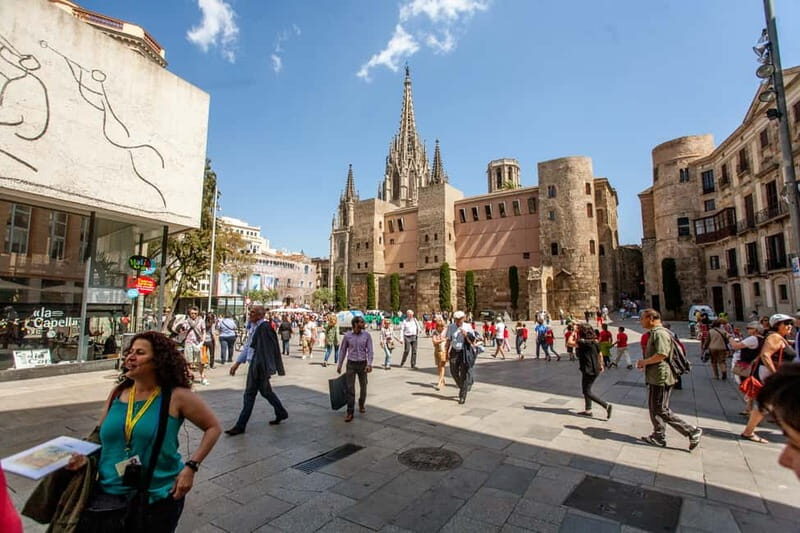
Two hours with a small group, but only about half is in the museum. The other half is a walking tour through the streets where Picasso actually lived between 1895 and 1904, including Els Quatre Gats (the cafe where he held his first solo show, still open and still serving food). It’s the version of this museum visit that I think holds up best for travellers who care about the city as much as the art, and our review of the small group format covers how the walking portion fits with the museum half.
Check Availability
Read our full review
3. Picasso Museum Guided Tour with Skip the Line Ticket (Viator): $45
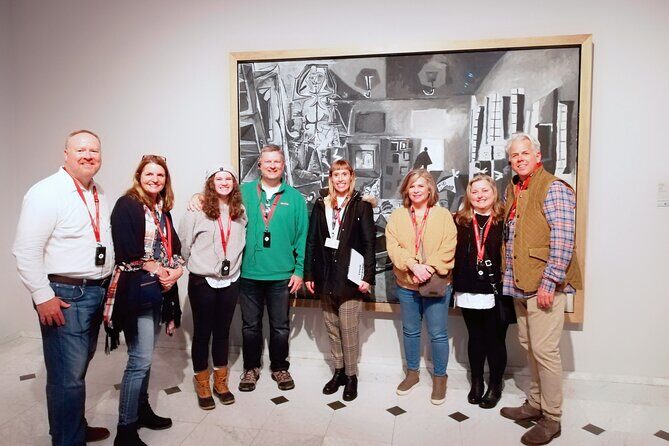
Functionally the same product as Tour 1, just listed on Viator instead of GetYourGuide. Different operator, slightly different time slots, similar quality of guide. The reason it’s on this list is platform preference: if you’re already booked through Viator for the rest of your Barcelona days, keeping bookings consolidated is genuinely useful. Cancellations occasionally happen at short notice so build a backup into the day, and our review of the Viator version has more on how the slot system works.
Check Availability
Read our full review
What’s Actually Inside
.JPG)
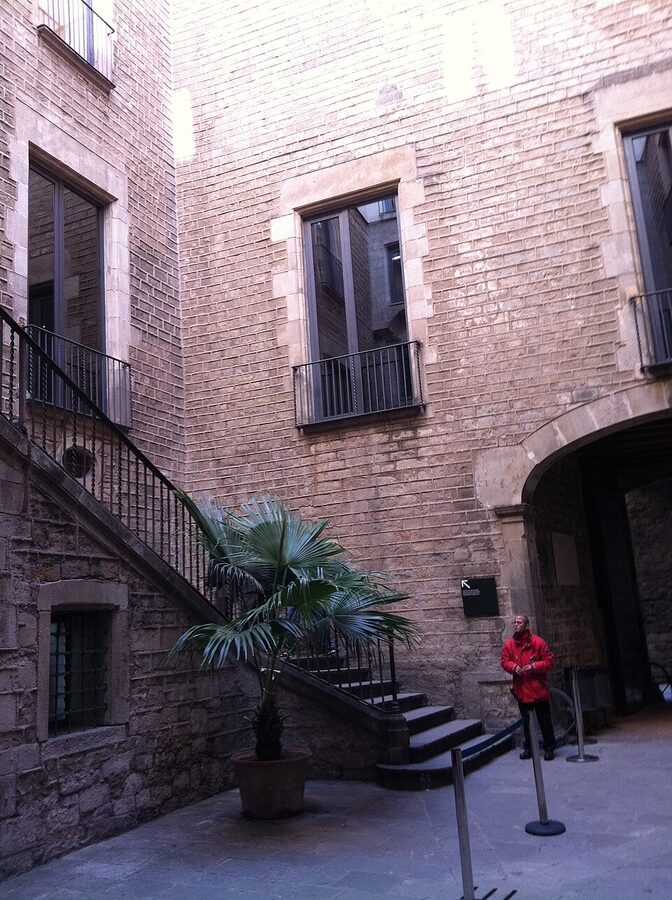
The collection is roughly 4,250 works spread across the five connected palaces. You walk through it chronologically.
The academic years (1893-1897). This is the room that surprises everyone. Picasso painted The First Communion at fifteen, Science and Charity at fifteen-going-sixteen. Both are full-scale academic oil paintings, the kind that take months and a thorough understanding of light, anatomy, and composition. Science and Charity got an honourable mention at the General Fine Arts Exhibition in Madrid. He was a fifteen-year-old kid. If you only know Cubism, this room reframes the entire artist.
The Barcelona years and the Blue Period (1900-1904). Picasso bounced between Paris and Barcelona during these years. The work gets darker after his close friend Carles Casagemas shot himself in 1901 over an unrequited love (the same Germaine Pichot would later appear in Les Demoiselles d’Avignon, but that painting itself is in New York, not here). The Blue Period work is sparse, cold, and you can feel the grief in it in a way reproductions in textbooks completely flatten.
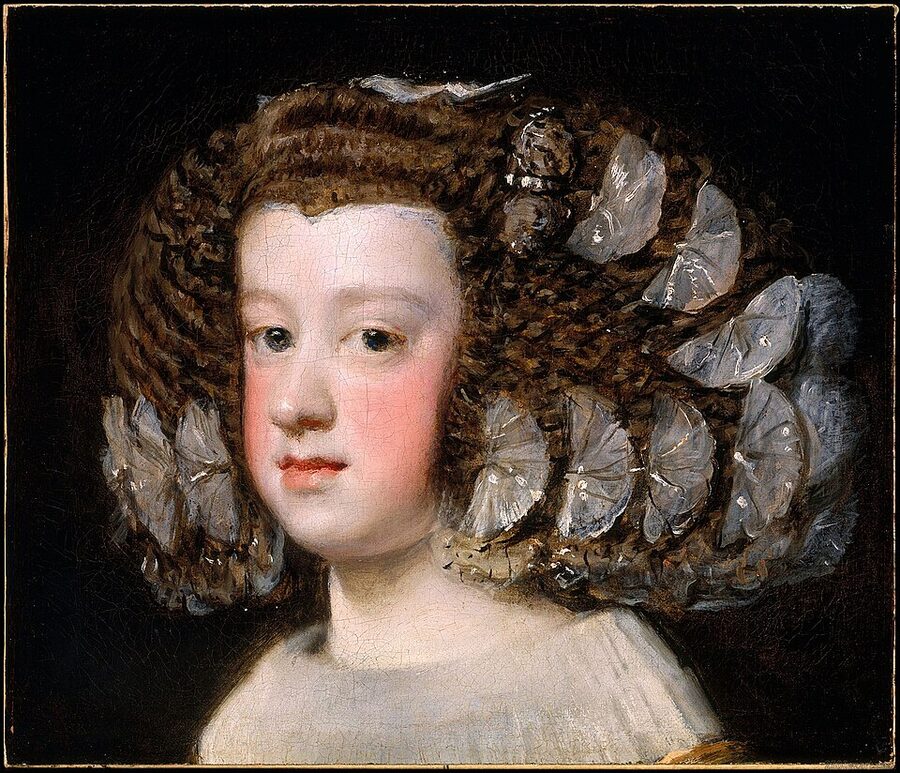
Rose Period and the Paris transition (1904-1906). A short room. Reds, oranges, harlequins, the colour comes back. After this Picasso moves permanently to Paris and the museum’s narrative thins out. You skim through small reproductions and a few studies. This is the gap between the early Picasso the museum specialises in and the Cubist Picasso who lives elsewhere.
The Las Meninas room (1957). Then there’s a sudden jump fifty years forward. In 1957 Picasso, by then in his seventies and living in the south of France, painted fifty-eight studies of Velázquez’s Las Meninas, the most famous painting in the Prado. He gave the entire series to this museum. They’re hung together in one room and you see the Cubist Picasso reckoning with the academic Spanish master who shaped him as a boy. It’s the closest thing the museum has to a Cubism exhibit, and it’s there because Picasso wanted Barcelona to have it specifically.
The Pigeon Room. Tail end of the visit. A short series of pigeon paintings Picasso did in California (his terrace was infested, apparently). It’s small and slightly silly after the heavy Blue Period stuff, which I think is the point. The man had range.
Most visitors finish in 90 to 120 minutes. If you’re including the temporary exhibition, push it to two and a half hours. Don’t try to do it in under an hour, you’ll leave with nothing.
How to Get There
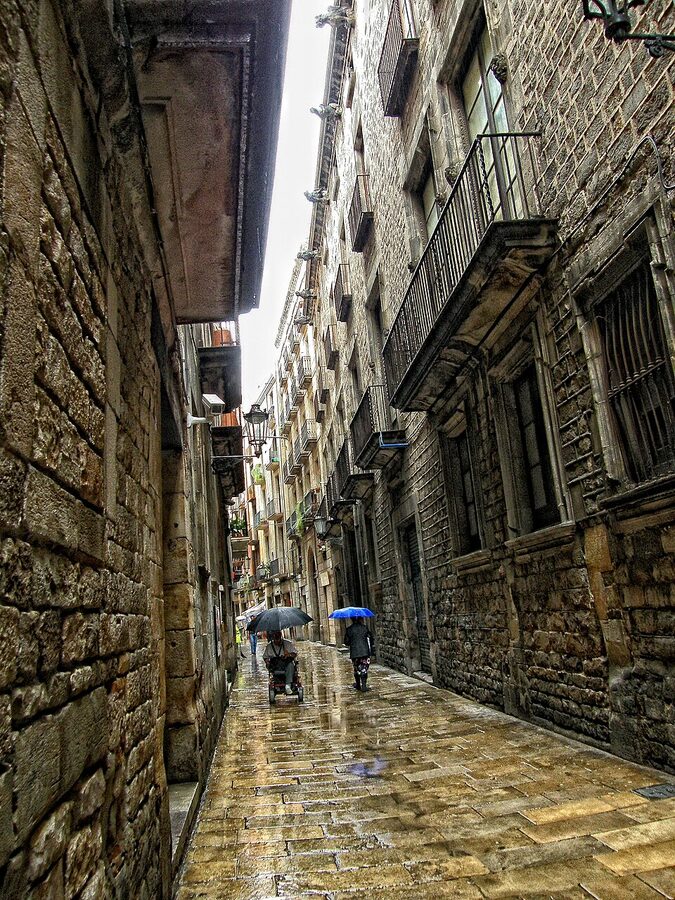

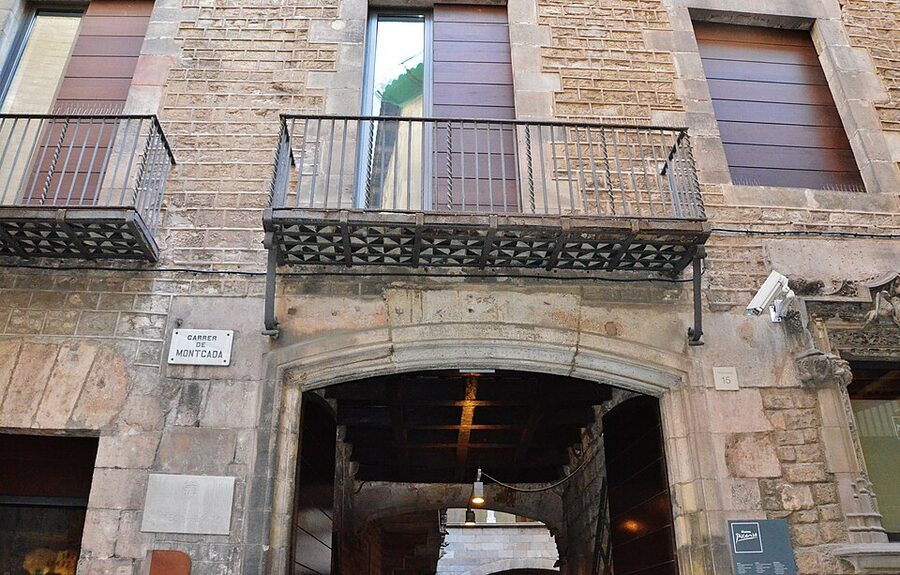
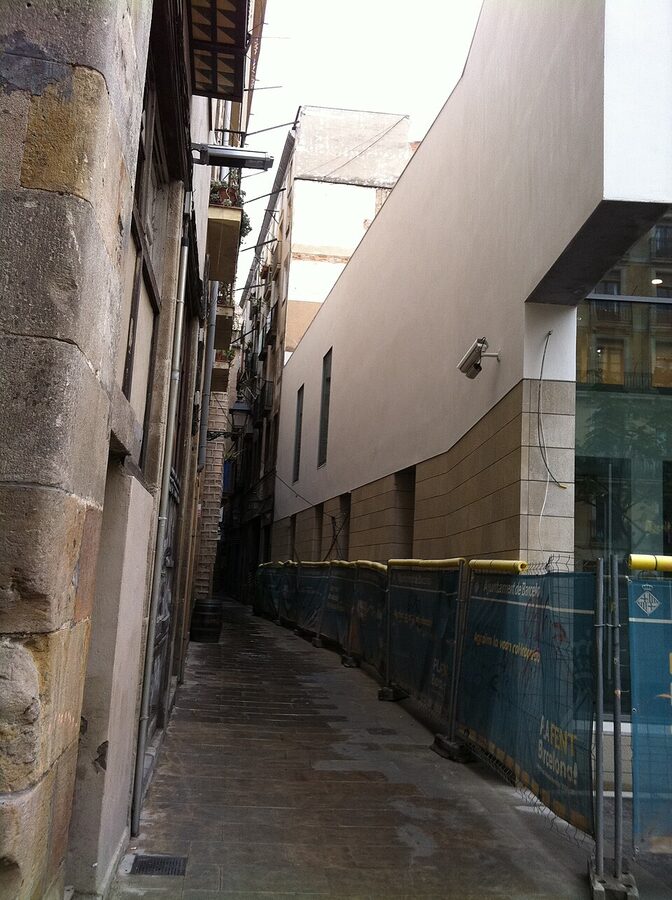
The address is Carrer Montcada 15-23, in the El Born district. The closest metro is Jaume I on the yellow line (L4), about five minutes’ walk. Arc de Triomf on the red line (L1) works too, more like ten minutes from the north. Buses 39, 45, 51, 120, V15, V17 and H14 all stop nearby.
If you’re walking from Las Ramblas it’s about fifteen minutes east, cutting through the Gothic Quarter. From the Sagrada Família it’s a thirty-minute walk or twelve minutes on the metro. Most people doing a single Barcelona day pair the Picasso Museum with the surrounding Born neighbourhood and Santa Maria del Mar church, which are within five minutes of each other.
For getting around the city more broadly, the Hola Barcelona transport card is the cheapest way to do unlimited metro for a few days, and the hop-on hop-off bus includes a stop near the Born if you’re combining it with other landmarks across the city.
When to Visit

Hours: Tuesday to Sunday, 10am to 7pm. Closed Mondays. Closed 1 January, 1 May, 24 June, 25 December. Reduced hours on 24 and 31 December (closes at 2pm).
The museum is busiest from about 11am to 2pm, every day. If you can get a 10am ticket you’ll have a much quieter forty-five minutes before the tour groups arrive. The other quiet window is the last hour, around 5:30pm to 7pm, when day-trippers have moved on to dinner. Skip mid-afternoon if you want to actually see the paintings without people standing in front of them.
Free hours (Thursday 4pm-7pm and the first Sunday of each month) are predictably packed. If you’re going for the price, accept the trade-off. If you’re going for the art, pay the €15 and pick a less-crowded slot.
Avoid Monday by default. The museum is closed Mondays and the queue you see is people who didn’t check (it happens daily). On the other hand, Mondays are good for combining a Picasso-Museum-isn’t-open-today day with the Gothic Quarter walking route, which costs nothing.
The El Born Neighbourhood
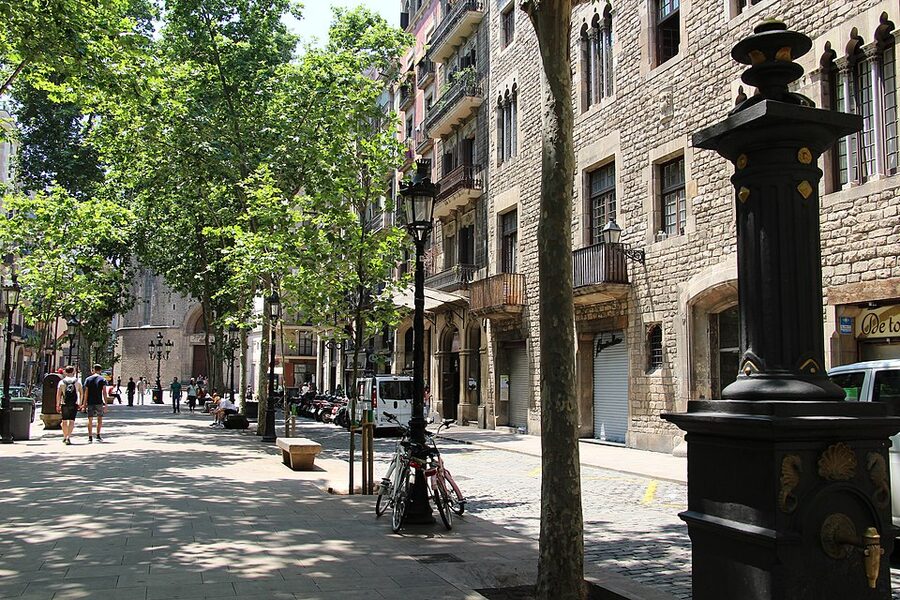

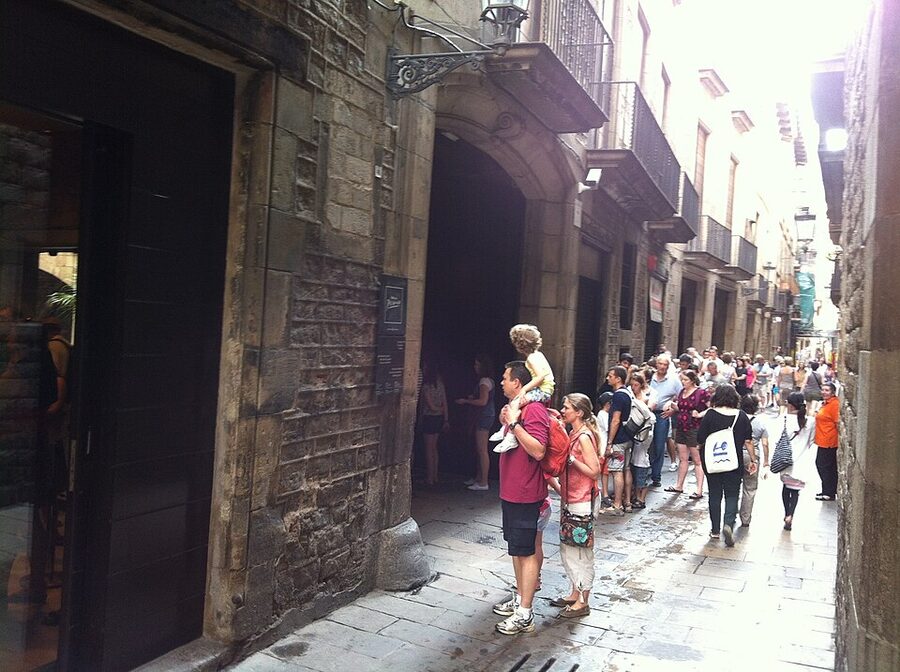
The Picasso Museum is in El Born, not the Gothic Quarter, even though everyone lumps them together. They share a border (Via Laietana) but the feel is different. Born is quieter, more independent shops, fewer chain restaurants, and the only crowds are around Santa Maria del Mar and Passeig del Born itself.
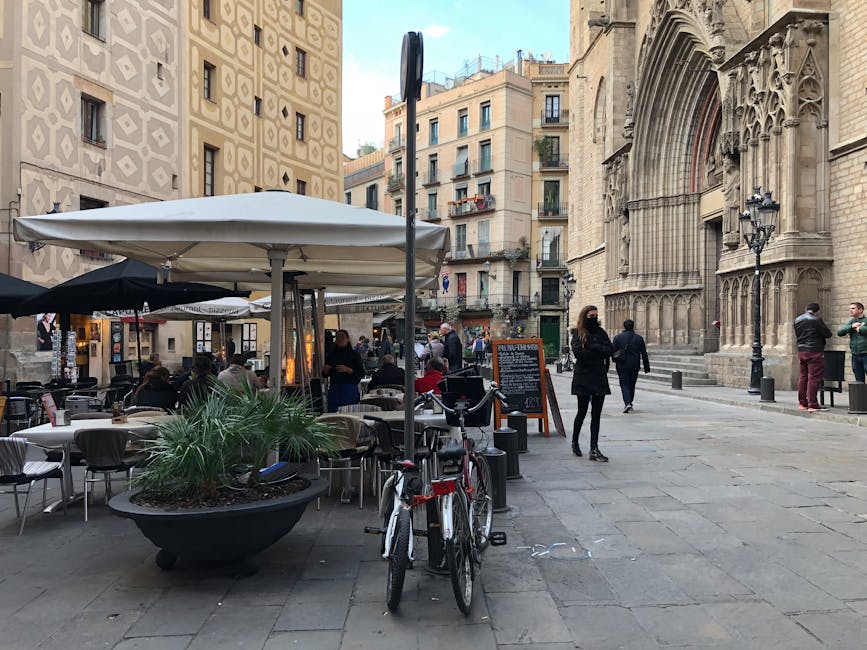
This is also why a lot of tapas tours in Barcelona meet in this neighbourhood. The bars are denser around here than they are in the Gothic Quarter, and the food culture is more local and less geared at tour-bus crowds. If you’re doing the Picasso Museum in the late afternoon, finishing the day with a tapas crawl through the same streets makes a lot of sense.
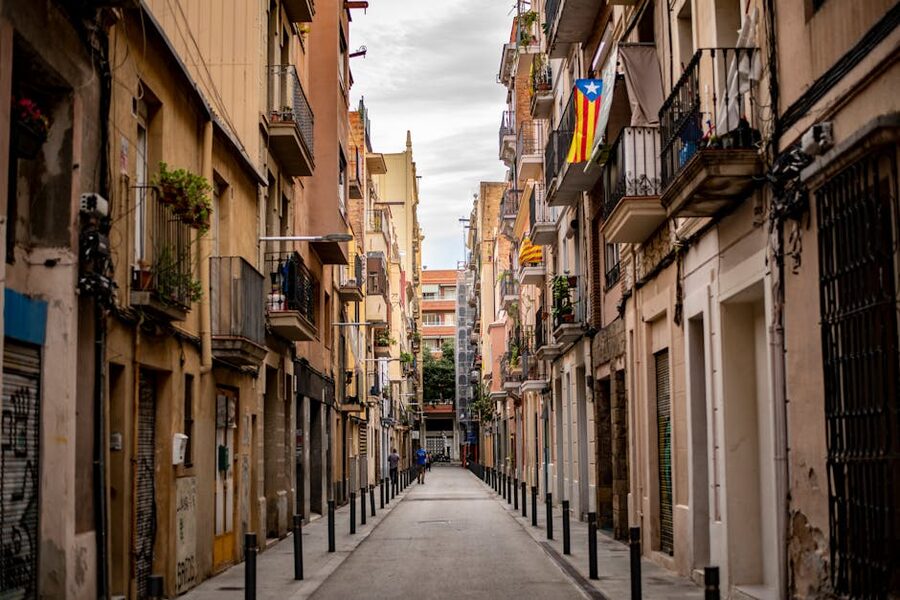
Worth a quick visit while you’re here: the Born Cultural Centre (free entry, ten minutes north of the museum), the Mercat de Santa Caterina market for lunch, and the Chocolate Museum for an unserious half-hour with a chocolate ticket you can eat. If you’ve got a half-day rather than just an hour, this is the part of Barcelona to spend it in.
The History Bit
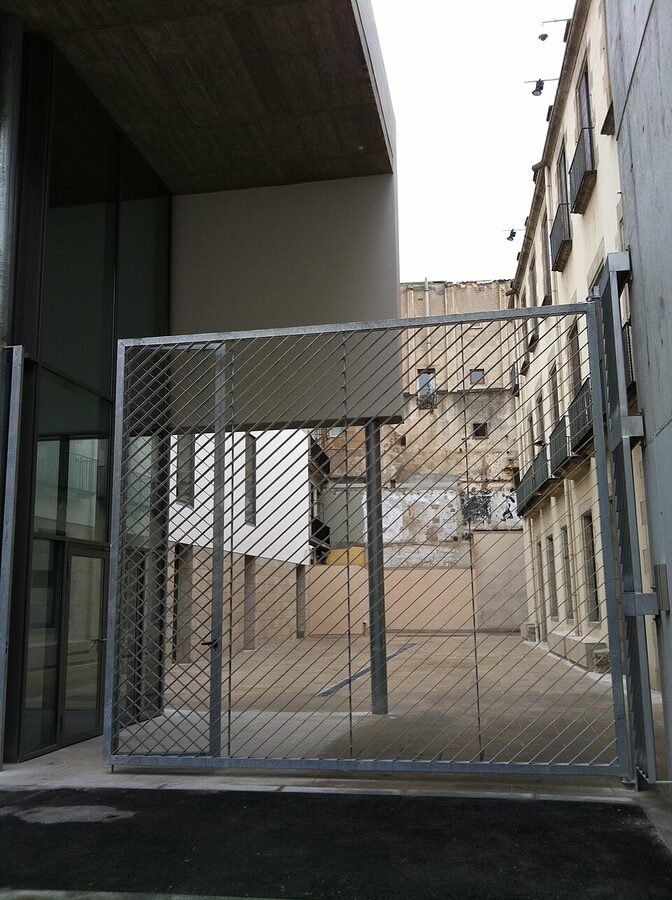
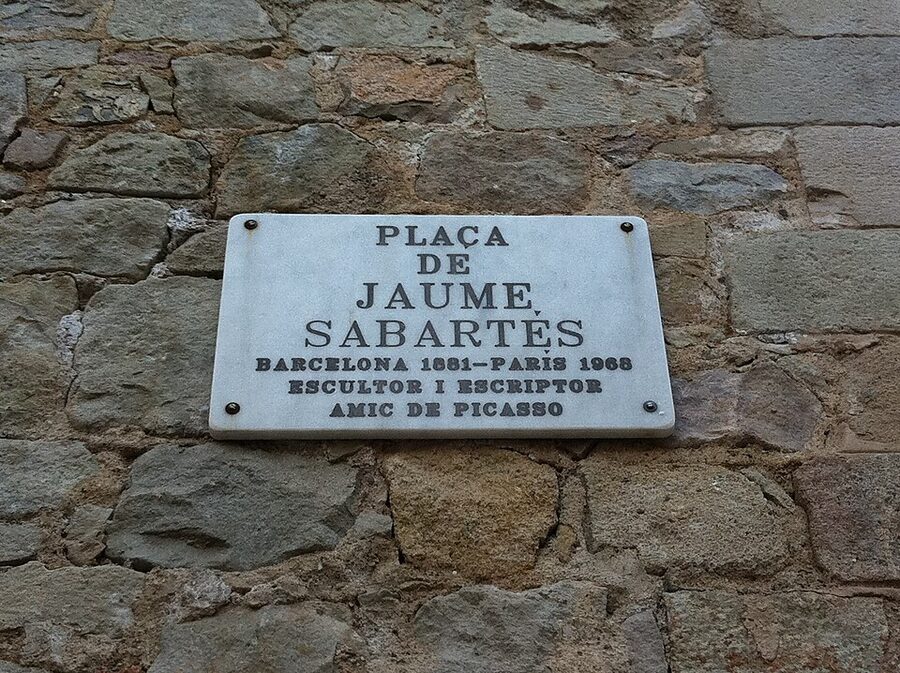
The museum opened in 1963, and it exists because of one person: Jaume Sabartés. Sabartés met Picasso in Barcelona around 1899, when both were teenagers in the bohemian crowd at Els Quatre Gats. They stayed friends through Picasso’s whole career. Sabartés ended up working as Picasso’s personal secretary in Paris from the 1930s onwards, managing his life, his correspondence, and his memorabilia for nearly forty years.
In the 1950s Sabartés started donating his own collection of early Picasso work to the city of Barcelona. The original idea was for a small museum, more or less Sabartés’s living room of Picasso pieces. The Spanish dictator Francisco Franco wouldn’t let it be called the “Museu Picasso” at first because Picasso was a public communist living in exile, so it opened in 1963 as the “Sabartés Collection.” Picasso then started donating his own work, including the entire Las Meninas series in 1968 after Sabartés died. The museum quietly took its proper name once Franco died in 1975.
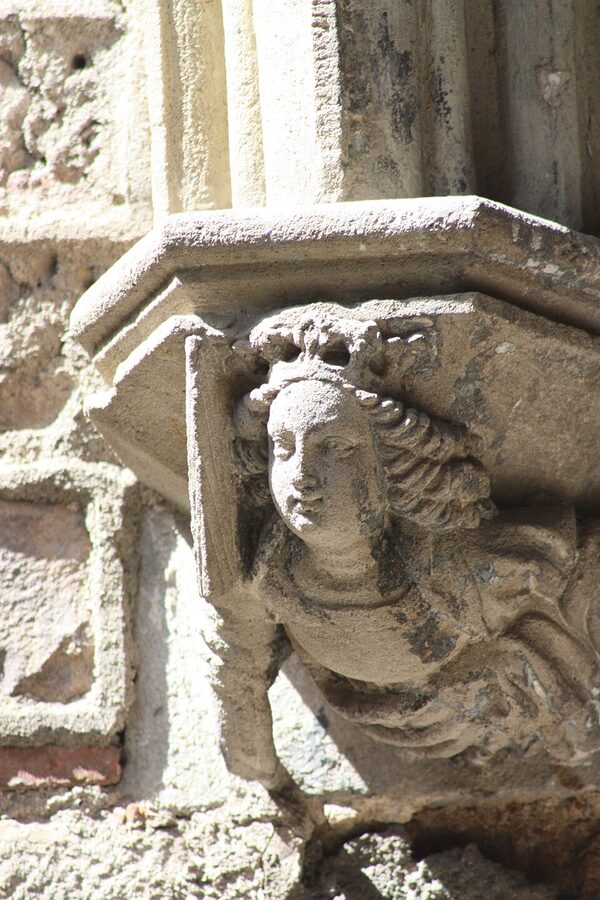
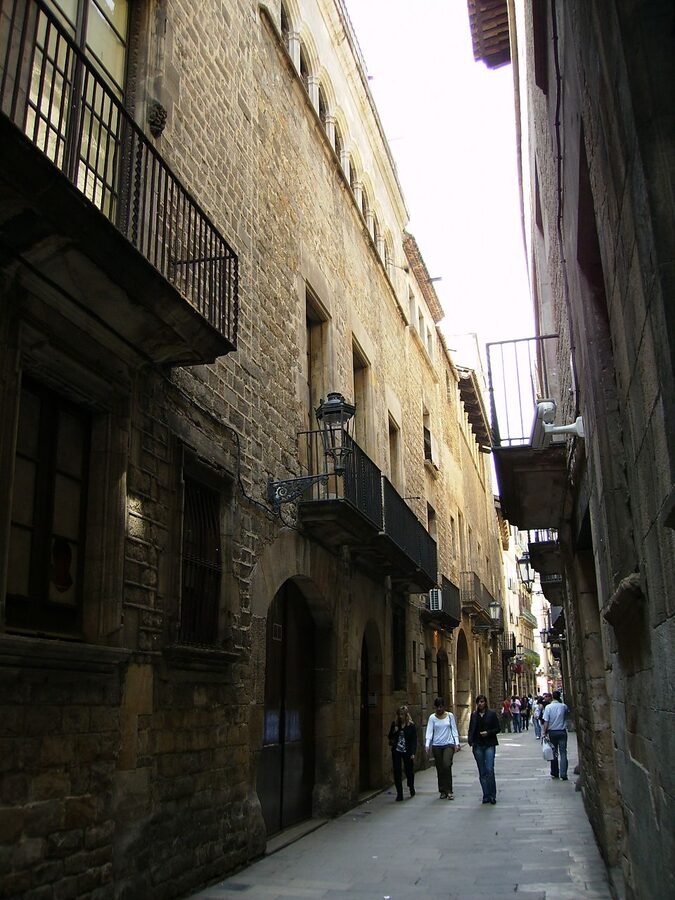
The five palaces themselves were medieval merchants’ houses on Carrer Montcada, Barcelona’s most prestigious address in the 1300s and 1400s. The Aguilar Palace, the Baró de Castellet Palace, the Meca Palace, the Mauri House, and the Finestres Palace were knitted together over the course of the twentieth century into the museum complex you walk through now. Some of the rooms still have their original Gothic ceilings. If you happen to look up while reading a label, you’ll catch them.
Worth knowing for context: this isn’t the only Picasso museum in Spain. There’s Museo Picasso Málaga, in the city where he was born, and the smaller Museo Casa Natal at his actual childhood home. Those collections lean later, more middle-period and post-war work. Barcelona is the early-years museum specifically. The cities split the artist roughly in half by his life.
Practical Things People Get Wrong
.jpg)
- The meeting point isn’t the museum door. Most guided tours meet on a side street or at a separate office a couple of minutes from the entrance. Read your booking voucher carefully. Showing up at the actual museum entrance is the most common mistake.
- Photography rules are strict. No flash, no tripods, and the temporary exhibitions usually ban photography entirely. Phone shots of the permanent collection are allowed in most rooms, with no flash.
- Bag policy is restrictive. Anything bigger than a small handbag has to go in the cloakroom. There’s no fee but the queue at peak times eats fifteen minutes.
- Audio guides need to be picked up at the entrance, not pre-loaded. Don’t book the audio guide and then arrive late expecting it to be ready remotely. They hand them out physically when you check in.
- The temporary exhibition is usually worth the small upgrade. The museum runs strong rotating shows, often pulling pieces from sister museums in Paris and Antibes. Add it on at the ticket stage if budget allows.
- Don’t rush the early rooms. The teenage academic work is the most undersold part of this museum and the room people walk through fastest. Sit down with Science and Charity for ten minutes. Look at the brushwork.
Is It Worth It?
Yes, if you go in knowing what you’re getting and especially if you book a guided tour. The Picasso Museum is genuinely one of the most interesting art museums in Spain, and the early-Picasso angle is something you can’t see anywhere else. The catch is that if you’re expecting Cubism or Guernica or anything you’d recognise from a high-school art textbook, you’ll spend ninety minutes confused and leave disappointed.
Skip it if you only have one day in Barcelona and you’ve never seen the Sagrada Família, Park Güell, or Casa Batlló. Those are the iconic-Barcelona experiences and Picasso isn’t one of them. If you’ve got two or three days, though, this museum is the one I’d put first for a half-day art block.
Other Barcelona Tickets You’ll Want
The natural pairing for the Picasso Museum is the rest of Barcelona’s modern-art scene. The Joan Miró Foundation up on Montjuïc covers Barcelona’s other major twentieth-century painter, and the building itself (designed by Josep Lluís Sert, Miró’s friend) is half the point of going. MNAC’s collection on the same hill fills in the broader Catalan art tradition Picasso was trained inside, especially the medieval Romanesque rooms.
Geographically the museum sits in El Born next to the Gothic Quarter, so most people pair it with a Gothic Quarter walking route the same morning or afternoon. If you’re in town for a few days I’d also slot in the new Round 2 Barcelona tickets we just covered: Palau de la Música tickets for the Modernista concert hall a five-minute walk from the museum, a Born-area tapas tour for the evening, and the Montjuïc cable car for the day you’re up at the Miró Foundation. Camp Nou’s a longer trip but our Camp Nou guide is worth checking if your day already includes a metro ride out west.
Affiliate disclosure: We earn a small commission on bookings made through our affiliate links to GetYourGuide and Viator, at no extra cost to you. It helps keep the site running and the writing independent.