
My friend Pete had a long, opinionated speech about paella before he came to Valencia. He’d had it in London and Brighton and once at a beach bar near Alicante. He knew it. Then on his second day in the city he watched a chef from L’Albufera lift the lid off a pan that smelled of orange wood and saffron, and the chef pointed at the rabbit, the chicken, and the snails, and Pete went very quiet for a long minute.
If you only ever cook one Spanish dish properly in your life, it should be paella valenciana, and you should learn it here. Below are the two paella classes I’d point friends at, plus everything I wish someone had told me before I booked the first one I took.
Best for the Ruzafa neighbourhood: Valencian Paella Class with Ruzafa Market, $78.60. Three and a half hours, sangria workshop, smaller hipster-quarter market.
- What you’re actually booking
- Top picks: 2 paella classes I’d actually book
- 1. Paella Cooking Class, Wine Tasting and Central Market: .65
- 2. Valencian Paella Class with Ruzafa Market and Sangria: .60
- Which class is right for you?
- What goes in a real paella valenciana (and what doesn’t)
- How a class actually goes (hour by hour)
- The market visit (about an hour)
- The walk to the kitchen and prep (15-20 minutes)
- The cook (about 90 minutes)
- The rest (around 10 minutes)
- The lunch (an hour, give or take)
- Where paella came from (and why Valencia owns it)
- Practical stuff
- What it costs and what you get for the money
- When to book
- Time of day
- Dietary stuff
- Getting around between classes and the rest of the city
- Common mistakes (mine and other people’s)
- Combining a paella class with a wine and tapas tour
- Who shouldn’t book a class
- Booking through the operators directly versus an agency
- What to do after lunch
- One last thing about chorizo
- If you’re building a Valencia food day
What you’re actually booking
A Valencia paella class isn’t just three hours of cooking. The standard format is roughly: meet your chef, walk to a city-centre food market and shop for ingredients with them, head to a kitchen, cook your own paella from scratch, then sit down and eat it for lunch with regional wines. Total time is usually 3.5 to 5 hours.
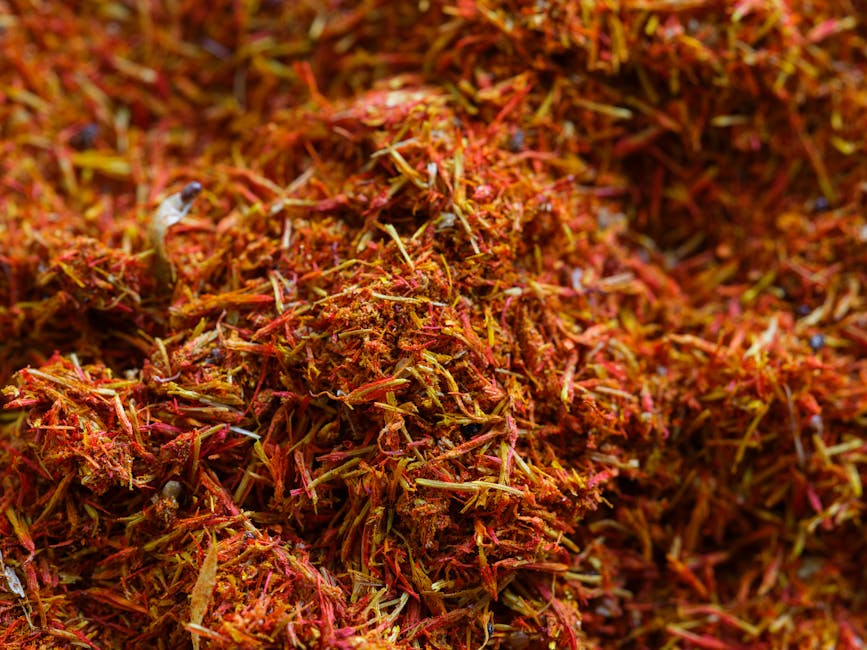
The two main reasons to book are 1) the market visit is genuinely useful (you learn how to spot good rice, what bomba looks like next to a cheaper grain, why the saffron stand has both the real stuff and the cheap “colorante” version), and 2) you eat the thing you cooked, with people who care, in a city where this dish is taken seriously enough to be regulated.
Yes, regulated. The local government runs a paella valenciana D.O. (denomination of origin) and there’s an official list of ingredients. We’ll get into that in a minute.
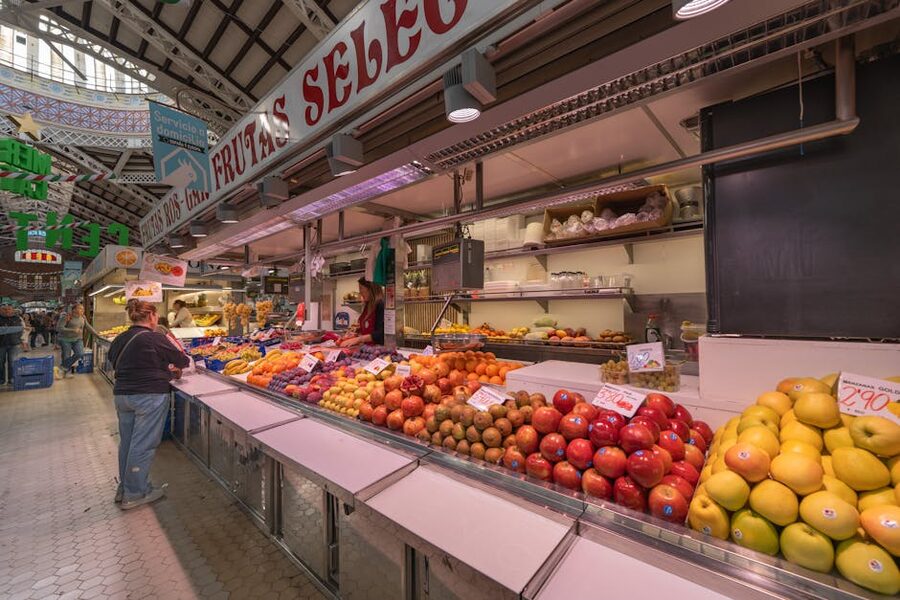
Top picks: 2 paella classes I’d actually book
Both of these are small-group classes with experienced chefs, both end with you eating what you made, and both walk you through a working market first. They split on which market and how long the day runs.
1. Paella Cooking Class, Wine Tasting and Central Market: $84.65
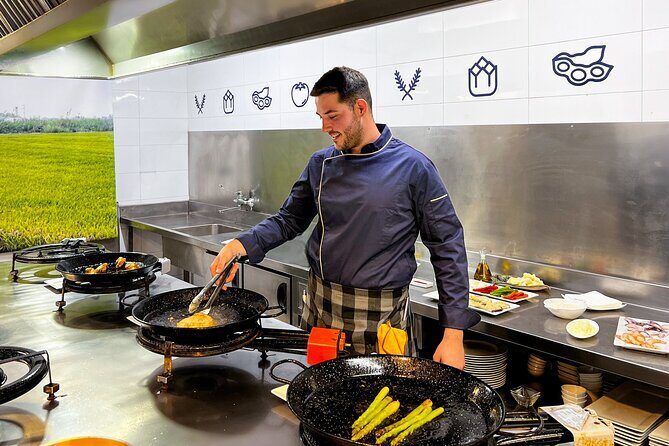
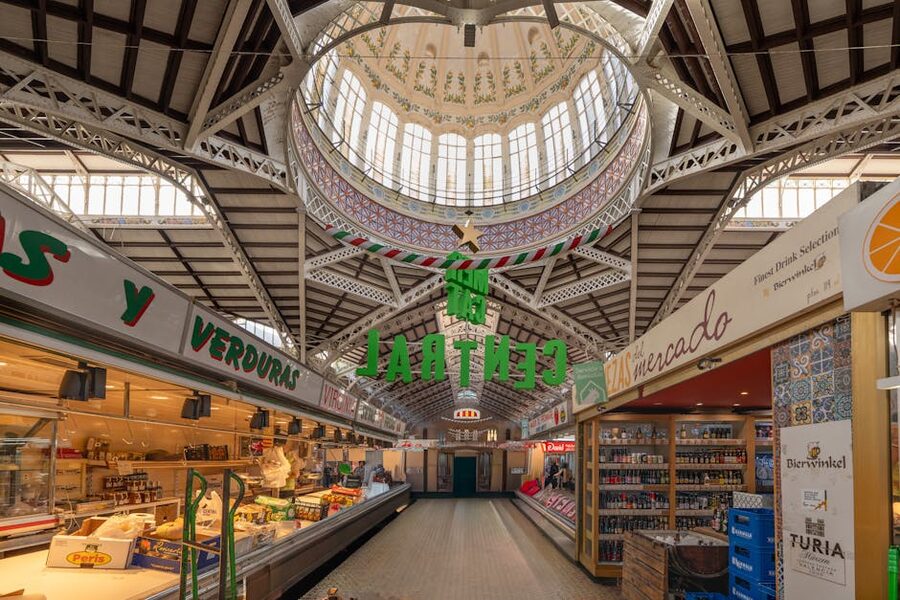
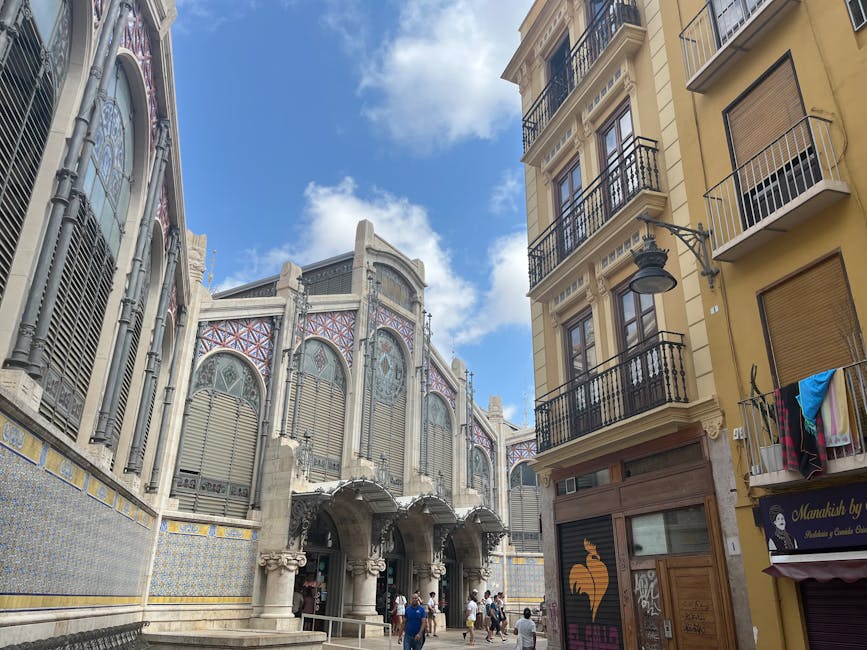
If you only do one cooking class in Valencia, this is the one I’d pick. The chefs (you’ll likely get David, Victor or Megan) are the kind of people who’ll explain why your grandmother’s recipe with chorizo is wrong without making you feel bad about it. Our full review gets into the kitchen setup and the wine pairings, and one heads-up: Mercado Central is closed on Sundays and afternoons, so a class in those slots skips the market visit. Pick a morning weekday slot.
Check Availability
Read our full review
2. Valencian Paella Class with Ruzafa Market and Sangria: $78.60
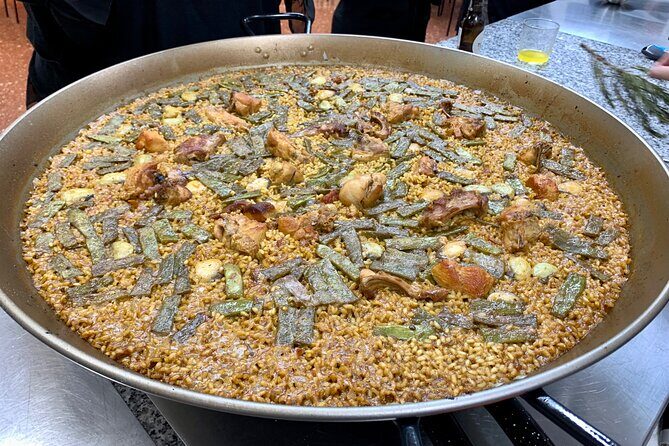
This is the class to pick if you want to skip the tourist crush and see the Valencia that actual Valencians shop in. There’s a sangria-making workshop bolted on, which sounds a bit gimmicky but actually loosens everyone up before the cooking starts. The chef (Ana, when we visited) sticks to the traditional recipe with chicken and rabbit, which is the right call. Our review covers the tapas course and the dessert, both of which I underestimated.
Check Availability
Read our full review
Which class is right for you?
The two operators above cover most needs, but they answer different questions. Here’s how I’d pick between them.
Pick the Mercado Central class if: you want to see the iconic 1928 market, you’re staying in or near the old town, you want three different paella variants to try (so you can compare the rabbit-and-chicken original with the seafood and vegetarian versions side by side), and you don’t mind a slightly bigger group.
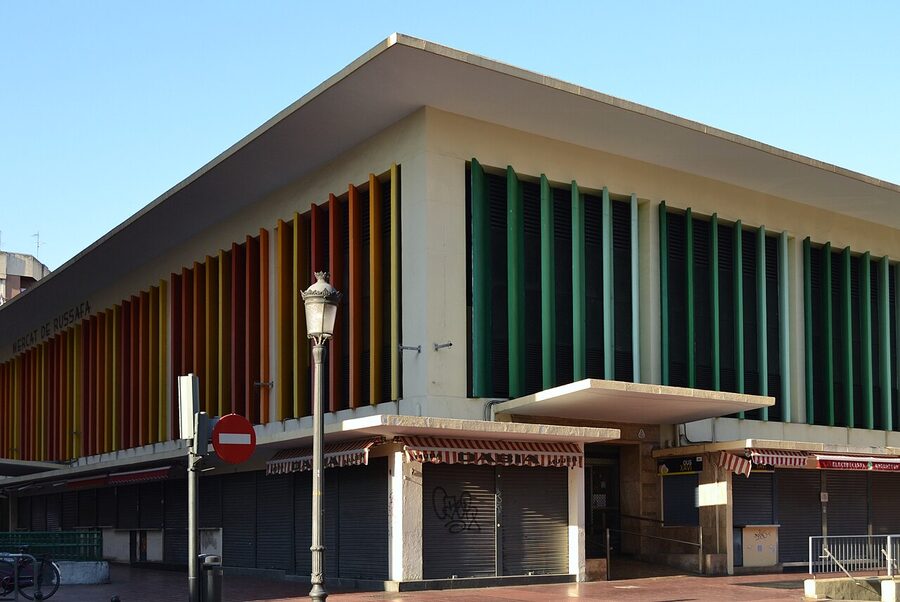
Pick the Ruzafa class if: you want a smaller, calmer market that’s not full of tour groups, you’re staying south of the centre or near the train station (Ruzafa is an easy walk from Estacion del Norte), you want the sangria workshop, and you’d rather get one paella made properly than three made quickly.
If you have time for both, do them on different days. They’re different enough that you’ll learn distinct things.

What goes in a real paella valenciana (and what doesn’t)
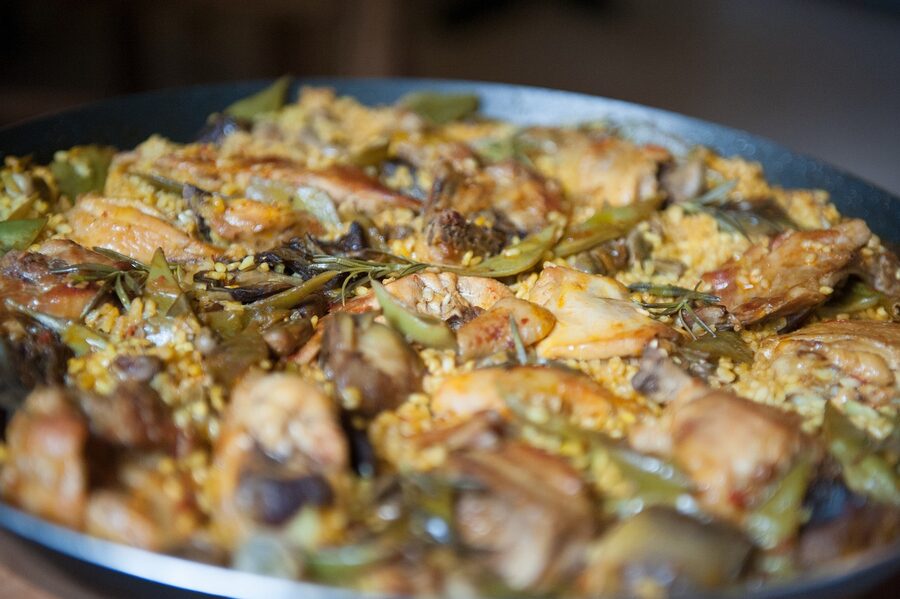
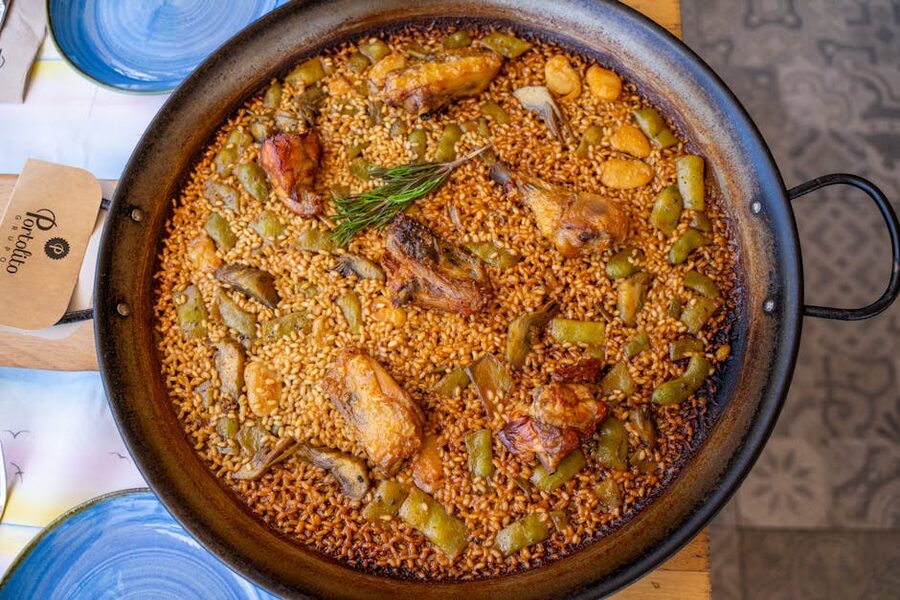
This is the part Valencians get touchy about, and the part where most travellers learn something new on day one. The 2021 D.O. paella valenciana lists ten core ingredients: rabbit, chicken, flat green beans (ferraura), large white butter beans (garrofo), tomato, sweet paprika, saffron, olive oil, salt, water. That’s the core. There are a handful of permitted additions: snails, duck, artichoke, garlic, rosemary.
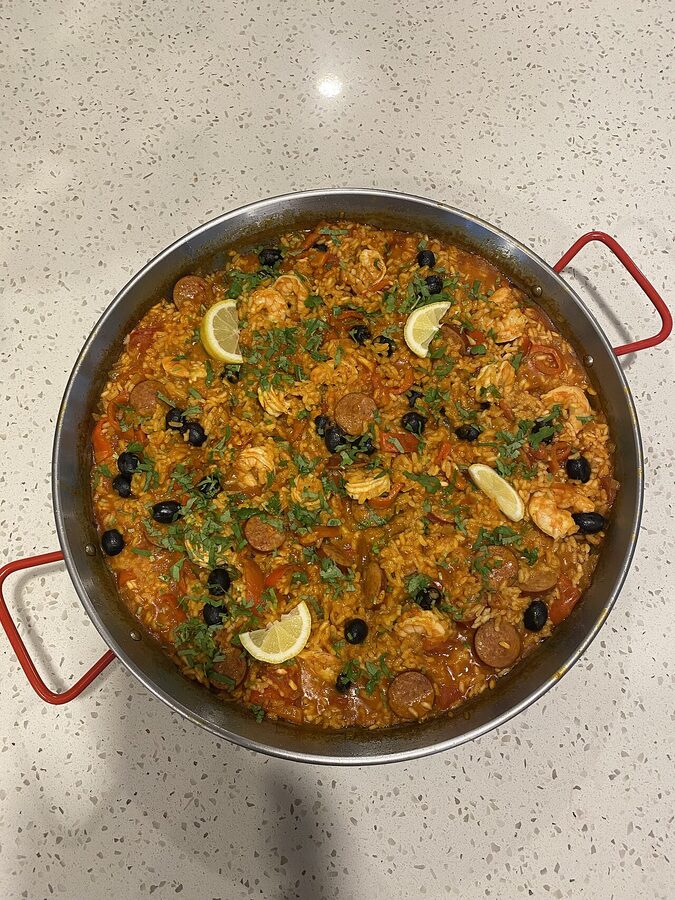
What’s not in there, and what your chef will probably mention with a small sigh: prawns, mussels, chorizo, peas, onion. The seafood paella you’ve had at the beach is its own dish (paella de marisco), not Valencian paella. The mixed paella with both meat and seafood (mixta) is a tourist invention. And chorizo? Don’t even joke about it. There’s a Twitter account run by Jamie Oliver that put chorizo in a paella video years ago, and Valencians still bring it up unprompted.
Why so strict? Because paella was a working farmer’s lunch from the rice fields south of the city, made with whatever was around: chickens that had stopped laying, a rabbit shot in the field, beans from the kitchen garden, snails picked off the rosemary bushes after rain. That ingredient list isn’t snobbery, it’s history.
How a class actually goes (hour by hour)
Both classes follow more or less the same shape. Here’s what to expect, so you can plan your day around it.
The market visit (about an hour)
You’ll meet at a central point (San Valero parish for Ruzafa, near the Mercado Central for the Central Market class) and walk over with the chef. They’ll buy ingredients in front of you, talk you through what they’re picking and why, and you’ll usually get a few snacks along the way. Coca de tomate, maybe a slice of jamon, a wedge of cheese.
This is the bit most travellers underrate. It sounds like filler. It’s not. You learn how to read a Spanish market, which means you can buy your own dinner ingredients for the rest of the trip without getting fleeced.


The walk to the kitchen and prep (15-20 minutes)
Most kitchens are a short walk from the market. You’ll get aprons, a quick safety briefing, then the chef sets out everyone’s mise en place. The cutting boards are usually shared between two or three people. Don’t worry if you can’t dice an onion, you won’t be doing much knife work; the chef does the technical chopping while you watch.
The cook (about 90 minutes)
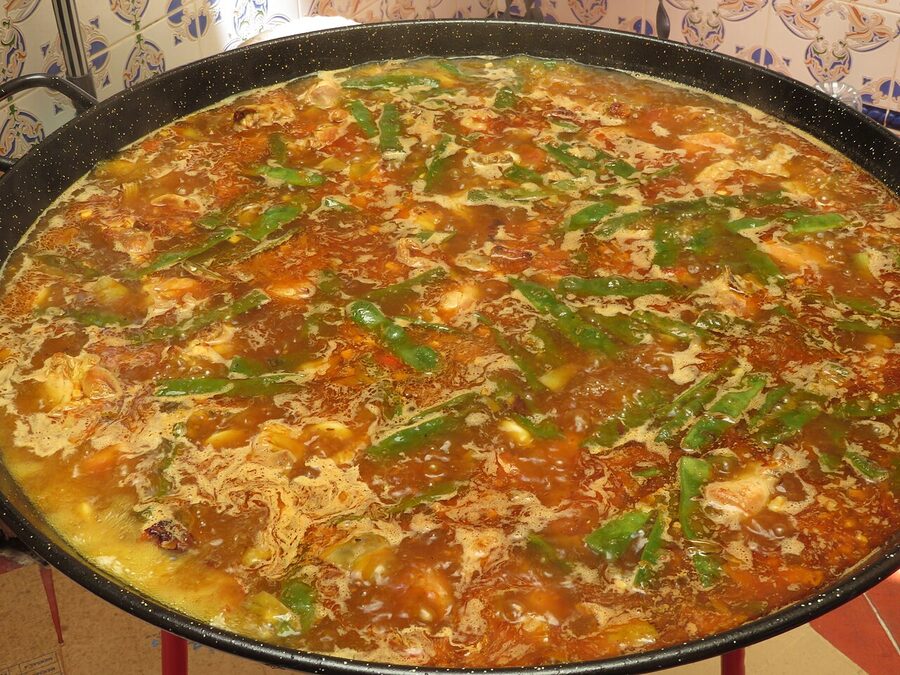
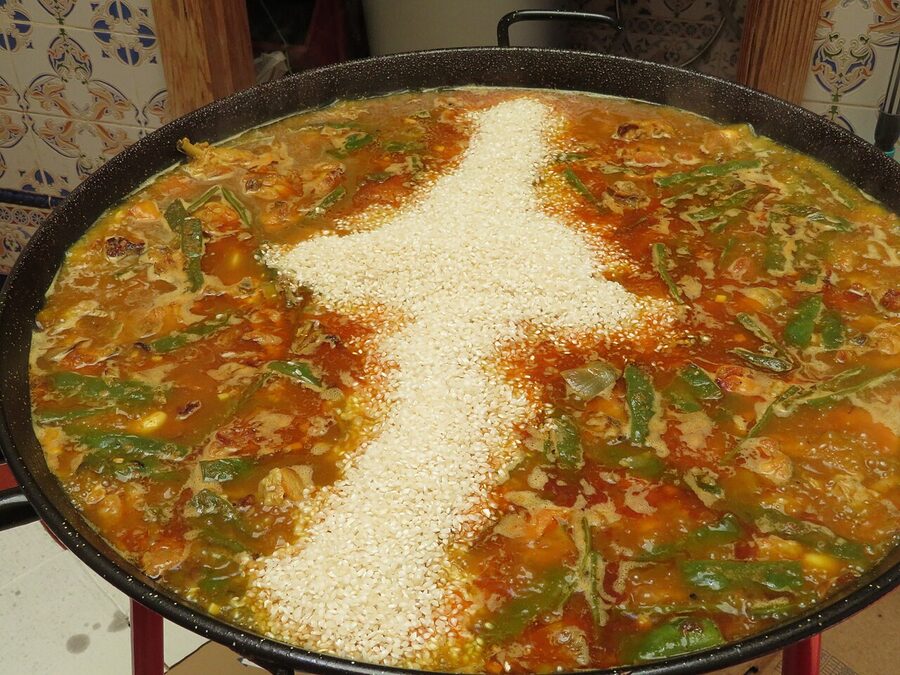
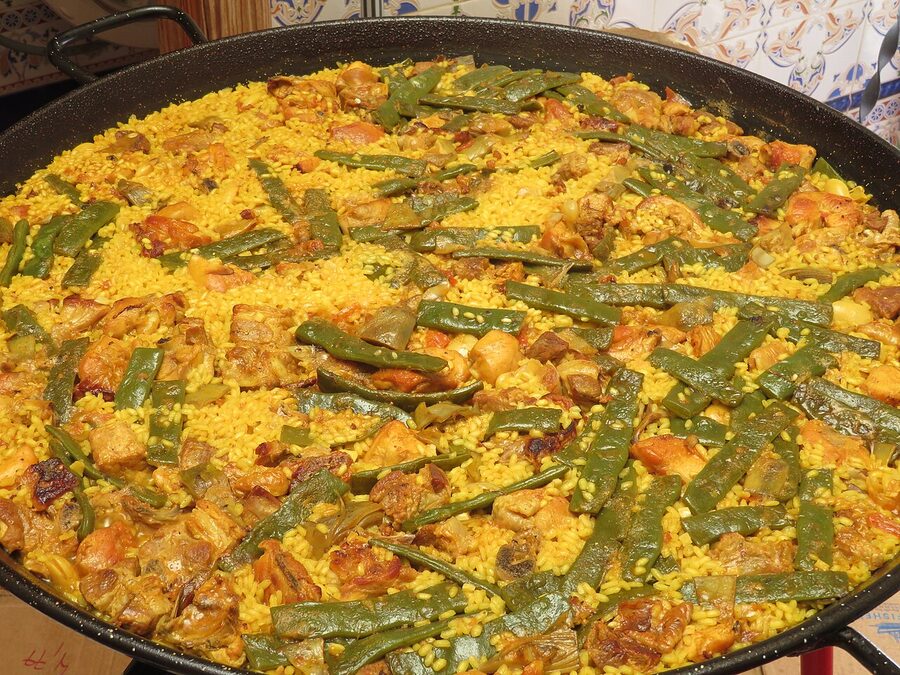
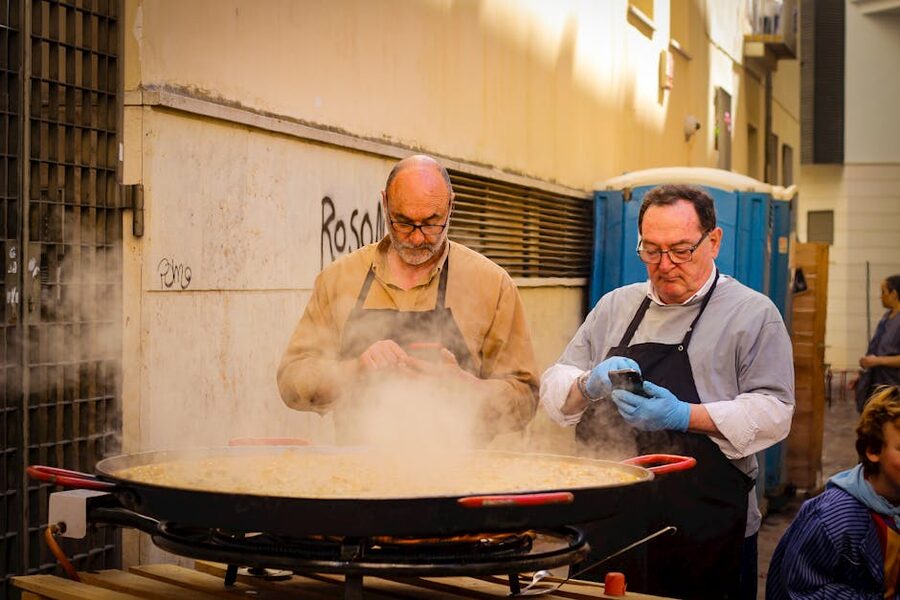
This is the part that sticks. You’ll usually get your own paella pan (paella, just so you know, is also the name of the pan, not just the dish). You’ll heat olive oil, sear the chicken and rabbit until they’re properly browned, add the beans and tomato, then the paprika, then the stock. The big moment is “tirar el arroz”, throwing in the rice. From that moment on, you don’t stir. Stirring is the cardinal sin.



The rest (around 10 minutes)
Your paella sits and rests under a clean tea towel for five to ten minutes. This finishes the cooking and lets the rice grains relax. While you wait, the chef will pour wine and the chat gets noisy. Then the towel comes off, and you eat.
The lunch (an hour, give or take)
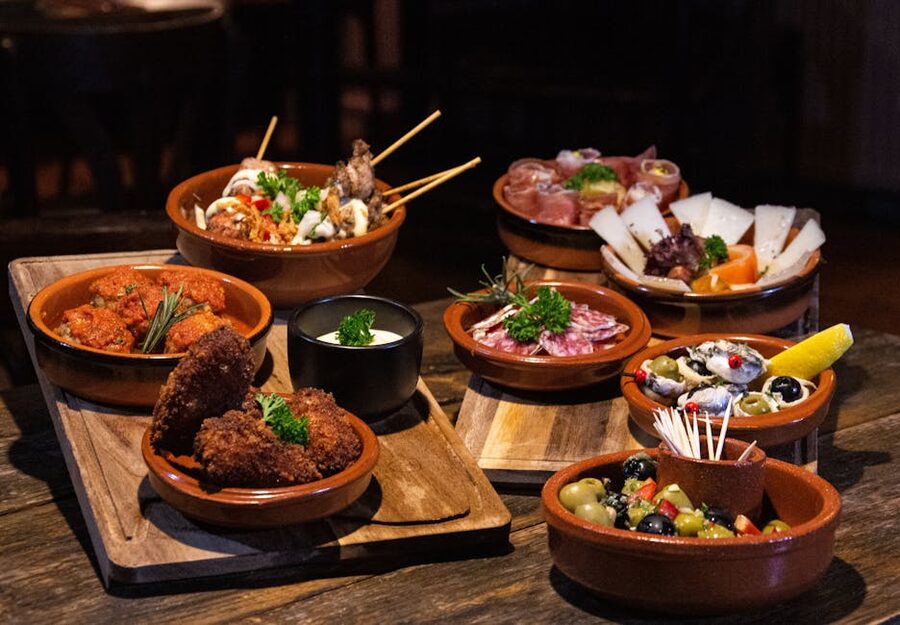
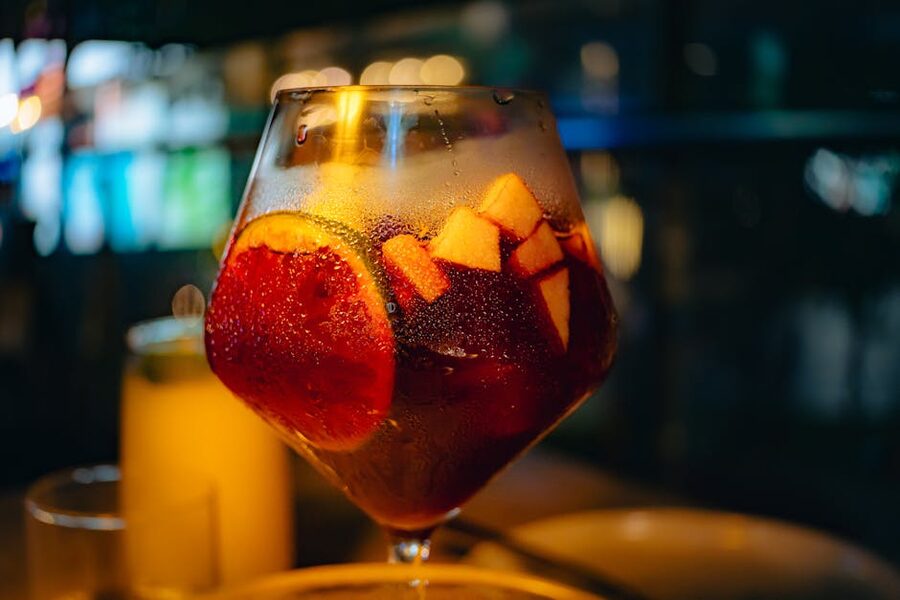
You eat what you cooked. Both classes serve regional wines (whites from the Valencia D.O., reds from Utiel-Requena, often a Bobal). There’s usually salad, sometimes a dessert, sometimes an alioli course, sometimes nothing else. Don’t show up hungry beforehand; you will be eating a lot.
Where paella came from (and why Valencia owns it)
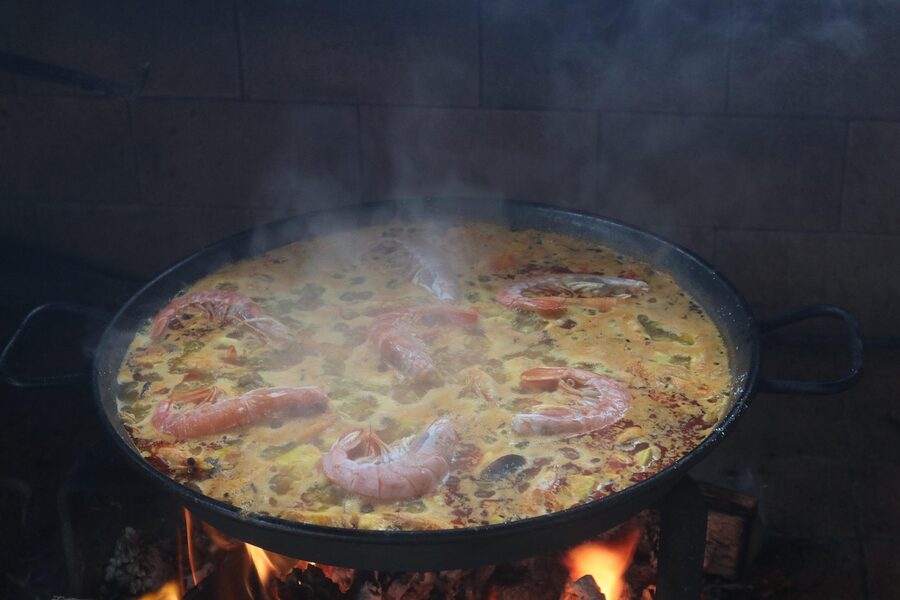
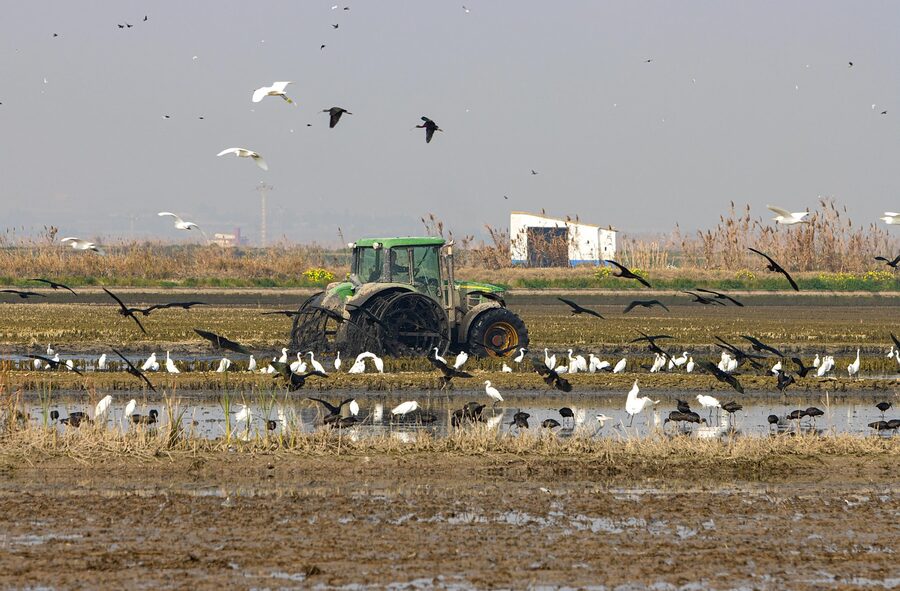
Paella isn’t a Spanish dish. It’s a Valencian one, and the distinction matters. The name comes from the Latin “patella” (a flat pan), and the dish was born in the rice paddies of L’Albufera, a freshwater lagoon about 10km south of the city. Farmers cooked it over open fires for lunch, using whatever was nearby. Eels and snails when they were lucky. Rabbit and chicken when they were luckier.
The rice itself, bomba, is a short, round grain that absorbs three times its volume in liquid without going mushy. It’s grown right there in L’Albufera. The wood was orange-tree, because the orange groves around the city are still everywhere. The saffron came from La Mancha, just inland. None of these ingredients are dragged in from elsewhere; they’re all from a 100-mile radius.
By the 18th century the dish had a name; by the 19th it had spread to the city; by the 20th it had become Spain’s unofficial national dish, mostly because Franco’s government decided it should be. That’s where the seafood version comes from, by the way: coastal restaurants started swapping the rabbit and snails for prawns and mussels because tourists found the original off-putting. The seafood version isn’t bad. It’s just not paella valenciana.
Practical stuff
What it costs and what you get for the money
You’re looking at $75-90 per person for a small-group class with a market visit. Solo travellers and couples get the most out of it; classes with bigger groups (8-15 people) work too but you’ll do less of the cooking yourself and more watching. If you want a private class, expect to pay roughly double per person but you’ll get every step of the cooking yourself.
The price includes the ingredients, the wine, the lunch, and the chef’s time. It does not normally include extra drinks beyond what’s served, dessert (sometimes yes, sometimes no, ask), or the bus to L’Albufera if you’re booking a class out there.
When to book
Book at least three days ahead in spring and autumn, a full week ahead in summer (June-September), and two weeks ahead during Las Fallas (March 15-19) when the city is mobbed. Mondays sometimes have fewer classes running, and as I said above, Sundays are tricky because Mercado Central is shut.
Time of day
Most classes start between 9.30 and 10.30am and run through lunch. There are a handful of evening classes (start around 5.30 or 6pm, eat around 8.30) but the markets are mostly closed in the evenings, so you lose the shopping bit. If you want the full experience, do a morning class.
Dietary stuff
Vegetarian paella exists and most classes will swap in artichokes, cauliflower and extra beans for the rabbit and chicken. Tell them when you book. Vegan is harder because the stock is traditionally chicken-based, but the Mercado Central class can do a vegetable stock with notice. Coeliac is fine; paella is naturally gluten-free if you skip the bread course. Halal and kosher are tougher because the meat won’t be sourced that way; ask before booking.
Getting around between classes and the rest of the city
Both classes are inside the historic core, walking distance from the cathedral and most of the old-town hotels. If you’re staying near the City of Arts and Sciences or out by the beach, factor in 20-30 minutes by metro or bus to get to either market. Valencia’s actually harder to walk than people expect because the historic centre and the modern bits are properly far apart. If you’re doing a lot of moving around, a hop-on hop-off bus pass covers most of the spread; we wrote a separate guide on how to book a hop-on hop-off bus in Valencia with the route map.
If you’re combining the cooking class with major sights, the city tourist card bundles transport with discounts on most attractions. The full breakdown is in our piece on how to get a Valencia tourist card; short version, it’s worth it if you’re staying three days or more.
Common mistakes (mine and other people’s)
Booking the wrong slot. A Sunday class without the market visit is half a class. Check the day before you book.
Showing up full. You’ll eat tapas before, paella for lunch, and most likely a dessert and a wine flight. Skip breakfast.
Trying to take notes. Just cook. The recipe is everywhere online. What you can’t get online is the feel of the heat, the sound of the socarrat, the timing. Pay attention to that.
Asking about chorizo. Don’t.
Stirring the rice. I did this on my first class. The chef nearly cried. Once the rice goes in, you don’t touch it. Not with a spoon, not with anything. The pan does the work.
Skipping the socarrat. Some people lift their portion off the top of the pan and miss the bottom layer. The crust is the best part. Scrape it.
Combining a paella class with a wine and tapas tour
One of the best food days I’ve had in Valencia was a paella class in the morning and a tapas-and-wine walking tour in the evening. By the time you finish lunch from the class you’ll be done with food for about four hours, then you’ll be ready for a slow evening of small plates and Bobal reds in the old town. The pacing works. We covered the evening side in our guide on booking an old town wine and tapas tour in Valencia, including the underground 11th-century cistern stop most operators use.
If you want to make a full evening of it, a flamenco show pairs unexpectedly well with a heavy lunch. Two-and-a-half hours of music and dancing and you don’t need to be standing up; details in our flamenco show guide.
Who shouldn’t book a class
A few people, actually. If you’re a confident home cook who already makes paella regularly, the technique element won’t teach you much; what you’ll get out of it is the market knowledge, the wine, and the sociability. If you’re travelling with kids under 10, most classes will accept them but the 90-minute cook is a long time for a young child to stand around. If you’re on a tight budget, a single-night dinner at a Valencia paella restaurant is half the cost and you still eat the dish.
For everyone else, especially first-time visitors and people who think they know what paella is, a cooking class is one of the better afternoons you’ll spend in Spain.
Booking through the operators directly versus an agency
Most paella classes are listed on Viator and Get Your Guide. The price is identical or within a euro or two; what you get from the agencies is the cancellation policy (usually 24-hour free cancellation), the photo and review history, and the reservation system that doesn’t break in five languages. The chef gets paid the same either way.
If you have a specific dietary requirement or want a private class, it’s worth contacting the operator directly through their own site; the agency platforms aren’t great for back-and-forth communication. For a standard class, just book online and turn up.
What to do after lunch
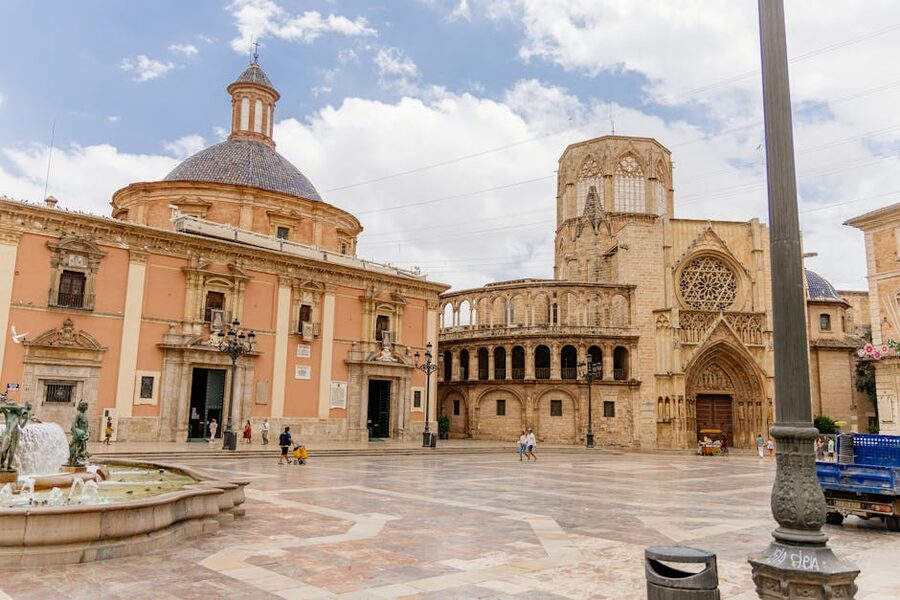
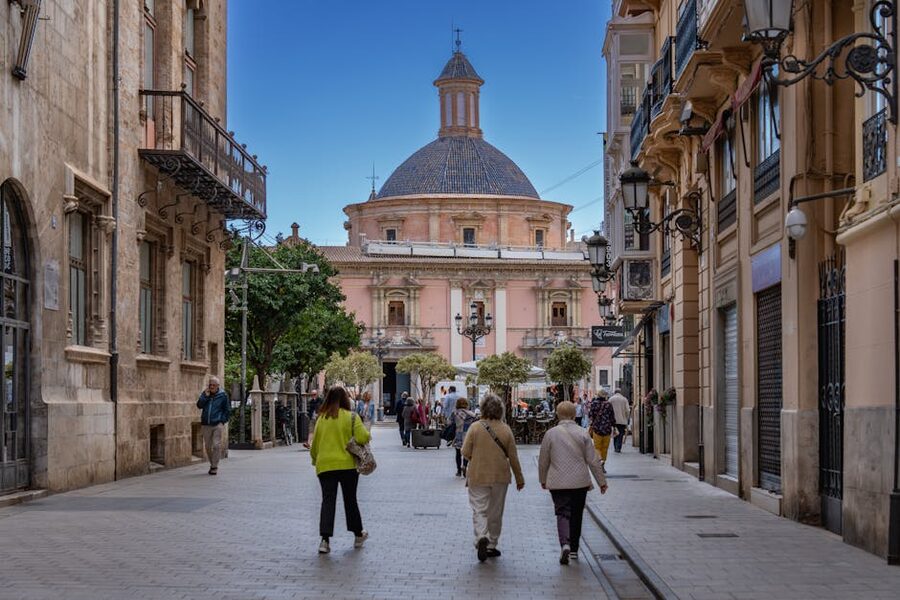
You’ll be full and a little tipsy, which is exactly the right state to walk the old town slowly. The cathedral and the Plaza de la Virgen are five minutes from Mercado Central; the Lonja de la Seda silk exchange is two blocks south. If you booked the Ruzafa class, the neighbourhood itself is one of the more interesting parts of modern Valencia; second-wave coffee, slow bookshops, vintage stores, the kind of streets you don’t need a plan for.
If you’re up for one more activity, the Turia gardens (the dry riverbed turned into a 9km linear park) start near the old town and run east to the City of Arts and Sciences. The complex at the end of the park is Valencia’s biggest set-piece attraction, and you can walk in for free or buy tickets to the aquarium and science museum; we covered the options in our guide to City of Arts and Sciences tickets. A flat 40-minute walk through orange trees and pine groves will reset you for the evening. For a slower option, a river cruise sounds wrong because Valencia doesn’t have a river anymore (the Turia was diverted after the 1957 flood), but the harbour boat tour from the marina is a nice way to see the seaward side; our boat tour guide covers it.
One last thing about chorizo
Look, I made the joke. But here’s the actual story. Jamie Oliver published a tweet in 2016 with a recipe for “paella” that included chorizo. The Valencian internet melted down. The hashtag #JamieOliverPaella trended for two days. Spanish news anchors did segments on it. The Valencian regional government issued an unofficial response, which is the cooking equivalent of a diplomatic incident.
Why so much heat over a sausage? Because paella is the one dish that has the same role in Valencian identity that sushi has in Japanese identity, or that a baguette has in Paris. It’s not just food. It’s who they are. So when the rest of the world keeps adding chorizo and calling it paella, it’s like the rest of the world keeps adding ketchup to ramen and calling it Japanese. They’re allowed to be touchy about it.
Anyway. Skip the chorizo. Book the class. Eat the rabbit. The dish is older than the country it lives in, and it deserves a careful afternoon.
If you’re building a Valencia food day
The cooking class is the centrepiece, but a great Valencia food day looks something like: market shop and class in the morning (book one of the two operators above), nap or slow walk in the early afternoon, an old-town wine and tapas tour in the evening, then a late-late dinner of horchata and fartons at one of the historic horchaterias near the cathedral. If you want to spread it over two days, swap the tapas tour for a flamenco show on day two and add the boat tour from the marina on day one.
Three good companion guides for that itinerary: our old town wine and tapas tour piece for the evening, the Valencia flamenco show guide for the second night, and the tourist card explainer if you’re hopping between attractions and want one ticket. The hop-on hop-off bus piece is useful if you’re staying near the beach and need to get to the centre.
If you’re planning the wider Spain leg of your trip and a paella class in Valencia is your benchmark, our Barcelona paella class guide compares the two cities (short version: Valencia wins on authenticity, Barcelona wins on convenience if you’re already there). Cooking classes elsewhere in the country are covered in our Madrid cooking class guide. And if you’re broadening to other regional Italian-Spanish food classics, our Naples pizza-making piece and Rome cooking class guide tell similar stories about dishes that travel badly.
Affiliate disclosure: this article contains affiliate links. If you book a class via the links above, we earn a small commission at no extra cost to you. We only recommend operators we’ve used or vetted ourselves.