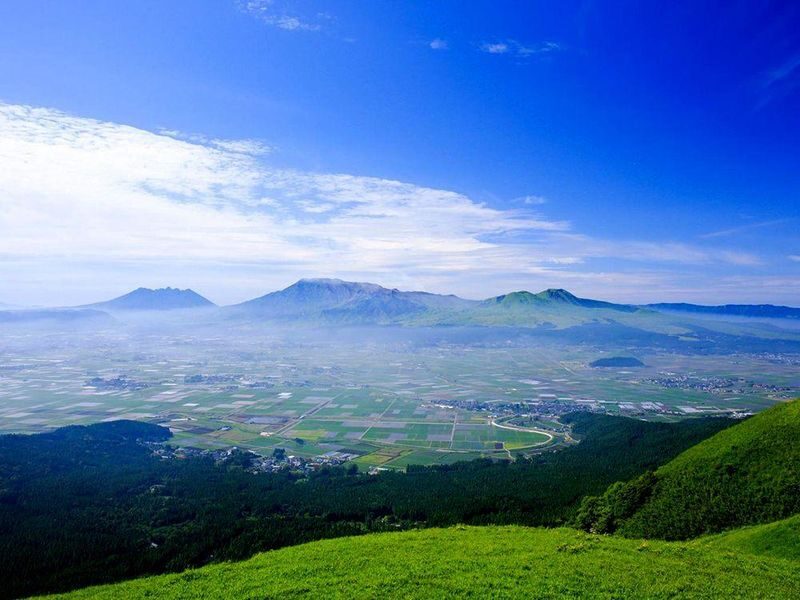
Aso’s scale is the reason to make this day trip: from Daikanbo, the broad caldera opens beneath you, while the Five Peaks of Aso form a mountain profile often compared to a reclining Buddha. In one long day, the bus links that lookout with Aso Shrine, the Nakadake crater area and Kusasenri, places that can be awkward to connect without a car.
I like two things in particular: you avoid arranging separate buses between scattered sights, and the 90-minute stop at Aso Shrine gives you room for lunch, shops and a walk among the neighborhood’s spring-water fountains. The main caveat is important: the crater is currently inaccessible because the Aso-san Park Road is closed, with no reopening date stated. The tour extends the Kusasenri stop when crater access is restricted.
- Daikanbo’s wide caldera view: Spend 40 minutes at a lookout about 935 meters above sea level.
- Aso Shrine with time to eat: The 90-minute stop includes free time for the shrine, Monzen-machi shopping street and lunch at your own expense.
- Crater access is not assured: The road is currently closed; volcanic gas restrictions can also prevent visits.
- Kusasenri fills the gap: If you cannot reach the crater, the tour adds time at this open grassland.
- Three possible boarding points: Join in Kumamoto, at Aso Kumamoto Airport or by Aso Station.
- From $63.09: The price covers the bus and accompanying Chinese-speaking staff, but not meals or paid activities.
- A full day to see Aso without a car
- Daikanbo: the first big view
- Aso Shrine and its spring-water street
- Nakadake: a dramatic stop with a major condition
- Kusasenri: open grass and room to breathe
- What the price covers, and what it does not
- Timing, pickup choices and practical cautions
- Who should book this Aso day trip?
- FAQ
- Is the Nakadake crater open on this tour?
- What happens if the crater cannot be visited?
- Where can I board the bus?
- Is lunch included?
- Does the tour include a guide?
- Is the Kusasenri horse ride included?
- Can I bring a large suitcase?
- The Best Of Kumamoto!
- More 1-Day Tours in Kumamoto
- More Tours in Kumamoto
- More Tour Reviews in Kumamoto
A full day to see Aso without a car
 1 / 8
 2 / 8
 3 / 8
 4 / 8
 5 / 8
 6 / 8
 7 / 8
 8 / 8
Aso’s main sights are spread across a large volcanic caldera. That makes this tour useful for a simple reason: you can take in several signature stops without figuring out local connections or driving mountain roads yourself. Departure is from Kumamoto, with pickup options at Sakuramachi Bus Terminal, Aso Kumamoto Airport and Aso Station.
The day runs roughly from 9:00 to 18:30 if you board in Kumamoto. Those boarding at the airport or Aso Station join later, and return times differ by stop. The schedule is full, but each main visit is self-guided, so you are free to spend your time as you prefer rather than follow a guide from sight to sight.
The bus is the practical heart of the experience. Daikanbo is specifically noted as difficult to reach independently by public transport, and the tour also connects the shrine area with the mountain stops in one circuit. If you are comfortable with a group schedule and want to see the region in one day, that convenience is a real part of the value.

👉 See our pick of the Kumamoto’s 5 Top Walking Tours (With Prices)
Daikanbo: the first big view
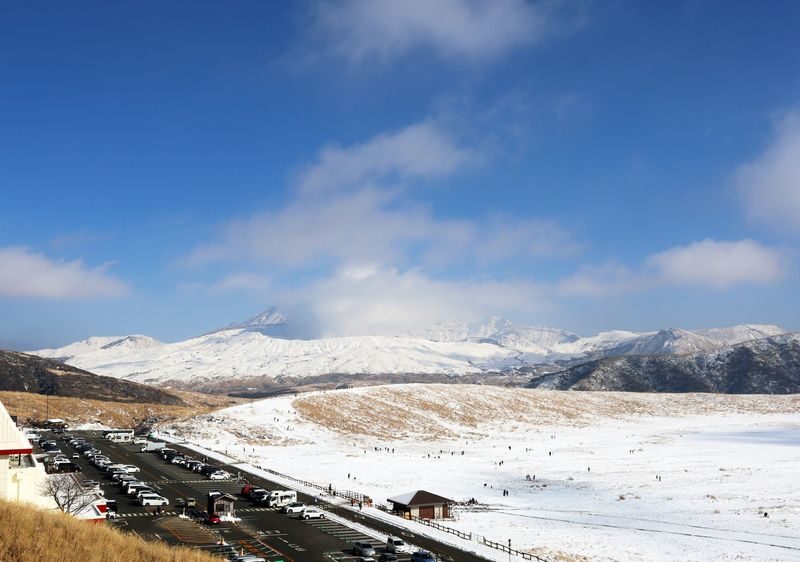
The first major stop is Daikanbo, northeast of Uchimaki Onsen. At about 935 meters above sea level, this lookout gives you a broad view of Aso’s fields, the Five Peaks and the Kuju mountain range. On a clear day, it is the kind of view that helps explain the scale of the caldera before you visit the sites inside it.
You have about 40 minutes here. That is enough for the viewpoint and a little time to take in the scenery, but not a leisurely hike. The stop is self-guided, and the view depends on weather: strong wind, rain or fog can obscure the peaks. Pack a windproof layer even when the forecast in Kumamoto City looks mild.
Daikanbo’s value is visual rather than interpretive. The accompanying staff member can help with the trip, but the service is not a formal guided tour with guaranteed explanations at every attraction. Give yourself a moment at the lookout to read the shape of the mountains and look across the caldera. It makes the later stops feel connected rather than like a string of photo breaks.
You can also read our reviews of more tours and experiences in Kumamoto

Aso Shrine and its spring-water street
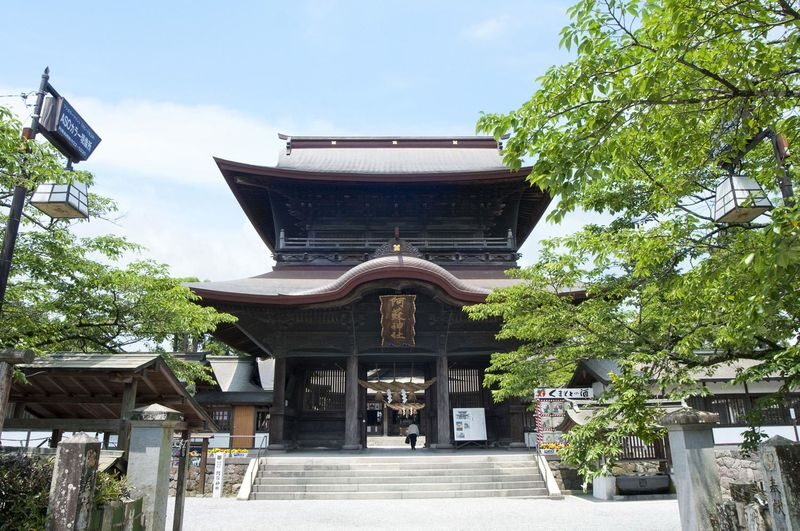
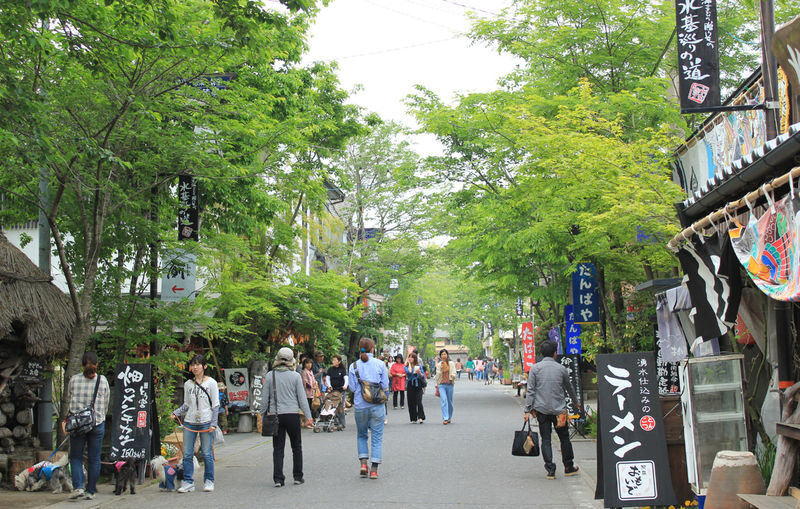
The longest stop is Aso Shrine, with about 90 minutes for your own visit and lunch. The shrine’s tower gate faces Monzen-machi, a traditional shopping street with restaurants, sake shops and souvenir stores. This is the day’s best chance to slow down, browse local specialties and choose your own meal.
The neighborhood is also known for suiki, drinking fountains fed by local springs. A spring-water walk lets you look for these water sources as you explore the streets. If you enjoy everyday local details more than a quick shrine photo, this stop can be a pleasant change of pace from the mountain viewpoints.
There is a trade-off. Some people may prefer a shorter shrine visit and more time at the crater, when it is open. But with 90 minutes, you have time to eat without rushing and still see the shrine area. From July through September, a free Mizuki Pilgrimage exchange ticket is offered, limited to one per person. Participating shops accept it for local foods such as croquettes and desserts. The offer is specified for July to September 2026, so check its availability for your departure date.
Nakadake: a dramatic stop with a major condition
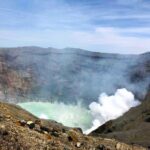
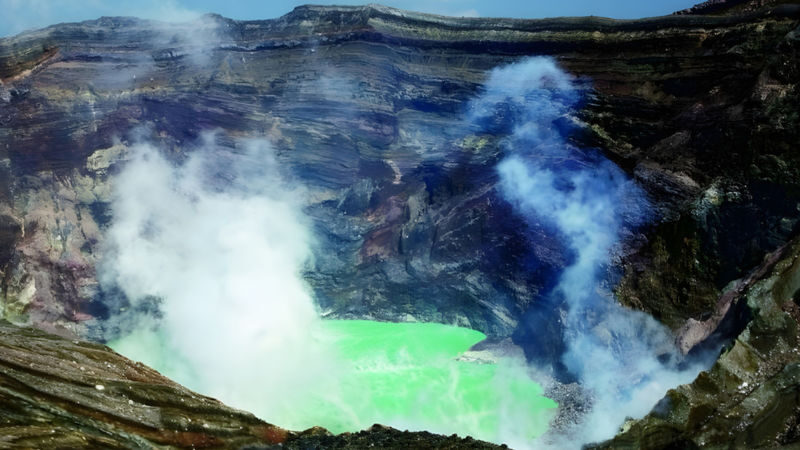
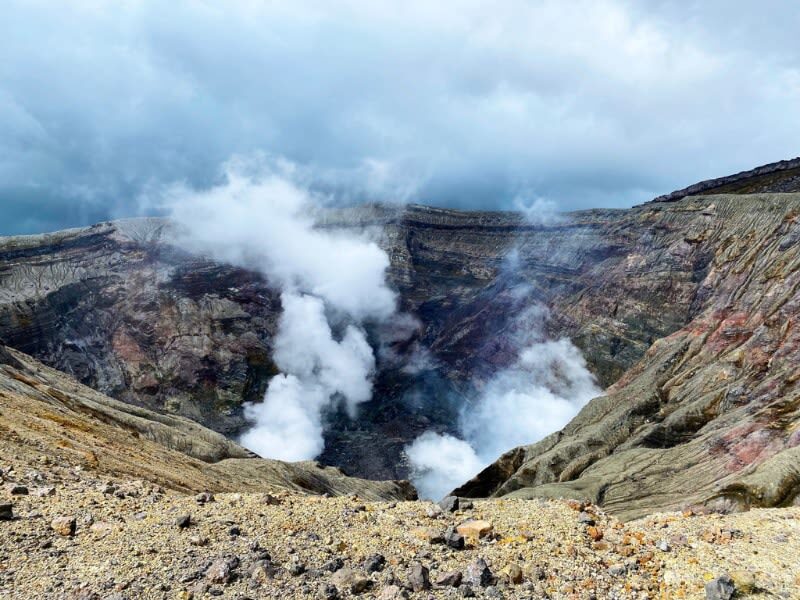
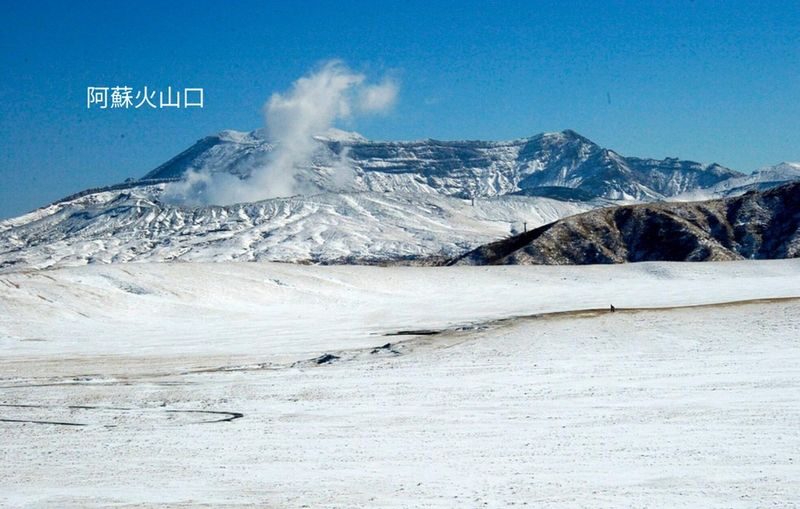
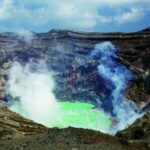
Nakadake is one of Aso’s five peaks and remains active. The crater is described as about four kilometers around, within a caldera measuring roughly 18 kilometers east to west and 25 kilometers north to south. When access is permitted, the sight of white volcanic smoke rising nearby can make this the most dramatic stop of the day.
But at present, the Aso-san Park Road is closed, so the crater cannot be visited. There is no definite reopening date. The tour title and usual route include the crater, but you should not book on the assumption that you will reach it. If the road remains closed, or volcanic smoke rules bar access, the tour extends your time at Kusasenri instead.
Even when the road is open, safety rules matter. Sulfur dioxide is released around the crater, and people with respiratory or heart conditions, or anyone feeling unwell, are not allowed to visit. Severe smoke emissions can also trigger restrictions. The operator may adjust the route or cancel the day if weather or other conditions make bus operation unsafe.
Kusasenri: open grass and room to breathe
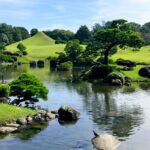
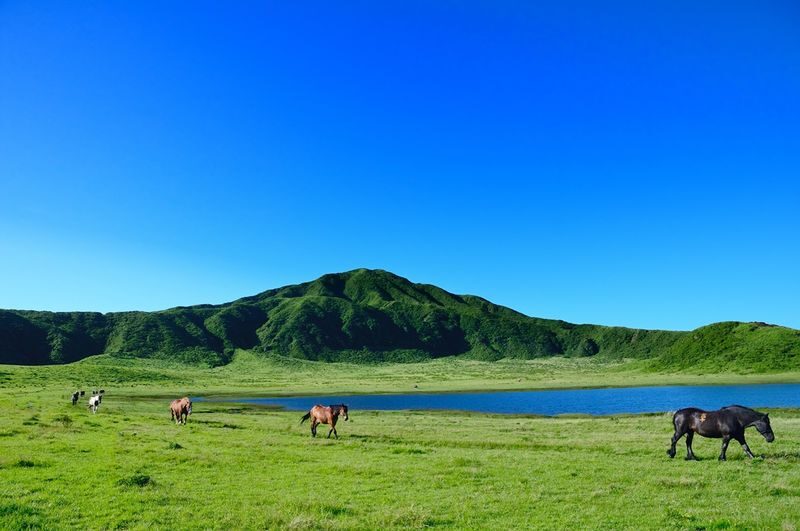
Kusasenri is a broad grassland about one kilometer across, with Mount Eboshi behind it and ponds formed by rainwater. Its appearance changes with the seasons: green in summer, white in winter, and sometimes misty or subdued in between. The tour allows about 40 minutes here on the standard schedule, with more time if the crater is off limits.
This is a good place to stretch your legs after the bus rides and enjoy a less confined view. The grassland is one of Aso’s best-known sights, and horseback rides are available as a paid activity. The riding experience is not included in the tour price, so treat it as an optional extra rather than part of the package.
Weather can change the mood entirely. Fog may hide Mount Eboshi, and a clear summer day can mean intense sun. Bring water, sun protection and a light layer suited to the forecast. If you have extra time because of a crater closure, Kusasenri gives you space to walk and take in the setting, though it is not a direct substitute for seeing an active crater.
What the price covers, and what it does not
The listed starting price is $63.09 for the round-trip bus tour. That buys transport between several widely spaced sights and the assistance of Chinese-speaking staff. For someone without a rental car, that can be worthwhile: you avoid sorting out transfers and can see Daikanbo, the shrine area and Kusasenri in one day.
Keep the extras in mind. Lunch and drinks are at your own expense, as are the Volcano Museum admission and any Kusasenri riding activity. Tips and personal purchases are not included. The free shrine-area exchange ticket, when offered, can help with a snack or local specialty, but it is limited to participating shops and does not replace a meal budget.
The experience is best understood as transport with assistance, not a fully guided sightseeing program. A Chinese-speaking translator accompanies the group and can help make the day smoother, but is not described as a tour guide or tour conductor and does not provide on-site commentary at each attraction. One named tour leader, Mr. Zhou, has been praised for clear explanations on a departure, but staffing and commentary may vary.

Timing, pickup choices and practical cautions
At Sakuramachi Bus Terminal, meet at the group bus boarding area at least 10 minutes before the 9:00 departure. The airport pickup is listed for 10:10 at Group Bus Stop E, and the Aso Station pickup is at 10:50 by the station-front bus stop. Staff speak Japanese and Chinese, but you are responsible for boarding on time. Late arrivals and no-shows are not refunded.
The return is scheduled for about 16:35 at Aso Station, 17:20 at Aso Kumamoto Airport and 18:30 at Sakuramachi Bus Terminal. Traffic can delay these times, especially from September to November, when congestion is expected. Do not plan a tight onward train, bus or flight connection. The operator does not guarantee that you will make a connection after the tour.
Bus size depends on the number of people booked, and seats may be beside other participants. The buses generally do not have room for large luggage, so arrange storage before boarding if you are carrying bulky bags. Children aged zero to two ride free only if they do not occupy a seat; reserve a child seat if you need one, and pay any facility-use fees on site.
Weather and seasonal road conditions can change the day. Winter ice around Mount Aso may lead to suspended operations in January or February. Grass burning from late February to early March can also close roads, and bad weather or other safety concerns may prompt a route change or cancellation. The tour may be canceled if nobody has booked by 15:00 Japan time, 10 days before departure.
Who should book this Aso day trip?
I would choose this tour if you are based in Kumamoto, do not want to drive and value seeing several Aso highlights in one organized day. It is especially useful for solo visitors and families who would rather sit back between stops than coordinate separate transport. The schedule also offers a manageable way for older family members to visit the area, though each stop still involves getting on and off the bus and walking at your own pace.
I would look elsewhere if reaching the crater is the main reason for your trip. At present, the park road closure rules that out, and future access depends on road and volcanic conditions. If the crater is open by your travel date, treat access as conditional, not guaranteed.
For the best decision, check the road and weather status close to departure, and judge the tour by the sights it can reliably deliver: Daikanbo, Aso Shrine and Kusasenri, with practical transport between them. If that combination sounds worthwhile at a starting price of $63.09, this is a sensible way to see Aso without a car.
Kumamoto Aso Day Trip: Enjoy 4 Major Attractions Group Tour
“This trip to Aso left us with wonderful memories! The magnificent mountain scenery and lush greenery along the way relaxed our minds at every turn,…”
FAQ
Is the Nakadake crater open on this tour?
The Aso-san Park Road is currently closed, so the crater cannot be visited. No definite reopening date is provided. Crater access can also be restricted because of volcanic gas.
What happens if the crater cannot be visited?
The tour extends the sightseeing time at Kusasenri. The operator may also change the route for safety or weather reasons.
Where can I board the bus?
You can board at Sakuramachi Bus Terminal in Kumamoto, Aso Kumamoto Airport or the bus stop in front of Aso Station. Each location has a different departure time.
Is lunch included?
No. Lunch, drinks and other personal expenses are not included. You have free time to arrange lunch yourself during the 90-minute Aso Shrine stop.
Does the tour include a guide?
A Chinese-speaking staff member accompanies the group and can assist with the trip. This staff member is not a tour guide or tour conductor and does not provide on-site commentary at every attraction.
Is the Kusasenri horse ride included?
No. The riding experience is a separate expense and is not included in the tour price.
Can I bring a large suitcase?
The buses generally do not have space for luggage. Arrange storage for large bags before boarding.