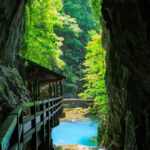
The draw here is the contrast: red-brick port buildings in Mojiko, sushi at Karato Market, a white bridge over open water, then a line of red torii gates above the Sea of Japan. I like the mix of food, history and coastal scenery, and the fact that the bus links places that are awkward to visit together without a car.
The main catch is the distance. You’ll spend a good part of the day on the road, and the guide is listed as Chinese- or Japanese-speaking, not English-speaking. Some guides have used translation apps or made an effort to explain things in English, but you should not count on English commentary.
- At a glance
- A day that connects Kyushu and Yamaguchi
- Mojiko: old port buildings and a ferry decision
- Karato Market: make lunch part of the sightseeing
- Tsunoshima Bridge: a short stop for a wide-open view
- Motonosumi Shrine: red gates above the Sea of Japan
- The bus ride, guide and language expectations
- Is this trip worth the price?
- Who should book this day trip?
- FAQ
- Where does the tour leave from?
- Does the tour include the ferry from Mojiko to Karato?
- Can I visit Mojiko without taking the ferry?
- Is Karato Market open every day?
- Can I walk through the torii gates at Motonosumi Shrine?
- Is the tour guided in English?
- The Best Of Kitakyushu!
- More Shopping Tours in Kitakyushu
- More Tours in Kitakyushu
- More Tour Reviews in Kitakyushu
At a glance
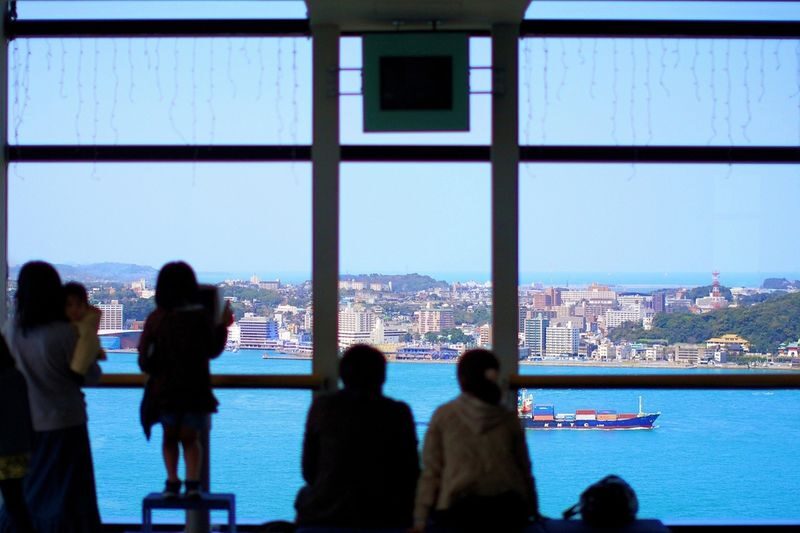
- Mojiko’s retro port district: Walk among old Western-style buildings and red-brick warehouses, or use the stop as a quick pass-through before Karato Market.
- Karato Market’s seafood: Pick up sushi, oysters or other local seafood to eat on the spot. The market’s seafood stalls operate on Fridays, Saturdays, Sundays and Japanese public holidays.
- A ferry choice with a catch: You can take the Kanmon ferry from Mojiko to Karato at your own expense, but if you skip it, the bus goes directly to the market and does not stop in Mojiko.
- Tsunoshima Bridge and Motonosumi Shrine: Two striking coastal photo stops, with about 30 and 40 minutes respectively.
- A long, useful day out: The tour runs roughly 8:30 a.m. to 6:30 p.m. from Fukuoka, with transport and a guide included. Meals, drinks and the ferry are extra.

👉 See our pick of the Kitakyushu’s 8 Top Tours (With Prices)
A day that connects Kyushu and Yamaguchi
This tour makes a satisfying loop from Fukuoka into Kitakyushu and across to Yamaguchi Prefecture, on the southern tip of Honshu. You get port-town architecture, a fish market and two coastal sights in one day, without having to rent a car or work out the transfers yourself.
That convenience matters. The stops are spread out, and getting between them independently takes more planning than simply following a bus schedule. In exchange, you give up some freedom: the group leaves promptly, each visit has a time limit, and the day’s order can change with traffic or weather.
The listed price starts at $44.25, though the amount depends on the package and discount available when you book. At that price, the outing can be good value if you plan to visit all four main stops. Remember to budget separately for food and the ferry, and check the package price for your date rather than assuming the lowest advertised fare applies.
You can also read our reviews of more shopping tours in Kitakyushu
Mojiko: old port buildings and a ferry decision
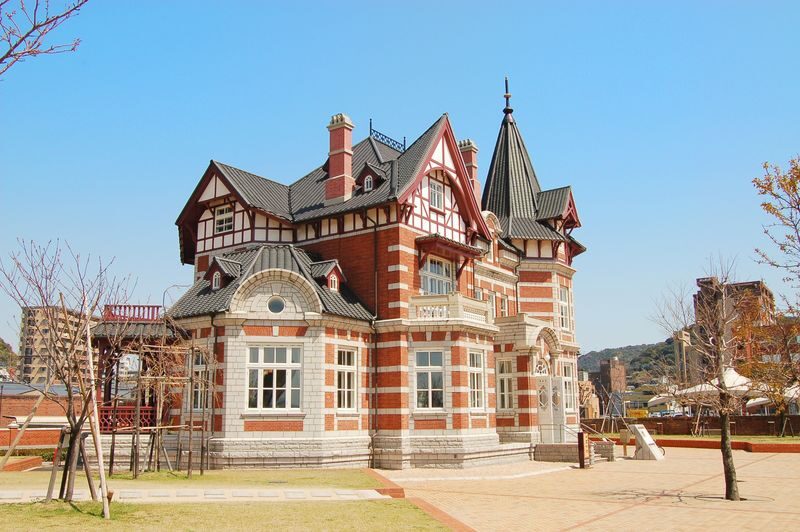
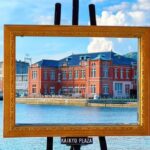
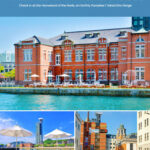
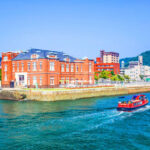
The day begins at Mojiko, a former port district with Meiji- and Taisho-era buildings, red-brick warehouses and old Western-style architecture. It’s a pleasant place to stretch your legs and look around. If you’re hungry, baked curry is a local specialty mentioned for the area, and a meal with a sea view makes a natural pause before the next stop.
The timing here takes some attention. The schedule gives you a long window around Mojiko and Karato, but the tour does not include a bus stop at Mojiko. To explore the port and reach Karato Market by ferry, you need to pay for the Kanmon ferry yourself. Check its timetable before setting off: boats may be around 20 minutes apart, so a missed departure can eat into your market time.
If you don’t take the ferry, you’ll need to follow the bus directly to Karato Market. That means you won’t get a free-standing visit to Mojiko, so decide what matters more to you: a walk through the old port and a short ferry crossing, or a simpler transfer with no added fare.
Mojiko’s appeal is atmospheric rather than monumental. Give yourself time to notice the mix of brick, timber and Western-style façades, but don’t expect a guided architectural tour. The stop is self-guided, and how much you see depends on your ferry choice and the day’s timing.
Karato Market: make lunch part of the sightseeing
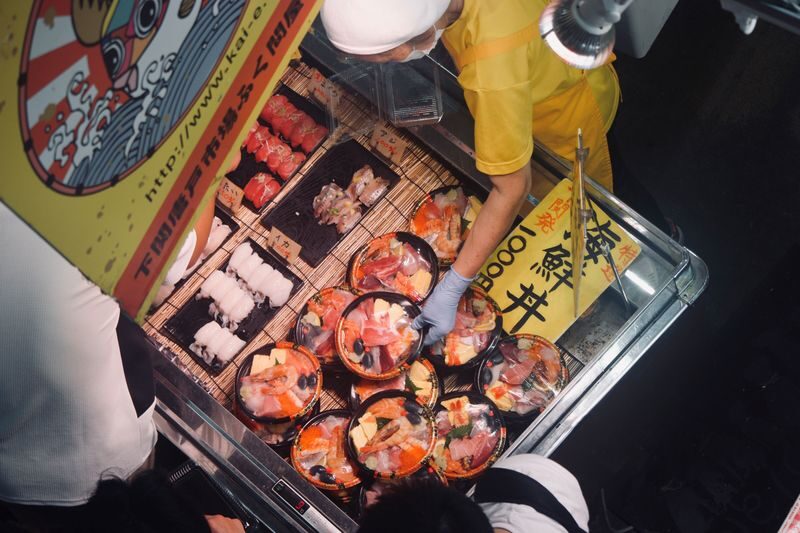
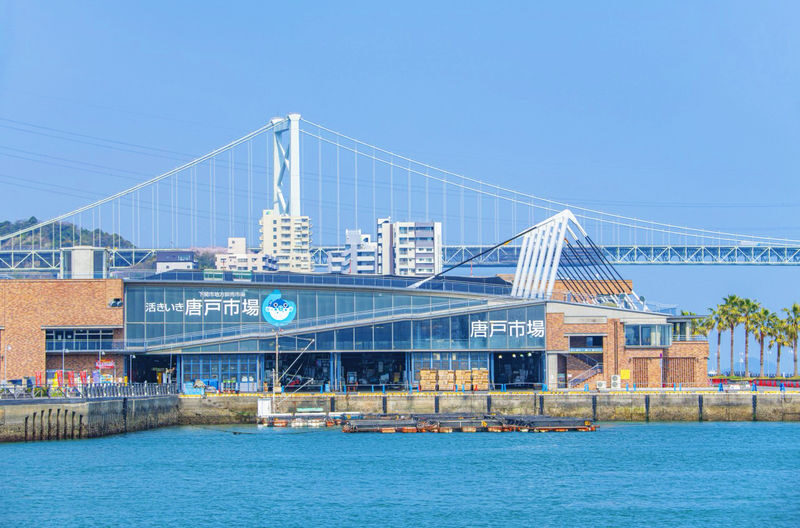
Karato Market is the day’s most delicious stop. The market is known for seafood such as sushi, oysters, puffer fish and sea urchin, with prepared food to buy and eat on the spot. It’s a practical lunch as well as an attraction: you can browse, choose a few items and make your own meal rather than sit through a fixed restaurant stop.
The market’s seafood event runs on Fridays, Saturdays, Sundays and Japanese public holidays. On other days, check what is open rather than assuming the full weekend-style selection will be available. At busy times, lines can form, so it pays to look around before committing to the first stall you see.
Bring cash or a payment method you know you can use, and keep a little time in reserve for finding a place to eat. Some people choose to eat by the water; there is also a second floor where you can sit more comfortably. The seafood can feel pricey if you order freely, but a few carefully chosen pieces make for a memorable lunch. Fresh sushi and sashimi are the obvious draws, and the market gives you a chance to try several things without ordering a full restaurant meal.
The tour allows time to explore on your own, but your window is still finite. If you arrive by ferry, keep an eye on the time and the meeting instructions. If markets are your main reason for booking, this is the stop to protect from delays.
Tsunoshima Bridge: a short stop for a wide-open view
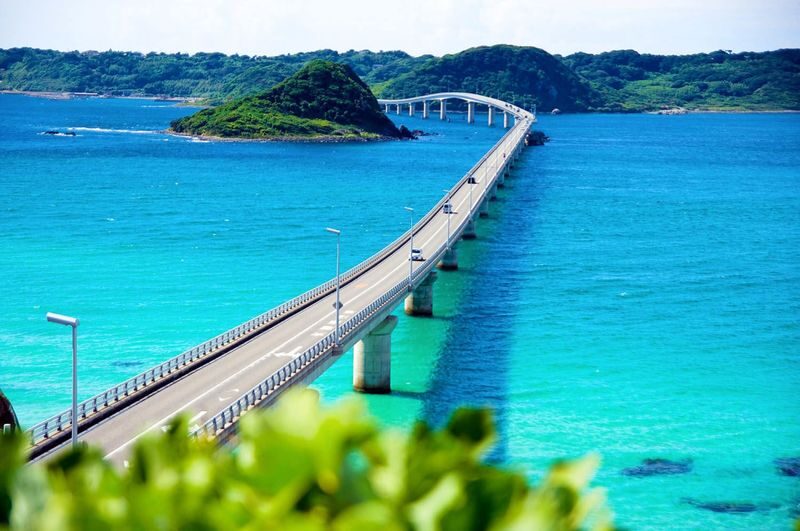
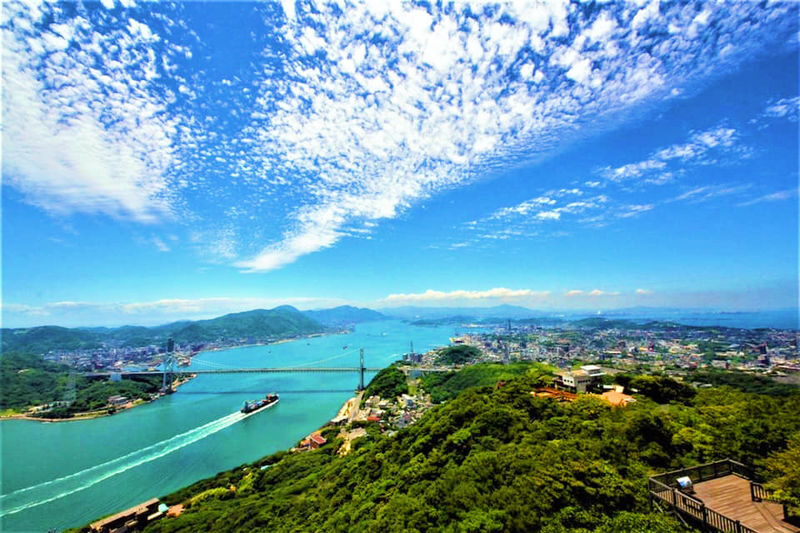
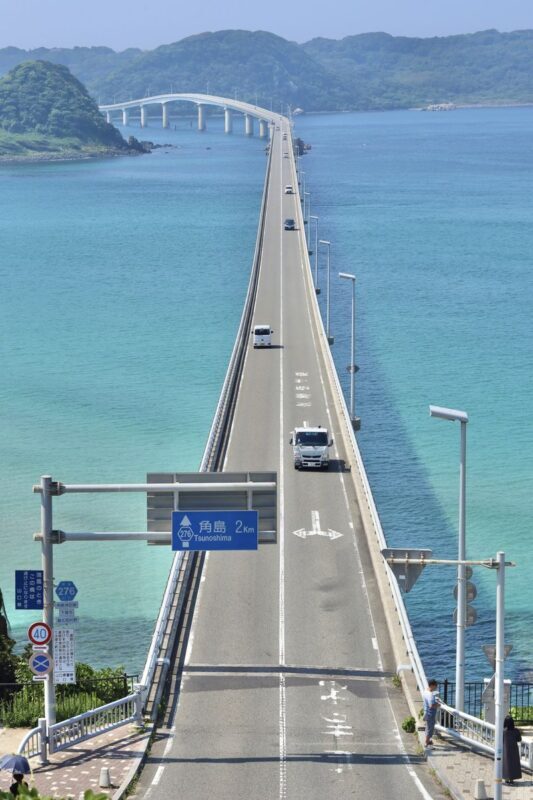
At Tsunoshima Bridge, the white span crosses a stretch of sea that makes the structure look almost delicate against the water. The scheduled stop is about 30 minutes. That’s enough for a look and photographs, but not a leisurely visit to every possible viewpoint.
This stop depends heavily on weather. Clear skies make the contrast between bridge and sea especially striking; clouds, haze or rain can soften the view. A few people have found the scenery less impressive on poor-weather days, which is a fair reminder that no schedule can guarantee a postcard sky.
Bring your camera, but don’t spend the whole stop watching a screen. Give yourself a moment to look at the bridge and water together, then take your pictures. The tour is not promising an extended walk or a separate excursion onto the island, so treat this as a scenic roadside stop.
Motonosumi Shrine: red gates above the Sea of Japan
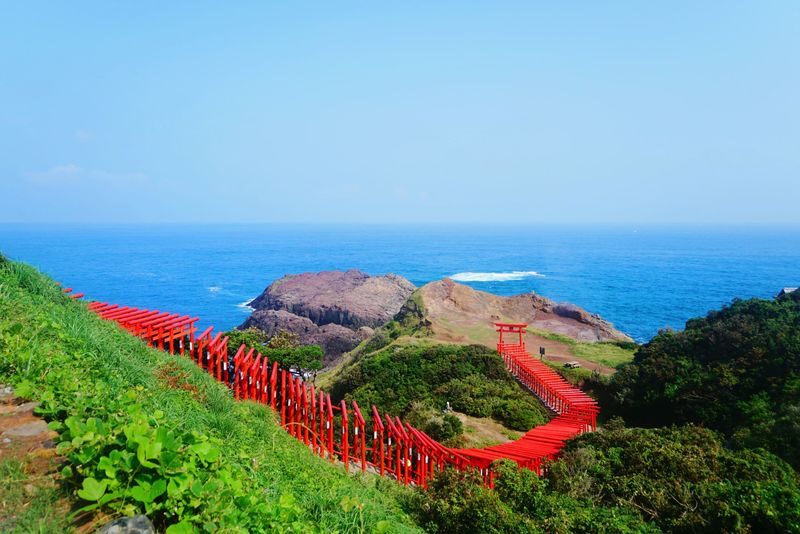
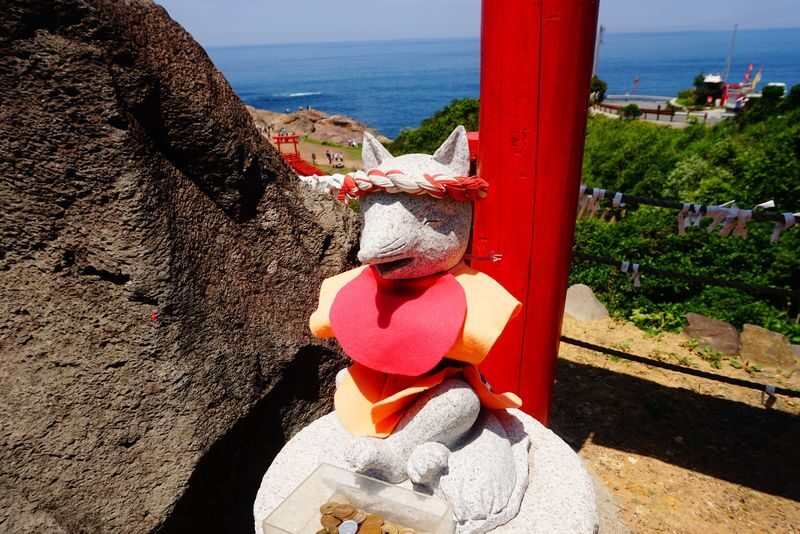
Motonosumi Shrine is the visual finale for many people: 123 red torii gates run down a slope toward the sea. The repeating gates and open coastal view make it one of the most distinctive stops of the day. You’ll have around 40 minutes, which is a short visit if you want to walk the full route, take photos and pause to rest.
The path includes steps and a climb back up. Wear shoes you can walk in, and leave time to get back to the meeting point without rushing. A few visitors have found this stop tighter than they wanted, particularly after walking the gates, so it’s wise to focus on the view and the route rather than trying to photograph every angle.
There is an important 2026 restriction to plan around. On Saturdays, Sundays and Japanese public holidays from March through November, as well as May 2 to 10 and August 8 to 16, traffic controls close the route through the torii gates. During those periods, you can still take photos from above and from in front of the main entrance, but you cannot walk through the gates. If walking the full line is essential to your visit, choose a date outside those restrictions and confirm conditions before booking.
The bus ride, guide and language expectations
This is a shared day trip, not a private car tour. The vehicle type depends on the number of people booked, and seats are generally taken in check-in order rather than assigned in advance. Ask about a seating need when booking, but understand that the final arrangement is coordinated on the day.
The listed guide languages are Chinese and Japanese. Guides vary, and names mentioned on past departures include Wang Qi, Ms. Tang, Chen and Li Hua. Some have used translation apps, printed instructions or brief English explanations to help visitors who don’t speak Chinese or Japanese. That kind of help may make the day easier, but English is not guaranteed. You should be comfortable following basic written meeting details and using a translation app if needed.
The guide’s practical role can be just as important as commentary. You need clear instructions about the ferry, meeting times and where to wait, especially at busy stops. Guides have also helped with photos and made recommendations for places to eat, but the experience will depend on who is assigned to your departure.
The bus ride gives you time to rest between distant stops, though the full day is still tiring. Bring water, sunscreen, sunglasses and a hat, especially in summer. The tour operator may adjust the order or timing for weather, traffic or safety, and the return to Fukuoka can be later than the estimated 6:30 p.m. Don’t book a tight dinner reservation or another activity for that evening.
Is this trip worth the price?
For someone without a car, this is a handy way to combine several far-flung sights in one day. You pay one tour fare for transport and a guide, then choose how much to spend at the market and whether to add the ferry. The best value comes if you want the whole coastal route; if you only care about Mojiko or Karato, a shorter independent visit may suit you better.
The pace is often described as relaxed for a day with this many stops, but it is not slow travel. You’ll have defined windows, long stretches between locations and little room to linger when a view captures your attention. The group format also means arriving on time matters. The bus leaves at 8:30 a.m. without waiting for late arrivals, and missed departures are not refundable.
For families, children aged three and older pay the adult rate; children aged zero to two can ride free if they do not need their own seat. Child seats are not available. Each person may bring one standard-size piece of luggage, but you must declare it when booking, ideally at least one day ahead.
Who should book this day trip?
I’d choose this outing if I wanted to see Tsunoshima Bridge and Motonosumi Shrine from Fukuoka without driving, and I also liked the idea of adding a seafood lunch and an old port district. It suits people who are happy with independent exploring at each stop and can manage a full day with several hours of driving.
Think twice if you need English guiding, dislike fixed meeting times or want to spend a long time at each sight. Check the shrine closure dates and market days before you choose a date, and decide in advance whether the ferry matters to you. If the route, timing and language setup fit, this is a practical way to see a remarkable stretch of coast in a single outing.
Kyushu: Mojiko & Karato Market & Tsunoshima Bridge & Motonosumi Shrine Day Trip (From Fukuoka)
“The overall itinerary provided ample time at each attraction, and the tour guide was quite nice, though there was relatively little commentary. Add…”
FAQ
Where does the tour leave from?
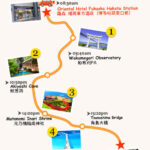
The meeting point is by the Lawson near the Oriental Hotel Fukuoka. Assembly is at 8:20 a.m., and the vehicle departs at 8:30 a.m. Arrive at least 10 minutes early and check the email sent around 7 p.m. the day before for guide and meeting details.
Does the tour include the ferry from Mojiko to Karato?
No. The ferry fee is not included. If you want to explore Mojiko and cross to Karato by ferry, you must pay for it yourself and check the departure schedule.
Can I visit Mojiko without taking the ferry?
The bus does not stop at Mojiko. If you do not take the ferry, you need to follow the bus directly to Karato Market, so you will not have a separate chance to explore the port district.
Is Karato Market open every day?
The seafood market event takes place on Fridays, Saturdays, Sundays and Japanese public holidays. The tour information does not promise the same selection on other days, so check the date if the market is a priority.
Can I walk through the torii gates at Motonosumi Shrine?
Not on the specified traffic-control dates in 2026: Saturdays, Sundays and Japanese public holidays from March through November, May 2 to 10, and August 8 to 16. On those dates, you can take photos from above and from the main entrance, but you cannot pass through the gates.
Is the tour guided in English?
The guide is listed as Chinese- or Japanese-speaking. Some guides have used translation apps or made an effort to explain key details in English, but English guiding is not guaranteed.