Mt. Fuji’s old lava flow created a cave where ice can persist through summer. At Narusawa Ice Cave, you walk through a short underground route past lava-shaped walls and ice formations, then climb back out by steep stairs. It is a quick, unusual way to see the mountain’s volcanic side up close.
I like two things here: the cave offers a real look at volcanic forms rather than a built attraction, and the contrast between warm summer air and an interior averaging about 3°C is striking. Ice pillars that survive the warmer months make the cave especially interesting when the weather outside is hot.
The main drawback is scale. The route is short, and the low ceilings, slippery footing, and 21-meter stair climb on the way out make this a poor fit for anyone seeking an easy stroll or a long cave adventure.
- Key points to know before you go
- A lava cave made by Mt. Fuji
- What the short cave route feels like
- The cold, the steps, and the safety trade-off
- Choosing the right season
- Getting to Narusawa Ice Cave
- Is the low ticket price good value?
- Who should make this stop?
- FAQ
- How long is Narusawa Ice Cave?
- How cold is the cave?
- Can you see ice in summer?
- How much does admission cost?
- Where is Narusawa Ice Cave?
- How do I get there by bus?
- Are there restrictions for children?
- Are pets allowed inside?
- What should I wear?
- What are the opening hours?
- The Best Of Fujikawaguchiko machi!
- More Tickets in Fujikawaguchiko machi
- More Tours in Fujikawaguchiko machi
- More Tour Reviews in Fujikawaguchiko machi
Key points to know before you go
- A cave formed by Mt. Fuji: The roughly 153-meter cave dates to the 864 eruption and is a designated national natural monument.
- Cold even in summer: The average interior temperature is about 3°C, and ice formations may remain when it is warm outside.
- A short, compact visit: The route is a brief loop, so treat this as a focused stop rather than a major half-day activity.
- Expect low ceilings and steep steps: Watch your head, wear shoes with good grip, and take care on damp surfaces.
- Young children have entry limits: Children under 3 years old or under 100 cm tall cannot enter.
- Easy to reach from Kawaguchiko by bus: The Blue-Line/S4-Line sightseeing bus stops at Narusawa Ice Cave, right by the entrance.

👉 See our pick of the 9 Most Highly Rated Workshops & Classes In Fujikawaguchiko machi
A lava cave made by Mt. Fuji
Narusawa Ice Cave formed during the great eruption of Mt. Fuji in 864, known as Jogan 6. Lava left a cave about 153 meters long, with shapes and surfaces that record the movement of molten rock. The site sits near the eastern edge of Aokigahara Jukai and is protected as a national natural monument.
That context is part of the appeal. You are not entering a show cave built around lighting or elaborate displays. The interest is in the natural rock, the confined route, and the way cold air and ice endure inside a volcanic formation.
The cave was once used as a natural refrigerator for storing ice. That practical history fits the place: before modern refrigeration, a consistently cold cave was useful, not just curious. Today, the ice is the feature that catches the eye, especially when you visit in summer and the temperature outside is much higher.
You can also read our reviews of more tours and experiences in Fujikawaguchiko machi
What the short cave route feels like
At the entrance, the cave’s grand approach gives way to a much tighter interior. The route is short, and you should not expect a lengthy underground expedition. The loop takes you through passages shaped by lava, with steep stairs and sections where the ceiling drops low enough that you need to mind your head.
The change in temperature is immediate. The cave averages about 3°C, and in summer the difference from outside can reach 20 degrees or more. A cold interior is part of the attraction, but it is also a practical consideration: bring a light layer if you are visiting in warm weather, and take your time as your eyes and footing adjust.
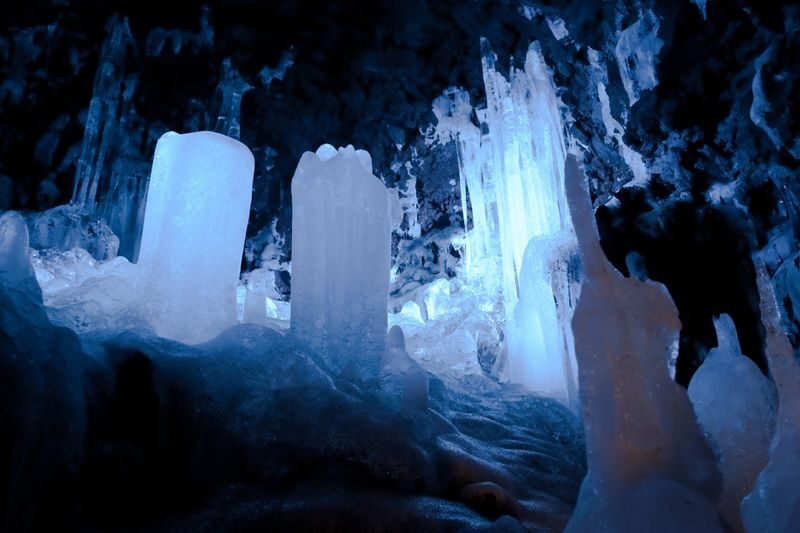
Ice pillars may remain even in summer, allowing you to see the cave’s cold conditions at close range. The amount and appearance of ice can vary with the season and conditions, so avoid treating photographs as a promise of a particular display. An October visit, for example, can still show some ice, but the formations may feel less dramatic than images suggest.
The overall experience is brief. That is useful if you are fitting several stops around the Fuji Five Lakes area, but less satisfying if you expect a long guided cave walk. Admission covers entry to the attraction. No guide or extended program is specified, so plan on the cave itself being the main event.
The cold, the steps, and the safety trade-off
The same features that make the cave memorable also make it physically demanding. The floor can be humid and slippery, and there are many stairs. Shoes that are hard to walk in, including heels, are described as extremely dangerous here. Choose comfortable footwear with a secure grip.
The return includes a climb of 21 meters in one go. That is worth considering if stairs are difficult for you, or if you are visiting with someone who tires easily. The cave is not suited to every visitor, even though the route is short.
Low ceilings mean you should watch your head throughout. The cave is also not appropriate for children under 3 or children shorter than 100 cm. Carrying or piggybacking a child who does not meet those limits is not allowed, because the passages have narrow and dangerous sections.
The sharp temperature change deserves care, too. In summer, the difference between outdoors and inside may exceed 20°C. People with heart conditions are advised not to enter. Pets cannot go inside, including pets in carriers, so if you arrive with one, your party will need to take turns entering.
Choosing the right season
Summer has a clear advantage: stepping into a cave averaging 3°C offers a strong break from the heat, and ice pillars may still be present. That contrast is part of the experience, but it also means you should bring a layer and be ready for a sudden temperature change.
Autumn can still offer ice, though the display may not match the most dramatic images. One October visit found some formations but described the route as short and the overall experience as less impressive than expected. That is a useful expectation to set: the cave is a compact natural stop, not a guaranteed spectacle.
The opening schedule changes through the year and can also change with weather and cave conditions. The listed schedule gives daily hours of 9:00 to 17:30 from August 27 to October 15, 2026; 9:00 to 17:00 from October 16 to November 15, 2026; 9:00 to 16:30 from November 16, 2026 to February 15, 2027; 9:00 to 16:00 from February 16 to 28, 2027; 9:00 to 16:30 from March 1 to 15, 2027; and 9:00 to 17:00 from March 16 to July 31, 2027. Check the current hours and any closures before setting out.
Getting to Narusawa Ice Cave
The meeting address is Narusawa 8533, in Minamitsuru, Yamanashi Prefecture. From Kawaguchiko Station, take the Blue-Line/S4-Line sightseeing bus and get off at the Narusawa Ice Cave stop. The stop is right there, so this is the simplest stated public transport option.
If you are driving, the cave is about 12 kilometers from the Chuo Expressway Kawaguchiko interchange via Route 139 when coming from the Tokyo area. From the Shizuoka area, it is about 12 kilometers from the Higashi-Fujigoko Road Fujiyoshida interchange, also via Route 139.
The short route through the cave makes it easy to combine with other stops, but the trip still takes planning if you are coming from elsewhere. One visitor found getting there took considerable effort, which is a reminder to check bus connections and build in travel time rather than judging the outing by the cave’s size alone.
Is the low ticket price good value?
Admission starts at $0.95, with the ticket covering entry. At that price, the cave can be a worthwhile add-on if you are already near Kawaguchiko or exploring the Mt. Fuji area. You get a protected natural formation, a close look at lava features, and a chance to experience a genuinely cold space in summer.
The value is less certain if you must make a long, complicated trip solely for this stop. The cave route is short, and the ice display can vary by season. If you expect a large cave system or an extended activity, you may leave underwhelmed. If you enjoy geology and unusual natural places, a brief visit can still be satisfying, particularly as part of a broader day near Mt. Fuji.
The voucher is valid for 30 days from booking confirmation and must be shown on your mobile device. Booking is available for the next day, and confirmation is instant, but the ticket cannot be cancelled or refunded. That firm policy makes it sensible to check the forecast, operating hours, transport, and your group’s comfort with stairs before buying.
Who should make this stop?
I would put Narusawa Ice Cave on the list for visitors already touring the Fuji area who want a quick, distinct change of scene. It suits people curious about volcanic geology, comfortable with close spaces, and prepared for a cold, damp walk with a steep stair climb.
It is less suitable for anyone expecting a long cave expedition, visitors with mobility concerns, children below the stated age or height limits, and people with heart conditions. If your main reason for going is to see dramatic ice, keep expectations flexible: the cave is real and unusual, but the amount of ice changes.
Book it if you value a modestly priced natural stop and can fit it into a sensible route. Skip it if getting there is a major detour or if a short loop would not feel worth the travel. The best plan is to treat the cave as one chapter in a Mt. Fuji day, not the whole story.
FAQ
How long is Narusawa Ice Cave?
The cave has a total length of approximately 153 meters. The route is described as a short loop.
How cold is the cave?
The average temperature inside is about 3°C. In summer, the difference between the cave and the outside can be 20°C or more.
Can you see ice in summer?
Ice pillars that remain in summer can be seen inside the cave. The amount and appearance of ice can vary.
How much does admission cost?
The ticket price starts at $0.95. Admission to the attraction is included.
Where is Narusawa Ice Cave?
It is at Narusawa 8533, Minamitsuru, Yamanashi Prefecture, Japan.
How do I get there by bus?
From Kawaguchiko Station, take the Blue-Line/S4-Line sightseeing bus and get off at the Narusawa Ice Cave stop. The stop is right by the cave.
Are there restrictions for children?
Children under 3 years old or under 100 cm tall cannot enter. Entry while carrying or piggybacking a child who does not meet the requirements is also not allowed.
Are pets allowed inside?
No. Animals are not allowed inside the cave, including animals in carriers. People arriving with pets are asked to enter in shifts.
What should I wear?
Wear comfortable shoes with good grip. The cave has many stairs, and the humid surfaces can be slippery. A light layer is also useful because the interior is cold.
What are the opening hours?
Hours vary by season and may change with weather or conditions inside the cave. The listed schedule ranges from 9:00 to 16:00, 16:30, 17:00, or 17:30 depending on the date, so check before visiting.