Seville is flat as a pancake. Not a hill in sight unless you count the bridge over the Guadalquivir, which barely qualifies. Add 300 days of sunshine per year, a historic center where most of the good stuff sits within a few kilometers of each other, and one of the best urban cycling networks in southern Europe, and you start to understand why bike tours here are not just a novelty — they are genuinely the best way to cover ground.
Walking tours in Seville are fine, but they are slow. You spend half your time standing at traffic lights or shuffling through crowds in the Santa Cruz quarter. On a bike, you cover the Cathedral, the Alcazar walls, Maria Luisa Park, the Plaza de Espana, the Triana Bridge, and the riverside path in a single three-hour loop — with time to actually stop and look at things. Try doing that on foot and you will need a full day and new shoes.
This guide covers the best guided bike tours you can book through Viator and GetYourGuide, including a standard highlights loop, an e-bike option for anyone who wants the sightseeing without the sweat, and a sunset ride that turns the whole thing into something closer to an experience than a checklist item.
In a Hurry? My Top Picks
- Best overall: Seville Highlights Bike Tour (English) — $42 per person, 3 hours. The original English-language bike tour with a live guide, well-maintained bikes, and a route that hits every major landmark without feeling rushed. The guide does the talking — no audio devices, no scripted pauses. Book this tour
- Best value: Seville: Highlights City Bike or E-Bike Tour — $38 per person, 3 hours. Same distance and similar route, slightly cheaper, and you get the option of a regular bike or an e-bike on the same booking. Good if one person in your group wants pedal assist and the other does not. Book this tour
- Best for e-bikes: Seville Electric Bike Small Group Tour — $58 per person, 2 hours 15 minutes. Dedicated e-bike tour, small groups, and you cover the same ground in less time with zero effort on the pedals. Worth the premium if the heat is getting to you. Book this tour
- Best atmosphere: Sunset Guided Bike Tour in Seville — $36 per person, 3 hours. Same route as the daytime highlights tour, but timed so you ride through the golden hour and finish as the city lights come on. The Guadalquivir at sunset from a bike is hard to beat. Book this tour
- In a Hurry? My Top Picks
- Why Seville Works So Well on a Bike
- Best Bike Tours in Seville
- 1. Seville Highlights Bike Tour (English) —
- 2. Seville: Highlights City Bike or E-Bike Tour —
- 3. Seville Electric Bike Small Group Tour —
- 4. Sunset Guided Bike Tour in Seville —
- When to Ride
- Tips for Your Ride
- More Seville Guides
Why Seville Works So Well on a Bike
Three things make this city almost unreasonably good for cycling.
First, the geography. Seville sits on a river plain with essentially zero elevation change anywhere in the urban area. You could ride for an hour and never shift gears. This matters more than you think — in cities like Lisbon or Barcelona, a bike tour means grinding up hills and white-knuckling descents through traffic. In Seville, you pedal casually and look around. The bike becomes invisible. You are just moving through the city at a perfect speed.
Second, the infrastructure. Seville invested heavily in separated bike lanes starting in the late 2000s, and the network now connects nearly every major attraction. The lanes are physically separated from car traffic — concrete curbs, not painted lines — and they run along the river, through Maria Luisa Park, past the Cathedral, and into the Triana quarter. The guided tours use these lanes almost exclusively, which means you spend the ride looking at buildings instead of watching for cars.
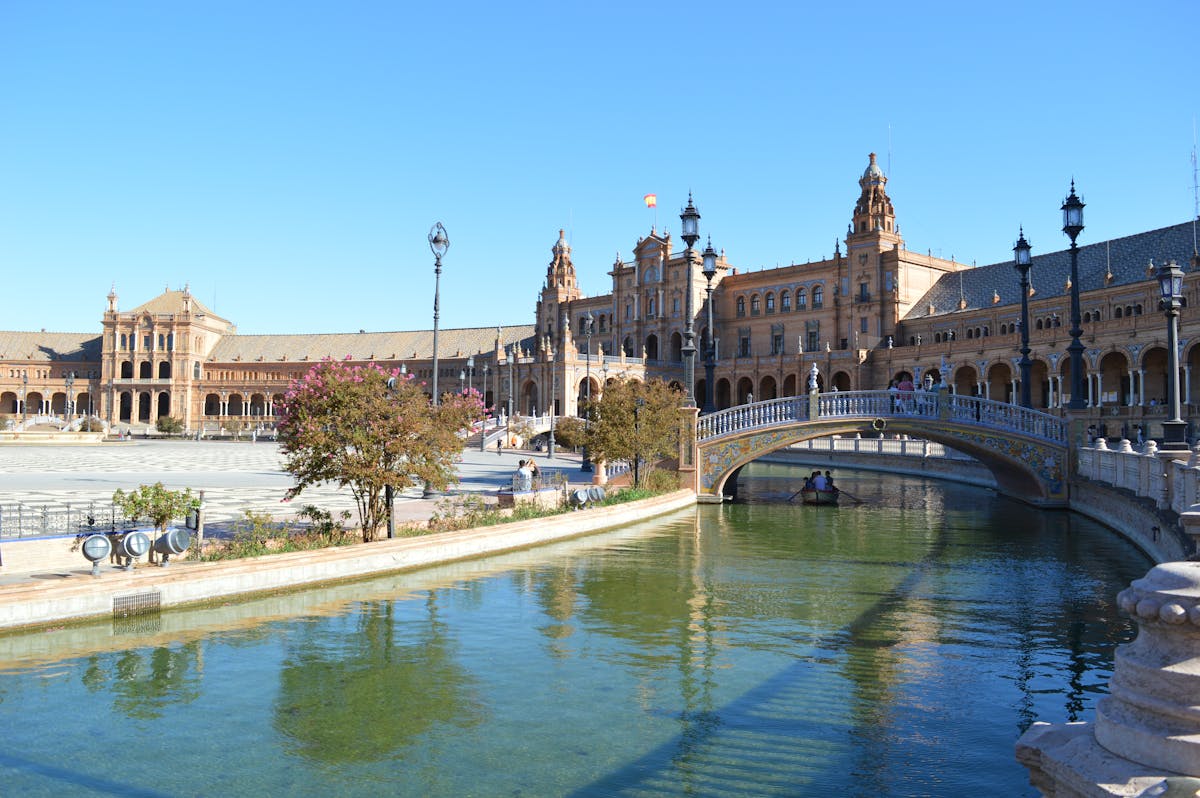
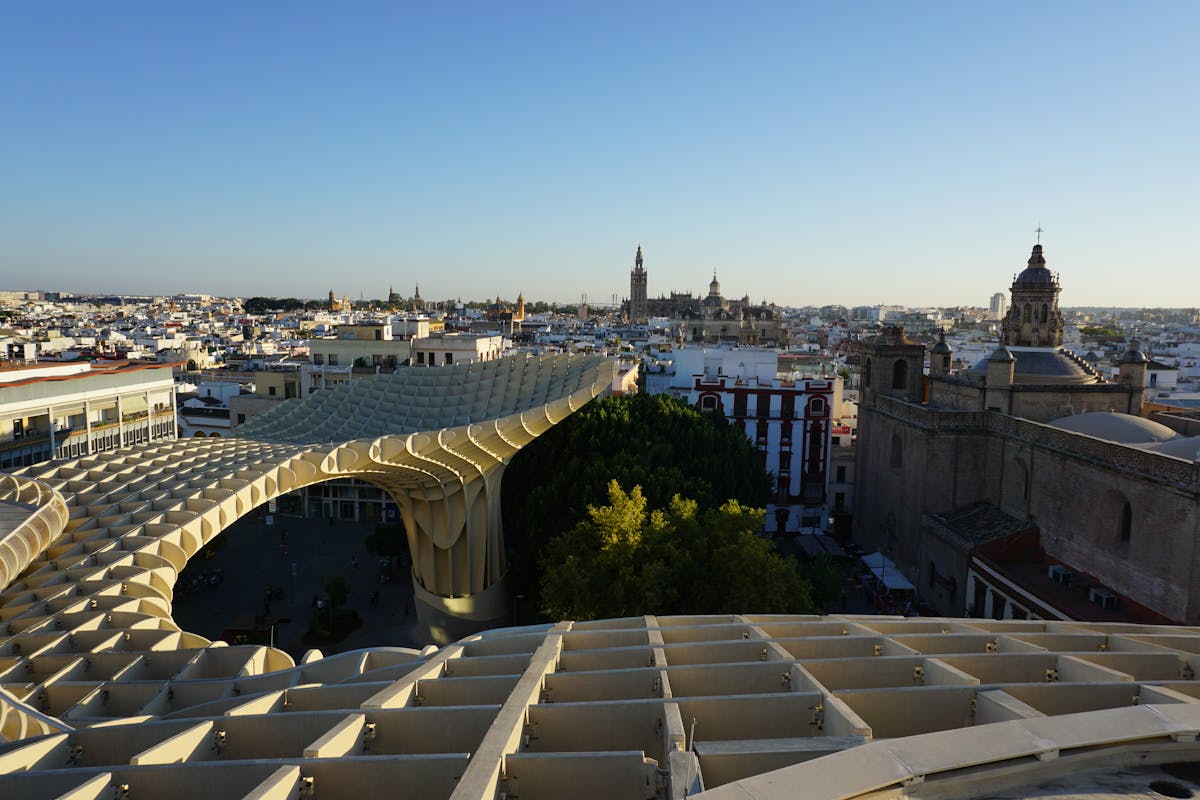
Third, the distances. The Cathedral to the Plaza de Espana is about 1.5 kilometers. The Alcazar to the Triana Bridge is maybe 2 kilometers. Maria Luisa Park to the Metropol Parasol (the giant wooden mushroom structure locals call Las Setas) is 2.5 kilometers through the center. On foot, these are 20-30 minute walks each. On a bike, 5-8 minutes. A three-hour guided tour covers all of them with time for stops, photos, and the guide telling you things you would never learn from a guidebook.
Best Bike Tours in Seville
Four tours from the main booking platforms. I picked these based on a mix of booking volume, consistency, and the type of experience they offer — a standard highlights tour, a budget-friendly alternative with e-bike flexibility, a dedicated e-bike small group option, and a sunset ride.
1. Seville Highlights Bike Tour (English) — $42
Duration: 3 hours | Price: $42 per person | Type: Guided group bike tour in English
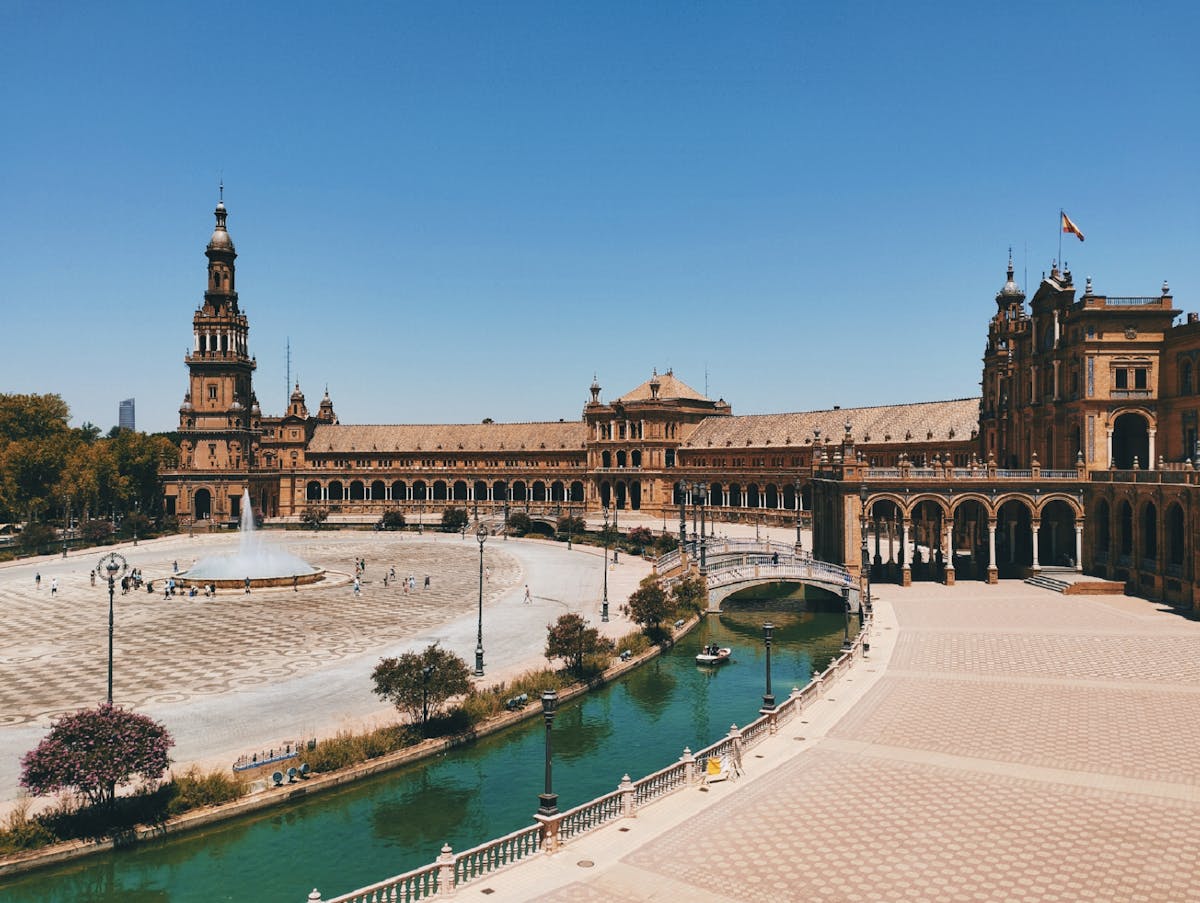
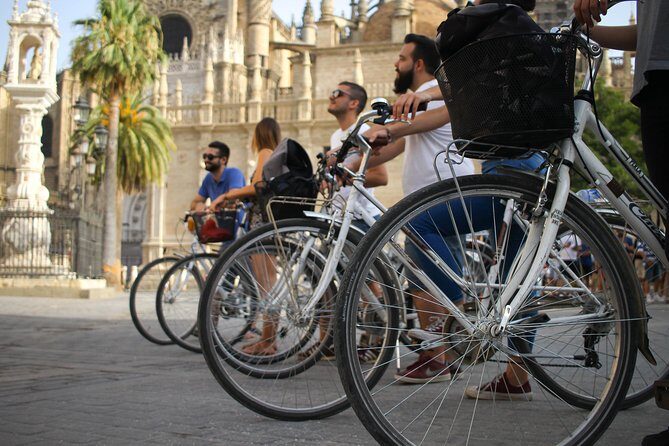
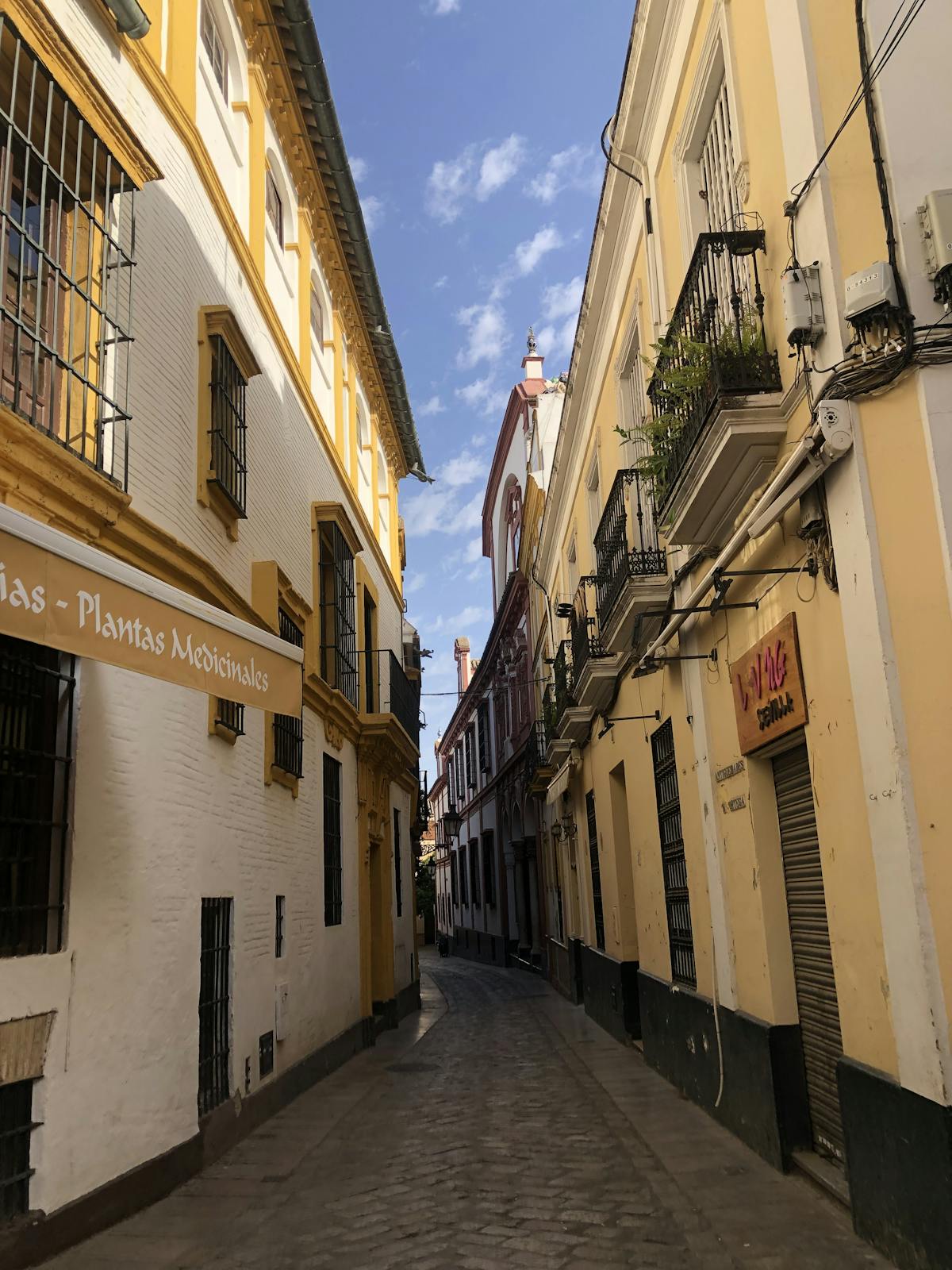
This is the one that put Seville bike tours on the map, and it is still the benchmark. The route covers the Cathedral exterior, the Alcazar walls, the old Jewish quarter (from the bike lanes — you do not ride through the narrow streets), the University (formerly the Royal Tobacco Factory), Maria Luisa Park, the Plaza de Espana, the riverfront, the Triana Bridge, and a stretch along the Guadalquivir. Three hours, roughly 10 kilometers of actual riding, with plenty of stops.
The guide is the differentiator here. This is not an audio device strapped to your handlebar. A real person rides with you, stops at each landmark, and talks about it. The stories tend toward the interesting-but-true variety — how the tobacco factory employed 3,000 women in the 1800s, why the Plaza de Espana was built for the 1929 Expo and then almost abandoned, the time they tried to demolish the Triana Bridge and the neighborhood rioted. You learn things.
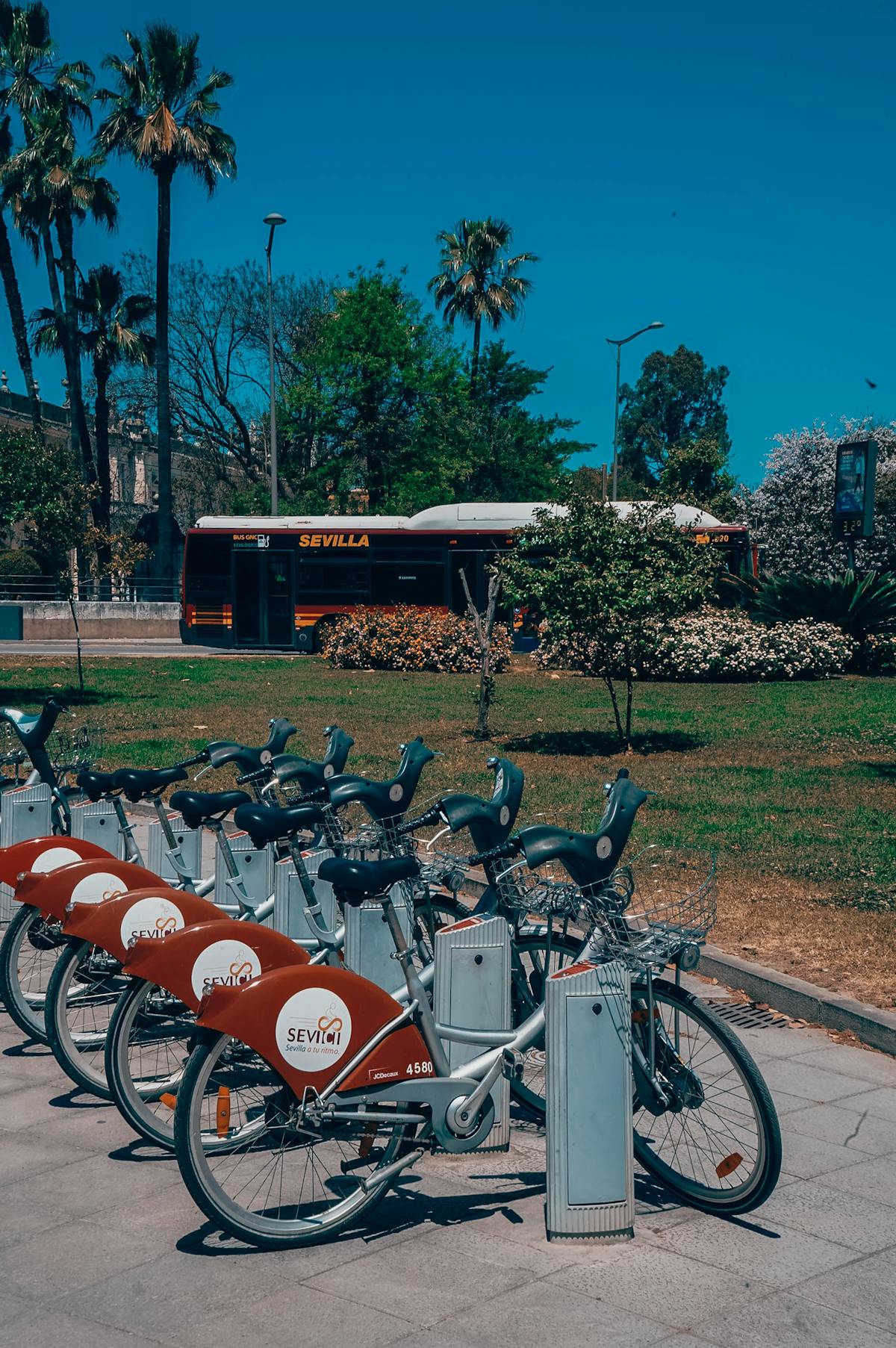
Bikes are well-maintained Dutch-style city bikes with baskets. Comfortable seats, upright riding position, easy gears. If you have not been on a bike in years, these are forgiving enough that it will come back to you within the first two minutes. Helmets are available but not required — Seville is flat and the bike lanes are safe, so most riders skip them, as do most locals.
Group sizes can reach 15-20 on busy days, which is the main downside. In a large group, you spend time waiting for everyone to park their bikes at each stop, and the guide gets harder to hear from the back. Morning departures tend to be smaller. If you have the flexibility, go early.
2. Seville: Highlights City Bike or E-Bike Tour — $38
Duration: 3 hours | Price: $38 per person | Type: Guided group tour with bike/e-bike choice
At $38, this is four dollars cheaper than the Viator highlights tour and covers similar ground. The key selling point is the bike choice — regular city bike or e-bike, same price, same group. That flexibility solves a real problem. If you are traveling with a partner or parent who rides slower, the e-bike option levels the playing field without splitting you into different tours.
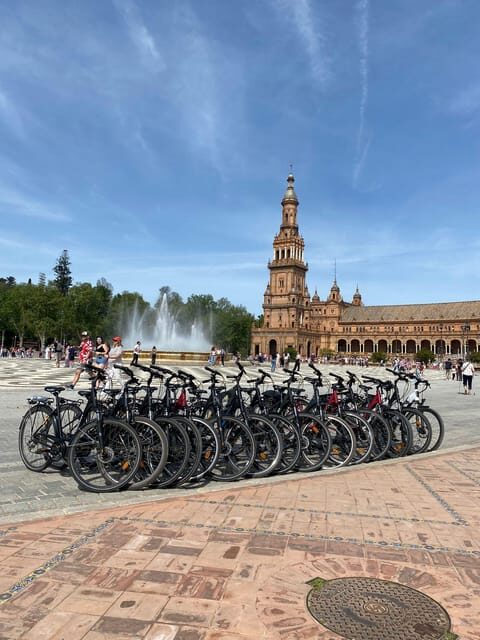
The route hits the usual suspects: Plaza de Espana, Maria Luisa Park, the riverside, Triana, the Cathedral district. Stops are frequent enough for photos and guide explanations. The guide is live and English-speaking, and the groups tend to be mid-sized — 10-15 riders in my experience, though peak season can push higher.
The e-bikes on this tour are pedal-assist, not throttle. You still pedal, but the motor takes the edge off. On Seville’s flat terrain, the assist means you barely notice the riding — which is either a feature or a bug depending on how you feel about exercise on vacation. For the Plaza de Espana stop, where you might spend 15-20 minutes walking around, the e-bike lets you arrive without any exertion and actually enjoy the stop instead of catching your breath.
One honest downside: the bikes are not as uniformly well-maintained as the Viator option above. Most are fine, but there are reports of wobbly seats and squeaky brakes. Check your bike before you leave the shop and ask for a swap if something feels off. The operators are accommodating about this.
For budget-conscious travelers or mixed-ability groups, this is the smart pick.
3. Seville Electric Bike Small Group Tour — $58
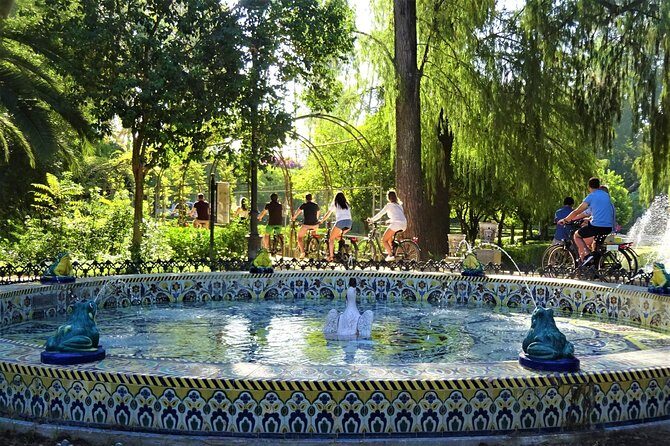
Duration: 2 hours 15 minutes | Price: $58 per person | Type: Small group guided e-bike tour
If you want the sightseeing without any physical effort whatsoever, this is the one. Dedicated e-bikes for every rider, small group sizes (typically under 10), and a 2-hour-15-minute format that covers the major landmarks without the slower pace of a three-hour tour.
The e-bikes here are a step up from the pedal-assist options on the cheaper tours. Higher-quality frames, better battery life, smoother motor engagement. You glide. On the flat Seville streets, it feels like riding with a permanent tailwind. The reduced time works because you spend less of it riding between stops and more of it actually at the stops.
Small groups change the dynamic completely. Instead of 15 people crowding around a guide at the Plaza de Espana, you are 6-8 riders having something closer to a conversation. The guide can tailor the stops to your interests — skip the park if you have been before, spend extra time at the Alcazar walls if you are going inside later. That flexibility does not exist in a 20-person group.
The trade-off is price. At $58, you are paying 50% more than the standard highlights tour. The extra money buys you a better bike, a more intimate experience, and 45 fewer minutes on the saddle. For some people, that is absolutely worth it — especially in summer when those extra 45 minutes of riding in 38-degree heat make a real difference. For others, the standard tour at $38-42 covers the same ground and the savings buy a good lunch afterward.
One thing to note: the 2-hour-15-minute duration means some stops are slightly shorter than on the three-hour tours. You will still see everything, but you might get 5 minutes at a stop where the longer tour gives you 10. If you are a photographer who needs time to compose shots, the three-hour format is more forgiving.
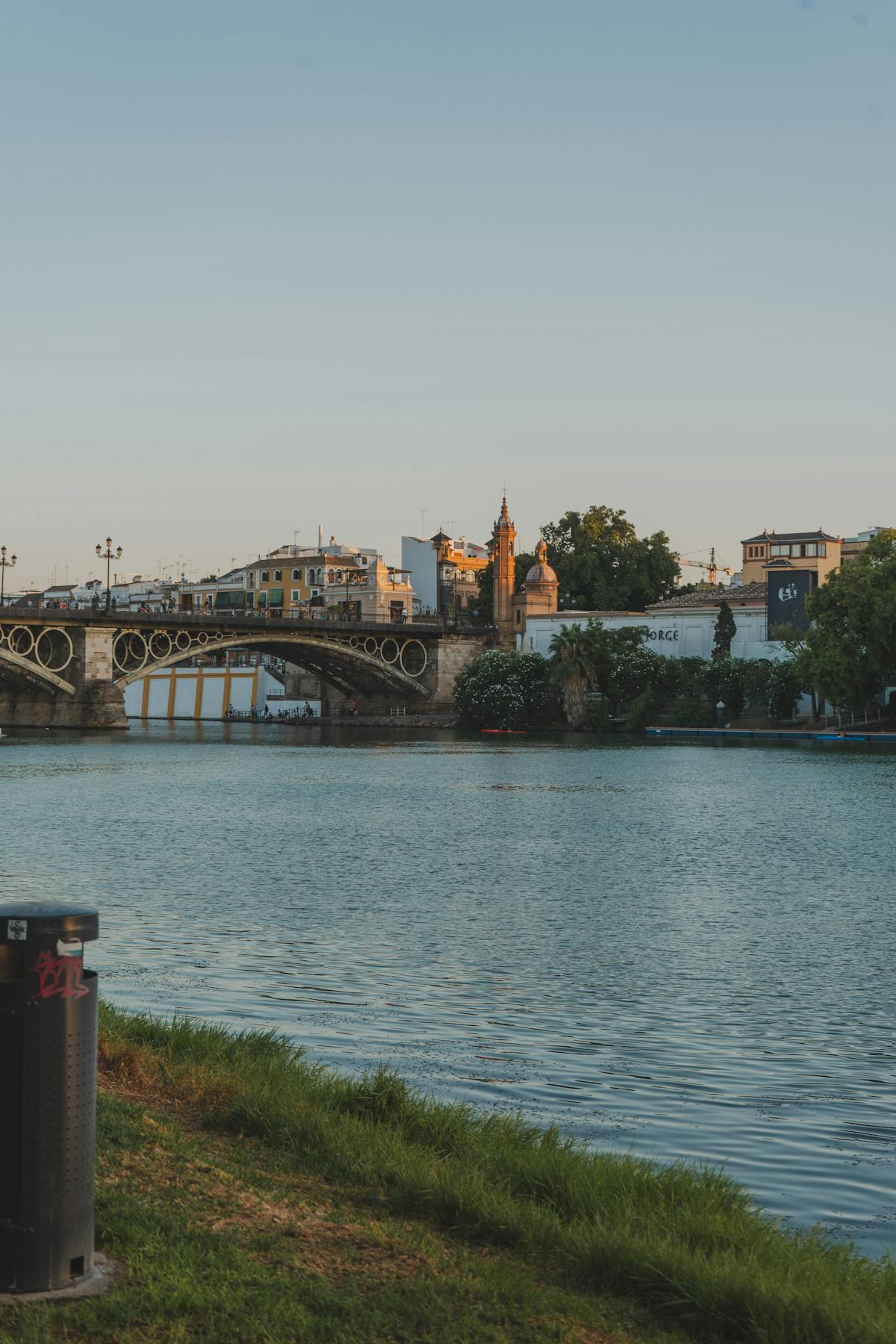
4. Sunset Guided Bike Tour in Seville — $36
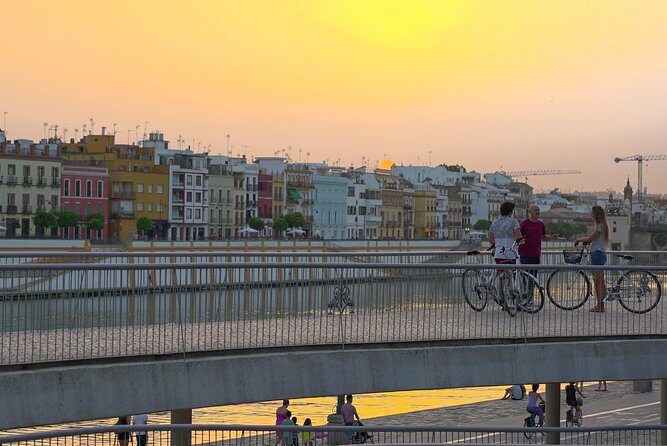
Duration: 3 hours | Price: $36 per person | Type: Guided sunset bike tour
The cheapest of the four options and, honestly, my favorite. The route is nearly identical to the daytime highlights tour — Cathedral, Alcazar walls, Maria Luisa Park, Plaza de Espana, riverside, Triana. But the timing changes everything.
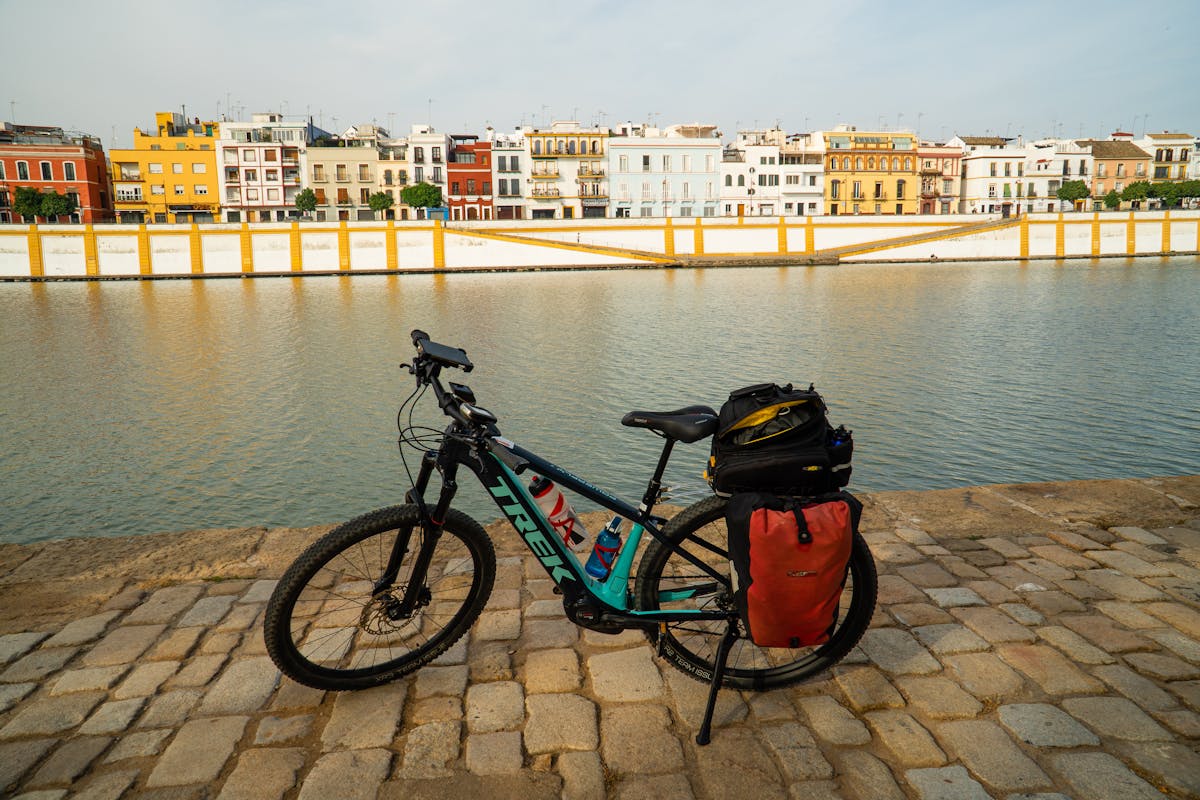
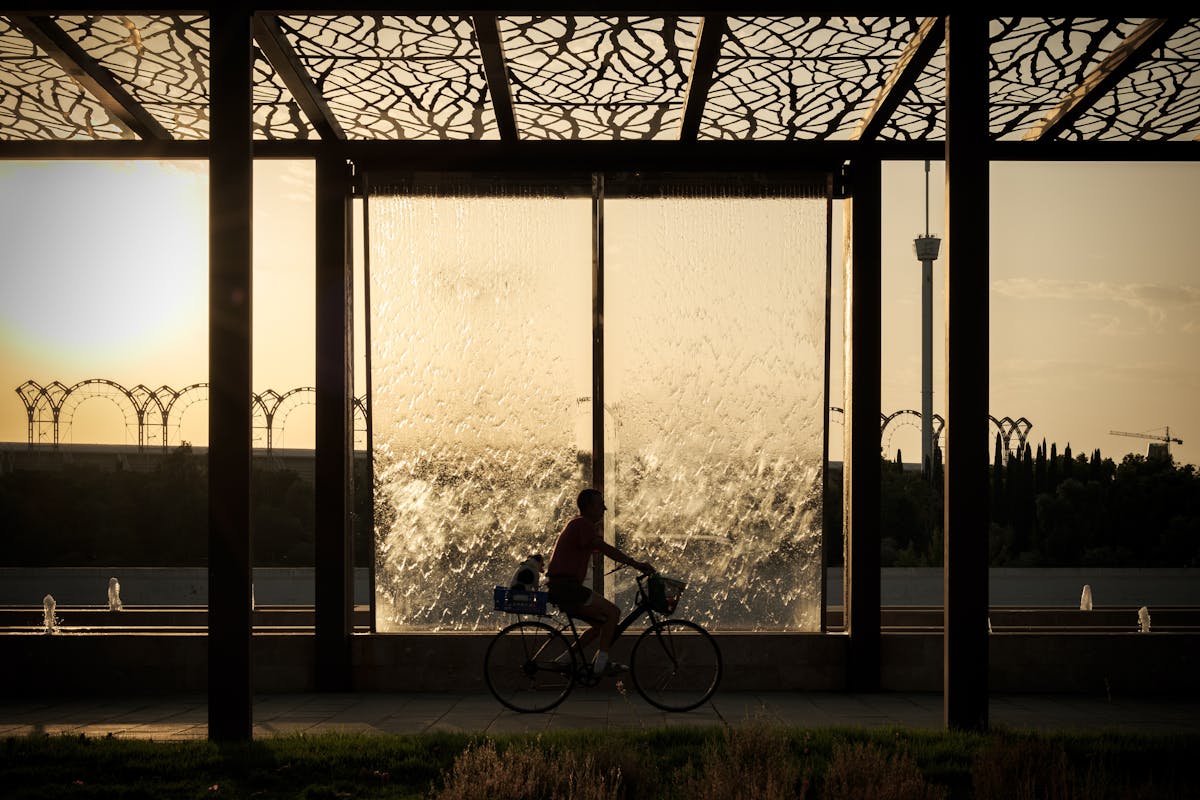
You depart in the late afternoon, when the worst of the heat has broken. The first hour covers the inland landmarks in soft pre-sunset light — the Cathedral glows rather than glares, the shadows in Maria Luisa Park are long and dramatic. Then the route swings west toward the river, and the guide times the Guadalquivir stretch so you are riding along the water as the sun drops. The Torre del Oro turns gold. The Triana Bridge catches the light. The whole riverfront shifts from daytime Seville to something moodier and more photogenic.
The ride finishes as the city transitions to evening. Restaurants are opening, the riverside bars are filling up, and the temperature finally feels civilized. You dismount and you are already in the right place to continue your night. That transition — from sightseeing to nightlife without a gap — makes this feel less like a tour and more like the start of an evening out.
At $36, it is also the cheapest option here, which makes no sense but works in your favor. The only catch is availability: sunset departure times shift with the season (as late as 8 PM in summer, as early as 4:30 PM in winter), and some dates sell out because the sunset slots are popular. Book a few days ahead if you are visiting in spring or autumn.
The riding in lower light does mean the photo opportunities are different. You get dramatic golden-hour shots but lose the crisp midday clarity. If you want clean, well-lit photos of the landmarks, the morning highlights tour is better for that. If you want the experience over the documentation, sunset wins.
When to Ride
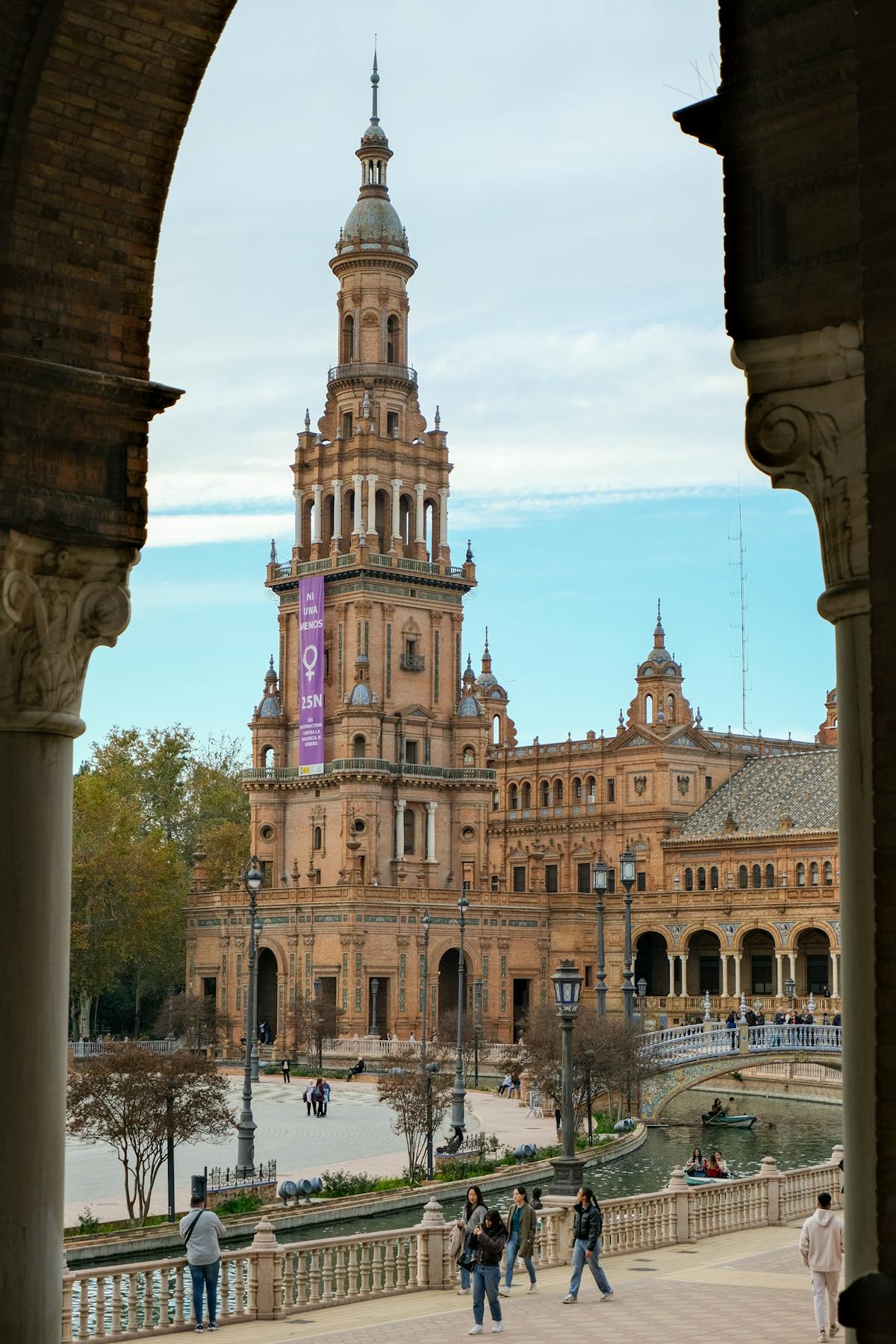
Seville’s weather ranges from perfect to punishing depending on the month, and it matters more on a bike than on foot because you are exposed for the entire ride.
March through May is the sweet spot. Temperatures hover between 18 and 30 degrees, the orange trees are in bloom (the whole city smells like it), and the light is clean and warm without being harsh. Semana Santa (late March or April) fills the city beyond capacity — book everything two weeks ahead minimum. But the weeks before and after Holy Week are arguably better: same weather, half the crowds.
June through August is survival mode. Seville regularly hits 40-45 degrees in July and August, and cycling in that heat is not pleasant even with water and shade. If you are visiting in summer, book either the earliest morning departure or the sunset tour. The morning tours start before the city heats up, and you finish before noon. The sunset tours depart after 7 PM when the temperature drops to something manageable. Anything between 1 PM and 6 PM? Skip it. Walk through air-conditioned museums instead.
September and October are nearly as good as spring. The brutal heat fades by mid-September, temperatures settle into the 25-30 range, and the city is less crowded than spring because the festival season is over. October is underrated — warm enough for comfortable cycling, cool enough that you do not arrive at each stop drenched in sweat. Sunset happens around 7-8 PM, which is a civilized hour for an evening ride.
November through February is mild but variable. Expect 12-20 degrees, occasional rain, and shorter days. The bike tours run year-round, but winter departures are less frequent and some days get rained out. Dress in layers — mornings can be chilly, but you warm up quickly once riding. The upside of winter is that you have the bike lanes and the landmarks almost to yourself. The Plaza de Espana without 200 other travelers in the frame is a different experience entirely.
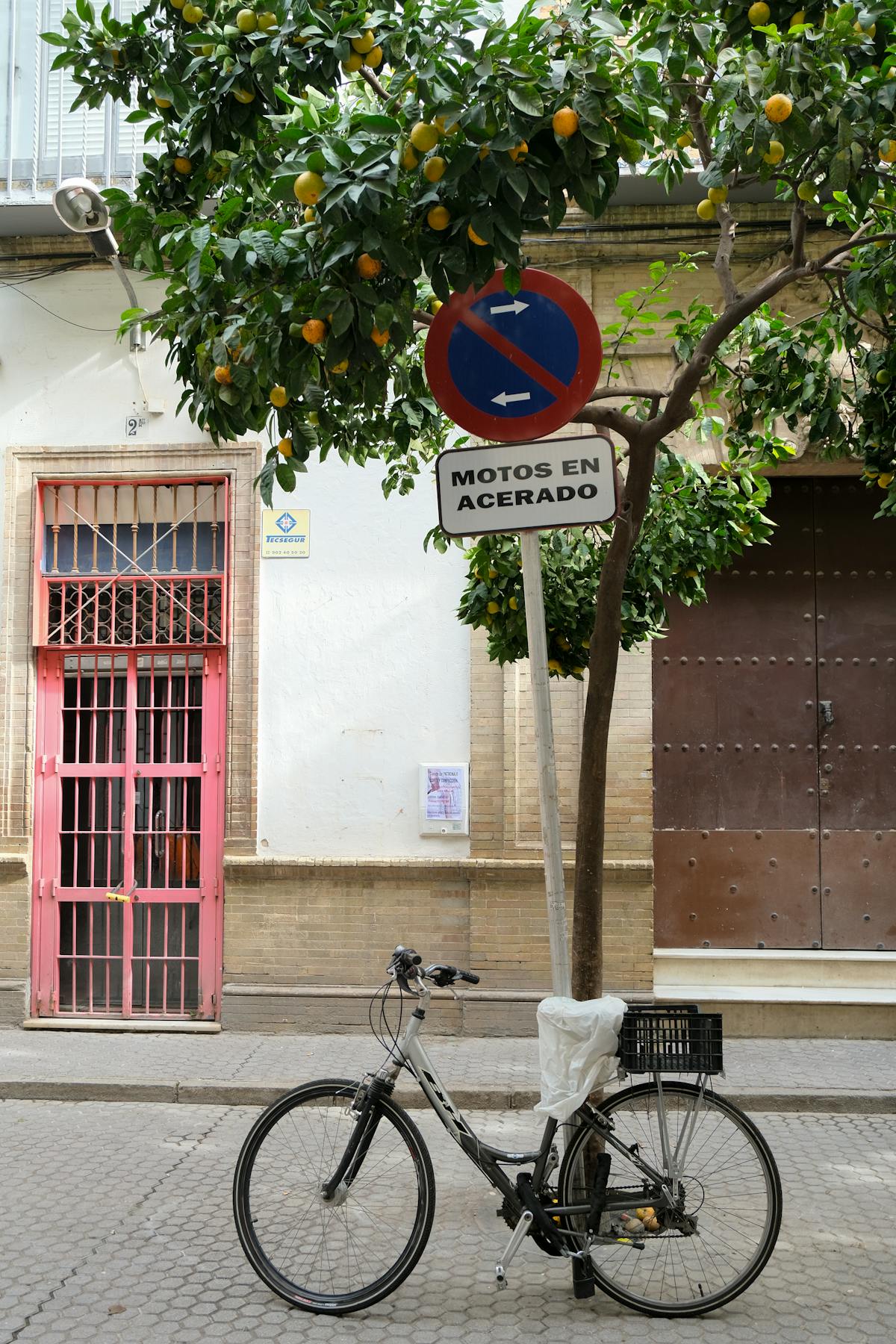
Tips for Your Ride
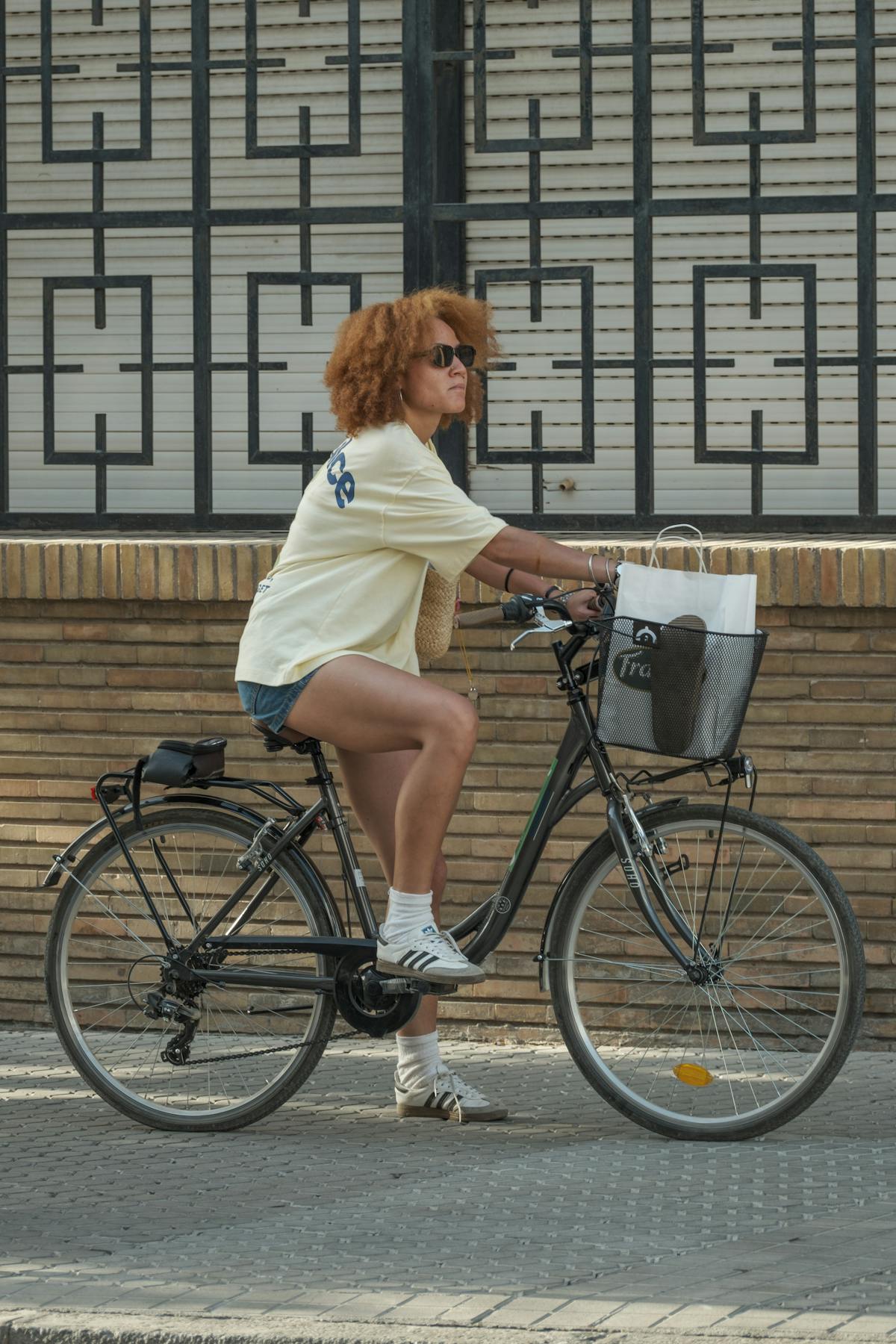
Check your bike before you leave. Squeeze the brakes, spin the wheels, test the seat height. The bike shops are good about swaps, but only if you catch the problem before you are two kilometers into the ride. Squeaky chains and wobbly seats are the most common issues.
Bring water. Most tours do not provide it, and Seville’s heat sneaks up on you. A 500ml bottle in the bike basket is enough for a three-hour ride in spring or autumn. In summer, double it. The guides usually make a stop near a kiosk where you can buy more if needed.
Sunscreen goes on before you start, not at the first stop. You are exposed from minute one. The bike helmet (if you wear one) does not cover your ears, the back of your neck, or your forearms. A lightweight long-sleeve shirt is smarter than sunscreen alone in July and August.
Wear comfortable shoes with a back strap. Flip-flops work on Seville’s streets but not on bike pedals. Sneakers are ideal. Sandals with ankle straps are fine. Anything that could slip off mid-pedal is asking for trouble.
Phone mounts help. If you want to take photos while riding (and you will — the riverside stretch is irresistible), a phone mount on the handlebars or a small crossbody bag with easy access beats fumbling in your pocket. Some bikes have baskets where you can keep your phone visible.
The guide sets the pace, and it is slow. These are sightseeing rides, not training sessions. If you are a confident cyclist, you might find the pace frustratingly gentle. Accept it. The slow speed is what lets you look at the buildings, hear the guide, and stop without drama. If you want a fast ride, rent a bike solo.
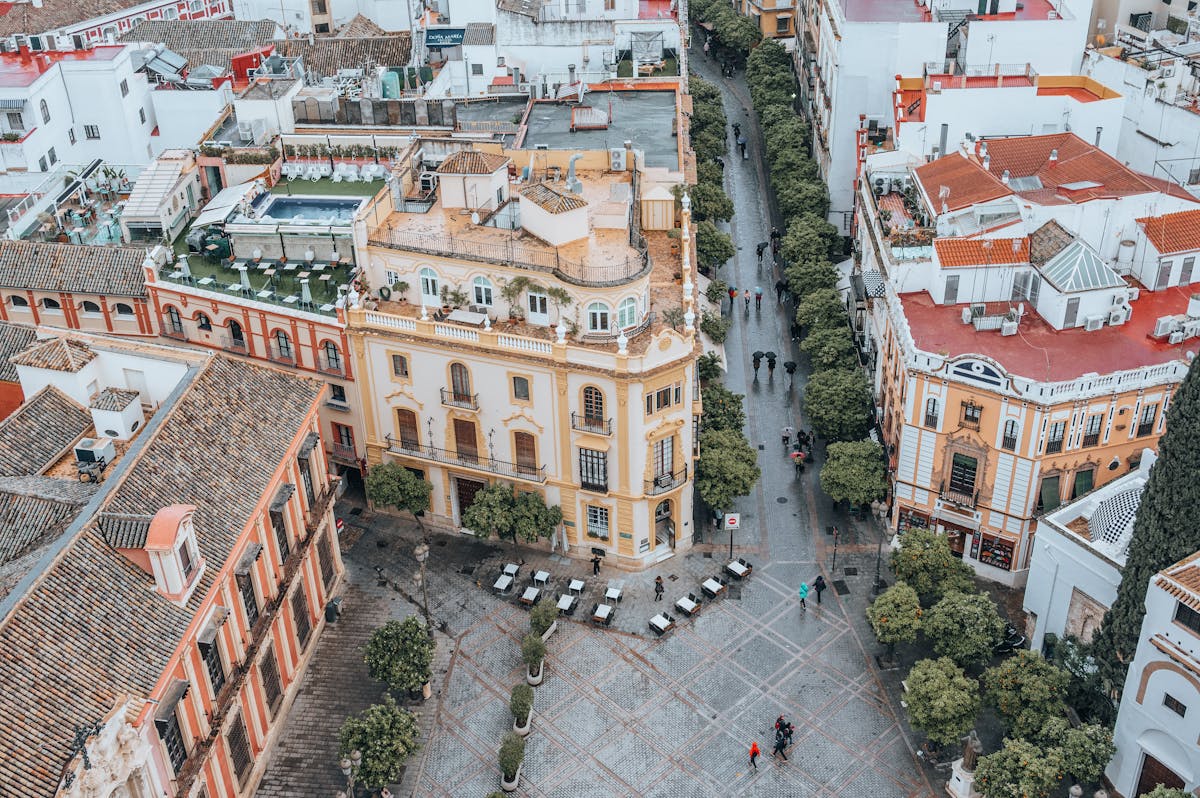
Tipping is appreciated but not expected. If the guide was good — and they usually are — a few euros per person is a nice gesture. Five euros from each rider in a group of 10 adds up to a meaningful tip. Cash is easiest.
Combine with something afterward. The daytime tours end around lunchtime or early afternoon, which makes them a natural lead-in to a tapas crawl in Triana or a visit inside the Alcazar (book timed tickets separately). The sunset tours end near the riverside bars. In either case, the tour drops you off in a part of the city where the next thing to do is obvious.