
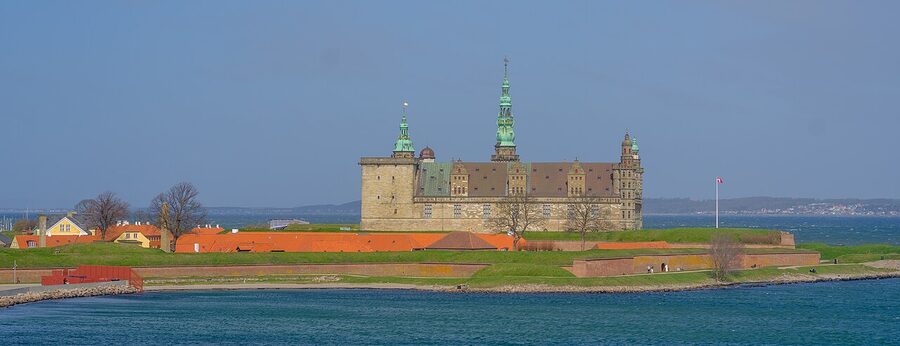
You stand on the ramparts at Kronborg with the wind off the Øresund hitting you sideways, and on the far horizon you can clearly see Sweden. Just there. Four kilometres of grey-blue water between you and another country. This is the spot Shakespeare named in Hamlet as Elsinore, and although he never visited Denmark himself, the geography of the play makes a lot more sense when you’re actually here. The ghost on the battlements, the Norwegian threat across the water, the trapped feeling of a court at the edge of the kingdom. It all clicks.
That moment is the payoff for what is otherwise a pretty long day. A castle day trip from Copenhagen takes you to three of the most important historic sites in Denmark in a single nine-hour push. It’s not lazy travel. But you cover ground a self-driving day trip would take two days to manage, and you do it with someone who knows the difference between Christian IV’s tomb and Frederik V’s.


- In a Hurry? Here’s What to Book
- What this day trip actually covers
- The Top 3 Castle Day Trip Tours from Copenhagen
- 1. Copenhagen: Kronborg, Frederiksborg Castle and Roskilde Tour: 5
- 2. Hamlet and Sweden Tour: Two Countries in One Day: 3
- 3. Full-Day Castle, Palace, Cathedral and Viking Ships Tour: 8
- Kronborg Castle: Hamlet’s Elsinore
- The Sweden view
- Helsingør itself
- Frederiksborg Castle: Denmark’s Versailles
- Roskilde Cathedral: where the kings are buried
- Roskilde’s Viking Ship Museum bonus
- Booking practicalities
- What’s actually included
- Pickup and drop-off
- When to go
- Combining with other trips
- Doing it yourself by train
- One thing to know about photography inside
- If you only have time for one castle
- What else to see in Copenhagen
- Last word from someone who’s done it
In a Hurry? Here’s What to Book
The full circuit: The Kronborg, Frederiksborg and Roskilde Tour hits all three sites with a guide and minibus. About $205 per person, around 8.5 hours.
Best with a Sweden bonus: The Hamlet and Sweden Tour swaps Roskilde for a Lund and Malmö ferry crossing. About $143 per person, 8 to 9 hours.
Most thorough version: Full-Day Castle, Palace, Cathedral and Viking Ships adds the Viking Ship Museum to the standard three-stop. About $218 per person, 9.5 hours.
What this day trip actually covers
A standard castle day trip from Copenhagen runs north-east first, then south-west, in a rough loop around Sealand (the island Copenhagen sits on). Kronborg in Helsingør comes first, partly because it opens earliest and partly to beat the cruise-ship crowds in summer. Then a 30-minute drive west to Frederiksborg in Hillerød. Then south through Copenhagen suburbs to Roskilde, about 35 minutes from Hillerød.
The geography is what makes it a long day. Helsingør is 47km north of Copenhagen. Hillerød is 35km north-west. Roskilde is 30km west of Copenhagen. The total driving distance is around 140km without the return, and you’re moving for over six hours of the eight-and-a-half-hour day. That sounds brutal. In practice it’s fine, because the sites are spaced exactly far enough apart that you actually want a sit-down between them.
Almost every operator runs the same loop in the same direction. Kronborg first, Frederiksborg second, Roskilde third, back to Copenhagen. A few flip the order to start at Roskilde, but those are the exception. Don’t book a tour that promises all three plus a fourth stop. There isn’t time. You’ll get a rushed visit at the marquee site and be furious by 4pm.
The Top 3 Castle Day Trip Tours from Copenhagen
I’d narrow it to three. They cover meaningfully different ground despite all looking similar at first glance.
1. Copenhagen: Kronborg, Frederiksborg Castle and Roskilde Tour: $205
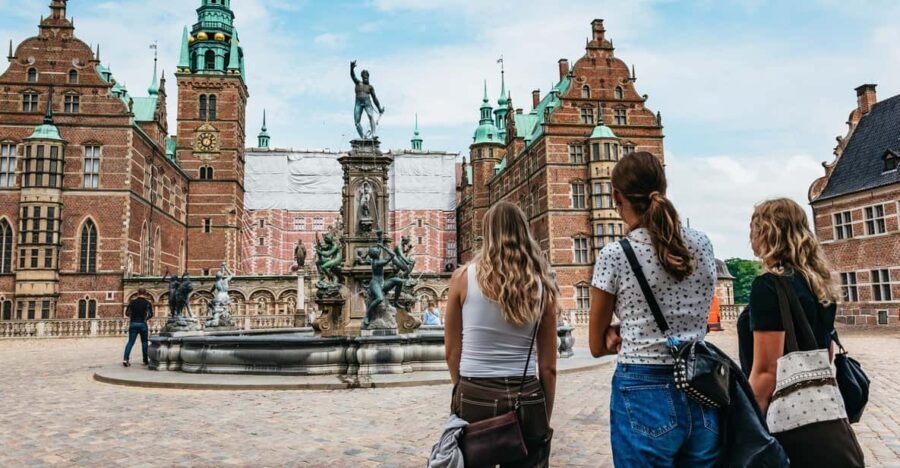
This is the most-booked Copenhagen castle day trip, and the structure is dialled in: Kronborg early, Frederiksborg around lunch, Roskilde Cathedral in the afternoon. Our full review goes into the small-group format and how the guide handles the timing between sites. Entrance fees to the castles are separate, which is the one thing I’d change about the booking flow.
2. Hamlet and Sweden Tour: Two Countries in One Day: $143
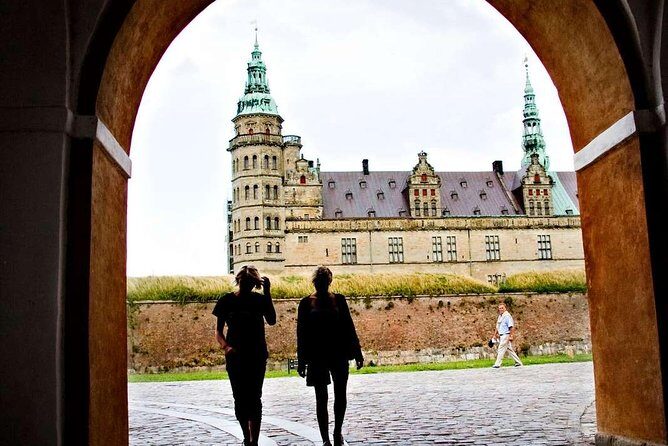
This swaps the Danish royal-tomb history of Roskilde for a quick afternoon in Sweden, which is genuinely a different experience. Our full review gets into how Lund’s medieval university town feels nothing like Malmö’s modern Turning Torso skyline. The price is also notably lower than the Roskilde version, partly because Sweden charges nothing for cathedral entry and the ferry is short. Skip this if your priority is Viking history.
3. Full-Day Castle, Palace, Cathedral and Viking Ships Tour: $218
This goes 9.5 hours instead of 8.5 and squeezes in five reconstructed Viking longships on display in their own purpose-built hall by the fjord. Our full review covers the energetic guide format. The trade-off is the longer day. If you’re already someone who likes the kind of guided tour where you’re moving non-stop, this gives you the most bang per krone.
Kronborg Castle: Hamlet’s Elsinore
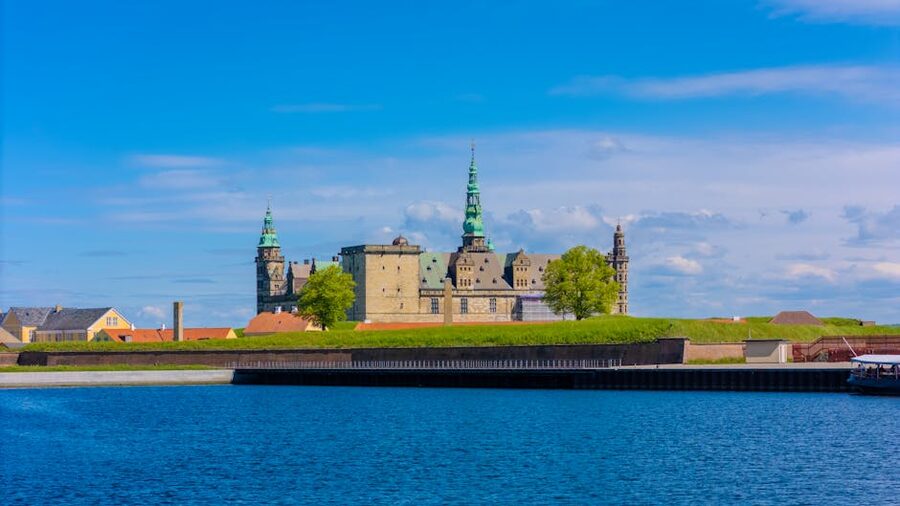
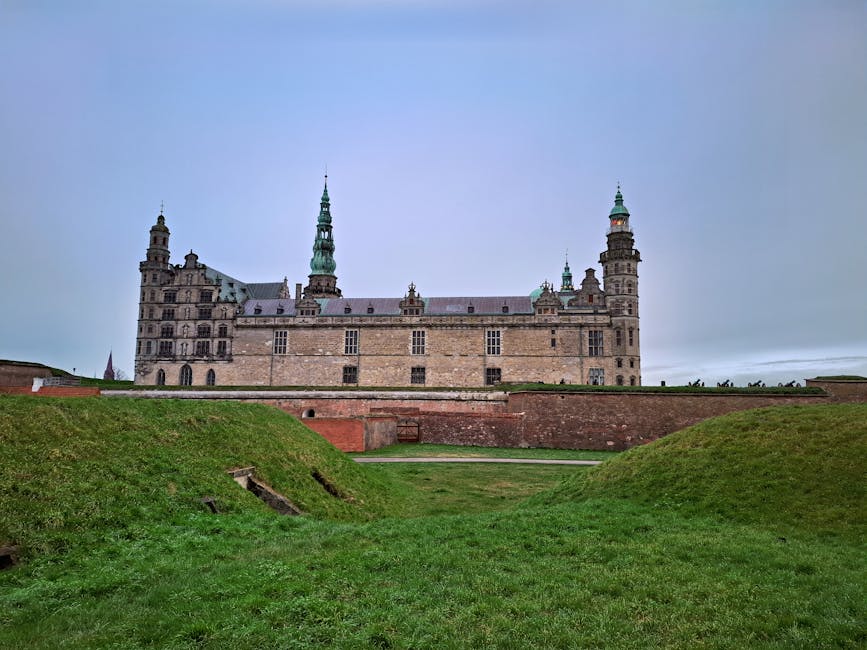
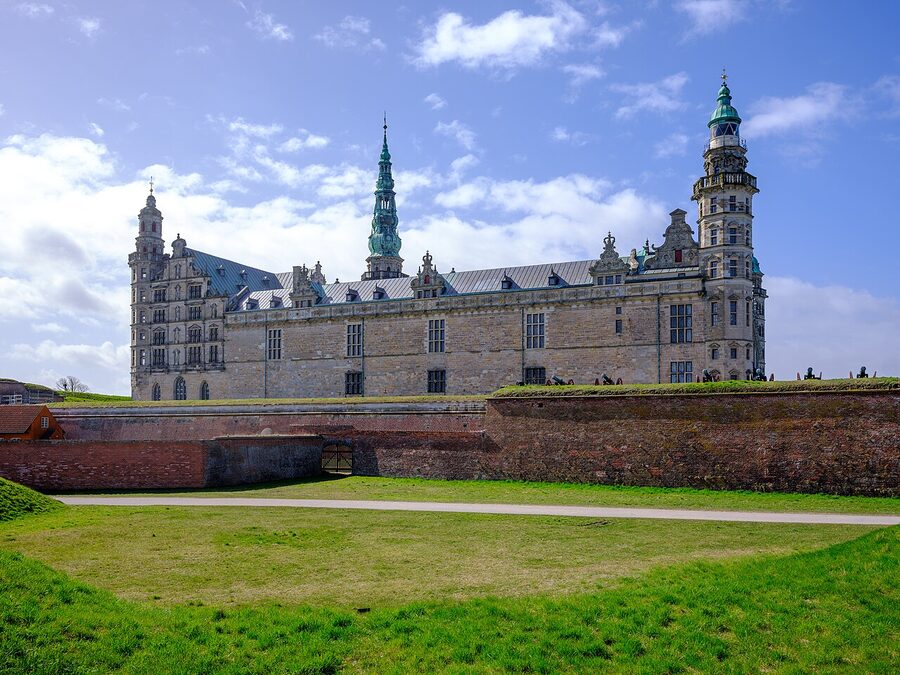
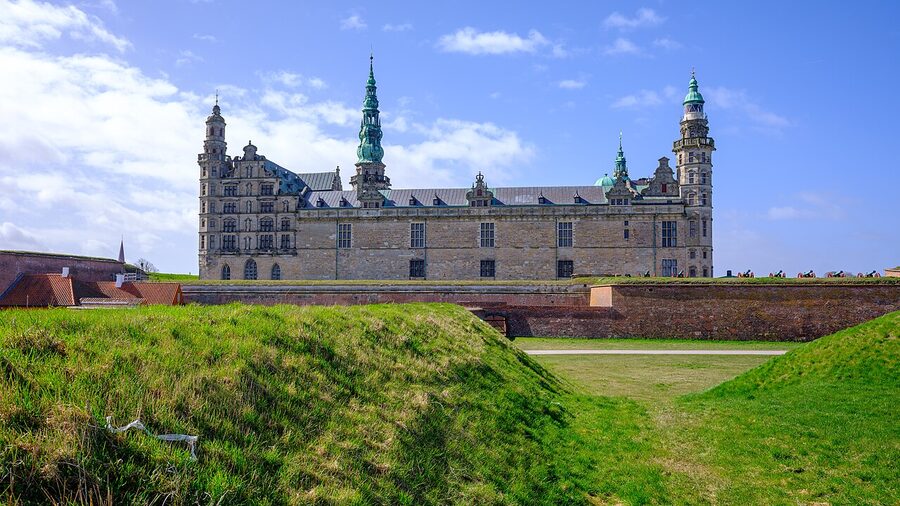
Kronborg is the moneyball of the three sites. It’s the one that’s been UNESCO-listed since 2000 and the one most non-Danes have heard of, even if they don’t realise it. Shakespeare wrote Hamlet around 1600 and set it at “Elsinore” which is the English form of Helsingør. He’d never been here, but English actors had performed at the castle in the 1580s and 90s, and they brought the geography back with them. The castle was already famous across Europe at that point as the place where every ship passing through the Øresund had to pay the Sound Dues, a tax that funded the Danish state for 400 years.
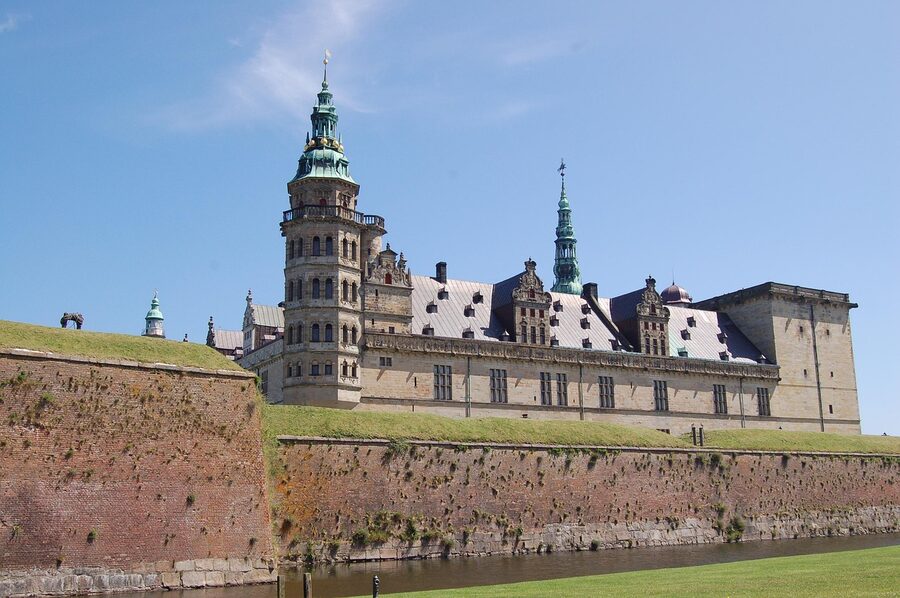
What you actually see when you go in: the great ballroom (62m long, the largest in northern Europe when it was built), the chapel (which somehow survived the 1629 fire intact), and the casemates underneath. The casemates are the dark, low-ceilinged tunnels under the bastions, originally for soldiers in siege. Today they hold a stone statue of Holger Danske, the legendary Danish national hero who’s said to be sleeping there until Denmark needs him. He looks more like a particularly grumpy garden gnome than a hero, but Danes take him seriously.
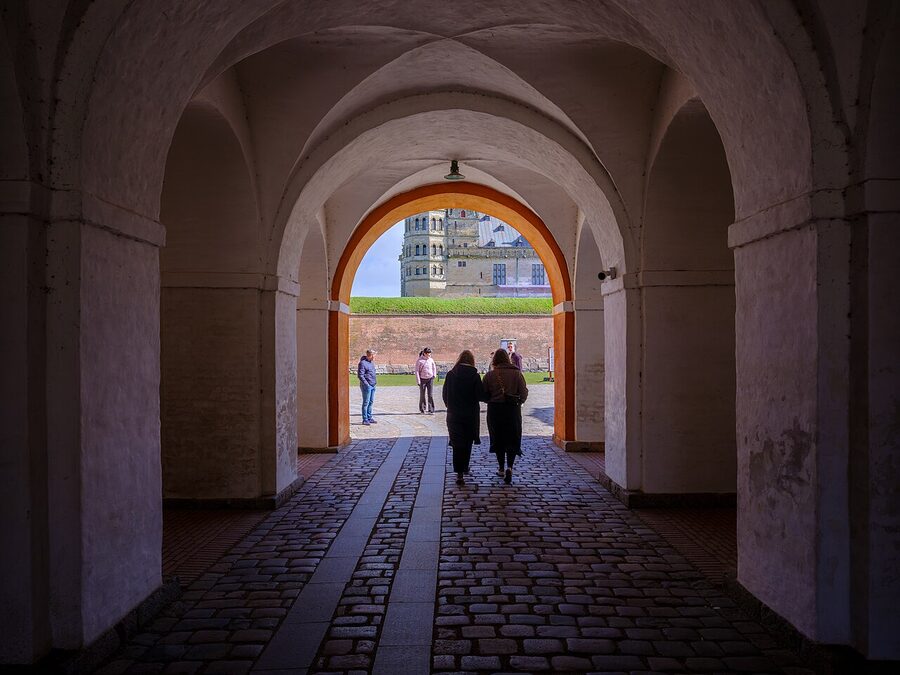
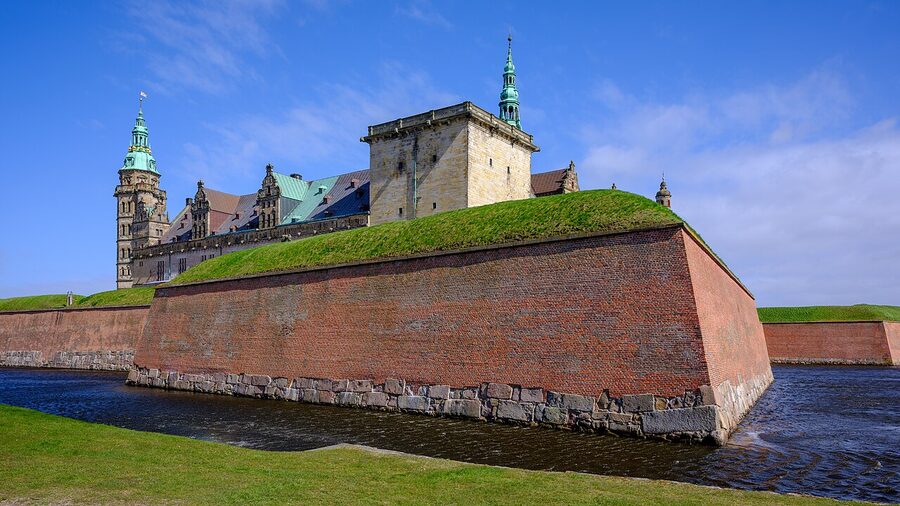
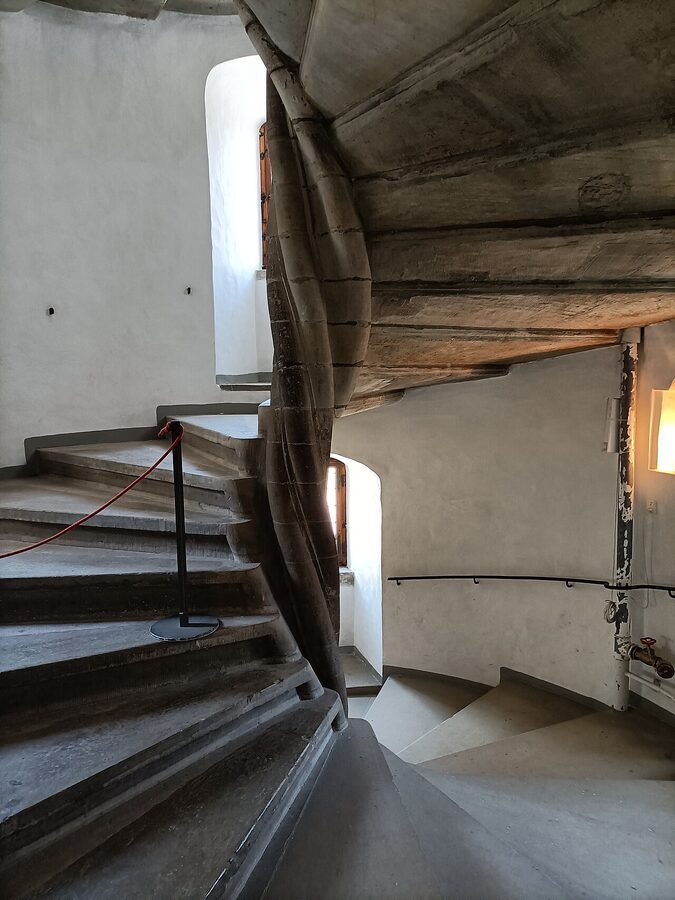

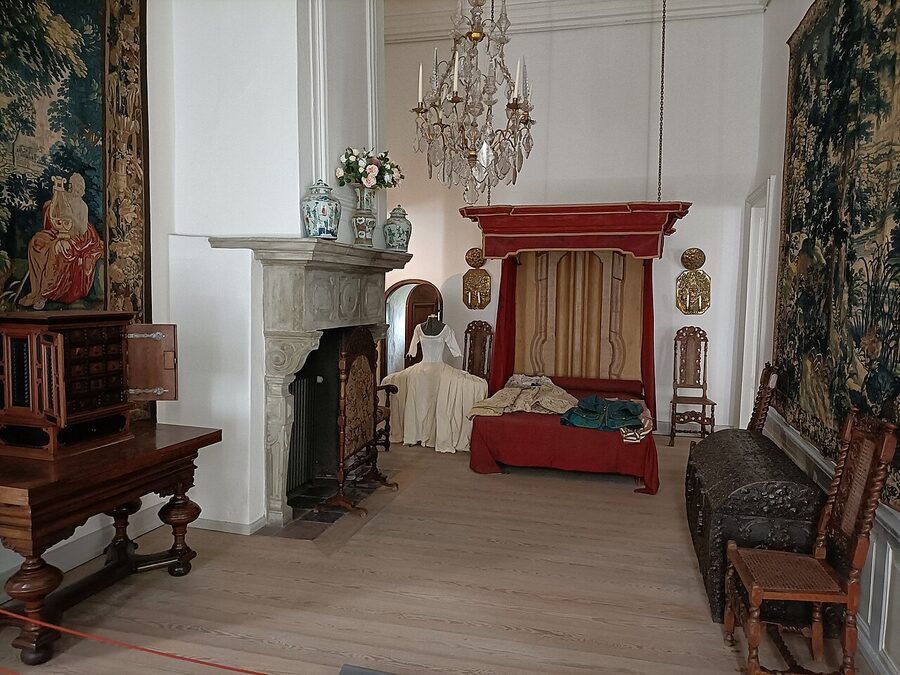

You get about 90 minutes to two hours at Kronborg on most tours. That’s enough for a guided walk through the main rooms, ten or fifteen minutes on the bastions looking across to Sweden, and a quick descent into the casemates. The chapel is often skipped on a packed schedule, which is a shame because it’s the most original surviving interior.


The Sweden view
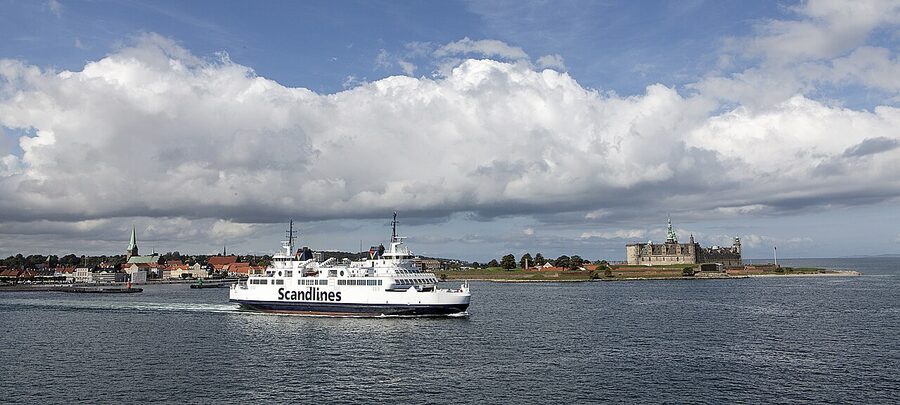
Helsingborg, on the Swedish side, is exactly 4km away across the Øresund. Frederik II picked this spot in the 1570s precisely because the strait narrows to its tightest point here. From the seaward bastions you can see the Helsingborg waterfront clearly, and at night the city lights it up. Ferries cross every 15 minutes during the day and take 20 minutes one way. People commute on this boat. It’s that ordinary, that close.
.jpg)
Helsingør itself
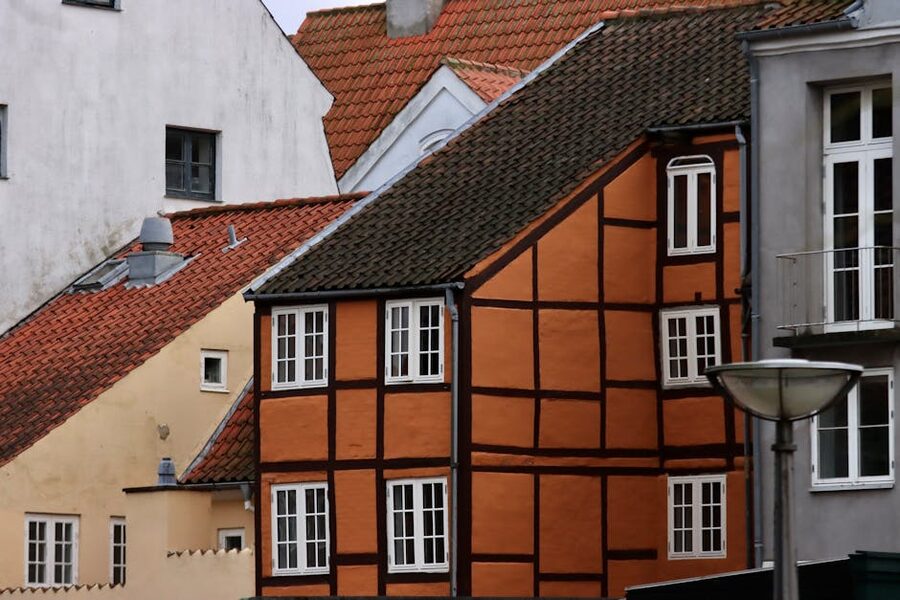
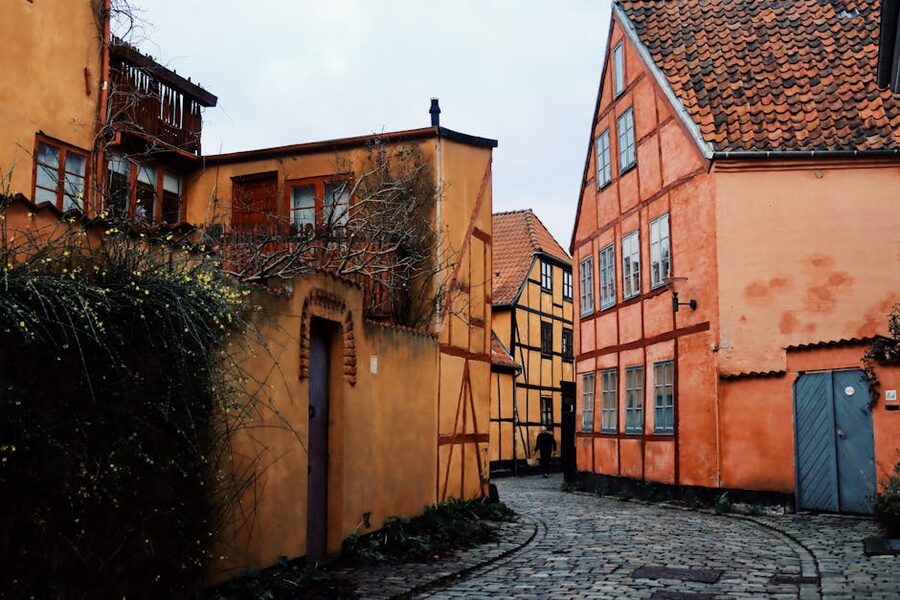
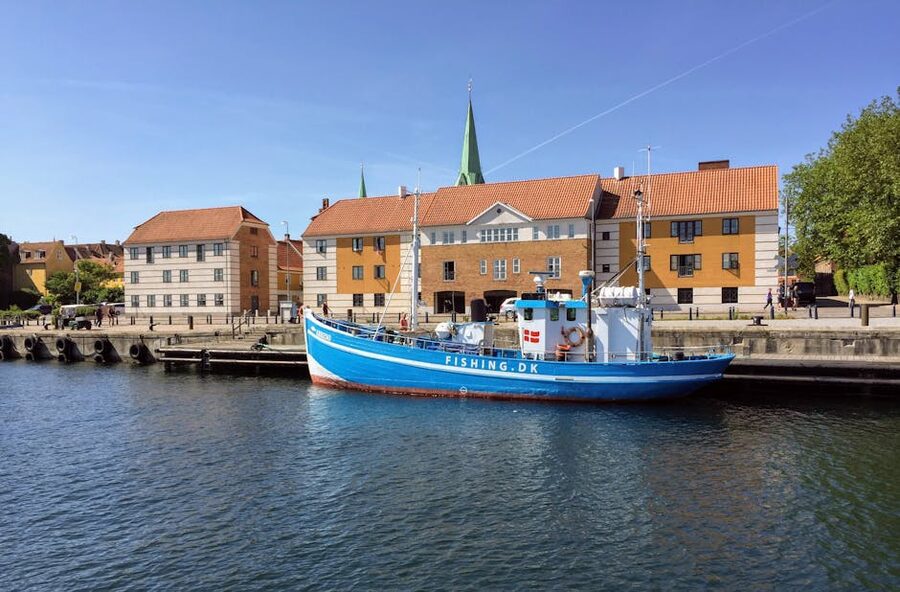
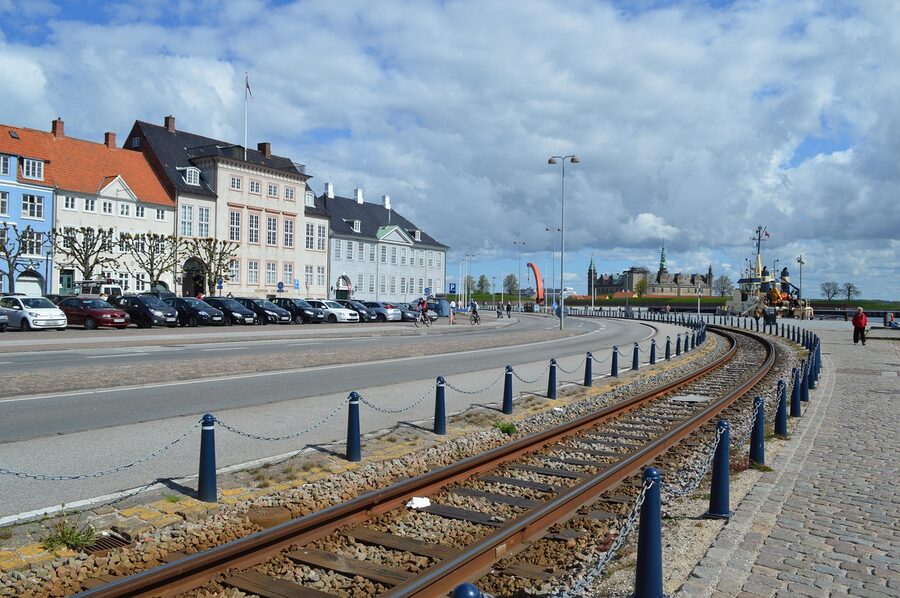
The town outside the castle gates is also worth ten minutes if your tour gives you any free time. Helsingør grew rich on the Sound Dues and you can see it in the merchant houses around Stengade and Sct. Olai Stræde. Most are 16th and 17th century, with painted facades in mustard yellow and dusty red. There’s a small but excellent Maritime Museum (M/S Museet for Søfart) built into a dry dock right next to the castle. Tours rarely include it.
Frederiksborg Castle: Denmark’s Versailles
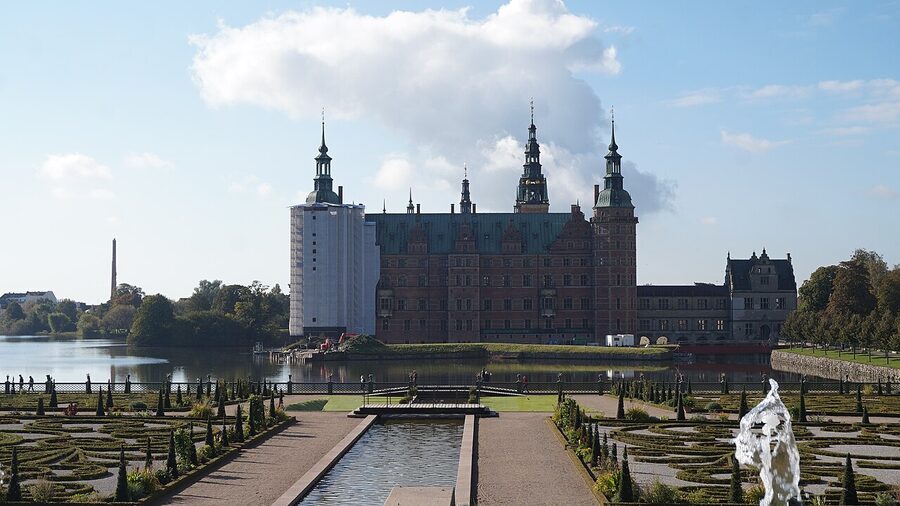

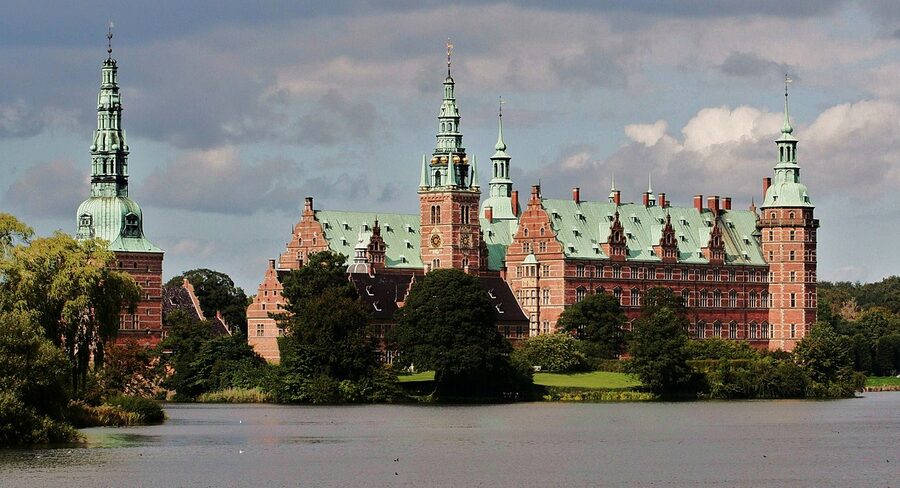
If Kronborg is the brooding sea-fortress, Frederiksborg is the show pony. It’s the largest Renaissance palace in Scandinavia, sat on three islands in the middle of an artificial lake, with the spires reflecting in the water from every angle. Christian IV built it as a deliberate statement of Danish royal power in the early 1600s. He was a 22-year-old king with a budget and a point to prove. The result is more decorated and more theatrical than anything you’ll see at Versailles, even if Versailles is bigger.
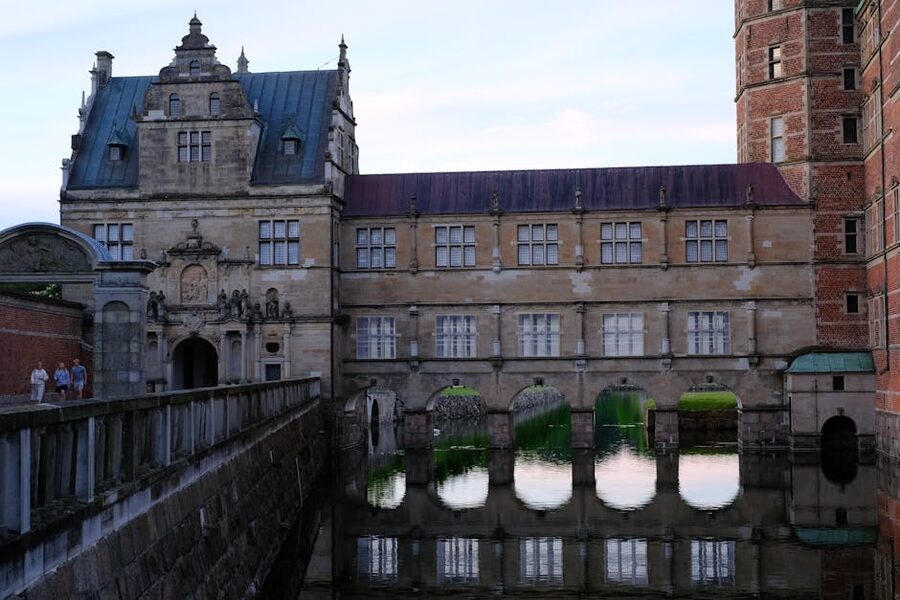
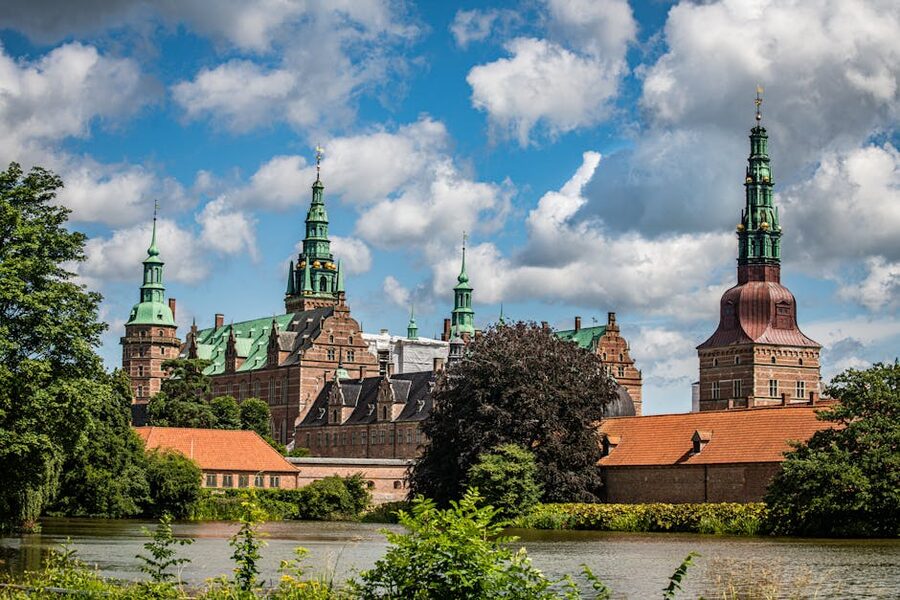
What’s inside is the Museum of National History, set up in 1878 by the Carlsberg founder J.C. Jacobsen after a fire devastated the castle in 1859. The conceit: tell the story of Denmark in chronological order through royal portraits and history paintings, room by room. It’s denser and weirder than that sounds. Some rooms have 40 portraits crammed wall-to-wall. The royal chapel is intact (it survived the fire), and the Knight’s Hall on the top floor still has the original ceiling and floors.
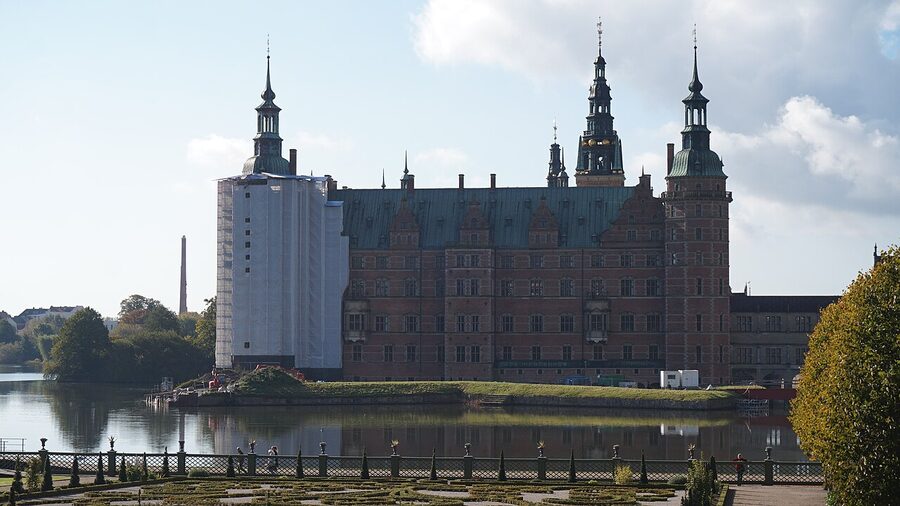

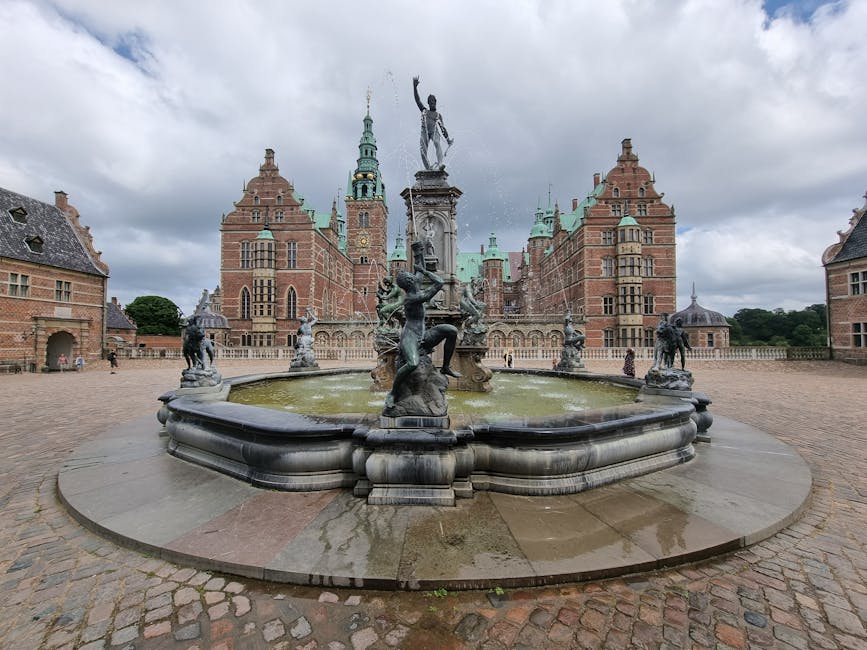
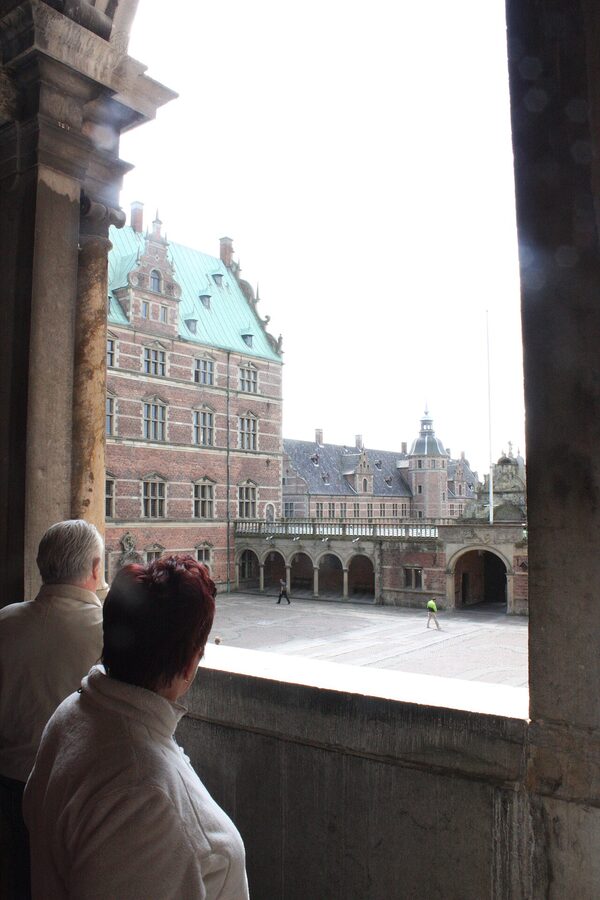

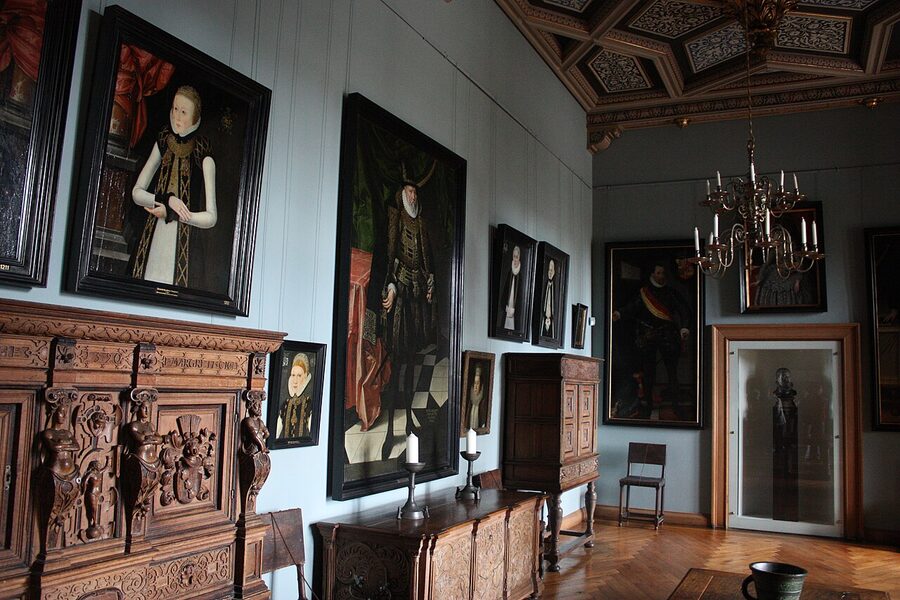

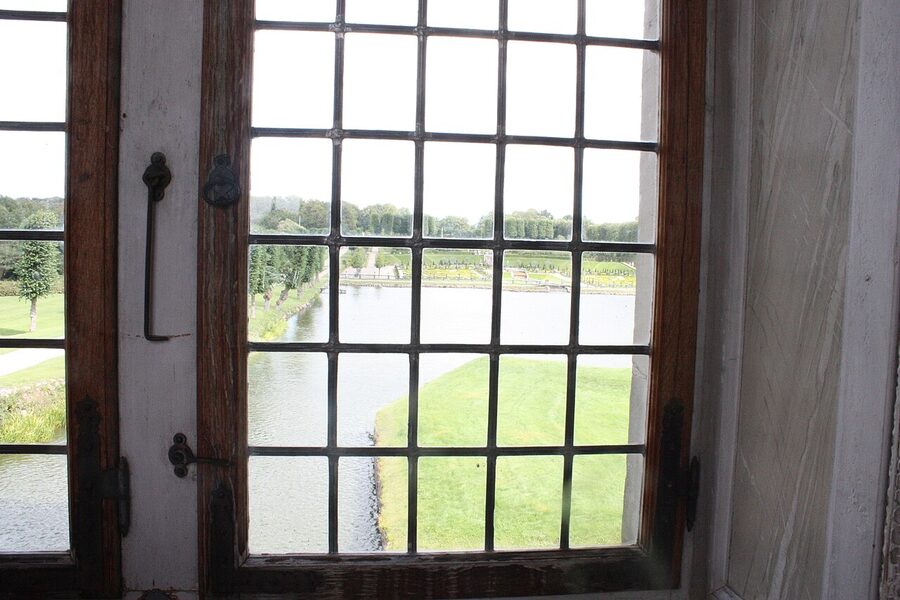

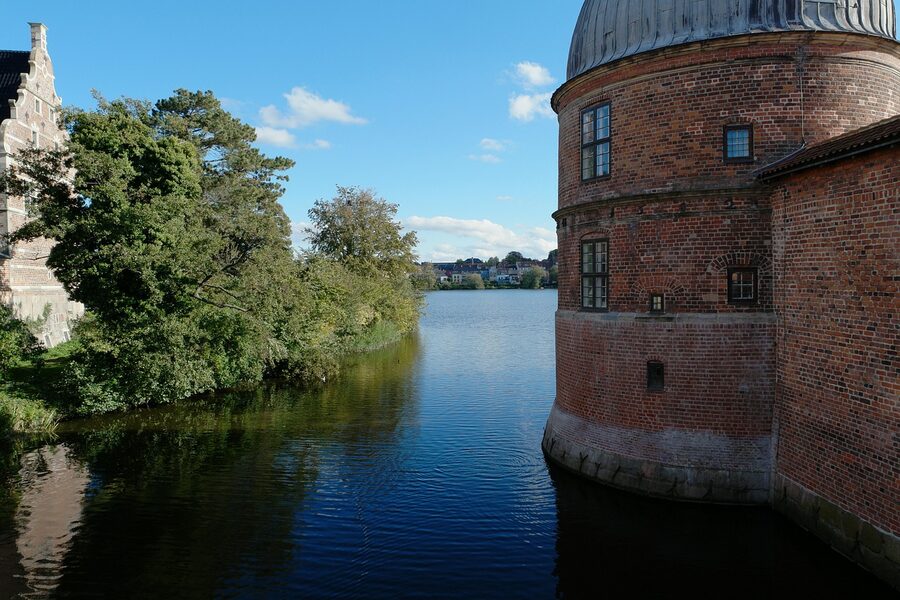
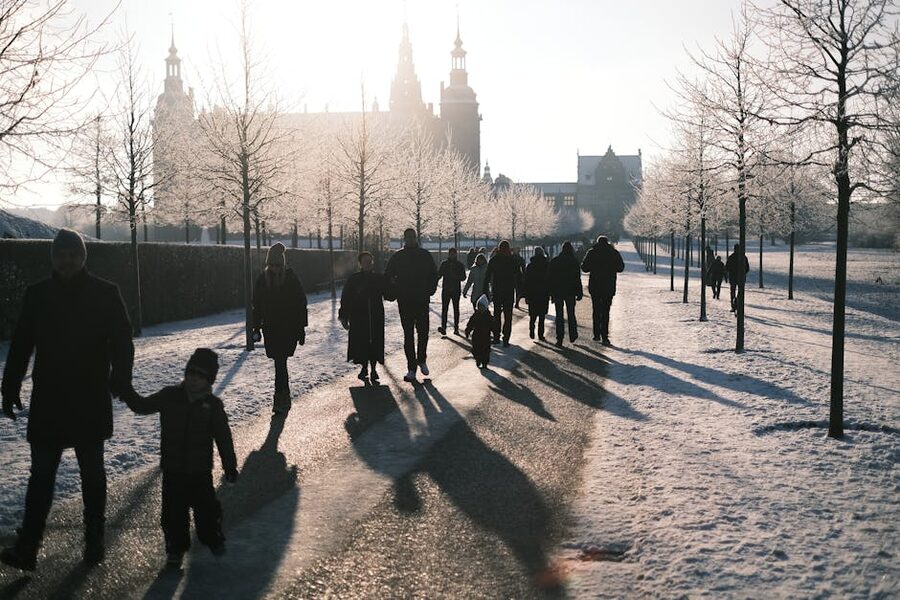
You’ll get about 90 minutes here. That’s not enough to do the museum justice (the audio guide alone is 90 minutes), but it’s enough to walk the highlight rooms with your guide and get five or ten minutes outside in the formal baroque garden across the lake. Skip-the-line is included on most group tours, which matters more here than at Kronborg because the entrance gate has a single ticket window and the queues in summer get ugly.
Roskilde Cathedral: where the kings are buried
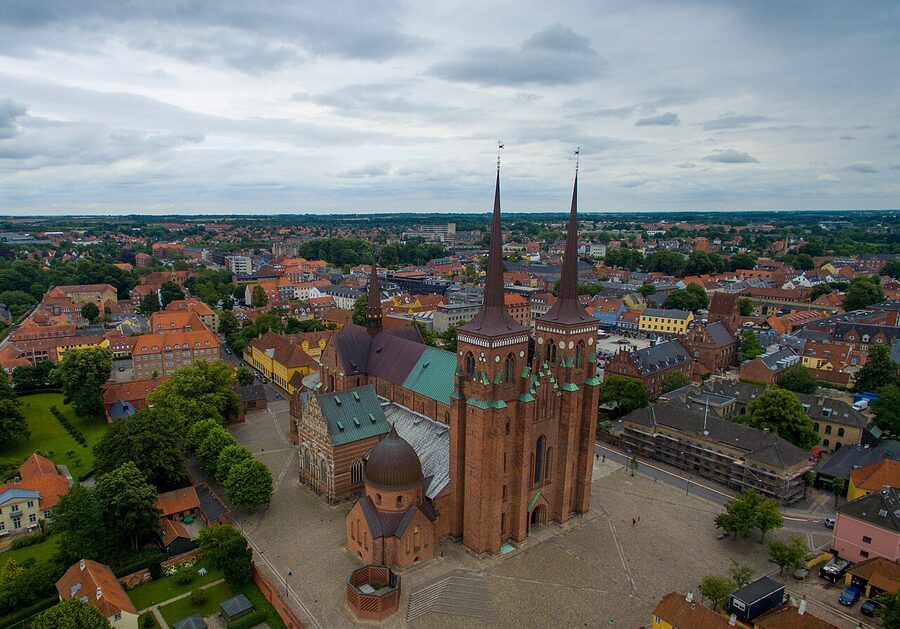

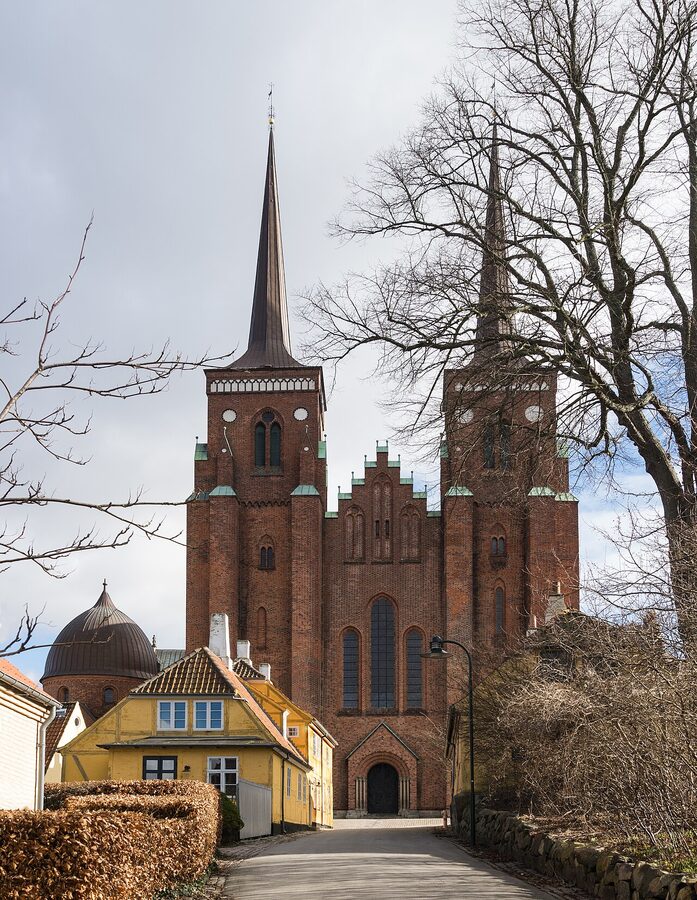
Roskilde is the brain of the day. It’s not as cinematic as Kronborg or as decorative as Frederiksborg, but it’s where Danish royal history actually lives. Construction started around 1170, the church was finished in the 1280s, and 40 Danish monarchs have been buried here over 600 years. Margrete I, who ruled the Kalmar Union and unified all of Scandinavia in 1397, has her tomb here. So does Christian IV, the king who built Frederiksborg, plus a chunk of the modern royal line.
UNESCO World Heritage status was granted in 1995, and the listing specifically cites it as “the most important brick Gothic monument in northern Europe.” The cathedral has shaped how almost every other big Danish church got built since. Once you’ve spotted the Roskilde silhouette, you start seeing echoes of it across the country.
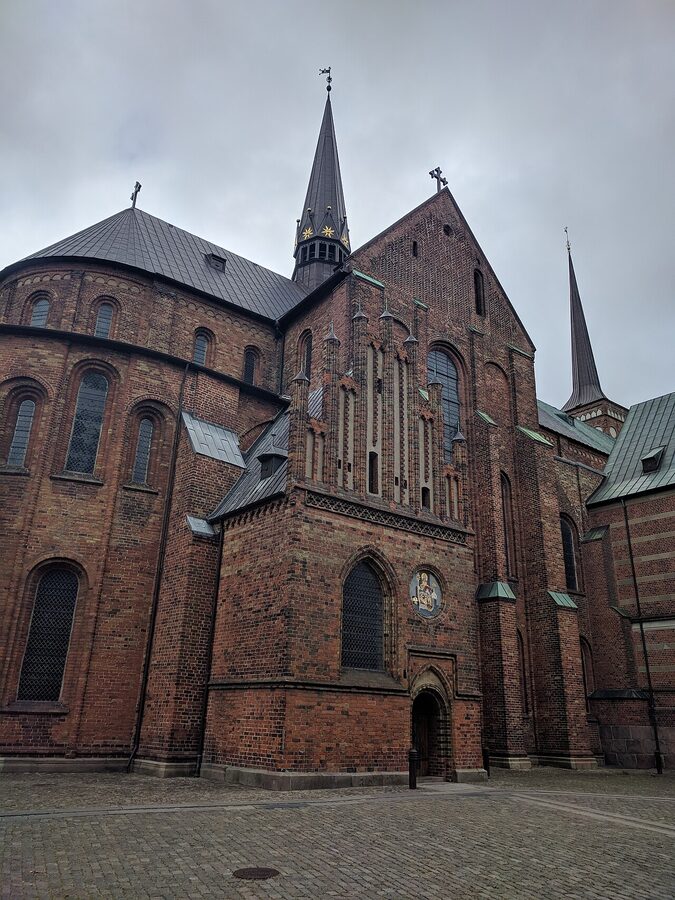
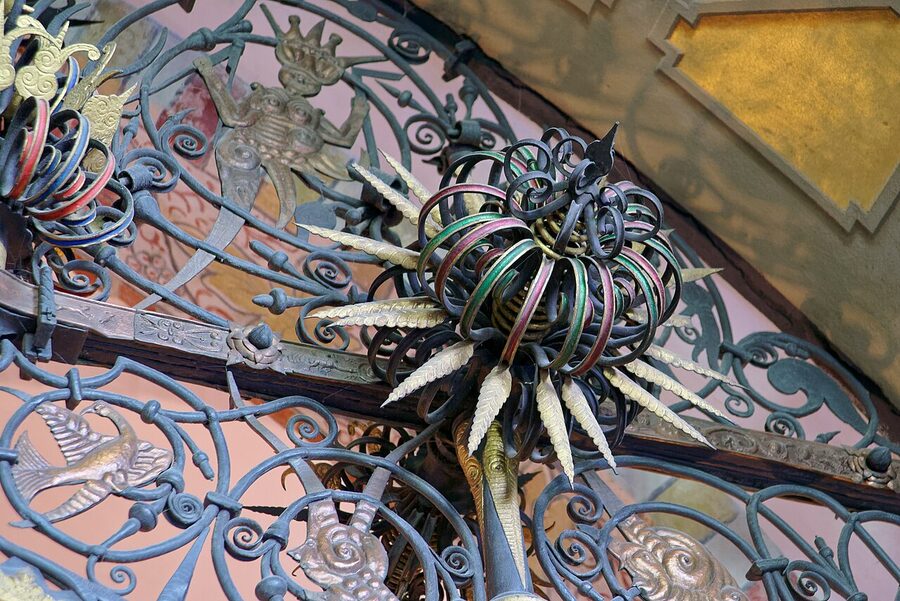

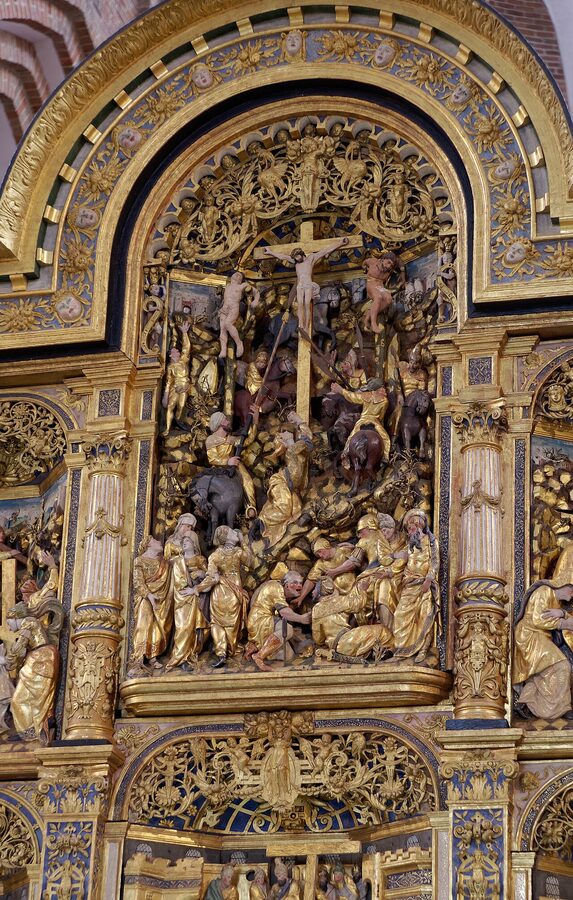

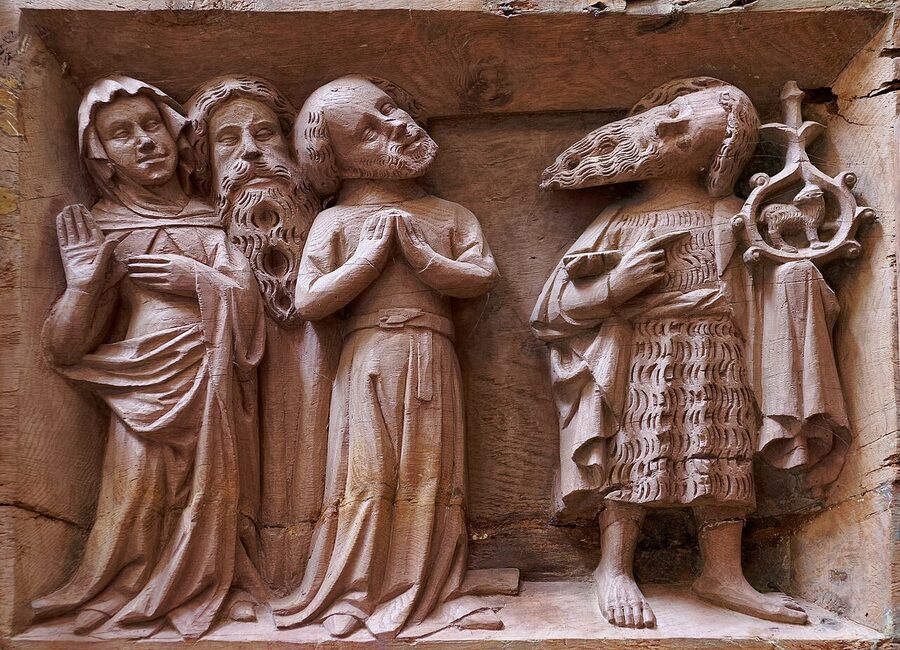

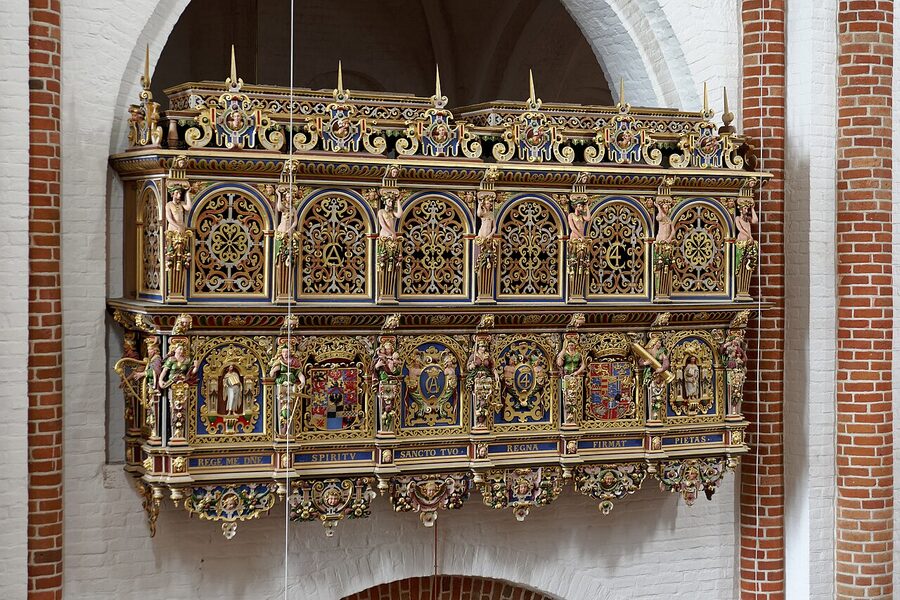

The royal tombs are spread across multiple side chapels rather than concentrated in one place. The Christian IV chapel is in the north, with his enormous black-marble sarcophagus and a mural of his life. The Frederik V chapel is in the south, all neoclassical and lighter. The most recent monarch buried here is King Frederik IX, who died in 1972. There’s a planned tomb for the current royals waiting in a side chapel, half-finished, which is mildly unsettling on first sight.
Tours typically give you 45 minutes to an hour at Roskilde. That’s enough for a guided walk through the main chapels and ten minutes on your own. The town outside is small and pretty but tours rarely have time for it. There’s a market square (Stændertorvet) two minutes from the cathedral with cafes if you have any spare time.
Roskilde’s Viking Ship Museum bonus
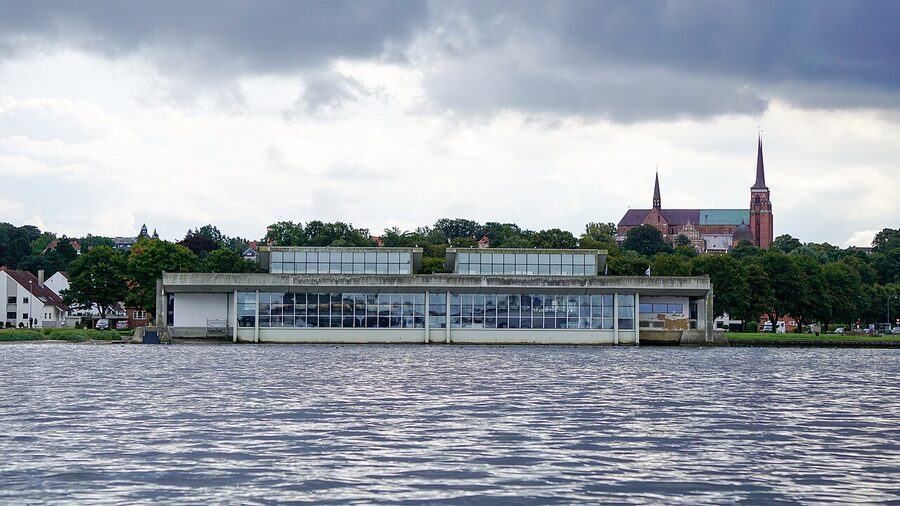

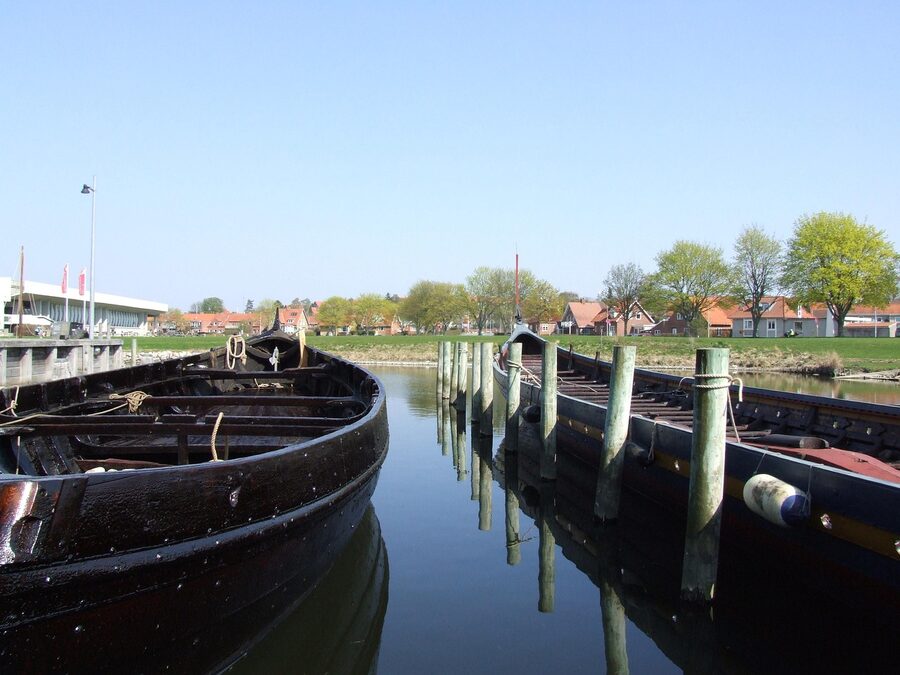
If your tour is the longer Viking Ships variant (the third option above), you also get a 45-minute stop at this museum. Five Viking longships were excavated from the fjord here in 1962, where they’d been deliberately sunk in 1070 to block an invading fleet. The museum hall is purpose-built around the ships, so you walk along their hulls at deck height. It’s the only place in the world where you can see this many original Viking warships in one room. The reconstructed sailing replicas are tied up in the harbour outside, and on summer weekends you can see them being sailed.
Booking practicalities
What’s actually included
Almost all the multi-stop castle tours include the same things: minibus transport, English-speaking guide, hotel pickup in central Copenhagen. What they typically don’t include is castle entry fees. Kronborg is around 145 DKK, Frederiksborg is around 90 DKK, Roskilde Cathedral is around 80 DKK. So budget another 250 to 350 DKK (roughly $35 to $50) per person on top of the tour price. A few premium operators include the entry fees in the headline price. Read the inclusions before you book.
Lunch is almost never included. There’s usually a 30 to 45-minute lunch stop in Hillerød, which has decent options around the square (Søstrene Olsen does a good lunch buffet, Cafe Slotsherren is right by the castle gate). Bring cash or a contactless card. Denmark is essentially cashless but tipping cultures vary by guide.
Pickup and drop-off
Most tours have a single meeting point in central Copenhagen, usually around Vesterport station or the Tivoli area, plus an option for hotel pickup if you’re at one of the listed central hotels. Hotel pickup adds 15 to 30 minutes at the start of the day, which is worth knowing if you’re trying to be efficient. Drop-off is at the same central point or back at hotels. End time is usually 5pm to 6pm.
When to go
April to October is when the castles are at full opening hours. November to March, Kronborg’s casemates close, Frederiksborg’s gardens are bare, and Roskilde Cathedral has shorter hours, but you also get the place to yourself. Cruise season at Helsingør is June to August, when ships dock right beside the castle and disgorge a few thousand passengers. If you’re going in summer, the early-start tours that arrive at Kronborg by 10am are noticeably less crowded than the ones that arrive at noon.
Winter has its own charm at all three sites. Roskilde Cathedral’s interior light is more dramatic on a grey December day. Frederiksborg’s gardens look almost severe in snow, which is its own kind of beautiful. Kronborg in February is fierce and empty. Pack proper layers if you’re going then. The wind off the Øresund is no joke.
Combining with other trips
Don’t try to do this on the same day as a Lund or Malmö trip. The Hamlet and Sweden tour I listed above is essentially a different itinerary that does Kronborg plus Sweden, not Kronborg plus Frederiksborg plus Roskilde. If you want both Sweden and the full castle circuit, give yourself a separate day for the cross-border trip. There’s a dedicated Lund and Malmö day trip from Copenhagen that’s better for that.
Doing it yourself by train
It’s totally doable to skip the tour and do this independently using the Danish train network, which is genuinely excellent. The full self-drive (or self-train) version takes some logistical planning but works out about 60% cheaper. Here’s the rough shape:
Take the Coast Line train from Copenhagen Central to Helsingør (45 minutes, around 110 DKK with a 24-hour ticket). Walk 10 minutes to Kronborg. Spend two and a half hours. Get the train back south to Hillerød via Helsingør (50 minutes, with one change at Hellerup). Walk 15 minutes to Frederiksborg through the town. Spend two and a half hours. Then train back to Copenhagen (40 minutes), change for the Roskilde train (25 minutes). Walk 5 minutes to Roskilde Cathedral. You’ll be tight on time and the cathedral’s last entry is around 4pm, so this only works in summer.
The honest version: a guided tour is about $200 a head and removes all the train juggling. A train-only DIY version is about $80 a head once you add the entries and the multi-zone day pass, but you’ll spend an extra two hours on platforms. If you’re a confident traveller and you’ve already done a few days in Denmark, DIY works. If this is your first day out of Copenhagen, take the tour. The guide does the time-keeping for you, which on a day this packed is most of the value.
For something simpler closer to home, a Copenhagen canal cruise covers the city’s waterfront highlights in an hour, or the Copenhagen walking tour gets you the Old Town stories in two and a half hours. Both pair well with this castle day on a longer trip.
One thing to know about photography inside
All three sites allow photography without flash. Tripods need permission at Frederiksborg and aren’t really practical at Roskilde because the cathedral is a working church. The best exterior shots: Kronborg from the seaward bastion in mid-afternoon (sun behind you, looking back at the keep), Frederiksborg from the bridge by the main gate in late morning (the lake reflection is at its best with no wind), and Roskilde from the raised path on the south side where you can frame the whole western facade.
Inside, the casemates at Kronborg are the toughest light. Bump your phone to night mode. The Knight’s Hall at Frederiksborg is bright but the gilded ceiling makes everything look yellow on auto white balance, so worth nudging cooler. Roskilde’s nave is high and dim, and a wide-angle lens is your friend if you have one.
If you only have time for one castle
Skip the multi-stop tour and just do Kronborg. It’s the most cinematic, the easiest to reach by train (a single 45-minute ride from Copenhagen Central), and the one with the best context. Frederiksborg works as a half-day from Copenhagen too, but feels like a museum-on-museum experience rather than a destination. Roskilde Cathedral is best for travellers already deeply into Danish royal history. If that doesn’t describe you, you can probably skip it.
The reason I’d push you towards Kronborg as the single-castle trip: the location does most of the work. You’re standing on a 16th-century bastion with the sea hitting the rocks below and Sweden visible across a four-kilometre strait. That experience needs no audio guide and no royal portraits. The other two are great if you’ve got a full day, but they’re indoor experiences that compete with everything else Europe has indoor.
What else to see in Copenhagen
If this castle day fits into a longer Copenhagen trip, the obvious add-ons are the city itself. The Copenhagen Card covers most museums and transit and pays back fast if you’re staying three days or more. Tivoli Gardens is a must even if you don’t ride anything; it’s a 19th-century pleasure garden that still works. The Copenhagen bike tour covers Christianshavn and Nørrebro neighbourhoods in three hours, which you can’t really fit on foot. And if you want to see how the city looks above as well as a hop-on hop-off bus would, the Copenhagen hop-on hop-off hits all the major squares plus Carlsberg, which a castle day misses entirely.
For travellers comparing this castle circuit to similar guided day-tour formats from other capitals, the structure is a lot like the Budapest sightseeing format or the Warsaw bus tours: paid guide does the routing and the timing so you don’t have to. The same logic applies. If you’d rather DIY a Lisbon city day, you probably shouldn’t book a guided castle day in Denmark either. Different temperaments, different value calculations.
Last word from someone who’s done it
The reason a guided castle day from Copenhagen is worth the money even though it costs three times what the train and entry tickets would: the guide is doing the timing. On a packed nine-hour day with three sites and 140km of driving between them, the timing is most of the experience. A bad solo plan can have you arriving at Roskilde at 4:15pm and being told the cathedral closed fifteen minutes ago. A good tour gets you there at 3pm with 45 minutes still on the clock and a clear path through the chapels.
And the moment on the Kronborg bastion looking at Sweden? That happens with a guide or solo. But the tour gets you there at the right time of day, with a guide who actually points out where Helsingborg is and tells you why the Sound Dues mattered for 400 years. Worth the $200, in my book.
Some links in this article are affiliate links. If you book through them we earn a small commission at no extra cost to you. We only recommend tours we’d take ourselves.