
The first time I ate tarte flambee in Strasbourg, I made a mistake. I ordered it at a restaurant near the cathedral that had laminated menus in four languages and a waiter who looked like he’d rather be anywhere else. The crust was soggy, the creme fraiche was cold, and I left thinking the whole dish was overrated.
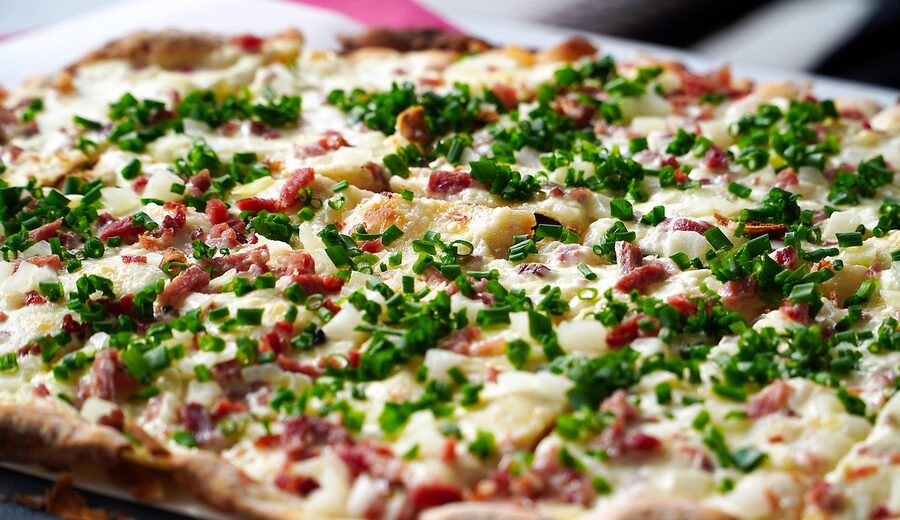
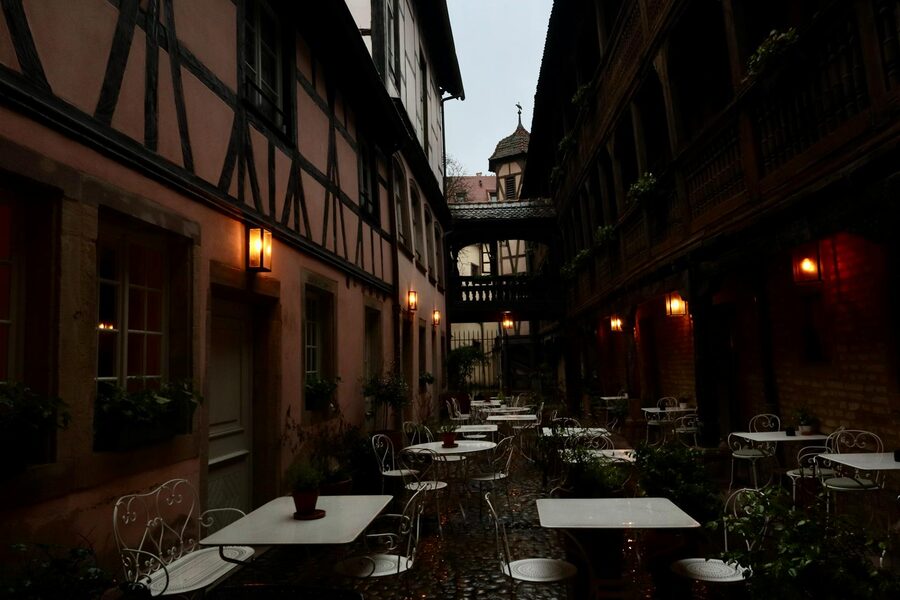
Two days later, a local friend dragged me to a winstub in a back alley off Rue du Maroquin. The flammekueche arrived on a wooden board, paper-thin, with bubbled edges and the kind of smoky char you only get from a proper wood-fired oven. I ate the entire thing in about four minutes and immediately ordered a second.
That is the difference a food tour makes in Strasbourg. You skip the tourist traps and go straight to the places that actually matter.
Best overall: A Taste of Tradition by Do Eat Better — $96. The original Strasbourg food tour with 3.5 hours of tastings through the old town. Over 600 travelers have given it a perfect score, and the guides genuinely know their choucroute from their kougelhopf.
Best group alternative: Traditional Food Walking Tour with Tastings — $116. Slightly pricier but excellent for small groups who want a structured route through the best winstubs and bakeries.
Best for couples/private: Gourmet Private Tour with Tastings — $111. Just you, your group, and a guide who adjusts the itinerary to your tastes. Worth every cent if you want full control over the pace.
- What Alsatian Cuisine Actually Is (And Why It Surprises People)
- Why Strasbourg Is One of the Best Food Tour Cities in France
- What to Expect on a Strasbourg Food Tour
- The Best Strasbourg Food Tours to Book
- 1. A Taste of Tradition by Do Eat Better —
- 2. Traditional Food Walking Tour with Tastings — 6
- 3. Gourmet Private Tour with Tastings — 1
- When to Book Your Strasbourg Food Tour
- How to Get to the Meeting Point
- Tips That Will Save You Time and Money
- What You Will Actually Taste
- The Wine Angle: Why Alsace Changes How You Think About French Wine
- Eating on Your Own After the Tour
- More France Guides
What Alsatian Cuisine Actually Is (And Why It Surprises People)
Alsatian food confuses people who think they know French cooking. There is no beurre blanc here, no delicate sauces, no tiny portions on oversized plates. This is food from a region that has changed hands between France and Germany so many times that the cuisine absorbed the best of both and became something entirely its own.
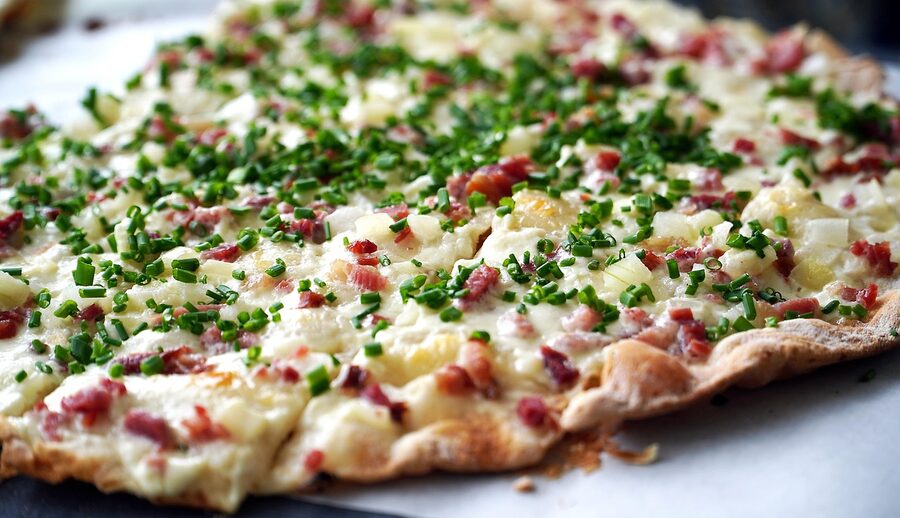
The anchor dishes are heavy and unapologetic. Choucroute garnie is the regional national dish — slow-cooked sauerkraut piled with smoked sausages, pork belly, and sometimes a knuckle of ham that could feed three people. Tarte flambee (the locals call it flammekueche) is a thin-crust flatbread with creme fraiche, sliced onions, and lardons, baked in a wood-fired oven until the edges blister and char. Baeckeoffe is a slow-cooked casserole of three meats marinated in Alsatian white wine overnight.
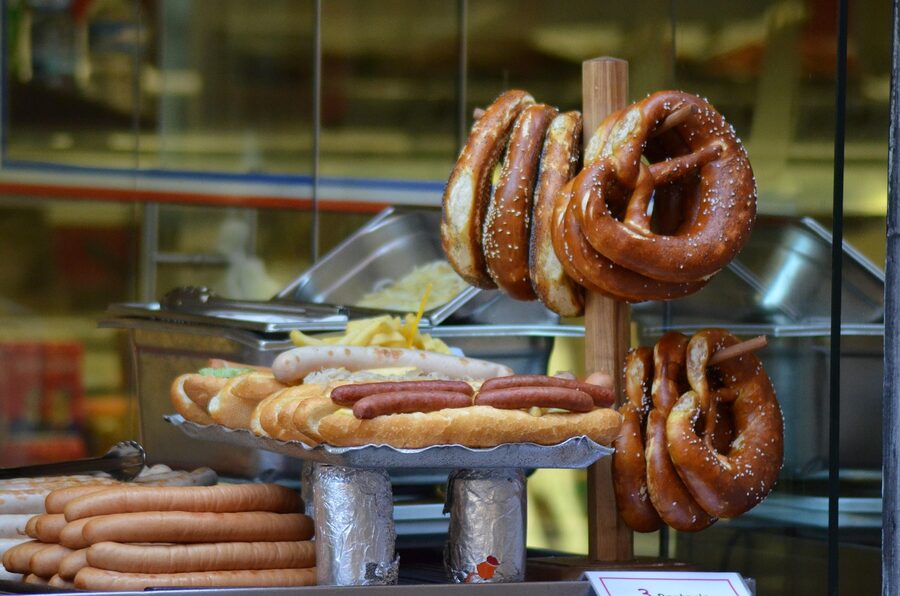
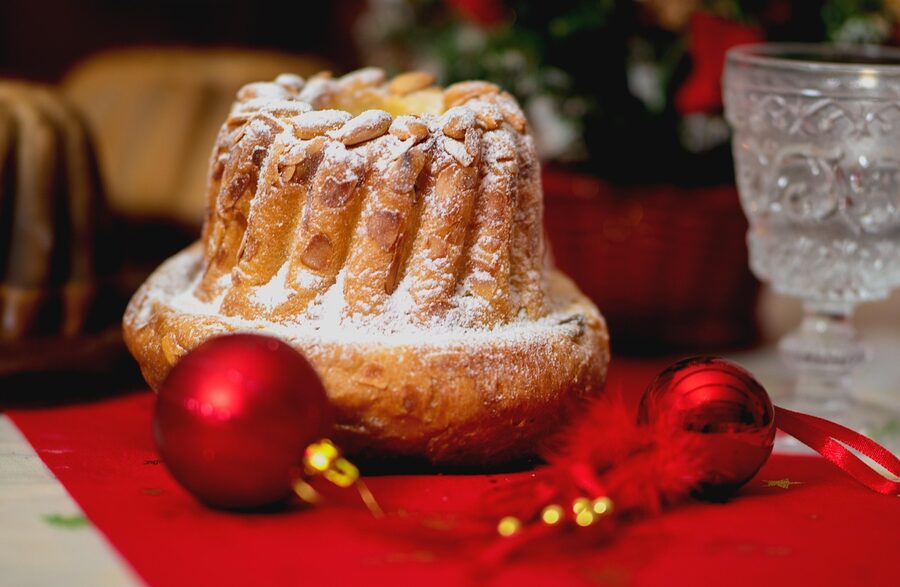
Then there are the surprises. Kougelhopf, the ring-shaped yeast cake baked in a distinctive fluted mold, can be savory or sweet. Munster cheese has a smell that could clear a room but a flavor that converts anyone brave enough to try it. And the bretzels — the Alsatian spelling — are crunchier and saltier than their Bavarian cousins.
A food tour puts all of this into context. Without one, you will probably eat tarte flambee at a tourist restaurant, try choucroute once, and leave. With a guide, you learn that the Alsatian wine tradition goes back to Roman times, that each winstub has its own personality, and that the dish you dismissed as “just sauerkraut” is actually something that Alsatian grandmothers spend all day preparing.
Why Strasbourg Is One of the Best Food Tour Cities in France
I have done food tours in Paris, Lyon, Nice, and Bordeaux. Strasbourg ranks near the top for one reason: the food here is completely different from what you find in the rest of France, and most visitors have no idea what to order.
In Paris or Lyon, you already know the broad strokes — croissants, coq au vin, tarte tatin. In Strasbourg, the menu reads like a German-French mashup, the wine list features grapes you may never have heard of, and the traditional dining venues (winstubs) look nothing like Parisian brasseries. That disorientation is exactly why a guided food experience works so well here. You need someone to translate the culture, not just the language.
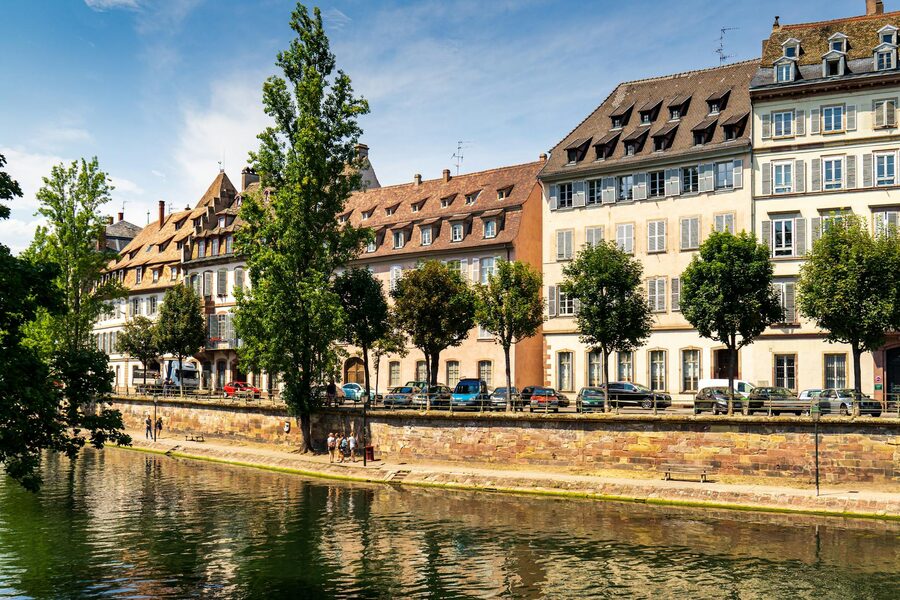
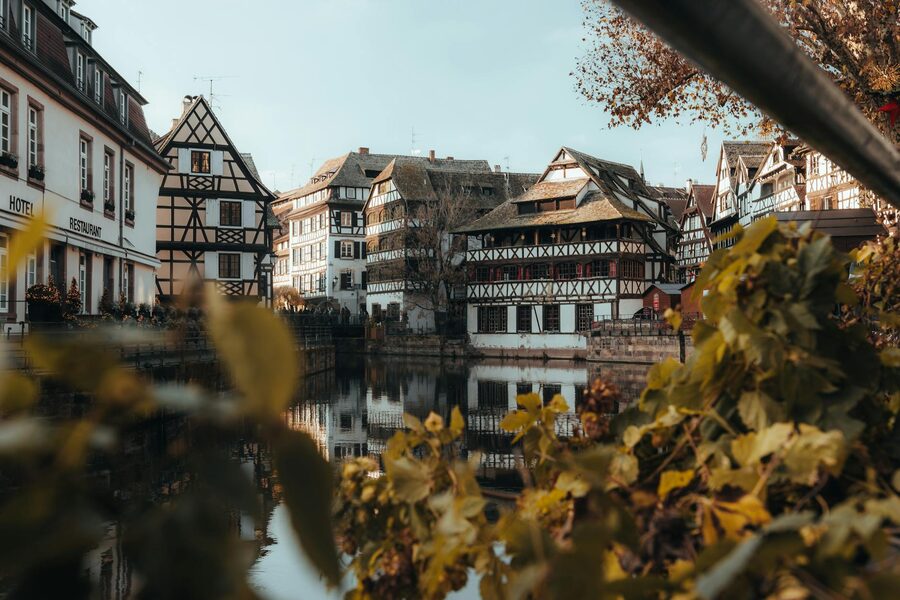
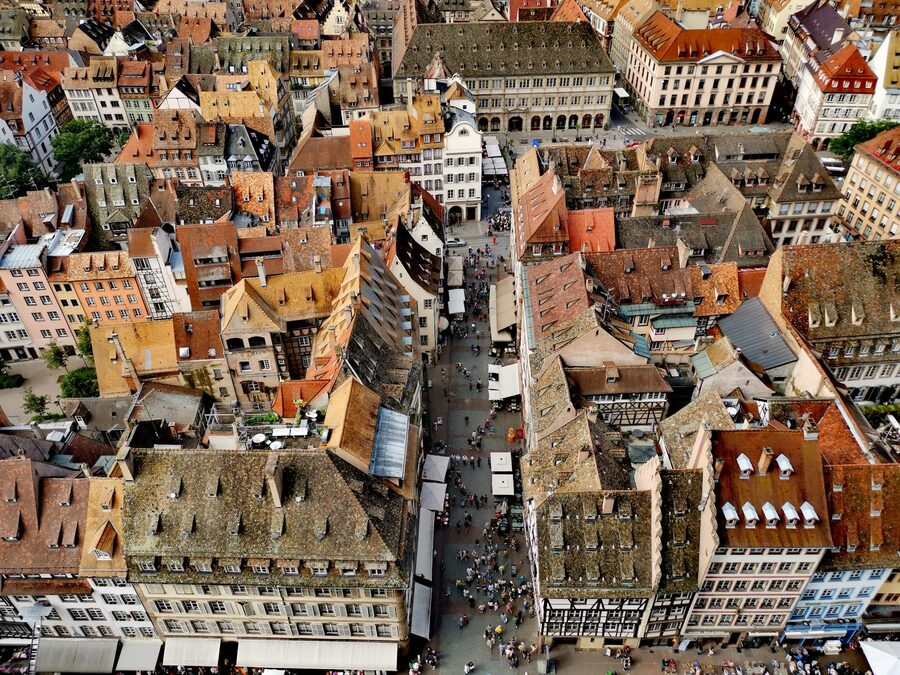
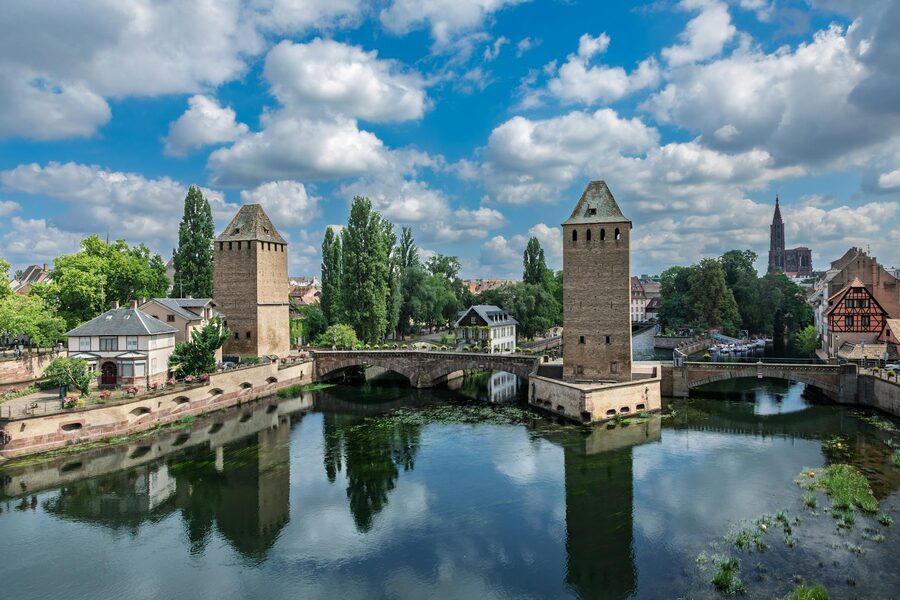
The city is also physically perfect for walking food tours. The entire Grande Ile — the historic island center — is a UNESCO World Heritage site roughly 1.5 kilometers across. Every stop is within walking distance. You can hit a winstub, a bakery, a fromagerie, a wine cave, and a patisserie all without breaking a serious sweat.
What to Expect on a Strasbourg Food Tour
Most Strasbourg food tours follow a similar pattern, with some variation depending on the operator and the day.
Duration: Expect 3 to 3.5 hours of walking and eating. That sounds like a lot, but the pace is relaxed. You walk for 5-10 minutes between stops, your guide tells you about the neighborhood or a building along the way, and then you arrive at the next tasting location.
Number of stops: Typically 5-7 stops, each with a different dish or drink. A standard route might include: tarte flambee at a winstub, charcuterie or cheese at a market stall, wine at an Alsatian cave, a pastry at a traditional bakery, and kougelhopf or bredele (Alsatian cookies) at the end.
Group size: Group tours usually cap at 10-12 people. Private tours can be arranged for as few as two.
Meeting point: Almost all tours start somewhere near the Cathedral or Place Kleber. Exact addresses vary but they are all within the Grande Ile, so you will not need a taxi.
What is included: All food and drink tastings are included in the price. You should not need to buy anything extra during the tour, though most guides will point out shops worth returning to later.
What to wear: Comfortable shoes. The cobblestones in the old town are beautiful but murder on thin soles. In winter, layer up — Strasbourg gets genuinely cold, and standing outside a fromagerie while your guide explains how munster is aged becomes less fun when your fingers are numb.
The Best Strasbourg Food Tours to Book
I have narrowed the options down to three tours that cover different needs and budgets. Each one has been tested by hundreds of travelers and runs consistently.
1. A Taste of Tradition by Do Eat Better — $96
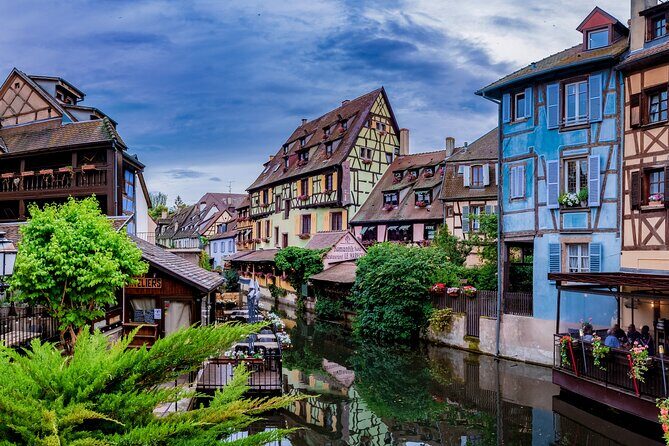
This is the food tour to book if you want the full Strasbourg culinary experience without overthinking it. 3.5 hours of walking and eating through the old town, with stops that cover everything from tarte flambee and choucroute to Alsatian wines and pastries. The guides — Loubna, Raphael, Celine, and others — are locals who clearly love the food and the city, and they have a knack for picking winstubs that travelers would never find on their own.
At $96 per person, it is not cheap, but consider that you are getting a full lunch’s worth of food plus wine tastings plus 3.5 hours of guided history. If you tried to replicate the same route on your own, you would spend nearly as much on food and miss all the context. This is the most booked food tour in Strasbourg for a reason — it hits every major Alsatian dish in one afternoon.
2. Traditional Food Walking Tour with Tastings — $116
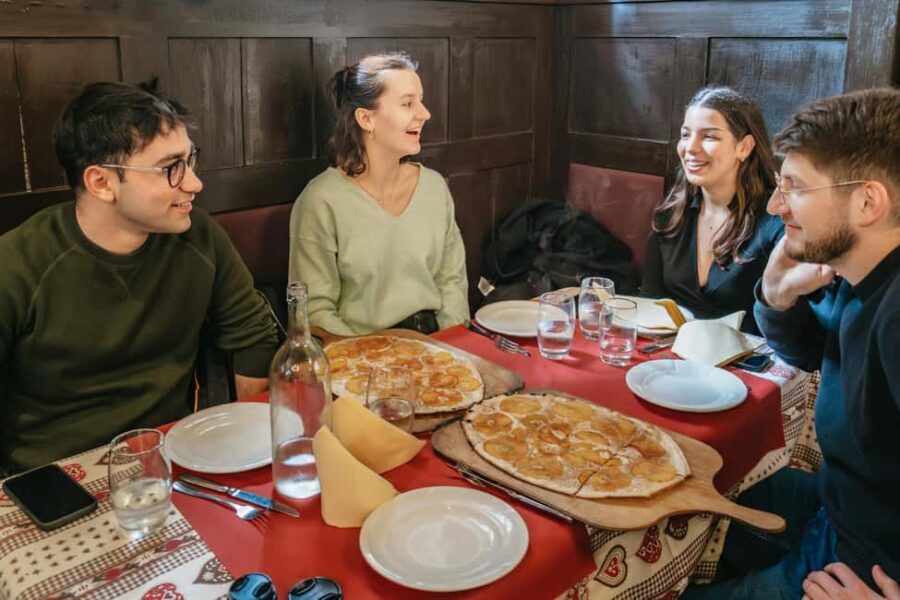
This is the slightly more structured option, run through GetYourGuide with a similar duration of 3.5 hours. The route covers the same ground — winstubs, bakeries, wine caves — but the format is a bit more polished. Guides like Raphael and JP bring deep local knowledge, and the smaller group sizes mean you actually get to have a conversation about what you are eating rather than just nodding along.
At $116 per person, it is the priciest group option on this list, but the feedback from travelers is consistently strong. The intimacy of the group — usually 4-8 people — means the guide adjusts the pace to the group. If everyone wants to linger over the wine tasting, you linger. If someone has a dietary restriction, the guide can adapt on the spot. This is a good pick for couples or small groups of friends who want a slightly more personal feel than the bigger tour.
3. Gourmet Private Tour with Tastings — $111
If you travel with someone who hates group activities — or if you simply want to control the pace and the menu — this private option from Knack & Rucksack is hard to beat. At $111 per person, it is actually cheaper than the group alternative above, which makes it an unusual deal in the food tour world. The three-hour route covers Alsatian specialties, local wines, and regional beers, but the guide adjusts everything based on your interests.
The private format means you can ask for substitutions, spend more time at stops you enjoy, skip things you do not care about, and generally treat it like having a food-obsessed local friend show you around. Guides like Celine bring a warmth and spontaneity that is harder to achieve in a group setting. If you are celebrating something or simply want the most personal experience possible, book this one. It pairs well with a walking tour of the old town the next day.
When to Book Your Strasbourg Food Tour
Best months: April through October gives you warm enough weather for comfortable walking. September and October are arguably the sweet spot — the tourist crowds thin out, the wine harvest is happening in nearby Alsace villages, and the restaurants start putting autumn dishes on the menu.
Christmas market season (late November through December) is a completely different experience. Strasbourg calls itself the Capital of Christmas, and the food during this period shifts toward vin chaud (mulled wine), bredele cookies, and roasted chestnuts. Food tours during this season fill up fast, so book at least two weeks in advance.
Worst time: January and February. Many smaller restaurants and winstubs close for winter holidays, and walking through the old town in freezing rain is not anyone’s idea of fun.
Day of the week: Weekday tours (Tuesday through Thursday) tend to be less crowded at the tasting stops. Weekend tours sometimes overlap with the farmers’ market crowds, which can mean longer waits at popular stalls.
Time of day: Morning tours (starting around 10-11am) are ideal. You arrive at winstubs before the lunch rush, the food is freshly prepared, and you finish around 1-2pm with the rest of the afternoon free.
How to Get to the Meeting Point
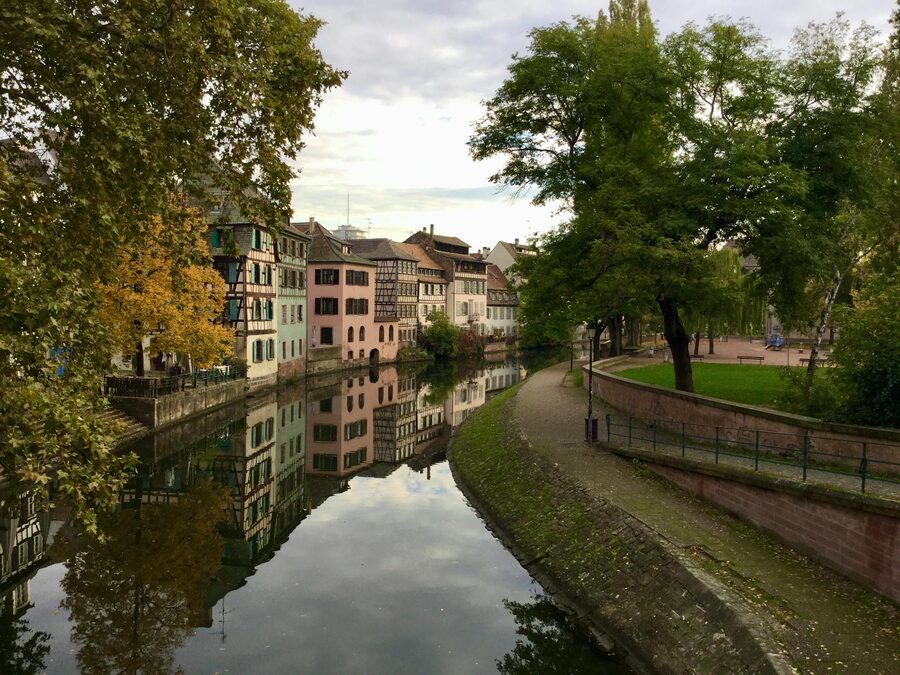
Every food tour meets somewhere in the Grande Ile, Strasbourg’s historic island center. Getting there is straightforward no matter where you are staying.
From the train station (Gare de Strasbourg): A 15-minute walk straight down Rue du Maire Kuss, across the Pont de la Fonderie, and into the old town. You can also take Tram A or D two stops to “Langstross Grand’Rue” which drops you right in the center.
By tram: Strasbourg’s tram system is excellent and covers most of the city. Lines A, B, C, and D all have stops within the Grande Ile. A single ticket costs about EUR 1.90 and is valid for one hour.
By car: Do not drive into the old town. Park at one of the park-and-ride lots on the tram lines (Rotonde, Elsau, or Etoile are all good options) and take the tram in. Parking inside the Grande Ile is limited, expensive, and the streets are mostly pedestrianized anyway.
From the airport (Strasbourg-Entzheim): The airport train shuttle runs every 15 minutes and gets you to the main station in 9 minutes. From there, follow the walking or tram directions above.
Tips That Will Save You Time and Money
Come hungry. This sounds obvious, but I have seen people eat a full hotel breakfast and then struggle through the tour. Skip breakfast or eat very lightly. The portions on food tours are generous — by the end of 3.5 hours, you will have eaten the equivalent of a large meal.
Tell your guide about dietary needs upfront. Alsatian cuisine is heavy on pork, dairy, and gluten. If you are vegetarian, lactose intolerant, or have allergies, let your tour operator know when booking. Most guides can arrange substitutions at tasting stops with advance notice, but springing it on them at the first winstub limits your options.
Bring cash for extras. The tour covers all tastings, but you might want to buy something at a bakery or cheese shop along the way. Not all small shops in the old town accept cards, especially for small purchases under EUR 10.
Book early for weekend and holiday tours. Summer weekends and the entire Christmas market season sell out days or even weeks in advance. Tuesday and Wednesday departures rarely fill up completely.
Wear proper shoes. The cobblestones in the Grande Ile are uneven and can be slippery when wet. Three hours of walking on cobblestones in sandals will ruin your afternoon.
Pace yourself on wine. Most tours include 3-4 wine tastings. Alsatian wines are aromatic and easy to drink, which means you can end up tipsy faster than expected. Drink water between stops if your guide provides it.
What You Will Actually Taste
Every tour varies slightly, but here is a realistic preview of what most Strasbourg food tours cover.
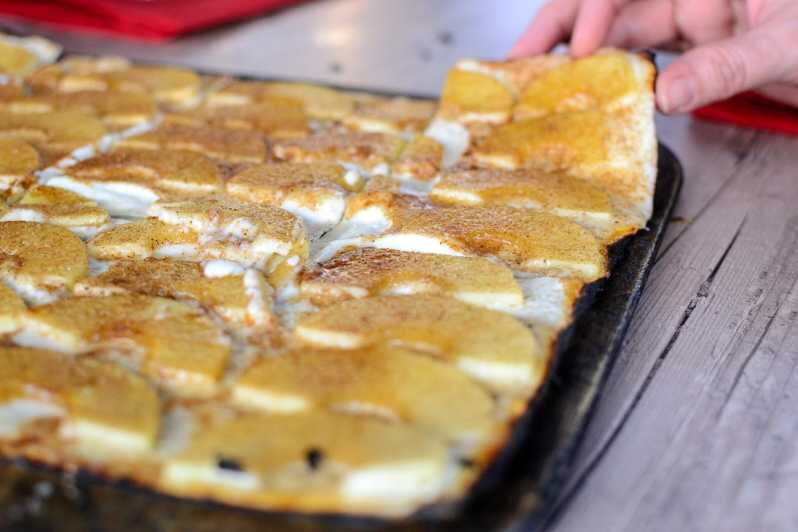
Tarte flambee / Flammekueche: The dish that defines Alsatian casual dining. Paper-thin dough, creme fraiche (never tomato sauce), sliced onions, and lardons. You might get to try the classic, the gratinee (with gruyere), and sometimes a sweet dessert version with apples and cinnamon. This is always a highlight.
Choucroute garnie: Sauerkraut cooked low and slow with juniper berries, white wine, and an assortment of smoked meats. It is far more refined than it sounds — the fermented cabbage has a tangy depth that cuts through the richness of the pork.
Alsatian wines: Expect tastings of Riesling (dry, mineral, nothing like the sweet German stereotype), Gewurztraminer (aromatic, slightly sweet, pairs with munster), and Pinot Gris (full-bodied, almost creamy). Your guide will explain the difference between Grand Cru and regular appellations.
Munster cheese: Washed-rind, pungent, and polarizing. It is milder than it smells. Served with cumin seeds and usually paired with Gewurztraminer.
Kougelhopf: A brioche-like ring cake studded with almonds and sometimes raisins, soaked in kirsch. The savory version with lardons and walnuts is less well-known but equally good.
Bretzels and waffles: Strasbourg pretzels are a different breed from Bavarian ones — harder, crunchier, and saltier. Some tours include a stop at a traditional pretzel bakery.
The Wine Angle: Why Alsace Changes How You Think About French Wine
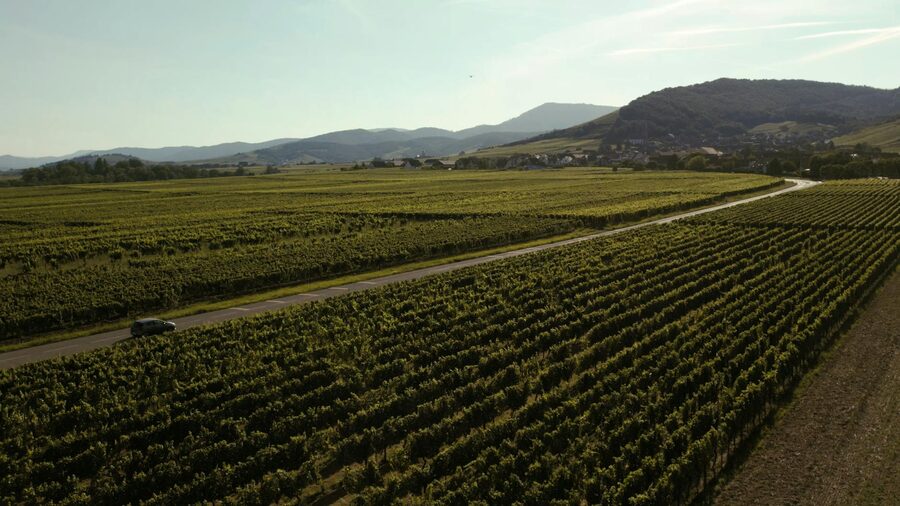
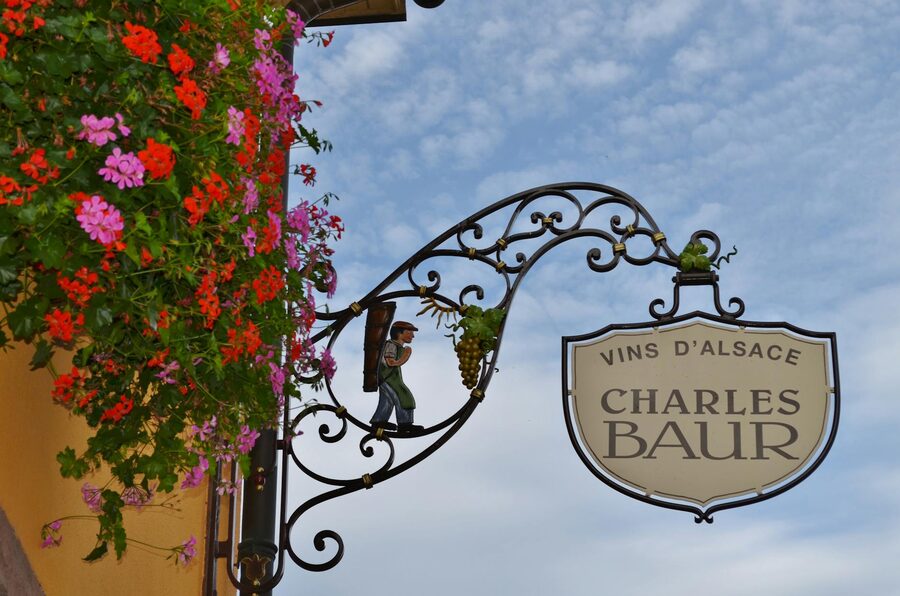
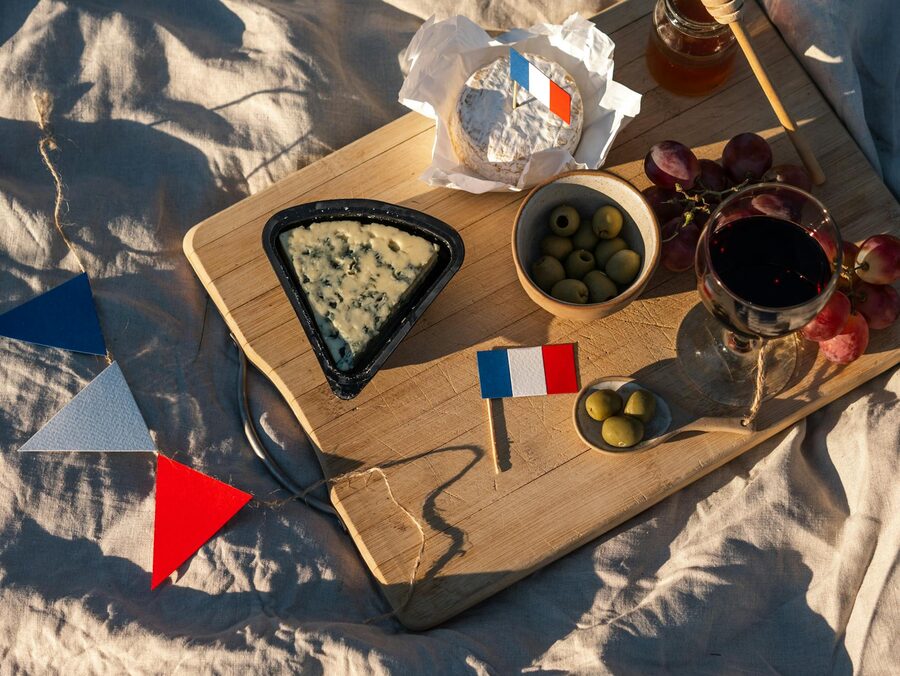
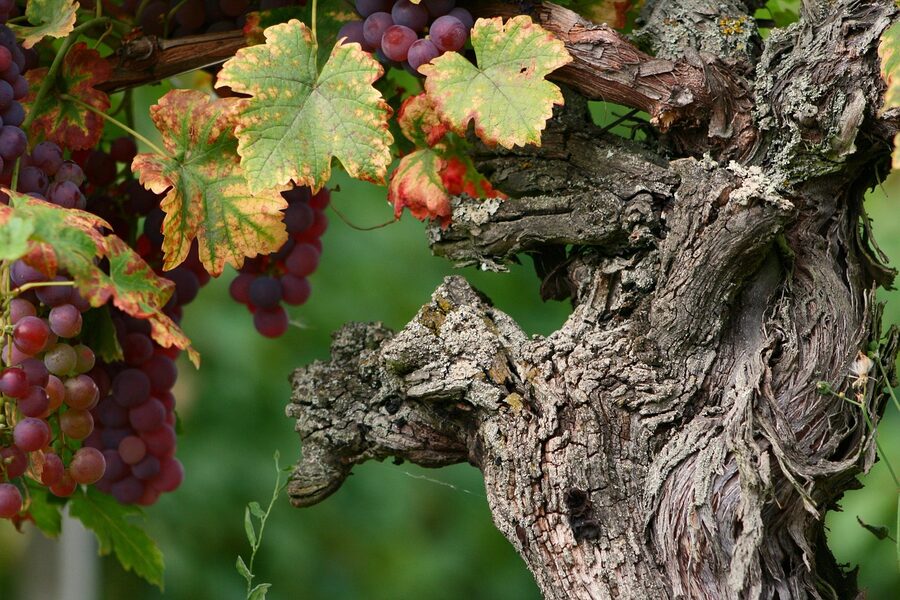
Most people associate French wine with Bordeaux reds, Burgundy Pinot Noir, and Champagne. Alsace breaks all those expectations. This is white wine country — 90% of Alsatian production is white — and the grape varieties (Riesling, Gewurztraminer, Pinot Gris, Muscat) are more commonly associated with Germany or Austria.
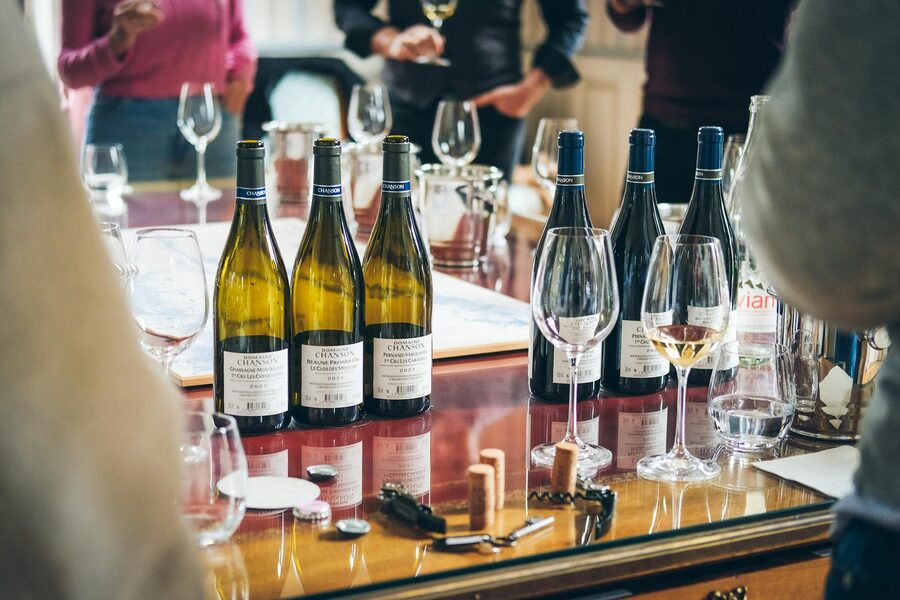
A food tour in Strasbourg almost always includes at least one serious wine stop. The better tours take you to an actual wine cave or a specialist shop where the owner explains the terroir, the grape varieties, and why Alsatian Riesling tastes nothing like what you may have tried from the Mosel. If you are someone who thinks Riesling is always sweet, this tasting will change your mind.
If the wine component hooks you, consider pairing your food tour with an Alsace day trip from Strasbourg that follows the Wine Route through Riquewihr, Eguisheim, and other postcard-perfect villages. It is a natural next step and one of the best day trips in France.
Eating on Your Own After the Tour
Your food tour will leave you with a list of places to revisit and the knowledge to navigate the menu. Here are a few things to seek out on your own.
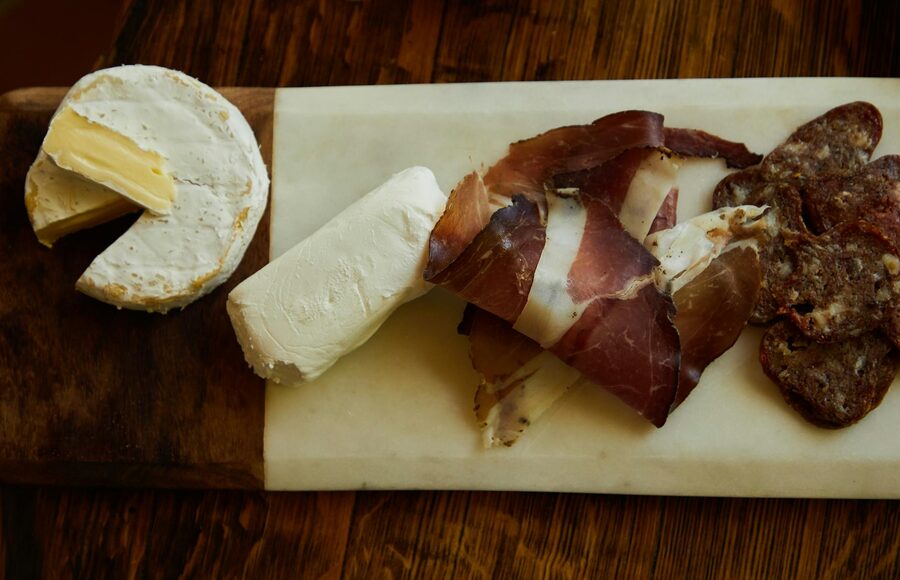
The covered market (Marche Couvert): Open Tuesday through Saturday, this is where locals buy their cheese, charcuterie, bread, and wine. It is not a tourist attraction — it is a working market — and the quality is significantly better than what you find in shops on the main streets.
A second winstub visit: Your guide will almost certainly recommend their favorites. Winstubs are the Alsatian equivalent of a Parisian bistro — cozy, often wood-paneled, with hand-written menus and regulars at the bar. The ones tucked away on side streets are consistently better than those with prominent locations on the main squares.
Alsatian beer: The region has a brewing tradition that predates its wine fame. Kronenbourg and Fischer are the big names, but smaller craft breweries have emerged in the last decade. Ask at any bar for a local draft and you will get something decent.
More France Guides
If Strasbourg has you hooked on French food tours, the same kind of guided tasting experience works brilliantly in other French cities. Lyon is the undisputed capital of French gastronomy and its bouchons are just as worth exploring with a guide as Strasbourg’s winstubs. Paris has an overwhelming number of food tours, but the best ones focus on a single neighborhood — Montmartre or the Marais — rather than trying to cover the whole city. For a full day outside Strasbourg, the Alsace day trip takes you through the wine villages that supply many of the bottles you tasted on your food tour. And if you want to explore Strasbourg’s wine scene in more depth, there are dedicated wine tours that go deeper than what a food tour can cover in a single afternoon.
This article contains affiliate links. When you book through these links, we may earn a small commission at no extra cost to you. This helps us keep producing free travel guides.