
The first time I tried to do Lanzarote’s three big sights in a single self-drive day, I got it wrong. Timanfaya at 9am was the smart call, but the queue for the volcano bus tour ate two hours, lunch ran long, and by the time I rolled up to Jameos del Agua it was 2pm and packed with the very tour-bus crowds I thought I was avoiding. Cueva de los Verdes never happened. The combo tour solves the routing problem you don’t know you have until you’ve already failed it.
Most thorough: Timanfaya, Jameos del Agua & Cueva de los Verdes Tour, $105. The classic three-stop route, multilingual guides, all entry fees included.
Skip-the-cave option: Timanfaya and Jameos del Agua Full-Day Tour, $88. Drops Cueva de los Verdes, adds El Golfo and more time at each remaining stop.

- What you actually see on this tour
- Timanfaya National Park: the volcano show
- The camel ride: optional, often charged separately
- Jameos del Agua: César Manrique’s lava tube
- Cueva de los Verdes: the smuggler’s cave
- Pick your tour: the three options compared
- 1. Lanzarote Full-Day Island Highlights Tour:
- 2. Timanfaya, Jameos del Agua & Cueva de los Verdes Tour: 5
- 3. Timanfaya and Jameos del Agua Full-Day Tour:
- The Manrique extras most tours include
- Why César Manrique matters
- Lunch: what’s included, what isn’t
- When to go and what to wear
- Could you do this independently?
- Compared to other Canaries day trips
- Booking practicalities
- What pairs well with this tour
What you actually see on this tour
Three core stops are the headline: Timanfaya National Park, Jameos del Agua, and Cueva de los Verdes. Most operators pad the day with a couple of extras such as La Geria’s volcanic vineyards, the Mirador del Río clifftop, or the green El Golfo lagoon. Knowing which version you’ve booked matters because the “highlights tour” name covers slightly different routes.
The day runs about 9 hours including pickup. You’ll cover roughly 120 to 150 km of driving across the island, but it never feels long because the stops are spaced well. Pickup is from the resort areas: Costa Teguise, Puerto del Carmen, and Playa Blanca all have it. If you’re staying in a smaller town, you may need to taxi to the nearest pickup point.

Timanfaya National Park: the volcano show
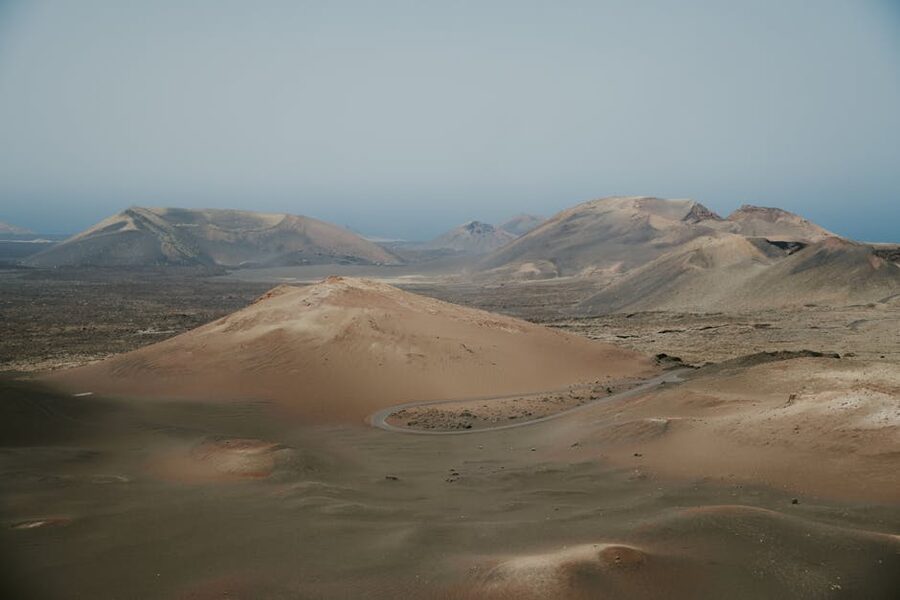
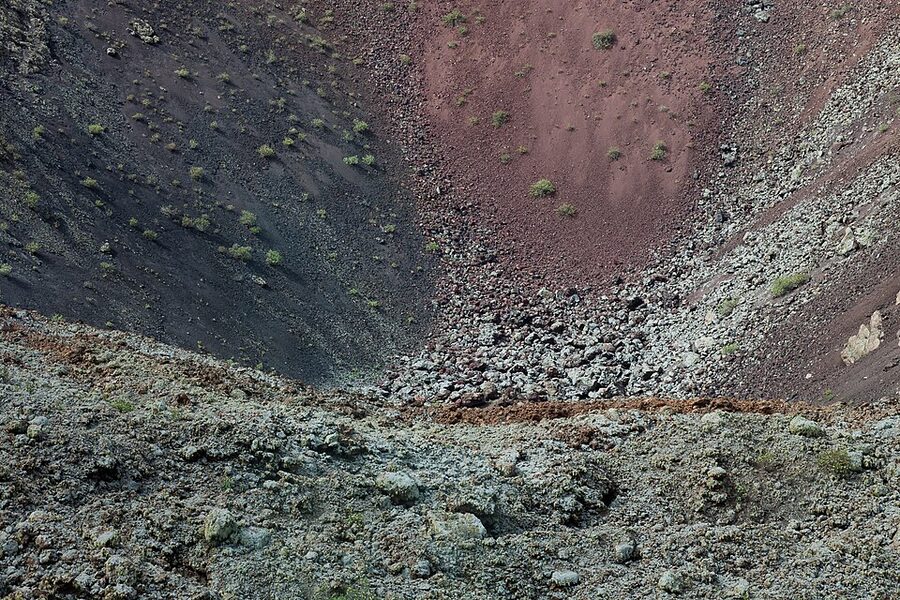
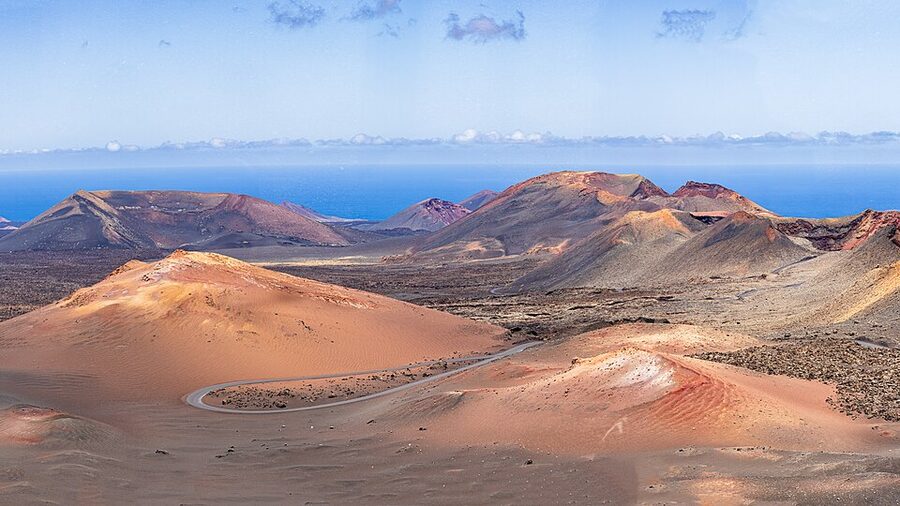
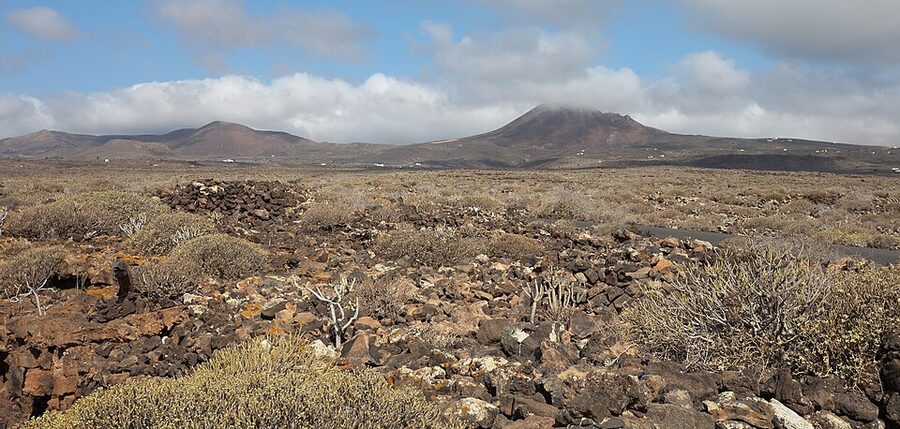
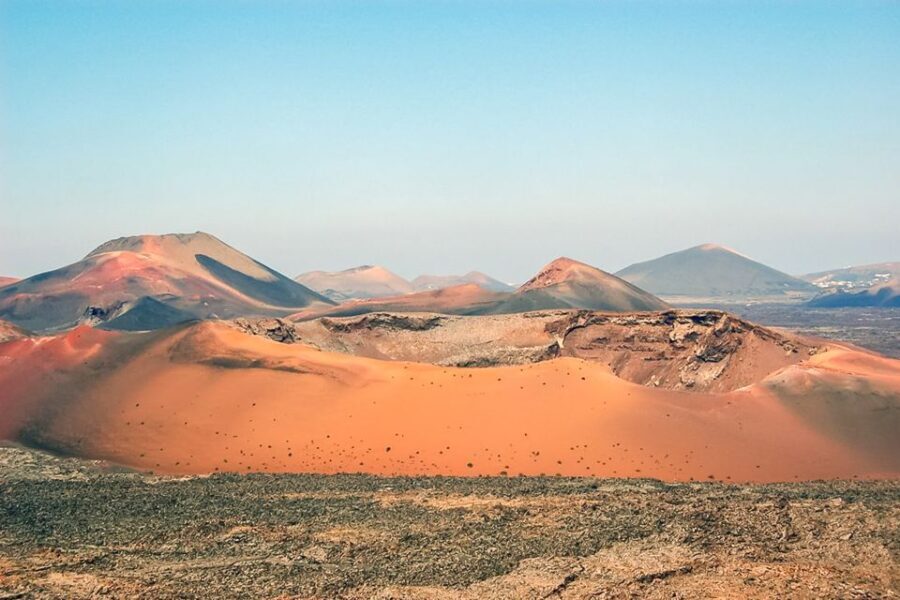
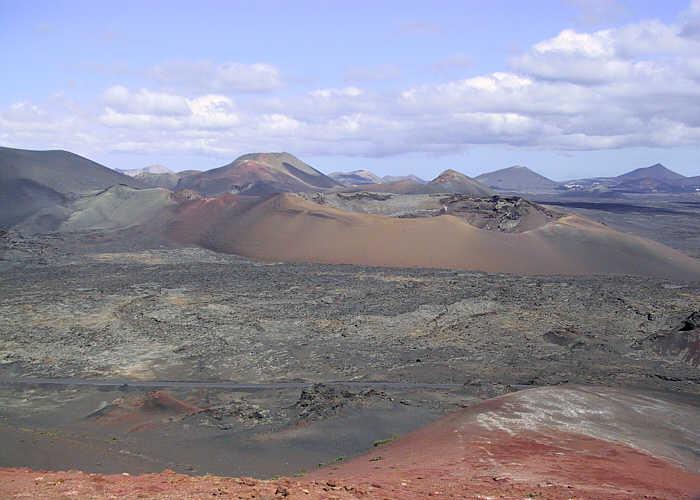
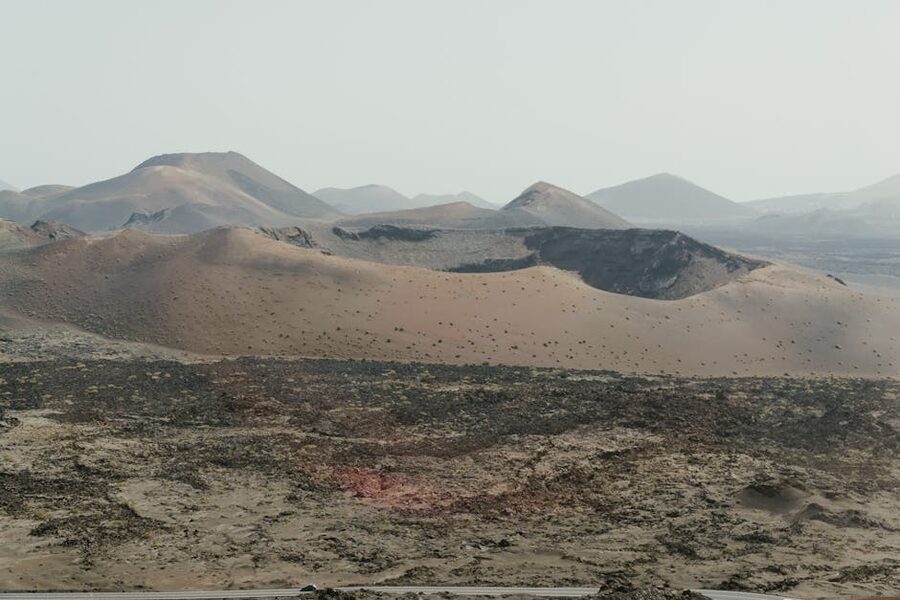
Timanfaya covers about 51 square km of fields created by the 1730 to 1736 eruptions. Six straight years of lava flows reshaped a quarter of the island. The ground is still hot just below the surface; that’s the whole point of the visit.
The site has two parts. First, the Islote de Hilario complex at the entrance, where rangers run the geothermal demonstrations. They pour water down a borehole and it geysers back up as steam in about three seconds. They drop dry brushwood into a pit and it ignites from rock heat alone, no flame needed. There’s also a grill at El Diablo restaurant cooking chicken over a vent: novelty, but the pictures are worth it.
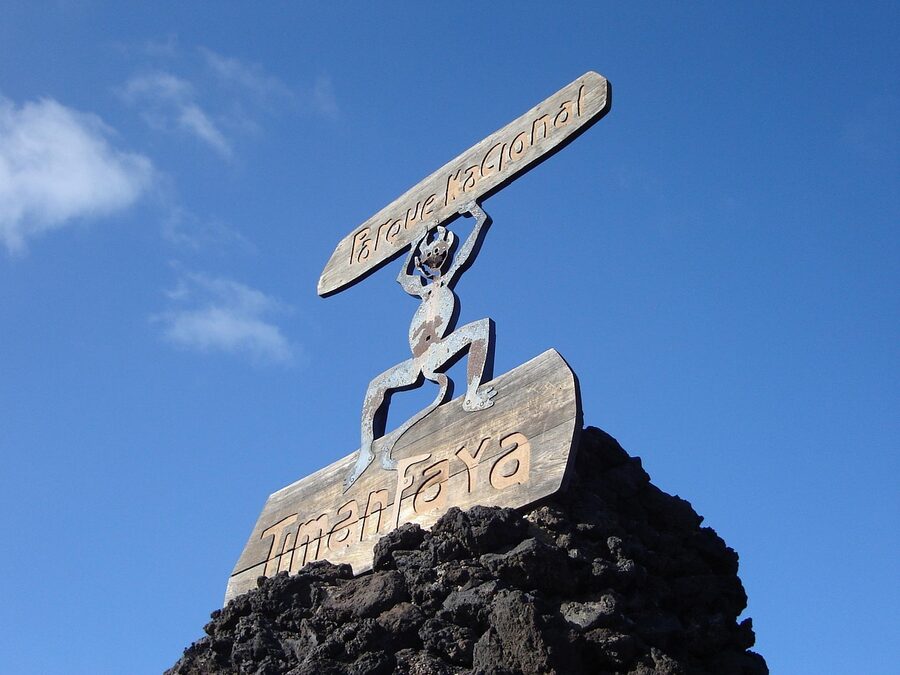
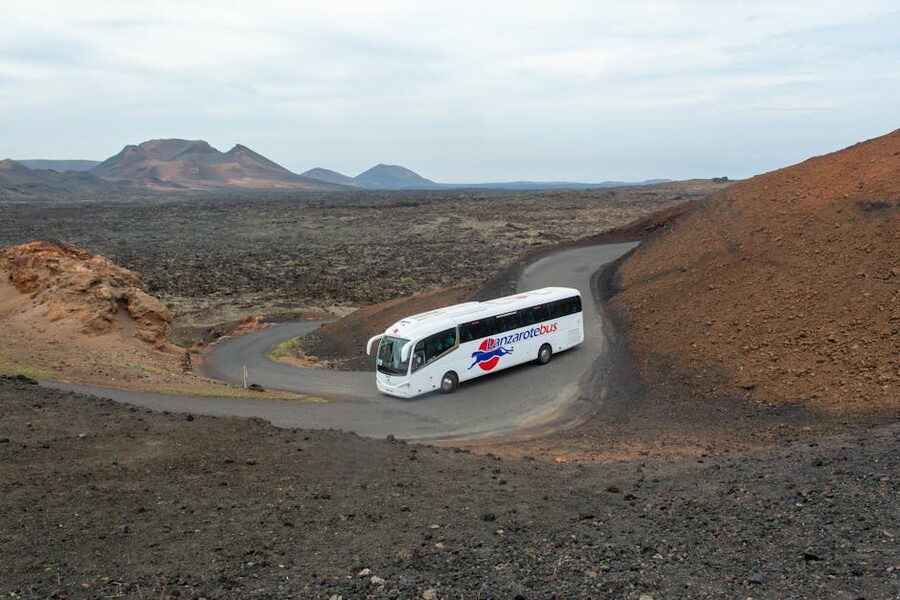
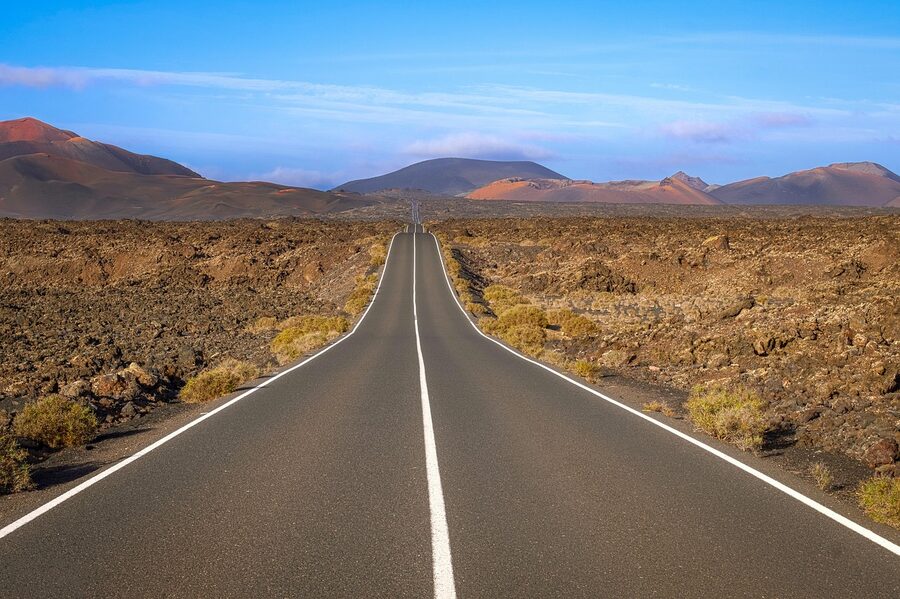
Second, the Ruta de los Volcanes bus tour. This is non-negotiable: you can’t drive your own car beyond Islote de Hilario, and you can’t walk. A park coach takes you on a 14 km loop through the lava fields with a recorded multilingual commentary. About 35 to 40 minutes. The route itself is genuinely something else, switchbacking through black craters and red slopes that look like NASA test imagery. Bring window-side luck on the bus, because half the seats face inward and the views are uneven.
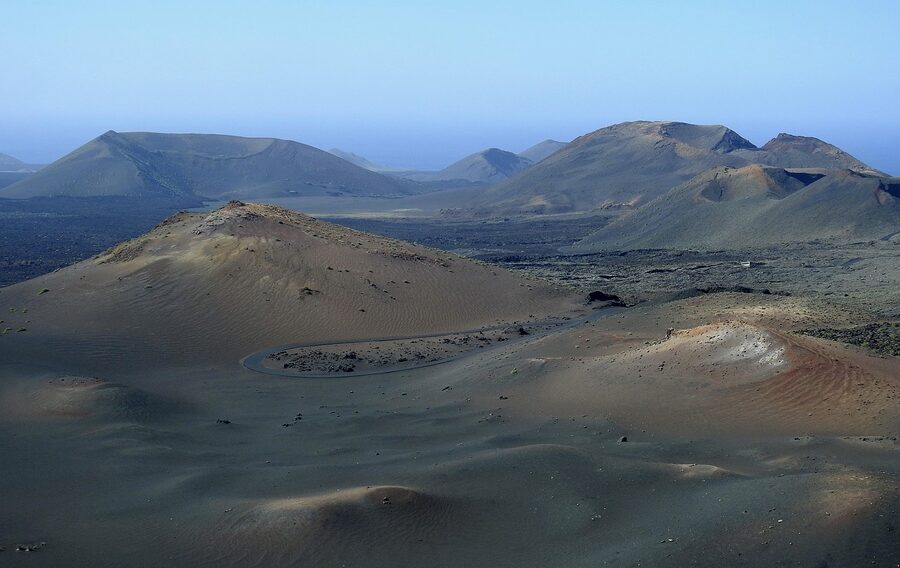
The combo tour handles this for you. Park entry, the bus loop, and the queue management are all bundled. If you tried this independently, you’d buy your park ticket at the gate, then queue separately for the Ruta bus, which can run 60 to 90 minutes in peak July and August.
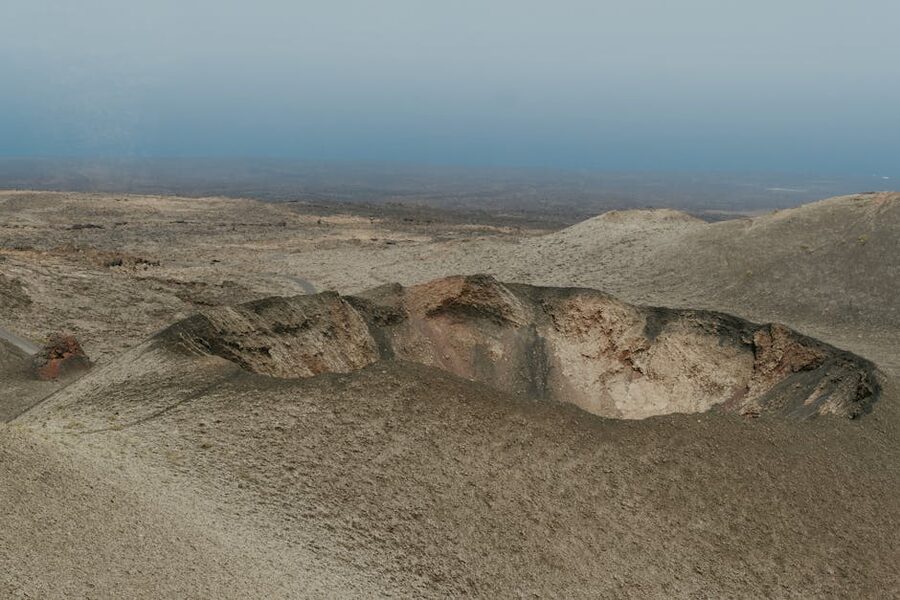
The camel ride: optional, often charged separately
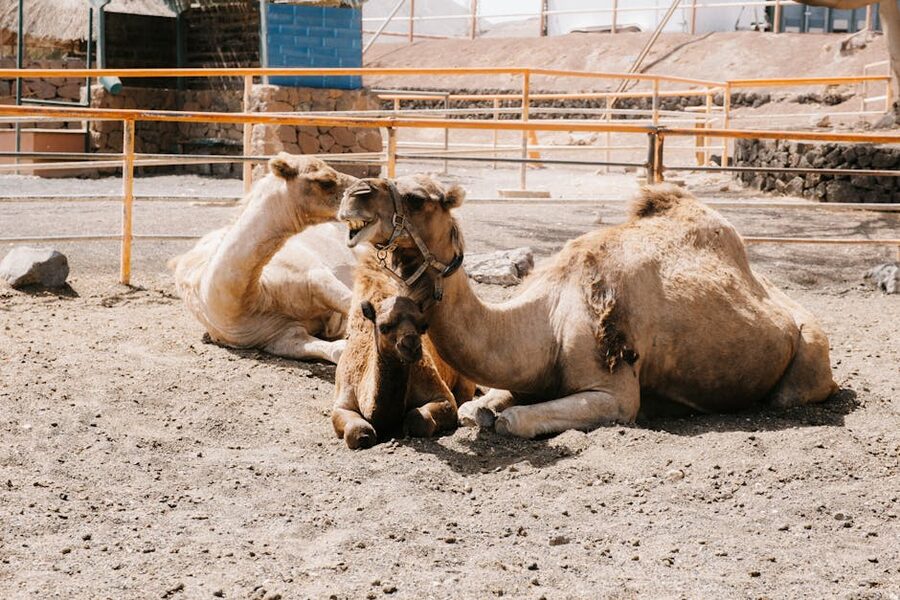
At the Timanfaya entrance road there’s a camel station, Echadero de los Camellos, where you can ride a dromedary across volcanic ash for about 10 minutes. Cost is around 12 euros for two people sharing one camel. Most combo tours stop here briefly but the ride itself isn’t usually included in the tour price; you pay on site if you want to do it.
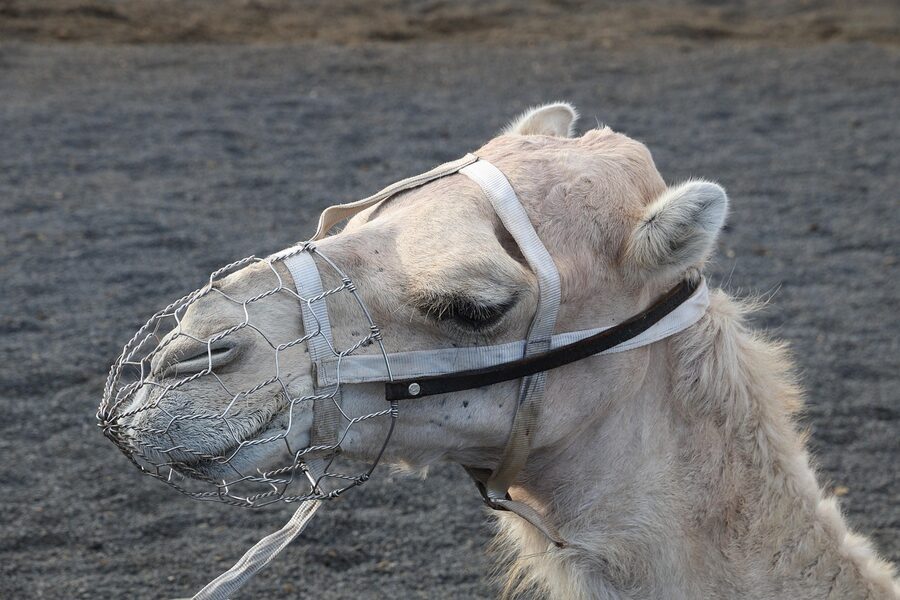
Worth doing once if you’ve never ridden a camel. Skippable if you have. The animals work in shifts and the operation is regulated, but if camel rides aren’t your thing, just walk the rim for ten minutes and meet the group at the bus.
Jameos del Agua: César Manrique’s lava tube
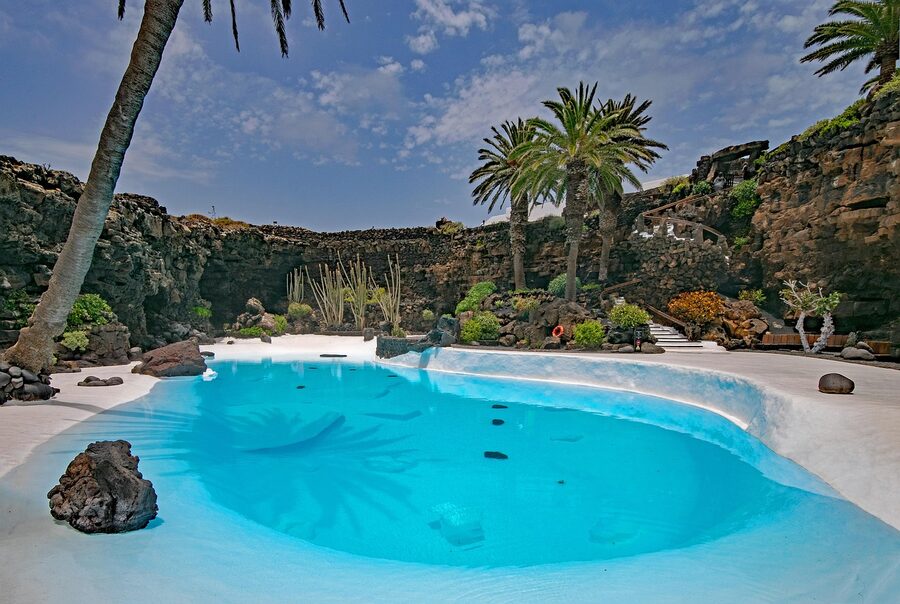
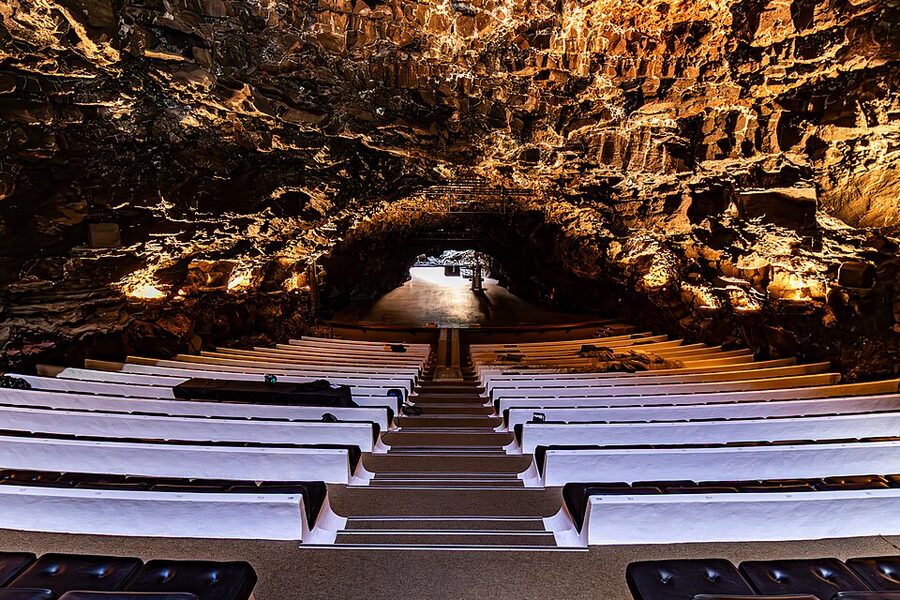
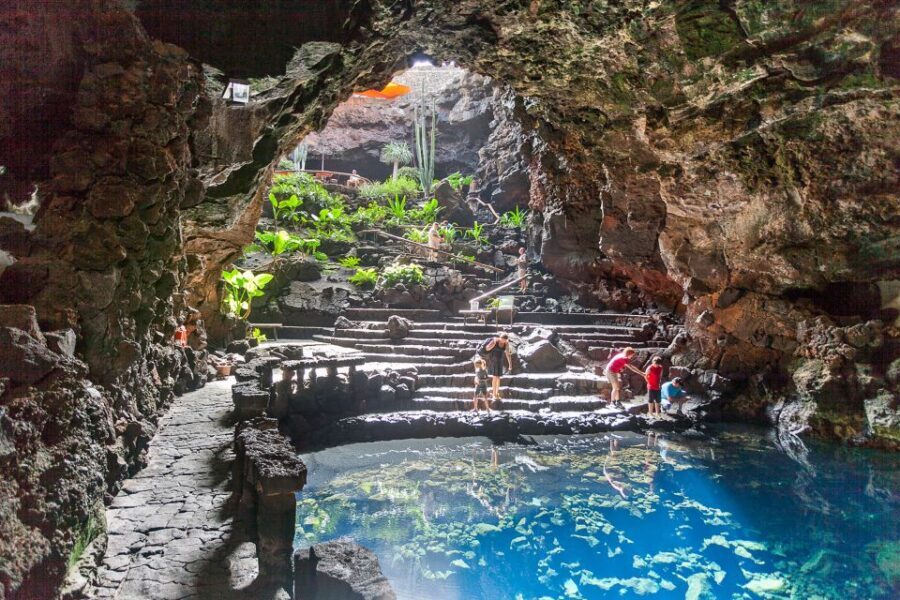
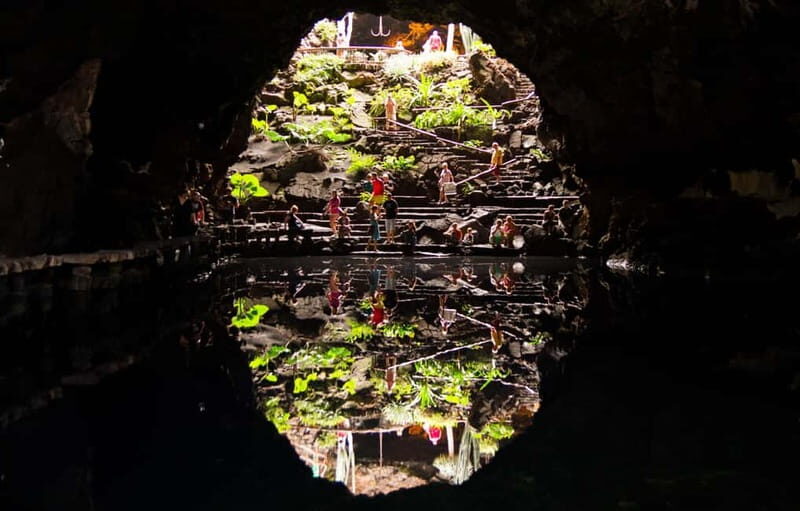
Jameos del Agua is what happens when an artist takes a lava tube and turns it into a public space. César Manrique, the Lanzarote-born sculptor and architect, started work on it in 1966. Walk down the steps and you’re inside a collapsed cave with a saltwater lagoon, white-washed terraces, palm trees, and a small bar; further in, an underground concert hall with 600 seats and acoustics that work on a completely different principle from the surface.
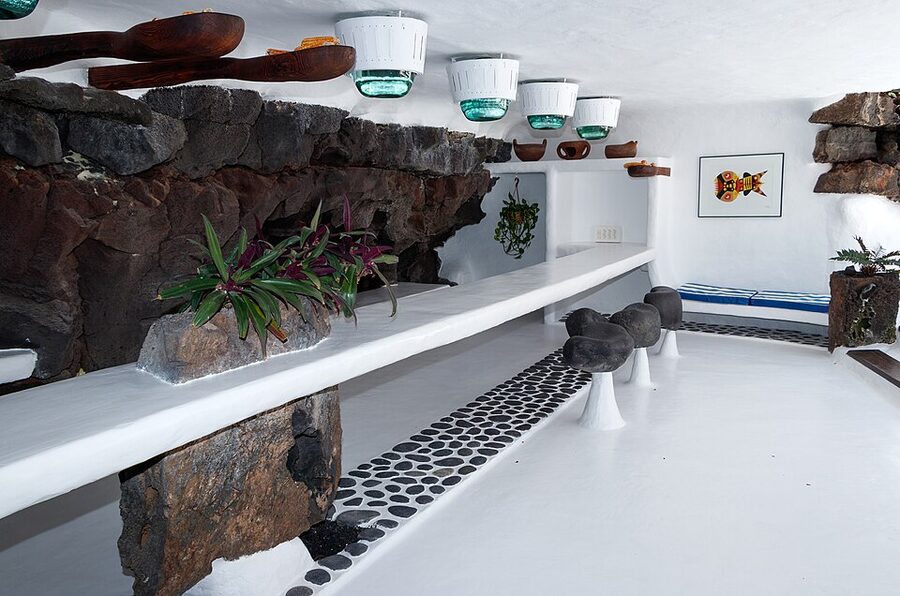

The thing to know about that lagoon: it’s the only place in the world where you can see the blind albino crab Munidopsis polymorpha, a tiny pale creature that lives nowhere else. Don’t drop coins in the water; signs ask you not to, the metal corrodes the crabs’ habitat. It’s surprising how many visitors still flick a coin in. They’re real, and they’re stressed.
The auditorium is the showpiece. It seats 600 inside the lava tube itself, with the natural rock as the back wall. They still run concerts here, mostly classical and jazz, around 25 to 30 events a year. Acoustics are good but unpredictable; a clarinet sounds extraordinary, an electric guitar sounds wrong. If your tour-day timing doesn’t align with a concert, you can still walk through the empty hall, which is a quieter, more interesting experience anyway.

You’ll get about an hour here on most combo tours. That’s enough for the lagoon, the auditorium, the upper pool, and a coffee at the bar. Not enough to read every information panel. If you’ve a strong interest in Manrique’s work, the dedicated Cesar Manrique Foundation in Tahíche (his old house, also worth seeing) is the deeper visit; the combo tour version is the highlights edit.
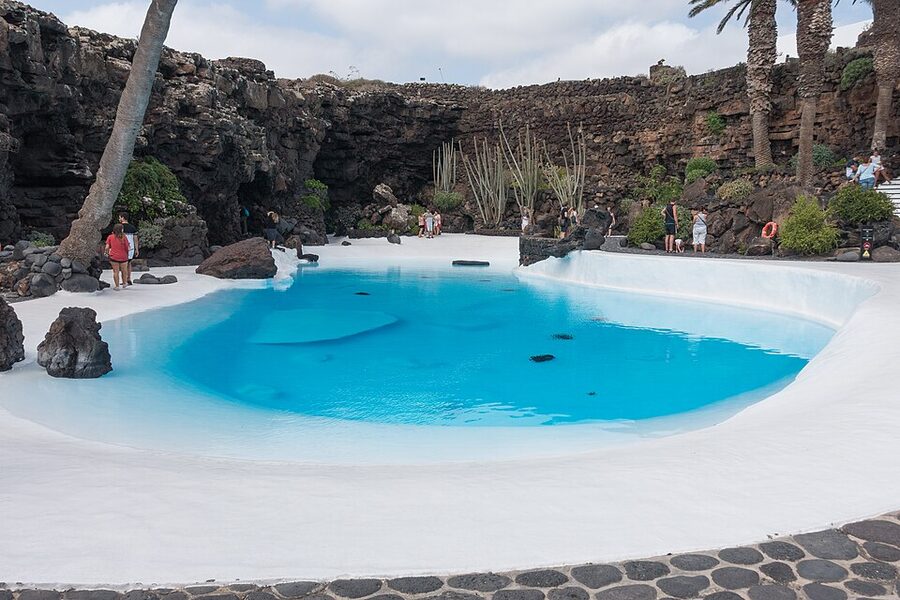

Cueva de los Verdes: the smuggler’s cave
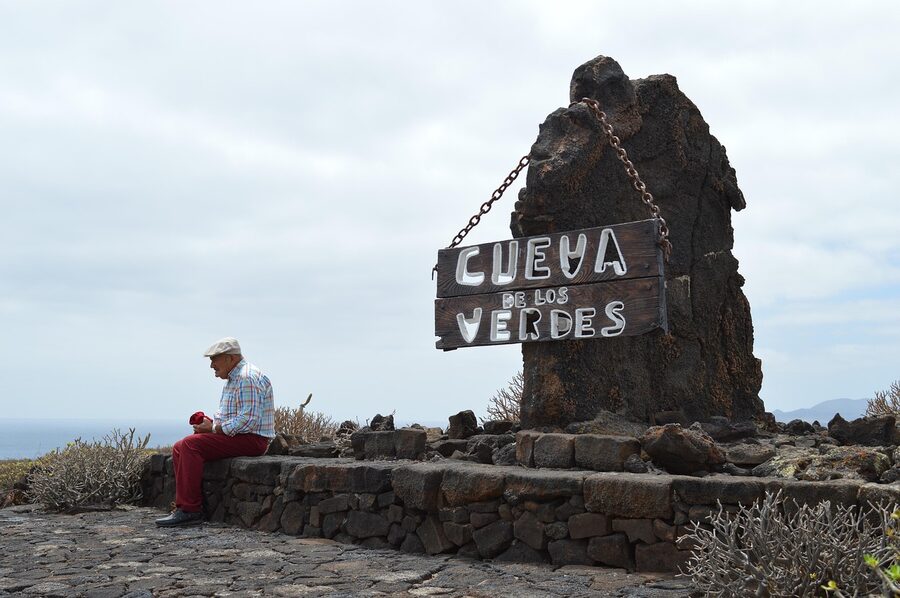
About 10 minutes by road from Jameos sits Cueva de los Verdes, the other half of the same lava tube system. While Jameos is the polished, designed half, Cueva is the raw cave: a kilometre and a half of underground tunnel that you walk through with a guide. No sound system, no lighting beyond what’s needed; the route doubles back on itself in a couple of places where the ceiling drops to about a metre high.
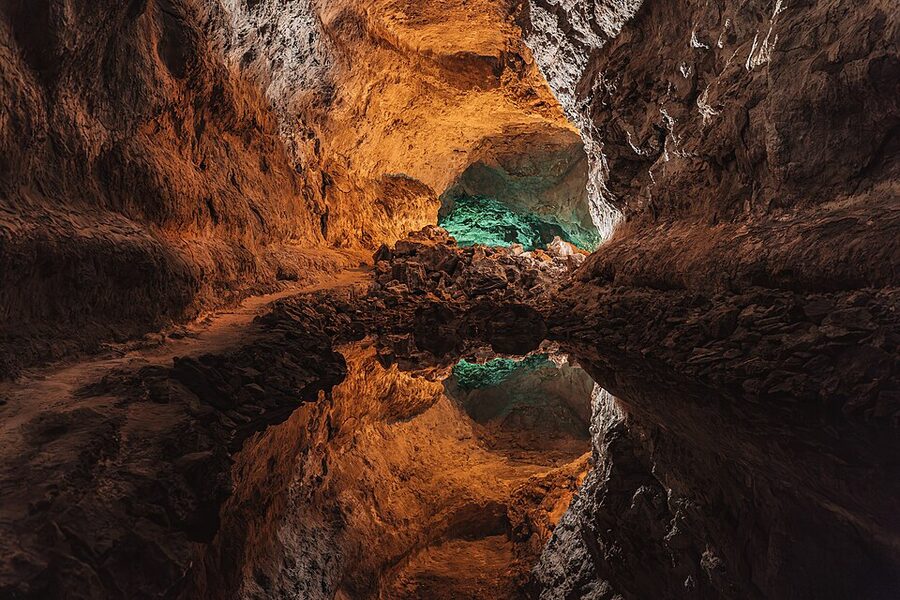

The whole system was formed about 4,000 years ago by an eruption of Volcán de la Corona, and it runs for around 7 km in total, partly underwater. You’re seeing about 1.5 km of it on the visit. Halfway through there’s the trick I won’t spoil, an optical effect involving water reflection that makes you think you’re looking at a much bigger chamber than you are. Even people who’ve heard about it advance still get caught.
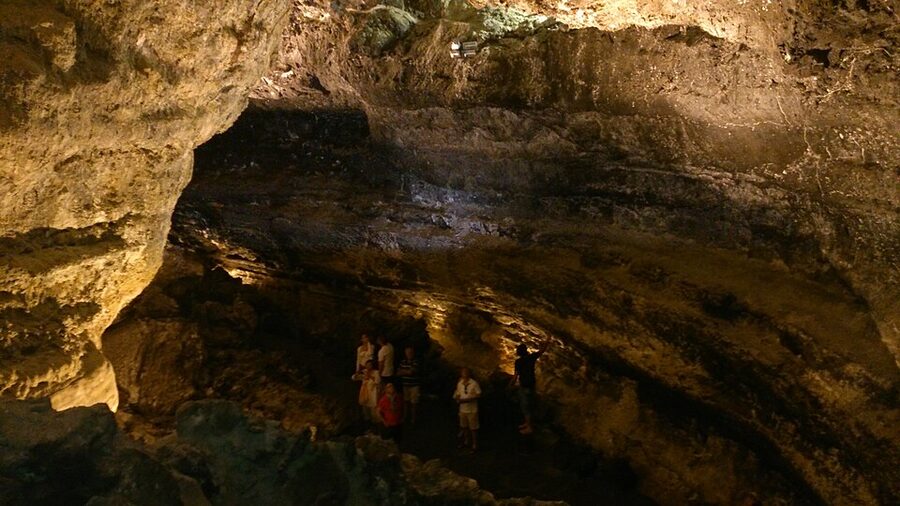

The guide commentary is in groups of around 30, alternating Spanish and English; some operators run dedicated English groups, others mix. If your tour skips Cueva (a few do, opting for Mirador del Río instead), you’re missing the more atmospheric of the two cave visits. The Jameos del Agua side is the prettier picture; Cueva is the better experience.

Quick warning: the floor is uneven, with low light, occasional steps. Anyone with mobility issues or claustrophobia should think hard about this stop. The tour will let you skip it and wait at the entrance if you’d rather. A few operators flag this in advance; not all do.
Pick your tour: the three options compared
I’d think about this in terms of what extras you want beyond the three big sights. The 9-hour day fills up either way; the difference is whether the extras are vineyards and a clifftop, or El Golfo’s green lagoon, or just more time at each main stop.
1. Lanzarote Full-Day Island Highlights Tour: $60
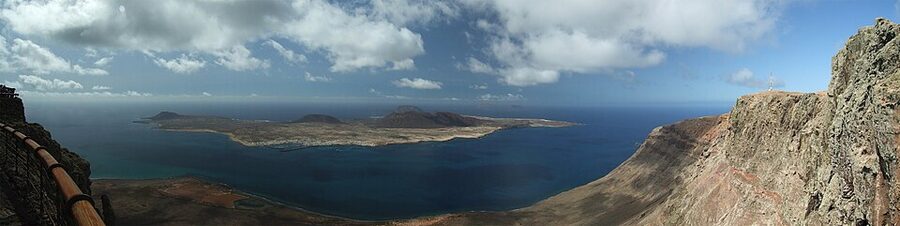
This is the value pick at around $60 a head. It hits all three big sights and adds La Geria for a wine tasting plus a stop at the Mirador del Río clifftop overlooking La Graciosa. Our full review covers the smaller-group setup and the late-day Mirador timing, which catches the cliffs in good afternoon light.
Check Availability
Read our full review
2. Timanfaya, Jameos del Agua & Cueva de los Verdes Tour: $105
This is the canonical three-stop combo and the most thorough on the core itinerary. Coaches are larger and the commentary is properly multilingual (English, Spanish, German, French rotation depending on the day). At $105 the price reflects the all-in entry fees being included rather than self-paid. Our full review goes into the lunch arrangements (bring your own or buy at El Diablo) and timing per stop.
Check Availability
Read our full review
3. Timanfaya and Jameos del Agua Full-Day Tour: $88
Same Timanfaya and Jameos del Agua, plus the green lagoon at El Golfo, but no Cueva de los Verdes. The trade-off is more time at the remaining stops: roughly 90 minutes at Jameos instead of 60. Our full review calls out the El Golfo timing and the optional camel-ride add-on. Best if you’ve already done Cueva de los Verdes on a previous Lanzarote trip.
Check Availability
Read our full review
The Manrique extras most tours include
Worth knowing what these names mean before you book, because most operators add at least one of them to fill the day:
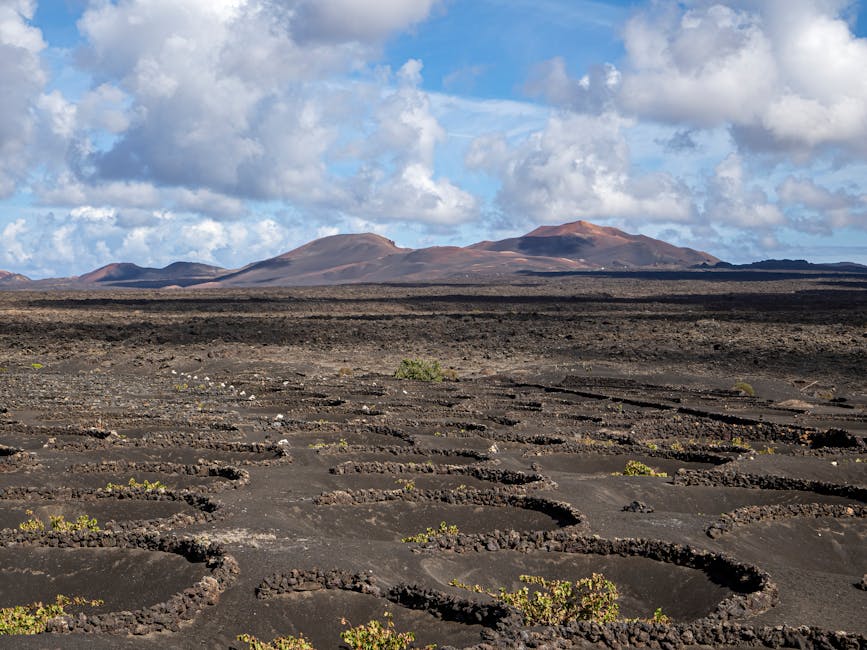
La Geria is the volcanic wine country in the centre of the island. Each grape vine sits in a curved black-rock pit (zoco) that catches morning dew and shelters the plant from the trade winds. The Malvasía wines are dry and citrussy, not what most people expect. A tasting at one of the older bodegas runs about 30 minutes; it’s a fine break in the day.
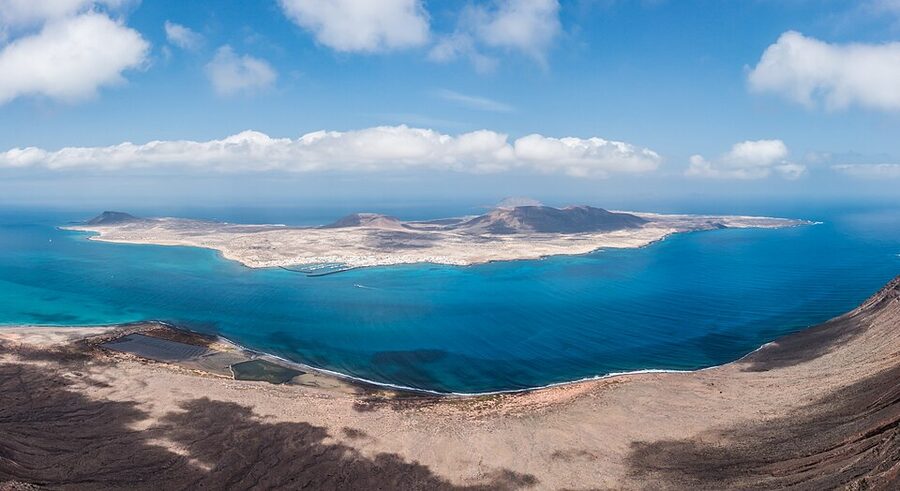
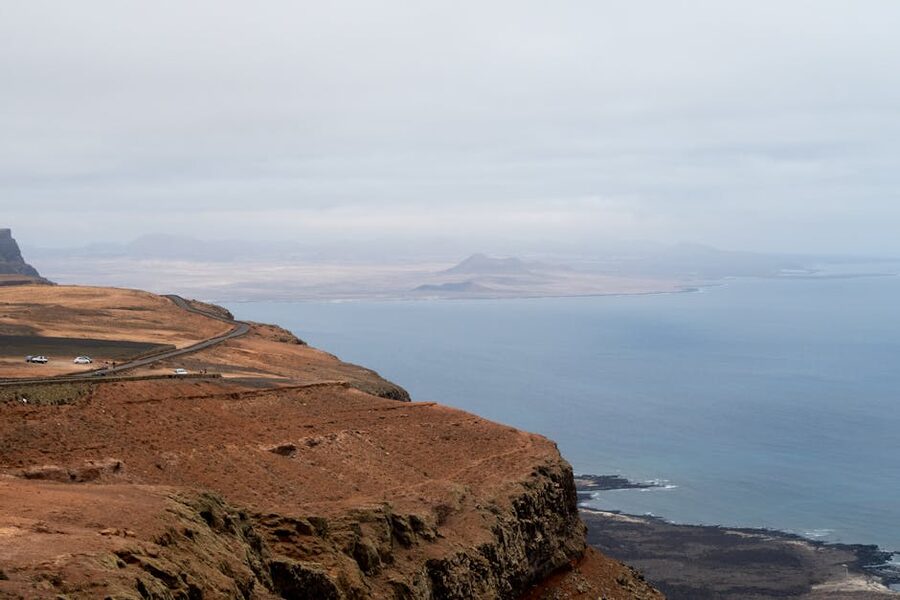
Mirador del Río is Manrique’s clifftop viewing complex on the northern tip of the island, looking across to La Graciosa. He cut the building into the rock face so it’s invisible from above; you walk in through what looks like a cliff entrance and step out to a 470-metre drop. There’s a café with a panoramic window and a small terrace.

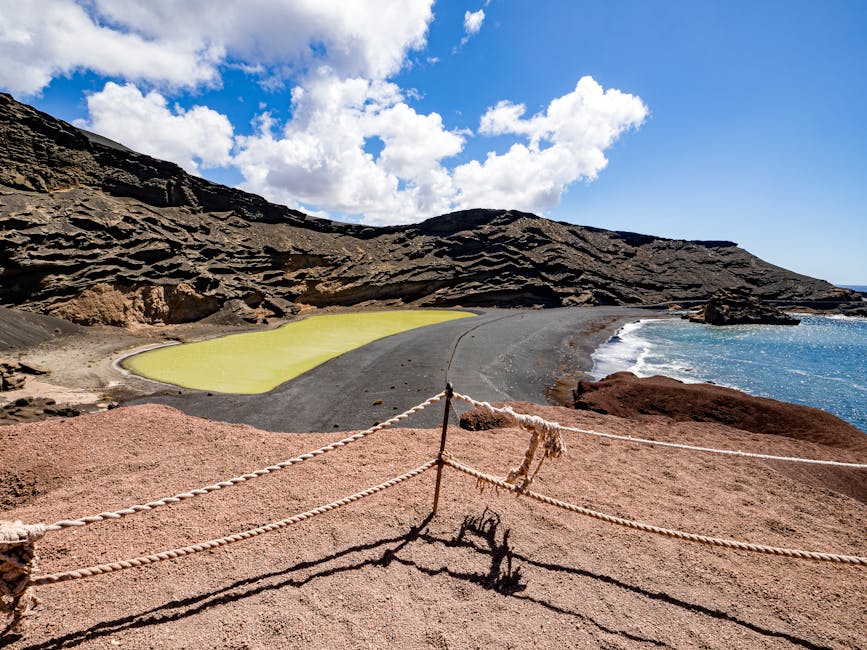
El Golfo is the green lagoon I mentioned. Charco Verde sits inside a half-eroded volcanic crater right against the Atlantic, and on a sunny day it’s a saturated green that looks fake in photos. Black sand beach, red rock walls, ten minutes’ walk from the parking. Don’t swim; the water’s algae-rich and the path down is closed.
Why César Manrique matters
You’ll see his name everywhere on Lanzarote, and there’s a reason. César Manrique was born here in 1919, made a name for himself as an artist in Madrid and New York, then came home in 1968 with a blunt position: tourism was going to hit Lanzarote whether the island liked it or not, and the only question was whether it would be controlled or chaotic.

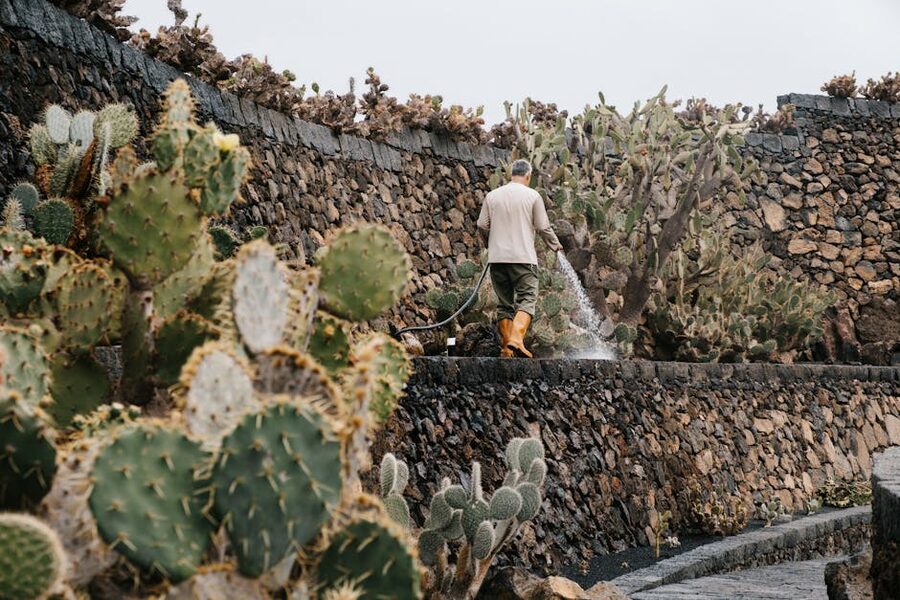
He talked the local government into a building code that’s largely the reason Lanzarote doesn’t look like Tenerife. No high-rises outside the resort enclaves; whitewashed walls, green or blue shutters, no advertising hoardings on the main roads. Then he built the seven flagship sites, what locals call the Centros de Arte, Cultura y Turismo: Jameos del Agua, Cueva de los Verdes, Mirador del Río, Jardín de Cactus, Castillo de San José, Casa-Museo del Campesino, and the Timanfaya visitor complex.
He died in a car crash in 1992 at age 73, hit by a truck near his foundation in Tahíche. The island held a 30-year retrospective in 2022. Whatever you think of his sculpture (the giant wind-chime mobiles divide opinion), the building code holds, and the Centros are the reason the combo tour exists at all. Without the seven sites, you’d be doing a volcano half-day, not an island highlights tour.
Lunch: what’s included, what isn’t
None of the three combo tours include lunch. That’s standard for Canary Islands day trips; the assumption is you’ll either buy at El Diablo restaurant in Timanfaya or eat at one of the village stops. El Diablo is decent, charges around 18 euros for a chicken-and-fries dish that’s been grilling over a volcanic vent, and is mostly worth it for the novelty rather than the food.
The smarter move is to pack a sandwich at your hotel breakfast (most resorts have buffet) and grab an extra bottle of water. Lanzarote stays hot at altitude in Timanfaya, and the cave stops drop you into cooler air without much warning. A 1.5L bottle is sensible.
Coffee and cake stops happen at the bodega or at Mirador del Río’s café. Cash isn’t required; cards work everywhere. Tipping the guide is normal at the end (3 to 5 euros per person), but not expected.
When to go and what to wear
Lanzarote’s high season is November to March, when northern Europe is freezing and the island stays at 18-22°C. Tour bookings get tight in February school holidays and around Easter; book at least a week ahead in those windows. Summer (June to September) the temperature hits 28-30°C consistently and the volcano interior gets hotter still; the bus loop has air-con but the geothermal demonstrations are outside.
Wear closed shoes. The Cueva de los Verdes path is uneven volcanic rock with low ceilings and steps; sandals will trip you. Bring a light layer for the cave even in summer. Hat and sunscreen for Timanfaya are essential; there’s almost no shade on the bus stops. Sunglasses help with the glare off the black-and-red rock.

If you’ve got mobility limitations, the combo tour will work but flag it when booking. The Cueva de los Verdes section isn’t wheelchair-accessible and isn’t really practical for anyone who can’t manage uneven terrain for 50 minutes. The Timanfaya bus and Jameos del Agua are both fine; Jameos has steps but you can skip the lower lagoon level.
Could you do this independently?
You can. I just don’t think you should. Here’s the maths: if you self-drive, you’ll pay around 35 to 50 euros for a one-day rental, plus fuel, plus 12 euros park entry at Timanfaya, 13 euros each at Jameos and Cueva (about 38 euros in entry fees), plus the bus loop ticket inside Timanfaya which is included in the entry. Total: roughly 95 to 110 euros for two people, before food.
The combo tour at $60 to $105 per person includes everything except lunch and tips. For a couple, the cheapest option works out to maybe 20 euros more than self-driving, which buys you the routing, the queue management, the running commentary, and the lack of a 9-hour driving headache. The tour also handles peak-season parking, which at Timanfaya in August is its own special punishment.
Independent self-drive only really makes sense if you want to stretch the trip over two days, or if you specifically want to add stops the combo tours skip (the Jardín de Cactus, the Casa-Museo del Campesino, or El Golfo’s beaches). For doing the three biggies in a day, the tour is the better tool.
Compared to other Canaries day trips
Lanzarote’s island highlights tour does something Tenerife and Gran Canaria tours can’t: bundle three world-class sites within an hour’s drive of each other. On Tenerife, the equivalent day is a Mount Teide tour, which is fantastic but single-purpose; you spend the day going up the volcano, not hopping between sites. The night-time stargazing version of Teide is closer in spirit because it’s also Manrique-grade in payoff, just a different kind of scenery.
If you’re island-hopping, the Lanzarote combo and a separate volcano buggy tour will give you two distinct angles on Timanfaya within the same trip. The buggy tour goes off-piste in the surrounding lava fields rather than the protected park interior. They don’t overlap.
For the deeper Timanfaya-only experience, our Timanfaya guide goes into more depth on park logistics, ticketing, and what’s worth doing inside the park if you’ve got more than the combo’s allotted time. Different article, different focus; complementary read.
Booking practicalities
Book 24 to 48 hours ahead in low season, 5 to 7 days in school holidays. All three tours offer free cancellation up to a day before, so there’s no real penalty for booking early. Pickup is from your hotel or a designated nearby point; the booking confirmation lists eligible pickup points by resort area. If you’re staying in Famara or in the smaller north-coast villages (Órzola, Arrieta), pickup may not be available; check before you book.
Group sizes vary. The cheapest tour runs in coaches of 35 to 45; the $105 tour is a similar size but tends to feel more curated; the $88 option is sometimes a smaller minibus. None of them are private. If you specifically want a small-group or private experience, you’re looking at a different product (typically 200 to 350 euros for a private guide and driver).
One small thing: the start time varies by pickup. If you’re staying in Playa Blanca (south coast), you’ll be picked up around 8am because the route swings north to collect Costa Teguise guests last. If you’re in Costa Teguise (closer to the centre), pickup is around 9:15am. Either way the day ends back at your hotel by 6:30 to 7pm.
What pairs well with this tour
If you’re spending more than three days in Lanzarote, the combo tour eats one full day and you’ll want lower-effort options either side. A morning at Famara beach or Papagayo, a half-day at the Jardín de Cactus, an evening at the Cesar Manrique Foundation in Tahíche; all of these slot around the combo without doubling up. For a different kind of adventure entirely, the volcano buggy tour goes hands-on with the lava landscape, while a deeper Timanfaya visit works as a follow-up if the combo tour got you hooked on the geology.
If your trip continues to other Canary Islands, the spiritual sibling experience is stargazing on Mount Teide in Tenerife, which goes for the night-sky payoff that Lanzarote can’t quite match (its volcanic terrain is more impressive by day, less by night). Tenerife’s other big draw, Loro Parque, is a different category entirely (zoo, family attraction) but pairs well with a Lanzarote-and-Tenerife combo trip. For Fuerteventura’s wild side, the Cofete jeep safari uses the same combo-tour logic to crack a hard-to-reach beach.
Spain mainland combo-tour parallels: the Segovia, Ávila and Toledo three-cities day trip from Madrid is the closest in structure, three big sites in one long day with a coach handling the routing. Seville’s cathedral and Alcázar combo works on the same logic at city-walking scale. The Essential Madrid tour bundles Plaza Mayor and the Royal Palace; Barcelona in One Day hits Sagrada Familia, Park Güell, and the Gothic Quarter in a similar slot. Different cities, same idea: a combo tour beats DIY when the hops between sites would eat your time.
Some links above are affiliate links. If you book through them we earn a small commission at no extra cost to you, which helps us keep researching this kind of guide.