
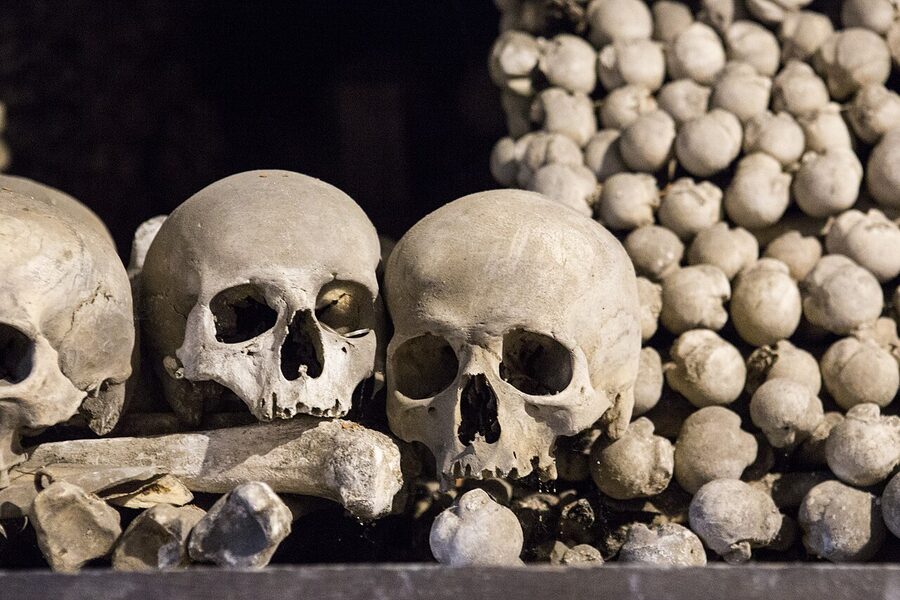
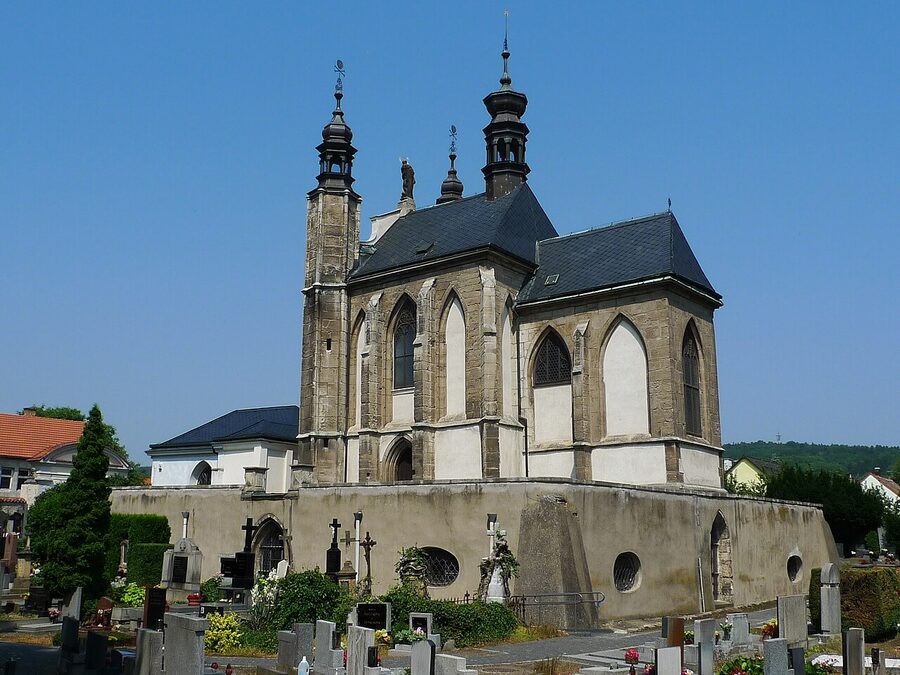
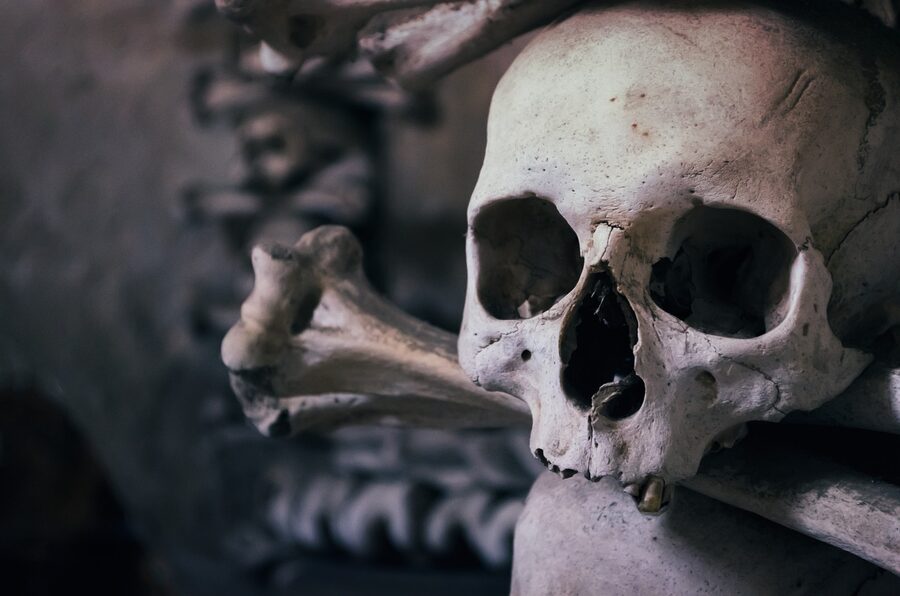
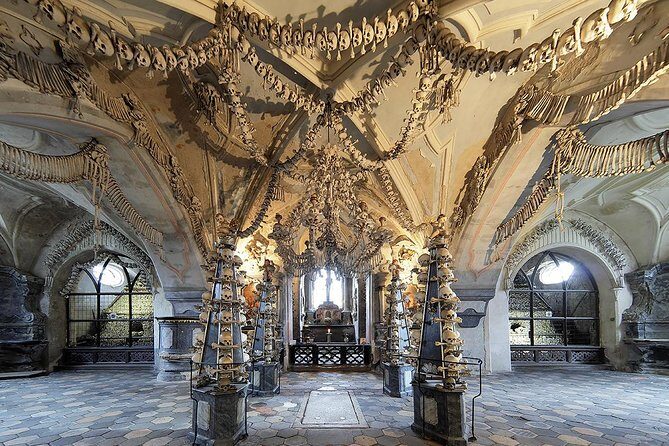
There are roughly 40,000 human skeletons decorating the interior of a small chapel an hour east of Prague. Chandeliers made of femurs. Coats of arms built from pelvises. The altar piled with skulls. The chapel has been laid out this way since 1870 and people come every day to look.

This guide covers how to book a Kutná Hora day trip from Prague: which tour includes both the Sedlec Ossuary-linked bone church and St Barbara’s Cathedral, how the UNESCO-listed silver-mining town became the second-richest city in Europe in the 1400s, and the practical details of getting there (a 55-minute direct train from Prague, very manageable as a half-day or full day).
In a Hurry? The Three Best Kutná Hora Day Trips
- Most-reviewed: Sandeman’s Kutna Hora UNESCO Tour with Bone Chapel — around $81, 6 hours, includes the ossuary and St Barbara’s.
- Full day with Jesuit College: Kutná Hora with St Barbara’s Church and Sedlec Ossuary — around $90, 6 hours, more sites.
- Self-guided by train: Day Trip to Kutná Hora by Train from Prague — around $83, 6 hours, organised independent day.

- In a Hurry? The Three Best Kutná Hora Day Trips
- Why the Bones Are There
- The Three Best Day Trips
- 1. Sandeman’s Kutná Hora UNESCO Tour —
- 2. Kutná Hora with St Barbara’s Cathedral and Sedlec Ossuary —
- 3. Independent Day Trip by Train —
- St Barbara’s Cathedral — The Second Reason to Come
- Why Kutná Hora Exists — The Silver Mines
- Getting to Kutná Hora
- The Typical Day Structure
- How to See the Ossuary Without the Crowds
- Kutná Hora Town Itself
- Lunch in Kutná Hora
- Practical Details
- Which Tour Should You Actually Book
- Kutná Hora Compared to Other Prague Day Trips
- Other Prague Guides Worth Reading
Why the Bones Are There
A brief version of a 700-year story. In 1278, the abbot of the Sedlec monastery, Henry, returned from a trip to Jerusalem with a jar of soil he’d taken from Golgotha — the hill where Christ was crucified. He scattered the soil over the abbey cemetery. The cemetery, now containing “holy land,” became the most desirable burial site in central Europe. Every Christian within a week’s travel wanted to be buried there. By the time the Black Death arrived in 1348 and the Hussite Wars in the 1420s, the cemetery had buried roughly 30,000 people.
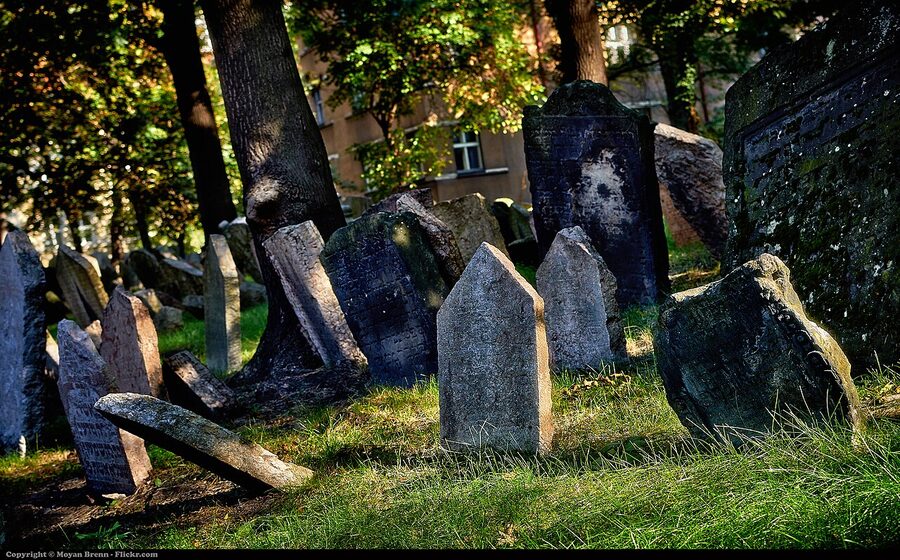
The ground was full. Bones from older burials had to be exhumed to make room for new ones. In 1511, a half-blind Cistercian monk was tasked with stacking the exhumed bones in an underground chapel. He stacked them. This is how the bones came to be there — not as ghoulish decoration, but as respectful storage.
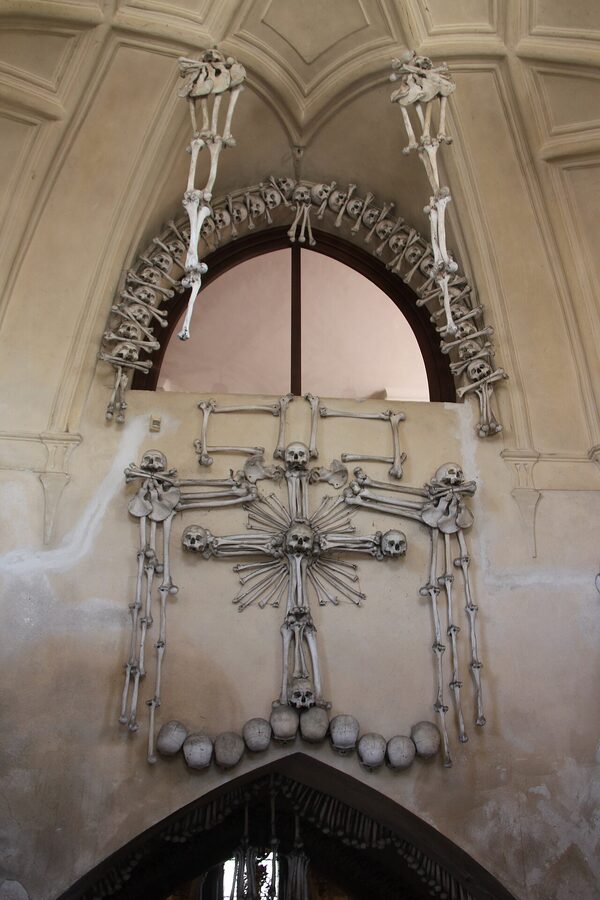
The interior as we see it now dates to 1870, when the local noble family (the Schwarzenbergs) hired a woodcarver named František Rint to tidy the chapel up. Rint interpreted “tidy” liberally. He carved the Schwarzenberg coat of arms out of bones, made a giant chandelier from every bone of the human body, and arranged garlands of skulls around the ceiling arches. His signature — in bones — is visible in the corner.
The Three Best Day Trips
1. Sandeman’s Kutná Hora UNESCO Tour — $81
The one to book. Sandeman’s has been running this tour since 2009; their guides are genuinely well-trained and the ossuary section of the tour is delivered with the kind of context that a self-guided visit doesn’t provide. 6 hours door to door from Prague. Train transport (not a bus — faster). $81 feels like a fair price. Our full review covers the specific guides to ask for and what they include in the walking-tour portion of Kutná Hora town.
2. Kutná Hora with St Barbara’s Cathedral and Sedlec Ossuary — $90
Roughly the same itinerary as option 1 with more time at the Italian Court (the former royal mint in Kutná Hora). $9 more expensive, slightly smaller groups on average. If you’re specifically interested in the silver-mining history — the reason Kutná Hora exists — this version gives you more. Our review explains the specific differences and when the upgrade is worth the money.
3. Independent Day Trip by Train — $83
The option for people who don’t want a group. You get train tickets, pre-purchased entries to both the ossuary and St Barbara’s, and an audio guide for the walking portions of Kutná Hora town. Pace is entirely your own. Similar price to the guided options because the entries add up — you’d pay nearly this much buying train + entries separately. Saves you the logistical headache. Our review covers the practical details.
St Barbara’s Cathedral — The Second Reason to Come
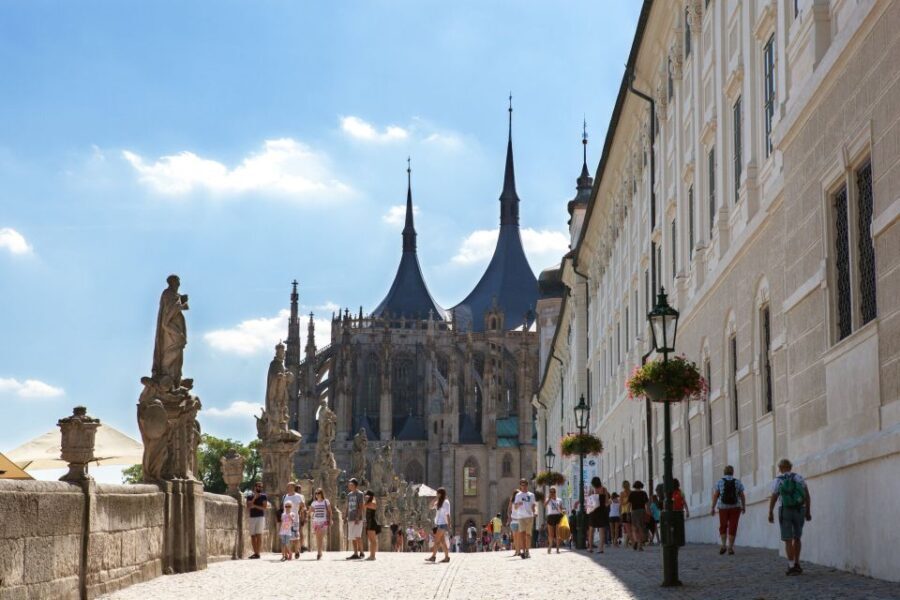
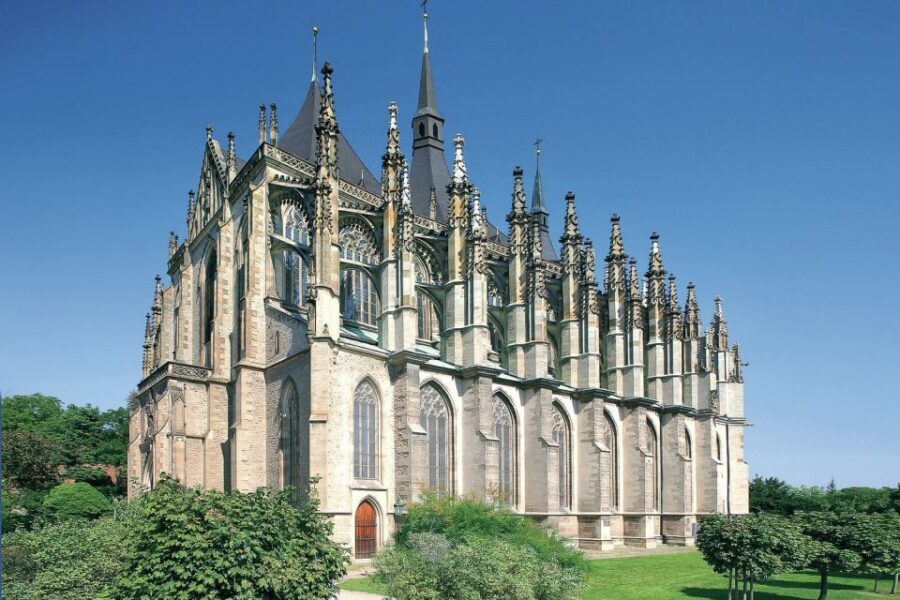
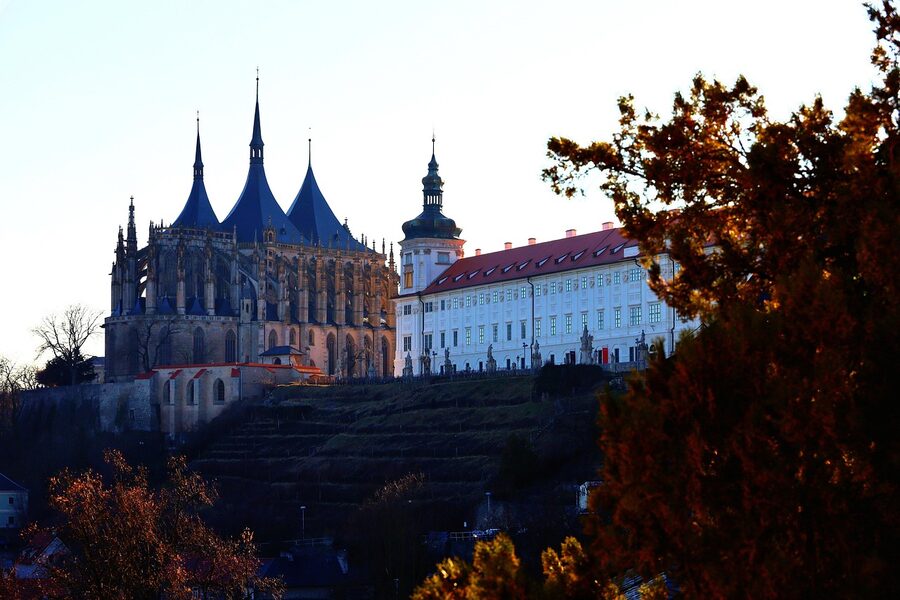
Kutná Hora’s other UNESCO site is the Cathedral of St Barbara, a 15th-century Gothic church that sits on a hill at the far end of town from the ossuary. St Barbara is the patron saint of miners, which tells you everything — the church was built by the wealthy silver-mining guilds of Kutná Hora to demonstrate the town’s power. Construction began in 1388, took 200 years to finish, and produced one of the most elaborate late-Gothic cathedrals in Europe.
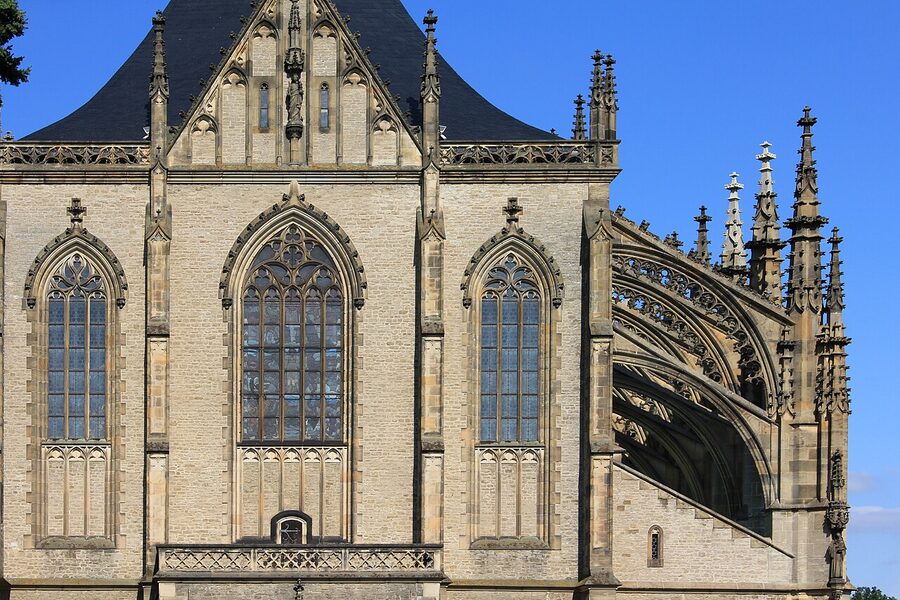
Inside, the ceiling is one of the most ambitious Gothic vault designs ever built — star-shaped ribs, each intersection painted with a different guild crest, some of which still show the miners’ pickaxes and hammers. Frescoes on the walls show 15th-century miners at work, which is unusual — most church frescoes of the era were saints and angels, not labourers. Here the miners paid for the cathedral, so they got their portraits in.
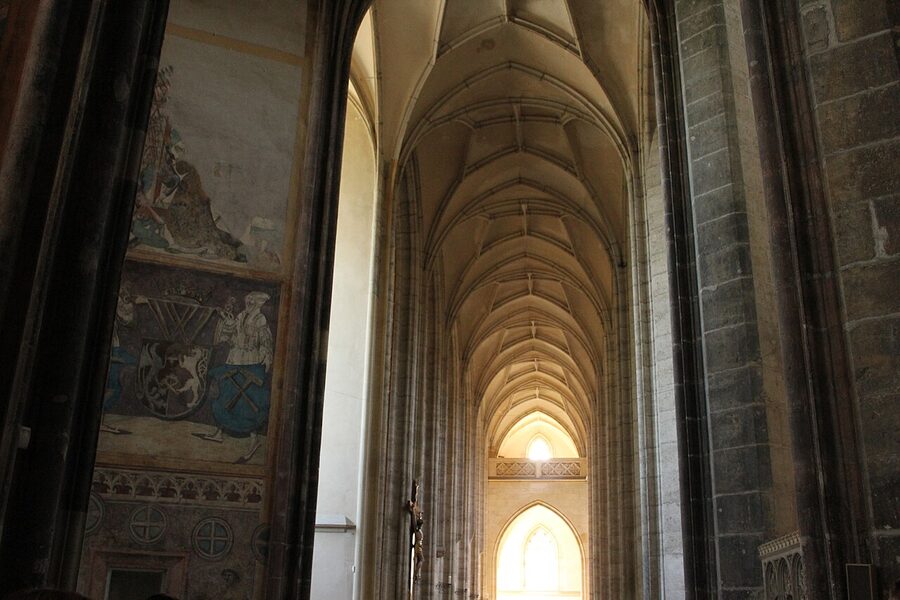
The church is a 20-minute walk from the ossuary through the old town. Most tours do the ossuary first (it’s closer to the train station) and walk to St Barbara’s after, with the Italian Court and the historic Main Street between them.
Why Kutná Hora Exists — The Silver Mines
Under the town is a very large amount of silver. This was discovered in the late 1200s. Within 50 years, Kutná Hora was the second-richest city in the Holy Roman Empire after Prague itself — richer than Vienna, Nuremberg, or Krakow. The Bohemian kings minted their coins here; the Prague groschen (the European standard coin of the 1300s) was struck in Kutná Hora from 1300 to 1547.
You can go down into one of the preserved medieval shafts on certain tours — the Hrádek silver-mining museum runs guided tours with helmets and overalls down 250 metres of original medieval tunnel. It’s cold (12°C year-round), narrow (some sections you duck through), and fascinating. The Hrádek tour is a separate ticket from the ossuary and St Barbara’s combined entry; book it in advance if you want to include it.
Getting to Kutná Hora
Direct train from Prague’s Hlavní nádraží takes 55 minutes to Kutná Hora hlavní nádraží. From there a small local train (3-minute ride) goes to Kutná Hora město — the closer station to the town centre. The ossuary is a 10-minute walk from the main station (not the city station); the cathedral is another 30 minutes walk or a short bus ride from the ossuary.
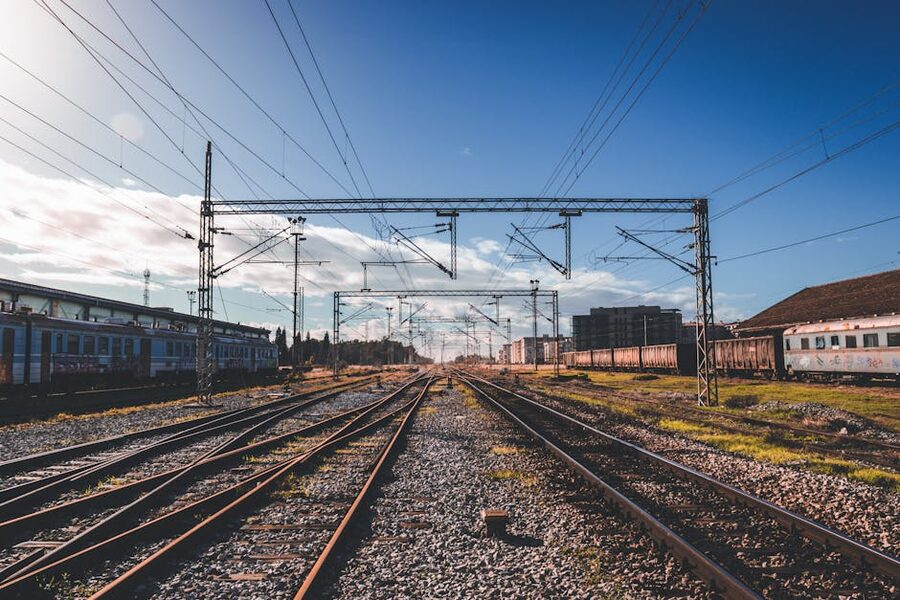
Return train tickets are around 180 CZK ($8) in second class, 260 CZK ($11) in first. No reservation needed; buy at the station kiosk or in the ČD app.
If you’re with a tour, all of this is handled — you meet in central Prague and the operator manages the train and the two-station transfer. For solo travellers the logistics are manageable but the combined tour + independent approach costs about the same.
The Typical Day Structure
A typical Kutná Hora day looks like:
9:00am. Leave Prague by train.
10:00am. Arrive Kutná Hora main station. Walk to the ossuary.
10:15-11:00am. Sedlec Ossuary. 45 minutes is plenty — it’s not a large building.
11:00am-12:00pm. Walk through the old town towards St Barbara’s.
12:00-1:00pm. Lunch on the main square.
1:00-2:30pm. St Barbara’s Cathedral and surroundings (the Jesuit College, the Italian Court if you’re including it).
2:30-3:30pm. Walk back, stop for coffee or a beer in a local pub.
4:00pm. Train back to Prague.
5:00pm. Back in Prague in time for a food tour or a beer spa session. The day shape makes a late-evening Prague activity natural.
.jpg)
How to See the Ossuary Without the Crowds
The ossuary is small (about 150 square metres). On busy summer days 200+ visitors can be inside at once, which makes the atmosphere less contemplative than the setting deserves. Strategies:
- Go early. First entry at 9am. The 9-10am slot is always quietest.
- Go in winter. December-February has 20-30% of summer volume.
- Go mid-week. Tuesday-Thursday are quieter than weekends.
- Avoid Saturday afternoons. Worst crowd period of the week.
The tours in the recommendations above usually time their arrival for 10am or 10:30am, which is a compromise between train logistics and beating the main rush. You’ll share the space with a few other tour groups but it won’t be heaving.
Kutná Hora Town Itself
Beyond the bones and the cathedral, Kutná Hora is a preserved medieval town in its own right. The Italian Court (Vlašský dvůr) was the royal mint and now houses a small museum. The Czech Silver Museum on Hrádek has the mine tour. The main square is lined with houses that date to the 1400s, intact, still lived in.
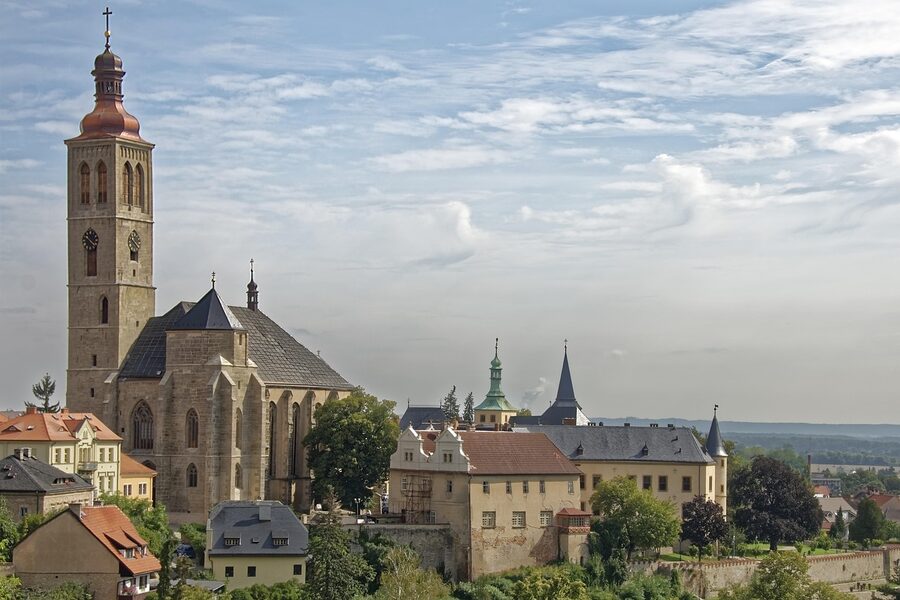
Population today: 20,000. Quiet. The pace of the town is slower than Prague, and that’s part of what makes the day trip work — you spend six hours in a genuinely different kind of Czech place, then return to Prague’s intensity in the evening.
Lunch in Kutná Hora
Several good options within a 5-minute walk of the main square:
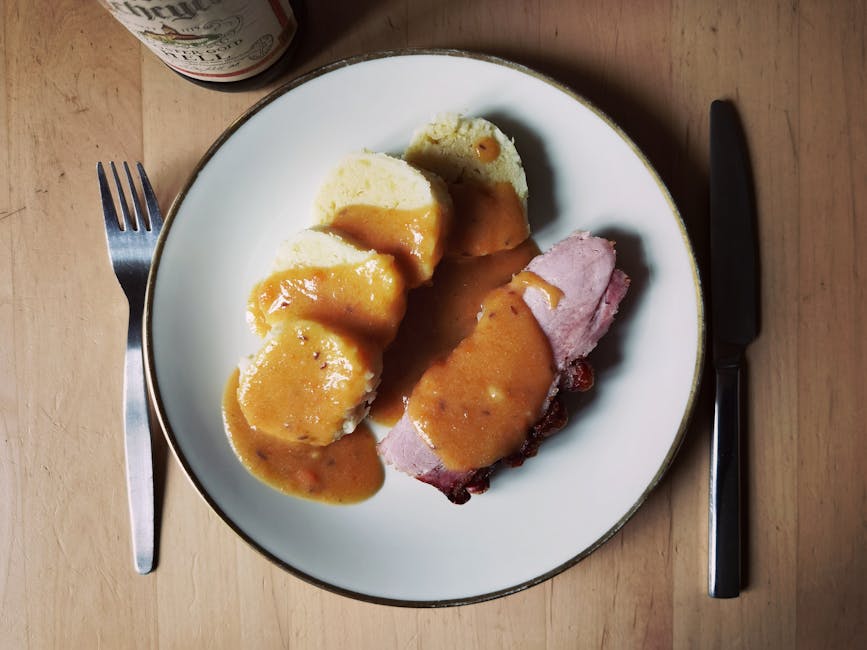
Dačický — a pub and restaurant in the building that used to be home to a famous Czech historian named Mikuláš Dačický (1555-1626). Hearty Czech food, period-costume servers. $12-18 per head.
Restaurace U Morového Sloupu — smaller, more modern, faster service. Good for a quick lunch between sites.
Pivnice Dačického Dům — the pub associated with Dačický, a separate venue across the street. Local beer, traditional menu.
Practical Details
Duration. 6-8 hours for a round-trip day from Prague.
Ossuary entry. $6 adult, open 9am-6pm daily in summer, shorter in winter.
St Barbara’s entry. $7 adult, similar hours.
Combined ticket. $14 for the ossuary, St Barbara’s, and the Cathedral of the Assumption. Worth buying if you’re doing all three.
Photography. Allowed in both sites, no flash in the ossuary.
Accessibility. The ossuary has stairs (it’s a crypt). St Barbara’s is partially accessible — most of the cathedral is step-free but the organ loft requires stairs.
Kids. The ossuary is rated family-friendly, but very young kids (under 6) may find it distressing. The cathedral is universally fine.
Which Tour Should You Actually Book
For most visitors: option 1 (Sandeman’s, $81). Guided, well-paced, everything included, the ossuary is contextualised properly. The upgrade to option 2 is worth it only if you specifically want more of the silver-mining history. The independent option (3) suits only travellers who genuinely prefer moving at their own pace and don’t want a guide.
Book 3-4 days ahead in summer; winter can usually be booked day-of.
Kutná Hora Compared to Other Prague Day Trips
Kutná Hora is the short, dense, human-history day trip. Bohemian Switzerland is the long, physical, nature day. Pilsner Urquell in Plzeň is the beer and industry day. Terezín is the heaviest emotional day. The four trips are roughly the same distance in time (4-6 hours round trip) but wildly different in feel — pick based on the week you have.
Other Prague Guides Worth Reading
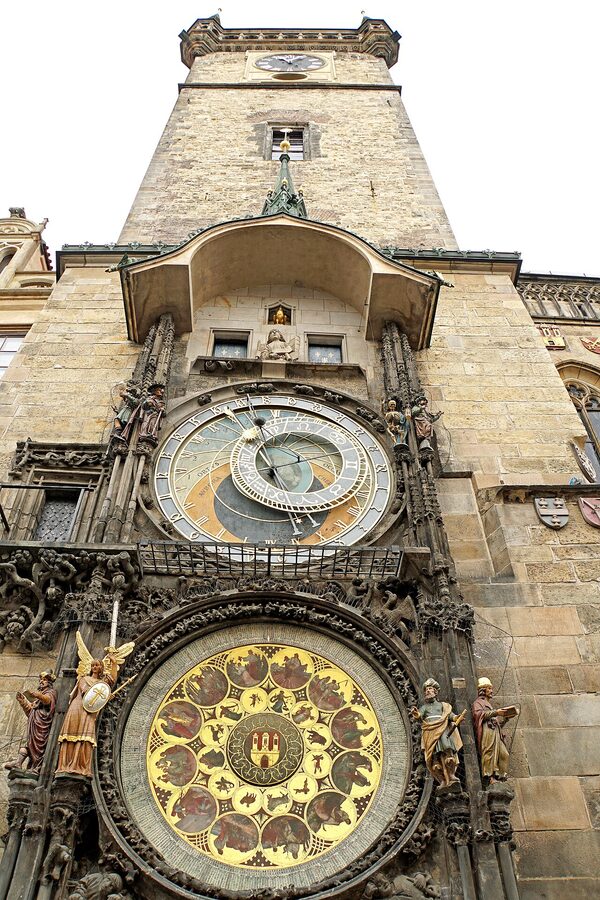
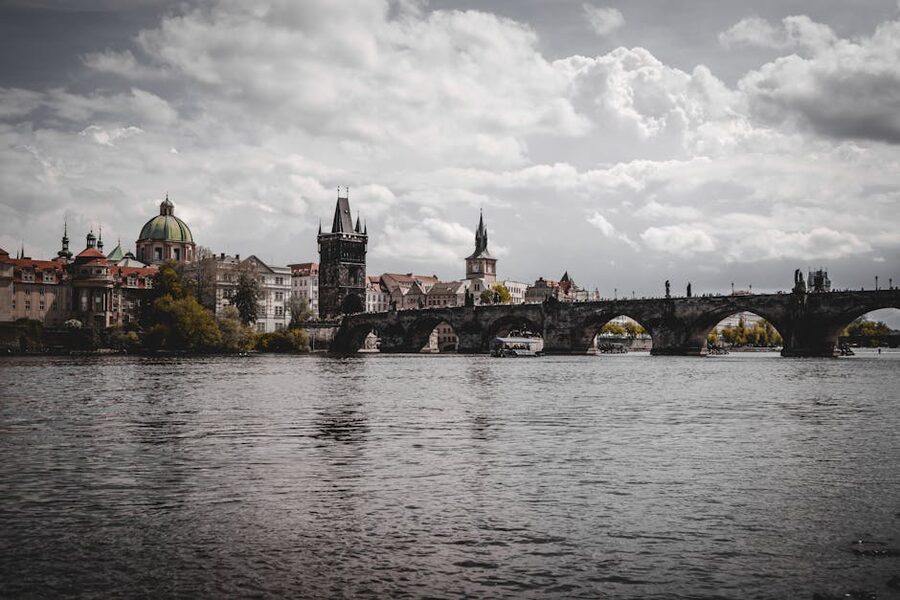
Before or after the Kutná Hora trip, fill out the rest of your Prague week with the other essentials. The Old Town Hall Tower is a must. The Klementinum tour pairs well with a quiet morning. The Prague ghost tour picks up similar dark-history themes. And if the Kutná Hora silver-mining story intrigued you, a Prague medieval underground tour goes down into Prague’s own buried medieval layer.
For the day-of pass savings, see our guide to Prague city passes — note that Kutná Hora sites are not on the main Prague passes (they’re in a different district), so this trip is a separate ticket regardless.
Disclosure: This site earns a commission on bookings made through the links above, at no extra cost to you. We only recommend tours we’ve researched and would book ourselves.